Showing posts with label darren aronofsky. Show all posts
Sunday, September 17, 2017
mother! (2017 film)
Written and directed by Darren Aronofsky, mother! is the story of a couple whose quiet life in the country is disrupted by visitors who come in for some unknown reasons causing all sorts of trouble. The film is an unconventional horror story revolving around unexpected visitors as it explores the idea of idol worship and desires to start a family. Starring Jennifer Lawrence, Javier Bardem, Michelle Pfeiffer, Domhnall Gleeson, Brian Gleeson, Kristen Wiig, and Ed Harris. mother! is a visceral and harrowing film from Darren Aronofsky.
The film follows the life of a couple living in the middle of the country as a writer (Javier Bardem) is struggling to write a new book while his wife (Jennifer Lawrence) is finishing the redecoration of their house where they get some unexpected visitors that would shake everything up. It’s a film that explores the idea of worship as the writer is dealing with the expectations of a new book as he has writer’s block as well as the fact that starting a new life hasn’t helped him with his wife seemingly happy with the tranquility in shaping their home. Yet, she would see things such as a beating heart inside the house as if it’s haunted as it would worsen with the arrival of an ailing doctor (Ed Harris) who is later joined by his wife (Michelle Pfeiffer).
Darren Aronofsky’s screenplay is filled with a lot of themes as the writer is willing to have guests in his home as the doctor is a fan of the writer’s work as it later goes into chaos due to the people that come to the house. For the wife, it becomes overwhelming as these visitors would disrupt everything as the wife questions her husband’s generosity as she believes he is selfish and often too inviting as well to the point that he neglects her. All of this happens during its first half as the second half becomes about the arrival of a new person for the writer and his wife but also more chaos and tragedy that would loom throughout due to the fact that writer revels in the worship of his readers who have taken his work way too seriously.
Aronofsky’s direction is definitely stylish in the way he would open and end the film in the same way as if it’s all part of something biblical. Shot near Montreal, the film is set entirely in a country house in the middle of nowhere as it serves as this kind of idyllic world where the wife is in charge while her husband struggles with trying to write a new book. While there’s some wide shots in the film for much of the exteriors, Aronofsky aims for something more intimate with the usage of medium shots and close-ups as there’s a lot of emphasis on the latter. Notably in moments where the wife would touch the wall as if there is something living in the house as it would show the image of a heart beating as if the house is real. Aronofsky would create moments that are quite calm yet there is something that is uneasy such as the wife’s interaction with the doctor’s wife who would say these very offbeat yet cruel things throughout the film as it would baffle the wife who becomes more uneasy. Another part of Aronofsky’s direction that is unique is the fact that he would shoot close-ups of certain objects as well as the focus of a crystallized object at the writer’s office.
Things would intensify during the second act when the doctor and his wife would receive a visit from their two sons (Brian and Domhnall Gleeson) as it adds more chaos where Aronofsky’s usage of hand-held cameras to follow the action would show the sense of disruption at the house. Notably in the third act following the aftermath of the release of the writer’s new book where it’s just mayhem. There’s moments in this sequence that is quite ridiculous as well as grotesque but there’s also some dark humor in the film that add to the insanity of what is happening. Even as the writer is forced to see what his work has done as it adds a lot of religious and biblical allegory into everything that has happened with the wife at the center of it all. Overall, Aronofsky crafts a chilling and intense film about a couple’s tranquil life disrupted by strange visitors.
Cinematographer Matthew Libatique does excellent work with the film’s cinematography with the usage of natural colors for some of the daytime exteriors as well as some low-key lighting and moods for many of the interior scenes including the ones at the basement and for the scenes at night. Editor Andrew Weisblum does brilliant work with the editing with its usage of jump-cuts and other stylized cuts to play into the suspense and heightened drama that looms throughout the film. Production designer Philip Messina, with set decorators Larry Dias and Martine Kazemirchuk plus art directors Isabelle Guay and Deborah Jensen, does amazing work with the look of the house and the way the different rooms look as well as how they would look in its decayed form including the basement. Costume designer Danny Glicker does nice work with some of the costumes as it is mostly casual with a bit of stylish clothing from the things the doctor’s wife wears as well as a dress the wife would wear in the third act.
Special effects makeup artists Mathieu Baptista and Shane Shisheboran does terrific work with some of the makeup for the look of some of the people that would emerge at the house as it adds to the insanity that occurs in the film. The visual effects work of Kenneth Caines and John Mangia does fantastic work with the visual effects from the look of the heart as well as some of the stranger things that occur in the house that would haunt the wife. Sound designers Paula Fairfield and Craig Henigan do superb work with the sound from the way some of the sounds of the house is presented as well as how objects are heard as it help add to the film’s approach to suspense and horror. The film’s music by Johan Johansson is wonderful as it’s very low-key with its approach to ambient music as it’s used very sparingly as sound texture while the only real piece of music in the film is a cover of The End of the World by Patti Smith.
The casting by Lindsay Graham and Mary Vernieu is incredible as it feature some notable small roles and appearances from Stephen McHattie as a zealot, Kristen Wiig as the writer’s publisher, Jovan Adepo as a mysterious cup holder, and the duo of Domhnall and Brian Gleeson as the feuding sons of the doctor and his wife. Ed Harris and Michelle Pfeiffer are phenomenal in their respective role as the doctor and his wife with Harris as this kind and curious man that is eager to meet the writer as he is becoming very ill while Pfeiffer is just sublime as this very bitchy and intrusive woman that wants to know what is in the mind of the wife.
Javier Bardem is remarkable as the writer as this man that is struggling to write something as well as be attentive to his wife where he’s trying to find inspiration as it’s a very complex role of a man trying to be this figure for his adoring fans but also be there for his wife. Finally, there’s Jennifer Lawrence in a sensational performance as the wife as this young woman struggling to create a life for herself and her husband as she deals with these intrusive visitors as well as the neglect she’s getting from her husband as it’s a role of anguish and terror of a woman trying to protect the home she’s created.
mother! is a marvelous film from Darren Aronofsky that features incredible performances from Jennifer Lawrence, Javier Bardem, Michelle Pfeiffer, and Ed Harris. Along with its eerie visuals, biblical references, eerie suspense, and moments of horror, it’s a film that is willing to push all sorts of boundaries and raise discussion though some of its presentation is flawed. In the end, mother! is a riveting film from Darren Aronofsky.
Darren Aronofsky Films: Pi - Requiem for a Dream - The Fountain - The Wrestler - Black Swan - Noah (2014 film)
The Auteurs #2: Darren Aronofsky
© thevoid99 2017
Sunday, March 30, 2014
Noah (2014 film)
Directed by Darren Aronofsky and written by Aronofsky and Ari Handel, Noah is a dramatic re-telling of Noah’s Ark in which Noah sees an apocalyptic vision as he decides to build an ark with his family before a great flood emerges. The film is a grand vision of the Noah’s Ark story where it plays into a man trying to save his family and animals from a world that is being ravaged by terror and the fault of mankind. Starring Russell Crowe, Jennifer Connelly, Emma Watson, Logan Lerman, Douglas Booth, Ray Winstone, and Anthony Hopkins. Noah is an extravagant yet intense film from Darren Aronofsky.
The story of Noah and his ark is a story that’s been told for ages as this film is a dramatic interpretation of that story where Noah (Russell Crowe) builds an ark to save his family and animals. Yet, it’s a film that explores a world where humanity has taken advantage of the world they live in as Noah and his family try to live in peace until Noah sees a vision of a world where humanity is wiped out. Once Noah builds his ark with his family and a small group of fallen angels who became stone-like creatures called the Watchers. Noah has to contend with the presence of Tubal-cain (Ray Winstone) who only sees the cruelty of the Creator as he would try to sway Noah’s young son Ham (Logan Lerman) into giving in towards temptation. What Darren Aronofsky and Ari Handel do is tell the story in a dramatic form while playing into the myth of Noah and where he’s descended from.
The film begins with a story of Adam and Eve and the three sons they created in Cain, Abel, and Seth. Tubal-cain is a descendant of Cain while Noah is a descendant of Seth as the latter would seek guidance from his grandfather Methuselah (Anthony Hopkins) who would also help the rest of his family. While the screenplay does take some liberties into the story where it would only focus on Noah, his wife Naameh (Jennifer Connelly), their three sons, and adopted daughter Ila (Emma Watson). It would play into the internal struggles that Noah deals with as he becomes confused about whether to save the rest of humanity as those he had encountered including Tubal-cain are filled with sin and temptation that had destroyed the world and ravaged the things that the Creator has made.
Aronofsky’s direction is truly vast in not just its scope but also in the way he presents the world that is coming apart by temptation and cruelty where only Noah and his family are the few who have been good towards the Earth and its surroundings. With much of the location set in Iceland with scenes of the ark construction set in upstate New York, Aronofsky goes for something that could’ve been set anywhere in the world while he does utilize visual effects for some dazzling sequences where Noah plants a seed where trees are created for the wood he needed for the ark. Much of the direction has Aronofsky go for a lot of spectacular wide shots and massive scenes involving crowds and such to play into the dark world that Noah needed to protect his family from.
The direction also includes scenes where it is set on the ark as Aronofsky wanted the ark to look as realistic as possible where it’s a place where animals and plants can be salvaged while Noah’s family can be safe and look for some message of hope after the rain dies down. Yet, there’s also a sense of tension that occurs over Noah’s sense of hopelessness and doubt as the element of suspense and drama is raised where Naameh and Ila become much more prominent in trying to get Noah to see reason. Especially when he completes his task and deals with what was gained and what got lost. Overall, Aronofsky creates a very compelling yet glorious film about the story of Noah and his ark.
Cinematographer Matthew Libatique does excellent work with the film‘s cinematography with its use of natural lights for some of the exteriors with some usage of grey in the rainy scenes along with some low-key lighting schemes and sepia tones for the scenes inside the ark. Editor Andrew Weisblum does incredible work with the editing with its use of montages, jump-cuts, and other stylistic cuts to play into the suspense and drama that occurs in the film. Production designer Mark Friedberg, with supervising art director Dan Webster and set decorators Nicholas DiBlasio and Debra Schutt, does amazing work with the set pieces from the design of the ark in its interior and exteriors to the tents that Noah and his family lived in.
Costume designer Michael Wilkinson does nice work with the costumes as it plays the ragged look of the characters as it plays into a world that is in its infancy. Visual effects supervisors Ben Snow and Joe Takai do terrific work with the visual effects for the look of the flood and the design of the creatures and Watchers though some of it does look a bit wobbly at times. Sound editor Craig Henighan does superb work with the sound from the way some of the action in the locations sound to the sounds of people screaming during the flood where Noah and his family are listening from inside. The film’s music by Clint Mansell is fantastic for its bombastic orchestral score and serene pieces to play into the drama and sense of adventure as the soundtrack includes performances by the Kronos Quartet and a closing song sung by Patti Smith.
The casting by Lindsay Graham and Mary Vernieu is great as it features voice work from Mark Margolis and Kevin Durand as a couple of Watchers, Nick Nolte as the leader of the Watchers, and Frank Langella as the voice of a Watcher who immediately recognizes Noah as a human to trust. Other notable small roles include Gavin Casalegno, Nolan Goss, and Skylar Burke in their respective roles as the younger versions of Shem, Ham, and Ila along with appearances from Marton Csokas as Noah’s father Lamech, Madison Davenport as a refugee that Ham meets, and Dakota Goyo as the young Noah. Anthony Hopkins is superb as Noah’s grandfather Methuselah as a man who often gives Noah and his family some guidance while providing some bits of humor in his craving for berries. Leo McHugh Caroll is terrific as Noah and Naameh’s young son Japheth who watches over the birds he cares for.
Douglas Booth is excellent as Noah’s eldest son Shem who tries to deal with his love for Ila and watch over the family whenever Noah does other things. Logan Lerman is fantastic as Noah’s middle son Ham who becomes lost in the idea of being alone after the flood as he becomes tempted by Tubal-cain about the realities of humanity. Ray Winstone is amazing as the very cunning Tubal-cain as a man who tries to talk to the Creator as he deals with the chaos and despair of the world where he goes after Noah and later manipulates Ham. Emma Watson is brilliant as Noah’s adopted daughter Ila as a young woman who deals with the fact that she can’t have a child as she also would later cope with some of the decisions Noah would make.
Jennifer Connelly is remarkable as Naameh as the wife of Noah who is also the voice of reason as someone who tries to get Noah to look closer at his surroundings as she knows what he’s dealing with as she also thinks about her family and their future. Finally, there’s Russell Crowe in a marvelous performance as the titular character as a man who realizes what is going to happen as he tries to salvage all that is good in the world while becoming lost over his task and what it all means as it’s a performance that has Crowe being tough but also display a sensitivity that doesn’t get seen much from him.
Noah is a phenomenal film from Darren Aronofsky that features amazing performances from Russell Crowe, Jennifer Connelly, Emma Watson, and Ray Winstone. While it does have a few flaws, it is still an engrossing story that manages to bring a lot of humanity and stakes into a story that’s been told so many times. Especially as Aronofsky infuses it with a lot of visual spectacles and ideas that will captivate a wide audience as well as bring something to religious audiences. In the end, Noah is an incredible film from Darren Aronofsky.
Darren Aronofsky Films: Pi - Requiem for a Dream - The Fountain - The Wrestler - Black Swan - mother! - The Auteurs #2: Darren Aronofsky
© thevoid99 2014
Friday, April 13, 2012
Favorite Films #7: The Wrestler
Wrestling with Aging & Death in Darren Aronofsky’s Tale of Redemption
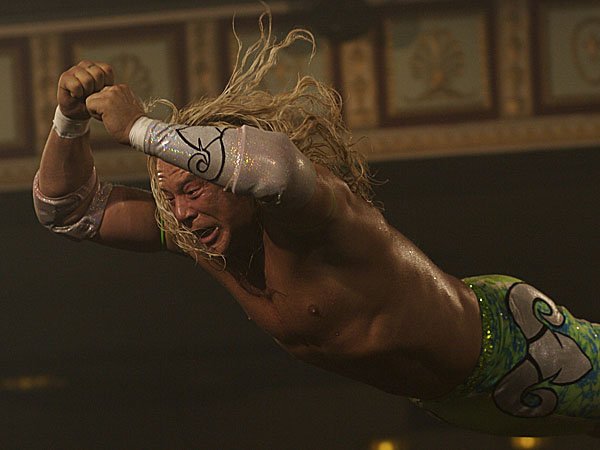
A man with long blonde hair that wears worn-out spandex pants is on the top rope in a wrestling ring as he is about to finish his opponent with a diving head butt called “Ram Jam”. Fans cheer as they watch this aging behemoth named Randy “The Ram” Robinson finish off an opponent to great adulation. It’s a moment that Randy lives for which is the cheers and love from a crowd that has stood by him even though his glory days back in the 1980s is long gone. With blood and sweat dripping from his head, he returns to the locker room being praised with a smaller applause by younger wrestlers who adore this revered but washed-up veteran.
It’s a scene from Darren Aronofsky’s 2008 film The Wrestler that emphasizes a man who is still doing the things he’s done more than 20 years. Now, he’s working the independent pro wrestling circuits in New Jersey as well as part-time work at a supermarket just trying to get by while living in a trailer park and drives a beat-up van. It’s a lot told early in the film as Aronofsky only reveals glimpses of Randy’s hey-day through flyers and posters in the opening credits as Quiet Riot’s Bang Your Head blares through. Then, the film cuts to this man that was a big star in the 1980s suddenly looking battered as Aronofsky wisely doesn’t show his face for about the first five to ten minutes of the film.
It is followed by a moment where Randy returns to his home in a trailer park as it’s locked because he couldn’t pay his rent. He has to sleep in his van as it’s an indication of the life that he’s living. Whereas other wrestlers from his hey-day sort of have it together whether it’s finding a life outside of wrestling where they’ve become profitable or have managed to save their money wisely and remain legends. Unfortunately for Randy, he is not one of those old men that would often pop up on a World Wrestling Entertainment TV program to be celebrated and revered by fans. He is among those who continually abuses his body by performing for a bunch of people as it would eventually lead to health problems.
The harrowing scenes of men on wheelchairs, some with lost body parts, or having to carry something as they along with Randy do meet-and-greet for wrestling fans as the numbers of these fans start to dwindle. It’s part of the harsh reality that Aronofsky creates as he wisely doesn’t linger on these other men as he sees what Randy is seeing. It’s an indication of what might happen to Randy if he wasn’t facing certain death. What is more startling is how realistic Aronofsky chose to portray the film as he is often know for creating films that were far more complex with elements of surrealism.
While earlier films like Pi, Requiem for a Dream, and The Fountain were films that had ambitions with their storylines as well as Aronofsky’s fascination with the human struggle for acceptance and reach something that is impossible. The Wrestler would mark a creative turning point for Aronofsky after the disappointing reception he received for his 2006 sci-fi drama The Fountain that was notorious for its troubled production. Wanting to aim for something that was simpler and didn’t rely a lot on visual effects or any visual tricks. It would be in a script written by Robert D. Smigel, a former editor of the news satire publication called The Onion, that would give Aronofsky a chance to go back to his early film roots as well as reach back to his love for professional wrestling.
The 1980s wrestling boom period, in which saw the end of the regional territories that defined the 1960s and 1970s, was definitely a brief period in which professional wrestling entered the world of popular culture. On one spectrum, there was Vince McMahon Jr.’s World Wrestling Entertainment (then World Wrestling Federation) that was more about entertainment than wrestling. Yet, it would feature such major stars as Hulk Hogan, “Rowdy” Roddy Piper, “Macho Man” Randy Savage, Andre the Giant, “Superfly” Jimmy Snuka, and Ricky “The Dragon” Steamboat that defined these larger than life figures.
On the other spectrum in the American South was Jim Crockett’s Promotion for the National Wrestling Alliance that featured a much more stripped down yet hard knocks approach to pro wrestling. Figures such as “The Nature Boy” Ric Flair with his Four Horsemen, Magnum TA, “The American Dream” Dusty Rhodes, The Fabulous Freebirds, and the Road Warriors were guys that talked the talk and could also kick some ass along the way. While there were other promotions like the American Wrestling Association, it was a really great time for pro wrestling fans were competition between the companies were fierce leading to the more intense Monday Night War period between WWE and Ted Turner’s World Championship Wrestling (that came from Jim Crockett Promotions and the NWA) of 1995-2001.
While the film didn’t feature any of Randy’s hey-day of that period except through posters shown in the opening credits. It is clear he is trying to hold on to that claim to fame but those days are far long and gone. Having to spend money on painkillers, tans, and other things to keep up the battered physique. He would also blow his money on off-days by going to a local strip club to have a few beers and converse with a stripper named Cassidy while she gives him lap dances. Like Randy, Cassidy is a woman on her way out because of her age as she is also a single mother where the two share a bond over their age as well as their love for 80s hard rock bands in a very fun scene later in the film.
That love of the 1980s and disdain of the 1990s is a truly shared reflection of everything that had happened to the career of the man who plays Randy “The Ram” Robinson in Mickey Rourke. Rourke was definitely one of the hottest actors of the 80s who had appeared in numerous films like Lawrence Kasdan’s Body Heat, Francis Ford Coppola’s Rumble Fish, Barry Levinson’s Diner, Stuart Rosenberg’s The Pope of Greenwich Village, Adrian Lyne’s 9 ½ Weeks, Alan Parker’s Angel Heart, and appearing in a trio of films by Michael Cimino such as the notorious flop Heaven’s Gate, Year of the Dragon, and a remake of William Wyler’s 1955 film Desperate Hours. Despite being loved by critics, actors, and film buffs, Rourke also maintained a difficult persona as his acting career faded in the early 1990s with a series of flop that culminated with a big-budgeted Hollywood blockbuster bomb in Simon Wincer’s Harley Davidson and the Marlboro Man with Don Johnson playing the latter.
Rourke would take a break from acting to forge a boxing career where he maintained a decent record of six wins and two draws though he would eventually return to acting. Despite being loved by younger actors, Rourke’s career in the 1990s wasn’t going anywhere despite notable appearances in Francis Ford Coppola’s adaptation of John Grisham’s The Rainmaker and Vincent Gallo’s directorial debut in Buffalo ‘66 along with work in Terrence Malick’s 1998 masterpiece The Thin Red Line though Rourke’s performance, like Jason Patric among others, was cut out of the final film. The unexpected happen in the 2000s were Rourke was slowly making a comeback in films like Steve Buscemi’s Animal Factory, Jonas Akerlund’s Spun (that saw him reunite in a scene with Pope co-star Eric Roberts), and appear in two Robert Rodriguez films in Once Upon a Time in Mexico and an adaptation of Frank Miller’s Sin City.
While he would get attention for these roles, notably Sin City, it would take a lot more for Rourke to really get himself back in the good graces of the film industry. It would be Aronofsky that would come in to show his support for Rourke as he wanted him to play the part. Though Nicolas Cage was set for that part, Cage was also a fan of Rourke as he stepped aside in order to support Rourke. It would also be Aronofsky who would have the balls to tell Rourke about this role as he would make fuckin’ sure that Rourke would give the performance of a lifetime.
Helping Rourke to prepare for the role of a pro wrestler would be Afa Anoa’i of the Wild Samoans tag team that also had their hey-day in the 1980s working for the WWE. Though there would be a stuntman to do some scenes for the film, Rourke’s work with Anoa’i would pay off as he would actually wrestle in front of wrestling fans for various wrestling organizations with real wrestlers. Notably the brutal hardcore match with Necro Butcher that is one of the film’s most gruesome moments. While it’s a very key scene that’s inter-cut with Randy exhausted and getting stitches and other things cleaned up. It’s a scene that emphasize the kind of punishment that Rourke would do to play this battered character who shouldn’t be in a match that is very brutal.
It’s the moment in the film where everything is set to change where after getting some medical attention, Randy’s life would change with a heart attack as he passes out and wakes up to realize he’s in a hospital. It’s where the film has changed where Randy’s life is also about to change as the chance for a comeback in a rematch against an old rival is now unlikely to happen. Having to look at the scar on his heart and then trying to jog in order to prepare for this match. It becomes very clear that Randy won’t have a lot of time left as Aronofsky and Smigel set the tone for a very grim drama.
While it’s territory that Aronofsky had explored in his previous films, they were all presented in a stylized fashion. With this film, Aronofsky strips it all down by almost going for a very cinema verite style courtesy of cinematographer Maryse Alberti. Yet, he would also find a way to bring some very touching and light-hearted moments all thanks to Smigel’s screenplay. Notably in the relationship between Randy and Cassidy as they would bond together in and out of the strip club as both of them reveal to have very different real names. Though Cassidy would have issues of getting too close to Randy, probably due to her own tumultuous relationship with men, she would aid Randy in re-connecting with his estranged daughter Stephanie in the aftermath of his heart attack.
The character of Cassidy might seem like a play on the stripper with a heart of gold but Aronofsky and Smigel didn’t want the character to be another stereotype of characters that had been seen before. In getting Marisa Tomei, whom Aronofsky had known for some years, they would get someone who would add a new dimension to that character. Notably as Tomei went through a similar professional struggle that Rourke did after her Oscar-winning supporting performance in 1992’s My Cousin Vinny due to unusual film choices as well as trying to appease herself to Hollywood. Tomei was also embarking on a comeback thanks to films like Todd Field’s In the Bedroom and Sidney Lumet’s final film Before the Devil Knows You’re Dead.
Tomei’s performance is definitely entrancing to watch as this woman who goes through the same struggle of aging like Randy. Young men who go to strip clubs want lap dances from younger strippers even though she still has an incredible body. Yet, she has a child to support as there isn’t a lot that she can do as she’s performing to men that are just not interested in her with the exception of Randy. Tomei’s performance is one that is filled with a lot of charm, grit, and warmth as she plays a character that could’ve been a love interest. Instead, Tomei, with Smigel’s script and Aronofsky’s caring direction, allows the character to be a whole lot more than that as it’s a performance that would give Tomei another Oscar nomination as well as a major boost in her career.
Randy’s willingness to find solace in someone over his new reality would eventually have him to try and make amends with his estranged daughter Stephanie, played by Evan Rachel Wood. Yet, she wants nothing to do with him considering the fact that he abandoned her as he would later make a second visit with a present as the two for a moment would share a bond together. It is in Rourke’s very understated yet heartbreaking performance in which Randy reveals that he did mess up and he understands Stephanie’s anger but doesn’t want her to hate him. For a brief moment, it seems like a father-daughter reconciliation is going to happen.
Yet, this is an Aronofsky film where he doesn’t play by the rules. Since Randy has a hard time trying to fit in with the real world as he works in supermarkets. He has to be called by his real name Robin as a deli worker where it starts off fine at first. Still, the constant humiliation from his asshole boss and rude customers that culminates with one recognizing him has him quitting his job. Randy’s loneliness and his ability to fuck things up would eventually break whatever chance of reconciliation he would have with his daughter. It’s all part of what Aronofsky and Smigel do to emphasize Randy’s flaws as a man. Even though he means well and wants to do right, there’s an element in him that will destroy everything.
This of course would have him make the decision to go back in the ring despite all of the warnings about his health. Yet, what is there for him to do? He can’t go out there and do menial jobs that he’s either over-qualified or under-qualified for while being recognized for what he once was. He already lost his daughter who doesn’t want to see him again. He just ruined whatever closeness he has with a stripper he is friends with. All of that uncertainty would lead him back to the one thing he loved doing though it is clear that he might die in doing this match. The only person that would come to see him is Cassidy but under her real name which is Pam.
She would reluctantly watch him, briefly, as he goes back to the ring where he is accepted by the fans where he would give a great speech about the fact that he loves being a wrestler. Just as he would face his great nemesis in the Ayatollah (played by Ernest “The Cat” Miller) where things seemed fine. It is clear that Randy is hurting as he’s about to have a heart attack. Yet, he refuses to give in knowing that if he’s going to go out. He’s going to out his way as the last image shown in the film is Randy flying up in the air for his Ram Jam and that’s it as it cuts to the closing credits with Bruce Springsteen’s somber title song playing.
Aronofsky’s decision to end the film ambiguously was so that he wouldn’t play with audience’s expectations. There’s definitely an element of death that looms though the close-up that Aronofsky puts into Randy’s face represents everything that he’s about. He may be battered. He may be broken. He is probably seconds away from death. Yet, this is his idea of what Heaven is and what it should be. It’s a moment where Randy is grateful to have these last seconds as he’s in tears for what is about to happen. Still, it’s tears of joy that is in display as the fans are cheering for him to do the Ram Jam on the Ayatollah. These are the moments that life is worth living for. Even if it’s that man’s final seconds.
Of all the films that Aronofsky made, which includes 2010’s Black Swan, The Wrestler is definitely Aronofsky’s most accessible film. While it may not have been as harrowing and as complex as earlier films like Pi and Requiem for a Dream as well as the hypnotic-psychological drama of Black Swan. The reason The Wrestler seems to connect with an audience is because it’s about a form of entertainment that is still vibrant and still has fans despite the fact that many of those wrestlers in the 80s have either retired or are still punishing themselves in the ring. More importantly, it gave voice to those men and women who were stars in the 80s who were probably struggling after the limelight faded. Yet, it would also prove that their fans no matter how big or small have never forgotten them. Thanks to conventions like WrestleReunion and the WWE Hall of Fame ceremonies that precedes Wrestlemania. Fans can get a chance to see the old wrestlers and give thanks to them.
If the film was able to say thanks to the wrestling stars of the 80s, it also would revive the fortunes of Mickey Rourke. Despite winning various Best Actor honors and getting an Oscar nomination, he lost to Sean Penn for Gus Van Sant’s Milk though Penn has acknowledged Rourke as an influence. Still, it was Rourke that triumphed as he was given the role of his career and would even have his own Wrestlemania moment by knocking out Chris Jericho following a match that had Jericho mock older wrestlers including Ricky “The Dragon” Steamboat to thunderous applause.
The Wrestler is the film that affirms Darren Aronofsky’s place as one of the best filmmakers working today. If it wasn’t for this film, its follow-up companion piece in Black Swan would have never been made though they’re both stylistically-different films. Still, it’s the film that proved that there’s a lot to Aronofsky than just stylized ideas. It also proves that Mickey Rourke is back and will show younger actors how it’s done. Yet, Rourke’s speech at the 2009 Independent Spirit Awards says it all about how a young director was willing to take a chance on someone like him and have the balls to tell him to take this part as if it was his final role. Rourke took that chance and ultimately gave his most career-defining performance. That is why a film like The Wrestler connects not just for fans of Aronofsky, Rourke, and wrestling fans. It’s a film that connects because it has a story where everyone can root for one man doing what he loves in what could be his final moment.
© thevoid99 2012
Tuesday, December 14, 2010
The Auteurs #2: Darren Aronofsky
One of the premier film festivals in the U.S., the Sundance Film Festival in Utah is often known as the place for new discoveries and new filmmakers to emerge. Among them was Darren Aronofsky whose 1998 debut film Pi drew massive attention as he won the Directing Award at the festival. The film became a cult hit as the $60,000 budgeted film garnered lots of attention. Yet, it would be the film that would feature many of Aronofsky’s themes as an auteur. In 2010, Aronofsky returns with his fifth feature film entitled Black Swan as the film would confirm his status as one of cinema's finest filmmakers..
The son of schoolteachers in Brooklyn, New York. Darren Aronofsky grew up into a world where he managed to experience things that most kids didn’t do. Going to Kenya and Alaska on school trips as a research biologist and going to Harvard in 1987 to study anthropology seemed very far-fetched into someone that would become one of cinema’s most revered and original visionaries. Yet, it was in Harvard where Aronofsky dipped his toes into the world of filmmaking with a thesis film called Supermarket Sweep with friend Sean Gullette. After graduating in 1991, Aronofsky went to the AFI Conservatory to learn his craft as a filmmaker. It would be years until he would finally emerge with his first film.
Aronofsky’s feature-length debut film was the story of a math prodigy who discovers a mystery through the number of pi. The sci-fi thriller budgeted at $60,000 was shot in grainy black and white by cinematographer Matthew Libatique, who would shoot all of Aronofsky’s films except for The Wrestler. Starring Aronofsky’s friend Sean Gullette as Max Cohen, the film had this young man discovering the meaning behind the mathematical symbol that equates through 3.14. A complex film that recalls the paranoia of films like Francis Ford Coppola’s The Conversation, Pi succeeds in creating a film that also revolves on answers that Max is trying to find only to go way into deep in his journey.
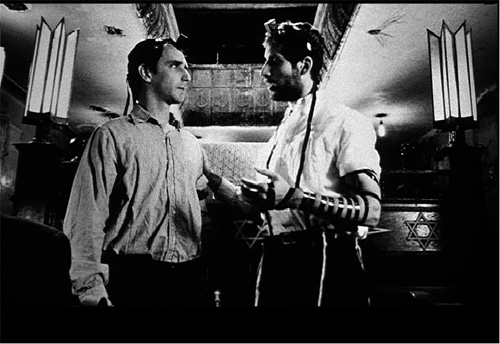
While many of the sci-fi elements are more about the mathematical context of the film. It has the tone of a sci-fi thriller mixed in with heavy drama that revolves around Jewish mysticism and the stock market. Still, the focus is on Max Cohen as he spirals down into madness over this journey with everyone from stock brokers to Hasidic Jews going after him. Adding to the intensity of the film is the hypnotic, electronic-driven score by former Pop Will Eat Itself vocalist Clint Mansell, another key collaborator of Aronofsky.
When it premiered at the 1998 Sundance Film Festival that January, it was a massive hit where it won Aronofsky won the Best Director award. The film’s release later that summer was a surprise as the $60,000 budgeted film made over $3.2 million in the box office despite its limited release. It also opened doors for Aronofsky as he garnered accolades as well as the chance to direct his sophomore film Requiem for a Dream.
Based on Herbert Selby Jr.’s book about forms of addiction through four different characters. Requiem for a Dream would be the film that would give Aronofsky mainstream attention. With a $4.5 million budget and a star-studded cast that included Ellen Burstyn, Jared Leto, Jennifer Connelly, and Marlon Wayans. The film would be one of 2000’s most acclaimed films. Even as it would give Ellen Burstyn not just a huge comeback after years of being in small film roles and TV films. It would also bring an Oscar nomination for Burstyn while it Aronofsky got more attention when he premiered the film at the 2000 Cannes Film Festival.
The multi-layered story about addiction that revolves around four individuals. One is a woman named Sara Goldfarb (Ellen Burstyn) who is an elderly widow who finds a new lease on life when she’s asked to participate on a game show. Hoping to lose weight, she takes on some weight-loss pills that would only bring more trouble to her life as her own son Harry (Jared Leto) is disturbed by this newfound addiction. Yet, Harry is also an addict of sorts as he along with his girlfriend Marion (Jennifer Connelly) and best friend Tyrone (Marlon Wayans) are addicted to heroin. Yet, they also have dreams where Tyrone hopes to escape from the streets and make his mother proud while Harry and Marion hope to open a fashion store.
The film takes place into three acts and three seasons starting with a hot summer in Brooklyn where everything seems upbeat and fine despite the addiction of its characters. The second act is set in the fall where things start to fall apart. The third and final act in the winter has all of the characters really struggling and trying to redeem themselves. The structure of the film plus Aronofsky’s hypnotic direction really takes Selby’s novel into a world where reality and drug-induced fantasies collide. Notably a scene where Sara is haunted by an image of herself and Christopher McDonald’s infomercial host. Even as it has shaking images of the characters struggling.
The film’s release was indeed shocking for audiences as Aronofsky would collide with the MPAA over some of the drug abuse scenes and some strong sexual content in the film. Though it was initially rated a NC-17, Aronofsky and Artisan studios were able to get the film released under the unrated rating though Aronofsky would release an edited version of the film through Blockbuster and retailers like Target. Despite some of the controversy the film generated, it also gave the film a lot of attention as well as box office receipts. For Aronofsky, he would gain the attention of the studios as well as a growing following of cinephiles.
The success of Requiem for a Dream gave Aronofsky the chance to go for all sorts of projects. Among them was a chance to reboot the ailing Batman film franchise for Warner Brothers though it would eventually go to Christopher Nolan. It was also during that time that Aronofsky co-wrote and produced David Twohy’s World War II submarine/horror film Below. Yet, Aronofsky had another idea in mind inspired by his trips to ancient temples in South and Central America. Originally titled The Last Man, The Fountain was an ambitious project that revolved around the Tree of Life that spans into three different time periods. Originally was to star Brad Pitt and Cate Blanchett, the film explored Aronofsky’s fascination with death and the fear it had on loved ones.
The first stage of production with Pitt and Blanchett in 2002 fell apart due to various reasons. Even with a budget of $70 million, Aronofsky’s ideas for the film fell apart though he was able to resurrect it in 2004 with new ideas that cut the film’s original budget in half. With Hugh Jackman eventually taking over Pitt’s role and Aronofsky’s then-new girlfriend Rachel Weisz in the Blanchett role. Production went underway in late 2004-early 2005 at soundstages in Montreal. While it was clear Aronofsky had a lot of heavy ideas in mind for the film. The results of the film would divide audiences.
The film’s story of a man trying to find the Tree of Life through different time periods to save his beloved seemed like a great idea. Yet, the screenplay Aronofsky wrote, that was based on a treatment he co-wrote with Ari Handel, didn’t carry much depth as audiences knew what was going to happen in the end. Some other issues involved the visual style that was very different to his previous work. Notably Matthew Libatique’s cinematography was awashed with yellow, sepia-like colors throughout the film with very little lighting in several scenes. That approach proved to be distracting while whatever structure Aronofsky aimed for seemed lost in what he wanted to say.
The film’s premiere at the 2006 Venice Film Festival was met with a divided response. Critics booed the film at a press screening while audiences gave it a 10-minute standing ovation at its public screening. The mixed reviews from audiences and critics would loom over Aronofsky as he also admitted to the film’s shortcomings while hoping to have a proper DVD release of the film very soon with footage that didn’t make it to the final cut but not as a director’s cut.
If the ambitions and long-production headaches of The Fountain had overwhelmed Aronofsky. Then his next project was going to be a far more stripped-down affair with no visual tricks and no large set pieces. It would also be a chance for Aronofsky to go into an entirely different world that is somewhat foreign to audiences and that is the world of professional wrestling. Though professional wrestling has remained popular since its boom in the 1980s from the World Wrestling Entertainment organization that featured such stars as Hulk Hogan, Andre the Giant, “Rowdy” Roddy Piper, and many others. Aronofsky wanted to focus on what happens to these greats when they face aging, health issues, and having trouble to leave that world.
Written by Robert D. Siegel, The Wrestler is about an aging wrestling superstar named Randy “The Ram” Robinson whose hey-day in the 80s is gone as he’s now wrestling for independent circuits all over New Jersey. After suffering a heart attack and his chances for a comeback to be failing, Robinson hangs out with an aging stripper who convinces him to try and make amends with his estranged daughter. The film was shot on location in New Jersey while the biggest surprise for the film came in its casting. With Marisa Tomei as 40-year old stripper Cassidy and Evan Rachel Wood as Robinson’s estranged daughter Stephanie. The biggest coup was getting the actor to play Randy “The Ram” Robinson in none other than Mickey Rourke.
Rourke was a big star in the 1980s whose career was hit by a series of bad decisions and his decision to retire from acting to have a brief career in boxing. While the mid-2000s saw Rourke appearing in more films and standing out, none of them were the big comeback roles he yearned for until Aronofsky came to him. Though Rourke wasn’t sure, Aronofsky finally convinced him to do the role as Rourke got help from former WWE legend Afa Anoa’i of the Wild Samoans to prepare for his role. With appearances from other pro wrestlers like Ernest “The Cat” Miller, Ron “R-Truth” Killings, and Necro Butcher. Rourke gave the performance of a lifetime as it would not only give him the comeback but also accolades and respect of the industry.
For Aronofsky, the film was a major hit as its premiere at the Venice Film Festival in 2008 was a major surprise. The film would give Aronofsky the prestigious Golden Lion for best film while the film would garner several critics prizes as well as two Oscar nominations for Mickey Rourke and Marisa Tomei. The film was also a major winner at the Golden Globes, a month prior to the Oscars, where Rourke won Best Actor in a Dramatic Film while Bruce Springsteen won an award for the title song. In the world of the pro wrestling community, the film was widely praised by former and current pro wrestlers with WWE chairman Vince McMahon also giving praise for the film by promoting it on his program. Rourke also made an appearance at Wrestlemania XXV where he punched Chris Jericho as part of a wrestling angle proving how much the film meant to that community.
If The Wrestler explored a man on the way out of his beloved trade, Black Swan is about a young woman finally achieving her dream role only to succumb into madness. Aronofsky’s exploration into the world of ballet is an intriguing one yet not something fans of Aronofsky’s work should be totally surprised by. The film centers around a young woman named Nina Sayer whose years of being in a New York City ballet company has finally paid off when she gets the lead role for Swan Lake. While she is a gifted yet technically-proficient ballerina that can hit all of the things needed for the persona of White Swan. What she doesn’t have is the sensuality and passion of the Black Swan.
The film stars Natalie Portman as Nina Sayer as she starts off as this innocent, child-like young woman in her 20s getting the role of a lifetime. Yet, she becomes troubled by her limitations that prevent her to play the Black Swan as the company’s director Thomas Leroy looks to another young ballerina named Lily for the Black Swan. The character of Lily is played by Mila Kunis who would exude all of the sensuality, passion, and carefree persona that the character of Nina is lacking. If the presence of Lily is troubling her, so are a few key people that surrounds Nina. It’s not just Vincent Cassel’s creepy Leroy that would make some off-putting suggestions for Nina to get into the Black Swan character. Nina’s mother Erica, played by Barbara Hershey, would fret over the mysterious rash that Nina has on her back as well as her ballet career that Erica never was able to capitalize on in her younger years.
The film is a play on not just surrealism when Nina starts to discover her dark side but also all of the things that she would encounter including a darker version of herself. One of the film’s key moments is when Nina makes a visit to the company’s former premier ballerina in Beth MacIntyre, played by Winona Ryder. The visit would reveal not just the pain it would take to become the perfect ballerina but also the psychological toll it would have as Beth would make a violent spectacle towards Nina. That scene along with other scenes including a lesbian sex scene between Nina and Lily would play into Nina’s troubled mind that was increased by a drug Lily dropped into Nina’s drink.
The film would eventually lead to the climatic Swan Lake ballet that has Nina front and center as all of her emotions and mind games would come into play. It is definitely Aronofsky’s most dazzling and surreal film of his career so far. Not surprisingly, the film’s protagonist would carry the similarities that all of Aronofsky’s protagonist would endure. Not just madness but also obsession, aging, and self-realization. Unlike the protagonists that Aronofsky had covered, whether Nina had faced was true or in her mind remains unknown. It is definitely Aronofsky stepping up his game as a director proving that he can warp the mind of his viewers.
With already five feature films to his credit and a hell of a career it has been. Darren Aronofsky is definitely going to be a director that will keep people excited. While he’s lined up next to direct the sequel to the much-maligned 2009 X-Men spin-off film X-Men Origins: Wolverine that will be simply called The Wolverine. Some hope Aronofsky will bring more to the famed character as well as doing something different with the superhero comic-book blockbuster genre if 20th Century Fox actually allows him to have some control. Another project Aronofsky wants to do is to re-boot and update Robocop which had been in the works for years but got shut down when MGM filed for bankruptcy. Whatever Darren Aronofsky will have up his sleeve. He’s got five films to prove that is definitely one of the best rising talents working today.
© thevoid99 2010
Monday, December 13, 2010
Black Swan
Darren Aronofsky scored a major hit with 2008’s The Wrestler about an aging professional wrestler dealing with aging and not having to wrestle again in the wake of a legendary rematch that would give him a comeback. The film helped resurrect the career of its star Mickey Rourke while Aronofsky won back some acclaim following the mixed reaction towards 2006’s The Fountain. For his fifth feature film, Aronofsky enters into the world of ballet as he creates a companion piece for The Wrestler. Except this time around, it’s about a young ballerina who finally gets the top role for Swan Lake only to have her role threatened by another young ballerina and her own state of mind for the film entitled Black Swan.
Directed by Darren Aronofsky with a screenplay by Mark Heyman, Andres Heinz, and John McLaughlin that is based on Heinz’s original story. Black Swan follows a young ballerina who works for the New York City ballet company as her chance to play the lead for the production of Swan Lake is happening. While she is known to be talented and has all the elements to play the White Swan, a new ballerina emerges in the company as she has all of the elements to play the Black Swan. While dealing with her overbearing mother, a former ballerina, and a demanding ballet director. The young woman would suddenly descend into madness. Starring Natalie Portman, Mila Kunis, Barbara Hershey, Winona Ryder, Benjamin Millepied, and Vincent Cassel. Black Swan is a surreal yet eerie film from Darren Aronofsky.
Nina Sayer (Natalie Portman) is a young ballerina in her early 20s who spends her days working for the New York City ballet company with Thomas Leroy (Vincent Cassel) as its director. Though Nina still lives with her mother Erica (Barbara Hershey), a former ballerina, Nina dreams of being the lead in a ballet. Then when the news came that veteran ballerina Beth MacIntyre (Winona Ryder) is leaving the company after a falling out with Leroy. Leroy announces plans to create a new ballet for Swan Lake as he searches for the lead. With Nina having all of the elements to play the White Swan, she doesn’t have the qualities to play the Black Swan.
While Leroy chooses Nina to play the Swan Queen, Leroy tries to get the technically-proficient Nina to loosen up in order to play the Black Swan. Even as Leroy is starting to look at a new ballerina in Lily (Mila Kunis), who has all of the sensual qualities and passion that is needed for the Black Swan. With Nina still struggling to get into the role with Leroy’s creepy suggestions which include for her to masturbate. Nina notices that she has scratch marks all over herself along with cuts. Even as Erica becomes concerned almost to the point of insanity while Nina becomes uncomfortable with Lily’s presence though Lily tries to help Nina for the role of Black Swan.
With Nina becoming more overwhelmed with her attempt to go into the character along with the mysterious scratches and cuts she’s having. Lily tries to offer Nina some relaxation where the two go clubbing and partying one night where everything become surreal. When Nina is late for a rehearsal, it becomes clear that Leroy is already thinking of using Lily as an alternate which only upsets Nina. Even as her relationship with her mother deteriorates along with her own perception of reality. With the night of Swan Lake approaching and Erica becoming more concerned for Nina’s state of mind, Nina decides to do Swan Lake despite Lily’s presence and Leroy’s demands.
While the film can be perceived as a character study of sorts, it’s really a study about madness and how far creativity can destroy the mind. The screenplay dwells into the world of ballet where a director is trying to recreate Swan Lake while trying to get his lead ballerina to go all the way to play the role of the Swan Queen. Yet, it would require two key elements. Technical proficiency and sensuality. Unfortunately for Nina Sayer, she lacks the latter.
Nina starts off a young woman with a child-like personality of sorts as she lives with her mother and lives in a room filled with girlish objects including a ballerina music box and stuffed animals. While there’s no back story about her years of dancing, there's no need for back story as the audience knows that she is a young dancer that has worked for years. While she is seen as an innocent dancer that doesn’t like to go into rumors or insult other dancers. It’s also her flaw when she tries to audition for the lead role of Swan Lake through an innocent form of flirtation towards Leroy.
Once she gets the part, not everyone is happy about the news. Notably the character of Beth MacIntyre, the former ballerina lead who is on her way out as Nina tries not to insult or hurt her. Erica meanwhile, is a troubled stage mother who makes these strange, dark paintings for a living while is extremely concerned about Nina’s fingernails and cuts along with the mysterious rash on her back. This would eventually affect Nina’s state of mind as everything that she is would start to unravel through Leroy’s attempts to get her to be sensual as well as the presence of Lily.
Lily is first seen as someone who is more social, more outgoing, and is willing to engage into conversations. While she is also a great dancer, she isn’t as disciplined or as technically-proficient as Nina. Yet, she is able to win over many peers though Nina feels threatened despite Lily’s good-natured persona. Lily would try to break Nina out of her shell but it would have repercussions as the world surrounding Nina would be confusing. While there were early hints of Nina seeing a double, it would intensify along with the mystery of the rash she is having. Even as it came to the climatic Swan Lake dance where it would go into a world of surrealism.
While the screenplay explores its central character as well as the demanding world of ballet. It’s the direction of Darren Aronofsky that really brings the story to life. While with any film that is about ballet will always have a reference to the Michael Powell-Emeric Pressburger 1948 classic The Red Shoes. Aronofsky doesn’t use many of those reference except a few key shots. Notably when Nina spins around from her point of view. Yet, Aronofsky is more interested in what ballet dancers do for their body and how dedicated they are into honing their craft. Even as he has shots of Nina’s feet as it’s on the ground spinning along with the movement of the ballet. The climatic ballet scene is shot as if the audience is in the middle of the ballet as a participant.
Aronofsky’s engaging direction really goes into the mind of the protagonist as she is falling apart. Even when he knows when to use humor at the right places. Still, he is intent on trying to figure out what is happening to this young girl. Nina in many ways is like some of the other characters that Aronofsky had featured in his previous films. She has the obsessive nature of Pi’s Max Cohen and the determination of The Wrestler’s Randy “The Ram” Robinson. Yet, she will also have manic mind of Requiem for a Dream’s Sara Goldfarb. While Aronofsky said that this film is a companion piece to The Wrestler. There are similarities since both Randy and Nina use their bodies and physicality to express their art form. While Randy and the character of Beth MacIntyre are individuals who are on their way out due to aging. Nina is at a place where she’s arrived.
Aronofsky uses very deep close-ups into Nina’s body to see how the body reacts to her changes. Even with the use of visual effects where Nina goes into this literal transition into the character she plays whether its real or not. Aronofsky’s take on surrealism is a bit dream-like as the film starts off with a nice dream and then becomes a nightmare. Aronofsky even has to use his camera to play mind games with the audience about whether what Nina is seeing or feeling is real or a fantasy. He leaves all of that to interpretation while he is more interested in seeing this young woman descend into madness. The result isn’t just Aronofsky upping his game as a visual-minded director but also as a storyteller as he creates what is definitely a mesmerizing yet hypnotic film.
Aronofsky’s longtime cinematographer Matthew Libatique does an amazing job with the film’s photography that is mostly straightforward for many of the film’s exterior NYC settings and the interior scenes at the ballet rehearsal studio and at Nina’s home apartment. Even as it features a bit of grain to give it a rougher look while for the film’s more dazzling scenes like the club scene and the final ballet. The camera work is truly a marvel in the way the lighting plays to the film’s protagonist emotions as there is some natural lighting early on to more artificial, stylish images for her descent. Libatique’s work is truly the highlight of the film’s technical department.
Editor Andrew Weisblum does an excellent job with the film‘s editing as it is paced in a mostly leisurely approach for the non-ballet scenes. When it came by to do the ballet, it becomes rhythmic as it plays to the movement and music. Weislbum’s cutting also plays to the element of suspense with jump-cuts, dissolves, and other fade-to-black transitions to create an element of confusion in the mind of its protagonist. It is definitely some masterful work by Weisblum.
Production designer Therese DePrez, along with set decorator Tora Peterson and art director David Stein, creates some fantastic set pieces for the film. Notably Nina’s room that is filled with girlish objects while Erica’s room is filled with paintings. The set for the ballet of Swan Lake is definitely dazzling for its look as it would play up to the surrealistic tone of the film. Costume designers Kate Mulleavy, Laura Mulleavy, and Amy Westcott do a spectacular with the film‘s costumes from the more innocent, casual look that Nina sports with light clothing to the black clothing that Lily wears. Even as the costumes in the ballet scene and in the parties would play to the personalities that goes on throughout the film as is another of the film’s technical highlights.
Visual effects supervisor Dan Schrecker does some brilliant visual effects for some of the film‘s surreal images as the character of Nina starts to transform into a literal version of the Black Swan, whether it was real or not. Even with the way the skin appears on her to move is dazzling as it great effects done in a very minimal way. Sound designers Brian Emrich and Craig Henighan create some great sound design sequences for the film. Notably in the way it plays up to the film’s suspenseful tone as the sound helps set the mood for Nina’s emotional/mental descent.
Longtime Aronofsky music composer Clint Mansell creates a dazzling yet enchanting score to the film while providing some fantastic arrangements to Pytor Ilyich Tschaikovsky’s composition for Swan Lake. Mansell creates some lush themes for Nina’s innocence along with more broader and heavier themes for Nina’s descent. The use of Tschaikovsky’s music is more intensified for its performance as well in playing the drama of Nina’s world. The soundtrack features some hypnotic electronic music that includes pieces by the Chemical Brothers that heighten the relationship between Nina and Lily in the club scene.
The casting by Mary Vernieu is definitely amazing as the film features cameos from Aronofsky regulars Mark Margolis and Aronofsky’s parents as ballet patrons who attend a party while Stanley Herman reprises his perverse role of Uncle Hank from Requiem for a Dream. Other notable small roles include Ksenia Solo as a gossip-talking ballerina, Benjamin Millepied (who is also the film’s choreographer) as the lead ballet dancer, and as club suitors, Toby Hemingway and Sebastian Stan are very good in their small roles. Winona Ryder is great in a small but terrifying role as Beth, a veteran dancer who is on her way out as she deals with being replace to the point of becoming an extremely psychotic woman trying to bring fear to Nina.
Barbara Hershey is also really good as Erica, Nina’s mother who is obsessed with Nina wanting to get her part as way to fulfill her own missed opportunities only to realize how far Nina is descending. There’s times where Hershey can become creepy and at times, scary yet she brings some unexpected sympathy to her character who is really worried about her daughter unaware that she is probably responsible for the way she constrained her daughter. It’s a remarkable performance from the veteran Hershey as she is getting a real, meaty role. Vincent Cassel is awesome as the creepy yet demanding Thomas Leroy. While his idea of direction can range from just being helpful when Nina feels despondent while he can also be cruel. It’s a very complex role from Cassel, who really sells the idea of a man that can go too far when he is trying to get Nina to become sexually open. There’s a crudeness to this role as Cassel is superb in playing someone who is trying to create a great work only to realize that he can destroy someone’s persona.
Mila Kunis gives what is definitely her finest film role of her career as Lily. Kunis exudes all of the sexuality, the passion, the joy, and liveliness that is needed for the Black Swan. Even off the set where she is just fun, full of life, and even being sympathetic as she offers Nina friendship. Kunis also brings some light humor to the role while also reveling into the dark side when she tries to get Nina to chill out. It’s a real spectacular role from Kunis, who had been known for many as Jackie Burkhart from That 70’s Show for eight seasons and then breakout in the Judd Apatow-produced comedy Forgetting Sarah Marshall. With this performance, this is Kunis finally stepping as an actress that can really prove she can bring a lot more to the table when its needed.
Finally, there’s Natalie Portman in what is definitely a tour-de-force performance as Nina Sayer. Portman really goes into this young woman’s troubled mind where she does start out as this child-like woman. When she tries to break out of that child-like persona, Portman truly exemplify Nina’s innocence as well as her curiosity. When she is trying to get into the role of the Black Swan, it is done with a natural awkwardness as she tries to masturbate at one point while begins to show fear as she sees this dark persona. Portman really sells the fear of her character while is more at ease in playing her dark doppelganger whenever she pops up for a few seconds during the film. It’s a really strange yet mystifying performance from Natalie Portman as it is also one of her most defining roles of her career.
Black Swan is an eerie, hypnotic, and exhilarating film from Darren Aronofsky that features top-notch performance from Natalie Portman and Mila Kunis. While it may not have the hyperactive visuals of Requiem for a Dream nor the grit of The Wrestler. It is a film that is Aronofsky stepping up his game as a director who can truly warp the minds of his audience. Fans of Natalie Portman will no doubt rank her performance very high while the film also gives Mila Kunis a real breakout performance. In the end, Black Swan is a haunting yet dazzling film from Darren Aronofsky.
Related Reviews: The Red Shoes - The Auteurs #2: Darren Aronofsky
© thevoid99 2010
Friday, December 10, 2010
The Wrestler
Originally Written and Posted at Epinions.com on 2/21/09 w/ Additional Edits.
Professional wresting is something near and dear to fans as they watch men battle out in the ring, entertain audiences, do high-flying stunts, and moves in front of thousands of people in an arena with millions watching at home. Yet, some will say that pro wresting is fake but its defenders will argue passionately about the validity of pro wrestling. While it's largely dominated by Vince McMahon and his World Wrestling Entertainment company, stars that once worked for the company would often find themselves working in the world of independent wrestling as they wrestle people in high school gyms and small venues. It's a harsh reality that happens to those once their star is faded. Now a story about the aftermath of superstardom and a man dealing with reality as he faces a life outside of the ring is told in a film simply entitled The Wrestler.
The Wrestler tells the story of Randy "The Ram" Robinson, a man who was a big star in the 1980s until in the next decade and the present. He's now wrestling in the independent circuits with little money while working in delis as he's getting a chance to wrestle to larger crowds again to have a rematch with one of his legendary opponents. Instead, health problems forces him to face life outside of wrestling where he befriends a stripper who convinces him to try to mend his relationship with his estranged daughter. Directed by Darren Aronofsky of Pi & Requiem for a Dream fame with a script written by Robert D. Siegel, the film reveals the harsh realities of pro wrestling and what happens to star wrestlers after their time in the limelight. Playing the title character is Mickey Rourke in his first major leading role in ages. Also starring Marisa Tomei, Evan Rachel Wood, Todd Barry, and several pro wrestling luminaries like Ernest "The Cat" Miller and Ron "The Truth" Killings. The Wrestler is a heartbreaking tale of redemption and realism from Darren Aronofsky.
Randy "The Ram" Robinson was a top wrestler in the 1980s but his limelight has faded since. Now working at the New Jersey independent wrestling circuit, Randy can barely keep funds going to pay his rent where he lives in a trailer park and at times, his van. Money often goes to get his trademark blond hair dyed, skin tanned, and steroids when he needs them for his built physique. Wrestling in high school gyms and other halls to small crowds and even attend autograph sessions with few people going. Randy goes to a nearby strip club to meet a friend and stripper in Cassidy (Marisa Tomei) who is going through a hard time as patrons are favoring younger strippers over her. When his promoter (Todd Barry) announces that he plans to have a big rematch between Randy and his old rival the Ayatollah (Ernest "The Cat" Miller) that happened in Madison Square Garden 20 years ago. Everything seems up as it might be Randy's ticket back to the big time. Instead, Randy suffers a heart attack following a brutal and bloody hardcore style wrestling match.
When he hears that he can't wrestle again and that it might kill him if he does, he's forced to face a life without wrestling. Already working at a supermarket to scrape by, he asks the manager if he can get more work as all of his upcoming matches cancelled. After hanging out with Cassidy at the club, Randy decides to renew contact with his estranged daughter Stephanie (Evan Rachel Wood) who doesn't really want to do anything with him. With Cassidy's help, whose real name is Pam and has a 9-year old son, Randy goes for another attempt to reconnect with Stephanie that goes well as he reveals his regrets and flaws. While Cassidy's help managed to spark a possible relationship, Cassidy felt it crossed the line about work and real life. With Randy struggling to deal with reality and other things, he reluctantly decides to get back into the wrestling circuit in deciding to wrestle the Ayatollah. It's at this time he gets some unexpected support.
The idea of pro wrestling to an average viewer is pure spectacle with high drama, fast moves, big production values, and pure entertainment. Today's leading stars like John Cena, Chris Jericho, HHH, Randy Orton, Matt & Jeff Hardy, Edge, Christian, and dozen of others are living the high life in the world of wrestling in the WWE. Yet, what would happen to a wrestler after his time in the limelight. That's what the concept of this film is about. For many who had trained and lived to entertain audiences in arenas, small halls, or whatever, it's a moment that they love to do. Yet, what happens when they're unable to wrestle. It becomes very difficult for aging wrestlers in the real world as they're forced to take on jobs that can barely keep by while as wrestlers in the big time, they had lots of money.
Screenwriter Robert D. Siegel does a brilliant job in capturing the realism and craftsmanship that goes into the world of pro wrestling. How wrestlers talk about doing moves, who should win, what kind of instructions that they should go through. Yet, it's really a study about a man trying to find redemption for his mistakes and regrets about his relationship with his daughter while trying to accept the fact that he is who he is. Even as the real world proves to be troubling for him while wanting companionship with a stripper whose own days in the profession is waning. Siegel's script is wonderfully structured with the first act about the Ram wrestling and his eventual heart attack, the second act is him trying to renew his relationship with his daughter and try to find life outside of wrestling. The third and final act about his acceptance and lure of the ring which he can't seem to get away from because it's his environment as the real world is just too much for him. It's truly a fantastic script that explores a man dealing with the real world and all he wants from people is that he can bring them a smile.
Director Darren Aronofsky has been known for being a director that's all about grand visuals or techniques that are haunting to any story he's telling. With this film, Aronofsky strips away all of the stylish technique of his past films to go for something simpler and to the point. Inspired by the realist, documentary filmmaking style of Belgian directors the Dardenne Brothers. Aronofsky goes for a simpler, hand-held style to capture the action and drama that goes on in and out of the ring. While it's a looser style of filmmaking for Aronofsky to do. It works well for the story as he's letting the audience know what is going on in the wrestling world while following this man in his life. The hand-held work isn't as shaky as other films but it's truly engaging in how Aronofsky captures the drama and intensity of pro wrestling. To call pro wrestling fake is really an insult to an art form that takes a lot of hard work and dedication that these people do to entertain an audience. In the end, Darren Aronofsky crafted a brilliant film that is truly real but at the same time troubling in what goes on in the world of professional wrestling.
Cinematographer Maryse Alberti does a fantastic job with the film's stripped-down photography in its hand-held style. Without delving into any kind of stylish lighting schemes or flashy scenery. Alberti's work in its New Jersey location goes for gritty realism with bits of grain and action that goes on inside the ring. With its bright yet grimy look of the film in its daytime exterior scenes to the shady, colorful nighttime scenes at the strip club. Alberti's work is truly superb in its realism and atmosphere of the film itself. Editor Andrew Weisblum does an excellent job with the film's editing in its rhythmic cutting. Notably the intensity of the wrestling stuff that includes a scene that goes back in forth of Randy after a hardcore match and then going into that hardcore match. Weisblum's smooth transitions, jump-cut edits, and rhythmic pacing gives the film a leisurely pace while a faster one for the wrestling scenes.
Production designer Tim Grimes with set decorator Theo Sena and art director Matthew Munn do a very good job with the look of Randy's trailer and beat up Dodge Ram van on the inside. Plus the look of the ring from its shoddy, intimate look to the more sprawling feel of the match at the end that looks like most wrestling events. Costume designer Amy Westcott does a great job with the costumes from the tights and clothes that Randy wears in character to the more street clothes that he has. The clothes that Marisa Tomei wears from the t-shirts and jeans that she wears outside of the strip club to the more trashy clothing with a thong that she wears as a stripper. Sound designer Brian Emrich does an amazing job capturing the atmosphere of the strip club and New Jersey along with intense excitement and carnage that goes on in the ring with fans cheering. Emrich's work in capturing that energy and passion that fans have for wrestling is truly phenomenal.
Longtime Aronofsky collaborator Clint Mansell brings a plaintive, somber score to the film to complement the drama and emotion that plays throughout the film. Yet, it's the film's soundtrack that is filled with dance pieces from Madonna and Lil' Wayne along with hip-hop music providing some of the strip club music. Another portion of the film's soundtrack is the barrage of 80s metal music from hard rock legends like Guns N' Roses' Sweet Child O'Mine being the theme music for Randy in his big match, with a special thanks towards Axl Rose. Other 80s metal music comes from acts like Slaughter, Cinderella, Motley Crue, Accept, Scorpions, Quiet Riot, Firehouse, and Ratt provide some nostalgia and the soundtrack to Randy's life that Cassidy seems to share. For all of that cheesiness that hair metal brought, it was good time music and to have Mickey Rourke and Marisa Tomei sing along to Round and Round by Ratt provides an entertaining moment.
Yet, the most heartbreaking song of the soundtrack is its title track from Bruce Springsteen. The acoustic ballad featuring a somber piano and smooth orchestration is carried by Springsteen's gravelly voice filled with pain and heartache. It is the song that captures the sadness of the story as it is played in its final credits. It's truly one of Springsteen's best songs and a damn shame that the Academy Award chose not to nominate it and end up choosing 3 songs instead of five for its category.
The casting by Mary Vernieu and Suzanne Smith is excellent with appearances from Aronofsky cohorts like his parents as people at the market, Ajay Naidu as a medic, and Mark Margolis as Randy's landlord. From the wrestling world, there's Ron "R-Truth" Killings, the Blue Meanie, Johnny Valiant, Lex Lethal, and Necro Butcher as himself wrestling Rourke in the hardcore match. Another famed pro wrestler in former WCW star Ernest "The Cat" Miller is excellent as the Ayatollah by playing it straight out of the ring but brash inside the ring. Todd Barry is very good as the promoter who organizes the match between Randy and the Ayatollah. Evan Rachel Wood is great as Stephanie, Randy's estranged daughter who definitely wants to do nothing with her father after years of abandonment and neglect. Wood brings in the kind of anger that her character is carrying as well as the heartbreak over the fact that her father was never around as it's fantastic performance from the young actress.
Marisa Tomei is brilliant as Cassidy, an aging stripper whose days are being numbered in favor of younger strippers. Tomei truly has an amazing body for her age yet its her sincerity in her performance that really shines. Tomei also reveals the balance that she has that Randy doesn't have in terms of her identity as outside of the club, she's Pam. Tomei's performance is definitely great to watch along with the chemistry she has with Mickey Rourke as it's truly a superb supporting performance from the veteran actress.
Finally, there's Mickey Rourke in what is the ultimate comeback role and certainly his greatest performance to date. The actor who was considered one of the finest actors in the 1980s with performances in films like Barry Levinson's Diner, Francis Ford Coppola's Rumble Fish, Michael Cimino's Year of the Dragon, Stuart Rosenberg's The Pope of Greenwich Village, Adrian Lyne's 9 ½ Weeks, Alan Parker's Angel Heart, and Barfly only to crash with bad decisions in the early 90s before going into a brief boxing career. After recent films like Robert Rodriguez's Sin City and Tony Scott's Domino, Rourke is now officially back with a performance that is truly heartbreaking and nearly identical to his own life.
The performance Rourke gives as Randy "The Ram" Robinson is truly phenomenal where in the ring. He's a guy that likes to give people their money's worth for entertainment as Rourke does all of his own wrestling with help from Afa Anoai of the Wild Samoans tag team from the 1980s whose daughter appears as a pharmacist. Rourke sells his work in the ring as well as the grit and weariness that goes on. Outside of the ring, we see Rourke trying to please people and be a nice guy while dealing with the fact that he is a screw-up who is just trying to redeem himself in front of his daughter. There's a lot of sympathy he brings to his character as he is just trying to make people happy and find some kind of companionship as it's a remarkable and certainly a career-defining role for Mickey Rourke.
***Additional DVD Content Written on 12/4/10***
The 2009 Region 1 DVD for The Wrestler from 20th Century Fox presents the film in the widescreen format of 2:35:1 aspect theatrical ratio plus 5.1 Dolby Surround Sound in English plus Dolby Surround in Spanish plus English and Spanish subtitles. The DVD special features includes a music video of The Wrestler written and performed by Bruce Springsteen as he sings the song inside a ring and lifting weights. The other major special feature is a 42-minute behind-the-scenes featurette called Within the Ring.
The documentary features interviews with Aronofsky, various crew members, wrestlers, and actress Evan Rachel Wood as they talk about the making of the film. Though Mickey Rourke and Marisa Tomei weren’t interviewed, they were seen throughout during the film’s 35-day production which spanned from late January to early March of 2008 all over New Jersey along with a few scenes in Philadelphia. Aronofsky revealed that he had an idea for The Wrestler some time after making Requiem for a Dream as he intended to make it into a period piece set in the 1970s before Vince McMahon Jr. decided to combine all of those pro wrestling territories into what would become the World Wrestling Federation (later re-named World Wrestling Entertainment).
Yet after creating The Fountain and releasing it in 2006, Aronofsky decided to change his approach after seeing both King Kong Bundy and Tony Atlas wrestle for independent circuits as he decided to focus on a character. With the cinema verite style, Aronofsky wanted to go for realism while also wanting Mickey Rourke for the role. For many of the wrestling scenes, it was nearly improvised while a stunt double were used for some of Mickey’s wrestling scenes. Aronofsky revealed that he didn’t storyboard for the film in order to create something real. Even in the scenes at the supermarket where Darren’s father talked about the time he took Darren to see a wrestling show as a kid in a match between Tony Atlas and Hulk Hogan.
The overall featurette is quite sobering about the world of independent pro wrestling along with the veterans who are still doing it to make money. At the same time, there’s some funny moments involved including a credits sequence where Aronofsky and crew members fly over the top rope and land on safety floors. Yet, it ends with an outtake of Rourke trying to give Marisa Tomei a lap dance while complaining about the music.
Another featurette that only appears in the Region 1 Blu-Ray release is a 20-minute roundtable discussion from real-life wrestlers with moderator Damon Andrews. Discussing the film are Diamond Dallas Page, “Rowdy” Roddy Piper, Lex Luger, Greg “The Hammer” Valentine, and Brutus “The Barber” Beefcake. They all expressed their opinions on the film and Rourke’s performance, which they praised, while Piper talks about some the aspects of Rourke’s performance that surprised him. Luger and Page also talk about the fact that pro wrestling isn’t fake considering the injuries they suffered over the years. Even as Piper delve into the difference of acting and the real emotions that goes on inside the ring.
The discussion about life after the big time where both Piper and Luger reveal a need for a union and a pension plan for wrestlers once they reach a certain age and are forced to abuse their bodies by wrestling independently for little money. Though Valentine was able to put a humor about the need of health insurance. Beefcake also reveal the importance of fans while Page reveals that once the fans see you from the curtains, that feeling is more important than any kind of drug out there. The overall featurette is definitely a great companion piece to the film as it gives wrestling fans and non-wrestling fans a chance to respect pro wrestling as well as the wrestlers themselves.
***End of DVD Tidbits***
While this film might have something to offer for fans of pro wrestling. Its realism and story along with its study of what wrestlers have to go through to entertain people might be too much for some. In many ways, what happens to a character like Randy "The Ram" Robinson to go from being a top star in the 1980s to now working for so little in small independent circuits shows a much harsher reality of wrestling industry. The blame can be placed on a top corporate like the WWE for not taking care of their employees in the aftermath. It's clear that wrestlers who are retired and not really able to find something to do with their life outside of the industry should get a pension plan. It's a film that clearly could be too much for some longtime fans of wrestling to deal with as the stars that people seem to love struggle to get by as they either couldn't deal with reality or risk their bodies and health to entertain audiences for one last time.
To say pro wrestling is fake is once again, insulting to those who do this for a living. We cheer for the faces and boo the heals but what they're doing is art. They do high flying moves, risk their bodies, and compete against one another for the sake of entertainment. Having to cheer or boo those guys is what they wanted to hear and they deserve a bit more credit than that. It's clear that even top guys like John Cena, Jeff Hardy, Randy Orton, and Chris Jericho understand that while paying much respect to the guys that came in before them (though Jericho in his character on TV and in the ring isn't along with Orton). To shortchange this art that they do, how they set up what moves to do and what they must do to their bodies clearly shows the brilliance and sacrifice that is the art of pro wrestling or as some like to call it, sports entertainment.
The Wrestler is a heartbreaking yet engrossing film from Darren Aronofsky and screenwriter Robert D. Siegel featuring a masterful performance from Mickey Rourke. While the film isn't as good as Aronofsky's 2000 film Requiem for a Dream for some of his fans, The Wrestler is really his most accessible film to date in its simplicity. Along with excellent supporting work from Marisa Tomei and Evan Rachel Wood, it's a film that is hard to watch at times but overall satisfying in its storytelling. For Mickey Rourke, it's a real comeback role for an actor that had been written off for so many years as he's given a chance to redeem himself. Hopefully, he can get his career back on track and get better roles as he deserves all of the accolades he's receiving. In the end, The Wrestler is a brilliant, engaging, and powerful film from Darren Aronofsky.
© thevoid99 2010
Subscribe to:
Posts (Atom)