Showing posts with label klaus kinski. Show all posts

Monday, March 25, 2024

That Most Important Thing: Love


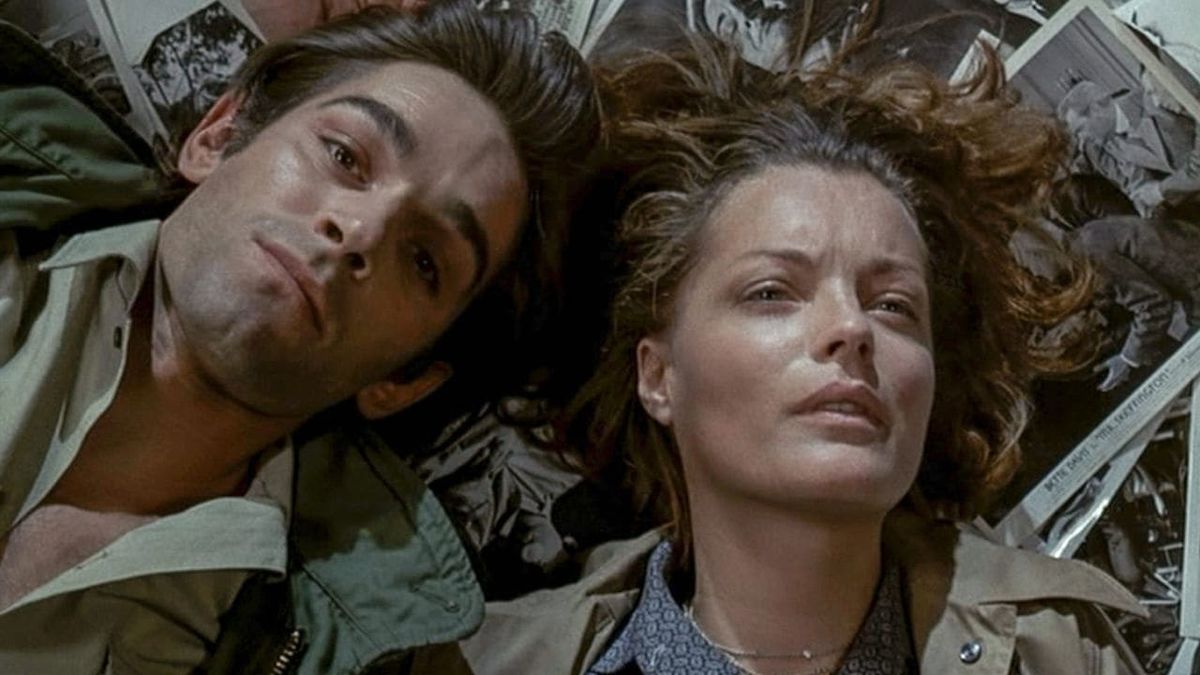
Based on the novel La nuit americaine (Day for Night) by Christopher Frank, L’important c’est d’aimer (That Most Important Thing: Love) is the story of a B-movie actress who falls in love with a photographer despite the fact that she’s married as they keep their feelings for one another amidst the chaotic scene that is show business in France. Directed by Andrzej Zulawski and screenplay by Zulawski and Frank, the film is an exploration of a love affair as they try to do something together amidst many obstacles including her husband. Starring Romy Schneider, Fabio Testi, Jacques Dutronc, Claude Dauphin, Roger Blin, Michel Robin, and Klaus Kinski. L’important c’est d’aimer is a gripping and evocative film from Andrezj Zulawski.

The film revolves around a photographer who crashes into a softcore porn film set where he catches the eye of its star as they would long for each other even though she is married to a photo collector whom she’s morally obligated to as she is given a chance to be in a play. It is a film that doesn’t have much of a plot as it’s more about two people in the entertainment industry who are both at a point where they’re unsatisfied and want to do something great. The film’s screenplay by Andrezj Zulawski and its original author Christopher Frank is largely straightforward in its narrative yet it is more about this idea of love as it relates to these two people who are in love with each other but can’t really express it as they have obligations to other things and other people. The photographer Servais Mont (Fabio Testi) would crash a film set to get some photos while he makes money shooting pornography for his benefactor Mazelli (Claude Dauphin) while tending to his father (Roger Blin) who doesn’t have a home as well as visit his mentor Raymond Lapade (Michel Robin) who is dealing with his ailing health.

Upon meeting the B-movie actress Nadine Chevalier (Romy Schneider) whose career has waned to the point that she’s doing softcore porn films is fascinated by Mont and his photography as she is eager to do something other than the movies she’s making for money as well as to fund the photography collection of her husband Jacques (Jacques Dutronc). Mont meets up with the German actor Karl-Heinz Zimmer (Klaus Kinski) and a play director in Laurent Messala (Guy Mairesse) in creating an adaptation of Richard III from a script by Lapade as Mont would give them the money he borrowed from Mazelli in the hopes it would revive Nadine’s career as long as no one knows where the money came from. Yet Jacques would notice something as well as it would play into some troubling events as well as revelations towards his wife and her feelings for Mont.

Zulawski’s direction is stylish in the way he captures the sense of melodrama between two people as it is shot on location in Paris though Zulawski chooses to avoid many of the city’s landmarks. While there are some wide shots in the film, much of Zulawski’s direction involve some unique tracking and hand-held camera shots with a lot of emphasis on intimacy through the close-ups and medium shots. Notably in scenes in hallways as well as restaurants, cafes, and other places where there is this sense of energy that is happening but also a lot of chaos. It also plays into this world of art as Nadine and Jacques’ bedroom is filled with film posters and film memorabilia though there’s no bed except for a mattress on the floor. Zulawski also plays into this world that is also full of debauchery as the pornography that Mont shoots isn’t just filled with a lot of homosexuality but also things that push him to the edge as he ponders if there’s any kind of infatuation or emotion involved in these sexual exploits he’s watching. In Nadine, Mont sees someone who isn’t that kind of extreme but a woman that is desperately need to be loved although Jacques does treat her well.

Zulawski would also play into this unconventional presentation of Richard III that features samurai costumes with Zimmer being this charismatic and intense figure who would help Nadine. Yet, the response to this play isn’t what anyone expects as it leads to this third act where a lot of emotions come into play. Notably as Zulawski’s compositions become more and more invasive to see Mont, Nadine, and Jacques unravel in some way with those associated also realizing their own sense of futility. Even as Mont becomes distant following some personal losses as well as realizing Jacques’ own intentions in relation to Nadine as she becomes this prize for these two men yet neither are interested as she has become troubled over what has happened while also believing that love doesn’t exist. Still, Zulawski would play into this sense of melodrama that looms throughout as it plays into these people who are entangled into a world of desire in both the personal and emotional. Overall, Zulawski crafts a rapturous and exhilarating film about a photographer’s infatuation with a fading B-movie actress.

Cinematographer Ricardo Aronovich does amazing work with the film’s cinematography with its emphasis on heightened lighting in some scenes to play into the look of a photo shoot or a film set as well as some colorful yet natural lighting for many of the film’s interior settings. Editor Christiane Lack does excellent work with the editing as it is largely straightforward with a rhythmic cuts while along shots to linger and only cut for dramatic effect. Production designer Jean-Pierre Kohut-Svelko does brilliant work with the look of the homes of Mont and the Chevaliers as well as the look of some of the photo sets as well as the theater presentation. Costume designer Catherine Leterrier does fantastic work with the costumes as a lot of it is casual with the exception of the flamboyant clothes that Zimmer wears as well as the stylish dresses that Nadine wears.

Makeup artists Didier Lavergne and Massimo De Rossi, along with hairstylist Jean-Max Guerin, do nice work with some of the makeup that the characters wear whether it was for the play or to play into their flamboyance personalities. The sound work of Jean Neny, Maurice Laumain, and Jacques Gerardot is terrific as it is largely straightforward as it plays into the natural atmosphere of the locations as well as how cafes sound when it is busy. The film’s music by Georges Delerue is phenomenal for its soaring orchestral score filled with themes that play into the drama with its usage of string arrangements that also add to the sense of longing and melodrama as it is an absolute highlight of the film.

The film’s wonderful ensemble cast feature some notable small roles from Nicoletta Machiavelli as Lapade’s wife Luce, Katia Tchenko as a whore that is part of Mazelli’s pornographic presentations, Jacques Boudet as a friend of Jacques in Robert Beninge, Gabrielle Doulcet as Mazelli’s wife who is fond of Mont, Guy Mairesse as the play director Laurent Messala who is a flamboyant individual that had unconventional ideas for the play, Roger Blin as Mont’s father who crashes at his son’s home as he laments over his own failures in life, and Michel Robin in a superb performance as Mont’s mentor in writer Raymond Lapade who wrote an adaptation for Richard III while dealing with his ailing health. Claude Dauphin is excellent as Mazelli as Mont’s benefactor who also makes Mont shoot pornographic photos for his own joy as well as be this slimy figure that likes to run things as if it’s a criminal organization with some awful people.

Klaus Kinski is incredible as Karl-Heinz Zimmer as this once revered actor desperate to have a comeback as he also helps out Nadine as Kinski is this intense figure who is openly bisexual as well as be someone who refuses to take criticism as it is one of his finest performances. Jacques Dutronc is brilliant as Jacques Chevalier as a photo collector that is hoping to get some financial opportunities in his wife’s attempted comeback as he is this eccentric individual who is quite funny at times but is also ruthless whenever things don’t go his way as it is this offbeat yet engaging performance. Fabio Testi is amazing as Servais Mont as this photographer who is tired of shooting pornography as he falls for Nadine while funding a play in the hope he can revive her career from afar while still be infatuated with her. Finally, there’s Romy Schneider in a sensational performance as Nadine Chevalier as this once-revered actress now doing B-movies and softcore porn films as she deals with a fading career but also her feelings for Mont but also loyalty towards Jacques as there is this sense of anguish and angst as it is truly one of her most defining performances in her illustrious career.

L’important c’est d’aimer is an outstanding film from Andrezj Zulawski that features a spectacular leading performance from Romy Schneider. Along with its ensemble cast, gorgeous visuals, its study of longing and passion, and Georges Delerue’s intoxicating music score. It is a film that explores two people at a point in their lives and career who want to move forward while also longing for one another despite the turmoil around them. In the end, L’important c’est d’aimer is a magnificent film from Andrezj Zulawski.

Andrzej Zulawski Films: (The Third Part of the Night) – (The Devil (1972 film)) – Possession (1981 film) - (The Public Woman) – (L’Amour braque) – (On the Silver Globe) – (My Nights Are More Beautiful Than Your Days) – (Boris Godunov) – (The Blue Note (1991 film) - (Szamanka) – (Fidelity) – (Cosmos (2015 film))

© thevoid99 2024

Friday, October 02, 2015

Fear (1954 film)


Based on the novel by Stefan Zweig, Fear is the story of an affair between a renowned scientist’s wife and another man where the latter’s former love threatens to expose them. Directed by Roberto Rossellini and screenplay by Rossellini, Sergio Amidei, and Franz von Treuberg, the film is an exploration of infidelity set in post-war Germany as it is shot on location in Munich. Starring Ingrid Bergman, Mathias Wieman, Renate Mannhardt, and Kurt Krueger. Fear is a compelling yet flawed film by Roberto Rossellini.

Set in post-war Germany, the film revolves the wife of a scientist who decides to end her affair with her lover in order to fix her marriage as she is then blackmailed by her lover’s former lover who threatens to tell the woman’s husband about the affair. It’s a film that plays into a woman coping with guilt as well as trying to move on from it yet there’s forces that want to destroy her. Much of it is told from her perspective in a film noir first-person narrative as Irene (Ingrid Bergman) copes with the guilt and shame of her infidelity as she has to deal with this woman named Johann Schultze (Renate Mannhardt) who has a grudge with Irene over the fact that she stole her lover Enrico (Kurt Krueger) from her. The film’s script plays into Irene trying to move on but the presence of Johann would add to her troubles as there’s more layers to the blackmail as it emerges but the outcome ends up being very predictable.

Roberto Rossellini’s direction is very intriguing for the way it plays into the world of infidelity in Germany where the country is starting to come out of the post-war era. Much of the compositions that Rossellini creates don’t just borrow from the world of film noir but also German Expressionism in terms of its images and moods. It plays into Irene’s own sense of paranoia and anguish with these intricate lighting schemes in the cinematography to add to that eerie mood. Rossellini’s usage of close-ups and medium shots also add to that sense of style that looms all over the film including shots set on location in West Berlin and other parts of Germany.

As much as Rossellini maintains that air of suspense for much of the film, things do start to fall apart in its third act as it relates to a minor plot twist and then comes its ending where it is a cop-out since there was so much invested into Irene’s own anguish and paranoia as there was only one logical conclusion. Instead, the ending strays into conventionalism as its ends up being unsatisfying. Despite its ending, Rossellini does still creates a very engaging suspense drama about a woman coping with her infidelity.

Cinematographers Carlo Carlini and Heinz Schnackertz do excellent work with the film‘s stylish black-and-white photography from the scenes set at night to the usage of lights and shadows for some of the film‘s interiors as it plays into the eerie mood of the film. Editors Iolanda Benveneuti and Walter Boos do terrific work with the editing in terms of its rhythmic cuts as well as knowing when not to cut in certain long takes as it adds to the air suspense in the film. The sound work of Carl Becker is superb for the way it plays into the suspense for some scenes set at the factory lab where Irene and her husband work at as well as a few scenes set in the city. The film’s music by Renzo Rossellini is fantastic for its usage of orchestral flourishes and bombast to play into the suspense as it features themes that help create a mood for a scene as Rossellini’s score is a major highlight of the film.

The film’s amazing cast includes some notable small roles from Gabriele Seitz and Elisabeth Wischert as Irene and Albert’s children and Klaus Kinski as a cabaret performer at a club Irene and Johann meets. Kurt Krueger is terrific as Enrico as Irene’s lover who has no clue about what Johann is doing while Mathias Wieman is excellent as Irene’s husband Albert as a renowned scientist who is freed from prison as he tries to comprehend Irene’s strange behavior. Renate Mannhardt is brilliant as Johann Schultze as Enrico’s former lover who stalks Irene as a woman who is tormented by what Irene has done to her but also has this dark edge that makes her very engaging to watch. Finally, there’s Ingrid Bergman in a sensational performance as Irene as this woman who decides to end her affair in order to fix her marriage as she deals with a jealous woman and cope with the guilt and shame that she caused as it is one of Bergman’s finest performances.

Fear is a stellar film from Roberto Rossellini that features a solid performance from Ingrid Bergman. Despite its conventional third act and ending, the film is still a fascinating noir film that plays into a woman coping with the guilt of infidelity and her attempts to move on. In the end, Fear is a superb film from Roberto Rossellini.

Roberto Rossellini Films: (La Vispa Teresa) - (Desiderio) - (Paisan) - (L’Amore-Il Miracolo) - Rome, Open City - (Germany Year Zero) - Stromboli - The Flowers of St. Francis - Europe '51 - (Medico Condotto) - (The Seven Deadly Sins-Envie, L’Envy) - (Machine to Kill Bad People) - (We, the Women-Ingrid Bergman) - Journey to Italy - (Giovanna d’Arco al rogo) - (General della Rovere) - (Escape by Night) - (Viva l’Italia!) - (Vanina Vanini) - (Benito Mussolini) - (Ro.Go.Pa.G.-Illbatezza) - (The Carabineers) - (Rice University) - (Anno uno)

© thevoid99 2015

Saturday, August 04, 2012

For a Few Dollars More


Originally Written and Posted at Epinions.com on 12/17/07 w/ Additional Edits.


Directed by Sergio Leone with a script by Leone, Fulvio Montella, and Luciano Vincenzoni, For a Few Dollars More is about two men on the hunt for a ruthless bandit who has been killing many with his gang. With Clint Eastwood returning as the Man with No Name, he is teamed up with character actor Lee Van Cleef as a fellow bounty hunter named Colonel Douglas Mortimer. The film is a more epic, stylistic that took Leone's visual style from his previous film to new heights with its iconic use of close-ups, editing, visual scope, and the duels that would define his westerns. Also starring Leone regulars Gian Maria Volonte, Joseph Egger, Aldo Sambrell, Mario Brega, and Benito Stefanelli along with Mara Krupp and legendary German actor Klaus Kinski. For a Few Dollars More is a solid, action-packed film from Sergio Leone and company.

Arriving into Tucumcari for a bounty, a man in black named Colonel Douglas Mortimer finds his target Guy Callaway (Jose Terron) and kills the man for $1000. While picking up his money, he asks about another killer targeted for a bounty in another part of town. Yet, a no-named man called Manco (Clint Eastwood) arrives into White Rocks where he finds and kills his bounty target Baby Cavanaugh (Jose Marco) along with his gang. Meanwhile, a ruthless killer named Indio (Gian Maria Volonte) has been freed by his gang while killing his cell mate (Dante Maggio), who turns out to be a carpenter who gave Indio information about the bank in El Paso, Texas. Indio's escape caught the attention of Mortimer and Manco as the two go to El Paso to find him and his gang. The two arrive at different times as Manco finds information through a young boy named Fernando (Antonio Ruiz) about the arrival of Mortimer as he charms a landlady named Mary (Mara Krupp) and gets a room.

After killing a man (Lorenzo Robledo) over his betrayal along with his family, Indio sends his group of men including Nino (Mario Brega) and the hunchback Wild (Klaus Kinski) to scout the bank. With Manco and Mortimer watching the men arrive, they also start to notice each other after Manco makes a confrontation with Wild. Both Manco and Mortimer watch what is going on as they realize they're after the same bounty. With Mortimer finding his information on Manco from the papers, Manco finds out about Mortimer through a prophet (Joseph Eggers). Realizing that they're both skilled and want the same thing, they decide to form a partnership as they plan for Manco to join up Indio's gang by freeing one of his notorious men named Sancho Perez (Panos Papadopulos). After freeing Sancho, Manco becomes part of Indio's gang as he and four other men are set to rob a bank for Santa Cruz as a diversion for Indio’s gang to rob the El Paso bank.

After killing a few of Indio's men, Manco makes diversions of his own while wanting to see what Indio and his men are doing. Realizing that they made a change of plans and not going for the expected safe, Manco and Mortimer try to figure out what is going on. Manco returns to Indio's hideout as they realize, they couldn't open the safe where Mortimer arrives wanting his own take. With the two men joining Indio, they ride into a town for a hideout as they finally got access to the money. Yet, Indio's intelligence that is supported by Groggy (Luigi Pistilli) reveals the identities of Manco and Mortimer as the two men are beaten up. Yet, Indio's wild plans to let them go while killing one of Indio's own men (Aldo Sambrell) for the blame. Groggy learns what Indio is up to as Manco and Mortimer have their own agendas with Mortimer revealing a far bigger motive to capture Indio that is worth more than any bounty.

Whereas Leone's previous film A Fistful of Dollars was a film that was reinventing the western genre with the story basis of Akira Kurosawa's Yojimbo. For a Few Dollars More is a more ambitious picture in terms of visual scope, staging, locations, look, and violence. In many ways, this film is really a transitional film for Leone as he uses a lot of the elements he is known for. Extreme close-ups, wide compositions, duels, huge locations, set designs, rhythmic editing, opera musical cues, and flashbacks are key to Leone's style of cinema. It's in this film where Leone is starting to incorporate these styles into his direction that would be perfected in his upcoming westerns The Good, the Bad, & the Ugly and Once Upon a Time in the West. Still, despite all of these stylistic choices, Leone remains a storyteller.

While taking the same theme of playing double that was in his previous film, the film is really more about two men going after the same man for one thing, money. Yet, for Douglas Mortimer, it's about a lot more than that when it comes to Indio. Particularly in a flashback scene that involved the death of a man and the raping of a woman with a chiming stopwatch reveals not just Mortimer's motives but also Indio's hazy, paranoid behavior that is driven more by his use of drugs. This is in some ways, the first Western to feature the use of narcotics in a film, which was taboo at the time. It's only to convey Indio's state of mind where despite the fact that he's intelligent and ruthless, he is his own worst enemy as he is sometimes, more vicious than his own men than anyone else he kills including women and children.

The character of Indio is a very complex character as the role of the villain is given more depth as he isn't some caricature but a man with wits, intelligence and skill as he is a villain that people could fear yet his men seem to revere for the most part. Yet, he only has a few of his men that often questions his motives including Nino and Groggy, the latter is the one who knows what could go wrong. Then, you got the two men in the Man with No Name and Col. Mortimer. There's an uneasy relationship where you have the young, quick-witted Manco and the older, experienced, and inventive Mortimer who are both equals in skill and such. While Manco is the kind of guy who just wants to do things in a simple way, Mortimer is more of a strategist who plans his way and tries to see how he can outwit Indio.

Leone's take on characters and their development is heightened more through his fluid, eye-wielding direction. Taking a more epic approach for its scope and story, Leone decides to slow things a bit for a sense of tension and momentum. Notably the third and final act that involves a big shootout and most of all, a duel. Leone's use of the widescreen lenses and his knowledge for depth of field, definitely captures the sense of aura and location in that final duel where the two men are at the edge of the screen. There, Leone uses those compositions for a sense of excitement of what is to come. Leone's knowledge of the western with all of its momentum while bringing a sense of attitude with explosions, gunfights, and such as this film he was just getting better at his craft.

Cinematographer Massimo Dallamano does a wonderful job with many of the film's exterior look where the film has a gritty look yet looks gorgeous at the same due to its locations of Almeria, Spain while the interiors are also shot with style, notably the interiors of Indio's hideouts. Editors Eugenio Alabiso, Adriana Novelli, and Giorgio Serrallonga do great work in maintaining the film's epic feel while using fast-cuts to convey the film's sense of action and tension, notably the extreme close-up faces cut to another that would become iconic and later, perfected by Nino Baragli in the upcoming film, The Good, the Bad, & the Ugly.

Longtime art director Carlos Simi does exquisite work with the film's set design from the look of the towns to the decayed church hideout of Indio where it has an old-school Western feel but with a European look with its stoned villages, churches, and the bank itself as Simi's set design is brilliant in every way. Simi's work on the costumes is also great, whether it's the green shirt that Wild wears to the black suit of Col. Mortimer as the film's look is stylized yet cool. Sound designers Oscar De Arcangelis and Guido Ortenzi do amazing work with the film's sound whether it's the gunshots, the horses, or any moments of violence to emphasize the style of the West. Special effects supervisor Giovanni Corridori does some fantastic work with some of the film's action, notably the explosion of the bank that gives the film more bombast to complement Leone's ambitions.

Then there's the film's amazing music by the Maestro, Ennio Morricone. Morricone's intense, operatic score that features a galloping theme with Fender guitars to serve as the theme for Manco with uses of whistles and doomy music to convey the other themes of characters. Some of the intensity of Morricone's music features the use of piano and striking arrangements to convey the suspense while the chiming music in the clocks is used for Indio's hazy state of mind in the flashback sequences. Then, there's the music of the final duel that is purely in Morricone's operatic style with huge arrangements, lots of momentum, and a sweeping voice that is just jaw-dropping. It's another sign that when it comes to Leone’s music, it doesn't feel right without the contributions of Ennio Morricone.

The film's cast is wonderfully assembled to emphasize Leone's quirky yet unique visual style with performances from Rosemary Dexter as the woman Indio raped and Peter Lee Lawrence as her husband, Kurt Zips as Mary's husband at the hotel, and Carlos Simi as the El Paso bank manager. Other small roles like Antonio Ruiz as the boy informant, Jose Terron and Jose Marco as the opening targets early in the film, Diana Rabito as a girl in a tub, Dante Maggio as Indio's cell mate, Joseph Egger as a train-complaining prophet, and Leone's baby daughter Francesca as a crying baby. In the various roles of Indio's gang, Aldo Sambrell, Benito Stefanelli, are Panos Papadopulos excellent while Mario Brega is a notable standout as the big Nino and Luigi Pistilli as the intelligent Groggy.

Another notable standout as a member of Indio's gang is the late yet legendary Klaus Kinski as the blue-eyed hunchback Wild. Kinski brings an eerie presence to the film where if you mess with him, there is surely bound to be a whole lot of trouble. Though it's a small role, Kinski's performance is still memorable as it's a great early role before his landmark work with Werner Herzog. Gian Maria Volonte is brilliant as the crazed, ruthless Indio, a pot-smoking, intelligent killer who has huge ambitions but is also flawed when it comes to his drug use. Volonte's performance is intense as it is eerie as he gives the villain an edge that hadn't seen before. It's a great performance from the late, Italian actor.

Lee Van Cleef, who was known prior to this film as a character actor, is magnificent in his role as Colonel Douglas Mortimer. Van Cleef's performance is brilliant for his subtle, witty, and cool presence where his eyes is the most distinctive feature of his performance. A role, originally supposed to go to Henry Fonda, Van Cleef definitely brings that sense of experience and inventiveness that is a joy to watch as the late actor makes a mark into the genre. Finally, there's Clint Eastwood in another kick-ass performance as the Man with No Name. Eastwood's laconic, deadpan performance filled with witty one-liners is great to watch as the actor seems more comfortable with the iconic character he plays. Eastwood is a total badass as he throws punches and shoots without hesitation while being a stoic, charming man who can woo the ladies and such. It's a great performance from the iconic legend.

The Region 1 2-Disc DVD Collector's Edition that's also part of the Sergio Leone Anthology Box Set that included the Special Editions of A Fistful of Dollars, The Good, the Bad, & the Ugly, and Duck, You Sucker! features the film as it is presented in the 2:35:1 aspect ratio for the widescreen format. Restored and remastered in 5.1 Dolby Surround Sound for English as well as Mono sound for English and Spanish with the French in Stereo. Included in the first disc of the DVD along with English and Spanish subtitles is a feature-length commentary track from film historian Sir Christopher Frayling.

Frayling's feature-length commentary is very informative about the film's history as well as what went on during production. The film, made for $600,000, gave Leone more confidence as he and his crew worked with a bigger budget, had more time, and for the most part was fun except for the later part of filming that involved problems with Gian Maria Volonte who had enough of Leone's multiple takes. Leone originally wanted Lee Marvin or Henry Fonda to play the role of Col. Mortimer but couldn't do it at the time because of budget concerns. Instead, he chose Lee Van Cleef based on the Westerns he had seen and loved where Frayling revealed that after this film and The Good, the Bad, & the Ugly, Van Cleef became a superstar in Europe making loads of Westerns. Frayling said it was For a Few Dollars More that really broke the door down for European-produced Westerns that became big in Europe for years to come.

Frayling's commentary is extremely informative and insightful to hear while he does reveal a brief tidbit on Klaus Kinski who was hired by David Lean to be in Doctor Zhivago based on his appearance in this film. Frayling also does extensive profile on two of Leone's long-standing collaborators in production designer Carlos Simi and Ennio Morricone who would eventually become big names after this film.

The second disc of the DVD features similar special feature contents that appeared in the special edition DVD for A Fistful of Dollars. The first featurette entitled A New Standard is a 20-minute segment featuring an interview with Sir Christopher Frayling on the film. Discussing a lot of the similar details he mentioned in the audio commentary, Frayling emphasized more on what Leone wanted. With help from producer Alberto Grimaldi, Leone wanted to create film that was very different from his previous film and making it into a fairytale of sorts for grownups. Frayling also goes into the relationship of the Manco and Col. Mortimer characters that was different in some respects to previous westerns though there were a few references about a possible gay thing from a viewpoint of the gay community. The violence is also discussed because Leone didn't like the way Hollywood films approached violence by deciding to have men shot and then fall off dead in the same short or see a bullet hole of sorts to add a new edge. The interview is very brilliant overall.

The 13-minute featurette Back for More is an interview with Clint Eastwood recorded in August 2003 originally for the special edition DVD for The Good, the Bad, & the Ugly. Eastwood discusses Leone's approach to casting minor characters as well as his directing style that has been an influence in Eastwood's own directing style. He decided to do For a Few Dollars More immediately thanks to the success of the previous film and he also talked briefly about Lee Van Cleef whom he knew as a character actor and had a lot of fun with him on set. Eastwood's interview is enjoyable to watch as the actor-director talks in a very laid-back style. Tre Voci is a 10-minute interview with producer Alberto Grimaldi, screenwriter Sergio Donati, and translator Mickey Knox about Leone and the film. Grimaldi talked about backing Leone after the rough experience in making Fistful that often had numerous producers fighting. Donati reveals his contributions to the film's script while Knox talked about Lee Van Cleef. They each talk about Leone's ambitions for the film and his emphasis to maintain a vision for the film.

The six-minute featurette about the film's original release and the American version reveals the subtle cuts made by American producers for the release of For a Few Dollars More. Three notable scenes in the film were trimmed for the American release, first is the introduction of Manco where in the American version, he's known as Mano to emphasize the promotional ad for the Man with No Name character. The second scene edited is the laugh of Indio with the poster following his escape from prison. The third scene is a shorter version of a beating scene with Eastwood and Van Cleef that is followed by longer dialogue from Indio and his gang. The fifth and final featurette is location comparisons scene to the exterior settings in Almeria, Spain then and now, notably the El Paso set which is now a tourist attraction. Looking at the locations then and some of the now, a few of those buildings are either in ruins or no longer exist with the exception of the El Paso set and the interior of Indio's church which is now a real church.

Also in the DVD are 12 radio spots promoting the film and trailers for this film plus a double-bill trailer with A Fistful of Dollars, the special edition of The Good, the Bad, & the Ugly, The Great Escape, and the special edition DVDs of Hoosiers, Raging Bull, and the anthology box set for Rocky. Accompanying the DVD is a booklet discussing the film's influence and impact for the Spaghetti Western genre that would follow for years to come. The booklet also revealed its influence on other film directors, notably Robert Rodriguez and Quentin Tarantino who are both big fans. More recently, the third Pirates of the Caribbean film had a reference to the film in relation to stopwatches.

For a Few Dollars More is an overall thrilling, exciting, and epic film from Sergio Leone and company helmed by the brilliant performances of Clint Eastwood & Lee Van Cleef. Leone fans will no doubt consider this one of his essential films while fans of the westerns will also enjoy Leone's take on the genre as well as its humor. With Leone fans now getting a chance to own the special edition DVD, it's a good time for Leone completists as the late yet legendary director is still gaining some respect. In the end, for a film that is epic, stylish, and loads of fun, For a Few Dollars More is the film to see.


(C) thevoid99 2012
Thursday, May 03, 2012

My Best Fiend


Originally Written and Posted at Epinions.com on 1/26/07 w/ Additional Edits & Revisions.


From 1972 to 1987, German director Werner Herzog and actor Klaus Kinski created five different films that were both brilliant and catastrophic. After Kinski's death in November 1991, it was an end of an era despite Herzog's love-hate relationship towards the actor. After his final collaboration with Kinski for 1987's Cobra Verde that proved to be troubling, Herzog ended his collaboration where throughout the 1990s, Herzog went into documentaries and his work in feature films became less and less. In 1999, Herzog made another documentary for European television chronicling his troubling yet inspired collaboration with Kinski called Mein Liebster Fiend (My Best Fiend). The documentary reveals the films the duo made together like Aguirre, the Wrath of God, Nosferatu, Woyzeck, Fitzcarraldo, and Cobra Verde. With interviews from former co-stars like Claudia Cardinale, Eva Mattes, and Justo Gonzalez along with various crew members. Mein Liebster Fiend is an insightful, troubling documentary into one of cinema's most passionate and chaotic collaborations.

The documentary recalls Herzog's memories with Kinski whom he met when he was 13 years old in an apartment where he lived with his mother and two brothers in the 1950s. Herzog would revisit the Munich apartment as he recalls that first memory of Kinski. The film is essentially a documentary of how their collaboration began with Aguirre, the Wrath of God where Herzog wrote a script around the time Kinski was playing Jesus in Jesus Christ Superstar for a European road tour where Kinski received the script. It is in that moment Herzog and Kinski began a very tumultuous yet ambition collaboration through five feature films. During the course of the film, Herzog revisits the Amazon river where he shot both Aguirre and Fitzcaarraldo where Herzog is joined by Justo Gonzalez from Aguirre who also remembers Kinski's violent behavior and phobias towards wasps.

One of the documentary's highlights are the interviews with Herzog's second wife/Woyzeck co-star Eva Mattes and Claudia Cardinale from Fitzcarraldo where the two shared their memories about Kinski where they revealed the warm side of Kinski. Notably as Mattes got a Best Supporting Actress prize at Cannes where she received praise from Kinski. Another highlight of the film involves the making of Fitzcarraldo with footage of Les Blank's 1982 documentary Burden of Dreams that features an infamously violent and intense rant from Kinski who vents his anger at production manager Walter Saxer that proves a scary side of the actor. While Herzog tries to find the balance between the very different sides, he also reveals his frustrations towards Kinski during the production of Fitzcarraldo where both men plotted to kill each other. All of that tension came ahead when they did 1987's Cobra Verde where photographer Beat Pressner revealed an unsettling photo that showed the deterioration of that relationship. Still, Herzog wants to maintain his fondness for Kinski no matter how bad things had ended.

While the film will baffle audiences into why would a director like Herzog would want to work with someone like Kinski. Some will realize that the two working together makes sense since they're both nut-cases while Herzog is not so much in the film's present footage. There are scenes where Herzog returns to the locations and meet the people including extras to discuss everything that went on while looking back at the same spot where a certain part of a film was shot. There's even a scene in where Herzog reveals why he wanted to work with an actor like Kinski as he shows an old 1955 German film called Kinder, Mutter Und ein General (Children, Mother, and the General) that also starred Maximilian Schell. There's a moment,in which, Herzog is transfixed in a scene featuring Kinski. While the doc's tender moments including the film's ending is wonderful, it's still a bit overshadowed by the drama of Kinski and his troubling behavior. Especially since the film also features Kinski's voice through recorded audio in all of his energetic anger, where at one point during Aguirre. Kinski demands for the film to be shot in the same way like Brecht and David Lean while Herzog replies that he doesn't care for either of those men.

It's the drama and Herzog's depiction of his late collaborator that brings both excitement and sadness. Though Herzog is willing to put himself on the line as an egomaniac, he admits it and isn't afraid to show himself in all of his flaws. Though the film is a bit flawed due to pacing, it is wonderfully handled by Herzog in how he tells the story. Particularly through the editing of Joe Bini who cuts a lot of footage and moments in parts of the film to reveal the brilliance and folly of their collaborations as well as how Eva Mattes and Claudia Cardinale reflect on a few scenes they had with Kinski. Cameraman Peter Zeitlinger does great work following Herzog through the locations he's filmed in as well as the interviews to reveal the professionalism and ease he has during the interviews. Longtime composers Popol Vuh bring back the same, atmospheric scores of their work in some of the films they did with Herzog including an angelic piece for the film's final moments.

***Additional DVD Content Originally Written and Posted at Epinions.com on 1/30/07 w/ Additional Edits***

The Region 1 DVD from the 2000 Herzog-Kinski box set from Anchor Bay is presented in a widescreen presentation of 1:77:1 aspect ratio for 16x9 TV since it was originally made for European TV with help from IFC for a limited theatrical release. The language in both English and German 2.0 Dolby Surround Sound with English subtitles, the DVD's only special feature is the theatrical trailer. There's no commentary needed since Herzog narrates in parts of the documentary. The essay by Michael Felsher doesn't reveal much that the documentary has covered other than a viewpoint from the essayist about the film.

The box set features a little excerpt from longtime Herzog supporter and film critic Roger Ebert about the infamous collaboration between the two actors. Each disc is packed in a thin, plastic case featuring international posters of the film and color coded. With a booklet inside the box that includes an introduction with a quote from Herzog and essays for each film by Jim Knipfel, Cliff MacMillan, Michael Felsher, and Herzog in a conversation with Laurens Staub. This box set is truly one of the must-have for any fan of international cinema while it's a great starting point into the works of Werner Herzog and Klaus Kinski.

***End of DVD Tidbits***

While it's not perfect, Mein Liebster Fiend is still a fascinating documentary from Werner Herzog in revealing the tense collaboration with the late Klaus Kinski. While it serves as a nice introduction to their work, it's best to start with Aguirre, the Wrath of God while going through their other films. Fans of Klaus Kinski won't be surprised into his complex behavior though they'll be entertained in what he reveals to himself. In the end, Mein Liebster Fiend is a fitting tribute/hate mail to Klaus Kinski from the always provocative Werner Herzog.

Werner Herzog Films: Feature Films: (Signs of Life) - (Even the Dwarfs Started Small) - (Fatana Morgana) - Aguirre, the Wrath of God - (The Enigma of Kasper Hauer) - (Heart of Glass) - Stroszek - Nosferatu, the Vampyre - Woyzeck - Fitzcarraldo - (Where the Green Ants Dream) - Cobra Verde - (Scream of Stone) - (Lessons of Darkness) - (Invincible (2001 film)) - (The Wild Blue Yonder) - Rescue Dawn - (Bad Lieutenant: Port of Call New Orleans) - (My Son, My Son, What Have Ye Done?) - Queen of the Desert

Documentaries: (The Flying Doctors of East Africa) - (Handicapped Future) - (Land of Silence and Darkness) - (The Great Ecstasy of Woodcarver Steiner) - (How Much Wood Would a Woodchuck Chuck) - (La Soufrière) - (Huie's Sermon) - (God's Angry Man) - (Ballad of the Little Soldier) - (The Dark Glow of the Mountains) - (Wodaabe – Herdsmen of the Sun) - (Echoes from a Somber Empire) - (Jag Mandir) - (Bells from the Deep) - (The Transformation of the World into Music) - (Death for Five Voices) - (Little Dieter Needs to Fly) - (Wings of Hope) - (Pilgrimage) - (Ten Thousand Years Older) - (Wheel of Time) - (The White Diamond) - Grizzly Man - Encounters at the End of the World - Cave of Forgotten Dreams - (Into the Abyss) - (On Death Row) - From One Second to the Next

© thevoid99 2012

Tuesday, May 01, 2012

Cobra Verde


Originally Written and Posted at Epinions.com on 1/23/07 w/ Additional Edits.


Five years after the brilliant Fitzcarraldo, Werner Herzog reunites with actor Klaus Kinski for another film about a flamboyant 19th Century Brazilian bandit who is sent on an impossible mission to Africa to re-open a slave trade only to realize he is in a trap. The film was called Corba Verde with Kinski playing the title role written and directed by Herzog, based on Bruce Chatwin's 1980 novel The Viceroy of Ouidah. The fifth and final collaboration they made, it is considered the weakest film they made, particularly to Herzog himself. Also starring King Ampaw, Jose Lewgoy, Salvatore Basile, Peter Berling, and His Royal Highness, Nana Agyefi Kwame II of Nsein. Cobra Verde, despite some moments is an enchanting yet frustrating film marking the final collaboration between Herzog and Kinski.

After walking through a desert after killing a mining boss, Francisco Manoel da Silva aka Cobra Verde walks through the desert barefoot as he enters into a town where he's a known bandit. After entering a restaurant, he meets an eccentric bartender where he continues on his journey where upon stumbling into another town, he sees a slave trying to escape only to run into his presence. Impressed by his appearance and fearless personality, a sugar plantation owner named Don Octavio Coutinho (Jose Lewgoy) decides to hire da Silva as his new plantation manager. What Coutinho doesn't realize is that da Silva is Cobra Verde where after impregnating all his three daughters, da Silva reveals himself as Cobra Verde. Realizing the trouble he's in, Coutinho and Captain Fraternidade (Salvatore Basile) decides to send da Silva on a mock-mission to go to Elmina, West Africa to re-open the slave trade claiming he needs more slave for his growing plantation.

Cobra Verde along with Captain Pedro Vincente (Benito Stefanelli) go by ship to the West African coast to find an old, abandoned fort where they meet a tribe and a priest (Peter Berling) along with a former drum major named Taparica (King Ampaw). After getting rid of the priest, Cobra Verde does the impossible in restoring the fort and re-opening the slave trade with the fort where he believes that ships are coming to load up the slaves. Unfortunately, Verde and Taparica are suddenly captured by a group of tribesmen to the land of Abomey, House of the Kings where they meet the lavish King Bossa Ahadee (Nana Agyefi Kwame II of Nsein). Believing that Cobra Verde is the devil because he's white, he hopes to execute him but a revolt in the King's nephew with a group of tribesmen as Cobra Verde and Taparica decide to help out the nephew.

Organizing a large group of women as an army, Cobra Verde succeeds in overthrowing the king where he becomes Viceroy. With the help of the new king, he believes that he has a chance to re-open the slave trade as Vincente returns. Just as things seem to go good, changing times and the realization that he was part of a scheme forced Cobra Verde to make an escape where he eventually meets his doom.

While the story of Cobra Verde is interesting, there's seem to be something off-guard in what Herzog wanted to say. Yet, whereas in Fitzcarraldo five years before, Herzog told the story of a dreamer. Here in this film, he tells the story of a mad, intimidating bandit who ends up not fitting in into any kind of world where he meets his own doom. While there's some great scenes in the film, there are parts where instead of exploiting some kind of land or a group of people. Herzog is really exploiting Kinski at some very humilating moments where it's like he's either having fun with him or is trying to punish him. Then there's some parts of the directing where Herzog isn't sure what to do and his script really falls by the wayside in thinking where he's forced to shoot Kinski at the moment and nothing genuine is coming out. Still, there's some great moments in the film, particularly the ending that really represents a lot of irony in comparison to Fitzcarraldo in its idea of dragging a ship on top of a mountain. Yet, in some respects, I think Herzog was trying to make the ending as a way to reveal how far his collaboration with Kinski.

The cinematography of Viktor Ruzicka is wonderfully exquisite with its shadows of sunlight of some of the film's interior settings in the West African scenes while the exteriors in Africa and Brazil are wonderfully shot. The editing by Maximiliane Mainka has some good moments but in some of the film's opening scenes are very spotty while a few other scenes are slowed down pretty badly. Production designer Ulrich Bergfelder does some excellent work in re-creating the 19th Century plantation of Coutinho while costume designer Gisela Storch does great work in the clothing of the Brazilian women and the colors of the clothes in Africa. Sound editors Friedrich M. Dosch and Hans Zeiler do great work in capturing the atmosphere of the sound and the music of Africa. Longtime composers Popol Vuh bring the same, haunting operatic score that isn't as memorable other scores.

The casting is interesting where standout performances from King Ampaw and Benito Stefanelli are good while Nana Agyefi Kwame II of Nsein is excellent as the King. Jose Lewgoy is pretty good as the plantation owner while minor performances like Salvatore Basile as the Don's captain was underused and Peter Berling is wasted as a priest. Then, we have Klaus Kinski in what is really an uneven performance. There's time where Kinski can be restrained in this intimidating presence yet there's not enough to reveal in why he's this crazed bandit. At times when he goes nuts, it's exciting but at other times, it's over-the-top where the audience isn't sure if he's acting or not. It's a performance that's disappointing comparing to his other work with Herzog while it's also has a sense of awareness that he seems tired and burned out. Despite a few uninspiring moments, it's a decent performance from Kinski.

***Additional DVD Content Written & Posted on 1/30/07 w/ Additional Edits***

The Region 1 DVD from the 2000 Herzog-Kinski box set from Anchor Bay presents the film in a different widescreen presentation of 1:77:1 ration for 16x9 TVs with 5.1 Dolby Surround Sound in German and Mono for English plus English subtitles. With special features including talent bios for Kinski and Herzog and a theatrical trailer, there's also another commentary track from Herzog and Norman Hill. This time around, Herzog reveals the frustration of making the film with Kinski. The film's original cinematographer Thomas Mauch, who shot Aguirre and Fitzcarraldo, quit after five days due to Kinski's behavior where Herzog admits, letting him go was one of the worst things he's done. While Herzog watches and enjoys a few moments, most of the time, he seems troubled in watching the film since he admits, it's not one of his favorites. He was inspired to do the film because of novelist Bruce Chatwin where Herzog did another film, 1984's Where the Green Ants Dream, that was inspired by Chatwin. Though Herzog admits in trying to be faithful to Chatwin, who did like the film in the end before his death in 1989, Herzog still admits frustration largely due to Kinski. 

Mentioned the commentary and accompanying essay by Jim Knipfel, Kinski was on the verge of making a film about Paganini which Kinski wrote, directed, and starred in and originally wanted Herzog to direct it. Herzog talks about Kinski bringing an atmosphere that really disturbed him and the film's final scene was the last thing they shot as Herzog comments that by this point, it was over and he wanted to work with Kinski no more. On November 23, 1991, Klaus Kinski died of a heart attack in Northern California at the age of 65.

***End of DVD Tidbits

Despite some wonderful moments and some bad, uninspiring moments, Cobra Verde is still a decent and at times, entertaining film from Werner Herzog and Klaus Kinski. While it's something more for completists of Herzog and Kinski, it's got moments where audiences can exciting yet there's moments where audiences will wonder what's going on. Despite that it's unfocused and frustrating at times, Cobra Verde is still worth watching just for the fact that it's the last Herzog-Kinski film.

Werner Herzog Films: Feature Films: (Signs of Life) - (Even the Dwarfs Started Small) - (Fatana Morgana) - Aguirre, the Wrath of God - (The Enigma of Kasper Hauer) - (Heart of Glass) - Stroszek - Nosferatu, the Vampire - Woyzeck - Fitzcarraldo - (Where the Green Ants Dream) - (Scream of Stone) - (Lessons of Darkness) - (Invincible (2001 film)) - (The Wild Blue Yonder) - Rescue Dawn - (Bad Lieutenant: Port of Call New Orleans) - (My Son, My Son, What Have Ye Done?) - Queen of the Desert

Documentaries: (The Flying Doctors of East Africa) - (Handicapped Future) - (Land of Silence and Darkness) - (The Great Ecstasy of Woodcarver Steiner) - (How Much Wood Would a Woodchuck Chuck) - (La Soufrière) - (Huie's Sermon) - (God's Angry Man) - (Ballad of the Little Soldier) - (The Dark Glow of the Mountains) - (Wodaabe – Herdsmen of the Sun) - (Echoes from a Somber Empire) - (Jag Mandir) - (Bells from the Deep) - (The Transformation of the World into Music) - (Death for Five Voices) - (Little Dieter Needs to Fly) - My Best Fiend - (Wings of Hope) - (Pilgrimage) - (Ten Thousand Years Older) - (Wheel of Time) - (The White Diamond) - Grizzly Man - Encounters at the End of the World - Cave of Forgotten Dreams - (Into the Abyss) - (On Death Row) - From One Second to the Next

© thevoid99 2012

Thursday, April 26, 2012

Burden of Dreams


Originally Written and Posted at Epinions.com on 1/17/07 w/ Additional Edits & Revisions.


1982's Fitzcarraldo by Werner Herzog and starring Klaus Kinski and Claudia Cardinale was considered to be one of the most ambitious films ever made. Largely due to its plot of an opera-loving baron who seeks to exploit an unclaimed part of land while getting his steamboat dragged by Amazon natives on top of a mountain. Despite the film's international acclaim and success, the film was years in the making with cast changes and production problems that the story behind the making of the film was even more interesting. It was there that documentary film director Les Blank released a film about the making of Fitzcarraldo called Burden of Dreams. Starring Herzog, Kinski, Cardinale, along with Mick Jagger, and Jason Robards. Burden of Dreams is a superb, intriguing documentary about all the troubles that goes on behind the world of filmmaking.

After a year of pre-production, Werner Herzog and his film crew travel to the Amazon for locations scouting for his film entitled Fitzcarraldo. Part of the film's story would involve dragging a steamship on top of a mountain as Herzog and his team found the location they needed. The only problem is that they encounter a border dispute between Indian tribes and the government forcing Herzog to postpone the shoot for a year. Finally in 1981, Herzog was able to shoot in Iquitos, Peru for the film as he got his cast ready as it would star Jason Robards as the titular character and rock singer as his assistant Mick Jagger. With 40% of the film shot and things seemed fine, Robards became ill as he had to return to the U.S. for medical reasons as he never came back to Peru due to his illness. The production was halted for six weeks as Jagger had to leave production due to his touring commitments with the Rolling Stones. In April of 1981, Herzog brought in Klaus Kinski, whom he had already collaborated in three films by this time, to replace Robards while Jagger's character was cut out of the film. Re-shooting all of the scenes in Iquitos, Herzog found the steamboat he needed as he as he also rented two steamboats to make them identical as filming continued with Kinski and Claudia Cardinale.

Herzog also found a new group of Indian tribes to work with while doubling their wages to continue doing their other work. Still, the shoot dealt with problems due the end of rain season where Herzog and crew had to shoot in the mildly dangerous currents of the Pachitea river while the other boat was in the Ucayala Falls. Things were still troubling over tension between differing tribe members while the planning for the steamboat dragging sequence proved to be daunting. Even as a rented bulldozer couldn't help create the slope Herzog needed as he's running out of time and money as the production got longer than he anticipated. While also dealing with restless natives as a missionary priest tries to ease the tension, Herzog and his team tried to stay away at another camp as Kinski complained about the boredom that is happening. With the slope finally completed, a Brazilian engineer is asked to figure how to drag a ship on top of a mountain as he later quit over its problems. After a first attempt where the cable breaks, Herzog reveals his love/hate relationship towards nature believing that nature is winning. Though filming is able to continue despite the on-going trouble in the production that included the treacherous rapids sequences. Herzog contemplates about making another film as the shooting of Fitzcarraldo finally finishes in November of 1981.

While many people will know that making a film isn't easy but what Les Blank and his co-director Maureen Gosling revealed is how far a director will go to achieve his dream and how far he's willing to take himself. Though Herzog isn't entirely portrayed as an egomaniac, he is willing to himself to reveal his personality, flaws and all. There's parts of him that is caring and sensitive and there's another side of him that can be insensitive and delusional at times. Still, Blank and Gosling reveal all the troubles in which Herzog had to go through. From the border disputes between tribes and the Peruvian government to the battle with nature on trying to get the steamboat on top of a mountain as well as trekking through the Amazon. It's more than the typical, behind-the-scenes kind of mini-film that would often be seen on TV specials or as extra features on a DVD. What Blank unveils is what could go wrong in a movie definitely goes wrong and how Herzog persevered through the challenges.

While the entire film isn't perfect since there's a few parts that drag, the documentary is sobering in how the tribes and local react to being apart of this project. The reaction was indeed mixed where though they like the money and being apart of something grand, they didn't expect it to be that hard or to come into a situation that is tense. With Blank serving as the cinematographer, he goes deep into the contrasting world of the camps that the tribes lived in and where the cast and crew lived since Herzog didn't want to impose the culture of his camp onto theirs. The interviews with Herzog, Kinski, Paul Hittscher, Thomas Mauch, Miguel Angel Fuentes, Jose Lewgoy, various crew members plus locals reveal the atmosphere and the culture of the Amazon. While Herzog doesn't want to maintain or exploit their culture, he does his best to get the tribe into getting their land where by the end of the film, the final credits revealed that the tribe is still struggling to get their land.

Then there's the narration written by Michael Goodwin as it reveals the troubles of the film and what was going on during the months of filming. It's a wonderful narration in its insightful, sobering effects of how weather, locations, and politics can cause problems during filming. Then there's the role of Maureen Gosling whose editing and sound work reveal the tense atmosphere of the areas while her editing, revealing several amounts of footage shows the complexity of the Amazon as well as everything that goes in the film. It's superbly edited while it reveals the two lost scenes with Jagger and Robards including a scene of the two actors calling out wanting an opera on top of a church. Those two scenes reveal what was left since the remaining footage was lost. Other footage in the documentary, particularly between Herzog and Kinski is revealed more in Herzog's 1999 documentary about his collaboration with Kinski called My Best Fiend.

Burden of Dreams is marvelous documentary from Les Blank that chronicles the production of Fitzcarraldo. Fans of Herzog's film will no doubt want to check this film out to see how far Herzog was able to reach the impossible for this film. Particularly as it gets very close to the filmmaking process and how ambitious production can lead to trouble. It's a very engaging and hypnotic documentary to see what had to be done to do the impossible as Burden of Dreams is a truly intoxicating documentary from Les Blank


(C) thevoid99 2012

Fitzcarraldo


Originally Written and Posted at Epinions.com on 1/14/07 w/ Additional Edits & Revisions.


Written and directed by Werner Herzog, Fitzcarraldo is the fourth and possibly, the greatest collaboration between Herzog and actor Klaus Kinski. The film tells the story of a man, in the turn of the century, who has dreams of bringing the opera to the masses as he and his companions go on a steamboat to the Amazon where at one point, he tries to take the boat over a mountain in order to get to the other side of the river. One of the most ambitious films of the 1980s, the film is shot on location in the Amazon as Herzog tells the story of a dreamer trying to achieve the impossible as Kinski plays the title role of Brian Sweeney Fitzgerald aka Fitzcarraldo. Also starring Claudia Cardinale, Jose Lewgoy, Paul Hittscher, and Peter Berling. Fitzcarraldo is a sprawling, magnificent film from Werner Herzog and its star, Klaus Kinski.

Living in the small town of Iquitos at the Amazon in Peru, Fitzcarraldo and his wife Molly (Claudia Cardinale) arrive at an opera house to hear the voice of Enrico Caruso. After meeting the opera manager (Peter Berling), Fitzcarraldo announces he wants to stage a grand opera in Iquitos though many laugh as Fitzcarraldo wants to prove everyone that he'll do it. Though Molly runs a brothel and Fitzcarraldo produces ice in different parts of the town, he attends a party with several rubber barons as they all mock Fitzcarraldo with the exception of Don Aquilino (Jose Lewgoy). Aquilino wants a piece of unclaimed land down south in the Ucayala Falls that he needs to exploit it. The only reason it had been unclaimed was due to dangerous rapids on the other side called Pongo das Mortes as Fitzcarraldo gets a map where the only way through is to go to the Pachitea river that features a group of dangerous tribes. Fitzcarraldo makes a deal with Aquilino to do the job as he and Molly buy Aquilino's old steamboat with his mechanic Cholo (Miguel Angel Fuentes). With a crew that includes the drunk cook Huerequeque (Hurequeque Enrique Bohorquez) and a Dutch captain named Orinoco Paul (Paul Hittscher), Fitzcarraldo is on his way to get funding for his opera.

Fitzcarraldo and his crew of the newly repaired steamboat named Molly Aida make way upstream towards the Pachitea around the Amazon. Stopping at an old railroad station that Fitzcarraldo owned, the team gets rails as Fitzcarraldo ensures the old station manager (Grande Otelo) that the railroad will be restored. After an encounter with two priests (Dieter Milz and Salvador Godinez) about the tribe, Huerequeque reveals to know a lot about the tribe where Fitzcarraldo and crew continue to trek towards the sinister Pachitea as things become tense when the tribe's music is heard. Fitzcarraldo counters it with the voice of Enrico Caruso where Huerequeque reveals a myth about a man in white who might rid of the evil that's been surrounded. With some of the crew, except for Cholo, Paul, and Huerequeque, having left the boat due to this curse, Fitzcarraldo and the remaining crew encounter the tribe who believe Fitzcarraldo is the man that they believe will lift the evil spirits away from their land.

After observing the land and its beauty, Fitzcarraldo needs to get back to Iquitos only to realize the tribe has blocked the way in the Pachitea stream forcing Fitzcarraldo to make a daring plan by dragging the ship to the other side. The only way to get to the Ucayala falls is to go to the other side as Fitzcarraldo has a strange plan of dragging the steamship from one side of the mountain to the other. Despite months of work and everything else including false starts that proved to be fatal, Fitzcarraldo at first seemed defeated but his drive to dream the impossible makes him determined as he hopes to do the impossible, even if he has to go through the cursed rapids of the Pongo das Mortes.

Easily the most ambitious and grandest of Herzog's films, Fitzcarraldo is truly Herzog in every shape and form from its conflict of man vs. nature to doing the impossible. The film is about dreamers achieving what could be impossible and the result is truly magnificent in every frame shot. While the film does have similarities to another Herzog film, 1972's Aguirre, the Wrath of God, about a dark journey in the Amazon river, where both Aguirre and Fitzcarraldo embark on dark, treacherous journeys into the heart of the Amazon. Unlike the doomed, manic Aguirre, Fitzcarraldo has an innocence and determination that's more human as he embarks on this journey just to have this crazy dream of bringing the Grand Opera to a little poor town of Amazon natives. Still, this film is really about Herzog himself, who manages to do something impossible and succeeds in the end. Really, the film is about the experience of doing something to achieve a destiny that many refuse to believe in.

Herzog's screenplay is wonderfully structured in the first act being about Fitzcarraldo wanting to bring an opera to Iquitos despite those against him while the second is about the journey into the Amazon. The third and most climatic act is about that ship being dragged on top of a mountain and the journey afterwards in which Fitzcarraldo has become a character that's more human in everything he's experienced. It's really due to Herzog's ability to portray man in a way that's he is completely relatable to anyone that is a dreamer. Fitzcarraldo is really every person who has a dream and wants to achieve it. It's his most personal and its filled with a lot of heart and joy, it's truly Herzog at his finest.

Herzog's direction is also ambitious by shooting the film entirely on location in Iquitos and parts of the Amazon. Herzog, known for his work in documentary, brings a documentary-like feel to the film where the audience isn't sure what's going to happen or if a character like Fitzcarraldo is going to succeed. Then there's the climatic scene of the steamboat being dragged on top of a mountain. The steamboat is real and this really happened. No film or film director has done something like this by actually doing something with a cast of hundreds of people including a few accomplished actors giving into the emotions and everything that could go wrong or could go right. It's a very unpredictable film as Herzog really pulls on all the stops and sees what he can come up with as he delivers a knockout of a film. Plus, it should be noted that Hollywood has probably never done something like this nor would they since they can't work with someone as fearless and as driven as Werner Herzog.

Cinematographer Thomas Mauch brings a wonderful visual scope to the landscape of the Amazon in its beauty and treachery with wonderful, long shots of the boat in the river during sunset. Mauch's photography is exquisite and harrowing in its documentary-style where it adds all sorts of poetic imagery to the film's exterior look of the Amazon while adding some wonderful shadows and lighting style to the film's interior scenes in Iquitos. Editor Beate Mainka-Jellinghaus does wonderful work in the editing in bring a nice, elliptical pace to the film and long cuts to reveal a scene in its 157-minute running time. Production designers Henning von Gierke and Ulrich Bergfelder do wonderful work in creating the posh houses of the barons and opera managers while doing extensive work on the steamboat which serves as a great character. Costume designer Gisela Storch does great work in the film's costumes for the first act from the period dresses that Claudia Cardinale wore to the white suit that Klaus Kinski wears throughout the entire film. Sound recordists Juarez Dagoberto Costa and Zeze d'Alice do excellent work in capturing the sounds of the Amazon, including one great scene of the tribal drumming mixed in with the opera music in one scene.

Longtime collaborators Popol Vuh and its leader Florian Fricke bring a wonderfully operatic, atmospheric score filled with guitar, choir-like vocal arrangements, and melodic textures that adds a lot of dream-like quality to some of the film's scenery. With a mix of traditional, tribal music, the soundtrack is filled with a lot of opera cuts from Richard Strauss, Vincenzo Bellini, Giacomo Puccini, and Guiseppe Verdi. The soundtrack is wonderfully amazing and the mixing of tribal and opera makes total perfect sense in its rhythm and intensity.

The film's casting is truly inspiring since a lot of the natives and locals in Iquitos were used for realism while David Perez Espinosa is given a memorable performance as the tribal chief along with notable small performances from Dieter Milz, Salvador Godinez, Grande Otelo, and from Aguirre, Peter Berling. Huerequeque Enrique Bohorquez is hilarious as the drunkard cook whose crazy idea of how to get the ship on top of the mountain is pure comedy as he brings humor to some of the film's tense moments. Miguel Angel Fuentes is excellent, skillful mechanic Cholo whose awareness of the Amazon makes him a wonderful supporting character in making sure that Fitzcarraldo does what he is yearning for. Paul Hittscher is great as the weary but experienced captain who is really the moral conscious of the film as he wonders if he, Fitzcarraldo, and their crew are doing the right thing. Jose Lewgoy is good as Don Aquilino who helps Fitzcarraldo fund his big dream while showing what he must do in order to achieve it. Though she's only in half of the film, Claudia Cardinale is excellent as Molly, who is the great supporter of Fitzcarraldo while believing that he can do it as she really serves her role very well.

Finally, there's Klaus Kinski in what has to be one of his greatest performance ever in film. Unlike the madness of Aguirre, the creepiness of Dracula in Nosferatu, or the fragility of Franz Woyzeck, Kinski brings a newfound sense of innocence into playing the title character of Fitzcarraldo. While Woyzeck showed his range as an actor, Kinski gives Fitzcarraldo something that audiences can relate to as a dreamer who wants to bring something for those around him. Kinski adds a complexity of emotions as a man who is aware he has to face realism where he nearly breaks and often ponders if he will fail or succeed. Kinski brings a maturity and wisdom to a man that is flawed and complex as Fitzcarraldo and this is truly the best performance he did in the films with Herzog.

***DVD Contents Written and Posted at Epinions.com on 1/30/07*** 

The Region 1 DVD, from the 2000 Herzog-Kinski box set from Anchor Bay, presents the film in the widescreen format of 1:85:1 ratio for 16x9 TVs along with 5.1 Dolby Digital and Surround Sound for both German and English with English subtitles. The special features includes the film's theatrical trailer in German plus the talent bios of Herzog, Kinski, and the music group Popol Vuh, and a still gallery featuring promotional shots, behind-the-scenes photos, and posters. The audio commentary track from Herzog, Norman Hill, and producer Lucki Stipetic is one of the most sobering commentaries into the making of the film which was notorious and revealed more deeply in Les Blank's 1982 documentary Burden of Dreams.

Herzog downplays the film's notorious troubles while admitting to some of the infamous ongoings. At one point, his cinematographer Thomas Mauch injured his hand during the shooting of the boat in the rapids due to the boat's collision with the rocks. In that same sequence, a cameraman, shooting from the bank of river was left out and angry at Herzog for being left behind. Herzog talks about his trouble with Kinski during the shoot since Kinski would often freak out in scenes with animals or anything that was going on during the shoot and Herzog had a hard time to calm him down. Herzog gives praise to Claudia Cardinale for being one of the few to calm down Kinski and making him smile on camera. It's one of the best commentaries that reveals the troubled nature and accusations Herzog had received during the film.

***End of DVD Tidbits

Fitzcarraldo is truly one of the most ambitious and spectacular films that delivers and more that could only come from the mind of Werner Herzog. Featuring a towering performance from Klaus Kinski, it is truly a film like no other that is out there. Notably as it actually does the impossible by actually dragging a steamship on top of a mountain. It's definitely one of those films that anyone who has never seen a Werner Herzog film must see for its sense of ambition and willingness to do whatever to tell a grand story. In the end, Fitzcarraldo is a marvelous film from Werner Herzog and its star Klaus Kinski.

Werner Herzog Films: Feature Films: (Signs of Life) - (Even the Dwarfs Started Small) - (Fatana Morgana) - Aguirre, the Wrath of God - (The Enigma of Kasper Hauer) - (Heart of Glass) - Stroszek - Nosferatu, the Vampyre - Woyzeck - (Where the Green Ants Dream) - Cobra Verde - (Scream of Stone) - (Lessons of Darkness) - (Invincible (2001 film)) - (The Wild Blue Yonder) - Rescue Dawn - (Bad Lieutenant: Port of Call New Orleans) - (My Son, My Son, What Have Ye Done?) - Queen of the Desert

Documentaries: (The Flying Doctors of East Africa) - (Handicapped Future) - (Land of Silence and Darkness) - (The Great Ecstasy of Woodcarver Steiner) - (How Much Wood Would a Woodchuck Chuck) - (La Soufrière) - (Huie's Sermon) - (God's Angry Man) - (Ballad of the Little Soldier) - (The Dark Glow of the Mountains) - (Wodaabe – Herdsmen of the Sun) - (Echoes from a Somber Empire) - (Jag Mandir) - (Bells from the Deep) - (The Transformation of the World into Music) - (Death for Five Voices) - (Little Dieter Needs to Fly) - My Best Fiend - (Wings of Hope) - (Pilgrimage) - (Ten Thousand Years Older) - (Wheel of Time) - (The White Diamond) - Grizzly Man - Encounters at the End of the World - Cave of Forgotten Dreams - (Into the Abyss) - (On Death Row) - From One Second to the Next

Related Review: Burden of Dreams

© thevoid99 2012

Monday, April 23, 2012

Woyzeck


Originally Written and Posted at Epinions.com on 1/9/07 w/ Additional Edits.


Based on a play by Georg Buchner, Woyzeck tells the story of a 19th Century German soldier whose fragility is put to the test by the abuse of soldiers, commanding officers, and his unfaithful wife. Adapted into script by Werner Herzog and starring Klaus Kinski in the title role, in their third collaboration. Directed by Herzog with Kinski returning to the role he played years ago in theater, the film is a study of a man finding himself alone in a society that's completely against him. Also starring Eva Mattes, Wolfgang Reichmann, Willy Semmelrogge, Josef Bierbichler, and Paul Burian. Woyzeck is a sprawling, theatrical study of a man trying to gain control in a world that's completely against him.

Franz Woyzeck is a soldier that is often being abused by fellow soldiers as he does menial work to support his wife Marie (Eva Mattes) and their illegitimate son. Yet, working for his captain (Wolfgang Reichmann), the captain feels that Woyzeck is a good man but lacks any morals. After cutting branches with Andres (Paul Burian), Woyzeck hears voices in his head believing that the neighboring town is cursed. Meanwhile, Marie is growing tired of her husband's lack of appearance as she falls for a drum major (Josef Bierbichler) while Woyzeck's visits are only to give her money. After being caught urinating on a wall, Woyzeck's doctor (Willy Semmelrogge) wants to continue into putting him into experiments since Woyzeck for a year had been living off peas. After a strange, philosophical discussion about nature, the doctor gives Woyzeck a pay raise while adding mutton to his diet as he continues to become an experimental puppet.

During a day when he takes the family to a carnival, Marie finds herself in the arms of the drum major as she begins an affair unbeknownst to Woyzeck as he continues to become an experimental amusement for the doctor. With continue to hear voices, Woyzeck's mental state of mind becomes troubling as he also becomes the source of amusement for his captain in their continuing discussion over Woyzeck's lack of morals. With Marie whirling in this affair, she feels guilty as Woyzeck becomes suspicious as his own descent into madness becomes more troubling when he sees her dancing with the drum major. After walking through the fields, he hears more voices where he encounters the drum major where unfortunately, Woyzeck is powerless against the big, strong man. Woyzeck tries to maintain control while Marie deals with her own sins as Woyzeck realizes what he must do.

In a change of pace from the ambitious, stylized Nosferatu, Phantom der Nacht, Herzog towards theatricality of sorts where the theme of the film is merely about human nature rather than the folly of man. This time around, Herzog goes into the study of a poor, hapless soldier who does the best he can yet he is abused by those around him as he struggles to maintain his sanity. The theme of madness is also told yet Herzog uses madness to convey Woyzeck's mental descent where the abuse he's suffered and the immoral act he does only brings pity to the character. Herzog's script is filled with its conflict of human nature as well as discussions of morals and character development.

In his direction, Herzog maintains a theatricality to the film since it's based on a play as he uses long takes to convey the sense of emotions and the observance of each scene to convey a sense of morality. While some audiences might be put off by the idea of long takes and lack of ambition, the film is still a great discussion of morality and human nature from the always interesting Herzog.

Helping Herzog in his visual presentation is cinematographer Jorg Schmidt-Reitwein brings a wonderful look to the film's town including some wonderful exterior shots that aren't very stylized yet give a natural look. Editor Beate Mainke-Jellinghaus does wonderful work in cutting the film where it only featured 27 cuts since the film adds a nice pace to convey the sense of emotions to the long takes that Herzog shot. Art director Henning von Gierke does wonderful work in bringing the look of 19th Century Germany with Czechoslovakia as the location while costume designer Gisela Storch does great work in creating the costumes of the times. Sound recordist Harald Maury and Jean Fontaine also do excellent work in the sound to convey the sense of atmosphere of the times. The film's music features cuts of classical music of traditional German of those times with screeching strings arrangements to convey the sense of manic mind for Woyzeck.

The film's cast is wonderfully assembled with Irm Hermann as a woman from the dance hall and Paul Burian as Woyzeck's friend and fellow soldier Andres who starts to feel pity for Woyzeck's descent. Josef Bierbichler is good as Marie's lover who looks like the kind of man women want while his scene with Kinski shows the cruelty he is those who aren't as big as him. Willy Semmelrogge is great as the doctor who creates amusing experiments on Woyzeck to show a study of human nature as Semmelrogge stands out. So does Wolfgang Reichmann as the captain whose sense of morality and simple ideas is the right kind of antagonist for Woyzeck who has a lack of morals as Reichmann's character guides him into this emotional, mental journey. Eva Mattes gives an amazing, complex performance as Woyzeck's unfaithful wife Marie who struggles with her faithfulness in how good Woyzeck treats her yet her loneliness also drives her into infidelity as Mattes' performance is a real standout as she has great chemistry with Kinski.

Finally, there's Klaus Kinski in what has to be his most controlled and sympathetic performance to date. A role he played before in the play version, Kinski brings a lot of pity and sadness to Woyzeck as a man who is being pushed against his will in these humilating experiments and moments. There's moments when some will feel that the crazy Kinski will emerge but its his restraint that's even more shocking since he's playing a man being defeated again and again to the point that the audience is wondering when he's going to go crazy. There's a point where Kinski has some emotional epiphany but it only conveys his mental and emotional descent in what truly reveals how much power and range Kinski is as an actor.

***DVD Content Written and Posted at Epinions.com on 1/30/07***

The Region 1 DVD, from the 2000 Herzog-Kinski box set from Anchor Bay, doesn't include a lot of features rather than a trailer and talent bios for Herzog and Kinski. The DVD is presented in the widescreen presentation of 1:85:1 ratio for 16x9 TVs with Dolby Digital and Mono sound for German with English subtitles. The essay in the box set booklet by Jim Knipfel reveals that the film was shot in 18 days while edited in four days in its final cut with only 27 cuts made. While the film was considered to be one of Herzog's easiest shoots, Kinski however, pushed himself to bring the pain of the character so badly, some said he never recovered.

***End of DVD Tidbits***

While not as brilliant as Aguirre, the Wrath of God or as stylized as Nosferatu, Phantom der Nacht, Woyzeck is still an amazing, harrowing film from Werner Herzog and its star Klaus Kinski. It's very clear that it's one of the essential films of both Herzog and Kinski while additional mention should go to Eva Mattes for her wonderful supporting work. While it's a bit flawed due to its theatricality, it's something that fans of theater will enjoy for its control and dedication to storytelling. In the end, Woyzeck is a must-see for fans of Werner Herzog and Klaus Kinski.

Werner Herzog Films: Feature Films: (Signs of Life) - (Even the Dwarfs Started Small) - (Fatana Morgana) - Aguirre, the Wrath of God - (The Enigma of Kasper Hauer) - (Heart of Glass) - Stroszek - Nosferatu, the Vampire - Fitzcarraldo - (Where the Green Ants Dream) - Cobra Verde - (Scream of Stone) - (Lessons of Darkness) - (Invincible (2001 film)) - (The Wild Blue Yonder) - Rescue Dawn - (Bad Lieutenant: Port of Call New Orleans) - (My Son, My Son, What Have Ye Done?) - Queen of the Desert

Documentaries: (The Flying Doctors of East Africa) - (Handicapped Future) - (Land of Silence and Darkness) - (The Great Ecstasy of Woodcarver Steiner) - (How Much Wood Would a Woodchuck Chuck) - (La Soufrière) - (Huie's Sermon) - (God's Angry Man) - (Ballad of the Little Soldier) - (The Dark Glow of the Mountains) - (Wodaabe – Herdsmen of the Sun) - (Echoes from a Somber Empire) - (Jag Mandir) - (Bells from the Deep) - (The Transformation of the World into Music) - (Death for Five Voices) - (Little Dieter Needs to Fly) - My Best Fiend - (Wings of Hope) - (Pilgrimage) - (Ten Thousand Years Older) - (Wheel of Time) - (The White Diamond) - Grizzly Man - Encounters at the End of the World - Cave of Forgotten Dreams - (Into the Abyss) - (On Death Row) - From One Second to the Next

© thevoid99 2012