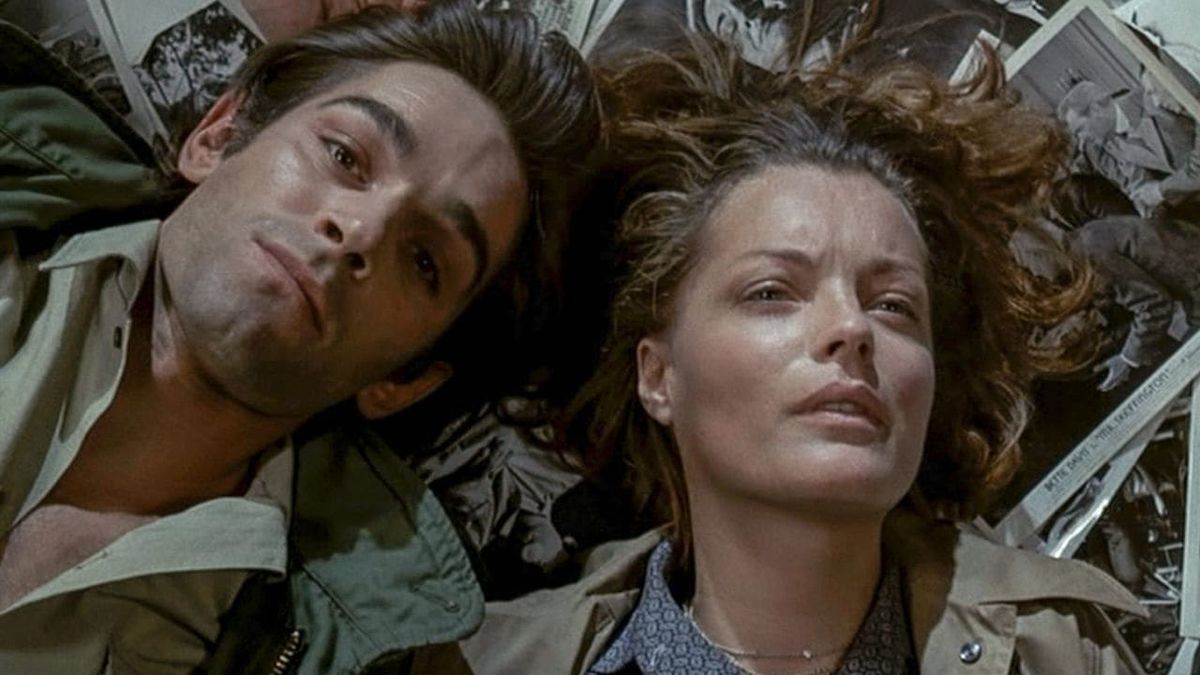
The film revolves around a photographer who crashes into a softcore porn film set where he catches the eye of its star as they would long for each other even though she is married to a photo collector whom she’s morally obligated to as she is given a chance to be in a play. It is a film that doesn’t have much of a plot as it’s more about two people in the entertainment industry who are both at a point where they’re unsatisfied and want to do something great. The film’s screenplay by Andrezj Zulawski and its original author Christopher Frank is largely straightforward in its narrative yet it is more about this idea of love as it relates to these two people who are in love with each other but can’t really express it as they have obligations to other things and other people. The photographer Servais Mont (Fabio Testi) would crash a film set to get some photos while he makes money shooting pornography for his benefactor Mazelli (Claude Dauphin) while tending to his father (Roger Blin) who doesn’t have a home as well as visit his mentor Raymond Lapade (Michel Robin) who is dealing with his ailing health.
Upon meeting the B-movie actress Nadine Chevalier (Romy Schneider) whose career has waned to the point that she’s doing softcore porn films is fascinated by Mont and his photography as she is eager to do something other than the movies she’s making for money as well as to fund the photography collection of her husband Jacques (Jacques Dutronc). Mont meets up with the German actor Karl-Heinz Zimmer (Klaus Kinski) and a play director in Laurent Messala (Guy Mairesse) in creating an adaptation of Richard III from a script by Lapade as Mont would give them the money he borrowed from Mazelli in the hopes it would revive Nadine’s career as long as no one knows where the money came from. Yet Jacques would notice something as well as it would play into some troubling events as well as revelations towards his wife and her feelings for Mont.
Zulawski’s direction is stylish in the way he captures the sense of melodrama between two people as it is shot on location in Paris though Zulawski chooses to avoid many of the city’s landmarks. While there are some wide shots in the film, much of Zulawski’s direction involve some unique tracking and hand-held camera shots with a lot of emphasis on intimacy through the close-ups and medium shots. Notably in scenes in hallways as well as restaurants, cafes, and other places where there is this sense of energy that is happening but also a lot of chaos. It also plays into this world of art as Nadine and Jacques’ bedroom is filled with film posters and film memorabilia though there’s no bed except for a mattress on the floor. Zulawski also plays into this world that is also full of debauchery as the pornography that Mont shoots isn’t just filled with a lot of homosexuality but also things that push him to the edge as he ponders if there’s any kind of infatuation or emotion involved in these sexual exploits he’s watching. In Nadine, Mont sees someone who isn’t that kind of extreme but a woman that is desperately need to be loved although Jacques does treat her well.
Zulawski would also play into this unconventional presentation of Richard III that features samurai costumes with Zimmer being this charismatic and intense figure who would help Nadine. Yet, the response to this play isn’t what anyone expects as it leads to this third act where a lot of emotions come into play. Notably as Zulawski’s compositions become more and more invasive to see Mont, Nadine, and Jacques unravel in some way with those associated also realizing their own sense of futility. Even as Mont becomes distant following some personal losses as well as realizing Jacques’ own intentions in relation to Nadine as she becomes this prize for these two men yet neither are interested as she has become troubled over what has happened while also believing that love doesn’t exist. Still, Zulawski would play into this sense of melodrama that looms throughout as it plays into these people who are entangled into a world of desire in both the personal and emotional. Overall, Zulawski crafts a rapturous and exhilarating film about a photographer’s infatuation with a fading B-movie actress.
Cinematographer Ricardo Aronovich does amazing work with the film’s cinematography with its emphasis on heightened lighting in some scenes to play into the look of a photo shoot or a film set as well as some colorful yet natural lighting for many of the film’s interior settings. Editor Christiane Lack does excellent work with the editing as it is largely straightforward with a rhythmic cuts while along shots to linger and only cut for dramatic effect. Production designer Jean-Pierre Kohut-Svelko does brilliant work with the look of the homes of Mont and the Chevaliers as well as the look of some of the photo sets as well as the theater presentation. Costume designer Catherine Leterrier does fantastic work with the costumes as a lot of it is casual with the exception of the flamboyant clothes that Zimmer wears as well as the stylish dresses that Nadine wears.
Makeup artists Didier Lavergne and Massimo De Rossi, along with hairstylist Jean-Max Guerin, do nice work with some of the makeup that the characters wear whether it was for the play or to play into their flamboyance personalities. The sound work of Jean Neny, Maurice Laumain, and Jacques Gerardot is terrific as it is largely straightforward as it plays into the natural atmosphere of the locations as well as how cafes sound when it is busy. The film’s music by Georges Delerue is phenomenal for its soaring orchestral score filled with themes that play into the drama with its usage of string arrangements that also add to the sense of longing and melodrama as it is an absolute highlight of the film.
The film’s wonderful ensemble cast feature some notable small roles from Nicoletta Machiavelli as Lapade’s wife Luce, Katia Tchenko as a whore that is part of Mazelli’s pornographic presentations, Jacques Boudet as a friend of Jacques in Robert Beninge, Gabrielle Doulcet as Mazelli’s wife who is fond of Mont, Guy Mairesse as the play director Laurent Messala who is a flamboyant individual that had unconventional ideas for the play, Roger Blin as Mont’s father who crashes at his son’s home as he laments over his own failures in life, and Michel Robin in a superb performance as Mont’s mentor in writer Raymond Lapade who wrote an adaptation for Richard III while dealing with his ailing health. Claude Dauphin is excellent as Mazelli as Mont’s benefactor who also makes Mont shoot pornographic photos for his own joy as well as be this slimy figure that likes to run things as if it’s a criminal organization with some awful people.
Klaus Kinski is incredible as Karl-Heinz Zimmer as this once revered actor desperate to have a comeback as he also helps out Nadine as Kinski is this intense figure who is openly bisexual as well as be someone who refuses to take criticism as it is one of his finest performances. Jacques Dutronc is brilliant as Jacques Chevalier as a photo collector that is hoping to get some financial opportunities in his wife’s attempted comeback as he is this eccentric individual who is quite funny at times but is also ruthless whenever things don’t go his way as it is this offbeat yet engaging performance. Fabio Testi is amazing as Servais Mont as this photographer who is tired of shooting pornography as he falls for Nadine while funding a play in the hope he can revive her career from afar while still be infatuated with her. Finally, there’s Romy Schneider in a sensational performance as Nadine Chevalier as this once-revered actress now doing B-movies and softcore porn films as she deals with a fading career but also her feelings for Mont but also loyalty towards Jacques as there is this sense of anguish and angst as it is truly one of her most defining performances in her illustrious career.
L’important c’est d’aimer is an outstanding film from Andrezj Zulawski that features a spectacular leading performance from Romy Schneider. Along with its ensemble cast, gorgeous visuals, its study of longing and passion, and Georges Delerue’s intoxicating music score. It is a film that explores two people at a point in their lives and career who want to move forward while also longing for one another despite the turmoil around them. In the end, L’important c’est d’aimer is a magnificent film from Andrezj Zulawski.
Andrzej Zulawski Films: (The Third Part of the Night) – (The Devil (1972 film)) – Possession (1981 film) - (The Public Woman) – (L’Amour braque) – (On the Silver Globe) – (My Nights Are More Beautiful Than Your Days) – (Boris Godunov) – (The Blue Note (1991 film) - (Szamanka) – (Fidelity) – (Cosmos (2015 film))
© thevoid99 2024


