Showing posts with label andy lau. Show all posts

Wednesday, October 26, 2022

2022 Blind Spot Series: Boat People


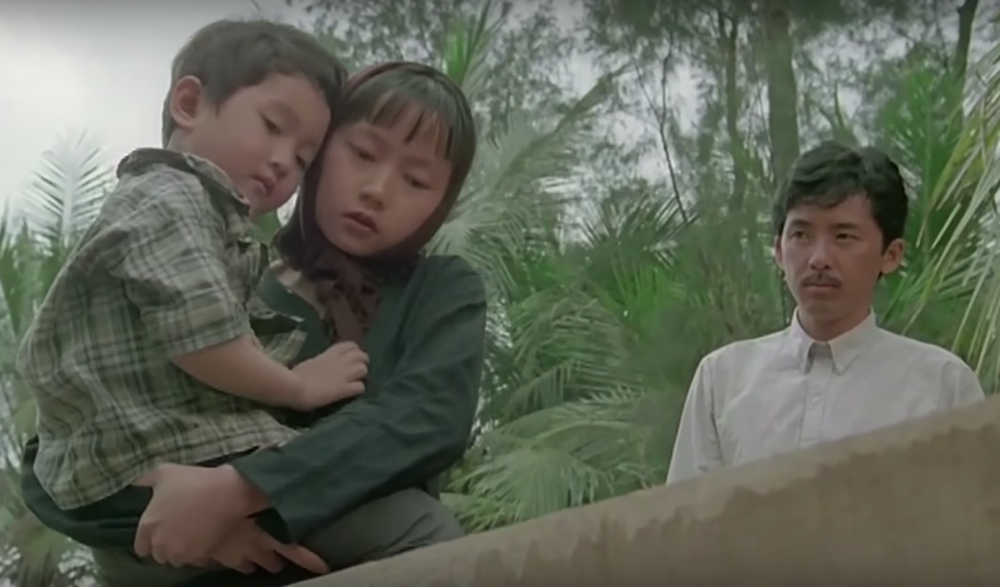
Directed by Ann Hui and screenplay by Chiu Kang-Chien from a story by Tin Goh, Tau Ban No Hoi (Boat People) is the story of a Japanese photojournalist who travels to Vietnam three years after the war where he meets a young teenage girl and her family as they try to flee the country. The third film in a trilogy of films relating to the events of Vietnam from the 1950s to the 1970s, the film is an exploration of a family dealing with the fallout of the war and their attempt to escape the country. Starring George Lam, Andy Lau, Cora Miao, and Season Ma. Tau Ban No Hoi is a hauntingly rich film from Ann Hui.

Set three years after the events of the Vietnam War, the film revolves around a Japanese photojournalist who returns to the country three years after covering the liberation of Danang where he is tasked to report on the country’s progress where he is shown things that the government wants him to show but also shielding the truth from him as he meets a 14-year old girl and her family. It is a film in which an outsider sees what Vietnam had become after the war and the lack of progress it has towards people who live near or in the poverty line while also meeting those wanting to leave as well as an officer disillusioned with what the revolution had become. Chui Kang-Chien’s screenplay is largely straightforward as it is told mainly from the perspective of its protagonist Shiomi Akutagawa (George Lam) who is just a photojournalist given the chance to take pictures of life after the war where he is accompanied by government officials to certain places to show this progress and propaganda that they’re spouting.

Yet, Akutagawa’s meeting with this 14-year old girl in Cam Nuong (Season Ma) would change everything as he learns about her awful living conditions with her sickly prostitute mother and two younger brothers. The script also has a subplot involving a young man To Minh (Andy Lau), who used to be a translator for American soldiers, who wants to leave Vietnam with the help of a Chinese prostitute (Coria Miao) who is involved with black-market trade as she is also the lover of a disillusioned government official in Nguyen (Qi Meng-Shi) who had been educated in France as he is appalled by what the country is becoming. Even as he privately talks to Akutagawa as he is someone that didn’t mind being colonized since it allowed him to visit other countries and such where he had a broader perspective on things instead of Vietnam’s attempt to create its own identity with ties to other communist countries at the time.

Ann Hui’s direction is entrancing for not just the compositions she creates but also for showcasing an air of realism that showcases a perspective that isn’t seen often as it relates to those not on board with life in post-war Vietnam in the late 70s. Shot on location at Hainan Island in Southeast China, Hui definitely uses the location as Danang where it opens following its liberation with a band of Vietcong soldiers marching with people waving the Vietcong flag as Akutagawa is shooting pictures of this event as there is a brief shot of a woman on a balcony in the street pulling a South Vietnamese flag from view. Hui’s wide and medium shots doesn’t just get a nice scope of the locations including some scenes near the sea including a conversation between Akutagawa and Nguyen. There are also some close-ups that do play into the horror such as what Nuong and one of her brothers do following an execution as it play into the sense of despair of what the poor has to do to survive. For Akutagawa, it’s a reality that he is capturing on camera that the government doesn’t want him to see as he also meets To Minh who talks about the chaos within the country which is why he wants to leave.

Hui also play into the chaos that occurs in the government where Akutagawa would get himself in trouble at times from soldiers despite his pass that allows him to take photographs. Yet, he would later see things without his camera such as a visit to an area known as the New Economic Zone where he got a glimpse of what really goes on there along with a visit to a camp he went to weeks earlier where children sang to him as he sees what is really happening. Notably in acts of violence where there’s a scene of Minh and a fellow prisoner both are on the ground trying to find landmines which they have to use a stick to feel something slowly or else they trigger a mine and they get blown up. It is among some of the darkest moments of the film while its climax is about Akutagawa coping with Nuong’s fate in relation to the actions of the government as well as what he would do for her and her family. Especially as they would leave Vietnam for the unknown where Hui brings an ambiguity into the dangers of what Akutagawa is doing but also why these black-market boats are so important for those wanting to leave Vietnam at that time. Overall, Hui crafts a visceral and entrancing film about a Japanese photojournalist dealing with the chaos of life in post-war Vietnam for those who don’t benefit from its changes.

Cinematographer Wong Cheung-Gei does brilliant work with the film’s cinematography as it has a richness in some of its daytime exteriors along with its emphasis on low-key lights for the interior/exterior scenes at night. Editor Kin Kin does excellent work with the editing as it is largely straightforward in playing to the drama with some rhythmic cuts and jump-cuts to play into some of the suspense and action. Art director Tony Au Ting-Ping does amazing work with the sets such as the dilapidated home that Nuong and her family live in as well as the bar/brothel that some of the characters go to.

Costume designer Wong Saan-Ngai does fantastic work with the costumes as it is largely straightforward to play into the world that the characters are in with the exception of the government officials with their khaki-looking uniforms. Sound recordists Fan Lee and Hong Lu do superb work with the sound in the way explosions and gunfire sound from afar or up close as well as other elements to play into its natural setting. The film’s music by Law Wing-Fai is incredible for its orchestral score that is filled with some upbeat themes driven by its string arrangements along with some somber and heavy themes that play into the drama.

The film’s marvelous cast feature some notable small roles from Cheung Tung-Sing as a prison camp doctor, Lin Shu-Jin as Akutagawa’s liaison officer Vu, Le Van Quyen as a prison camp official, Wu Shu-Jun as Nuong’s younger brother Van Nhac who deals in black-market stuff, Guo Jun-Yi as Nuong’s youngest brother Van Lang, and Hao Jia-Ling as Nuong’s sickly prostitute mother. Cora Miao is fantastic as an un-named prostitute/brothel-bar owner who is a mistress to Nguyen as she also deals in the black market while trying to help Minh leave Vietnam even though they’re having an affair that Nguyen doesn’t know. Qi Meng-Shi is excellent as Nguyen as a government official who befriends Akutagawa as a man who had been raised during Vietnam’s colonial period as he has become disillusioned with what Vietnam has become as well as lamenting over its propaganda which he sees as constraining.

Andy Lau is brilliant as To Minh as a young man who used to work with the U.S. army as he is trying to get money to get out of Vietnam as he deals with a lot of things while befriending Akutagawa whom he accompanies to a secret place that ends up being far more troubling. Season Ma is amazing as Cam Nuong as a 14-year old girl struggling to help her family while dealing with her poor state while befriending Akutagawa whom she sees as someone who can help her. Finally, there’s George Lam in a phenomenal performance as Shiomi Akutagawa as a Japanese photojournalist who was at the liberation of Danang where he would return 3 years later to see what Vietnam has become after the war where he deals with what the government is trying to hide from him as well as the fact that there’s people who aren’t benefiting from these changes as it is a somber performance of an outsider who is aware that he has a little power to make changes for those who need a better life.

Tau Ban No Hoi is a tremendous film from Ann Hui. Featuring a great cast, rapturous visuals, a riveting music score, and its exploration of life in post-war Vietnam. It is a film that is discomforting to watch in terms of its violence yet it is carried by this story of an outsider trying to get the truth out while helping out those who are troubled by a repressive government regime. In the end, Tau Ban No Hoi is a spectacular film from Ann Hui.

Ann Hui Films: (The Spooky Bunch) – (The Story of Woo Viet) – (Love in a Fallen City) – (The Romance of Book and Sword) – (Princess Fragrance) – (The Swordsman (1990 film)) – (Song of the Exile) – (Zodiac Killers) – (Summer Snow) – (As Time Goes By (1997 film)) – (Eighteen Springs) – (Ordinary Heroes (1999 film)) – (Visible Secret) – (July Rhapsody) – (Jade Goddess of Mercy) – (The Postmodern Life of My Aunt) – (The Way We Are) – (Night and Fog (2009 film)) – (All About Love (2010 film)) – (A Simple Life (2011 film)) – (The Golden Era) – (Our Time Will Come) – (Love After Love (2020 film))

© thevoid99 2022

Friday, June 08, 2018

The Great Wall


Directed by Zhang Yimou and screenplay by Carlo Bernard, Doug Miro, and Tony Gilroy from a story by Max Brooks, Edward Zwick, and Marshall Herskovitz, The Great Wall is the story of two European mercenaries who help a Chinese army fight off against a horde of mysterious alien monsters. The film is a monster movie of sorts where an army tries to fight off mysterious monsters as they get unexpected help from a couple of Europeans who travel to China to find gunpowder. Starring Matt Damon, Jing Tian, Pedro Pascal, Andy Lau, and Willem Dafoe. The Great Wall is an enjoyable and adventurous film from Zhan Yimou.

The film is this story of two European mercenaries who encounter an alien monster and kill it where they’re later captured by a secret Chinese army at the Great Wall who are trying to stop the monsters from reaching civilization. It’s a film with a simple premise that involves two white European mercenaries who are in China to trade and steal as they reluctantly help the Chinese fight this horde of monsters that come from a meteor many centuries ago and things have gotten worse. The film’s screenplay doesn’t do much with the film’s story though a few characters are well-defined such as William Garin (Matt Damon) who is a mercenary that admits to fight for food and money as a means to survive as he is someone that is a great archer but never had a real reason to fight for something. His friend/partner Pero Tovar (Pedro Pascal) is more concerned with trying to find gunpowder as a way to give Europe a sense of power yet is also a skilled warrior himself.

Yet, the monsters they encountered early in the film and brought to the attention of this army known as the Nameless Order become aware that the monsters are coming back as they’re led by General Shao (Zhang Hanyu) and Commander Lin Mae (Jing Tian) as the latter is known for her crane attack whose army attacks from the top of the wall and are pulled back after attacking the monster. Garin befriends Commander Mae and the company’s strategist Wang (Andy Lau) as they’re both impressed by Garin’s archery skill and his methods in trying to capture a monster in order to study it. Still, the script emphasizes more on action rather than development as Tovar isn’t as developed in the film as he’s more of a comic relief in some ways as he and another European in Sir Ballard (Willem Dafoe) are concerned about taking the gunpowder to Europe than help the Nameless Order. Despite these shortcomings in some of the characters as well as scenes where it played into more time over story instead of action set pieces. The film does maintain its purpose in being this action-adventure film.

Zhang Yimou’s direction is definitely stylish in terms of his presentation of the action as well as creating something that is a grand spectacle with loads of extras and large set pieces. Shot on location in the Qingdao province in China, the film does play into this world that is grand with its deserts and mountains as well as fictionalized look of the Great Wall of China where it is set in this land where behind that wall is civilization and the city where its emperor lives in. Yimou’s usage of wide and medium shots does have a lot of scope and depth of field into the locations as well as what is at stake. Even in the latter as it relates to the interaction between characters as he does know when to break from the action and give time towards development on the characters and the situation they’re in. One notable scene involves General Shao and Commander Mae checking out a situation where it does have this air of suspense as it’s a key moment in the film into what is at stake.

While Yimou does establish a lot of what is happening and the stakes that the characters are dealing with. He is unable to get it all together where there’s so much action and fighting that is happening as he isn’t given enough time to slow things down. Notably in one scene where a monster is captured as Garin and Wang both want to do more study on the creature and figure out what to do next but an envoy to the Emperor would take the creature to the Emperor which would be a moment of stupidity that eventually leads to the film’s sprawling climax. The fact that Yimou is hampered by a script that is more about action than character development does hurt the film a bit though he is able to provide some key moment where the characters to play into the stakes and stop these monsters from wreaking havoc. Overall, Yimou creates a thrilling though messy film about two European mercenaries helping the Chinese fight off against mysterious alien monsters.

Cinematographers Stuart Dryburgh and Zhao Xiaoding do excellent work with the film’s cinematography from the colorful and naturalistic look of the scenes in the deserts to the usage of natural interior lighting for scenes inside the Great Wall and the very colorful sequence in the film’s climax. Editors Mary Jo Markey and Craig Wood do terrific work with the editing as it is stylish with its jump-cuts and other rhythmic cuts to play into the action and suspense while not deviating into the idea of chaotic editing style. Production designer John Myhre, with set decorator Gordon Sim and supervising art director Helen Jarvis, does brilliant work with the look of the interiors of the Great Wall as well as some of its exteriors and its landscape around the wall. Costume designer Mayes C. Rubeo does fantastic work with the look of the different kinds of armors and the color of those armors to represent different parts of the army as it’s a highlight of the film.

Hair/makeup designer Paul Engelen does nice work with the look of Garin and Tovar early in the film before they’re captured to play into their ragged look. Visual effects supervisors Phil Brennan, Martin Hartle, Viktor Muller, Matt Russell, Sable Sanjiv, and Ben Snow do wonderful work with the design of the monsters though some of the effects are a bit wobbly in its movement though the look of some of the landscape and the crowd of people are a marvel to watch. Sound designer Kyrsten Mate and sound editor Gwendolyne Yates Whittle do superb work with the sound in the way the monsters sound as well as the weapons and the sense of atmosphere that occurs during a battle scene. The film’s music by Ramin Djawadi is incredible for its bombastic score that mixes traditional Chinese percussion and string music to play into the grand scale of the film and the sense of adventure while music supervisors Peter Afterman and Margaret Yen provide a couple of original songs in the film sung by Chinese pop artists.

The casting by John Papsidera and Victoria Thomas is marvelous as it include some notable small roles from Cheney Chen as the head of the Imperial Guard who brings the monster to the young Emperor, Karry Wang as the Emperor, the trio of Huang Xan, Eddie Peng, and Kenny Lin as commanders of different platoons of the army, and Lu Han in a terrific performance as the young soldier Peng Yong whom Garin befriends and sympathizes with over the horrors of war. Zhang Hanyu is terrific as General Shao as the leader of the entire army who is mistrustful towards Garin and Tovar for being outsiders but realizes their worth in their fighting skills. Willem Dafoe is superb as Sir Ballard as a European who had lived in the Great Wall for 25 years as he is eager to get out and bring gun powder to Europe while teaching the Chinese how to speak English and Latin.

Andy Lau is excellent as Wang as the army’s strategist who is one of the few who can speak English as he bonds with Garin in their interest for the monster as well as willing to see what it can do as knows that the monsters are far more intelligent than they realized as it’s an understated performance that could’ve been used in more scenes. Pedro Pascal is fantastic as Pedro Tovar as this mercenary who is more reluctant to help the Chinese in their battle against the monsters as he’s more interested in getting the gunpowder while he also has some of the film’s funniest lines. Jing Tian is brilliant as Commander Lin Mae as a young warrior who leads an army of women as she befriends Garin as she sees what he can do but also copes with the responsibility of her role as well as wondering if she can trust Garin. Finally, there’s Matt Damon in an amazing performance as William Garin as a mercenary who is also a skilled archer as someone that is reluctant to go into battle knowing he’s fought for other things where he later finds a big reason to fight as it’s a role where Damon plays it straight as well as be generous with the other actors he’s with.

The Great Wall is a stellar yet flawed film from Zhang Yimou. Despite the film’s shortcomings in its story in favor of bombastic action, the film does have some nice visuals, a killer score, and noteworthy performances from Matt Damon, Jian Tian, and Andy Lau. Even as it’s kind of a minor film from Yimou in his first English-language release but it is still a worthwhile and entertaining film. In the end, The Great Wall is a good film from Zhang Yimou.

Zhang Yimou Films: (Red Sorghum) – (Codename Cougar) – (Ju Dou) – (Raise the Red Lantern) – (The Story of Qui Ju) – (Keep Cool) – Not One Less - (The Road Home) – (Happy Times) – (Hero (2002 film)) – House of Flying Daggers - Riding Alone for Thousands of Miles - Curse of the Golden Flower - A Simple Noodle Story - (Under the Hawthorn Tree) – (The Flowers of War) – Coming Home (2014 film) - (Shadow (2018 film))

© thevoid99 2018

Wednesday, December 11, 2013

Days of Being Wild


Written and directed by Wong Kar-Wai, Days of Being Wild is the story of a notorious playboy who tries to find his identity while dealing with his own romantic entanglements as those women seek solace in other men. The film is the first part of an informal trilogy that would be followed by 2000’s In the Mood for Love and 2004’s 2046 that explores the idea of love and loneliness as it’s all set in 1960s Hong Kong. Starring Leslie Cheung, Andy Lau, Maggie Cheung, Carina Lau, Jacky Cheung, Tony Leung Chiu-Wai, and Rebecca Pan. Days of Being Wild is a ravishing yet captivating film from Wong Kar-Wai.

The film is a multi-layered story that revolves the lives of a cruel playboy whose entanglements with two different women has them feel hurt while the playboy goes on a journey of his own to find out his true identity when the escort who had raised him told him about his true parentage. It’s a film that explores the idea of rejection and loneliness all in the world of his playboy named York (Leslie Cheung) who likes to wander around in the many situations he’s in where he woos a woman and then moves on to something else. For the two women he woos in Su Li Zhen (Maggie Cheung) and Mimi (Carina Lau), both of them go into different journeys after the rejection where Zhen talks to a cop named Tide (Andy Lau) while Mimi is being pursued by York’s friend Zeb (Jacky Cheung). York would also go into his journey to find his real mother as his relationship with his guardian in the aging escort Rebecca (Rebecca Pan) starts to disintegrate.

Wong Kar-Wai’s script has this very unique narrative where it doesn’t follow any conventional narratives where its first act is about York’s antics with Su Li Zhen and later his affair with Mimi. The second act is about Zhen meeting Tide where the latter is just a beat cop doing his job as Zhen just talks to him where the two become friends for a while. The second act also plays into the tumultuous relationship between York and Mimi where it’s filled with a lot of indifference from York who is more concerned about his adopted mother’s life with another man and her desire to move to the U.S. It all plays to this third act where York travels to the Philippines to find his biological mother but he would endure the similar kind of pain Zhen and Mimi endured but in very different ways.

Kar-Wai would add bits of voice-over narration to express the loneliness the characters face. Especially where York keeps talking about a bird that just flies continuously only to land when it dies which serves as a metaphor for the life he’s leading. A life that is often quite empty where he would meet a major character in the film’s third act who witnesses the emptiness of York’s life up close. The third act would also play into a lot of ambiguities over the fate of these characters including an unnamed gambler (Tony Leung Chiu-Wai) who appears at the end of the film.

Kar-Wai’s direction is truly evocative in the way he presents life in 1960s Hong Kong where it’s a world that is quite exciting. Going for a hand-held style that is quite loose but also with a sense of control, it plays to this sense of change that is occurring in the 1960s where the attitudes of men start to lose its way a bit as the two women that York encounters would both deal with tribulations over the fallout of their relationship with him. Zhen and Mimi would have similar reactions to the way they were rejected by York as Kar-Wai’s compositions shows them in very fragile moments where the framing is very succinct with very little emphasis on close-ups in favor of wide and medium shots. Even where the two women would meet two men who were willing to help as it plays into how they would react to this gesture.

The direction also has Kar-Wai take great care into the way he presents not just Hong Kong but also the Philippines as it has this air of style that is seductive in its imagery. While much of the Hong Kong presentation is a bit dreary with some unique palettes to convey a mood, there is something about the scenes in the Philippines that is more dream-like but also off in some ways where York would encounter elements of danger. Notably as Kar-Wai would utilize some strange camera angles to present something that is a bit surreal but also grounded in the way York had lived his life. Yet, it is followed by an ending that is described as ambiguous but also something where things are changing over everything that the characters in the film have endured. Overall, Kar-Wai crafts a very abstract yet intoxicating film about rejection and loneliness.

Cinematographer Christopher Doyle does phenomenal work with the film‘s cinematography with its use of grainy colored palettes and dark lighting schemes for some of the film‘s interior scenes along with its emphasis on the color green to play with its mood as Doyle‘s work is truly a major highlight of the film. Editors Kit-Wai Kan, Patrick Tam, and William Chang do fantastic work with the editing where it is quite straightforward in its presentation while they do create a few montages and some rhythmic moments for some of the film‘s darker moments. Production/costume designer William Chang does amazing work with the look of the apartments and such for the scenes set in Hong Kong and in the Philippines along with some of the clothes that Mimi wears to play into her exotic style.

Sound recorder Benny Chu does excellent work with the sound to convey some of the intimacy that goes on in some of the scenes along with the craziness and textures into the sense of longing that occurs. The film’s music by Terry Chan is wonderful as it is mostly low-key with its orchestral-based music and jazz pieces while the soundtrack includes lots of jazz pieces as well as Latin-based cuts to play into the world that the characters live in.

The film’s cast is brilliant for the ensemble that includes some notable small appearances from Tita Munoz as York’s mother, Danilo Antunes as Rebecca’s mother, and Tony Leung Chiu-Wai as the unnamed gambler at the end of the film. Jacky Cheung is excellent as York’s friend Zeb who helps York go to the Philippines while trying to woo Mimi. Rebecca Pan is wonderful as York’s adopted mother Rebecca who seems to despise him for wanting to find the truth of his real parentage while also being someone who feels like she’s got nothing more to give. Carina Lau is amazing as Mimi who is also called Lulu and Leung Fung-ying as this woman who falls for York only to feel jealous over his other affairs as she starts to fall apart. Andy Lau is fantastic as the policeman Tide who befriends Su Li Zhen as he listens to her troubles while offering to be someone to talk to as he laments over his feelings for her.

Maggie Cheung is superb as the shy and melancholic Su Li Zhen as a woman whose encounter with York has her feeling hurt and alone while she tries to figure out how to move on. Finally, there’s Leslie Cheung in a phenomenal performance as York as this cruel playboy who likes to play around with women while trying to find out about his roots as he’s also a man who wanders into every situation he’s in no matter how foolish it can be.

Days of Being Wild is a seductive yet gorgeous film from Wong Kar-Wai. Armed with a great cast, lush visuals, and a rapturous film soundtrack, the film is truly one of Kar-Wai’s finest work in terms of what he’s all about in his exploration of love and loneliness. Especially in the way he delves into the themes of rejection and wandering through life in its most poetic manner. In the end, Days of Being Wild is a sensational film from Wong Kar-Wai.

Wong Kar-Wai Films: As Tears Go By - Chungking Express - Ashes of Time/Ashes of Time Redux - Fallen Angels - Happy Together - In the Mood for Love - 2046 - Eros-The Hand - My Blueberry Nights - The Grandmaster - The Auteurs #28: Wong Kar-Wai

© thevoid99 2013

Thursday, December 05, 2013

As Tears Go By


Directed by Wong Kar-Wai and written by Kar-Wai and Jeffrey Lau, As Tears Go By is the story about a small-time gangster trying to go straight while keeping his friend out of trouble as the visit from his young cousin also complicate things. The film is a gangster film of sorts that mixes Kar-Wai’s romanticism that would be prevalent in his later films. Starring Andy Lau, Maggie Cheung, and Jacky Cheung. As Tears Go By is a brilliantly stylish crime-drama from Wong Kar-Wai.

The film is a simple story about a small-time gangster who takes in his second-cousin to stay at his place where he falls for her while dealing with the chaos his best friend has created against rival factions. It’s a film that recalls elements of Martin Scorsese’s 1973 film Mean Streets that has a similar premise about a small-time hoodlum wanting to go straight while trying to get his friend out of trouble. Yet, Wong Kar-Wai infuses that premise with something much more as the character of Wah (Andy Lau) is dealing with his role as a hoodlum who works for the biggest boss of Hong Kong in Uncle Kwan (Ching Wai) while the arrival of his second-cousin Ngor (Maggie Cheung) has him thinking about a life out of that world. Still, he is devoted to his best friend Fly (Jacky Cheung) who is eager to make a name for himself but manages to cause trouble as well as conflict with another small-time hoodlum in Tony (Alex Man).

The script by Kar-Wai and Jeffrey Lau does have a lot of typical aspects that is expected in the crime drama where it is about these small-time hoods trying to climb up the ranks so they can lead their own gang and become a top boss. Wah doesn’t have that ambition as he just wants to do his job and get paid but his friendship with Fly causes issues as Fly has the ambition but not the professionalism to do so. Especially when Uncle Kwan is looking for someone to do a big job in killing an informant so that he wouldn’t go to prison. Wah’s encounter with Ngor has him wanting to leave the life as he becomes aware of how fleeting it is as the time he has with Ngor becomes far more fulfilling. Yet, he becomes conflicted with his love for Ngor and his devotion to Fly that would lead to some trouble consequences.

Kar-Wai’s direction is definitely full of style from the way he presents some of the film’s violent moments but also finds something that is entrancing in the way it plays out. Notably as he plays with frame-speeds to create some intense moments while adding a sense of flair to the way some of the violent moments and the meetings between hoods and bosses happen. Kar-Wai knows where to place the camera in these moments while creating something that is loose and also unpredictable in the way the violence occurs. Kar-Wai would add something similar to the romantic elements of the film where it is played with these gorgeous images and compositions where there’s bit of humor but it is largely romantic. Though it is sort of uneven in tone, Kar-Wai does find way to play into that conflict that Wah has to deal with that does lead to this very intense climax about what he has to do for himself. Overall, Kar-Wai crafts a very sensational yet ravishing film about a man trying to leave behind his life of crime.

Cinematographer Wai-keung Lau does amazing work with the film‘s colorful cinematography that plays into Kar-Wai‘s visual style with its vibrant colors for some of the exterior scenes at night as well as its use of lighting for some of the interior scenes. Editors William Chang and Bei-Dak Cheong do fantastic work with the editing with its use of jump-cuts and frame-speeds that would also play into Kar-Wai‘s presentation while Chang also does the production design for some of the clubs the characters go to as well as homes that Wah and Ngor live in. The film’s music by Danny Chung and Teddy Robin Kwan is excellent for its mixture of moody synthesizer-based music with some raucous guitar tones for some of the suspense while its soundtrack includes a lot of Asian pop music of the time that includes an effective cover of Berlin’s Take My Breath Away.

The film’s superb cast includes some notable small roles from Ching Wai as triad leader Uncle Kwan, production designer/co-editor William Chang as a doctor friend of Ngor, and Ronald Wong as Fly’s protégé Site whose encounters with Fly’s troubles has him wanting to leave the life for something normal. Alex Man is terrific as the very antagonistic hoodlum Tony who likes to goad Fly into fighting while maintaining his status as a hoodlum who is eager to be next in line as top boss. Jacky Cheung is fantastic as Fly as he is someone full of energy as this small-time hood eager to make a name for himself as Cheung is fun to watch as it would include some moments where he deals with humility.

Maggie Cheung is just radiant as Ngor as this young woman who arrives to Wah’s home to stay for a few days for a medical checkup as she has this understated quality to someone who could steer Wah into something more as it’s definitely one of her finest. Finally, there’s Andy Lau in a marvelous performance as Wah as this very reserved yet dangerous man who deals with the bleakness of his future as he’s also conflicted into helping Fly or go into a far more safer life with Ngor where he and Cheung definitely have some chemistry as they’re one of the film’s major highlights.

As Tears Go By is a remarkable debut film from Wong Kar-Wai that is highlighted by the incredible performances of Andy Lau, Maggie Cheung, and Jacky Cheung. While it is a bit uneven in its tone, the film is still an engaging one for its evocative imagery and its unique approach to crime and drama. Especially in the way Kar-Wai would match all sorts of things like music and image to create something special. In the end, As Tears Go By is a rapturous film from Wong Kar-Wai.

Wong Kar-Wai Films: Days of Being Wild - Chungking Express - Ashes of Time/Ashes of Time Redux - Fallen Angels - Happy Together - In the Mood for Love - 2046 - Eros-The Hand - My Blueberry Nights - The Grandmaster - The Auteurs #28: Wong Kar-Wai

© thevoid99 2013

Wednesday, May 18, 2011

2011 Cannes Marathon: House of Flying Daggers


(Premiered at the 2004 Cannes Film Festival, Out of Competition)


2002’s stylized wuxia film Hero helped raise the profile of Chinese filmmaker Zhang Yimou. Thanks to Quentin Tarantino’s love for Yimou’s work that allowed the film to be shown in the U.S. in 2004, Hero became an international hit for the director as he decided to create another stylized wuxia film that was to come out in that same year. This time around, Yimou takes the stylized action of Hero with a love story between a police captain and a blind dancer called Shi Mian Mai Fu (House of Flying Daggers).

Directed by Zhang Yimou and written by Yimou, Peter Wu, and Bin Wang, Shi Mian Mai Fu is set in the 9th Century during the Tang Dynasty as two police captains plot a scheme against a group of rebels who are fighting a corrupt government. Using a blind dancer to lead them to the rebel leaders, the move becomes complicated as one of the men fall for the dancer. Starring Andy Lau, Takeshi Kaneshiro, and Zhang Ziyi. Shi Mian Mai Fu is an extraordinary yet visually-dazzling film from Zhang Yimou and company.

It’s 859 during the Tang Dynasty as its corrupt rule is in decline leading to a rebellion. The most dangerous rebel group is the House of Flying Daggers who has a fearsome reputation only to be recently sidelined by the death of their leader by police officials. With a new leader taking charge of the House of Flying Daggers, two police captains named Jin (Takeshi Kaneshiro) and Leo (Andy Lau) are given the assignment which will take them 10 days to do. Before the mission, Jin gets drunk at a brothel where he asks the brothel lady (Song Dandan) to bring him someone new. The new girl is a blind dancer named Mei (Zhang Ziyi) who Jin likes only to get into some trouble until Leo arrives to calm things down only to have a dance of his own from Mei to be entertained by.

Mei is eventually arrested following a duel with Leo as he asks her about the whereabouts of the House of Flying Daggers. She refuses to tell as Jin decides to go undercover by pretending to be a rebel by freeing Mei from jail and gain her trust so she can lead him to the House of Flying Daggers’ hiding place. Calling himself Wind, Jin helps the blind Mei lead her across the country to the secret compound while he is followed by Leo secretly gives him orders on what to do. Even warning Jin not to get too close to Mei as an attraction between the two happens. During another encounter with soldiers, things become more complicated as Jin and Mei get closer.

Another secret report to Leo has some harsh revelations about who is after Jin and Mei with Leo unable to help them as more soldiers are approaching. Jin and Mei have a spat where they break up for a while only to be surrounded by more soldiers from a general as they’re saved by the House of Flying Daggers. For Jin, he and a captured Leo learn some shocking discoveries about the House of Flying Daggers along with the people who are in the group.

The film is about two police captains during the Tang Dynasty charming a blind dancer to the whereabouts of a rebel group where one of them falls in love with the dancer. Yet, that is the film’s plot but the progression of the story becomes more intriguing as the relationship between one of the captains and the blind dancer starts to gel though at times, there’s tension. Then there’s the other captain in Leo, a man who is trying to keep his follow officer in check but the warnings he gives about Mei are very strange. Even more intriguing are the identities of the House of Flying Daggers.

The screenplay Zhang Yimou and his co-writers Peter Wu and Bin Wang create definitely plays up to the momentum of the identity of the House of Flying Daggers group. They’re known simply by the way they throw spinning boomerang-knives at their enemies and they’re not seen until the third act. By the time they’re revealed, the entire tone of the film changes somewhat along with the characters that are presented in the story. What happens isn’t just a series of twists and revelations but also the motives of the two characters. Yet, this would lead to even more complications over loyalties with Jin suddenly stuck in the middle of what is happening.

Zhang Yimou’s direction is truly mesmerizing not just in his presentation but also in his approach to a lot of the dramatic elements of the film. Yimou is known for vast compositions with wide shots and lots of action flourishes. Yet, he is also manages to present things in a very simple manner such as scenes of Mei in a field of flowers or Mei and Jin just talking. Largely because he wanted the audience to soak in the landscape of China though a scene set in the snow was shot in Ukraine. There is a heightened atmosphere to the look of the film where it’s not only gorgeous to look at but also plays to the world that the characters are encountering.

Then there’s the action which is presented with not just a great degree of style but also in such precise choreography that is presented by Tony Ching Siu Tung. The movements in the action and fight scenes play like a ballet where it’s not just about the rhythm of the movements but also the staging of it. This is where Yimou really lets the film shine as the stakes in the battles are just as interesting. It’s not just about survival but also the fact that there’s two people in love fighting for their love. Even as there is a climatic duel towards the end of the film that intensify the stakes. Overall, this is a marvelous film from Zhang Yimou who creates a film that is entrancing from start to finish.

Cinematographer Zhao Xiaoding does an amazing job with the film‘s photography from the look of the brothel interiors to the gorgeous shots of the forest with its naturalist yet heightened look. Particularly with the scenes in the bamboo forest where the greenish look of the film is extremely awesome to look at. Xiaoding’s work is definitely the technical highlight of the film. Editor Cheng Long does an excellent job with the film’s editing from playing up to the intense rhythm of the action and fight scenes while maintaining a straightforward approach to the editing in the dramatic scenes. Even as the pacing for the film is very leisured without being too slow or too fast.

Production designer Huo Tingxao, along with art directors Zhong Han and Bin Zhao, does a great job with the set pieces created for the film. Notably the brothel that is rich in its look and color along with the intimacy of the secret home of the House of the Flying Daggers and its forest. Costume designer Emi Wada does a spectacular job with the costumes from the dignified clothes the men wear to the array of colors and layers of clothes that Mei wears throughout her journey as the costumes are another highlight of the film.

Visual effects supervisors Andy Brown and Angie Lam does a very good job with some of the visual effects needed for the film such as Mei‘s drum-dance with nuts flying around or the bamboo battle scenes with soldiers throwing bamboo spears though the latter sequence looked rough in some spots. Sound designer Tao Jing does a superb job with the sound design from the way swords hit each other to the movement of the fights and battle sequences.

The film’s music by Shigeru Umebayashi is another highlight of the film Umebayashi‘s lush yet flourishing score ranging from traditional Chinese music to sweeping orchestral pieces that plays to the dramatic elements of the film and its action sequences. The song that is sung early in the film by Zhang Ziyi is later sung by Kathleen Battle in the final credits that alludes to a legend that is told in the film.

The cast is definitely phenomenal with a large array of extras that are presented in the film to play up to the ambition of the film. For the main cast, there’s only four principle actors as they all do a great job in their performances. Song Dandan is very good as a brothel owner who is keen on pleasing her customers. Andy Lau is great as Leo, a police captain intent on making sure his fellow partner does his duties while giving him vague warnings. Takeshi Kaneshiro is excellent as Jin, a police captain who takes Mei by pretending to be a rebel warrior only to fall for her and be conflicted by his role. Finally, there’s Zhang Ziyi in a radiant performance as Mei. Ziyi brings a wonderful sensuality to her role while bringing something even more remarkable by being blind throughout the film as well as being very agile in her fighting and ballet dancing in what is one of her finest performances of her career.

Shi Mian Mai Fu is a stunning yet exhilarating film from Zhang Yimou featuring a superb cast led by Zhang Ziyi. Fans of Yimou’s films will no doubt enjoy this for this visual splendor, stylish action sequences, and heightened drama. It’s a film that is entertaining but also stimulating in its visual presentation with a third act that really changes everything about the film. In the end, Shi Mian Mai Fu is a brilliant film from Zhang Yimou.

Zhang Yimou Films: (Red Sorghum) - (Codename Cougar) - (Ju Dou) - (Raise the Red Lantern) - (The Story of Qiu Ju) - (To Live) - (Shanghai Triad) - (Keep Cool) - Not One Less - (The Road Home) - (Happy Times) - (Hero) - Riding Alone for Thousands of Miles - Curse of the Golden Flower - A Simple Noodle Story - (Under the Hawthorn Tree) - (The Flowers of War) - Coming Home (2014 film) - The Great Wall (2016 film) - (Shadow (2018 film)

© thevoid99 2011