Showing posts with label cannes film festival marathon. Show all posts

Wednesday, August 11, 2021

2021 Cannes Film Festival Marathon Post-Mortem


Well, the 2021 edition of the Cannes Film Festival has ended and let’s hope it never happens again in July. It was a fun festival to go into as the coverage from the AV Club, Indiewire, and the Film Experience did an amazing job and be thankful for their contributions in covering the festival. This year’s festival that included many of the films in the competition have been incredible as there were a lot of discoveries as well as films from some of the greats had delivered. One of the reasons Cannes is so revered is the fact that it’s a stepping stone for new filmmakers and films from different parts of the world while allowing veterans to showcase something new to an audience that loves cinema.
You had one job Spike Lee. Just one. To accidentally announce the winner of the Palme d’or as the first award was a total fuck-up but at least I give Spike credit for at least apologizing. Still, there were a lot of films that garnered buzz such as Ryusuke Hamagachi’s Drive My Car and Nadav Lapid’s Ahed’s Knee as both films received major prizes while Paul Verhoeven proves he is still a dangerous filmmaker with lesbian-nun drama in Benedetta. Verhoeven wasn’t the only veteran that delivered as new films from Francois Ozon, Wes Anderson, Asghar Farhadi, and Apichatpong Weerasthakul came out as winners while actress Lea Seydoux was the star of the festival by appearing in four films including Anderson’s The French Dispatch even though she wasn’t present at the festival due to a COVID-related illness. Farhadi and Weerasthakul both would win prizes as would Leos Carax who opened the film with Annette to a warm reception as he would receive the Best Director prize while acting prizes went to Caleb Landry Jones for Justin Kurzel’s Nitram and Renate Reinsve for Joachim Trier’s The Worst Person in the World.
Then there’s the Palme d’or winner and well…. Whatever controversy Verhoeven had with his film is nothing compared to what Julia Ducournau did. In fact, Ducournau just proved that woman can out-shock men better than anyone and basically caused mayhem at the screening that is expected at Cannes yet it will add to Ducournau’s already growing reputation. Her sophomore feature Titane about a woman who becomes pregnant after having sex with a car is one for the ages as being the second woman (Jane Campion being the first for The Piano) to win the Palme d’Or and with a film that shocked everyone is just incredible as I can’t think of anyone who loves cinema that doesn’t want to see this.
With the festival already finished but the marathon went longer than its expected time as this will be the last time I do a marathon like this ever again. Having not done the previous two years as the first was due to personal reasons and last year because of the pandemic and the festival being cancelled. I must admit that I was unsure about doing this marathon and now having completed it. July is not a good month to do a film festival marathon as well as the fact that I’m older and spending a lot of time taking care of two young kids is impossible to watch more than 10 films in the span of 11 days. I still plan on doing another Cannes marathon as next year will be an all Palme d’Or winners edition but with less than 10 films. So here are the fictional winners of this year’s marathon:

The fictional Palme d’Or goes to... Portrait of a Lady on Fire
Ever since its premiere at the 2019 Cannes Film Festival and the buzz it had received, this was the film I had wanted to see more than any other film. Did it live up to the hype? Actually, it went beyond the hype as what Celine Sciamma created is a film that is the work of a new master in the art of cinema. This film about a painter who is tasked to paint a portrait for a woman who is uneager to marry a man as these two women embark on an affair that is considered taboo for its time. Sciamma’s direction is exquisite in every frame she creates as she also brings in career-defining performances from Adele Haenel and Noemie Merlant as well as strong supporting work from Luana Bajrami and Valeria Golino.

The 2nd Place Grand Jury Prize goes to… American Honey
Andrea Arnold’s film about a young woman joining a group of young people selling magazines through the American Midwest is a coming of age story unlike any other. Told in a unique yet simplistic style, Arnold’s film is probably the most American film made of the 21st Century so far made by a non-American filmmaker. Arnold’s approach to hand-held cameras, a loose approach to non-actors and amateurs to stand out as well as giving Riley Keough and Shia LaBeouf performances that are top-notch, and making a major discovery in Sasha Lane. It is a film that is unpredictable and often intoxicating in every image it does a lot with its 163-minute running time without making it feel like it is a film of that length.

The 3rd Place Jury Prize goes to… You Were Never Really Here
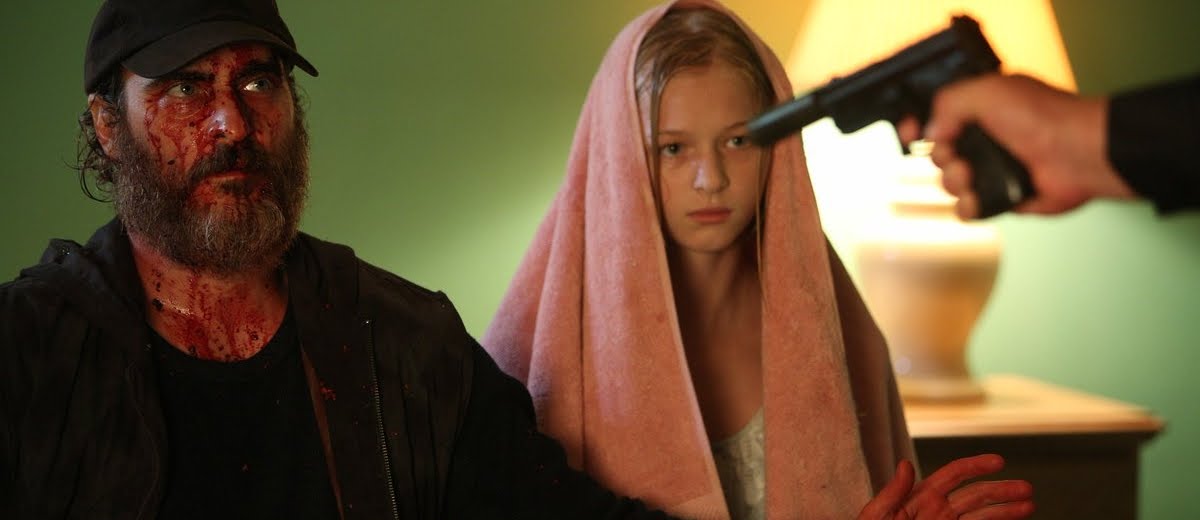
Lynne Ramsay is already a master in cinema as her fourth feature film is this low-key yet unsettling film about a mercenary who tracks down kidnapped young women as his most recent assignment has him at the center of a sex trafficking organization filled with men of power. Featuring a performance from Joaquin Phoenix in the lead role as Joe where Phoenix is at the top of his game, Ramsay’s film is unafraid to go into extremely dark territory while also being a filmmaker who knows what not to show as it’s more about the aftermath of violence rather than its impact. Along with Jonny Greenwood’s eerie music score and ravishing visuals that add to the suspense and drama, the film is further proof of Ramsay’s talents as a storyteller.

Best Director Prize goes to… Pawel Pawlikowski for Cold War
Pawel Pawlikowski’s approach to this love story that is partially inspired by the story of his parents as Pawlikowski presents the film in a 1:33:1 aspect ratio and in black-and-white to give sense of nostalgia in this love story between a singer and a musician during the Cold War. Pawlikowski’s direction is a major highlight in how he frames the romance and presents the differences between communist Poland and its nearby communist neighbors as well as Paris in its emergence into the jazz age and rock n’ roll. Pawlikowski creates a film that stands a stunning achievement and a career high-water mark for the filmmaker.

Best Screenplay Prize goes to… Noah Baumbach for The Meyerowitz Stories (New and Selected)
A film about family dysfunction as well as a trio of adult siblings who deal with their father who is a modestly-successful artist that often overwhelms them as Baumbach brings in a richness to the story as well as providing perspectives from these trio of siblings. The dialogue is often sharp and witty while it his approach to the way he writes characters that is unique where he shows them how flawed they are yet also have this air of redemptive qualities that makes them unique. Even as they all are forced to admit that their father is a pretentious asshole who is demanding and full of himself as Baumbach definitely shows himself as a master of human and family dysfunction.

Best Actor Prize goes to… Antonio Banderas for Pain & Glory and Joaquin Phoenix for You Were Never Really Here (tie)
Two actors in this marathon who presented career-defining performances showcase exactly what acting is supposed to be. For Antonio Banderas in his eighth collaboration with Pedro Almodovar gives a performance that is just immense of a filmmaker at the twilight of his career who is coping with the past, severe illness, and career regrets as he tries to make amends with the people in his life as well as find inspiration in his flailing career. It is Banderas who embodies many of the traits of a tortured artist while also playing a version of Almodovar himself except that Almodovar never did some of the vices that Banderas’ character would embark on.
Joaquin Phoenix’s performance as the mercenary Joe in Lynne Ramsay’s film is a performance that audiences should seek out more as it had been overshadowed recently by his Oscar award-winning performance in Joker as this is the film to watch. Notably as Phoenix maintains this anguish and restraint of a man that is trying to keep it together as he copes with flashbacks and nightmares about his childhood and time as a soldier where he is asked to retrieve a young girl from a sex trafficking network. Phoenix does show his ferocity as a man just hell-bent on destroying those who harm people but there is also something that keeps him sane as lesser actors would just go all out but Phoenix chooses to restrain himself as it is a reason why he’s one of the best actors working today.

Best Actress Prize goes to… Sasha Lane for American Honey
There are discoveries in these marathons and Sasha Lane is a true find as credit should go to casting directors Lucy Pardee and Jennifer Venditti as well as Andrea Arnold in discovering her. Lane’s performance is this firecracker that is always engaging and full of life as she doesn’t just hold her own against seasoned actors like Shia LaBeouf and Riley Keough but manages to steal the show. Even in quieter moments as well as these moments where Arnold is just letting everyone be natural as Lane is there being part of this gang of misfits as she also manages to hold her own in dramatically-heavy scenes that allow her to be in tense situations.

Technical Jury Prize goes to… Jonny Greenwood for You Were Never Really Here
Jonny Greenwood has definitely been one of the most exciting composers working today as he’s known largely for his work with Paul Thomas Anderson yet his second collaboration with Lynne Ramsay for her film showcases the Radiohead guitarist/multi-instrumentalist that he could do a lot more. Notably as his score pieces range from moody and ambient-based electronic pieces to low-key yet unsettling orchestral pieces as he adds to many layers of sounds to Ramsay’s film as well as knowing when to have music be used for a scene.

Special Jury Prize goes to… Veronnikah Ezell, Christopher David Wright, Shawna Rae Moseley, Dakota Powers, Isaiah Stone, Raymond Coalson, Kenneth Kory Tucker, Garry Howell, Chad McKenzie Cox, Crystal B. Ice, McCaul Lombardi, and Arielle Holmes for American Honey
While the film’s breakout star was Sasha Lane, it is the cast of unknowns and amateur actors that really make the film just as special. The performances of this ensemble really adds to the film’s unique energy as there’s just a lot of personalities that is hard to ignore as they all have something to offer as individuals but also as a collective. There’s not a single false note into what they bring in the film as they just add a sense of authenticity to the film that couldn’t be taught as these young actors really deserve props for their part in the film.

And now for the ranking of the remaining films of the marathon:

4. Cold War
Pawel Pawlikowski’s romantic drama set during the early years of the Cold War from the 1950s to the 1960s is a ravishing film that explore a love story involving two people who fall for each other but are often separated by political and social ideals as they try to get together. It is a film that doesn’t play by convention as it also play into the many fallacies of the political and social worlds these two people are a part of where they’re forced to make compromises and do things to be together as it does feature some gorgeous visuals, a sumptuous music soundtrack, and great performances from Joanna Kulig and Tomasz Kot.

5. 24 Frames
Abbas Kiarostami’s final film which was conceived in the final years of his life and finished by his son Ahmad and various collaborators. While there isn’t a narrative in the experimental film yet it does tell a story of art and photography where Kiarostami takes a simple image that is on display for four-and-a-half minutes as it’s just a simple shot where little things are moving. Whether it’s a painting in the first image or the 23 other photographs and images that Kiarostami had taken a photo of as they’re recreated into something special with the help of several of Kiarostami’s collaborators. It is a film that serves as a fitting finale for Kiarostami as he creates something that says a lot about who he is as a person and as an artist.

6. Pain and Glory
Pedro Almodovar’s semi-biographical film about a filmmaker at the twilight of his career dealing with his past and uncertain future is definitely another winner for the famed auteur. Starring Almodovar regular Antonio Banderas as a filmmaker with a severe back pain who reconnects with an actor whom he hadn’t seen in years as he reminisces about his childhood. Along with appearances from Almodovar regulars in Penelope Cruz, Cecilia Roth, and Julieta Serrano with a strong supporting performance from Asier Etxeandia as the actor Banderas’ character reconnects with. It is a film that bears a lot of what to expect from Almodovar but also showcases a man who often find new ways to tell a story.

7. Death in Venice
Luchino Visconti’s tale of an ailing avant-garde composer going to Venice to recover from illness is this fascinating character study of a man who is entranced by the presence of a young boy whose beauty is unexplainable. Set during a period in the city where it also showcases a sense of social inequality where the people at the hotel are living comfortably amidst a mysterious illness that is happening in the city. Starring Dirk Bogarde in one of his great performances of his career as this ailing composer, the film is matched by Visconti’s wondrous direction that toes the line between fascination and creepiness but does it in a graceful manner.

8. Mahler
Ken Russell’s unconventional bio-pic on the famed composer isn’t just a film that doesn’t play by the rules but rather create a narrative that is surreal and extravagant as it play into the composer returning home to Austria with his wife as he deals with his work, his life, and a crumbling marriage as his wife’s lover is on the same train. Starring Robert Powell in the titular role and Georgina Hale as his wife Alma, it’s a film that feature these dream sequences all to Mahler’s own music as it represents these strange imagery and set pieces including some that are anachronistic and decadent. Yet, that is often expected from someone like Russell who often pushes boundaries on what could be told as he also isn’t afraid to diss another film as it features a parody of Death in Venice for one scene.

9. Okja
Bong Joon-Ho’s genre-bending film about a bunch of super-pigs being raised around the world in the hopes to end world hunger is a touching tale that revolves around a young Korean girl trying to reunite with her pet pig and protect it from this corporation. Featuring an ensemble cast that includes Tilda Swinton, Jake Gyllenhaal, Paul Dano, Giancarlo Esposito, Lily Collins, Steven Yuen, Shirley Henderson, and Ahn Seo-hyun as the young girl trying to save her titular pet super-pig. It is a film that showcases some of the ugly aspects of capitalism as well as a young girl’s understanding of how the world works and how she is able to deal with it.

10. The Meyerowitz Stories (New and Selected)
Noah Baumbach is a master of exploring family dysfunction as this film is no exception as it explore a trio of adult siblings who are overwhelmed by the presence of their modestly-successful sculptor father. With an ensemble cast that includes Adam Sandler, Ben Stiller, Elizabeth Marvel, Grace Van Patten, Judd Hirsch, Emma Thompson, Candice Bergen, Adam Driver, and Dustin Hoffman. Baumbach creates a film that is witty but also touching as it is a generational film that explore three generation of people with one undermining his children who have been trying to find their own identities with a young college student starting to forge her own.

11. All My Compatriots
Vojtech Jasny’s intimate epic film about the life of a Czech village following the aftermath of World War II is a fascinating gem that needs to be seen more by a wide audience. Even as it explore regular people who become politicized and take on positions of power in the communist regime of the times as the film spans 15 to 20 years in different seasons. It is a rich film that explore the disintegration of a community that was once peaceful and unified who then are having to face new ideals and an ever-changing world that has a somber epilogue where a church organist returns from exile as he saw what his village had become and laments over everything that had happened.

That is it for the marathon as I hope to never do one like this ever again as I don’t have the energy nor time to do a marathon of 11-13 films during an 11-day period. Especially in a month like July instead of May as I don’t think it’s feasible at this point. I prefer to rest and just take my time. Until then, au revoir. Until then, au revoir.

© thevoid99 2021

Friday, July 02, 2021

2021 Cannes Film Festival Marathon Announcement


The 2021 Cannes Film Festival will commence from July 6 to July 17 after a long delay due to the 2020 COVID-19 pandemic that forced the 2020 edition to be cancelled. This year's festival is a major return to cinema despite the festival's battle with Netflix due to not having their films be shown in theaters in France though it's a battle that is still ongoing. Nevertheless, this year's festival will happen and opening the festival will be Leos Carax's Annette starring Adam Driver and Marion Cotillard with a story and music by the band Sparks. Closing the festival will be another entry in the OSS 117 franchise starring Jean Dujardin in OSS 117: From Africa with Love while many of the films competing for the prestigious Palme d'Or including Annette are new films from Wes Anderson, Paul Verhoeven, Mia Hansen-Love, Jacques Audiard, Justin Kurzel, Francois Ozon, Sean Baker, Apichatpong Weerasethakul, Julia Dorcounau, and many others while Andrea Arnold, Todd Haynes, Ari Folman, Tom McCarthy, Gaspar Noe, and Mathieu Almaric will also premiere new films out of competition.

Heading the jury for the main competition is Spike Lee who was supposed to be the jury president last year but is given another chance for this year as he's joined by Mati Diop, Maggie Gyllenhaal, Mylene Farmer, Tahar Rahim, Song Kang-ho, Jessica Hausner, Melanie Laurent, and Kleber Mendonca Filho while Andrea Arnold is heading the Un Certain Regarde jury and actress Melanie Thierry heading the Camera d'Or jury for the first film prize. This year's marathon following a two-year layoff due to personal reasons and then the pandemic will only feature 11 first-timers this year with a break for Thursday Movie Picks and a viewing of Black Widow. These 11 films will be competing for a fictionized version of the Palme d'Or as here are the following films:

24 Frames (70th Anniversary Event Screening)

All My Good Countrymen (1969 Best Director Winner & Special Technical Prize Mention)

American Honey (2016 Jury Prize Winner)

Cold War (2018 Best Director Winner)

Death in Venice (25th Anniversary Winner)

Mahler (1974 Technical Prize Winner)

The Meyerowitiz Stories (New and Selected) (2017 Palm Dog Winner)

Okja (2017 Palme d'Or Nominee)

Pain and Glory (2019 Best Actor Winner & Best Soundtrack Prize Winner)

Portrait of a Lady on Fire (2019 Best Screenplay Winner & Queer Palm Winner)

You Were Never Really Here (2017 Best Actor Winner & Best Screenplay Co-Winner)
Well, that is the official announcement as I bid everyone au revoir and let's get this marathon going after a dreary off-period.

© thevoid99 2021

Sunday, May 20, 2018

2018 Cannes Marathon Post-Mortem


Well, this year’s Cannes Film Festival certainly became crazy as well as exciting. Starting off with a lot of uncertainty over Netflix pulling their films from the festival to some last-minute additions. It was definitely an exciting festival as it started off well but also managed to make some major moments such as a speech led by filmmaker Agnes Varda and Cannes jury president Cate Blanchett where 82 women stood together in protest for equal rights in the hopes that women will get a fair share in the world of film. It’s a major moment that will hopefully get more women filmmakers to have their films seen to the masses and maybe get the chance to have some of these women win big prizes at Cannes in the near future.


The festival itself got off to a good start with Asghar Farhadi’s Everybody Knows which was well-received in its screening to kick start the competition while several films that played in competition for the Palme d’Or managed to standout such as Nadine Labaki’s Capernaum, Jia Zhangke’s Ash is Purest White, Lee Chang-dong’s Burning, and Pawel Pawlikowski’s Cold War have gotten my attention. At the same time, films outside of competition such as Gaspar Noe’s Climax which played at the Director’s Forthnight became a surprise major hit with many citing the film as one of Noe’s most accessible as it would win him the Art Cinema Award. The fact that the often polarizing Noe is getting lots of acclaim as well as having the film to be distributed by A24 in the U.S. is exciting.


Then there’s film that have received mixed notices such as David Robert Mitchell’s Under the Silver Lake which isn’t surprising as many found the film to be odd as it does have some of its champions while Terry Gilliam’s The Man Who Killed Don Quixote also got mixed reviews though many felt it was a victory for Gilliam who finally got the film out after struggling to do so for nearly 20 years. Then there’s the long-awaited return of Lars von Trier who didn’t do any press conference nor said anything. Instead, he let his new film The House That Jack Built do the talking and boy did it have something to say. Cannes is known for having wild reactions in screenings and it’s not Cannes if there’s no walkouts or any kind of dramatic reactions to a film. What von Trier did was bring that and more as he has managed to rile up everyone who walked out of his new film and everyone else who hated it are essentially eating at the palm of his hand.


This isn’t anything new that von Trier is doing yet the reaction has become so intense that it’s really just laughable in how upset people are towards a film about a serial killer. What von Trier is doing is proving himself to be the ultimate troll. Kanye West’s recent outbursts and egomaniacal tirades is child’s play compared to what von Trier did at Cannes. He essentially got everyone angry which is just making him smile as the term “enfant terrible” should be stricken to describe him. In fact, he should be known as Cinema’s Satan for all of the good reasons. Then we have the films that won as Capernaum won the festival’s third-place jury prize while Alice Rohrwacher and Jafar Panahi both shared the best screenplay prize for their respective films in Happy as Lazzaro and 3 Faces. In the acting front, Samal Yeslyamova won the best actress prize for his role in Sergey Dvortsevoy’s Ayka while Marcello Fonte won the best actor prize for Matteo Garrone’s Dogman as that film would also win the Palm dog award for its canine ensemble.


Spike Lee made a major return to the Cannes Film Festival and made a big impact with his newest film BlackKklansman that is about an African-American detective who manages to infiltrate himself into the Ku Klux Klan in the 1970s as it has managed to get great notices as well as controversy. The film would receive the second place Grand Jury prize as it is considered a major victory for Lee as he has made a film that will surely anger the alt-right in the U.S. as well as its dictator. Finally, there’s Hirokazu Koreeda’s The Shoplifters about a family of shoplifters which was a big hit as it would the Palme d’Or which is a major achievement for Koreeda who has always been a favorite at Cannes as he has proven himself to be one of cinema’s great voices.


Now that the festival is over as is this year’s marathon, it is time to announce the awards for the marathon. Choosing 12 films this year was more reasonable this year though it has been hard to find the time to watch these films and finish them as I have other things to do though watching twelve films in 10 days instead of eleven was still a near impossible task. Yet, it’s always fun to do this marathon though it is slightly underwhelming in comparison to last year’s. Here are the fictional winners of this marathon.

The fictional Palme d’Or goes to… I, Daniel Blake


The 2016 winner of the Palme d’Or is truly a film that is a reflection of these times as it struck me in a very powerful way. It was a film that told a very simple story about a 59-year old carpenter who is unable to work due to a recent heart attack as he is trying to get his benefits. Instead, he deals with the complications of the modern world as he has no clue about computers nor has any idea in trying to get all of the things the welfare center asks him to do. He would also befriend a young woman who has just moved to Newcastle as she is struggling to find work and provide her for her two children as he tries to help her out. It is truly an astonishing film from Ken Loach and screenwriter Paul Laverty as they manage to make a film that has universal appeal as well as realism about the many downsides of the 21st Century.

The 2nd place Grand Jury Prize goes to… The Salesman


If there’s one filmmaker who has a place as one of the premier filmmakers of the 21st Century, it is Asghar Farhadi as his 2016 film is definitely a crowning achievement in film. Not only is this film an engrossing look into the world of marriage that is being tested by an incident but it would also mirror elements of humility that this couple tries to capture in their interpretation of Arthur Miller’s Death of a Salesman. It is a majestic film with top-notch performances from its lead actors in Shahab Hosseini and Taraneh Alidoosti as well as a script that is truly rich.

The 3rd place Jury Prize goes to… The Tree of Wooden Clogs


The 1978 winner of the Palme d’Or by Ernammo Olmi is really unlike anything film though it’s most obvious comparison could be in Bernardo Bertolucci’s 1900. Unlike Bertolucci’s five-hour epic that leaned towards socialist ideas and political overtones, Olmi’s three-hour epic story is more about the lives of four peasant family farmers in the final years of the 19th Century in Northern Italy as they deal with their lives not fully aware of the changes emerging into the outside world. It is not an easy film to watch due to its slow pacing and lack of conventional plot but it does capture a lifestyle that was simple and effective before the emergence of 20th Century ideals that would change everything for the worse.

The Best Director Prize goes to… Yorgos Lanthimos for The Lobster


Yorgos Lanthimos’ absurdist take on dystopia is truly the work of an original filmmaker as it play into the idea of humanity needing to connect or else they turn into animals. Lanthimos’ approach to absurdity as well as this conflict of needing to be together or to be lonely play into the lives of a recently-divorced man as well as a woman who is short-sighted. It is funny and also full of intensity as well as play into the silliness of what dystopia could be. Even as it also shows the sense of inhumanity in how people need to connect by their own choice rather than what society wants.

The Best Screenplay Prize goes to… Jim Jarmusch for Paterson


Jim Jarmusch has always been an outsider that often make films about individuals who don’t fit in with conventional society. His 2016 film is no exception other than the fact that the titular character is just an ordinary bus driver who writes poetry for his own reasons rather than just express it to everyone. Told in the span of a week, Jarmusch crafts this story that is emphasized on repetition and routine as well as the little things that would bring importance to a day. It is proof that Jarmusch is an effective storyteller who knows that less is more.

The Best Actor Prize goes to… Viggo Mortensen for Captain Fantastic


Viggo Mortensen is truly one of the best actors working today as he refuses to be pigeonholed into any kind of role preferring to be adventurous. His performance in Matt Ross’ film as an eccentric recluse who had cut himself away from society to raise his children in the forest showcases Mortensen’s energy and compassion. Even as he isn’t afraid to be flawed while showcasing a man that is trying to raise his children in a way that doesn’t have the complications of modern society but couldn’t shield them from the other realities that the world has to offer. It is a performance that play into many attributes that Mortensen is known for as well as showing that he is also a very funny actor.

The Best Actress Prize goes to… Kristen Stewart for Personal Shopper


Kristen Stewart has always been an amazing actress but not many people know that as they still think of her for work in those Twilight films. Her collaboration with Olivier Assayas has proven that she has a lot more to offer in the way as their second collaboration to date in this film is proof of that. Playing the role of a woman living in Paris where she is trying to communicate with her recently-deceased twin brother while working as a personal shopper to a celebrity. It’s a performance that is restrained where Stewart chooses not to do much to play into this woman dealing with grief as well as confusion into what she has encountered.

The Technical Jury Prize goes to… Hayedeh Safiyari for The Salesman


Hayedeh Safiyari’s work as an editor has definitely been a key reason for why Asghar Farhadi’s films have been so engaging. In the fourth of five collaborations with Farhadi, the Iranian-born editor has been a crucial figure in the films as she is also instrumental in capturing many of the film’s dramatic moments as well as to find key elements in the story. Even as she would infuse elements of style to keep things interesting but also know when not to cut such as the film’s opening sequence as her work as an editor is something that needs to get more notices as her work with Farhadi is already potent enough to put her and Farhadi into that list of great editor/director collaborations.

The Special Jury Prize goes to… Marcello Mastroianni and Sophia Loren for A Special Day


Probably one of the greatest acting duos in history, Marcello Mastroianni and Sophia Loren are truly unlike any acting duo as they always make their collaborations special. In their performance for Ettore Scola’s film set on the day Adolf Hitler visits Rome where nearly all of Italy goes to see him and Benito Mussolini. The film follows these two different people who don’t know each other yet live across from each other in the same building as they meet by accident where they get to know each other in the course of a day. The chemistry between Mastroianni and Loren is exquisite as it is a major reason for the film’s success.

And now for the ranking of the rest of the films for this marathon:

4. The Lobster


Yorgos Lanthimos’ 2015 film is truly an original take on dystopian society set in a futuristic world where humanity is in need to connect or they end up becoming animals as punishment for not finding a mate. It’s an odd yet entrancing film featuring an incredible ensemble cast and offbeat humor that isn’t afraid to be discomforting nor be confrontational.

5. Paterson


Jim Jarmusch has once again maintained his status as American independent cinema’s voice of the outsider as he decides to make another different kind of film as it’s focused on an ordinary bus driver from Paterson, New Jersey who writes poetry for his own personal reasons. It’s a simple film that explores the week in the life of this bus driver who has a wife that wants to make cupcakes and sing country music as well as a bulldog who likes to take long walks to the local bar where the titular character frequents to.

6. Captain Fantastic


Matt Ross’ sophomore feature film as writer/director is definitely a career achievement for the famed character actor who is definitely making a mark as a filmmaker. In this story of a family driving from the forests of Washington to New Mexico to attend the funeral of their mother is unlike a lot of road movies. Notably as it involves a man and his seven children who live on the outside of society dealing with their new surroundings and the temptations that the modern world can bring.

7. Personal Shopper


Olivier Assayas’ 2016 suspense drama isn’t a conventional film as it’s more about a young woman coping with her loss and her attempt to seek answers about the idea of an afterlife. Featuring Kristen Stewart in a top-tier performance, it’s a minimalist film of sorts that is filled with gorgeous images as well as this sense of longing and mystique into the idea of death.

8. After the Storm


Hirokazu Koreeda is definitely a filmmaker who is keeping Japanese art-house cinema alive and well as his 2016 drama is just an understated and rapturous film about a man dealing with his own faults and shortcomings as he would later find himself at his mother’s apartment with his ex-wife and their son during a typhoon. It’s a simple character study of sorts as it plays into a man trying to reconnect with his family and deal with the failures he had in his life.

9. A Special Day


Ettore Scola’s 1977 drama is truly one of the most enriching films of the 1970s as it is set on a historical day in Fascist Italy during the late 1930s as it relates to Adolf Hitler’s visit to Rome. With many Italians attending the parade, Scola’s focus on two people staying behind who don’t know each other is a fascinating story about repression, longing, and the understanding of a world that is cruel and unjust.

10. Respire


Melanie Laurent’s sophomore feature film is proof of how multi-talented the French actress is as she chooses to be behind the camera in this coming-of-age story about a friendship that becomes toxic and abusive. Featuring great performances from Josephine Japy and Lou de Laage, it’s a film that play into two teenage girls who start off as friends only for complications to emerge that would eventually turn dark.

11. The Go-Between


The 1971 winner of the Palme d’Or by Joseph Losey is a ravishing yet haunting film that is about the loss of innocence as it plays into a 12-year old boy spending the summer at a posh countryside home in the early 1900s as he finds himself being a messenger between two lovers from different social classes. Featuring Julie Christie and Alan Bates as these two lovers, it is a mesmerizing film that shows the effects of a young boy who finds himself in the middle unaware of what he’s doing.

12. Union Pacific


The very first Palme d’Or winner that was awarded in 2002 by a professional jury of film critics and historians is an unusual choice considering that this film was going up against more revered films like The Wizard of Oz, Goodbye Mr. Chips, and the 1939 film version of The Four Feathers as these were films that was supposed to be played at the very first Cannes Film Festival in 1939 but World War II had just begun. Still, Cecil B. DeMille’s western is a fascinating and adventurous film that centers on the transcontinental railroad that would help shape American history as it also play into those trying to profit from this event as it’s a worthwhile film.

Well, that is it for the marathon as I want to thank Indiewire, Variety, the Hollywood Reporter, AV Club, and the writers at The Film Experience for their coverage. I hope to do it again next year and maybe make it more diverse next time around though I want to do another Palme d’Or winners edition of the marathon soon as I’m thinking about having that happen in 2022 for the 75th edition of the festival. Until then, au revoir.

© thevoid99 2018

Wednesday, April 25, 2018

2018 Cannes Film Festival Marathon Announcement


From May 8-19, the 71st edition of the Cannes Film Festival will commence as this year's line-up is huge although there has been some controversy as it relates to Netflix not wanting to have their films be shown in theaters in France. I'm siding with the people at Cannes in the belief that films are meant to be seen in the big screen and considering that filmmakers like Alfonso Cuaron, Paul Greengrass, and Jeremy Slaunier are working with Netflix and won't have the chance for their films to be seen by the public in a big screen really fucking sucks. The fact that audiences might not get a chance to see the long-awaited film The Other Side of the Wind by Orson Welles that is finally to be shown in its completion is bullshit because Netflix is about exclusivity and the only way you can see it if you're a subscriber. I'm not really that fond of watching films on a laptop unless it's a film that isn't widely available but the idea of watching Orson Welles on a fucking smartphone is fucking bullshit. Because Netflix refuses to play along and throw a hissy-fit of not having their films play in competition for the Palme d'Or, none of the films being produced and distributed by Netflix will be shown at Cannes.

Despite this setback, there are still some films that will be shown by prominent filmmakers that will play in competition for the Palme d'Or such as Spike Lee, Asghar Farhadi, Jean-Luc Godard, Lee Chang-Dong, Pawel Pawlikowski, Matteo Garrone, Hirokazu Koreeda, Jafar Panahi, David Robert Mitchell, Nuri Bilge Ceylan, and many others. Out of competition will include the long-awaited return of Lars von Trier after being temporarily banned from Cannes due to controversial comments he made in 2011 as he will return with The House that Jack Built while Terry Gilliam will close the festival with his long-awaited film The Man Who Killed Don Quixote. Along with the premiere for Solo: A Star Wars Story from Ron Howard as well as new films from Wim Wenders, Debra Granik, and Gaspar Noe playing out of competition and in different sections. This year's festival is exciting as the jury of the Palme d'Or is headed by Cate Blanchett as she is joined by Kristen Stewart, Ava Duvernay, Chang Chen, Lea Seydoux, Denis Villeneuve, Andrey Zvyagintsev, Khadja Nin, and Robert Guediguian.

For the marathon, there will be no-rewatches this year nor will I watch films from laptop this year as I wanted to scale things down a bit as I've eventually chose 12 films this year to watch for the marathon. Four of the films I've selected this year are Palme d'Or winners while the rest are films that have played or have won awards from the festival as they will compete for the fictionalized version of the Palme d'Or in this marathon. Here are the 12 films that I will see for the duration of the marathon:

After the Storm (Played in the Un Certain Regarde Section 2016)

Breathe (Played in the International Critics Week Section 2014)

Captain Fantastic (2016 Best Director Un Certan Regarde Winner)

The Go-Between (1971 Palme d'Or Winner)

I, Daniel Blake (2016 Palme d'Or Winner & Palm DogManitarian Award)

The Lobster (2015 Jury Prize Winner, Palm Dog Award, & Queer Palm Special Mention)

Paterson (2016 Palm Dog Winner)

Personal Shopper (2016 Best Director co-winner)

The Salesman (2016 Best Actor & Best Screenplay Winner)

A Special Day (Played in Competition for the Palme d'Or 1977)

The Tree of the Wooden Clogs (1978 Palme d'Or Winner & Ecumenical Jury Prize)

Union Pacific (1939 Palme d'Or Winner awarded retrospectively at 2002)

Well, that is it for what to expect in this year's marathon as I will admit that there's not much diversity this year as I just went with what is available and how much I'm likely to do. Until then, this is thevoid99 saying au revoir.

© thevoid99 2018

Monday, May 29, 2017

2017 Cannes Film Festival Marathon Post-Mortem


Another end to a great festival and certainly one of the most interesting as it began with some controversy over the role of Netflix. It has to do with the fact that two of the films playing in competition for the Palme d’Or such as Bong Joon-Ho’s Okja and Noah Baumbach’s The Meyerowitz Stories are being released exclusively through Netflix but won’t be playing in theaters in France which has caused a stir. This led to a debate between the jury’s president Pedro Almodovar and one of the jurors in Will Smith over this issue as Almodovar believes that films should be seen in the theaters as I definitely agree with him as I’m not fond of this exclusivity. I can understand Smith’s point of view of being able to see a film in your living room but the fact that not everyone in the world has nor are willing to subscribe to Netflix or any kind of streaming platform seem to be left out. There’s a lot out there that has raised some very interesting discussions about streaming platforms and how to get films available to the public as it’s something that will continue.


As for the festival itself, there were a lot of damn good films that managed to create some buzz and intrigue as I’m interested in seeing Okja and The Meyerowitz Stories but I would like to see them in the theaters as I’m still a traditionalist. I’m glad there were some good films that played in competition for the Palme d’Or such as Wonderstruck by Todd Haynes, Francois Ozon’s L’Amant Double, and Michael Hanake’s Happy End got some good reception though Hanake’s film did also get some mixed reviews which is actually interesting. There were also some films that played out of competition or at the Un Certain Regarde section that were also interesting such as Sean Baker’s The Florida Project and Taylor Sheridan’s Wind Rider which won Sheridan its Best Director prize while John Cameron Mitchell’s How to Talk to Girls at Parties definitely raised some interest.


Then there’s some of the big films that were competing that created some buzz though I was kind of disappointed that Robin Campillo’s 120 Beats Per Minute didn’t win the Palme d’Or but was able to walk away with some prizes such as the Queer Palm, the 2nd place Grand Jury prize, and the FIPRESCI prize. Winning the Palme d’Or this year is The Square by Ruben Ostlund of Force Majeure as that is a surprise as I’m intrigued to see that film. I’m happy that films such as Sofia Coppola’s The Beguiled, Lynne Ramsay’s You Were Never Really Here, Yorgos Lanthimos’ The Killing of a Sacred Deer, and Andrey Zvyagintsev’s Loveless received honors as Loveless receives the third place Jury Prize while Coppola would become the second woman to win the festival’s Best Director prize.


In the acting front, Joaquin Phoenix wins best actor for You Were Never Really Here while Ramsay and Lanthimos shared the Best Screenplay prize for their films. Diane Kruger was a surprise in receiving the festival’s Best Actress prize for Fatih Akin’s In the Fade as it’s deserving since she is a great actress while Nicole Kidman received the festival’s 70th Anniversary prize which is very deserving as she’s definitely been the ball of the festival. The coverage for the festival has been amazing as I would like to thank the AV Club, IndieWire, and The Film Experience for their work in covering the festival. I also thank social media as I was able to follow along amidst some of the chaos relating to politics and other events which includes the tragedy in Manchester where the festival was able to hold a minute of silence for those that had fallen.

Now that the festival is over, so has been this year’s marathon which has been a lot of fun this year. I ended up adding one more film to the marathon for the competition which did push aside my Blind Spot choice as I’m watching it at this moment. I had hoped to scale it down like I said I was going to do last year as it’s near impossible to watch 14 films in 11 days though I managed to do it in just 10. I’m kind of tired at the moment but I had some fun as this year’s selection was certainly a joy to watch. Now it’s time to give out the fictional version of the prizes for this marathon.

The fictional Palme d’Or of the marathon goes to…. The Handmaiden


Chan-wook Park’s 2016 film is definitely everything a film should be and more. It’s unsettling, it’s intriguing, it’s odd, it’s intense, it’s erotic, and it is fucking balls to the wall and more. Taking Sarah Waters’ novel Fingersmith and setting into Japan-occupied Korea during the early years of the 20th Century, Park’s film is an exploration of identity, ambition, and longing as it features not just phenomenal performances from Kim Min-hee, Kim Tae-ri, and Ha Jung-woo. It’s got some of the finest technical work presented on film as Park’s collaborators manage to raise the bar of what could be done in such lavish period productions and make it feel very dangerous as well as intoxicating.

The 2nd place Grand Jury prize goes to…. Our Little Sister


Sometimes, films don’t need to be big and grand in order to tell a story which is why Hirokazu Koreeda could be described as this generation’s Yasujiro Ozu. The simple story of three sisters in their 20s who take in their newly-discovered teenage half-sister shows that even a story with just the simplest plot can be very extraordinary. Set in the seaside city of Kamamura, Koreeda just goes for something that that is very engaging and universal in its stories about sisters. It has a lot of things people would expect in terms of what life is like as it also creates a lot of questions of these women and their late father. Even as some of them go through growing pains and other issues but all do it together in a film that didn’t need to be overly-dramatized or laced with heavy-handed sentimentality.

The third place Jury Prize goes to…. Harakiri


Masaki Kobayashi is often overlooked when it comes to the great Japanese filmmakers as he’s often not in the conversation with the likes of Akira Kurosawa, Yasujiro Ozu, and Kenji Mizoguchi. Yet, he should be in that list of men who defined Japanese cinema as his film about the subject of seppuku isn’t just one of his best but also one of his darkest films of his career. Especially as it features an intense performance from Tatsuya Nakadai in this idea of what the samurai has to deal with at a time when they have no master to serve nor have the means to make a living. Even as the film with its eerie cinematography and Toru Takemitsu’s eerie score as it would play into this climax that is just monstrous and visceral.

The Best Director Prize goes to…. Denis Villeneuve for Sicario


Denis Villeneuve has definitely been a big name lately as his 2015 film about the drug war is definitely one of his finest. Especially as it play into the darkest aspects of the drug war told from the perspective of an idealistic FBI agent who is there along for the ride. Villeneuve’s direction has these gorgeous visuals, aided by cinematographer Roger Deakin, in the way it play into this chaotic conflict between the American drug task force and these Mexican drug runners where it is very violent and gripping.

The Best Screenplay Prize goes to…. Vittorio de Sica and Cesare Zavattini for Umberto D.


Vittorio de Sica’s neorealist film about a man dealing with alienation of postwar Italy in its economic boom and being forced out of his apartment is definitely a heartbreaking story. Based on Cesare Zavattini’s own story which definitely had a lot of the things de Sica was looking for. It is a film that explore some of the drawbacks of this postwar economic miracle that some were left out on as it features a heartbreaking performance from Carlo Battisti as well as the dog Napoleone as the titular character’s companion Flike. It is a very human story that says a lot about the ways of the world and how a generation shouldn’t ignore the work the previous generation did as it is one of de Sica’s crowning achievements.

The Best Actor Prize goes to…. Tatsuya Nakadai for Harakiri


Tatsuya Nakadai is one of the premier actors in world cinema as he’s often never talked about when it comes to great actors. Not just in his collaboration with Akira Kurosawa for films such as Yojimbo, Sanjuro, Kagemusha, Ran, and several others but also with Masaki Kobayashi where he really became a star. His performance in one of 11 collaborations with Kobayashi is his most intense in terms of what his character has to go through as well as the humility he displays that later turns into rage and one-upmanship.

The Best Actress Prize goes to…. Emily Blunt for Sicario


Emily Blunt is a big name considering the fact that she is a star in the world of Hollywood but there is a lot more to her for those who have seen her work outside of Hollywood. There were performances in the marathon that were great but Blunt’s performance as this idealistic FBI agent who reluctantly joins a task force sticks out due to the fact that it has her doing something very different. There’s a humility to her performance but also a sense of grit without the need to act tough.

Technical Jury Prize goes to…. Toru Takemitsu for Harakiri


The score that Toru Takemitsu creates for Kobayashi’s film is definitely unusual as much of the scores in the film are either electronic or orchestral-based with very few standing out. Takemitsu’s score has this air of terror in the way it approaches suspense through music as it uses its string instruments in a very imperfect and discordant way that isn’t heard of very often in film scores. Especially in its usage of traditional Japanese percussions as it help adds this unsettling atmosphere in some of the action and drama.

The Special Jury Prize goes to…. Haruka Ayase, Masami Nagasawa, Kaho, and Suzu Hirose for Our Little Sister


Ensemble casts often help make a film what it is yet it is these four women playing the role of sisters in Hirokazu Koreeda’s film that really add something special to it. Notably as they have this natural chemistry that is insatiable as it makes it feel like you’re watching real sisters instead of actresses. It helps add to the ravishing quality of the film as well as bring all sorts of emotions into the film as the actresses are just incredible.

And now for the ranking of the 11 other films from this marathon:

4. Sicario


Denis Villeneuve’s 2015 film about the drug war is certainly one of the most chilling and intense films that explore this world of corruption and greed. Featuring great performances from Emily Blunt, Josh Brolin, and Benicio del Toro, the film is a look of what some will do in the war on drugs but also what the other side is willing to do to help drug lords and such. Armed with great photography from Roger Deakins and a chilling score by Johan Johannson, the film is definitely a suspense-thriller that doesn’t play by the rules nor is it willing to offer any easy answers to big questions.

5. Umberto D.


Vittorio de Sica’s neo-realist film about an old man dealing with the neglect and indifference of the post-war economic boom that many of Italy’s younger residents are reaping with as it’s an exploration of a man driven to the edge. Despite the fact that the titular character does get a few moments of sympathy including a young and pregnant maid, it is really about his journey into trying to keep his home and maintain some dignity with his dog Flike as it is a film that really goes for big emotions but without anything that is heavy-handed.

6. Fantastic Planet


Rene Laloux’s surreal adaptation of Stefan Wul’s novel is definitely one of the weirdest films of the entry as well as one of the few animation films to play at the festival. It plays into the idea of humans being treated as pets for gigantic blue aliens until one of them gains the intelligence of the aliens and uses it against them. It’s a very fascinating film that anyone who loves animation should see.

7. Ballad of a Soldier


From Grigori Chukhari comes one of the most tender and humanistic portraits of war told by a young soldier who is given a two-day leave to see his mother as he goes on a journey through the Soviet Union on life during wartime. Featuring sensational performances from Vladimir Ivashov and Zhanna Prokhorenko as the young woman who joins Ivashov’s character on the journey. It’s a film that can’t be described as an anti-war film though it doesn’t fit in with any kind of genre as it is really something special with a powerful ending.

8. The Nice Guys


Definitely the most entertaining film of the marathon, Shane Black’s neo-noir suspense-comedy set in the late 1970s in Los Angeles is really fucking bonkers. Featuring fantastic performances from Russell Crowe and Ryan Gosling as a mismatched duo trying to find a missing young woman. It is a film that bears a lot of Black’s hallmarks in terms of its over-the-top violence and witty dialogue as well as characters that are engaging which include Angourie Rice as Gosling’s daughter.

9. The Passionate Friends


David Lean’s adaptation of H.G. Wells’ novel about affairs and longing is definitely one of his finest and often overlooked films in comparison to the epics he would make later in his career. Yet, this film is really fascinating as it play into Ann Todd’s own reflection of her affair with Trevor Howard while being married to Claude Rains. Then everything becomes complicated when Todd’s character sees Howard’s character for the very first time in years as she wonders if she still has feelings for him as it leads to trouble as it is filled with some of Lean’s most gorgeous visuals.

10. The Holy Girl


Lucrecia Martel is a filmmaker more people should know about as her second feature-length film is a fascinating study of faith and a woman coming of age through her sexuality. It’s a very unconventional film in terms of what is expected in these films as it’s got a lot happening as it is set almost entirely in a hotel. Martel’s filmmaking is key to what makes it interesting as she doesn’t really go for anything conventional in terms of expressing sexuality and drama while leaving things very open right towards the end.

11. Tale of Tales


Matteo Garrone’s surrealistic take on classic fairytales written by Giambattista Basile is definitely one of the oddest films I’ve seen as it owe a lot to the works of Federico Fellini. Yet, its ensemble cast that include Salma Hayek, Vincent Cassel, Toby Jones, John C. Reilly, and Shirley Henderson does make it a very fascinating and entertaining film. Even as it does so many different things for the different stories where you couldn’t help but either be in awe or repulsed.

12. Coming Home


Zhang Yimou’s 2014 drama is definitely a return of sorts of something more intimate after a period of lavish films where it features a phenomenal performance from Yimou regular Gong Li as a woman who loses her memory in an incident as she tried to reunite with her husband. Set during the final years of the Cultural Revolution and three years after its end, the film is just this simple yet tender drama that explores what a man will do to be with his wife despite the fact that she has no idea who he is while thinking he will return to her.

13. Dream of Light


Victor Erice is a filmmaker who really needs to make more films as his third and most recent feature-length film is certainly the most challenging film of the marathon. Notably as it’s a very unconventional documentary on painter Antonio Lopez Garcia and his attempt to paint a quince sun tree. It shows Garcia’s meticulous approach to his painting as well as what he does to try and capture something in the most realistic manner as it is a daunting film that requires a lot of patience but it is very rewarding in the end.

14. The Crucified Lovers


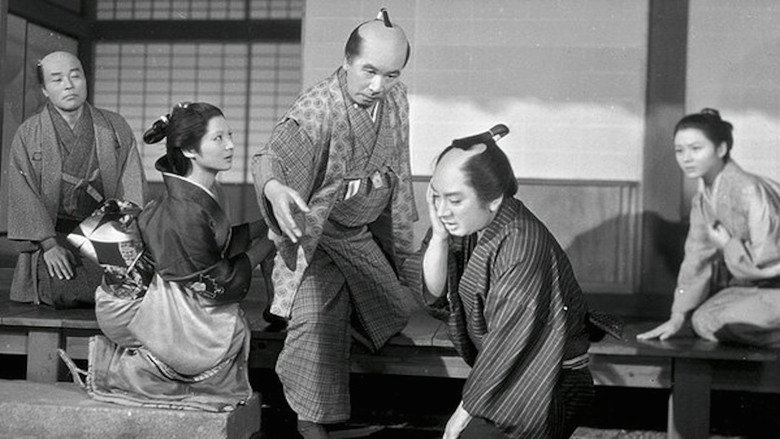
From Kenji Mizoguchi is a film that explores not just some of the fallacies of 17th Century Japan in its morality but also what a man does when he accuses his wife of adultery with his apprentice. It is a compelling film that doesn’t show a man’s greed and selfishness that would ultimately be his undoing but also the trouble he causes for his wife and apprentice where they would eventually fall in love despite the high morality that was happening in Japanese society during that time.

Well, that is all for this year’s marathon. I’m not sure what I will do with next year as I want to do another focusing, once again, on the Palme d’Or winners. I’m thinking about making the marathon into a blog-a-thon with other bloggers so that we can all see some of these great films and figure out whether or not they deserved the Palme d’Or. Until then, au revoir.

© thevoid99 2017