Following the fall of House Atrides on Arrakis in the hands of House of Harkonnen, the film follows the aftermath in which Paul Atrides (Timothee Chalamet) and his mother Lady Jessica (Rebecca Ferguson) join the Fremen in an act to reclaim the planet with other allies while also uncovering a conspiracy involving the Emperor Shaddam IV as well as revelations about Paul’s roles for the Fremen. It is a film that explores a young man who doesn’t just deal with loss but also a role that he is unprepared for as some see him as a messiah that would help the Fremen but the forces that oppose him become more uneasy as the Emperor as well Baron Vladimir Harkonnen (Stellan Skarsgard) deal with what he might bring. The film’s screenplay by Denis Villeneuve and Jon Spaihts definitely plays into Paul Atrides’ reluctance to be the messianic figure but also visions that he keeps seeing as he struggles with what might bring and such with his mother believing in this prophecy about Paul as she is also pregnant as she would rise into power of her own.
The first act plays into the Atrides being invited to the Fremen by its leader Stilgar (Javier Bardem) despite the fact that they’re outsiders yet Stilgar sees Paul as someone who could be this figure that could lead the Fremen into reclaiming control of Arrakis based on a prophecy that he believes in as Lady Jessica chooses to play into it when their ailing reverend mother is asking Jessica to replace her. Upon drinking the Water of Life, Jessica awakens her unborn daughter Alia whom she would communicate with as they decide to play into the prophecy and win over skeptics giving Stilgar more allies despite the skepticism of Chani (Zendaya) who believes that the prophecy is a lie created by religious fanatics. Still, Chani helps Paul in teaching him the way of the Fremen as they become lovers though Paul remains troubled by visions about him being this messianic figure while he helps in the rebellion against the Harkonnen who would be overwhelmed once Paul’s mentor Gurney Helleck (Josh Brolin) joins the fold having become a smuggler.
The second act serves as an introduction to the baron’s nephew Feyd-Rautha (Austin Butler) whom the baron would bring in to replace his older brother Glossu Rabban (Dave Bautista) who had failed to keep spice production going on due to the Fremen. Feyd-Rautha is a psychotic figure that proves to be just as dangerous as both his brother and uncle as he is observed by a Bene Gesserit maiden in Lady Margot Fenring (Lea Seydoux) for the Reverend Mother Gaius Helen Mohiam (Charlotte Rampling). It is in the second act where Gurney is re-introduced as he would learn about Paul’s actions as he joins the Fremen despite not believing in the prophecy as Paul becomes more troubled by the expectations of the Fremen just as the conflict with them and the Harkonnens intensify due to Feyd-Rautha’s new leadership. Paul would learn about the Emperor’s involvement as Princess Irulan Corrino (Florence Pugh) believes that Atrides is alive as she begins to question her father’s motives into the attack of House Atrides. It would all lead to revelations in its third act as well as a lot of political scheme and fanaticism with Chani becoming more troubled into the role that Paul has to play.
Villeneuve’s direction is grand in the way he presents this world of intergalactic conflict with a planet filled with sand as spice being the center of the universe as well as the source of this conflict. With scenes of Arrakis shot on location in Jordan and Abu Dhabi with additional scenes shot on location in Budapest, Villeneuve opens with Princess Irulan narrating about the events in her journal as she sees her father becoming troubled by what happened although the princess believes that Paul Atrides is alive. Much of Villeneuve’s direction includes a lot of wide and medium shots to play into the scope of the locations as well as maintain a sense of intimacy in scenes involving character interaction. Yet, the caverns, mountains, and cliffs do serve as major characters as it is a place where the Fremen live in hiding with a pool of water filled with the Fremen who have died. Villeneuve brings a sense of intrigue as well as the world that explore those who believe in this prophecy that Lady Jessica would exploit upon drinking the Water of Life as her unborn daughter would help play into this exploitation as she would later appear as an adult in one of Paul’s visions.
The dreams that Paul would have are these abstract and surreal visuals that showcase not just Paul’s fears of the future but also what it could be as it all plays into his reluctance into being this messiah for the Fremen. While Lady Jessica would able to get the reach of fanatical fundamentalists to support Stilgar’s cause against the Harkonnens and the emperor, Villeneuve does reveal a whole lot more as it plays into the fallacies of power with the emperor becoming someone who is losing influence on all of these houses as it becomes a source of contention he would have towards House Atrides. Villeneuve also plays into this sense of thrill as it relates to the sandworms that the Fremen are known for riding as it is something Paul would master and gain the respect of the Fremen as he would also learn how to travel towards south of the planet as it is a place that the Harkonnens couldn’t reach because of its sandstorms. Villeneuve also plays into this intrigue into the introduction of Feyd-Rautha as well as the Harkonnens’ home planet where it is shot largely in black-and-white as it is a stylistic choice but one that showcases why the baron favors him.
The film’s third act is about this eventual confrontation between the Fremen against the Harkonnens and the forces led by the emperor as the latter two would be unprepared for what they would face. Yet, there is a lot more happening as the Harkonnens meet with the emperor as there is not only this power struggle between the two but also other things that the princess would discover that would make her uneasy over this conflict. Even as the climax that involves Paul confronting his enemies as it would also lead to some uneasy compromises that would affect many as it also plays into what power corrupts and how those who engineer schemes and conspire are forced to watch their own fallacies but also face the actions of something much bigger that they unknowingly played a role in. Overall, Villeneuve crafts a riveting and astronomical film about a young man seeking revenge as well as becoming a messianic figure for a group of people in reclaiming their home planet.
Cinematographer Grieg Fraser does incredible work with the film’s cinematography from the stylish usage of black-and-white for the Feyd-Rautha fight at the Harkonnen’s home planet to the usage of sunlight for many of the exteriors and scenes in the cave along with usage of available light for some of the scenes in the morning as it is a highlight of the film. Editor Joe Walker does brilliant work with the editing with its stylish usage of jump-cuts, slow-motion, and rhythmic cuts to play into the suspense and action as well as some of the surreal montages in the film. Production designer Patrice Vermette, with supervising art director Tom Brown plus set decorators Zsuzsanna Sipos and Shane Vieu, does amazing work the look of the water pool inside the Fremen’s cave as well as the home of the fundamentalists and the design of the places at the Harkonnen home planet. Costume designer Jacqueline West does excellent work with the costumes from the ragged and sandy clothes that the Fremen wears as well as the clothes that Lady Jessica wears when she becomes a Reverend Mother for the Fremen and the clothes of Princess Irulan.
Hair/makeup/prosthetics designer Donald Mowat does fantastic work with the look of the Harkonnens in their pale-white skin as well as the makeup that Lady Jessica wears as the Reverend Mother. Special effects supervisor Gerd Nefzer and visual effects supervisor Paul Lambert do sensational work with the visual effects in the design of the sand worms in using prosthetics and CGI as well as the design of some of the weapons used in battles as well as the devices for Baron Harkonnen as he floats. Sound editor Richard King and sound designer Dave Whitehead do phenomenal work with the sound in the way some of dialogue is presented in Paul and Lady Jessica communicate in silence as well as the effects for some of the devices as well as the way the sand worms emerge as it is a highlight of the film. The film’s music by Hans Zimmer is tremendous for its usage of bombastic orchestral arrangements along with synthesizers and snarling guitars as it adds to the sense of chaos throughout the film that also include these wailing vocals that features work from Lisa Gerrard of Dead Can Dance while music supervisors Peter Afterman, Deric Berberabe, Alison Litton, and Carmen Murlaner add some ambient and electronic pieces as the whole music soundtrack and score is another highlight of the film.
The casting by Francine Maisler is superb as it feature some notable small roles and appearances from Roger Yuan and Babs Olusanmokun reprising their roles as two House Atrides officers who are forced to fight Feyd-Rautha as well as Souhelia Yacoub as Chani’s friend Shishakli who is also a skeptic over the prophecy, Dave Bautista in a superb role as Feyd-Rautha’s older brother Glossu Rabban who becomes overwhelmed by the Fremen attacks, and Lea Seydoux in a terrific small role as a Bene Gesserit nun in Lady Margot Fenring who seduces Feyd-Rautha in order to observe him in the hopes he can take down the Fremen. Christopher Walken is fantastic as Emperor Shaddam IV as the leader of the universe who was one of the figureheads in the attack of House Atrides as he copes with his fading leadership but also new threats as Walken is surprisingly restrained considering that the character could’ve been a bit more camp.
Charlotte Rampling is excellent as the Bene Gesserit Reverend Mother Gaius Helen Mohiam who is also a mentor to Princess Irulan as well as someone who has played a key role in the attack of House Atrides as she sees Paul as major threat as well as displaying a sense of ambiguity over what is to come. Stellan Skarsgard is brilliant as Baron Vladimir Harkonnen as the head of House Harkonnen who is eager to take advantage of controlling Arrakis yet becomes troubled by the Fremen rebellion as well as who is leading them. Josh Brolin is amazing as Gurney Halleck as Paul’s mentor and former military leader for House Atrides as he had become a smuggler as he would aid Paul in this rebellion yet is not fond of this religious fanaticism but chooses to stay silent as an act of loyalty towards Paul. Javier Bardem is incredible as Stilgar as the Fremen leader who sees Paul as this messianic figure based on a prophecy as he becomes a mentor and later be someone who would gather many allies believing that it would help the Fremen.
Rebecca Ferguson is sensational as Lady Jessica Atrides as a Bene Gesserit nun who becomes a Reverend Mother for followers in Arrakis as she would help gather many followers in playing up this prophecy as she brings an ambiguity into someone that would gain power but also at the extent of her son’s well-being and humanity. Austin Butler is great as Feyd-Rautha as Baron Harkonnen’s youngest nephew who is this psychotic figure that is beloved by the people in his planet as a skilled fighter as well as someone who is eager to prove him to himself as a leader where he finds a formidable opponent in Paul as Butler definitely brings a lot of nuances to the character but also an unexpected humanity that makes him unique. Florence Pugh is tremendous as Princess Irulan Corrino as the emperor’s daughter who records in her journal over what happened at Arrakis while believing that Paul is alive as she begins to question into what had happened and why where she also questions the motives of both her father and her mentor in Reverend Mother Gaius Helen Mohiam.
Zendaya is spectacular as Chani as a Fremen rebel who is becomes Paul’s lover while is also troubled by people making him into a messiah as she is the film’s moral compass as someone who gets to know Paul as a human being but also is forced to watch him accept a role he doesn’t want but needs to play. Finally, there’s Timothee Chalamet in an astonishing performance as Paul Atrides as the son of that late Duke Leto Atrides who is eager to get revenge over what happened to his father but also learn about the ways of the Fremen. Chalamet’s performance also has a complexity of a man that becomes conflicted into the role he is asked to play where he also has to deal with surreal dreams and sacrifices where he would accept this role of rebellion but would also facing a future of immense uncertainty over what he might do.
Dune-Part Two is a magnificent film from Denis Villeneuve. Featuring a tremendous ensemble cast, ravishing visuals, a story of rebellion and the struggles of being a messiah, Hans Zimmer’s visceral score, and immense technical work. It is a film that isn’t just this great follow up to the 2021 film but also help book end the novel both films are based on as well as create a sci-fi epic that is willing to challenge audiences as well as showcase a world that is astonishing. In the end, Dune-Part Two is an outstanding film from Denis Villeneuve.
Denis Villeneuve Films: August 32nd on Earth - Maelstrom - Polytechnique - Incendies - Prisoners (2013 film) - Enemy (2013 film) - Sicario - Arrival (2016 film) - Blade Runner 2049 - Dune-Part One - (Dune: Messiah)
Related: Dune (1984 film) - Jodorowsky's Dune The Auteurs #68: Denis Villeneuve
© thevoid99 2024

Set in 1930s Germany, the film revolves around a steel industrial family who have decided to do business with Nazi Germany in its ascent only for the association to cause the family to unravel from the death of their patriarch as well as the activities of a few including an heir whose amoral behavior would help maintain more chaos. It is a film that explores a family who makes a deal with the Nazis which would benefit them financially and socially but it would also begin their downfall. The film’s screenplay opens with a dinner celebrating the birthday of Baron Joachim von Essenbeck (Albrecht Schoenhals) who is beloved by many in his family yet is reluctant to associate himself with the Nazis despite his conservative views. Yet, the night is shattered by the news of the Reichstag fire while son-in-law Herbert Thalmann (Umberto Osini) is another person who isn’t fond of the Nazis where the night ends badly when the baron is found dead with gunshot wounds on his body as the gun belonged to Thalmann though he is innocent yet is forced to flee knowing that he’s an outspoken critic of the Nazis.
The baron’s death sets everything in place as his daughter-in-law Sophie (Ingrid Thulin) is having an affair with the family’s executive Friedrich Bruckmann (Dirk Bogarde) who is also friends with a cousin of Sophie’s late husband in the SS officer Aschenbach (Helmut Griem) as they seek to take control of the family business with the approval of the baron’s grandson and Sophie’s son Martin (Helmut Berger) who inherits much of the share as he allows Bruckman to take control instead of the baron’s boorish nephew in Konstantin (Reinhard Kolldehoff). It would eventually cause a power struggle within the family as Herbert’s wife Elizabeth (Charlotte Rampling) asks Sophie to clear Herbert’s name unaware of her role in implicating Herbert. Meanwhile, Konstantin discovers something about Martin’s amoral lifestyle as he would use it as blackmail to get control of the family business to sell arms to the SA that Konstantin is a part of. Yet, it is Aschenbach that would stir things up as well as find ways to get Martin back on board but also find ways to do whatever he wants in order to ensure that the Nazis have a future. It all plays into a family dealing with the demands of a new world and how it would create chaos within this family as many of them scheme and do whatever they can to crave power as well as revel in decadence.
Luchino Visconti’s direction is definitely wondrous as it plays into a moment in time that is based on a real-life family known as the Krupp who would help create steel and weaponry for the Nazis only for their then-patriarch to be charged with war crimes. Shot on various locations in Austria, parts of then-West Germany, and interiors shot at Cinecitta Studios, in Rome, Italy with some of it near Dusseldorf and the Austrian village of Unterach am Attersee as Bad Wiessee. Visconti’s usage of the wide and medium shots don’t just play into the home of the von Essenbeck but also the world they live in as Visconti would create some unique compositions and framing that includes the opening party where Martin would be in drag as Marlene Dietrich as he performs in front of his family as it’s interrupted by the news of the Reichstag fire. Visconti also plays up a world that is lavish but also terrifying considering the world that this family lives in with some not wanting to be part of the Nazis. At the center of the turmoil is Martin as he is someone that has a lot of power but also does activities that are immoral as he’s also bisexual and molests children including a couple of his own cousins that Konstantin is aware of.
Visconti would also use close-ups to create some dramatic suspense as well as the sense of fear that would loom in Sophie and Friedrich as they would conspire to gain whatever power with Aschenbach being the man they turn to. Even as it means playing a role in an act of violence as there’s a key sequence late in the film’s second act that was originally cut from the film’s American release back in 1969 as it was spoken largely in German where a major event in Nazi Germany’s history takes place as much of the film is spoken in English for its American release with an alternate Italian dubbing for its European release. It is a key sequence that wouldn’t just play into this corruption that this family would be involved in but also a shift in power from within with Aschenbach stirring the pot. Yet, Visconti would create something that does feel operatic while also playing into some things that were considered taboo as it relates to the growing immorality that Martin would gain. Even as he would gain a few allies but also do things that would eventually destroy the reputation of his family. Overall, Visconti crafts a chilling yet disturbing film about a family’s fall from grace in their association with the Nazis.
Cinematographers Armando Nannuzzi and Pasqualino De Santis do amazing work with the film’s cinematography with its usage of colorful lighting for some of the interior scenes at night as well as maintaining some vibrant and low-key colors for some of the daytime exterior scenes. Editor Ruggero Mastroianni does excellent work with the editing as it has some unique jump-cuts to play into the suspense and drama as well as some rhythmic cuts that add to some terrifying moments in the film. Art directors Pasquale Romano and Enzo Del Prato do brilliant work with the look of the von Essenbeck family estate with all of its rooms that are lavish and full of wide spaces as well as the main office of the factory that the family runs.
Costume designer Piero Tosi does fantastic work with the costumes from the designs of the Nazi uniforms as well as the dresses that Sophie and Elizabeth wears as well as the clothes that the men wear including the Marlene Dietrich costume that Martin wears for his performance. The sound work of Renato Cudueri and Vittorio Trentino is superb for its approach to natural sound as well as the mixing to play into some of the drama and terror with a key sequence in the film. The film’s music by Maurice Jarre is incredible for its rich orchestral score filled with sumptuous string and woodwind arrangements that play into the sense of decadence and chaos that looms throughout the film with a couple of songs from those times including songs that were sung by Marlene Dietrich.
The film’s marvelous cast feature some notable small roles from Karin Mittendorf and Valentina Ricci in their respective roles as Herbert and Elizabeth’s daughters in Thilde and Erika, Irina Wanka as a young Jewish girl that Martin meets as she lives next door to Martin’s girlfriend, Nora Ricci as the von Essenbeck estate governess who runs the house, and Florinda Bolkan as Martin’s girlfriend Olga whom he doesn’t see often as well as the fact that there is no real commitment between the two towards the end as it relates to Martin’s own descent into immorality. Albrecht Schoenhals is terrific as Baron Joachim von Essenbeck as the family patriarch who is reluctant in aligning himself with Nazi Germany as well as having issues with their ideal that would unfortunately lead to his assassination. Reinhard Kolldehoff is superb as the baron’s nephew Konstantin who is also an officer for the SA paramilitary group as he wants to run the family business in the hopes of winning favor of Adolf Hitler towards the SA as he eventually becomes disillusioned with Hitler during a key moment in the film.
Charlotte Rampling is fantastic as Herbert’s wife Elizabeth who is troubled by her husband’s disappearance knowing that he didn’t kill the baron while is also someone who isn’t fond of the Nazi ideals as she asks Sophie for help only to be unaware that Sophie is the one who framed her husband. Renaud Verley is excellent as Konstantin’s nephew Gunther as a young man who is hoping to not be involved in the war as he is also close to Herbert and Elizabeth where he later succumbs to Aschenbach’s circle. Umberto Osini is brilliant as Herbert Thalmann as a man married to the family who is beloved by many though he isn’t fond of the Nazis as he is later accused of killing the baron forcing him to go into exile. Helmut Griem is amazing as Aschenbach as a SS officer who stirs the pot within the von Essenbeck family as he manipulates his way into the family’s affairs as he was a cousin of Sophie’s dead husband as he also does whatever he can to cling on to power by association.
Ingrid Thulin is incredible as Sophie as the baron’s daughter-in-law who is having an affair with Friedrich much to the baron’s disapproval as she is a woman that is hoping to have more power within the family as well as being the mastermind of killing the baron where she hopes to maintain shared control with Friedrich where she also would do anything including going against her family. Dirk Bogarde is phenomenal as Friedrich Bruckmann as a social-climbing executive of the family business who is having an affair with Sophie as he hopes to gain power only to involve himself with things that would push the family away as well as become Aschenbach’s puppet for a time. Finally, there’s Helmut Berger in a tremendous breakout performance as Martin von Essenbeck as the baron’s amoral grandson who likes to involve himself in things that are considered obscene as well as using his status to do what he wants only to find himself in trouble where he turns to Aschenbach as Berger exudes charisma but also something very dark from within as he leans towards the ideas of Nazism.
Gotterdammerung is a spectacular film from Luchino Visconti. Featuring a great ensemble cast, stylish visuals, Maurice Jarre’s exhilarating music score, and a look into a family’s descent into immorality and chaos. It is a film that explores the life of family during the early years of Nazi Germany and how everything they used to believe in crumble into a world that is full of hate. In the end, Gotterdammerung is a tremendous film from Luchino Visconti.
Luchino Visconti Films: (Obsessione) – (Giorni di gloria) – (La Terra Firma) – (Bellissima) – (Appunti su un fatto di cronaca) – (We, the Women) – Senso – White Nights - Rocco and His Brothers - (Boccaccio ’70-Il lavoro) – The Leopard - Sandra – (The Stranger (1967 film)) – The Witches (1967 film)- The Witch Burned Alive – Death in Venice - (Alla ricerca di Tadzio) – (Ludwig) – (Conversation Piece) – The Innocent (1976 film)
© thevoid99 2023

Set in a futuristic universe in the year 10,191, the film revolves around a noble family who is asked by an emperor to watch over the harvesting of a mysterious mélange on a planet unaware that they’re being set-up by a rivaling house who had been waging war on the planet’s inhabitants. It is a film that may have a simple premise on paper but it is filled with layers on its themes on power, idealism, colonialism, and politics. The film’s screenplay by Denis Villeneuve, Eric Roth, and Jon Spaihts definitely play into a lot of the conflicts that goes on where the actions of the House of Harkkonen led by its baron (Stellan Skarskard) in going to war with the inhabitants of the planet of Arrakis in the Fremen forces its emperor to end the conflict by having the Harkkonens leave the planet and ask the House of Atrides led by Duke Leto Atrides (Oscar Isaac) to watch over the planet and its production of its resource in this mélange that makes interstellar traveling possible.
Traveling with his concubine Lady Jessica (Rebecca Ferguson) and their son Paul (Timothee Chalamet) along with several officials, Duke Atrides hopes to make peace with the Fremen and continue production of the spice yet Paul, the weapons master Gurney Halleck (Josh Brolin), and sword master Duncan Idaho (Jason Momoa) believe something is off. Especially as Idaho had been learning about the Fremen as he was able to get its chieftain in Stilgar (Javier Bardem) to have discussions with Duke Leto leading to the first steps of a peaceful resolution while planetologist Dr. Liet-Kynes (Sharon Duncan-Brewster) reveal much about the planet as she is aware that Paul is having dreams and visions that is increased by his contact with mélange. Even as Paul had been taught in the teachings of his mother who is a disciple of the Bene Gessirit sisterhood, who are powerful in both they’re physical and mental abilities, as her mentor in Gaius Helen Mohiam (Charlotte Rampling) realizes that Paul is a threat as she asks Baron Harkkonen to spare Paul and Jessica which he agrees to unaware that he plans on killing them all.
The screenplay does a lot in not just fleshing out these characters but also play into the stakes of what the House of Atrides is dealing with as they begin to ask questions about why they’re in Arrakis. Even as Paul becomes a target with some believing he is a prophet that will help the Fremen rebel against the emperor though Paul himself is unsure while a lot of the dreams he has features a young woman he would meet in Chani (Zendaya). There are also a lot of political maneuvering in the hand of the Harkkonens as they are intent on having control of the mélange in an act of greed and domination as they treat the Fremen as vermin. There is a structure to the script as it does play into the development of Paul Atrides but also in this journey of the role he has to play as he has to cope with loss as well as things he has to do for the greater good.
Villeneuve’s direction is definitely vast in its presentation as it plays into the different worlds of the universe as it has a physicality that isn’t seen often in sci-fi films. Shot on various locations in the Liwa Oasis at United Arab Emirates as parts of Arrakis along with the deserts of Jordan and Stadlandet as the House of Atrides’ home planet of Caladan plus studios in Budapest for some of the interiors including the home planet of the Harkkonens. Villeneuve maintains a world that grand where the future is this massive universe and Arrakis is at the center where Villeneuve uses a lot of wide and medium shots to capture the look of this desert world with the sand being this mélange that has mystical quality that does more than provide a resource for interstellar traveling during a scene where Duke Atrides, Paul, Gurney, and Dr. Liet-Kynes are saving harvesters where Paul gets close into contact with the mélange.
Villeneuve also uses close-ups to play into Paul’s interaction with the mélange as well as the dreams he have that often feature Chani as well as images possibly relating to future events and such. There is a physicality to Villeneuve’s presentation in the dragonfly-planes that the House of Atrides uses as well as other spaceships along with some of the designs of the sandworms who move around the desert. Villeneuve emphasizes more on this air of physicality as well as the presentation of other planets including a planet where the emperor’s soldiers as it this desolate and rainy world while the Harkkonens’ home planet is just as dark in comparison to the desert beauty of Arrakis. Even in the film’s second act where Paul and Lady Jessica hide from the Harkkonens and the emperor’s army with the aid of Dr. Liet-Kynes and Idaho, there is this air of realism into the locations and places where Villeneuve’s usage of tracking shots play into the suspense.
Villeneuve also play up into this world of politics such as scene of Duke Atrides being confronted by Baron Harkkonen as the compositions that Villeneuve create is filled with this dramatic tension while the third act plays into the aftermath of the threat that is Paul Atrides. Notably as Atrides and Lady Jessica deal with the world they’re in but also revelations about why their house was sent to Arrakis. The final moments of the film is more of setting up of what is to come since the film basically sets up a lot of what happens in the first half of the book. Yet, Villeneuve is able to do more than just establish the world and these characters but also the stakes itself in what Paul has to do for Arrakis and the universe itself. Overall, Villeneuve crafts a ravishing yet intoxicating film about a young man taking his steps into finding himself amidst a troubling intergalactic conflict on a repressed planet.
Cinematographer Greig Fraser does incredible work with the film’s cinematography in its emphasis on natural lighting for many of the daytime exterior scenes on Arrakis along with some of its interior scenes in the caves and tunnels along with the usage of low-key lighting for some of the interior/exterior scenes at night as it is a highlight of the film. Editor Joe Walker does excellent work with the editing as it is largely straightforward with some rhythmic cuts to play into some of the action and drama while also knowing when to have shots linger for a bit to play up the suspense. Production designer Patrice Vermette, with supervising art director Tom Brown and senior art director Karl Probert plus set decorators Richard Roberts and Zsuzsanna Sipos, does phenomenal work with the look of the city and spice refinery on Arrakis as well as the space ships and the way the home of the Harkkonens look as it play into their personality. Costume designers Bob Morgan and Jacqueline West do amazing work with the design of the refined suits of the House of Atrides as well as the gowns of the Bene Gessirit and the clothes of the Harkkonens.
Hair/makeup/prosthetics makeup designer Donald Mowat does brilliant work with some of the prosthetics that include some of the makeup of the characters such as Gaius Helen Mohiam and some of the Harkkonens including Baron Harkkonen in his obese yet larger-than-life persona. Special effects supervisor Gerd Nefzer and visual effects supervisor Paul Lambert do superb work with the effects from the usage of prosthetics in the look of some of the space ships along with digital effects into the look of the giant sand worms including the detail in its mouth. Sound editors Theo Green and Mark A. Mangini do tremendous work with the sound as it adds to the film’s atmosphere in the way the sand worms emerge along with the thumpers to attract their attention as well as the way the space ships and such sound as it is a highlight of the film. The film’s music by Hans Zimmer is sensational for its bombastic score that features elements of bass-heavy electronics and orchestral bits along with vocal choirs and such, with vocal contributions from Lisa Gerrard of Dead Can Dance, to play into the scale of the film as it is a highlight while music supervisors Peter Afterman and Alison Litton cultivate a soundtrack that features some folk-like pieces and other electronic pieces to play into the world that the characters are in.
The casting by Jina Jay and Francine Maisler is marvelous as it feature some notable small roles from Roger Yuan as Gurney’s right-hand man Lt. Lanville, Golda Rosheuvel as the Fremen maid Shadout Mapes who assists Lady Jessica in Arrakis, Benjamin Clementine as an imperial delegate who brings an order to Duke Atrides early in the film, Babs Olusanmokun as a Fremen in Jamis who challenges Paul’s allegiance late in the film, Chang Chen as Suk physician Dr. Wellington Yueh who works for the House of Atrides as he is a man dealing with conflict of his own, David Dastmalchian as the Harkkonen official who aids in political dealings and matters of torture, Stephen McKinley Henderson as the House of Atrides’ official Thufir Hawat who also deals in political matters and the handling of security, and Zendaya in a fantastic small role as the Fremen Chani who appears in Paul’s dreams as a symbol of hope as well as someone who is part of a rebellion against the Harkkonens and the emperor. Dave Bautista is superb as Baron Harkkonen’s brutish nephew Glossu Rabban as a figure who kills people and does whatever his uncle asks him to while also realizing the big threat this is Paul Atrides.
Javier Bardem is terrific as the Fremen chieftain Stilgar as a man who is suspicious of the House of Atrides’ arrival only to realize their motives as he would play a bigger role late in the film. Sharon Brewster-Duncan is excellent as Dr. Liet-Kynes in a role that was originally as a man where Brewster-Duncan brings a lot of gravitas and charisma to the role as a planetologist who works for the emperor yet realizes that something isn’t right where she would help out the House of Atrides as she knows a lot about life on Arrakis. Jason Momoa and Josh Brolin are amazing in their respective roles as Paul’s mentors in the sword master Duncan Idaho and the weapons master Gurney Halleck as two men who teach Paul on the ideas of combat with Momoa as someone who got to know the Fremen as he is also aware that something is off while Brolin’s performance as Gurney is more reserved as someone who isn’t as trusting as Idaho but is loyal to the House of Atrides. Charlotte Rampling is brilliant in her small role as Gaius Helen Mohiam as the Bene Gessirit Reverend Mother who tests Paul on his skills and realizes that he is powerful where she sees him as a threat.
Stellan Skarsgard is incredible as Baron Vladimir Harkkonen as this evil and greedy figure who is obese and creepy in his look while displays a chilling tone to his character as someone that wants it all and to destroy everyone in his path. Oscar Isaac is remarkable as Duke Leto Atrides as the head of House of Atrides who is hoping to bring peace and prosperity to Arrakis while learning that he’s become a political target where he copes with not just the expectations for his son but also the fate of his family. Rebecca Ferguson is phenomenal as Lady Jessica as Duke Atrides’ concubine and a Bene Gessirit priestess who taught Paul special vocal powers as she deals with her role as a Bene Gessirit but also the big role that Paul might have to play. Finally, there’s Timothee Chalamet in a tremendous performance as Paul Atrides as the son of Duke Atrides who is a young man trying to learn about the universe as he has visions that could be about the future while dealing with the role he has to play where Chalamet brings a lot of that air of uncertainty but also someone who knows he has to grow as it is a career-defining performance for Chalamet.
Dune-Part One is a magnificent film from Denis Villeneuve. Featuring an incredible ensemble cast, rapturous visuals, astonishing set pieces, its emphasis on themes of politics and colonialism, and Hans Zimmer’s phenomenal score. The film is definitely a grand piece of art that doesn’t just live up to the vision of Frank Herbert but also be a sci-fi film that does a lot more than just be action in favor of characters, motivations, and the stakes. In the end, Dune-Part One is an outstanding film from Denis Villeneuve.
Denis Villeneuve Films: August 32nd on Earth - Maelstrom - Polytechnique - Incendies - Prisoners (2013 film) - Enemy (2013 film) - Sicario - Arrival (2016 film) - Blade Runner 2049 - Dune-Part Two - (Dune: Messiah)
Related: Dune (1984 film) - Jodorowsky's Dune - The Auteurs #68: Denis Villeneuve
© thevoid99 2021
Based on the biography Georgiana, Duchess of Devonshire by Amanda Foreman, The Duchess is the story of the life of Georgiana who gets to William Cavendish, Duke of Devonshire, as it leads to a troubled marriage as well as uncertainty into the role of her life where she’s expected to do so many things for her husband. Directed by Saul Dibb and screenplay by Dibb, Jeffrey Hatcher, and Anders Thomas Jensen, the film is a study of a woman’s role in British aristocracy as she tries to find friendship and love in that world that is restrictive as the character of Georgiana Cavendish is portrayed by Keira Knightley. Also starring Ralph Fiennes, Hayley Atwell, Dominic Cooper, and Charlotte Rampling. The Duchess is a riveting and compelling film from Saul Dibb.
Set in the late 18th Century Great Britain, the film follows the life of Georgiana who is betrothed to the Duke of Devonshire in William Cavendish (Ralph Fiennes) as her task is to give him a male heir and be his wife as she copes with the role she’s given as well as his affairs and her own feelings for an old friend. It’s a film that play into a woman trying to play a role but also come out of it to express her views and such but also her own desires in life. The film’s screenplay by Saul Dibb, Jeffrey Hatcher and Anders Thomas Jensen follow Georgiana’s life as the first act is about her friendship with Charles Grey (Dominic Cooper) and then being married to Cavendish and the role she’s playing as well as deal with the affairs he had with maids. Notably as one of those maids he slept with would borne a child named Charlotte whom Georgiana would care for along with her two daughters in Harryo and Little Georgiana six years after she and Cavendish are married much to Cavendish’s dismay that Georgiana hasn’t produced a male heir.
The script doesn’t just to play into Georgiana’s relationship with Cavendish but also her friendship with Lady Elizabeth “Bess” Foster (Hayley Atwell) who would be a closest ally though their friendship is briefly tarnished by Foster’s affair with Cavendish whom she’s fallen for and bargained with as Cavendish would get her three sons to live with them. It would also explore Georgiana’s relationship with Grey whom she sees as someone who share the same ideals of bringing change to Great Britain yet Cavendish’s position in power can undo all of Grey’s plans. For Georgiana, her marriage to Cavendish isn’t just one about power and status but also this air of importance that she had to play in royal and political society.
Dibb’s direction is largely straightforward yet it does have some element of style while the compositions also says a lot about what is happening without needing to say a word. Notably in scenes during a breakfast, lunch, or dinner at the dining room between Georgiana and Cavendish with Bess later being part of this triangle where Dibb’s wide shots would showcase not just this air of disconnect between Georgiana and Cavendish with the former trying to get to know the latter but also it would also later lead to tension between the two with Bess being in the middle either as a source of disdain from Georgiana or as a mediator between the two. Shot largely at Twickenham Film Studios with exterior locations shot on various locations in England, the film does play into a world that is quaint and reserved though disconnected from some of the realities of what was happening to Britain during that time. Notably as much of Dibb’s direction is shot in palace halls, dining halls, opera houses, and these posh venues while there a few scenes of the streets where Grey is doing a speech with Georgiana’s supporting by his side as he’s talking to the regular people.
Dibb’s direction also uses close-ups and medium shots to play into the interaction between characters including a scene of Bess showing Georgiana the art of seduction and pleasure as it relates to the latter’s feelings towards Grey. The close-ups also add to the anguish that Georgiana is facing during the film’s third act as it play into her love affair with Grey and what Cavendish threatens to do. Yet, it also play into the role she has to play publicly as there is a scene in the film that is shown off screen that even Bess is repulsed by what is happening. Dibb would maintain that role that Georgiana had to play and the sacrifices she makes but also to ensure that she at least she had some impact into Britain’s future while making peace with those in her life. Overall, Dibb crafts a ravishing film about the life of a young duchess and her journey of self-discovery and the role she had to play in late 18th Century British society.
Cinematographer Guyla Pados does brilliant work with the film’s cinematography with its natural usage of lights for the exteriors as well as candle lights and other low-key lighting for the interiors set at night. Editor Masahiro Hirakubo does excellent work with the editing as it is straightforward with some rhythmic cuts to play into the drama as well as some nice matching cuts in some of the film’s compositions. Production designer Michael Carlin, with set decorator Rebecca Alleway and art director Karen Wakefield, does amazing work with the set design from the look of the rooms, dining halls, and many of the interiors as well as a few exterior sets including the town square where Grey speaks to the people. Costume designer Michael O’Connor does fantastic work with the costumes as the design of the dresses and men’s clothing is a major highlight of the film.
Hair designer Jan Archibald and makeup designer Daniel Phillips do terrific work with the design of the wigs and the lavish makeup for some of the parties that Georgiana host for the people in royal society. Special effects supervisor Mark Holt, along with visual effects supervisors Adam Gascoyne and Charlie Noble, does some fine work with some of the film’s minimal effects as it relates to a dramatic party scenes as well as a few scenes of exterior set dressing. Sound editor Catherine Hodgson does superb work with the film’s sound as it help play into the atmosphere of the parties as well as the sparse and uncomfortable silent moments in the film including a key scene off screen where the action is heard in a disturbing presentation. The film’s music by Rachel Portman is incredible for its lush orchestral score that play into the period with some themes that help define a few characters including its approach to the music of the times.
The casting by Lucy Beavan is great as it feature some notable small roles from Georgia King and Bruce Mackinnon as actors at a play that Georgiana, Cavendish, and Bess watch, Emily Jewell as a nanny, Richard McCabe as Sir James Hare, Sebastian Applewhite as Sir Augustus Clifford, Poppy Wigglesworth and Eva Hrela in their respective roles as the young and younger versions of Cavendish’s daughter Charlotte, Emily Cohen as Georgiana’s eldest daughter Harryo, and Mercy Fiennes Tiffin as Georgiana’s youngest daughter in Little G. Aidan McArdle and Simon McBurney are superb in their respective roles as political figures in Richard Brinsley Sheridan and Charles James Fox as two men who befriend Georgiana whom she engages in political and social discussions with as they also become political allies.
Charlotte Rampling is fantastic as Georgiana’s mother Countess Georgiana Spencer who reminds her daughter of the role she has to play but also sympathizes with the anguish that her daughter is dealing with. Dominic Cooper is excellent as Charles Grey as the future prime minister as a man whom Georgiana knew before her marriage as he is someone that is an idealist hoping to make some changes for Britain while having feelings for Georgiana leading to an affair that would bring trouble to his future possibilities. Hayley Atwell is brilliant as Lady Elizabeth “Bess” Foster as a woman that Georgiana meets as she would become her best friend until she falls for Cavendish as she later copes with her actions and what she had to do where she would later be the mediator between Georgiana and Cavendish as well as be the former’s closest confidant.
Ralph Fiennes is amazing as William Cavendish, Duke of Devonshire as this royal official who is a complex individual as someone that is flawed and cold where he would do awful things to Georgiana but is someone who doesn’t like to show his emotions and his warmth to anyone believing it would make him vulnerable as it’s a remarkable performance from Fiennes. Finally, there’s Keira Knightley in a phenomenal performance as Georgiana Cavendish, Duchess of Devonshire as this young woman who is forced into marriage for social reasons where Knightley displays an air of charisma and anguish into a woman who is forced to play a role for society but is also someone eager to say something for herself as it’s one of her finest performances to date.
The Duchess is a sensational film from Saul Dibb that features an incredible performance from Keira Knightley. Along with top-notch supporting performances from Ralph Fiennes, Hayley Atwell, Dominic Cooper, and Charlotte Rampling plus amazing costumes, set designs, cinematography, and a fascinating screenplay that focuses on character study and themes of social and political behaviors. It’s a period film that explores a woman dealing with the role and obligations she has to fulfill only to find her own voice in the role she chooses to play. In the end, The Duchess is a spectacular film from Saul Dibb.
© thevoid99 2019

Based on the short story In Another Country by David Constantine, 45 Years is the story of a couple who is about to celebrate their 45th wedding anniversary when they learn about a discovery that would shake up the celebration. Written for the screen and directed by Andrew Haigh, the film is an exploration of a couple whose anniversary becomes marred by a revelation from the past as they question about their own marriage as it‘s told in the span of six days. Starring Charlotte Rampling and Tom Courtenay. 45 Years is a powerful and eerie film from Andrew Haigh.
It’s six days away from the celebration of the 45th wedding anniversary for Geoff and Kate Mercer (Tom Courtenay and Charlotte Rampling, respectively) as they prepare for a monumental event that had been delayed for five years due to the former’s health. Yet, Geoff receives a letter that revealed that the body of his former fiance` has been found inside a glacier in the Swiss Alps as it lead to some revelations about their relationship. It’s a film that follows the life of a couple who are becoming undone by this news as they try to keep their lives going as well as celebrate their 45th wedding anniversary as it is told from Monday to Saturday as the last day is the night of their anniversary party. In the course of these six days, writer/director Andrew Haigh creates a story that explores the life of Geoff and Kate Mercer where they live in British countryside near the town of Norfolk as they’re just like any normal couple. Then came this letter as it is a slow unraveling of the two where Geoff becomes more secretive as well as reveal a lot about his time with his old flame while Kate becomes uneasy and suspicious about aspects of Geoff’s life that she doesn’t know about.
Haigh’s direction is actually quite simple in terms of the compositions yet it has a lot of long takes to play into the drama that is happening. The usage of the wide and medium shots doesn’t just play into the locations as it is shot on location in Norfolk but it’s also in these moments inside the home and at some of the social gatherings where Haigh captures that sense of intimacy as well as use the close-ups for scenes between Geoff and Kate. Haigh’s approach to long takes definitely showcase what is going on as well as how Geoff and Kate interact whether it’s them having dinner, listening to music, or in bed. It is about these two people as equals yet as the film progresses, there are moments where Geoff is dominating the frame with Kate listening off screen or Kate feeling slighted with Geoff at the edge of the frame.
Notably as Haigh maintains something that is quiet but also build up this air of tension that ultimately climaxes with the final sequence that is the anniversary party. It’s a sequence where so much has been revealed as it’s about Geoff and Kate trying to maintain some composure for their guests but there’s an uncertainty into what will happen to them next. Especially as it is an emotional climax but told in a very restrained manner. Overall, Haigh creates a rapturous yet engrossing film about a couple’s 45th wedding anniversary threatened by revelations of the past.
Cinematographer Lol Crawley does excellent work with the cinematography as it is largely natural to play into the colorful yet foggy exterior shots in the day as well as some low-key lighting for the scenes set at night. Editor Jonathan Alberts does brilliant work with the editing as it is largely straightforward with some rhythmic cuts for the drama as it maintains the long takes that are presented. Production designer Sarah Finlay does nice work with the look of the home that Geoff and Kate live in as well as a few of its surroundings including the climatic anniversary party. Costume designer Suzie Harman does terrific work with the costumes as it is mostly casual with the exception of the fancy clothes for the anniversary party.
Hair/makeup designer Nicole Stafford does wonderful work with the look of the main characters in their elder state as it plays to the naturalness of the film. Sound editor Joakim Sundstrom does superb work with the sound as it largely natural with not much emphasis to create something artificial while much of the music in the film is played on location. Music supervisor Connie Farr does fantastic work with the soundtrack as it largely features music from the past such as Dusty Springfield, the Platters, the Moody Blues, the Turtles, Lulu, Lee Hazlewood, Aaron Neville, Stagger Lee, Gary Puckett and the Union Gap, and some classical pieces from Carl Maria von Weber, Edvard Grieg, Franz Liszt, and Wolfgang Amadeus Mozart.
The casting by Kahleen Crawford is amazing as it features notable small roles and appearances from Dolly Wells as family friend Charlotte, Sam Alexander as a former student of Kate in the postman Chris, Richard Cunningham as the party organizer Mr. Watkins, David Sibley as longtime friend George, and Geraldine James as another longtime friend in Lena who asks Kate about Geoff’s suddenly odd behavior. Tom Courtenay is incredible as Geoff as this man who becomes haunted by the news about his former fiance` as he ponders about a lot of things of how his life could’ve been but also hiding some secrets he doesn’t want to share with Kate. Finally, there’s Charlotte Rampling in a phenomenal performance as Kate Mercer as a woman who is haunted by the news of what her husband has found as she tries to remain distant only to ponder if she was really the one for Geoff as it’s a performance of great restraint that is also devastating to watch.
45 Years is a tremendous film from Andrew Haigh that features sensational performances from Charlotte Rampling and Tom Courtenay. It’s a film that explores love at its most enduring but also ponder many questions about if that person was right for this one as well as the many complexities that goes on in a relationship. In the end, 45 Years is a spectacular film from Andrew Haigh.
Andrew Haigh Films: (Greek Pete) - Weekend (2011 film) - Lean on Pete
© thevoid99 2016

Written and directed by Francois Ozon, Jeune & Jolie (Young and Beautiful) is the story of a young woman who becomes a teenage prostitute following the loss of virginity during a summer vacation in Germany. The film is an exploration of a young woman coming to terms with her sexuality while keeping her new profession secret from her mother. Starring Marine Vacth, Geraldine Pailhas, Frederic Pierrot, and Charlotte Rampling. Jeune & Jolie is a ravishing yet haunting film from Francois Ozon.
The film is about a young woman exploring her sexuality as she had just turned 17 where she secretly becomes a prostitute. After some trouble and the eventual discovery by her mother, Isabelle (Marine Vacth) copes with her encounters as she becomes confused about the role she took and her own beauty. It’s a film that is about this young woman who loses her virginity to a German boy during a summer vacation in the country as the film is told through four seasons in the life of this young woman. The script has a very unique yet odd narrative structure where much of the first half is very straightforward from Isabelle’s time in the summer to becoming a prostitute to men who are older than her in various places in Paris during after school hours.
The film’s second half not only has her reveal, through flashbacks, into what drove into prostitution and why she didn’t stop immediately as it causes tension between herself and her mother Sylvie (Geraldine Pailhas). Especially as Isabelle accuses Sylvie of straying from her marriage to Isabelle’s stepfather Patrick (Frederic Pierrot). Isabelle’s confusion and her unwillingness to open up to her family and her friends adds to her melancholic state as she would later talk to a psychiatrist about her work and the moment that forced to quit for good. All of which would lead to a third act where Isabelle not only confronts her actions but also deal with the incident that drove her to stop becoming a prostitute.
Francois Ozon’s direction is very mesmerizing for the way he explores a young woman coming of age as she discovers her sexuality as much of the film is set in France while the first scenes in the summer are shot in Germany where Isabelle would lose her virginity. Ozon’s compositions in some of the wide and medium shots in Germany have a sense of beauty as it would shift once the film moves to France where it’s not as colorful as it would play to the melancholia of Isabelle as she lives this double-life as a 17-year old girl going to school and hang out with friends while she would have this other life sleeping with men who are older than her as she claims to be 20 year old.
Ozon’s use of close-ups on Isabelle are entrancing not just for her beauty but in how men are willing to fall for her as Ozon’s presentation of the sex is very seductive and not graphic. Even as some of it plays for laughs as it relates to Isabelle’s younger brother Victor (Fantin Ravat) and their stepfather as the latter is baffled by his stepchildren’s fascination with sex. Yet, Ozon keeps it simple and restrained in his approach to humor and drama where it would lead to a climax where Isabelle confronts her fears. Overall, Ozon crafts a very evocative and chilling film about a young woman coming to her terms with her sexuality.
Cinematographer Pascal Marti does excellent work with the film‘s very colorful and lush cinematography for the German beach scenes to the low-key lighting and mood for the hotel interior scenes in Paris. Editor Laure Gardette does wonderful work with the editing with its stylish cuts that includes a montage of Isabelle and her classmates talking about a poem by Arthur Rimbaud as well as some straightforward cuts to play into the drama. Production designer Katia Wyszkop does brilliant work with the apartment that Isabelle and her family lives to the look of the hotel rooms and hallways that she goes to as a prostitute.
Costume designer Pascaline Chavanne does terrific work with the clothes from the casual look that Isabelle wears at home and around her friends to the more adult-like clothing she wears as a prostitute. Sound editor Benoit Gargonne does nice work with the sound from the quiet atmosphere of the hotels to the array of sounds of a party that Isabelle attends with her friends. The film’s music by Philippe Rombi is superb for its somber and melancholic score that plays into moods that Isabelle goes through while its film soundtrack includes some electronic pieces by M83 and Crystal Castles at a party scene plus songs by Francoise Hardy that plays to Isabelle’s evolution as a person.
The casting by Sarah Teper is amazing for the ensemble that is created as it features some notable small roles from Djedje Apali and Nathalie Richard as friends of Sylvie and Patrick, Laurent Delbecque as a classmate of Isabelle, Jeanne Ruff as Isabelle’s best friend Claire, Serge Hefez as Isabelle’s psychiatrist in the film’s second half, Akela Sari as the family maid Mouna, and Lucas Prisor as the German boy that Isabelle loses her virginity to. Johan Leysen is terrific as one of Isabelle’s aging clients as a man who treats her very well while Fantin Ravat is wonderful as Isabelle’s younger brother Victor who is intrigued by the world of sex as he is also coming of age.
Frederic Pierrot is excellent as Isabelle’s stepfather Patrick who brings some humor to the film as he tries to deal with the boundaries while being baffled by his stepchildren’s discovery of sex as he also tries to help out Sylvie with her problems. Geraldine Pailhas is fantastic as Isabelle’s mother Sylvie as a woman who eventually learns what her daughter does as she tries to cope with the news and her own failings as a mother. In a cameo performance of sorts, Charlotte Rampling is remarkable in small yet radiant performance as a woman Isabelle meets late in the film as it’s one that is really unforgettable. Finally, there’s Marine Vacth in a brilliant performance as Isabelle as this young woman who becomes fascinated by sex as she becomes a prostitute where she deals with her beauty and sensuality as well as coming to terms with her identity as it’s a real breakthrough for the young actress.
Jeune & Jolie is a sensational film from Francois Ozon that features a dazzling performance from newcomer Marine Vacth. It’s a film that is told with such sensitivity and curiosity in the way a young woman explores her sexuality and the power of sex while dealing with the consequences of her actions which would later lead to her becoming a woman. In the end, Jeune & Jolie is a marvelous film from Francois Ozon.
Francois Ozon Films: Sea the Sea - Sitcom - Criminal Lovers - Water Drops on Burning Rocks - Under the Sand - 8 Women - Swimming Pool - 5x2 - Time to Leave - Angel (2007 film) - Ricky - Le Refuge - Potiche - In the House - (The New Girlfriend) - (Frantz (2016 film)) - (Double Lover) - (By the Grace of God) - Summer of 85 - (Everything Went Fine) - (Peter von Kant) - The Auteurs #33: Francois Ozon
© thevoid99 2014

Based on the novel by Elizabeth Taylor, Angel is the story of a writer who is eager to succeed while enduring all sorts of trials and tribulations throughout the course of her life. Directed by Francois Ozon and screenplay by Ozon and Martin Crimp, the film is a look into the life of a woman who is eager to succeed yet deals with the reality she tries to run away from in her life. Starring Romola Garai, Michael Fassbender, Sam Neill, Lucy Russell, and Charlotte Rampling. Angel is a gorgeous yet extravagant melodrama from Francois Ozon.
The film is essentially a rise-and-fall tale told in a melodramatic style about a young girl named Angel Deverell (Romola Garai) who craves to live a life that doesn’t exist as she constantly writes stories filled with imagination and fantasy in the hopes to succeed and live a rich, fabulous life. Once she’s published and becomes successful, she has everything a woman could want in the early 20th Century including the love of her life in an artist named Esme` (Michael Fassbender) and a supportive assistant in Esme’s sister Nora (Lucy Russell). When World War I arrives and Esme` decides to enlist, Angel’s world crumbles little by little as her book sales decline as well as her detachment from reality leading to elements of tragedy and despair.
Francois Ozon’s screenplay that features additional dialogue from Martin Crimp play into that rise and fall schematic where they use a traditional structure to convey the journey of this woman who is ambitious and talented but also very self-centered, melodramatic, and is practically a dreamer. Still, there is something about Angel Deverell that is intriguing for someone who has this idea about what people should strive for and how she expects to be treated. While her publisher Theo (Sam Neill) is intrigued by her ambition as well as the stories she writes. She is disliked by his wife Hermione (Charlotte Rampling) who sees Angel as an outrageous dreamer with no sense of reality. While she does have another admirer in Nora who would eventually become Angel’s caretaker, there are things in Angel’s world that includes the house called Paradise that seems very surreal.
The film’s second half has this sense of collision between reality and fiction where Angel deals with World War I from afar as she starts to not just lose touch with an ever-changing world. She is in complete denial over the fact that her work is too detached from that ever-changing world which doesn’t reflect anything that she is surrounded by. It’s a character who is very flawed and can be very despicable towards people as she would try to get Esme` to paint things that doesn’t really suit what he’s feeling as he couldn’t live up to her idea of what he should be as he is carrying a secret of his own that only his sister and later Theo would know. The third act isn’t just about the tragedy Angel deals with but also some harsh truth that she faces not just about herself but also the world that she had wanted to leave behind in the beginning of the film.
Ozon’s direction is very stylish in not just the way he presents the film as this rise-and-fall melodrama but also in the moments where reality and fantasy collide. Notably as there’s scenes where Angel is traveling with these artificial backdrops to play up this idea that she’s living a life that is extraordinary and lives up to what she thinks is the way to live. There’s compositions that do play up something that would recall these period-costume films filled with lavish set pieces and gorgeous costumes. Even as it plays to that idea of melodrama where a woman is so full of herself as she has to make a grand entrance to make people believe she is great. It’s all part of this world in the film’s first half that builds up to Angel being a woman that people admire and revere for her work.
By the film’s second half, Ozon goes for less artificiality while upping the melodrama even more where it plays into Angel’s sense of denial about the real world as well as the fact that Esme` is a man eager to find himself only to come back the war a ravaged and detached man. With Esme` wanting to pull away from Angel, he has no choice but to come back to her as she welcomes back in a grand style oblivious to what he is feeling. It does lead to this very dreary third act where the shots are much tighter and the drama is stripped-down a bit to unveil the sense of loss of not just what Angel is feeling but also the realization of a world that has changed and in no need of her at the moment which does lead to an ending that is quite extravagant in some respects to who Angel Deverell is. Overall, Ozon creates a very fascinating and exhilarating film about the rise-and-fall of a dreamer.
Cinematographer Denis Lenoir does brilliant work with the film‘s very gorgeous cinematography that is filled with lush images for some of its exteriors and interiors as it‘s colorful as well as intoxicating to look at. Editor Muriel Breton does nice work with the editing to create some wonderful jump-cuts to play with the rhythm while keeping things methodical for some of its drama. Production designer Katia Wyszkop, with set decorator Gerard Marcireau and art director Alexandra Lassen, does amazing work with the set pieces from the lavish home that is Paradise to some of the halls and places set in the early 20th Century.
Costume designer Pascaline Chavanne does fantastic work with the costumes to play up Angel‘s vivacious personality as it has her becoming a young woman being poor to someone being glamorous with all of these expensive dresses. Visual effects supervisor Daniel Trujillo does terrific work with some of the backdrops that is created in Angel‘s travels to showcase her idea of the world as she‘s disconnected from reality. Sound editor Benoit Hillebrant does excellent work with the sound to capture some of the atmosphere of the intimate moments of the film as well as some of the livelier moments such as the play Angel attends based on one of her books. The film’s music by Philippe Rombi is just exquisite for its serene yet soaring orchestral flourishes with some lush string arrangements and melancholic piano pieces to play up the melodrama.
The casting by Karen Lindsay-Stewart is superb for the ensemble that is created as it features some notable small roles from Simon Woods as an art curator looking into Esme’s work, Christopher Benjamin as Esme` and Nora’s uncle Lord Norley, Jemma Powell as a woman Esme` knew in Angelique, Janine Duvitski as Angel’s aunt Lottie, and Jacqueline Tong as Angel’s mother whom Angel would later claim that she was a famous concert pianist. Charlotte Rampling is wonderful in a small but crucial role as Theo’s wife Hermione who watches Angel from afar with some disdain while later gaining her pity to see how far she’s fallen. Sam Neill is excellent as Angel’s publisher Theo who takes on the young writer as he’s amazed by her work while also falling for her from afar as he also tries to deal with her disconnect from the real world.
Lucy Russell is great as Nora as a woman who goes from an admirer of Angel to someone who is devoted to make sure she is in a good state of mind while forcing to carry secrets to not make Angel lose control. Michael Fassbender is amazing as Esme` as a man eager to succeed with his own approach to art while dealing with the expectations he’s been saddled with when he’s with Angel as he is later undone by his time in World War I. Finally, there’s Romola Garai in a magnificent performance as the titular character as a woman who is clearly someone filled with imagination but couldn’t handle the idea of reality as Garai isn’t afraid to make the character very un-likeable at times while displaying a bit of sympathy to a woman who later endures tragedy in her life.
Angel is a splendid and delightful film from Francois Ozon that features a mesmerizing performance from Romola Garai. Along with a supporting cast that includes Michael Fassbender, Sam Neill, Lucy Russell, and Ozon cohort Charlotte Rampling. The film is definitely one of Ozon’s most stylish as well as intriguing films that explores the plight of dreamers. While it’s a film that can be overwhelming at times, it is still fascinating to showcase a woman’s rise and fall as she is disconnected from reality. In the end, Angel is an extraordinary film from Francois Ozon.
Francois Ozon Films: See the Sea - Sitcom - Criminal Lovers - Water Drops on Burning Rocks - Under the Sand - 8 Women - Swimming Pool - 5x2 - Time to Leave - Ricky - The Refuge - Potiche - In the House - Jeune & Jolie - (The New Girlfriend) - (Frantz (2016 film)) - (Double Lover) - (By the Grace of God) - Summer of 85 - (Everything Went Fine) - (Peter von Kant) - The Auteurs #33: Francois Ozon
© thevoid99 2013

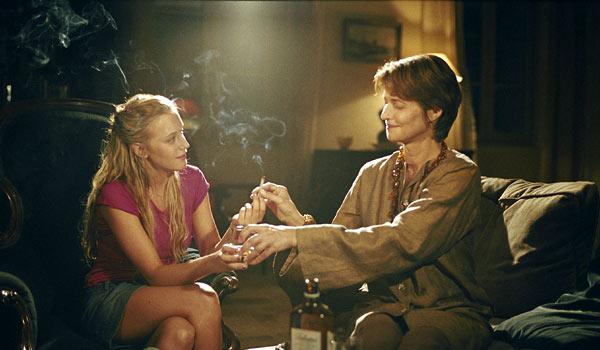
Directed by Francois Ozon and written by Ozon and Emmanuele Bernheim, Swimming Pool is the story about a murder-mystery novelist who travels to the French countryside to stay at her publisher’s house as she gets an unexpected visit from his outgoing daughter. The film is an exploration into the different generation gaps between two women as well as the similarities they have as one woman is trying to create a novel. Starring Charlotte Rampling, Ludivine Sagnier, and Charles Dance. Swimming Pool is a provocative and seductive film from Francois Ozon.
Seeking inspiration is something a writer must have when it comes to creating new material as the film is in some ways is about a famous British murder-mystery novelist in Sarah Morton (Charlotte Rampling) who is trying to write the next novel of her series involving a detective. Yet, she’s a woman who is unhappy with the outcome of some of her work while having to compete with younger writers who can the attention of her longtime publisher John Bosload (Charles Dance). By taking his offer to stay at his villa in the French countryside to work and relax, she soaks up the chance to enjoy a sense of peace until she gets the unexpected arrival of Bosload’s daughter Julie (Ludivine Sagnier) who causes trouble. Despite the tension between the two very different women, the two women do give something to each other where Sarah finds a muse while Julie gets someone to help after a night with a man has gone wrong.
The screenplay is definitely a thriller of sorts but acts more as a drama where it is about these two women sharing a villa as they don’t really know each other or want to do anything with each other. Especially since Sarah is a woman who had done her time as a young woman as she’s now middle-aged, bitter, and being usurped by younger writers. Julie is a young woman who is wild, likes to swim in the nude, have sex with various men, and is not afraid to get into a physical fight. Still, there is intrigue between the relationship of these two women where they share a few stories as well as interest towards a café waiter (Jean-Marie Lamour).
While the first two acts is about the relationship of these two women, the film’s third act is where the suspense comes in as it relates to not just a murder but also how to hide it as well as revelations about Julie’s mother whom her father had been estranged from for so many years. It would help play into the relationship between Sarah and Julie as the latter has been in need of a maternal figure. Yet, it would all help play into Sarah’s search for inspiration though its ending is very ambiguous as it ends up raising a lot of questions into what might’ve really happened.
Francois Ozon’s direction is quite straightforward for the most part in the way he presents scenes set largely in Southern France with a few scenes shot in London. Still, there is a degree of style to the way Ozon shoots some of his close-ups and medium shots to get his two leads into a frame. Even in playing up the element of suspense. There is also a sensuality to the film that can be quite serene at times but also a bit confrontational such as a scene of Julie lying on a chair outside as the café waiter stares at her as the two would masturbate to themselves. Yet, it is done with an air of subtlety that doesn’t make too graphic with the exception a different scene between Julie and the waiter in a pool. The film’s suspense has an air of mystery though its ending creates this ambiguity into whether anything that happened really happened as it mixes the idea of fantasy and reality. Overall, Ozon creates a very intoxicating and exhilarating film about mystery and the art of writing.
Cinematographer Yorick Le Saux does brilliant work with the film‘s very lush cinematography for many of the scenes set in France during the daytime while using more stylish lighting schemes for the scenes at night in its interior and exterior settings. Editor Monica Coleman does wonderful work with the editing to create some methodical cutting and stylish montages for its suspenseful moments along with some rhythmic cuts for a few of the film‘s dramatic moments. Production designer Wouter Zoon does excellent work with the look of the villa that Sarah stays at as well as a few places in France as well as the office of John Bosload.
Costume designer Pascaline Chavanne does nice work with the costumes from the more casual yet tightened clothes of Sarah to the more exotic look of Julie with the clothes and swimsuits she wears. The film’s sound by Benoit Hillebrant, Lucien Balibar, and Jean-Pierre Laforce is terrific for the way it creates an atmosphere in some of the quieter moments as well as some of the chaos for the scenes with Julie whenever she‘s partying with another man. The film’s music by Philippe Rombi is very evocative with its low-key yet playful piano-driven score for most of the film while intensifying things a bit for its suspenseful third act.
The casting by Antoinette Boulat is superb as it features a small ensemble with appearances from Frances Cuka as a fan that Sarah meets on the train, Sebastian Harcombe as a young writer Sarah has to compete with, Marc Fayolle as the villa’s gardener, Mirelle Mosse as the gardener’s daughter that Sarah meets late in the film to ask about Julie’s mother, and Jean-Marie Lamour as the café waiter Sarah meets early in the film who is entranced by Julie. Charles Dance is terrific as Sarah’s publisher John Bosload who gives Sarah the chance to stay at her home while is a man who is hoping for Sarah to deliver another hit novel so he can make more money.
Finally, there’s the duo of Charlotte Rampling and Ludivine Sagnier as they both give exquisite performances in their respective roles as Sarah Morton and Julie. Sagnier brings a liveliness to her role as a very vivacious young woman who isn’t afraid to appear nude as she uses her sexuality to get what she wants while exemplifying all of the attributes of a young woman who seems very troubled. Rampling is more reserved as Sarah by displaying someone who is lost and bitter as she craves for some peace while also showing she’s also a bit funny as well as being sexy for someone of her age.
The 2003 Region 1 DVD from Focus Features is released in two version in a theatrical and unrated cut where the latter shows more nudity and sexually explicit content. Presented in its 1:85:1 theatrical aspect ratio with 5.1 Surround Sound for English and French along with DTS sound and subtitles in English, French, and Spanish. The DVD’s extras includes a trailer for the film as well as trailers from other releases from Focus Features. Another extra that is included are four deleted scenes which all relates to Sarah in a scene where she arrives along with a scene walking around the locations, reading a book, and a conversation with Bosload on the phone.
Swimming Pool is a ravishing film from Francois Ozon that is highlighted by the performances of Charlotte Rampling and Ludivine Sagnier. The film is definitely not just one of Ozon’s accessible films but also one of his more defining works in the way he brings intrigue and sensuality into an entire film while playing up the idea of what goes in the world of suspense. In the end, Swimming Pool is a remarkable film from Francois Ozon.
Francois Ozon Films: See the Sea - Sitcom - Criminal Lovers - Water Drops on Burning Rocks - Under the Sand - 8 Women - 5x2 - Time to Leave - Angel (2007 film) - Ricky - The Refuge - Potiche - In the House - Jeune & Jolie - (The New Girlfriend) - (Frantz (2016 film)) - (Double Lover) - (By the Grace of God) - Summer of 85 - (Everything Went Fine) - (Peter von Kant) - The Auteurs #33: Francois Ozon
© thevoid99 2013