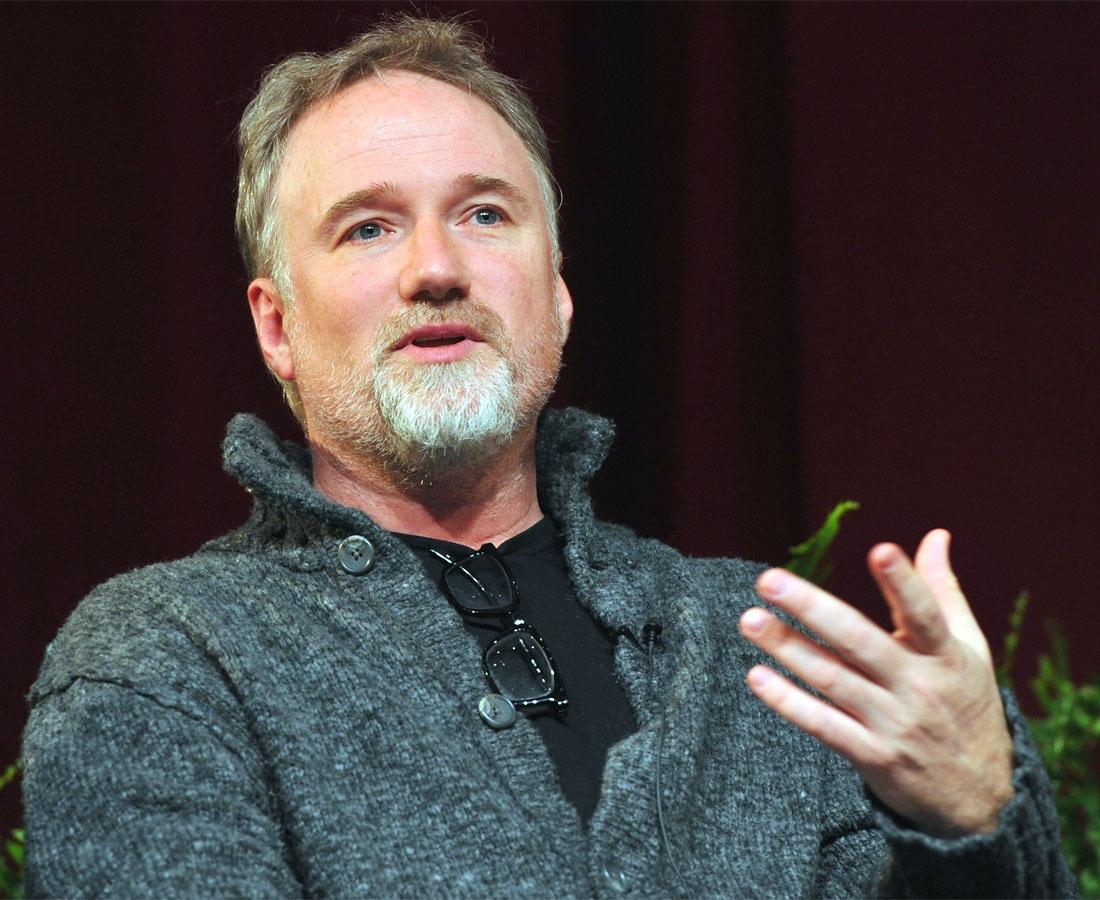
One of the premier directors working in Hollywood, David Fincher is a filmmaker that doesn’t play by the rules despite the fact that many of his films are by many prominent film studios in Hollywood. While a lot of his work feature amazing technical feats, much of his body of work dabble into dark subject matters with elements of suspense and terror. Often tagged as being difficult for his methods as well as struggling to live up to many expectations that Hollywood craves for. Fincher is one of the few in the Hollywood system that maintains a level of control as well as be independent in a money-driven industry.
Born on August 28, 1962 in Denver Colorado, David Andrew Leo Fincher was the son of journalist Howard Kelly “Jack” Fincher and mental health nurse Clare Mae Boettecher. Fincher’s father was an editor for Life magazine as he moved the family to San Anselmo, California two years after David’s birth where one of the Finchers’ new neighbor was an aspiring filmmaker in George Lucas. At the age of eight-years old, Fincher received his first 8mm camera as he had just seen Butch Cassidy and the Sundance Kid which was a monumental moment for the young boy. It was in this moment that Fincher’s interest in film would have him stage plays in high school while working for local TV news stations as a production assistant.
In 1983 while working for Industrial Light and Magic as an assistant cameraman and matte photographer for such films as Return of the Jedi and Indiana Jones and the Temple of Doom. Fincher met another aspiring filmmaker in Dominic Sena as well as music video director Nigel Dick where they would create a production company with video director Greg Gold and producers Steve Golin and Sigurjon Sighvatsson called Propaganda Films. The company would be an outlet for filmmakers in the world of music videos and commercials to hone their craft as filmmakers. Fincher, Sena, and Dick would be among those who would use Propaganda as a training tool as well as other filmmakers such Alex Proyas, Michael Bay, Michel Gondry, Stephane Sednaoui, Spike Jonze, Gore Verbinski, Zack Snyder, and many others until it formally closed in 2002 by the time most of these filmmakers were making films.
From 1983 to 1985, Fincher spend much of his time directing commercials before finally getting to chance with the then-popular 80s pop-rock artist Rick Springfield for a series of music videos that were quite popular in the age of MTV. In 1986, Fincher scored his first real hit directing the video for the Jermaine Stewart song We Don’t Have to Take Our Clothes Off as it helped the song become a major hit. The video would have Fincher work with many acts such as the Motels, the Hooters, Loverboy, Eddie Money, Patty Smyth, the Outfield, and Foreigner where he had a distinctive look in his videos that were slick and filled with gorgeous photography as well as whatever tools to create something that felt new. It was at this point that Fincher was in demand as the videos he made for artists and acts such as Sting, Madonna, Paula Abdul, Don Henley, Steve Winwood, Jody Watley, Aerosmith, Billy Idol, and George Michael were coming to him to get their videos made.
Alien 3

Due to his success with music videos as well as be popular with the hot artists of the time, Hollywood came calling to have him involved with projects for him to helm. It was 20th Century Fox that approached with Fincher with a film that seemed to be a surefire hit and a pathway for Fincher’s filmmaker career to start with a bang. It would be in the form of a long-gestating third film of the Alien franchise which had been in development hell as well as dealing with many script issues for nearly five years since the release of James Cameron’s 1986 film Aliens. Fincher came in at a time when the project was once again about to be shelved as he read the many drafts of the script that had been in the works that included contributions from William Gibson, Eric Red, David Twohy, and Vincent Ward with Ward and Renny Harlin in the running to helm the film.
By the time Fincher came in, the film’s producers in filmmaker Walter Hill and David Giler had been trying to write the script based on the many other ideas as Rex Pickett had come in to do re-writes on the many ideas that had been written by script doctor Larry Ferguson whose ideas were not well-received by Hill, Giler, and the film’s star Sigourney Weaver. With Pickett out of the picture despite his contribution as he would not get any credit under the rules of the Writer’s Guild of America. Production was finally underway in January of 1991 at Pinewood Studios in London as the cast would include Charles Dance, Charles S. Dutton, Paul McGann, Pete Postlethwaite, and Lance Henriksen briefly reprising his role as the damaged android Bishop and as its designer. For many of Fincher’s peers, they all thought he had made it but for Fincher. The project would become a nightmare as the film’s original cinematographer Jordan Cronenweth was forced to leave the shoot after two weeks as he had contracted Parkinson’s disease which would eventually claim his life in 1996.
Replaced with the British cinematographer Alex Thomson, things began to be troubling as the production was unable to get Stan Winston though Winston did give 20th Century Fox the services of Tom Woodruff Jr. and Alec Gills in designing the aliens. Yet, Fincher found himself at odds with the executives of 20th Century Fox who would fire him several times during the tumultuous shoot as Fincher would also get at odds with Hill and Giler for not being more supportive in trying to get the film finished. By the time the film reached into post-production with editor Terry Rawlings, Fincher was already aware of what the studio wanted but felt it wasn’t good enough. Eventually, Fincher was forced out of the production for good as the film finally was released in May of 1992. Though it made nearly $160 million in the box office worldwide, the film was considered a major commercial disappointment as it only made around $55 million in the U.S. which was similar to its budget. The critical response was mixed as much of it was negative in comparison to its predecessors.
More than a decade after its theatrical release, 20th Century Fox released a box set of the franchise that included an assembled cut of the film that featured nearly forty minutes of footage that never made it to the final cut. Yet, Fincher wanted no involvement with its release despite the warmer reception the assembled version got with fans and critics. For Fincher, making the film was a horrific experience as he later stated in interviews several years later while admitting that he hates the film and often doesn’t include it when it comes to the body of work he would cultivate in the years to come.
Se7en

The disappointing experience of Alien 3 forced Fincher to retreat to the world of music videos as he would helm videos for Michael Jackson, Madonna, and the Rolling Stones. Along with work for Propaganda, Fincher was hoping not to make another film until he received the draft of a script by Andrew Kevin Walker about a serious of mysterious murders based on the seven deadly sins where two detectives try to solve its mystery. The script was intriguing for Fincher although it was an earlier draft that Walker hadn’t polished yet Fincher was intrigued about being involved as a producer with someone else directing it. Yet, New Line Cinema who had the rights to have the script made offered Fincher the chance to direct with a modest $33 million budget as Brad Pitt wanted to take part in the film with the condition that Walker’s original ending was intact.
With both Fincher and Pitt getting what they wanted as the latter would play the role of the young detective David Mills while the producers got Morgan Freeman to star as the veteran detective William Somerset. With a cast that was to include Pitt’s then-girlfriend Gwyneth Paltrow as Mills’ wife plus R. Lee Ermey, John C. McGinley, Richard Roundtree, and Kevin Spacey as the mysterious John Doe. The film would be shot largely in Los Angeles as it would be set largely on rainy days where Fincher would be given the services of famed cinematographer Darius Khondji to shoot the film and Arthur Max to do the set designs as he would be one of Fincher’s first of a series of recurring collaborators. Fincher would often have Walker on set for advice on the narrative as it would help him get through the shoot much easier as opposed to the chaos of the last film he made in which he had to work with an unfinished script that was in constant need of re-writes.
For the post-production, Fincher was able to get the services of the famed music composer Howard Shore to do the score while he worked with two of his collaborators in the art of music videos in cinematographer Harris Savides and editor Angus Wall in creating a title sequence. The title sequence would create something that was offbeat but also played into the world of the killer as it would accompanied by a remixed version of the Nine Inch Nails song Closer. Fincher also wanted to create something that didn’t play by the conventions as he had to fight tooth-and-nail for the film’s original ending to be intact that involved a mysterious box that would play into the ultimate sin. Another person that was involved in the post-production is sound designer Ren Klyce who would help create a lot of mixes for the sound as he would become one of many recurring collaborators for Fincher throughout his career.
The film made its premiere in late September of 1995 as it drew excellent reviews from the critics while being a surprising hit in the box office thanks in some part to Brad Pitt’s emergence as a film star. The film would eventually gross more than a $100 million in the U.S. while its total tally worldwide was more than $327 million. The film would give screenwriter Andrew Kevin Walker a nomination for Best Screenplay at the British Academy Awards while editor Richard Francis-Bruce received the film’s sole Oscar nod for Best Editor. The film would win three MTV Movie Awards for Best Film, Most Desirable Male for Pitt, and Best Villain to Spacey.
The Game

The success of Se7en gave Fincher some clout as well as renewed confidence as a filmmaker as his personal life marked some changes as his marriage to Donya Fiorentino fell apart in 1995 despite having a daughter in Phelix around that time. Yet, Fincher would rebound when he married Cean Chaffin in 1996 who would become one of his producers as she would help handle some of business aspects of the industry as well as film executives. For their first collaboration, the two took on a project Fincher had interest in helming around the time his filmmaking career was starting. The script had been in the hands of Propaganda for some time as it revolved around a wealthy investment banker who is given an invitation by his brother to play a game that would blur the ideas of reality and fiction where it would eventually become thrilling and deadly.
Brad Pitt was initially going to star in the film but was unable to due to scheduling reasons as Michael Douglas was eventually cast in the lead role of Nicholas Van Orton though he had some reservations considering that the film was to be funded by the European-based company Polygram Films. Jodie Foster was approached to play Nicholas’ daughter but she was unable to take part due to another project she was attached to as her part was re-written to become Nicholas’ brother Conrad where Jeff Bridges was approached only for Sean Penn to be eventually cast. Deborah Kara Unger was given the supporting role of the waitress Christine who becomes an unlikely participant in the game. The supporting cast would also include an array of character actors and cult figures such as Carroll Baker, James Rebhorn, and Armin Mueller-Stahl to be in the film.
Fincher would bring in Harris Savides to shoot the film as it would be largely shot in San Francisco where Fincher resided in as he felt shooting the film in San Francisco instead of Los Angeles would be cheaper. Fincher gathered many of the same collaborators from his previous film while getting James Haygood to do the editing of the film. While much of the film was set and shot in and around San Francisco, Fincher would shoot the film on weekends as it was difficult to shoot around the city during the weekdays where everyone is working. The shoot would last for 100 days as Fincher also got to shoot in a soundstage for a sequence where Michael Douglas is riding in a cab that is about to crash into San Francisco Bay.
The film was released in late September of 1997 where it got some excellent reviews from critics as a high-octane thriller. Though it did make more than a $100 million worldwide, the film was considered a commercial disappointment making only $48 million in the U.S. The disappointing commercial reaction would be something Fincher would endure constantly where even though studios liked what he was able to do. It always came short when it came down to money. Still, the film would eventually become a hit on home video where as it would get a special DVD/Blu-Ray release from the Criterion Collection in 2012.
Fight Club

A month before the release of The Game, Fincher was offered the chance to helm the film version of Chuck Palahniuk’s 1996 novel about an everyman who lashes out against his environment as he and another man form a fight club to express their discontent. While Fincher would accept the job to helm the film though it would be under the supervision of 20th Century Fox whom he had a troubled history with. Fincher was able to get more control this time around as he was protected by producers and Fox 2000 executive Laura Ziskin despite the fact that the film contained a lot of anti-corporate messages and themes that made many in 20th Century Fox uneasy. When Fincher was able to get Brad Pitt on board as the character Tyler Durden with Pitt receiving a $17.5 million salary, the studio felt a little bit easy though not by much.
For the role of the film’s un-named protagonist, studios wanted Matt Damon or Sean Penn but Fincher was able to get Edward Norton for the role while Helena Bonham Carter was cast as Marla against the wishes of the studio. With Meat Loaf and Jared Leto taking on small supporting parts, Fincher spent much of the first half of 1998 doing pre-production where Pitt and Norton went to take lessons in boxing, tae kwon do, grappling, and soap making while Fincher would work with screenwriter Jim Uhls on the script with Andrew Kevin Walker providing some assistance. The film was initially budgeted at $23 million, it would increase once filming began as it escalated into $50 million which made one of the film’s executive producers in Arnon Milchan uneasy until he saw the dailies.
Having felt bad about the way Jordan Cronenweth was dismissed from the production of Alien 3, Fincher asked Jordan’s son Jeff to shoot the film as he would become a recurring collaborator of Fincher for years to come. Fincher also hired visual effects artist Kevin Tod Haug, who had done some visual effects work on The Game, to create some effects as it would play into the film’s eerie look as well as the elements of surrealism. The work on the visuals took a long time as the 138-day shoot ended in December of 1998 as its budget would increase more due to the fact that Fincher shot a lot of footage. By the time post-production began, Fincher found himself at odds with the executives of 20th Century Fox over the marketing which some believed hurt the film’s commercial potential. Adding to the troubles while Fincher, editor James Haygood, and sound designer Ren Klyce were working doing post-production was trying to market a film that was extremely violent as Fincher eventually had ideas to market it but 20th Century Fox didn’t like it.
The film finally made its premiere at the Venice Film Festival in Italy on September 10, 1999 where it shocked audiences and critics leading up to its North American theatrical release later that month. The film polarized audiences and critics yet it was a film that a lot of people talked about as it was extremely controversial upon its release. Despite the buzz over its premise, the film received mixed reviews from critics while its box office take in America was poor as it only grossed $37 million against its final $63 million budget. Though the film would gross a total of more than a $100 million worldwide, the film was considered a failure until it was released a year later on home video and the newly-emerged DVD where it became a massive hit in the home video market. The film would eventually have a cultural impact and become a lauded cult film as it would help Fincher’s reputation as Hollywood’s prince of darkness.
Panic Room

Wanting to do something that was less hectic and more accessible, Fincher was given a script by David Koepp that explored the idea of panic rooms as it was about a mother and daughter who bought a new house only to deal with burglars as they hide in a panic room. The simplicity of the premise was something Fincher wanted as it would be another studio picture under Columbia Pictures who gave him creative control. Since Fincher’s last film revolved largely around men, the fact that the script had a female lead was something totally different but also welcoming. With Koepp also serving as producer and allowing many of Fincher’s collaborators to be on board, the film was to star Nicole Kidman in the leading role with Hayden Panettiere as Kidman’s daughter while the trio of Forest Whitaker, Jared Leto, and Dwight Yoakam were cast as the burglars.
Production began in January of 2001 where two weeks into the shooting, Kidman got injured on set as she was forced out of the production as the injury was serious. Production was halted as Columbia scrambled to find another actress to replace Kidman as Jodie Foster was eventually cast but the production had another setback when the film’s cinematographer Darius Khondji left the production due to creative issues with Fincher. Conrad Hall Jr. would join the set though Khondji’s work would be credited as another casting change was made when Panettiere left the production before Kidman’s injury as then-newcomer Kristen Stewart was cast as Foster’s daughter. Kidman would later make a voice cameo in the film as the girlfriend of the protagonist’s ex-husband as the production was then troubled once again five weeks into the shoot when Foster learned she was pregnant. Aware of what was happening, Foster asked Fincher and co-producer Cean Chaffin to not rush the production.
Though shooting was halted and restarted in November as it was finished, problems emerge where Columbia screened a rough cut of the film for a test screening as it didn’t do well. Wanting to avoid re-shoots, Fincher and editors James Haygood and Angus Wall spent time trying to go over some of the takes that had been filmed. Another problem that became some concern was that the studio wanted Fincher to tone down some of the violence and language for a PG-13 rating instead of a R rating but Fincher refused as he also wasn’t fond of the marketing as he felt the film was different than his previous works. Fincher would get what he wanted as he was able to have the film finished for its late March 2002 release.
The film’s release on March of 2002 was greeted with excellent reviews as well as being a major box office hit making more than $96 million in the U.S. against its $48 million budget while making an additional $100 million around the world. The film’s success was a relief for Fincher who was getting some attention for not just being a master of suspense and dark stories but also dealing with some of the troubled aspects that went on in making films. Fincher decided to take a break from films as he spent much of his time away from the world of filmmaking as well as mourn the passing of his father in April of 2003.
Zodiac

After some time away from the world of film, Fincher returned to the world of film as he was approached to helm a script about the famed Zodiac killer who had been killing people in the late 1960s/early 1970s around the Bay Area in California. Fincher grew up knowing about the infamous killings that wreaked havoc around San Francisco and parts of California as he met with screenwriter James Vanderbilt who had been writing a script about the murders. While Fincher was being offered to helm an adaptation of James Ellroy’s The Black Dahlia, Fincher’s plans for that project were too ambitious as he focused on the Zodiac project with Vanderbilt and producer Bradley J. Fischer as the three spent eighteen months conducting their own investigation into the killings as they interviewed witnesses, people relating to the suspects, survivors, and others that knew about what happened. It was around this time that Fincher was beginning to cast the film as he cast Jake Gyllenhaal as cartoonist Robert Graysmith who would begin his own investigation of the murders in the 1970s while Mark Ruffalo was cast as detective David Toschi.
Gyllenhaal and Ruffalo would meet their real-life counterparts while Fincher would work on casting as well as be interested in the emergence of digital filmmaking as he reunited with old collaborator Harris Savides for the production. Having used the Thomson Viper on a few commercials he made in the early 2000s, Fincher decided to use it for the shoot while also using 35mm film for high-speed camera for slow-motion effects. With the cast that would include Anthony Edwards, Brian Cox, Elias Koteas, John Carroll Lynch, Chloe Sevigny, and Robert Downey Jr. as the journalist Paul Avery who covered the killings in the 1960s. The production finally began in September of 2005 in San Francisco as it would be a long one not just because of the large ensemble cast but also Fincher’s insistence on perfection. Not everyone liked Fincher’s approach to multiple takes as Gyllenhaal had a big issue with it as tension brewed between the two.
The 115-day shoot ended in February of 2006 as Fincher worked on some of the visual effects to recreate parts of San Francisco during that period as well as some of the moments of violence. The post-production work took nearly a year as Fincher worked with collaborators in editor Angus Wall and sound designer Ren Klyce on many of the visuals and sound. For the soundtrack, Fincher brought in David Shire to score the film as he loved Shire’s score work in the 70s as he felt it was appropriate for the film. By late 2006, Fincher brought in a cut to the executives of Warner Brothers and Paramount who both shared duties in releasing the film as it’s running time was over three hours. The executives at Paramount wasn’t happy with the cut as they hoped to release the film in December of 2006 for Oscar consideration. While Fincher had final cut privileges, the director did feel the film wasn’t ready as he was trying to find the right cut of the film as it was later pushed for a March 2007 release.
The film would make its premiere in March of 2007 where it did modestly well in the American box office making more than $33 million against its $65 million budget yet it would recoup its losses through a worldwide release which took in more than $51 million. The film’s release date in the U.S. came at a bad time though Paramount was surprised that it did do OK despite its competition. Fincher would spend more time on the film as he would present an extended cut that featured five more minutes of material that didn’t make it to the film’s theatrical release as Paramount submitted it for Oscar contention in 2007 with its home video release coming in January of 2008 where it garnered rave reviews as well as do well in the home video market. The film would eventually land in several top ten critics’ list as it helped establish Fincher more as a director that can bring in the goods.
The Curious Case of Benjamin Button

While developing the project that would be Zodiac, Fincher was approached about helming a film that was very different from his other work as it was based on a short story F. Scott Fitzgerald about the extraordinary of a life of a man who aged backwards as he would witness many events throughout the 19th Century. The project was something that went through many developments since the mid-1980s as Fincher’s acceptance of the project was big as Paramount would distribute the film in the U.S. with Warner Brothers releasing it internationally. With the backing of Kathleen Kennedy and Frank Marshall as producers with Fincher’s wife Cean Chaffin and the script to be written by Eric Roth with Robin Swicord providing ideas from her own previous drafts of her own script. The film would mark a reunion between Fincher and Brad Pitt since 1999’s Fight Club as Pitt would star as the titular character. In 2005, Cate Blanchett was cast as Pitt’s love-interest Daisy while the rest of the ensemble would include Tilda Swinton, Julia Ormond, Taraji P. Henson, Jared Harris, Jason Flemyng, and Fincher regular Elias Koteas.
With the script updated to be set in the 20th Century in New Orleans, the film would be the first production set in the city since Hurricane Katrina ravaged the city in 2005. Fincher would get the services of Claudio Miranda who did some shooting on Zodiac as he would fill in for Harris Savides who was unavailable at the time. Shooting began in November of 2006 around the time Fincher was still finishing up the editing of Zodiac as it was shot in and around New Orleans with additional shooting set in Los Angeles and its various soundstages. The film was to be Fincher’s most expensive film to date with a budget of $167 million as it was largely due to the visual effects. The production was quite smooth as it would help the city of New Orleans as the shoot would last 150 days yet much of the time was on the visual effects and the makeup for Pitt to look like an old man and later a young man.
While the production was finished in November of 2007, plans for its release in March of 2008 was pushed to November of 2008 and eventually in late December in time for Oscar consideration. Needing help in the editing, Fincher brought in Kirk Baxter to help Angus Wall in the editing while Fincher would receive the services of composer Alexandre Desplat to write music for the film. The film was finally finished in time for its Christmas 2008 release where it was well-received with critics while doing modestly well in the U.S. making more than $127 million while making more than $200 million worldwide. The film would be given several Oscar nominations including Best Director for Fincher as well as acting nominations for Pitt and Henson while winning three Oscars for its art direction, visual effects, and makeup.
The Social Network

Having achieved a major level of success as well as some clout in Hollywood, Fincher wanted to do something different that wasn’t as ambitious as his previous two films. It was around this time Fincher met with the famed TV writer Aaron Sorkin who had been involved in film writing screenplay on several projects. Sorkin had received a manuscript by Ben Mezrich about the founding of the social network platform that is Facebook as it revealed a lot into how it was founded and all of the things that went on behind the scenes. Sorkin sees it as a story that is very complex that carried many of the classic tropes that is expected in the creation of invention as it involves betrayal, jealousy, and greed. Around the time Sorkin was adapting the script and interviewing those who knew about the formation of Facebook. He also heard about two lawsuits that were happening around the same time as he decided to put that into the script as he contacted Fincher who agreed to make a film about the founding of Facebook. The two would get additional help from producer Scott Rudin who would get funding for the film as Fincher gathered many of his collaborators for the film as well as go to Laray Mayfield to aid in the casting.
The cast would largely consist of young actors who aren’t as well-established with the mainstream as Jesse Eisenberg is cast as Mark Zuckerberg, Andrew Garfield as Eduardo Saverin, pop singer Justin Timberlake as Sean Parker, and several other small roles from Armie Hammer, Max Minghella, Rooney Mara, Brenda Song, and Rashida Jones. Shooting began in October of 2009 as Jeff Cronenweth would shoot the film as he would become Fincher’s regular cinematographer through this point as it was shot largely around Cambridge, Massachusetts near Harvard as they were unable to shoot the film at Harvard. For the character of the Winklevoss twins which was played by Armie Hammer, Josh Pence would play the double as visual effects would come in to create a facial double as they used split-screen technology and digital effects for Hammer’s face to on Pence’s body.
By the time reached post-production where Fincher worked on the film with editors Kirk Baxter and Angus Wall and sound designer Ren Klyce. Fincher knew he needed something different for the score as he and Sorkin tried other music for the film’s opening credit scenes. Fincher called upon Nine Inch Nails mastermind Trent Reznor for help as Fincher had a history working with Reznor dating back to using NIN’s music for the opening credits of Se7en as well as directing the NIN video Only in 2005. Reznor and longtime NIN collaborator Atticus Ross would create an electronic-based score that was very different as Reznor and Ross used different instruments to create some of the pieces. Even a demented remake of Edvard Grieg’s In the Hall of the Mountain King as it would play in the Henley Regatta scene.
The film made its premiere at the New York Film Festival in late September 2010 as it drew phenomenal reviews ahead of its theatrical release a week later as it became a major box office hit grossing more than $97 million in the U.S. against its $40 million budget as well as an additional $128 million worldwide. The film would be listed as one of the year’s best films as it won Best Film and Best Director for Fincher at both the New York and Los Angeles film critics circle as the accolades would pile up. The film would receive eight Oscar nominations including Best Picture and a Best Director for Fincher as it would win three Oscars for its score, editing, and Sorkin’s adapted screenplay giving Fincher his biggest success to date.
The Girl with the Dragon Tattoo

The success of The Social Network gave Fincher complete freedom as Sony wanted to repeat its success by giving Fincher the chance to helm a Hollywood remake of Stieg Larsson’s novel The Girl with the Dragon Tattoo which was a best-seller that had a very successful film version in 2009 in its native Sweden. Producer Scott Rudin wanted to make a version for American audiences as he asked Steve Zailian to write the script that had been going on for quite some time. With Fincher now taking part of the project, it seemed like a win-win for Sony as Fincher would bring in many of his collaborators for the project. The project was to be budgeted at $90 million and to be shot in Stockholm, Sweden with some of it shot in Zurich, Switzerland, and Oslo, Norway.
For the lead role of Lisbeth Salander, many actresses wanted to play the role as Fincher eventually chose Rooney Mara who had a small but crucial role in The Social Network as Fincher fought for her to get the role as Sony wanted a bigger name. Daniel Craig would be cast as Mikael Blomkvist as the cast would include Christopher Plummer, Robin Wright, Stellan Skarsgard, Joely Richardson, Steven Berkoff, and Yorick van Wageningen. Shooting began in September of 2010 as Fincher reveled in shooting in Sweden as well as create something that was quite dark as well as be quite graphic at times. With Mara dying her hair and sporting all sorts of things for the look of the character, it was something that was quite extreme from mainstream fare as it was exactly what Fincher wanted.
For the film’s music, Fincher as the duo of Trent Reznor and Atticus Ross to come up with an array of different pieces ranging from ambient to dark electronic as the two would also re-create two cover songs in Led Zeppelin’s Immigrant Song with Yeah Yeah Yeahs vocalist Karen O and Bryan Ferry’s Is Your Love Strong Enough? that is performed by another Reznor/Ross project in How to Destroy Angels that features Reznor’s wife Mariqueen Maandig-Reznor on vocals. The film was marketed in a very unique way as Fincher and Rudin were hoping to create a franchise of sorts that would be targeted towards adults with plans doing the follow-ups of Larsson’s trilogy of stories just as the film versions in Sweden had done with great success.
The film made its premiere the Christmas 2011 release where it did receive excellent reviews but despite grossing more than $100 million in the U.S. box office and more than $130 million internationally. The film was considered a commercial disappointment as plans for its follow-ups were on hold. While the film would garner five Oscar nominations for its score, cinematography, sound editing, and a Best Actress nomination for Rooney Mara plus a Best Editing win for Kirk Baxter and Angus Wall. In 2015, Sony announced plans to reboot the series from a book that wasn’t written by Larsson as Fincher, Mara, and Craig were out of the picture as plans for that film are in the works as of late 2016.
Gone Girl

A year after the release of The Girl with the Dragon Tattoo as well as developing a TV series that would become House of Cards starring Kevin Spacey, Robin Wright, Kate Mara, Corey Stoll, and many others that made its premiere in 2013 through Netflix. Fincher was approached to direct an adaptation of Gillian Flynn’s bestseller about a man who has been accused of killing his wife after she had disappeared where he is the center of a media circus. Flynn chose to adapt her own book into a script as she consulted with Fincher about many ideas for the narrative as the film was supposed to star Reese Witherspoon who backed out due to scheduling conflicts as she would be involved with the film as a producer.
British actress Rosamund Pike would be cast as Amy Dunne while Ben Affleck would play her husband Nick as the cast would also include Carrie Coon, filmmaker Tyler Perry, Kim Dickens, Patrick Fugit, model Emily Ratajkowski, and Neil Patrick Harris as a former boyfriend of Amy. Fincher gathered many of his collaborators for the film as it would be a slightly smaller film that Fincher’s previous film with a $61 million budget. While Fincher would shoot some of the film in Los Angeles, much of it was shot in Cape Girardeau, Missouri for a five-week shoot beginning in September of 2013. It was a production that was less hectic than some of Fincher’s other films as it reveled not just on suspense but also elements of humor as it had satire relating to the media coverage of Amy’s disappearance.
The direction would have Fincher provide many different ideas of what had happened as he brought in Flynn to help with the narrative as it relate to the many twists and reveals over what had happened. Especially as Fincher added some dark humor and moments that were quite disturbing as he asked the duo of Trent Reznor and Atticus Ross to create music that played to its dark tone. The film would also have Fincher create something that is very accessible as the film would appeal to a wide audience as much of his film often appealed to males and film buffs as this film leaned toward women. Notably as it was marketed as a romantic film gone absolutely wrong as it would prove to be crucial to the film’s commercial success.
The film made its premiere in late September of 2014 as the opening film of the New York Film Festival as it was released to North American theaters a week later. The film would be a major box office success as it grossed nearly $130 million in the U.S. while grossing a total of $369 million worldwide. The film would receive rave reviews as it helped boost the film’s box office as it was praised for its cast, look, music, Fincher’s direction, and script while Rosamund Pike would receive the film’s lone Oscar nomination for Best Actress.
With 10 films under his belt and being one of the few in Hollywood who can create films on his own terms with star power or just by his name alone. David Fincher is a filmmaker that definitely exudes a sense of excitement no matter how dark much of his work is. While there hasn’t been anything definitive into what he’ll do next, Fincher does manage to create something that is often a cut above a lot of films whether they’re suspense films or dream-like dramas with heavy stakes. With cinema often playing safe for a mass audience, safe is the last thing David Fincher is as he’s all about not playing by the rules.
Related: 15 Essential Videos by David Fincher
© thevoid99 2016


