Showing posts with label erich von stroheim. Show all posts

Sunday, April 28, 2024

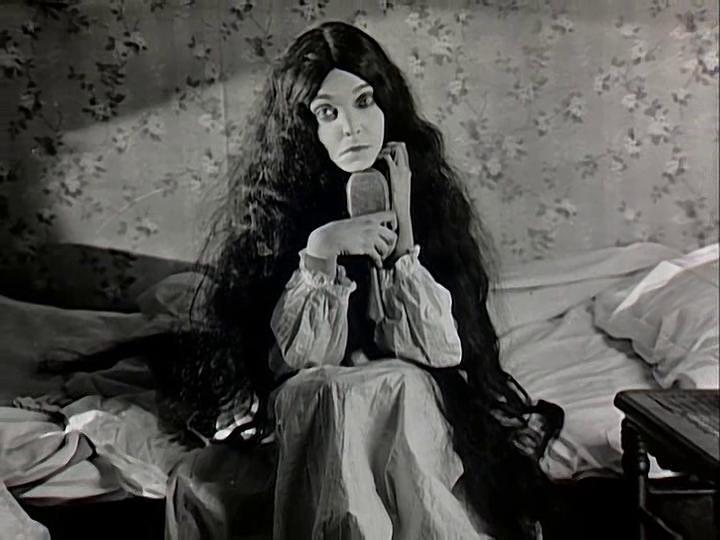
2024 Blind Spot Series: Greed (1924 film)


Based on the novel McTeague by Frank Norris, Greed is the story of a dentist who marries a woman that wins a lottery ticket that would eventually cause trouble in their lives as they become consumed with greed. Written for the screen, co-edited, designed, and directed by Erich von Stroheim, the film is an epic silent drama that explores the idea of greed in how a man’s fortunes would rise and fall only to lead to terror and death. Starring Gibson Gowland, ZaSu Pitts, and Jean Hersholt. Greed is an astonishingly gripping and evocative film from Erich von Stroheim.

Set in the early 20th Century, the film revolves around a man who comes from a mining town and later become respected as he meets and falls for his best friend’s cousin as he would marry her as she would later win a lottery ticket for $5000 as it would tear them apart. It is a film that is really a study of greed and how it consumes people as it is told in a grand style by Erich von Stroheim who also uses text from its original source by novelist Frank Norris in the intertitles. It is a script that also has subplots that includes a story of a junkman and his Mexican girlfriend as the latter was the woman who sold her lottery ticket to one of the protagonists while another revolves around elderly boarders who share the same apartment but have never met as they both would have their encounters with money. Yet, von Stroheim does put a main focus on its narrative as it relates to the character of Dr. John McTeague (Gibson Gowland), his friend Marcus Schouler (Jean Hersholt), and Marcus’ cousin/McTeague’s eventual wife Trina Sieppe (ZaSu Pitts).

Dr. McTeague started off as a young miner who leaves the mine to become an apprentice for a dentist and later starting his own practice at Polk Street in San Francisco where he meets Marcus as they become friends. Marcus would introduce Dr. McTeague to his cousin Trina whom Marcus hopes to marry as Dr. McTeague falls for her but doesn’t want to jeopardize his friendship with Marcus except that Trina would fall for him despite the fact that neither of them come from money like Marcus. When Maria Miranda Macapa (Dale Fuller) sells Trina her lottery ticket that would prove to be worth $5000. The friendship between Marcus and Dr. McTeague falls apart as the former had given the latter his blessing to marry Trina but didn’t realize that some serious money would come in. The tension between the two would come to ahead for years until Marcus leaves San Francisco to become a rancher as he would find ways to ruin Dr. McTeague with Trina becoming stingy as she refuses to spend the money they won leading to chaos and tragedy.

The direction of von Stroheim is truly vast in terms of the vision he had intended to create as the original cut of the film was somewhere between eight to nine hours long when von Stroheim first showed the film in early 1924. Yet, due to a merger between two studios that would become MGM with producer Irving Thalberg being in charge of post-production. The film would then be recut with a 140-minute running time against von Stroheim’s wishes as it would be poorly received upon its initial release. Yet, the film would find a new life in the years to come as attempted reconstructions of the film closer to von Stroheim’s vision had been in the works since the late 1950s as the version that is the closest to what von Stroheim wanted made its premiere at the 1999 Telluride Film Festival with a near four-hour running time featuring still images of the film from books by Jacques-G Perret in 1968 and two versions by Joel Finler and Herman G. Weinberg as the latter also had 400 still images from the film that was never shown as it would be the source for the 1999 reconstructed version.

The 1999 reconstructed version would showcase the usage of actual locations in California including San Francisco, Placer County as the film’s opening scenes in the mine where McTeague came from, and the film’s climax in Death Valley. While there aren’t any movements in the camera, von Stroheim does manage to create some unique compositions in the wide and medium shots where he does a lot to frame a certain shot as well as doing what he can for close-ups. Even as it plays into the drama as the film progresses where Trina would unravel physically where von Stroheim would also create these surreal elements of imagery as it play into the idea of greed. Notably in the subplot involving Maria and her lover in the junkman Zerkow (Cesare Gravina) with the latter claiming there’s plates of gold as there’s recurring images of bone-thin arms holding on to these gold coins with gold being shown in color.

There are also some usage of colors to help maintain a mood whether it is purple for a few scenes at night or multiple colors for a key still shot as it relates to the old couple in their subplot. Even as von Stroheim would create some unique camera angles with these still shots as it play into a much bigger story in what von Stroheim wanted to tell. The film’s climax is shot on location in Death Valley as it plays into McTeague’s fall as he is desperate to become rich yet he has also disgraced himself as von Stroheim’s direction becomes much more vast in its compositions. The final images are among some of the most striking ever captured on film as it doesn’t just play into the fallacies of greed but also how it affects human nature. Overall, von Stroheim crafts a rapturous yet unsettling film about the lives of three people and being consumed with greed.

Cinematographers Ben F. Reynolds and William H. Daniels do amazing work with the film’s black-and-white photography with its approach to low-key lighting for some of the interiors as well as the usage of filters for some key scenes including the usage of yellow in the Death Valley scenes. Editors Erich von Stroheim, Frank Hull, Rex Ingram, and Grant Whytock, with additional edits by June Mathis and Joseph W. Farnham plus Glenn Morgan and consultation by Carol Littleton for the 1999 restoration, do excellent work with the editing as it is largely straightforward as it helps plays into the drama, suspense, and some of the lighter moments in the film along with some stylish montages that play into the journey of the characters. Art directors Richard Day and Cedric Gibbons do fantastic work with the look of some of the props such as the giant gold tooth for McTeague’s business as well as the interiors of the apartment he stays in as well as the home where Zerkow lives in.

The visual effects work of Sasha Leuterer and Chad Mielke, for the 1999 restoration version, is terrific for enhancing some of the colors including some of the candle lights and sparks from the mine scenes. The film’s music by Robert Israel (along with pieces from William Axt) in its 1999 restoration, is incredible for its orchestral score with its soaring string arrangements, heavy woodwinds, and rumbling percussions as it plays into the drama and suspense as it is a major highlight of the film.

The film’s marvelous ensemble cast feature some notable small roles and appearances from Erich von Stroheim as a balloon maker, Jack McDonald as a sheriff in pursuit of McTeague in its third act, James F. Fulton as a prospector named Cribbens that McTeague meets in the desert, William Barlow as the minister who marries McTeague and Trina, Chester Conklin and Silvia Ashton as Trina’s parents, Jack Curtis and Tempe Pigott as McTeague’s parents, Joan Standing as Trina’s cousin Selina, Max Tyron as Trina’s uncle Oelbermann who helps her with her finances, Erich von Ritzau as the dentist Dr. “Painless” Potter who takes McTeague as his apprentice, Frank Hayes as the veterinarian Charles W. Grannis as an elderly man who lives in the same apartment with McTeague and many others, and Fanny Midgely as Grannis’ neighbor Miss Anastasia Baker who had never noticed Grannis as they would later have their own encounter with a large sum of money but show a direct contrast to the way Trina and McTeague deal with it.

Cesare Gravina and Dale Fuller are excellent in their respective roles as the junkman Zerkow and his wife Maria Miranda Macapa as two people who live in a shanty house with the former claiming there’s gold plates somewhere that would make them rich with the latter being someone who is fooled by her husband’s claims while also dealing with the fact that she sold Trina the lottery ticket that could’ve given them $5000. Jean Hersholt is brilliant as Marcus Schouler as an upper-middle class cousin of Trina whom he hopes to marry as he starts off as a friend of McTeague until money and McTeague’s love for Trina would destroy their friendship as he would later start a life of his own but also still holds a grudge towards McTeague. ZaSu Pitts is amazing as Trina Sieppe as a woman who is from a lower-middle class family as she buys a lottery ticket from Maria that would win her $5000 but becomes obsessed with not spending it as it would lead to ruin as well as deteriorate mentally and emotionally. Finally, there’s Gibson Gowland in an incredible performance as Dr. John McTeague as a miner who leaves his small town to become a dentist’s apprentice and later a dentist as someone who never came from money as he deals with having money but is unsure what to do as he starts to unravel over Trina’s stinginess as well as dealing with failure and loss as it is this chilling and haunting performance.

Greed is a magnificent film from Erich von Stroheim. Although it is very unlikely that audiences will ever see the intended version of what von Stroheim wanted for this film. The 1999 restored version is at least the closest version that audiences will ever get as it is filled with gorgeous imagery, immersive sequences, an exhilarating music score, and captivating themes of what greed can do to a few people. It is a film that 100 years since its original premiere only to endure a troubled history of re-cuts and almost be ignored as it still has the power to shock and provoke. In the end, Greed is an outstanding film from Erich von Stroheim.

Erich von Stroheim Films: (Blind Husbands) – (The Devil’s Pass Key) – (Foolish Wives) – (Merry-Go-Round (1923 film)) – (The Merry Widow) – (The Wedding March) – (Queen Kelly) – (Hello, Sister!)

© thevoid99 2024

Saturday, November 23, 2013

2013 Blind Spot Series: Sunset Boulevard


Directed by Billy Wilder and written by Wilder, Charles Brackett, and D.M. Marshman, Jr., Sunset Boulevard is the story of a lowly screenwriter who tries to write a script for a fading silent star actress in the hope to revive her career. The film is an exploration into the world of Hollywood and how it treats those whose time have come and gone as it’s told in a film-noir style. Starring William Holden, Gloria Swanson, Erich von Stroheim, and Nancy Olson. Sunset Boulevard is a spectacular film from Billy Wilder.

The film is the story about a debt-ridden B-movie screenwriter who finds himself at the home of a fading silent star actress who is convinced that she will return as she hires the man to help her shape her script and become her lover while her loyal butler watches closely. It’s a film that explores the world of Hollywood and how fickle it can be as times have changed as there’s a man trying to make a break as a screenwriter though he has ideas that aren’t so great. There’s an aging actress who hadn’t been in the films for years yet is convinced that she is still a movie star that gets fan letters all the time. All of it is told by the screenwriter named Joe Gillis (William Holden) who is first seen lying dead on a swimming pool as he narrates the entire story trying to figure out what he got himself into.

The film’s screenplay has this unique narrative that is told by its protagonist who is found dead at the beginning of the film as it’s a narration that is sort of reflective but told in a noir-like language to give a sense of style where Gillis definitely has some regrets over the way he handled things and as well as the mess he got himself into. It starts off as someone who is full of ideas but not a lot of them that Hollywood wants as he owes money where he tries to hide from repossession men where he finds himself in a mysterious mansion that turns out to be the home of the once great silent film star Norma Desmond (Gloria Swanson). Desmond is convinced that she will make a grand return to the big screen as she has created a project that will put her back on top despite not having been in the films since the emergence of sound in films. Still, she is still convinced that she is a star as she also waits for a phone call from Cecil B. DeMille whom she had worked with.

Another person that is crucial to the story is Desmond’s loyal butler/driver Max (Erich von Stroheim) who is also Norma’s great protector as he shields her from the reality that she’s unaware of. Especially as knows a lot more than one wants to think as Gillis is suspicious about Max as he finds himself trapped in Desmond’s home yet has no choice but to be with her. Still, he finds it suffocating an encounter with a script-reader named Betty Schaefer (Nancy Olson) leads to a script collaboration between the two that makes Desmond very suspicious about Gillis’ frequent departure from the house. All of it would lead to some conflict over what is really going on around Desmond and how out of touch she is.

The direction of Billy Wilder is truly stylish from the way he opens the film that includes the shot of Gillis’ body lying face down in the swimming pool as he’s narrating the film. While some of the compositions are quite simple and to the point, there is that element of style that Wilder wants in terms of close-ups and slow zooms as well as some extravagant crane shots. Much of it is to display a world in Hollywood that is changing where a lot is happening where there are those that have no clue of the past though there are some who do recognize Desmond despite the fact that she hasn’t been around for years. There’s also some cameos that appear in the film to play up into a world that Desmond wants such as a bridge game with other silent film stars who don’t say anything yet there’s an element of meta-acting in their appearances.

There is also some satire that explores the way Hollywood is and such as Wilder showcases a place that Desmond doesn’t recognize yet is convinced that people know who she is. Even as the big scene where she arrives at Paramount studios showcases that sense of disconnect that she is unaware of where she meets Cecil B. DeMille who is surprised by her arrival as he is someone who doesn’t have the heart to disappoint her. Things do get darker in the third act when Desmond learns about Schaefer and Gillis where it all plays to something that is wild and melodramatic that would one of the most unforgettable endings in film. Overall, Wilder creates a very sensational yet dark film about the fickleness of Hollywood and a woman’s loss with reality.

Cinematographer John F. Seitz does brilliant work with the film‘s black-and-white photography from the bright look of its daytime exteriors to some of the stylish lights for the scenes at night including the scenes outside of the house to showcase a world that seems long and gone. Editors Doane Harrison and Arthur Schmidt do excellent work with the editing by going in a straightforward approach with the editing though infusing the film with some style in its transitional dissolves and montages. Art director Hans Dreier and John Meehan, along with set decorators Sam Comer and Ray Moyer, do fantastic work with the home of Norma Desmond with its old-school look and a room full of her photos to showcase the sense of disconnect in her life.

Costume designer Edith Head does wonderful work with the costumes from the suits that Max and Gillis wears to the lavish dresses that Desmond wears throughout the entirety of the film. Sound recorders John Cope and Harry Lindgren do superb work with the sound to play into the tense atmosphere of the Desmond home as well as the raucous nature of some of the party scenes and such in the film. The film’s music by Franz Waxman is amazing for its bombastic yet thrilling orchestral score to play out some of the suspense and melodrama that just adds a lot of power to the film.

The film’s cast is incredible as it features some appearances from Cecil B. DeMille as himself as well as silent film stars Buster Keaton, Anna Q. Nilsson, and H.B. Warner as bridge players, and famed gossip writer Hedda Hopper as herself in the film’s final scene. Fred Clark is terrific as Paramount producer Sheldrake while Jack Webb is excellent as Schaefer’s fiancĂ©e in assistant director Artie Green. Nancy Olson is wonderful as Betty Schaefer as script-reader who wants to write her own scripts where her strong opinions as her teaming up with Gillis where she finds herself falling for him. Erich von Stroheim is marvelous as Norma’s longtime assistant Max as a man who is her great protector as well as a man who knows more about her than anyone as there’s a lot more to him that makes von Stroheim’s performance far more entrancing.

William Holden is amazing as Joe Gillis as this lowly and unlucky screenwriter who arrives into the Desmond home by accident as he is someone that is just trying to catch a break only to become Desmond’s new companion for better or worse as he also drives the story to unveil all of the mistakes and such that he’s made. Finally, there’s Gloria Swanson in an astounding performance as Norma Desmond. Swanson brings a sense of terror and melodrama to the role as someone who believes she is bigger than life as well as someone who has lost touch with reality. It’s a truly tour-de-force performance that is really unlike anything or anyone as it’s definitely one that no one will forget.

Sunset Boulevard is a magnificent film from Billy Wilder that features phenomenal performances from Gloria Swanson, William Holden, and Erich von Stroheim. It’s a film that explores the dark side of Hollywood and how one so desperately craves to be in the spotlight again no matter how much things have changed. It’s also one of Wilder’s most entrancing films for its striking visuals and witty satire on Hollywood’s fickleness. In the end, Sunset Boulevard is a triumphant film from Billy Wilder.

Billy Wilder Films: (Mauvaise Graine) - (The Major and the Minor) - (Five Graves to Cairo) - Double Indemnity - The Lost Weekend - (The Emperor Waltz) - (A Foreign Affair) - Ace in the Hole - Stalag 17 - (Sabrina) - (The Seven Year Itch) - (The Spirit of St. Louis) - (Love in the Afternoon) - (Witness for the Prosecution) - Some Like It Hot - The Apartment - (One, Two, Three) - (Irma La Douce) - (Kiss Me, Stupid) - (The Fortune Cookie) - (The Private Lives of Sherlock Holmes) - (Avanti!) - (The Front Page) - (Fedora) - (Buddy Buddy)

© thevoid99 2013

Sunday, July 10, 2011

Grand Illusion


Directed by Jean Renoir with a script co-written with Charles Spaak. Le Grande Illusion (Grand Illusion) tells the story of French POWs in World War I plotting an escape from prison while dealing with class issues among its soldier and officers. Along the way, they are under the watch of an aristocratic German officer whom one of the officers become friends with. A part-war film but also part commentary on social classes and races, it is considered to be one of Renoir’s finest work. Starring Jean Gabin, Pierre Fresnay, Dita Parlo, Marcel Dalio, and Erich von Stroheim. Le Grande Illusion is a remarkable yet captivating film from Jean Renoir.

After being shot by a German plane, two French officers in Captain de Boeldieu (Pierre Fresnay) and Lieutenant Marechal (Jean Gabin) are accompanied to meet Captain von Rauffenstein (Erich von Stroheim), who was the man that shot their plane down. Eventually sent to a POW camp, de Boeldieu and Marechal meet fellow prisoners who are digging a tunnel to get out. Among the prisoners they meet is a wealthy French Jew named Rosenthal (Marcel Dialo) who is aware of the special treatment that de Boeldieu is getting because of his aristocratic background.

After news about a battle that the French won, Marechal is put into isolation for a while as he and de Boeldieu are sent to another prison in a castle run by von Rauffenstein. With Rosenthal also sent to von Rauffenstein’s castle, he and Marechal make plans for an escape while de Boeldieu and von Rauffenstein engage in conversations over their aristocratic background. Though Rosenthal doesn’t trust de Boeldieu, Marechal gains de Boeldieu’s trust as he creates a diversion for the two to escape. During the escape, Rosenthal and Marechal make their way to the German countryside towards the Switzerland border as Rosenthal injures his foot. Finding shelter in the home of a widow named Elsa (Dita Parlo), she takes them in as the two men ponder what to do next.

While the setting of the film is a war film, it’s really a prison break out film with themes of social classes and order. While the character of Marechal might have qualms towards de Boeldieu because he’s from an aristocratic background and Marechal comes from a working class background. The two stick together because they’re soldiers as Marechal chooses to swallow his pride and let things be. Trying to help other French prisoners to escape and later engage in lavish stage shows to entertain their soldiers and German officers. Marechal has a duty to remain still as the Germans aren’t so hostile though escaping proves to be treacherous.

By the time they meet von Rauffenstein again in his castle, von Rauffenstein is only interested in de Boeldieu which increases the gap between social order for Marechal. Particularly because von Rauffenstein sees de Boeldieu as an equal as they believe that they’ll be obsolete once the war is over. Yet, de Boeldieu would become the man who helps Marechal escape realizing the only way how following an incident involving Russian prisoners. The script that Jean Renoir and Charles Spaak is compelling for its study of class and the way war is handled among soldiers and POWs. While there’s a lot that happens throughout the film, it’s only because the script allows the audience to understand what goes on in prison life during World War I.

Renoir’s direction is superb for the way he lets many of the film’s moments play through. Though, at times, scenes do play out a little too long and creates some pacing issues throughout the film. It’s only because Renoir is trying to get the audience involved in how the prisoners are trying to plan their escapes while dealing with the German soldiers who aren’t all that bad. Renoir always let the camera play out the reactions and savor the locations the camera is in. Even as he creates some tracking shots and close-ups to let audience aware of what is at stake and the moments that are happening. Despite the flaws with the pacing on some parts of the film, Renoir creates a solid yet mesmerizing film.

Cinematographer Christian Martas does a fantastic job with the film‘s black-and-white photography to capture the beautiful mountains near France for its wide shots. Even as he creates some amazing dark lights and shading for some of the nighttime exterior scenes. Editors Marguerite Renoir and Marthe Huguet do an excellent job with the editing by creating some straight cuts along with fade-outs and dissolves for the film’s transitions as it moves well despite a few long scenes. Production designer Eugene Lorie does a great job with the creating of the prison rooms that the characters live in along with the house that Marechal and Rosenthal seek shelter in.

Costume designer Rene Decrais is brilliant for its look to create the differences of class in its characters from the ragged look of Marechal to the refined clothing of de Boeldieu and von Rauffenstein. The sound work by Joseph de Bretagne is very good for the sounds of troops marching and gun blasts for some of the more intense moments of the film. The music by Joseph Koma is quite stellar for its flourishing orchestral score to play up its drama and humor. The rest of the soundtrack that is supervised by Emile Vuillermoz has an array of music relating to their countries as well as tunes of the early 1910s.

The casting is phenomenal as it features some small but memorable performances from Little Peters as Elsa’s daughter, Sylvain Itkine as a transferred prisoner, Jean Daste and Gaston Modot as prisoners of the first camp, and Julien Carette as the brash but funny prisoner Cartier. Dita Parlo is really good as Elsa, the woman who takes Marechal and Rosenthal late in the film as she reveals the loss she suffered due to war. Marcel Dalio is excellent as Rosenthal, a wealthy Jew who helps out Marechal with the escape despite his feelings towards de Boeldieu over his aristocratic status.

Pierre Fresnay is superb as Captain de Boeldieu, an aristocratic soldier who tries to maintain a sense of realism for the soldiers as he uses his class status to make things better only to be aware that his status is in decline. Erich von Stroheim is great as Captain von Rauffenstein, a German officer who offers a decent life to prisoners as he sees de Boeldieu as an equal while often treats Marechal with indifference over his class status. Jean Gabin is brilliant as Marechal, a mechanic-turned-soldier who observes all that is happening while trying to escape in what is an intense yet touching performance.

Le Grande Illusion is an exhilarating film from Jean Renoir featuring spectacular performances from Jean Gabin, Pierre Fresnay, and Erich von Stroheim. Anyone interested in Renoir will find this film as a good starting point while it’s also one of the great studies on war and class politics. Particularly on a setting like World War I which is often overlooked in a lot of war films. While it does have a few pacing issues throughout the film, it is still a very engaging film about prison life and the means to escape. Le Grande Illusion is a magnificent film from the late, great Jean Renoir.

Jean Renoir Films: (Backbiters) - (La Fille de l’eau) - (Charleston Parade) - (Une vie sans joie) - (Marquitta) - (The Sad Sack) - (The Tournament) - (The Little Match Girl) - (Le Bled) - (On purge bebe) - (Isn’t Life a Bitch?) - (Night at the Crossroads) - Boudu Saved from Drowning - (Chotard & Company) - (Madame Bovary (1933 film)) - (Toni) - A Day in the Country - (Life Belongs to Us) - (The Lower Depths (1936 film)) - (The Crime of Monsieur Lange) - (La Marseillaise) La Bete Humaine - Rules of the Game - (Swamp Water) - (This Land is Mine) - (Salute to France) - (The Southerner) - (The Diary of a Chambermaid (1945 film)) - (The Woman on the Beach) - The River - (The Golden Coach) - (French Cancan) - (Elena and Her Men) - (The Doctor’s Horrible Experiment) - (Picnic on the Grass) - (The Elusive Corporal) - (The Little Theater of Jean Renoir)

© thevoid99 2011