Showing posts with label terry zwigoff. Show all posts

Wednesday, April 06, 2016

The Auteurs #53: Terry Zwigoff


Among the group of filmmakers who would help make the documentary film genre a viable place into the world of American cinema, Terry Zwigoff is a figure that has managed to do a whole lot more for the world of American cinema. Like those he had profiled in documentary as well as into his work in feature-films, Zwigoff is an oddball that champions other oddballs and misfits who don’t fit in with conventional society. While it’s been nearly a decade since his last film, Zwigoff still holds a special place for those who feel like they don’t belong as he had become this unlikely voice for the world of the outsider.

Born in Appleton, Wisconsin on May 18, 1949, Terry Zwigoff was the son of Jewish dairy farmers where he lived in the small town before moving to Chicago at the age of five. There, Zwigoff fell in love with American roots music as he would learn about much of music and immerse himself in the world of roots music and art. In the early 1970s, Zwigoff went to San Francisco where he met the famed underground artist Robert Crumb as the two became friends where Zwigoff would also play in Crumb’s string band R. Crumb and his Cheap Suit Serenaders which he is still part of playing cello, saw, mandolin, and Stroh violin. Through his time with Crumb while working through many jobs to support himself, Zwigoff also learned about the medium of film as well as the growing world of documentary films.

More can be read here at Cinema Axis.

© thevoid99 2016

Saturday, March 19, 2016

Bad Santa


Directed by Terry Zwigoff and written by Glenn Ficarra and John Requa, Bad Santa is the story of an alcoholic thief who dresses up as Santa Claus where he and his partner hope to rob a mall where he copes with his own self-loathing but also help a young kid. The film is a dark comedy where a man dressed up as Santa Claus tries to find reasons for living though he still feels like he is at odds with the world as the titular character is played by Billy Bob Thornton. Also starring Lauren Graham, Brett Kelly, Tony Cox, Lauren Tom, Bernie Mac, Cloris Leachman, and John Ritter in his final film performance as Bob Chipeska. Bad Santa is an offbeat yet exhilarating film from Terry Zwigoff.

The film revolves around a pathetic, self-loathing alcoholic who works in malls dressed up as Santa Claus as part of an act where he and his midget-partner plan to steal money from malls during the holidays until the man meets a bullied young boy and finds himself caring for him. It’s a film that is sort of an anti-Christmas film in some ways yet it is really about this man that realizes that there is good in the world and doesn’t have to go into this world of self-destruction and self-loathing while can still be perverse such as his liaisons with a bartender who has a fetish for men in Santa’s clothing. It all plays into a world that is quite odd as this man named Willie T. Soke is just someone that is quite amoral as he spends his time in smalls having sex with whoever he sees, gets drunk, or does all sorts of things much to the annoyance of his partner Marcus (Tony Cox).

The film’s script by Glenn Ficarra and John Requa, with re-writes by the film’s executive producers in Joel & Ethan Coen, doesn’t just explore Soke’s own disdain towards society and himself but also in the fact that he unknowingly finds himself being intrigued by this young boy who not only sees him as the real Santa but also someone he believes is actually good despite the awful shit he does. While Soke is seen early in the film being a skilled safecracker, it is clear that his attempts to be part of society fails because of his anti-social behavior which is fueled more by his alcoholism. Even as he ponders about his own purpose in life until he meets this kid where he realizes that he does have a reason to live. Still, he and Marcus have to do the job to steal things but they realize that a security officer named Gin (Bernie Mac) knows what is going on as he wants in on the action which only make things worse. Especially when Willie begins to have a change of heart as he realizes not just the true meaning of Christmas but also in doing what is right.

Terry Zwigoff’s direction is largely straightforward in terms of the compositions he creates but also finds way to create moments that are very funny. While some of the comedic moments were helmed by an unknown filmmaker for its theatrical release, there are moments that is still Zwigoff’s film in the way he presents Soke as this pathetic, unruly man that is often obsessed with sleeping with women or just getting shit-faced. Shot largely on location in Los Angeles and parts of Southern California, the film does play into a world where it is warm in an odd way considering that it is set during the Xmas holidays. The usage of wide and medium shots do play into the look of the malls and some of the locations in California as Arizona. Yet, Zwigoff finds way to convey that sense of dark humor where it can toe the line over what is profane but also what is funny. Even in scenes that play into moments that are quite natural as well as showcase that Soke can be redeemed such as a scene where he beats up a bully and feeling very good afterwards. The climatic heist is filled with tension but also a bit of unexpected sentimentality as it relates to Soke’s own revelations about himself and doing what is right as it would end in a very funny way. Overall, Zwigoff creates a bawdy yet whimsical film about a self-loathing thief finding some meaning during the Xmas holidays.

Cinematographer Jamie Anderson does excellent work with the film‘s cinematography to play into the colorful look of the locations in the day to the usage of lights for many of the interior scenes set at night. Editor Robert Hoffman does nice work with the editing as it is largely straightforward with some rhythmic cuts for some of the film‘s very funny moments. Production designer Sharon Seymour, with set decorator Robert Greenfield and art director Peter Borck, does fantastic work to the look of the mall as well as the home of the kid that Stokes befriends.

Costume designer Wendy Chuck does wonderful work with the costumes in creating some stylish costumes from the ragged look of Soke’s Santa suit to the clothes that Marcus wears as an elf. Sound editors Michael J. Benavente and Larry Kemp do terrific work with the sound from the way liquor bottles and such sound in the background along with the atmosphere of the malls. The film’s music by David Kitay is amazing for its mixture of piano-based music as well as playful orchestral touches while music supervisor Rachel Levy creates a fun soundtrack featuring a variety of Xmas standards along with some classical pieces to play into the film’s humor.

The casting by Felicia Fasano and Mary Vernieu do incredible work with the casting as it features some notable small roles from Ethan Phillips as the boy’s incarcerated father, Tom McGowan as the original mall Santa Claus who quits early in the film, Ajay Naidu as some nut job who attacks Soke over a misunderstanding, Alex Borstein as a mom from a different mall, Octavia Spencer as a prostitute Stokes know in Cleo, Matt Walsh as a neighbor who asks Soke about putting some decorations for the neighborhood, Max Van Ville as the kid’s bully, and Cloris Leachman in a very funny performance as the kid’s senile yet funny grandmother. Lauren Tom is wonderful as Marcus’ mail-order bride Lois who only cares for idiotic things.

Bernie Mac is fantastic as the mall security chief Gin Slagel as a man that is suspicious about Soke and Marcus only wanting half of what they steal in a bargain that makes Soke very uncomfortable. In his final film performance, John Ritter is excellent as the mall’s manager Bob Chipeska as a man that is trying to make sure things go smoothly as he is taken aback by Soke’s behavior as well as Marcus’ own appearance as it’s a very funny performance from Ritter. Lauren Graham is amazing as Sue as a bartender Soke befriends and goes out with as she has a fetish for guys in Santa suits while being a maternal figure for this young kid.

Brett Kelly is brilliant as this young kid named Thurman as someone that is constantly bullied while being fascinated by Soke as he sees someone that he can rely on. Tony Cox is great as Marcus as a midget with a fierce tongue as he is sort of the mastermind behind the thefts as he copes with Stokes’ growing incompetence and troubles where he finds himself doing a lot of the work. Finally, there’s Billy Bob Thornton in a phenomenal role as Willie T. Soke aka Bad Santa as this skilled but unhappy thief who drowns himself in self-loathing and alcohol as Thornton provides something that is very funny in its restraint and indifference but also some moments that are very somber as it relates to his yearning to find meaning in his life.

Bad Santa is a sensational film from Terry Zwigoff that features a winning and hilarious performance from Billy Bob Thornton in the leading role. Along with a great supporting cast and a witty premise, the film isn’t just an odd yet exhilarating dark comedy that is kind of the anti-Christmas film. It’s also a film that explores a man’s disdain towards society and helping this young kid stand out and not take shit from them. In the end, Bad Santa is an extraordinary film from Terry Zwigoff.

Terry Zwigoff Films: Louie Bluie - Crumb - Ghost World - Art School Confidential - The Auteurs #53: Terry Zwigoff

© thevoid99 2016

Wednesday, March 16, 2016

Crumb (1995 film)


Directed by Terry Zwigoff, Crumb is a documentary film about the life and career of underground cartoonist Robert Crumb and his eccentric lifestyle. The film explores not just his unique work in the world of art and comics but also into his family life that include relatives who are quite eccentric in their own right. All of which play into the world of a man who is considered too strange or too provocative for the world of mainstream and high-art. The result is a strange yet exhilarating portrait of one of the greatest artists to emerge in the late 20th Century.

Among one of the key figures of the American underground comic scene of the 1960s, Robert Crumb is an artist that is known for drawing all sorts of crazy things that were controversial, odd, and provocative but were also lauded by many. While he is famous for work such as the album cover Cheap Thrills for Big Brother and the Holding Company that featured Janis Joplin, the Keep on Truckin’ comics, and the original Fritz the Cat comics. He also creates work for a series of comics that expresses his own views on the world as well as society, sexuality, and other things that are considered controversial or enticing from an artistic point of view. Yet, the film isn’t just about who he is as an artist but also the man himself as it was largely shot in the early 1990s in the span of a few years where director Terry Zwigoff doesn’t just talk to Crumb but also family including his wife Aline Kominsky-Crumb, their daughter Sophie, his son Jesse from his first marriage to Dana who is also interviewed, his mother Beatrice, and two of his brothers in Charles and Maxon.

The look into Crumb’s family including his brothers in Charles and Maxon as they’re both artists as well showcases a family that is talented but also share that sense of disdain towards modern society as the former lives as a total recluse who would sadly commit suicide a year after filming was finished. The Crumb family also display some unique eccentricities as it relates to their mother but also revel into their father who was a straight-laced man that fought in World War II as he had very little understanding of his sons’ artistic pursuits. The film also feature interviews with several of Crumb’s colleagues including a few ex-girlfriends like Kathy Goodell who all talk about his work. Even some of the most controversial works where it play into African-Americans deviating themselves into stereotypes as well as his own sexual obsessions with women where it is clear that he is perverse in a lot of ways but it is done in a very innocent and fun manner.

Much of Zwigoff’s direction is intimate as well as playful as he uses a lot of close-ups and medium shots with the aid of cinematographer Maryse Alberti to capture these moments as it shot with some grainy film stock that makes it look and feel real. Especially in the scenes where Robert and Charles are talking while their mother is heard screaming in the background asking about what is going on. It’s among these aspects in the film that are quite funny but there are also these moments in the film that are quite somber as it relates to Crumb and his sort of disconnect with modern society where it is really about the fact that he can’t really understand it. He is baffled by people wearing t-shirts that features the name of its creator on it which does play into that sense of disdain for the modern world. Even as the film reveals early on where he and Aline are in the midst of leaving the U.S. to live in the South of France for good with their daughter Sophie and Jesse joining them for frequent visits.

With the aid of editor Victor Livingston, Zwigoff captures some rare home footage, picture, and a collection of Crumb’s work in comics and art as it showcases the diversity of what he does. Along with the sound work of Scott Breindel, with additional re-recording mixing by Walter Murch, to capture the atmosphere of the locations and parties plus scenes of Crumb playing music on a piano or through his massive record collection filled with a lot of ragtime, jazz, and traditional music. The film’s music by David Boeddinghaus is mainly an adaptation of some of those pieces along with some original music that was created in that style as it plays into Crumb’s own love for that music.

Crumb is a remarkable film from Terry Zwigoff about the famed artist. It’s a film that isn’t just a fascinating documentary that explores the life of an artist in his work and in his personal life. It’s also a film that is unflinching in its honesty as it showcases someone who isn’t going to conform to any style nor is he willing to play by the rules and please everyone. In the end, Crumb is a spectacular film from Terry Zwigoff.

Terry Zwigoff Films: Louie Bluie - Ghost World - Bad Santa - Art School Confidential - The Auteurs #53: Terry Zwigoff

© thevoid99 2016

Tuesday, March 08, 2016

Art School Confidential


Directed by Terry Zwigoff and written by Daniel Clowes that is based on his comic book series, Art School Confidential is the story of a young artist who enters a prestigious art school where he deals with snobbish students, untalented teachers, and all sorts of people while falling for a young model. The film explores the world of art school where a young man aspires to be a great artist only to deal with the dos and don’ts of the world while a murder mystery occurs. Starring Max Minghella, Sophia Myles, Anjelica Huston, Matt Keeslar, Jim Broadbent, Ethan Suplee, and John Malkovich. Art School Confidential is a witty though messy film from Terry Zwigoff.

The film plays into a young artist whose aspirations to be the best and most important has him going into a prestigious art school where it is nothing as it seems where he deals with snobbish classmates, mediocre classes, and teachers who are really out of touch with the world of art. Yet, it is told in a humorous manner that includes a subplot about a series of mysterious deaths by a serial strangler where one of the students tries to make a film based on these deaths. It plays into the absurdity of art school where there’s students who believe they’re talented but they’re not while there are those who know they’re talented but feel unappreciated just like the film’s protagonist Jerome Platz (Max Minghella). One aspect of the film that adds to his characterization is how flawed he is where he is kind of full of himself and sometimes tries to act cool or whatever where he would take the wrong advice by a famous artist during a seminar.

Daniel Clowes’ script doesn’t just play into the world of art school and a young’s idealism over what he thinks would happen but also in how warped the reality of the art world is. Yet, it is told with an element of satire where many of the art school cliques and wannabes are portrayed in a humorous fashion while there are these many questions about what art is from Jerome’s perspective. Even as he has trouble with the work of one classmate in Jonah (Matt Keeslar) whose work is quite conventional yet receives the praise of classmates and their teacher in the local art figure Sandiford (John Malkovich). Being forced to compete with Jonah over admiration as well as the heart of the model Audrey (Sophia Myles). While the film’s subplot about the strangling of locals does make the script messy, it would add to key moments in the third act as it relates to Jerome’s desire for admiration.

Terry Zwigoff’s direction is very simple in terms of its compositions as well as the way he presents the world of art school. Shot largely on location in Los Angeles and Pasadena, California, the film does have this sense of a community that is part-Bohemian and part-high art as the latter relates to a scene where Jerome goes to a party held by an eccentric gallery owner. The usage of wide and medium shots add to this unique world of local art while Zwigoff also goes for some intimacy in some scenes including meetings Jerome would have with a reclusive yet brilliant artist named Jimmy (Jim Broadbent). While Zwigoff’s approach to humor is quite engaging, he does falter a bit on the suspense as it relates to the subplot of this mysterious strangler where it does make the film very uneven film that loses sight in what it wants to be. Though it does come to ahead in its third act, it does play into the fallacy of the desire of fame and glory as well as the fact that art is never meant to be taken seriously. Overall, Zwigoff creates a very compelling yet flawed film about a young artist’s desire to be great at art school.

Cinematographer Jamie Anderson does excellent work with the film‘s cinematography from the colorful scenes in the daytime to the low-key lighting in some of the classrooms as well as some stylish textures in some scenes set at night. Editor Robert Hoffman does nice work with the editing as it‘s mostly casual in terms of its cutting style with a few slow-motion cuts as well as a few stylish cuts in the suspenseful moments of the film. Production designer Howard Cummings, with set decorator Barbara Munch and art director Peter Borck, does fantastic work with the look of the classrooms and art studios as well as the galleries for the students to express their love of art.

Costume designer Betsy Heimann does terrific work with the costumes as it is mostly casual with the exception of some of the classmates as it plays into every kind of cliché in the world of art school where some look grungy or some try to look trendy. Sound editor John Nutt does superb work with the sound to play into the atmospheres of the parties as well as some of the intimate moments that occur during the classes. The film’s music by David Kitay is wonderful for its piano-based score as it features some unique melodies and textures that play into its humor and suspense while much of the film soundtracks include some classical pieces as well as a few rock songs.

The casting by Ann Goulder and Cassandra Kulukundis is brilliant as it features some notable small roles from Ezra Buzzington as a nude model, Katherine Moennig as a friend of Audrey, and in various roles of the art students, Scoot McNairy, Shelly Cole, Brian Geraghty, Jeanette Box, Lauren Lee Smith, and Isaac Laskin as the many kind of clichéd art students who all think they’re great. Ethan Suplee is terrific as Jerome’s aspiring filmmaker roommate Vince who wants to make a film about the mysterious strangler while Nick Swardson is just fucking awful as a closeted fashion designer who tries to be funny but it feels forced and unnatural. Joel David Moore is funny as Jerome’s friend Bardo who is an observer who had seen all kinds of students while Anjelica Huston is fantastic in her brief yet crucial role as an art teacher who had seen everything as she would give Jerome some really spot-on advice.

Steve Buscemi is superb in a cameo appearance as an eccentric gallery owner in Broadway Bob D’Annunzio as someone that is typical of the pretentiousness of the art world. Adam Scott is excellent as the famed artist Marvin Bushmiller as someone who is a fuckin’ asshole as he provides some bad advice to young artists in making it which only puts Jerome into a path that ends up being unrewarding. Jim Broadbent is amazing as Jimmy as a reclusive artist who is gifted but very cynical about the art world as he reveals some of the fallacies about trying to be great. Matt Keeslar is wonderful as Jonah as an art student that is known for making very conventional art yet proves to be a very nice guy with a secret of his own.

John Malkovich is phenomenal as Professor Sandiford as this artist-turned-professor who is quite odd in his teachings and views on art only to be seen as someone that is really just mediocre. Sophia Myles is radiant as Audrey as an art student/model who shares Jerome’s sense of disdain toward some of the idealism of art but is also confused by what people see as art. Finally, there’s Max Minghella in a marvelous performance as Jerome as a young artist that aspires to be great only to contend with some of the demands of compromise, bad critiques, and other odd things that forces him to ponder if his own art means anything.

***The Following 2 Paragraphs are from the Original Review of the Film Written for Epinions.com on 12/17/06 w/ Additional Edits***

The 2006 Region 1 DVD from Sony Pictures Classic & United Artists presents the film in the 1.85:1 anamorphic widescreen ration with 5.1 Dolby Digital in English, Spanish, and Portugese, and 5.1 Dolby Surround Sound in French. Subtitles in English, French, Spanish, Portugese, and Chinese are available, especially in some of the film's special features. The special features includes five several featurettes starting with a making-of scene where Zwigoff and Clowes discuss the inspiration of the film while talking to several of its actors including Max Minghella and Sophia Myles, who are both British, as they enjoyed working with Zwigoff. The Sundance Featurette which includes interviews with several cast member including crew members as they discussed the screening. Minghella, admits that watching himself is depressing yet he enjoyed the audience reaction.

11-minutes worth of 12 deleted scenes are revealed in which some of them are funny and heartwrenching. One funny scene reveals the frustration of Sandiford while another reveals more of the tension between Jonah and Jerome including a scene where Jonah learns something that Jerome had said. Another deleted scene featurette involves the film's ending where Jerome's classmates make comments about a character's artwork and give their opinions. The blooper reel is really hilarious where all the actors are laughing including a scene of Malkovich trying to destroy a painting and another where he makes Minghella laugh by saying "Charo, Charo" repeatedly. The reel also includes an alternate take of an interview with Malkovich for the film. Finally, the DVD includes several trailers for films like The Devil & Daniel Johnston, Pedro Almodovar's Volver, Zhang Yimou's Curse of the Golden Flower, Stranger Than Fiction, and the teaser trailer to Sofia Coppola's Marie Antoinette.

***End of DVD Tidbits***

Art School Confidential is a stellar yet flawed film from Terry Zwigoff. Featuring a great cast as well as a humorous critique on the world of art and art school, the film is a unique look into the world of art and the fallacies of those wanting to be famous. In the end, Art School Confidential is a superb film from Terry Zwigoff.

Terry Zwigoff Films: Louie Bluie - Crumb - Ghost World - Bad Santa - The Auteurs #53: Terry Zwigoff

© thevoid99 2016

Saturday, September 03, 2011

Louie Bluie


Directed by Terry Zwigoff, Louie Bluie is a documentary about the obscure country-blues musician Howard “Louie Bluie” Armstrong and his idiosyncratic life. The sixty-minute film explores the man’s work in both music and art in this strange yet exhilarating portrait of one of the most gifted musicians of the early 20th Century.

Howard “Louie Bluie” Armstrong reveals a lot about his background as he performs with friend Ted Bogan as they’re set to go to Chicago to meet with friends and play a few shows. Armstrong reveals about the world of the string band and the traditional music he plays all over Tennessee as he visits his former sister-in-law. While going to various places including the world of the rural Tennessee, Armstrong reveals his artwork that he created based on memory about old towns and what they looked like back in the early 1900s.

In Chicago, he meets up with “Banjo” Ikey Robinson where they talked about playing to a club with Italians as Armstrong manages to win the crowd over because he spoke Italian through the people he knew in Tennessee. Armstrong holds an art gallery as he criticizes modern art while showing Robinson a pornography book he created. Armstrong, Bogan, and Robinson go to play a gig with James “Yank” Rachell as Armstrong discusses what art should be from a personal level rather than giving people what they want.

The film is about this eccentric yet extremely talented artist who is definitely an oddball of sorts but also someone so engaging and fun to be around with. Armstrong’s talents in playing a mandolin and fiddle while making some great artwork shows the range of his talent. Notably a scene at an art gallery where he draws a picture of two faces as he holds two crayons with one hand. Terry Zwigoff clearly loves Armstrong as he follows him around through various locations as they go to unique places that seems to attract Armstrong who is kind of an outsider of sorts.

The artwork that Armstrong creates through books and small paintings really reflect a period that is long and gone while his pornography book is definitely one of the most intriguing and funny moments of the film. Largely because of what each story he creates in the book tells as well as Armstrong’s view on pornography. The performances aren’t just intimate but also lively in the way Armstrong plays the mandolin and fiddle where he is really enjoying himself as is the small crowd that is watching. Through the colorful cinematography of John Knoop and Chris Li as well as the stylized yet straightforward editing of Victoria Lewis, the film moves with great ease and is never dull. The only flaw about the film is that it leaves the viewer wanting to know more.

Louie Bluie is an extraordinary debut film from Terry Zwigoff in this wonderful portrait of Howard Armstrong. Fans of string-band, traditional music will no doubt want to seek this out as well as hear some amazing old-school traditional, country-blues music. For fans of Terry Zwigoff, the film serves as a precursor to the films Zwigoff would make such as the documentary Crumb as well as Ghost World as they all share in Zwigoff’s fascination with oddball characters. In the end, Louie Bluie is a superb documentary film from Terry Zwigoff.


© thevoid99 2011

Thursday, July 14, 2011

Favorite Films #2: Ghost World (10th Anniversary Essay)


The World Has Dragged You Down in a Humdrum Town


Throughout the late 1990s and so on in the current world of tween-films that are targeted towards young girls. Yet, not everyone appreciated these films that didn‘t give voice for girls who didn‘t fit in a certain group. Films that doesn’t have the girl having to go to prom or trying to be popular. Stories about girls who are troubled and relatable instead of a story about a girl finally being with the high school quarterback. While Ghost World isn’t exactly a high school film since it takes place outside of school and after graduation. It does however say something to young women who doesn’t just feel out of place with the world but also have a sense of disdain towards it.

The film came out in the summer of 2001, in a limited release, at a time when comic book film adaptations were starting to become big in Hollywood while the teen film market was continuingly putting out films for teens and pre-teens. Yet, Ghost World wasn’t a film that was made by Hollywood but rather two outsiders who didn’t care for the world of commercialism. The first was Daniel Clowes, the man who wrote the comics for Ghost World that ultimately became a graphic novel in 1997. Clowes wrote in the late 80s and early 90s to reflect his own thoughts as a teenager while seeing the world that was happening as he released eight issues of the Ghost World comic from 1993 to 1997. The comics and eventual graphic novel did attract cult attention among readers as did the other person who would help turn it into a film in director Terry Zwigoff.

Zwigoff was a documentary filmmaker who had just scored massive acclaim with his 1994 film Crumb about underground comic artist Robert Crumb whose daughter did many of the drawings for Ghost World. The characters of Enid Coleslaw and Rebecca Doppelmeyer attracted Zwigoff since it fit in with his fascination with oddball outsiders that became prevalent through a lot of his work including Billy Bob Thornton’s title character in Bad Santa, Max Minghella’s Jerome in Art School Confidential, Robert Crumb, and jazz musician Howard “Louie Bluie” Armstrong in Crumb’s 1986 documentary Louie Bluie. Zwigoff teamed up with Clowes for a film version of Ghost World as they developed the script and project for Zwigoff to direct as his first foray into feature films.


Yet, developing the project proved to be challenging as Zwigoff’s clout over Crumb allowed him to meet with studios about Ghost World. Instead, the studios made suggestions and ideas that didn’t fit in with what Zwigoff nor Clowes wanted as they finally got the attention of producer Liane Halfon and actor John Malkovich, who came in as a producer, as they helped raise money for the film. Since Zwigoff knew it was going to be a very different project from his documentaries and wanted to stray from convention in terms of casting. With help from casting director Cassandra Kulukundis, Zwigoff finally found the people he needed for the film.

For the roles Enid and Rebecca, Zwigoff and Clowes went for actresses who looked old enough to look like teenagers while avoiding the look that is often seen in high school movies of the late 1990s. For the lead role of Enid, Thora Birch was cast who was just coming off the massive success of Sam Mendes’ 1999 Oscar-award winning family drama American Beauty as Birch chose to gain weight to play the troubled character. For Enid’s best friend/foil of sorts in Rebecca, Scarlett Johansson was cast as the actress was only 15 by the time production started as she was coming off the acclaim she received in Robert Redford’s 1998 film The Horse Whisperer. Various character actors and veterans such as Bob Balaban, David Cross, Brad Renfro, Tom McGowan, Illeana Douglas, and un-credited Teri Garr as Enid’s dad’s ex-girlfriend were also cast.


For the role of Seymour, a composite of various characters from the graphic novel, the part was given to acclaimed indie actor Steve Buscemi who was known largely for his work with Quentin Tarantino, the Coen Brothers, and Robert Rodriguez. The character of Seymour would become the person who initially started out as a victim of a prank concocted by Enid and Rebecca only to become the person that drives a wedge between the two girls.


Yet, the film doesn’t start out that way as it begins with this quirky opening credits sequences of people being bored by the TV with footage inter-cut from the 1965 Bollywood film Gumnaam by Raja Nawathe where a group of people dance to the song Jaan Pehechan Ho by Mohammed Rafi. It is there that Zwigoff introduces the audience to Enid who is dancing to this music as a way to realize how much of an outsider she is to the world around her. The next scene is a graduation scene where Enid is bemused by a handicap girl’s graduation speech with Rebecca also looking on with amusement. The majority of the first act of the film is about Enid and Rebecca looking around their surroundings and seeing strange people.

From the character of the unhappy convenience store clerk Josh (Brad Renfro) to the former classmate Melorra, Enid and Rebecca either torment or mock them though there is a bit of a crush towards Josh from the girls. Still, they use Josh as an observer over a prank where Seymour becomes a victim who they realize is someone who seems to be used to these pranks. Eventually, it would lead to the first meeting between the girls and Seymour where Enid buys a 78 RPM vinyl record that features Skip James’ Devil Got My Woman that wins Enid over. While Enid becomes fascinated by Seymour, who is a collector of old 78 RPM blues, jazz, and ragtime records of the early 20th Century. This fascination would frustrate Rebecca, who thinks that Seymour is nothing but a dork.


By the time the film progresses, Enid’s fascination with Seymour as she helps him find a girlfriend only furthers her own sense of alienation with the world. Enid and Seymour not only share a disdain towards the world around them along with people, they also share an alienation as neither of them really fit in to the world around them. Seymour admits that he hates his interests, which is old 20th Century blues and jazz music, while he doesn’t really like to go out as he and Enid sees a local blues musician play in the middle of a rowdy sports bar as people are watching the game. The night eventually gets worse when Seymour watches a band that a woman claims is authentic blues. Instead, they’re just this loud band that blares through as Enid’s first attempt to get Seymour a date is a disaster.

That mix of melancholic humor and character study makes that scene along with many other scenes in the film one of the reasons why the film is so engrossing to watch. While audiences get to see Enid trying to help Seymour as he eventually gets a date with a woman named Dana (Stacey Travis). It is clear that Enid has feelings for him yet it would only cause more trouble for a girl who is a very talented artist that feels out of place with everything and everyone. Thora Birch’s performance is really the most startling highlight of the film as she captures not just angst but also confusion and despair over her character. She also brings a lot of humor to the character that includes a hilarious scene where her dad (Bob Balaban) is talking as she replies that she’s not listening to a word that he’s saying.

That sense of deadpan humor in Birch’s performance complements not just Steve Buscemi’s crazed but touching performance. It also adds a wonderful chemistry with the two as he is the straight man to her quirky personality as she often wears a strange array of clothes. There is also a bit of humor to Buscemi’s performance whether it’s in his reactions to things around him or a scene where Enid sees wearing blue jeans that Dana bought for him. It’s part of what makes Buscemi a revered actor who had been in a lot of projects as his performance nabbed him a Golden Globe nomination for Best Supporting Actor.

Then there’s Rebecca, Enid’s foil for half of the film as she is a young woman who shares her disdain towards the world and people in general. Yet, as she is someone who is much prettier and more mature. Her desire to get an apartment for her and Enid so they can live on their own would eventually have Rebecca make some changes that alienates Enid. What happens is that Rebecca grows up, gets a job, and starts to get into things she feels would advance her socially. When Rebecca takes a job as a cashier for a coffee shop, she starts to reveal her disdain towards weirdoes in whom Enid likes but Rebecca isn’t as amused anymore.


While Rebecca may not be as interesting as Enid and Seymour, she does manage to hold her own through a very memorable yet witty performance by Scarlett Johansson. It’s in that sly sarcasm and subtle reaction to things that are happening that makes Johansson’s performance remarkable. What is more surprising that at the time she made the film at age 15, she was able to pass off in being 18 and act beyond her age. Through her understated approach to the role of Rebecca, it’s one of the reasons why Johansson was able to be propelled into stardom by starring in Sofia Coppola’s 2003 masterpiece Lost in Translation.

The film in its three central performances of Birch, Johansson, and Buscemi, is wonderfully complemented by the look and tone that Zwigoff wanted. Some of the smaller moments such as Enid and Rebecca at a video store where a man asks for Federico Fellini’s 8 ½ where the video clerk instead finds Adrian Lyne’s 9 ½ Weeks. It’s that along with many other scenes that revel into Zwigoff and Clowes’ study of alienation where by the third act of the film. The divergence between Enid and Rebecca becomes more evident as Enid calls Rebecca about going out. Instead, Rebecca who is sitting at home watching TV with her pajamas claims that she’s going out with some people at work.


Through Zwigoff’s direction, there is an array of images as everything he reveals in the city that Enid and Rebecca live in is filled with restaurant chains and all sorts of ideas that exemplify a world of crass commercialism. The 50s diner that Enid and Rebecca to into looks more modern than a 1950s diner with music that is also modern. The place that Seymour works where he reveals a history of racism at the place he worked by showing a poster to Enid. This would prompt Enid to borrow that poster for her art class that she needed to take to graduate that would eventually cause much trouble for her and Seymour in the third act. It’s all part of a world where characters such as Enid and Seymour feel that the times were better then than they are at the present.

Part of Zwigoff’s direction in his approach to the story is the way characters disconnect themselves from reality. Particularly Enid and Seymour as Enid surrounds herself with vintage clothing, a S&M mask that Seymour buys her, and records. Seymour surrounds himself with not just blues and jazz records but vintage antiques and old film posters to complement his longing for the past. It’s all due to the way they react to the world of crass commercialism. While Rebecca might have a disdain towards that culture, she is not the kind of person who is willing to shut herself entirely as she is willing to tough it out against that world. Whether she fully embraces it or becomes an individual remains mysterious once the film starts to end.


Then there’s the film’s ending which is probably one of the most talked about endings in film. After all of the trouble Enid has caused where she had humiliated Seymour and alienated Rebecca. It’s an ending that reflects her sense of loss as throughout the film, she encounters an old man named Norman (Charles C. Stevenson Jr.) who is waiting for a bus at a bus stop that is no longer in service. When she later meets him following a bad night, she feels like he’s the only person he can count on. Instead, he tells her that he’s leaving as she later watches him leave on a bus where’s the only passenger.

Where does this bus lead to? Does the “out of service” sign on the bench mean a path towards the afterlife? There could be a lot of reasons as throughout the film, Enid has always talked about wanting to leave town. Even during a drunken conversation with Seymour that would lead to a one night stand over their disdain towards the world. For Enid, seeing Norman get on the bus is her ticket out of this town that she couldn’t relate to. In leaving, she wouldn’t have to see her dad marry Maxine. Deal with the idiots and idea of conformity around her. She wouldn’t have to see Seymour be humiliated and isolated. She wouldn’t also have to deal with Rebecca growing up.

If there was a way to just simplify what happens in the end, the ending is Enid just leaving town and never coming back. After all, the last sequence inter-cuts with Seymour discussing his events of the past few months to a shrink. Whereas Seymour is seemingly set to return to his old life while Rebecca is on her way to normalcy, Enid goes somewhere that no one knows where to go. While recent reissues of the graphic novel suggested various endings about what happens to both Enid and Rebecca, Daniel Clowes nor Terry Zwigoff really offer any clear answer about Enid’s fate in the film.


Ghost World is truly a film that is definitely one of its kind. Without it, there probably wouldn’t be a film like Juno that also had a quirky protagonist who is a young girl. There probably wouldn’t be a movie like American Splendor to be made since that was a film that was also based on graphic novels with relations towards Robert Crumb. It’s a film that actually gives voice to the those who don’t fit in with the world or don’t want to conform. It’s a film that young girls who are in high school and don’t fit in with this type of crowd or some other clique should see in the world of tween movies. Ghost World is a film that isn’t afraid to be crass and give someone the finger. It’s the kind of film that allows the individual to just be themselves and not give a fuck what anyone else thinks.


© thevoid99 2011

Tuesday, July 12, 2011

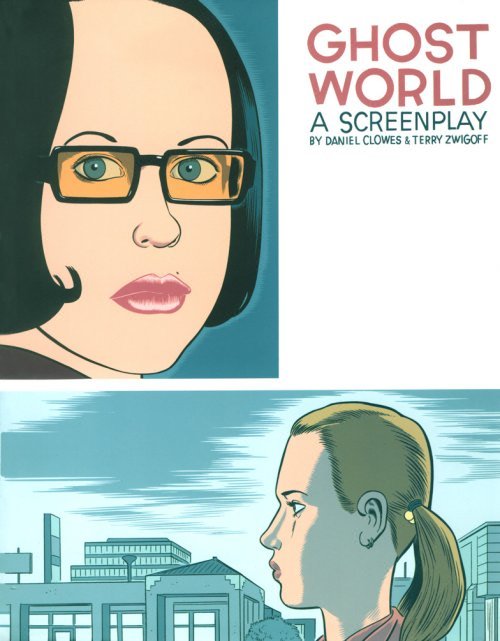
Ghost World (screenplay book)


Originally Written and Posted at Epinions.com on 10/16/04 w/ Additional Edits.


When it was released in 2001, no one thought the little quirky film called Ghost World that was based on Daniel Clowes’ obscure comic book/graphic novel would catch the attention of filmgoers and critics as the film landed in several top ten critics’ poll. Since its release on DVD a year later, the film has often become a favorite among rebellious young women that shortly after the film’s release Clowes and Ghost World director Terry Zwigoff decided to release an accompany screenplay book on the movie featuring thirty-pages worth of material not used in the film.

The script written by Clowes and Zwigoff based on Clowes’ comic book, Ghost World is a story of two young teenage girls scouring around their bored, suburban lifestyle after finishing high school. Then their friendship is put to the test when one of them encounters a loner where amidst the changing tides of their town through Corporate America, everything begins to change. The title Ghost World is a reference to the decline of the American mom-and-pop stores and self-owned business as its being replaced by all of these corporate businesses and how people end up conforming. The protagonist of the story is Enid, a short, dark-haired, slightly overweight girl who refuses to conform to these statures while watching her best friend Rebecca trying to move on with her life in order to buy an apartment and get a job. While the film and its story is more of a black comedy, Ghost World is a story that is filled with a lot of angst and melancholia as two lifelong friends find themselves falling apart around their world.

The film’s screenplay shows many of the scenes and lines shown in the movie and the dialogue is truly confrontational which featured the two girls using profanity excessively through their angst, which was something that bothered many major film studios. The only difference between the final script in the book and the final cut of the film is just a few things that were deleted including the ending which is a bit altered in reference to the fragile friendship of Rebecca and Enid as Rebecca ends up conforming while trying to move on with her life. The only thing in the ending not changed is the last scene involving Enid’s departure that doesn’t explain things that many fans of the film asked.

Other deleted material includes a conversation with Enid and Rebecca just before Enid starts work for her brief job in a movie theater along with more abuse for Rebecca at her coffee shop job. Plus, some scenes are moved like Enid’s father talking about Maxine where in the movie, that scene is shown earlier in the movie but in the script, it comes much later. One scene that was deleted and probably for good reason was a sex scene between Enid and Josh, another character that is often tormented by her and Rebecca.  This deleted scene would cause more damage to Enid and Rebecca’s friendship, along with Enid’s interest in Seymour. Another scene that is more extended in the script is Enid sleeping with Seymour where he would talk to his new girlfriend Dana about his relationship with Enid that was cut for good reason since in the film, the audience would know what Seymour would be saying.

Aside from the film’s script, the book includes a brief comic book thing where Enid and Rebecca commented on the recent success of the film through their sarcastic, bored attitudes. Also shown are unreleased pictures from the set of the film that includes cast members Thora Birch, Scarlett Johansson, Steve Buscemi, and many more. The book also includes an annotations section that includes commentary on some of the film scenes including some things that was a reference to the comic book.  One of the ideas for the film was getting Satanic religion leader Anton LaVey to play an assumed Satanist but he had died years before production began. Director Terry Zwigoff also talks about the character of Seymour which is actually based on him of sorts while he talks about the film’s soundtrack and music, often filled with obscure jazz records that he loved and he can’t tell ‘Nsync from the Backstreet Boys nor he cared to, especially since it wasn’t the type of music Birch or Johansson listened to.

Discussed in other sections is the film’s artwork done by Sophie Crumb, daughter of comic book artist Robert Crumb, who was the subject of Zwigoff’s 1994 documentary Crumb. A section was dedicated to Sophie Crumb and her artwork since Zwigoff felt she was the perfect person to help make the drawings for Enid and her talent really helped shape the film. Then there’s the subject of the Cook’s Chicken place where Buscemi’s Seymour worked and yes, there was a thing called Coon’s Chicken back in 1925 in Northwestern America that went out of business in the 1950s and never did change its name but only for the movie. Also included in the book are two introductions from Terry Zwigoff and Daniel Clowes.

Zwigoff’s introduction discusses his reasons to make Ghost World into a film after reading Clowes comic book since the film was to mark his feature-film debut. Zwigoff also discussed how the story was so appealing, notably in its alienation of what is becoming a very corporate culture. Zwigoff admits to not fitting in with the world and he made the film out of a Woody Allen approach while personally thanking his cast and crew for helping him through. Clowes’ introduction discussed his first meeting with Zwigoff back in 1995 where for years, they wanted to adapt the comic into a screenplay where its first draft was finished in 1997 before several rewrites until it attracted the attention of producer Lianne Halfon, who co-produced the movie with actor John Malkovich. In the end, Clowes feels the film belongs to him, Zwigoff, and Halfon who really was there on set helping the film move forward.

Fans of the film would want this screenplay book along with those aspiring to write screenplays. Those who love to read scripts will find this to be a nice collection though it’s really more of a nice accompaniment to the film for its hardcore fans. Those wanting to learn the craft of writing can get a very good look into the structure and style of the film’s script in its format. So in the end, the screenplay book of Ghost World is an excellent source for fans of the films and those wanting to write scripts.


(C) thevoid99 2011

Monday, July 11, 2011

Ghost World


Originally Written and Posted on 8/12/04 w/ Extensive Revisions & Additional Edits.


If life at high school sucked, then it’s really nothing compared to what happens after. Sure, kids go to college after that but what happens when you meet new people and in the process lose the people you cared for back in high school. Comic book writer Daniel Clowes captured the bleakness of post-high school life through the eyes of two teenage girls in his comic series Ghost World. The comic gained a cult popularity that included Crumb filmmaker Terry Zwigoff. Zwigoff and Clowes decided to adapt the comic book series into a film of the same name that captures the bleakness of teenagers and adults in a world, many of them don’t fit in with.

The movie for Ghost World is about two teenage girls, who just graduated from high school, finding themselves starting to drift apart after one of them encounters a lonely, eccentric adult. During their aimless journey, they try to find the strange eccentricities of their dreary suburban home while pondering what to do with their own lives. Leading the cast in Ghost World are Thora Birch as the sullen yet arty Enid and Scarlett Johansson as the prettier yet bored Rebecca. Also starring Brad Renfro, Teri Garr, David Cross, Bob Balaban, Illeana Douglas, Dave Sheridan, Tom McGowan, and Steve Buscemi. Ghost World is a harrowing yet humorous film from Terry Zwigoff and company.

Enid and Rebecca are at their graduation as they watch a handicapped speaker (Rini Bell) talk about life after high school though both Enid Rebecca believe there is no future. Reluctantly attending a graduation party while Enid is forced to return to school to pass art to gain a diploma. After high school, Enid and Rebecca walk through the town’s dreariness where they encounter two old strange people Enid convinced are Satanists and an old man (Charles J. Peterson) sitting at an unused bus stop. Enid then finds an ad for a guy looking for a girl as she and Rebecca call the number and pretend to be some blonde. They bring their friend/gas station patron named Josh (Brad Renfro) to a diner to see the guy revealed to be a man named Seymour (Steve Buscemi) who arrives as he waits for the woman but finds out he’s been duped.

Enid and Rebecca follow Seymour as they learn he’s some strange, eccentric guy who collects old vinyl blues records. Enid meanwhile is having problems at home as her dad (Bob Balaban) is thinking of dating his ex-girlfriend Maxine (Teri Garr) whom she despies. Rebecca however, decides to move ahead with plans for her own apartment with Enid by getting a job. Enid takes a summer class with a quirky art teacher named Roberta (Illeana Douglas) while reluctantly taking a job search as she and Rebecca meet Seymour and his friend Joe (Tom McGowan). After getting a blues record that Enid likes, she starts to befriend Seymour who invites her to a party. Rebecca reluctantly attends where she gets verbally harassed by a partygoer (David Cross).

Enid hangs out with Seymour as they find a shared disdain towards the world as he's more interested in obscure blues and such while her friendship with Rebecca deteriorates over Enid's fascination with Seymour and Rebecca becoming more social. When Seymour finally meets a woman named Dana (Stacey Travis), Enid becomes unhappy over the things around her life as well as her deteriorating friendship with Rebecca and Seymour.

While the film’s offbeat quirky humor mixed in with restrained drama brings an eccentric quality to the film, it’s one of the reasons why the film stands out from many of the indie and teen films of the time. With Daniel Clowes’ story and realist humor, the film’s title is really about the disintegration of Americana through the world of corporate America and the urge to conform. Terry Zwigoff brings in a vast, wonderful direction that is tightly constructed with wonderful cinematography from Affonso Beato. Helping with Zwigoff’s complex direction is a melancholic film score from composer David Kitay whose piano composition really gives the film movement and serves as another character. With production designer Edward T. McAvoy, the film’s look really brings that bleakness of post-20th Century America where the world and some of its individuals ends up conforming. Another great moment is the film’s artwork, notably from Sophie Crumb (daughter of Robert Crumb) who does the drawing for Enid’s book. While Ghost World might seem to be an off-the-wall comedy, it’s also a wonderful character study film, notably between Birch’s Enid and Johansson’s Rebecca.

The film’s supporting players really stand out from its cameo appearances from Ileana Douglas, David Cross, and Teri Garr to the hilarious performance from Dave Sheridan. Brad Renfro is also excellent in the role of Josh, who might seem as a clueless tormented figure who is used as a joke for Enid and Rebecca when really, he plays a secret crush that they don’t want to admit. Bob Balaban is excellent as Enid’s father for his straight performance to Birch’s offbeat performance while bringing a compassionate performance, even in scenes where he just doesn’t understand his daughter. With other smaller roles from Stacey Travis, Charles J. Peterson, Brian George, and Tom McGowan, the film has an overall stellar cast.

Of the film’s supporting performances, the best easily goes to Scarlett Johansson as the cynical, realist Rebecca who serves as a perfect foil to the downbeat Enid. With her quick-sarcasm and intellectual remarks, Johansson stands out among the entire cast with her restrained, mature performance. Especially since she came out of two amazing performances previously with 1996’s Manny & Lo and 1998’s The Horse Whisperer. With those two performances, Johansson comes to fruition with maturity by playing an 18-year old when at the time of making the film she was only 15. In the development of Rebecca throughout the film, we see Johansson not trying to make Rebecca conform to society but bringing a realism and maturity to the point that Enid couldn’t understand since she’s too much of a rebel while Rebecca just gave up on rebelling and moving forward.

Steve Buscemi is also brilliant in his performance as Seymour with his frustrated, oddball look while being a charming, romantic fellow. This was the closest thing to having Buscemi being a romantic lead but he has an off-the-wall humor that is so intriguing that it is remarkable, as he doesn’t mind being the butt of jokes. Plus, we see he’s the kind of guy that couldn’t fit in because of his hobbies or anything. Buscemi brought a depth and frustration that is loveable while he manages to carry great chemistry with Birch throughout the entire film while having a few intense, dramatic scenes with Johansson.

Thora Birch is the film’s most remarkable performance with her sympathetic, anti-establishment performance as Enid. Coming off a post-child stardom role in American Beauty, Birch brings a cynicism and attitude to Enid who is trying to find herself in the world. Birch also brings humor in her scenes where she and Johansson torment people quietly but as the film wears on, she realizes that she’s one of them and brings sadness to a role where she’s just lost. Especially in the film’s ending where things get really bizarre and nothing in the beginning of the film is the same anymore. Enid is a character that everyone could relate to, especially since not everyone wants a shoddy job or to conform to any kinds of stereotype. It’s overall Birch’s best performance to date.

The 2002 Region DVD release from MGM/United Artists presents the film in a 16:9 widescreen format brings a lot of brilliance to the film, especially in its look. With its English, French, and Spanish subtitles and 5.1 Surround Sound, the film’s features doesn't have much. Aside from a theatrical trailer of the film plus for its soundtrack, The Princess Bride, and a special edition of The Terminator. The special features also include four deleted and alternate scenes, which really don’t add much to the film. Two of them features hilarious moments between Brian George and Dave Sheridan while one involves Buscemi talking about a record and Ileana Douglas talking about an art thing she did. The best thing about the special features is the music video for Jaan Pehechaan Ho from the film Gumnaam in the 1960s and a making of feature with interviews from Zwigoff, Clowes, Birch, Johansson, Buscemi, and Brad Renfro where they all talk about the film and the comic book.

***Additional Content Written and Posted from 9/29/17-10/1/17***

The 2017 Region 1/Region A DVD/Blu-Ray from the Criterion Collection presents the film in a newly-restored 4K digital transfer that is supervised by its filmmaker Terry Zwigoff in its original 1:85:1 theatrical aspect ratio with 5.1 Surround Sound on DVD (5.1 Surround DTS-HD Master Audio for the Blu-Ray). Among the features retained from 2002 DVD from MGM are the film’s theatrical trailer, the excerpt from Gumnaam, and the film’s deleted scenes with additional scenes that were also cut that include an extended scene of Enid and Rebecca talking to the waiter Weird Al and a scene of Enid meeting Josh as they would have sex which becomes awkward. The Gumnaam excerpt would feature a commentary track from a Bollywood expert Roshini Dubey who talks about the film and its placement in Bollywood as well as why it was featured in Zwigoff’s film as a way to play into Enid’s outsider persona.

The feature-length audio commentary track from director Terry Zwigoff, co-writer Daniel Clowes, and producer Lianne Haflon have the trio talk about aspects of the production as well as some of the visual look of the film courtesy of cinematographer Affonso Beato, production designer Edward T. McAvoy, and costume designer Mary Zophres. Zwigoff reveals the anxiety he had in directing the film as it was his first time doing a narrative film as he turned to Francis Ford Coppola for help in directing actors as he learned from Coppola that it’s something that can’t be taught as Coppola admits to not knowing how to direct actors. Fortunately, Zwigoff was able to get through thanks in part to the ensemble he worked with as he, Clowes, and Haflon had a lot of praise toward the actors including Thora Birch, Scarlett Johansson, and Steve Buscemi as well as those who did the smaller roles. They also discuss some of the artwork as well as other things in the film as it’s a very enjoyable and engaging commentary track.

The 42-minute featurette entitled Art as Dialogue feature new interviews with actresses Thora Birch, Scarlett Johansson, and Illeana Douglas as they all talk about the film, their characters, and working with Zwigoff. Birch discusses her approach to the Enid character after having read the graphic novel and other works of Clowes as she originally was considered for the role of Rebecca when Christina Ricci was considered for the role of Enid. Fortunately, Birch was able to convince Zwigoff and Clowes that she was right for Enid while Johansson talked about her own experiences in the film as she was only 15 years old when she made it yet had experienced a lot in her life. Especially as she and Birch both had their own similar experiences as child actors transitioning into adult roles where they both shared their own experiences in dealing with that transition.

Douglas discusses the approach of her character as well as her friendship with Steve Buscemi as they both came from the world of New York City art during the 1980s which was the inspiration for Douglas’ idea for Roberta. All three women also talk about the film’s impact culturally and socially where they’re all baffled into how young women try to dress up like Enid and want to be like her which they all admit is odd. Johansson does talk about how her fans often bring up the film as it’s a favorite of theirs as she knows a friend’s daughter who just discovered it. All three women also talk about the film’s ending and what they believed happened to Enid and Rebecca in the end as it’s one of the finest pieces on the DVD.

The DVD/Blu-Ray also feature two booklets as one is a reprinted excerpt of Clowes’ original comic as well as material from 2008 special edition reissue of the graphic novel into the fate of the two characters including their own reaction towards the film. The second booklet feature two essays about the film as the first essay entitled Séance in Wowsville is from film critic/author Howard Hampton who talks about the film and how it relates to not just Zwigoff’s other films but also how it managed to make an impression on those who saw it the first time around. Especially in how Enid and Rebecca react to the world around them where the latter reluctantly has to take part in that world in order to do what everyone else is doing forcing Enid to find companionship in Seymour. Hampton also talk about other aspects of the film including the casting as well as many of the things that has attracted the audience due to their disdain of this growing culture of conformity.

The second essay is from director Terry Zwigoff that was written as liner notes for the film’s music soundtrack in its 2001 release. Zwigoff talks about what he wanted to use in terms of the bad music that Enid and Rebecca despised as he couldn’t secure the usage of the pop music of the early 2000s like Britney Spears or ‘Nsync forcing him to find other things. He also talks about some of the other music in the soundtrack as the music that Seymour likes is the music that Zwigoff has while talking about how he discovered the music of Skip James while critiquing the music of Cream and Bjork as inferior. It’s a fun read as it play into Zwigoff’s love for music as well as wanting introduce audiences to these obscure blues gems.

***End of DVD Tidbits***

Ghost World is truly a tremendous coming-of-age film that chronicles the changing times from the viewpoints of two teenage girls and an oddball loner. With a great cast led by Thora Birch, Scarlett Johansson, and Steve Buscemi, this film is truly mesmerizing for its themes of alienation conformity that is captured with wonderful humor by Terry Zwigoff. In the end, Ghost World is a stunning yet hypnotic film from Terry Zwigoff and company.


© thevoid99 2011