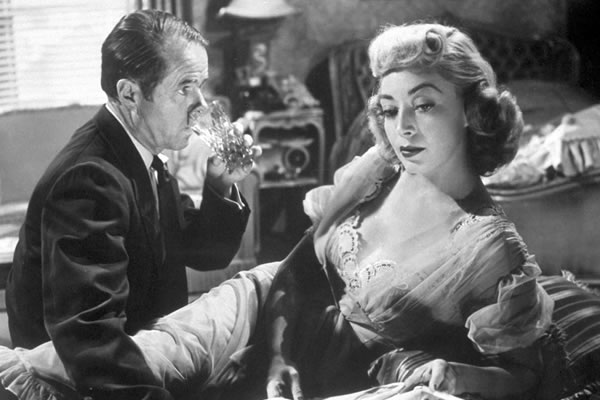
Based on the novel by John Steinbeck, East of Eden is the story of a young man in the early 1900s during World War I who vies for the affection of his father who tends to favor his brother where he goes on a journey for his own identity. Directed by Elia Kazan and screenplay by Paul Osborn, the film is a take of the Cain and Abel story in which two brothers spar for the devotion of their deeply religious father as one of them copes with his own issues while learning about his estranged mother. Starring James Dean, Raymond Massey, Julie Harris, Burl Ives, Richard Davalos, Lois Smith, and Jo Van Fleet. East of Eden is a majestic and intoxicating film from Elia Kazan.
Set in 1917 North California in the town of Salinas and the nearby town of Monterey, the film revolves around a young man trying to win the love of his father while competing with his twin brother whom their father favors. It is a film that is really an interpretation of the Cain and Abel story as it plays into two brothers vying for their father’s affection with one of them being this pacifist, strait-laced figure with a girlfriend and is a lot like his father. The other is an angst-ridden young man who feels like he could never please his father no matter how much work he can do and such. Paul Osborn’s screenplay is largely straightforward in how it plays into the journey that Cal Trask (James Dean) endures as he feels like he doesn’t do enough to please his father where he would often venture out Salina towards the neighboring Monterey where he follows a woman named Cathy Ames (Joy Van Fleet) whom he realizes is his mother that had abandoned his father just after he and his brother Aron (Richard Davalos) were born.
Their father Adam (Raymond Massey) is a man that is devoted to God in his beliefs, but he is also someone who has ideas with his crops as he is a farmer and a draft board chairman. He had an idea in keeping vegetables fresh as he has a lettuce crop as Cal helps along with Aron’s girlfriend Abra (Julie Harris) who is often concerned for Cal and his moody behavior. Yet, a weather storm crushes Adam’s dreams though Cal has an idea to go into the bean-growing business with one of his father’s partners knowing that stock will rise in case the U.S. decides to go to war as a way for Cal to get his father’s money back. Even as he turns to Cathy for help where he learns about why she left him as it makes Cal more determined to help his father where even Abra learns about what he is doing as she starts to fall for him. Yet, the script would reveal that Aron would find a way to upstage Cal in some way as it adds this sense of entitlement to someone who does everything his father does but is unable to cope with reality.
Elia Kazan’s direction is truly wondrous in his approach to imagery and the compositions that he creates that almost look and feel like a painting in some shots. Shot on location in coastal areas of Northern California in Salinas, Salinas Valley, and Mendocino County as they are important characters in the film such as shots of Cal riding on top of a train that would go from Salinas to Monterey. Kazan’s usage of the Cinemascope format allows him to go to great lengths to create shots such as a train riding away towards its destination as it plays into Adam Trask’s promise of a great future. While Kazan does use a lot of wide and medium shots to play into the locations including a fair where the bond between Cal and Abra becomes closer. There is also an intimacy in some of the medium shots but also in the close-ups along with a few slanted angles that play into Trask’s dominance towards his son with Aron often sitting either beside his father or in the middle of a table but closer to his father. Kazan also plays into the many differences between Cal and Aron as the latter is often seen in a clean-cut look with the former sometimes looking disheveled.
Kazan also plays into the events of World War I as Cal knew that there’s money to be made as he hopes he can use the money he makes to regain the money his father had lost. While Cal is aware about the horrors of war as there is this sense of optimism relating to the U.S. entering World War I. That optimism is destroyed when some of the young local men are killed with Trask’s longtime family friend Gustav Albrecht (Harold Gordon) is harassed because he’s German. The incidents relating to Albrecht make things for Trask uneasy with Aron also unable to cope with the realities of war as his pacifism becomes unwanted. The film’s third act relates to not just Cal’s desire to win over his father’s approval as he had kept the knowledge of his mother secret from both his father and Aron. It also plays into a young man who is often overshadowed by his brother whose selfishness is unveiled leading to a breakdown and some harsh truths for a family who have kept too many secrets from themselves. Overall, Kazan crafts a riveting yet intense film about two brothers vying for the affection of their father.
Cinematographer Ted D. McCord does incredible work with the film’s cinematography as it is filled with gorgeous colors for many of the film’s daytime exteriors with some stylish lighting for some interior scenes in the day and night including some soft-looking shots as it is a highlight of the film. Editor Owen Marks does excellent work with the editing as it is straightforward with some stylish transitional dissolves to help play into the drama . Art directors James Basevi and Malcolm C. Bert, along with set decorators George James Hopkins and William Wallace, do brilliant work with the look of the Trask family ranch as well as the home where Abra lives in as well as other locations within the town.
Costume designer Anna Hill Johnstone does fantastic work with the costumes from the refined look of Trask and Aron to a more rugged look that Cal has as well as the stylish clothing that Cathy wears. The sound work of Stanley Jones is terrific for its approach to sound in the way things sound from afar as well as some of the sparse moments in the film. The film’s music by Leonard Rosenman is amazing for its soaring orchestral score that plays into some of the film’s melodrama along with some moments of dramatic suspense as it is a highlight of the film.
The casting by Harvey Clermont is wonderful as it features some notable small roles and appearances from Lois Smith as a young waitress working for Cathy at her brothel, Timothy Carey as Cathy’s bouncer Joe, Lonny Chapman as a mechanic who showed Trask how a car works, Richard Garrick as Dr. Edwards who appears late in the film, and Barbara Baxley as a nurse late in the film who annoys both Cal and Abra. Harold Gordon is terrific as Trask’s friend Gustav Albrecht as a German salesman whom the Trask family is fond of as they try to protect him from the locals. Albert Dekker is superb as Will Hamilton as a businessman who teams with Trask in his refrigerating idea only for things to fall but still wants to help Trask out by teaming with Cal in growing beans as it would be profitable. Burl Ives is fantastic as the local sheriff Sam who knows about Cathy being in Monterey as he is also a close friend of Trask where he does what he can to help Cal with news about his mother.
Jo Van Fleet is excellent as Cathy Ames/Kate Trask as a brothel madam who wears gloves to cover her hands that are described as white as ivory as she is also the estranged mother of both Cal and Aron as she discovers the former searching for her where she agrees to help his father as well as make money into Cal’s bean business. Richard Davalos is brilliant as Aron Trask as Cal’s twin brother who is a lot like their father in terms of being strait-laced and not getting into trouble yet is also unable to cope with reality where he would neglect Abra and later use her to win his father’s approval and humiliate Cal. Raymond Massey is amazing as Adam Trask as a farmer/draft board chairman who is trying to be this idea of purity as well as being someone who prefer to see success through small things instead of bigger things despite some ideas that would prove to prosperous despite the realities he had to face.
Julie Harris is incredible as Abra Bacon as Aron’s girlfriend who is this beautiful soul that is always good to everyone while shares her own issues with her father with Cal which adds to their growing bond as her relationship with Aron starts to falter as she would fall for Cal and be sympathetic towards him. Finally, there’s James Dean in a tremendous performance as Cal Trask as a young man who is eager to win the approval of his father while is often tormented by his own flaws as well as having to compete with his brother. Even as he is always full of energy and is willing to work hard yet is often conflicted in wanting to win his father’s love but also hates him for favoring Aron whom he feels is always undermining him as it showcases Dean as this acting powerhouse that is filled with angst and determination to be loved and understood.
East of Eden is a spectacular film by Elia Kazan that features great performances from James Dean, Julie Harris, and Raymond Massey. Along with its supporting cast, gorgeous visuals, its exploration of sibling rivalry, and an evocative music score by Leonard Rosenman. It is a film that is not just this intense melodrama but also a film that displays a young man that is yearning to be accepted for who he is from those who are close to him. In the end, East of Eden is a phenomenal film from Elia Kazan.
Elia Kazan Films: (A Tree Grows in Brooklyn) – (The Sea of Grass) – (Boomerang!) – (Gentleman’s Agreement) – (Pinky) – (Panic in the Streets) – A Streetcar Named Desire - (Viva Zapata!) – (Man on a Tightrope) – On the Waterfront - (Baby Doll) – (A Face in the Crowd) – (Wild River) – Splendor in the Grass - (America America) – (The Arrangement) – (The Visitors (1972 film)) – (The Last Tycoon)
© thevoid99 2024

Set in 1885, the film follows a bank robber, whose partner reluctantly abandoned him during a showdown between them and Mexican mounted police forces, who escapes a Mexican prison with a fellow cellmate as they travel to Monterey, California with a couple of men to rob a bank as well as get revenge on his former partner. It is a film that explores a man who felt cheated by his former partner who had ended up making a decent life for himself as a sheriff in Monterey while he spends five years in prison waiting to get revenge. The film’s screenplay by Guy Trosper and Calder Willingham, with un-credited contributions from Sam Peckinpah and Rod Serling, follows the journey that Rio goes through as he is first seen taking part of a bank robbery with his partner Dad Longworth (Karl Malden) and another robber in Doc (Hank Worden) in Mexico that is successful until Rio and Longworth are chased by the mounted police as they’re stuck on a hill with Longworth leaving to get new horses yet he never returned as Rio gets captured and spent five years in a prison which he would escape with Chico Modesto (Larry Duran).
Upon meeting Bob Emory (Ben Johnson) and his partner Harvey Johnson (Sam Gilman), Rio and Modesto travel to Monterey, California upon learning that Longworth is the sheriff in the town as he has married a Mexican woman in Maria (Katy Jurado) who has a daughter of her own in Louisa (Pina Pellicer). Though the plan is to rob the bank in Monterey, Rio decides to meet Longworth without stating his intentions while falling for Louisa as he spends time with her during a fiesta the next day. Yet, things get complicated where Longworth learn about what the two did where Rio gets punished as he and his gang are forced to leave as they shelter themselves in a beachside village as it plays into Rio’s sense of uncertainty about wanting to rob a bank. Even as Maria learns more about her husband’s past as well as what happened with Rio and Louisa that would complicate matters.
Marlon Brando’s direction is filled with gorgeous compositions as it is shot on various locations in California with Big Sur and the Monterey Peninsula being key locations along with Sonora, Mexico for the scenes set in Mexico including its mountains. Brando’s approach to wide and medium shots add to the beauty of these locations with all of these meticulous attention to detail in the ocean waves that Brando captures to play into a world that feels new to Rio as it is also this escape from the rugged nature of Mexico that Longworth wants to leave behind. Brando also maintains some intimacy in the close-ups and medium shots in the first meeting in five years between Rio and Longworth as it play into the tension as Brando creates unique compositions in these moments. Notably in Rio’s infatuation towards Louisa as he would say some lies in order to woo her but eventually realize that she’s a good young woman whom he doesn’t want to take advantage of.
By the time the film moves into the second half where the tension between Rio and Longworth come to ahead despite the former’s action in saving a woman who is being abused by a man. It would allow Longworth to punish Rio in front of the town as revelations occur as it relates to Rio’s original intentions as he retreats to the beach as regrets come into play along with other revelations as it relates to Rio’s love for Louisa. Even as Maria begins to piece out Longworth’s issue with Rio during the film’s third act where a showdown would occur where the idea of vengeance shifts towards guilt with Rio realizing of what Longworth is trying to hold on to that only makes Longworth much worse. Overall, Brando crafts an exhilarating and mesmerizing film about a gunslinger going after his former partner for abandoning him following a bank robbery.
Cinematographer Charles Lang Jr. does incredible work with the film’s cinematography with its usage of Technicolor film stock to capture the beauty of the exteriors in the beaches and mountains while John P. Fulton provides some special photographic effects for some scenes on the beach as backdrops for a few of the film’s conversations including one between Rio and Louisa. Editor Archie Marshek does excellent work with the editing with its usage of straight cuts to play into the suspense and drama as well as knowing when to allow shots to linger to help amp up the suspense. Art directors Hal Pereira and J. McMillan Johnson, with set decorators Sam Comer and Robert Benton, do amazing work with the look of Monterey as well as the cantina in Sonora where Rio and Longworth went to after the robbery early in the film. Costume designer Yvonne Wood does fantastic work with the costumes in the dresses that the women wear along with the ragged look of Rio as well as the refined look that Longworth has as sheriff.
The makeup work of Yvonne Wood and Wally Westmore, with hair stylist Nellie Manley, do terrific work with the makeup from Longworth’s rugged look early in the film to the mustache he would have as sheriff as well as the look that Rio would have including the aftermath of a beating he would take from Longworth. The sound work of Hugo and Charles Grenzbach do superb work with the sound as it play into the natural elements as well as the sounds of gunfire from afar or up close. The film’s music by Hugo Friedhofer is wonderful for its bombastic orchestral score as it plays into the sense of adventure and suspense as the soundtrack also include a flamenco piece for a key moment in the fiesta sequence.
The film’s marvelous ensemble cast feature some notable small roles from Mina Martinez as a young woman Rio flirts with early in the film following the bank robbery, William Forrest as a bartender in Monterey, Hank Worden as Rio and Longworth’s robbery partner Doc, Philip Ahn as the owner of a beach hostel where Rio would recover in the film’s third act, Ray Teal and John Dierkes as a couple of deputies, Joe Dominguez as a corral owner, Tom Webb as the corral owner’s son, Joan Petrone as a flower vendor Rio flirts with to buy her necklace, Rodolfo Acosta as a Rurales captain, Margarita Cordova as the flamenco dancer, Timothy Carey as a local from Monterey who would be pushy towards the dancer at a bar, Miriam Colon as Longworth’s lover from Sonora whom Rio would meet five years later, and Elisha Cook Jr. as the banker who runs the bank at Monterey that Rio considers robbing. Sam Gilman is terrific as Harvey Johnson as a gunslinger Rio meets in Mexico as he is eager to rob a bank while Larry Duran is fantastic as Rio’s prison mate Chico Modesto who is sort of the film’s conscience as he is willing to help Rio while also knowing the conflict he’s dealing with.
Pina Pellicer is excellent as Louisa as Longworth’s step-daughter who falls for Rio though she is unsure about his intentions while learning about why he’s in Monterey where she begins to see things about Longworth that makes her uncomfortable. Slim Pickens is brilliant as Longworth’s deputy Lon Derrick as a man who doesn’t like Rio while is also infatuated with Louisa despite the fact that she thinks he’s a total creep. Ben Johnson is amazing as Bob Amory as a gunslinger Rio meets in Mexico who joins him on their journey to Monterey while also being someone who has issues with Rio over when to do the robbery as often finds a way to push Rio’s buttons. Katy Jurado is incredible as Longworth’s wife Maria as a woman who is given a great life in her marriage to Longworth only to become suspicious about Rio where revelations about Longworth’s past has her questioning things while discovering some things about Louisa’s relationship with Rio.
Karl Malden is phenomenal as Sheriff Dad Longworth as Rio’s former partner who had abandoned Rio following a showdown between him and Mexican mounted police forces as he creates a new life for himself only to deal with Rio where he is filled with guilt but also not wanting to reveal his own dark past that would eventually alienate him from his family. Finally, there’s Marlon Brando in a tremendous performance as Rio as a bank robber who seeks revenge on his former partner as he is hell-bent on getting revenge until he meets Louisa which complicates things. Brando brings this sense of restraint as a man that is conflicted in his actions but is also someone who is seeking justice of his own while also realizing the complications he is dealing with in his revenge plot as it is one of Brando’s finest performances.
One-Eyed Jacks is a sensational film from Marlon Brando that features incredible performances from Brando, Karl Malden, Katy Jurado, Slim Pickens, Ben Johnson, and Pina Pellicer. Along with its gorgeous visuals, its unconventional study of vengeance and guilt, and an exhilarating music score. The film is a fascinating western that doesn’t play by many of its tropes in favor of exploring the path of two men who were once partners as it leads to this eerie world of vengeance and the revelations of how the past can affect someone’s future. In the end, One-Eyed Jacks is a spectacular film from Marlon Brando.
© thevoid99 2023
Directed by Bob Rafelson and written by Bob Rafelson and Jack Nicholson, Head is an off-the-wall film where the pop group the Monkees encounter elements of surrealism as they spoof on themselves. A mish-mash of various genres with political overtones of the late 1960s, the film is an antithesis of the TV show the pop group starred in where it doesn’t play into the comical sensibilities that made them popular. Featuring appearances from Annette Funicello, Sonny Liston, Victor Mature, Frank Zappa, Jack Nicholson, and Timothy Carey. Head is a strange yet exhilarating film from Bob Rafelson and the Monkees.
The film is about the Monkees trying to dismantle their teen-pop image in this crazed, psychedelic-inspired film where a lot happens and nothing really makes sense. All of which involve the Monkees in an array of strange sequences where the fourth wall, at times, gets broken as they’re making a film where they often struggle with what they’re doing. The film’s screenplay by Bob Rafelson and Jack Nicholson has this sense of improvisation where it is clear that they’re making things up as they went along. That sense of improvisation has the Monkees play out fantasies of war and parties along with individual moments to showcase what Micky Dolenz, Davy Jones, Michael Nesmith, and Peter Tork would want. There’s also cameos that get added into the story as some of these people like Frank Zappa appear to guide them but often into strange directions.
Rafelson’s direction starts and ends with this very dizzying sequence of the band jumping off a bridge that would lead to these psychedelic-drenched images with the music of the Monkees playing in the background. Rafelson would create some unique compositions while having the Monkees play out fantasies in war films, Westerns, silent comedy, and a musical along with a live performance of the band to showcase the hysteria they had caused in their hey-day. Though some of these moments are essentially a product of its time as it is set during a turbulent period of the 1960s such as the Vietnam War. Some of the humor in the film that Rafelson presents is either ironic or very dark as it plays into the Monkees struggling with their image as well as their identity and a gigantic Victor Mature. Overall, Rafelson creates a messy yet very enjoyable film about the Monkees going into a strange adventure.
Cinematographer Michel Hugo does excellent work with the film‘s very colorful cinematography with its array of psychedelic lights for some of the parties scenes along with some unique lighting for some scenes inside the box plus some photographic effects in the psychedelic moments. Editor Mike Pozen, with additional work from Monte Hellman, is brilliant for its very stylized approach to rhythms with some fast-cuts, dissolves, dizzying montages, and jump-cuts to play into the film‘s chaotic tone. Art director Sydney Z. Litwack and set decorator Ned Parsons do amazing work with the set pieces such as the box as well as some of the fake sets that plays into the craziness the Monkees encounter. Sound editor James M. Falkinburg does terrific work with the film‘s sound to play into some of the chaos the Monkees encounter as well as the moments that goes on during the filming. The film’s music score by Ken Thorne is mostly comical with its mix of jazz and orchestral pieces while much of the music is made by the Monkees as it features a snarky rendition of their theme song plus original tunes that is written by Gerry Goffin and Carole King, Harry Nilsson, and band members Mike Nesmith and Peter Tork.
The film’s cast is fun to watch as it features appearances from boxing champion Sonny Liston, Frank Zappa as a critic, Jack Nicholson and Bob Rafelson as directors, Teri Garr as a character in a western piece, June Fairchild as a woman threatening to jump, Annette Funicello as a love interest for a film Davy is working on, Toni Basil as a dancer in the Daddy’s Song sequence as she’s also the film’s choreographer, Logan Ramsey as a police officer, Timothy Carey as a tall man who antagonizes the Monkees, and Victor Mature as himself who proves to be a great threat to the Monkees. Finally, there’s the Monkees as themselves as Micky Dolenz, Davy Jones, Michael Nesmith, and Peter Tork bring a lot of off-the-wall humor into their characters as well as deal with the situations they’re in though it sort of pales to the more comical work they did in the TV show.
Head is an excellent film from Bob Rafelson and the Monkees. While it’s a film that is odd and nonsensical at times, it’s also quite funny and refuses to take itself so seriously. While it might be a product of its time, it is still an important film as it would plant the seeds of what is to come from the next decade for American cinema. Fans of the Monkees might be put off by some of the psychedelic aspects and its lack of plot though there is enough music and wit that will entertain them. In the end, Head is an extraordinarily weird yet fun film from Bob Rafelson.
Bob Rafelson Films: (Five Easy Pieces) - The King of Marvin Gardens - (Stay Hungry) - (The Postman Always Stay Twice (1981 film)) - (Black Widow) - (Mountains on the Moon) - (Man Trouble) - (Blood and Wine) - (Poodle Springs) - (No Good Deed)
© thevoid99 2014
Based on the novel Clean Break by Lionel White, The Killing is the story of a racetrack robbery led by a criminal seeking one last job before he can start a new life with his girlfriend. Directed by Stanley Kubrick and screenplay by Kubrick and Jim Thompson, the film is a part-heist film set in a film noir style that explores the complexity of a heist and its aftermath. Starring Sterling Hayden, Coleen Gray, Vince Edwards, Jay C. Flippen, Elisha Cook Jr., Marie Windsor, and Timothy Carey. The Killing is a complex yet evocative heist film from Stanley Kubrick.
A plan to steal $2 million from a horse racetrack is underway as Johnny Clay (Sterling Hayden) is hoping for the robbery to succeed so he can marry his longtime girlfriend Fay (Coleen Gray). Helping Johnny with the plans is his friend Marvin Unger (Jay C. Flippen), corrupt cop Randy Kennan (Ted de Corsia), racetrack cashier George Peatty (Elisha Cook Jr.), and racetrack bartender Mike O’Reilly (Joe Sawyer). With everything set in place, Johnny hopes nothing can go wrong as he also hires a wrestler named Maurice (Kola Kwariani) to cause a ruckus as well as a sharpshooter named Nikki (Timothy Carey) to shoot a horse during the race.
While Johnny and the rest of the gang continue to make their plans and continue with their daily lives, George tells his wife Sherry (Marie Windsor) about the robbery in hopes to impress her. Instead, she would devise a plan of her own by having her lover Val Cannon (Vince Edwards) involved to steal the money. On the day of the robbery, everything goes as planned where everyone does their job and such. Yet, it would be followed by trouble that Johnny would unforeseen as he would do whatever he can to salvage all that he and his crew had worked hard for.
When planning a heist with a large payday, the one thing any group of people don’t want to do is screw things up as it’s just about five guys stealing $2 million from a horse racetrack and then split the money fairly. Led by this veteran criminal, it’s all about these five guys who want to use the money to start a better life and with no regrets. Johnny Clay is just a criminal that wants to lead a straight life for his girlfriend while a couple of guys in Marvin and Randy are just men that want the money for something better. Mike is a man that hopes to get the money to help his ailing wife (Dorothy Adams) while George just wants to impress his wife.
Stanley Kubrick’s screenplay explores the intricacies of planning a heist where a lot of the film’s narrative is told by an unseen narrator (Art Gilmore). The narration reveals a lot on who these characters and when these events take place as it would lead to the heist where the narration takes a backseat to the action that is happening. Kubrick’s script has a nice structure to how he creates momentum that leads to the heist where the first act explores the five main characters including Johnny Clay who is the organizer and makes sure things don’t go wrong. Yet, something would go wrong in George Peatty because he wants to get his wife’s attention as she would play a part in the heist on her own by hiring her lover.
The second act is about the planning and how Johnny Clay is so careful into making sure everything goes right. Even as he does things like stay at a motel, drop a key for Mike to pick up, and hope that things go well. The third act is about the heist where it’s all about these men positioning themselves into doing the job that is later followed by a troubling aftermath where the very professional Clay has to think fast. Through the stylish dialogue of Jim Thompson, the screenplay definitely plays to the rhythm of film noir as it helps drive the story as the dialogue also reveals information and motivation for the characters.
Kubrick’s direction is definitely entrancing in the way he plays out every scenario that happens throughout the film. Particularly in how he opens the film with this scene where it shows three of the five participants wandering around the cashier station and bar with a message that is being passed around them. With a lot of tracking shots to follow the actors and compositions that has a group of them in a frame. Kubrick’s direction is always interested in the planning of the heist as he always his camera positioned feet away from these meetings. Largely to establish the drama that is unfolding where something could go wrong or could go right.
The direction also has Kubrick create scenes to let the suspense play out slowly as it leads up to the heist where he carefully reveal how Clay plays his role. For the film’s climatic heist sequence, Kubrick has the fight scene be replayed to establish what one of the participants is doing in the background and what is the focus on. It is to see how the heist is played out as its participants play their role which adds to the suspense as well as to establish how flawless the plan is. Then there’s the aftermath where it does go into the schematics of film noir in terms of its drama and suspense that leads to an ending that is captivating for everything Jim Clay goes through. Overall, Kubrick creates a truly exhilarating yet haunting heist film.
Cinematographer Lucien Ballard does brilliant work with the film‘s very stylish and entrancing black-and-white photography that is filled with many lighting schemes for some of the film‘s nighttime interiors to the gorgeous exteriors of the daytime scenes. Editor Betty Steinberg does excellent work with the film‘s stylish cutting by using dissolves and fade-outs to play with the transitions as well as rhythmic cuts for the horse race scenes. Art director Ruth Sobotka does nice work with the set pieces in the apartments that the characters live in to the room where the race track keeps the money.
The sound work of Earl Snyder is fantastic for capturing the atmosphere of the horse racetrack as well as using the racetrack announcer‘s voice to repeat the action that occurs in the heist. The film’s music by Gerald Fried is superb for its thrilling orchestral score to play out the suspense and drama that occurs in the film.
The film’s amazing ensemble cast features some notable small performances from Dorothy Adams as Mike’s ailing wife, James Edwards as a parking lot attendant, Tito Vuolo as the motel manager, Kola Kwariani as the former pro wrestler Maurice, and Timothy Carey as the sharpshooter Nikki. Other roles such as Coleen Gray as the good-natured Fay and Marie Windsor as the conniving Sherry are wonderful to watch as is Vince Edwards as Sherry’s opportunistic lover Val. Jay C. Flippen and Ted de Corsia are excellent in their respective roles as Marvin and the corrupt policeman Randy. Joe Sawyer is terrific as the kind bartender Mike while Elisha Cook Jr. is superb as the weak cashier George. Finally, there’s Sterling Hayden in an incredible performance as the very professional Johnny Clay as he’s just a man hoping that the job goes right while hoping to do right for his girlfriend as there’s a real complexity to his character.
The Killing is a gripping yet hypnotic suspense film from Stanley Kubrick. Featuring a top-notch ensemble cast led by Sterling Hayden along with some amazing technical work that is highlighted by Lucien Ballard’s cinematography. The film is definitely one of the most intriguing heist films that explores the planning of a heist and how things can go wrong as Kubrick creates something that is truly engaging. In the end, The Killing is an outstanding film from Stanley Kubrick.
Stanley Kubrick Films: Fear and Desire - Killer's Kiss - Paths of Glory - Spartacus - Lolita - Dr. Strangelove or How I Learned to Stop Worrying and Love the Bomb - 2001: A Space Odyssey - A Clockwork Orange - Barry Lyndon - The Shining - Full Metal Jacket - Eyes Wide Shut
Related: Stanley Kubrick: A Life in Pictures - The Auteurs #18: Stanley Kubrick
© thevoid99 2012