Thursday, June 18, 2020
Thursday Movie Picks: Period Dramas
In the 25th week of 2020 for Wandering Through the Shelves' Thursday Movie Picks. We venture into period dramas as it’s film set during a moment in the past as it allow actors to go back in time and capture a certain period in time. Here are my three picks all directed by women from the early 2010s as well as being a reflection of sorts to these dark times we’re in:
1. Wuthering Heights
Andrea Arnold’s adaptation of the Emily Bronte novel is definitely a far more radical take in comparison to other versions of the film. Most notably in casting an African-Briton for the role of Heathcliff as it revolves a young man who has been adopted into a rich family as he falls for his adopted sister until they’re separated by forces beyond their control until they meet again as adults hoping to restart their relationship. Shot in a full-frame aspect ratio of 1:33:1 and on location in the north of Britain, it’s a film that refuses to play by the rules as it’s more about atmosphere and how the locations play up to the separation that both Catherine and Heathcliff endure throughout the film.
2. Lore
Cate Shortland’s adaptation of Rachel Seiffert’s novel The Dark Room is a 2012 World War II drama is an unconventional film that is set during its final years in Germany where a young woman takes her four younger siblings through Germany after their parents had been captured by the Allies for the work with the Nazis. It’s a film that showcases how the horrors of war can lead to some harsh reality for a young group of siblings as they’re also forced to realize that everything their parents and grandparents had taught them was wrong. Featuring a breakthrough performance from Saskia Rosenthal as the titular character, it is a coming-of-age film of sorts that doesn’t play by convention in favor of studying how those who had been taught all of these ideas only to realize that it’s a lie and how it lead to loss.
3. Belle
Amma Asante’s fictionalized film about Dido Elizabeth Belle and the 1779 painting that is set during a landmark moment in British rule as it relates to the slave trade. Featuring Gugu Mbatha-Raw in the titular role, it is a compelling drama that follows a young woman with a white father and black mother as she would be raised by her father’s relatives who give her love and a home as she also becomes close to her cousin Elizabeth. It’s a film that offers so much but it is also exploration of identity and what it means to be that identity without having to compromise and gain the approval of those who love and care for that person.
© thevoid99 2020
Tuesday, June 16, 2020
The Housemaid (1960 film)
Written and directed by Kim Ki-young, Hanyeo (The Housemaid) is the story of a troubled housemaid whose presence would cause chaos within a family in South Korea. The film is the study of class differences and the roles of family and the people who work for them as a new housemaid would seduce the family’s patriarch and create terror within the home. Starring Kim Jin-kyu, Ju Jeung-nyeo, and Lee Eun-shim. Hanyeo is a chilling yet intoxicating film from Kim Ki-young.
The film revolves around a music teacher who moves into a new home with his family as one of his students suggest in getting him a new housemaid who has some harboring resentment towards the teacher over a supposed affair as she would create chaos within the family. It’s a film that play into a man who is given the position to teach a group of women factory workers the chance to learn piano yet he also attracts a crush among one of the students. Yet, a letter to the teacher is discovered as a worker gets fired while the woman who actually wrote the letter feels guilty as she helps her teacher in getting a new housemaid unaware that the woman is troubled.
Kim Ki-young’s screenplay explore the family dynamic as Dong-sik Kim (Kim Jin-kyu) has moved his family to a city in the hopes to have a new home as his wife (Ju Jeung-nyeo) is pregnant with their third child while he’s teaching at this factory as he’s gained the crush of his student Kyung-hee Cho (Um Aing-ran). After her friend Seon-young Kwak (Ko Seon-ae) got fired for writing Cho’s letter, Cho tries to help Mr. Kim by hiring her roommate Myung-sook (Lee Eun-shim) unaware that she is a friend of Kwak and is unstable due to her offbeat behavior. The script play into Myung-sook’s behavior and how she would seduce Mr. Kim as it creates turmoil as well as this air of uncertainty into the family dynamic.
Ki-young’s direction is simple as it largely play into some of the claustrophobia within the apartment home the Kims live in. While there aren’t a lot of wide shots in the film other than to establish some bits of the location, much of Ki-young’s direction does emphasize on close-ups and medium shots to play into the intimacy of the apartment as well as the class room where Mr. Kim teaches. Ki-young also maintains this air of intrigue where the film begins with Mr. Kim in the living room with his wife and two kids as he reads about this story of a housemaid believing that it’s nonsense. Yet, it leads to this narrative of Mr. Kim being an object of affection for these women including Cho as she gets her roommate Myung-sook the job to be the housemaid with Cho hoping to win over Mr. Kim but things eventually become complicated.
Ki-young’s approach to the drama and suspense allows him to study the behavior of his characters as he also play into elements of surrealism and terror as it relates to Myung-sook’s behavior. Most notably in how she looks at things such as a tiny bottle of rat poison which is on a kitchen cabinet due to the rats at the Kims’ home. Even the way she looks at the children with an air of disdain as the drama intensifies in the third act. Notably due to Mr. Kim’s actions and how his wife has seen her whole family life coming apart with her children feeling uncomfortable including her newborn baby. It also play into this air of class as Mr. Kim who needs work to fund his lifestyle as his wife suffers from exhaustion from sewing as Myung-sook’s presence only worsens things to the point that the guilt within Mr. Kim finally reaches a breaking point. Overall, Ki-young crafts a haunting yet rapturous film about a family who hires a maid into their home unaware of the chaos she would bring into their lives.
Cinematographer Kim Deok-jin does brilliant work with the film’s black-and-white cinematography as it adds a chilling atmosphere to the film with some intricate lighting by Ko Hae-jin who helps set a mood for the way the rooms are lit as well as the stairs. Editor Oh Young-geun does excellent work with the editing in its methodical approach to the suspense as it allows shot to linger for a bit to help maintain the air of dramatic tension throughout the film. Art director Park Seok-in does amazing work with the look of the house that the Kims live in from their work-in-progress state to their finished look as well as the room where Mr. Kim teaches music to his students.
The film’s special effects by Lee Sang-man does nice work with some of the film’s special effects as it relates to some of the surreal moments in the film that include a key scene on a staircase that play into the air of terror. The film’s music by Han Sang-gi is incredible for its eerie orchestral score filled with strings and piano to play up the dramatic tension and suspense as it is a highlight of the film.
The film’s wonderful cast feature some notable small roles from Ko Seon-ae as a factory worker named Seon-young Kwak who gets fired for supposedly writing a love letter to Mr. Kim, Ahn Sung-ki as Kim’s son Chang-soon, Lee Yoo-ri as Kim’s somewhat-crippled daughter Ae-soon, and Um Aing-ran as Kim’s student Kyung-hee Cho who has a crush on Mr. Kim and would be the one to get Myung-sook the job as their housemaid. Lee Eun-shim is excellent as Myung-sook as this young woman who is hired to be a maid yet she is an eccentric figure with a dark demeanor as she falls for Mr. Kim and seduces him to the point that she would create chaos in the family. Ju Jeung-nyeo is brilliant as Mrs. Kim as a pregnant housewife who is dealing with exhaustion from working on her sewing machine and aftershock after seeing rats in her home as she copes with Myung-sook’s presence and later her husband’s actions. Finally, there’s Kim Jin-kyu in an amazing performance as Mr. Kim as a music/piano teacher hired by a factory to teach young women music as he copes with his work and later presence of Myung-sook as he would be consumed with guilt and disappointment at himself as it is an eerie performance from Jin-kyu.
Hanyeo is a tremendous film from Kim Ki-young. Featuring a great ensemble cast, its haunting premise, discomforting setting, ominous music score, and gorgeous yet chilling visuals that play into the dramatic tension and suspense. It’s a film that is definitely ahead of its time in its exploration of adultery as well as in its setting as it is a film that does have its sense of importance in the history of Korean cinema. In the end, Hanyeo is a spectacular film from Kim Ki-young.
© thevoid99 2020
Sunday, June 14, 2020
Upgrade
Written and directed by Leigh Whannell, Upgrade is the story of a technophobe who barely survives a mugging as he’s implanted a chip into his body in an act of revenge and terror. The film is a revenge film of sorts of a man whose aversion to technology forces him to use it to get what he wants as well as make things right in the modern world. Starring Logan Marshall-Green, Betty Gabriel, and Harrison Gilbertson. Upgrade is a riveting and exhilarating film from Leigh Whannell.
Set in a futuristic world where technology does a lot for civilization, the film revolves around a technophobic man who survived a car accident and a mugging that left his wife dead as he is given a new chip into his body where the chip gives the ability move again but also to kill those who killed his wife. It’s a film with a simple premise yet it plays into a man who has no interest in technology in favor of doing things by hand as he finds himself conversing with the microchip inside his body as it repaired his paralysis yet it would also help him deal with the people who killed his wife. Leigh Whannell’s screenplay follows the trials and tribulations that Grey Trace (Logan Marshall-Green) endures as he is someone not in tune with modern technology and the modern world as he would finish building a car for a young yet reclusive tech genius in Eron Keen (Harold Gilbertson) who has created a microchip that is used for multiple purposes as Trace and his wife Asha (Melanie Vallejo) witness.
Yet, due to their car malfunctioning that lead to them being mugged and Asha killed. Keen offers Trace the chance to walk and have movement in his body in total secrecy from the police and many others. Trace is excited about having to move his body again but hearing the voice of the chip known as STEM (voice of Simon Maiden) who would help Trace find out what is going on but also give him the ability to find out what happened on that night.
Whannell’s direction is stylish as it is shot on location in Melbourne, Australia as this futuristic city of sorts to play into a world where technology runs the world as people have the cars do the driving for them as well as do all sorts of things though there’s some that prefer to do everything themselves. Whannell showcases a world where it does feel futuristic but not everyone wants to change with the times as Trace is someone that isn’t fond of technology despite being surrounded by it in his home as much of the presentation of the dramatic and character-building moments are shown in a simple manner of medium shots and close-ups. There are wide shots to help establish the locations as well as to showcase the world that Trace encounters including Keen’s secretive home and Trace’s own home. Whannell’s approach to the action and suspense does have elements of style that has Trace move as if he is a robot whenever he’s being threatened. The way the camera moves add to the robotic tone of the film while it also doesn’t shy into the extremity of the violence.
Whannell also create some unique tracking shots with the Steadicam for a chase scene involving Trace and a man who was involved in the mugging. Whannell’s direction does go into great care of the suspense while it also dwells into the realm of body horror as its third act is about Trace and STEM as well as some eerie discoveries over the latter’s creation just as some of their actions get the attention of Detective Cortez (Betty Gabriel) who is concerned about Trace as well as what is actually happening. Whannell would create a twist in the story that plays more into what Keen has created and the dangers that he brought to Trace as it all relates to Trace’s disdain for technology. Overall, Whannell crafts a thrilling and gripping film about a technophobe who is given a computer chip that allows his paralyzed body to seek revenge on the men who killed his wife.
Cinematographer Stefan Duscio does excellent work with the film’s cinematography with its emphasis on stylish low-key lighting for many of the interior/exterior scenes set at night with not a lot of bright lights for the scenes set in the day. Editor Andy Canny does terrific work with the editing as it has some stylish cuts to play into the action while not deviating into the style of chaotic-speed cutting in order to make sense of what is happening. Production designer Felicity Abbott, along with set decorator Katie Sharrock and art director Mandi Bialek-Wester, does brilliant work with the look of the homes of the characters as well as the design of some of the futuristic gadgets that people use. Costume designer Maria Pattison does nice work with the costumes as it is largely straightforward with the exception of Keen who wears more fashionably posh clothing.
Hair/makeup designer Chiara Tripodi does fantastic work with the look of a few characters as it play into an array of different hairstyles and tattoos some of the characters that Trace meets wears. Special effects supervisor Angelo Sahin and visual effects supervisor Jonathan Dearing do incredible work with the visual effects from the design of the police drones as well as some of the tech that is used at home. Sound designer P.K. Hooker does superb work with the sound effects in the way some of the technology sounds as well as the sound of weapons some of the bad guys have in them. The film’s music by Jed Palmer is amazing for its brooding and pulsating electronic-based score as it help play into the suspense as well as the action sequences in the film while music supervisor Jemma Burns creates a soundtrack that consists of a couple of electronic cuts by Kollaps and a blues song by Howlin’ Wolf in the film’s opening scene.
The casting by Nikki Barrett and Terri Taylor is wonderful as it feature some notable small roles and appearances from Richard Crawthorne as a criminal in Serk Brantner, Kai Bradley as a hacker named Jamie, Christopher Kirby and Clayton Jacobson as a couple of thugs in Tolan and Manny respectively, Linda Cropper as Trace’s mother, and Melanie Vallejo in a terrific performance as Trace’s wife Asha who becomes the motive for Trace’s vengeance. Benedict Hardie is fantastic as Serk’s brother Fisk as a mysterious criminal who carries secret weapons in his body as it play into intrigue over why Asha was killed. Harrison Gilbertson is excellent as the young yet reclusive tech genius Eron Keen as a man who has created a chip that he believes will change everything while offering to help Trace in repairing his paralyzed body unaware of the chip’s unlimited potential.
The voice of Simon Maiden as STEM is brilliant as he displays some life into this computer chip that is allowed to do many things including getting Trace to walk and move again while offering advice of what to do and such as it’s a complex voice performance from Maiden who manages to bring a lot of depth into a tiny chip. Betty Gabriel is amazing as Detective Cortez as a homicide detective investigating what happened to Trace and his wife as she also suspects about something off as it relates to some recent criminal activities as she’s kind of the film’s conscience. Finally, there’s Logan Marshall-Green in an incredible performance as Grey Trace as a mechanic who isn’t fond of modern technology as he becomes paralyzed following a mugging and the murder of his wife as he is given a chip that allows his body to move again where Marshall-Green displays the air of loss and confusion that he endures as a chip controls his movements as he also copes with some of the things he does as it a career-defining performance for Marshall-Green.
Upgrade is a remarkable film from Leigh Whannell that features a great leading performance from Logan Marshall-Green. Along with its stylish visuals, futuristic setting, themes on the dangers of technology and artificial intelligence, and a chilling electronic music score. The film is a crafty genre-bender that offers a lot of action, terror, and suspense while exploring a man trying to get revenge for what happened to him and his wife. In the end, Upgrade is a marvelous film from Leigh Whannell.
Leigh Whannell Films: (Insidious: Chapter 3) – The Invisible Man (2020 film)
© thevoid99 2020
Thursday, June 11, 2020
Thursday Movie Picks: Prequels
In the 24th week of 2020 for Wandering Through the Shelves' Thursday Movie Picks. We venture into the subject of prequels. Films that are based on other films as it play more as an origin story of the characters of that story and such. Sometimes, they work but there’s been others that haven’t worked at all. Here are my three picks of prequels that… absolutely fucking sucked:
1. The Flintstones in Viva Rock Vegas
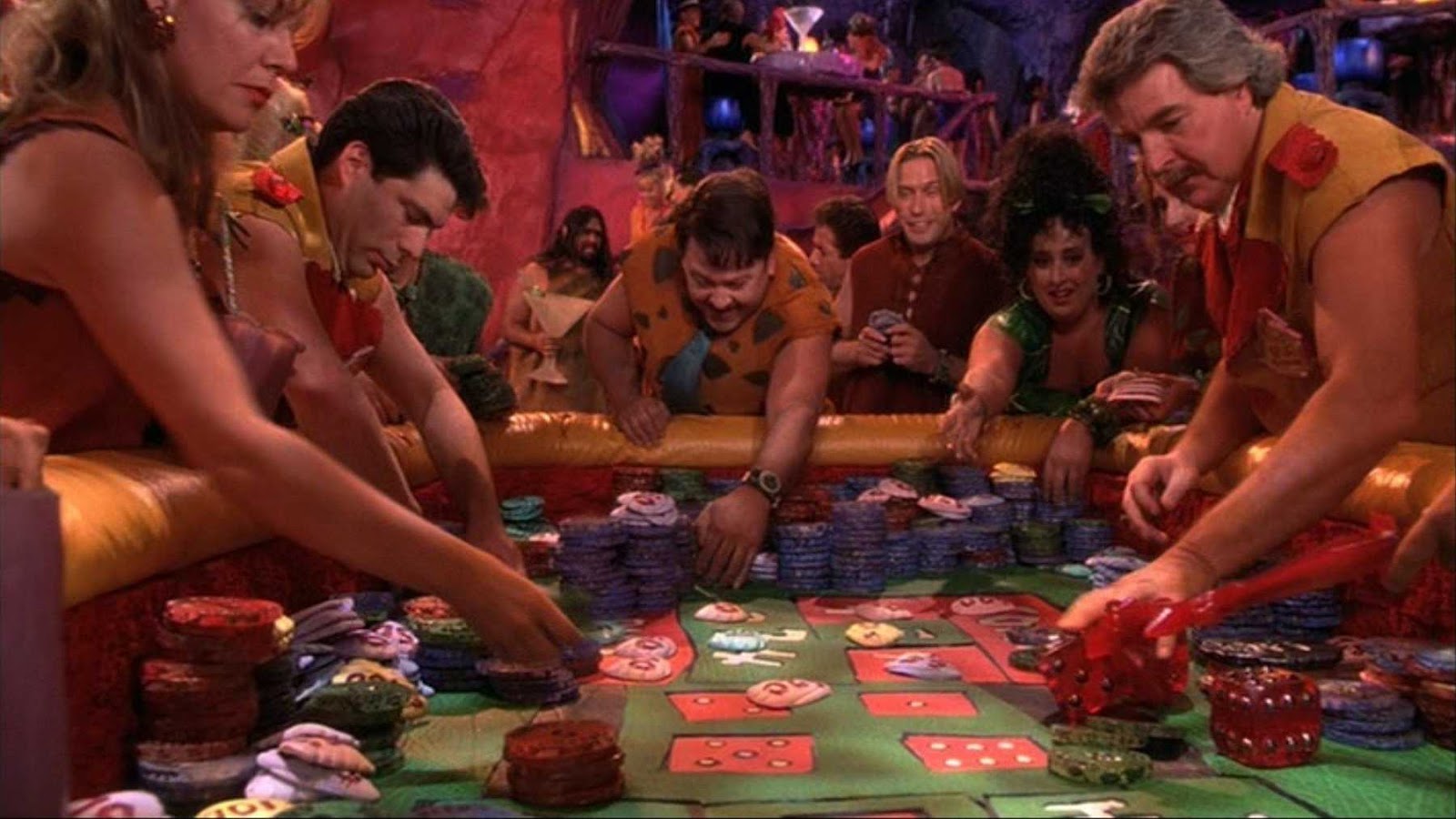
Did anyone really wanted to see a movie of how Fred Flintstone and Barney Rubble met Wilma and Betty? Who the fuck thought anyone wanted to see it after the 1994 film came out and everyone (including me) thought it was shit. They replaced the entire cast by having Mark Addy as Fred, Stephen Baldwin as Barney, Kristen Johnson as Wilma, and Jane Krakowski as Betty plus Joan Collins as Wilma’s mother, Harvey Korman (in his final film performance) as Wilma’s dad, and Alan Cumming in a dual role as the Great Gazoo and a Mick Jagger-like singer who is more concerned about his butt. It was worse and the visual effects are dated as it is a film that not many saw as this was sad for a comedy great like Korman who just plays an absent-minded guy whom Collins married for his wealth.
2. Dirty Dancing: Havana Nights
How much money did they lure to get Patrick Swayze to appear in this awful film? Set in Cuba before the Cuban Revolution, it revolves around an American girl meeting a Cuban boy and they dance and fall in love. It’s the same storyline from the original film but without any heart. Granted that both Romola Garai and Diego Luna are incredible actors who would both do better things but it’s not just the material that fails them but they really don’t have any chemistry as well looked extremely uncomfortable dancing either by themselves or together.
3. Dumb and Dumberer: When Harry Met Lloyd
The 2014 sequel to the 1994 film is an awful film but it’s not as awful as this prequel which didn’t involve the Farrelly Brothers nor Jim Carrey and Jeff Daniels as it is just unwatchable from start to finish. Derek Richardson and Eric Christian Olsen in their respective roles as Harry and Lloyd don’t exactly do any performances but rather poor imitations of what Carrey and Daniels did while their attempts at humor is more mean-spirited and idiotic. The plot that involves a principal and a teacher trying to scheme their way for money is a distraction as it leads to a mess that tries too hard to be engaging as it’s just fucking awful.
© thevoid99 2020
Saturday, June 06, 2020
Capernaum
Directed by Nadine Labaki and screenplay by Labaki, Jihad Hojaily, and Michelle Keserwany from a story by Labaki, Hojaily, Keserwany, Georges Khabbaz, and Khaled Mouzanar, Capernaum is the story of a 12-year old boy living in the slums of Beirut as his encounter with an Ethiopian immigrant and her infant where he forces to think about his troubled life leading to him suing his parents over neglect and abuse. The film is a look into the life of a boy that is told primarily through flashbacks as he copes with his dreary existence and everything that is happening around him. Starring Zain Al Rafeea, Yordanos Shiferaw, Boluwatife Bankole, Kawthar Al Haddad, Fadi Kamel Youssef, Nour el Husseini, Alaa Chouchnieh, Cedra Izam, Joseph Jimbazian, and Farah Hasno. Capernaum is a visceral yet evocative film from Nadine Labaki.
After stabbing a man over an incident relating to his family, a 12-year old boy living in the slums of Beirut decides to sue his parents over years of abuse and neglect as his case is brought to court where his story is told. It’s a film with a premise that is told in a reflective back-and-forth narrative as it’s told largely in court yet it explores the life of a boy as he endures hardships and struggles to survive for himself and his young siblings only to be kicked out of his home by his parents where he befriends an Ethiopian immigrant and help care for her infant son. The film’s screenplay uses this back-and-forth narrative as it reflects the plight that Zain (Zain Al Rafeea) endures as the first act explore his life in the slums as he is one of several children living under the roof of his parents Souad (Kawthar Al Haddad) and Selim (Fadi Kamel Youssef). Zain’s younger sister Sahar (Cedra Izam) is start to come of age as Souad and Selim decide to have her be married to their landlord Assad (Nour el Husseini) whom they owe.
That’s all in the first act as the second act has Zain run away to the more upscale Ras Beirut where he meets the Ethiopian Rahil (Yordanos Shiferaw) who has an undocumented infant son in Yonas (Boluwatife Bankole) as she lets Zain live with her as he would help babysit her son. Rahil would work but her forged work visa is to expire as she has little money to get new documents as she tries to deal with the forger Aspro (Alaa Chouchnieh) who wants to help but also in wanting to have Rahil give Yonas up for adoption so that he can have a better life. Yet, Zain would continue to help Rahil as well as treat Yonas as a younger brother but things become complicated leading to an intense third act.
Nadine Labaki’s direction definitely has an air of realism as it is shot largely on hand-held cameras to give the film a documentary feel though not in its look. Shot on various locations in and around Beirut and other parts in Lebanon, much of Labaki’s direction emphasizes on realism as much of the cast in the film are non-actors as well as the settings to showcase this air of reality in these slums. While there are some wide shots of the locations as well as a look of the slums from above and Beirut itself, much of Labaki’s direction aims for intimacy in the usage of close-ups and medium shots as it play into Zain’s own plight and the journey he would take. Even as Labaki showcases the mundane activities he had to do to help his family including sell drug-laced clothes to prisoners and other things as he is aware that what he’s doing is wrong yet has to survive. During the film’s second act where he’s in the city and goes to a theme park where he meets Rahil, he learns about what she does as she also lives in a slum-like area where the home is small and cramped.
Labaki also play into the plight of refugees as it relates to Rahil and her son as they’re both undocumented with Zain also undocumented due to the neglect from his parents. Even as Rahil goes missing for a period of time during its second act with Zain having to care for Yonas by himself as well as hoping to find some sanctuary after meeting a young Syrian refugee. The third act is about Zain making a decision for himself and to find hope but also in discovering a tragedy that would sever whatever ties he had left with his family leading up to this trial. Labaki’s direction in the trial scenes are simple but also intense due to the tension that is prevalent throughout between Zain and his parents as well as the subject of abuse and neglect as Zain’s parents do get their say though there is a lot that does play into Zain’s hopelessness and his reasons to find hope not just for himself but also for those who are dealing with the situation he’s in. Overall, Labaki crafts an intoxicating yet unsettling film about a boy in Beirut who sues his parents over their abuse and neglect towards him.
Cinematographer Christopher Anou does brilliant work with the film’s cinematography as it play into the realism of the photography with its emphasis on natural lighting with available light used for the interior/exterior scenes at night. Editors Konstantin Bock and Laure Gardette do excellent work with the editing as it is largely straightforward with some rhythmic cuts to play into the drama. Art director Hussein Baydoun does fantastic work with some of the look of the homes that Zain would live in as well as a mirror that he would use to watch cartoons with Yonas from another person’s home. Costume designer Zeina Saab de Melero does terrific work with the costumes from the traditional Ethiopian clothing that Rahil wears to the more street-like look that many of the other characters wear.
Hair stylist/make-up artist Michelle Sleiman does nice work with some of the film’s minimal effects including some makeup that Rahil wears when she has to go out and get some money as well as the look of Souad. Sound designer Chadi Roukoz does superb work with the sound in capturing the atmosphere of the locations as well as in some of the collage of sound that play into the world that Zain is in as it’s a highlight of the film. The film’s music by Khaled Mouzanar is wonderful for its low-key string orchestral score that play into the drama and sense of despair that occurs throughout the film.
The casting by Jennifer Haddad is marvelous as it feature some notable small roles from Farah Hasno as the young Syrian refugee Maysoun that Zain befriends in the second act, Joseph Jimbazian as an amusement park worker who is dressed up like a character similar to Spider-Man, director Nadine Labaki as Zain’s attorney in the trial scenes, Nour el Husseini as the landlord of Zain’s parents in Assad who runs a local market and would take Sahar as his wife as payment for rent from Zain’s parents, Alaa Chouchnieh as Rahil’s forger Aspro who offers to help Zain and Rahil out despite his dark plans as he presents himself as a kind-hearted figure, Cedra Izam as Zain’s younger sister Sahar who is worried about being sent off to be married when she’s really too young, and Boluwatife Bankole as Rahil’s infant son Yonas whom Zain would help take care of.
Kawthar Al Haddad and Fadi Kamel Youssef are brilliant in their respective roles as Zain’s parents in Souad and Selim as two people who have a lot of children as well as do whatever to make money but would neglect their own children with Haddad as the mother who is often cruel and forces Zain to do things with Youssef as the lazy father who feels like he is the one being abused by Zain. Yordanos Shiferaw is incredible as Rahil as an Ethiopian immigrant Zain meets at a theme park as he offers to help her out in taking care of her infant son Yonas as she struggles to keep working in Beirut while her forged visa had expired in the hope she can give herself and her son a good life. Finally, there’s Zain Al Rafeea in a phenomenal performance as Zain as a 12-year old boy struggling to deal with a life of despair and uncertainty as he also copes with the abuse and neglect he suffers as it is this hardened yet heartfelt performance from a young man who is trying to find an idea of hope in a hopeless world.
Capernaum is a tremendous film from Nadine Labaki that features great performances from Zain Al Rafeea and Yordanos Shiferaw. Along with its naturalistic visuals, emphasis on realism, and its exploration of abuse and neglect from the perspective of a young boy in Beirut. It’s a film that showcases the life of a boy as he struggles to find his place in the world as well as ponder why he is in a hopeless situation in a world where there is so much chaos. In the end, Capernaum is a spectacular film from Nadine Labaki.
Nadine Labaki Films: (Caramel) - (Where Do We Go Now?) – Rio, Eu Te Amo-O Milagre
© thevoid99 2020
Thursday, June 04, 2020
Thursday Movie Picks (Seven Deadly Sins Edition): Sloth
In the 23rd week of 2020 for Wandering Through the Shelves' Thursday Movie Picks. We return to the world of the 7 deadly sins with the subject of sloth which is the most difficult sin to define as it refers to a lot of ideas but it’s also defined as laziness. Here are my three picks:
1. The Big Lebowski
The film features 2 characters named Jeff Lebowski as one of them is a billionaire while the other is a slacker who likes to bowl, smoke pot, and drink White Russians who is known mainly as the Dude. Yet, a couple of thugs break into the Dude’s home and pee on his rug which tied the room together. The subject of sloth is in the form of Mr. Lebowski who tries to get the Dude to do something for him and for awful reasons because he’s a lazy paraplegic who wants others to do his dirty work for him.
2. Idle Hand
A film that is about sloth in a comedic tone as it relates to a lazy stoner whose right hand starts to take control and kill people but he is reluctant to deal with it. Even as it gives him the chance to make out and have sex with Jessica Alba. Yet, it forces him to deal with the friends he killed as they return as zombies of sorts while they continue to get stoned and not do anything unless they’re motivated to do something with the help of marijuana.
3. Spirited Away
A different take on the subject though it relates to a monster that the protagonist Chichiro encounters. One of which would help her get to her destination to return home with the help of another creature looking to be free. It’s an unusual take on the subject but it is a film with some unique images as well as it plays into this journey a young girl has to do upon encountering this strange world that is full of magic and wonders as it is one of Hayao Miyazaki’s finest films.
© thevoid99 2020
Sunday, May 31, 2020
Films That I Saw: May 2020
What is there to say right now? More than 100,000 people have died of COVID-19 in the past 2 months here in America and things are getting worse. A man was killed by police as his last words were “I can’t breathe” as riots have ensued including one here in Atlanta in front of the CNN building. People are having parties during Memorial Day weekend as if nothing happened and our human septic tank of a dictator is saying “things are fine, all is well” while calling African-Americans thugs and question the idea of masculinity in his refusal to wear a face mask. Is this the end of civilization as we know it? Honestly, I’m starting to feel like the end is near and I don’t know what will kill me. An invisible disease, killer hornets, the police, racist motherfuckers who will kill you for jogging near some neighborhood, a fucking asteroid, nuclear missiles? If you’re going to tell me that I’m going to die tomorrow. At least give me the option to die on my own terms.
In all seriousness, this pandemic has definitely gotten troubling as my mother has really been troubled by having to be isolated and not really going anywhere or do anything. She’s quite active as she likes to go out and shop and such whereas I prefer to stay home. Online shopping is something that is really foreign to her as all she does on the Internet is watch stuff on YouTube or do on-line video chats with friends. Yet, being at home all day isn’t that much for me either as I’ve lost some motivation to watch and review films while projects that I’ve been trying to work on has been on hold. It has been difficult as I spend part of my time playing games either on my laptop or my phone as a way to cope with the boredom and uncertainty. Even as the idea that things could be re-opened in the fall doesn’t give me a lot of hope but rather dread after hearing from people such as Dr. Fauci that a second wave might be coming.
I know there’s movies going to come out in the summer as they will play in the theater but I’m really not eager to return fearing that someone might be infected with COVID and might infect everyone. I’d rather wait for a vaccine and then get everything back in order. I really think all movies that are set to be released in theaters are going to wait longer until a vaccine is ready and everyone can be safe.
In the month of May 2020, I saw a total of 27 films in 15 first-timers and 12 re-watches with two of the first-timers are directed by women based on the 52 Films by Women pledge. The highlight of the month is my Blind Spot Choice in Blind Chance. Here are my top 5 picks for May 2020:
1. The Rider
2. Lone Wolf and Cub: Baby Cart in Peril
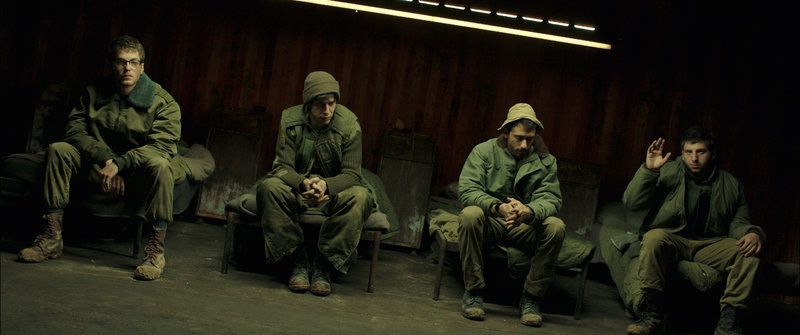
3. Foxtrot
4. The Great Buster: A Celebration
5. Targets
Monthly Mini-Reviews
Bad Boys
The first of two documentaries of the 30 to 30 series that I saw as it’s about the Detroit Pistons of the 1980s and early 1990s that featured a dangerous line-up of players that included Isiah Thomas, Bill Laimbeer, Dennis Rodman, John Salley, Rick Mahorn, and many others. They were the bad boys of the NBA in their day and made no apologizes about it. For me as a fan of the Atlanta Hawks, I hated them as did my dad but we couldn’t help but realize how good they were. It is a fun documentary that also showed why this team were so good and why they were the definitive bad boys until 1991 when all of the players got traded to other teams as they weren’t the same afterwards.
Atlanta’s Missing and Murdered: The Lost Children
A documentary series that had been on HBO since April is a revelatory documentary about the Atlanta Child Murders from 1979 to 1981 and the troubling aftermath following the capture of Wayne Williams who was convicted of the murders. The five-part film series definitely showcase Atlanta’s troubled history before the murders and the arrival of Maynard Jackson as the city’s first African-American mayor which only created more tension between African-Americans and those affiliated with the Ku Klux Klan. There is a belief that Williams didn’t kill the children as the film shows also how the FBI managed to not really do enough with the case with current mayor Keisha Lance Bottoms and Atlanta’s police chief Erika Shields made the announcement in 2019 to re-open the case and go more into depth over who killed these 28 young people. It’s something that for anyone from Atlanta must see as well as anyone interested in the way murder cases can be mishandled.
New York, New York
From Spike Lee is a short film he created on his Instagram page as it’s a tribute to the city but also to those working on the front lines in this time of need. To the tune of the Frank Sinatra song, it’s about the city and how it’s willing to keep going in these troubled times with the focus on the doctors, nurses, and volunteers who are trying to help the city as it’s being stricken hard by this pandemic. It’s definitely one of Lee’s most inspiring works as well as a film that showcases the good of humanity in these trying times.
Sole Man
The second film from the 30 for 30 series that I saw is about Sonny Vaccaro as a man who would be the one to make Nike big as well as have Michael Jordon be attached to the brand only to switch allegiance to Adidas after a fall-out with Nike by having Kobe Bryant sign with Adidas. It’s a film that explore the world of sport shoes and how it helped sell the name of basketball yet it also explore the dark side of college recruiting as it shows the corruption within the NCAA in how players get their likeness used in video games. It was something that Vaccaro was appalled by as he was hoping young players would get some money even if they didn’t make it into the NBA as he would fight the NCAA for what they did. Vaccaro is a polarizing figure but still a fascinating one.
The Murder of Nicole Brown Simpson
One of the major downsides of this pandemic is insomnia as I have a hard time trying to sleep at night forcing to watch movies late at night and sometimes. I end up watching bad movies but this. Oh… this is definitely one of the worst films I had ever seen in my life. It’s not just the fact that people like Mena Suvari as Nicole Brown Simpson, Agnes Bruckner as Kris Jenner, Taryn Manning as Faye Resnick, and Nick Stahl as Glen Edward Rogers in a narrative that claims that Rogers killed Simpson and Ron Goldman are involved in this but I beg the question into who the fuck funded this shit? Daniel Farrands is someone who never should be behind the camera nor should be involved in cinema because what he’s making is obscene. Especially as it borders into awful attempts at comedy in a scene inspired by Nightmare on Elm Street to the scene of Simpson and Goldman being killed as I felt like I was watching a snuff film. This isn’t cinema, this is trash of the worst kind.
The Little Story of Gwen from French Brittany
From Agnes Varda is this 2008 short film about a young woman who lives in California as she runs a small movie theater in the town with her husband. It is a delightful five-minute short film that explores the simple life of a woman named Gwen with Varda making an appearance where Gwen hosted a mini-festival devoted to Varda’s films with Varda doing some Q&A as it’s a must for anyone interested in Varda.
Natalie Wood: What Remains Behind
HBO’s documentary film that is produced by Natasha Gregson Wagner is a startling yet touching film about the life of Natalie Wood who is Wagner’s mother. Featuring interviews with Robert Wagner, Natasha’s younger sister Courtney, step-sister Katie, stepmother Jill St. John, Natasha’s father Richard Gregson (before his passing), and those who knew Wood including Mia Farrow as they all talk about Wood’s life and career which was sadly overshadowed by her mysterious death in 1981. Even as Robert Wagner discusses about what happened that night on the boat with actor Christopher Walken and the boat’s captain as well as the awful tabloid reporting about Wood’s death with Robert Wagner being a suspect as Natasha and others defend him as they also raise question about Natalie’s sister Lana and her pursuit to go after Robert Wagner.
Fire (Pozar)
An animated short film by David Lynch definitely play into his surrealist approach to storytelling as it’s more of a collaboration with musician Marek Zewbrowski. The animated short is really about the imagery of fire as it has this air of beauty but it’s also disturbing. It’s another gem from Lynch as it’s something fans of his work will enjoy.
Celebration Day
Airing for free during this weekend on YouTube, Dick Carruthers’ 2012 concert film showcasing Led Zeppelin’s October 2007 one-off reunion as part of a tribute concert to Atlantic Records co-founder Ahmet Ertegun. I had seen clips of the film through performances of a single song but not the film as a whole as it is just an incredible concert film presented in multiple film stocks that shows a band just killing it. With Jason Bonham filling in for his late father John, the reunion definitely shows what happens when Robert Plant, Jimmy Page, and John Paul Jones can do when they’re not being forced to reunite following two disastrous reunions for special events in the 1980s. On that night, they weren’t just in top form but they were in a moment that can’t be replicated and why it’s best that Led Zeppelin should never reunite unless it’s for something special.
Top 10 Re-Watches:
1. Once Upon a Time... in Hollywood
2. Police Story
3. Young Frankenstein
4. Commando
5. 9 to 5
6. David Bowie: Finding Fame
7. The Falcon and the Snowman
8. The Jane Austen Book Club
9. Starter for 10
10. The Freddie Mercury Tribute Concert
Well, that is all for May as I’m not really sure what I’m going to do next month other than the films I have on my never-ending DVR list and whatever film I choose next from my Blind Spot Series. Other than Katy’s Movie Challenge blog-a-thon, I have no idea what to do as I’m trying to get back into the MCU is Cinema series as that’s something I want to finish and then return to the Auteurs series. This air of uncertainty and not knowing is starting to get to me as I’m just watching whatever I can find such as this piece about Woody Allen that is full of revelations about the accusations he’s been getting and why he’s really innocent of these false charges as it’s also an exploration of this disgusting social media culture who aren’t willing to listen or read the fact with Mia and Ronan Farrow are really among some of the worst people out there. Until then, this is thevoid99 signing off…
© thevoid99 2020
Friday, May 29, 2020
2020 Blind Spot Series: Blind Chance
Written and directed by Krzysztof Kieslowski, Przypadek (Blind Chance) is the story of a medical student whose journey leads him to a series of encounters as it play into the fates of his life upon trying to catch a train to Warsaw. The film is a drama that follows a man who tries to deal with his political ideals and personal happiness during the period of Communist Poland as he copes with the choices he has. Starring Boguslaw Linda, Tadeusz Lominicki, Boguslawa Pawelec, Zbigniew Zapasiewicz, Jacek Borkowski, and Monica Gozdzik. Przypadek is an evocative and compelling film from Krzysztof Kieslowski.
The film is the simple story of a medical student who runs after a train on its way to Warsaw as three different scenario occurs that would play into his fate. It is a film about a man’s decision as he endures a lot in his life as it leads to him chasing this train to Warsaw following the death of his father. Krzysztof Kieslowski’s screenplay is a study of not just fate but also the situations the film’s protagonist Witek (Boguslaw Linda) would endure as each scenario has him running at the train station as he would bump into an old woman who would drop a coin for a man to pick up to buy beer as Witek would also bump into him. Each scenario would have Witek take part in something that allows him to be someone of importance in some form of social or political faction while would also be attached to a woman in that scenario that would drive his decisions and such.
Kieslowski’s direction has some gorgeous visuals in a film that largely relies on simplicity as it plays to the fates of Witek. Shot on various locations in Poland including Lodz and Warsaw, Kieslowski captures the life of this young man though it opens with a flashback montage of Witek’s life as he’s screaming as he’s waking up in an airplane thinking about his life. It then cuts to the news about his father’s death where Kieslowski maintains an intimacy in the medium shots and close-ups as it play into Witek’s reaction in the world around him and such. Each scenario opens with the scene of Witek running into a train as each brief encounter with the old woman and the drunk guy all play into his fate as there is this element of suspense in trying to catch this train. Each different scenario has Kieslowski not only use wide shots to establish the location that Witek is in but also to play into the uncertainty of what he’s going to do. Even as it play into the world of early 1980s Polish politics during the era of communism.
Kieslowski’s direction also maintains a different tone for each scenario as each one ends with a slow-motion shot as it would lead to the next scenario and so on towards the third and final one. Kieslowski keeps the narrative straightforward while also playing into these decisions that Witek has to make. All of which kind of revolves around some form of conformity where the first one relates to being part of a government, the second has him be part of a movement, and the third relates to things before his father’s passing as well as a compromise of the two different ideals. Yet, each story also ends with Witek possibly catching a plane to Paris, France as it shows what he might’ve accomplished or a sense of failure. Kieslowski’s direction also play into characters what Witek would meet but also those he would briefly encounter as if he known them from another moment in time or had just seen them and don’t know who they are. Especially in the film’s final moments as it play into the ultimate fate that Witek has chosen as well as those he had probably never met. Overall, Kieslowski crafts a rapturous film about the fates of a young medical student and the decisions he would make.
Cinematographer Krzysztof Pakulski does brilliant work with the film’s cinematography with its usage of low-key lighting for some of the interior/exterior scenes at night as well as the emphasis on natural lighting for many of the scenes set in the day. Editor Elzbieta Kurkowska does excellent work with the editing as it is largely straightforward that allow shots to linger for a while there are also some rhythmic cuts to play into the drama and suspense. Production designer Andrezj Rafal Waltenberger and set decorator Borzyslawa Chmielewska do amazing work with the different places that Witek would go into including his own apartment, the homes of the women he would meet and fall for, and some of the places he would work at. Costume designer Agnieszka Domaniecka does fantastic work with the look of the clothes that Witek would meet as it play into the choices he makes in his life as well as the people he meet in the different kinds of clothes they were to suit the environment he’s in.
The makeup work of Teodor Grmaszewski is terrific for the look of some of the women that Witek meet as well as some of the eccentric characters he would meet in the film. The sound work of Michael Zarnecki does superb work with the atmosphere of the locations including the train station as well as some of the quieter moments that occur in the film. The film’s music by Wojciech Kilar is incredible for its somber string-orchestral score that play into the fates of Witek as it is one of the film’s major highlights.
The film’s wonderful cast feature some notable small roles from Jerzy Stuhr as a party organizer, Jacek Kaczmarski as a protest singer, Zygmunt Hubner as a medical school dean, Irena Byrska as Witek’s pro-communist aunt, Tadeusz Lomnicki as a mentor of Witek, Adam Ferency as a wheelchair-bound pastor named Stefan, Jacek Sas-Uhrynowski as an old friend of Witek in Daniel, Jacek Borkowski as an anti-communist organizer named Marek that Witek befriends, and Zbigniew Zapasiewicz as a government official named Adam who would put Witek into some uncomfortable situations. The trio performances of Boguslawa Pawelec, Marzena Trybala, and Monika Gozdzik are remarkable in their respective roles as Czuszka, Werka, and Olga as three different women who would offer Witek different paths in his life with Pawelec as the more political-driven Czuska who was an old lover of Witek, Trybala as the more spiritual Werka who is Daniel’s sister, and Gozdzik as the more reserved Olga who was also a schoolmate of Witek in medical school. Finally, there’s Boguslaw Linda in a phenomenal performance as Witek as a young man who is trying to catch a train as he deals with the choices he made when he catches the train as well as what happens when he misses the train as he copes with all of the ideals and choices he makes as it is just this chilling yet intoxicating performance.
Przypadek is a phenomenal film from Krzysztof Kieslowski that features an incredible performance from Boguslaw Linda. Along with its naturalistic visuals, themes of fate and choices, immense character study, and Wojciech Kolar’s haunting score. The film is definitely a mesmerizing look into the life of a man told in three different scenarios as it play into the world he’s in through the choices he makes as well as the futility of these choices. In the end, Przypadek is a sensational film from Krzysztof Kieslowski.
Krzysztof Kieslowski Films: (Personnel) – (The Scar) – (Camera Buff) – (The Calm) – (Short Working Day) – (No End) – (A Short Film About Killing) – (A Short Film About Love) – The Decalogue - The Double Life of Veronique - Trois Couleurs-Bleu - Trois Couleurs-Blanc - Trois Couleurs-Rouge
© thevoid99 2020
Subscribe to:
Posts (Atom)