Tuesday, August 31, 2010

Favorite Films #1: Lost in Translation (5th Year Anniversary Essay)

Author's Note: The Essay was Written and Posted at Epinions.com on 9/21/08 to Celebrate the Fifth Anniversary of My First Viewing of Lost in Translation, in which I believed to be the best film ever made.

Lost on Earth & In Need of Translation


With American cinema nearing the end of the first decade of the 21st Century, it's clear that for anyone looking for an alternative from the big, mega-blockbusters of Hollywood. They turned to the auteurs that re-defined American cinema as something as interesting and unique as new worlds were explored. Coming from the post-Quentin Tarantino of independent cinema were new voices like Paul Thomas Anderson, Wes Anderson, David O. Russell, Alexander Payne, Brad Anderson, David Fincher, David Gordon Green, and Spike Jonze. Another director coming out of this new wave of American cinema is Sofia Coppola. The granddaughter of famed music composer Carmine Coppola and the daughter of reknowned filmmaker Francis Ford Coppola.

Coming from a family of artists and people in the film industry that includes cousins Nicholas Cage, Jason Schwartzman, and Robert Carmine along with her aunt Talia Shire, mother/documentarian Eleanor, and brother Roman. Sofia Coppola redefined the theme of alienation from a new perspective of young women dealing with new environments, adolescents, and life in transition. Starting with 1989's short segment Life Without Zoe for the anthology feature film New York Stories that was directed by Francis Ford Coppola, along with shorts directed by Martin Scorsese, and Woody Allen. Written by Francis and Sofia, Life Without Zoe tells the story of a rich young girl who is surrounded in an adult world through parental neglect. While it was the most maligned segment of the film, it carried themes that Sofia Coppola would tell in her later films.

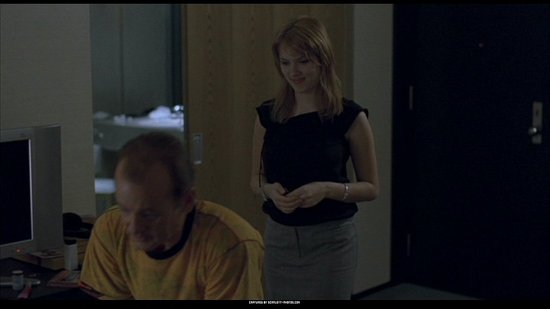
Part of Coppola's transition in her own life through her young adult life was her trying to explore things. Something that she felt every young women goes through from one phase to another. In her second feature film Lost in Translation, there's a scene where Bob Harris (Bill Murray) and Charlotte (Scarlett Johansson) are lying in bed side-by-side where Charlotte contemplates her lack of direction. She had just graduated from Yale studying philosophy yet has no idea what to do with her degree or with her life. She mentions going through a photography phase and then attempting to write. Yet, Bob tells her that she'll figure it out and keep writing.

In the early 90s, following her maligned-performance in The Godfather, Pt. III where she took over for Winona Ryder at the last minute. Sofia went through a modeling phase, did some photography, went into fashion, and started a short-lived TV project with friend Zoe Cassavetes. Yet, it would be the discovery of Jeffrey Eugenides' novel The Virgin Suicides about five young girls dealing with their adolescence as they live in a strict household desperate to connect with young boys. Told in the perspective of one of the boys who live in their suburban neighborhood. Desperate to turn the story into a film, she wrote a script with help from her father to turn it into a film.

Before Sofia directed her 1999 feature film debut with The Virgin Suicides, she had directed a few music videos for Walt Mink and the Flaming Lips while also directing two shorts. Bed, Bath, & Beyond in 1996 and Lick the Stars in 1998. The latter told the story of a young girl in middle school who is popular while her best friend is cast out. Yet, when the popular girl creates a statement that is misinterpreted, she is immediately cast out. Lick the Stars would be the predecessor of what is to come from Sofia in her exploration of alienation from the mind of young women. The Virgin Suicides premiered in film festivals in 1999 and a year later, got a theatrical release to rave reviews. Around the same time, Coppola's personal life with husband and director Spike Jonze, who was coming off his own breakthrough with his 1999 feature film debut Being John Malkovich, was starting to unravel through closed doors.

During that period, Sofia Coppola had a fashion line that was popular in Japan. Yet, her visit included a period of jet lag, depression, and wonderment. Yet, this experience along with her own personal life would be the inspiration for her second feature film Lost in Translation. The story of an aging actor named Bob Harris whose best days are behind him goes to Japan to shoot a whiskey commercial for $2 million while endorsing it. Yet, his own life is unraveling as he forgets his son's birthday while his marriage has lost its sense of passion. Meanwhile, a young woman named Charlotte is dealing with her own marriage being lost as her photographer husband goes off to work while is dealing with the unique world of Japan as she tries to find herself. Yet, Bob and Charlotte would meet through jet lag, depression, and confusion as they share their feelings of confusion and frustration.


The film is a study of two people in transition as the troubles in their personal life and ambitions bring them together in a world that's extremely foreign to them. Inspired by the films of alienation by revered Italian auteur Michelangelo Antonioni and the dreamy romanticism of Hong Kong director Wong Kar-Wai. Coppola goes for mood instead of gimmicks or stylized cutting and presentation of the Hollywood films of that time. With its sharp, shading color and hand-held camera work of cinematographer Lance Acord, the layered sound design of Richard Beggs, and the slow yet methodical pacing by editor Sarah Flack. It's a film that engages the viewer in giving them a world, whether they've been to Tokyo or not, that is very foreign and also overwhelming.

While the film's technical work that includes notable work from production work from K.K. Barrett and Anne Ross along with Nancy Steiner's costume design. Sofia Coppola also brought back one of alternative rock's unsung heroes back to the forefront in My Bloody Valentine guitarist Kevin Shields. Shields, who had not released new original music since 1991's landmark album Loveless, had been on-and-off experimenting and collaborating in other people's project. With the help of music supervisor Brian Reitzell and Roger Joseph Manning Jr., Shields' contributions to the film helped emphasize its dream-like mood with acts like Squarepusher, Sebastian Tellier, Air, Death in Vegas, and the Jesus & Mary Chain contributing cuts. The film's music and soundtrack is an ode to the shoegaze music scene of the early 90s as well as playing to the emotions of its characters and their situations.

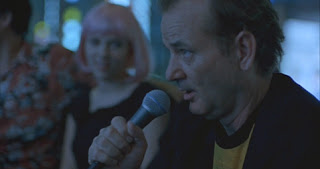
The four tracks Shields contributes to the soundtrack along with Sometimes from MBV's Loveless album play to the loneliness and confusion of Charlotte's character. Yet, music also plays a positive part where Bob Harris sings Roxy Music's More Than This during a kareoke sequence. Harris' voice is filled with emotion as his attraction to the young Charlotte is becoming evident where they connect in a big way. The scene along with a scene of Bob and Charlotte smoking a cigarette is followed by a wonderfully edited, shot, and sound mixed sequence of the Tokyo highway, bridges, and streets to the tune of Sometimes. The emotion and longing for sleep comes arrive with Bob carrying a sleeping Charlotte to her room in a platonic way. That series of scenes and sequences are perfectly executed led by Sofia Coppola's subtle, restrained approach to drama.

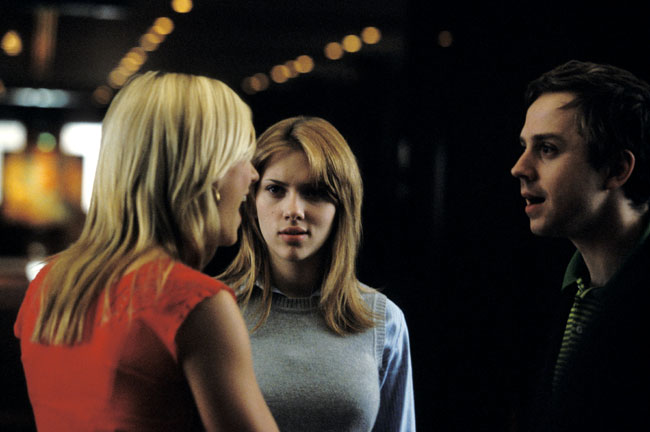
Coppola's direction and script definitely underplay a lot of what goes on in the emotional front while a lot of the film is based on life experiences and such. Though some might feel that the supporting characters of John (Giovanni Ribisi) and Kelly (Anna Faris) are caricatures along with a slew of Japanese characters. In a way, it could be true but it's too easy to say that. While John might be based on Spike Jonze and Kelly, rumored to be based on Cameron Diaz. Coppola was revealing painfully about what happened to her failed marriage though she isn't suggesting that John had an affair with Kelly. Yet, maybe nothing did happen and Kelly was just a starlet who was more likeable and energetic to the more introspective yet snobbish Charlotte.

There was an accusation of racism about the Japanese characters and how they were treated on the film. Audiences may be missing the point since Japan is extremely foreign and their tastes in comparison to Americans are very different. It's not fair to say that the Japanese have a sense of excitement and huge smiling personality since not all of them are like that. Bob Harris' encounter with a TV Japanese talk show host is only there for amusement as Harris is bewildered by appearing on the show. Yet, overwhelmed by the sense of culture shock and revealing the dirty laundry of his passionless marriage leads him to having a one-night stand with a singer at the hotel. Yet, the character of Bob Harris is a man confused at where he's at while filled with frustration in both his personal and professional life.

Bill Murray's performance of Bob Harris is wonderfully understated as the legendary comedy-actor goes for a performance that was thought to be unseen. Known as a comedy actor coming out of the TV show Saturday Night Live and hit comedies like Caddyshack, Ghostbusters, and Stripes. Murray's career by the 90s was going through a transition as he mixed comedy and drama in films like Groundhog Day and Wild Things. Yet, it was the films of Wes Anderson like 1998's Rushmore and 2001's The Royal Tenenbaums that gave Murray a new career as a dramatic actor. With Lost in Translation, Murray's sharp, sarcastic, dead-pan sense of humor mixed in with regret and confusion. Murray's approach to under-dramatize his character and make him engaging and funny proves his talents as he won several awards while getting an Oscar nomination for Best Actor for his role.


Matching Murray in the performance front is Scarlett Johansson. Only 17 when she acted in the film back in 2002, Johansson was a promising actress coming off of such acclaimed films as Manny & Lo, Robert Redford's The Horse Whisperer, Terry Zwigoff's Ghost World, An American Rhapsody, and the Coen Brothers' The Man Who Wasn't There. Her minimalist, subtle, and entrancing performance as Charlotte is often considered to be her finest work that was matched even more months later in the film adaptation of Girl with a Pearl Earring. Though there were criticism for the fact that she didn't do much, the fact that she didn't do any kind of overacting or melodramatic is what set her apart from her acting peers at the time. Winning a British Academy Award for Best Actress that year along with several nominations including 2 Golden Globe nods for Best Actress in different categories for comedy and drama for both Lost in Translation and Girl with a Pearl Earring. Johansson was catapulted to stardom despite the fact that she never gained the same acclaim or promise she had in 2003.

Five years since its release, Lost in Translation is still a favorite among some film buffs though its acclaim has diminished somewhat like other films. Yet, it remains Sofia Coppola's best work though her follow-up film, a revisionist bio-pic on Marie Antoinette, received mixed reviews in its 2006 release. While Sofia Coppola's take on period films and 18th Century dramas did wow some audiences, the film did at least prove that the director is a unique visionary who won't repeat herself though will venture into the same themes that she has visited. Another part of Sofia's genius is in Lost in Translation's much-discussed ending about what Bob Harris whispered into an emotional Charlotte's ear. To this day, it has not been revealed as it remains one of the most discussed and beloved endings in cinema.

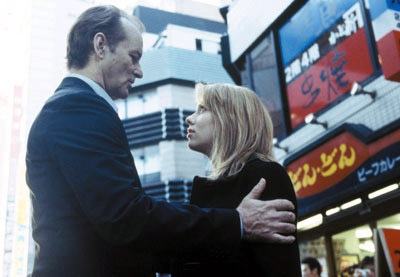
Lost in Translation is not a film for everyone. It's not for anyone looking for pop-culture, savvy dialogue. Not for audiences looking for a conventional romance with lots of skin or anything that has a familiar plot. It's also not a film that mainstream audiences would want, especially in the traditional happy ending. Yet, those are the reasons why Lost in Translation is a great film and definitely one of the best films ever made. It's a film that defies expectations, explores themes of alienation and identity, and for those lost souls feeling disconnected by the world. This is a film that connects them in such a way that it could be done with such style and emotion through the mind and heart of its unique visionary, Sofia Coppola.
© thevoid99 2010

Sunday, August 29, 2010

Lost in Translation

Originally Written and Posted at Epinions.com on 9/21/03 w/ Additional Edits


"Listen to the girl as she takes on half the world. Moving up and so alive. In her honey-dripping beehive, beehive, it's good, so good, it's so good, so good. Walking back to you is the hardest thing that I can do. For you, I'll be your plastic toy; I'll be your plastic toy, for you. Eating up the scum is the hardest thing for me to ".

-Just Like Honey by the Jesus & Mary Chain from Psychocandy

The lyrics above are a very good description on what Sofia Coppola's film Lost in Translation is all about. It's about two people who find themselves alone and neglected in a world that is foreign to them. Starring Bill Murray and Scarlett Johansson, Lost in Translation is an evocative, romantic masterpiece that transcends all barriers of depth in acting, writing, and direction. Sofia Coppola brings in a film that takes the audience to an area they might have not been before and see the cultural differences between the worlds you live and the new world that that they're being introduced to. In the process, it's an unconventional romantic comedy-drama that is more about trying to identify yourself in the new world while looking at the old world from an eerie distance. What Lost in Translation succeeds in is finding an emotional chord through its actors, plot, and striking visuals.

50-year old Hollywood actor Bob Harris (Bill Murray) has just arrived to Tokyo to endorse Suntory Whiskey for $2 million.  Yet, Bob's career isn't hot as it used to be as he arrives at the Hyatt Hilton Tokyo where he receives a fax from his wife that he had forgotten his son’s birthday.  His sullen mood worsens as he's forced to listen to bad jazz renditions of songs like Scarborough Fair from a jazz chanteuse (Catherine Lambert), dealing with fans, and having trouble sleeping. In the same hotel, a young Yale graduate named Charlotte (Scarlett Johansson) is also having trouble sleeping while her photographer husband John (Giovanni Ribisi) is on assignment to do photos for a rock band. Charlotte somehow feels neglected in her 2-year marriage as she wanders around in Tokyo looking at temples.  Charlotte suddenly feels like her marriage is falling apart as well as her identity after tearfully calling a friend in the U.S. about what's going on.

Bob and Charlotte for a few days would see each other in the bars or in an elevator but haven’t spoken as Charlotte is exploring the strange culture of Japan with its video games and pop culture references. Bob meanwhile, is shooting the whiskey commercial and finds himself in an awkward position where he has trouble figuring out what the Japanese director wants from him, which is more intensity. Bob also feels alone not just from the array of Japanese television but from the number of faxes from his wife on what shelves or carpet colors he wanted. Charlotte is also having trouble trying to find something she can relate to as her husband has been consumed with his job.  Even as they meet a vapid Hollywood starlet named Kelly (Anna Farris) doesn't help matters for Charlotte.

Then one night, Bob and Charlotte finally talk in the hotel bar as they both couldn't sleep and talk about their own problems. They would meet again after Charlotte leaves a dinner conversation with John and Kelly where Bob asks if she would participate in something that would get them out of this funk they’re in. Charlotte says yes as the two explore Japan by themselves. In the day, Bob will do his promotional work for the whiskey including a hilarious photo shoot where he mimics the Rat Pack and Charlotte would explore Tokyo and the art of Japanese flowers. They meet again and later in the night, they explore the party scene of Tokyo where Charlotte meets an old college friend Charlie (Fumihiro Hayashi) who introduces the two to the rave scene, indie-pop records, and of course, karaoke. Charlie does the Sex Pistols' God Save The Queen and Bob does Nick Lowe's (What's So Funny 'Bout) Peace, Love, & Understanding?. Charlotte later does the Pretenders' Brass in Pockets and Bob responds with a moving rendition of Roxy Music's More Than This.

The night resulted in the two finally getting some sleep while Bob is forced to deal with strange, disconnected communication with his wife while Charlotte is feeling more neglected from John as he is away from business. Bob and Charlotte have lunch together where Charlotte reveals a bruise in her foot resulting from a bump with a small object a few days back. Bob accompanies to the hospital where he talks to an old person despite not understanding what he's saying. They later meet for another night with Charlie at a strip club as they begin to have conversations about their troubles lives in a moving scene of the two of them in bed talking about marriage. With the film progressing from then on, Charlotte and Bob do their day activities while wondering if the relationship they're having is meaningful in the short time they're having.

In her second full-length feature to date after making the 1999 acclaimed film The Virgin Suicides, Sofia Coppola has created something that is dreamlike but also eerie in its framing and tone. With cinematographer Lance Acord, Coppola captures the colorful, modern look of Tokyo that seems beautiful but at the same time, makes the audience feel very isolated in a lot of ways, particularly the characters of Bob and Charlotte. Coppola's original script is filled with wide-range of emotions along with some humor while in scenes with no dialogue, there's no need for her to write words as she makes the actors capture raw emotion through their performances. Even the sceneries of temples, landscapes, clubs, and arcades are filled with enigmatic beauty as the audience is transported into this new world that they're surrounded by. Though it seems to be a clash in cultures, it really opens the mind of the worlds many aren’t familiar to and Tokyo is a perfect setting with its wild look and people.

One noted factor to the greatness of the film is the use of its music. With cuts ranging from karaoke, jazz standards, Japanese pop, and dream-pop, the film exceeds the use of music the way Coppola had approached it with The Virgin Suicides. In Lost in Translation, the music moves and captures the mood of the film. With some of the original music from Brian Reitzell with Beck musician Roger Joseph Manning, Reitzell brings an eerie, cold mood to the culture of Japan along with the electronic music of Death in Vegas, Air, and Squarepusher. The real music star of the film is none other than My Bloody Valentine’s Kevin Shields, who finally returns with new music in 12 years after the release of the 90s rock masterpiece Loveless. Shields brings a dreamy, melancholic tone to the music, including the song City Girl used in the film's opening shot of Johansson in pink underwear and in the flower scene for a dreamy, melodic instrumental called Ikebana. Even the classic MBV song Sometimes appears in the film and the Jesus & Mary Chain noise-pop masterpiece Just Like Honey that gives the film its emotional climax.

The supporting performances of Giovanni Ribisi, Anna Farris, and a slew of Japanese actors are all well utilized. Ribisi plays a character that loves his wife but he's also married to his work and has been consumed with the trappings of being around celebrities and all sorts of people stroking his ego while making himself neglectful towards Charlotte. While Ribisi's character is based on Coppola's now ex-husband Spike Jonze, Ribisi's performance isn't an exaggeration of Jonze. Anna Farris does a surprising performance as a brainless Hollywood starlet who is consumed with her own fame and believing that she is the greatest thing in Japan, while she does a hilarious, off-key rendition of Carly Simon's Nobody Does It Better. Even the Japanese cast is hilarious to watch from the commercial director (Yukata Tadokoro), the hooker, translators, TV talk show host Matthew Minami (Takashi Fuji) and all sorts of people including Fumihiro Hayashi as Charlie stand out on their own bringing out a sense of comedy while not purveying to the stereotype of the Japanese.

Then there's the two leading performances of Bill Murray and Scarlett Johansson that are both enigmatic, masterful, and deep in their respective roles and it's no doubt these two should be getting some awards. For Bill Murray, the character of Bob Harris is the best film role of his entire career. While he was hilarious in movies like Caddyshack, Meatballs, Ghostbusters 1 & 2, Scrooged, What About Bob? and Stripes along with more serious performances in Ed Wood, Rushmore, and Groundhog Day, Lost in Translation is his most defining performance as he not only brings out some quick-witted humor that is dry in some cases while he reveals his sense of vulnerability in the film including the poster of him sitting on his bed with his sad, droopy face.

Scarlett Johansson meanwhile, delivers a performance that exceeds all sorts of expectation wanted from a young actress. Though she's only 19 years old, Johansson brings in a mature, fragile performance as Charlotte that I don't think many actresses, including those around her age group could manage. She displays a beauty that transcends all sorts of barriers from the exterior to the more internal torture in her character. Johansson recently won the Upstream Best Actress prize from the Venice Film Festival for her performance and she truly deserved it. Just the way she made the camera look at her and to identify with the character is a true power to what it is to be a great actress. In comparison to early film roles like Manny & Lo, The Horse Whisperer, Ghost World, An American Rhapsody, and The Man Who Wasn't There, this is one of her best performance to date though she recently top that with Girl with a Pearl Earring with Colin Firth as the famous Vermeer painting.

The chemistry between Johansson and Murray are spellbinding as they channel their sadness to find some life around themselves in a foreign world. Even in their karaoke scenes, they bring in some depth into their roles while proving that they're not the best singers in the world. The age difference between the two is thrown out of the window as they play two lost souls trying to find meaning with their drab life. Even in the script's unconventional approach to a love story, the film doesn't give an answer on whether they should sleep together or not because it doesn’t matter. What matters is how these two individuals feel through real emotions and no one could capture those kinds of performances the way Murray and Johansson has done

***Updated Tidbits on the DVD from 2/5/04***

The DVD to Lost in Translation is featured in two versions. The Full-Screen and 1.85:1 Anamorphic Wide-Screen version. For those of you cinematic buffs who saw Lost in Translation multiple times (like I did where I saw the film 3 times in 2003 in the theaters), the Wide-Screen version is the one to own since it captures the film in an exhilarating form. With languages featuring French and Spanish subtitles plus DTS & Dolby Digital 5.1 Surround Sound in English and Dolby Digital 5.1 Surround Sound in French. No, the film doesn't have Japanese subtitles but at least now, we can hear what Kevin Shields was saying in his MBV song Sometimes and City Girl that has so many interpretations on what he said.

Aside from the scene selections and language features, the DVD also includes a great menu of Special Features. The only disappointment in the Special Features DVD and probably for good reason is audio commentary from Sofia Coppola (but due to her personal circumstances, it's understandable and there’s no audio commentary from the always reclusive Murray and the workaholic Johansson). Aside from the great trailer (and before the film, some great trailers of films from Focus Features), there are some great special features that include two documentary features, Coppola's video for Kevin Shields' City Girl, five deleted and extended scenes, and the full version of Bob Harris’ visit to the Matthew's Best Hit TV Show.

The video for City Girl includes some shots of the film based on the viewpoint of Charlotte as well as a few scenes that didn’t make into the film. Sofia Coppola, who only had shot three music videos, did an amazing job with the editing and her romantic use of Kevin Shields' new song. The feature for Matthew's Best Hit TV Show is downright hilarious as the audience gets to see the whole episode in its entirety. We get to see Bob Harris trying to talk to the boisterous Minami and we finally see what was revealed in the box that is downright disgusting but overly hilarious.

The five deleted and extended scenes can be played individually or as a whole. The first is a deleted scene of Bob Harris joining in the water aerobics club with some Japanese women as he splashes around and joins in for the fun, showing Murray's offbeat comedy antics. The second is a scene where Charlotte goes into a toyshop outside of Tokyo as she encounters two robot children as she tries to play with them but leave her displaying her sense of neglect with background music of In The Subway by Roger Joseph Manning Jr. and Brian Reitzell. The third is an extended press conference scene for Anna Faris’ Kelly where she talks about her action film Midnight Velocity and all of the Hollywood clichés that is played to the hilt, especially as Faris is playing a ditzy, Cameron Diaz-like character to the role. Faris isn't trying to be Diaz but she definitely brought some humor to the film's subtle tone. The fourth scene is a scene where Charlotte calls Bob the night after the karaoke party as she asks if he'll join her for lunch. The fifth and final scene is an extended scene of Harris' conversation with a Japanese elder that gets funnier because of the language barrier as they to learn each other's name.

The two documentary features include two different documentaries from Rome and Tokyo. The first is a 10-minute conversation with Sofia Coppola and Bill Murray in Rome, Italy in October of 2003 as they talk about the film where Murray says it's the best film he's ever done and it's his all-time favorite. Coppola and Murray thanked the film's crew for all the work that went through it including the actors and producers. The second is a 30-minute documentary on the making of the film as we see Sofia working on the film with the Japanese film crew. Also featured is Spike Jonze (who also shot the documentary) talking to Sofia about the film as we see the hospital scene, the worst lunch scene, Bob Harris' commercial scenes, and the Hyatt scenes being built with the Murray and Johansson talking and having some fun.

Overall, the DVD is something any hardcore fan of the film must have along with the film's soundtrack. The features are great; especially for film buffs that want to learn how movies are made and the other stuff are cool too. Hopefully, we'll get some audio commentary soon from Coppola and the actors in future editions and maybe, a book on the screenplay but it's likely that no will ever know what Harris whispered into Charlotte's ear. That's a moment only for the actors and its best if audiences never knew.

***End of DVD Tidbits Section***

Lost in Translation is hands-down, the best film of 2003. Though the comic-bio pic of American Splendor is a close second, Lost in Translation is just brilliant with its striking visuals, dreamy music, romantic script, and evocative performances of Bill Murray and Scarlett Johansson. The film is just powerful in its approach and mood, as Sofia Coppola has finally established herself as a filmmaker. Gone forever is the miscast performance of The Godfather Part III and gone now is her being mentioned with father and legendary director Francis Ford Coppola. Now, Sofia is a filmmaker that everyone will have to wait for and it's obvious her next film will be widely anticipated. In the end, Lost in Translation is an enigmatic masterpiece that is filled with beauty and realness thanks in large part to Sofia Coppola’s direction and the performances of Bill Murray and Scarlett Johansson.


Sofia Coppola Soundtracks: Air-The Virgin Suicides - The Virgin Suicides OST - Lost in Translation OST - Marie Antoinette OST - (The Bling Ring OST) - (Priscilla OST)


© thevoid99 2010

Friday, August 27, 2010

The Double Life of Veronique


Originally Written and Posted on 11/27/05 with New Edits & Additional Content


After taking part in the ambitious, 10-part miniseries of shorts and mini-feature films based on the 10 Commandments called The Decalogue, Polish director Kryzsztof Kieslowski noticed the political change in his native Poland in the late 80s. After years of communist rule, Kieslowski decided to relocate to France for financial reasons where he was given a chance to direct his next feature. A drama about two different women from Poland and France who have the same face, born on the same day, and have the same face in a strange, existential drama entitled La Double Vie de Veronique (The Double Life of Veronique).

Written with longtime screenwriter partner Kryzsztof Piesiewicz, La Double Vie de Veronique is a film that links two different women with similar traits and personalities with the same names of sorts, Veronique in France and Weronika in Poland. Playing both women in the title role is Irene Jacob in her breakthrough international role. Playing two different women with different points in their lives, Kieslowski's harrowing and mysterious existential drama is filled with cerebral and highly emotional moments. Also starring Phillipe Volter, Sandrine Dumas, Wladyslaw Kowalski, Alexander Bardini, and Jerzy Gudejko. La Double Vie de Veronique is a powerful, cerebral drama about two women who might be one soul.

In 1966, two babies were born in different places but have the same eyes and faces. One was a girl named Veronique in France and another was named Weronika in Poland. Now it's 1990 as Weronika is a singer in Poland who lives a happy life while yearning to make her dream as a opera singer to come true. After talking with her boyfriend Antek (Jerzy Gudejko), her aunt (Halina Gryglaszewska), and her own father (Wladyslaw Kowalksi), Weronika vies to audition for a prestigious spot for an upcoming opera. With her enchanting soprano voice, she catches the ear of the orchestra's conductor (Alexander Bardini), she lands an audition. Then on the day when she is walking in the middle of a city amidst a political protest, she sees a group of tourists and a young woman who looks exactly like her. The sight of a that young woman brings a lot of anxiety for Veronika as she waits for the day of her audition in which, she passes. After meeting Antek, her aunt and her father, she performs on that faithful night when something happens that changes everything.

Around the same time in France, Veronique begins to feel a moment of grief. Already having problems with a series of men including a boyfriend and her father (Claude Duneton), Veronique talks with her professor (Thierry de Carbonniere) to announce that she's decided to quit singing. Deciding to teach music instead, Veronique is about to set up her class when she notices a puppeteer/novelist named Alexandre Fabbri (Phillipe Volter) is going to perform that day. The play she sees with fellow teacher Catherine (Sandrine Dumas) was about a dancer whose dream of dancing is shattered after her leg is broken only to become a butterfly in the end provides an existential question for Veronique about this wave of grief.

After a conversation with her father about her mother, she announces to him that she's in love with someone she doesn’t know or met with. Suddenly, objects begin to come to her including a shoelace, a marble, and the result of her cardiology result which reveals that she too has anxiety problems with her heart. When Catherine asks her help with a problem she has concerning Alexandre, Veronique decides she'll do it only to learn more of Alexandre’s involvement. After reading his novels and learning about his whereabouts, she decides to try and meet him. Upon their meeting, they see a destroyed car in the cafe at a train station as she isn't sure what this meeting means. The meeting becomes disastrous at first but they decide to meet again at a hotel where she reveals him the objects he's given her. Then Alexandre notices a picture where Veronique discovers the source of her grief as she tries to look for answers.

While the film's existential and coincidental feel would later play a part in Kieslowski's landmark European trilogy of Trois Couleurs (Three Colors) especially the last part in Rouge (Red) that ultimately became his final film that also starred Jacob. It's a subject that is universal to him since the story is really about two women discovering about the idea if they have another person that's inside them but on the outside is from another world. While his screenplay with Piesiewicz is filled with moments of mysterious and questionable views on life.  It's an existential film where it asks more questions rather than gives answers as it ends on a somewhat, ambiguous note but not in a sentimental tone.  Still, the structure in the screenplay from the first act being about Weronika and the second act about Veronique's newfound grief and the third being her exploration works on many levels.

On a directing scale, Kieslowski doesn't use just the areas and his protagonist to tell the story but objects play a really important to what Kieslowski is trying to say. From the shoelace to the references of heart conditions, marbles, puppets, and music that brings the existential connection of the two women. Using mostly hand-held camera, Kieslowski brings a wonderful perspective to the film making the audience aware of what is going on and to the fact that the story doesn't lose its place where they know where they are and what is happening. It's some of the most inspiring directing from the late Polish filmmaker.

Helping Kieslowski in his visual scope and camera work is Slawomir Idziak who brings an orange, yellowish look to the movie.  Using filters to conveys the emotions and tone of the film in whatever place it's in. Idziak also brings a greenish and absorbing look to some sequences, especially with the use of the marble in the film which features some of the best camera work conceived in European cinema. The locations for Poland and France are inspiring while the production design of Patrice Mercier conveys the different worlds of the two women in its small and intimate apartments that they live in. Helping the film in the editing department is longtime Kieslowski collaborator Jacques Witta whose solid work in editing gives the film a nicely paced feel while being aware of the film's unconventional structure that works on all levels.

Another noted Kieslowski collaborator whose work is prominent is composer Zbigniew Preisner whose orchestral score brings a lot of drive to the film. While it's another singer who does the voice of Veronika, it works with Preisner's ambitious and evocative arrangements. Especially since the music would convey the grief and emotions that would come for the movie. Even in its simplicity, the emotional tone of music is very memorable with the use of the flute that is played. While doesn't have the ambitious variety of his work in the Trois Couleurs trilogy, Preisner's work is solid in every note and melody that is played in the film.

The film's cast is amazing with the sense of parallelism that goes throughout the film since it's often done in a different variety of styles. In the roles of the fathers, Wladyslaw Kowalski and Claude Duneton both provide the comfort figures of the two women. Halina Gryglaszewska also provides excellent work as Veronika's supportive and advising aunt while Sandrine Dumas gives a more troubling performance as Veronique's school colleague looking for a way out only to put Veronique in trouble. Alexander Bardini is brilliant in his role as the Polish conductor while Thierry de Carbonniere is also good in his brief role as Veronique's professor. In their respective roles as lovers, Jerzy Gudejko and Phillipe Volter are excellent with Gudejko providing a great performance as Veronika's boyfriend in their flourishing relationship. Yet it's Volter who really shines as Veronique's love interest who provides the answer to her own growth in grief.

The film's central performance of the title role is wonderfully performed with such complexity and grace by Irene Jacob. Jacob brings the freewheeling innocence and optimism of Veronika along with an illuminating beauty that is made for the cinema. She also brings the anguish and insecurities to both of her characters while it's in Veronique where a lot of the film's emotional depth is concerned. The fact that she plays two characters with similar qualities provides a lot more room for the actress where she would win the Best Actress prize at the 1991 Cannes Film Festival. It's certainly deserving as she brings in one of her best performances to date that is heightened later by her work in Rouge.

***The Following is DVD Content & a New Conclusion Written on 8/27/10***

The 2006 Region 1 Criterion 2-disc DVD presents La Double Vie de Veronique with a brand new high definition digital transfer and remastered stereo sound in French and Polish.  The film is presented in the original 1:66:1 widescreen aspect ratio.  The transfer of the film in comparison to previous home video and DVD releases is phenomenal.  The film plays on the first disc which includes a feature-length commentary track from Annette Insdorf, an expert on Kieslowski.

Insdorf’s commentary goes into detail about Kieslowski’s directing style and how he presents things.  Even as he was shooting the film partially in Poland when it just got out of the era of Communism where he briefly shows a political protest in order to show that he’s moving away from politics.  Insdorf reveals the actress originally was set to play the dual roles of Weronika & Veronique is Andie MacDowell due to her performance in Steven Soderbergh’s landmark film sex, lies, & videotape.  Instead, Kieslowski with Irene Jacob whom he discovered from a small role in the Louis Malle film Au Revoir Les Enfants.

Insdorf also goes into tidbits about Kieslowski’s other collaborators, notably co-screenwriter Krzysztof Piesiewicz, cinematographer Slawomir Idziak, and composer Zbigniew Preisner.  Even as they often work together prior to shooting about setting up visuals and other ideas while another collaborator in editor Jacques Witta helps Kieslowski out in the post-production setting.  Insdorf also goes into the presentation of the story and revealed that though Jacob did learn how to speak Polish.  Because of her French-Swiss accent, she had to be dubbed though it was believable enough to win her the Best Actress prize at the 1991 Cannes Film Festival.  Insdorf’s commentary is definitely very intriguing to listen to while delving into a lot of Kieslowski’s previous films as well as the Trois Couleurs trilogy that followed.  Even as she talked about the U.S. ending that Miramax chief Harvey Weinstein wanted for American audiences which she didn’t like that much.

One small special feature that appears in the first disc is the U.S. ending of the film which is presented in a grainy copy.  The ending is more sentimental than the original film which was more ambiguous.  Yet, there was an explanation of why there was an alternate ending was because Weinstein wanted something more accessible for American audiences.  While it’s a decent ending, it’s not a strong as the one Kieslowski had intended which is more preferable.

Another special feature content in the first disc are four black and white short films.  Three of which were directed by Kieslowski and another by Kieslowski’s teacher Kazimierz Karabasz.  Karabasz’ 1958 documentary-short film The Musicians is about a group of men who take their free time to play music as a conductor tries to get the men to play right as a way to have joy in their repressed life.  The first of three Kieslowski documentary shorts is with 1970’s Factory is about a group of men struggling to make some changes for the factory they’re running in the hopes of improving it.  The second, called Hospital from 1976, is about the chaos that goes at a Polish hospital in the span of more than 24-hours where doctors and nurses are working with old equipment and machines that are barely working.  The fourth and final short is 1980’s Railway Station about an oppressive railway station where there’s delays, video cameras looking around, and people waiting for trains while dealing with the people who work there.  These shorts are wonderful as it reveals the harsh world of Communist-era Poland from the late 1950s to 1980.

The second disc features two documentaries and three interviews with the people involved with La Double Vie de Veronique.  The first documentary is a 50-minute 1991 making-of documentary called Kieslowski-Dialogue where it explores the making of La Double Vie de Veronique as well as Kieslowski discussing the film and his background.  The exclusive scenes of Kieslowski making the film with cinematographer Slawomir Idziak and editor Jacques Witta while showing how he presents things on set.  Kieslowski revels on the importance of collaborators while talking about the theme of the film.  The interview also has him talking about Poland during the Communist era where in 1970, he said he and his other filmmakers were lucky because of the small changes.  Despite the censors, they were able to make the kind of films they made as it is a wonderful, insightful documentary on Kieslowski and his views on cinema.

The second documentary called 1966-1988:  Kieslowski, Polish Filmmaker is about Kieslowski’s career from his early years to the release of The Decalogue as well as a brief insight to his career afterwards.  Directed by Luc Lagier, the film is separated into five parts with the first about Communist Poland after World War II and the emergence of Polish filmmakers in the 1950s that began with A Generation by Andrzej Wajda.  Though it was run by the government, the school was a place of freedom.  Even as it began a new wave of Polish cinema that included Roman Polanski.  Among those influenced by this new wave was Krzysztof Kieslowski who joins the Lodz film school in 1964 at age 23.  Two years later, he creates two short films in which the latter called The Office was a documentary short.

By the mid-1970s, Kieslowski wanted to move into making feature films and dramas that began with a TV Polish film in 1975.  It was around the same time a new era of Polish cinema was emerging where Kieslowski was a part of with his first theatrical-released feature film called The Scar.  This new era explored the harshness of Polish society and how people were living without dignity at the time during a period of political unrest.  Yet, The Scar and other films were being censored by the Polish government as Kieslowski’s 1979 film Camera Buff was a film about a man trying to explore the world through the camera as it expresses Kieslowski’s distaste towards documentaries at the time.

By 1980 when Lech Walsea emerged with the Solidarity movement following some political strikes.  Polish cinema experienced a brief period of freedom as Kieslowski made Blind Chance about a man going into different political parties only to leave it behind in the end.  The film was set for a fall 1981 release in Poland but political unrest by the Communist party and martial law changed everything.  Unable to make films for three years, Kieslowski returned with No End, the first of many collaborations with co-writer Krzysztof Piesiewicz about the mood of Poland during that dark period.  Four years later, Kieslowski and Piesiewicz created The Decalogue that included an expanded short called A Short Film About Killing that became Kieslowski’s international breakthrough.  The documentary is a great insight into not just Kieslowski’s early career but also Polish cinema up to the late 80s.

A 30-minute interview with cinematographer Slawomir Idziak has the cinematographer discussing his collaboration with Kieslowski.  Particularly their friendship that dates back to the early 70s.  The two didn’t work together at school because Kieslowski was a year behind him despite being a few years older.  Yet, they finally did work for a short film project years later as they frequently worked together.  With La Double Vie de Veronique, Idziak recalled the casting for Weronika/Veronique to be troubling as when Irene Jacob was considered.  Not everyone liked her as Kieslowski went to his daughter and her friends and they liked her so he ended up choosing Jacob.  

Idziak also talks about the filters that he created and the look of the film where he and Kieslowski had arguments about the look.  By the time it was to premiere at the 1991 Cannes film festival, Kieslowski learned that the color schemed he had suddenly changed back to what Idziak wanted as Kieslowski accepted the look.  Idziak also reflects on the collaboration between director and cinematographer as he talks about directors taking suggestions from their cinematographers which he feels is very important.  Something he felt is needed as he recalled the same kind of rapport he had with Ridley Scott when they did Black Hawk Down.  Idziak also reveals that he’s amazed by how influential Kieslowski is, even in somewhere like Ecuador where they still play his films in the theaters.

The second interview is with composer Zbigniew Preisner.  The composer talks about his collaboration with Kieslowski that began in the early 80s with No End.   Preisner talks about when composers had to create music for films or TV in order to be recorded because there was no other way at the time.  Preisner had only scored one film prior to meeting Kieslowski in the early 80s at a bar.  Preisner came from a different background from Kieslowski and other collaborators as he came from an arts club.  After No End, the two worked frequently as Kieslowski often invited him to the planning stages of films.

For La Double Vie de Veronique, lots of fragments of music was made prior to the film as they also used the pseudonym of Van Budenmeyer for a few pieces.  Preisner joked about the fact that he got sued by some people over plagiarizing the work of Van Budenmeyer that later got settled because he is Van Budenmeyer.  For a some of the vocal music on film, Preisner discovered a vocal student from a music school in Poland to do the voice while he was worried about how Irene Jacob would lip-sync only to be relieved that she was capable.  Preisner also states on the importance of collaboration between director and composer and how young students should learn from the masters including him and Kieslowski.

The third and final interview is with Irene Jacob as she discusses on working with Kieslowski on La Double Vie de Veronique.  Jacob recalls discovering Kieslowski through A Short Film About Love.  While she was working in the U.S., she got a call about a script from Kieslowski where the two met in Paris and eventually got the part.  Jacob talks about working with Kieslowski where they helped create the character while leaving room for improvisation.  Jacob also talks about how Kieslowski would direct a scene as she holds a picture of her looking in one direction while Kieslowski is talking to her and pointing in that same direction.  She says that’s how their relationship is and of all the film she’s done, La Double Vie de Veronique is the one she treasures the most.

Also included in the Criterion DVD is a booklet that includes three essays and selections from a 1993 book called Kieslowski on Kieslowski.  The first essay entitled Through the Looking Glass by film critic Jonathan Romney.  Romney discusses about the film’s impact at the Cannes Film Festival and its themes.  Romney also delves into Irene Jacob’s performance as well as Kieslowski’s direction and themes as well as its influence on other films.  The second essay entitled The Forced Choice of Freedom by Slavoj Zizek who discusses about Kieslowski’s themes of chance and its outcome as well as the idea of identity.  Even for the character of Veronique who ends up choosing a simpler life following her decision to quit singing.

The third essay called Kieslowski’s Muse by film historian Peter Cowie is about Irene Jacob, the star of La Double Vie de Veronique and Trois Couleurs:  Rouge.  Cowie talks about Jacob’s performance as well as how her performance was the heart and soul of the film.  Even in the little things she did in Veronique as it gave Kieslowski reason to cast her in Rouge.  He also recalled her brave speech at the 1996 Cannes Film Festival where she paid tribute to Kieslowski just after his death.  The last piece of the booklet are selections from the 1993 Faber & Faber book Kieslowski on Kieslowski.  Entitled Pure Emotion:  La Double Vie de Veronique, the material is essentially Kieslowski talking about the film as well as the trouble of making it when Andie MacDowell was set to be in the film.  He also talked about how much he loved working with Jacob as well as some of the film’s technical pointers and themes.  Even in the idea of creating multiple endings for the film to be played of each theater in Paris but proved to be expensive.

The Criterion DVD is truly superb as it one of the best works that the Criterion Collection has created.  Even as it’s a film that has paved the way for other kinds of film ranging from Sliding Doors to the notorious 2007 flop I Know Who Killed Me.  Yet, it's also a film that would help inspire the hyperlink film genre of the films of Tom Tykwer and Alejandro Gonzalez Innarittu.  It's a film that remains of one of Kieslowski's essential films even after his untimely death in 1996.

La Double Vie de Veronique is a remarkable and powerful film from Krzysztof Kieslowski featuring a radiant, tour-de-force performance from Irene Jacob.  While it’s no doubt that this is one of Kieslowski’s finest films and definitely ranks with the Trois Couleurs trilogy.  It’s also one of the greatest films of the 1990s while it also serves as an excellent introduction to Kieslowski himself.  In the end, La Double Vie de Veronique is a haunting and entrancing yet ethereal film from Krzysztof Kieslowski.

Krzysztof Kiewslowski Films: (The Scar) - (Camera Buff) - (Short Working Day) - Blind Chance - (No End) - (A Short Film About Killing) - (A Short Film About Love) - The Decalogue - Trois Couleurs: Bleu - Trois Couleurs: Blanc - Trois Couleurs: Rouge

© thevoid99 2010

Tuesday, August 24, 2010

The Virgin Suicides


Originally Written and Posted on Epinions.com on 9/20/03 with Additional Edits and New Content.


When the name Coppola is mentioned in a sentence, the immediate reaction is Francis Ford Coppola, the man behind great films like The Conversation, Apocalypse Now, Peggy Sue Got Married, and The Godfather Trilogy featuring the highly celebrated first two films of the series. While Francis Ford Coppola has remained a respected director, a new generation of Coppolas started to emerge. With his nephew Nicholas Cage, already an Oscar-winning actor with a celebrated career, Coppola's children are now following their father's footsteps as directors. There's Roman Coppola, who recently earned good reviews for his debut feature CQ while helming such award-winning music videos for bands like the Strokes and Fatboy Slim's Praise You with then brother-in-law and Being John Malkovich director Spike Jonze. The other Coppola that is making a name is Roman's younger sister Sofia, who wowed audience with her 1999 full-feature directorial debut The Virgin Suicides.

The Virgin Suicides is a movie based on the Jeffrey Eugenides novel that was adapted by Coppola into a screenplay. The film takes place in an idyllic suburbia in the mid-1970s as neighborhood boys discover their own sexuality while watching the self-destruction of a group of young sisters as they're being trapped into their strict family home. While Sofia Coppola does capture a sense of tranquility and authenticity of the times like her father Francis did in The Godfather, Sofia brings a deeper tone to the film where at first, everything seems innocent but there's something amiss. With an ensemble cast that includes veterans like James Woods, Kathleen Turner, Scott Glenn, Danny Devito, and Michael Pare along with up-and-coming stars like Kirsten Dunst, Josh Hartnett, Jonathan Tucker, Robert Schwartzman (the singer for the California pop-rock band Rooney), Hayden Christensen, and Chelse Swain (sister of Dominique). The Virgin Suicides is a breathtaking debut from Sofia Coppola.

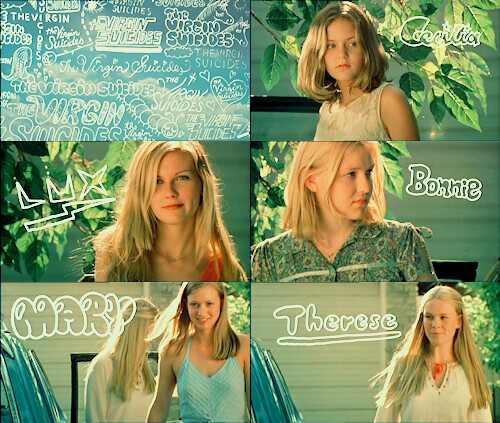
The stroy begins, it starts off with a narrator (Giovanni Ribisi) talking about how his old neighborhood back in the mid-1970s was never the same without the Lisbon girls. The narrator talks about how he and a few of his friends that included his friends Tim Weiner (Jonathan Tucker) and Chase Buell (Anthony Desimone) are transfixed by the beauty and mystique of the five Lisbon girls. There was the youngest, 13-year old Cecilia (Hanna R. Hall), 14-year old Lux (Kirsten Dunst), 15-year old Bonnie (Chelse Swain), 16-year old Mary (A.J. Cook) and the eldest, 17-year old Therese (Leslie Hayman) that all lived in a quiet, idyllic home with their strict mother (Kathleen Turner) and math teacher father (James Woods). To everyone, life seems fine for the Lisbons but Cecilia was rushed into the hospital after a horrifying suicide attempt.

After some counseling from Dr. Horniker (Danny Devito), the Lisbons reluctantly try to give the Lisbon girls a social life as they try to question about why she tried to commit suicide at 13. The neighbors think she was influenced by a young Italian immigrant who had a crush on an older woman, while the neighborhood boys talk to a young mob son named Paul Baldino (Robert Schwartzman) who saw Cecilia's suicide attempt through the tunnels of his house.

The Lisbons decides to throw a party for the girls with a lot of reluctance from Mrs. Lisbon, as Cecilia is feeling unhappy about the party while all the neighborhood boys attend and talk with the Lisbon girls. Things go fine until a mentally challenged kid named Joe (Paul Sybersma) comes to the party to bring laughs but Cecilia walks away from the party and something horrible happens.  Cecilia's death brought an awareness of suicide around the town and Mrs. Lisbon seeks the advice of priest, Father Moody (Scott Glenn) as the Lisbons try to move on life without Cecilia. The Lisbon girls would go to school as nothing really happened while their father moves on teaching math to students. There the second part of the film begins with a young, good-looking student named Trip Fontaine (Josh Hartnett) who seems to have everything his way as he loved by all the girls in school and seems to get away with everything including smoking marijuana. One day while sneaking into the wrong classroom, he falls for Lux who at first isn't really interested in him.

He seeks the advice of his father as he finally gets a chance to impress Lux by calling her a Stone Fox and is invited to family dinner where there after, Lux kisses him and he is in heaven. With the prom approaching, Trip asks Mr. Lisbon if he and a few of his friends could take his daughters to the school dance and Mr. Lisbon says yes since he thinks Trip is a nice boy. With the girls already happy and buying prom dresses, Trip gets a few of his buddies (one of them is Hayden Christensen) as they accompany the girls to the prom but Lux is way into Trip's stoner activities of booze and dope.  Upon their arrival for the prom, Lux and Trip won the King and Queen of the school dance but things go wrong after an intimate encounter where Trip ditches Lux at the school football field leaving her late past curfew and costing her sister's chance of freedom. Trip meanwhile, never recovered from what he did to Lux as the older Trip is filled with many regrets

Following Lux's failure to make curfew, the girls are banned from school with Lux forced to burn her own record collection.  In reaction to her isolation, Lux makes out with various strangers on her roof as seen by the boys as it was only short-lived.  With the girls not back at school, Mr. Lisbon is fired as the neighborhood boys try to make contact through playing records through the phone.  What happens later would become an event that the boys would be haunted by for the rest of their lives.

What makes The Virgin Suicides a very complex, breathtaking film is how Sofia Coppola takes the audience back in time to the childlike innocence of the 1970s away from Vietnam and Nixon. With cinematographer Edward Lachman, the authentic look of 70s suburbia is filled with majestic colors while on some scenes, there's colors of orange, blue, and dreary earth colors to encompass the mood of its characters and scenes.

Coppola's script adaptation is also strong with its many innocent and dark moments without being melodramatic or making things predictable. The film's ending, as ambiguous as it was delve into the loss of innocence through the teenage boys as they deal with what had happen. The film in many ways delve into the themes that Coppola has explored in her other films which is the theme of alienation and disconnection. Particularly the latter as the Lisbon girls yearn to connect with the boys as they become more detached from reality. It's not to say that it's the fault of the Libson parents entirely. They just don't understand the way things are during the 1970s. Mr. Libson is an aloof sort of man with Mrs. Lisbon being the disciplinarian. Coppola's portrayal of the characters is quite unique, even as it's told through the perspective of one of the neighborhood boys. When it comes to the story of Trip, it's told through an older, burned-out Trip (Michael Pare) as Coppola takes Eugenides' novel into a dreamy yet entrancing story of loss and regret.

Helping Coppola and Lachman capturing that vision is production designer Jasna Stefanovic and costume designer Nancy Steiner, who bring in a nice detail to the look of the 70s while using parts of Los Angeles and Toronto to capture the nice location setting of the film. With longtime Coppola associate Richard Beggs bringing in fine sound design work for the film's haunting quality, the film is nicely paced and stylized by editors James Lyon and Melissa Kent. Another great factor to the film is its use of music ranging from such 70s classic from acts like 10CC, Heart, Todd Rundgren, Styx, the Hollies, and the Bee Gees, to the haunting, electronic film score from the French electronic duo Air.

In the performance front, the best performance easily goes to Kirsten Dunst who stands out above all as the precocious, sexy Lux who is filled with mystique about her character as she plays the sex kitten. Dunst as Lux, remains her best film role to date as she has since had become a prominent star with big roles in Bring It On and the Spider-Man while taking on great roles in smaller films like Peter Bogdanovich's The Cat's Meow and as Marie Antoinette in Sofia Coppola's 2006 bio-pic.. Josh Hartnett even stands out as the hunky stoner Trip Fontaine as he brings a sheer cool to his character that makes him a heartthrob for all women while his ability as a serious actor, is still in question. The roles of the Lisbon sisters including Hannah R. Hall as the doomed Cecilia stands out in a few film moments while the neighborhood boys that included Jonathan Tucker is filled with excellent performances along with Coppola's cousin Robert Schwartzman as Paul Baldino.

The performances of veterans like James Woods and Kathleen Turner are flawless and masterful as the strict but caring Lisbon parents. Especially Woods, who plays a different sort of character as a father and teacher who tries to show kids something but they easily become uninterested and he's still talking. The small roles of Danny Devito, Michael Pare, and Scott Glenn are very memorable, especially Glenn who plays against type from his usual, villain type of roles to play a man of guidance. Giovanni Ribisi as the narrator is another standout since he help makes the film come all together with his inspiring narration.


***Additional DVD Content Written from 8/30/18-9/8/18***

The 2000 Region 1 DVD from Paramount Classics and Zoetrope presented the film in a 16:9 widescreen aspect ratio with 5.1 Surround Sound in English and French along with hard for hearing subtitles in English. The special features from the 2000 DVD include the film’s theatrical trailer as well as a photo gallery of photos from the film’s production. One major special feature is a music video for Air’s Playground Love directed by Roman and Sofia Coppola that recreates a few scenes of the film that involves a chewing gum that comes to live to sing the song. The video is a creative moment that include cameos from Roman and Sofia as they’re about to shoot the film’s prom scene that includes the chewing gum singing.

Another special feature from the 2000 DVD is a making-of documentary from Sofia’s mother Eleanor who was famous for shooting footage for the making of Apocalypse Now by her husband Francis Ford Coppola that would later be used in the documentary Hearts of Darkness: A Filmmaker’s Apocalypse. The 20-minute documentary feature Coppola directing the film with her parents watching as Francis is one of the film’s executive producers while her older brother Roman does the film’s second unit work. Jeffrey Eugenides would make an appearance chatting with Josh Hartnett about the character of Trip while James Woods is first seen in the documentary’s opening scenes praising the crew on the production which he says is one of his most enjoyable experiences. It’s a fun documentary short that has a mother filming her daughter making her first feature-length film.

The 2018 Region 1/Region DVD/Blu-Ray from the Criterion Collection presents the film in a new 4k digital restoration supervised by cinematographer Edward Lachman and with the approval of its screenwriter/director Sofia Coppola in its original 1:66:1 aspect ratio with a 5.1 Surround Sound (uncompressed DTS-HD Master Audio Soundtrack for the Blu-Ray) mix. Among the special features retained from the 2000 DVD release from Paramount are the film’s trailer, the making-of documentary film by Eleanor Coppola, and the music video for Air’s Playground Love. Among the new special features added for the DVD/Blu-Ray release include Coppola’s 1998 short film Lick the Star in a new remastered transfer approved by Coppola.

The 15-minute interview with novelist Jeffrey Eugenides has him talk about the novel as well as the film where he reveals not just how faithful Coppola was with the book but also in providing her own interpretation that was more driven by women since the book was told mainly from the point of view of four teenage boys. Eugenides talks about what inspired him to write the book as well as how he was surprised that the many of his readers were young teenage females and young women as he knew that its popularity would lead to many studios wanting to adapt his book into a film. Yet, he felt that Coppola was the one who really got it as well as he was on set for a few days where Josh Hartnett came to him for ideas on the character of Trip Fontaine. It’s an interview that has Eugenides not only rave about the film but also Coppola as he believed that she has a voice of her own through the films she would make in the years to come.

The 26-minute interview section with screenwriter/director Sofia Coppola, cinematographer Edward Lachman, Kirsten Dunst, and Josh Hartnett entitled Revisiting “The Virgin Suicides” has the four talk about their experience in making the film as well as their take on the story. Coppola revealed that she discovered Eugenides’ book in the early 1990s at a time when she was trying to figure out what to do in art and learned that the book would be made into a film by another filmmaker. Coppola was afraid what that film would be like as she received advice from her father into adapting a few chapters of the book into a script where she eventually adapted the entire novel and would submit to producers of the adaptation that was in development that had fallen apart because of issues with the original director. Coppola also talked a little bit about her first short film Lick the Star which she did as a test to see if she can make a film as it gave her ideas of what she would do with her first feature-length film.

Dunst and Hartnett both talked about their own experience as Dunst (who was 16 during production) and Hartnett (who was to turn 20 during the production) also talked about Coppola’s direction and how their idea of acting changed by doing this film. Dunst in particular as she had done a lot of big budget and Hollywood films prior as she felt she became a different actress after this film. Lachman talks about working with Coppola, who was new to filmmaking, as the two both had similar ideas of what the film should look like where he also talked about the lighting cues that he wanted to create. Coppola also talked about the first-time experience as she admitted that she didn’t think she would find her calling as a filmmaker but credits Eugenides’ book for giving her the idea of becoming one.

The 13-minute video essay piece Strange Magic by Tavi Gevinson has the film writer/blogger talk about the film as well as her own experiences with both the book and film during her days as a teenager. Gevinson says the film would inspire her to start a fanzine and later her own blog in Rookie that would become an online magazine that focused on pop culture, fashion, and feminism. Gevinson would reveal things she wrote about the film as well as why she felt the film had connected with a lot of teenage girls since its release as well as some of the details on the film’s visuals. Gevinson also talks about a lot of the film’s idea of teenage life which she felt had a lot of relevance to her own experiences as it is a fascinating piece from Gevinson who definitely has a lot of interesting to say about the film.

The DVD/Blu-Ray set also includes a booklet that features an essay by novelist Megan Abbot entitled They Hadn’t Heard Us Calling about the film. Abbot talks about some of the film’s themes as well as how the film would relate itself to the other films Coppola would later do in the years to come. Abbot also talked about the differences between the book and film as well as how Coppola would create this air of distance of the neighborhood boys and the Lisbon girls with the latter desperate wanting to connect in their repressive home. It’s a remarkable essay to one of the finest debut films ever made in the 20th Century.

***End of DVD Tidbits***

The Virgin Suicides is a phenomenal film from Sofia Coppola, who redeems herself for the notoriety she had achieved for her much-criticized performance in The Godfather Part III. Coppola's striking visuals along with eerie storytelling brings strength to the film along with the performances of Dunst, Hartnett, Turner, and Woods. Fans of Coppola will doubt see this as one of her finest as it is a fascinating feature-film debut by a new director. Even as it's a worthy introduction to her work as this film would set the pace of what would come from the already prestigious director. In the end, The Virgin Suicides is a tremendous debut film by Sofia Coppola.


Sofia Coppola Soundtracks: Air-The Virgin Suicides - The Virgin Suicides OST - Lost in Translation OST - Marie Antoinette OST - (The Bling Ring OST) - (Priscilla OST)


© thevoid99 2010

Monday, August 23, 2010

Sofia Coppola: The Videos & Ads 1993-2008


While many renowned film directors like David Fincher started out their careers directing music videos. It’s a place where filmmakers get their training. Some like Fincher, Spike Jonze, and Michel Gondry have gone on to having great film careers while occasionally do music videos. Other video directors end up making terrible films as they retreated back to the world of music videos. While Sofia Coppola doesn’t really fall into either camp, she has started out her filmmaking career with videos. By 2008, she’s directed five videos and two ads that has helped raise her profile as a prominent director.

While Coppola had appeared in a few music videos including The Black Crowes’ Sometimes Salvation, Madonna’s Deeper and Deeper, and Sonic Youth’s Mildred Pierce in the early 90s. Coppola’s first directorial job came in the form of a music video for the early 90s indie group Walt Mink that featured famed drummer Joey Waronker. The song Shine was shot by Coppola’s then-boyfriend at the time in Spike Jonze, who was then a famed video director in his own right. Shot on location at the Coppola home including family vineyard, the video has a dreamy quality with editing dissolves. While the video has a somewhat grainy look as if it was shot in 16mm, it’s a video that predates what Coppola would do as a director in terms of capturing dreamy images. Even as it’s presented simply where the band is playing at a pool party with friends and such.


Coppola’s next music video directorial job came in the form of one of the most revered bands of the past two decades in The Flaming Lips. For the clip of the song This Here Giraffe, the video has a cleaner look in which Coppola follows singer Wayne Coyne around as he plays in a girl’s bedroom while joining the rest of the band to a trip to the zoo. The video features Leslie Hayman, an associate of Coppola who would later appear in the 1999 film The Virgin Suicides as the eldest Lisbon sister Therese, along with shots of the band playing on someone’s front yard and a giraffe at the zoo. The video also has shots from moving cars as well as dreamy close-ups that become trademarks of Coppola’s directing style.


The next two videos Coppola directed both come from the films she made. The first is Air’s Playground Love which she co-directed with her brother and famed video director Roman Coppola. The video is essentially clips of The Virgin Suicides that’s inter-cut with a piece of gum singing the song through various scenes like the Libson family eating a dinner table, being on the steering wheel of Trip Fontaine’s car, and being under Trip‘s desk. Then it goes to a sequence where Leslie Hayman gets the gum out of her shoe as they’re set to shoot the prom dance scene. It’s definitely a fun, quirky video where a piece of gum becomes the centerpiece of the video.


The second film-related video clip Coppola directs is for Kevin Shields’ City Girl for the film Lost in Translation. While the video is essentially various shots from the film plus a few extended shots and an outtake towards the end of the video. Yet, it plays well to Kevin Shields’ lyrics of isolation relating towards the character of Charlotte as she wanders around the mystery of Tokyo. Though it’s not as creative as other videos that Coppola had done in the past, it’s still a fascinating companion piece to the film itself.


The last music video she directed, so far, is a cover of the Burt Bacharach-Hal David composition I Just Don’t Know What To Do With Myself by the White Stripes. The video for that song has Coppola shooting model Kate Moss in black and white doing a pole dance as well as dancing on a big block. With Moss wearing skimpy clothing and dancing quite erotically, the video was only released in the U.K. Though it rarely showed on MTV2 back in 2003, it was considered too racy for American audiences as it is truly Sofia Coppola’s crowning achievement in her short but varied career in the world of music videos.


With most film directors also taking the chance to do commercials, Sofia Coppola also takes part in the world of ads. In 2008, Coppola directed ads for Christian Dior’s Miss Dior Cherie fragrance that starred model Maryna Linchuk. Unlike most commercials, Coppola adds a playful style by having Linchuk going around Paris while modeling and doing other things as it ends with her floating away on balloons like The Red Balloon. The look of the video is reminiscent of Coppola's 2006 Marie Antoinette yet not as exaggerated as the film intended to do.  Featuring the song Moi Je Joue by Brigitte Bardot, it’s a fun commercial while two director’s cut version have extended sequences of Linchuk walking around Paris. It’s definitely an interesting yet fun commercial that is done with great style.


While there’s another Dior ad in the works that Coppola directed that will star Natalie Portman. Coppola’s work in videos and ads is certainly a fine companion piece to the feature films she’s made over the years. Yet, it’s also a testament to how she’s evolved and refine her craft that makes her one of the most exciting and intriguing visionaries in film. For anyone who is a fan of her work should check out these clips.


Sofia Coppola Soundtracks: Air-The Virgin Suicides - The Virgin Suicides OST - Lost in Translation OST - Marie Antoinette OST - (The Bling Ring OST) - (Priscilla OST)


© thevoid99 2010