Set in a small rural town called Centerville, the film revolves around a mysterious zombie invasion caused by polar fracking that has altered the rotation of the Earth’s axis. It is a film with a simple premise as it relates to locals and local law enforcement dealing with a zombie invasion with some unique commentary observed by a local recluse in Hermit Bob (Tom Waits) who would narrate as he walks around the woods seeing what is happening. Jim Jarmusch’s script has a unique narrative as it play into multiple characters including locals, the law enforcement, a Scottish undertaker who carries a samurai sword, traveling hipsters, a trio of juvenile delinquents, and a MAGA farmer. Notably in their reaction to the news about the Earth’s axis being off its rotation which explains watches and smartphones not working as well as day and night being off with the dead rising from the grave on the latter. The script also play with the dialogue as well as certain phrases that would become gags.
Jarmusch’s direction is also offbeat as it is set in a small town that is shot on various locations in small towns in upstate New York. While Jarmusch would include wide and medium shots of the locations that include the mountains near these small towns. Much of his direction is intimate in the usage of medium shots and close-ups as it opens with Chief Cliff Robertson (Bill Murray) and Officer Ronnie Peterson (Adam Driver) trying to talk to Hermit Bob over claims that he stole some chickens from the local MAGA farmer Frank Miller (Steve Buscemi). The film then goes into offbeat elements with Chief Robertson and Officer Peterson noticing that it is 8 PM and it is still daylight with their watches and phones not working. Jarmusch’s approach to horror is more comical as the first two zombies who would appear during nighttime with the moon glowing would create havoc all because they want coffee. It would then lead to other mysterious events where Chief Robertson, Officer Peterson, and Officer Mindy Morrison (Chloe Sevigny) try to comprehend what happened with Officer Peterson realizing it is a zombie invasion.
Jarmusch would also create moments that are suspenseful yet also play into humor with characters realizing some of the zombies they killed as well as things with which they could not deal. A trio of juvenile delinquents in Stella (Maya Delmont), Olivia (Taliyah Whitaker), and Geronimo (Jahi Di’Allo Winston) are easily the smartest characters in the film as they figured out how all of this happened while dealing with their adult supervisors treating them like idiots. Jarmusch also play into the idea of consumerism in what these zombies want in the words they say as Jarmusch also puts in some satire as it relates to conspiracy theories and fake news with a news reporter in Posie Juarez (Rosie Perez) providing the news on nearby locations. The sense of surrealism and odd things would occur that includes the presence of the new local undertaker in Zelda Winston (Tilda Swinton) who is an oddball that practices Buddhism, carries a samurai sword, and speaks in a Scottish accent. Even as she participates in a climax that also strays from convention in a film where moments of the fourth wall is broken. Overall, Jarmusch crafts a quirky and humorous film about a group of locals dealing with a zombie invasion.
Cinematographer Frederick Elmes does brilliant work with the film’s cinematography with its emphasis on low-key lighting and shadows for the exterior scenes at night including shots at the cemetery as well as colorful lighting for some of the interior scenes. Editor Affonso Goncalves does excellent work with the editing with a few elements of jump-cuts, slow-motion shots, and other stylish cuts to play into the film’s humor. Production designer Alex DiGerlando, with set decorator Kendall Anderson and art director Julia Heymans, does fantastic work with the look of the diner where some of the characters socialize as well as the police base where some of the action happens. Costume designer Catherine George does nice work with the costumes as they are straightforward, including a few stylish bits in the clothes that the zombies wear.
Special makeup effects designer Michael Marino does amazing work with the look of the zombies as they all have a different look to play into their own wants as it also has elements of quirkiness in how they move. Special effects supervisors Michael Fontaine and Johann Kunz, along with visual effects supervisor Alex Hansson, do terrific work with the visual effects as it relates to the moon as well as scenes involving the zombie and a major moment in the film’s climax. Sound designer Robert Hein does superb work with the sound in how music sounds from a car as well as sound effects that play into the zombie apocalypse. The film’s music by SQURL and Carter Logan is wonderful for its low-key electronic score with contributions by Jim Jarmusch that play into the film’s suspense and humor while the music soundtrack features an original song by Sturgill Simpson that is played throughout the film.
The casting by Ellen Lewis is marvelous as it feature some notable small roles from Sturgill Simpson as a guitar-carrying zombie, Charlotte Kemp Muhl as a fashion zombie, Jodie Markell as a woman on TV talking about her missing cat, Eszter Balint as the diner waitress Fern, Rosal Colon as a janitor working at the diner, RZA as delivery worker who is friends with the gas station/toy shop owner Bobby that has some unique views on the world, Carol Kane as a dead town drunk who comes alive as a zombie who wants chardonnay, and the duo of Iggy Pop and Sara Driver as two zombies that wants coffee. Larry Fessenden is terrific as a motel owner in Danny Perkins who is becoming upset over his cats disappearing while Rosie Perez is superb as the local news reporter Posie Juarez who reports all the mysterious events on the news. The trio of Maya Delmont, Taliyah Whitaker, and Jahi Di’Allo Winston are fantastic in their respective roles as the juvenile delinquents Stella, Olivia, and Geronimo.
The trio of Austin Butler, Lukas Sabbat, and Selena Gomez are excellent in their respective as a trio of hipster travelers in Jack, Zack, and Zoe with Gomez being the standout as a young woman with a love for Sturgill Simpson. Caleb Landry Jones, Danny Glover, and Steve Buscemi are brilliant in their respective roles as town locals in the gas station/toy store owner Bobby, the hardware store owner Hank Thompson, and the MAGA farmer Frank Miller as locals who deal with the zombie invasion with Buscemi being ignorant about what is happening. Tom Waits is amazing as the local recluse Hermit Bob who is the observer in the film as he realizes something is going wrong as he does everything he can to be away from the chaos. Tilda Swinton is incredible as the local undertaker Zelda Winston who is an odd newcomer to the town in what she wears as well as practicing Buddhism and carries a samurai sword as Swinton brings a lot of fun to her character.
Finally, there is the trio of Bill Murray, Adam Driver, and Chloe Sevigny in remarkable performances as the local law enforcement in Chief Cliff Robertson, Officer Ronnie Peterson, and Officer Mindy Morrison. Sevigny provides that sense of fear of a woman who is unprepared for zombies while becomes emotional over the fact that she must kill people she knew. Driver’s performance is low-key in his humor as he is someone who drives a small smart-car while also comments on everything that is happening where he breaks the fourth wall at times. Murray’s performance is subdued as a police chief who is taken aback at what he is facing as he was hoping to retire as he later copes with the severity of the situation he is in.
The Dead Don’t Die is a marvelous film by Jim Jarmusch. Featuring a great ensemble cast, an offbeat and witty take on the zombie movie genre, colorful visuals, and an eerie yet odd music soundtrack. It is a film that plays with the tropes of the zombie film genre while also being subversive in its approach to the genre. In the end, The Dead Don’t Die is a remarkable film by Jim Jarmusch.
Jim Jarmusch Films: Permanent Vacation - Stranger Than Paradise - Down by Law - Mystery Train - Night on Earth - Dead Man - Year of the Horse - Ghost Dog: The Way of the Samurai - Coffee and Cigarettes - Broken Flowers - The Limits of Control - Only Lovers Left Alive - Gimmie Danger - Paterson - (Father Mother Sister Brother) - The Auteurs #27: Jim Jarmusch
© thevoid99 2025
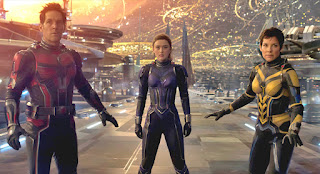
The film revolves around titular heroes and a few of their family members who create a device to make contact with the Quantum Realm only to be sucked in as they deal with not just a growing rebellion but also this evil figure known as Kang the Conqueror. It is a film that has a lot happening as it plays into a family not only dealing with this evil figure but also what he plans to do with the multiverse. Jeff Loveness’ script does do enough to establish some of the characters as well as insight into what Janet Van Dyne (Michelle Pfeiffer) had been doing in the Quantum Realm for 30 years. It unfortunately gets bogged down by not just a lot of exposition but not enough urgency into the stakes over how dangerous Kang the Conqueror is where Janet would unveil her own fears towards Kang. A key sequence during the film’s second act about Janet’s first encounter with Kang does play into why Janet never told her husband Hank and their daughter Hope/the Wasp (Evangeline Lilly) about her time in the Quantum Realm. Yet, it features a lot of exposition into Kang’s true motivations but also something much bigger though it ends up being clunky while there’s not enough weight into this rebellion towards Kang and his empire.
Still, the script does focus on Scott Lang/Ant-Man (Paul Rudd) who hasn’t done much since the Battle of Earth as he’s written a memoir and sort of became a celebrity but hasn’t done enough to bring attention to his daughter Cassie (Kathryn Newton) who has become an activist. Yet, it is an invention she had developed during the Blip with Hank’s help that would suck everyone into the Quantum Realm where she and Scott would meet these people in the Quantum Realm who are rebellion against Kang where Cassie wants to help them. The script unfortunately doesn’t do enough to establish these people living in the Quantum Realm where Lang and Cassie not only deal with Kang but also a mysterious being known as M.O.D.O.K. who is someone that Scott and Cassie knew. There is also a lack of humor throughout the film as some key characters from past films doesn’t appear in the film but are barely mentioned as the few moments in the attempt of humor is uninspired and forced at times. Notably a scene where Lang tries to retrieve an object for Kang where he meets multiple versions of himself that is suspenseful but its attempt to be funny doesn’t work.
Peyton Reed’s direction does have some incredible moments in terms of the visuals and world-building though he is bogged down by its clunky script. Shot largely at Pinewood Studios in Buckinghamshire in Britain with additional shots set in San Francisco and parts of Turkey, Reed opens the film with Janet’s time in the Quantum Realm and how she first met Kang which then cuts to what has Lang done since the events of the Battle of Earth. While a lot of Reed’s compositions are grand in the way he presents the Quantum Realm with its wide and medium shots, Reed does maintain some intimacy in the close-ups to play into the character interactions as well as their reactions to their surroundings. Reed does manage to infuse energy into the action scenes along with some moments of suspense as it relates to Kang in his initial meeting with Lang. Yet, the need to try and infuse humor in some of these moments don’t work as it gives the film an inconsistent presentation where it wanted to be all of these things only to not find balance in blending all of these genres.
Reed’s direction does suffer from not just the exposition that does drag the film in bits of the film as there isn’t enough weight into the stakes of what Kang wants and how he used Cassie to force Lang to retrieve this energy source that he needed for his own personal mission. While Reed does provide enough back story into Kang but also revealed how he came to meet Janet, the fact that there isn’t enough urgency into defeating him other than Janet’s own warnings doesn’t give the film that intensity that it needed. Though its third act with its grand set pieces allow Reed to go all out where there are a few funny moments but also some intense ones. Its aftermath is clunky where Reed isn’t sure how to end things since Kang is a much bigger threat than everyone realizes while there’s also this sense of confusion into whether the good guys have won or they just created something worse. Overall, Reed crafts a wondrous but undercooked film about a two superheroes and their families dealing with a new threat in the Quantum Realm.
Cinematographer William Pope does brilliant work with the film’s cinematography with its approach to stylish lighting for many of the exterior scenes set in the Quantum Realm as well as its approach to natural lighting for the scenes on Earth. Editors Adam Gerstel and Laura Jennings do terrific work with the editing as it does play into some fast-cutting for some of the action scenes but also in some stylish moments when the characters are sucked into the Quantum Realm. Production designer Will Htay, with set decorator Richard Roberts and supervising art director Nick Gottschalk, does amazing work with the look of some of the places the characters go into at the Quantum Realm as well as Kang’s home base. Costume designer Sammy Sheldon does fantastic work with the costumes from some of the clothes that the Van Dyne/Pym clan would wear in disguise as well as the super-suits that Lang, Hope, and Cassie would wear.
Hair/makeup designer Jan Sewell does nice work with the look of the characters such as Janet’s hair during her time in the Quantum Realm and her white-hair look following her return from the Quantum Realm. Special effects supervisors Paul Corbould and Noah Meddings, along with visual effects supervisors Axel Bonami, Cristian Camaroschi, Jeff Campbell, Alex Cancado, Jesse James Chisholm, Russell Earl, Roy Malhi, John Mangia, and Malte Sarnes, do excellent work with the look of not just some of the creatures and people in the Quantum Realm but also the look of it as it is a major highlight of the film. Sound designer Kimberly Patrick does superb work with the sound design in not just creating sound effects in some of the weapons, vehicles, and creatures at the Quantum Realm but also in the way natural sound would be presented in the Quantum Realm. The film’s music by Christophe Beck does wonderful work with the music as its usage of orchestral bombast help play into the action and suspense that include some soaring themes that relates to Kang while music supervisor Dave Jordan provides a low-key soundtrack as it features John Sebastian’s theme song to the 1970s show Welcome Back Kotter.
The casting by Sarah Halley Finn is incredible as it feature some notable small roles and appearances from Randall Park in a cameo as FBI Agent Woo, Gregg Turkington as Lang’s old boss at Baskin-Robbins, and Ruben Rabasa as a coffee shop attendant who mistakes Lang for Spider-Man. William Harper Jackson and Katy O’Brien are terrific in their respective roles as Quantum Realm freedom fires in the telekinetic Quaz and the warrior Jentorra who both meet the Langs while doing what they can to fight Kang’s forces. David Dastmalchian is superb as the slime-like creature Veb who is fascinated by holes while proves to very powerful during the film’s climax. Bill Murray’s performance as a Quantum Realm governor in Lord Krylar is pretty much a waste as he is an old friend of Janet that works for Kang where he doesn’t really do anything in the one big scene he’s as it is a real waste of Murray. Mark Weinman’s on-set performance as M.O.D.O.K. is quite funny at times though it is the reveal of its identity that provides laugh as a guy who has a grudge towards the Langs yet is also forced to face his own faults.
Kathryn Newton is fantastic as Cassie Lang as Scott’s daughter who has become an activist in her time in her desire to help people have created something she had hoped would’ve gotten her father back years earlier where Newton does provide some humor but also a lot of weight as someone who does feel responsible for her actions and wanting to make up for it as she would become her own superheroine in Stature. Michael Douglas is excellent as Dr. Hank Pym as the scientist who created Pym Particles who doesn’t just deal with the chaos of what is happening but also discovers something that happened around him during the moment he and his family got sucked into the Quantum Realm that would play a key part in the film’s third act. Evangeline Lilly is good as Hope Van Dyne/the Wasp as Lang’s partner who doesn’t just deal with the chaos of the Quantum Realm but also the stakes though Lilly’s character doesn’t really get much to do but react and take action while sporting an awful haircut. Paul Rudd is brilliant as Scott Lang/Ant-Man as this superhero who can shrink himself as the size of an ant who has chosen to not really do anything until he’s in the Quantum Realm where he deals with what is happening as he is trying to protect Cassie but also deal with the evil force that is Kang.
Michelle Pfeiffer is incredible as Janet Van Dyne as Hank’s wife and Hope’s mother who had been in the Quantum Realm for 30 years as she is eager to not return only to get sucked in with her family and the Langs as she is forced to reveal a terrible secret while also being cunning in trying to save her family from this terror that is Kang. Finally, there’s Jonathan Majors in a phenomenal performance as Kang the Conqueror as a man who is eager to destroy everything including variants of himself in the hopes to just conquer and destroy those who oppose him as Majors has this commanding presence that is chilling to watch as he just owns every moment he is in.
Ant-Man and the Wasp: Quantumania is a terrible film from Peyton Reed. While it is a film that does feature some entertaining moments, incredible visuals, and stellar performances with Michelle Pfeiffer and Jonathan Majors being the major standouts. It is a film that unfortunately tries to be a lot of things but doesn’t deliver in terms of its stakes while also lacking a lot of the humor that made its predecessors enjoyable to watch. In the end, Ant-Man and the Wasp: Quantumania is an underwhelming and bloated from Peyton Reed.
Marvel Cinematic Universe: Infinity Saga: Phase One: Iron Man - The Incredible Hulk - Iron Man 2 - Thor - Captain America: The First Avenger - The Avengers
Phase Two: Iron Man 3 - Thor: The Dark World - Captain America: The Winter Soldier - Guardians of the Galaxy - The Avengers: Age of Ultron - Ant-Man
Phase Three: Captain America: Civil War - Doctor Strange - Guardians of the Galaxy Vol. 2 - Spider-Man: Homecoming - Thor: Ragnarok - Black Panther - Avengers: Infinity War - Ant-Man and the Wasp - Captain Marvel - Avengers: Endgame - Spider-Man: Far from Home
Multiverse Saga: Phase Four: Black Widow (2021 film) - Shang-Chi and the Legend of the Ten Rings - Eternals - Spider-Man: No Way Home - Doctor Strange in the Multiverse of Madness - Thor: Love and Thunder - Werewolf by Night - Black Panther: Wakanda Forever - The Guardians of the Galaxy Holiday Special
Phase Five: Guardians of the Galaxy Vol. 3 – The Marvels – (Deadpool & Wolverine) - (Captain America: Brave New World) - (Thunderbolts*)
Phase 6: The Fantastic Four: First Steps - (Avengers: Doomsday) - (Avengers: Secret Wars)
© thevoid99 2023

Set in a small town in Oklahoma, the film follows a single mother and her two teenage kids who have been evicted from their home in Chicago where they inherited the home of that woman’s father whom she never knew where her kids discovered an event that their grandfather was trying to prevent before his passing. It is a film in which a family doesn’t just discover a legacy this man had left behind but also a chance to finish something that he wanted to prevent in order to save the world. The film’s screenplay by Jason Reitman and Gil Kenan opens with an old man driving out of a cave and waiting for a ghost to arrive at his home and then cut to another city where this woman in Callie Spengler (Carrie Coon) has just been evicted from her Chicago apartment as she and her two teenage kids in Trevor (Finn Wolfhard) and Phoebe (Mckenna Grace) travel to Summerville, Oklahoma where they live in the home of Callie’s estranged father Egon whom the town refers to as the Dirt Farmer. The script is largely straightforward in its narrative yet it does a lot in exploring not just Callie’s resentment towards her father whom she felt abandoned her but also her two kids who are just trying to find themselves in this new town.
Phoebe is the most compelling of the Spengler kids as she is someone who loves science and is offbeat as she is the first to discover things in her grandfather’s home as it allowed her to get to know who he is. While Trevor isn’t as developed as his younger sister as he’s just a 15-year old kid trying to get a summer job and win over his co-worker in Lucky Domingo (Celeste O’Connor) at drive-in restaurant they work at. He does manage to discover something in the mountain above the cave as well as fix up a car he found in the garage that was the Ecto-1 car the Ghostbusters used in their exploits in the 1980s. The script also play into what Egon is trying to deal with and stop from preventing as it is clear that it related to events that happened in 1984 as Trevor, Phoebe, Lucky, and Phoebe’s classmate Podcast (Logan Kim) try to stop it while Callie is in a subplot where she finds herself fascinated by Phoebe’s science teacher Gary Grooberson (Paul Rudd) who is a fan of the Ghostbusters as he is suspicious about the earthquakes that is happening in Summerville leading to some big revelations over what everyone has to face.
Reitman’s direction is sprawling in terms of its setting as it is shot on location in areas around Calgary, Alberta in Canada along with a few bits in New York City as it play into a world as if nothing serious is happening though it opens with a chase in which Egon Spengler (Bob Gunton and Ivan Reitman) are awaiting for something to happen only to later be attacked and die of a heart attack. While there are some unique wide shots of the locations that Reitman uses in the film including the scale of Spengler’s farm what he has hidden under his crops. Reitman does maintain an intimacy as well as some style in the medium shots and close-ups that does include moments where Phoebe discovers things about her grandfather as including the ghost trap and the proton pack that her grandfather was updating. There are moments that are funny that involve Phoebe, Podcast, and Gary Grooberson trying to open a ghost trap as well as Grooberson geeking out over the proton pack that Phoebe was using during a chase with Trevor and Podcast.
Reitman definitely creates some callbacks to the previous films that his father helmed but also what happened to the Ghostbusters after the events from the second film and why Spengler went crazy though what Phoebe, Trevor, and eventually Callie discover is that there’s something bigger that is emerging with their old enemy Gozer (Olivia Wilde and Emma Portner, with the voice of Shohreh Aghdashloo) whose arrival in New York City back in 1984 was small compared to what she wanted to do in Summerville. The film’s climax is definitely grand as it doesn’t just have callbacks from the events of 1984 but with much bigger stakes as well as twelve-year-old girl who proves that she too can go against an evil spirit through just sheer will and brains. Especially as the film does serve as a fitting tribute to one of its creators as the film is sort about legacy but also what a parent does for their children. Overall, Reitman crafts a thrilling and enjoyable film about a single mother and her teenage kids finishing up a man’s quest to stop ghosts from creating havoc around the world.
Cinematographer Eric Steelberg does brilliant work with the film’s cinematography in the way many of the daytime locations look in its natural setting along with some elaborating lighting for some of the interior/exterior scenes at night. Editors Dana Glauberman and Nathan Orloff do excellent work with the editing with its stylish approach to fast-cutting for some of the action scenes but also knowing when to slow down in order to have shots linger for a bit including some of the funnier moments in the film. Production designer Francois Audouy and supervising set decorator Peter Lando do amazing work with the look of the Spengler farm with some of its rooms including a secret basement as well as the look of the old Ecto-1 car that is in ruins as well as the look of the Shandor cave in its interiors. Costume designer Danny Glicker does fantastic work with the costumes as it is largely casual including the Ghostbuster jumpsuits. Special makeup and live action creature effects designer Arjen Tuiten, as well as Muncher designer Brynn Metheney, does incredible work with the look of Gozer and some of the creatures as well as the Slimer-like creature known as Muncher who can eat metal.
Special effects supervisors Michael Gibney and Elia P. Popov, with visual effects supervisors Michael “Tiny” Alcorn, Sheena Dugal, Alessandro Ongaro, Shirkanth Patil, and Raul Perez, do terrific work with the visual effects in not just using practical effects for some of the design of the monsters and props but also digital effects in the look of the ghosts and a few other bits. Sound editors Will Files and Perry Robertson, along with sound designers Scott Sanders and Chris Terhune, do superb work with the sound as it has some unique sound effects as well as the sound of the Ecto-1 siren and the way the proton pack sounds when it’s on as it help add to the film’s tone. The film’s music by Rob Simonsen is wonderful for its exhilarating orchestral score that has elements of humor and adventure along with somber strings for some of the dramatic moments. The film’s music soundtrack not only features some motifs from the two previous films that was scored by Elmer Bernstein but also music from the Buzzcocks, Funkadelic, Shirley Ellis, the Shirelles, Otis Rush, Willie Nelson, the Delmore Brothers, the Newday, Kelly’s Lot, an original song by Mckenna Grace, and the iconic theme song from the 1984 film by Ray Parker Jr.
The casting by John Papsidera and Ali Safdari is marvelous as it feature some notable small roles and appearances from Tracy Letts as a warehouse store owner, Josh Gad as the voice of Muncher, the trio of Ira Heden, Sarah Natochenny, and Shelby Young as the voices of the mini-Stay Puft marshmallow men, Stella Aykroyd as deputy Medjuck, Bokeem Woodbine as Lucky’s father in Sheriff Domingo, and as the body doubles for Egon Spengler via shadows in Bob Gunton for the opening scene and Ivan Reitman as a stand-in for the ghost version of Spengler with digital effects utilizing the face of the late Harold Ramis. For the role of Gozer, Olivia Wilde brings an un-credited cameo as the physical version of the character with Emma Portner as the spiritual version of Gozer with Shohreh Aghdashloo providing the voice of Gozer as they do terrific work in that character. J.K. Simmons is superb in his cameo as Ivor Shandor as the man who created a temple for Gozer as he is seen as a sleeping body who only wakes up for Gozer.
From the previous films who makes special appearances, the performances of Dan Aykroyd as Ray Stantz, Bill Murray as Peter Venkman, Ernie Hudson as Winston Zeddemore, Annie Potts as Janine Melnitz, and Sigourney Weaver as Dana Barrett are an absolute joy to watch in not just being fan service but also playing a key role to the story with exception of Weaver whose cameo appears in a comical post-credit scene that is a call-back to Venkman’s exploits as a professor with Weaver being the one in control. Still, Aykroyd, Murray, Hudson, and Potts do help bring important moments that are inspirational to the younger cast but also set the seeds for a possible future. Paul Rudd is fantastic as Gary Grooberson as a science teacher who teaches at summer school who is also a geek for the Ghostbusters while is also someone who notices how smart Phoebe is where he would have an unfortunate encounter with a ghost. Celeste O’Connor is excellent as Lucky Domingo as a 16/17-year old girl who works at a restaurant as she befriends Trevor while also helps them in dealing with ghosts as she proves to be tough and resourceful.
Logan Kim is brilliant as Podcast as Phoebe’s new classmate who is fascinated by the paranormal and other strange things as he has a podcast of his own while also taking part in many adventures in chasing ghosts. Carrie Coon is amazing as Callie Spengler as the estranged daughter of Egon as she is just dealing with the chaos in her life as well as resentment towards her father where she would discover things about him in why he was never around. Finn Wolfhard is incredible as Trevor Spengler as a 15-year old kid who knows how to fix cars and such as he is trying to figure himself out where he takes part in the fun of catching ghosts as a way to get to know his grandfather while also realizing something bad is happening in Summerville. Finally, there’s Mckenna Grace in a phenomenal performance as Phoebe Spengler as the 12-year old granddaughter of Egon Spengler who is a total nerd that loves science and is always smarter than a lot of people older than her. It is a performance that is filled with humor as she says some bad jokes while also proving she is a lot more powerful and determined to kick some ass as it is a major breakthrough for Grace.
Ghostbusters: Afterlife is a sensational film from Jason Reitman that features great performances from Mckenna Grace, Finn Wolfhard, Logan Kim, Celeste O’Connor, Carrie Coon, and Paul Rudd. Along with its supporting cast including people from the previous films, dazzling visual effects, a compelling story on loss and legacy, an exhilarating music soundtrack, and its sense of adventure. It is a film that isn’t just something fans of the film series from the 1980s would enjoy for its callbacks but it is also a film that offers something new while being a tribute to two of its creators in Harold Ramis and Ivan Reitman. In the end, Ghostbusters: Afterlife is a spectacular film from Jason Reitman.
Jason Reitman Films: Thank You for Smoking - Juno - Up in the Air - Young Adult - Labor Day - (Men, Women, & Children) – Tully (2018 film)
- The Front Runner
Related: (Ghostbusters) – (Ghostbusters II) – Ghostbusters (2016 film) - The Auteurs #30: Jason Reitman
© thevoid99 2022

Set in 1975 in the small town of Ennui, France, the film revolves a French foreign bureau newspaper whose editor had just died prompting its staff of American writers to finish its final issue that consists of three different stories. It is a film that explore the world of this magazine and the stories they tell as it all takes place in this small town in France that include three different stories plus a prologue, a small story about the town from a cycling reporter named Herbsaint Sazerac (Owen Wilson), and an epilogue. Wes Anderson’s screenplay is definitely inspired by the stories and the works of writers from The New Yorker as he play into this world of culture, politics, and adventure through the recollection of these writers. Sazerac’s story is just about the town this magazine is based on as it explore the many changes the town went through though its editor in Arthur Howitzer Jr. (Bill Murray) wonders why Sazerac also talks about some of the seedier aspects of the town as it sets the tone for the entire film.
The first story entitled The Concrete Masterpiece from the writer J.K.L. Berensen (Tilda Swinton) who hosts a lecture about the works of the artist Moses Rosenthaler (Benicio del Toro) and his own views on art including his relationship with his muse/prison guard in Simone (Lea Seydoux). It is a story that explore a man whose art is strange and abstract as a fellow prisoner in the art dealer Julien Cadazio (Adrien Brody) wants to show it to the world including Berensen’s old boss Upshur “Maw” Clampette (Lois Smith) while hoping Rosenthaler would make a grand masterpiece. The second story entitled Revisions to a Manifesto by Lucinda Krementz (Frances McDormand) explore a student protest revolution lead by Zeffirelli (Timothee Chalamet) whom Krementz gets close with yet finds herself having to deal with its complexities as well as vying for Zeffirelli’s affections with another student in Juliette (Lyna Khoudri). The third and final story entitled The Private Dining Room of the Police Commissioner by Roebuck Wright (Jeffrey Wright) was supposed to be about a dinner with Ennui’s police commissioner (Mathieu Almaric), that includes a revered chef/detective in Nescaffier (Stephen Park), where the commissioner’s son Gigi (Winston Ait Hellal) is kidnapped by a criminal syndicate over the arrest of an underworld accountant known as the Abacus (Willem Dafoe).
Anderson’s direction definitely bear a lot of the trademarks that he’s known for in his attention to detail in his framing, dolly-tracking shot camera movements, and other aspects that do play into his visual style. Shot largely on studios and locations in Angoulme in southwestern France, Anderson creates a world that is unique as the town of Ennui is this character where so much had happened as the first story by Sazerac as he’s riding on a bike revealed the town’s evolution as it is filled with these grand compare/contrast of what it looked like back in the first half of the 20th Century and what it would like in 1975. Shot largely on the 1:37:1 aspect ratio with some shots on different widescreen formats as well as some split-screens, Anderson uses the ratio to play into this world that is unique for this small town while much of the presentation is also shot in black-and-white except for much of the scenes at the magazine period and other bits in the three stories.
Anderson also draws upon some of the visual elements of the French New Wave in some of the compositions he creates in the medium and wide shots as he often captures so much detail into a room or in an entire setting. There are also some close-ups that Anderson uses to play into some of the drama and humor throughout the film as there is a lot of detail he brings that include moments of fantasy or reality. One of the stories also involve some comic-style animation supervised by Gwenn Germain in the style of The Adventures of Tintin for a key scene late in the film. The magazine itself that is illustrated by Javi Aznarez definitely owe a lot to the visuals of The New Yorker as it play into this idea of how a magazine can present stories for people to read with these interesting stories. While the narrative is straightforward though it is messy in some parts of the stories that are told as there’s small subplots and such in these stories. Anderson does play into the world of journalism in how they see things while the film is dedicated to many of those writers who did write for The New Yorker which some of the characters are based on. Overall, Anderson crafts a whimsical and exhilarating film about a French magazine run by Americans and the stories they tell in a small French town.
Cinematographer Robert D. Yeoman does incredible work with the film’s cinematography with its stylish usage of black-and-white film stock and its approach to lighting for some scenes as well as some of the colorful and vibrant lighting for the scenes in color including the scenes at night. Editor Andrew Weisblum does excellent work with the editing as its usage of jump-cuts help play into the humor and action as well as straightforward cuts to help play into the drama. Production designer Adam Stockhausen, with set decorator Rene DeAngelo and supervising art director Stephanne Cressend, does phenomenal work with the sets from the home of Zeffirelli and the place he hung out to the prison asylum that Rosenthaler does his work as well as the office at the magazine. Costume designer Milena Canonero does amazing work with the costumes from the look of the journalists as well as the many characters they encounter as it play into a lot of style with so much detail that include the motorcycle helmet that Juliette wears.
Hair/makeup designer Frances Hannon and hair/makeup supervisor Fabienne Robineau do brilliant work with the look of the characters as they each have a distinctive personality as it adds to the film’s whimsical charm. Special effects supervisor Jean-Christophe Magnaud and visual effects supervisor Keith Devlin do terrific work with some of the film’s practical effects in some of the action as well as the design for some set pieces involving miniatures. Sound editor Christopher Scarabosio does superb work with the sound in the sound effects used for some of the objects and such including the sparse atmosphere for some scenes inside a room. The film’s music by Alexandre Desplat is tremendous for its rich and intricate music score filled with unique brass and string arrangements with elements of melodic string pieces and usage of harmoniums as well as piano solos performed by Jean-Yves Thibaudet while music supervisor Randall Poster cultivates a soundtrack that features score pieces by Georges Delerue and Ennio Morricone as well as music from Grace Jones, Charles Aznavour, the Swingle Sisters, Chantal Goya, Gene Austin with Candy and Coco, Gus Viseur, and Jarvis Cocker as a French singer named Tip-Top.
The casting by Douglas Aibel, Antoinette Boulat, and Jina Jay is marvelous as it feature some notable small roles and appearances in the different sections of the film. In the roles of the film’s magazine staff, there’s Anjelica Bette Fellini as a proofreader for the magazine, Wally Wolodarsky as a writer for the magazine who has finished an article, Pablo Pauly as a waiter at a café in the same building as the magazine is at, Griffin Dunne as the magazine’s legal advisor, Fisher Stevens as the magazine story editor, Jason Schwartzman as the magazine cartoonist Hermes Jones, and Elisabeth Moss as the magazine’s copy editor Alumna. From The Concrete Masterpiece, the small performances from Morgane Polanski as a girlfriend of the young Rosenthaler, Felix Moati as the head caterer at the big event, Denis Menochet as a prison guard, Henry Winkler and Bob Balaban in their respective roles as Cadazio’s uncles in Joe and Nick, and Tony Revolori as the young Rosenthaler are a joy to watch.
From Revisions to a Manifesto, the performances of Rupert Friend, Alex Lawther, Toheeb Jimoh, and Tom Hudson as stage actors in a play, Guillaume Gallienne and Cecile de France as Zeffirelli’s parents, Mohamed Belhadjine as a student named Mitch-Mitch, and Christoph Waltz as a family friend of Zeffirelli in Paul Duval are fun to watch with Waltz being the stand-out. From The Private Dining Room of the Police Commissioner, the performances from Mauricette Coudivat as Gigi’s mother, Hippolyte Girardot as the commissioner’s friend who used to work for the police, Saoirse Ronan as a drug-addicted showgirl who befriends Gigi, and Edward Norton as a kidnapper who is also a chauffeur for the underworld. In the roles of the journalists who tell these respective stories, Owen Wilson, Tilda Swinton, Frances McDormand, and Jeffrey Wright are brilliant in their respective roles as Herbsaint Sazerac, J.K.L. Berensen, Lucinda Kremetz, and Roebuck Wright as they’re all based on real writers from The New Yorker with Wilson providing a calm persona to his character while Swinton and McDormand both provide low-key humor to their roles and Wright brings a charisma a gay writer.
Bill Murray is fantastic as the magazine editor-in-chief Arthur Howitzer Jr. who is based on The New Yorker co-founder Harold Ross as a man who doesn’t like anyone crying in his office while is also wondering about all of the things his writers does but is also someone that knows talent. The quartet of Benicio del Toro, Adrien Brody, Lea Seydoux, and Lois Smith are amazing in their respective roles as the artist Moses Rosenthaler, the art dealer Julien Cadazio, the prison guard/muse Simone, and the art collector Upshur “Maw” Clampette with del Toro providing a gruff persona to his role while Brody is this comical man determined to get rich. Seydoux’s performance is definitely the best in the segment as someone who is the embodiment of discipline including the way she poses nude in certain ways as well as being Rosenthaler’s greatest motivator. Smith’s small performance as Clampette is full of humor but also someone who understands great art.
Timothee Chalamet and Lyna Khoudri are excellent in their respective roles as student activists Zeffirelli and Juliette with the former being the leader of a revolutionary who would befriend Kremetz who gives him ideas while the latter is a woman who is suspicious over Kremetz yet has feelings for Zeffirelli. The incredible performances of Liev Schreiber, Mathieu Almaric, Stephen Park, Willem Dafoe and Winston Ait Hellal in their respective roles as the TV talk show host, the police commissioner, the chef Nescaffier, the underworld accountant Abacus, and the commissioner’s son Gigi with Schreiber providing some wit in a role inspired by Dick Cavett while Almaric and Park both provide some humor in their respective roles with Park being the most restrained as a cook who makes great recipes. Dafoe provides humor as this accountant who is aware he’s in deep shit but is also hungry for food while Hellal brings a restraint to a kid who is quite intelligent but also knows Morse code.
The French Dispatch is a marvelous film from Wes Anderson. Featuring a great ensemble cast, dazzling visuals, incredible art direction, and an exhilarating music soundtrack. It is a film that explores the world of journalism as a magazine publishes its final issues that is filled with wonderful stories set in a small town in France. In the end, The French Dispatch is a remarkable film from Wes Anderson.
Wes Anderson Films: Bottle Rocket - Rushmore - The Royal Tenenbaums - The Life Aquatic with Steve Zissou - Hotel Chevalier - The Darjeeling Limited - Fantastic Mr. Fox - Moonrise Kingdom - Castello Cavalcanti - The Grand Budapest Hotel - Isle of Dogs - Asteroid City – The Wonderful Story of Henry Sugar - The Swan - The Rat Catcher - Poison - The Phoenician Scheme - The Auteurs #8: Wes Anderson
Wes Anderson Film Soundtracks: Bottle Rocket - Rushmore - The Royal Tenenbaums - The Life Aquatic with Steve Zissou - Seu Jorge-The Life Aquatic Studio Sessions - The Darjeeling Limited - Fantastic Mr. Fox - (Moonrise Kingdom) – (The Grand Budapest Hotel) – (Isle of Dogs) – (The French Dispatch) - (Asteroid City) - (The Wonderful Story of Henry Sugar)
© thevoid99 2022

The film revolves around a novelist who turns to her playboy father after becoming suspicious about her husband whom she believes is having an affair. It is a film with a simple premise as it plays into a woman not just dealing with the possibility of her husband having an affair but also questioning about the behavior of men where she turns to the worst person to go to in her father. Sofia Coppola’s screenplay is largely straightforward in its narrative yet it really follows the journey that Laura Keane (Rashida Jones) is going through not just as a mother trying to work on another novel but also raising two kids in Maya (Liyanna Muscat) and the toddler Theo (Alexandra and Anna Reimer) while her husband Dean (Marlon Wayans) is an entrepreneur trying to work on deals that would help their lives despite having to travel a lot.
Yet, when Dean returned home late one night and acting confused and Laura would later find a toiletry bag in Dean’s luggage that belonged to his one of his co-workers in Fiona (Jessica Henwick). Laura talks to her father Felix (Bill Murray) who arrives to New York City from Paris to visit as Laura tells him about Dean where Felix believes something is off. Felix has these theories while also has a lot of connections that makes him suspicious about Dean while he would take Laura out to posh places to eat as it also bring in some observations from Laura about why her father was always flirting and going after other women. Coppola’s script has a lot of witty dialogue but also a lot of dramatic suspense as it play into Laura’s own revelations about her marriage as the script also has Coppola maintain some element of repetition which add to the routine that Laura endures at home as she struggling to write and be a parent to two young kids.
Coppola’s direction does have some elements of style in the compositions that she creates that include some of her trademark shots that she is known for. Yet, much of it is straightforward in terms of its overall presentation as it is shot largely on location in New York City with one scene shot outside of the city and the film’s climax in Mexico. The film opens with a brief scene of Dean and Laura’s wedding and a moment where they go skinny-dipping at a pool as it play into a moment of happiness which then cuts to black and then back to Laura in bed sleeping when Dean arrives as he kisses Laura and has this confused look in his face that would also confuse Laura. Coppola’s approach to repetition in the way Laura spends much of her day in making breakfast for the kids, dropping her oldest to school, bringing the youngest home to nap, to try and work on her novel, and then pick up her oldest from school has a charm to the way every-day life is but it also play into Coppola’s recurring theme of disconnection where Laura feels like her marriage is in trouble. The usage of the wide and medium shots do play into that disconnect whether it’s in some of the exterior locations in New York City or in Mexico or at a certain place like a restaurant or a hotel bar.
Coppola also uses close-ups to play into not just this air of confusion and despair but also in moments that play into Laura’s relationship with her father such as a scene where they’re at the actual bar in the Continental hotel in New York City as it play into the way men are where Felix flirts with a women at the bar. The scene where Laura and Felix are trying to chase Dean shows that Felix is not just this ball of fun but also the fact that he really does care despite his offbeat behavior where he can be cynical at times. The third act as it relates to a business trip Dean went to that leads to this moment where Laura asks why Felix cheated on her mom as well as having affairs with other women. It is a scene where Felix does show he’s vulnerable but also about the fallacies of human nature as it is about control which is something Laura is trying to maintain. Overall, Coppola crafts a ravishing and somber film about a woman turning to her playboy father over concerns about the state of her marriage.
Cinematographer Philippe Le Sourd does incredible work with the film’s cinematography with its usage of low-key and vibrant lighting for many of the daytime exterior/interior scenes as well as some low-level lights for some of the interior scenes at night to help set a mood for some of the dramatic moments in the film. Editor Sarah Flack does amazing work with the editing as it does have some stylish usage of jump-cuts and such yet much of it is straightforward in terms of playing into the drama as well as some inventive montages to play into the routine of Laura’s life. Production designer Anne Ross, with set decorator Amy Beth Silver and art director Jennifer Dehghan, does excellent work with the look of the loft that Dean and Laura live in with their children as well as the office that Dean works at and the classroom where Laura is often in a conversation with another parent.
Costume designer Stacey Battat does fantastic work with the costumes from some of the casual clothes that Laura wears including a few stylish clothes she wears along with some of the suits that Felix wears to play into his posh lifestyle. Sound designer Richard Beggs and co-sound editor Roy Waldspurger do superb work with the sound as it adds to the atmosphere of the scenes such as how car horns and alarms sound outside of a building from the inside as well as the way an engine sounds on a vintage corvette as it is a highlight of the film. The film’s music by Phoenix is sublime in its mixture of ambient and indie to play into the sense of uncertainty that looms in Laura as they also supervise the soundtrack with Ian Broucek that doesn’t just feature a song by Phoenix but also an array of music ranging from jazz, classical, pop, and mariachi music with additional contributions from Paul Shaffer on producing songs that Felix sings as the soundtrack features bits from Chet Baker, Michael Nyman, Porches, Thelonious Monk with the Clark Terry Quartet, Franz Schubert, the Bill Evans Trio, and Mina.
The casting by Courtney Bright, Allison Hall, and Nicole Daniels is wonderful as it feature some notable small roles and appearances from Juliana Canfield as Laura’s sister Amanda, Musto Pelinkovicci as Felix’s driver, Kelly Lynch as a blonde woman Felix flirts with at the Continental, Evangeline Young as Maya’s ballet teacher, Barbara Bain as Laura’s grandmother, Mike Keller as a police officer who stops Felix over his driving, Alexandra and Anna Reimer as Laura and Dean’s toddler daughter Theo, Liyanna Muscat as Laura and Dean’s adolescent daughter Maya, Jenny Slate as a parent named Vanessa who often talks to Laura about her attempts in dating, and Jessica Henwick in a terrific performance as Dean’s co-worker Fiona whom Laura believes is Dean’s mistress. Marlon Wayans is brilliant as Dean as an entrepreneur who spends a lot of time traveling and working while also trying to make time for the kids and for Laura as it is a low-key and restrained performance from Wayans who is often known for comedy.
Finally, there’s the duo of Bill Murray and Rashida Jones in incredible performances in their respective roles as the father-daughter duo of Felix and Laura. Murray’s performance is one full of wit and charm as someone who is just trying to be a good father despite his playboy persona where he becomes suspicious of Dean where Murray also display a lot of restraint but also some vulnerability in some scenes. Jones’ performance as Laura is great in playing it straight but also someone who deals with the ideas that her marriage might end as it is a performance with some wit but also with energy into someone that is just trying to find answers. Murray and Jones together play off each other well as they also know how to interact and bounce off one another as they are the highlight of the film.
On the Rocks is a phenomenal film from Sofia Coppola that features great performances from Rashida Jones and Bill Murray. Along with its supporting cast, rapturous visuals, intoxicating music soundtrack, and themes of marriage and the faults of masculinity. The film is a compelling yet low-key film that has Coppola going for something simpler but also play into the idea of a woman trying to understand her father while dealing with the possibility about her husband. In the end, On the Rocks is a sensational film from Sofia Coppola.
Sofia Coppola Films: Lick the Star - The Virgin Suicides - Lost in Translation - Marie Antoinette - Somewhere - The Bling Ring - A Very Murray Christmas - The Beguiled (2017 film) - Priscilla (2023 film)
Sofia Coppola Soundtracks: Air-The Virgin Suicides OST - The Virgin Suicides OST - Lost in Translation OST - Marie Antoinette OST - (The Bling Ring OST) - (Priscilla OST)
Related: The Videos & Ads 1993-2008
- Favorite Films #1: Lost in Translation - The Auteurs #1: Sofia Coppola - Favorite Films #4: Somewhere
- 10 Reasons Why Lost in Translation is the Best Film Ever...
© thevoid99 2022

Directed by Wes Anderson and screenplay by Anderson from a story by Anderson, Roman Coppola, Jason Schwartzman, and Kunichi Nomura, Isle of Dogs is the story of a young boy in a futuristic, dystopian-Japan who travels to an island where dogs are living in exile due to an illness outbreak. The film is Anderson’s second stop-motion animated feature as it plays into a boy’s search for his dog where a group of dogs decide to help the boy as well as deal with being in exile because of a leader who hates dogs as the story is narrated by Courtney B. Vance. Featuring the voice cast of Bryan Cranston, Bill Murray, Edward Norton, Jeff Goldblum, Koyu Rankin, Greta Gerwig, Frances McDormand, Scarlett Johansson, Ken Watanabe, Fisher Stevens, Yoko Ono, Harvey Keitel, Liev Schreiber, Bob Balaban, Tilda Swinton, Frank Wood, and F. Murray Abraham. Isle of Dogs is a majestic and adventurous film from Wes Anderson.
Following a mandate to ban dogs from a Japanese by its mayor claiming that dogs are spreading diseases as they’re consumed by a mysterious illness, the film revolves around a young boy who travels to an island of trash to find his dog. It’s a film with a simple story as it explores conspiracy theories and paranoia from the perspective of humans while the dogs are dealing with hunger, an on-going flu, and the horrific environment they live in. Wes Anderson’s screenplay opens with a prologue of a legend about the arrival of dogs in Japan and how it lead to this conflict between man vs. dog until a boy came to the aid of dogs and would make them man’s best friend. It’s a story that would be replayed in this futuristic version of Japan where a mayor who hates dogs decides to create something to get the public to have dogs banned as it is told in four parts by an unseen narrator. Yet, the main narrative involves the mayor’s nephew Atari (Koyu Rankin) wanting to retrieve his dog Spots (Liev Schreiber) whom he got just after Atari had been injured in a train crash that killed his parents.
The need to retrieve Spots would have Atari land on this island filled with trash that was also the former site of a factory and amusement park where he would meet five dogs in Chief (Bryan Cranston), Boss (Bill Murray), Rex (Edward Norton), King (Bob Balaban), and Duke (Jeff Goldblum) where four of the dogs would help Atari find Spots but Chief is reluctant as he’s a stray dog that hasn’t known any loyalty to a master as he’s known to bite. Yet, the dogs would deal with a rescue team that has robotic dogs to attack where Chief decides to help Atari as it would play into this development between dog and boy, respectively, as it would also lead to some revelations to the former while giving the latter a sense of hope. The film also has subplots as it relates to students wanting to go against the mayor led by American foreign exchange student Tracy Walker (Greta Gerwig) who believes there’s a conspiracy happening involving the mayor and his cohorts where they are also attempting to shut down a scientist in Professor Watanabe (Akira Ito) from creating a cure for the dogs.
Anderson’s direction is definitely intoxicating for the way he uses Japanese art and its architecture to create a world that is futuristic in some ways but also harkens to the tradition of the past. With the help of animation director Mark Waring, Anderson creates a film that does play into his visual sensibilities in terms of his precise compositions, camera movements, and offbeat humor. Yet, he would also utilize broad visuals to play into this world as the island of trash is desolate but also wild with rumors of cannibalistic dogs who eat other dogs. There are also these elements where Anderson uses satire as it relates to the rule and rhetoric of Mayor Kobayashi (Kunichi Nomura) that has similarities to current events in the world in how dogs are being treated as they’re sent to this island of trash with more plans to get rid of them altogether. Especially as Kobayashi has a henchman in Major Domo (Akira Takayama) who is trying to create more chaos where a lot of the visuals play into elements of suspense and drama.
Anderson’s direction also has these tender moments as it relates to the developing relationship between Chief and Atari as it has bits of humor and drama with Chief carrying a secret of his own about his life as a stray dog when the subject of favorite foods emerge during a conversation with the other dogs. Many of the dialogue between the dogs are in English while the humans, with the exception of Tracy and a few translators, are in Japanese. It allows audience to see a world that is unique while unsettling at times as it plays into this growing tension for truth with the people in this Japanese city being told false things while Tracy is trying to reveal the truth with Atari making plans to return to the city with the dogs in the hope that the truth will come out. Overall, Anderson crafts a mesmerizing and exhilarating film about a boy who travels to an island of trash to find his dog.
Cinematographer Tristan Oliver does excellent work with the film’s cinematography in the way many of the backgrounds are lit as well as the presentation of some of the interior settings in day and night in terms of the lighting. Editors Andrew Weisblum, Ralph Foster, and Edward Busch do brilliant work with the editing as it has elements of jump cuts and other stylish cut to play into the action and suspense as well as some of the drama. Production designers Paul Harrod and Adam Stockhausen, with art director Curt Enderle, do incredible work with the look of the city in all of its grand detail as it is a major highlight of the film as well as how it would look in the day and night as is the island of trash with its decayed buildings and other places in the island.
Visual effects supervisors Lev Kolobov and Tim Ledbury do fantastic work with the visual effects as it is mainly bits of set dressing including scenes shown on a TV screen for the characters to watch as it help play into the stop-motion animated look. Sound editors Wayne Lemmer and Christopher Scarabosio do superb work with the sound in some of the sound effects involving the drones and robotic dogs as well as in some of the locations the characters are in. The film’s music by Alexandre Desplat is amazing for its usage of Japanese percussion and string music to help play into the drama and suspense as it’s another major highlight of the film while music supervisor Randall Poster provides a soundtrack that include a few score pieces of films by Akira Kurosawa and a song by The West Coast Pop Art Experimental Band that play for some of the adventure scenes.
The casting by Douglas Aibel and Kunichi Nomura is incredible as it features some small yet notable voice roles from co-writer Nomura as Mayor Kobayashi in all of his grandiose persona as well as Yoko Ono as Professor Watanabe’s assistant, Ken Watanabe as a head surgeon who helped Atari following the train crash, Fisher Stevens as a dog named Scraps whom Spots meet as he would tell him about cannibal dogs, Kara Hayward as a female dog named Peppermint, Anjelica Huston as a mute dog, Frank Wood as translator machine, Yojiro Noda as a news anchor, Nijiro Murakami as a school newspaper editor, Akira Ito as Professor Watanabe as a scientist who wants to disprove Kobayashi’s claims while wanting to create a cure for the dogs, and Akira Takayama as Kobayashi’s right-hand man Major Domo who would help Kobayashi in creating the anti-dog propaganda.
Liev Schreiber is terrific as Atari’s dog Spots who had been assigned to look after Atari following a near-fatal train crash while Harvey Keitel is superb as Gondo as a dog who leads a group of his own. F. Murray Abraham and Tilda Swinton are fantastic in their respective roles as Jupiter and Oracle as the former is a dog that helps the other dogs in finding Spots by showing them the way while the latter is a dog that claims to see the future as he’s really more into TV. Frances McDormand is excellent as Interpreter Nelson who would reveal the things that Kobayashi is saying while Greta Gerwig is wonderful as Tracy Walker as an American foreign exchange student who helps lead a student revolt against Kobayashi. Scarlett Johansson is brilliant as Nutmeg as a show-dog that convinces Chief to help Atari as she sees Atari as someone that can find the goodness in Chief.
The quartet of Bob Balaban, Jeff Goldblum, Bill Murray, and Edward Norton in their respective roles as King, Duke, Boss, and Rex are brilliant as the four dogs who have been treated well by their masters as they’re willing to help Atari find Spots while dealing with Chief’s reluctance. Koyu Rankin is remarkable as Atari as Kobayashi’s nephew who is eager to find his dog as he endures injuries and heartache as he is determined to get his dog back while befriending the other dogs including Chief. Finally, there’s Bryan Cranston in a phenomenal performance as Chief as a stray dog who has endured being captured and in a lot of fights who is reluctant to help Atari due to his own mistrusts towards humans where he later finds a sense of trust as well as a role that is far more important than himself.
Isle of Dogs is a tremendous film from Wes Anderson. Featuring a great cast, gorgeous visuals, top-notch stop-motion animation, amazing set designs, and a thrilling score by Alexandre Desplat. The film is an exciting yet compelling adventure film that takes a simple concept and inject some real-life allegories about the world as it all plays for a boy’s love for his dog. In the end, Isle of Dogs is a spectacular film from Wes Anderson.
Wes Anderson Films: Bottle Rocket - Rushmore - The Royal Tenenbaums - The Life Aquatic with Steve Zissou - Hotel Chevalier - The Darjeeling Limited - Fantastic Mr. Fox - Moonrise Kingdom - Castello Cavalcanti - The Grand Budapest Hotel - The French Dispatch - Asteroid City - The Wonderful Story of Henry Sugar - The Swan - The Rat Catcher - Poison - The Phoenician Scheme - The Auteurs #8: Wes Anderson
Wes Anderson Film Soundtracks: Bottle Rocket - Rushmore - The Royal Tenenbaums - The Life Aquatic with Steve Zissou - Seu Jorge-The Life Aquatic Studio Sessions - The Darjeeling Limited - Fantastic Mr. Fox - (Moonrise Kingdom) – (The Grand Budapest Hotel) – (Isle of Dogs)
© thevoid99 2018

Directed by Sofia Coppola and written by Coppola, Bill Murray, and Mitch Glazer, A Very Murray Christmas is a musical comedy where Bill Murray hosts a Christmas special at the Carlyle Hotel in New York City as a deadly snowstorm arrives where he wonders if anyone will show up. With Murray as himself, the special is an offbeat yet lively take on the world of variety specials that is about the holidays and Murray himself. Also starring George Clooney, Miley Cyrus, Paul Shaffer, Maya Rudolph, Michael Cera, David Johansen, Chris Rock, Jason Schwartzman, Jenny Lewis, Rashida Jones, Dmitri Dmitrov, Julie White, and the band Phoenix. The result is a fun and heartwarming TV special from Sofia Coppola.
It’s Christmas Eve at New York City’s Carlyle Hotel where Bill Murray is hosting a live Christmas special as the city has been hit by a snowstorm where none of the guests he wanted to have including George Clooney have arrived. Thus, the day becomes a nightmare where Murray goes into a full meltdown where he desperately tries to save his TV special while drowning his sorrows at the bar with friend and music director Paul Shaffer. Along the way, a lot of hilarity and singing ensue with those working at the bar and a few guests saddened by the snowstorm. It’s a simple story where Murray just tries to get into the Xmas spirit while dealing with talent agents, producers, and all sorts of people trying to kiss his ass. Still, there is a lot that happens where Murray and whoever is around him play songs whether it’s traditional or contemporary Xmas songs and songs that don’t fit into that mold.
Sofia Coppola’s direction is quite intimate but also gorgeous for the way she presents the rooms and bar at the Carlyle Hotel which is a character in the special. With the aid of cinematographer John Tanzer and production designer Anne Ross, Coppola ensures the low-key look of the hotel as well as provide a sense of whimsical comedy in Murray’s attempt to stage this TV special. Coppola’s usage of close-ups and medium shots maintain that sense of intimacy while many of the musical moments are either improvised or planned. With the aid of music director Paul Shaffer, the songs that are sung range from traditional songs and holiday standards along with contemporary songs that are either for the holidays or a song like Todd Rundgren’s I Saw the Light. With the aid of sound editor Max Green, the sound of noises in the kitchen and bar helps with the atmosphere as well as Sarah Flack’s editing where it is straightforward to play into what is happening.
The musical numbers that are improvisational do give the special a very lively feel where it has this sense of not knowing what is going to happen while it does have an air of fantasy where the look of it is brighter and colorful thanks to Tanzer’s stylish lighting, Flack’s upbeat editing, the art direction, and Stacey Battat’s playful costume design. It adds to what Murray would’ve wanted in his Xmas special as it sort of mocks the idea of the variety show but also have some fun with it. Even as it is all about celebrating Christmas with friends and colleagues despite all of the chaos that occurs.
The special’s cast include appearances from Dimitri Dimitrov as Murray’s assistant, Jenny Lewis as a singing waitress, the French-indie band Phoenix as chefs, David Johansen as the bartender, Maya Rudolph as the lounge singer, Amy Poehler and Julie White as Murray’s producers of the special, Jason Schwartzman and Rashida Jones as an engaged couple that were supposed to be married at the hotel, and Michael Cera as a talent agent who is desperate to have Murray as his client.
As themselves, George Clooney, Chris Rock, Miley Cyrus, and Paul Shaffer all bring their own sense of charm to their appearances with Clooney providing some nice vocals on Santa Claus Want Some Lovin’ while Rock plays a reluctant player in Murray’s attempt to revive his TV special. Finally, there’s Bill Murray who brings a very diva-esque approach to himself as someone that is just losing it over the failure of his show where he tries to get himself in the Xmas spirit where it’s Murray sort of making fun of himself and his persona while being so fun to watch.
A Very Murray Christmas is a phenomenal TV special from Sofia Coppola that is about the brilliance that is Bill Murray. Fans of the actor will no doubt get a chance to see the man making fun of himself while trying to put on a fun Xmas special that manages to be entertaining and more. In the end, A Very Murray Christmas is a sensational TV special from Sofia Coppola.
Sofia Coppola Films: Lick the Star - The Virgin Suicides - Lost in Translation - Marie Antoinette - Somewhere - The Bling Ring - The Beguiled (2017 film) - On the Rocks - Priscilla (2023 film)
Sofia Coppola Soundtracks: Air-The Virgin Suicides OST - The Virgin Suicides OST - Lost in Translation OST - Marie Antoinette OST - (The Bling Ring OST) - (Priscilla OST)
Related: The Ads & Videos 1993-2008 - The Auteurs #1: Sofia Coppola - Favorite Films #1: Lost in Translation - Favorite Films #4: Somewhere - 10 Reasons Why Lost in Translation is the Best Film Ever...
© thevoid99 2015
Written and directed by Cameron Crowe, Aloha is the story of a defense contractor who is assigned to go to Hawaii to oversee the launch of a satellite as he falls for an Air Force pilot while dealing with an old flame. The film is an exploration of a man who finds himself back in a world with people he used to know as he tries to maintain a sense of hope and something new in old surroundings. Starring Bradley Cooper, Emma Stone, Rachel McAdams, John Krasinski, Danny McBride, Alec Baldwin, and Bill Murray. Aloha is a hokey, sappy, and extremely ludicrous film from Cameron Crowe.
A defense contractor hired by a billionaire to oversee the launch of a satellite that is to be above Hawaii finds himself not only falling for his Air Force pilot liaison but also deal with the re-appearance of an old flame he hadn’t seen in years. It’s a film that wants to be a lot of things where it’s not just this man who used to be so much to people as all he wants to do is finish this project and leave Hawaii yet he is encountered by this idealistic and lively young woman who wants him to show a world that is far more important and with possibilities. At the same time, there’s a lot that is happening as it relates to the life of Brian Gilcrest (Bradley Cooper) who deals with things in his past as well as the satellite he’s about to launch for this billionaire. Thus, lies the problem with the film at a whole. It has a lot that it wants to tell yet has no idea what it wants to be.
Cameron Crowe’s screenplay isn’t just a mess but it doesn’t really have characters that audiences will be engaged by nor will they care about. Instead, there’s just caricatures as Gilcrest is the cynic who has given up on leading a good life as he is seen as a screw-up by former colleagues. The idealist is the Air Force pilot Alison Ng (Emma Stone) who is a quarter-Hawaiian as she loves her home state as she is interested in Gilcrest’s past as well as his relationship with ex-girlfriend Tracy Woodside (Rachel McAdams) who is married to a pilot named Woody (John Krasinski) who is mostly very silent. Ng is a combination of the idealist who is eager to make Gilcrest see the better things in the world and to play into some of the folklore of Hawaii among its natives. It’s not a real character but rather someone that is very underdeveloped as is Tracy who is just a frustrated former flame and Woody is just this silent idiot as they both have children who aren’t real characters either since the son spends half the film carrying a video camera and talking about Hawaiian folklore constantly.
Another problem with the script is how obvious things are as it relates to Tracy’s daughter Grace (Danielle Rose Russell) who is 12 years old as it was sort of the exact same time Gilcrest and Tracy last saw each other. That’s just part of the script’s laziness where it plays into what audience might already know which hurts any kind of intrigue while other parts of the script such as Gilcrest’s relationship with Alison feels very rushed as it is obvious that they will fall in love but it goes very fast. Then there’s the story about Gilcrest’s job as it relates to this billionaire’s satellite and how the military is bought where it is clumsily written where military officials look like idiots while the character of the billionaire Carson Welch (Bill Murray) isn’t just underwritten but is also a caricature as someone who looks and feels like he is in another movie.
Crowe’s direction of the film doesn’t help matters of what is wrong the script but only makes things even worse. Much of it involves his presentation of Hawaii where it feels more like a postcard and a lot of white-washing where white people live in comfortable places while Hawaiian natives live in trailer parks. It’s has Crowe portray its main characters as white saviors unaware that there’s people that are going to fuck these natives over all because of what a billionaire wants. The direction has some unique compositions but nothing to really make anything interesting as there’s moments such as the first meeting between Gilcrest, Alison, and Tracy are all shot in one take where the camera would move from a two shot to a one shot to create something that is funny but it ends up not being funny at all. It’s among the things in the film that really tries to hard to win over the audience as a lot of the humor such as Woody’s silent communication ends up being very awkward and idiotic while other moments feel forced.
Another issue with Crowe’s direction is the way he uses music as about 90 to 95% of the film has a soundtrack that often has some kind of musical accompaniment whether it’s through Jonsi & Alex’s score which mixes ambient music and Hawaiian folk music or through whatever song that Crowe brings to the film. At one point, there’s a scene where Gilcrest’s former superior General Dixon (Alec Baldwin) to play Tears for Fears’ Everybody Wants to Rules the World where it really feels more like an excuse to play that song in the film for a party scene as if Crowe wants a song used to drive the story. It’s really a lazy plot device where not only does it become very repetitive but also distracting. There is also a feeling like there was a longer film there but either due to studio interference or Crowe made the decision to cut some things out. Whatever the case is, it feels like a film that had something there but the result is something that ends up being extremely conventional.
Another aspect of the film aside from some of the contrived nature of the story and how muddled it is where it wants to be so many things is that it ends in a resolution that is very tidy and extremely predictable. It is a conclusion that just reeks of unearned sentimentality as well as poor development that feels like a fucking waste of time. Overall, Crowe creates what is undoubtedly a very horrible film that never says anything interesting at all.
On the film’s technical front, the work of cinematographer Eric Gautier is very bland as some of the daytime exterior scenes look over-lit at times while there’s moments where the lighting for scenes at night don’t really do anything to make it interesting on a visual level. Even the editing by Joe Hutshing is distracting where it tries to be stylish and be straightforward but is unable to play into the muddled tone of the film. Production designer Clay A. Griffith, with art director Peter Borck and set decorators William Reyes Jr. and Wayne Shepherd, definitely play up the sense of white-washing in the film in the way Tracy and Woody‘s home look in comparison to where the native Hawaiians live in which is very uninteresting. Costume designer Deborah Lynn Scott doesn‘t do a very good job with the clothes as much of it is bland as it also includes one of the worst hats ever. Visual effects supervisor Jamie Dixon does some very awful work with some of the visual effects as it relates to some sequences in outer space which looks bad. Sound editor Dennis Drummond and sound designer Jamey Scott do an OK job in some of the sound work though it was unfortunate that some of it is often mixed with a lot of the music that appears in the film.
The casting by Francine Maisler is good for the cast she was able to bring though it is very unfortunate that many of them didn’t have a single good thing to work on. Smaller performances from Ivana Milicevic as Carson’s assistant, Hawaiian native leader Dennis “Bumpy” Kanahele, Michael Chernus as a hacker friend of Gilcrest, and Bill Camp as a military figure friend of Gilcrest as they’re all sort of wasted by the poor script. Jaeden Lieberher’s performance as Woody and Tracy’s youngest son Mitchell is a poorly written character that is very annoying as Lieberher is just aggravating to watch while Danielle Rose Russell as Woody and Tracy’s daughter Grace doesn’t really get to do anything at all. Alec Baldwin is wasted in a very poor role as General Dixon as someone who has a grudge with Gilcrest as he spends half of his time screaming and shit Danny McBride is also terrible as he plays Colonel “Fingers” Lacy as an old friend of Gilcrest who spends much of the film waving his fingers as if he wants to be a fucking cheerleader.
Bill Murray’s performance as billionaire Carson Welch is essentially Murray phoning it in as if he is in another movie as there are a few moments that are fun but it’s just quite lazy. John Krasinski’s role as Woody is pretty dumb since he spends much of the film being silent while a scene where he and Gilcrest communicate through silence is idiotic. Rachel McAdams is OK as Tracy as a former flame of Gilcrest who wonders if she still has feelings for him as it’s a character that isn’t developed very well as McAdams gets very little to do. Emma Stone has her moments as Alison Ng with her liveliness but it’s a character that is a fucking mess to deal with as it’s badly written at times while her attempts to be funny feels forced. Finally there’s Bradley Cooper as Brian Gilcrest as it’s not a bad performance but a very bland one where his attempts to be funny also feels forced while he is badly hampered by its poor screenplay which ruins his development as a character and gives his chance to find redemption to be poorly handled.
Aloha is a fucking piece of shit film from Cameron Crowe. Not only is it a film where a filmmaker loses his touch but also finds himself taking some major steps backwards as a storyteller where he tries to do so much but forgets to create real characters that people can root for. Whether or not this was the film that Crowe intended to make, it feels like there was a lot to be said but the end result really says nothing to make anyone laugh, cry, or feel anything other than anger and disgust. In the end, Aloha is a film that will make anyone say aloha and fuck off for insulting their intelligence.
Cameron Crowe Films: (Say Anything) - (Singles) - (Jerry Maguire) - Almost Famous - (Vanilla Sky) - (Elizabethtown) - The Union (2011 film) - Pearl Jam Twenty - We Bought a Zoo
© thevoid99 2015