Showing posts with label john krasinski. Show all posts
Tuesday, January 05, 2016
Nobody Walks
Directed by Ry Russo-Young and written by Russo-Young and Lena Dunham, Nobody Walks is the story of a young woman who moves into the guest home of a wealthy family to complete an art project where she unknowingly disrupt their life. The film is an exploration into a family whose quaint and idealistic life is shattered by an innocent outsider who has no clue what she had gotten herself into. Starring Olivia Thirlby, John Krasinski, Rosemarie DeWitt, India Ennenga, Dylan McDermott, and Justin Kirk. Nobody Walks is an intriguing yet mesmerizing film from Ry Russo-Young.
The film revolves around a 23-year old filmmaker who moves into the guest home of another filmmaker who will help her with the project she’s making as she finds herself getting involved in the life of this wealthy family. It’s a film that plays into a woman whose arrival doesn’t just create a bit of chaos in the life of this family but does it so without meaning to as she just needed help with her film. The film’s screenplay doesn’t just play into the ideas of a woman finding herself interfering a bit with the life of a family but also how things just happen amidst this chaos. Yet, the script doesn’t judge Martine (Olivia Thirlby) for her actions as she is just a young woman that needed help but she is also kind of flirtatious as she charms her host Peter (John Krasinski) where the two have a secret affair. Yet, things in Peter’s life become troubling when his therapist-wife Julie is dealing with a patient who reveals to have feelings for her while her daughter Kolt (India Ennenga) is dealing with growing pains and a creeping Italian tutor (Emanuele Secci).
Ry Russo-Young’s direction is very simple as she shoots the film largely on location in the Silver Lake area in Los Angeles. Russo-Young’s approach to hand-held cameras and the usage of close-ups and medium shots help play into the intimacy that looms throughout the film. Much of it is very loose in terms of how the actors are shown in the frame or in a scene such as a dinner sequence where Julie’s ex-husband Leroy (Dylan McDermott) shows up for a visit where it does make things a bit uncomfortable. The direction also feature some low-key humor but it’s mostly dramatic since it plays into this young woman needing help for her experimental film. The film-within-a-film is an experimental feature involving bugs where Martine just needed some sound as it plays like many experimental/art-driven films which play into Martine’s own personality. Even as she is someone that is in need of a home or companionship but manages to make a mess of things as she tries to fix them. Overall, Russo-Young creates an engaging yet low-key film about a young artist whose presence nearly causes trouble for a family.
Cinematographer Christopher Blauvet does brilliant work with the film‘s cinematography in capturing the sunny look of the locations as well as creating some low-key lights for many of the film‘s nighttime interior/exterior scenes as well as Peter‘s sound room. Editor John Walter does nice work with the editing as it is mostly straightforward with some stylish jump-cuts to play into some of the dramatic moments into the film. Production designer Linda Sena and art director Mando Lopez do excellent work with the look of the home that Peter and Julie live in as well as Martine‘s guest home and the design of Julie‘s office.
Costume designer Kim Wilcox does terrific work with the costumes as it is largely casual with the exception of some of the stylish clothes that Martine wears. Sound designer Rich Bologna does fantastic work with the sound to create the many textures and sound effects that Martine needed for her film as well as capture some of the moments in the places the characters go to. The film’s music by Will Bates and the indie band Fall on Your Sword is wonderful for its mixture of dreamy and ambient music that plays into the Californian landscape while music supervisor Tiffany Anders brings in a mixture of folk and electronic music for the film’s party scene.
The casting by Kerry Barden and Paul Schnee is superb as it features some notable small roles from Jane Levy as Kolt’s classmate Caroline, Sam Lerner as another of Kolt’s classmate in Avi, Mason Welch as Peter and Julie’s son Dusty, Emanuele Secci as Kolt’s creepy Italian tutor, Rhys Wakefield as Peter’s assistant David whom Kolt has a crush on despite flirting with Martine, and Dylan McDermott in a terrific role as Julie’s ex-husband/Kolt’s father Leroy who arrives for dinner as he would create some discomfort for Martine and Peter. Justin Kirk is excellent as Julie’s patient Billy who reveals to her that he had dreams of having sex with her where a later encounter at the party makes Julie really uncomfortable. India Ennenga is fantastic as Kolt as Julie’s teenage daughter who deals with growing pains as she has a crush on step dad’s assistant while dealing with the strange teachings of her Italian tutor.
Rosemarie DeWitt is brilliant as Julie as a therapist who deals with Martine’s presence as well as her own issues as it’s a very low-key yet charming performance from DeWitt. John Krasinski is amazing as Peter as a filmmaker and stay-at-home dad who helps Martine do sound work on her film as he would fall for her only to deal with the implications of their tryst. Finally, there’s Olivia Thirlby in a phenomenal performance as Martine as this young artist who is seeking help to finish her experimental film as she is grateful for the help only to be flirtatious at times as it’s a very complex and charismatic performance from Thirlby.
Nobody Walks is a brilliant film from Ry Russo-Young that features incredible performances from Olivia Thirlby, John Krasinski, and Rosemarie DeWitt. With a captivating script and subtle themes on family, trysts, and art, it’s a film that doesn’t try to be or say anything but showcase the idea of needing to help and how someone can unknowingly screw things up. In the end, Nobody Walks is an amazing film from Ry Russo-Young.
© thevoid99 2016
Monday, June 01, 2015
Aloha (2015 film)
Written and directed by Cameron Crowe, Aloha is the story of a defense contractor who is assigned to go to Hawaii to oversee the launch of a satellite as he falls for an Air Force pilot while dealing with an old flame. The film is an exploration of a man who finds himself back in a world with people he used to know as he tries to maintain a sense of hope and something new in old surroundings. Starring Bradley Cooper, Emma Stone, Rachel McAdams, John Krasinski, Danny McBride, Alec Baldwin, and Bill Murray. Aloha is a hokey, sappy, and extremely ludicrous film from Cameron Crowe.
A defense contractor hired by a billionaire to oversee the launch of a satellite that is to be above Hawaii finds himself not only falling for his Air Force pilot liaison but also deal with the re-appearance of an old flame he hadn’t seen in years. It’s a film that wants to be a lot of things where it’s not just this man who used to be so much to people as all he wants to do is finish this project and leave Hawaii yet he is encountered by this idealistic and lively young woman who wants him to show a world that is far more important and with possibilities. At the same time, there’s a lot that is happening as it relates to the life of Brian Gilcrest (Bradley Cooper) who deals with things in his past as well as the satellite he’s about to launch for this billionaire. Thus, lies the problem with the film at a whole. It has a lot that it wants to tell yet has no idea what it wants to be.
Cameron Crowe’s screenplay isn’t just a mess but it doesn’t really have characters that audiences will be engaged by nor will they care about. Instead, there’s just caricatures as Gilcrest is the cynic who has given up on leading a good life as he is seen as a screw-up by former colleagues. The idealist is the Air Force pilot Alison Ng (Emma Stone) who is a quarter-Hawaiian as she loves her home state as she is interested in Gilcrest’s past as well as his relationship with ex-girlfriend Tracy Woodside (Rachel McAdams) who is married to a pilot named Woody (John Krasinski) who is mostly very silent. Ng is a combination of the idealist who is eager to make Gilcrest see the better things in the world and to play into some of the folklore of Hawaii among its natives. It’s not a real character but rather someone that is very underdeveloped as is Tracy who is just a frustrated former flame and Woody is just this silent idiot as they both have children who aren’t real characters either since the son spends half the film carrying a video camera and talking about Hawaiian folklore constantly.
Another problem with the script is how obvious things are as it relates to Tracy’s daughter Grace (Danielle Rose Russell) who is 12 years old as it was sort of the exact same time Gilcrest and Tracy last saw each other. That’s just part of the script’s laziness where it plays into what audience might already know which hurts any kind of intrigue while other parts of the script such as Gilcrest’s relationship with Alison feels very rushed as it is obvious that they will fall in love but it goes very fast. Then there’s the story about Gilcrest’s job as it relates to this billionaire’s satellite and how the military is bought where it is clumsily written where military officials look like idiots while the character of the billionaire Carson Welch (Bill Murray) isn’t just underwritten but is also a caricature as someone who looks and feels like he is in another movie.
Crowe’s direction of the film doesn’t help matters of what is wrong the script but only makes things even worse. Much of it involves his presentation of Hawaii where it feels more like a postcard and a lot of white-washing where white people live in comfortable places while Hawaiian natives live in trailer parks. It’s has Crowe portray its main characters as white saviors unaware that there’s people that are going to fuck these natives over all because of what a billionaire wants. The direction has some unique compositions but nothing to really make anything interesting as there’s moments such as the first meeting between Gilcrest, Alison, and Tracy are all shot in one take where the camera would move from a two shot to a one shot to create something that is funny but it ends up not being funny at all. It’s among the things in the film that really tries to hard to win over the audience as a lot of the humor such as Woody’s silent communication ends up being very awkward and idiotic while other moments feel forced.
Another issue with Crowe’s direction is the way he uses music as about 90 to 95% of the film has a soundtrack that often has some kind of musical accompaniment whether it’s through Jonsi & Alex’s score which mixes ambient music and Hawaiian folk music or through whatever song that Crowe brings to the film. At one point, there’s a scene where Gilcrest’s former superior General Dixon (Alec Baldwin) to play Tears for Fears’ Everybody Wants to Rules the World where it really feels more like an excuse to play that song in the film for a party scene as if Crowe wants a song used to drive the story. It’s really a lazy plot device where not only does it become very repetitive but also distracting. There is also a feeling like there was a longer film there but either due to studio interference or Crowe made the decision to cut some things out. Whatever the case is, it feels like a film that had something there but the result is something that ends up being extremely conventional.
Another aspect of the film aside from some of the contrived nature of the story and how muddled it is where it wants to be so many things is that it ends in a resolution that is very tidy and extremely predictable. It is a conclusion that just reeks of unearned sentimentality as well as poor development that feels like a fucking waste of time. Overall, Crowe creates what is undoubtedly a very horrible film that never says anything interesting at all.
On the film’s technical front, the work of cinematographer Eric Gautier is very bland as some of the daytime exterior scenes look over-lit at times while there’s moments where the lighting for scenes at night don’t really do anything to make it interesting on a visual level. Even the editing by Joe Hutshing is distracting where it tries to be stylish and be straightforward but is unable to play into the muddled tone of the film. Production designer Clay A. Griffith, with art director Peter Borck and set decorators William Reyes Jr. and Wayne Shepherd, definitely play up the sense of white-washing in the film in the way Tracy and Woody‘s home look in comparison to where the native Hawaiians live in which is very uninteresting. Costume designer Deborah Lynn Scott doesn‘t do a very good job with the clothes as much of it is bland as it also includes one of the worst hats ever. Visual effects supervisor Jamie Dixon does some very awful work with some of the visual effects as it relates to some sequences in outer space which looks bad. Sound editor Dennis Drummond and sound designer Jamey Scott do an OK job in some of the sound work though it was unfortunate that some of it is often mixed with a lot of the music that appears in the film.
The casting by Francine Maisler is good for the cast she was able to bring though it is very unfortunate that many of them didn’t have a single good thing to work on. Smaller performances from Ivana Milicevic as Carson’s assistant, Hawaiian native leader Dennis “Bumpy” Kanahele, Michael Chernus as a hacker friend of Gilcrest, and Bill Camp as a military figure friend of Gilcrest as they’re all sort of wasted by the poor script. Jaeden Lieberher’s performance as Woody and Tracy’s youngest son Mitchell is a poorly written character that is very annoying as Lieberher is just aggravating to watch while Danielle Rose Russell as Woody and Tracy’s daughter Grace doesn’t really get to do anything at all. Alec Baldwin is wasted in a very poor role as General Dixon as someone who has a grudge with Gilcrest as he spends half of his time screaming and shit Danny McBride is also terrible as he plays Colonel “Fingers” Lacy as an old friend of Gilcrest who spends much of the film waving his fingers as if he wants to be a fucking cheerleader.
Bill Murray’s performance as billionaire Carson Welch is essentially Murray phoning it in as if he is in another movie as there are a few moments that are fun but it’s just quite lazy. John Krasinski’s role as Woody is pretty dumb since he spends much of the film being silent while a scene where he and Gilcrest communicate through silence is idiotic. Rachel McAdams is OK as Tracy as a former flame of Gilcrest who wonders if she still has feelings for him as it’s a character that isn’t developed very well as McAdams gets very little to do. Emma Stone has her moments as Alison Ng with her liveliness but it’s a character that is a fucking mess to deal with as it’s badly written at times while her attempts to be funny feels forced. Finally there’s Bradley Cooper as Brian Gilcrest as it’s not a bad performance but a very bland one where his attempts to be funny also feels forced while he is badly hampered by its poor screenplay which ruins his development as a character and gives his chance to find redemption to be poorly handled.
Aloha is a fucking piece of shit film from Cameron Crowe. Not only is it a film where a filmmaker loses his touch but also finds himself taking some major steps backwards as a storyteller where he tries to do so much but forgets to create real characters that people can root for. Whether or not this was the film that Crowe intended to make, it feels like there was a lot to be said but the end result really says nothing to make anyone laugh, cry, or feel anything other than anger and disgust. In the end, Aloha is a film that will make anyone say aloha and fuck off for insulting their intelligence.
Cameron Crowe Films: (Say Anything) - (Singles) - (Jerry Maguire) - Almost Famous - (Vanilla Sky) - (Elizabethtown) - The Union (2011 film) - Pearl Jam Twenty - We Bought a Zoo
© thevoid99 2015
Wednesday, March 11, 2015
Dreamgirls
Originally Written and Posted at Epinions.com on 2/25/08 w/ Additional Edits & Revisions.
Based on the Broadway musical by Tom Eyen and Henry Krieger, Dreamgirls is the story of three young women from Detroit trying to make it as singers as they go from singing backup for a popular R&B singer to becoming a popular singing group with the help of a ruthless and sleazy car salesman who becomes their manager. Written for the screen and directed by Bill Condon, the film is an exploration of three women trying to succeed as they would pay a major price for their success where two of these women would embark into their own individual journeys. Starring Jamie Foxx, Beyonce Knowles, Eddie Murphy, Danny Glover, Anika Noni Rose, Keith Washington, Sharon Leal, Hinton Battle, and introducing Jennifer Hudson. Dreamgirls is a sensational and lively film from Bill Condon.
It's 1962 in Detroit as three girls named Effie White (Jennifer Hudson), Deena Jones (Beyonce Knowles), and Lorrell Robinson (Anika Noni Rose) are about to perform as the Dreamettes at a talent competition in a Detroit theater. Along with Effie's brother C.C. (Keith Robinson) who is their songwriter, they hope to win big. Instead, they’re defeated as they managed to catch the attention of an ambition Cadillac dealer named Curtis Taylor Jr. (Jamie Foxx) who decides to give them a break. After talking to a man named Marty (Danny Glover) who is the manager to popular R&B singer James "Thunder" Early (Eddie Murphy), the Dreamettes become his backup group. The married Early falls for Lorrell as they tour around the country in African-American theaters. Hoping to break into the mainstream, Curtis decides to employ C.C. to write a song for Early called Cadillac Car that becomes a R&B hit. Unfortunately, the song was then remade into a pop song by a white act that steals its thunder. Deciding to resort to payola with help from Wayne (Hinton Battle), Curtis manages to get another C.C. White-penned song Steppin' To The Bad Side for James Early that becomes a smash hit. Forming a new label called Rainbow Records, Curtis hopes to make the label big with James as his premier act.
With Marty out of the picture, Curtis reinvents James as a crooner by premiering his act at a Miami nightclub. Curtis then notices that a young white man taking a look at Deena. Deciding to break the Dreamettes from James to form their own act. He makes a decision to have Deena sing lead instead of the full-figured Effie, who has a superior voice. Effie reluctantly goes with the move at the insistence of everyone including C.C. Now called the Dreams, they become a huge hit all over the world as their success in the mid-60s nearly rivals the popularity of the Beatles. Yet with success mounting, Effie becomes frustrated as she is convinced that Curtis, who is her boyfriend, is sleeping with Deena. The mounting tension finally leads to Effie being kicked out of the group and replaced by Curtis' secretary Michelle Morris (Sharon Leal) for a New Years Eve performance at a Las Vegas nightclub.
Eight years later in 1973, Deena Jones and the Dreams become a huge success but Deena suddenly finds herself unhappy with her success as Curtis has huge plans to have her star in a film version about Cleopatra. With Rainbow Records now based in Los Angeles, Curtis hopes to go into bigger territory as he has other acts making money for him. Back in Detroit, Effie has now become a single mother with a child named Magic (Mariah I. Wilson) living on welfare with her father Ronald (Alexander Folk) looking on them as he maintains contact with her brother C.C. Effie eventually, swallows her pride as she gets help from Marty to revitalize her career. Back in Los Angeles, C.C. becomes disillusioned with Curtis tampering his music and the direction Rainbow Records is heading. Even as Curtis loses interest in helping James Early's career in which his star has faded and has succumbed to drug abuse, things start to fall apart. C.C. finally leaves Los Angeles to help Effie with her career as he writes a song called One Night Only that starts to climb up the charts in Detroit. Yet, Curtis strikes back when he has Deena and the Dreams to record a disco-version of the song that becomes a smash. When Deena learns what Curtis did and all of the things he's been doing to her, she makes a move that not only helps Effie but also would find inspiration for her own individuality.
The film is essentially inspired by Motown and the rise of the Supremes that included some legendary myths about Diana Ross' affair with Motown's Berry Gordy who chose her to sing lead in the Supremes instead of Florence Ballard who tragically died in the 70s after being kicked out of the group in the late 60s. While screenwriter and director Bill Condon doesn't make any actual references to that truth, the film is really a focus on these three talented young women who become a singing group and hoping to make it as well as the harsh reality that is the music industry. While the film's sense of glossy lavishness and high-production musical numbers might not be for everyone. It still helps carry the story while underneath all those songs is a study of greed in the industry that is now becoming more relevant than ever as the music industry itself, is starting to shoot itself in the foot.
Yet, Condon's focus on the Dreams rise from pop to disco as well as other characters including James Early and Curtis Taylor Jr. Condon's direction plays like a true musical with amazing musical numbers that are often either a band-like performance, a recording, or some kind of lavish production. While Condon lets the audience know that a musical number is coming, it doesn't come out forced and flows naturally as if it's part of the story. The use of wide shots to emphasize the lavish productions, dance numbers, and performances works to convey that feel of the musical. The result is a solid film from the mind of Bill Condon.
Cinematographer Tobias A. Schleissler does an excellent job in the film's look from the stylish lighting of the musical performances to the colorful exteriors of the locations including Detroit and Los Angeles. Editor Virginia Katz does a solid job in the film's cutting without resorting to fast-paced cutting styles in most mainstream features. Instead, Katz maintains the film's spontaneity for its musical performances. Production designer John Myhre and set decorator Nancy Haigh do a fantastic job in creating the set designs for the musical numbers, the nightclub scenes, and the first Rainbow Records building to capture the sense of period of the 60s and the 70s. Costume designer Sharen Davis does a wonderful job in capturing the look of the period with the costumes from the glam-like dresses, 60s go-go clothing, 70s glam with afros, and sparkles with help from a team of make-up and costume designers.
Sound designer/editor Richard E. Yawn does an excellent job in capturing the essence of performance in the staging and dancing along with the differing atmospheres of Detroit and the polished places. Choreographer Fatima Robinson does a wonderful job on the dancing to help capture the rhythm and melody of the songs. The songs of Tom Eyen and Henry Krieger from the musical return as they're definitely memorable with such songs as Fake Your Way To The Top, Cadillac Car, Steppin' To The Bad Side, Family, Dreamgirls, Heavy, When I First Saw You, One Night Only (and its disco reprise), and the famous, And I Am Telling You I'm Not Going. New songs for the film like the thumping soul song Love You Like I Do by Henry Krieger and Sediah Garrett for Jennifer Hudson, Listen by Henry Krieger, Scott Cutler, Anne Preven, and Beyonce Knowles, Patience by Henry Krieger and Willie Reale for Anika Noni Rose, Keith Robinson, and Eddie Murphy, and Perfect World by Krieger and Sediah Garrett for the Jackson 5 dopplegangers the Campbell Connection. The new songs are great to convey the mood of the times and its connection to the film's story.
The casting by Debra Zane and Jay Binder is wonderfully assembled with notable appearances from Jaleel White as a talent booker, Dawnn Lewis as James' wife Melba, Yvette Carson as Deena's mother May, Ken Page as a club owner who lets Effie sing, and cameo appearances from John Krasinski and John Lithgow as filmmakers talking to Deena about a project and one of the original Dreamgirls stage actresses Loretta Devine as a jazz singer. Mariah I. Wilson is excellent as Effie's daughter Magic along with Alexander Folk as Effie and C.C.'s father. Hinton Battle, another actor who appeared in the Broadway version, is excellent as Curtis' cohort who is forced to do bad deeds for Curtis including payola. Sharon Leal is terrific as the Cindy Songbird-inspired Michelle Morris who replaces Effie unaware of what she's doing to the group.
Keith Robinson is excellent as songwriter C.C. White who tries to create great songs for James Early and the Dreams only to get up in success and then become disillusioned by Curtis' view of music and its purpose. Anika Noni Rose is wonderful as Lorrell Robinson who is the glue of the group trying to keep the dreams together while falling for James and becomes his mistress as she is trying to figure out their relationship. Danny Glover is great as James' manager Marty who tries to help him make it and without any kind of seedy business moves like payola as he later becomes Effie's mentor as he tries to help revive her career. Beyonce Knowles is good and appropriately cast as Deena Jones who is known more for her beauty and pop-like voice as a woman who is trying to find her true identity. Knowles is good when she's singing though her work as a dramatic actress is a bit spotty. She's engaging but lacks the depth in being very dramatic.
Eddie Murphy is in excellent form as the James Brown-inspired James "Thunder" Early who is filled with charm and wit about being an original and a star. Then when he is forced to become a commercial singer, he becomes frustrated turning to drug addiction while trying to reclaim his identity and stardom. Murphy's performance both acting wise and in musical performance is brilliant, even in his singing that is top-notch. Jamie Foxx is great as the sleazy, ambitious Curtis Taylor Jr. who wants to make in the business at any cost as he has a lot of charm and bravado in his role while doing an amazing rendition of When I First Saw You that proves Foxx's many talents. The film's best and breakthrough performance definitely goes to Jennifer Hudson as Effie White. Hudson manages to be both engaging and powerful as the big girl with an attitude who knows that all she can do is sing. Hudson is great and subtle in her dramatic acting while it's her work as a singer that is just divine
Dreamgirls is a phenomenal film from Bill Condon that features brilliant performances from Jamie Foxx, Jennifer Hudson, Eddie Murphy, and Danny Glover. It's a film that manages to be more than just an entertaining musical but also a compelling piece into the cynical world of the music industry. It's also a film about control and how those become compromised as they want to find their own voice in the world. In the end, Dreamgirls is a remarkable film from Bill Condon.
© thevoid99 2015
Labels:
anika noni rose,
beyonce knowles,
bill condon,
danny glover,
eddie murphy,
hinton battle,
jamie foxx,
jennifer hudson,
john krasinski,
john lithgow,
keith washington,
sharon leal
Sunday, March 09, 2014
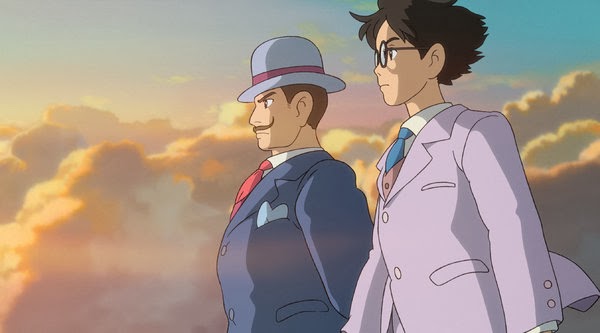
The Wind Rises
Written and directed by Hayao Miyazaki from his manga, Kaze Tachinu (The Wind Rises) is a fictionalized bio-pic about the life of Jiro Horikoshi as he was the man that designed the Mitsubishi A5M and its successor A6M Zero that played a key part in World War II. The film is a more dream-like portrait about Horikoshi’s life with some dramatic embellishments while not deviating too much from the real-life story. For the American-dubbed version of the film that is supervised by Gary Rydstrom, the voice cast includes Joseph Gordon-Levitt, Emily Blunt, John Krasinski, William H. Macy, Elijah Wood, Stanley Tucci, Mae Whitman, Mandy Patinkin, Jennifer Grey, and Werner Herzog. Kaze Tachinu is a mesmerizing film from Studio Ghibli and Hayao Miyazaki.
The film is fictionalized bio-pic about the life of Jiro Horikoshi that is presented in a dream-like fashion where it goes from Horikoshi as a young boy to becoming the man who would design the Mitsubishi A5M and its successor the A6M Zero that would become the key planes used in World War II. With a mixture of reality and a dream-like world, the film plays into Horikoshi’s desire to create the ultimate airplane that can endure wind resistance and not be intimidated by the advanced technology of other countries. Even as Horikishi (Joseph Gordon-Levitt) seeks the advice of the famed Italian plane designer Giovanni Battista Caproni (Stanley Tucci) in his dreams. Through Hayao Miyazaki’s screenplay, the film does have a conventional narrative in terms of structure that plays to Horikoshi’s life but he infuses with bits of surrealism and dreamy textures to make it much more interesting.
Notably as the film plays into key events that would mark Horikoshi’s development from his encounter at the 1923 Great Kanto Earthquake as well as his trip to Germany to see how the Germans created their airplanes. These moments would drive Horikoshi to see if he can create a war plane for Japan that would define them as they endure the Great Depression and such. While there would be some failures along the way, Hirokoshi would eventually find more inspiration when he re-meets Naoko (Emily Blunt) whom he had met years ago during a train ride with her sister where they encountered the Great Kanto Earthquake of 1923. His relationship with Naoko would prove to be a major catalyst to Horikoshi’s development as a man and as an engineer where he would try to balance both roles and later deal with his what he’s achieved.
Miyazaki’s direction is definitely dazzling in the way he creates Japan in the early half of the 20th Century as it’s a world that is trying to catch up with the modern world. Especially as he infuses bits of surrealism into the dream sequences that Horikoshi would have as it features some vast scenes of planes flying around and all sorts of things. Notably in the designs of the planes and how imaginative they look as it plays to what Horikoshi would want to create. The look of Japan from its different backgrounds of mountains, forests, and cities are presented with such great detail as there’s aspects in the background that are just as mesmerizing to look at. Even in the design of the characters which have all of the quintessential elements that is expected in Miyazaki’s work as an animator.
With the aid of cinematographer Atsushi Okui to help in the lighting where much of the animation is in 2-D hand drawn animated style with some computer-based animation for some of the backgrounds. Miyazaki creates something that is truly rich in scope but also infuse it with such artistry in the way the planes are flown as well as the way nature is presented as if it has the feel of a live-action film. Even in some of the compositions and camera work where it has a sense of action but also some drama and humor that just adds to the beauty of the film. Overall, Miyazki creates a truly evocative and sensational film about a dreamer who would create one of the greatest designs for a plane despite the fact that it’s being used as an instrument of war
Editor Takeshi Seyama does amazing work with the film‘s editing in its approach to rhythm for some of its action scenes as well as the dream sequences as it features lots of jump-cuts and disjointed rhythmic cuts to play into that sense of surrealism. Sound designer Koji Kasamatsu and sound editor Gwendolyn Yates Whittle (for its English version) do fantastic work with the sound in creating some of the sound effects used in the film with Whittle providing some low sound textures for some of the English dialogue as background textures. The film’s music by Joe Hisaishi is brilliant for its mixture of lush orchestral pieces with some playful and offbeat music driven by accordions and string instruments.
For the film’s English-language version, the cast includes some contributions from Elijah Wood as a co-worker of Horikoshi, Jennifer Grey as Mrs. Kurokawa, Darren Criss as another worker in Katayama, Mandy Patinkin as one of Horikoshi’s top bosses, Mae Whitman as Horikoshi’s sister Kayo, Zach Callison as the young Horikoshi, William H. Macy as Naoko’s father, Edie Merman as Horikoshi’s mother, and Werner Herzog in a superb voice performance as a German tourist Horikoshi meets in a retreat in the famed Magic Mountains in Japan. Martin Short is very funny as the comical boss Mr. Kurokawa who provides some humor as well as some guidance for Horikoshi while Stanley Tucci is brilliant as the famed Italian plane designer Giovanni Battista Caproni as Tucci sports an Italian accent as he displays warmth and humor into the role of the man who would guide Horikoshi.
John Krasinski is excellent as the voice of Horikoshi’s close colleague Kiro Honjo who aids Horikoshi in some of the designs as he would create his own planes that would also revolutionize planes in Japan. Emily Blunt is wonderful as Naoko as this woman who Horikoshi would meet early on as a young girl and later as a woman who would provide an inspiration and drive for Horikoshi after some of the failures he had to deal with. Finally, there’s Joseph Gordon-Levitt doing fantastic voice work as Jiro Horikoshi as this young man who dreams of designing an airplane that would define Japan in all of its glory though he is aware of what they’re being used for as he hopes they can provide some meaning into his life.
Kaze Tachinu is a remarkable film from Studio Ghibli and Hayao Miyazaki. It’s a film that is filled with rich images and a captivating story that manages to be wondrous as well as somber for what Jiro Horikoshi wanted to make. While it has some dark elements, it is balanced by the themes of being a dreamer which makes the story far more engaging. If this film is to become Miyazaki’s final contribution to cinema, he at least goes out with a winner. In the end, Kaze Tachinu is a phenomenal film from Hayao Miyazaki and Studio Ghibli.
Hayao Miyazaki Films: (The Castle of Cagliostro) - (Nausicaa of the Valley of the Wind) - (Castle in the Sky) - My Neighbor Totoro - (Kiki’s Delivery Service) - (Porco Rosso) - (Princess Mononoke) - Spirited Away - (Howl’s Moving Castle) - (Ponyo) - (How Do You Live?)
© thevoid99 2014
Labels:
emily blunt,
hayao miyazaki,
john krasinski,
joseph gordon-levitt,
mae whitman,
mandy patinkin,
martin short,
stanley tucci,
studio ghibli,
werner herzog
Saturday, January 12, 2013
Promised Land
Directed by Gus Van Sant and screenplay by Matt Damon and John Krasinski from a story by Dave Eggers, Promised Land is the story of two corporate business officials who arrive at a small town in order to buy drilling rights from local residents only to deal with an environmentalist. The film is the story about the world of fracking as well as the battle between small towns and big businesses. Starring Matt Damon, Frances McDormand, John Krasinski, Rosemarie Dewitt, and Hal Holbrook. Promised Land is an interesting but lackluster film from Gus Van Sant.
Steve Butler (Matt Damon) is a consultant from a natural gas company called Global as he goes to a Pennsylvanian small town in the hopes to win over the locals so they can give them natural gas and still maintain their farmland. With the help of fellow consultant Sue Thomason (Frances McDormand), the two arrive to the town where they meet with a few locals to talk about what they do where things seemed fine at first. Even as Butler convinces a local official (Ken Strunk) about the prospects of natural gas and how it could help the town. During a town meeting, a retired schoolteacher in Frank Yates (Hal Holbrook) asks many question as he knows a lot about what Butler is doing though Butler tries to assure the locals that he has the right intentions.
After the disastrous meeting, Butler and Thomason try to figure out how to win back the town when an environmentalist named Dustin Noble (John Krasinski) arrives to reveal to the town about the dangers of fracking claiming he’s lost his family’s farm to fracking. For Butler, Noble’s arrival raises complications as they’re also competing for the affections of a local schoolteacher named Alice (Rosemarie Dewitt). Butler and Thomason continue to talk to a few people where they win over some as they want to hold a fair to win the town back. Still, Butler tries to deal with Noble’s presence as he eventually makes a discovery that would change everything including Butler’s view on the world.
The film is the story about a corporate consultant who hopes to help a small farming community in Pennsylvania by bringing natural gas in the hopes that everyone can make money and keep their farm. Yet, questions about fracking are raised as an environmentalist arrives to complicate matters forcing the corporate consultant to do whatever it takes to win over the people. While the subject of fracking is interesting since it plays to a lot of what is happening in the world of farming in America. The film also reveals the dangers where despite this interesting subject, the story starts to fall apart a bit towards the second half and its third act due to some preachy moments and a twist that causes the story to lose some steam.
The screenplay that Matt Damon and John Krasinski creates does raise a lot of interesting questions about fracking where they do their best to make the subject accessible without dumbing it down. The story eventually becomes the archetype of the little man vs. the big corporation where things do eventually become complicated. Steve Butler and Sue Thomason aren’t bad people as they’re just corporate officials with good intentions that just wants to help out farmers. They just find themselves in big trouble when questions are raised about what they do. When the Dustin Noble character arrives to the scene, he is this strange environmentalist who reveals the dangers of fracking where he would irk both Butler and Thomason for the fact that they’re confusing the people.
The subplot involving Butler and Noble trying to win the affections of the Alice character doesn’t work entire despite the fact that Alice is still a compelling character. It does reveal more about who Butler is as he came from a small farming town where he does reconnect with his roots while the people he meets know he’s just a good person. Though the script does play into conventions, it still is engaging until the third act where there’s a big twist revealed that is later followed by some heavy-handed moments that just makes the story fall apart.
Gus Van Sant’s direction is pretty good for the way he presents the world of Pennsylvanian farming and its small towns. Notably as he employs a lot of aerial shots of the locations as well as a few stylistic wide shots. Yet, the direction doesn’t really do a lot to make the story more engaging that it should be. Van Sant does put in some interesting framing in the way he presents the actors as well as few scenes that are stylized. Notably some scenes in the bar where Van Sant employs some moments of humor as well as a dramatic scene where Butler talks to a suspicious farmer (Scoot McNairy). Still, the direction doesn’t do enough to give it a more stylistic flair or to help bring the script more to life as it ends up being sort of pedestrian. Overall, Van Sant creates a film that is decent but ends up falling apart due to its third act where it becomes very preachy.
Cinematographer Linus Sandgren does excellent work with the photography to display the beauty of the Pennsylvanian farmland in its daytime exteriors while utilizing more low-key lighting schemes for the scenes at night in its exterior and interior settings. Editor Billy Rich does nice work with the editing where a lot of the cutting is straightforward though there‘s a few stylistic moments such as a split-screen conversation between Butler and Thomason as well a other stylized cuts. Production designer Daniel B. Clancy, along with set decorator Rebecca Brown and art director Gregory A. Weimerskirch, does terrific work with the set pieces from the look of the bar Butler attends to the motel he and Thomason stay at.
Costume designer Juliet Polcsa does good work with the costumes as a lot of it is very casual to maintain that world of small-town life. Sound editor Robert Jackson, along with mixers Leslie Shatz and Felix Andrews, does wonderful work with the sound to capture the atmosphere of the bars and town meetings along with the intimacy of farm life. The film’s music by Danny Elfman is superb as the music is very low-key in its orchestral setting where there‘s not bombast but serene while music supervisor Brian Reitzell provides a soundtrack that is mostly filled with country music including a few cuts by Emmylou Harris.
The casting by Francine Maisler is great as it features some notable small appearances from Lucas Black as an eager young farmer, Scoot McNairy as a suspicious young farmer, Terry Kinney as Butler‘s boss, and Ken Strunk as local town official Gerry Richards. Hal Holbrook is brilliant in a small yet effective supporting role as a retired teacher/farmer who raises questions about fracking while knowing that Butler means well. Rosemarie DeWitt is wonderful as Alice as this teacher who is charmed by both Butler and Noble as she reveals to Butler about her own farm life.
John Krasinski is terrific as the very eager Dustin Noble as he is this environmentalist who is very likeable and charming in the way he presents his case while being the great sore eye to Butler. Frances McDormand is excellent as the no-nonsense Sue Thomason who helps Butler out while embracing the world of small town life as she tries to deal with Noble. Finally, there’s Matt Damon in a superb performance as Steve Butler as this corporate official who tries to win over the town only to deal with this young environmentalist as he tries to do whatever to assure the town that he’s just trying to help them.
Promised Land is a fine but lackluster film from Gus Van Sant. Despite an interesting subject matter and a stellar cast, it’s a film that falls apart due to some of its preachiness as well as a messy third act that includes a ludicrous twist. For fans of Gus Van Sant, this film is definitely one of his weakest though it does have moments that does show his unique visual flair. In the end, Promised Land is a very underwhelming film from Gus Van Sant.
Gus Van Sant Films: Mala Noche - Drugstore Cowboy - My Own Private Idaho - Even Cowgirls Get the Blues - To Die For - Good Will Hunting - Psycho (1998 film) - Finding Forrester - Gerry - Elephant - Last Days - Paranoid Park - Milk - Restless
The Videos & Shorts of Gus Van Sant - The Auteurs #4: Gus Van Sant
© thevoid99 2013
Friday, March 04, 2011
Smiley Face
Originally Written and Posted at Epinions.com on 3/20/09 w/ Additional Edits.
Directed and edited by Gregg Araki and written by Dylan Hagerty, Smiley Face tells the story of an aspiring actress whose lack of ambition and love for marijuana collide when she goes through an entire day of journeys to pay the electric bill, do an audition, and everything else while under the influence of some high-octane marijuana. A stoner comedy that relies on low-brow humor and surreal imagery, it's a film that is led by Anna Faris playing the role of its leading stoner Jane. Also starring Adam Brody, Danny Masterson, Jane Lynch, Marion Ross, John Krasinski, Danny Trejo, John Cho, and Roscoe Lee Brown as himself and narrator. Smiley Face is a hilarious, witty stoner comedy from renowned indie auteur Gregg Araki.
Jane is an aspiring actress who doesn't do much in her life but get stoned and get stoned. Yet, her laziness and lack of ambition along with her mass consumption of marijuana has annoyed her roommate Steve (Danny Masterson) who is planning a party with fellow sci-fi/horror geeks. With Steve leaving some instructions for Jane to pay the electric bill while not eating some cupcakes that he made for his buddies. Jane instead eats the cupcakes which revealed to have marijuana inside. Stoned out of her mind and with an acting audition at around 11 in the morning. She realize she needs to make cupcakes for Steve's buddies as she calls in her dealer also named Steve (Adam Brody) who gives her some pot though she owes him some serious money. Steve the dealer warns her to give him the money she owes by 3 in the afternoon at a hemp festival in Venice Beach or he'll have to take away some of her furniture.
Jane's attempts to make a cupcake becomes a disaster due to a phone call as she hopes to get money from her bank account while realizing her only source of financial income is to sell some high-quality, government made marijuana. Still stoned and unable to drive her car due to her paranoid mind, she ends up riding the bus where she made a boy upset by crushing his car and being late for her audition. At the audition for a casting director (Jane Lynch), it becomes a disaster as she even tried to sell pot to the director. On the run, she is forced to dump the weed and find money by calling in one of Steven's sci-fi buddies in Brevin (John Krasinski) who has a crush on Jane. Brevin gives her a ride and is willing to loan her money which he doesn't have at the moment but Jane's stoned state of mind only troubles things. Even when his wallet is stolen while Jane goes to the house of a former professor where his mother (Marion Ross) gives her a rare manuscript of The Communist Manifesto.
After a troubling encounter with a man (Michael Hitchcock) at a laundry room, Jane goes on the run where she meets a couple of meat delivery guys (John Cho & Danny Trejo) while making some weird political rants to a meat delivery boss (Richard Riehle). With The Communist Manifesto in her hands and hopes to get to Venice with help from a motorcycle girl (Natashia Williams), can Jane get the money she owes and return the famed Marxist document back to its owners? Or will her stoned state of mind ruin it?
Stoner films often are driven by ludicrous plots and plot-points of how one character goes from one place to another. What screenwriter Dylan Hagerty does is take a character on a journey while remaining stoned throughout. Therefore, a series of misadventures happen with lots of mayhem ensue. The script isn't meant to be high-octane as its emphasis is on low-brow humor yet it works because Hagerty creates a protagonist that people can laugh at. It's not because she's cruel, she's just a stupid stoner that has no idea what she's doing.
Director Gregg Araki does play it straight with the film while adding some stylish shots to the film for its atmospheric take on what is going through the mind of the stoner with wavy shots and sequences that are downright funny. While the filmmaking is a step-down to what Araki did in his previous film Mysterious Skin. Araki understands that this is a genre film as he plays up to the cliches of the genre with some visual tricks including some CGI and shaky cameras. With Araki serving as editor, he creates a film that is rhythmic and to the point with some jump-cuts to emphasize on the character's state of mind. Overall, it's an excellent, funny, and smart comedy from Gregg Araki whose filmmaking techniques proves to be masterful in a stoner comedy.
Cinematographer Shawn Kim does nice work with the film's photography as it's mostly show on location in Los Angeles with nice exteriors shots and camera tricks that play up to Jane's stoned state of mind. One of the best shots includes a scene in which Jane's roommate is doing things with a skull where everything is in red. Production designer John Larena with set decorator Peggy Paola and art director Helen Harwell is excellent in recreation of The Communist Manifesto along with sci-fi toys that the character Brevin owns. Costume designer Alix Hester does a fine job with the contemporary look which included fake dreadlocks for Adam Brody, hippie clothes for some of the characters while everything else is straightforward. Sound designer Steve Avila and editor Trip Brock do fantastic work with some sound layering for scenes where the character of Jane hears multiple things in her head. Visual effects supervisor David A. Davidson does excellent work in the look of some animation in Jane's head like the smiley face and the opening credit sequence with some nice animation.
Music composer David Kitay brings a nice score with melodic arrangements to play up to the film's humor as well as adventurous side. Yet, the soundtrack which have been one of Araki's strengths in his films is phenomenal. Featuring tracks from Mojave 3, the Chemical Brothers, Starlight Mints, Ladytron, Talking Heads, A Flock of Seagulls, a remixed track of the Stone Roses' Waterfall, and two hilarious cuts from Arena rock stalwarts like Styx and REO Speedwagon are used greatly. Notably the Styx and REO Speedwagon to emphasize Brevin's love for Jane.
The casting by Monika Mikkelsen is superb with cameo appearances from the likes of comedian Brian Posehn, Carrot Top, Dave "Gruber" Allen, Jayma Mays as an auditioning actress, and 80s film legend William Zabka are memorable and funny. Other small appearances from Danny Trejo and John Cho as meat delivery guys, noted character actor Richard Riehle as the meat boss, TV legend Marion Ross as a professor's mother, Michael Hitchcock as a laundry guy, BBC TV star Natashia Williams as a motorcycle rider, and Jane Lynch as a casting director are all funny. Danny Masterson is excellent as Jane's creepy roommate while Adam Brody is very funny as a pot dealer who tries to deal with a stoned Jane about her debt. John Krasinski is great as Brevin, a nerdy guy who has a crush on Jane as he's willing to do anything for her though is unclear on how stoned she is. Though he doesn't appear in the film, Roscoe Lee Brown does do some funny narration, even as he talks to the audience and to Jane about her hilarious situation.
Finally, there's Anna Faris in what is truly an amazing performance. Faris is a master in comedic acting and she does so with such physicality and exuberance that she knows how to make audiences laugh. Even without having to delve into cheap gags or crude humor, Faris is aware that her character is a complete imbecile but doesn't make her seem dumb. Faris' performance is truly the great work of an actress that is at the top of her game in a genre where she knows how to make people laugh while being the butt of jokes throughout.
While it's nowhere near the brilliance of Mysterious Skin, Smiley Face is still a fine, well-made film from Gregg Araki featuring a superb performance from Anna Faris. Fans of Faris will no doubt see this film as one of her best work proving that she's one of the best comedy actresses working today. Fans of stoner films will enjoy the film's unique sense of humor while seeing a director like Araki bring some charm and wit to the genre. In the end, Smiley Face is a film that delivers its namesake as Gregg Araki and Anna Faris make sure audiences have a good time watching a nice stoner film.
Gregg Araki Films: (Three Bewildered People in the Night) - (The Long Weekend (0' Despair)) - The Living End - Totally Fucked Up - The Doom Generation - Nowhere - (Splendor) - (This is How the World Ends) - Mysterious Skin - Kaboom - (White Bird in a Blizzard)
(C) thevoid99 2011
Subscribe to:
Posts (Atom)