Showing posts with label giovanni ribisi. Show all posts
Wednesday, June 01, 2016
Selma
Directed by Ava DuVernay and written by Paul Webb, Selma is the story of the events leading to the 1965 march led by Dr. Martin Luther King Jr. and several other Civil Rights leaders trying to make a difference during the Civil Rights movement in the American South. The film is a dramatic account of the non-violent march from Selma to Montgomery in the state of Alabama as it is considered a key turning point in the American Civil Rights movement. Starring David Oyelowo, Tom Wilkinson, Carmen Ejogo, Giovanni Ribisi, Tim Roth, Tessa Thompson, Wendell Pierce, Alessandro Nivola, and Oprah Winfrey. Selma is a mesmerizing and riveting film from Ava DuVernay.
The film is a dramatic account of the events that preceded the non-violent march from Selma to Montgomery led by Dr. Martin Luther King Jr. (David Oyelowo) in an attempt for African-Americans to have the right to register to vote that would eventually lead to the Voting Rights Act of 1965. Told in a straightforward manner, the film follows Dr. King and fellow Civil Rights leader who prepare for this march just as Dr. King is having frequent meetings with President Lyndon B. Johnson (Tom Wilkinson) about allowing African-Americans to have the right to register to vote without any issues. Johnson is reluctant as he has other things to deal with where he is also dealing with some opposition like FBI director J. Edgar Hoover (Dylan Baker) who thinks King is up to no good while King would also have to deal with Alabama’s Governor George Wallace (Tim Roth).
Paul Webb’s screenplay doesn’t just explore Dr. King’s attempt to get the march going with several other Civil Rights leaders but also dealing with the authority in Alabama where a lot of planning occurs. Even as Dr. King ponders if the media will see what happens as he also deals with the church bombing in Birmingham that killed four young girls and other events that includes the death of Malcolm X (Nigel Thatch). The script also plays in moments behind the scenes where Dr. King becomes weary and unsure of what is doing as his own personal life would nearly unravel when the FBI tries to create discord between Dr. King and his wife Coretta (Carmen Ejogo) over the former’s supposed extramarital affairs. Still, Dr. King tries to get the march forward where he also deals with members of the Student Nonviolent Coordinating Committee who don’t agree with Dr. King’s views.
There is a structure where much of the first half is about Dr. King and members of the Southern Christian Leadership Conference trying to plan for the march as well as deal with all sorts of legal and social issues. Even as Dr. King copes with loss and other things as well having to go back to his home in Atlanta and flying to Washington D.C. to meet with President Johnson. The second half is about the first two attempts for the march as the first one ends in violence where it is captured by the press while the second one would end abruptly by Dr. King due to an act of faith. Especially where he would hear that those who would march with him including whites would be targeted in this small Alabama town where racial tension is very high. The third act is about President Johnson’s decision as he is aware of the role he is playing where he knows what might happen if he doesn’t act.
Ava DuVernay’s direction is largely straightforward in terms of the fact that she doesn’t go for anything grand nor play too much into exposition which is often the case with a lot of films based on historical events. While much of it is shot in Atlanta and other parts in the nearby city including a few key shots in Selma and Montgomery. The film is more about the American South as a whole where it plays into a landscape that is changing where you have a group of people that want change but you have this other group that opposes change. DuVernay’s usage of wide and medium shots help play into this tension that is happening in Alabama which is the centerpiece of this old idea of the American South dating back to the 1800s. Even as Dr. King would meet this old man who is in his 80s as he is waiting for the right to vote as it is this very simple moment where this old man just endured loss as he ponders if he has a say in anything in this country that is supposed to be about equality. The direction also has DuVernay create moments that are quite intense such as a non-violent confrontation against a county sheriff that does unfortunately turn violent because the old man couldn’t sit down where a woman would hit that sheriff and all hell breaks loose.
The usage of close-ups and hand-held cameras play into that chaos as well as a moment where people are attempting a march at night where it turns very violent in the hands of the police. There are also moments during these meetings where DuVernay does create something where there is tension but also the need to resolve something not just in the meetings President Johnson would have with his staff and Dr. King but also a scene with him and Governor Wallace that plays into a world that is changing. The latter of which is actually afraid of change but is also indifferent in what history will think of him as it’s something President Johnson is aware of. While its ending is predictable, it does have something to say in what Dr. King has done to make the world better no matter how troubling it is but it’s also in the idea that one person does have a say. Overall, DuVernay creates a gripping yet engaging film about one of the most watershed moments in American history.
Cinematographer Bradford Young does excellent work with the film‘s cinematography from its usage of low-key lights for some of the interiors in many of the scenes set day and night to the look of the towns in the daytime including the famous Edmund Pettus Bridge in Selma. Editor Spencer Averick does nice work in creating some unique rhythmic and jump-cuts to play into some of the drama as well as some of the intense moments in the film. Production designer Mark Friedberg, with set decorator Elizabeth Keenan and art director Kim Jennings, does fantastic work with the look of the home of Dr. King and his family as well as some church interiors including the scene in Birmingham where the four little girls would be killed on that day. Costume designer Ruth E. Carter does wonderful work with the costumes as it play into the period of the times as well as the dresses the women wear.
Visual effects supervisors Anup Shakya and Dottie Starling do brilliant work with some of the minimal visual effects such as the Birmingham church bombing sequence as well as a few other moments that is essentially set dressing. Sound editor Greg Hedgepath does superb work with the sound as it play into some of the chaos in some of the protests as well as some chilling moments in the conversations. The film’s music by Jason Moran is terrific as it‘s mostly low-key and doesn’t appear very much as it is largely a mixture of orchestral, folk, and gospel to play into the times while music supervisor Morgan Rhodes provides a intoxicating soundtrack that mixes a lot of the music of the times from folk, gospel, soul, and blues from artists like Joyce Collins & Johnita Collins, Duane Eddy, Sarah Vaughan, the Staple Singers, Otis Redding, Odetta, the Impressions, and a new song called Glory by John Legend and Common.
The casting by Aisha Coley and Cynthia Stillwell are incredible as it features a massive ensemble with notable small roles from Jeremy Strong as white Boston pastor James Reeb, Tara Ochs as white Civil Rights activist Viola Liuzzo, Stan Houston as Selma’s sheriff Jim Clark, Nigel Thatch as Malcolm X, Michael Papajohn as state trooper leader Major John Cloud, Henry G. Sanders as the old man Cager Lee that Dr. King befriends, Keith Stansfield as the old man’s grandson, Ledisi Young as the legendary gospel singer Mahalia Jackson that Dr. King turns to for guidance early in the film, and Oprah Winfrey in a small yet wonderful standout performance as activist Annie Lee Cooper who is just a woman that just wants the right to vote. Other noteworthy appearances include Martin Sheen as Judge Frank Minis Johnson who decides whether Dr. King could march, Cuba Gooding Jr. as civil rights attorney Fred Grey, Dylan Baker as FBI Director J. Edgar Hoover, Stephen Root as Governor Wallace’s advisor Al Lingo, Niecy Nash as activist Richie Jean Jackson, and Giovanni Ribisi as President Johnson’s advisor Lee C. White.
In the performances of the many associates of Dr. King, Colman Domingo as Ralph Abernathy, Ruben Santiago-Hudson as Bayard Rustin, Stephan James as SNCC co-chairman John Lewis, Wendell Pierce as Hosea Williams, Lorraine Toussaint as Amelia Boynton Robinson, and Andrew Holland as Andrew Young are all excellent as people who are trying to see what they can do for the movement and make sure it goes in the right direction. Tessa Thompson is superb as Diane Nash as an activist who helps Dr. King in the strategy of the Selma march while Common is fantastic as Reverend James Bevel who also helps in making sure things go right in the need for non-violence. Alessandro Nivola is amazing as Assistant Attorney General John Doar who meets with Dr. King to understand what is doing while trying to ensure him that President Johnson is at his side knowing that what Dr. King wants isn’t easy.
Tim Roth is brilliant as Governor George C. Wallace as Alabama’s then-governor who tries to make sure Dr. King doesn’t march as Roth sells that air of racism in the governor as well as display a sense of fear about what could happen if change does happen in Alabama. Carmen Ejogo is radiant as Coretta Scott King as Dr. King’s wife who is aware of what her husband is doing while also knowing that not everything in her marriage is great though she stands by him when he needs her at the march. Tom Wilkinson is great as President Lyndon B. Johnson who wants to invoke an act where African-Americans can vote without any issue but is trying to see how he wouldn’t get into trouble as he also copes with how history will see him. Finally, there’s David Oyelowo in a tremendous performance as Dr. Martin Luther King Jr. as the civil rights leader who is trying to make change and ensure that the people of Alabama have a say while dealing with everything that involves in the march and its outcome as well as dealing with personal issues where he becomes overwhelmed with his role as a civil rights leader as it is a performance for the ages from Oyelowo.
Selma is a sensational film from Ava DuVernay that features an incredible performance from David Oyelowo as Dr. Martin Luther King Jr. Featuring a great ensemble cast and a compelling story that plays a lot into some of its historical context and its stakes. It’s a film that doesn’t just carry a lot of importance but also showcase a moment in time that would prove to be a major moment in American history. In the end, Selma is a spectacular film from Ava DuVernay.
Ava DuVernay Films: (This is the Life (2008 film)) - (I Will Follow) - Middle of Nowhere (2012 film) - 13th (2016 film) - (A Wrinkle in Time (2018 film))
© thevoid99 2016
Thursday, December 18, 2014
Saving Private Ryan
Directed by Steven Spielberg and written by Robert Rodat, Saving Private Ryan is the story of an Army captain and his squad who trek through World War II-era France to find a lost paratrooper as he is the last-surviving brother of a group of servicemen. The film is a World War II story where a man and his team trek through treacherous battlefields and events to get a young man back home during a very tense moment during the war. Starring Tom Hanks, Edward Burns, Tom Sizemore, Vin Diesel, Jeremy Davies, Giovanni Ribisi, Barry Pepper, Adam Goldberg, and Matt Damon as Private James Ryan. Saving Private Ryan is a thrilling yet visceral film from Steven Spielberg.
The film is a simple story set in World War II in France in the aftermath of D-Day where an Army captain is assigned to retrieve a young private whose brothers had already been killed as he is to return home. Joined by his squad, Captain John Miller (Tom Hanks) treks through war-torn France to find Private James Ryan as they travel by foot. During this treacherous journey, the men endure many chilling events as well as false discoveries where they would eventually find Private Ryan who is bewildered into why he has to go home and not everyone else. Robert Rodat’s screenplay definitely plays into the scary themes of war and the sacrifices men make as Captain Miller and his men are just normal men that also want to go home but know they have a duty to their country. Even as not everyone is on board to sacrifice their lives to bring one man home as does Captain Miller but knows he has a duty to get Private Ryan home.
The film’s screenplay doesn’t start off with the actual story but opens with a present-day scene of an old man (Harrison Young) in modern-day France as he looks into the Normandy American Cemetery Memorial as it would then shift to the actual battle that Captain Miller and his squad were fighting in. The main story comes in when Captain Miller is asked by his superior in Lt. Col. Anderson (Dennis Farina) to retrieve Pvt. Ryan after three of his older brothers had been killed in different parts of the war as the orders are from General George C. Marshall (Harve Presnell). Though it’s a big deal, Captain Miller takes the mission with his small squad as it would include a newcomer in Corporal Upham (Jeremy Davies) who is an accomplished interpreter but lacks combat experience as he is treated with some disdain by the squad he joins in because of his inexperience. Still, they all have to work together as they would encounter some horrible moments in battle as they would fight Germans through dark parts of France where not everyone is able to cope with.
Steven Spielberg’s direction is definitely intense in terms of his depiction of the battles and war scenes. Though it does start off in a somber manner, it then shifts into what is truly one of the most visceral sequences ever that is the battle at Omaha Beach in Normandy where Captain Miller and various soldiers go into battle. It’s 23 minutes that is definitely uneasy to watch as it is war at its most horrific as Spielberg definitely makes no qualms into how gruesome it is in terms of the impact of its violence. One of the aspects of the film that is interesting is how he is able to shift tones into one sequence into another yet maintain a balance as he does shoot many scenes in very different ways. The scenes of war and engagement are shot with hand-held cameras and frenetic cuts to play into its sense of terror and uncertainty. Spielberg’s usage of close-ups and wide shots into that sequence and other moments of battles with some slanted camera angles definitely add something that feels real where it does imply that war is indeed hell. While much of the film is shot partially in Normandy, much of the battle scenes including the Omaha Beach sequence were shot in Ireland yet Spielberg does manage to make it feel like it’s the actual battle.
While it is a war film, Spielberg does balance that aspect of war’s horror with elements of sentimentality as it plays to what is at stake in Captain Miller’s mission. Notably as Spielberg isn’t afraid to create something intimate whether it’s scenes set in the U.S. involving Private Ryan and his family to the moments where Captain Miller and his squad are walking through France. Spielberg’s approach to close-ups, medium shots, and wide shots definitely add to this feeling that it’s a film about brothers but men who are willing to put their lives for one another. Even as that bond becomes intense in its third act where the men eventually find Private Ryan who is also trying to do his own duty in this band of brothers as he and Captain Miller would have to work together to fight against the German in a climatic battle. Overall, Spielberg creates a very exhilarating yet rapturous film about war and a man trying to fight for his life to bring a young man back home.
Cinematographer Janusz Kaminski does incredible work with the film‘s cinematography as Kaminski brings a desaturated look to its colors from its very harrowing Omaha Beach sequence to some striking lighting for some nighttime interior scenes where the men rest during their journey to find Private Ryan. Editor Michael Kahn does phenomenal work with the film‘s editing with its frenetic approach to cutting for some of the battle scenes including the Omaha sequence as well as some more methodical and straightforward cuts for the dramatic moments including a montage which plays into the decision to bring Private Ryan home. Production designer Thomas E. Sanders, with set decorator Lisa Dean and supervising art director Daniel Dorrance, does brilliant work with the look of destroyed buildings in France as well as the battle trenches for the Omaha Beach sequence. Costume designer Joanna Johnston does excellent work with the costumes from the design of the uniforms as well as the officer uniforms for the scenes in the U.S.
Makeup work by Lois Burwell, Conor O’Sullivan, and Daniel C. Striepeke do amazing work with the look of war in terms of its chaos where soldiers would lose limbs or have major wounds to play into its horror. Visual effects supervisors Stefen Fangmeier and Roger Guyett do fantastic work with some of the film‘s minimal visual effects in terms of the battle sequences including the very gruesome look of the Omaha Beach sequence. Sound designer Gary Rydstrom and sound editor Richard Hymns do spectacular work with the film‘s sound to create that horrific atmosphere of war from the sound of gunfire, cannons, and grenades to play into its chaos while going for more low-key sound effects in the non-battle scenes. The film’s music by John Williams is superb for its triumphant yet melancholic score as it features some lush string arrangements as well as drum cadences to play into the sense of war and duty as it’s one of his finest scores.
The casting by Denise Chamain is wonderful as it features notable small roles from Amanda Boxer as Pvt. Ryan’s mother, Dale Dye and Bryan Cranston as two officers from the war department, Harve Presnell as General George C. Marshall, Joerg Stadler as a German soldier the men would capture whom Cpl. Upham would converse with, Leland Orser as a glider pilot Miller meets during his journey, and Nathan Fillion as a young soldier who also has the same surname in Ryan. Other noteworthy small roles include Dennis Farina as Captain Miller’s superior in Lt. Col. Anderson and Ted Danson as a captain whom Captain Miller meets during a battle as two men who understands the severity of what Captain Miller has to endure, Max Martini is terrific as a corporal in Ramelle that Pvt. Ryan fights with while Paul Giamatti in a funny performance as a staff sergeant who also fights in a battle as he complains about his feet. Harrison Young is excellent as the old man in the beginning of the film and Kathleen Byron is radiant as that old man’s wife.
Giovanni Ribisi is fantastic as the medic Wade who is trying to make sure all of his band of brothers stay alive as he has a great scene involving a mother he meets in a church. Vin Diesel is superb as Pvt. FC Carpazo as an Italian-American rifleman who looks tough and is quite funny but also display some sensitivity as he is someone that is loyal to his squad. Adam Goldberg is amazing as Jewish rifleman Private Mellish who takes Corporal Upham under his wing to show him what to do in battle as he also has some very big reasons to keep on fighting. Barry Pepper is brilliant as the sharpshooter Private Jackson who is a man of faith as he always prays before he shoots as he’s a skilled marksman that does whatever it takes to protect his band of brothers. Edward Burns is great as the cynical Pvt FC Reiben as he is a BAR gunner that isn’t happy about taking on the mission as he definitely gets the ire of Captain Miller yet does have some valid reasons into why they shouldn’t do the mission.
Tom Sizemore is incredible as Sergeant Horvath as Captain Miller’s second-in-command as someone who had been through all sorts of battle with a massive collection of dirt as he is seen by the squad as the older brother. Jeremy Davies is phenomenal as Cpl. Upham as an interpreter/cartographer who may outrank most of the squad but his inexperience in combat showcases someone who is scared of fighting as he copes with the horrors of being in the battlefield as it’s a really chilling performance of someone who displays the sense of fear in war. Matt Damon is marvelous as Private James Ryan as the young man Captain Miller and his squad had to retrieve as Damon displays some charm as well as a stubbornness as someone that wants to keep on fighting and do his duty as a soldier. Finally, there’s Tom Hanks in an outstanding performance as Captain Miller as this man who is tasked to bring a young private home as he copes with the severity of his mission and wonders if he will get to go home. Hanks also displays a sense of leadership in his role where he manages to be the big guy but also one that carries respect and cares for those in his squad as it’s one of his most iconic performances.
Saving Private Ryan is a magnificent film from Steven Spielberg. Armed with a great ensemble cast as well as some amazing technical achievements, the film is undoubtedly one of the finest war films ever created in terms of displaying its sense of duty and the fear of being in a war. It’s also a film that displays the concept of brotherhood as soldiers do whatever to fight for each other in a war. In the end, Saving Private Ryan is a triumphantly powerful and riveting film from Steven Spielberg.
Steven Spielberg Films: (Duel (1971 film)) - (The Sugarland Express) - (Jaws) - (Close Encounters of the Third Kind) - (1941) - (Raiders of the Lost Ark) - (E.T. the Extraterrestrial) - (Twilight Zone: the Movie-Kick the Can) - (Indiana Jones and the Temple of Doom) - (The Color Purple) - (Empire of the Sun) - (Always) - (Indiana Jones and the Last Crusade) - (Hook) - (Jurassic Park) - Schindler’s List - (The Lost World: Jurassic Park) - (Amistad) - (A.I. Artificial Intelligence) - (Minority Report) - Catch Me If You Can - (The Terminal) - (War of the Worlds (2005 film)) - (Munich) - (Indiana Jones and the Kingdom of the Crystal Skull) - (The Adventures of Tintin: The Secret of the Unicorn) - (War Horse) - (Lincoln) - (Bridge of Spies) - (The BFG)
© thevoid99 2014
Wednesday, December 10, 2014
That Thing You Do!
Written, directed, and co-starring Tom Hanks, That Thing You Do! is the story about the brief rise and fall of a band from Erie, Pennsylvania who become one-hit wonders during their meteoric rise to stardom. The film is an exploration into the world of 1960s pop-rock music as a jazz drummer comes in to play for a local band as he changes their fortune into this one song that would become a major hit for the band. Starring Tom Everett Scott, Johnathon Schaech, Steve Zahn, Ethan Embry, Liv Tyler, Charlize Theron, and Chris Ellis. That Thing You Do! is a charming and entertaining film from Tom Hanks.
The film is a simple story of a band from Erie, Pennsylvania during the early 1960s where they ask a local jazz drummer to fill in as he would do something to their song that would help them win a contest and later achieve fame and success all in a brief span of time. While it’s a film with a common story about one-hit wonders, there is something very engaging in the way Tom Hanks tells the story as it plays to not only aspects of his own youth in an age where British bands like the Beatles, the Rolling Stones, and the Dave Clark Five inspired kids to pick up instruments and play rock n’ roll. It is largely told from the perspective of four young guys who had struck a chord with their audience and talent agents who believe that these guys have something. Yet, their success is short-lived due to mistrust towards record labels as well as other things as its drummer in Guy Patterson (Tom Everett Scott) is seen by many as the smart one who is responsible for the band’s success.
Hanks’ screenplay definitely plays to this traditional schematics of a rise-and-fall scenario yet it’s more about how Guy Patterson turned this little band in Erie called the One-Ders (often mistaken for the O-Needers) and gave them attention by turning a ballad called That Thing You Do! into an upbeat pop-rock song in order to win a local contest. Though Guy was just a replacement drummer, his desire to win is what changes things as the fortunes of guitarist/vocalist/leader Jimmy Mattingly (Johnathon Schaech), guitarist/vocalist Lenny Haise (Steve Zahn), and the unnamed bass player (Ethan Embry) go well as Jimmy’s girlfriend Faye (Liv Tyler) joins them for the ride. Even as they would get the song recorded with the help of Guy’s uncle Pastor Bob (Chris Isaak) that gets the attention of a local manager in Phil Horace (Chris Ellis) who would then give the record to Playtone talent agent Mr. White (Tom Hanks) who would manage and rename the band as the Wonders into stardom. Mr. White would take the band on the road with other acts from the label as the Wonders become stars just as the song races up the charts.
While there are elements of cynicism about the way the record industry works, there is still this air of innocence as it relates to the band’s rise as everyone including Faye are excited. Upon the news that the song went top ten and the band had to leave the touring circuit for a chance to appear on national television, things change where Jimmy begins to question things about the band’s future. While Jimmy is seen as the talent of the group, Faye as the muse, Lenny as the buffoon, and the bass player as the innocent player. Guy is always seen as the smart person in the band as he is the first to ask questions about contracts and such as well as what the band should do. While Guy is having lots of fun, he still has a desire to play jazz which is his first love as he would meet his idol in Del Paxton (Bill Cobbs) who would tell him the dangers of being in a popular band and all of the trappings of stardom late in the film. All of which culminates with the band’s performance at a national TV show for all of America to see but it would also be a moment that would shape the band into their downfall.
Hanks’ direction is very simple as it does have this feel of a film that is set in the 1960s in a small town in Pennsylvania. Much of it involve Hanks just keeping things to the point such as his introduction to Guy Patterson as this young man who works in his father’s appliance store while spends much of his off hours playing along to his favorite jazz records. It is in sharp contrast to the more raucous world of rock n’ roll which Guy likes but prefers jazz as Guy always looks more like a guy who is into jazz while everyone else is more in tune with what is happening in the 1960s. Hanks’ approach to humor definitely feels natural as well as having this air of spontaneity such as the scene where the original drummer Chad (Giovanni Ribisi) breaks his arm which would lead to Jimmy and Lenny asking Guy to fill in. Hanks’ compositions don’t aim for elements of styles though there are some homage to the pop films of the 1960s including the surfer film where Jonathan Demme makes a cameo as that film’s director.
The direction also plays into that world of 1960s pop concerts and talent contests where the latter showcases a variety of music performances from folk to mariachi music where it would be the One-Ders that would steal the show due to Guy’s fast drumming on Jimmy’s ballad. Hanks’ usage of crane shots definitely play to the scope of some of the performances as well as how audiences react to these shows. Even as Hanks uses an intimacy to play into the Wonders’ rise where they play clubs as it has an air of excitement which is a major contrast to the climatic TV performance they would play where the cameras are much broader in its look while the song itself becomes, expectedly, a bit tiresome which is typical of one-hit wonders. Yet, it does play into how brief a one-hit wonder band career can be but it would lead to moments for these individuals who would prosper with their brief encounter with fame. Overall, Hanks creates a very delightful and fun film about a band’s brief rise and fall as one-hit wonders.
Cinematographer Tak Fujimoto does excellent work with the film‘s colorful cinematography for much of the daytime exteriors including scenes in California along with the intimate and dark look of the clubs the Wonders would play early in the film as well as the broad lights of the variety show they would play. Editor Richard Chew does brilliant work with the editing in creating a few montages to play into the band‘s success along with some stylish cuts to convey some of the film‘s offbeat humor. Production designer Victor Kempster, with set decorator Merideth Boswell and art director Dan Webster, does fantastic work with the set pieces from the look of the appliance store Guy‘s family runs as well as the hotels and other places to play into the look of the 60s. Costume designer Colleen Atwood does wonderful work with the costumes to play into the looks of the characters from the colored suits they would wear as a band to the clothes that Faye wears.
Visual effects supervisor Steve Rundell does nice work with some of the minimal visual effects such as the audience the Wonders would play in the tour along with a few tricks to make the film look like it was set in the 60s. Sound editor Richard King does superb work with the film‘s sound as it plays into the sound of the audience singing along to the song as well as some scenes set in intimate places such as the basement where Guy plays his drums. The film’s music by Howard Shore is terrific for its mixture of 60s-based kitsch music with a few orchestral touches and some guitar-pop flourishes to play into the period of time in the film. Even as the film’s original music features songs written by Hanks, Shore, Adam Schlesinger of Fountains of Wayne, and several others to play into that period of 60s rock and pop music plus some jazz pieces.
The casting by Howard Feuer is incredible as it features cameo appearances from Peter Scolari as the variety show host Troy Chesterfield, Gedde Watanabe as a Playtone photographer, Tracy Reiner as the star of the beach film, Jonathan Demme as that film’s director, Barry Sobel as the goofball in the beach film, Clint Howard as a radio DJ, Bryan Cranston as Virgil “Gus” Grissom, Marc McClure as the TV show director, Colin Hanks as Faye’s escort to the TV show, Elizabeth Hanks as a bored girl at the dress shop, Rita Wilson as a jazz club waitress, Holmes Osborne as Guy’s father, and Giovanni Ribisi as the Wonders’ original drummer Chad who would break his arm.
Other notable small roles include Chris Ellis as the drummers’ original manager Phil Horace who would get the band to play top gigs around Pennsylvania, Alex Rocco as the Playtone Records boss Sol Siler, Robert Torti as the pop singer Freddy Fredrickson, Chaille Percival as the pop diva Diane Dane, Obba Babatunde as a hotel concierge who would treat Guy and Faye with great care, and Chris Isaak as Guy’s uncle Bob who would record their first record. Bill Cobbs is superb as jazz legend Del Paxton whom Guy idolizes as he would finally meet him at a Los Angeles jazz club as he would warn Guy about the fleeting moments of fame and being in a band. Charlize Theron is wonderful as Guy’s self-absorbed and vain girlfriend Tina who is often concerned with how she looks rather than what Guy does. Liv Tyler is fantastic as Jimmy’s girlfriend Faye who is the muse for the songs that Jimmy writes as she joins the band on tour where she definitely connects with Guy in terms of having fun.
Tom Hanks is amazing in a supporting role as Playtone music executive Mr. White who watches over the Wonders in their rise to fame while making sure they do things right as he takes a liking to Guy for his talent and brains. Ethan Embry is terrific as the unnamed Bass Player who is an aspiring Marine as he is the most innocent member of the group that has a thing for the soul-singing group the Chantrellines. Steve Zahn is funny as Lenny as the dim-witted member of the group that likes to have a good time and flirt with the ladies. Johnathon Schaech is excellent as Jimmy Mattingly as the group lead singer/songwriter who is the most serious member of the group as he hopes to create his own music until he realizes what he must do to make it. Finally, there’s Tom Everett Scott in a brilliant performance as Guy Patterson as a jazz-loving drummer who joins the Wonders as he reaches stardom and becomes famous for wearing sunglasses while being the smartest person in the group into doing what is best for the band.
That Thing You Do! is a phenomenal film from Tom Hanks as it features a great cast and a fun soundtrack. The film is definitely a very joyful and exciting film that not only captures a period in time where everyone was having fun listening to rock n’ roll but also in how young men formed bands in the hopes of making it. It’s also a film that manages to be re-watchable and still manage to be as potent since its original release. In the end, That Thing You Do! is a sensational film from Tom Hanks.
© thevoid99 2014
Friday, June 07, 2013
subUrbia (1997 film)
Directed by Richard Linklater and written by Eric Bogosian from his own play, subUrbia is the story about a group of young adults hanging around in a corner to meet with an old friend who has become famous as they deal with their own issues and resentments toward their old friend. The film is about growing up as individuals in their 20s are dealing with their own lack of progress while some are eager to leave the dreary town they live in. Starring Giovanni Ribisi, Steve Zahn, Nicky Katt, Parker Posey, Jayce Bartok, Amie Carey, Dina Spybey, and Ajay Naidu. subUrbia is a riveting yet compelling drama from Richard Linklater.
The film takes place in the span of an entire night at the corner of a convenience store where a group of people in their 20s are set to meet an old friend who has become a famous musician yet not everyone is eager to bask in over their friend’s success. The film is really about a group of people stuck in a Texan suburb where some of them haven’t done much with their lives as some aspire to do things while there are those who aren’t sure what to do. Once their famous friend arrives to hang out with them, resentments and jealousy occur where some think they know more but are really just fooling themselves. Most of the story takes place in the corner of a convenience store where its owner is annoyed the presence of these people as he is already set to have a college degree in engineering.
Eric Bogosian’s screenplay takes it time to introduce many characters and their aspirations while it is set mostly in the night where all these characters come together at this convenience store corner. Leading the pack is Jeff (Giovanni Ribisi) who is this man who is very intelligent but is unsure about what to do with his life as he’s become very cynical as he is always talking about whatever as his bitterness is already troubling his relationship with his performance artist girlfriend Sooze (Amie Carey) who wants to leave her small town to go to New York City. Among their small circle of friends includes the hyperactive pizza boy Buff (Steve Zahn), the recovering alcoholic Bee-Bee (Dina Spybey), and the depressed and bitter Tim (Nicky Katt) who just got kicked out of the Air Force.
When the film’s second act features the character of Pony (Jayce Bartok) who arrives with his publicist Erica (Parker Posey), it creates this sense of humor and sadness where some are happy to see Pony while others aren’t. Jeff and Tim are among those who have some resentment towards Pony while the latter is also taking his anger out towards the convenience store owner Nazeer (Ajay Naidu) who is annoyed by the presence of these kids. Yet, Tim would do something in the third act that would drive some of the drama that would prompt Jeff to see if he needs to be loyal to Tim or tell the truth but what happens only have him confused while Nazeer is aware of Jeff’s worth in life but the film’s ending would play into Jeff’s failing as a person.
The direction of Richard Linklater is quite simplistic as he sets the film largely in this Texan suburb near Austin where it’s a place that looks like any small town in America. Yet, there is an intimacy to the direction where Linklater creates a feel that is quite theatrical where it largely takes place at this convenience store corner. The direction is often very loose in its compositions with some wide shots and close-ups while the drama while putting his actors into the frame to create a sense of theatricality in the setting. There also some wild moments in the film including some serious ones such as the ending which revolves around Jeff’s friendship with Tim and everything he’s been through in the course of the day. Particularly as it would also involve the sense of wasted opportunity that Jeff has presented himself with his life. Overall, Linklater creates a very engaging yet brash film about uncertainty and ambition.
Cinematographer Lee Daniel does excellent work with the film‘s cinematography with the use of lights to create a mood for many of the film‘s nighttime exterior scenes as well as a few moments in its interior settings. Editor Sandra Adair does nice work with the editing as it‘s mostly straightforward with a few rhythmic cuts to play out the intensity of the drama. Production designer Catherine Hardwicke, with set decorator Keith Fletcher and art director Seth Reed, does terrific work with the minimal set pieces from the look of the convenience store to Tim‘s van nearby.
Costume designer Melanie Armstrong Fletcher does good work with the clothes as it‘s mostly casual to play up the sense of small town life. Sound editor Tom Hammond does wonderful work with the sound to capture the atmosphere of the locations including some of the intimacy in the van and inside the convenience store. Music supervisor Randall Poster creates a fantastic soundtrack that largely consists of alternative music from the 90s from bands like Ministry, Skinny Puppy, Sonic Youth, the Flaming Lips, Girls Against Boys, Beck, Elastica with Stephen Malkmus, and Boss Hog along with Gene Pitney’s Town with Pity that opens the film.
The casting by Alycia Aumuller and Judy Henderson is superb for the ensemble that is created that features an appearance from Samia Shoaib as Nazeer’s wife who carries a gun early in the film during one of Tim’s drunken threats. Parker Posey is excellent as Pony’s publicist Erica who is intrigued by Pony’s friends while Jayce Bartok is terrific as Pony as a guy who’s made it but admits that it’s not all that fun. Dina Spybey is great as Bee-Bee as a friend of Sooze who is currently going through withdrawal from alcohol as she is unsure about what to do next as drawn to Jeff’s cynicism. Ajay Naidu is brilliant as Nazeer as a man who calmly deals with the presence of Jeff and his friends while he takes some time to get to know Jeff though he’s more annoyed by Jeff’s lack of progress and the antics of Buff.
Steve Zahn is excellent as Buff as this hyperactive pizza boy who seems to be a dimwitted individual yet is someone with some aspirations to become a filmmaker. Amie Carey is wonderful as Sooze as a woman who is very ambitious about her work as an artist as she wants to get out of small town much to the dismay of Jeff. Nicky Katt is amazing as the troubled Tim who deals with being kicked out of the Air Force as he vents on everything he’s been through while doesn’t seem to have a care in the world for anything or anyone. Finally, there’s Giovanni Ribisi in a marvelous performance as Jeff as a young cynic who is unsure about where he’s going with his life as he is someone with brains and talents but is often too insecure about his gifts making him bitter towards those around him.
subUrbia is a remarkable film from Richard Linklater and its writer Eric Bogosian about the trials and tribulations of growing up. Thanks to its ensemble cast as well as superb soundtrack, it’s a film that plays into the sense of uncertainty that was prevalent in the 1990s that still resonates with people who are unsure about themselves. It’s also a film that explores those who are unwilling to take the next step as they often lose the chance to seize the moment that could get them what they want. In the end, subUrbia is a brilliant film from Richard Linklater.
Richard Linklater Films: It’s Impossible to Learn to Plow by Reading Books - Slacker - Dazed & Confused - Before Sunrise - The Newton Boys - Waking Life - Tape - School of Rock - Before Sunset - Bad News Bears (2005 film) - A Scanner Darkly - Fast Food Nation - Me and Orson Welles - Bernie (2011 film) - Before Midnight - Boyhood - Everybody Want Some!! - The Auteurs #57: Richard Linklater Pt. 1 - Pt. 2
© thevoid99 2013
Wednesday, September 19, 2012
Avatar
Originally Written and Posted at Epinions.com on 12/31/09 w/ Additional Edits & Revisions.
Written and directed by James Cameron, Avatar tells the story in a surrounding planet known as Pandora in the year 2154. A paralyzed soldier joins a group of scientists to explore the planet in which he will take on the body of a planetary-like creature known as the Na'vi. Lost during his mission, he befriends a Na'vi warrior while learning the truth about what a corporate boss wants to do with the planet with help from a gung-ho mercenary as he fights to save the planet. Starring Sam Worthington, Zoe Saldana, Giovanni Ribisi, Stephen Lang, Michelle Rodriguez, Joel David Moore, C.C.H. Pounder, and Sigourney Weaver. Avatar is visually-marvelous and thrilling film from James Cameron and company.
Jake Sully (Sam Worthington) is a paraplegic ex-Marine who is asked to replace his twin brother in a science experiment to explore and study the planet Pandora. At the planet, a corporate administrator in Parker Selfridge (Giovanni Ribisi) has discovered a valuable mineral in unobtanium as he's more interested in the planet's resources. Sully arrives at Pandora with biologist Norm Spellman (Joel David Moore) as they become part of the science team headed by its researcher Dr. Grace Augustine (Sigourney Weaver) who isn't happy about Sully replacing his brother. Notably as Sully is debriefed by Colonel Miles Quaritch (Stephen Lang) to infiltrate the land and see what the Na'vi wants as Quaritch makes a tempting offer to Sully. With the pilot Trudy (Michelle Rodriguez) accompanying the science team, Jakes inhabits the avatar Na'vi body as he, Spellman, and Dr. Augustine explore the planet as avatar Na'vis.
During the exploration, Sully is attacked by a creature as he's later saved by a female warrior named Neytiri (Zoe Saldana) who reluctantly takes Jake to the Omaticaya tribe where their home is the large tree known as the Hometree. Neytiri's father in the chief Eytukan (Wes Studi) and his second-in-command Tsu'Tey (Laz Alonso) see Sully as an outsider while Neytiri's mother in the shaman Mo'at (C.C.H. Pounder) sees Sully as something else. With Neytiri teaching Sully the way of the Na'vi with additional help from Dr. Augustine and Spellman as the former would make visits. Sully is amazed by the world of Na'vi and Neytiri as it raises the suspicions of Selfridge and Quaritch following an incident in which Sully attacked a bulldozer following a moment he has with Neytiri.
Upon the discovery, Quaritch realizes that Jake has betrayed the company where both Sully and Dr. Augustine try to plea with the Na'vi to evacuate the Hometree. Yet, Quaritch chooses to attack the Hometree and its natives leaving both Sully and Dr. Augustine helpless in their avatar bodies as they're suddenly pulled into their real bodies as the two along with Spellman are sent to prison for charges of treason. After the attack on the Hometree, Trudy breaks the team out as Sully returns to his avatar body in hopes to regain the trust of the Na'vi by capturing a powerful flying beast as he decides that it's time to fight Quaritch and company to protect the Tree of Souls, the center of Pandora where Sully and the Na'vi would get some unlikely help.
While the story of a soldier discovering a world that is foreign to him where he's surrounded by natives and learns their ways which changes his own life seems like a story that's been told. Notably with Kevin Costner's 1990 film Dances with Wolves. Yet, James Cameron is a man who knows how to tell a story that might seem familiar but stripping away some of the heavy-handed ideology of learning about different cultures and places by balancing it with some sci-fi action that is both entertaining and insightful.
While Cameron as a screenwriter may not be on the level as someone like Charlie Kaufman, Woody Allen, or even European auteurs. Cameron does know how to structure a story as well as create some memorable, stylish dialogue. Unlike George Lucas whose fault is often creating cheesy dialogue and storylines that seems silly. Cameron is someone who is willing to create something imaginative while the dialogue is mostly told in a straight way. Even with some profanity in the mix to give the English dialogue some rhythm. The Na'vi language that was co-created with Dr. Paul Frommer, is something that is truly original that is inspired by various language. There's a different rhythm and feel to it without being comical or silly in its pronunciation.
The structure of the story is told simply with the first act in Jake given a mission along with his discovery of Pandora in the avatar body. The second act is him discovering the ways of the Na'vi while the film does become a bit of a love story while becoming confused about whether he should remain human or be with the natives. The third act is the climatic battle where the Na'vi fights Quaritch and his band of mercenaries with their machines. All of this is told from the perspective of Jake Sully with some voice-over dialogue. Though it might not have the poetic rhythm and tone of Terrence Malick's voice-over narration style. Cameron does keep it simple as he is aware of his limits as a writer as the script itself, despite some flaws in its storytelling formula, succeeds in maintaining what is needed to tell the story.
Cameron's direction is a whole other story and if his ambitions in Titanic were massive. His ambitions for Avatar is far more gargantuan and in creating a whole new world where it's a jungle with ariel mountains, neon-light plants, and all of these weird creatures is something that is truly imaginative. Yet, to have it with the right technology in visual effects and digital 3D filmmaking shows Cameron utilizing in what is needed and such. Even in the use of performance capture where he can get the actors to act out various emotions without having to look silly in whatever visual character they're playing.
The sense of movement and emotive quality in performance capture is really astounding in what Cameron has done. Instead of the more cartoonish look that was seen in some of the recent experimental projects that Robert Zemeckis has done. Cameron uses the performance capture to bring new life to alien-like creatures in the Na'vi by making them seem real but also have a unique look with personalities where the audience can tell the central characters apart. The visual look of the film itself is done with great scope and a wide canvas that is truly a marvel to watch. Even in the usage of 3D digital filmmaking.
3D has been used as a gimmick. Where things may look more rounded and there's objects coming at the screen. It's a tool that really becomes a distraction. Cameron however, finds a way to use that technology and get it right. While the brightness of the film fades a bit in wearing the glasses. The look of Pandora is more rough and almost realistic with objects coming at the audience sometimes but only to create a moment of action as if they're in the battle. Yet, in the look of Pandora through 3D seems like the audience is in that world where there is something quite beautiful about this world. The look of the jungle and planets in that 3D visual format is stunning. In a way, if Cameron seems to be taking on a theory about his views on nature. It seems like he is taking some of his visual inspiration from Terrence Malick as opposed to the more cynical Werner Herzog.
Overall, James Cameron truly succeeds in how to tell the story visually while a lot of the sequences at the base camp are intimate and also claustrophobic at times while giving the audience an idea of how things look and feel. Even in creating an action sequence with sci-fi elements where the audience knows what is happening and he creates moments that can be horrific to something that can be very exciting where the audiences gets to root for the hero. The result is an astounding film that truly breaks the ground in visual effects and how to create a bombastic story into something more as James Cameron delivers 100%.
Cinematographer Mauro Fiore does excellent work with the film's photography from the bluish-light interior looks of Jake looking at the avatars and the green light when he's inside the avatar chamber. The exterior look of the film is very colorful while the camera is a mixture of tracking shots, hand-held, and other stylistic camera work. While a lot of the photography is done mostly by visual effects, Fiore's work is superb in its lighting schemes and creating an atmosphere for both the world of the base camp and the planet of Pandora.
James Cameron along with editors John Refoua and Stephen E. Rivkin do phenomenal work with the film's editing. Even with rhythmic cuts that captures the intensity of the battle and action scenes along with some straight transitions from sequence to sequence and fade-outs for Jake falling asleep. While it's mostly straightforward, the editing is crafted well-enough to tell the story and to keep it moving at a 160-minute running time without being too slow. Production designers Rick Carter and Robert Stromberg with set decorator/supervising art director Kim Sinclair and a massive team of art directors do an amazing job in the look of the film its creation of the bases and lab that Sully lives and surrounds himself with along the visual art of the world of Pandora which is truly awe-inspiring in its creation and look.
Costume Mayes C. Rubeo and Deborah Lynn Scott do nice work on the clothing of the soldiers and scientists that are at the base camp as it's mostly standardize clothing for the most part. The visual effects look of the film led by supervisors John Bruno, John Knoll, Daniel Leduc, Joe Letteri, Steven Quale, Stephen Rosenbaum, Eric Saindon, Mathilde Tollec, R. Christopher White, Edson Williams, and Guy Williams is really the film's technical highlight. From the look of the neon plants and creatures to the look of Pandora itself in its 3D format and such is really something unique. The visual effects of the film in the look of the avatar creatures is great without looking very silly as the entire visual effects team deserves a round of applause.
Sound designer/editor Christopher Boyes along with sound editors Addison Teague and Gwendolyn Yates Whittle is superb in the creation of robotic machines that Col. Quaritch and his team ride on along with the sounds of explosions and such to help create the action. Even the recreation of sounds in the jungle and creatures are amazing as Boyes and company do amazing work. Music composer James Horner does excellent work with the film's score from bombastic, orchestral flourishes for some of the film's action sequences to tribal-like music for scenes involving the Na'vi. The song at the end of the film called I See You sung by Leona Lewis is a decent song that works as a triumphant ballad to end the film.
The casting by Margery Simkin is great with some small but memorable roles Matt Gerald as one of Col. Quaritch's crazed soldiers and Dileep Rao as Dr. Max Patel, an associate of Dr. Augustine. Joel David Moore is really good as Norm Spellman, a biologist who is amazed by the Na'vi culture while believing in Dr. Augustine's idealism. Michelle Rodriguez is good as Trudy Chacon, Dr. Augustine's helicopter pilot who is a bit of wildcat but also shares Augustine's ideology while disgusted by Col. Quaritch's gung-ho take on war. Laz Alonso is fine as Tsu'Tey, a Na'vi warrior who is skeptical of Jake's intentions only to fight alongside with him as he is amazed by Jake's drive. C.C.H. Pounder is very good as Neytiri's shaman mother Mo'at who sees good in Jake while Wes Studio is also good as Eytukan, the tribe chief who is also impressed by Jake later on unaware of the horror of Quaritch.
Giovanni Ribisi is really good in an understated role as Parker Selfridge, a villainous corporate administrator that is more interested in money as he serves as a very good antagonist. Yet, it's Stephen Lang that is phenomenal as Col. Quaritch, a no-holds-barred military commander who has some great one-liners while spewing out orders as he is a great bad guy that is all about destruction and being a soldier. The film's best performance easily goes to Sigourney Weaver as Dr. Grace Augustine. An idealist scientist who likes to smoke cigarettes, have no-nonsense dialogue, and being a lover of a nature and the Na'vi culture. Weaver's performance in both as an avatar and human is definitely a marvel to watch as she brings a lot of heart and wisdom to her character as it is truly a brilliant performance from the veteran actress.
Zoe Saldana is excellent as Neytiri, the Na'vi warrior who is reluctant to Jake into her world only to fall for him while being an awesome warrior with great skill and heart. It is definitely a great performance where Saldana can move with such physicality and even show the humanity in an alien character like Neytiri. Sam Worthington is pretty good as Jake Sully, a paraplegic Marine who is caught in the middle only to be amazed by the Na'vi culture while becoming an unlikely leader for the group. Though he lapses through both American and Australian dialogue at times, Worthington does make up for it with his bravado and thrilling performance as he is a star on the rise.
Avatar is a brilliant, entertaining, and visually-stunning film from James Cameron. Fans of Cameron's work will no doubt see this as one of his best while it's something that moviegoers will enjoy not just in its 3D experience but also for how he uses the technology in such a great way. While it may not be perfect in terms of its plot ideas, Cameron's broad direction and visual ideas more than make up for it as it is definitely a film that people must see. In the end, Avatar is a phenomenal film from James Cameron.
James Cameron Films: (Xenogenesis) - (Piranha II: The Spawning) - (The Terminator) - Aliens - (The Abyss) - (Terminator 2: Judgement Day) - (True Lies) - (Titanic) - (Expedition: Bismarck) - (Ghosts of the Abyss) - (Aliens of the Deep)
(C) thevoid99 2012
Sunday, August 29, 2010
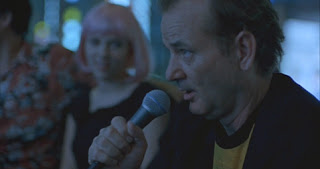
Lost in Translation
Originally Written and Posted at Epinions.com on 9/21/03 w/ Additional Edits
"Listen to the girl as she takes on half the world. Moving up and so alive. In her honey-dripping beehive, beehive, it's good, so good, it's so good, so good. Walking back to you is the hardest thing that I can do. For you, I'll be your plastic toy; I'll be your plastic toy, for you. Eating up the scum is the hardest thing for me to ".
-Just Like Honey by the Jesus & Mary Chain from Psychocandy
The lyrics above are a very good description on what Sofia Coppola's film Lost in Translation is all about. It's about two people who find themselves alone and neglected in a world that is foreign to them. Starring Bill Murray and Scarlett Johansson, Lost in Translation is an evocative, romantic masterpiece that transcends all barriers of depth in acting, writing, and direction. Sofia Coppola brings in a film that takes the audience to an area they might have not been before and see the cultural differences between the worlds you live and the new world that that they're being introduced to. In the process, it's an unconventional romantic comedy-drama that is more about trying to identify yourself in the new world while looking at the old world from an eerie distance. What Lost in Translation succeeds in is finding an emotional chord through its actors, plot, and striking visuals.
50-year old Hollywood actor Bob Harris (Bill Murray) has just arrived to Tokyo to endorse Suntory Whiskey for $2 million. Yet, Bob's career isn't hot as it used to be as he arrives at the Hyatt Hilton Tokyo where he receives a fax from his wife that he had forgotten his son’s birthday. His sullen mood worsens as he's forced to listen to bad jazz renditions of songs like Scarborough Fair from a jazz chanteuse (Catherine Lambert), dealing with fans, and having trouble sleeping. In the same hotel, a young Yale graduate named Charlotte (Scarlett Johansson) is also having trouble sleeping while her photographer husband John (Giovanni Ribisi) is on assignment to do photos for a rock band. Charlotte somehow feels neglected in her 2-year marriage as she wanders around in Tokyo looking at temples. Charlotte suddenly feels like her marriage is falling apart as well as her identity after tearfully calling a friend in the U.S. about what's going on.
Bob and Charlotte for a few days would see each other in the bars or in an elevator but haven’t spoken as Charlotte is exploring the strange culture of Japan with its video games and pop culture references. Bob meanwhile, is shooting the whiskey commercial and finds himself in an awkward position where he has trouble figuring out what the Japanese director wants from him, which is more intensity. Bob also feels alone not just from the array of Japanese television but from the number of faxes from his wife on what shelves or carpet colors he wanted. Charlotte is also having trouble trying to find something she can relate to as her husband has been consumed with his job. Even as they meet a vapid Hollywood starlet named Kelly (Anna Farris) doesn't help matters for Charlotte.
Then one night, Bob and Charlotte finally talk in the hotel bar as they both couldn't sleep and talk about their own problems. They would meet again after Charlotte leaves a dinner conversation with John and Kelly where Bob asks if she would participate in something that would get them out of this funk they’re in. Charlotte says yes as the two explore Japan by themselves. In the day, Bob will do his promotional work for the whiskey including a hilarious photo shoot where he mimics the Rat Pack and Charlotte would explore Tokyo and the art of Japanese flowers. They meet again and later in the night, they explore the party scene of Tokyo where Charlotte meets an old college friend Charlie (Fumihiro Hayashi) who introduces the two to the rave scene, indie-pop records, and of course, karaoke. Charlie does the Sex Pistols' God Save The Queen and Bob does Nick Lowe's (What's So Funny 'Bout) Peace, Love, & Understanding?. Charlotte later does the Pretenders' Brass in Pockets and Bob responds with a moving rendition of Roxy Music's More Than This.
The night resulted in the two finally getting some sleep while Bob is forced to deal with strange, disconnected communication with his wife while Charlotte is feeling more neglected from John as he is away from business. Bob and Charlotte have lunch together where Charlotte reveals a bruise in her foot resulting from a bump with a small object a few days back. Bob accompanies to the hospital where he talks to an old person despite not understanding what he's saying. They later meet for another night with Charlie at a strip club as they begin to have conversations about their troubles lives in a moving scene of the two of them in bed talking about marriage. With the film progressing from then on, Charlotte and Bob do their day activities while wondering if the relationship they're having is meaningful in the short time they're having.
In her second full-length feature to date after making the 1999 acclaimed film The Virgin Suicides, Sofia Coppola has created something that is dreamlike but also eerie in its framing and tone. With cinematographer Lance Acord, Coppola captures the colorful, modern look of Tokyo that seems beautiful but at the same time, makes the audience feel very isolated in a lot of ways, particularly the characters of Bob and Charlotte. Coppola's original script is filled with wide-range of emotions along with some humor while in scenes with no dialogue, there's no need for her to write words as she makes the actors capture raw emotion through their performances. Even the sceneries of temples, landscapes, clubs, and arcades are filled with enigmatic beauty as the audience is transported into this new world that they're surrounded by. Though it seems to be a clash in cultures, it really opens the mind of the worlds many aren’t familiar to and Tokyo is a perfect setting with its wild look and people.
One noted factor to the greatness of the film is the use of its music. With cuts ranging from karaoke, jazz standards, Japanese pop, and dream-pop, the film exceeds the use of music the way Coppola had approached it with The Virgin Suicides. In Lost in Translation, the music moves and captures the mood of the film. With some of the original music from Brian Reitzell with Beck musician Roger Joseph Manning, Reitzell brings an eerie, cold mood to the culture of Japan along with the electronic music of Death in Vegas, Air, and Squarepusher. The real music star of the film is none other than My Bloody Valentine’s Kevin Shields, who finally returns with new music in 12 years after the release of the 90s rock masterpiece Loveless. Shields brings a dreamy, melancholic tone to the music, including the song City Girl used in the film's opening shot of Johansson in pink underwear and in the flower scene for a dreamy, melodic instrumental called Ikebana. Even the classic MBV song Sometimes appears in the film and the Jesus & Mary Chain noise-pop masterpiece Just Like Honey that gives the film its emotional climax.
The supporting performances of Giovanni Ribisi, Anna Farris, and a slew of Japanese actors are all well utilized. Ribisi plays a character that loves his wife but he's also married to his work and has been consumed with the trappings of being around celebrities and all sorts of people stroking his ego while making himself neglectful towards Charlotte. While Ribisi's character is based on Coppola's now ex-husband Spike Jonze, Ribisi's performance isn't an exaggeration of Jonze. Anna Farris does a surprising performance as a brainless Hollywood starlet who is consumed with her own fame and believing that she is the greatest thing in Japan, while she does a hilarious, off-key rendition of Carly Simon's Nobody Does It Better. Even the Japanese cast is hilarious to watch from the commercial director (Yukata Tadokoro), the hooker, translators, TV talk show host Matthew Minami (Takashi Fuji) and all sorts of people including Fumihiro Hayashi as Charlie stand out on their own bringing out a sense of comedy while not purveying to the stereotype of the Japanese.
Then there's the two leading performances of Bill Murray and Scarlett Johansson that are both enigmatic, masterful, and deep in their respective roles and it's no doubt these two should be getting some awards. For Bill Murray, the character of Bob Harris is the best film role of his entire career. While he was hilarious in movies like Caddyshack, Meatballs, Ghostbusters 1 & 2, Scrooged, What About Bob? and Stripes along with more serious performances in Ed Wood, Rushmore, and Groundhog Day, Lost in Translation is his most defining performance as he not only brings out some quick-witted humor that is dry in some cases while he reveals his sense of vulnerability in the film including the poster of him sitting on his bed with his sad, droopy face.
Scarlett Johansson meanwhile, delivers a performance that exceeds all sorts of expectation wanted from a young actress. Though she's only 19 years old, Johansson brings in a mature, fragile performance as Charlotte that I don't think many actresses, including those around her age group could manage. She displays a beauty that transcends all sorts of barriers from the exterior to the more internal torture in her character. Johansson recently won the Upstream Best Actress prize from the Venice Film Festival for her performance and she truly deserved it. Just the way she made the camera look at her and to identify with the character is a true power to what it is to be a great actress. In comparison to early film roles like Manny & Lo, The Horse Whisperer, Ghost World, An American Rhapsody, and The Man Who Wasn't There, this is one of her best performance to date though she recently top that with Girl with a Pearl Earring with Colin Firth as the famous Vermeer painting.
The chemistry between Johansson and Murray are spellbinding as they channel their sadness to find some life around themselves in a foreign world. Even in their karaoke scenes, they bring in some depth into their roles while proving that they're not the best singers in the world. The age difference between the two is thrown out of the window as they play two lost souls trying to find meaning with their drab life. Even in the script's unconventional approach to a love story, the film doesn't give an answer on whether they should sleep together or not because it doesn’t matter. What matters is how these two individuals feel through real emotions and no one could capture those kinds of performances the way Murray and Johansson has done
***Updated Tidbits on the DVD from 2/5/04***
The DVD to Lost in Translation is featured in two versions. The Full-Screen and 1.85:1 Anamorphic Wide-Screen version. For those of you cinematic buffs who saw Lost in Translation multiple times (like I did where I saw the film 3 times in 2003 in the theaters), the Wide-Screen version is the one to own since it captures the film in an exhilarating form. With languages featuring French and Spanish subtitles plus DTS & Dolby Digital 5.1 Surround Sound in English and Dolby Digital 5.1 Surround Sound in French. No, the film doesn't have Japanese subtitles but at least now, we can hear what Kevin Shields was saying in his MBV song Sometimes and City Girl that has so many interpretations on what he said.
Aside from the scene selections and language features, the DVD also includes a great menu of Special Features. The only disappointment in the Special Features DVD and probably for good reason is audio commentary from Sofia Coppola (but due to her personal circumstances, it's understandable and there’s no audio commentary from the always reclusive Murray and the workaholic Johansson). Aside from the great trailer (and before the film, some great trailers of films from Focus Features), there are some great special features that include two documentary features, Coppola's video for Kevin Shields' City Girl, five deleted and extended scenes, and the full version of Bob Harris’ visit to the Matthew's Best Hit TV Show.
The video for City Girl includes some shots of the film based on the viewpoint of Charlotte as well as a few scenes that didn’t make into the film. Sofia Coppola, who only had shot three music videos, did an amazing job with the editing and her romantic use of Kevin Shields' new song. The feature for Matthew's Best Hit TV Show is downright hilarious as the audience gets to see the whole episode in its entirety. We get to see Bob Harris trying to talk to the boisterous Minami and we finally see what was revealed in the box that is downright disgusting but overly hilarious.
The five deleted and extended scenes can be played individually or as a whole. The first is a deleted scene of Bob Harris joining in the water aerobics club with some Japanese women as he splashes around and joins in for the fun, showing Murray's offbeat comedy antics. The second is a scene where Charlotte goes into a toyshop outside of Tokyo as she encounters two robot children as she tries to play with them but leave her displaying her sense of neglect with background music of In The Subway by Roger Joseph Manning Jr. and Brian Reitzell. The third is an extended press conference scene for Anna Faris’ Kelly where she talks about her action film Midnight Velocity and all of the Hollywood clichés that is played to the hilt, especially as Faris is playing a ditzy, Cameron Diaz-like character to the role. Faris isn't trying to be Diaz but she definitely brought some humor to the film's subtle tone. The fourth scene is a scene where Charlotte calls Bob the night after the karaoke party as she asks if he'll join her for lunch. The fifth and final scene is an extended scene of Harris' conversation with a Japanese elder that gets funnier because of the language barrier as they to learn each other's name.
The two documentary features include two different documentaries from Rome and Tokyo. The first is a 10-minute conversation with Sofia Coppola and Bill Murray in Rome, Italy in October of 2003 as they talk about the film where Murray says it's the best film he's ever done and it's his all-time favorite. Coppola and Murray thanked the film's crew for all the work that went through it including the actors and producers. The second is a 30-minute documentary on the making of the film as we see Sofia working on the film with the Japanese film crew. Also featured is Spike Jonze (who also shot the documentary) talking to Sofia about the film as we see the hospital scene, the worst lunch scene, Bob Harris' commercial scenes, and the Hyatt scenes being built with the Murray and Johansson talking and having some fun.
Overall, the DVD is something any hardcore fan of the film must have along with the film's soundtrack. The features are great; especially for film buffs that want to learn how movies are made and the other stuff are cool too. Hopefully, we'll get some audio commentary soon from Coppola and the actors in future editions and maybe, a book on the screenplay but it's likely that no will ever know what Harris whispered into Charlotte's ear. That's a moment only for the actors and its best if audiences never knew.
***End of DVD Tidbits Section***
Lost in Translation is hands-down, the best film of 2003. Though the comic-bio pic of American Splendor is a close second, Lost in Translation is just brilliant with its striking visuals, dreamy music, romantic script, and evocative performances of Bill Murray and Scarlett Johansson. The film is just powerful in its approach and mood, as Sofia Coppola has finally established herself as a filmmaker. Gone forever is the miscast performance of The Godfather Part III and gone now is her being mentioned with father and legendary director Francis Ford Coppola. Now, Sofia is a filmmaker that everyone will have to wait for and it's obvious her next film will be widely anticipated. In the end, Lost in Translation is an enigmatic masterpiece that is filled with beauty and realness thanks in large part to Sofia Coppola’s direction and the performances of Bill Murray and Scarlett Johansson.
Sofia Coppola Films: Lick the Star - The Virgin Suicides - Marie Antoinette - Somewhere - The Bling Ring - A Very Murray Christmas - The Beguiled (2017 film) - On the Rocks - Priscilla (2023 film)
Sofia Coppola Soundtracks: Air-The Virgin Suicides - The Virgin Suicides OST - Lost in Translation OST - Marie Antoinette OST - (The Bling Ring OST) - (Priscilla OST)
Sofia Coppola Essays: Sofia Coppola: The Videos and Ads 1993-2008 - LIT 5th Anniversary Essay - The Auteurs #1: Sofia Coppola - LiT: 10 Reasons - 10 Things I Want to See in a Criterion UHD 4K Blu-Ray for Lost in Translation
© thevoid99 2010
Subscribe to:
Posts (Atom)