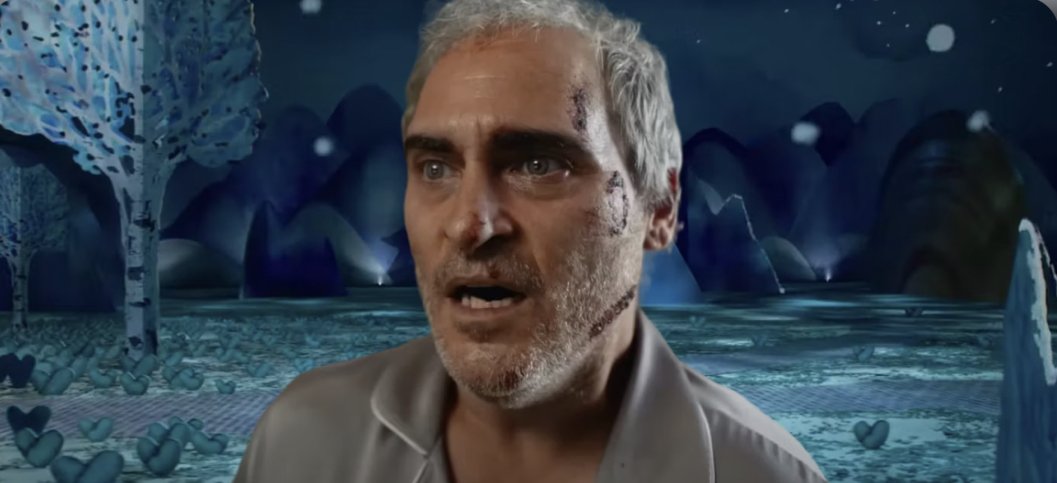
The film follows a man who is set to meet his mother as he constantly encounters all sorts of chaos where he is often afraid as his journey to return home to his mother becomes this journey filled with lots of misunderstandings and other strange incidents that has him running away. It is mainly a character study of this man who lives in an apartment where a lot of shit happens as he often attends therapy sessions as he is reluctant to visit his mother Mona (Patti LuPone & Zoe Lister-Jones as both the present and younger versions, respectively) whom he’s had a chaotic relationship with. Especially as they plan to meet on the anniversary of his father’s death as he had never known his father since he died before he was even born which makes the journey more difficult while a series of circumstances would delay his departure as he is hit by a truck where he is taken to a house by this couple who are nursing him despite the protests of their teenage daughter.
Ari Aster’s screenplay is sprawling in terms of the journey that Beau Wassermann takes as it also has some flashbacks relating to his life with mother including a moment as a teenager (Armen Nahapetian) when they’re vacationing on a cruise where meets a young girl named Elaine (Julia Antonelli) where they make a vow to lose their virginity to one another as he wouldn’t see her for years as he later learns that she works for her mother as an adult (Parker Posey). Throughout the course of the film, Aster’s script has Beau going through these encounters with people and other things as he is trying to go home as it relates to a Jewish custom but also is forced to confront things in his life had been braver. Yet, Beau is often someone who had a choice to take action or to make a decision but often never stands up for himself which often puts him into danger and all sorts of trouble. Especially in his relationship with his mother where he always does whatever she tells him to do and allows people to step over him.
Aster’s direction is definitely grand in terms of its overall presentation as it is shot largely on location in Montreal as New York City with areas in and around the city in its forests and suburbs as the places that Beau would go to. Yet, it opens with a childbirth scene shot from the perspective of the baby coming out of its mother’s womb as it sets the tone for the chaos that Beau would endure as an adult. Aster would create some unique compositions that play into Beau’s own sense of paranoia and fear such as a man hiding on the ceiling in his bathroom while Beau is in the tub as the close-up of Beau’s face and the man’s face is a key moment. Even as it would be this moment leading to the second act where Beau would be hit by a car while being stabbed by a crazed naked man as it is one of several moments of surrealism that is present throughout the film. The scenes at the home of this couple in Grace and Roger (Amy Ryan and Nathan Lane, respectively) does seem like this sense of normalcy until their daughter Toni (Kylie Rogers) comes in as it adds to this sense is discord where something is going to happen to Beau either through his own decisions or his refusal to take action.
The wide and medium shots don’t just add to the visual look of the film including a scene where Beau is in the forest where he meets an acting troupe putting on a play. It is a scene near its third act where Beau sees himself as this character in a play as it is this surreal moment that play into the kind of future Beau would’ve had if he had been braver. It should’ve been this moment of serious development but given the fact that he is someone that carries a lot of guilt where Aster constantly has Beau in situations where there are moments that go on for too long in a film with an almost three-hour running time. The film’s third act and climax that relates to a supposed flashback or traumatic event has him just take not just the abuse from people who blame him for something he didn’t do but also keeps apologizing as if he was the one that has done something. Its ending is also strange as it plays into a man that doesn’t just have serious parental issues but is also someone without a spine who rarely has a moment of anger as he is driven by fear of not just being unloved but also being someone who never had anyone to tell him to stand up for himself. Overall, Aster crafts a wondrous yet bloated film about a man who is afraid of everything and everyone as he tries to get home to his mother.
Cinematographer Pawel Pogorzelski does brilliant work with the film’s cinematography as it has these amazing visuals for many of the daytime exterior scenes with its natural lighting along with some unique lighting for some of the scenes at night including scenes in the forest and at Mona’s home. Editor Lucian Johnston does nice work with the editing in allowing shots to linger a bit along with rhythmic cuts to play into the action and some of the film’s dark humor though it has moments where it lags due to its bloated presentation. Production designer Fiona Crombie, with key set decorator Paul Hotte and supervising art director David Gaucher, does amazing work with the look of the small apartment that Beau lives in to the home of Roger and Grace as well as the home where Mona lives along with the look of the stage play that Beau watches. Costume designer Alice Babidge does excellent work with the costumes in the different array of clothes including some pajamas that Beau wears along with the costumes that the acting troupe wears.
Hair designer Felix Lariviere and prosthetics makeup effects designer Steve Newburn do incredible work with not just the look of Beau with his bruises and such but also in the play scene where he dreams of being the main character in the play with all of its prosthetics as well as a key scene late in the film as it play into some revelations about himself. Special effects supervisor Louis Craig, along with visual effects supervisors Yuval Levy and Louis Morin, does fantastic work with the look of the play fantasy scene with some of its animation as well as some effects for a key scene late in the film. Sound editor Paul Hsu does superb work with the sound as it play into the atmosphere of the locations as well as how music is presented next to Beau’s apartment as well as other things that are played on location. The film’s music by Bobby Krlic is phenomenal for its haunting mixture of woodwinds, percussions, and string instruments to add to the suspense and offbeat humor of the film while music supervisor Jemma Burns creates a soundtrack that is filled with an array of music from various genres ranging from pop and electronic music including songs from Bread and Mariah Carey.
The casting by Julie Breton and Jim Carnahan is wonderful as it feature some notable small roles from Richard Kind as Mona’s attorney Dr. Cohen, Julian Richings as a strange man Beau meets at the play who claims to know Beau’s father, the trio of Michael Gandolfini, Theodore Pellerin, and Mike Taylor as Beau’s sons in the fantasy play sequence, Alicia Rosario as Toni’s friend Liz, Bradley Fisher as a naked man stabbing people, James Cvetkovski as Beau as a young boy, Hayley Squires as a pregnant woman named Penelope who takes Beau to the forest where she’s part of an acting troupe, Julia Antonelli as a teenager Elaine whom the young Beau would fall for, and Armen Nahapetian as the teenager Beau who would fall for the young Elaine as he deals with his father’s absence and other issues relating to his mother. Stephen McKinley Henderson is superb as Beau’s therapist who observes and takes notes over Beau’s anxieties while also recommending him to take some serious prescriptions with water.
Denis Menochet is terrific as a PTSD soldier named Jeeves who is unstable comrade of Grace and Roger’s son whom they let stay at a trailer at their home as he would be this insane figure that would scare Beau. Kylie Rogers is good as Grace and Roger’s daughter Toni as this troubled and antagonistic teenager who hates Beau as she gets him to do things as a way to humiliate him as well as do whatever she can to get him in trouble. Amy Ryan and Nathan Lane are excellent in their respective roles as Grace and Roger as a couple who hit Beau with their car as they take him in to heal as they are this weird couple who offer to help him yet are offbeat though they come off as cartoonish at times. Parker Posey is brilliant in her small role as the adult Elaine as Beau’s soulmate whom he hadn’t seen in years as she reveals to work for his mother in her business while her reunion with Beau is a joyful moment leading to something hilarious in their meeting.
The duo of Patti LuPone and Zoe Lister-Jones are great in their respective roles as the older and younger version of Beau’s mother Mona Wassermann with LuPone as this domineering woman who has become tired of her son’s anxiety issues though it is clear that she is a toxic woman with little care about his issues. Lister-Jones’ performance is more subdued as she isn’t this sweeter version of Mona but also reveals to be someone who is also toxic. Finally, there’s Joaquin Phoenix in an incredible performance as the titular character as this man who is constantly afraid of everything as he’s filled with a lot of anxieties and fears where he often apologizes for everything. It is a performance that has Phoenix do a lot of physicality as well as display emotions though he is hampered by the script as well as the fact that this character he’s playing doesn’t grow a spine and never stands up for himself as it has these moments of greatness but it is also frustrating at times.
Beau is Afraid is a stellar yet highly-flawed film from Ari Aster despite an incredible leading performance from Joaquin Phoenix. While it is a film that does feature a great ensemble cast, dazzling visuals, and a killer music score by Bobby Krlic, it is a film that is ambitious in its approach to surrealism but falls flat due to a protagonist that rarely takes action for himself as he continuously gets stepped on over and over again. In the end, Beau is Afraid is a good but bloated film from Ari Aster.
Ari Aster Films: Hereditary - Midsommar
© thevoid99 2023
(Winner of the Best Actor Prize to Joaquin Phoenix and Co-Winner of the Best Screenplay Prize to Lynne Ramsay with Yorgos Lanthimos and Efthymis Filippou for The Killing of a Sacred Deer)

The film revolves around a man whose job is to retrieve young girls and women who have been kidnapped as he is asked by a politician to retrieve his daughter only to uncover a human trafficking network that is bigger than he realizes as he copes with his own trauma relating to his childhood and his time as a soldier. It is a film with a simple premise that plays into a man who takes a job to find and save young women yet this one job ends up being much more troubling than he realizes as it also relates to politics and power. Lynne Ramsay’s screenplay is largely straightforward yet it follows the mind of its protagonist in Joe (Joaquin Phoenix) who does his job in secrecy as he would spend his off-time tending to his aging mother (Judith Roberts).
When he meets his boss John McCleary (John Doman) about an assignment to retrieve the daughter of Senator Albert Votto (Alex Mannette) in Nina (Ekaterina Samsonov). Joe accepts the job yet he remains troubled by his own past as a child (Dante Pereira-Olson) as well as flashbacks as a soldier as it adds to obstacle of his job. Especially as Nina is at the center of this where political power is involved as the film’s second half has Joe deal with what Nina’s father is involved in as trouble ensues. Even as it leads to this trail of blood and anger that Joe would venture into as it play into a dark world that he would encounter yet that world would cross a line that not even Joe would go into.
Ramsay’s direction is definitely riveting for the fact that it aims for something simple but also with elements that are a bit surreal and unsettling. Shot on location in New York City and areas near and at upstate New York as well as interior shots at the Astoria Studios in New York City. Ramsay chooses to avoid many of the city’s many landmarks in favor of going more into areas not often seen as it play into this world that Joe lives in where he lives on the fringes of society. While there are some wide shots that Ramsay uses to establish a few locations and settings in the film, Ramsay chooses to maintain an intimacy on the film as well as create small glimpses of Joe’s own troubled childhood and his time at war. The usage of close-ups and medium shots add to the anguish that Joe endures but also his actions when it comes to dealing with the situation at hand. One aspect that Ramsay does in the film is her approach to violence as much of it is either off-screen or shown from afar with graphic elements are shown in the aftermath of a violent event.
Ramsay also play into this air of intrigue as she often has scenes of Joe wrapping his head around plastic as a way to envision death as it play into his own suicidal thoughts. Ramsay isn’t afraid to play into elements of darkness while she emphasizes on what she doesn’t show as it relates to the world of sex trafficking other than just what needs to be shown. Even as the film leads to the third act where Joe does go hell-bent on uncovering the truth and get some form of justice such as a scene where he confronts a wounded hitman as it is Joe’s humanity that is the most shocking moment in a film that is intensely dark. The film’s climax that involves the main figure of this sex trafficking scandal is intense but on a more emotional approach where Ramsay play into Joe’s own traumas and the sheer chaos of the world he uncovered. Overall, Ramsay crafts a gripping and evocative film about a mercenary who is tasked to recover a politician’s daughter only to uncover the dark world of sex trafficking.
Cinematographer Thomas Townend does brilliant work with the cinematography in its emphasis on natural and low-key lighting while maintaining some stylish lighting for some of the interior scenes at night as it play into the suspense and terror. Editor Joe Bini does amazing work with the editing as its usage of jump-cuts and montages add to some of the drama and suspense while being straightforward in some parts of the film. Production designer Tim Grimes, with set decorator Kendall Anderson and art director Eric Dean, does excellent work with the look of Joe’s home where he lives with his mother, McCleary’s office, and the place where Joe finds Nina. Costume designer Malgosia Turzanska does fantastic work with the costumes as it is largely casual with the exception of the expensive suits that the politicians wear as well as a nightgown that Nina wears.
Special effects makeup designers Tom Denier Jr. and Vincent Schicchi do incredible work with the look of some of the wounds and such into some of the victims that Joe encounters or those he kills as it adds a sense of discomfort to the film. Visual effects supervisor Nick Bennett does nice work with a major visual effects scene in the third act as it play into Joe’s own despair as it relates to setbacks and what he must do. Sound designer Paul Davies does superb work with the sound as it adds to the film’s intense atmosphere in the way natural sounds are presented as well as gunshots are sound from afar as the sound design is a major highlight of the film. The film’s music by Jonny Greenwood is phenomenal with its emphasis on low-key orchestral arrangements to play into the suspense and drama as well as some eerie electronic and rock-based music pieces that help intensify the moments while music supervisors Catherine Grieves and Frederic Junqua cultivate a soundtrack that features other score pieces from other films as well as songs from Colbie Caillat, Albert Hammond, Joyce Heath, Charlene, Engelbert Humperdinck, and Eileen Barton and the New Yorkers as much of the music is played on a location for a scene in the film.
The casting by Billy Hopkins and Ashley Ingram is wonderful as it feature some notable small roles from Scott Price as a wounded hitman that Joe questions and comforts, Kate Easton as a younger version of Joe’s mother, Jonathan Wilde and Ronan Summers in the role of Joe’s father whose face is never seen, Frank Pando as a middleman named Angel who works with McCleary and runs a bodega, Vinicius Damasceno as Angel’s son Moises who had witness Joe return home following a job, Dante Pereira-Olson as the young Joe who witnesses and is a recipient of the abuse from his father, Alex Manette as Senator Albert Votto who hires Joe to get his daughter back as he is hiding something relating to a scandal, and Alessandro Nivola as a powerful politician in a state governor who is key player in this dark world of sex trafficking.
John Doman is excellent as Joe’s boss John McCleary as a man who gives Joe assignments while hoping to retire and offer Joe a chance to live a less troubled life. Judith Roberts is brilliant as Joe’s mother as a woman who has given Joe a reason to live despite her old age as well as being someone who is funny. Ekaterina Samsonov is amazing as Nina Votto as a teenage girl who has ran away and finds herself in the world of prostitution as she is unsure of how she got there while coping with the fact that she is really a pawn in a dark underworld. Finally, there’s Joaquin Phoenix in a magnificent performance as Joe as a mercenary hired to retrieve young women from sex traffickers as he is someone coping with trauma from his childhood and time as a soldier where Phoenix provides a restrained performance as someone who keeps to himself as is also a performance of terror and anguish where Phoenix creates a career-defining performance.
You Were Never Really Here is an outstanding film from Lynne Ramsay that features a great leading performance from Joaquin Phoenix. Along with its supporting cast, rapturous visuals, a gripping script, and an eerie music score from Jonny Greenwood. The film is definitely a haunting character study that explores a man coping with the past while trying to save a young girl from a dark underworld that proves to be bigger than he thought. In the end, You Were Never Really Here is a magnificent film from Lynne Ramsay.
Lynne Ramsay Films: Ratcatcher - Morvern Callar - We Need to Talk About Kevin - Die My Love - (Polaris)
Related: The Auteurs #6: Lynne Ramsay - Favorite Films #9: Morvern Callar
© thevoid99 2021
Based on the character from DC Comics, Joker is the story of a wannabe stand-up comedian whose descent into madness would force him to become an agent of chaos and wreak havoc on Gotham City. Directed by Todd Phillips and screenplay by Phillips and Scott Silver, the film is an origin story of sorts set in the late 1970s/early 1980s as it play into a man who is struggling to fit in to society only to deal with his own mental illness and rejection from the world as the titular character/Arthur Fleck is portrayed by Joaquin Phoenix. Also starring Zazie Beetz, Frances Conroy, Brett Cullen, Bill Camp, Shea Whigham, Marc Maron, and Robert de Niro. Joker is a haunting yet intense film from Tod Phillips.
Set in 1981 during a time of civil and social unrest in Gotham City, the film follows a man who works as a rent-a-clown who aspires to be a stand-up comedian as he copes with his own mental issues as an act of violence he committed would give him a spark in his life. It’s a film that explore a man who would become Batman’s top nemesis and what he was before he had become this agent of chaos. The film’s screenplay by Todd Phillips and Scott Silver establishes a world that is similar to what was happening to New York City in the mid-late 1970s during a time of economic turmoil, social and civil unrest, and crime being the norm where Arthur Fleck is just a guy trying to work as a clown to make money to help his ailing mother Penny (Frances Conroy) yet he is beaten up by a gang of kids one day and is already in trouble while he often has to write a journal for a social worker (Sharon Washington) handling his case and giving him medication. Things however are getting bad as social services is dealing with budget cuts while Arthur would lose his job due to a small incident though no one was hurt.
Arthur also has a condition where he laughs uncontrollably whenever he gets emotional or anxious as it play into the repressed emotions he is carrying as his time caring for his mother starts to overwhelm him. While he would find a source of comfort in befriending his neighbor in Sophie Dumond (Zazie Beetz), he has trouble trying to connect with the world including in his attempts to be stand-up comedy. His biggest dream is to succeed and appear on a late-night talk show hosted by Murray Franklin (Robert de Niro) yet reality would collide with Arthur following an incident where he is beaten by three Wall Street workers whom he would kill in defense on a subway. It would be a key moment in the film as the death of these three men would spark a social uprising during an election year in which one of Gotham’s richest men in Thomas Wayne (Brett Cullen) is running for mayor hoping to fix the city. Adding to the drama is Penny’s claims that she is to receive a letter from Wayne since she used to work for him prompting Arthur to find out more about her relationship with Wayne leading to some major revelations.
Phillips’ direction definitely evokes two films by Martin Scorsese in Taxi Driver and The King of Comedy with more emphasis on the latter which was about a wannabe stand-up comedian trying to be friends with a talk show host only to later kidnap him. Shot on location in New York City as well as parts of Newark, New Jersey, the film does play into that world of a city on the brink of collapse as it’s surrounded by garbage due to a garbage strike with rats eating the garbage. Employment is becoming scarce with the poor being poorer and the rich being richer with Arthur being part of the former as he is struggling to work as a clown to help failing businesses or to entertain children at a children’s hospital. Much of Phillips’ direction is straightforward in its compositions with some wide shots of a few locations as well as to play into Arthur’s disconnect with society and reality. The close-ups and medium shots that play into Arthur’s interaction with others including a tense meeting with Thomas Wayne at a benefit play into his attempts to connect with people.
Phillips’ direction does have a few drawbacks as it relates to a few twists that play into Arthur’s revelation about himself and his mother with the latter given a storyline about a possible relationship with Wayne that never really gels out despite what is revealed. The exploration of social chaos definitely takes a cynical view of things where it play into this air of social discord between the rich and the poor with Arthur being this unlikely hero for the latter and the enemy of the former yet no one knows about his identity as the man who killed those three yuppie men. Though Arthur doesn’t take sides in this conflict nor does he condone the actions of others, the film does play into the impact he creates where Phillips is aware that Arthur is a ticking time bomb waiting to explode. The film’s third act that has him face up to the realities of the world and strip away whatever delusions he and his mother had would showcase a man that has inspired a dangerous movement of anarchy that would have some serious consequences including how it would affect a young boy named Bruce Wayne (Dante Pereira-Olson). Overall, Phillips crafts a chilling yet gripping film about a mentally-ill man whose disconnect with the world would make him a master of chaos.
Cinematographer Lawrence Sher does excellent work with the film’s cinematography with its emphasis on low-key colors with certain lighting moods and schemes to help play into Arthur’s behavior as well as the state of Gotham City in its growing sense of decay. Editor Jeff Groth does terrific work with the editing as it does bear some style in some of the rhythmic cuts it creates to play into the drama, suspense, and some of the film’s dark humor. Production designer Mark Friedberg, with set decorator Kris Moran and art director Laura Ballinger, does amazing work with the look of the apartment home that Arthur and Penny lived in as its cramped and in drab conditions to reflect the world they live in as well as the studio that Murray Franklin hosts his show. Costume designer Mark Bridges does fantastic work with the costumes from the clothes that Arthur wears as it would involve into the suit he would wear upon his evolution as the Joker to the clothes of other people that they wore during the early 80s.
Makeup designer Nicki Ledermann and prosthetics makeup effects designer Michael Marino do superb work with the look of the makeup that Arthur wears as a clown and its evolution that would play into his growing manic state. The visual effects work of Brian Adler, Joseph Oberle, and Kondareddy Suresh is nice for the way it presents early 1980s Gotham City in its grungy and decayed look as well as some of the chaos that occurs during the film’s third act. Sound editor Alan Robert Murray does nice work with the sound in the way music sounds on a location or in a room as well as the usage of natural sounds and voices that Arthur would hear as it play into his growing descent.
The film’s music by Hildur Guonadottir is wonderful for its ominous yet eerie music score with its emphasis on strings and brass to play into Arthur’s descent while music supervisors George Drakoulias and Randall Poster provide a music soundtrack that mixes an array of music from the likes of Claude Bolling, Frank Sinatra, Cream, the Main Ingredient, Fred Astaire, Lawrence Welk, Stephen Sondheim, and Charles Chaplin that play into the world that Arthur is in though the one major blemish in the music soundtrack is a 70s glam rock piece by a certain convicted pedophile whose name doesn’t deserve any mention.
The casting by Shayna Markowitz is marvelous as it feature some notable small roles from Rocco Luna as Sophie’s daughter Gigi, Josh Pais as Arthur’s boss, Leigh Gill as the midget clown Gary, Carrie Louise Purtello as Martha Wayne, April Grace as Arkham asylum psychiatrist, Sharon Washington as Arthur’s social worker, Glenn Fleshler as a clown named Randall who would give Arthur a handgun, Hannah Gross as a young Penny in a flashback scene, Brian Tyree Henry as an Arkham hospital clerk who makes a discovery about Arthur, Marc Maron as Franklin’s producer Gene Ufland, and Dante Pereira-Olson as a young Bruce Wayne. Other notable small roles include Shea Whigham and Bill Camp as a couple of detectives asking Arthur some questions about what happened the yuppie murders.
Douglas Hodge is terrific in his lone scene as Bruce Wayne’s caretaker Alfred Pennyworth who confronts Arthur while revealing things about Arthur’s mother. Brett Cullen is superb as Thomas Wayne as the billionaire who is running for mayor to help Gotham as he isn’t fond of the poor believing that some of them are trouble while he would have an encounter with Arthur that doesn’t go well. Frances Conroy is fantastic as Arthur’s mother Penny as a woman feeling ill as well as having delusions with claims about a relationship with Thomas Wayne though she did work for him as she is waiting for a letter from him. Zazie Beetz is excellent as Sophie Dumond as a neighbor of Fleck who would befriend him while sharing her own disdain of the rich but is not as cynical like everyone else knowing right from wrong.
Robert de Niro is brilliant as the late-night talk show host Murray Franklin who would play a role in Arthur’s own descent into madness after making fun of his stand-up performance as he is someone Arthur wanted to meet as this comedic idol. Finally, there’s Joaquin Phoenix in a tour-de-force performance as Arthur Fleck as this wannabe stand-up comedian and rent-a-clown that feels rejected by society and is constantly abused while overwhelmed with his duties to take care of his mother. It’s a performance that has Phoenix display an amazing air of physicality as well as play into someone that is troubled who later does horrible things as he is a man to be pitied and not revered as Phoenix creates this balance of a man that becomes lost in his own madness.
Joker is a marvelous film from Todd Phillips that features a great performance from Joaquin Phoenix in the titular role. Along with its ensemble cast, grimy visuals, study of mental descent and isolation, and an offbeat music soundtrack, it’s a unique character study into a man who starts off as someone trying to be good only to become a villain though there’s parts of the narrative and direction that doesn’t work as it play into the journey that this man would endure. In the end, Joker is a remarkable film from Todd Phillips.
Related: Taxi Driver - The King of Comedy - Batman (1989 film) - The Dark Knight - The Lego Batman Movie
© thevoid99 2019
Inspired by Fyodor Dostoyevsky’s short story White Nights, Two Lovers is the story of a man who returns home to New York City as he finds himself engaged to a woman when he falls for a neighbor. Directed by James Gray and screenplay by Gray and Richard Menello, the film is an unusual romantic triangle where a man finds himself falling for a beautiful woman but also wants to be a good man to his fiancé. Starring Joaquin Phoenix, Gwyneth Paltrow, Vinessa Shaw, Elias Koteas, Moni Moshonov, and Isabella Rossellini. Two Lovers is a rapturous and intoxicating film from James Gray.
The film revolves around a troubled man who finds himself in a love triangle with a beautiful neighbor he’s fallen for and a woman whose father wants to buy his parents’ laundromat business. It’s a film that plays into a man dealing with not just in love with two different women but also the fact that he’s still reeling from heartbreak as he is unsure of what to do. The film’s screenplay by James Gray and Richard Menello opens with Leonard Kraditor (Joaquin Phoenix) walking near a creek on his way home as he thinks about his former fiancée who broke up with him as he jumps off a bridge in a suicide attempt. He is saved but still has to return home unaware that his parents are having a meeting with the people who are going to buy their laundromat as they’re bringing in their daughter Sandra Cohen (Vinessa Shaw) who is fascinated by Leonard. During this time he’s dealing with his family’s business being bought, he meets a neighbor in Michelle Rausch (Gwyneth Paltrow) as they hang out and such as he’s unaware of how troubled she is.
Throughout the course of the script, Leonard is being pulled into two spectrums as he is often leaning towards Michelle because they both share emotional and mental troubles as Leonard is still coping with a break-up as it forced him to move back to his parents. Yet, his time with Michelle would often lead to a lot of questions than answers as she is having an affair with a married law partner in Ronald Blatt (Elias Koteas) that is becoming tumultuous. It’s a relationship that is problematic yet Leonard does find himself courting Sandra who is a more grounded person and very kind but also doesn’t want to make him uncomfortable as it relates to his previous break-up. Plus, her parents like him and his parents like her a lot where they attend family events and such as he feels more relaxed around her. Still, he is enamored with Michelle who wants his help as it relates to her relationship with Ronald with Leonard’s mother Ruth (Isabella Rossellini) watching from afar.
Gray’s direction is low-key as it doesn’t emphasize too much on style in favor of aiming for an intimate story of a man torn between two women. Shot mainly on the Brighton Beach area in Brooklyn in New York City with some of the films shot on New York City, the film does play into this environment that is largely working-class but also a world that is also vibrant. Gray would use some wide shots for some of the locations including some scenes on the apartment rooftop in a few conversation scenes between Leonard and Michelle that is presented on an entire take in one shot with a few more to follow in medium shots and close-ups. Yet, much of Grey’s approach of the film is to shoot it in many rooms and apartments as well as real locations around Brooklyn to play into this world these characters live in but also one that is prospering as far as Leonard’s father Reuben (Moni Moshonov) is concerned knowing that his family laundromat is going to be a part of something big with Leonard having something to fall back on since his aspirations as a photographer hasn’t gone anywhere.
Gray’s direction also play into the idea of longing since Leonard and Michelle live in the same build but across from each other’s window as it adds intrigue to their relationship whenever they talk on the phone as Ruth is supposedly hearing the conversation though she isn’t seen. Gray’s direction also play into this temptation where Leonard is attending a Bar Mitzvah for Sandra’s brother as he spends all of his time there but gets a call from Michelle whom he sees later as Gray would make the choice of having Michelle and Sandra never meet each other though the latter does know about the former due to conversations with Leonard. The film’s climax relates to Leonard’s decision about his future and his love life as it would play into the idea of safety in Sandra or to risk it all with Michelle. Overall, Gray crafts a tender yet intoxicating film about a man torn between two women he is in love with.
Cinematographer Joaquin Baca-Asay does brilliant work with the film’s cinematography as it emphasizes on mood for its usage of sepia-based lighting for many of its interiors and scenes set at night along with more blue-grey colors for a few daytime exteriors including a scene at a restaurant with Leonard and Sandra. Editor John Axelrad does excellent work with the editing as it is straightforward to play into the drama with a few rhythmic cuts to play into some of the film’s emotional moments. Production designer Happy Masse, with art directors Marc Benacerraf and Pete Zumba plus set decorator Carol Silverman, does fantastic work with the look of the apartment that Leonard’s family lives including his messy room as well as the apartment that Michelle lives in.
Costume designer Michael Clancy does nice work with the costumes as it is largely straightforward for its Christmas holiday setting with the exception of a few stylish clothes that Michelle wears as well as a New Year’s Eve dress that Ruth wears. Sound designer Douglas Murray does superb work with the sound as it play into the atmosphere of a few party scenes as well as the sparse and quiet sounds for some of the scenes at the apartment rooftop. Music supervisor Dana Sano does terrific work in assembling the film’s soundtrack as it include some classical pieces for the film’s score as well as a mixture of hip-hop, opera, and jazz music to play into the world that the characters are in.
The casting by Douglas Aibel is wonderful as it feature some notable small roles and appearances from Anne Joyce as Leonard’s former fiancée in a dream sequence and in picture, Iain J. Bopp as Sandra’s little brother David, Samantha Ivers and Jeannie Serrales as a couple of Michelle’s friends, Julie Budd as Sandra’s mother Carol, and Bob Ari as Sandra’s father Michael who would make an offer to Leonard about his future at his company. Elias Koteas is terrific as Ronald as Michelle’s married lover who is concerned about her well-being as he asks Leonard to keep an eye on her. Moni Moshonov is superb as Leonard’s father Reuben as a man that is trying to uphold his deal in this merger as well as ensure that his son would not have to worry about his future.
Isabella Rossellini is fantastic as Leonard’s mother Ruth who is concerned about her son’s well-being as she is also wondering what is going on as she seems to know about his affair with Michelle as it’s a very low-key yet mesmerizing performance. Vinessa Shaw is amazing as Sandra Cohen as a woman whose father is buying Leonard’s family business as they start off as friends and eventually lovers as she is a woman that is kind and understanding but also someone who is willing to help him. Gwyneth Paltrow is brilliant as Michelle Rausch as a woman who lives in the same apartment as Leonard as she is someone who is charming and fascinating but also troubled due to her love of drugs and alcohol to cope with her own emotional troubles. Finally, there’s Joaquin Phoenix in an incredible performance as Leonard Kraditor as a man still reeling from heartbreak as he finds himself falling for two women as he deals with the decision he’s in but also the prospect of his own future as it’s a restrained and charismatic performance Phoenix.
Two Lovers is a phenomenal film from James Gray that features great performances from Joaquin Phoenix, Gwyneth Paltrow, Vinessa Shaw, and Isabella Rossellini. Along with its supporting cast, gorgeous locations, riveting story, and beautiful visuals, it is a romantic film that doesn’t play by the rules as well explore the idea of security and heartbreak in a romance. In the end, Two Lovers is a sensational film from James Gray.
James Gray Films: Little Odessa - The Yards - We Own the Night - The Immigrant (2013 film) - The Lost City of Z – Ad Astra – The Auteurs #67: James Gray
© thevoid99 2018
Written and directed by James Gray, We Own the Night is the story of a club manager who finds himself in trouble following a raid where his boss decides to target both his father and brother who are cops. The film is an exploration of a man trying to live his own life as he contends with the drawbacks of his lifestyle and how it would affect his family. Starring Joaquin Phoenix, Mark Wahlberg, Eva Mendes, and Robert Duvall. We Own the Night is a gripping and evocative film from James Gray.
Set in the late 1980s in New York City, the film revolves a nightclub manager who works for the Russian mob as a raid led by his brother lead to trouble where he learns about a drug deal that has gotten dangerous forcing him to turn to his family. It’s a film that is not just about loyalty but also a study of a man caught between two different worlds where he is already in the world of running a club with drugs and seedy businesses while his father and older brother are cops. James Gray’s screenplay follows Bobby Green (Joaquin Phoenix) who spends much of his time running a nightclub in New York City while being with his Puerto Rican girlfriend Amada (Eva Mendes) and their friend Jumbo (Danny Hoch). Bobby works for the Russian mob leader Marat Buzhayev (Moni Moshonov) who owns the club as a legit way of making business though he allows his nephew Vadim Nezhinski (Alex Veadov) to make deals as he is about to make a huge drug deal that would change things. The news gets the attention of Bobby’s older brother Captain Joseph Grusinsky (Mark Wahlberg) who would lead a raid that doesn’t go anywhere but only furthers the tension between him and Bobby.
When Joseph is gunned down and in a critical state following a hit, Bobby finds himself torn between his loyalty to the mob as well as his love for his brother and father in Chief Albert Grusinsky (Robert Duvall) as the latter wants to protect him. When Bobby is asked to see what Vadim is up to by some of his father’s fellow officers, Bobby reluctantly agrees as a way to make amends with his brother but he eventually realizes that he isn’t safe once Vadim learns who he’s related to. Amada would be in danger as she copes with having to give up a lifestyle that she’s used to as well as be disconnected from her own family which would eventually cause tension with her and Bobby. Notably in the third act where Bobby makes a decision that is more about doing what is right for everyone and himself rather than return to a life that is filled with too much trouble.
Gray’s direction definitely bear elements of style in terms of some of the compositions while he would also create a period in time when New York City was still dangerous but had risen from the ashes of its dreary period of the late 70s thanks in part to its then-mayor in Ed Koch who appears in the film as himself. Shot on location in New York City, the film does play like a look back in time when the city was thriving but also had this air of unease where it’s the police that is trying to bring order back as the film’s title comes from a tag from one of chevrons on the police uniforms. Much of the film is set in the night with Gray focusing on that world though there are substantial scenes set in the daytime as it play into the world that Bobby lives in where he gambles or parties with Amada. It’s something different to what Joseph does where he splits his time doing his work with the police and being with his own family. Gray would shoot some wide shots of some of the locations though he would avoid certain landmarks of the city to maintain this element of the street and areas that involve people of Russian descent.
The direction would also have these intense moments such as a chase scene in the rain where Bobby and Amada are in a car where they’re being attacked with Bobby’s father trying to stop the attackers as it’s a key moment that would lead to the third act. It would play into what Bobby needed to do as Gray’s usage of close-up and medium shots play into the drama as well as how he deals with near-moments of tragedy and other things that add to Bobby’s development to help his family. Even as he has to deal with the other people who were like family to him as he is aware that everything he had done for them is meaningless. The film’s climax which is set in a bed of reeds is definitely one of the most chilling moments in the film as it play into the sense of the unknown and what a man will do to make things right. Overall, Gray creates a thrilling and compelling film about a nightclub manager turning straight when the mob he works for goes after his family.
Cinematographer Joaquin Baca-Asay does brilliant work with the film’s cinematography as it has some distinctive looks into the way the scenes at the club as well as some exterior scenes at night are light while it emphasizes on something low-key for some of the daytime scenes as well the mood for the car chase scene in the rain. Editor John Axelrad does excellent work with the editing as it has elements of style as it relates to the action and suspense while being more straightforward in its approach to the drama. Production designer Ford Wheeler, with set decorator Catherine Davis and art director James C. Feng, does amazing work with the look of the nightclub that Bobby manages as well as the look of some of the homes of the characters in the film. Costume designer Michael Clancy does fantastic work with the costumes as it has elements of style in what Bobby and Amada wear to the clubs as well as the look of the police uniforms.
Visual effects supervisors Iva Petkova, Kelly Port, and Mike Uguccioni do nice work with the visual effects as it is mainly set dressing for a few spots including a shot where the World Trade Center buildings are seen through a window. Sound designer Douglas Murray does superb work with the sound as it play into the atmosphere of the nightclub as well as some of the intense moments of violence including the film’s climax. The film’s music by Wojciech Kilar is wonderful for its usage of low-key string arrangements to play into the drama and suspense while music supervisor Dana Sano provides a cool soundtrack that features a lot of the music of the late 70s/early 80s from Blondie, the Clash, David Bowie, the Specials, Louis Prima, Tito Puente, and a mixture of traditional Russian music and jazz.
The casting by Douglas Aibel is marvelous as it feature notable small roles and appearances from former New York City mayor Ed Koch as himself, Maggie Kiley as Joseph’s wife, Latin artist Coati Mundi as himself at a club performance, Yelena Solovey as Buzhayev’s wife Kalina, Tony Musante as Captain Jack Shaprio who is an old friend of Albert, Antoni Corone as another friend of Albert in Lt. Solo, and Moni Moshonov in a terrific small role as the mob leader Marat Buzhayev as a man who treated Bobby like a son despite his dealings. Danny Hoch is superb as Bobby’s best friend Jumbo as a guy who helps run the nightclub as well as party with him while not knowing anything that is happening to Bobby or his family. Alex Veadov is fantastic as Vadim Nezhinski as Buzhayev’s nephew who is also a ruthless drug dealer that is willing to make sure things go right and kill anyone who gets in his way.
Eva Mendes is excellent as Amada as Bobby’s girlfriend who is happy in the lifestyle that she and Bobby live until Bobby gets into danger where she gets a closer look into the dark aspects of the lifestyle where Mendes really shows her frustration and sadness over Bobby’s eventual decision with his life. Robert Duvall is brilliant as Chief Albert Grusinsky as Bobby’s father who is aware of the lifestyle of his son as he hopes Bobby would get into the straight-and-narrow where he learns the kind of trouble he’s in as he does what any father would do which is to protect him.
Mark Wahlberg is amazing as Captain Joseph Grusinsky as Bobby’s older brother who is this hard-ass that is trying to do what is right for the law despite getting into fights with his brother where he learns how deep into trouble his brother is following his own recovery from a hit as he does whatever he can to help him. Finally, there’s Joaquin Phoenix in an incredible performance as Robert “Bobby” Grusinski/Bobby Green as a nightclub manager trying to live his own life until he learns of a drug deal that would get him into trouble after his brother was nearly killed as Phoenix’s performance is one of anguish and determination that includes the film’s climax.
We Own the Night is a phenomenal film from James Gray. Featuring a great ensemble cast, gorgeous cinematography, a riveting story, and a thrilling soundtrack, it’s a crime-drama that explore the idea of loyalty and a man being torn between his love for his family and the people who are part of the dark and seedy world of crime. In the end, We Own the Night is a sensational film from James Gray.
James Gray Films: Little Odessa - The Yards - Two Lovers – The Immigrant (2013 film) - The Lost City of Z – Ad Astra - The Auteurs #57: James Gray
© thevoid99 2017
Directed by James Gray and written by Gray and Matt Reeves, The Yards is the story of a convict who has been released from parole as he finds himself being part in a crime scheme with a friend for a subway rail yard leads to trouble. The film is a crime drama set in New York City where a man who went to jail for his friend deals with being drawn into a world that might put him back in prison as he also copes with loyalty and doing what is right. Starring Mark Wahlberg, Joaquin Phoenix, Charlize Theron, Faye Dunaway, Ellen Burstyn, and James Caan. The Yards is an evocative and mesmerizing film from James Gray.
The film follows a young man who has returned from prison for a crime he didn’t commit as he is eager to lead a straight-and-narrow life only to be coerced by his best friend to be involved in the world of corruption relating to the subway train yards only for things to go wrong. It’s a film that is a bit about redemption but also about the fallacy of loyalties in the streets as this young man is just trying to find work and not get in trouble but he is lured into a world he doesn’t want to go back to. The film’s screenplay by James Gray and Matt Reeves explore the motivations of its characters such as the protagonist Leo Handler (Mark Wahlberg) who returns home as he learns that his mother Val (Ellen Burstyn) is dealing with a heart condition and wants to set things right for her. At his homecoming party that is attended by his mother, his aunt Kitty (Faye Dunaway), his cousin Erica (Charlize Theron), and best friend Willie Gutierrez (Joaquin Phoenix), Leo learns that Kitty’s new husband Frank Olchin (James Caan) could get him a job working at the railway car repair company.
Yet, Frank is unable to give Leo a job immediately though he offers to fund his studies for a two-year machinist program as Leo chooses to work closely with Willie, who also works for Frank, where he does bribes and such to get contracts against competing companies. It may give Leo some money in his pocket but he becomes uneasy as he also learns what Willie and his friends do in ruining other companies in order to get contracts where one night in an attempt to sabotage another company’s trains would lead to chaos as Leo gets into a scuffle with a police officer (David Zayas) and knocks him unconscious. Yet, that is nothing compared to what was happening at the same time where a yard master is killed as Leo becomes a suspect where he goes into hiding with a few people to trust. Among them is Erica whom Leo is close to, despite the fact that she’s engaged to Willie, as she would look after her aunt for Leo as she becomes aware of what had happened as she turns to her stepfather for help.
Gray’s direction does have elements of style in terms of the compositions that he creates as it play into the suspense and drama. Shot on location in New York City with much of it set in the boroughs of Queens, the film does play into this world that is away from the usual aspects of the city which is often set in Manhattan. Instead, Gray plays into this world that is a mixture of upper-class suburbia as it relates to the home that Frank and his family live in as well as the apartment that Leo shares with his mother. Gray’s approach to the compositions does having him using some wide shots not just in establishing the location but also this world where there is so much at stake in the world of the subways where companies are trying to compete to get contracts where it eventually becomes deadly.
Gray’s approach to the drama is more straightforward in the compositions where he uses some medium shots and close-ups as it relate to what the characters are reacting as well as what they’re dealing with. One noted scene is where Leo is being asked to kill the cop he knocked unconscious as a way to solve all of his problems where Gray uses the space of the room and everything in it to play into the suspense. It says a lot of who Leo is as well as the conflict he has in his loyalty to his friends but he’s also thinking about the fact that he might return to prison. It’s an effective scene as would the third act where it is about family as it relate to Leo’s relationship with his mother and Erica where he really cares about them with the latter as someone he can really trust. Even as he would make a bargain to ensure that he and the family would be safe despite the fact that he could still be public enemy number one against those he would rat out. Overall, Gray crafts a gripping yet compelling film about a former convict being lured into a deadly scheme where his loyalty towards friends is being tested.
Cinematographer Harris Savides does incredible work with the film’s cinematography with its usage of low-key yet grimy lighting for the scenes set at night including scenes during black-outs and low-light situations while maintaining something natural for the daytime exterior scenes. Editor Jeffrey Ford does excellent work with the editing as it is very straightforward to play into the drama and suspense which includes a scene of Leo dealing with a hood wanting to kill him. Production designer Kevin Thompson, with set decorator Ford Wheeler and art director Judy Rhee, does fantastic work with the look of the home that Frank lives in with the family as well as the apartment that Leo lives with his mother.
Costume designer Michael Clancy does nice work with the costumes as it is mostly casual with some of the stylish clothes that Erica wears. Sound editor Phil Benson, along with sound designers Kyrsten Mate and Gary Rydstrom, does superb work with the sound in creating that atmosphere of how trains are repaired as well as the atmosphere of the streets including the hospital room scene which is very low-key yet also chilling. The film’s music by Howard Shore is brilliant for its orchestral-driven score that play into the suspense and drama while music supervisor Dana Sano provide a mixture of music from acts and artists like Macy Gray, Brand New Heavies, KRS-One, Peggy Lee, George Benson, and Petula Clark.
The casting by Douglas Aibel is wonderful as it feature some notable small roles from Chad Aaron as Erica’s little brother Bernard, David Zayas as Officer Jerry Rifkin whom Leo would knock unconscious, Joseph Ragno as Leo’s parole officer, Robert Montano as a railway yard contractor in Hector Gallardo whom Willie doesn’t like, Steve Lawrence as a boroughs president who wants to keep the murder quiet until after the election, and Tomas Milian as a rival contractor who feels cheated by Frank’s company and the politicians over contracts. Faye Dunaway is fantastic as Erica’s mother Kitty as a woman that doesn’t approve of the engagement between Erica and Willie as she is also concerned with what Frank is doing with his business. Ellen Burstyn is superb as Leo’s mother Val as a woman who is happy to see her son as she also copes with what is happening to him as it is affecting her health but knows that he hasn’t done anything wrong. James Caan is excellent as Frank Olchin as a railway repair contractor who wants to help Leo out in finding a good job as he later copes with the murder of yard securities officer where he tries to do some cover-up as well as make decisions that would later be troubling.
Charlize Theron is brilliant as Erica as Leo’s cousin/Willie’s girlfriend who is happy to see Leo back as she becomes concerned with what’s happening to him after being accused of murder while taking care of her aunt where she would learn about what happened which disturbs her. Joaquin Phoenix is remarkable as Willie Gutierrez as Leo’s best friend who is part of a crew that helps sabotage rival subway trains as well as bribe officials where he goes too far into his work to the point that he thinks about getting rid of his best friend. Finally, there’s Mark Wahlberg in a marvelous performance as Leo Handler as convict who is on parole that is trying not to get into trouble as it’s a very restrained performance from Wahlberg as someone that is quiet as well as knowing what he had to do to save himself and those he cares about.
The Yards is a phenomenal film from James Gray. Featuring a great cast, top-notch cinematography, a chilling score, and captivating themes on loyalty and corruption. It’s a film that explores a world that is very competitive with those being caught in the middle of a dark and violent game where a man is forced to live by the code of the streets or do what is right. In the end, The Yards is a sensational film from James Gray.
James Gray Films: Little Odessa - We Own the Night – Two Lovers – The Immigrant (2013 film) - The Lost City of Z – Ad Astra - The Auteurs #67: James Gray
© thevoid99 2017
Written and directed by Woody Allen, Irrational Man is the story of a philosophy professor who goes through an existential crisis where he goes into a relationship with one of his students. The film is mystery-drama that has Allen explore the world of existentialism where a man copes with the meaning of life as well as the ways of the world where he ponders what one do by a single act. Starring Joaquin Phoenix, Emma Stone, Jamie Blackley, and Parker Posey. Irrational Man is a compelling and witty film from Woody Allen.
Set in a small college campus and town in Rhode Island, the film is a simple story of a troubled philosophy professor who is going through depression and an existential crisis where he befriends a student as they discuss the complexities of life. Yet, when they overhear a conversation about a woman’s custody battle and how unlikely she would get her children back due to a corrupt judge. Professor Abe Lucas (Joaquin Phoenix) is suddenly urged to do something as the result would mark a change in his life and his relationship with student Jill Pollard (Emma Stone) where it becomes romantic. Yet, questions would emerge as it relates to his act but also many questions about morality and the way life works. Woody Allen’s screenplay doesn’t just explore Lucas’ own moral and existential dilemma but also the fact that he has become numb and sort of indifferent about what he’s doing.
With Pollard being one of his students in his summer tenure in philosophy, he is intrigued by her views where they would engage a lot in conversations. Pollard would fall for him, much to the chagrin of her boyfriend Roy (Jamie Blackley), though is aware of Lucas’ own reputation as well as the fact that teachers and students can’t go out with each other in the school. While Lucas would have an affair with another professor in Rita Richards (Parker Posey), he is drawn by Pollard as the film‘s narrative is told from their different perspective with the usage of voice-over narration to display their views and what are they thinking. Especially in the second act where Lucas do something as it relates to this woman he doesn’t even know as the result would give him meaning again. Even as Pollard is taken aback at first by his change in mood until news about what is going on in this small town emerges where Pollard learns some truth as she goes into a moral dilemma of her own. All of which plays into a third act that is about morality and what it means to live but also the fact that action can also have consequences.
Allen’s direction is quite simple in terms of not just the compositions but also in the fact that he creates a film that bears little ideas of style. Shot on location in Newport, Rhode Island, the film does have this ravishing tone in the way it presents this small New England college town where it is quite middle class but also very vibrant. While Allen uses some wide and medium shots to capture the beauty of the locations, he also in maintain some intimacy in the latter along with the close-ups in the way characters interact with one another. Allen also would create different shifts in tones where it starts off a little lighthearted despite Lucas’ dark mood and then have the second act be even more upbeat despite the act that Lucas would do that eventually gave him meaning. The tone would once again shift in the third act where it does become more of a drama but a drama that says a lot about morality and the ways of the world. Especially where Pollard who begins to question herself as she is confused on the ways of the world and where true happiness comes from. Allen reveals that there is a lot of flaws in that argument but also says a lot into the ways of the world and how people live no matter how complicated things can be. Overall, Allen creates an engaging yet whimsical film about existentialism and morality.
Cinematographer Darius Khondji does excellent work with the film‘s cinematography from the look of the exteriors to the way some of the interiors are lit in day and night to play into its low-key yet colorful look. Editor Alisa Lepselter does nice work with the editing as it is mostly straightforward with few bits of style as it plays into the drama and some of the mystery aspects in the film. Production designer Santo Loquasto, with set decorator Jennifer Engel and art director Carl Sprague, does fantastic work with the look of the homes that the characters live in as well as the campus and the hall of mirrors where Lucas and Pollard go to.
Costume designer Suzy Benzinger does terrific work with the costumes as it is mostly casual in the way the characters look as it includes some of the stylish clothes that Pollard and Richards wear. Sound editor Robert Hein does superb work with the sound as it is mostly natural to play into the places that all of the characters go to. The film’s music soundtrack largely consists of playful jazz pieces along with a few classical cuts and a couple of contemporary pop pieces at a party that Lucas goes to.
The casting by Patricia Kerrigan DiCerto and Juliet Taylor is great as it include some notably small roles from Susan Poufar as a woman fighting for custody of her children that Lucas and Pollard would eavesdrop on, Sophie Von Haselberg as one of Pollard’s classmate in April, Ethan Phillips and Betsey Aidem as Jill’s parents, Kate McGonigle as another of Pollard’s friends in Ellie, and Tom Kemp as a custody case judge that Lucas would target. Jamie Blackley is superb as Pollard’s boyfriend Roy who doesn’t like hearing about Lucas as he feels neglected as well unappreciated for what he is trying to do for Pollard.
Parker Posey is fantastic as Rita Richards as a professor who is dealing with her own issues in her marriage as she would have an affair with Lucas only to feel slighted when he begins his relationship with Pollard. Emma Stone is brilliant as Jill Pollard as a philosophy student who would challenge Lucas about his views on the world while they would find similar ground and passions until she realizes the action he has done where she is confused as well as questioning about her own morality. Finally, there’s Joaquin Phoenix in an incredible performance as Abe Lucas as a philosophy professor who is filled with despair and indifference as he tries to find meaning in his life where he tries to find fulfillment until a moment where he listens to a conversation about a woman where he feels the need to act as it would give him a new lease on life.
Irrational Man is a marvelous film from Woody Allen that features top-notch performances from Joaquin Phoenix, Emma Stone, and Parker Posey. While it is a film that bears a lot of familiar territory that Allen has explored in other films, it does manage to say a lot about the way people are in the world as well as how they respond to certain things and their actions. In the end, Irrational Man is a remarkable film from Woody Allen.
Woody Allen Films: What's Up Tiger Lily? - Take the Money and Run - Bananas - Everything You Always Wanted to Know About Sex* (*But Were Afraid to Ask) - Sleeper - Love and Death - Annie Hall - Interiors - Manhattan - Stardust Memories - A Midsummer's Night Sex Comedy - Zelig - Broadway Danny Rose - The Purple Rose of Cairo - Hannah & Her Sisters - Radio Days - September - Another Woman - New York Stories: Oedipus Wrecks - Crimes & Misdemeanors - Alice - Shadows and Fog - Husbands and Wives - Manhattan Murder Mystery - Bullets Over Broadway - Don't Drink the Water - Mighty Aphrodite - Everyone Says I Love You - Deconstructing Harry - Celebrity - Sweet and Lowdown - Small Time Crooks - The Curse of the Jade Scorpion - Hollywood Ending - Anything Else - Melinda & Melinda - Match Point - Scoop - Cassandra's Dream - Vicky Cristina Barcelona - Whatever Works - You Will Meet a Tall Dark Stranger - Midnight in Paris - To Rome with Love - Blue Jasmine - Magic in the Moonlight - (Café Society)
The Auteurs #24: Woody Allen Pt. 1 - Pt. 2 - Pt. 3 - Pt. 4
© thevoid99 2016

Based on the novel by Thomas Pynchon, Inherent Vice is the story of a private investigator who is asked by a former flame to investigate the disappearance of her boyfriend as he goes into a wild and crazy adventure in 1970 Los Angeles. Written for the screen and directed by Paul Thomas Anderson, the film is a mystery-comedy that is set during the Charles Manson trials in a transition period from the 1960s to the 1970s as a man is taking on different cases in a world that is very chaotic. Starring Joaquin Phoenix, Josh Brolin, Reese Witherspoon, Benicio del Toro, Katherine Waterston, Owen Wilson, Jena Malone, Martin Short, Sasha Pieterse, Joanna Newsom, Jeannie Berlin, Maya Rudolph, Serena Scott Thomas, Martin Donovan, Michael K. Williams, and Eric Roberts. Inherent Vice is an off-the-wall yet exhilarating film from Paul Thomas Anderson.
Set in 1970 Los Angeles, the film revolves around a private investigator who takes part in the investigation of a millionaire as it leads to a series of strange cases involving real-estate, drugs, corruption, and all sorts of crazy things as Larry “Doc” Sportello (Joaquin Phoenix) copes with his work. It’s a film that has a lot to follow as Sportello is a known stoner/hippie who works as a private investigator as he is good at what he does despite not getting much respect from the authorities. Yet, his unconventional tactics do provide some results where he’s asked by his former flame Shasta (Katherine Waterson) to find a lover as it reveals to be part of something big as other cases involving another disappearance from a musician named Coy Harlingen (Owen Wilson) starts to come into play.
Paul Thomas Anderson’s screenplay definitely takes in the idea of a private investigator on a case that is set in a world that is very chaotic as Sportello is a person that is often associated with hippies. It’s an association that is dangerous as there’s tension between hippies and the police due to the recent murders by Charles Manson. That association hasn’t made things easy for Sportello as he would often give some information to a LAPD detective in Christian F. “Bigfoot” Bjornsen (Josh Brolin) who isn’t fond of Sportello but knows that Sportello. Bigfoot is among the series of many characters that Sportello would encounter as a lot of them are quite eccentric at times but also play into a world that is very chaotic as it represents a change that is looming in the air. Even as the world of hard drugs start to come into play as it would mark the beginning of the end of the 1960s and its ideals for a much more cynical world that is the 1970s.
Adding to the unique approach of the story is the narration as it’s told from the perspective of a friend of Sportello in Sortielge (Joanna Newsom) who is a small supporting character that definitely knows a lot about Sportello as she would often reveal his own flaws and his connection with Shasta whom he is in love with. It adds to the sense of melancholia in Sportello as he is motivated to find out why Shasta is in trouble as there’s a lot of very stylish dialogue that helps move the story. Especially as it plays to clues that Sportello has to figure out along with details which involves some very heavy revelations about what is happening and the sense of change that is coming. Some of which would prove to be uneasy for Sportello as he knows that he needs help in solving the case and to make things right for a few people.
Anderson’s direction definitely has an offbeat quality to the tone of the film where it has this strange mix of suspense, mystery, and humor as he shoots the film on location in Los Angeles and other nearby locations. Much of it involves these very simplistic yet entrancing compositions in its close-ups, medium shots, and wide shots along with some strange camera angles. There’s also some tracking shots that occur in the film while it’s kept to a minimum as Anderson is going for something that plays into a sense of time that is changing where things don’t make a lot of sense. Since it’s a story where a lot goes on, there are moments where the audience will find themselves lost which is probably what Anderson is intending to do as it plays into this world that Sportello is encountering where the parties become hazier and things are becoming darker. The direction also has these very comical moments that are very strange such as Sportello’s meeting with Harligen’s wife Hope (Jena Malone) where she shows him a baby picture as well as some of Sportello’s encounters with Bigfoot.
There’s also these little quirks that Anderson puts in as it relates to food such as the fact that Bigfoot always eats a chocolate banana while the feast for the hippies is pizza. These moments play into everything Sportello is encountering as it plays into a dangerous world of drugs and drug-trafficking that he doesn’t want to be a part of as there’s all of these things that emerge. Especially as Anderson’s direction has him diverting away from conventional ideas of storytelling where he would go into long and intimate takes to play into the conversations and the mysteries to unfold. The film’s climax plays into what Sportello is trying to discover as it is clear that it plays to a world that is changing as does the rules but he would do something that would show that he can accept these changes but not having to change his own principles. Overall, Anderson creates a very wild and sensational film about a private investigator going into a crazy adventure of intrigue and haze in 1970 Los Angeles.
Cinematographer Robert Elswit does amazing work with the film‘s colorful cinematography from the beauty of the Californian sun and beaches in its daytime exteriors to the use of lights and filters for some scenes set at night to help set a mood into the mysterious world that Sportello would encounter. Editor Leslie Jones does brilliant work with the editing in its approach to dissolves and jump-cuts to play into some of the sense of longing in Sportello as well as some of the film‘s offbeat humor. Production designer David Crank, with set decorator Amy Wells and art director Ruth De Jong, does excellent work with the set pieces from the look of the different houses that Sportello would go to as well as the LAPD building and his quaint home that shows who he is.
Costume designer Mark Bridges does fantastic work with the costumes from the ragged clothes he would wear as well as suits he would wear in disguise as well as the colorful and stylish clothing of the characters he would meet. Hair stylist Patricia DeHaney and makeup artist Susan Stepanian do terrific work with the hairstyles of the characters as well as some of the makeup the women wear plus the dental prosthetics by David Beneke for the teeth that Hope Harlegin has to sport due to her past drug addiction. Visual effects supervisor Paul Graff does nice work with some of the minimal visual effects that involve a few set-dressing scenes as well as some very strange moments where Sportello sees Bigfoot on TV.
Sound designer Christopher Scarabosio does superb work with the sound to capture some of the craziness of the house parties that Sportello would go to as well as the way some of the phone conversations play out. The film’s music by Jonny Greenwood is great as he brings in this mixture of eerie and melancholic orchestral music as well as strange and offbeat electric-folk pieces that includes an unreleased cut by his band Radiohead while music supervisor Linda Cohen brings in a fun soundtrack of music from Can, Neil Young, the Association, Minnie Ripperton, The Marketts, Kyu Sakamoto, Les Baxter, and Chuck Jackson as it plays to the tone of the times and the sense of change that is emerging.
The casting by Cassandra Kulukundis is phenomenal as it is a massive ensemble that features notable small performances from Jillian Bell as a hippie, Erica Sullivan as a doctor in a clinic Sportello visit, Jefferson Mays as the head of that clinic, Timothy Simons and Sam Jaeger as a couple of FBI agents who hover around Sportello’s investigation, Jordan Christian Hearn as Sportello’s assistant Denis, Hong Chau as a masseuse named Jade who helps Sportello out in the investigation, Keith Jardine as a biker with a swastika tattoo on his face, Elaine Tan as Dr. Blatnoyd’s secretary, Shannon Collis as a masseuse that Sportello meets early in the film, and Peter McRobbie as a dealer whom Sportello suspects that Bigfoot knows and doesn’t like. Other memorable small yet fun performances include Michael K. Williams as a Black Panther figure of sorts who tells Sportello about a turf he had lost, Jeannie Berlin as an informer of Sportello who knows about the wealthy Wolfmann family, Martin Donovan as a politician that Sportello previously met who might know something, and Sasha Pieterse as that politician’s daughter who hangs around with Dr. Blatnoyd.
Michelle Sinclair is superb as a sister of a dead suspect that meets with Sportello while Serena Scott Thomas is ravishing as the wife of a rich real estate man who is cheating on him. Maya Rudolph is wonderful as Sportello’s secretary Petunia as she is a pregnant nurse who is definitely smarter than Sportello while knowing he still has feelings for Shasta. Eric Roberts is terrific as the eccentric real estate mogul Mickey Wolfmann who disappears as he is connected to all sorts of things that intrigues Sportello. Martin Short is excellent as Dr. Blatnoyd as this offbeat dentist who has a penchant for cocaine as he is part of something secretive. Joanna Newsom is fantastic as Sortielge as a friend of Sportello who knows him very well as she is also this very intriguing observer. Jena Malone is amazing as Hope Harlingen as a former junkie and wife of Coy who gives Sportello information about her husband and why he might be alive. Owen Wilson is brilliant as Coy Harlingen as this musician who has disappeared as he is revealed to be something more as he is trying to hide from the people connected to these crimes.
Benicio del Toro is great as the attorney Sauncho Smilax Esq. as this oddball attorney who helps Sportello in the investigation while giving him information about some of the ins and outs of what is happening in Los Angeles. Reese Witherspoon is radiant as deputy D.A. Penny Kimball as a lover of sorts of Sportello who knows what is going on as she would help in uncovering parts of the mystery that is surrounding the case. Katherine Waterston is remarkable as Shay Fay Hepworth as a former lover of Sportello who returns in need of help as she has this evocative presence that is fascinating as she proves to be the one person that might understand him.
Josh Brolin is marvelous as Bigfoot as this straight-laced detective who despises hippies as he brings this very odd yet engaging performance as a man that is very intimidating but knows when Sportello is onto something and helps him. Finally, there’s Joaquin Phoenix in a tremendous performance as Larry “Doc” Sportello as this very weird stoner detective who is taking a case for his ex-girlfriend as he goes into a dangerous web of drugs and corruption as it’s a performance that has Phoenix be very funny. Even in scenes where he is treated as a foil while coping with times that are changing around him as it’s really one of Phoenix’s best performances.
Inherent Vice is a rapturous and truly off-the-wall film from Paul Thomas Anderson that features a great leading performance from Joaquin Phoenix. Armed with a brilliant supporting ensemble, a mind-bending premise, themes on a world that is changing, and a killer music soundtrack. It’s a film that refuses to define itself as it’s definitely not for everyone as it has so many twists and turns that will be hard to follow yet plays into a sense of haziness that goes into one man’s investigation to uncover the truth. In the end, Inherent Vice is a spectacularly odd yet dazzling film from Paul Thomas Anderson.
P.T. Anderson Films: Hard Eight/Sydney - Boogie Nights - Magnolia - Punch-Drunk Love - There Will Be Blood - The Master - Junun - Phantom Thread - Licorice Pizza - One Battle After Another
Related: The Shorts & Videos of P.T. Anderson - The Auteurs #15: Paul Thomas Anderson
© thevoid99 2015