Showing posts with label anna faris. Show all posts

Wednesday, June 29, 2011

Brokeback Mountain


Originally Written and Posted at Epinions.com on 1/8/06 w/ Additional Edits.

Throughout the world of gay cinema in independent films, the subject of homosexuality has been explored throughout whether in its anarchistic view of Gregg Araki, the Douglas Sirk setting of Todd Haynes, or to the elliptical, harrowing viewpoint of Gus Van Sant. By the mid-90s, independent films was definitely a great area to explore homosexuality as most films about gays have always been praised through the independent film community. Then in the mid-90s, the controversial cartoon show South Park commented in an episode about a Sundance film festival of sorts comes to South Park where Eric Cartman has complained that, "independent films are those black and white hippy movies. They're always about gay cowboys eating pudding." Well, years later since that infamous episode, Trey Parker and Matt Stone's take on independent films has finally come true. A movie about gay cowboys... who don't eat any pudding called Brokeback Mountain.

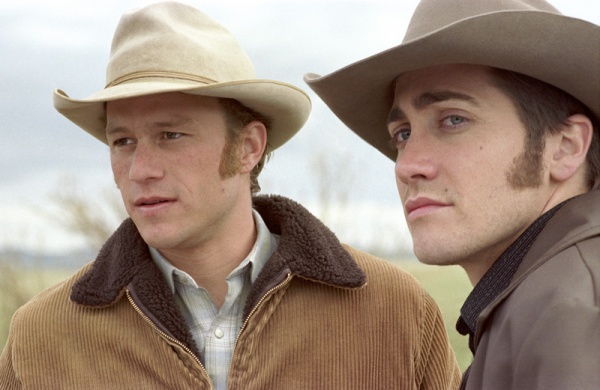
Based on a short story by Annie Proulx, Brokeback Mountain is a tale about two young men in the 1960s who work as ranchers as their feelings toward each other become something secretive. After years of separation and new wives, they would meet again for 20 years on as they come to term with their sexuality and feelings. Directed by acclaimed Taiwan director Ang Lee with a screenplay by Larry McMurty and Diana Ossana, Brokeback Mountain is more than a gay cowboy movie but something more about the exploration of love when homosexuality was taboo. Starring Heath Ledger, Jake Gyllenhaal, Michelle Williams, Anne Hathaway, Anna Faris, Linda Cardellini, and Randy Quaid. Brokeback Mountain is a poignant, elegant drama from the prolific Ang Lee.

It's 1963 in Signal, Wyoming as two young men are looking for work at a ranch. A ranch boss named Joe Aguirre (Randy Quaid) comes in and hire the two men to run the herd of sheep into the mountains. Joe takes Ennis del Mar (Heath Ledger) to lead the pack as he is joined by a Texas boy named Jack Twist (Jake Gyllenhaal) where the two ride through the wave of mountains. While Jack is more outgoing about his dream to be a rodeo champion, Ennis prefers to keep things to himself. Immediately, the two work and work throughout the day watching the sheep and camping out. While Ennis hopes to use the work to raise money so he can marry his girlfriend Alma (Michelle Williams), he finds himself having good company with Jack as they drink and eat deer. Then during one cold night after a moment of drinking,  Jack lets Ennis sleep in his tent where things get really comfortable.

At first, it becomes a denial stage but their growing feelings for each other gets stronger as Ennis begins to open up more about how he was raised by his siblings. During their job, Joe begins to look very suspicious about the closeness of Ennis and Jack as the two end their stint and the ranch. The time for them also ends as Jack hopes to see him again soon. One year later, Ennis marries Alma while Jack tries to return to Wyoming to meet Ennis for a ranching stint but is rejected while Ennis doesn't make it. Jack returns home to Texas where he catches the eye of rodeo princess Lureen Newsome (Anne Hathaway) as the two wed and raise a son. While Jack has a nice life in Texas, Ennis' life with Alma and their two daughters Alma Jr. and Jenny has its good and bad moments. Then one day, Ennis receives a letter from Jack as he asks to visit.

Jack drives up to Wyoming and meets Ennis for the first time in four years where Alma begins to see the two doing things that they're not supposed to do as fishing buddies. Through the years, Jack and Ennis would see each other and talk about their own lives at home during their trips to the mountains while coming home to their wives. The trips though proved to be more and more troubling in the years on as Ennis' family life goes into chaos while Jack's sexual tendencies starts to get to him as during another trip, their relationship becomes more troubling to hide.

While there have been many tales of homosexual romance and the tragic consequences, Brokeback Mountain is a film that handles the troubling circumstances in the most poignant way that doesn't carry the need for any explosive dramatics. Much of that credit goes to Ang Lee for his observant and restrained approach to directing the film since he allows more intimacy between the characters. Especially in how the film's story is told from the early 1960s to the early 80s where homosexuality was taboo. While the film doesn't break ground in the ideas of homosexuality in those times, especially in places like Texas and Wyoming. The film shows all the troubles that goes on in two men's attempt in maintaining a natural, loving relationship.

With a fantastic script by Diana Ossana and Larry McMurty, the film has a very interesting structure with the first act being these two young men meeting each other and falling in love while trying to claim in their words, "I ain't queer". The second act is where the film has a unique structure where it starts off the separate lives of Jack and Ennis and their relationships with their wives and children. The story moves back and forth to their own individual stories to the two coming together and talk about what's going on, especially a haunting story where Ennis reveals a thing he saw with his father. Then comes a very troubling third act where both men struggle with their sexuality and the different lives they lead outside of each other. Jack is more outgoing, content, and proud of who he is and where his life is as everything around him is great yet he wants more. He would wander off places and find things while Ennis' life is a lot harder and tougher since he keeps things to himself while trying to find something.

The direction by Ang Lee is exquisitely amazing since he aims for a natural feel and look to the film while his choice of locations are very inspiring, especially from those mountains where the film has an epic feel of sorts. Especially in its structure where he chooses to film an intimate moment without any music or everything else that's going on. Just a shot of these two men whenever they're talking or being silent. The ending of the film is pretty anti-climatic since the last shot just quiets everything down. It confirms the tragic nature of the film where the tragedy is the fact that despite these feelings for each other, Jack and Ennis couldn't be together because at that time, the idea of it is wrong. Especially in how Jack wants to and forget about what other people thinks yet "being queer" in places like Wyoming or in Texas  in those times will certainly get these men killed. Even by 201, in those areas despite the fact that people are more aware of homosexuality, homophobia still goes on today.

Helping Ang Lee in his epic vision is Mexican cinematographer Rodrigo Prieto who does amazing work in many of the film's exterior scenes from his shots of the mountains on day and night to the fields of the west. His cinematography truly captures the American heartland at its finest while doing wonderful work in many of the film's interior scenes. Production designer Judy Becker and art director Laura Ballinger do a great job in contrasting the worlds of Jack and Ennis were Jack's home life is clean with all the fine things Lureen's family have and the down-home world of Ennis. Especially in how Becker designs the home of Alma and Ennis where everything that is broken or missing is all over the place. Costume designer Marit Allen also does great work in the costumes for the men with their blue jeans and cowboy hats to the different style of clothing from the women. Editors Dylan Tichenor and Geraldine Peroni do great work in the film's editing with wonderful dissolve and fading cuts that helps the film move in its 134-minute pacing along with some wonderful sound work from Eugene Gerty for capturing the atmosphere of the mountains and fields.

The film's music which is done by composer Gustavo Santaolalla is wonderful subtle and melancholic with its mix of acoustic guitars, country textures, and orchestral arrangements that doesn't overplay the drama while adding tension to what is going on. It's one of the most memorable and poignant score pieces. The soundtrack which includes additional work from Marcelo Zarvos features cuts from the likes of Willie Nelson, Linda Ronstadt, Emmylou Harris, Rufus Wainwright, Merle Haggard, Tammy Wynette, and Steve Earle that plays to the film's world of the American heartland.

Finally, we have the film's superb cast that includes fine performances from Kate Mara, Cheyenne Hill, and Hannah Stewart as Ennis' eldest daughter Alma Jr. along with Sarah Hyslop and Brooklynn Proulx as the youngest daughter Jenny. Other performances from Graham Beckel and Mary Liboiron as Lureen' parents, Roberta Maxwell and Peter McRobbie as Jack's parents are all wonderful including David Harbour as a friend of Lureen. Anna Faris does a wonderful, scene-stealing performance as a talkative friend of Lureen named LaShawn who represents that upper class world that Jack lives in. Linda Cardellini is also great as Cassie Cartwright who tries to understand Ennis amidst the chaos of his life as she realizes how introverted he is. Randy Quaid is also great as the tough, conservative Joe Aguirre who sees things that he thinks is wrong as he does wonderful work in the film's early scenes.

While it's a small role in some sense, Anne Hathaway does wonderful work as Jack's wife Lureen with her fast-living, rich lifestyle who provides a nice sense of comfort and companionship Jack needed though she is unaware of who he really is. While her performance is not entirely great when she is forced to wear a wig, Hathaway manages to pull off a memorable and convincing performance of a woman unaware of everything while being devoted to her husband. The film's best performance truly goes to Michelle Williams as Alma. Williams pulls off all the emotional punches of a woman who is in shock at what she sees and her reaction is heartbreaking. Williams pulls off all the troubles of what she does since her character doesn't know what to think or what to do which leads to the chaos that her husband will have to go through. In her many scenes with real-life boyfriend Heath Ledger, the two have great chemistry together as Williams brings a career-making performance.

Finally, we have Jake Gyllenhaal and Heath Ledger who both bring the performances of their young career as the two protagonists trying to fall in love in a world that is very in those times. The chemistry of the two is very natural along with the tension they bring in their frustration over the outcome of their relationship when their characters get older. Jake Gyllenhaal has the more showy performance as the more extroverted Jack Twist since he likes to do crazy things and get into risky situations while at home in Texas, he lives that life while maintaining control. Including one scene about his son should be raised where he reveals who is boss. Gyllenhaal deserves a lot of credit for his performance. Heath Ledger is the more introverted and troubled performance as a man who doesn't talk much while being haunted by things around that he doesn't want to reveal. Ledger pulls off all the anger and strictness of a man who has a hard time dealing with himself while disconnecting himself from those around him including his wife and children. It's two great performances for those two young actors.

Brokeback Mountain is a brilliantly poignant and heartbreaking film from Ang Lee with a wonderful film team and a cast led by Jake Gyllenhaal, Heath Ledger, and Michelle Williams. While the film isn't groundbreaking to the works of Gus Van Sant or Todd Haynes, it's still one of the best love stories ever told. While it's likely that this film will or already inspire parody and in some cases, controversy. It's a movie that reveals on how far humanity has gone in the feeling of love between two men. It's a movie that must not be missed on how tragic the world was when everything seemed wrong as Ang Lee creates another great film in Brokeback Mountain.


(C) thevoid99 2011

Friday, March 04, 2011

Smiley Face


Originally Written and Posted at Epinions.com on 3/20/09 w/ Additional Edits.


Directed and edited by Gregg Araki and written by Dylan Hagerty, Smiley Face tells the story of an aspiring actress whose lack of ambition and love for marijuana collide when she goes through an entire day of journeys to pay the electric bill, do an audition, and everything else while under the influence of some high-octane marijuana. A stoner comedy that relies on low-brow humor and surreal imagery, it's a film that is led by Anna Faris playing the role of its leading stoner Jane. Also starring Adam Brody, Danny Masterson, Jane Lynch, Marion Ross, John Krasinski, Danny Trejo, John Cho, and Roscoe Lee Brown as himself and narrator. Smiley Face is a hilarious, witty stoner comedy from renowned indie auteur Gregg Araki.

Jane is an aspiring actress who doesn't do much in her life but get stoned and get stoned. Yet, her laziness and lack of ambition along with her mass consumption of marijuana has annoyed her roommate Steve (Danny Masterson) who is planning a party with fellow sci-fi/horror geeks. With Steve leaving some instructions for Jane to pay the electric bill while not eating some cupcakes that he made for his buddies. Jane instead eats the cupcakes which revealed to have marijuana inside. Stoned out of her mind and with an acting audition at around 11 in the morning. She realize she needs to make cupcakes for Steve's buddies as she calls in her dealer also named Steve (Adam Brody) who gives her some pot though she owes him some serious money. Steve the dealer warns her to give him the money she owes by 3 in the afternoon at a hemp festival in Venice Beach or he'll have to take away some of her furniture.

Jane's attempts to make a cupcake becomes a disaster due to a phone call as she hopes to get money from her bank account while realizing her only source of financial income is to sell some high-quality, government made marijuana. Still stoned and unable to drive her car due to her paranoid mind, she ends up riding the bus where she made a boy upset by crushing his car and being late for her audition. At the audition for a casting director (Jane Lynch), it becomes a disaster as she even tried to sell pot to the director. On the run, she is forced to dump the weed and find money by calling in one of Steven's sci-fi buddies in Brevin (John Krasinski) who has a crush on Jane. Brevin gives her a ride and is willing to loan her money which he doesn't have at the moment but Jane's stoned state of mind only troubles things. Even when his wallet is stolen while Jane goes to the house of a former professor where his mother (Marion Ross) gives her a rare manuscript of The Communist Manifesto.

After a troubling encounter with a man (Michael Hitchcock) at a laundry room, Jane goes on the run where she meets a couple of meat delivery guys (John Cho & Danny Trejo) while making some weird political rants to a meat delivery boss (Richard Riehle). With The Communist Manifesto in her hands and hopes to get to Venice with help from a motorcycle girl (Natashia Williams), can Jane get the money she owes and return the famed Marxist document back to its owners? Or will her stoned state of mind ruin it?

Stoner films often are driven by ludicrous plots and plot-points of how one character goes from one place to another. What screenwriter Dylan Hagerty does is take a character on a journey while remaining stoned throughout. Therefore, a series of misadventures happen with lots of mayhem ensue. The script isn't meant to be high-octane as its emphasis is on low-brow humor yet it works because Hagerty creates a protagonist that people can laugh at. It's not because she's cruel, she's just a stupid stoner that has no idea what she's doing.

Director Gregg Araki does play it straight with the film while adding some stylish shots to the film for its atmospheric take on what is going through the mind of the stoner with wavy shots and sequences that are downright funny. While the filmmaking is a step-down to what Araki did in his previous film Mysterious Skin. Araki understands that this is a genre film as he plays up to the cliches of the genre with some visual tricks including some CGI and shaky cameras. With Araki serving as editor, he creates a film that is rhythmic and to the point with some jump-cuts to emphasize on the character's state of mind. Overall, it's an excellent, funny, and smart comedy from Gregg Araki whose filmmaking techniques proves to be masterful in a stoner comedy.

Cinematographer Shawn Kim does nice work with the film's photography as it's mostly show on location in Los Angeles with nice exteriors shots and camera tricks that play up to Jane's stoned state of mind. One of the best shots includes a scene in which Jane's roommate is doing things with a skull where everything is in red. Production designer John Larena with set decorator Peggy Paola and art director Helen Harwell is excellent in recreation of The Communist Manifesto along with sci-fi toys that the character Brevin owns. Costume designer Alix Hester does a fine job with the contemporary look which included fake dreadlocks for Adam Brody, hippie clothes for some of the characters while everything else is straightforward. Sound designer Steve Avila and editor Trip Brock do fantastic work with some sound layering for scenes where the character of Jane hears multiple things in her head. Visual effects supervisor David A. Davidson does excellent work in the look of some animation in Jane's head like the smiley face and the opening credit sequence with some nice animation.

Music composer David Kitay brings a nice score with melodic arrangements to play up to the film's humor as well as adventurous side. Yet, the soundtrack which have been one of Araki's strengths in his films is phenomenal. Featuring tracks from Mojave 3, the Chemical Brothers, Starlight Mints, Ladytron, Talking Heads, A Flock of Seagulls, a remixed track of the Stone Roses' Waterfall, and two hilarious cuts from Arena rock stalwarts like Styx and REO Speedwagon are used greatly. Notably the Styx and REO Speedwagon to emphasize Brevin's love for Jane.

The casting by Monika Mikkelsen is superb with cameo appearances from the likes of comedian Brian Posehn, Carrot Top, Dave "Gruber" Allen, Jayma Mays as an auditioning actress, and 80s film legend William Zabka are memorable and funny. Other small appearances from Danny Trejo and John Cho as meat delivery guys, noted character actor Richard Riehle as the meat boss, TV legend Marion Ross as a professor's mother, Michael Hitchcock as a laundry guy, BBC TV star Natashia Williams as a motorcycle rider, and Jane Lynch as a casting director are all funny. Danny Masterson is excellent as Jane's creepy roommate while Adam Brody is very funny as a pot dealer who tries to deal with a stoned Jane about her debt. John Krasinski is great as Brevin, a nerdy guy who has a crush on Jane as he's willing to do anything for her though is unclear on how stoned she is. Though he doesn't appear in the film, Roscoe Lee Brown does do some funny narration, even as he talks to the audience and to Jane about her hilarious situation.

Finally, there's Anna Faris in what is truly an amazing performance. Faris is a master in comedic acting and she does so with such physicality and exuberance that she knows how to make audiences laugh. Even without having to delve into cheap gags or crude humor, Faris is aware that her character is a complete imbecile but doesn't make her seem dumb. Faris' performance is truly the great work of an actress that is at the top of her game in a genre where she knows how to make people laugh while being the butt of jokes throughout.

While it's nowhere near the brilliance of Mysterious Skin, Smiley Face is still a fine, well-made film from Gregg Araki featuring a superb performance from Anna Faris. Fans of Faris will no doubt see this film as one of her best work proving that she's one of the best comedy actresses working today. Fans of stoner films will enjoy the film's unique sense of humor while seeing a director like Araki bring some charm and wit to the genre. In the end, Smiley Face is a film that delivers its namesake as Gregg Araki and Anna Faris make sure audiences have a good time watching a nice stoner film.

Gregg Araki Films: (Three Bewildered People in the Night) - (The Long Weekend (0' Despair)) - The Living End - Totally Fucked Up - The Doom Generation - Nowhere - (Splendor) - (This is How the World Ends) - Mysterious Skin - Kaboom - (White Bird in a Blizzard)

(C) thevoid99 2011

Sunday, August 29, 2010

Lost in Translation

Originally Written and Posted at Epinions.com on 9/21/03 w/ Additional Edits


"Listen to the girl as she takes on half the world. Moving up and so alive. In her honey-dripping beehive, beehive, it's good, so good, it's so good, so good. Walking back to you is the hardest thing that I can do. For you, I'll be your plastic toy; I'll be your plastic toy, for you. Eating up the scum is the hardest thing for me to ".

-Just Like Honey by the Jesus & Mary Chain from Psychocandy

The lyrics above are a very good description on what Sofia Coppola's film Lost in Translation is all about. It's about two people who find themselves alone and neglected in a world that is foreign to them. Starring Bill Murray and Scarlett Johansson, Lost in Translation is an evocative, romantic masterpiece that transcends all barriers of depth in acting, writing, and direction. Sofia Coppola brings in a film that takes the audience to an area they might have not been before and see the cultural differences between the worlds you live and the new world that that they're being introduced to. In the process, it's an unconventional romantic comedy-drama that is more about trying to identify yourself in the new world while looking at the old world from an eerie distance. What Lost in Translation succeeds in is finding an emotional chord through its actors, plot, and striking visuals.

50-year old Hollywood actor Bob Harris (Bill Murray) has just arrived to Tokyo to endorse Suntory Whiskey for $2 million.  Yet, Bob's career isn't hot as it used to be as he arrives at the Hyatt Hilton Tokyo where he receives a fax from his wife that he had forgotten his son’s birthday.  His sullen mood worsens as he's forced to listen to bad jazz renditions of songs like Scarborough Fair from a jazz chanteuse (Catherine Lambert), dealing with fans, and having trouble sleeping. In the same hotel, a young Yale graduate named Charlotte (Scarlett Johansson) is also having trouble sleeping while her photographer husband John (Giovanni Ribisi) is on assignment to do photos for a rock band. Charlotte somehow feels neglected in her 2-year marriage as she wanders around in Tokyo looking at temples.  Charlotte suddenly feels like her marriage is falling apart as well as her identity after tearfully calling a friend in the U.S. about what's going on.

Bob and Charlotte for a few days would see each other in the bars or in an elevator but haven’t spoken as Charlotte is exploring the strange culture of Japan with its video games and pop culture references. Bob meanwhile, is shooting the whiskey commercial and finds himself in an awkward position where he has trouble figuring out what the Japanese director wants from him, which is more intensity. Bob also feels alone not just from the array of Japanese television but from the number of faxes from his wife on what shelves or carpet colors he wanted. Charlotte is also having trouble trying to find something she can relate to as her husband has been consumed with his job.  Even as they meet a vapid Hollywood starlet named Kelly (Anna Farris) doesn't help matters for Charlotte.

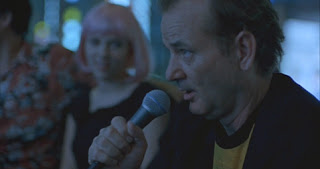
Then one night, Bob and Charlotte finally talk in the hotel bar as they both couldn't sleep and talk about their own problems. They would meet again after Charlotte leaves a dinner conversation with John and Kelly where Bob asks if she would participate in something that would get them out of this funk they’re in. Charlotte says yes as the two explore Japan by themselves. In the day, Bob will do his promotional work for the whiskey including a hilarious photo shoot where he mimics the Rat Pack and Charlotte would explore Tokyo and the art of Japanese flowers. They meet again and later in the night, they explore the party scene of Tokyo where Charlotte meets an old college friend Charlie (Fumihiro Hayashi) who introduces the two to the rave scene, indie-pop records, and of course, karaoke. Charlie does the Sex Pistols' God Save The Queen and Bob does Nick Lowe's (What's So Funny 'Bout) Peace, Love, & Understanding?. Charlotte later does the Pretenders' Brass in Pockets and Bob responds with a moving rendition of Roxy Music's More Than This.

The night resulted in the two finally getting some sleep while Bob is forced to deal with strange, disconnected communication with his wife while Charlotte is feeling more neglected from John as he is away from business. Bob and Charlotte have lunch together where Charlotte reveals a bruise in her foot resulting from a bump with a small object a few days back. Bob accompanies to the hospital where he talks to an old person despite not understanding what he's saying. They later meet for another night with Charlie at a strip club as they begin to have conversations about their troubles lives in a moving scene of the two of them in bed talking about marriage. With the film progressing from then on, Charlotte and Bob do their day activities while wondering if the relationship they're having is meaningful in the short time they're having.

In her second full-length feature to date after making the 1999 acclaimed film The Virgin Suicides, Sofia Coppola has created something that is dreamlike but also eerie in its framing and tone. With cinematographer Lance Acord, Coppola captures the colorful, modern look of Tokyo that seems beautiful but at the same time, makes the audience feel very isolated in a lot of ways, particularly the characters of Bob and Charlotte. Coppola's original script is filled with wide-range of emotions along with some humor while in scenes with no dialogue, there's no need for her to write words as she makes the actors capture raw emotion through their performances. Even the sceneries of temples, landscapes, clubs, and arcades are filled with enigmatic beauty as the audience is transported into this new world that they're surrounded by. Though it seems to be a clash in cultures, it really opens the mind of the worlds many aren’t familiar to and Tokyo is a perfect setting with its wild look and people.

One noted factor to the greatness of the film is the use of its music. With cuts ranging from karaoke, jazz standards, Japanese pop, and dream-pop, the film exceeds the use of music the way Coppola had approached it with The Virgin Suicides. In Lost in Translation, the music moves and captures the mood of the film. With some of the original music from Brian Reitzell with Beck musician Roger Joseph Manning, Reitzell brings an eerie, cold mood to the culture of Japan along with the electronic music of Death in Vegas, Air, and Squarepusher. The real music star of the film is none other than My Bloody Valentine’s Kevin Shields, who finally returns with new music in 12 years after the release of the 90s rock masterpiece Loveless. Shields brings a dreamy, melancholic tone to the music, including the song City Girl used in the film's opening shot of Johansson in pink underwear and in the flower scene for a dreamy, melodic instrumental called Ikebana. Even the classic MBV song Sometimes appears in the film and the Jesus & Mary Chain noise-pop masterpiece Just Like Honey that gives the film its emotional climax.

The supporting performances of Giovanni Ribisi, Anna Farris, and a slew of Japanese actors are all well utilized. Ribisi plays a character that loves his wife but he's also married to his work and has been consumed with the trappings of being around celebrities and all sorts of people stroking his ego while making himself neglectful towards Charlotte. While Ribisi's character is based on Coppola's now ex-husband Spike Jonze, Ribisi's performance isn't an exaggeration of Jonze. Anna Farris does a surprising performance as a brainless Hollywood starlet who is consumed with her own fame and believing that she is the greatest thing in Japan, while she does a hilarious, off-key rendition of Carly Simon's Nobody Does It Better. Even the Japanese cast is hilarious to watch from the commercial director (Yukata Tadokoro), the hooker, translators, TV talk show host Matthew Minami (Takashi Fuji) and all sorts of people including Fumihiro Hayashi as Charlie stand out on their own bringing out a sense of comedy while not purveying to the stereotype of the Japanese.

Then there's the two leading performances of Bill Murray and Scarlett Johansson that are both enigmatic, masterful, and deep in their respective roles and it's no doubt these two should be getting some awards. For Bill Murray, the character of Bob Harris is the best film role of his entire career. While he was hilarious in movies like Caddyshack, Meatballs, Ghostbusters 1 & 2, Scrooged, What About Bob? and Stripes along with more serious performances in Ed Wood, Rushmore, and Groundhog Day, Lost in Translation is his most defining performance as he not only brings out some quick-witted humor that is dry in some cases while he reveals his sense of vulnerability in the film including the poster of him sitting on his bed with his sad, droopy face.

Scarlett Johansson meanwhile, delivers a performance that exceeds all sorts of expectation wanted from a young actress. Though she's only 19 years old, Johansson brings in a mature, fragile performance as Charlotte that I don't think many actresses, including those around her age group could manage. She displays a beauty that transcends all sorts of barriers from the exterior to the more internal torture in her character. Johansson recently won the Upstream Best Actress prize from the Venice Film Festival for her performance and she truly deserved it. Just the way she made the camera look at her and to identify with the character is a true power to what it is to be a great actress. In comparison to early film roles like Manny & Lo, The Horse Whisperer, Ghost World, An American Rhapsody, and The Man Who Wasn't There, this is one of her best performance to date though she recently top that with Girl with a Pearl Earring with Colin Firth as the famous Vermeer painting.

The chemistry between Johansson and Murray are spellbinding as they channel their sadness to find some life around themselves in a foreign world. Even in their karaoke scenes, they bring in some depth into their roles while proving that they're not the best singers in the world. The age difference between the two is thrown out of the window as they play two lost souls trying to find meaning with their drab life. Even in the script's unconventional approach to a love story, the film doesn't give an answer on whether they should sleep together or not because it doesn’t matter. What matters is how these two individuals feel through real emotions and no one could capture those kinds of performances the way Murray and Johansson has done

***Updated Tidbits on the DVD from 2/5/04***

The DVD to Lost in Translation is featured in two versions. The Full-Screen and 1.85:1 Anamorphic Wide-Screen version. For those of you cinematic buffs who saw Lost in Translation multiple times (like I did where I saw the film 3 times in 2003 in the theaters), the Wide-Screen version is the one to own since it captures the film in an exhilarating form. With languages featuring French and Spanish subtitles plus DTS & Dolby Digital 5.1 Surround Sound in English and Dolby Digital 5.1 Surround Sound in French. No, the film doesn't have Japanese subtitles but at least now, we can hear what Kevin Shields was saying in his MBV song Sometimes and City Girl that has so many interpretations on what he said.

Aside from the scene selections and language features, the DVD also includes a great menu of Special Features. The only disappointment in the Special Features DVD and probably for good reason is audio commentary from Sofia Coppola (but due to her personal circumstances, it's understandable and there’s no audio commentary from the always reclusive Murray and the workaholic Johansson). Aside from the great trailer (and before the film, some great trailers of films from Focus Features), there are some great special features that include two documentary features, Coppola's video for Kevin Shields' City Girl, five deleted and extended scenes, and the full version of Bob Harris’ visit to the Matthew's Best Hit TV Show.

The video for City Girl includes some shots of the film based on the viewpoint of Charlotte as well as a few scenes that didn’t make into the film. Sofia Coppola, who only had shot three music videos, did an amazing job with the editing and her romantic use of Kevin Shields' new song. The feature for Matthew's Best Hit TV Show is downright hilarious as the audience gets to see the whole episode in its entirety. We get to see Bob Harris trying to talk to the boisterous Minami and we finally see what was revealed in the box that is downright disgusting but overly hilarious.

The five deleted and extended scenes can be played individually or as a whole. The first is a deleted scene of Bob Harris joining in the water aerobics club with some Japanese women as he splashes around and joins in for the fun, showing Murray's offbeat comedy antics. The second is a scene where Charlotte goes into a toyshop outside of Tokyo as she encounters two robot children as she tries to play with them but leave her displaying her sense of neglect with background music of In The Subway by Roger Joseph Manning Jr. and Brian Reitzell. The third is an extended press conference scene for Anna Faris’ Kelly where she talks about her action film Midnight Velocity and all of the Hollywood clichés that is played to the hilt, especially as Faris is playing a ditzy, Cameron Diaz-like character to the role. Faris isn't trying to be Diaz but she definitely brought some humor to the film's subtle tone. The fourth scene is a scene where Charlotte calls Bob the night after the karaoke party as she asks if he'll join her for lunch. The fifth and final scene is an extended scene of Harris' conversation with a Japanese elder that gets funnier because of the language barrier as they to learn each other's name.

The two documentary features include two different documentaries from Rome and Tokyo. The first is a 10-minute conversation with Sofia Coppola and Bill Murray in Rome, Italy in October of 2003 as they talk about the film where Murray says it's the best film he's ever done and it's his all-time favorite. Coppola and Murray thanked the film's crew for all the work that went through it including the actors and producers. The second is a 30-minute documentary on the making of the film as we see Sofia working on the film with the Japanese film crew. Also featured is Spike Jonze (who also shot the documentary) talking to Sofia about the film as we see the hospital scene, the worst lunch scene, Bob Harris' commercial scenes, and the Hyatt scenes being built with the Murray and Johansson talking and having some fun.

Overall, the DVD is something any hardcore fan of the film must have along with the film's soundtrack. The features are great; especially for film buffs that want to learn how movies are made and the other stuff are cool too. Hopefully, we'll get some audio commentary soon from Coppola and the actors in future editions and maybe, a book on the screenplay but it's likely that no will ever know what Harris whispered into Charlotte's ear. That's a moment only for the actors and its best if audiences never knew.

***End of DVD Tidbits Section***

Lost in Translation is hands-down, the best film of 2003. Though the comic-bio pic of American Splendor is a close second, Lost in Translation is just brilliant with its striking visuals, dreamy music, romantic script, and evocative performances of Bill Murray and Scarlett Johansson. The film is just powerful in its approach and mood, as Sofia Coppola has finally established herself as a filmmaker. Gone forever is the miscast performance of The Godfather Part III and gone now is her being mentioned with father and legendary director Francis Ford Coppola. Now, Sofia is a filmmaker that everyone will have to wait for and it's obvious her next film will be widely anticipated. In the end, Lost in Translation is an enigmatic masterpiece that is filled with beauty and realness thanks in large part to Sofia Coppola’s direction and the performances of Bill Murray and Scarlett Johansson.


Sofia Coppola Soundtracks: Air-The Virgin Suicides - The Virgin Suicides OST - Lost in Translation OST - Marie Antoinette OST - (The Bling Ring OST) - (Priscilla OST)


© thevoid99 2010