Showing posts with label heath ledger. Show all posts

Friday, January 15, 2016

A Knight's Tale


Based on the story The Knight’s Tale by Geoffrey Chaucer, A Knight’s Tale is the story of a squire who decides to become a knight as he becomes a hero to the people while gaining the ire of a tournament champion. Written for the screen and directed by Brian Helgeland, the film plays into a young who comes from nothing and becomes a champion with the help of other peasants as well as those who are from the world of nobility. Starring Heath Ledger, Rufus Sewell, Mark Addy, Shannyn Sossaman, Alan Tudyk, Laura Fraser, Berenice Bejo, James Purefoy, and Paul Bettany as Geoffrey Chaucer. A Knight’s Tale is a gloriously entertaining and engaging film from Brian Helgeland.

The film revolves a young squire who decides to become a knight following the death of his master as he’s aided by a couple of friends in his quest to become a champion despite not being connected to any kind of nobility. With the aid of a broke and naked Geoffrey Chaucer and female blacksmith in Kate (Laura Fraser), William Thatcher (Heath Ledger) would find his way to climb up the ranks as tournament champion while hoping to defeat the great champion Count Adhemar (Rufus Sewell) and win the heart of a noblewoman in Jocelyn (Shannyn Sossaman). While it’s a story that is quite simple, Brian Helgeland creates something that manages to be universal in this young man who was born a peasant squire who does these joust tournaments and becomes a champion of the people.

Helgeland’s script plays into William’s determination to become a knight in the hopes that he can get out of his hardened upbringing and go for something more. Yet, he would share it with his friends as well as intrigue Jocelyn who sees him as someone that is very different from the knights that often court her. To the film’s antagonist in Count Adhemar, he sees William as someone that doesn’t play by the rules nor is someone that behaves a certain way as his jousting style is one that Ademar replies as no style at all. It adds to this conflict of sorts of old world ideals vs. new world ideals as William represents the latter in his pseudonym Sir Ulrich von Lichtenstein of Gelderland.

Helgeland’s direction is filled with not just an air of simplicity in the compositions but also something that is very offbeat in the way he fuses 20th/21st Century ideas into the film such as music and product placement logos. Notably as Helgeland discards the idea of anachronisms in scenes where songs by Queen or David Bowie are played in parties or jousting events as it makes sense in the scenes he creates. Many of the compositions in wide and medium shots play into the many locations set in the film as much of it is shot in the Czech Republic near Prague. Helgeland’s usage of close-ups add to some of the drama as well as the humor including some scenes where William looks back into his life as a child and the dreams that are instilled in him wanting to make his own destiny. Even as it plays into that determination of a man from a poor background giving people from his world hope in becoming champion as well as defying the odds. Overall, Helgeland creates a riveting and exciting film about a poor squire who becomes a champion for the people.

Cinematographer Richard Greatrex does excellent work with the film‘s cinematography with some naturalistic lighting for some of the daytime exterior scenes while creating some unique lighting schemes and moods for scenes set at night. Editor Kevin Stitt does brilliant work with the editing with its stylish usage of jump-cuts, montages, and dissolves to play into some of the action and humor in the film. Production designer Tony Burrough, with set decorators Dominic Smithers and Jiri Zureck and art directors John Hill and Grant Armstrong, does amazing work with the set pieces from the jousting arenas and castle halls as well as the tents in that period of medieval times. Costume designer Caroline Harris does fantastic work with the costumes from the gowns that the noblewomen wear including the dazzling clothes of Jocelyn to the armors and robes the knights wore.

Hair/makeup artist Pebbles does nice work with some of the designs for Jocelyn‘s hairstyle and some of the makeup she would wear. Visual effects supervisor Tim Burke does terrific work with the minimal visual effects that include a few set dressing scenery including one shot of the old London Bridge. Sound editor Jon Johnson does superb work with the sound from the way the spears sound against the armor to the sounds of swords clanging. The film’s music by Carter Burwell is wonderful for its mixture of orchestral flourishes and folk pieces to play into the periods of the time as it is mixed in with late 20th Century music from Queen, David Bowie, War, Thin Lizzy, Rare Earth, Bachman-Turner Overdrive, Sly and the Family Stone, AC/DC, and Eric Clapton.

The casting by Francine Maisler is phenomenal as it features some notable small roles from Steven O’Donnell and Jonathan Slinger as men Chaucer owes money to, Nick Brimble as William’s old master Sir Ector, Leagh Conwell as the young William, Christopher Cazenove as William’s father who encouraged him to go after his dreams, Scott Handy as Adhemar’s assistant, and James Purefoy as the knight Sir Colville whom William befriends. Berenice Bejo is wonderful as Jocelyn’s lady-in-waiting Christiana who would be Jocelyn’s conscience and liaison. Laura Fraser is terrific as William’s blacksmith who would create a new armor for him while showing him how to dance with a woman for a ball. Alan Tudyk is fantastic as William’s friend Wat as this very tempered squire that always throw a fit while hoping to eat again. Mark Addy is excellent as Roland as another of William’s friend who is also a squire as he is also a conscience of sorts for William.

Paul Bettany is brilliant as Geoffrey Chaucer as a writer who becomes William’s herald as well as speak for him before the matches where Bettany also provides humor from the way he’s introduced as he’s walking on the road completely naked. Shannyn Sossaman is amazing as Jocelyn as a noblewoman who copes with her status and being seen as a prize until she meets William and realizes that he just cares about her as an equal as it’s a very delightful performance to watch. Rufus Sewell is incredible as Count Adhemar as jousting champion and nobleman who tries to woo Jocelyn while dealing with William’s presence which he sees as a threat as he’s a fun antagonist to watch. Finally, there’s Heath Ledger in a spectacular performance as William Thatcher as a young peasant squire who dreams of becoming a knight as he seizes the chance to become one while trying to do what is right as well as be humble as it’s one of Ledger’s definitive performances.

A Knight’s Tale is a remarkable film from Brian Helgeland that features a phenomenal performance from the late Heath Ledger. Along with a strong ensemble, a compelling story, and a fun soundtrack. It’s a film that manages to be a story that is entertaining with characters audiences can care for. In the end, A Knight’s Tale is a sensational film from Brian Helgeland.

Brian Helgeland Films: (Payback) - (The Order (2003 film) - (42) - Legend (2015 film)


© thevoid99 2016

Wednesday, February 19, 2014

The Brothers Grimm


Directed by Terry Gilliam and written by Ehren Kruger with rewrites by Gilliam and Tony Grisoni, The Brothers Grimm is the story of how the two men who would create fairy tales when their work as con-artists have them encountering with a real-life fairy tale curse. The film is a fictional portrait of Wilhelm and Jakob Grimm with some exaggerations as they’re played respectively by Matt Damon and Heath Ledger. Also starring Lena Headey, Jonathan Pryce, Peter Stormare, and Monica Bellucci. The Brothers Grimm is an enjoyable yet messy film from Terry Gilliam.

Set in the early 19th Century in French-occupied Germany, the film is about the Brothers Grimm who are tasked to take on an ancient curse that has captured young girls in a small German town despite the fact that they’re really con-artists doing tricks for money. It’s a film that is largely fictional and exaggerated in how Wilhem and Jakob Grimm came up with the many stories that would be told for ages. Especially as it showcases these two different personalities with Wilhem being the more selfish and realistic of the brothers and Jakob as the more imaginative and helpful. Due to their antics, they reluctantly team up with the Italian torturer Mercurio Cavaldi (Peter Stormare) to deal with this curse as they also get help from the huntress Angelika (Lena Headey) whose sisters had also disappeared. Yet, what they deal with is something much more troubling as it relates to an ancient story about a queen (Monica Bellucci) whose beauty was ravaged by the plague as she seeks the blood of 12 girls to reclaim her beauty.

The film’s screenplay does have an interesting concept, along with references to the stories of the Brothers Grimm, but it’s often bogged down by lots of exposition about the ancient curse and all sorts of things that makes the story very messy. Especially in tone where it wants to be a fantasy film with humor and action but never finds a way to really mesh itself. Though it’s clear that Terry Gilliam and Tony Grisoni try to improve Ehren Kruger’s script by meshing these genres. The emphasis on exposition is a major flaw in the script though the characterization of the Brothers Grimm, Angelika, and Cavaldi do manage to make things work. Even as Cavaldi is an antagonist working for the French yet becomes fully aware that the forces that he, the Brothers Grimm, and Angelika are facing is much more troubling.

Gilliam’s direction is definitely lavish in terms of the set pieces that he creates as well as the sense of style in the compositions he creates. Notably as he manages to create some unique shots to play into the world of the Brothers Grimm as much of the production is set in the Czech Republic as 19th Century Germany. Many of the scenes that Gilliam creates is definitely playful and offbeat such as the torture room and castle that Cavaldi’s superior in General Vavarin Delatombe (Jonathan Pryce) lives in to the tower where the aging queen lives. Gilliam does infuse a lot of humor into the action along with some sequences that require some visual effects to play into that world of fantasy though not every moment with visual effects work. Still, there’s a messiness that occurs in the film as it plays to its climax where the Brothers Grimm face off against the queen which has some good moments but also some not-so-good moments. Overall, Gilliam creates a pretty enjoyable film despite some of the issues with its script and its emphasis on exposition.

Cinematographer Newton Thomas Sigel, with additional work from Nicola Percorini, does excellent work with the film‘s cinematography with its use of yellowish lighting for some of the film‘s exteriors with some blue for some scenes at night while putting on some displays of lighting for many of the film‘s interior scenes. Editor Lesley Walker does nice work with the editing where it does emphasize a lot on style with some rhythmic cutting for the film‘s action and humor as well as in its suspenseful moments. Production designer Guy Hendrix Dyas, with set decorator Judy Farr and supervising art director Keith Pain, does fantastic work with the set pieces from the look of the tower and castles as well as the village the Brothers Grimm go to. Costume designers Gabriella Pescucci and Carlo Poggioli do brilliant work with the costumes from the uniforms that Cavaldi and General Delatombe wears to the lavish dress the queen wears.

Makeup designer Christine Beveridge and hair designer Vera Mitchell do superb work with the makeup and hair design in the look of the queen as an aging crone to what she would look like in her prime. Visual effects supervisor Kent Houston does some good work with the visual effects from the look of the moving trees and other strange creatures though some of it is a bit wobbly at times. Sound editor Ian Wilson does terrific work with the sound to create some sound effects and such to play into the world of fantasy the characters encounter. The film’s music by Dario Marianelli is wonderful as it is largely orchestral in its playful arrangements with some moments of suspense as well as being more brass-based to play into the period of the times.

The casting by Irene Lamb is amazing as it features some notable small performances from Roger Ashton-Griffiths as a town mayor duped by the brothers, Mackenzie Crook and Richard Ridings as sidekicks of the brothers who aid them in their schemes, Tomas Hanak as Angelika’s father who told her the story about the queen, and Monica Bellucci in a terrific performance as the mysterious mirror queen. Jonathan Pryce is excellent as the very cruel General Delatombe who forces the Brothers Grimm to deal with the incident over disappearing girls or else he will have them executed. Peter Stormare is superb as Mercurio Cavaldi as a torturer who watches over the Brothers Grimm in their activities while realizing that something isn’t right as he also deals with General Delatombe’s cruelty towards him.

Lena Headey is brilliant as Angelika as a huntress who is considered a pariah in her village as she reluctantly helps out the Brothers Grimm as she wants to find her sisters who had disappeared while realizing that the story her father told is actually real. Finally, there’s Matt Damon and Heath Ledger in delightful performances in their respective roles as Wilhelm and Jakob Grimm where the two bring a lot of energy and determination to their role. Damon is the funnier of the two as he’s always got some funny things to say while being very bossy while Ledger is more reserved while yearning for some moment of fantasy as he’s constantly writing ideas that would become basis for the stories he and his brother would create. Damon and Ledger have great rapport together which does liven things up in the film as they’re major highlights of the film.

While it is a flawed film, The Brothers Grimm is still a pretty good film from Terry Gilliam. Thanks to its cast led by Matt Damon, the late Heath Ledger, Lena Headey, and Peter Stormare as well as wonderful references to the stories of the Brothers Grimm. It’s a film that is entertaining though very messy considering what Terry Gilliam had to deal with due to the constant interference from the Weinstein brothers. In the end, The Brothers Grimm is a terrific film from Terry Gilliam.

Terry Gilliam Films: Jabberwocky - Time Bandits - Brazil - The Adventures of Baron Munchausen - The Fisher King - 12 Monkeys - Fear & Loathing in Las Vegas - Tideland - The Imaginarium of Dr. Parnassus - The Zero Theorem - The Auteurs #38: Terry Gilliam

© thevoid99 2014

Wednesday, June 29, 2011

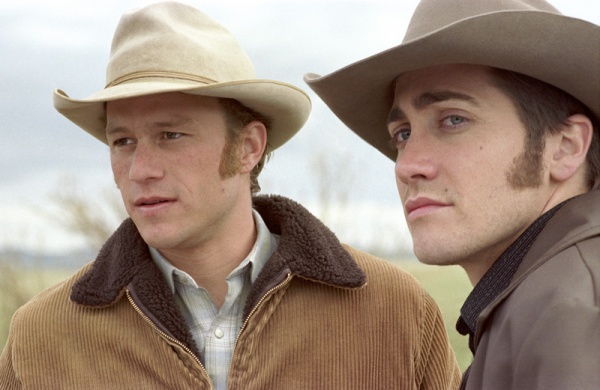
Brokeback Mountain


Originally Written and Posted at Epinions.com on 1/8/06 w/ Additional Edits.


Throughout the world of gay cinema in independent films, the subject of homosexuality has been explored throughout whether in its anarchistic view of Gregg Araki, the Douglas Sirk setting of Todd Haynes, or to the elliptical, harrowing viewpoint of Gus Van Sant. By the mid-90s, independent films was definitely a great area to explore homosexuality as most films about gays have always been praised through the independent film community. Then in the mid-90s, the controversial cartoon show South Park commented in an episode about a Sundance film festival of sorts comes to South Park where Eric Cartman has complained that, "independent films are those black and white hippy movies. They're always about gay cowboys eating pudding." Well, years later since that infamous episode, Trey Parker and Matt Stone's take on independent films has finally come true. A movie about gay cowboys... who don't eat any pudding called Brokeback Mountain.

Based on a short story by Annie Proulx, Brokeback Mountain is a tale about two young men in the 1960s who work as ranchers as their feelings toward each other become something secretive. After years of separation and new wives, they would meet again for 20 years on as they come to term with their sexuality and feelings. Directed by acclaimed Taiwan director Ang Lee with a screenplay by Larry McMurty and Diana Ossana, Brokeback Mountain is more than a gay cowboy movie but something more about the exploration of love when homosexuality was taboo. Starring Heath Ledger, Jake Gyllenhaal, Michelle Williams, Anne Hathaway, Anna Faris, Linda Cardellini, and Randy Quaid. Brokeback Mountain is a poignant, elegant drama from the prolific Ang Lee.

It's 1963 in Signal, Wyoming as two young men are looking for work at a ranch. A ranch boss named Joe Aguirre (Randy Quaid) comes in and hire the two men to run the herd of sheep into the mountains. Joe takes Ennis del Mar (Heath Ledger) to lead the pack as he is joined by a Texas boy named Jack Twist (Jake Gyllenhaal) where the two ride through the wave of mountains. While Jack is more outgoing about his dream to be a rodeo champion, Ennis prefers to keep things to himself. Immediately, the two work and work throughout the day watching the sheep and camping out. While Ennis hopes to use the work to raise money so he can marry his girlfriend Alma (Michelle Williams), he finds himself having good company with Jack as they drink and eat deer. Then during one cold night after a moment of drinking,  Jack lets Ennis sleep in his tent where things get really comfortable.

At first, it becomes a denial stage but their growing feelings for each other gets stronger as Ennis begins to open up more about how he was raised by his siblings. During their job, Joe begins to look very suspicious about the closeness of Ennis and Jack as the two end their stint and the ranch. The time for them also ends as Jack hopes to see him again soon. One year later, Ennis marries Alma while Jack tries to return to Wyoming to meet Ennis for a ranching stint but is rejected while Ennis doesn't make it. Jack returns home to Texas where he catches the eye of rodeo princess Lureen Newsome (Anne Hathaway) as the two wed and raise a son. While Jack has a nice life in Texas, Ennis' life with Alma and their two daughters Alma Jr. and Jenny has its good and bad moments. Then one day, Ennis receives a letter from Jack as he asks to visit.

Jack drives up to Wyoming and meets Ennis for the first time in four years where Alma begins to see the two doing things that they're not supposed to do as fishing buddies. Through the years, Jack and Ennis would see each other and talk about their own lives at home during their trips to the mountains while coming home to their wives. The trips though proved to be more and more troubling in the years on as Ennis' family life goes into chaos while Jack's sexual tendencies starts to get to him as during another trip, their relationship becomes more troubling to hide.

While there have been many tales of homosexual romance and the tragic consequences, Brokeback Mountain is a film that handles the troubling circumstances in the most poignant way that doesn't carry the need for any explosive dramatics. Much of that credit goes to Ang Lee for his observant and restrained approach to directing the film since he allows more intimacy between the characters. Especially in how the film's story is told from the early 1960s to the early 80s where homosexuality was taboo. While the film doesn't break ground in the ideas of homosexuality in those times, especially in places like Texas and Wyoming. The film shows all the troubles that goes on in two men's attempt in maintaining a natural, loving relationship.

With a fantastic script by Diana Ossana and Larry McMurty, the film has a very interesting structure with the first act being these two young men meeting each other and falling in love while trying to claim in their words, "I ain't queer". The second act is where the film has a unique structure where it starts off the separate lives of Jack and Ennis and their relationships with their wives and children. The story moves back and forth to their own individual stories to the two coming together and talk about what's going on, especially a haunting story where Ennis reveals a thing he saw with his father. Then comes a very troubling third act where both men struggle with their sexuality and the different lives they lead outside of each other. Jack is more outgoing, content, and proud of who he is and where his life is as everything around him is great yet he wants more. He would wander off places and find things while Ennis' life is a lot harder and tougher since he keeps things to himself while trying to find something.

The direction by Ang Lee is exquisitely amazing since he aims for a natural feel and look to the film while his choice of locations are very inspiring, especially from those mountains where the film has an epic feel of sorts. Especially in its structure where he chooses to film an intimate moment without any music or everything else that's going on. Just a shot of these two men whenever they're talking or being silent. The ending of the film is pretty anti-climatic since the last shot just quiets everything down. It confirms the tragic nature of the film where the tragedy is the fact that despite these feelings for each other, Jack and Ennis couldn't be together because at that time, the idea of it is wrong. Especially in how Jack wants to and forget about what other people thinks yet "being queer" in places like Wyoming or in Texas  in those times will certainly get these men killed. Even by 201, in those areas despite the fact that people are more aware of homosexuality, homophobia still goes on today.

Helping Ang Lee in his epic vision is Mexican cinematographer Rodrigo Prieto who does amazing work in many of the film's exterior scenes from his shots of the mountains on day and night to the fields of the west. His cinematography truly captures the American heartland at its finest while doing wonderful work in many of the film's interior scenes. Production designer Judy Becker and art director Laura Ballinger do a great job in contrasting the worlds of Jack and Ennis were Jack's home life is clean with all the fine things Lureen's family have and the down-home world of Ennis. Especially in how Becker designs the home of Alma and Ennis where everything that is broken or missing is all over the place. Costume designer Marit Allen also does great work in the costumes for the men with their blue jeans and cowboy hats to the different style of clothing from the women. Editors Dylan Tichenor and Geraldine Peroni do great work in the film's editing with wonderful dissolve and fading cuts that helps the film move in its 134-minute pacing along with some wonderful sound work from Eugene Gerty for capturing the atmosphere of the mountains and fields.

The film's music which is done by composer Gustavo Santaolalla is wonderful subtle and melancholic with its mix of acoustic guitars, country textures, and orchestral arrangements that doesn't overplay the drama while adding tension to what is going on. It's one of the most memorable and poignant score pieces. The soundtrack which includes additional work from Marcelo Zarvos features cuts from the likes of Willie Nelson, Linda Ronstadt, Emmylou Harris, Rufus Wainwright, Merle Haggard, Tammy Wynette, and Steve Earle that plays to the film's world of the American heartland.

Finally, we have the film's superb cast that includes fine performances from Kate Mara, Cheyenne Hill, and Hannah Stewart as Ennis' eldest daughter Alma Jr. along with Sarah Hyslop and Brooklynn Proulx as the youngest daughter Jenny. Other performances from Graham Beckel and Mary Liboiron as Lureen' parents, Roberta Maxwell and Peter McRobbie as Jack's parents are all wonderful including David Harbour as a friend of Lureen. Anna Faris does a wonderful, scene-stealing performance as a talkative friend of Lureen named LaShawn who represents that upper class world that Jack lives in. Linda Cardellini is also great as Cassie Cartwright who tries to understand Ennis amidst the chaos of his life as she realizes how introverted he is. Randy Quaid is also great as the tough, conservative Joe Aguirre who sees things that he thinks is wrong as he does wonderful work in the film's early scenes.

While it's a small role in some sense, Anne Hathaway does wonderful work as Jack's wife Lureen with her fast-living, rich lifestyle who provides a nice sense of comfort and companionship Jack needed though she is unaware of who he really is. While her performance is not entirely great when she is forced to wear a wig, Hathaway manages to pull off a memorable and convincing performance of a woman unaware of everything while being devoted to her husband. The film's best performance truly goes to Michelle Williams as Alma. Williams pulls off all the emotional punches of a woman who is in shock at what she sees and her reaction is heartbreaking. Williams pulls off all the troubles of what she does since her character doesn't know what to think or what to do which leads to the chaos that her husband will have to go through. In her many scenes with real-life boyfriend Heath Ledger, the two have great chemistry together as Williams brings a career-making performance.

Finally, we have Jake Gyllenhaal and Heath Ledger who both bring the performances of their young career as the two protagonists trying to fall in love in a world that is very in those times. The chemistry of the two is very natural along with the tension they bring in their frustration over the outcome of their relationship when their characters get older. Jake Gyllenhaal has the more showy performance as the more extroverted Jack Twist since he likes to do crazy things and get into risky situations while at home in Texas, he lives that life while maintaining control. Including one scene about his son should be raised where he reveals who is boss. Gyllenhaal deserves a lot of credit for his performance. Heath Ledger is the more introverted and troubled performance as a man who doesn't talk much while being haunted by things around that he doesn't want to reveal. Ledger pulls off all the anger and strictness of a man who has a hard time dealing with himself while disconnecting himself from those around him including his wife and children. It's two great performances for those two young actors.

Brokeback Mountain is a brilliantly poignant and heartbreaking film from Ang Lee with a wonderful film team and a cast led by Jake Gyllenhaal, Heath Ledger, and Michelle Williams. While the film isn't groundbreaking to the works of Gus Van Sant or Todd Haynes, it's still one of the best love stories ever told. While it's likely that this film will or already inspire parody and in some cases, controversy. It's a movie that reveals on how far humanity has gone in the feeling of love between two men. It's a movie that must not be missed on how tragic the world was when everything seemed wrong as Ang Lee creates another great film in Brokeback Mountain.


(C) thevoid99 2011

Monday, April 04, 2011

I'm Not There


Originally Written and Posted at Epinions.com on 12/5/07 w/ Additional Edits.


Bob Dylan is known to the world as a poet, a folk singer, a voice for a generation, a rebel, an innovator, an icon, and everything else he's been called. Since his debut in the early 1960s, Dylan wrote and sang anthems about changing the world early in his career only to evolve by going electric, singing about whatever is on his mind and putting on a different persona. By 2007, he remains an icon revered by the world as his last album in 2006, Modern Times debuted at #1 in the Billboard 200 album charts proving his staying power through changing musical trends and the harsh world of the music industry. The story of Dylan is a journey that is sprawling and if it was made into a film, how would it be told? Iconic indie-auteur Todd Haynes has that answer in his new film about Bob Dylan named after one of his most bootlegged songs entitled I'm Not There.

Directed by Todd Haynes based on his screen story with a script he co-wrote with Oren Moverman, I'm Not There tells the story of the life of Bob Dylan through exaggerations, truths, legends, and other tales through seven periods of his life. In the role of Bob Dylan, Haynes devised a plan to hire not one but six individuals to play Robert Zimmerman aka Bob Dylan through the different periods of his life. In those six include his Velvet Goldmine star Christian Bale along with Cate Blanchett, Richard Gere, Heath Ledger, Ben Whishaw, and Marcus Carl Franklin. Also starring Haynes' regular Julianne Moore, Michelle Williams, Charlotte Gainsbourg, David Cross, and Bruce Greenwood. I'm Not There is a whimsical, original, and inspiring masterpiece from Todd Haynes and company.

A young boy calling himself Woody Guthrie (Marcus Carl Franklin) arrives on a train singing songs he claimed were his own as he talks about protests and such. Yet, as he jams with other musicians and hangs out with poor people, a woman tells him that he's singing songs from a different time as it is 1959. After getting kicked out of a train and being found by a rich couple, he is revealed to be a runaway juvenile as Woody is in search of his identity. A few years later at the Greenwich folk music scene, a new singer-songwriter named Jack Rollins (Christian Bale) became the wunderkind of the scene. With help of a folk singer named Alice (Julianne Moore), Rollins became a reluctant folk star.

With Rollins' fame rising, an actor named Robbie Clark (Heath Ledger) plays the folk singer as he falls for a Frenchwoman named Claire (Charlotte Gainsbourg) as they have a blissful relationship. Yet, as Clark's fame rise, he struggles with it as it would eventually take a toll on his marriage to Claire. With Rollins disappearing, a singer named Jude Quinn (Cate Blanchett) shocks an audience at a New England music festival by playing electric instruments and angering the crowd. During a tour in England, Jude gets the Beatles high on dope, evades the attention of movie star Coco Rivington (Michelle Williams) and talks to a journalist (Bruce Greenwood) during a huge interview for the BBC. With Jude changing gears on his music, he is facing a lot of heat from fans who claimed that he's betrayed the folk music scene while a man named Arthur (Ben Whishaw) is interviewed about why he isn’t singing protest music. Arthur instead, rambles on about what is going on while not giving a straight answer.

While Robbie's marriage to Claire is disintegrating and Jack Rollins disappears, a reclusive man named Billy (Richard Gere) is hiding in the woods unaware that a man named Pat Garrett (Bruce Greenwood) is hunting for him. While Billy is looking at the Western town in the middle of the woods, he wonder why he left the world and what happened to this gift he once had. Meanwhile, Jack Rollins returns as Pastor John who then sings nothing but Christian music.

Whenever a film biography of a musician or an artist is made. There's a traditional structure. Musician comes from humble beginnings, struggles to make it. Gets discovered, sign to a record deal. Becomes a huge success, gets involved with all the trappings of stardom. Then comes the decline and eventual resurrection and comeback. Yet, with someone as unique as Bob Dylan, that's a structure that is too easy to tell and at the same, the idea of one person playing Bob Dylan couldn't work. Why? It's because Bob Dylan was an individual who evolved through whatever moment he's in. In many ways, Dylan is just trying to be himself through whatever phase he's in his peculiar, unique life.

This is something Todd Haynes understood since a film about the life of Bob Dylan isn't going to work through conventional means because it's too predictable and it's been told so many times through the traditional medium of what music bio-pics are going through. It's a genre that at the moment is becoming not just stale but also parody, which is the case of the upcoming film Walk Hard: The Dewey Cox Story. So, what is there to do? If a movie is going to be made about Bob Dylan, certain periods of his life has to be shown which includes his early folk years in the early 60s, his controversial move going to electric, his personal life, his own rambling interviews, his reclusive period in the early 70s, and his Christianity phase in the late 70s. One actor couldn't do all of those periods as well as play up to the different personas of Dylan. That's why Todd Haynes has chosen to employ six different actors for the film. Two British actors, one Welsh and the other English. Two Australian actors, man and woman. Two American actors, a 50-year old white man and a 13-year old African-American child.

While the idea of using multiple actors for one role isn't an entirely original idea. The approach Haynes and co-writer Oren Moverman chose works to show each persona and period of Dylan's life. While the entire film is told in non-linear fashion in tradition to Dylan's narrative style of writing. Each period and persona is very different not just look but in performance. While the stories move back and forth, it unveils each period to where the character is at and how they're reacting at the moment. The story of Woody is based on Dylan's exaggerations from Dylan to journalists and people during folk scene in Greenwich as the look of the boy with his hat is a reference to hat Dylan wore on his first album. Jack Rollins' story is about Dylan in his early rise to fame from the folk scene and his moment of controversy during a Civil Rights Award.

The story of Jude is partially based on the D.A. Pennebaker film Dont Look Back but mostly insprired by the rarely seen documentary Eat The Document about Dylan's tour of the U.K. while making references to his friendship with Allen Ginsberg (David Cross) and his rumored affair with Edie Sedgwick. Robbie's story is about Dylan's personal life in his relationship with Claire who is a fictional character based on his 1960s girlfriend Suze Rotolo and wife Sara Lownds with a subtle reference to his 1975 album Blood on the Tracks. The character of Arthur has only one scene which is about Dylan interrogated about his evolution as the character rambles about his life and view of things. The story of Billy is a reference to Dylan's country music exploration as well as the film Dylan starred in Sam Peckinpah's Pat Garrett & Billy the Kid.

Haynes and Moverman understood what those periods and phases in Dylan's life meant and they certainly couldn't move on after Dylan's period when became a Christian. Dylan in the 80s would be boring and too predictable while the story of Dylan now doesn't seem that interesting and it's best for only Dylan himself to tell that part of the story. Haynes understands that while the film's plot is Dylan through the periods of his own life. The plot couldn't be very simple as it's presented on screen. Haynes' direction is superb and extremely unconventional. With the black-and-white footage on the characters of Arthur, Jude, and parts of Jack and the rest of the story on color. While mainstream audiences might feel baffled and confused by the approach, it's only because this is how Dylan lived his life.

Haynes' look for the Woody/Billy worlds really gets the film in full circle as Woody is a boy finding his identity with Billy running away from that world only to rediscover it. Billy's world is essentially a fantasy world in the way he sees things as if he is Billy the Kid. With everyone wearing clown makeup and a giraffe appears, it's all because it's part of Billy's fantasy only to be aware that Pat Garrett is coming to get him. The Jude sequence which is based on the Pennebaker documentary includes a moment of fantasy as if Jude is living a dream world while the world of Robbie shows a scene of the man dealing with his fame.

The result of the whole film is extremely avant-garde and whimsical yet it works to convey the sense of evolution in Dylan's life. Through the wide lenses, super 8 films, grainy footage, and everything else. It's an understanding of where Bob Dylan was and is in his life as he goes from one world to another. Haynes' direction through each different look is distinctive and imaginative as like the in the script and in what Dylan has said in the film's trailer. All I Can Do Is Be Me. Whoever That Is. That is what the film is about and its shows that before David Bowie, before Cher, before Elvis Costello, and before Madonna. Bob Dylan was the godfather of reinvention and with Todd Haynes' direction, it reveals on who this legendary man is.

Cinematographer Edward Lachman creates a look that is unique to each period of the film with Arthur's segment shot in grainy, 16mm black-and-white footage as if he's part of an interrogation, Jude shot in gorgeous black-and-white to emphasis the documentary style of Dont Look Back, and the TV, black-and-white footage of Jack Rollins that is shot in grainy color as if the whole segment is a documentary. For the rest of the film, the Robbie story is mostly shot with tinted blue palettes and sepia-toned colors to convey the world he was in as well as his troubled mood. Lachman's photography is given higher palettes of sepia for the dream-like look of both the Billy and Woody segments while the Pastor Jack sequence is more in the look of 70s style TV. Lachman's photography is extremely superb and truly one of the year's best.

Editor Jay Rabinowitz, who took over for the late James Lyon (whom the film was dedicated to), plays to the similar style of the film with use of jump-cuts for the Jude sequence, more traditional cuts in other parts while playing to the film's non-linear tone as his editing overall is amazing. Production designer Judy Becker does amazing work in creating the different look and times of the film from the delapitated world of Billy to the 70s like world of paintings and furniture in Robbie's world and the whimsical, stylish world of swinging 60s in Jude's world. Becker's production design is extraordinarily brilliant. Costume designer John A. Dunn does great work with the different looks of the film that mimic all the album covers, clothes, and shoes that Dylan was wearing those different periods. Jean-Jacques Dion does great work with the film's hair with some of the actors sporting Dylan-like hairdo while Christian Bale gets to sport a Jew-fro as Pastor John that looks hilarious.

Sound editor Robert Jackson does amazing work in capturing the atmosphere of each period through the waves of boos and music through the scene of Jude playing electric at a folk music show. Special effects supervisor Louis Craig and visual effects supervisor Louis Morin does great work in creating the weird, whimsical world for both Jude and Billy's own fantasies. The film's soundtrack supervised by Jim Dunbar and Randall Poster features an amazing soundtrack featuring original cuts by Dylan including the unreleased title track plus various covers performed by Sonic Youth, Cat Power, John Doe, Stephen Malkmus, Mason Jennings, Karen O of the Yeah Yeah Yeahs, Calexio, Willie Nelson, and many more. Each song is used to convey the period and world of Dylan's life as it emphasizes his evolution with Doe, Malkmus, and Jennings singing the songs during the period of Jude and Jack Rollins with Marcus Carl Franklin doing his own singing while jamming with Richie Havens.

Finally, we have the film's cast that is wonderfully assembled by Laura Rosenthal. Featuring appearances from Kim Gordon of Sonic Youth as a folk singer discussing Jack Rollins, Craig Thomas as Hewey Newton and Benz Antoine as Bobby Seale of the Black Panther party who listen to Dylan's song while being massaged, Jane Wheeler as a TV host doing a profile on Rollins, Allison Folland as a journalist interviewing Robbie, Don Francks and Roc LaFortune as Hobos Woody meets, Richie Havens as a musician Woody jams with, Kim Roberts as the woman who gives Woody advice on what he should sing, Gabrielle Marcoux and Jessey LaFlamme as Robbie & Claire's daughters, Mark Camacho as Jude's manager Norman, and Kris Kristofferson as the narrator for film's opening sequence.

Yolonda Ross gives a brief but fine performance as Angela, based on Mary Alice Artes, who introduced Jack to Christianity and made him Pastor John while Julianne Moore plays a Joan Baez-like persona as a woman nurtured Jack's talents only to feel betrayed by him. David Cross is funny as Allen Ginsberg who has a great scene about Jude's possible selling out claiming he sold out to God in a reference to a Dylan concert in Berkeley 1965. Bruce Greenwood is great in a dual role as a British journalist who is the supposed inspiration to the song Ballad of The Thin Man while also playing the aging Pat Garrett in the Billy sequence. Michelle Williams is wonderfully sexy as Coco Rivington, an Edie Sedgwick-like actress who teases Jude while acting like a diva. The film's best non-Dylan performance is truly Charlotte Gainsbourg as Claire, the mix of Suze Rotolo and Sarah Lownds who loved Robbie but couldn't face with him not at home or his attraction to other women as she would become the muse for Dylan's Blood on the Tracks. Gainsbourg's performance is just amazing showing her evolution as the woman who was Robbie's soulmate to the unhappy housewife dealing with his fame.

Marcus Carl Franklin gives a superb, upbeat performance as Woody, a young Dylan who is trying to find his own identity, tell false stories and such while jamming along with other musicians and for other people. Franklin's performance is a real breakthrough as he proves he can sing and play while grabbing the attention early in the film. Ben Whishaw is excellent as Arthur, the Dylan who is interviewed as he rambles on incoherently while not giving any straight answers. Though Whishaw is only in one entire segment, he does the most to make himself memorable. Christian Bale is brilliant as the shy, evasive Jack Rollins as he performs while trying to be controversial at the same time. Bale's performance is the one that mimics Dylan the most in voice while he shows great humor in sporting a Jew-fro as Pastor John while his performance in inspirational proving that Dylan's Christianity phase isn’t something to make fun of.

Richard Gere gives a very laconic, subtle performance as Billy as he wanders around riding a horse, looking for his dog, and trying to see what is going on. Gere doesn't do any traditional, Hollywood style of acting as he is a man who does his best work when he's quiet while pondering his own existence as the veteran actor gives a masterful performance. Heath Ledger is great as the conflicted Robbie, an actor who is tempted by women and fame as he struggles with being a family man. Ledger's performance is extremely memorable while mimicking Dylan's voice in a unique way that proves his performance in Brokeback Mountain by Ang Lee was no fluke.

The film's best performance and certainly the most entertaining of all is Cate Blanchett as Jude Quinn. Wearing a sock that she put in her pants to walk and act like a man, Blanchett brings a lot of humor, angst, and attitude to the character as tries to evade Coco, hang out with Allen Ginsberg, and do all sorts of stuff. Blanchett's performance is truly a marvel to watch as she brings Dylan to life whether he's playing electric or watching news reels saying "I can't take anymore of this man" and saying some nasty things including comments about Coco's... you know. Blanchett is just fun to watch from start to finish and it's truly one of the best performances ever shown on cinema.

***Updated 6/6/08 for DVD Info & Special Features***

The Region 1 2-disc Collector's Edition DVD of I'm Not There presents the film in its original aspect theatrical ratio and in the widescreen format. With the film sound in 5.1 Dolby Surround Sound in English for the film and the second disc in Stereo Surround Sound. The DVD also include English and Spanish subtitle for the film as well as English for the hearing impaired in both discs. The first disc is the actual feature film itself along with a slew of special features. First is a series of text introductions to the film. The first entitled Who's Not There: Six Faces of Dylan from Rolling Stone magazine reveals the six actors who play the personalities of Bob Dylan. The second entitled Tangled Up In Clues by Los Angeles Times music writer Ann Powers who explores the film through its various sources on its characters, look, costumes, and such. The first two text came from a CD-booklet of sorts that accompanied the film from its theatrical release. The third text entitled Encoding An Entertaining Enigma is pretty much a summary of the film and its characters.

The fourth and final piece of text introduction comes from famed music critic Greil Marcus. The writer who is also an avid fan of Dylan and wrote a book about The Basement Tapes recordings in a book entitled Invisible Republic writes down notes on this film. Entitled A Dream That Doesn't Demand Explanation is essentially Marcus explaining what Haynes wanted to do for the film as well as the mystery of Dylan itself through the various persona and characters being played on film. Marcus also touches on the film's title, which is an unreleased bootleg made during The Basement Tapes recordings. Now officially available in the film’s soundtrack, Marcus reveals the song's sense of mystery while though it's incomplete with Dylan just singing what he can come up with in his head. Marcus' notes are truly extraordinary for what the audience needed for the film.

The feature-length audio commentary by Todd Haynes is truly one of the most informative and enjoyable commentaries ever heard. Haynes discusses about the many mysteries and references of Dylan that's shown throughout the film. He also discusses Dylan's cultural impact in the 1960s and what he think that Dylan's motorcycle crash in 1966 really represented in relation to what was going on at the time. He also reveals why he didn't cover Dylan in the 1980s, 1990s, and so forth. What he revealed is that because of Dylan's 1966 crash, Dylan retreated away from the public and the media to live a private life and when the character of Billy hops on that train at the end of the film just as it began with Woody on the train. It shows that Dylan from 1962-1966 was definitely a high-water mark in pop culture and by the time he crashed, he stopped being this phenomenon and lived in his own terms as he's doing now in his Never-Ending Tour.

Haynes also reveals some of the film's technical tidbits while complementing the talents of his collaborators like producer Christine Vachon, cinematographer Edward Lachman, production designer Judy Becker, and editor Jay Rabinowitz among others. He also revealed the various influences he had for the film that included Federico Fellini and Jean-Luc Godard for its different look. He also talks about the actors he got for the film. Of the most professional, Christian Bale was the most serious about playing Dylan where during his scenes with Julianne Moore for the pictures, Moore ended up laughing through most of it as Haynes jokingly said she was very unprofessional.

Haynes also talked about Marcus Carl Franklin and Ben Whishaw, whom he both auditioned and enjoyed working with while with Richard Gere, he hired him not just because of his talent but of his filmography, notably Terrence Malick's Days of Heaven. With Gere, Haynes told Gere to think of those early years while Gere helped him in finding a look for the town of Riddle in those segments. Haynes' discussion on Cate Blanchett were fun to hear as he talked about Blanchett's performance with such delight while revealing that she's the closest thing to looking like Dylan. Some of her performance, Haynes, revealed was improvised including her dance with David Cross as Allen Ginsberg.

Haynes complemented the work of Charlotte Gainsbourg for her performance of Claire who he felt did everything that a great actor, actress does in the tradition of Meryl Streep. Someone who doesn't know what to do when they're about to play a character as if they don't know how to act to begin with. Then there's Heath Ledger in whom, Haynes sadly spoke about since his untimely, tragic death back in January of 2008. Haynes talked about Ledger's plan to create a bio-pic on Nick Drake that he wanted to direct but didn't want to delve into the same type of structure that often hinders most bio-pics. Ledger, originally was supposed to take a break from acting to do the Drake project but once he worked with Haynes on this film. Ledger felt it would help him create the idea on his Drake project. Haynes talked about the close friendship he had with Ledger while watching those scenes as he admits to being very sad about his death.

The second disc includes a huge amounts of special features separated into four different sections. The first one is an entire collection of trailers featuring the two theatrical trailers for the film as well as unreleased trailers. The unreleased trailers involve all the six actors playing Dylan carrying large flash cards to the classic song Subterranean Homesick Blues in the same presentation that its seminal video did for D.A. Pennebaker's Dont Look Back. There's eight versions of that trailer, six of them showing each individual actor carrying and throwing cardboard signs and two versions, short and long, with all the actors involved from their footage. It's a great trailer to emphasize the spirit of Dylan.

The second section entitled From the Edit Room features a slew of deleted scenes, alternate takes, extended sequences, and many more. The first segment is two audition tapes for Ben Whishaw and Marcus Carl Franklin. Franklin's audition with one of the casting people showed Franklin's charismatic, charming performance as he clearly plays the role of Woody with such ease as if he was a total natural. Whishaw's audition, taped at a restaurant, showed the British actor doing a passable American accent while giving the presence that was needed for his character. Two deleted scenes emerge in the film totally less than five minutes. First is a scene from Jude Quinn's segment as Jude, burned out and sick from pills is surrounded by two men arguing as they seem to recognize the singer. The second deleted scene from Billy the Kid's segment involves Billy running into a family with a dead pony and talking to a woman asking if she'a seen his dog, who ran from him.

Next is the extended/alternate scenes that are essentially the full-length performances of the songs performed in the film like Tombstone Blues with Ritchie Haven and Marcus Carl Franklin, The Lonesome Death Of Hattie Carroll by Christian Bale miming the voice of Mason Jennings, Bale as Pastor John for Pressing On as he's miming the voice of John Doe, and Goin' To Acapulco in the Billy the Kid segment sung by Jim James of My Morning Jacket backed by Calexico.

These extended scenes and performances each do serve as great music videos as the songs themselves prove to be just as powerful as the scenes themselves. The four-minute outtakes segment is essentially a gag reel that shows all the mistakes and such that happens on the film through most of the production that included director Todd Haynes in the shot they were supposed to be shooting, a horse relieving and defecating, and other funny hijinks.

The fifth and final part of the post-production section is a touching tribute to Heath Ledger in tune to Bob Dylan's Tomorrow Is A Long Time. It opens with a deleted scene of Ledger playing the Robbie Clark character in a museum taking shots at the place with Charlotte Gainsbourg and then loads of footage and outtakes involving Ledger that proves to be extremely touching and a fitting tribute to the recently departed actor.

The third section entitled Look Back consists of three segments including the film's red carpet premiere in New York City, the making of the soundtrack, and a conversation with Todd Haynes. First is the three-minute red carpet premiere in NYC on November 13, 2007 that features brief interviews with Todd Haynes, actors Richard Gere, Julianne Moore, and Heath Ledger, and musician John Doe of X as they all talk about the film and Dylan. The twenty-one minute making-of soundtrack segment featuring Haynes, actor Marcus Carl Franklin, and the soundtrack’s producers Joe Henry, Sonic Youth's Lee Ranaldo, and Calexico's Joey Burns. Haynes discusses the plan to create a soundtrack for the film where Joe Henry said that the soundtrack was in the works at the time the film was in production. With Henry focusing on the Woody segment, Ranaldo on the Jude segment, and Burns on the Billy the Kid segment. Each producer were given the task of reinventing or reinterpreting the songs they’re given as they also try to capture each period.

Henry worked closely with Marcus Carl Franklin on the music they were making as Franklin, who is a musician himself, wanted to be faithful to Dylan's music and found himself more influenced by Dylan than ever. During filming, they contacted Richie Havens for Tombstone Blues with Franklin that ended up being an improvised jam with Havens later recording his own version for the film's soundtrack. Ranaldo wanted to update the songs he was given as he called on Eddie Vedder to sing All Along the Watchtowers and brought in Tom Verlaine for Cold Irons Bound while he along with several musicians including Verlaine and Sonic Youth drummer Steve Shelley formed the Million Dollar Bashers. For the singing voice of Jude, they called in Stephen Malkamus of Pavement to sing just so he can capture that style of Dylan's vocals at the time.

Joey Burns of Calexico aimed for an Old World feel for the music that is more in the tradition of Americana as he called in Jim James of My Morning Jacket to cover Goin' To Acapulco, a song that isn't considered to be a major Dylan song among fans. Yet, its reinterpretation made it a surprise as did another obscure Dylan song, Pressing On from his Christian period. Ranaldo, who is an admitted super-Dylan freak, admits to not being grabbed on by that song in its original form but when heard John Doe's version, he was blown away and rediscovered the original song. Haynes said that the reinterpretation of these songs is great for even the hardcore Dylan fan to rediscover proving that they can be done in so many different ways.

The forty-three minute conversation with Todd Haynes segment is a collection of interviews with the director talking about Bob Dylan, the film, and how he made it. He revealed that in 2000, after living in New York City for 15 years. He decided to move to Portland, Oregon and went on a cross-country road trip where he brought a bunch of Bob Dylan music on the road. It was at that time, he was about to work on Far from Heaven as he began to re-discover Bob Dylan and also went through various bootlegs including the complete Basement Tapes recordings. After getting a collection of American folk music and early Americana, Haynes got the idea to create a Dylan film.

Yet, he and producer Christine Vachon were very careful about approaching an idea on making a film about Dylan. After going through troubling experiences with getting the music rights since Haynes' 1987 cult-short Superstar: The Karen Carpenter Story is no longer being seen in public because of Richard Carpenter's refusal to let the music be used in the short and such. Haynes also went through similar trouble with Velvet Goldmine back in 1998 when David Bowie refused to give him rights for the music. Haynes contacted Dylan's eldest son Jesse, who is also a film director, and Dylan's manager Jeff Rosen about the idea. He gave them a description and then he had to write an idea about the project with some specific instructions as Rosen and Jesse Dylan gave the idea to Bob Dylan, who approved.

The film, shot in Montreal, was not easy to make because of a limited budget and shooting schedule while Haynes revealed that the actors knew they were in for a challenge in playing the Dylan parts. Haynes revealed that writing the script with Oren Moverman wasn't easy to do because Haynes wanted to tell so much of Dylan's story from the 1960s while not leaning towards the traditional bio-pic. He also revealed that Moverman, who is Israeli, really got into Dylan's Christian period and had some understanding into why Dylan became a Christian for a brief period. The only actor Haynes wrote in mind for one of the characters was Charlotte Gainsbourg in the role of Claire, as Haynes admits, she almost wanted to turn him straight. With everyone else, it was through the casting process as it proved to be a challenge but also fruitful in terms of its collaboration. It's a wonderful interview that doesn't get boring as Haynes is talking through film festival conferences, promotional interviews, and such.

The fourth section of the special features is Dylanography, a collection of text and articles exploring Dylan and notes of the film. The first is a sixty-six page article from New York Times magazine writer Robert Sullivan entitled This is Not a Bob Dylan Movie about the process Todd Haynes had to go through in making the film as well as his own filmography. It's an informative article that explored how much Haynes took into making this film about Bob Dylan while trying not to make into a conventional bio-pic. The next article is Haynes' one-page proposal to Bob Dylan on his project that was original titled I'm Not There: Suppositions on a Film Concerning Dylan that shows the plans that he was going to do along with the text that he used where originally, there was seven characters. The character that never made it to the final cut was Charlie, a Greenwich kid that was supposed to be a link between the Woody Guthrie and Jack Rollins character. Next is a chronology on Bob Dylan that explores the time line and events of his life from his birth in 1943 to the release of his last studio album Modern Times in 2006.

The next three sections on Dylan are a collection of his work in music, film, and literature. The discography of Dylan explores every album he did up till 2006 including live albums, box sets, and the bootleg series. The filmography section explores the different section of Dylan on film including the documentaries like D.A. Pennebaker's Dont Look Back, the rarely-seen Eat the Document, and Martin Scorsese's 2005 documentary No Direction Home, concert films like The Last Waltz by Scorsese and two Dylan concert videos like Bob Dylan in Concert from 1986 and the 30th Anniversary concert in 1992. Plus listed are the film's he's acted like Sam Peckinpah's Pat Garrett & Billy the Kid, 1978's Renaldo & Clara that he directed, Hearts of Fire from 1987, 1990's Catchfire, 1999's Paradise Cove, and 2003's Masked & Anonymous by comedian Larry David.

The bibliography section includes the five books Dylan wrote like Tarantula, Writings & Drawings, Lyrics, 1962-2001, Chronicles Vol. 1, and Drawn Blank plus thirty books about Bob Dylan himself and it's a big collection. The filmmaker's notes is a collection of drawings and story boards about the compositions and shot set-ups about the film. Finally, there's a stills gallery in six separate segments to represent each of the six personalities that play Bob Dylan. Shown in black and white and a bit in color, it's a wonderful collection of the photos of the actors and on-set production that goes on. The overall special features content of the DVD is truly amazing for not just people who enjoy the film. It's also a must-have for Dylan fans while paying tribute to the late Heath Ledger.

***End of DVD Tidbits***

With the music bio-pic genre starting to run out of ideas, I'm Not There is an amazing, superb, and truly original film from Todd Haynes and company. With a great cast led by Cate Blanchett, Heath Ledger, Christian Bale, Richard Gere, Ben Whishaw, and Marcus Carl Franklin as Bob Dylan, it's a film experience that has to be seen on the big screen. While mainstream audiences might be baffled by the film's unconventional tone, anyone who understands Bob Dylan and his music will get it very easily while seeing things like Pete Seeger attempting to cut the wires with an ax (which wasn't true but a great legend) happen. While it's a film that subverts expectations, the result overall is truly amazing. For a film that defies conventions and tradition in the same way Bob Dylan lived his life in those times, I'm Not There is the film to go see.


© thevoid99 2011

Thursday, March 10, 2011

The Dark Knight


Originally Written and Posted at Epinions.com on 7/20/08 w/ Additional Edits.

***In Memory of Heath Ledger (1979-2008)***


When Batman reemerged to the cinema in 2005, Christopher Nolan's new approach to the Caped Crusader returned Batman to his dark roots. With Christian Bale in the role of Bruce Wayne and Batman, 2005's Batman Begins was a huge hit as it resurrected the comic book hero after being lambasted with ridiculous storylines, bad puns, and such from 1997's Batman & Robin by Joel Schumacher. The return of Batman was greeted with rave reviews and huge box office as everyone is happy. With a new franchise emerging with Nolan and Bale leading the way. It was time for the franchise itself to step up to its epic vision as Nolan along with his brother Jonathan and Batman Begins co-writer David S. Goyer to make a new Batman movie that is even grander and more darker.

For the sequel entitled The Dark Knight, the film essentially picks up where Batman Begins left off. In that film's ending, the just-promoted Lieutenant James Gordon shows Batman a Joker's card. The card would signify the new foe Batman would face in The Dark Knight as he would also face a series of obstacles ranging from the physical to the emotional and mental. Directed by Christopher Nolan with a script he co-wrote with brother Jonathan based on the screen story by Christopher Nolan and David S. Goyer. The Dark Knight tells the story of Bruce Wayne playing Batman as he deals with overwhelming escalation among the mob and other criminals while wanting a normal life. With the arrival of new district attorney Harvey Dent, Wayne hopes for the new D.A. to succeed despite the fact that he's dating Wayne's former flame Rachel Dawes. Meanwhile, a new criminal has arrived to wreak havoc on Gotham itself as he's called the Joker.

Based on the comic book by Bob Kane along with characters created by Bill Finger and Jerry Robinson, the story is inspired by the comic story Batman: The Long Halloween as well as The Killing Joke story written by Alan Moore. The film takes Batman to newer, darker levels as he faces the Joker whose sense of chaos and lack of remorse makes him the ultimate villain that Batman has to face. Along the way, Batman would face more villains aside from the mob and the Scarecrow when Dent would eventually become another main villain named Two-Face.

With Bale returning for the role of Batman/Bruce Wayne along with previous Batman Begins cast members Michael Caine as Alfred, Morgan Freeman as Lucius Fox, Gary Oldman as James Gordon, and Cillian Murphy as the Scarecrow. The film also stars Maggie Gyllenhaal, Aaron Eckhart, Eric Roberts, Michael Jai White, Anthony Michael Hall, Nestor Carbonell, William Fichter, Melinda McGraw, Nathan Gamble, and in one of his final performances, Heath Ledger as the Joker. The Dark Knight is an eerie, epic, and haunting masterpiece from Christopher Nolan and company.

More than a year after his arrival into Gotham City, Batman has managed to make Gotham a bit safer. The bad news is that copycat vigilantes has tried to do what Batman has done but often causing trouble. Especially as the Caped Crusader manages to capture former foe Jonathan Crane aka Scarecrow (Cillian Murphy) who is trying to make deals with the mob. Yet, Batman has also received a lot of heat from the police and press. Then hope arrives in the form of new district attorney Harvey Dent (Aaron Eckhart) who decides to help rid Gotham of crime. Lieutenant James Gordon (Gary Oldman) and Batman hopes that Dent will do the job after an attempt in putting Sal Maroni (Eric Roberts) on trial. Maroni and another mob boss in Gambol (Michael Jai White) turn to a Chinese business accountant named Lau (Chin Han) to help in saving their money. Maroni also turns to a psychotic criminal named the Joker for help as he decides that the only option to help themselves is to kill Batman.

With Dent now becoming a rising public figure, he is also dating Rachel Dawes (Maggie Gyllenhaal), the assistant DA as Bruce Wayne realizes that his hopes to win Rachel's heart are not going to be easy. Even as he tries to deal with his role as Batman as he lives in a penthouse with faithful butler Alfred (Michael Caine) while running his enterprise with CEO Lucius Fox (Morgan Freeman). Fox and Wayne tried to make a deal with Lau where in truth, Wayne suspects Lau of taking money from the mob for their protection as he, Fox, and Alfred go to Hong Kong to capture Lau so he can testify against Maroni. With Dent managing to gather evidence against Maroni, things seem to go well until the Joker creates assassinations and such as he also targets Dent. Yet, the Joker comes face-to-face with Batman.

With another assassination attempt on the mayor (Nestor Carbonell) thwarted, Dent and Batman make a plan to capture the Joker with Gordon's help as Rachel stays at Bruce's for protection after she learned she's being targeted. Dent, Batman, and Gordon's plan to capture the Joker succeeds only to somehow, backfire because of the Joker's plan. The plan would involve the scarring of Harvey Dent as Bruce Wayne is forced to deal with the weight of being Batman. The Joker frees himself from jail as he decides to wreak more havoc into Gotham as he corrupts Harvey into becoming Two-Face as Batman realizes what limits he must take to save Gotham from the maniacal mind of the Joker.

In Batman Begins, Christopher Nolan tells the story of Batman's origins as he shows audiences how Bruce Wayne became the Caped Crusader as he understands what he must do and what he cannot do. In The Dark Knight, Wayne is forced to see how far he can be pushed and if he can restrain himself. What the film is about is Wayne trying to return to normal life in some ways as he lays all of his hopes on Harvey Dent. Then when the Joker arrives, everything completely goes to hell as he wreaks havoc on Gotham as he tries to prove a point of how even the most pure person can be corrupted through unspeakable means.

Yet, the core story of the film is Batman and Jim Gordon trying to battle the Joker as they realize that the Joker's intentions is to prove that there's no such thing as purity, honor, and justice. Batman and Dent tries to prove otherwise but once Dent is scarred on all levels, he becomes corrupted to the point that everything he is supposed to stand for is out of the window. Yet, this leaves the Joker the opportunity to create anarchy in Gotham as his true colors is the fact that he's a man who works for himself and only himself. The mob and gangs are nothing to him as simply pawns of his game. He also plays a different game with Batman as he tries to get him to reveal himself while hoping to have him destroyed. Yet, he's the man that likes to push Batman's buttons into doing things to try and make Batman break his one rule, to not kill.

Christopher Nolan along brother Jonathan and co-story writer David S. Goyer create a very complex, epic story that is a comic book film but with something more. The film in some ways is a character study on Batman/Bruce Wayne, Harvey Dent/Two-Face, and the Joker. While it's clear that Wayne's motivations is simply to protect Gotham from harm, the Joker doesn't have motivation other than the fact that he just likes to create chaos in a world that he feels is impure. Then there's Harvey Dent, a man who is clearly on the world of good as he wants to clean up the streets and be the White Knight to protect Gotham. Though as Dent, there's shades of his dark side as he's even pushed to the limits. When he becomes Two-Face, the coin that he carries becomes his decider as he ends up being a character with very little remorse and hopes to prove that the Joker's argument for disorder is right.

The script by the Nolan brothers is more straightforward than their previous films as it doesn't rely on flashbacks and such. Instead, Christopher Nolan sets up scenes and things that would create a sense of momentum with the script's structure. The opening scene begins with a bank robbery that involved the Joker and fellow thieves to give the idea of what kind of man the Joker is. The first act is about Batman/Bruce Wayne's hope for Harvey Dent to take over while dealing with Rachel falling for Harvey. The second act involves the capture of the Joker and the beginning of Dent's corruption. The third is Batman dealing with the chaos the Joker has created and the outcome of what Dent has become. The film's ending is complex in not just on what was lost but how to cope with the outcome for both Batman and Jim Gordon.

Nolan's direction is truly astonishing as he creates a look and atmosphere that is purely epic and grand in its vision. With locations shot largely in Chicago and parts of Hong Kong, the film has a look that remains true to the grittiness of Batman Begins but on a far more grander scale. Especially in a few sequences that were shot with IMAX-made cameras like the opening bank scene, the nighttime Hong Kong scene, and other big action scenes. What Nolan also does is rely less on CGI-computer created images and have more realistic look whether its stunts or make-up in the case of Two-Face. Nolan creates a sense of momentum for some of the film's action sequences that also gear towards drama. The film also has some light humor that is also matched by the maniacal yet dark humor of the Joker.

Now some audiences might complain that the film is too dark and too long. It's dark because Batman is meant to be dark. Bruce Wayne has a sense of humor but Batman doesn't. Nolan understands this because, since he's a comic book fan. He knows that Batman has always intended to be this dark, adult figure who isn't really a hero. He's an anti-hero in some respects. The reason it's long is because given that Nolan wants an epic story that lives up to the larger-than-life figures that is Batman and the Joker. These are two men who are in some ways, equals as they give into adult themes that might be too heavy to understand if the audience are kids. What they know is that Batman is a good guy and the Joker is a bad guy. Nolan understands this but he knows that children have an idea of who Batman is and what he represents. His point of view more has to do with the original comics which aren't exactly kid-friendly. That's why kids might have more fun watching something like Spider-Man, who's a more accessible, friendlier super-hero.

Nolan obviously draws some of his cinematic inspirations from Michael Mann's Heat for some of the film's sequences while also taking notes from classic crime dramas which the film in some ways, is. It's a simple crime drama about a man wearing cape who teams up with a new district attorney, and a top police official to fight the mob unaware that they're going up against a figure of terror named the Joker. Nolan has to create a film within those simple plot lines but add dark touches that aren't easy to divulge as it's a film that also has a sense of tragedy. The tragedy more involves in what Batman has to play and what he must sacrifice in order to save Gotham. What Christopher Nolan creates overall is a huge film with a large canvas and a grand story as it's a film that is not just superior than the previous Batman films but raises the bar for all super-hero films based on comic books.

Cinematographer Wally Pfister creates a sharp, gritty look to the film with wonderful shading and colors to fit the mood of the film. From the daytime exteriors that rarely has moments of sunny, bright colors to the eerie nighttime exteriors for some of the scenes shot in Chicago with sepia-drenched colors for the city lights and highways and at times, very little color. In the Hong Kong scene, Pfister's use of blue colors and bright lights are truly brilliant with jaw-dropping presentation as it stays true to its grand look. Pfister's use of colors for the interior also pays true to the look of the Gotham exteriors in its nighttime scenes for its eerie tone as Pfister's photography is a highlight of the film.

Editor Lee Smith does a great job in maintaining the film's leisurely yet stylish pacing approach while creating scenes of tense drama to cut from segment and then to another, and another to create momentum. Smith also does superb work in creating a rhythm for the film's action scenes to create a sense of tension and build-up that is magnificent. Production designer Nathan Crowley along with art director Simon Lamont and set decorator Peter Lando do an amazing job in creating the new secret place where Bruce Wayne and Alfred work at along with the gadgets workshop that Fox has made. Even the gadgets that were created by special effects Chris Corbuld for the action scenes including the Batpod are truly brilliant.

Costume designer Lindy Hemming does an amazing job with the look of the Joker's costumes are truly demonic yet stylish while the Batsuit is given a grittier look that is true to the tone of the film. And no, there are no nipples in the Batsuit! Makeup designers John Caglione Jr., Linda Rizzuto, and Vicki Vacca are great to create the grungy makeup look of the Joker while the look of Two-Face with help from visual effects supervisor Nick Davis is also demonic to unveil the corruption of Harvey Dent. Sound designer Richard King does a fantastic job in the layering of sounds for some of the film's high-octane action sequences as well as sound of the Joker's sinister laughter that is chilling to hear.

The music score of composers James Newton Howard and Hans Zimmer is brilliant as it lives up to its grand scale. Howard and Zimmer create fast-building, momentum-driven pieces to convey the sense of action and drama while having moments of screeching violins to play up to the film's sense of horror that accompanies the Joker. The score overall is truly brilliant as it's one of the year's best score work that is filled with huge arrangements, bass-heavy sounds, and layers of synthesizers to create a dark mood.

The casting by John Papsidera is phenomenal for its collection of actors with several appearances being very memorable. Small performances from Melinda McGraw as Jim Gordon's wife, Nathan Gamble as Gordon's son, Beatrice Rosen as Wayne's date Natascha, Nydia Rodriguez Terracina as a judge, Ritchie Coster as a Chechen accomplice of Maroni, and Tommy "Tiny" Lister as a prisoner in a ferry scene who makes a decision relating to the Joker's reign of terror. Other notable small appearances include Joshua Harto as a suspicious employee of Wayne Enterprises who tries to expose who Batman is while Anthony Michael Hall plays newscaster Mike Engel who also tries to expose Batman's identity. Nestor Carbonell is good as the town's mayor while Monique Curnen is also good as Gordon's fellow detective Ramirez.

Michael Jai White has an excellent yet small memorable role as gang leader Gambol who doesn't trust the Joker while returning from Batman Begins, Colin MacFarlane as Commissioner Loeb and Cillian Murphy as the Scarecrow where the latter gives a great cameo appearance. Eric Roberts is in fine, slimy form as Sal Maroni, a mob boss who tries to do his business as he ends up having a scary confrontation with Batman. Chin Han is good as the charming yet conniving Lau, an accountant who ends up getting into trouble with Batman. In the film's opening bank robbery scene, William Fichter gives a great performance as a heroic bank manager who tries to battle the Joker only to realize what kind of power the man has.

Taking over for Katie Holmes in the role of Rachel Dawes, Maggie Gyllenhaal is excellent as Bruce Wayne's love interest as she plays a woman conflicted in her feelings for Bruce and Harvey. Gyllenhaal's performance truly surpasses what Holmes brought in the previous film as Gyllenhaal is more engaging, more subtle, and sassier as she has great chemistry with both Christian Bale and Aaron Eckhart while having a great scene with Michael Caine. Morgan Freeman and Michael Caine both do superb work in their respective roles as Lucius Fox and Alfred. Freeman adds a lot of subtle humor and charm to the character of Fox while Caine plays the moral conscience of the film as he has some funny one-liners while being the lone father figure that Bruce needed. Gary Oldman is brilliant in his role as Lieutenant James Gordon, a good-hearted cop who is trying to capture the Joker and bring peace to Gotham as he had to take risks that involves his family while being the moral center for both Batman and Harvey Dent.

Aaron Eckhart is phenomenal in the role of Harvey Dent/Two-Face, a man who brings hope to Gotham City as he carries a coin that he's convinced gives him good luck. Eckhart displays a lot of charm and wit to Dent yet as he turns into Two-Face. Eckhart displays the sense of madness and terror as he becomes someone corrupted as he is tormented in what he lost as he becomes the very thing he is trying to fight against. Christian Bale is great as the character of Bruce Wayne and Batman as Bale brings a complexity to a man pondering about the role of the Caped Crusader. Bale's sense of torment and confusion adds a new layer to Bruce Wayne and Batman as he's wondering if he should do things he shouldn’t do while trying to be the hero that can save Gotham. It's a great performance from Bale as he adds new dimensions to the Dark Knight.

Finally, in his penultimate performance, Heath Ledger gives a rousing, maniacal, humorous, and certainly anarchic performance that is truly unforgettable as the Joker. Had he not died this past January, this performance surely would've made him into one of this generation’s great actors. What Ledger brings is a twisted, eerie, and psychotic performance that is more definitive and a lot closer to what the Joker is in the comics. Less comical than Cesar Romero in the original TV series and far less chew-scenery than Jack Nicholson in the 1989 film version by Tim Burton. Ledger's performance as the Joker is miles away from what those two actors have brought to the character. He has a great sense of humor that is very dark. He likes to create a lot of chaos, he can do lots of lip-smack that is creepy. There's layers to what Ledger brings to the character.

The portrayal of the Joker isn't some caricature or a one-dimensional villain. Ledger sees him as a man who is all about chaos, who doesn't think of good in the world. Ledger creates a villain that is just full of terror as even the men he's hired by are intimidated by him once they see on what he can do. He's someone that's not motivated by money, by revenge, or anything. Ledger makes sure the Joker is a man who likes chaos as Ledger makes the character of the Joker simply larger than life. For the late, 28-year old Australian actor who has brought such memorable performances as a young knight, a poetic junkie, a conflicted gay cowboy, and a troubled version of Bob Dylan. The role as the Joker is a definitive, mesmerizing, and certainly iconic performance from the late, great Heath Ledger.

The Dark Knight is a thrilling, superb, and supremely epic blockbuster film from Christopher Nolan and company featuring great performances from Christian Bale, Aaron Eckhart, Gary Oldman, and most of all, Heath Ledger. Fans of the Batman film series will no doubt be amazed at what Nolan does as he exceeds all the expectations that's raised for the film. Though young audiences, particularly kids might feel overwhelmed by its length and dark tone, audiences who love comic book and heavy crime drama will truly enjoy this film for its epic scale and eerie atmosphere. Though its unclear how Nolan and his team will try and top the third installment of the Batman series. It's clear about one thing, The Dark Knight is truly the most definitive and certainly the best of all super-hero films that's ever made.


© thevoid99 2011