Showing posts with label chan-wook park. Show all posts

Tuesday, December 13, 2022

Decision to Leave


Directed by Chan-wook Park and written by Park and Seo-kyeong Jeong, Heojil gyeolsim (Decision to Leave) is the story of a detective who investigates the murder of a man on a mountaintop where that man’s wife is the suspect whom the detective falls for. The film is a suspense-drama in which a man tries to make sense of a murder on a unique location while he also deals with his own issues and the woman he has fallen for despite the fact that she is the prime suspect. Starring Tang Wei and Park Hae-il. Heojil gyeolsim is a ravishing yet gripping film from Chan-wook Park.

The film revolves around an insomniac detective who is tasked to investigate the death of a mountain climber as he and others believe it wasn’t an accident with the climber’s young wife being a major suspect as the detective falls for her leading to all sorts of trouble. It is a film that plays into a man who is married but distant from his wife while is fascinated by this Chinese-born woman who is married to a man much older than her with people questioning whether she was at the mountain despite her fear of heights. The film’s screenplay by Chan-wook Park and Seo-kyeong Jeong is largely straightforward in its narrative yet has an offbeat structure in its approach to drama and suspense. The first act is about this case but also other cases that Jang Hae-jun (Park Hae-il) is taking part in with his young partner Soo-Wan (Go Kyung-pyo) to these cases including the death of Ki Do-soo (Yoo Seung-mok).

Ki’s wife Song Seo-rae (Tang Wei) is an emigrant from China that works as a senior citizens caretaker is initially the suspect due to scratches, bruises, and such on her body believing that it’s a domestic abuse situation but Soo-Wan and others are suspicious. Even as Jang learns about Song’s family background and other things about her while imagining being in her home and getting to know her though she is aware that he’s watching her. The first half plays into this investigation and Jang’s growing attracting to Song as they get to know each other despite the fact that he’s married the nuclear power plant worker Jung-An (Lee Jung-hyun) and still cares about her. Yet, Song would help Jang deal with his insomnia until the case is closed where Jang does make some unsettling discoveries as the film’s second half then shifts to thirteen months later where Song is engaged to another man while Jang moves from Busan to Ipo to be with his wife as he’s also getting treatment for his insomnia and growing depression. Yet, Song is also in Ipo as it would complicate things as does another death with Song being the suspect.

Park’s direction is definitely mesmerizing as it is shot largely on location in Busan as well as additional locations in Ipo as it play into this world in South Korea that includes mountains including this part of a mountain where Ki died. The usage of the locations do add a lot to the visual language of the film as well as the usage of wide shots including intricate crane and drone shots that includes a chase where Jang goes after a criminal on top of the apartment buildings. Even for the scenes in the mountains including this one key place where Ki would film things on Go-Pro to showcase how to climb this particular mountain where Jang would climb it himself just to understand what would happen if Ki did get murder. The usage of close-ups and medium shots add to not just the intimacy of some scenes at the homes of both Jang and Song but also in the former of as the attention to detail is key to the film’s visual language. It is all about what characters are looking at and seeing in grand detail as Jang is just trying to make sense of what is going as well as Song’s own background as her grandfather was a Korean independence fighter during the Manchurian period.

Park also maintains this air of fantasy within Jang as he often imagines himself in a situation as if he is trying to understand Song through his surveillance bits as an attempt to curb his insomnia. Song would know about this as she would follow him during one of his cases where he fights a criminal with a metallic glove while helping with another case where he chases one on top of buildings. In the film’s second half where it’s set in Ipo, the film definitely changes from this big metropolis that is Busan to something smaller but still rich in its locations. However, things become more unsettling where Jang is dealing with Song again as she is distant but also in some trouble relating to her new husband. It would force Jang to look again at everything around him as well as reflect on his time with Song back at Busan forcing him to confront things in his life but also his feelings for Song. Overall, Park crafts a chilling yet evocative film about a detective who falls for his prime suspect in a mountain accident case.

Cinematographer Kim Ji-yong does brilliant work with the film’s cinematography with its emphasis on shooting in misty weather for some scenes as well as emphasize on natural lighting with some heightened filters to give the film a dream-like feel along with some unique lighting for the interior scenes at night. Editor Kim Sang-bum does excellent work with the editing as it has some unique rhythmic cuts to play into the suspense as well as some of the chase scenes in the film. Production designer Ryu Seong-hie and art director Lee Eun-jin do amazing work with the look of the apartment home that Jang lives in at Busan as well as the home he and his wife have at Ipo as well as the home that Song lived in at Busan. Costume designer Kwak Jung-ae does fantastic work with the costumes that is most notable for some of the clothes that Song wears including a blue-green dress in the film’s second half.

Makeup designer Song Jong-hee does nice work with the design of the makeup in a few dead bodies that would be key to Jang’s own investigation as well as the look of Song later in the film’s second half. Visual effects supervisor Scott Seungje Lee does terrific work with some of the film’s minimal visual effects as it is largely bits of set dressing for some scenes in the mountains as well as some dream sequences from Jang’s perspective. The sound work of Suk-won Kim is superb for its mixing as it help play into the atmosphere of the locations as well as some of the way phone recordings and such are presented. The film’s music by Jo Yeong-wook is incredible for its discerning yet rich score that is filled with these unique string arrangements that add to the suspense and drama with some soaring and lush themes to more pluck-based themes as it is a highlight of the film as well as a famous Korean pop song from the 1960s that is used in the film that also features a modern-day cover.

The film’s marvelous cast feature some notable small roles from Jung Young-Sook as an old woman Song takes care of, Seo Hyun-woo as a man named Slappy who has issues with Song’s new husband in the film’s third act over money, Joo In-young as a caregiver company director who talks about what Song does, Choi Dae-hoon as a sleep clinic doctor who brings a comical moment in how to wear a sleeping mask, Jung Yi-seo as a police investigator who helps Jang in dealing with Song’s case at Busan, Park Jeong-min as a criminal in San-oh whom Jang is trying to capture as his motive for the crime proves to be something that Jang would sympathize with, and Yoo Seung-mok as Song’s first husband Ki Do-soo who is a mountain climber/immigrant official who is the subject of the murder case where Song is the major suspect.

Park Yong-woo is fantastic as Song’s second husband Im Ho-shin who is a famous financial analyst that becomes suspicious about Song in their encounter with Jang and his wife leading to trouble. Kim Shin-young is excellent as Yeon-su as Jang’s partner in Ipo as she is a comical figure of sorts as someone who is sort of a novice yet is aware that Jang is becoming a liability in the investigation as it relates to Song. Go Kyung-pyo is brilliant as Soo-wan as Jang’s young partner in Busan who is suspicious towards Song as he is also someone that is green when it comes to being an investigator as well as being physically unfit in chases. Lee Jung-hyun is amazing as Jang’s wife Jung-an as a nuclear power plant worker who is in a distant though loving marriage with Jang as she often talks about divorces while becoming concerned for her husband and his insomnia.

Park Hae-il is incredible as Detective Jang Hae-jun as a police investigator dealing with insomnia as he is entranced by Song whom he falls for as he deals with the severity of his cases that contribute to his insomnia and obsession with Song where he displays an anguish and desperation of a man that is in love but also knowing he is putting himself in trouble. Finally, there’s Tang Wei in a phenomenal performance as Song Seo-rae as a Chinese emigrant who is married to this immigrant official who is older than her as she becomes a suspect due to her lack of emotional reaction towards his death where Wei brings in a sense of restraint but also someone who is also cunning and vulnerable as someone who is dealing with a lot of resentment and bad choices. Wei and Hae-il together are a joy to watch as they play into this sense of tension but also a sense of longing towards one another as they are an immense highlight of the film.

Heojil gyeolsim is an outstanding film from Chan-wook Park that features tremendous leading performances from Tang Wei and Park Hae-il. Along with its ensemble cast, ravishing visual, study of temptation and desire, a chilling music score, and its intense approach to dramatic suspense. The film is definitely an unconventional yet engrossing suspense-drama that is more of a study of two people who are tailing each other as it is also one of Park’s most accessible film to date. In the end, Heojil gyeolsim is a magnificent film from Chan-wook Park.

Chan-wook Park Films: (The Moon is… the Sun’s Dream) – (Trio (1997 film)) – Judgement (1999 short film) - JSA: Joint Security Area - Sympathy for Mr. Vengeance - (If You Were Me-Never Ending Peace and Love) – Oldboy - Three... Extremes-Cut - Lady Vengeance - I'm a Cyborg, but That's OK - Thirst (2009 film) - (Night Fishing) – (60 Seconds of Solitude in Year Zero) – (Day Trip) – Stoker - The Handmaiden - (The Little Drummer Girl (2018 TV series)

© thevoid99 2022

Tuesday, December 06, 2022

Judgement (1999 short film)


Written and directed by Chan-wook Park, Simpan (Judgement) is the story of a funeral as it relates to the death of a young woman that a couple claims is their long-lost daughter where its funeral director makes a discovery of his own. The film is the study of loss amidst a series of events in South Korea that played into real-life events involving natural disasters. Starring Gi Ju-bong, Koh In-bae, Kwon Nam-hee, Park Ji-il, Choi Hak-rak, and Myeong Ji-yeon. Simpan is a compelling and provocative short film by Chan-wook Park.

The film revolves around a shopping mall collapse in which a young woman had died with a couple claiming that the young woman is their daughter until the day of the funeral where its director makes a discovery that confuses everyone. It is a short film that doesn’t just play into these real-life disasters that was happening in South Korea as this body that was crushed by this collapse in a shopping mall is the basis for all of this drama that involves a couple, the funeral director, a public servant, a news reporter, and later a young woman who would arrive with claims of her own. There is also this revelation that whoever makes the legitimate claim will receive half-a-million dollars that would add to this sense of ambiguity that is prevalent throughout the film.

Chan-wook Park’s direction is largely intimate as it is set largely in two rooms with one being a cooler for the bodies and beer with another room is where the autopsy happens. Park would intersperse real-life news footage of events ranging from collapsed bridges, tornadoes, and collapsed buildings where the funeral director (Gi Ju-bong) watches it on TV as he is getting ready for the funeral as he meets this couple (Koh In-bae and Kwon Nam-hee) as they’re being filmed by a reporter (Choi Hak-rak) with a public servant (Park Ji-il) being a witness. Much of Park’s direction emphasizes on close-ups and medium shots to play into the intimacy as there are a few comical moments of the couple, servant, and director all drinking beer and talking as they try to make sense of what is going on. Even as the presence of a mysterious young woman (Myeong Ji-yeon) arrives with some claims of her own as Park’s direction definitely becomes tighter and more disturbing as the film’s final moments is given a completely different visual presentation following a natural disaster as if something bigger has happened. Overall, Park crafts a chilling and gripping film about people dealing with the loss and the identity of the deceased.

Cinematographer Park Hyun-Cheol does brilliant work with the film’s black-and-white photography ranging from grainy video footage along with some unique lighting for many of the interior scenes. Editor Kim Sang-bum does excellent work with the editing as it is straightforward with the exception of a few rhythmic cuts to play into the suspense. Production designer Oh Sang-man does amazing work with the look of the two rooms in the film such as the body cooler and the main autopsy room in some of its grimy detail. The makeup work of Heo Jeong-im does nice work with the look of a character but also the design of the body. The film’s music by Choi Hyuck is wonderful for its classical-piano based score that does feature some piano sonatas as it play into some of the dramatic elements of the film.

The film’s superb ensemble cast that includes Myeong Ji-yeon as this mysterious young woman with some claims of her own that would throw everything into chaos as well as Choi Hak-rak as a news reporter who tries to butt in towards private moments as he would also create some turmoil during what is a moment of grief. Park Ji-il’s performance as the public servant is fantastic as someone who is just trying to follow protocol while also trying to make sense of all of this chaos that is around him. The performances of Koh In-bae and Kwon Nam-hee are excellent with the former being this quiet man who is just dealing with loss and later confusion while the latter is wracked with grief as she also tells stories where a few things start to not add up. Finally, there’s Gi Ju-bong in a brilliant performance as the funeral director whose discovery of the body has him claiming that the body is his own long-lost daughter as he copes with the chaos of this discovery as well as what this couple is dealing with.

Simpan is a marvelous film from Chan-wook Park. Not only is it an effective, compelling, and terrifying short film that explores people dealing with grief but also identity and regret. Even as the short would feature elements that would become trademarks of what Park would do in the years to come. In the end, Simpan is a remarkable film from Chan-wook Park.

Chan-wook Park Films: (The Moon is… the Sun’s Dream) – (Trio (1997 film)) – JSA: Joint Security Area - Sympathy for Mr. Vengeance - (If You Were Me-Never Ending Peace and Love) – Oldboy - Three...Extremes-Cut - Lady Vengeance I'm a Cyborg, But That's OK - Thirst (2009 film) - (Night Fishing) – (60 Seconds of Solitude in Year Zero) – (Day Trip) – Stoker - The Handmaiden - (The Little Drummer Girl (2018 TV series) - Decision to Leave

© thevoid99 2022

Saturday, May 27, 2017

2017 Cannes Marathon: The Handmaiden


(Winner of the Vulcan Award for Production designer Ryu Seong-hee at the 2016 Cannes Film Festival)


Based on the novel Fingersmith by Sarah Waters, The Handmaiden is the story of a young Korean woman who is hired to serve a reclusive Japanese heiress during Japan’s occupation of Korea as she is used by a conman to swindle the heiress out of her inheritance. Directed by Chan-wook Park and screenplay by Park and Chung Seo-kyung, the film is an exploration of lust and deception where a young woman is torn in doing a job for a devious conman and her infatuation with this Japanese woman. Starring Kim Min-hee, Kim Tae-ri, Ha Jung-woo, and Cho Jin-woong. The Handmaiden is a ravishing yet unsettling film from Chan-wook Park.

Set in the early 20th Century during Japan’s occupation of Korea, the film revolves around a young Korean woman who is part of a scheme to defraud a Japanese heiress with the aid of a conman pretending to be a count. It’s a film that explores not just a young woman torn into the work she’s doing as she falls for this heiress. It’s also a film that is about a world that is quite intense where women are used as some form of object whether it’s for desire or to serve men in the sickest of ways. The film’s screenplay by Chan-wook Park and Chung Seo-kyung would have this unique three-act structure as it would play into the perspective of its three central characters in the heiress in Lady Izumi Hideko (Kim Min-hee), the titular character whose name is Sook-hee (Kim Tae-ri), and the conman who pretends to be a count named Fujiwara (Ha Jung-woo). All of which are dealing with Hideko’s uncle Kouzuki (Cho Jin-woong) who is this eccentric yet perverse collector of rare erotic novels.

The first act is about Sook-hee being the handmaiden for Hideko as she is aware of what she has to do but she is also very naïve about the world that Hideko lives in as she’s introduced to fine dresses and jewelry. Plus, she would befriend Hideko to the point that they would fall for each other until Count Fujiwara arrives claiming he can create perfect forgeries which intrigues Kouzuki. The second act is about Hideko and why she’s known for being reclusive as well as dealing with the death of her beloved aunt (Moon So-ri) who had raised her and had previously been her uncle’s book reader of these racy and explicit erotic novels that she would read to these aristocratic guests who would buy these books at an auction with Kouzuki making lots of money. It’s a role that Hideko would later play as there’s elements in the first act that would return which would lead to this very intriguing third act which is more about Fujiwara’s own ambition and what he wants from this scheme.

Park’s direction is just rapturous in every image he creates as he would take Sarah Waters’ story which was originally set in Victorian Britain and transport it into Japan-occupied Korea during the early years of the 20th Century. Shot largely in South Korea with some locations in Japan, the film does play into this mixture of traditional Japanese interior design with some British Victorian-era architecture in the home of Kouzuki with some of it set in a world that is ever-changing from traditional Japan/Korea to the modern world of that time. Park’s usage of the wide shots and zoom lenses to capture the scope of the rooms and exteriors at the Kouzuki estate has an air of exquisiteness in the way the camera moves as well as play into something that is beautiful but also quite off. Especially the library filled with Kouzuki’s collection of erotic novels and objects that are quite lavish as it play into the desire of these aristocratic men.

The scenes of Hideko reading these salacious and explicit novels with these men, including her uncle and Fujiwara, watching are quite erotic in the way she reads every word as the sensuality is very potent yet also quite restrained compared to the sex scenes involving Hideko and Sook-hee which are intense. Even in how Park would slowly build up the sexual tension as well as creating different perspectives of a scene to showcase what is going on between the two women. The usage of close-ups and medium shots help play into the attraction while Park would also use some tracking shots and other stylized compositions to help play into the drama. It would be very restrained in the third act as it would include bits of humor into the film as it showcases a lot of the ways of the world at that time and how women were perceived in those times. Overall, Park creates an intoxicating yet eerie film about a young woman being used for a scheme to defraud a reclusive heiress.

Cinematographer Chung Chung-hoon does incredible work with the film’s gorgeous cinematography with its usage of dark colors and stylish yet low-key lighting for some of the film’s nighttime interior/exterior scenes as well as going for something natural yet dream-like in some of the film’s daytime exterior scenes. Editors Kim Jae-bum and Kim Sang-bum do brilliant work with the editing as its usage of jump-cuts as well as other rhythmic cuts to play into the heightened drama and suspense. Production designer Ryu Segong-hee does amazing work with the look of the look of Kouzuki’s home as well as the many interiors and rooms in the house including the lavish library as it’s a highlight of the film. Costume designer Jo Sang-keyong does excellent work with the design of the suits the men wear as well as the beautiful robes and clothes the women wear.

Hair/makeup designer Jong-hee Song does fantastic work with the look of the hairstyles that Hideko would sport throughout the film as well as the look of Kouzuki. Visual effects supervisor Jeon Hyoung Lee does some nice work with the film’s visual effects which is mainly bits of set dressing for a few scenes including parts of the third act. Sound editor Chul-woo Moon does superb work with the sound in capturing some of the sound effects for some of the dramatic suspense as well as some of the intensely dark moments in the film. The film’s music by Jo Yeong-wook is phenomenal as its usage of heavy string arrangements with elements of piano and orchestration really adds a lot of dramatic weight and intensity in some of the romantic and erotic elements of the film as it is another of the film’s highlights.

The film’s tremendous ensemble cast feature some notable small roles from Kim Hae-sook as the Kouzuki estate’s main butler madam, Lee Yong-nyeo as Sook-hee’s mentor in thievery, Jo Eun-hyung as the young Hideko, and Moon So-ri as Hideko’s late aunt in the flashbacks. Cho Jin-woong is brilliant as Kouzuki as a rich collector of rare erotic novels who is quite perverse and very abusive towards Hideko in the way he would want her to read these novels as well as be very possessive towards his books. Ha Jung-woo is excellent as Fujiwara as a con man who is pretending to be a count to swindle Hideko out of her inheritance where Jung-woo brings a complexity into someone that wants money for his own reasons while doing things to fool someone as if he’s an idiot or ambitious.

Finally, there’s the duo of Kim Hin-jee and Kim Tae-ri in spectacular performances in their respective roles as Hideko and Sook-hee. Tae-ri’s performance as Sook-hee is a joy to watch as someone who is quite innocent into the role she’s in yet knows she is part of a big scheme. There is something about Tae-ri in the way she sees things as there is something that is quite naïve but engrossing as she would develop into a cunning woman that is much smarter than people realize. Hin-jee’s performance as Hideko is also very complex in how she copes with the trauma over her aunt’s death and restrained approach to seduction. There is also something about her that is even more intriguing as the story progresses as there’s so much more to her than this oppressed yet odd heiress. Hin-jee and Tae-ri together have a chemistry that is just insatiable to watch as they have something offbeat in the way they interact with each other as it would grow into something intense as they are the highlights of the film.

The Handmaiden is a magnificent film from Chan-wook Park that features phenomenal performances from Kim Hin-jee, Kim Tae-ri, and Ha Jung-woo. Featuring some incredible technical work as well as a gripping story, gorgeous visuals, and a hypnotic music score. The film is definitely an uneasy yet rapturous film that doesn’t like to play safe while pushing the limits into the world of seduction, deceit, and ambition. In the end, The Handmaiden is an outstanding film from Chan-wook Park.

Chan-wook Park Films: (The Moon Is… the Sun’s Dream) – (Trio (1997 film)) – Judgement (1999 short film)JSA-Joint Security Area - Sympathy for Mr. Vengeance - (If You Were Me-Never Ending Peace and Love) – Oldboy - Three... Extremes-Cut - Lady Vengeance - I'm a Cyborg but That's OK - Thirst - (Night Fishing) – (60 Seconds of Solitude in Year Zero) – (Day Trip) – Stoker - (The Little Drummer Girl (2018 TV series)) - Decision to Leave

© thevoid99 2017

Sunday, March 24, 2013

Stoker


Directed by Chan-wook Park and written by Wentworth Miller with additional contributions by Erin Cressida Wilson, Stoker is a teenage girl who gets an unexpected from her uncle following the death of her father. The film is an exploration into the world of family as it goes into very dark places as it relates to a man’s relationship with his teenage niece where it goes into harrowing territory. Starring Mia Wasikowska, Matthew Goode, Nicole Kidman, Dermont Mulroney, Lucas Till, Alden Ehrenreich, Phyllis Somerville, and Jacki Weaver. Stoker is a mesmerizing yet chilling film from Chan-wook Park.

The film is about a young teenage girl named India Stoker (Mia Wasikowska) whose life is shaken by the death of her father (Dermont Mulroney) as the only person in her life is her mother Evelyn (Nicole Kidman) whom she doesn’t have much of a relationship with. The arrival of her uncle Charlie (Matthew Goode) whom India had never known about shake things up even more as he raises a lot of intrigue for both India and Evelyn as the latter clings to Charlie for companionship. Still, something doesn’t feel right for India as mysterious disappearances involve people she knows start to happen while she becomes entranced by Charlie’s charm. After learning more about Charlie, India would also uncover more dark secrets about what really happened to her father as well as why she never heard about Charlie in the first place.

Wentworth Miller’s screenplay does explore the life of this young woman who is quite detached from reality in some ways as she is known to be gifted in art, piano-playing, and being a very skilled hunter. Yet, she’s also a loner as she always wears these schoolgirl shoes since childhood as she is very close to her father but her relationship with her mother hasn’t been easy. Notably as Evelyn is an unstable individual who seems to envy India over her relationship with her father while she has always been lonely. By the time Charlie comes to the house, Evelyn wants to be with him until she learns that Charlie is more interested in India that increases the already troubled relationship between the two women. Once India learns more about Charlie, she is both repulsed and fascinated by his secrets.

Miller’s script allows the mystery to unfold slowly while playing with the tropes of what is expected in a suspense/thriller. There are small characters who only appear briefly as they seem to know more than what India and Evelyn might realize. Yet, it does add to this element of mystery where it gives India a chance to piece things out where the third act has her not only making some realizations about herself but also why her father has never said anything about Charlie. Miller’s script also has some stylish dialogue that includes a few voice-overs and monologues including a very chilling one from Evelyn towards India that reveals a lot of the jealousy a mother has towards her daughter.

Chan-wook Park’s direction is very stylish though not in its look as Park is able to keep some of the visual elements a bit simpler where it’s shot on location in Nashville, Tennessee. Yet, Park is able to infuse a lot of interesting images to present this mixture of family melodrama with some suspense where he plays into the world of death as well as family. Park’s direction does have him using a lot of interesting framing devices to play into the sense of detachment between mother and daughter and how someone like Charlie could be placed in the middle of this lingering tension. Even where Park is intrigued by the mother-daughter tension where not a lot is revealed yet it is clear in the acting that these two women don’t really like each other but they still want something from another.

Park also creates some very interesting images to not just play out the suspense and melodrama but also do with a large degree of style. Notably in the tracking shots where his camera is often moving to capture the sense of movement such as India wandering around the house to observe Charlie. There are also images that play out the sense of style where Park would re-create images to explore India’s mind as she is pondering about her own persona that is dark at times but also girlish. Things do get unveiled in the third act where it goes into very dark territory that does play into Park’s fascination with violence as well as sexuality where it shows India becoming more of a woman to the surprise of her mother that adds more tension between the two. Overall, Park creates a very entrancing yet visceral film about family and the dark secrets that lurk in them.

Cinematographer Chung Chung-hoon does excellent work with the film‘s photography to play out some of the beautiful look of some of the location exteriors as well as some beautiful lighting schemes for some of the scenes at the Stoker home including its dark basement. Editor Nicolas de Toth does spectacular with the film‘s very stylized yet seamless editing that is filled with an array of jump-cuts and dissolves including some montages and match cuts that are just exquisite in its imagery and impact. Production designer Therese DePrez, along with set decorator Leslie Morales and art director Wing Lee, does amazing work with the look of the Stoker home as well as some locations around the area including the Stoker garden.

Costume designers Kurt and Bart do brilliant work with the costumes from the clothes that Charlie wears to the stylish yet clean-cut dresses and shoes that India wears to display her transition from teenager to womanhood. Sound designers Chuck Michael and John Morris do superb work with the sound to capture the atmosphere of some of the exterior locations including some scenes set in the house to play up that air of suspense. The film’s music by Clint Mansell is phenomenal for its eerie yet intoxicating score that is filled evocative piano pieces and brooding orchestral pieces as well as additional piano duets by Philip Glass along with songs by Lee Hazelwood with Nancy Sinatra and Emily Wells.

The film’s cast is just marvelous as it includes some noteworthy appearances from Ralph Brown as a sheriff, Lucas Till as a classmate who constantly harasses India, Alden Ehrenreich as another classmate who is interested in India, Judith Godreche as a doctor, Phyllis Somerville as the Stoker family maid, Dermont Mulroney as India’s father Richard, and Jacki Weaver in a terrific appearance as India’s great aunt Gin who definitely knows a lot about some of the Stoker family secret. Nicole Kidman is great as Evelyn as a woman seemingly trying to put on a façade to deal with her grief as she clings to Charlie for companionship while harboring some resentment towards her own daughter over Charlie and her late husband Richard.

Matthew Goode is superb as Charlie where he has this very clean-cut look where he is handsome and charming but also has a very dark demeanor that is very intoxicating to watch as he later unveils more and more about who he really is. Finally, there’s Mia Wasikowska in a remarkable performance as India Stoker where Wasikowska displays a chilling restraint to her role as well as a low-key dark humor to her role as she just commands every scene she’s in by doing so little while also being quite confrontational as it’s definitely one of Wasikowska’s finest performances.

Stoker is an incredible film from Chan-wook Park that features top-notch performances from Mia Wasikowska, Matthew Goode, and Nicole Kidman. While it’s a very stylized thriller with some unique images and themes on family, it’s also an interesting one that plays into some of the dark traits about families. For fans of Chan-wook Park, the film definitely serves as a reminder into why he’s one of the best filmmakers working today where he infuses the film with a lot of exotic imagery and heavy themes. In the end, Stoker is a tremendous film from Chan-wook Park.

Chan-wook Park Films: (The Moon Is… the Sun’s Dream) - (Trio) - Judgment (1999 short film) - JSA: Joint Security Area - Sympathy for Mr. Vengeance - (If You Were Me-Never Ending Piece and Love) - Oldboy - Three Extremes-Cut - Sympathy for Lady Vengeance - I'm a Cyborg but That's OK - Thirst - (Night Fishing) - (Day Trip) - The Handmaiden - (The Little Drummer Girl (2018 TV Series)) - Decision to Leave

© thevoid99 2013

Wednesday, May 23, 2012

2012 Cannes Marathon: Thirst (2009 film)


(Co-Winner of the Jury Prize at the 2009 Cannes Film Festival)


Directed by Chan-wook Park and written by Park and Seo-Kyeong Jeong, Bakwji (Thirst) is the story of a priest who turns into a vampire after a failed medical experiment where he falls for a woman who lives with a cruel family. Inspired by Emile Zola’s novel Therese Raquin, the film marks a shift towards the horror genre for the Korean filmmaker who takes on a different spin for the vampire film genre. Starring Song Kang-ho, Kim Ok-bin, and Shin Ha-kyun. Bakwji is a visually-spectacular and extremely fun vampire film from Chan-wook Park.

After experiencing doubt working as a volunteer at a hospital, Father Sang-hyun (Song Kang-ho) decides to volunteer for a program to find a vaccine for a mysterious virus in Africa known as the Emmanuel Virus (EV). Taking a risk for a blood transfusion, Sang-hyun nearly dies but manages to survive despite having leprosy blisters in his skin. Returning home as an idol for someone who can bring in miracles, he is asked to help an old childhood friend named Kang-woo (Shin Ha-kyun) who is suffering from cancer. Kang-woo manages to recover though he remains ill as Kang-woo’s mother Lady Ra (Kim hae-sook) invites him for dinner and to play mahjong where Sang-hyun finds himself attracted to Kang-woo’s wife Tae-ju (Kim Ok-bin). Suddenly feeling ill at his home, Sang-hyun realizes his illness has returned where he wakes up the next day learning that he’s now a vampire.

Not wanting to kill someone, Sang-hyun decides to drink the blood of comatose patients so he wouldn’t have to deal with blisters and to deal with his thirst. Yet, he finds himself attracted to Tae-ju who is dealing with the cruelty of her mother-in-law and the demands of her ill husband where she and Sang-hyun have an affair. Still, Sang-hyun remains conflicted as he turns to his blind mentor (Choi Jong-ryeol) for answers as his mentor becomes interested in Sang-hyun’s blood to be able to see. After revealing to Tae-ju on who he is, he gives up his role as a priest to live with Kang-woo and the family to be close to Tae-ju as he notices the bruises on Tae-ju’s legs.

Tae-ju makes claims that Kang-woo abuses her where the two plot to kill him where the results would create moral complications for Sang-hyun. After the decision to make Tae-ju into a vampire, Sang-hyun gets more than he bargains for as he also to deals with the shell-shocked Lady Ra and her friends. Notably as Tae-ju starts to enjoy her new life forcing Sang-hyun to make another drastic decision about their fate.

The film is essentially a vampire love story where a confused priest falls takes part in an experiment where he becomes a vampire while falling for a woman who feels trapped in her dreary family life. If one was to take a premise like this, it would’ve been more about the idea of vampires with a lot of emphasis on sentimental love. Well, that is not one of those films as it’s a Chan-wook Park film where there’s no stupid teenage girl who is in love with a vampire and a werewolf. Nor is it some story about a fairy who is in love with two vampires. What Park and co-writer Seo-Kyeong Jeong create is a film where it’s about a man confused by his role to do good as he falls for this troubled woman as he hopes to save her. Instead, things become more complicated as he goes into conflict about the idea of killing people as if taking blood from them was bad enough. Yet, he also has to deal with own role as a man of faith and morality when his lover has become a vampire with none of those attributes.

It’s a story that explores the fallacy of being a vampire told from a man of God who tries to live the life of men but with vampire powers. The love story that Park and Jeong creates is one of passion as Tae-ju is a woman that just wants to escape from her dreary life though she still remains attached to her family for saving her from being an orphan. Yet, they don’t treat her very well as the son is kind of demanding man-child and her mother-in-law is this extremely critical woman who is more concerned about her son than her daughter-in-law. Since Tae-ju is the only person he seems to connect with, it would cause the kind of moral confusions in Sang-hyun. The decision he would make for Tae-ju in her desire to become a vampire is one that he does that would have awful implications for his desire to control things.

Park’s direction in the film is truly in tune with the visual style that’s created in the films he’s made in the 2000s as there’s a newfound maturity to the way he can create humor and romance. A lot of the humor Park creates is presented with more simplicity but also with an offbeat rhythm as he’s not afraid to a scene involving blood seem creepy. There’s gore in some of these violent scenes and vampire buts it’s not overt as Park is more interested in how Sang-hyun wants to take blood and later on, Tae-ju who takes things to certain extremes. The violence does intensify a bit in the third act once Tae-ju becomes a vampire yet it plays to the quirky humor that Park wants. Then there’s the romance where Park really finds a balance in creating a story that involves vampire myths, morality, and dark humor. Notably in the way Park decides to frame Sang-hyun and Tae-ju during a meeting when Tae-ju is having a run late at night barefoot while Sang-hyun is already trying to come to terms with this new role.

It’s all about how they would interact physically at first as he notices the bits of blisters on her feet. It’s a very understated scene that shows Park really just trying to understand these characters as they would eventually become attracted to each other in all sorts of way including in some very intense sex scenes. By the time they’re both vampires, there’s an amazing sequence where they both bounce on buildings as if they’re having a dance of sorts. There’s a lot of great wide compositions and stylized shots that Park creates throughout the film that keeps things exciting but also have the audience pay attention to some of the smaller things that is going on. Overall, Park creates a truly dazzling film that does more for what is expected in the vampire film genre.

Cinematographer Jeong Jeong-hun does incredible work with the film‘s very stylish cinematography from the gorgeous nighttime textures for many of the film‘s exteriors to some stylish lighting for some of the film‘s interiors including its third act. Editors Kim Sang-Beom and Kim Jae-Beom do amazing work by creating an array of stylish cuts to play with the film‘s rhythm that includes jump-cuts and an amazing montage for Sang-hyun‘s transformation. Production designer Seong-hie Ryu and set decorator Jiyeon Song do great work with the set pieces such as Kang-woo‘s home that is later re-decorated into something far more stylish to represent Sang-hyun and Tae-ju‘s new life.

Costume designer Sang-gyeong Jo does nice work with the costumes from the priest robes that Sang-hyun wears early in the film to the stylish old-school robes that Tae-ju and Lady Ra sells. Makeup/hair designer Jong-hee Song does very good work with some of the hair styles created such as Lady Ra‘s look and the look for the more sexualized Tae-ju during the film‘s progression. Visual effects supervisor Jeon-hyeong Lee does fantastic work with the visual effects from the way the wounds are quickly healed to the way Sang-hyun and Tae-ju bounce on buildings in far away scenes. Sound designers Chang-seop Kim and Suk-won Kim do brilliant work with the sound from the intimacy of the mahjong games to some of scenes involving the couple thirsting for blood.

The film’s score by Jo Yeong-wook is marvelous for its orchestral-driven score that features soaring themes to play with its romance and suspense to more rhythmic pieces to help emphasize the film’s quirkiness and romance.

The film’s cast is superb for the ensemble that is created as it includes some notable small performances from Oh Dal-su, Mercedes Cabral, and Song Young-Chang as a trio of Lady Ra’s mahjong players, Hwang-woo Seul-hye as a young woman who camps out the hospital that Sang-hyun has left, Choi Jong-ryeol as Sang-hyun’s blind mentor, and Eriq Ebouaney as a man who is trying to find a vaccine for the disease that Sang-hyun wants to take on early in the film. Kim Hae-sook is great as the very cruel Lady Ra who abuses Tae-ju while displaying a great sense of physicality when she goes into a state of shock. Shin Ha-kyun is pretty good as Tae-ju’s husband Kang-woo who is trying to recover from cancer while being a cuckold to everything that is happening around him.

Kim Ok-bin is brilliant as the unhappy Tae-ju who seeks an escape from her dreary domestic life in the form of this mysterious man she falls for as she later manipulates him into doing deeds. It’s a very fun and lively performance from Ok-bin who definitely seems to relish in playing a vampire as she provides a lot of dark humor to the film. Finally, there’s Song Kang-ho in a fantastic performance as Sang-hyun who is trying to deal with his new role as a vampire as well as growing sense of doubt. It’s a role that has Kang-ho display some amazing physicality in the way he tries to cope with his situation as a vampire by displaying some humility as he and Ok-bin have chemistry that is electrifying to watch.

Bakwji is a truly stylish yet thrilling romantic-vampire film from Chan-wook Park. Featuring outstanding performances from Song Kang-ho and Kim Ok-bin, it is a film that is really one of the best vampire films that refuses to play into conventions while giving audiences something to laugh at and be grossed out by. For fans of Park, this is definitely his most mature feature to date in the way he presents violence, humor, and romance to create what is one of more accessible films. In the end, Bakwji is an engaging yet entertaining film from Chan-wook Park.

Chan-wook Park Films: (The Moon Is… the Sun’s Dream) - (Trio) - Judgment (1999 short film) - JSA: Joint Security Area - Sympathy for Mr. Vengeance - (If You Were Me-Never Ending Peace and Love) - Oldboy - Three Extremes-Cut - Sympathy for Lady Vengeance - I'm a Cyborg But That's OK - (Night Fishing) - Stoker - The Handmaiden - (The Little Drummer Girl (2018 TV series)) - Decision to Leave

© thevoid99 2012

Monday, October 24, 2011

Three... Extremes


Three… Extremes is a trio of horror-based short films directed by three of Asian cinema’s top filmmakers. In the segment Dumplings that is directed by Fruit Chan and written by Lillian Lee, an aging actress finds a new anti-aging cream unaware of its substance. In Cut by Chan-wook Park, a filmmaker and his wife are kidnapped by an extra as he plays a sick game against the director. In Box that is directed by Takashi Miike and written by Bun Saikou and Haruko Fukushima, a young woman has a recurring nightmare believing in involves her twin sister. The result is a fascinating yet stylish trilogy of shorts from some of the best filmmakers working today.

Dumplings

Mrs. Li (Miriam Yeung) is dealing with a fading career as an actress as her husband (Tony Leung Ka-Fai) is having an affair with a maid (Pauline Lau). Dealing with her old age, Mrs. Li turns to a mysterious woman named Mei (Bai Ling) who creates special dumplings to deal with Li’s aging. Mrs. Li eats the dumplings as she discovers the secret ingredient that Mei puts into the dumplings. Though it worked for Mrs. Li’s issues, complications arrive when it involved a young woman (Miki Yeung) as Mrs. Li turns to Mei for help as trouble starts to arrive about what had just happened.

Cut

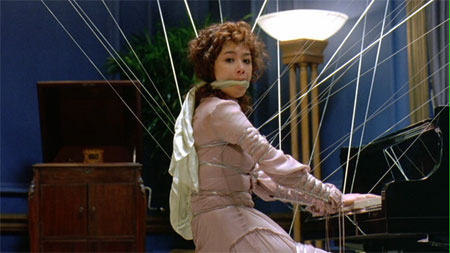
A filmmaker (Lee Byung-hun) returns home where is knocked out by a mysterious man (Lim Won-hie) as he later wakes up. There, he sees his wife (Kang Hye-jeong) suspended by ropes in mid-air as she sits next to a piano where the man threatens to cut each of her fingers off. Meanwhile, a young child is on a couch tied up as well as the man, who is revealed to be an extra of the director’s films, is challenging the director to kill the child so his wife can go free in a game of morality and wits. Even as the man is trying to force the director his own sins throughout this ordeal.

Box

A quiet novelist (Kyoko Hasegawa) is dealing with recurring nightmares as she believes they’re connected to a memory when she was a circus performer as a child with her twin sister. Believing that the ghost of her twin sister is appearing, she deals with the guilt that she was responsible for her sister’s death while begins to believe that her dream is really something that could become real.

The film is essentially a trio of little horror stories in three different styles from three different filmmakers. The stories each present a different type of extreme as it all relates to the idea of horror. Still, the directors of this project chose to create their own idea of what extreme is as it’s all about how a person would react to their situations.

In Dumplings, it’s about a woman that is trying to look young to revive her acting career and to get her husband’s attention. With the help of a mysterious woman, she eats special dumplings that feature a key secret ingredient. The secret ingredient is something that is just fucking disgusting to the point where the audience is wondering why? What becomes more extreme is how the woman reacts to it much later in the film while the woman who cooks it doesn’t think she’s doing anything wrong. Fruit Chan’s direction is mostly straightforward for the story as he’s carried by Christopher Doyle’s lush cinematography to the brilliant performances of Miriam Yeung and Bai Ling for what is this gorgeous yet cringe-inducing story.

In Cut, it’s all about an extra seeking vengeance against a successful filmmaker he’s worked for while playing a game against the filmmaker. In this game of vengeance, a young child and the director’s wife are in danger as the extra forces the director to do things though he is really a good man. Chan-wook Park’s direction is very stylish with amazing camera work, startling compositions, and dark humor as the terrifying performance of Lim Won-hie is electrifying as is the harrowing conclusion of the film as it is a short that does go to extremes.

Takashi Miike’s Box is a much different film from the previous as its approach to extreme isn’t what many would expect from Miike. Instead, the short is very restrained in its presentation that includes gorgeous cinematography and stylish editing to complement the haunting tone of the short. Featuring a mesmerizing performance from Kyoko Hasegawa, the short is about a woman dealing with guilt and the nightmares she’s dealing with as she is seeking forgiveness in what she’s done. While it might seem like the weakest of the three films because it strays from convention, it’s still a short that is very entrancing in what Miike presents.

Three… Extremes is a superb yet chilling anthology film from Fruit Chan, Chan-wook Park, and Takashi Miike that brings something new and horrifying to the world of horror films. The film is definitely something that horror fans will enjoy in terms of chills and discomfort as well as something that is dramatic and has some humor. For the fans of these filmmakers, it’s a must-see for the work they put and how they handle the horror genre in their own way. In the end, Three… Extremes is a brilliant yet spellbinding horror anthology film from Fruit Chan, Chan-wook Park, and Takashi Miike.

Chan-wook Park Films: (The Moon is… the Sun’s Dream) - (Trio) - Judgement (1999 short film) - JSA: Joint Security Area - Sympathy for Mr. Vengeance - (If You Were Me-Never Ending Peace and Love) - Oldboy - Sympathy for Lady Vengeance - I'm a Cyborg but That's OK - Thirst - (Night Fishing) - Stoker - The Handmaiden - (The Little Drummer Girl (2018 TV series)) - Decision to Leave

© thevoid99 2011

Saturday, May 07, 2011

I'm a Cyborg, But That's OK


Originally Written and Posted at Epinions.com on 6/4/09.


After completing the Vengeance trilogy of Sympathy for Mr. Vengeance, Oldboy, and Sympathy for Lady Vengeance, Chan-wook Park became the leading director in South Korea. The trilogy showed an extreme, violent look into the world of vengeance as it attracted the attention of the international cinema circuit and filmmakers all over the world. Needing a break from his dark, violent films, Park decided to shift gears into something more light hearted in a romantic comedy entitled Ssaibogeujiman Gwaenchanha (I'm a Cyborg but That's OK).

Directed by Chan-wook Park with a script co-written with Seo-kyeong Jeong, Ssaibogeujiman Gwaenchanha tells the story of a young woman who lives in a mental institution as she believes she is a cyborg. At the hospital, she befriends a young schizophrenic, anti-social young man as they team up in hopes to escape the hospital while she wants to take revenge on the people who hospitalized her mentally-ill grandmother. A change of pace for Park, the film shows Park taking on new risks as he delves into a genre that he's not known for. Starring Im Su-jeong, Rain, Choi Hie-jin, Lee Yong-nyeo, Yu Ho-jeong, and Kim Byeong-ok. Ssaibogeujiman Gwaenchanha is a weird, enchanting, and visually-striking film from Chan-wook Park.

Cha Young-goon (Im Su-jeong) believes that she is a cyborg where an incident involving a moment where she cuts her wrists and put wires into her veins. After plugging the electronic wires in, she is taken to a mental hospital by her mother (Lee Yong-nyeo). Rarely talking to anyone except a vending machine and lights in the ceiling, Young-goon also refuses to eat as a fat patient would often eat her lunch. At the same hospital is an anti-social, schizophrenic young man named Park Il-sun (Rain) who likes to steal things and where masks. Convinced he can take souls from other people, he pretends to be other people including walking backwards, scratching his own butt, and other things. Yet, he remains haunted by the abandonment of his mother (Yu Ho-jeong) whose picture he carries.

When Young-goon notices Il-sun's antics, she hopes to have her soul taken from Il-sun but it doesn't work when he stole her grandmother's dentures to the point that she attacks him during a group therapy session. Yet, it became clear that Young-goon is becoming ill as she has fantasies of killing the hospital staff for taking away her mentally-ill grandmother. With help from Il-sun's stealing tactics to take away things from other people's bodies, she believes she has no sympathy. Yet, her condition deteriorates as she refuses to eat. With Il-sun becoming more troubled wearing masks and believes he is shrinking into a dot. With Young-goon's health failing, it's Il-sun and fellow patients that decide to help her out. Il-sun's determination along with Young-goon to confront her grandmother's illness as well as who she is.

The film is essentially a love story between two mentally-damaged individuals who both hide through masks or the belief that they're something else. What Chan-wook Park and co-writer Seo-kyeong Jeong create is simply a film that is definitely unconventional and whimsical. At the same time, they explore the psychological state of mind in both the characters of Young-goon and Il-sun. Young-goon is obviously damaged by her overbearing mother as well as a close connection to her own grandmother. Il-sun remains haunted by his own mother's abandonment where he seems to can't let go of things that forces him to believe he can take people's souls. The film's plot is simple but the approach in the story and direction is anything but.

Instead, Park goes for something that is very weird where it's a mixture of French New Wave in terms of voice-over narrations, the whimsical nature of films like Jean-Pierre Jeunet and Michel Gondry, and some of the fantasy-driven violence of Stanley Kubrick. While the film does start out slow in its first act involving doctors and such, it gets moving once the Young-goon and Il-sun character starts to interact each other. Thus, the film becomes this weird, dreamy, quirky kind of romantic comedy which includes a violent sequence where Young-goon shoots bullets from her fingers and ammunition coming out of her mouth. Park's striking compositions and staging in its presentation really shows a director trying new tricks and such. Even in some of the visual effects driven shots that are definitely pure fantasy as the film is a mixture of both fantasy and reality. While it may not have the sheer, visual arresting images or sharp camera work of his Vengeance trilogy. Park creates a film that is still exciting and entertaining to watch.

Cinematographer Chung-hoon Chung creates some amazing shots that is filled with bright colors from the interiors of the hospital in its whiteness to the colorful, dream-like shots of the fantasy sequences in the grass and landscapes. Chung's work is definitely striking from the sepia-awash shots of the boiler room scenes with dark, yellowish colors as it plays to a creepy yet entrancing look for the film. Editors Jae-beom Kim and Sang-beom Kim do some fine work with the editing despite a sluggish start in the first half. Filled with jump-cuts, dissolves, split-screen shots, and fade-outs, it's filled with lots of style while moves at a energetic pace for the film's second and third act.

Visual effects supervisor Jeon-hyeong Lee does some amazing work with the visual effects filled with things like a look into Young-goon's so-called robotic body, the fantasy sequences, and even the scenes where Young-goon becomes a violent cyborg. Music composer Yeong-wook Jo does great work with the film's orchestral-driven music that range from suspenseful to whimsical in its scenes. Filled with an array of arrangements that is playful but also dark, it's score is truly one of the film's technical highlights.

The cast is truly phenomenal with several memorable characters that are in the film whether it's a man walking backwards who often apologizes for things he believes he did wrong, a fat woman who likes to eat people's food and wear unmatched socks, a young woman who likes to look in the mirror and sing songs, and a man who is obsessed with winning a ping-pong match. Small roles from Byeong-ok Kim as a judge who sentenced Il-sun to a hospital, Dal-su Oh as a doctor in the film's early scenes, and Hie-jin Choi as a more sympathetic doctor are memorable. Even the small roles of Ho-jeong Yu and Young-nyeo Lee as the respective mothers of Il-sun and Young-goon are memorable though Yu is only shown as a picture.

In his acting debut, Korean pop singer Rain gives a phenomenal performance as a young man who likes to wear masks, win at ping-pong games, and steal the soul of his fellow friends at the hospital. Rain's performance is truly marvelous as he shows a great physicality in movement while proving to be a real solid actor when not speaking and such. One would think a pop star wouldn't give a performance like this but Rain, like a few notable pop artists, manages to make an impression. Even more so than his small role in the Wachowski brothers film version of Speed Racer. Im Su-jeong is great as Young-goon, a young woman who believes she's a cyborg as she has a quirkiness and charm that is intoxicating to watch. When her character deteriorates and we see the dark things about her, it's a performance that is truly mesmerizing. Su-jeong and Rain both have great chemistry as they really shine in their performances together.

When the film was released in late December 2006, it was filled with lots of anticipation considering the attention Park received for his Vengeance trilogy. The reaction however, was mixed as box office performances were disappointing in comparison to his films from the trilogy. While it would win an award at the Berlin Film Festival months later as well as some praise for Rain's performance. It didn't get the attention that his Vengeance trilogy received while not achieving a theatrical release in the U.S. despite Park's cult following in the country.

While it may not have the brilliant technical work or intense storylines of his Vengeance trilogy, Ssaibogeujiman Gwaenchanha is still an excellent film from Chan-wook Park. Thanks to the performances of Im Su-jeong and Rain, it's a film that fans of films by Michel Gondry or Jean-Pierre Jeunet's Amelie can enjoy for its quirkiness. Fans of Park will be glad to see the director doing something different while showing a side of himself that is truly offbeat. In the end, though it's not one of Park's great films, Ssaibogeujiman Gwaenchanha is still a whimsical, entertaining romantic-comedy from Chan-wook Park.

Chan-wook Park Films: (The Moon Is... The Sun's Dream) - (Trio) - Judgement (1999 short film) - JSA: Joint Security Area - Sympathy for Mr. Vengeance - (If You Were Me-Never Ending Peace and Love) - Oldboy - Three... Extremes-Cut - Sympathy for Lady Vengeance - Thirst - (Night Fishing) - Stoker - The Handmaiden - (The Little Drummer Girl (2018 TV series)) - Decision to Leave

© thevoid99 2011

Sympathy for Lady Vengeance


Originally Written and Posted at Epinions.com on 10/23/08.


After the release of 2003's Oldboy, the film became a huge, international success as director Chan-wook Park had caught the attention of the cinematic elite. While winning the Grand Jury Prize at the 2004 Cannes Film Festival, American film director Quentin Tarantino revealed that he wanted Oldboy to win the Palme D'or that year though he and his fellow jurors at the festival ended up giving the award to Michael Moore's Fahrenheit 9/11. Oldboy was also part of a trilogy focusing on the theme of vengeance as it was preceded by Sympathy for Mr. Vengeance back in 2002. Park went back to his trilogy to conclude as his focus shifts towards a different kind of protagonist than his previous films as he switches genders from male to female. For the third and final part of trilogy, Park tells the story of a woman seeking vengeance for a crime she didn't commit entitled Chinjeolhan geumjassi (Sympathy for Lady Vengeance).

Directed by Chan-wook Park with a script co-written with Seo-Gyeong Jeong, Chinjeolhan geumjassi tells the story of a woman who had been released in prison after serving thirteen-and-a-half years for the kidnapping and murder of a young boy. Hoping to reunite with her daughter and seek a new life, the woman's taste for vengeance is huge as she hopes to find the real culprit behind the crime she didn't commit. Starring Lee Young Ae, Choi Min-sik, and Kwon Yea-young. Chinjeolhan geumjassi is a brilliant, haunting, and complex film from Chan-wook Park.

For thirteen-and-a-half years, Lee Guem-ja (Lee Young Ae) has just been released from prison for serving time for the kidnapping and murder of a young boy. Arriving out of the prison, she meets a Christian group led by a priest (Kim Byeong-ok) who believes she has reformed only to be told to go screw himself. Lee returns to Seoul where she stays with an old friend and fellow convict in Kim Yang-hee (Seo Yeong-ju). Kim recalls that Lee was an angel of sorts at the prison where her beauty and innocence captivated her fellow prisoners as she even thwarted a bully prisoner they called "the Witch" (Su-hee Go). Kim along with another convict helps Lee plan her revenge on the man that she went to prison for named Mr. Baek (Choi Min-sik). Lee's generosity in beating a bullying prisoner, saving other prisoners by giving one of them a kidney, and such has made her fellow prisoner friends to return a favor.

Working at a bakery with a young man named Guen-shik (Kim Shi-hu), Lee has an encounter with Detective Choi (Nam Il-wu). Choi recalls that Lee's false confession was only done because she wanted to protect her newborn baby from the real kidnapper, Mr. Baek. Her baby named Jenny (Kwon Yea-young), is now 13 and lives in Australia with adoptive parents (Tony Barry & Anne Cordiner). Jenny doesn't speak much Korean as Lee tries to connect with her daughter as they return to Seoul where Lee gets contact with a former convict named Park Yi-jeong (Lee Seung-Shin), who is the wife of Mr. Baek. Yet, Mr. Baek receives information of Lee's plans from the priest as he hires thugs to stop.

Instead, the plan backfires when his wife drugs his dinner as Lee confronts the man who took thirteen-and-a-half years of her life. During this confrontation, she learns a horrifying discovery that his murder of the boy wasn't just some one-time incident. With help from Detective Choi, she uncovers something even worse. The discovery forces Lee to realize that justice for herself isn't enough as it involves many other people who help her decide about their own thirst for justice.

What sets this film apart from its predecessors in the Vengeance Trilogy isn't just the fact that it's led by a female protagonist nor the film is about justice over something done wrong. The film is more about a woman who was known for her purity as she changes into an avenging angel with red eye shadow and wearing red high heels. What it's really about is a woman trying to take back the years that she lost as well as avenging the death of a boy she didn't kill yet was part of the crime for getting involved with Mr. Baek. Yet she's ravaged with guilt for making this happen where in one scene, she cuts off one of her fingers as punishment over the death of this boy. The guilt isn't just over the boy's death but the fact that she never got to know her daughter just after she was born.

Lee's guilt over the boy's death and the years loss in not knowing her daughter is what drives Lee's thirst for revenge against Mr. Baek. Yet, what is revealed in the third about Mr. Baek through a simple object is more shocking. Yet, it begins to raise more question about a man's crime as if Park asks a question to his audience. What would you do if you just learned that some man killed your child and what would you do to that person? Park's script raises that question while its aftermath reveals something that is spiritual as well as comforting where Lee begins to wonder her own new chapter in her life.

Park's direction is as potent as it was in his previous film where he takes on more stylistic choices as well as compositions. While his approach to violence is still extreme and not for the faint of heart, he takes on a more cinematic approach to the film. With uses of stylish editing, grainy camera footage, and gorgeous compositions. Park's directing shows him getting more confident in his choices while creating moments of suspense and elements of fantasy for comical and dramatic reasons. Yet, Park's emphasis to tell a story comes first rather than going for style as he raises more question about vengeance and justice while revealing the outcome of what happens. The result is Chan-wook Park reaching out to new maturity in his direction and his work as a storyteller.

Cinematographer Jeong-hun Jeong creates amazing lighting set-ups for the film's nighttime, exterior scenes. Notably the scene where two hired thugs try to jump Lee and Jenny. Other exterior shots like the yellowish, sunny Australia sequence as well as the Korean snow scenes are wonderfully exquisite. The interior sequences, notably in the film's final act, is wonderfully lit to convey a mood and style that plays true with the film in its current tone. Editors Jae-beom Kim and Sang-Beom Kim do great work with the use of jump-cuts, split screens, smooth transitions, and other styles of edits to create a film that keeps on bringing surprises with its cuts. The pacing is a bit slow yet works to convey the build-up of what's to come as it works in order to tell the story.

Production designer Hwa-seong Jo along with set decorator In-ho Oh and art directors Hyeon-Seok Choi and Ji-hyeong Han do great work in the look of the apartment that Lee stays along with her bakery and the place where she imprisons Mr. Baek. Costume designer Sang-gyeong Jo does amazing work in the look of Lee's clothing from her light-colored prison garb that she wears to the black coats and red heels that she wears on her quest for vengeance. Sound designers Chang-seop Kim, Seok-weon Kim, and Seung-cheol Lee do great work in the film's sound with the use of gunshots, objects, and other things to help convey the surrounding atmosphere Lee is in. Visual effects supervisor Jeon-hyeong Lee does excellent work in the film's visual work including some fantasy sequences involving the snow and such. Music composers Seung-hyun Choi, Yeong-wook Jo, and Seok-joo Na do great work with the film's score filled with sweeping and somber orchestral arrangements to convey the moods of Lee and her quest.

The film's cast is truly superb with small appearances from actors from the previous parts of Park's Vengeance trilogy like Hye-jeong Kang of Oldboy as a TV announcer and as the role of Baek's hired thugs, Kang-ho Song and Ha-kyun Shin from Sympathy for Mr. Vengeance. Other small roles like Su-hee Go as the Witch, Seo Yeong-ju and Kim Bu-seon as two of Lee's former prison mates are great while Lee Seung-Shin is also great as a fellow prisoner who turns out to be Baek's wife. Tony Barry and Anne Cordiner are fine as Jenny's adoptive parents who turn out to be good people while Kim Byeong-ok is devilishly good as the eccentric priest who spies on Lee. Kim Shi-hu is very good as Lee's co-worker at the bakery whom she has a brief affair with while Nam Il-wu is brilliant as Detective Choi who decides to help out Lee in her investigation over the crime she didn't commit.

Kwon Yea-young is wonderful as Jenny, the young girl who just realized that she has a mother while wondering why Lee was never there for her. Kwon's sense of innocence is matched with Lee Young Ae's subtle performance as it adds a touch of hope to the film. Choi Min-sik of Oldboy is brilliant as the evil Mr. Baek, a man who doesn't have the look of a criminal but his actions make him more intriguing. Min-sik's performance is great for his subtlety where he seems to act and look normal until he's captured where he seems on the brink of losing it. The film's best performance is easily Lee Young Ae as Lee Guem-ja. Young Ae's performance is wonderfully harrowing with dabbles of humor as it's mostly dramatic. Yet, it's filled with regret and tension as Young Ae sells the despair of her character with such grace and beauty as it's truly a one of a kind performance.

While not as good as Oldboy, Chinjeolhan geumjassi is still a brilliant film from Chan-wook Park thanks to Lee Young Ae's amazing performance. While it's more accessible than Oldboy in some respects along with some strong themes, this film proves that Chan-wook Park is one of South Korea's great up-and-coming directors to break out internationally. While the violence may not be for everyone, it's definitely a film that anyone can relate to in what Park sets up. Overall as a trilogy, it's one of the most fascinating film trilogies ever created. In the end, Chinjeolhan geumjassi is a powerful film and a fitting end to the Vengeance trilogy from Chan-wook Park.

Chan-wook Park Films: (The Moon Is... The Sun's Dream) - (Trio) - Judgement (1999 short film) - JSA: Joint Security Area - Sympathy for Mr. Vengeance - (If You Were Me-Never Ending Peace and Love) - Oldboy - Three... Extremes-Cut - I'm a Cyborg but That's OK - Thirst - (Night Fishing) - Stoker - The Handmaiden - (The Little Drummer Girl (2018 TV series)) - Decision to Leave

© thevoid99 2011

Friday, May 06, 2011

Oldboy


Originally Written and Posted at Epinions.com on 10/9/08.


After the release of Sympathy for Mr. Vengeance, Chan-wook Park had become one of the prominent directors in South Korea as Korean cinema was starting to break out internationally. After two critically and commercially successful features in Joint Security Area and Sympathy for Mr. Vengeance, Park was considered to be one of Korea's finest filmmakers despite criticism for his approach to violence. In 2003, Park created a film that would stir controversy in the years since its release while would also become his most defining moment in his entire career. The second part of Park's Vengeance Trilogy that was preceded by Sympathy for Mr. Vengeance and followed by Lady Vengeance, the film is considered a landmark film in Asian cinema simply entitled Oldboy.

Based on the Japanese manga comic of the same name by Nobuaki Minegishi and Garon Tsuchiya, Oldboy tells the story of a businessman who had been held captive for 15 years in a hotel room. When he is released, he becomes vengeful wondering why he was captured as he falls for a sushi chef. Directed by Chan-wook Park with an adapted script written by Park, Jo-yun Hwang, Chun-hyeong Lim, and Joon-hyung Lim. The film is a study of a how man done wrong goes for a quest of vengeance while uncovering why he was targeted and had supposedly wrong someone. Starring Choi Min-sik, Yu Ji-tae, and Kang Hye-jeong. Oldboy is a brutal, harrowing, and mesmerizing masterpiece from Chan-wook Park.

Oh Dae-Su (Choi Min-sik) was captured by a group of criminals where for 15 years, he is held prisoner wondering what he had done. A year into his imprisonment, Dae-Su learned that his wife was murdered and he had been accused of killing her. With his daughter gone and moved to Sweden, Dae-Su has vengeance in his mind where he keeps getting visited by a hypnotist. After losing lots of weight and already planning an escape, Dae-Su is freed where he encounters a suicidal man and stealing a woman's sunglasses. After getting a cell phone and such, he stops by at a sushi restaurant where he meets a young, beautiful chef named Mi-Do (Kang Hye-jeong). After passing out after hearing a phone call from a mysterious man, he is taken to Mi-Do's apartment where he tries to figure out what's going on.

He makes contact with an old friend named No Joo-hwan (Ji Dae-han) who decides to help out along with Mi-Do. After learning about his daughter's whereabouts, Dae-Su decides to enter the building where he was imprisoned as he meets its manager Park Cheol-woong (Oh Dal-su). After beating up several of Park's men and torturing Park, he retrieves a tape leading to more clues where it was he claimed that Dae-Su talked too much which was the reason. After his assault on Park's men, the wounded Dae-Su collapses where he was taken to a taxi by a stranger as he learns that he's getting closer to the man's identity. After returning to Mi-do's apartment, Dae-Su finds the location of the stranger revealed to be Lee Woo-jin (Yu Ji-tae). Woo-jin, along with his bodyguard Mr. Han (Kim Beyong-ok), revealed to be the culprit as he gives Dae-Su a chance to find out why.

When Park and his gang return to try and attack Dae-Su and Mi-Do, they're stopped by Mr. Han as Woo-jin gives Dae-Su five days to figure out the mystery. Dae-Su and Mi-Do flee the city to hide as they become close while discovering about Woo-jin's background. It was revealed that Woo-jin was in the same high school that Dae-Su and Joo-hwan had attended along with Woo-jin's sister Soo-ah (Yun Ji-tae), who had died some time after Dae-Su had left the school to be transferred to a better school. Dae-Su suddenly recalls a memory about what happened with the siblings that led to a rumor that would eventually leave Soo-ah to end her life. After learning some more information from Joo-hwan about Soo-ah, Dae-Su remembers why Woo-jin did all of this. With Dae-Su deciding to confront Woo-jin at Woo-jin's penthouse who brings another shocking surprise for Dae-Su that would prove to be extremely horrifying.

What Chan-wook Park chose to do is reveal the fallacy of vengeance in all of its cruelty and how far anyone is willing to go, over something that happened many years ago. While both Dae-Su and Woo-jin have valid reasons for vengeance but it's Dae-Su who becomes aware of what he had done and know that he did wrong. Woo-jin meanwhile, takes it way too far and what he brings Dae-Su would prove to be horrifying. The screenplay by Park and his co-writers is definitely part-character study, part-suspense thriller with some action and drama thrown into the mix. At the same time, it reveals how careful Woo-jin set things up and how Dae-Su reacts and plays his game.

Park's direction is extremely superb and at times, hard-to-watch. Notably some of the film's violence where Park takes it to high extremes. Especially what the character of Dae-Su does with a hammer, redefining the term Hammerman (sorry M.C. Hammer). The violence is wonderfully staged and choreographed, especially in the use of the widescreen format with great compositions and presentation. Park's direction in drama, especially suspense, builds great momentum with uses of flashback and memory to figure out the mystery. Then when the third act arrives and everything comes to place, that's when the film takes on a brand new level that would leave the audience speechless and uncomfortable. The result is a film that is brutal yet mesmerizing right to the end.

Cinematographer Jeong-hun Jeong does fantastic work with the film's hand-held cameras, lighting staging for the interiors, and gorgeous scenery for the film's nighttime exterior shots in Seoul. Jeong's camera work is exquisite in its exteriors with its use of green, red, and in the third act, black and green for its climatic ending. Some of the film's exterior, notably the epilogue is gorgeous as Jeong's work is brilliant. Editor Sang-Beom Kim does great work in the film's rhythmic, stylish cutting with the use of split-screens and transitional jump-cuts to go from one composition to another in the same place where a character is standing. Kim's editing is truly superb to capture the film's sense of action and drama as it's done with style without resorting to fast-cutting, Hollywood-style editing.

Production designer Seong-hie Ryu does great work in the film's art direction with the dilapidated, colorful look of the prison that Dae-Su stays in along with the hotel room and apartment of Mi-Do. The look of Woo-jin's penthouse is wonderfully slick and rich with a great shot of Seoul at the nighttime. Costume designer Sangyung Cho does great work with the look of the characters with the suit and sunglasses of Dae-Su, the contemporary, short dresses of Mi-Do, to the suits that Woo-jin wears. Sound mixer Seung-cheol Lee does great work in capturing the film's action, location surroundings, and everything to create suspense and drama into the film. Music composer Yeong-wook Jo brings an orchestral, serene flavor to the music while using cuts from other films to play to its drama.

The cast is unique with small performances from Kwang-rok Oh as the suicidal man, Tae-kyung Oh as the young Dae-Su, Yeong-suk Ahn as the young Woo-jin, and Il-han Oo as the young Joo-hwan. In the role of the hypnotist Yoo Hyung-ja is Seung-Shin Lee who is great in her brief appearances a woman trying to put Dae-Su into a weird state of mind. Yun Jin-seo is excellent as Woo-jin's sister Lee Soo-ah, the girl who would be the victim of the tragedy that would lead Woo-jin to claim vengeance on Dae-Su. Oh Dal-su is good as the prison manager Park, who has a memorable scene in which he's tortured by Dae-Su. Kim Byeong-ok is also good as Woo-jin's tough bodyguard Mr. Han while Jie Dae-han is excellent as Dae-Su's old friend Joo-hwan who helps out Dae-Su in the investigation.

Kang Hye-jeong is great as Mi-Do, the sushi chef who falls for Dae-Su as she becomes his accomplice and lover in the investigation. Hye-jeong brings in all of the emotional baggage of a woman who may or may not be trustworthy yet provides the sense of emotional realism for Dae-Su. Yu Ji-tae is great as Lee Woo-jin, the antagonist of the film who seeks revenge for his sister's death claiming that Dae-Su is responsible. Ji-tae brings a great sense of charisma and sinister smugness to the character as his performance is truly divine to watch. Finally, there's Choi Min-sik as Oh Dae-Su, the film's protagonist who starts out as this heavy, rotund drunken man only to become a psychotic, vengeful thing yet built man. Min-sik's performance is a marvel to watch as his character is both a bad*ss and also a man with lots of flaws as he realizes his wrongs and his attempts for redemption. His performance is the heart of the film.

Released in November 2003 in South Korea, the film became a monster hit in its native country. In May 2004, the film made its world premiere at the Cannes Film Festival where it was awarded the festival's second-place Grand Jury Prize though jury president Quentin Tarantino wanted the film to win the Palme D'or. The film's international success that followed a release in the U.S. in early 2005 brought the film a lot of attention. At the same time, it brought notoriety when in April 2007, a Korean student named Seung-Hui Cho killed 33 people and wounded 23 at Virginia Tech and eventually himself. Cho was seen having a picture holding a hammer in the same way the character of Dae-Su did despite the fact that Cho had never seen the film. Yet, Park had achieved acclaim as in 2005, he released the third and final part of his Vengeance trilogy entitled Sympathy for Lady Vengeance.

Oldboy is an enthralling, brutal, mesmerizing, and provocative masterpiece from Chan-wook Park. Audiences new to Park's work will see this as a great starting point as well as an introduction to the new wave of Korean cinema. Fans of action films or Asian cinema will no doubt see this as essential though more mainstream audiences might be put off by its extreme approach to violence, sex, and some thematic elements. In the end, Oldboy is an amazing masterpiece from Chan-wook Park that challenges its audience in many ways that it will leave them stunned.

Chan-wook Park Films:  (The Moon Is... the Sun's Dream) - (Trio) - Judgement (1999 short film) - JSA: Joint Security Area - Sympathy for Mr. Vengeance - (If You Were Me-Never Ending Peace and Love) - Three... Extremes-Cut - Sympathy for Lady Vengeance - I'm a Cyborg but That's OK - Thirst - (Night Fishing) - Stoker - The Handmaiden - (The Little Drummer Girl (2018 TV series)) - Decision to Leave

© thevoid99 2011