Showing posts with label fabio testi. Show all posts

Monday, March 25, 2024

That Most Important Thing: Love


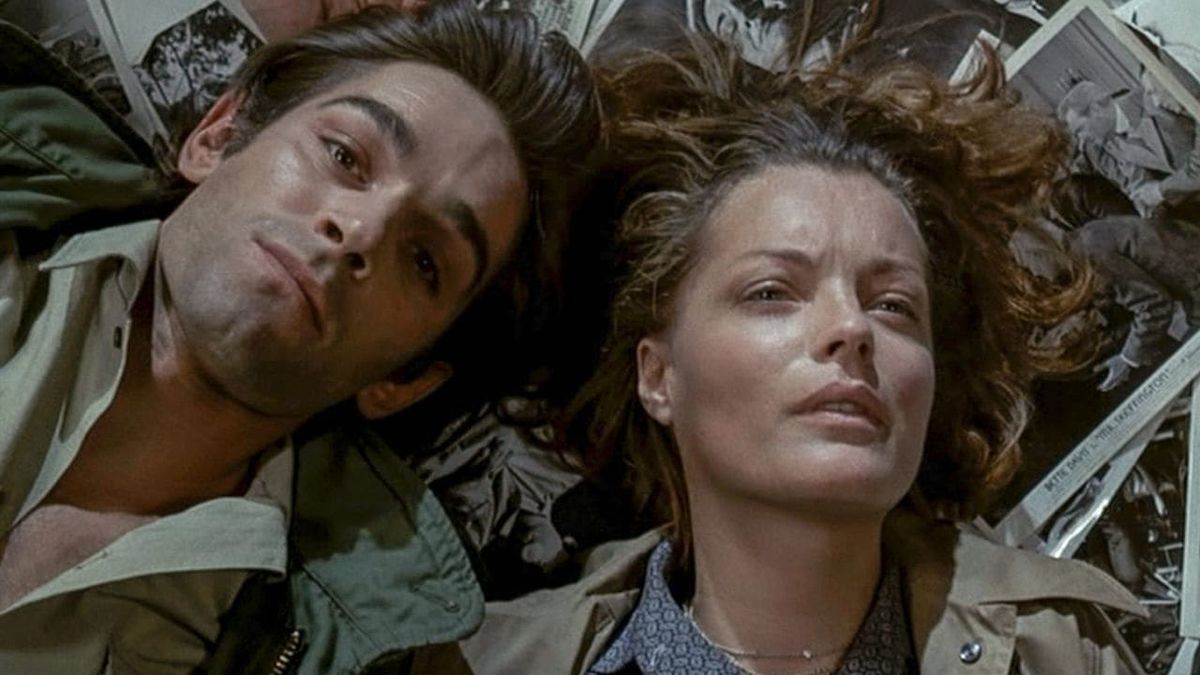
Based on the novel La nuit americaine (Day for Night) by Christopher Frank, L’important c’est d’aimer (That Most Important Thing: Love) is the story of a B-movie actress who falls in love with a photographer despite the fact that she’s married as they keep their feelings for one another amidst the chaotic scene that is show business in France. Directed by Andrzej Zulawski and screenplay by Zulawski and Frank, the film is an exploration of a love affair as they try to do something together amidst many obstacles including her husband. Starring Romy Schneider, Fabio Testi, Jacques Dutronc, Claude Dauphin, Roger Blin, Michel Robin, and Klaus Kinski. L’important c’est d’aimer is a gripping and evocative film from Andrezj Zulawski.

The film revolves around a photographer who crashes into a softcore porn film set where he catches the eye of its star as they would long for each other even though she is married to a photo collector whom she’s morally obligated to as she is given a chance to be in a play. It is a film that doesn’t have much of a plot as it’s more about two people in the entertainment industry who are both at a point where they’re unsatisfied and want to do something great. The film’s screenplay by Andrezj Zulawski and its original author Christopher Frank is largely straightforward in its narrative yet it is more about this idea of love as it relates to these two people who are in love with each other but can’t really express it as they have obligations to other things and other people. The photographer Servais Mont (Fabio Testi) would crash a film set to get some photos while he makes money shooting pornography for his benefactor Mazelli (Claude Dauphin) while tending to his father (Roger Blin) who doesn’t have a home as well as visit his mentor Raymond Lapade (Michel Robin) who is dealing with his ailing health.

Upon meeting the B-movie actress Nadine Chevalier (Romy Schneider) whose career has waned to the point that she’s doing softcore porn films is fascinated by Mont and his photography as she is eager to do something other than the movies she’s making for money as well as to fund the photography collection of her husband Jacques (Jacques Dutronc). Mont meets up with the German actor Karl-Heinz Zimmer (Klaus Kinski) and a play director in Laurent Messala (Guy Mairesse) in creating an adaptation of Richard III from a script by Lapade as Mont would give them the money he borrowed from Mazelli in the hopes it would revive Nadine’s career as long as no one knows where the money came from. Yet Jacques would notice something as well as it would play into some troubling events as well as revelations towards his wife and her feelings for Mont.

Zulawski’s direction is stylish in the way he captures the sense of melodrama between two people as it is shot on location in Paris though Zulawski chooses to avoid many of the city’s landmarks. While there are some wide shots in the film, much of Zulawski’s direction involve some unique tracking and hand-held camera shots with a lot of emphasis on intimacy through the close-ups and medium shots. Notably in scenes in hallways as well as restaurants, cafes, and other places where there is this sense of energy that is happening but also a lot of chaos. It also plays into this world of art as Nadine and Jacques’ bedroom is filled with film posters and film memorabilia though there’s no bed except for a mattress on the floor. Zulawski also plays into this world that is also full of debauchery as the pornography that Mont shoots isn’t just filled with a lot of homosexuality but also things that push him to the edge as he ponders if there’s any kind of infatuation or emotion involved in these sexual exploits he’s watching. In Nadine, Mont sees someone who isn’t that kind of extreme but a woman that is desperately need to be loved although Jacques does treat her well.

Zulawski would also play into this unconventional presentation of Richard III that features samurai costumes with Zimmer being this charismatic and intense figure who would help Nadine. Yet, the response to this play isn’t what anyone expects as it leads to this third act where a lot of emotions come into play. Notably as Zulawski’s compositions become more and more invasive to see Mont, Nadine, and Jacques unravel in some way with those associated also realizing their own sense of futility. Even as Mont becomes distant following some personal losses as well as realizing Jacques’ own intentions in relation to Nadine as she becomes this prize for these two men yet neither are interested as she has become troubled over what has happened while also believing that love doesn’t exist. Still, Zulawski would play into this sense of melodrama that looms throughout as it plays into these people who are entangled into a world of desire in both the personal and emotional. Overall, Zulawski crafts a rapturous and exhilarating film about a photographer’s infatuation with a fading B-movie actress.

Cinematographer Ricardo Aronovich does amazing work with the film’s cinematography with its emphasis on heightened lighting in some scenes to play into the look of a photo shoot or a film set as well as some colorful yet natural lighting for many of the film’s interior settings. Editor Christiane Lack does excellent work with the editing as it is largely straightforward with a rhythmic cuts while along shots to linger and only cut for dramatic effect. Production designer Jean-Pierre Kohut-Svelko does brilliant work with the look of the homes of Mont and the Chevaliers as well as the look of some of the photo sets as well as the theater presentation. Costume designer Catherine Leterrier does fantastic work with the costumes as a lot of it is casual with the exception of the flamboyant clothes that Zimmer wears as well as the stylish dresses that Nadine wears.

Makeup artists Didier Lavergne and Massimo De Rossi, along with hairstylist Jean-Max Guerin, do nice work with some of the makeup that the characters wear whether it was for the play or to play into their flamboyance personalities. The sound work of Jean Neny, Maurice Laumain, and Jacques Gerardot is terrific as it is largely straightforward as it plays into the natural atmosphere of the locations as well as how cafes sound when it is busy. The film’s music by Georges Delerue is phenomenal for its soaring orchestral score filled with themes that play into the drama with its usage of string arrangements that also add to the sense of longing and melodrama as it is an absolute highlight of the film.

The film’s wonderful ensemble cast feature some notable small roles from Nicoletta Machiavelli as Lapade’s wife Luce, Katia Tchenko as a whore that is part of Mazelli’s pornographic presentations, Jacques Boudet as a friend of Jacques in Robert Beninge, Gabrielle Doulcet as Mazelli’s wife who is fond of Mont, Guy Mairesse as the play director Laurent Messala who is a flamboyant individual that had unconventional ideas for the play, Roger Blin as Mont’s father who crashes at his son’s home as he laments over his own failures in life, and Michel Robin in a superb performance as Mont’s mentor in writer Raymond Lapade who wrote an adaptation for Richard III while dealing with his ailing health. Claude Dauphin is excellent as Mazelli as Mont’s benefactor who also makes Mont shoot pornographic photos for his own joy as well as be this slimy figure that likes to run things as if it’s a criminal organization with some awful people.

Klaus Kinski is incredible as Karl-Heinz Zimmer as this once revered actor desperate to have a comeback as he also helps out Nadine as Kinski is this intense figure who is openly bisexual as well as be someone who refuses to take criticism as it is one of his finest performances. Jacques Dutronc is brilliant as Jacques Chevalier as a photo collector that is hoping to get some financial opportunities in his wife’s attempted comeback as he is this eccentric individual who is quite funny at times but is also ruthless whenever things don’t go his way as it is this offbeat yet engaging performance. Fabio Testi is amazing as Servais Mont as this photographer who is tired of shooting pornography as he falls for Nadine while funding a play in the hope he can revive her career from afar while still be infatuated with her. Finally, there’s Romy Schneider in a sensational performance as Nadine Chevalier as this once-revered actress now doing B-movies and softcore porn films as she deals with a fading career but also her feelings for Mont but also loyalty towards Jacques as there is this sense of anguish and angst as it is truly one of her most defining performances in her illustrious career.

L’important c’est d’aimer is an outstanding film from Andrezj Zulawski that features a spectacular leading performance from Romy Schneider. Along with its ensemble cast, gorgeous visuals, its study of longing and passion, and Georges Delerue’s intoxicating music score. It is a film that explores two people at a point in their lives and career who want to move forward while also longing for one another despite the turmoil around them. In the end, L’important c’est d’aimer is a magnificent film from Andrezj Zulawski.

Andrzej Zulawski Films: (The Third Part of the Night) – (The Devil (1972 film)) – Possession (1981 film) - (The Public Woman) – (L’Amour braque) – (On the Silver Globe) – (My Nights Are More Beautiful Than Your Days) – (Boris Godunov) – (The Blue Note (1991 film) - (Szamanka) – (Fidelity) – (Cosmos (2015 film))

© thevoid99 2024

Monday, August 15, 2022

The Garden of the Finzi-Continis


Based on the novel by Giorgio Bassani, Il giardino dei Finzi Contini (The Garden of the Finzi-Continis) is the story of an upper-class Jewish family living in Ferrera, Italy during the time of Fascist Italy as they deal with the growing political turmoil of the times. Directed by Vittorio De Sica and screenplay by Vittorio Bonicelli and Ugo Pirro with un-credited contributions by de Sica, Franco Brusati, Alain Katz, Tullio Pinelli, Cesare Zavattini, and Valerio Zurlini, the film is an exploration of a family whose lives are changed by Fascism as they find themselves lost with the young family members trying to find joy. Starring Lino Capolicchio, Dominique Sanda, Helmut Berger, Romolo Valli, and Fabio Testi. Il giardino dei Finzi Contini is a ravishing and somber film from Vittorio De Sica.

Set in the small town of Ferrera, Italy from 1938 to 1943, the film is an exploration of the life of an upper-class Jewish family who live nearby the home of a richer Jewish family known as the Finzi-Continis whose lavish garden is an idyllic landscape that becomes an escape during the growth of Fascism in Italy. The film is an exploration of the lives of these two upper-class Jewish families as one of them is in love with the daughter of the richer family ever since they were children as they deal with the growing world around them with this lavish garden being a place of wonder. The film’s screenplay by Vittorio Bonicelli and Ugo Pirro does feature bits of flashback as it relates to its two young leads in Giorgio (Lino Capolicchio) and Micol Finzi-Contini (Dominique Sanda) who knew each other as kids with the latter’s family home being this haven where they can play tennis and have fun at this lavish garden that includes Micol’s younger brother Alberto (Helmut Berger) and their friend Giampiero Malnate (Fabio Testi).

The first act is about the life of the Finzi-Continis and the garden that is their escape with the second act being about Giorgio’s pursuit of Micol as she rejects him believing he’s not good enough for her. Even as the second act also play into this chaos with Italy becoming a more Fascist state with Giorgio’s father Beniamino (Romolo Valli) trying to keep the family together as he sends his younger son Ernesto (Raffaele Curri) to France to study. It also play into the world that is crumbling where Giorgio had already been expelled from the tennis club and later a library where he is unable to study because he is Jewish while interracial marriages are also banned. The film explore Giorgio’s own encounter with the real world while Micol has isolated herself in the family home not wanting to deal with the real world with Alberto becoming ill. The third act does play into Italy entering World War II as life for Jews become more difficult with Giorgio pleading with Micol to be with him while also coming to terms that life will never be the same as the garden itself is a shell of its former self.

Vittorio De Sica’s direction is definitely full of gorgeous imagery and a sense of realism as it is shot largely on location in Ferrera with some of it in Venice with the garden shot at the park of Villa Ada near Rome. De Sica’s usage of the wide and medium shots do help play into the many locations in the film but also the world that is the garden at the Finzi-Contini estate where many of the young people play tennis and involve themselves with many activities as a way to escape from this growing threat of war that is to come. Even as De Sica would maintain this air of intimacy in the direction with the medium shots and close-ups inside the homes of Giorgio’s family and the Finzi-Continis where it showed a world where Giorgio’s family do perform certain Jewish traditions while the latter maintain this presentation of being posh and not overtly Jewish to raise concerns with the authorities.

De Sica also play into this sense of beauty that is the Finzi-Contini estate from the road way outside their home where Giorgio would ride his bike on as well as where he would park his bike and climb over its wall. The garden is the centerpiece of this estate filled with trees including a few palm trees and other things as it is a place where everyone can escape from the real world yet as the film progresses. The garden becomes less idyllic despite the beauty it presents itself but without many people there. It doesn’t feel the same as the third act has an air of coldness that looms along with a sense of danger in the fact that anyone who is Jewish, communist, or not wanting to be a part of this world of Fascist Italy is fucked. De Sica’s ending is ambiguous as it relates to the fate of characters but it also presents a world that is lost and could never return with those also filled with regret of the future they could’ve had. Overall, De Sica crafts an intoxicating yet harrowing film about two upper-class Jewish families dealing with the growing changes in Fascist Italy.

Cinematographer Ennio Guarnieri does amazing work with the film’s cinematography with its usage of soft lighting for a few interior scenes along with some natural and lush lighting for the scenes at the garden during the spring and summer as well as low-key lighting for the scenes at night and in the winter time. Editor Adriana Novelli does excellent work with the editing with some stylish jump-cuts for some of the bike ride scenes through the forest as well as a few montages including some of the flashbacks as it play into Giorgio and Micol’s time as teenagers. Production/costume designer Giancarlo Bartolini Salimbeni and set decorator Franco D’Andria does brilliant work with the look of the homes of Giorgio’s family with its modest furniture that is a sharp contrast to the more spacious interiors at the Finzi-Contini estate with its large library where Giorgio is allowed to study while the costumes are also exquisite in the posh dresses that Micol wears that is another sharp contrast to the modest suits that Giorgio wears.

Hair stylist Anna Cristofani and makeup artist Giulio Natalucci do fantastic work with the different hairstyles that Micol would wear throughout the film as it went from stylish to eventually becoming less so as the film progresses. The special effects work of Ettore Catalucci is terrific for some of the minimal shots that play into Alberto’s own sickly state as well as imagery to help make the film feel dreamlike. The sound work of Max Galinsky and Massimo Loffredi, with additional work for its restoration by Stefano Di Fiore, is superb for the sound as it help play into the atmosphere of the locations including the town with the speech over the declaration of war from Italy being a key moment. The film’s music by Manuel De Sica, with additional contributions by Bill Conti, is incredible for its lush and somber orchestral-piano score that play into the drama and romantic tension that looms throughout the film as well as themes that are upbeat that play into happier moments as it is a highlight of the film.

The film’s wonderful ensemble cast feature some notable small roles from Giampaolo Duregon as a friend of the Finzi-Contis in Bruno, Marcella Gentile as Giorgio’s young sister Fanny, Raffaele Curi as Giorgio’s younger brother Ernesto who goes to France to study, Barbara Pilavin as Giorgio’s mother, Ettore Gere as the majordomo Perotti, Inna Alexeievna as Alberto and Micol’s grandmother, Katina Morisani as Alberto and Mico’s mother, Cinzia Bruno as the young Micol, Alessandro D’Alatri as the young Giorgio, and Camillo Cesarei as Ermanno Finzi-Conti as the patriarch of the Finzi-Contini who allowed Giorgio to study in his library as he always liked Giorgio feeling he is a good match for Micol and a good friend to Alberto.

Romolo Valli is excellent as Giorgio’s father as a businessman who is proud of his Jewish heritage but would hide during the growth of Fascism as he is concerned for Giorgio as it relates to Micol as well as what will happen to the family knowing something is going wrong. Fabio Testi is brilliant as Giampiero Malnate as a family friend of the Finzi-Contis who is also a communist that isn’t fond of Fascism while he would later lament over the state of the Finzi-Conti with being isolated as he would be called up to military service as he and Giorgio also deal the world around them. Helmut Berger is amazing as Micol’s younger brother Alberto as a young man who idolized Malnate and love Giorgio as a friend as he also deals with illness while becoming aware of some of the drama involving Micol and Giorgio.

Lino Capolicchio is incredible as Giorgio as a young man from an upper-class Jewish family who is in love with Micol and wants to spend the rest of his life with her as he also deals with the changes around him as he’s kicked out of clubs and university because he’s Jewish as he also laments over everything as well as this paradise that is the Finzi-Conti garden that becomes less idyllic. Finally, there’s Dominique Sanda in a phenomenal performance as Micol Finzi-Conti as a young woman who is a childhood friend of Giorgio as someone who is trying to distance herself from the real world while isolating herself as a way to shield from that reality including Giorgio feeling that he’s not good enough for her. Even as she deals with the reality that she and her family eventually have to face as well as what she could’ve had.

Il giardino dei Finzi Contini is a magnificent film from Vittorio De Sica. Featuring a great ensemble cast, ravishing visuals, its themes of isolation and longing during a tumultuous time in Italy’s history, and a rich music score by Manuel De Sica. It is a film that explore life in Fascist Italy just before and during World War II as well as its effects on two upper-class Jewish families where one deal with what is happening while another is trying to not see the truth. In the end, Il giardino dei Finzi Contini is an outstanding film from Vittorio De Sica.

Vittorio De Sica Films: (Rose scarlatte) - (Maddalena, zero in condotta) - (Teresa Venerdi) - (Un garibaldino al convento) - (The Children Are Watching Us) - (La porta del cielo) - (Shoeshine) - (Heart and Soul (1948 film)) - Bicycle Thieves - Miracle in MilanUmberto D. - (It Happened in the Park) - (Terminal Station) - (The Gold of Naples) - (The Roof) - (Anna of Brooklyn) - Two Women (1960 film) - (The Last Judgment) - (Boccaccio ‘70) - (The Condemned of Altona) - (Il Boom) - Yesterday, Today, and Tomorrow - Marriage Italian Style - (Un monde nouveau) - (After the Fox) - (Woman Times Seven) - The Witches (1967 film)- An Evening Like the Others - (A Place for Lovers) - (Sunflowers (1970 film)) - (Lo chiameremo Andrea) - (A Brief Vacation) - (The Voyage)

© thevoid99 2022

Wednesday, March 14, 2012

Road to Nowhere


Directed by Monte Hellman and written by Steven Gaydos, Road to Nowhere is the story of a filmmaker who falls for a young actress as she is suspected for her involvement in the disappearance of a rich couple. Yet, he bases on the story of a disappearance as makes it into a film with his new muse. The film explores the world of art and how one is willing to go into delving into dark realities. Starring Cliff de Young, Shannyn Sossaman, Dominique Swain, Tygh Runyan, Fabio Testi, Waylon Payne, and John Diehl. Road to Nowhere is an intriguing but very pretentious film from Monte Hellman.

Mitchell Haven (Tygh Runyan) is a young filmmaker on the rise as he has decided to make his next project about the disappearances and possible deaths of a rich couple named Rafe Tachen (Cliff de Young) and Velma Duran (Shannyn Sossaman) that also led to the death of a corrupt cop (John Diehl). After reading a report on a blog by reporter Nathalie Post (Dominique Swain), Haven decides to make the project for his next film as it is to star Cary Stewart (Cliff de Young) in the role of Rafe Tachen. During the casting process for the film, Haven makes a discovery in a young actress named Laurel Graham (Shannyn Sossaman) whom he decides to meet in Rome, Italy where she’s traveling. While she looks a lot like Duran, Haven cast her for the role of Duran as Haven falls for her.

In hopes to make the film into a masterpiece, he decides to shoot the film on location where Post joins the set along with an insurance investigator named Bruno Brotherton (Waylon Payne) serves as the film’s consultant. With Haven working on the film with his actors, Brotherton tries to piece everything out that really happens with Post’s help. While Haven becomes more intent on making his film better while being enamored with Graham’s beauty. Brotherton suspects something isn’t right as he starts to think that Graham isn’t exactly who she seems to be as Haven becomes unsure of what is happening.

The film is noir-telling of a murder and possible mystery involving the loss of $100 million and a couple’s disappearance that is re-told by a young filmmaker who hopes to create a film as great as those he’s inspired by. Yet, it is a film that blurs the world of fiction and reality as a filmmaker tries to create a film where there’s a man playing the same man who looks exactly like him. Steven Gaydos’ screenplay does play into the world of film noir while creating a storyline where it’s a film-within-a-film. It’s a premise that is interesting but also confusing since there’s characters who play doppelgangers of the story they’re portraying. Even as there’s this gorgeous ingenue who would meet this man and another man (Fabio Testi) in which the latter claims to be the dead woman’s father.

Though things start to make sense towards the end about what is going on, the payoff of the story isn’t very satisfying as the only reveal is what is happening in the film’s opening scene. Gaydos’ script does create a lot of interesting characters and utilize suspense in a nice way. The problem is that he creates a narrative where it tries to move back and forth into fiction and reality where it would end up confusing the audience into what they’re seeing.

Monte Hellman’s direction is truly mesmerizing in some of the making of the film scenes as well as the actual real-life story that occurs in the film. Maintaining the noir-like tone of the film for a lot of these re-enactments, Hellman’s approach to the scenery is very entrancing in the way its filmed and set-up. The way he opens the film is another moment that is interesting where it’s shot in a room featuring Post and Haven as they put in a DVD-R with the film’s title into a laptop as the camera slowly zooms into the scene they’re watching. There’s a lot of great moments in the direction including some of the making-of film scenes. Still, the script’s shortcomings involving the investigation and scenes involving the doppelgangers don’t really work despite the beautiful locations. Due to the script’s messy narrative and emphasis to be meta in its approach to reality and fiction, Hellman creates a film that is about the sum of its parts rather than the whole thing.

Cinematographer Joesp M. Civit does a brilliant job with the film‘s lush yet evocative digital photography that is shot with a Canon EOS 5D Mark II that truly breathes beauty into the look of the North Carolina locations along with more gorgeous work for some of the nighttime scenes in Europe. Editor Celine Ameslon does a nice job with the editing to play up the rhythm of the film‘s suspense without delving into more stylish rhythmic cuts while playing along to the film‘s unique although confusing story structure. Production designer Laurie Post, along with art directors Callie Andreadis and Araceli Lemos, does a terrific job with the look of the posh world of Hollywood as well as the more refined yet comfortable world of the North Carolina locations the characters work at for the film.

Costume designer Chelsea Staebell does some fine work with the costumes as most of it is casual with the exception of Laurel who puts on some very stylish clothes to play up her personality. Visual effects work by Joseph Schultz does some very good work with the minimal visual effects used in the film such as the scenes involving the plane. Sound editor Aynee Osborn does an excellent job with the sound work to convey the sense of dread and suspense that occurs including in some of the film‘s intimate moments. The film’s music consists of country songs performed by Tom Russell is wonderful as it plays to many of the film’s dramatic moments.

The film’s ensemble cast is great as it features some notable appearances from Fabio Testi as Velma’s father, John Diehl as the cop and actor who plays the cop in the incident scene, Rob Kolar as the film’s screenwriter, and film producer Peter Bart as himself for an interview scene with Haven. Waylon Payne is pretty good as the charming but nosy insurance investigator Bruno Brotherton who would uncover some mysteries about the actual story on the film that is being made. Dominique Swain is terrific as the lively journalist Nathalie Post who would help Brotherton in the investigation while providing insight about what might’ve happened. Cliff de Young is excellent in the dual roles of smarmy millionaire Rafe Tachen as well as the aging yet concerned actor Carey Stewart.

Tygh Runyan is good as filmmaker Mitchell Haven who is desperate to create a great film only to lose sight of his work as it’s a performance that has some moments though Runyan is sort of bland in his performance. Finally, there’s Shannyn Sossaman in a remarkable performance in the dual roles of Velma Duran and Laurel Graham. Sossaman brings a very ethereal and enchanting approach to her character who could be the same person while dealing with all of the chaos that goes on in the set and the mystery surrounding the incident.

Road to Nowhere is a decent but messy film from Monte Hellman despite some amazing scenes and a captivating performance from Shannyn Sossaman. While it is great to see Hellman back in the film world after a 21-year hiatus. It doesn’t mean that his return should be totally applauded due to the film’s indistinct script. Still, Road to Nowhere isn’t a total waste of time as it does feature some amazing nods to film noir and suspense told from one of indie cinema’s great masters.

Monte Hellman Films: (Beast from Haunted Cave) - (Flight to Fury) - (Back Door to Hell) - (Ride in the Whirlwind) - (The Shooting) - (Two-Lane Blacktop) - (Cockfighter) - (The Greatest (1977 film) - (China 9, Liberty 37) - (Avalanche Express) - (Iguana) - (Silent Night, Deadly Night 3: Better Watch Out)

© thevoid99 2012