Based on the novel by James Jones, From Here to Eternity is the story of three U.S. Army soldiers stationed at Pearl Harbor months before the attack as they deal with tribulations of their environment as well as the women in their lives. Directed by Fred Zinneman and screenplay by Daniel Taradash, the film is a look into the lives of soldiers as they deal with some of the cruelty of their work as a couple of men find themselves wanting a life outside of war. Starring Burt Lancaster, Montgomery Clift, Deborah Kerr, Donna Reed, Ernest Borgnine, Philip Ober, Jack Warden, Mickey Shaughnessy, Claude Akins, George Reeves, and Frank Sinatra. From Here to Eternity is a ravishing yet compelling film from Fred Zinneman.
Set months before the attack on Pearl Harbor on December 7, 1941, the film revolves around a tough but fair sergeant who watches over a company that includes a new transfer and a fellow soldier who find themselves at odds with non-commissioned officers. It’s a film that play into the lives of three different men who are part of the same company as they deal with hazing and all sorts of things while two of them would find love during their time. Daniel Taradash’s screenplay does have a straightforward narrative that follows the lives of these three men as they deal with their duties at the Schofield Barracks on the island of Oahu in Hawaii. Leading the company is First Sergeant Milton Warden (Burt Lancaster) who is the second in command to a rifle company that is mainly run by Captain Dana “Dynamite” Holmes (Philip Ober).
New to the company is Private Robert E. Lee Prewitt (Montgomery Clift) who was a bugler but is transferred hoping to do something else though Captain Holmes is aware that Private Prewitt is a boxer and hopes he can box for the company so he would get a promotion. For Private Prewitt, he isn’t interested in boxing due to actions that he committed as he’s consumed with guilt where Captain Holmes want to get other non-commissioned officers to make things tough for him to get him to box. Private Prewitt does get sympathy from another rebel of sorts in Private Angelo Maggio (Frank Sinatra) who is urging Private Prewitt to stay out of trouble but knows that Prewitt is being pushed. During the days where they would get day-leaves from service where Maggio is a member of an exclusive club, Prewitt meets a paid dancer in Lorene (Donna Reed whom he falls for and would have a relationship with. For Warden, he would engage into an affair with Captain Holmes’ wife Karen (Deborah Kerr) as she is known for a having a seedy reputation as Warden discovers that it’s actually much more complicated.
Fred Zinneman’s direction is largely straightforward in terms of the compositions yet it does play into this moment in time just before war is to happen in America. Shot on location in Honolulu and other parts of Hawaii, the film does play into a world of military service where it is set in this lovely and vibrant island but it’s not exactly what it seems. While Zinneman would use some wide shots to establish bits of the location as well as a few places the characters go to. Much of his direction is more based on medium shots and close-ups to play into the drama and the interaction between characters. Particularly a scene between Warden and Karen during a night out as it would lead to one of the most iconic moments in film as it play into this emerging romance and passion these two have for each other despite the complications that both of them have to carry in their secret affair. Zinneman’s direction also play into soldiers and the tension they have with their non-commissioned superiors such as Maggio towards the brutal Staff Sgt. James R. Judson (Ernest Borgnine) who runs the stockade.
Even as Prewitt is being pushed to try and submit to Captain Holmes’ wishes to box for his company with others making him do things as Zinneman doesn’t shy away from the awful treatment Prewitt is given. The third act isn’t just about the mistreatment of Prewitt and Maggio but also Warden realizing it’s gone far enough though he would try to persuade the former to just give in and save face while knowing that Prewitt is stubborn. It also play into the decisions Warden and Prewitt have about their possible life outside of duty as it relates to their respective relationships with Karen and Lorene. Even as the two women have ideas of what they should do but also what they want for themselves as there is this conflict that Zinneman would convey into a world that is full of love and safety or the world of duty. Overall, Zinneman crafts a captivating and evocative film about three soldiers dealing with their world just before the attack on Pearl Harbor.
Cinematographer Burnett Guffey, with additional work from Floyd Crosby, does brilliant work with the film’s black-and-white cinematography as it play into the beauty of the daytime exteriors of Hawaii as well as the usage of low-key lights for the exterior scenes at night. Editor William A. Lyon does excellent work with the editing as it is feature some rhythmic cuts to play into some of the drama as well as these intense moments of confrontation between the protagonists and the non-commissioned officers. Art director Cary Odell and set decorator Frank Tuttle do fantastic work with the look of the nightclub that Maggio is a member of as well as the bars at the city and the interior of the barracks.
Costume designer Jean Louis does amazing work with the design of the dresses and gowns that Lorene and Karen wear as well as the casual clothes they would wear at home. The sound work of John P. Livadary is terrific for its sound in capturing the sound of soldiers marching as well as air sirens and bugles being heard from afar. The film’s music by George Duning is wonderful for its serene and sweeping orchestral score that play into some of the romantic elements of the film while providing some more rhythmic pieces for some of the suspense and scenes at the military station.
The casting by Maxwell Arnow is superb as it feature some notable small roles from Claude Akins as Warden’s friend Sgt. “Baldy” Dohm, Robert J. Wilke as Sgt. Henderson, George Reeves as Warden’s assistant Sgt. Maylon Stark, Jack Warden as Corporal Buckley who is trying to help Prewitt in not get anymore hazing, Harry Bellaver as Private 1st Class Mazzioli, Mickey Shaughnessy as Sgt. Leva who always carries a guitar, John Dennis as the brutish Sgt. Galovitch who tries to push Prewitt, and Ernest Borgnine in a terrific performance as the brutal Staff Sgt. James R. “Fatso” Judson who has issues with Maggio where he also runs the stockade as he is this sadistic figure that likes to push people around including Maggio in the worst way. Philip Ober is fantastic as Captain Dana “Dynamite” Holmes as an officer that wants to haze Prewitt so harshly so that Prewitt would give in and box for him as he’s a man that wants glory but is also flawed for being neglectful in his home life in favor of other activities.
Frank Sinatra is excellent as Private Angelo Maggio as a soldier who is in training for combat while doing other duties such as clean-ups and such as he’s also a man that likes to have fun but doesn’t like being pushed around as it is Sinatra in great form. Donna Reed is brilliant as Lorene as a woman at an exclusive club who is paid to dance with other men as she embarks on a relationship with Prewitt while admitting to having her own ideas of what she wants to do with her life as it’s a performance that is filled with layers and complexities on a role that could’ve been one-dimensional as Reed just manages to hit every note that is needed for that character. Deborah Kerr is amazing as Karen Holmes as the neglected wife of Captain Holmes as a woman that is aware of what others said about her as she has her reasons while is eager to leave her husband for something much better though she has a hard time understanding Warden’s reluctance in the idea of being an officer.
Montgomery Clift is incredible as Private Robert E. Lee Prewitt as a new transfer who endures a brutal hazing from non-commissioned officers so he can give and become Captain Holmes’ top boxer as he displays someone who is stubborn in refusing to give in while having valid reasons for not wanting to fight as it’s a riveting and complex performance from Clift. Finally, there’s Burt Lancaster in a phenomenal performance as 1st Sgt. Milton Warden as a man who runs the infantry company for Captain Holmes as he is tough but fair as he doesn’t like what others are doing to Prewitt and Maggio while he also copes with his love for Karen whom he wants to help but struggles with his devotion to his work as a soldier as it’s an iconic performance from Lancaster.
From Here to Eternity is a tremendous film from Fred Zinneman. Featuring a great ensemble cast, a compelling premise, gorgeous visuals, and a sublime music score, the film is definitely a riveting war drama that play into men dealing with the conflict of duty and love just before World War II was to come onto their turf. It’s also an unconventional war drama in some respects as it play into what men will not do to answer to those that want to break their spirit. In the end, From Here to Eternity is a spectacular film from Fred Zinneman.
Fred Zinneman Films: (Redes) - (That Mothers Might Live) - (Stuffie) - (Forbidden Passage) - (Kid Glove Killer) - (Eyes in the Night) - (The Seventh Cross) - (My Brother Talks to Horses) - (The Search) - (Act of Violence) - (The Men (1950 film)) - (Benjy) - (Teresa) – High Noon - (Oklahoma!) - (A Hatful of Rain) - (The Nun’s Story) - (The Sundowners) - (Behold a Pale Horse) - (A Man For All Seasons) - (The Day of the Jackal) - (Julia) - (Five Days One Summer)
© thevoid99 2018
Based on the film Big Deal on Madonna Street by Mario Monicelli, Crackers is the story of a group of small-time thieves who decide to rob a local pawn shop that is owned by a greedy man. Directed by Louis Malle and screenplay by Jeffrey Fiskin, the film is a comedic take in the world of caper films where a group of men try to boost their luck in hoping to rob a store and succeed. Starring Donald Sutherland, Sean Penn, Wallace Shawn, Larry Riley, Christine Baranski, and Jack Warden. Crackers is a delightful and silly film from Louis Malle.
Set in a neighborhood in San Francisco, the film revolves around a group of misfits who decide to rob a pawn shop in the hopes of making their lives better as well as give the greedy pawn shop owner his comeuppance for short-changing them. It’s a caper film of sorts that play into guys who are broke, unemployed, and in need of money and food as they decide to do a robbery. Along the way, hilarity ensues as their attempts to create alibis and all sorts of things cause trouble as it leads to the climatic heist. The film’s screenplay by Jeffrey Fiskin is simple as it play into a group of guys who are down on their luck as they hope that the heist will make their lives better. Even as some have girlfriends or families to take care while one of them in Turtle (Wallace Shawn) is just homeless as he’s constantly hungry.
Louis Malle’s direction is actually very simple where he shoots the film on location in this street in the middle of San Francisco as it plays into a world that is very diverse. While Malle does use some wide shots to capture the look of the city as it is a character in the film, Malle goes for something that is more intimate by utilizing close-ups and medium shots to play into the characters and the situations they endure. It also plays into the pawn shop which is where many of the characters socialize at as there are things they want but also hope to score money for whatever they can steal and pawn off. There are elements that are fun and raucous but also silly where the film does lose a bit of steam in its third act as it leads to the climatic heist. Notably as Malle tries to mix some suspense with some silliness as the result is a mixed bag where one overwhelms the other. Overall, Malle creates a flawed but fun film about a group of misfits trying to rob a pawn shop.
Cinematographer Laszlos Kovacs does excellent work with the film‘s cinematography from the usage of lights for scenes at night in the exteriors as well as some naturalistic look for the scenes set in the day. Editor Suzanne Baron does nice work with the editing as it‘s mostly straightforward to play into the humor and some of the suspenseful moments. Production designer John J. Lloyd and set decorator Hal Gausman do fantastic work with the look of the pawn shop with all of the objects and the things at the shop as well as the elaborate look of the alarm.
Costume designer Deborah Nadoolman does terrific work with the costumes as a lot of it is casual but also has some style to play into the personality of the characters. Sound editors Ruth Blakeslee and Gail Showalter do superb work with the sound from the way the shop alarm would sound as well as some of the sparser moments in the film. The film’s music by Paul Chihara is wonderful for it mixture of electronic music with some blues to play into the vibrant and diverse world that is San Francisco while the theme song by Michael McDonald is a fun and upbeat number that plays into the film‘s mischievous tone.
The casting by Juliet Taylor is amazing as it features some notable small roles from Edouard DeSoto as a bartender that Ramon wants his sister to be with, Tasia Valenza as Ramon’s sister Maria whom Dillard falls for, Charlayne Woodard as a maid named Jasmine that Boardwalk wants to help, Irwin Corey as an old friend Weslake in Lazzarelli, and Anna Maria Horsford as Boardwalk’s hooker wife Slam Dunk who is tired of her husband’s constant failures. Christine Baranski is wonderful as Maxine as a traffic cop that Weslake is dating as she also spends time being with other men. Trinidad Silva is terrific as Ramon as a Mexican who is dealing with trying to evade immigrants while joining in the heist for money. Larry Riley is fantastic as Boardwalk as a pimp with a baby that deals with his wife leaving him and trying to get out of the game once he meets and falls for Jasmine.
Wallace Shawn is brilliant as Turtle as a homeless man that is always hungry as he’ll eat anything he sees while being a man of few words as he joins the heist so he can feed himself. Sean Penn is excellent as Dillard as a Southern musician who falls for Ramon’s sister as he’s also a skilled electrician that helps out in the heist so he can get revenge on Garvey for not giving him a guitar that he wants. Jack Warden is marvelous as Garvey as a pawn shop owner that is reluctant in giving people money over objects that are worth a lot more while selling those at a high price as it relates to some realities over what is happening with his business. Finally, there’s Donald Sutherland in a remarkable performance as Weslake as a man who just lost his job as he decides to steal from his friend Garvey in the hopes that he can give Maxine a dream vacation as well as a good life as Sutherland also brings a lot of humor to his performance.
Crackers is a stellar film from Louis Malle. Armed with a great cast as well as a fun premise, the film is a light-hearted and enjoyable comedy though it is one of Malle’s more lesser works but one that remains to be very entertaining. In the end, Crackers is a terrific film from Louis Malle.
Louis Malle Films: (The Silent World) - Elevator to the Gallows - The Lovers (1958 film) - Zazie Dans le Metro - (A Very Private Affair) - (Vive Le Tour) - The Fire Within - (Bons baisers de Bangkok) - (Viva Maria!) - (The Thief of Paris) - Spirits of the Dead-William Wilson - (Phantom India) - (Calcutta) - Murmur of the Heart - (Humain, Trop Humain) - Place de la Republique - Lacombe, Lucien - Black Moon - (Close Up (1976 short) - (Dominique Sanda ou Le reve eveille) - Pretty Baby (1978 film) - Atlantic City (1980 film) - (My Dinner with Andre) - God’s Country (1985 film) - (Alamo Bay) - (And the Pursuit of Happiness) - Au Revoir Les Enfants - (May Fools) - (Damage (1992 film)) - (Vanya on 42nd Street)
© thevoid99 2016
Directed by Hal Ashby and written by Warren Beatty and Robert Towne, Shampoo is the story of a hairdresser who deals with his own issues on commitment while seducing many of his female clients in Los Angeles. Set in the span of 24 hours during Election Day in 1968, the film is an exploration into a man dealing with his own identity while his world is starting to change in the course of an entire day as it‘s loosely based on the life of a renowned hairdresser Jay Sebring who would be one of the victims of the infamous Tate-LaBianca murders by the Manson Family. Starring Warren Beatty, Julie Christie, Goldie Hawn, Lee Grant, Tony Bill, Carrie Fisher, and Jack Warden. Shampoo is an exhilarating and chaotic film from Hal Ashby.
Set in the day of the life of hairdresser George Roundy (Warren Beatty) on what is a very crucial day in American history that is Election Day 1968. The film plays into a world where a man’s often carefree life of doing women’s hair and fucking them starts to finally blow up as he faces his own identity as well as the fears in growing up and being committed to someone. Especially as he has a girlfriend in aspiring actress Jill (Goldie Hawn) while sleeping with a rich woman in Felicia (Lee Grant) whose husband Lester Karpf (Jack Warden) is having an affair with one of George’s former lovers in Jackie Shaw (Julie Christie) who still has feelings for George. In the day, George is working on Felicia and Jackie’s hair while trying to get a loan so he can start his own hair salon as he feels unappreciated by his boss Norman (Jay Robinson). Yet, it all comes to ahead through a couple of parties later in the night as it’s not just Roundy’s life that starts to fall apart but also the reality that is to come upon Richard Nixon in becoming the President of the United States of America.
The film’s screenplay by Warren Beatty and Robert Towne doesn’t just explore a man’s life starting to fall apart in a day where things are about to come to an end. It’s a film where a man is trying to grow up but he often succumbs to his own trappings in sleeping with women throughout the course of an entire day. Upon George’s own turbulent journey in juggling his affairs and work, there’s a lot that is happening as Jill just got a job offer that could help her as she befriends producer Johnny Pope (Tony Bill). While George deals with Felicia and Jackie, he would also have an encounter with Lester and Felicia’s 19-year old daughter Lorna (Carrie Fisher) who hates her mother. All of which plays into his own failings as a man and it would eventually start to blow up in a crazy night where he is invited by Lester to a dinner that Jackie, Felicia, and Jill attend with Pope as Jill’s date.
The screenplay also features some racy dialogue such as Jackie’s own drunken desires at the dinner while the script features this sense of foreboding as the world of free love and drugs is starting to come to a dark end. Especially as Lester is a conservative who has a lot of connections to the Nixon campaign though he is aware of politics’ fallacies while he would also encounter a party with hippies as he realizes that they’re not so bad. Yet, it’s an encounter that would also reveal more about George’s own issues with commitment as his own world starts to fall apart. After that climatic party, George not only faces himself but also the realities that are lurking as it becomes clear how distracted he is in his own bullshit and not knowing about the other people in his life. Even as he also deals with the world of women as it becomes clear that he still has a lot to learn about them.
Hal Ashby’s direction is very compelling for the way he creates a world where the characters are unaware of what is about to happen on Election Night and what is to come in the coming years. It plays into this sense of dramatic irony as the audience know what is coming as it would play into a sense that an end of an era is happening for George Roundy. Much of the film is set in Los Angeles where it plays into a world where the rich and established collide with the more idealistic youth culture as Ashby does create something where the two different cultures seem to try and get to know each other during Lester’s encounter with hippies as he decides to loosen up a bit and not worry about his reputation. Ashby infuses a lot of offbeat humor into these situations as well as the dinner-party scene where it is about a celebration of what is to come but it features a moment that showcases how absurd it is.
The direction also has Ashby use some very inventive framing devices in the way he puts his actors into a frame. Some which involve an actor in the background while the other is shot in a near close-up where the actor in the background is obviously listening or wanting to do something. There’s also moments in the framing where there’s these intricate crowd scenes as it’s shot in a wide frame where the main characters are in the background or in the middle of the frame in a medium shot to play into the sense of chaos they’re in. All of which plays into Roundy’s own messy life as its ending is him trying to come to terms with his life and what he wants to do. Especially in who he wants to be with where it’s an ending full of irony where even though he says that he wants to grow up and live a normal life. It is clear that he is more likely to screw things up and live the same life that he knows. Overall, Ashby creates a very witty yet tender film about a man’s life falling apart in the span of an entire day.
Cinematographer Laszlo Kovacs does excellent work with the film‘s cinematography with the colorful look of its daytime interior/exterior scenes to the use of lights for some of the scenes at night as well as the psychedelic party that many of the characters go to. Editor Robert C. Jones does brilliant work with the editing with its seamless approach to rhythms for some of the film‘s humorous scenes along with some unique cutting for some of the dramatic reactions in the film. Production designer Richard Sylbert, with set decorator George Gaines and art director W. Stewart Campbell, does fantastic work with the many homes of the characters to play into their personalities as well as the psychedelic party where most of the characters go to. Costume designer Anthea Sylbert does amazing work with the costume in the design of the late 60s clothing that many of the characters wear to play into their personalities.
Hair stylist Jan Van Uchelen and hairdresser Kathryn Blondell do terrific work with the design of the hair styles and cuts some of the women characters would sport to play with what George is creating Sound editor Frank E. Warren does superb work with the sound in the way some of the music is presented as well as the radio and television as it would play into the sense of foreboding in the film‘s political climate. The film’s music by Paul Simon is wonderful as it’s a very low-key piece that is only used sparingly to play into George’s melancholia with its simple folk-based sound. The film’s music soundtrack includes pieces by the Beatles, the Beach Boys, the Jimi Hendrix Experience, Buffalo Springfield, the Monkees, Herb Alpert, Jefferson Airplane, and the Cookies as it’s all played on location to capture that period in time.
The casting by Jane Feinberg and Mike Fenton is incredible as it features a few cameo appearances from Michelle Phillips of the Mamas & Papas, co-writer Robert Towne, and Howard Hesseman as partygoers in the psychedelic party, Jay Robinson as George’s worrisome boss Norman, Ann Weldon as a salon co-worker, and in her film debut, Carrie Fisher as Lester and Felicia’s daughter Lorna who would have a few tricks up her sleeve as a way to react her hostilities towards her mother. Tony Bill is terrific as the producer Johnny Pope who tries to help Jill with her career while being a very good guy though he is mistaken by Lester as George’s boyfriend. Jack Warden is excellent as Lester Karpf as this rich businessman with all sorts of connections who offers George the chance to run his own salon while dealing with his own marriage to Felicia as well as his affair with Jackie as it’s role that is a bit comical but also a bit serious.
Lee Grant is amazing as Lester’s wife Felicia as she is one of George’s many lovers as she is very demanding while becoming tired in her marriage where her discovery about the things in her life starts to show her acting out. Goldie Hawn is brilliant as George’s girlfriend Jill as this insecure and neurotic aspiring actress who is unsure about the part she is to get as she also starts to question about the state of her relationship with George until she makes her own discoveries. Julie Christie is fantastic as Jackie Shaw as this very posh woman who is torn in her devotion for Lester and her feelings for George as she starts to unravel about the decisions she’s making. Finally, there’s Warren Beatty in a phenomenal performance as George Roundy as this very immature man who is good at his job but the years of sleeping around with women and such has made him lose sight of things as he wants to become a responsible adult but has so many issues that prevents him from doing what is right as it’s Beatty at his most vulnerable.
Shampoo is a remarkable film from Hal Ashby that features great performances from Warren Beatty, Julie Christie, Goldie Hawn, Lee Grant, and Jack Warden. Along with a great script from Beatty and Robert Towne as well as witty commentary on a world that is changing through a sex-obsessed hairdresser. The film is definitely of Ashby’s finest films as well as showcasing a period in time where many of the behaviors and attitudes of the 1960s would start to fall apart in a much bleaker decade. In the end, Shampoo is a spectacular film from Hal Ashby.
Hal Ashby Films: The Landlord - Harold & Maude - The Last Detail - Bound for Glory - Coming Home - Being There - Second-Hand Hearts - (Lookin’ to Get Out) - (Let’s Spend the Night Together) - (Solo Trans) - (The Slugger’s Wife) - 8 Million Ways to Die
© thevoid99 2014
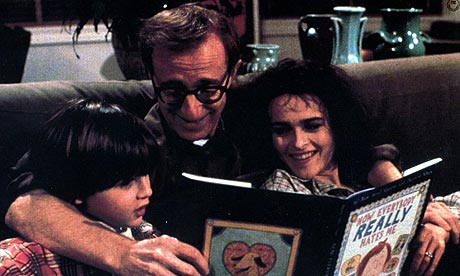
Written, directed, and starring Woody Allen, Mighty Aphrodite is the story about a man who wants to know who is the real mother of his adopted son as he learns that she’s a prostitute where he decides to give her a better life. Inspired by George Bernard Shaw’s play Pygmalion, the film explores a man’s desire to improve a young woman’s life as it is told by a Greek chorus. Also starring Helena Bohnam Carter, Mira Sorvino, Michael Rapaport, Peter Weller, and F. Murray Abraham. Mighty Aphrodite is a charming yet exhilarating film from Woody Allen.
The film revolves around a sports writer who is amazed by his adopted son’s intelligence as he wants to know who is his real mother. Upon learning that she’s a prostitute, he decides to help giving her a better life in the hopes that his adopted son would be proud of her if ever meets her. It’s a film where a man is eager to help this ditzy but kind-hearted prostitute/porn actress get the chance for a better life. Even as he’s dealing with a marriage that is losing its passion as his wife is being drawn to an art dealer. All of it is told by a Greek chorus who pops into the story every once in a while to help this man do something or to warn him of the consequence he might bring.
Woody Allen’s script is filled with some humor and drama as it is largely driven by its protagonist Lenny Weinrib (Woody Allen) as he was someone who was hesitant about having a child until Max (Jimmy McQuaid) comes into his world as he enjoys fatherhood. With his marriage to Amanda (Helena Bohnam Carter) kind of losing its luster, Lenny goes on the journey to find out who is Max’s mother as it is revealed in the form of this prostitute named Linda Ash (Mira Sorvino). Linda is a very interesting character as she is someone who isn’t very bright as she comes from a very dysfunctional family but has aspirations to go to Broadway but still does trick and a porn gig every once in a while. It prompts Lenny to do something to help this young woman to have a good life where he would try to set her up with a boxer named Kevin (Michael Rapaport) where Lenny’s own life would have some revelations of its own.
Allen’s direction is quite straightforward though there’s elements of styles in some of the long shots he creates as well as the scenes of the Greek chorus as it’s shot in Sicily. The Greek chorus scenes are filled with some dance numbers choreographed by Graciela Daniele as it’s often lively but also help to tell the story. Even as the Greek chorus leader (F. Murray Abraham) would pop in the story to give Lenny some advice. It adds the sense of a man wanting to do something for this young woman who seems to go nowhere while not telling her that he’s the adopted father of her son. Though it’s a film that doesn’t play with traditional structure in order to play with the idea of reality and fiction. It does manage to find a balance in the story that it wants to tell as the overall result is a very fascinating yet heartfelt film from Woody Allen.
Cinematographer Carlo Di Palma does excellent work with the film‘s cinematography from the low-key yet colorful look of some of the film‘s interiors to the more straightforward exterior scenes in the film. Editor Susan E. Morse does nice work with the editing from the transitions to go from the main story to the Greek chorus to a few montages to play up Linda‘s evolution. Production designer Santo Loquasto, with set decorator Susan Bode and art director Tom Warren, does amazing work with the set pieces from Linda‘s apartment to the place where the Greek chorus tell their story.
Costume designer Jeffrey Kurland does brilliant work with the costumes from the clothes that Linda wears to the robes the Greek chorus wears. Sound editor Robert Hein does terrific work with the sound to create an atmosphere in the locations as well as the scenes involving the Greek chorus. The film’s soundtrack consists of traditional Greek music mixed in with jazz and classical music to play up some of its humor and drama.
The casting by Juliet Taylor is fantastic for the ensemble that is created as it features appearances from Paul Giamatti as an adoption agent, Tony Sirico as a boxing trainer, Jimmy McQuaid as Lenny and Amanda’s adopted son Max, and Claire Bloom as Amanda’s mother. F. Murray Abraham is excellent as the Greek chorus leader while Olympia Dukakis, Jack Warden, costume designer Jeffrey Kurland, Danielle Ferland, and David Odgen Stiers make wonderful appearances as famous Greek gods commenting on the story or revealing some news that would impact the story. Peter Weller is terrific as an art dealer who tries to woo Amanda while Michael Rapaport is superb as a boxer who is set up to meet Linda.
Mira Sorvino is brilliant as Linda Ash as this very ditzy but well-meaning young woman who is very uncertain about her life until she meets Lenny where she becomes a proper lady as it’s really a majestic breakthrough for Sorvino. Helena Bohnam Carter is amazing as Amanda as a woman dealing with the changes in her marriage to Lenny while being wooed by this art dealer as she’s unsure if she’s in love with Lenny or the art dealer. Woody Allen is great as Lenny Weinrib as a man whose concern for his son’s future has him going into a journey where Allen brings a sense of wit and warmth to his role as it’s one of his finest performances.
Mighty Aphrodite is a remarkable film from Woody Allen that features a radiant Mira Sorvino in her breakthrough performance as well as an incredible cast that includes Helena Bohnam Carter, Michael Rapaport, and F. Murray Abraham. The film is a nice mix of humor and drama where it has a bit of non-conventional storytelling but also a sweetness that is endearing to watch. In the end, Mighty Aphrodite is a fabulous film from Woody Allen.
Woody Allen Films: What's Up Tiger Lily? - Take the Money and Run - Bananas - Everything You Always Wanted to Know About Sex* (*But Were Afraid to Ask) - Sleeper - Love and Death - Annie Hall - Interiors - Manhattan - Stardust Memories - A Midsummer's Night Sex Comedy - Zelig - Broadway Danny Rose - The Purple Rose of Cairo - Hannah & Her Sisters - Radio Days - September - Another Woman - New York Stories: Oedipus Wrecks - Crimes & Misdemeanors - Alice - Shadows and Fog - Husbands and Wives - Manhattan Murder Mystery - Bullets Over Broadway - Don't Drink the Water - Everyone Says I Love You - Deconstructing Harry - Celebrity - Sweet & Lowdown - Small Time Crooks - The Curse of the Jade Scorpion - Hollywood Ending - Anything Else - Melinda & Melinda - Match Point - Scoop - Cassandra’s Dream - Vicky Cristina Barcelona - Whatever Works - You Will Meet a Tall Dark Stranger - Midnight in Paris - To Rome with Love - Blue Jasmine - Magic in the Moonlight - Irrational Man - (Cafe Society)
The Auteurs #24: Woody Allen Pt. 1 - Pt. 2 - Pt. 3 - Pt. 4
© thevoid99 2013
Directed by Woody Allen and written by Allen and Douglas McGrath, Bullets Over Broadway is the story about a young playwright eager to succeed on Broadway as he hires a gangster’s girlfriend to star in the play while working with a gangster escort on re-writes to make sure his play is a success. The film is an exploration into the world of theater as well as one trying to not make compromises with his art with the help of a man who unknowingly has the gifts to be an artist. Starring John Cusack, Dianne Wiest, Jennifer Tilly, Chazz Palminteri, Mary-Louise Parker, Tracy Ullman, Jack Warden, Jim Broadbent, and Rob Reiner. Bullets Over Broadway is a fantastic yet witty film from Woody Allen.
Set in the 1920s, the film explores a young playwright trying to stage a play without compromise as he is convinced that he’s an artist. In order to get his play produced that will feature a renowned diva, he reluctantly accepts his producer’s offer to put in a gangster’s girlfriend who wants to become an actress despite her lack of talent. The woman’s escort is a mob henchman who has to watch her all the time as he would eventually bring in some ideas that would not only change this writer’s play but also the idea about art and what it takes to be an artist. It’s a film that explores the world of a man trying to define himself as an artist as he is eager to succeed in his own terms but has a hard time making compromises. Especially as he is someone who has the talents to be a writer but is often bogged down by rules and ideas that seem detached from reality until this gangster’s henchman would be the one that would open the doors of the idea of art.
The screenplay by Woody Allen and Douglas McGrath not only goes into great lengths to explore the world of theater as well as what it takes to be an artist. It also showcases a world in which individuals all are taking part in a play as there’s egos involved and also the danger for the fact that only a few people know that funding this play is a gangster (Joe Viterelli). For David Shayne (John Cusack), it’s a compromise he has to live with for the sake of his career as he’s amazed by the gifted but boozy leading lady Helen Sinclair (Dianne Wiest). Yet, he has to deal with the gangster’s girlfriend Olive (Jennifer Tilly) who is determined to succeed despite the fact that she’s a loudmouth and isn’t very good though Shayne thinks there’s potential. Along with a brilliant but insecure leading actor named Warner Purcell (Jim Broadbent) and a supporting actress in Eden Brent (Tracey Ullman) who always carries her dog.
It’s a strange mix of people that are involved with this play as Shayne is also directing the play but his actors have a hard time connecting with the script until Olive’s bodyguard Cheech (Chazz Palminteri) would say things that he felt is hindering the story as he comes up with ideas that turned out to be great. It would prompt Shayne to secretly work with Cheech as the latter becomes more aware of his gifts though he still enjoys bumping people off. Once the story develops where Shayne becomes more confident in his work, there also comes the trappings of success where Shayne would alienate his longtime girlfriend Ellen (Mary-Louise Parker) while Cheech realizes what he must do in order for the play to become a big success as he cares more about its chance to be great. All of which would play into Shayne’s realization of what it means to suffer and sacrifice for your art.
Allen’s direction is truly exquisite in not just the way he presents the 1920s New York City and Broadway but also a period in time where a writer is trying to create something new without making compromises. While there’s an intimacy to the play that is present in the film, there’s also a sense of beauty for the scenes in the city including a moment between Shayne and Sinclair that has this gorgeous backdrop behind them. Allen also creates some unique compositions where he puts the actors in a scene while also using some moments of violence to play up that world of the gangster including the place where Cheech would kill people. It all would play into that world of art and a man’s desire to succeed as an artist where Allen would find ways to mesh humor and drama in the story while playing to that theme about art without doing it in an overbearing way. Overall, Allen creates a truly riveting film about a man’s desire to become an artist and the trappings of what one has to do to succeed as an artist.
Cinematographer Carlo Di Palma does brilliant work with the film‘s cinematography from the look of the nightclubs with its lights to some of the more low-key lighting schemes for the nighttime exterior scenes. Editor Susan E. Morse does excellent work with the editing to create some rhythmic cuts for some of the lively moments involving the gangsters while most of the cutting is quite straightforward. Production designer Santo Loquasto, with art director Tom Warren and set decorators Susan Bode and Amy Marshall, does amazing work with the set pieces from the look of the play and nightclubs to the home where Olive lives
Costume designer Jeffrey Kurland does fantastic work with the costumes from the clothes the men wear to the array of dresses the women wear to play up that sense of style. Sound editor Robert Hein does terrific work with the sound to play up the atmosphere of the theater along with the sounds of gunfire for the gangster scenes. The film’s soundtrack is wonderful for the music that is played that includes pieces by Cole Porter, Eddie Cantor, Al Jolson, the Gershwin Brothers, and Duke Ellington.
The casting by Juliet Taylor is superb for the ensemble that is created as it features some notable small appearances from Tony Sirico and Tony Darrow as a couple of henchmen, Debi Mazar as Cheech’s girlfriend Violet, Benay Venuta as a theater patron Shayne meets at a party, Rob Reiner as the writer Sheldon Flender who is also Shayne’s mentor, Harvey Fierstein as Sinclair’s agent Sid Loomis, Jack Warden as the play’s producer Julian Marx, and Joe Viterelli as the gangster Nick Valenti. Mary Louise-Parker is wonderful as Shayne’s girlfriend Ellen as a woman who supports Shayne until success comes in as well as his fascination with Helen Sinclair. Tracey Ullman is terrific as Eden Brent as a supporting actress trying to get her part to be good while bringing her dog whom Helen dislikes. John Broadbent is excellent as Warner Purcell as a gifted actor who takes a liking towards Olive while he is also revealed to be a compulsive eater.
Jennifer Tilly is amazing as Olive as a young woman who is determined to be an actress despite her lack of talents as Tilly brings a lot of humor and charisma to her performance. Chazz Palminteri is brilliant as Cheech as a gangster’s henchman who has a gift for coming up with great ideas as he becomes someone who realizes his gift as he does whatever it takes to make it be a big success. Dianne Wiest is fantastic as Helen Sinclair as a veteran actress who likes to drink but is also so gifted as she seduces Shayne in the hopes that she can become much bigger. Finally, there’s John Cusack in a marvelous performance as David Shayne as a playwright eager to succeed without compromises while dealing with some of his flaws as a writer as he hopes to finally create something that will be great only to deal with the other compromises he must face as a person.
Bullets Over Broadway is an incredible film from Woody Allen. Armed with a great ensemble cast, amazing set pieces, a fun soundtrack, and an intriguing take on the world of art. It’s a film that definitely stands as one of Allen’s triumphs as well as riveting period piece about a man trying to do something new in the world of theater. In the end, Bullets Over Broadway is a sensational film from Woody Allen.
Woody Allen Films: What's Up Tiger Lily? - Take the Money and Run - Bananas - Everything You Always Wanted to Know About Sex* (*But Were Afraid to Ask) - Sleeper - Love and Death - Annie Hall - Interiors - Manhattan - Stardust Memories - A Midsummer's Night Sex Comedy - Zelig - Broadway Danny Rose - The Purple Rose of Cairo - Hannah & Her Sisters - Radio Days - September - Another Woman - New York Stories: Oedipus Wrecks - Crimes & Misdemeanors - Alice - Shadows and Fog - Husbands and Wives - Manhattan Murder Mystery - Don’t Drink the Water - Mighty Aphrodite - Everyone Says I Love You - Deconstructing Harry - Celebrity - Sweet & Lowdown - Small Time Crooks - The Curse of the Jade Scorpion - Hollywood Ending - Anything Else - Melinda & Melinda - Match Point - Scoop - Cassandra’s Dream - Vicky Cristina Barcelona - Whatever Works - You Will Meet a Tall Dark Stranger - Midnight in Paris - To Rome with Love - Blue Jasmine - Magic in the Moonlight - Irrational Man - (Cafe Society)
The Auteurs #24: Woody Allen Pt. 1 - Pt. 2 - Pt. 3 - Pt. 4
© thevoid99 2013
Written and directed by Woody Allen, September is the story of a woman who stays at a country home following a suicide attempt as she befriends a widower while getting visitors who are concerned for her well-being. The film is one of Allen’s more straightforward dramas to play out the idea of death as it is inspired by Chekov’s Uncle Vanya. Starring Mia Farrow, Dianne Wiest, Elaine Stricht, Sam Waterston, Denholm Elliot, and Jack Warden. September is a harrowing yet chilling film from Woody Allen.
The film is about a weekend in the country where a woman is in recovering from a suicide attempt as she is living at the house with her mother, her stepfather, and a friend. Meanwhile, two more visitors come to the house to hang out and such where things start to get a little crazy involving the attraction of two people as well a stormy night where a lot of uncertainty happens. Notably as this woman in Lane (Mia Farrow) is trying to sort out her own feelings just as some of the people around her start to unravel in their own messy lives. Woody Allen’s script is quite minimalist as it plays into the life a woman and the people she’s with in the course of a weekend. One of which is a widower named Howard (Denholm Elliot) who admits to Lane that he has feelings for her which surprises Lane though she knows that he’s a good kind man.
Another man in the house is a struggling writer named Peter (Sam Waterston) whom Lane has feelings for but Peter is more interested in Lane’s married friend Stephanie (Dianne Wiest) who is going through her own personal problems relating to her marriage. Adding to the chaos is Lane’s mother Diane (Elaine Stricht) who is aware of Lane’s problems as she is more concerned with having a good time and telling Peter about her life for a possible memoir. Diane’s husband Lloyd (Jack Warden) prefers to be in the background while trying to keep things peaceful as he also chats with Peter about his life as a physicist. All of it would play into some of the feelings that had been building in Lane as well as the dark secrets that she had to carry all of her life.
Allen’s direction is quite straightforward as he sets the film entirely in the house with no scenes set outside of the home. There’s an intimacy to the direction but also it is engaging for the way Allen puts the actors into the frame to showcase the intensity and restraint of the drama. While there are a few humorous moments in the dialogue, it is mostly presented as a drama where Allen uses a lot of close-ups and medium shots to capture the action. Even as he uses some tracking shots and slow pans to play out the atmosphere in the house. Overall, Allen creates a chilling yet interesting drama about death and secrets.
Cinematographer Carlo Di Palma does excellent work with the film‘s cinematography to create a colorful yet low-key approach to the look as well as its lighting schemes. Editor Susan E. Morse does nice work with the editing as it‘s mostly straightforward while using fade-outs to emphasize the story‘s structure. Production designer Santo Loquasto, with set decorator George DeTitta Jr. and art director Speed Hopkins, does wonderful work with the look of the house to play out the sense of intimacy that the people are in.
Costume designer Jeffrey Kurland does terrific work with the costumes as it‘s mostly straightforward with the exception of the clothes that Diane wears. Sound mixer James Sabat does some fine work with the sound to capture some of the sound effects outside of the house while maintaining the intimacy of the house from inside. The film’s soundtrack consists of mostly jazz music from Art Tatum, Bernie Leighton and Bert Ambrose playing the standards of the 30s and 40s.
The casting by Juliet Taylor is brilliant as it features appearances from Rosemary Murphy as a real estate agent and Ira Wheeler and Jane Cecil as a couple interested in buying Lane’s home. Jack Warden is excellent as Lane’s stepfather Lloyd who tries to keep everything peaceful while dealing with some of Diane’s flighty decisions and such. Elaine Stricht is wonderful as the very lively Diane as a woman who wants to feel young despite her age while trying to help out Lane though her approach isn’t very good. Sam Waterston is terrific as the struggling writer Peter who is trying to sort out his ideas as a writer and his feelings for Stephanie.
Denholm Elliot is superb as Howard as a widower who befriends Stephanie while talking with Lane about his own loss. Dianne Wiest is amazing as Lane’s friend Stephanie who is trying to sort out her own personal issues while finding herself attractive towards Peter. Finally, there’s Mia Farrow in a remarkable performance as Lane as a woman trying to sort out her issues while dealing with all of the chaos at home as it’s a very intense performance from Farrow.
September is an excellent film from Woody Allen. Armed with a great cast, the film is an intriguing drama that explores family secrets and death as well as a woman’s difficulty with depression. Though it’s kind of a minor work from Allen, it is still interesting for the way he approaches something that is quite heavy in its themes of depression. In the end, September is a stellar film from Woody Allen.
Woody Allen Films: What's Up Tiger Lily? - Take the Money & Run - Bananas - Everything You Always Wanted to Know About Sex* (*But Were Afraid to Ask) - Sleeper - Love and Death - Annie Hall - Interiors - Manhattan - Stardust Memories - A Midsummer's Night Sex Comedy - Zelig - Broadway Danny Rose - The Purple Rose of Cairo - Hannah & Her Sisters - Radio Days - Another Woman - New York Stories: Oedipus Wrecks - Crimes & Misdemeanors - Alice - Shadows & Fog - Husbands & Wives - Manhattan Murder Mystery - Don’t Drink the Water - Bullets Over Broadway - Mighty Aphrodite - Everyone Says I Love You - Deconstructing Harry - Celebrity - Sweet & Lowdown - Small Time Crooks - The Curse of the Jade Scorpion - Hollywood Ending - Anything Else - Melinda & Melinda - Match Point - Scoop - Cassandra’s Dream - Vicky Cristina Barcelona - Whatever Works - You Will Meet a Tall Dark Stranger - Midnight in Paris - To Rome with Love - Blue Jasmine - Magic in the Moonlight - Irrational Man - (Cafe Society)
The Auteurs #24: Woody Allen Pt. 1 - Pt. 2 - Pt. 3 - Pt. 4
© thevoid99 2013
Originally Written and Posted at Epinions.com on 6/8/05 w/ Additional Edits & Revisions.
Based on the novel by Jerzy Kosinski, Being There is the story about a simpleton gardener with no background and no past as he encounters the wife of a political figure as his colleagues mistake him for someone who could be a political adviser. Directed by Hal Ashby and screenplay by Kosinski and Robert C. Jones, the film is a continuation of Ashby's themes of naive men who step into a world they don't know about only to be confused as the focus is on a middle-aged gardener named Chance played by Peter Sellers. Also starring Shirley MacLaine, Jack Warden, Melvyn Douglas, Richard Dysart, and Richard Basehart. Being There is a witty yet captivating film from Hal Ashby.
For all of his life, Chance is just a simple-minded gardener whose only knowledge of the outside world was through radio and later television as he works for a rich benefactor while always being in the care of a maid named Louise (Ruth Attaway). When the benefactor dies and Louise leaves, Chance is suddenly forced out of his home by two real estate agents in Sally Hayes (Fran Brill) and Thomas Franklin (David Clennon) where he takes a step into the outside world for the very first time with a suitcase, an umbrella, and a remote control. While walking around Washington D.C. where he stops at a TV shop, he is accidentally hit by a car owned by the wife of a millionaire in Eve Rand (Shirley MacLaine). She takes Chance to her home where she misinterprets his name as Chauncey Gardiner where she takes him to Dr. Robert Allenby (Richard Dysart) to look over Chance as he's is the caretaker for the ailing millionaire Benjamin Rand (Melvyn Douglas).
With Chance at the home of the Rands to recover from his injury, he meets Benjamin where the two have a conversation where Ben mistakes Chance's simple ideas about gardening as political rhetoric that intrigues the millionaire who also has political connections. Chance becomes an inspiration for Ben while Eve is also in awe of Chance though he does nothing but watch TV as Ben later introduces Chance to President (Jack Warden) who is impressed by Chance's words as the President also mistakes it for political rhetoric. With Chance becoming a political messiah of sorts as he becomes a celebrity of sorts though only a few know who he really is. With Ben nearing death, Eve accompanies Chance to a party where a Soviet ambassador (Richard Basehart) believes that Chance's statements are influenced by Russian literature. With Eve falling for Chance as political figures try to make their move as the President's approval rating is in decline. Dr. Allenby makes a discovery of who Chance really is as no one is aware about everything Chance had been saying all along.
While the film has a softness that a more hardline audience will find to be overly sentimental, Ashby delivers a solid direction in finding the humor and idiocy of politics and the media itself. Ashby is a master of satire but here, he chooses a simple protagonist whose lighthearted innocence and mild-mannered intelligence who looks into the world of our eyes. Yet, it's the kind of protagonist that most films would expect since he is a childlike man who doesn't know very much. In many ways, Ashby is Chance because he likes to watch. It's probably the most personal film of Ashby's career, especially since it's about a decade that he has watched all of these years fall into decline. It's really a film about a man watching a time, idealism, and a nation going into decline with the world itself not getting any better with no power or mind to do anything.
The strength of the film also goes to its script by its novelist Jerry Kosinski who brings in a mix of humor and melancholia. The film also attacks the cynicism of the 1970s after the fallout of Vietnam and Watergate with a hope for optimism. Yet the film's surreal and memorable ending shows a lot of things including the end of an American innocence to be replaced by something worse as a major character dies with the film's final line of "Life is a state of mind". In many ways, this story is years ahead of its time. Especially since the state of the nation that we live in is led by not just a soulless idiot but one who doesn’t have the honesty or heart that Chance the Gardner possesses. The script isn't just satire but an attack of everything that the 70s represented in the course of its behavior and political rhetoric which made the 80s to be a decade of mindless decadence. There, Ashby and Kosinski capture the future just before it was about to happen.
Helping Ashby in bringing is quirky yet melancholic vision is cinematographer Caleb Deschanel who brings a richness and elegance to many of the film's interior scenes that captures the world of upper-class society and its alien-like tone to the eyes of Chance. Production designer Michael Haller and art director James Schoppe help capture the film’s dark-colored look of wooden furniture and look that shows the upper class world with the wood being the only thing that Chance seems to know. Even the elegant costumes by May Routh shows that richness, notably on how well-dressed that Chance is since he's the only who seems to be comfortable in those close. The film's music score by Johnny Mandel has a sad, melancholia since it conveys the innocence of Chance but also the doom he is about to face when he is about to become something he's unaware of.
The casting in the film is awe inspiring with some nice performances from Fran Brill and David Clennon as the baffled estates people who are dumbfounded by a simpleton with Richard Basehart bringing in a slightly, humorous performance as the Russian premier. Ruth Attaway stands out as the maid Louise with her maternal presence for Chance and as she sees him, she displays the cynicism of how the media and culture acts towards Chance as a messiah. Richard Dysart is excellent in the role of Ben Rand’s ever-suspecting doctor who wants to know the truth but doesn’t want to harm anyone in a masterfully executed performance. Jack Warden brings humor to his role as the President in a performance that is expertly handled as a man of power with a lot of flaws that is handled realistically. Melvyn Douglas gives a fascinating performance as a dying man who finds hope in Chance while realizing about his own fate and regrets.
Shirley MacLaine gives an understated and elegant performance as a woman who is about to become a widow while finding new hope in a man like Chance. MacLaine brings a sweetness to her performance while channeling one of her most hilarious moments in one of the film's funniest scenes. Then there's Peter Sellers in what is probably one of the best performances ever assembled on the screen. Sellers brings a restrained, subtle performance as a simpleton who isn't very smart but isn't a bad man either. He brings a childlike innocence and a well-mannered tone to a man who doesn't have much to offer or say anything profound but his kindness is so enchanting, you can't help but fall for a man like Chance. Sellers could've gone for slapstick for this role but instead, he shows a soul that is filled with sadness and heartbreak in each frame. Even in the film's final moments as he becomes unaware of what is laying ahead for him. It's one of the most spellbinding performances of the decade.
Being There is a sensational and extraordinary film from Hal Ashby that features a mesmerizing performance from Peter Sellers. Along with great supporting work from Shirley MacLaine, Melvyn Douglas, Richard Dysart, and Jack Warden. It's definitely a very witty yet touching film that is both satirical but also heartwarming in its subject matter and characters. In the end, Being There is a wonderful and entertaining film from Hal Ashby.
Hal Ashby Films: The Landlord - Harold and Maude - The Last Detail - Shampoo - Bound for Glory - Coming Home - Second-Hand Hearts - (Lookin’ to Get Out) - (Let’s Spend the Night Together) - (Solo Trans) - (The Slugger’s Wife) - 8 Million Ways to Die
© thevoid99 2012