Directed, co-edited, co-written, and created by Steve McQueen, Small Axe is a five-film anthology series that explores the lives of West African immigrants from the 1960s to the 1980s in five different stories. The five films tell stories that play into the identities of individuals who deal with social and political changes in London throughout the course of two decades.
Mangrove

Set from 1968 to 1971 in Notting Hill in London, the film revolves around a real-life story in which a Trinidadian immigrant in Frank Crichlow (Shaun Parkes) opens a West Indian restaurant for his community where it would be continuously raided by the police leading to protests and eventually a court battle against the police. It is a film that plays into a racially-motivated incident that has the police raiding against a restaurant with claims of criminal activity where Crichlow and several others in the community stage a protest that unfortunately got violent where Crichlow and eight others defend themselves in court with Ian McDonald (Jack Lowden) representing them as their attorney. The screenplay explore these events where the British-born activist Barbara Beese (Rochenda Sandall), the Trinidadian Black Panther leader Altheia Jones-LeCointe (Letitia Wright), the Trinidadian activist Darcus Howe (Malachi Kirby), Crichlow, and five others were put on trial as they accuse Constable Pulley (Sam Spruell) of harassment.
McQueen’s direction is riveting in the way it explores this community as it is shot in areas near Notting Hill with recreations of the restaurant that is known as Mangrove. McQueen maintains an intimacy throughout the film with his close-ups and medium shots including scenes inside the restaurant where people are eating food and listening and dancing to Caribbean music including reggae and soul. McQueen would infuse wide shots for scenes outside of the restaurant and in the areas of Notting Hill as well as the courthouse where the Mangrove Nine trial happened. McQueen would create compositions that add to the drama as well as this exploration of how the Mangrove Nine would defend themselves in court with Jones-LeCointe and Howe both representing themselves. McQueen reveals that the Mangrove Nine had a lot going up against them including Judge Edward Clarke (Alex Jennings) who oversees the trial with a jury that only featured two black people.
Lovers Rock

Set in 1980, the film revolves around a house party to celebrate a young woman’s birthday as many partygoers attend this party including a couple of women wanting to have a good time. It is a film that is told in the span of a day where a young woman sneaks out of her house to go to this house party where she bumps into a former boyfriend while meeting a man whom she would fall in love with. It also play into this simmering tension among former lovers as well as unexpected visitors who want to cause trouble. The film’s screenplay by Steve McQueen and Courttia Newland doesn’t have much of a plot as it follows the lives of a few people with Martha Trenton (Amarah-Jae St. Aubyn) going to this party with her friend Patty (Shaniqua Okwok) as it is also a birthday party for a young woman in Cynthia (Ellis George) that is hosted by a few people. Much of the film takes place in and out of the house as people drink, eat, and smoke while listening to all sorts of music as things would also be filled with bits of trouble.
McQueen’s direction is intoxicating in the way it captures the atmosphere of a party as the music soundtrack is a key part of the film as it ranges from soul, disco, reggae, and dub. While there are a few wide shots in the film to establish a few bits of the location in and out of the house, much of McQueen’s direction is intimate with its close-ups and medium shots that also include these extreme close-ups of walls where the heat starts to show as well as body parts grinding on one another. Even as McQueen would use different shooting styles ranging from hand-held to static shots as it play into the atmosphere of the parties. Even as Martha gets an unexpected visit from her grieving cousin Clifton (Kedar Williams-Stirling) while also bumping into a former boyfriend in Bammy (Daniel Francis-Swaby) who would eventually cause some trouble. McQueen also maintains this sense of community within the party as the music also help drive the emotional elements of the film as it also leads to a sense of growth for Martha and the man she falls in love with in Franklyn Cooper (Micheal Ward).
Red, White and Blue

Set in the early 1980s, the film is about the real-life story of Leroy Logan (John Boyega) whose father Ken (Steve Toussaint) had been assaulted by a couple of white police officers as Leroy would join the police force in the hopes to bring change from within. It is a film that begins in the 1960s when a young Leroy (Nathan Vidal) is waiting for his dad to pick him up at school where he is questioned by a couple of officers until Ken arrives where things don’t go well for Ken as he would struggle to deal with the police until being assaulted as he sues them in court which makes the adult Leroy’s journey in becoming a police officer difficult. The film’s screenplay by Steve McQueen and Courttia Newland reveal the tension between father and son as the latter is trying to bring reform to an already complicated situation as the only other non-white officer he works with is the Pakistani Asif Kamali (Assad Zaman) who would also endure his own brush with racist attitudes from fellow officers.
McQueen’s direction is sparse in terms of its compositions while there are elements of style as McQueen aims for something that is intimate but also tense in its medium shots and close-ups as it plays into Logan entering into a chaotic system. McQueen also create these eerie compositions that play into the tension within the Logan family home as well as a holiday dinner with a family friend where both father and son are not saying anything to one another with Leroy not wanting to upset his father any further. Leroy’s hope in being an officer to ease tension between the police and non-white communities is a challenge where many blacks refuse to be around him with a young black man who was assaulted by white cops calling Leroy a traitor. McQueen also reveals the difficulty of a man trying to get his day in court as he is forced to face things beyond his control and not even his son could do anything. Its ending is more about these two men and the obstacles they face in a world where no matter how things change. There are things that wouldn’t change.
Alex Wheatle

Set in the late 70s and early 1980s, the film is about the early life of the revered young adult novelist as he struggles with trying to find his identity and roots during a prison sentence. It is a film that showcases a man who had been abandoned when he was a baby and put into foster care as a child only to struggle with authority and the world around him as a young man until he finds a home in Brixton that is predominantly black filled with Jamaicans and Africans. Living with these residents, the titular character (Sheyi Cole) struggles to adapt at first while he aspires to become a deejay with fellow residents until events of January 18, 1981 in which 13 kids were killed at a house party by a firebombing that lead to the Brixton uprising in April of that year. The script by McQueen and Siddons opens with Wheatle entering prison where he shares a cell with Simeon (Robbie Gee) who is dealing with the effects of a hunger strike as he asks Wheatle about his life story as the narrative moves back and forth with Wheatle’s life to his imprisonment. Even as it showcases Wheatle trying to find this identity as he is surrounded by people that is either in the drug trade or in the music trade.
McQueen’s direction is striking in the way he frames Wheatle in the opening shot as he’s shirtless and the next shot is a wide shot as he’s wearing his prison clothes as he walks to his cell with a guard. The direction also showcases this world of late 70s/early 80s Brixton where McQueen shows a world that is changing but also filled with tension with Wheatle being new to an environment that is largely black with much of its music soundtrack is reggae. Even as McQueen uses some unique shots and compositions that play into Wheatle’s plight as well as this sense of claustrophobia in scenes of Wheatle in his cell with Simeon as it play into a man that is trapped in a world of confusion but with someone who is on the path to finding himself. Even as Wheatle would eventually find something in his life to express himself and find out his identity.
Education

A young boy living in the London suburbs is sent from a traditional school to a school with claims of special needs when the reality is that the school is one of neglect and sub-standard education. Set in the early 1970s, the film explores a young boy whose inability to read properly as well as having a lively behavior as he gets transferred to a school with other children with behavioral issues as well as those with low IQs with some of whom being black and of those of West Indian descent. The screenplay by Steve McQueen and Alastair Siddons focuses on this boy in Kingsley Smith (Kenyah Sandy) who has trouble adjusting to the new school knowing how unruly it is and the fact that the teachers really don’t teach at all where his mother Agnes (Sharlene Whyte) would learn about this from an activist in Lydia Thomas (Josette Simon) who is concerned over Kingsley as she had her friend in activist Hazel (Naomi Ackie) visit the school secretly to learn what Kingsley is learning. For Agnes, the revelations about why her son is sent to the school is alarming as it plays into an unjust system that would put children who don’t meet certain requirements the ability to fail in their lives.
McQueen’s direction definitely maintains this intimacy as it opens with Kingsley and his classmates watching a documentary on the universe as McQueen aims for a close-up in showing Kingsley’s expression. Yet, it is contrast to the way he would film Kingsley as he struggles to read a paragraph while the teacher calls him a blockhead as he would be humiliated in a medium close-up shot. Much of McQueen’s direction is straightforward in its compositions as there a few wide shots including an early scene of Kingsley being a bit unruly during music class while the scenes at a classroom at this special school does have a claustrophobic feel in terms of the sense of oppression he and his fellow classmates feel. The film is also given this unique feel as it is shot on 16mm to evoke the look of British television during the 1970s as a way to present a look of the past where McQueen would also showcase a world where working class West Indian immigrants are forced to see a reality that they couldn’t deal with. One where no matter how hard their children work in school, the system doesn’t do anything for them though it is through a community of people that would find a way where McQueen does provide a hopeful ending.
The overall presentation of the film series which explores the lives of West Indian immigrants from the late 1960s to the early 1980s showcases different people dealing with not just racism and class struggles but also their need to express who they are and their roots not just for themselves but also the next generation. McQueen would shoot all of the films in these areas in London that is part of a world where these people can express themselves and feel like they’re part of a community that is also inclusive to anyone that wants to be part of it as long as they’re respectful. While a lot of the tone of the films are serious and bleak to explore the black experience, there is this sense of hope in the endings but also a few that are ambiguous as it relates to the historical elements in these films. Overall, McQueen crafts a tremendously rich and intoxicating film series about the life of black West Indian immigrants in London during the late 1960s to the early 1980s.
Cinematographer Shabier Kirchner does phenomenal work with the film’s cinematography with its emphasis on low-key colors for the exteriors and low-key natural lighting for the scenes at night to play into the atmosphere of the rooms or homes that these characters are in. Editors Chris Dickens and Steve McQueen do incredible work with the editing as it has these stylish cuts to play into drama and some of the intense moments of suspense as well as scenes that showcase this sense of historical drama that looms throughout the film. Production designer Helen Scott, with set decorator Hannah Spice and supervising art director Adam Marshall, does brilliant work with the look of the places these characters live in or hang out as it plays into a world that was vibrant but also unruly considering the chaos these people endure from the police. Costume designers Lisa Duncan, Jacqueline Durran, and Sinead Kidao do excellent work with Duncan creating unique early 70s costumes for Mangrove while Durran does a lot of the costumes for Lovers Rock and Alex Wheatle to play into the vibrancy of the music these characters listen with Kidao doing the costumes for Red, White and Blue and Education to play into the world of suburbia.
Hair/makeup designer JoJo Williams does fantastic work with the look of the hairstyles of the times from the afros to the dreadlocks that both men and women had in those times. Special effects supervisors Scott MacIntyre, Steve Bowman, and Elly Dunsire, along with visual effects supervisors John Paul Docherty and Marc Hutchings, do nice work with some of the film’s visual effects as it is largely set dressing as well as some bits involving explosion in the riots. Sound mixer Ronald Bailey does superb work with the film’s sound as it plays into the atmosphere of the locations as well as how music is sound from afar or in a room as it is a highlight of the film series. The film’s music by Mica Levi is amazing for its low-key ambient music score as it appears in bits of episodes of the series while music supervisors Ed Bailie and Abi Leland create an immense music soundtrack that largely features reggae, soul, pop, and rock as it plays into the music of those times as it is a key factor to the film.
The casting by Gary Davy is marvelous as it features a massive ensemble for the five films that are presented in this film series. From Mangrove, the wonderful supporting performances of Jack Lowden as the barrister Ian MacDonald who defends the Mangrove Nine, Gershwin Eustache Jr. as Altheia’s husband, Richard Cordery as an older defense barrister in Mr. Croft, Llewella Gordon as Aunt Betty who helps run Crichlow’s restaurant, Sam Spruell as Police Constable Frank Pulley who has antagonized Crichlow and many others, Samuel West as the prosecuting barrister, and Alex Jennings as Judge Edward Clarke who handles the Mangrove Nine case.
In the roles of members who are part of the Mangrove Nine, the performances Jumayn Hunter, Duane Facey-Pearson, Richie Campbell, Darren Braithwaite, and Nathaniel Martello-White in their respective roles as Godfrey Millett, Rupert Boyce, Rothwell Kentish, Anthony Carlisle Innis, and Rhodan Gordon who are superb in their roles as five men trying to defend themselves. Finally, there’s the quartet of Rochenda Sandall, Shaun Parkes, Malachi Kirby, and Letitia Wright in incredible performances in their respective roles as the British-born activist Barbara Beese, the restaurant owner Frank Crichlow, the Trinidadian activist Darcus Howe, and the Trinidadian Black Panther leader Altheia Jones-LeCointe as these four people who are trying to live their lives with Crichlow being a man just wanting to run a restaurant as it plays into the racial tension of the early 1970s.
From Lovers Rock, the film features some notable small roles from the legendary Barbados-born musician Dennis Bovell as a party goer, Frankie Fox as Franklyn’s boss at a garage, Shaniqua Okwok as Martha’s friend Patty, Ellis George as the birthday woman in Cynthia who would have a bad encounter with Bammy, and Dennis Francis-Swaby as Martha’s former boyfriend Bammy who would try to have his way with women only to cause a lot of trouble. Kedar Williams-Smith is fantastic as Martha’s grieving cousin Clifton who would also cause trouble but also a moment where he has everyone at the party to yell as it relates to the music. The duo of Micheal Ward and Amarah-Jae St. Aubyn in great performances in their respective roles as Franklyn Cooper and Martha Trenton as two people who would meet and fall in love at this house party as they deal with the turmoil around them but also find something that would give them a future on this night of mayhem.
From Red, White and Blue, small performances from Nathan Vidal as the young Leroy, Jaden Oshenye as the young Leee John, Nadine Marshall as Leroy’s aunt Jesse, Tyrone Huntley as Leroy’s cousin in Leee John who at the time was the lead singer for the popular 80s British soul group Imagination, Antonia Thomas as Leroy’s wife Gretl, and Joy Richardson as Leroy’s mother Mrs. Logan as they’re all wonderful in their small supporting roles. Other noteworthy supporting roles include Assad Zaman as a British-Pakistani officer in Asif Kamali who struggles with his work due to the racism he endures, Neil Maskell as Inspector Willis who is Leroy’s supervisor who is sympathetic to the struggles Leroy faces, and Stephen Boxer as a chief inspector who sees Leroy’s entry as good publicity despite the racial tension between the police and community.
Steve Toussaint’s performance as Leroy’s father Ken Logan is phenomenal as a man who has an immense distrust towards the police due to his own encounters while also troubled by the fact that his son has joined the police force. Finally, there’s John Boyega in a spectacular performance as Leroy Logan who joins the police force despite his intelligence in forensics and athletic skills has him conflicted in being this poster boy while also dealing with the fact that making change from within is way more difficult than he realizes.
In Alex Wheatle, the small performances from Fumilayo Brown-Olateju as a neighbor in Dawn, Khali Best as a dealer in Badger, Jonathan Jules as a neighbor/activist in Dennis Issacs who would teach Wheatle the way adapt in Brixton, Johann Meyers as the drug dealer Cutlass Rankin who is suspicious of Wheatle at first only to accept him, and Asad-Shareef Muhammad as the young Wheatle. Robbie Gee is brilliant as Wheatle’s cellmate Simeon as a man dealing with food poisoning but also listens to Wheatle’s story as he gives him advice about finding roots as well as giving Wheatle the chance to find his identity for himself. Finally, there’s Sheyi Cole in a tremendous performance as the titular character as a young man struggling to find his identity and roots while also dealing with the world around him as it is this chilling and fierce performance from Cole. In Education, the small performances from Kate Dickie as a teacher in Mrs. Gill, Jade Anouka as a teacher at the special school in Mrs. Morrison, Stewart Wright as a teacher at the special school in Mr. Baines who does the most boring rendition of The House of the Rising Sun, Ryan Masher and Jairaj Varsani as a couple of Kingsley’s classmates at school, the quartet of Tabitha Byron, Roshawn Hewitt, Aiyana Goodfellow, and Nathan Moses as Kingsley’s classmates at this special school, and Adrian Rawlins as the school headmaster who suggest that Kingsley goes to this special school.
The trio of Jo Martin, Naomi Ackie, and Josette Simon are amazing in their respective roles as the teacher Mrs. Tabitha Bartholomew, the activist Hazel, and the organizer Lydia Thomas with Martin playing a teacher at a Saturday school who would prove to be helpful for Kingsley while Ackie’s performance as this activist who pretends to be a school psychologist is someone who got a closer look into the school that Kingsley is in. Simon’s performance as Thomas is one of grace and restraint as a woman who went to Kingsley’s mother while also organizing a meeting with other parents and people in the community who reveal a lot of revelations about the school system.
Daniel Francis and Sharlene Whyte are remarkable in their respective roles as Kingsley’s parents Esmond and Agnes with the former being convinced that his son needs to learn a trade only to realize the unjust system Kingsley is a part of while the latter is a woman that is trying to work for her family as she learns about Kingsley’s learning disabilities and what goes on at the school he’s been transferred to. Tamara Lawrence is fantastic as Kingsley’s teenage sister Stephanie who learns what happens to her younger brother but also a system that doesn’t help him. Finally, there’s Kenyah Sandy in a sensational performance as Kingsley Smith as young boy who has learning disabilities and an exuberant behavior who has trouble being transferred to a new school that not only does nothing for him but also keeps him back due to a terrible educational system that is definitely racist.
Small Axe is an outstanding film anthology series from Steve McQueen. Featuring a tremendous ensemble cast, gorgeous visuals, stories about black life in Britain from the late 1960s to the early 1980s, and a rapturous music soundtrack. The film series is something that audiences need to see to get a glimpse into a world that isn’t talked about much as it relates to current events around to prove that not much has changed since. In the end, Small Axe is a magnificent film series from Steve McQueen.
Steve McQueen Films: Hunger (2008 film) - Shame (2011 film) - 12 Years a Slave - Widows (2018 film) - (Uprising (2022 film)) – (Occupied City) - (Blitz)
© thevoid99 2023

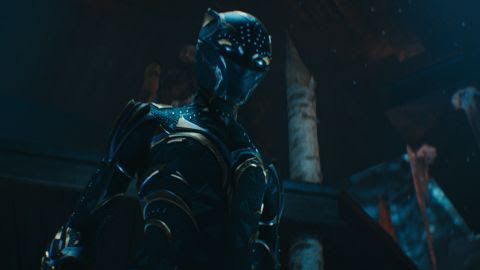
Set one year after the unexpected death of King T’Challa of Wakanda aka the Black Panther, the film follows those close to T’Challa trying to move forward as Queen Mother Ramonda assumes the throne as she and the country are aware of other countries wanting to have their vibranium yet is faced with a new threat in an underwater nation lead by a warrior named Namor. It is a film that isn’t just an exploration of grief and legacy but also a young woman coming to terms with loss as she discovers this new threat and why they’re angry at Wakanda as things eventually go into chaos with the country having lost its leader and great protector. The film’s screenplay by Ryan Coogler and Joe Robert Cole is really about the journey that T’Challa’s sister Shuri (Letitia Wright) endures as she is wracked with guilt in not being able to save her brother as she spends a lot of time in the lab and trying to figure out things as a way to cope. Yet, she would be among the first to encounter Namor with her mother as well as other things that have put Wakanda in danger with other countries including the U.S.
The script doesn’t just play into Wakanda’s newfound vulnerability following T’Challa’s death and his own plans to open the doors for the country from its isolationist status. It also show why the country’s vulnerability also leaves this underwater nation known as Talokan becoming just as vulnerable due to the creation of a machine that detects vibranium. After attacking a base in which the Wakandans are accused of, Shuri and the Dora Milaje leader Okoye (Danai Gurira) travel to Boston to find the young scientist that created the machine in Riri Williams (Dominique Thorne) who had no clue that the CIA had taken her creation as she helps them until they’re targeted by the FBI and later the Talokan in which Shuri goes to the Talokan home where she meets Namor and learns about his culture and where he and his people are from as well as his own issues with the people on the surface dating back to the 16th Century when he was a child and saw the horrors of humanity and how they saw him as it also play into Wakanda’s own disdain towards colonialism. Yet, things become complicated as it also has these big questions about imperialism where the script has a scene where Queen Ramonda is at Geneva talking to the United Nations about the reasons why Wakanda refuses to share their vibranium because of politics and how it can be used in the wrong hands. Even as the Talokan has vibranium in their world that has allow them to thrive without any threats until recently as it raises more tension with them and Wakanda.
It’s not just a lot of the thematic elements that Coogler and Cole are exploring with the script but also in the characters with Shuri being the one with a major arc while Okoye, Queen Ramonda, T’Challa’s former lover Nakia (Lupita Nyong’o), and the Jabari mountain tribe leader M’Baku (Winston Duke) also go through developments as they encounter an ever-changing world with Nakia living in Haiti during the Blip while M’Baku becomes concerned for Shuri’s own issues following his own encounter with Namor and the Talokan. Okoye whose duty as the Dora Milaje leader would also endure her own arc following a fight with a Talokan general that didn’t go well but also be stripped of the identity that she has only known forcing her to take on a bigger role for its third act.
Coogler’s direction is vast in terms of not just the different locations the film is set as a lot of it is shot at the Pinewood Studios Atlanta in Duluth, GA as well as locations in Boston and Puerto Rico yet the film is set in many places including Haiti, Mexico, and Switzerland. For a film with grand set pieces on the surface and underwater, it doesn’t open with something big but rather a scene in Shuri’s lab as she and other scientists are scrambling for a solution until Queen Ramonda comes in and tells Shuri that her brother has died despite a small chance that Shuri took to create a cure. It would then be followed by a funeral ceremony that is just beautiful in its presentation as well as the scope of this ceremony with its usage of close-ups, medium shots, and wide shots in the Wakandan capital city streets where T’Challa’s casket is at the center of this set piece. The usage of the different locations including the scenes at the Talokan city underwater are among some of the finest set pieces created with unique wide and medium shots as they were shot in studio soundstages in actual underwater.
While the film has serious thematic elements as well as intense action set pieces that include some unique fight scenes that are wonderfully choreographed by Micah Karns that include Okoye’s fight on the bridge against a few Talokan warriors including Attuma (Alex Livinalli). There are a few comical moments such as Shuri and Okoye’s meet-up with CIA agent Everett K. Ross (Martin Freeman) and their first meeting with Williams who would later go to Wakanda to create her own suit similar to the Ironman suit as she would become Ironheart. Coogler also play up into a lot of the suspenseful moments in how the Talokan would introduce themselves as they would attack a couple of scientists underwater while they search for vibranium as would the dark shadow of Namor would appear in the film’s first act and his first meeting with Ramonda and Shuri during a moment between the two women as it relates to grief. Coogler also play up into Shuri’s own reliance on technology and how it would force her to look inward into her mother’s idea of faith as it is something that is key to coping with grief as it is something Namor had dealt with as it relates to his own mother (Maria Mercedes Coroy). Since this is a film set in a global scale, many different languages are used in the film in not just English, Spanish, French, and various African dialects but also Mayan as it is a language that the Talokan use to communicate.
The film’s third act is definitely the most intense not just in terms of its climax but also in terms of its emotion as it relates to Shuri confronting her own grief and guilt but also take on a role that is bigger than herself. Yet, she is also troubled by the fact that she is still a young woman as Nakia, Okoye, and M’Baku are concerned knowing that their backs are against the wall with the rest of the world and the Talokans. The film’s climax is grand and intense as it forces everyone to think about their roles in the world but also lessons learned in the aftermath. Even as it all play into grief and having to move on but also make decisions for a country whose back is against the wall by other countries who are more likely to do more damage than good. Overall, Coogler crafts a majestic and visceral film about a royal family and their country in the middle of Africa dealing with new threats as well as the loss of their great protector.
Cinematographer Autumn Durald Arkapaw does brilliant work with the film’s cinematography with its usage of low-key lighting for the underwater scenes including the shots of the Talokan city as well as a lot of naturalistic photography for the scenes in the day as well as exterior scenes at night. Editors Michael P. Shawver, Kelley Dixon, and Jennifer Lame do excellent work with the editing as it has some unique rhythmic cuts and some stylish transitions as it is a highlight of the film. Production designer Hannah Beachler, with set decorator Lisa K. Sessions and supervising art director Brad Ricker does amazing work with the set design from the look of Shuri’s lab, M’Baku’s palace, and the home of the Talokan with a lot of attention to detail that is inspired by Mayan culture. Costume designer Ruth E. Carter does phenomenal work with the costumes from the funeral garb that Shuri and Ramonda wear for T’Challa’s funeral as well as some of the new designs that Shuri has created for Okoye and the look of the Talokan in their Mayan-inspired clothing.
Special makeup effects artists Erin Keith, Tonilee Marrone, Greg McDougall, and Mark James Ross do fantastic work with the look of the Talokan with their blue-skinned look as well as some of the makeup the Wakandans wear for battle. Special effects supervisor Daniel Sudick, along with visual effects supervisors Geoffrey Bauman and Reetu Aggarwal, does terrific work with the design of Riri’s Ironheart suit in its final form as well as some of the design of Talokan as well as the force fields from Wakanda. Sound editors Steve Boeddeker and Benjamin A. Burtt, along with sound designer David C. Hughes, do superb work with the sound in the way some of the Wakandan tech are used as well as some of Riri’s designs as well as scenes underwater at the Talokan as it is a highlight of the film.
The film’s music by Ludwig Gorransson is incredible for its bombastic score that mixes orchestral music with African percussions and woodwinds as well as old Mayan woodwinds and percussions as it is a highlight of the film while music supervisor Dave Jordan help cultivate a music soundtrack that mixes elements of hip-hop, electronic music, and pop in different arrays of style that also include African and Mayan-elements in the music features contributions from Burna Boy, Tems covering Bob Marley’s No Woman, No Cry, Snow tha Product featuring E-40, Stormzy, Tobe Nwigwe and Fat Nwigwe, Fireboy DML, OG Day V and Future, Aleman with Rema, Bloody Civilian, and two original songs co-written and performed by Rihanna.
The casting by Sarah Halley Finn is marvelous as it feature some notable small roles and appearances as Lake Bell as a scientist trying to find vibranium only to have a bad encounter with the Talokan, Trevor Noah as the voice of Shuri’s A.I. Griot, Richard Schiff as the U.S. Secretary of State who wants access to Wakanda’s vibranium for his government, Maria Mercedes Coroy as Namor’s mother in flashbacks, Mabel Cadena as Namor’s cousin Namora who is also a warrior, Alex Livinalli as a Talokan general in Attuma whom Okoye would battle against, Connie Chiume as a royal elder stateswoman who used to be the mining tribe elder, Danny Sapani as the border tribe elder, Isaach de Bankole as the river tribe elder, and Dorothy Steel in her final film performance as the merchant tribe elder. Florence Kasumba is superb as Ayo as Okoye’s second-in-command in the Dora Milaje as she would later become its new general. Julia Louis-Dreyfus is fantastic as Valentina Allegra de Fontaine as the new director of the CIA who helps her ex-husband in Everett K. Ross in investigating what is going with Wakanda while having motives of her own.
Micaela Cole is excellent as Akeena as a Dora Milaje warrior who is bit of a rebel in terms of the weapons she likes as she would also play a key role in the third act as it relates to a new role that Okoye would also play. Martin Freeman is terrific as Everett K. Ross as a CIA agent who helps Okoye and Shuri in finding Riri Williams while trying to keep them away from the authorities. Dominique Thorne is brilliant as Riri Williams as a MIT student who has created a machine that would help find vibranium that she didn’t realize would be used by the government as she becomes a target for the Talokans where she joins the Wakandans in dealing with them while creating a suit of her own that would become Ironheart. Winston Duke is amazing as M’Baku as the leader of the Jabari tribe who lives in the mountain as he would have some comical lines in how he would deal with the Talokan while later being aware of how powerful they are as he tries to counsel Shuri about the dangers of war. Danai Gurira is incredible as Okoye as the leader of the Dora Milaje who is devoted to her role until her encounter with the Talokan in Boston has her shaken and unsure of what to do next forcing her to take on a new role. Lupita Nyong’o is remarkable as Nakia as T’Challa’s former lover who had given up her life as a spy for a quieter life in Haiti as she is asked by Ramonda to find Shuri while being aware of the threat they’re facing as well as becoming concerned for Shuri’s emotional state.
Tenoch Huerta Mejia is phenomenal as Namor as the leader of the Talokan whom is referred to as the serpent god of K’uk’ulkan who is trying to protect his people from the surface world while also seeing Wakanda as a threat where he tries to be reasonable with Shuri only for things to go wrong prompting him to fight as Mejia’s performance is full of complexities but is also someone who makes his character an anti-hero rather than a typical villain. Angela Bassett is outstanding as Queen Ramonda as the mother of Shuri and the late T’Challa who watches over the throne as she deals with the threats of other countries as well as mourning her son where she also tries to help Shuri as well as having her own encounters with Namor as it is a performance for the ages from Bassett. Finally, there’s Letitia Wright in a sensational performance as Shuri as T’Challa’s younger sister who has a hard time coping with her loss as she is also trying to figure out what Namor wants where it is a whirlwind of a performance where Wright captures the anguish and confusion of a young woman who is still lost while also unsure of where to go as she ultimately takes on a role that her people need to play.
Black Panther: Wakanda Forever is a tremendous film from Ryan Coogler. Featuring a great ensemble cast, ravishing visuals, intricate set and costume designs, an evocative music score and soundtrack, and its exploration of loss, identity, and grief on a world stage. It is a film that isn’t just this intense yet exhilarating action-blockbuster but also a film that tackles some serious political ideas as well as being this exploration of loss as the film is also a fitting tribute to the original Black Panther in Chadwick Boseman. In the end, Black Panther: Wakanda Forever is a spectacular film from Ryan Coogler.
Ryan Coogler Films: Fruitvale Station - Creed (2015 film) - Sinners (2025 film) - The Auteurs #74: Ryan Coogler
Marvel Cinematic Universe: Infinity Saga: Phase One: Iron Man - The Incredible Hulk - Iron Man 2 - Thor - Captain America: The First Avenger - The Avengers
Phase Two: Iron Man 3 - Thor: The Dark World - Captain America: The Winter Soldier - Guardians of the Galaxy - The Avengers: Age of Ultron - Ant-Man
Phase Three: Captain America: Civil War - Doctor Strange - Guardians of the Galaxy Vol. 2 - Spider-Man: Homecoming - Thor: Ragnarok - Black Panther - Avengers: Infinity War - Ant-Man and the Wasp - Captain Marvel - Avengers: Endgame - Spider-Man: Far from Home
Multiverse Saga: Phase Four: Black Widow - Shang-Chi and the Legend of the Ten Rings - Eternals - Spider-Man: No Way Home - Doctor Strange in the Multiverse of Madness - Thor: Love and Thunder - Werewolf by Night - The Guardians of the Galaxy Holiday Special
Phase Five: Ant-Man & the Wasp: Quantumania - Guardians of the Galaxy Vol. 3 – The Marvels – (Deadpool & Wolverine) - (Captain America: Brave New World) - (Thunderbolts*)
Phase 6: The Fantastic Four: First Steps - (Avengers: Doomsday) - (Avengers: Secret Wars)
© thevoid99 2022

Based on the comic series by Jack Kirby and Stan Lee, Black Panther is the story of a king of an isolated yet thriving African country who finds himself dealing with his new role as well as an enemy who wants to claim his right to the throne. Directed by Ryan Coogler and screenplay by Coogler and Joe Robert Cole, the film is an exploration of a man trying to protect his country while dealing with some of the drawbacks of his country’s isolationist approach from outsiders as Chadwick Boseman plays the titular role of the hero and the King of Wakanda in T’Challa. Also starring Lupita Nyong’o, Michael B. Jordan, Danai Gurira, Daniel Kaluuya, Forest Whitaker, Martin Freeman, Leticia Wright, Winston Duke, Andy Serkis, Isaach de Bankole, and Angela Bassett as the Queen Mother of Wakanda in Ramonda. Black Panther is a riveting and exhilarating film from Ryan Coogler.
Following the events in which King T’Challa finds the true killer of his father as well as deal with conflict between Captain America and Iron Man, the new king of Wakanda returns home where he doesn’t just deal with his new role but also the threat of new enemies who challenge T’Challa’s claim to the throne as well as what the country possesses. It’s a film that doesn’t just explore a man dealing with the weight of what he has to do to protect his country and its people but also deal with the sins of the past that his predecessors had made including his own father T’Chaka (John Kani) as it relates to the country’s isolationist persona. The film’s screenplay by Ryan Coogler and Joe Robert Cole, with un-credited contributions from Donald and Stephen Glover, doesn’t just explore some of the fallacies of being an isolationist country that prefers to keep its resource known as vibranium to itself rather than share it with others in fear they would use the resource for devious reasons.
It’s this sense of isolation that would prove to be futile as the film has a prologue in which the young T’Chaka (Atandwa Kani) confronts a man (Sterling K. Brown) who helped the notorious arms dealer Ulysses Klaue (Andy Serkis) in obtaining vibranium. That man would have a son named Erik “Killmonger” Stevens (Michael B. Jordan) who would later create havoc with Klaue’s help as he has some legitimate reasons for wanting to stake his claim to Wakanda’s throne. For T’Challa, the news about Killmonger as well as his failed attempt to capture Klaue has him turning to his father’s longtime advisor Zuri (Forest Whitaker) about some truths of Killmonger’s identity as well as what happened back in 1992 as it relates to Killmonger’s father. Killmonger’s motivations for wanting to claim his right to the throne definitely has a lot about not just Africa’s role in the world but also the need to rise up against those that had repressed the continent and its people where he sees Wakanda as a country that should lead this revolt. For T’Challa, he understands Killmonger’s reasons but knows that it can go wrong where he finds himself having to deal with Killmonger.
It’s not just Zuri that T’Challa turns to for advice and wisdom but also his mother Ramonda and other tribe elders who express concerns for Killmonger’s claim and Klaue’s black-market dealings. Still, T’Challa has others to count on such as his younger sister Shuri (Letitia Wright) who is the country’s tech genius, his former lover/spy Nakia (Lupita Nyong’o), and Okoye (Danai Gurira) who is the leader of the king’s personal bodyguard regiment known as the Dora Milaje who all understand T’Challa’s struggle to make the right decisions. There are also tribe leaders such as longtime friend W’Kabi (Daniel Kaluuya) who wants the country to thrive yet understands that Killmonger has some legitimate views about Wakanda. Killmonger’s threat to the throne would also force T’Challa to turn to a tribe leader in M’Baku (Winston Duke) whose tribe isn’t part of the council due to ideological disagreements as he would see what Killmonger is trying to do with Wakanda.
Coogler’s direction is sprawling not just in its action set pieces but also for the way he would create a country that is unique in the middle of Africa where it disguises itself as a third-world nation but is really a first-class country that has technology that is far more advanced than the rest of the world. Shot mainly at EUE/Screen Gems studio in Atlanta with a few sequences shot in Busan, South Korea and Oakland, California, the film does play into this idea an African country that never experienced being colonized or endure ideas of racism like other countries in Africa. The country of Wakanda is a character in the film where it has this mixture of being pure in its fields, mountains, and rivers while the cities are filled with these immense technological advances but that are also colorful and with its own identity. It’s a country that Coogler created where it feels like it could be real and it also displays elements of tradition and culture that has a lot of respect of what Africa is and what it could be if they weren’t shackled by colonialism and centuries of horrible atrocities and oppression.
Coogler’s direction also has some stylistic flair in its visuals as well as in some of the action scenes where he would create some tracking crane shots to play into the scope of the action as well as some of the dramatic moments in Wakanda. The usage of wide and medium shots do capture that beauty of Wakanda with a great depth of field as Coogler would see what goes inside of the country as it relates to its mines as well as the council meetings where tribe leaders, tribe elders, and others are treated equally in a shot with T’Challa part of this circle. Especially the women as the Dora Milaje is a task force that takes care of business where Coogler knows how to present them with this air of importance as well as knowing they’re a regiment not to be fucked with. The stakes do become more important in the third act where T’Challa has to turn to those who are loyal to him as well as unexpected allies that include CIA agent Everett K. Ross (Martin Freeman) who would see what Wakanda really is as well as why the country has isolated itself leading to this climax between T’Challa and Killmonger. A showdown that isn’t just about Wakanda’s future but also a chance for the former to prove his worth as the country’s true king. Overall, Coogler crafts a gripping yet thrilling film about a king defending his throne and people from a mysterious outsider.
Cinematographer Rachel Morrison does brilliant work with the film’s cinematography from the usage of colors and lighting cues for many of the exterior settings in South Korea and Wakanda as well as some low-key yet gorgeous looks for some of the interiors including the vibranium mines and Wakandan herbs. Editor Michael P. Shawver and Claudia Castello do excellent work with the editing as it does have elements of style without going too much into fast-cutting editing styles where it allows the audience to see what is going on as well as provide rhythmic cuts for some of the film’s humorous moments. Production designer Hannah Beachler, with set decorator Jay Hart and supervising art director Alan Hook, does incredible work with the look of Wakanda in the buildings as well as the palace hall and Shuri’s lab to showcase a world that is unique as it is a highlight of the film.
Costume designer Ruth E. Carter does amazing work with the costumes from the look of the Black Panther costumes to the colorful robes and uniforms that the characters wear as it is based on a lot of African clothing as it is another of the film’s highlights. Makeup designer Joel Harlow does fantastic work with the some of the makeup that the characters would sport including some scars in the bodies and prosthetics that one of the tribe elders would have. Special effects supervisor Daniel Sudick and visual effects supervisor Geoffrey Baumann do terrific work with the visual effects in the way they present some of the exteriors of Wakanda and its city as well as the vibranium mines and other things including Shuri’s technology as it is another highlight of the film.
Sound designer Steve Boeddeker, along with co-sound editor Benjamin A. Burtt, does superb work with the sound as it help play into some unique sound effects as well as textures in the sound to play into the locations and weapons that are used. The film’s music by Ludwig Goransson is phenomenal for its bombastic mixture of orchestral music with elements of traditional African music in its mixture of string and vocal music as it play into the world that is Africa while music supervisor Dave Jordan would provide a mixture of traditional African music and some hip-hop with original songs by Kendrick Lamar who would help cultivate a soundtrack that features contributions from Vince Staples, SZA, 2 Chainz, Schoolboy Q, Saudi, Khalid, Swae Lee, Yugen Blakrok, Jorja Smith, Future, the Weekend, and several others as it’s a highlight of the film.
The casting by Sarah Finn is tremendous as it feature some notable small roles from John Kani as T’Challa’s father T’Chaka, Atandwa Kani as the young T’Chaka, Denzel Whitaker as the young Zuri, the quartet of Danny Sapani, Connie Chiume, Dorothy Steel, and Isaach de Bankole as tribe elders, Seth Carr as the boy version of Killmonger, Ashton Tyler as the young T’Challa, the obligatory cameo from comic co-creator Stan Lee, Florence Kasumba as Okoye’s right-hand woman Ayo who is second-in-command of the Dora Milaje, and Sterling K. Brown in a small yet pivotal role as a Wakdadan agent who would play a major role into the drama that would occur many years later. Andy Serkis is terrific as Ulysses Klaue as a black-market arms dealer that is trying to get a hold of vibranium to sell as it is a comical yet fun performance from Serkis. Forest Whitaker is superb as Zuri as a royal advisor who was a friend of T’Chaka as he would guide T’Challa about his role as well as carry secrets that he knew would haunt him. Angela Bassett is fantastic as Queen mother Ramonda as T’Challa and Shuri’s mother who would help T’Challa with his role as well as deal with revelations about Killmonger.
Daniel Kaluuya is excellent as W’Kabi as a tribe leader who leads the country’s border defense team that is a friend of T’Challa who finds himself intrigued by what Killmonger is offering while Winston Duke is brilliant as M’Baku as a tribe leader of an isolated mountain clan who has issues with T’Challa but realizes the seriousness of Killmonger’s threats. Martin Freeman is amazing as Everett K. Ross as a CIA agent trying to capture Klaue in South Korea only to be injured by an attack where he’s taken to Wakanda as he learns about the country and helps T’Challa deal with Killmonger. Danai Gurira is incredible as Okoye as the leader of the Dora Milaje special forces unit whose job is to protect the king as she is also a traditionalist of sorts as it relates to Wakanda as she also sees Killmonger as a serious threat to everything she stands for. Letitia Wright is marvelous as Shuri as T’Challa’s teenage sister who is considered to be the smartest person in the world as she creates much of the country’s technology as well as provide gadgets for her brother and is also willing to defend her brother’s throne by any means necessary.
Lupita Nyong’o is remarkable as Nakia as a former lover of T’Challa as a spy for the country who works to liberate people from other countries as she helps T’Challa in his new role as well as the threat of Killmonger whom she sees as a dangerous extreme. Michael B. Jordan is phenomenal as Erik “Killmonger” Stevens as a mercenary who has legitimate claims to the throne of Wakanda as he’s an unconventional villain that has not just political and social motivations for his claim to the throne but also personal as he displays a sense of charisma that makes him a top-tier antagonist that has some compelling arguments about Wakanda’s place in the world. Finally, there’s Chadwick Boseman in a sensational performance as the titular character/King T’Challa of Wakanda as a man who has just become king as he deals with his new role and the new threats that are emerging where it’s a performance that has humor but also a gracefulness and the need to display humility as a man that is trying to create his own legacy but also play a role that carries a lot of weight as it’s a career-defining performance for Boseman.
Black Panther is a tremendous film from Ryan Coogler. Featuring an incredible ensemble cast, gorgeous visuals, top-notch art direction, stylish costumes, thrilling visual effects, a killer music score and soundtrack, and themes that are willing to engage audiences about political and social themes around the world. It’s a film that isn’t just an entertaining and riveting superhero film but it offers so much more as it allows audience ideas of what an African country could be but also what it could for the world and the people with a simple message that universal and relevant. In the end, Black Panther is a magnificent film from Ryan Coogler.
Ryan Coogler Films: Fruitvale Station - Creed (2015 film) - Sinners (2025 film) - The Auteurs #74: Ryan Coogler
Marvel Cinematic Universe: Infinity Saga: Phase One: Iron Man - The Incredible Hulk - Iron Man 2 - Thor - Captain America: The First Avenger - The Avengers (2012 film)
Phase Two: Iron Man 3 - Thor: The Dark World - Captain America: The Winter Soldier - Guardians of the Galaxy - The Avengers: Age of Ultron - Ant-Man
Phase Three: Captain America: Civil War - Doctor Strange - Guardians of the Galaxy Vol. 2 - Spider-Man: Homecoming - Thor: Ragnarok - Avengers: Infinity War - Ant-Man & the Wasp - Captain Marvel - Avengers: Endgame - Captain Marvel - Spider-Man: Far from Home
Multiverse Saga: Phase Four: Black Widow (2021 film) - Shang-Chi and the Legend of the Ten Rings – Eternals – Spider-Man: No Way Home – Doctor Strange in the Multiverse of Madness – Thor: Love and Thunder – Werewolf by Night - Black Panther: Wakanda Forever - The Guardians of the Galaxy Holiday Special
Phase Five: Ant-Man & the Wasp: Quantumania - Guardians of the Galaxy Vol. 3 – The Marvels – (Deadpool & Wolverine) - (Captain America: Brave New World) - (Thunderbolts*)
Phase 6: The Fantastic Four: First Steps - (Avengers: Doomsday) - (Avengers: Secret Wars)
Related: MCU is Cinema: Pt. 1 - Pt. 2 - Pt. 3 – Pt. 4 – (Part 5) – (Part 6) – (Part 7) - The MCU: 10 Reasons Why It Rules the World
© thevoid99 2018