Among the new wave of American filmmakers to emerge in the 2010s, Ryan Coogler is a unique voice in American cinema right now with five feature-length films so far with his most recent film Sinners having just been released in April of 2025. Notably for making films about the African-American experience and their encounter with tragedy and identity. While he has only made a small number of films so far, they are all diverse in the different genres they play whether it is about a real-life tragic event, twin brothers trying to create a place for their community, a young man trying to escape the shadow of the father he never knew, or a superhero living in a fictional African country. They all have something to say as well as appeal to the widest audience possible.
Born on May 23, 1986, in Oakland, California, Ryan Kyle Coogler was the son of Ira and Jocelyn Coogler as he would grow up with two younger brothers in Noah and Keenan. His family would also include an uncle in Clarence Thomas who had been a former secretary treasurer for International Longshore and Warehouse Union. Coogler lived in Oakland until the age of 8 when his family moved to Richmond, California to avoid the violence and chaos in Oakland though Coogler would have a love for the city as it would be a place of great importance for him in his life. While he would excel in athletics and attend Saint Mary’s College High School in Berkeley where he would also excel in academics. It was in creative writing where Coogler would find a love for storytelling as his teachers found promise in his writing as they encourage him to create screenplays due to his love for films.
Attending Saint Mary’s College of California in Moraga, California where he would play wide receiver as he would befriend future football star Marshawn Lynch where they would often play against each other. The college would end their football program in 2004 as he transferred to Sacramento State on a football scholarship where he would succeed in the sport. It was in his academics where he would gain a bachelor’s degree in finance while also taking many film classes at the school where he would be accepted through the USC School of Cinematic Arts for a three-year master’s program after he had graduated from Sacramento State.
Early short films/Locks
At USC, Coogler would learn the craft of filmmaking where he would spend three years making short films. At the school, he would meet a young Swedish musician in Ludwig Goransson who was studying music scoring for film and television. Coogler and Goransson would strike up a friendship with Goransson, becoming a collaborator for all of Coogler’s works. While Coogler would also work for other students, he would make the first of three short films he did in USC in Locks. The film revolves around a young man walking into the streets of Oakland where he contemplates his identity. Especially through his dreadlocks where he watches several African-Americans either getting arrested or just hanging out as there was not a lot of dialogue in the film where it was mostly silent. Since it would be shot on location in Oakland, the city would be a prominent character for the films Coogler would create as he presented the short in 2009 where it screened at the Tribeca Film Festival where it won the Dana & Albert Broccoli Award for Filmmaking Excellence.
Two years later, Coogler would create three more short films during that time including Sculptor and Gap as the latter was written by Carol S. Lashof and won a directing award named after actor Jack Nicholson. Another short Coogler made that was written by Alex George Pickering in Fig which was about a woman trying to protect her daughter by any means where it is in the Figueroa area of South Los Angeles. The 15-minute short (which as of 6/22/2025 is currently unavailable on various streaming services except for Kanopy in which I do not have access to) highlights Coogler’s exploration of African-American identity and the struggles they endure relating to racism. The short would also mark the arrival of another recurring collaborator in editor Michael P. Shawver who would edit the film with Claudia Castello. The short would premiere in 2011 where it would two awards in the HBO Short Film Competition at the American Black Film Festival and the Student Film Award from the Director’s Guild of America.
On January 1, 2009, Oscar Grant III was shot and killed by a Bay Area Rapid Transit Police Department officer while resisting arrest at the Fruitvale BART station. It was a story that Coogler would be aware of during his time at USC as he felt that the story about Grant’s final day should be told. Especially as it took place in his home city of Oakland as it is a story that hits close to home for Coogler. Coogler would meet attorney John Burris who was representing Grant’s family as well as the family in making a film about Grant’s final day as well as parts of his life. During his final year in USC, Coogler would meet Nina Yang Bongiovi who was the head of production for a new production company created by Academy Award-winning actor Forest Whitaker in developing projects for new and up-and-coming filmmakers. Whitaker would also meet Coogler as he would contact the Sundance Screenwriters Lab to develop the script as he would receive funding from the San Francisco Film Society and other independent funding.
With music composer Ludwig Goransson and editors Michael P. Shawver and Claudia Castello on board for the production, Coogler would gain another key collaborator in cinematographer Rachel Morrison who was starting to emerge as a revered cinematographer in American independent cinema. Another figure who would also become a recurring collaborator for Coogler is Hannah Beachler who was new to the industry as Coogler chose her to become the film’s production designer despite her lack of experience. While the project was in development, actress Octavia Spencer who had just won an Oscar for Best Supporting Actress for the 2011 film The Help signed on for the role of Grant’s mother that gave the film additional funding with Spencer also gaining an executive producer credit. With the help of casting director Nina Henniger, Coogler would get Kevin Durand and Chad Michael Murray as the two police officers who shot Grant as well as Melonie Diaz as Grant’s girlfriend Sophina. Coogler also had Grant’s mother play a small role as a schoolteacher to the girl playing her real-life granddaughter.
For the role of Oscar Grant III, Coogler wrote the part with one actor in mind in Michael B. Jordan who in 2011 was playing the role of quarterback Vance Howard in the TV show version of Friday Night Lights as the show had just ended. Jordan agreed to play the role of Grant marking the beginning of a fruitful actor-director collaboration between Jordan and Coogler. Production began in July of 2012 on a 20-day shoot in Oakland including the actual locations of where Grant was killed. Much of the shooting on those locations would happen at night with the permission from BART to get a realistic presentation about what happened that night. Coogler would also infuse flashbacks to play into Grant’s life and his own faults as a young man that include scenes at San Quentin State Prison where Coogler shot on the actual prison to play into Grant’s troubled past. While Coogler admit having reservations about using the footage that captured Grant’s death, he eventually gave in as he posted that, and footage posted a year later after Grant’s death for a memorial service on the man.
The film premiered on January 19, 2013, at that year’s Sundance Film Festival under the name Fruitvale where it would win the festival’s Grand Jury Prize and Audience Award in its U.S. Dramatic section leading a bidding war for the film’s release where the Weinstein Company won the rights to release the film by spending $2 million for its rights although its budget was $900,000. Following a screening months later at the Cannes Film Festival where it played at the Un Certain Regard section and won a prize at the festival. The film would get a limited theatrical release in the U.S. on July 12, 2013, where it was well received from critics while grossing more than $17 million worldwide with $16 million in the U.S. The film would also be ranked among the year’s 10 best films of that year as well as garner many accolades including Best First Film from the New York Film Critics Circle and 4 awards from the National Board of Review including Best Directorial Debut for Coogler, Breakthrough Actor for Jordan, Best Supporting Actress to Spencer, and named as one of the 10 best films of the year.
Less than 2 weeks after the limited theatrical release for Fruitvale Station, MGM announced plans for a spin-off to the Rocky film franchise as it relates to the illegitimate son of Apollo Creed where Coogler has been chosen to direct the film. The news was sudden and surprising, yet Coogler said yes to the project as he asked friend Aaron Covington to help write the script that plays into a young man named Adonis who is the illegitimate son of Apollo Creed as he wants to become a boxer as he seeks the help of his father’s greatest rival in Rocky Balboa. During pre-production, Coogler got Michael B. Jordan to play the role of Adonis Creed while Sylvester Stallone agreed to reprise his role as Rocky Balboa having last played the character in the titular 2006 film. Coogler and Covington asked Stallone to participate in the writing since he did create the characters back in the 1970s, but Stallone chose not to while also playing the role of a producer along with Irwin Winkler and Robert Chartoff who had produced all the Rocky films.
In the spring of 2014, it was announced that Coogler and Stallone were officially involved in the film as pre-production continued with Coogler gathering several of his collaborators for the project in editors Michael P. Shawver and Claudia Castello, production designer Hannah Beachler, and composer Ludwig Goransson while gaining a new collaborator in Benjamin A. Burtt in doing the sound editing. With the help of casting directors Francine Maisler and Kathy Driscoll, real-life boxers Tony Bellew and Andre Ward were cast with the former playing the role of Adonis’ main opponent in “Pretty” Ricky Conlan. The casting would include Graham McTavish as Conlan’s manager, Tessa Thompson in the role of Adonis’ love interest Bianca, and Wood Harris as Tony “Duke” Evers’ son Tony Jr. For the role of Apollo’s widow Mary Anne Creed, Phylicia Rashad would be cast replacing Sylvia Meals who had died in 2011.
Production began in January 2015 with much of its production shot on location in Philadelphia with some of the film shot on location in Oakland. Coogler’s regular cinematographer Rachel Morrison would be unavailable for production due to scheduling conflicts as Coogler would receive the services of the renowned cinematographer Maryse Alberti. Shooting would have Coogler going out of the U.S. for the first time by shooting a scene at Goodison Park for a fight scene involving the Conlan character as it was also the place for the Everton Football Club in which Bellew and Stallone are supporters of. Production would continue in Philadelphia in early February of that year to play into the atmosphere of the city with Adonis adjusting to a colder environment. Coogler also wanted to bring in a few things that related to the Rocky films including Balboa training Adonis in methods that Balboa did under the tutelage of his trainer Mickey Goldmill. Coogler did not just want to bring a few Easter eggs but also wanted to maintain a sense of realism into the fights as well as drama as it relates to Balboa’s post-fight life as he is struggling with being alone and later dealing with cancer.
The film premiered on November 19, 2015, followed by a wide release a week later where the film was a critical and commercial success, grossing more than $173 million worldwide with a $108 million gross in North America over the film’s budget at around $35 million-$40 million. The film’s success would also garner accolades including the New Generation award for Coogler from the L.A. Film Critics Association as well as several awards and nominations for Sylvester Stallone including an Oscar nomination for Best Supporting Actor. The film would later spawn two sequels with Jordan directing the third film that would also be a critical and commercial success in which Coogler would be involved as a producer. Despite its success, the production was a difficult experience for Coogler as his uncle James had passed away during shooting as he would take a break from making films where he would marry Zinzi Evans in 2016 as she would later become a producer for his own films.
During his break from filmmaker, Marvel approached Coogler to direct a film version of the character Black Panther as he was one of several names attached to direct the film. Coogler initially turned down the offer as it was offered to other filmmakers including Ava Duvernay as Marvel’s producer Kevin Feige felt that a film about an African superhero should be directed by a Black filmmaker. The project had been in development since the early 1990s when actor Wesley Snipes had been trying to get the project going for years until he did Blade when it was released in 1998. The project would go through development hell for years until the mid-2010s when Feige and casting director Sarah Halley Finn reviewed an audition tape for actor Chadwick Boseman who was auditioning to play the role of Drax the Destroyer for Guardians of the Galaxy as the part would go to Dave Bautista for the film’s 2014 release. Boseman would be cast as T’Challa/Black Panther as the character would make its debut in the 2016 film Captain America: Civil War as the character stood out with audiences.
Coogler was finally attached to the project in early 2016 though plans for a 2017 theatrical release were pushed to 2018 giving Coogler time to develop a script with a writer at Marvel in Joe Robert Cole as it would be set in the fictional African country of Wakanda as Coogler had been familiar with the comic story and characters that was created by Jack Kirby and Stan Lee along with many other writers throughout the years. Coogler and Cole would create a storyline about T’Challa accepting his role as King of Wakanda following his father’s death in Civil War but also discovering an enemy who wants the throne of Wakanda. With Boseman having played the role of T’Challa/Black Panther to great acclaim, he and Coogler worked closely on creating a strong character as the only other actors from Civil War that would take part in the project is Florence Kasumba as the Dora Milaje second-in-command Ayo, Martin Freeman as Everett K. Ross, and John Kani as T’Challa’s father T’Chaka, with Andy Serkis reprising his role as Ulysses Klaue whom he played in Avengers: Age of Ultron.
With Michael B. Jordan playing the role of the main villain Erik Killmonger and Lupita N’yongo in the role of T’Challa’s lover Nakia, Coogler also wanted to expand the cast with actors of African or African-American descent in key parts of the film with the help of Sarah Halley Finn. On July 2016, Coogler attended the San Diego Comic Con event where the announcement of the Black Panther film was announced with an ensemble cast unveiled that would include Angela Bassett as T’Challa’s mother Queen Ramonda, Danai Gurira as the Dora Milaje leader Okoye, Daniel Kaluuya as the border tribe leader W’Kabi, Sterling K. Brown as T’Chaka’s brother, Forest Whitaker as the royal advisor Zuri, Isaach de Bankole as the river tribe elder, and two newcomers for the film in Winston Duke as the Jabari tribe leader M’Baku and Letitia Wright as T’Challa’s younger sister Shuri as she would join the film in 2017. The pre-production would go on for years where Coogler wanted to make Wakanda as this futuristic yet rich African culture as he and production designer Hannah Beachler wanted to bring a realism but also pay tribute to African cultures. Added to the team of Coogler’s collaborators is costume designer Ruth E. Carter who had been known for her work with Spike Lee as she also researched African wardrobe from other countries to help create a distinctive look for the film.
Production began in 2017 as it would be shot at EUE/Screen Gems Studios in Atlanta where Wakanda would be set along with additional locations in Busan, South Korea and Oakland where Coogler would be surrounded by his team of collaborators including cinematographer Rachel Morrison, editor Michael P. Shawver, sound editor Benjamin A. Burtt with another new member to the team in Steve Boeddeker in the sound, and Ludwig Goransson who would help create a music score that played into elements of traditional African music and textures as he spent years researching different music from the continent. Goransson would also collaborate with rapper Kendrick Lamar in cultivating a music soundtrack for the film that would a mixture of hip-hop, R&B, and African music. The production was immense where Coogler wanted to present this idea of Afro-futurism as well as wanting to be a film that explored a man taking on a role and the identity, he must play for not just his own people in Wakanda but also for something much bigger. While Boseman had been diagnosed with stage 3 colon cancer back in 2016, he kept his illness private from the media as he was willing to do a lot for what the film needed.
With a $200 million budget, the film premiered on January 28, 2018, at the Dolby Theatre in Hollywood followed by its wide theatrical release 2 weeks later during President’s Day. The film’s release was considered a landmark event as the film grossed more than $242 million in its four-day weekend with African-American entertainers and other African-American figures of wealth would rent movie theaters for children and the elderly to see the film. The film would receive widespread critical acclaim while it would make a rare feat in the North American box office grossing more than $700 million in the box office with a worldwide total gross of $1.4 billion. The film would also have a run at the North American box office that lasted for months which was also rare around the same time Avengers: Infinity War was released which also featured Boseman, Wright, Gurira, Duke, and Kasumba in the film playing their respective roles. The film was also a major success in African countries breaking box office records leading to a wave of countries creating comic series of their own.
Less than a year after its theatrical release that was followed by its home video release which added more financial success to Marvel. The film would garner many accolades as it was another rare feat for a superhero film as it received awards from various film critics circles as well as winning two Screen Actors Guild award for its stunt team and for the entire ensemble cast. At the Oscars, the film receives 7 Oscar nominations including Best Picture, Best Original Song, Best Sound, and Best Sound Editing while it would win three Oscars for Best Production Design to Hannah Beachler and decorator Jay Hart, Best Costume Design to Ruth E. Carter, and Best Original Score to Ludwig Goransson. The Best Picture nomination was also a rare feat for the film although its loss to the film Green Book by Peter Farrelly remains a controversial decision with many African-American figures in the entertainment industry including Spike Lee, whose film Blackkklansman was also nominated for Best Picture, saw it as a slap in the face to black filmmakers.
The immense success of Black Panther immediately had Kevin Feige green-light a sequel as part of Marvel’s next series of films relating to a new saga of films that would relate to the Multiverse storyline. As part of the fourth phase of the Multiverse Saga, plans for a second film were made with Coogler agreeing to direct the sequel as well as writing with Joe Robert Cole. Coogler would spend some time off while working on a script with a Cole as well as help develop projects for other filmmakers including the 2021 film Judas and the Black Messiah for Shaka King that won two Oscars for Best Original Song and Best Supporting Actor to Daniel Kaluuya. It was around this time while developing the sequel to Black Panther when tragedy struck on August 28, 2020, when the film’s star Chadwick Boseman died of colon cancer as production for the sequel was delayed. Coogler and Feige decided that the character of T’Challa would not be re-cast to honor Boseman.
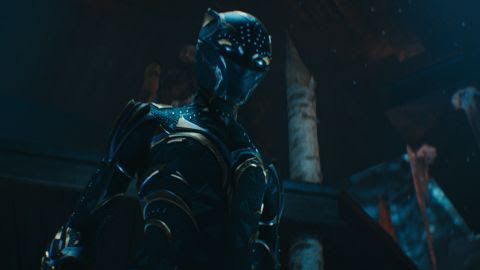
Plans for an early 2022 release was pushed towards the end of the year as Coogler and Cole would rewrite the entire story as it would be an exploration of grief with the focus on T’Challa’s younger sister Shuri taking on the mantle of Black Panther. It would also explore a new conflict for the Wakandans as they would learn they are not the only country to possess the fictional metal vibranium. It would also play into the events five years following the events of Avengers: Infinity War and Avengers: Endgame known as the Blip where other countries want vibranium for their own reasons with those in Wakanda becoming suspicious of their intentions. Coogler and Cole would create a story that also played into the ideas of colonialism not just in Africa but also have the film set in Mexico as it relates to a fictional race of underwater living beings in the Talokan led by a figure known as K’uk’ulkan who also possesses vibranium as their land is under threat from countries wanting vibranium.
With many of the ensemble cast and crew from the previous crew returning apart from cinematographer Rachel Morrison who was forging her own filmmaker career as she would be replaced by Autumn Durald Arkapaw who had been a recurring collaborator for filmmaker Gia Coppola. Added to the film’s ensemble is Michaela Cole as a rebellious Dora Milaje who would later become part of the Midnight Angels group with Okoye. In the roles of the Talokan, Tenoch Huerta Mejia would be cast as K’uk’ulkan aka Namor with Mabel Cadena and Alex Livinalli as other Talokan tribe warriors while Julia Louis-Dreyfus would reprise her role as Contessa Valentina Allegra de Fontaine who was becoming a recurring character in recent MCU projects. Also added to the production is Dominique Thorne as Riri Williams/Ironheart as she had originally auditioned to play Shuri years ago, but Coogler and casting director Sarah Halley Finn kept the audition as called her to play Williams. Shot at the Trilith Studios in Atlanta as well as locations in Puerto Rico, Boston, and small shots in Switzerland, Mexico, and Haiti.
Production began in June of 2021 as Coogler later admitted that it was difficult due to Boseman’s passing with several actors working closely together to honor Boseman. Adding to its difficulty was an injury to Letitia Wright during filming in Boston as she was hospitalized temporarily where she would recuperate in London. Another problem during shooting was the death of Dorothy Steel who was reprising her role as the Wakandan Merchant Tribe elder as the film would also be dedicated to her along with Boseman. Despite its many issues, production would go smoothly while Coogler and music composer Ludwig Goransson wanted to go further into the music in not just utilizing an array of music from Africa but also ancient Mexican and Mayan music for its score. Barbadian singer Rhianna would also contribute two original songs to the film during post-production in 2022.
Released on November 11, 2022, the film would be a major box office hit grossing more than $450 million in North America with an additional worldwide gross of more than $405 million with a total of more than $850 million against the film’s budget at around $200 million to $250 million. While it would not achieve the same box office as its predecessor as well as the same critical response from its predecessor. The film was still a major hit with Angela Bassett getting a lot of praise for her performance including a win at the Golden Globes for Best Supporting Actress. At the Academy Awards, the film would receive five Oscar nominations including Best Supporting Actress to Bassett as well as Best Hair/Makeup, Visual Effects, Original Song to Rhianna, Tems, Coogler, and Goransson, and a win for Best Costume design to Ruth E. Carter.
Following a break between projects where Coogler contributed a storyline to the third Creed film that would be directed by Michael B. Jordan, Coogler would develop his first original script since Fruitvale Station as it would be a different project from everything he had done. Notably as it would be period-horror film set in the American South during the Jim Crow era where twin brothers return to Clarksdale, Mississippi to open a juke-joint for the locals only to attract vampires through their music. The project would be created through Coogler’s production company Proximity Media that he developed with Michael B. Jordan as Jordan decided to star in the film as the film would also feature Coogler’s wife Zinzi in her first official credit as a producer. With Jordan playing dual roles as the twin siblings Smoke and Stack Moore, Coogler would gather many of his collaborators on board as an announcement was made in January 2024 where a bidding war between various studios with Warner Brothers winning the bid where Coogler made a deal in receiving first-dollar gross, final cut privileges, and ownership of the film twenty-five years after its release in exchange of distribution rights to the film.
It was considered a monumental deal by many in the industry to a filmmaker with only a few films to his credit yet Coogler’s success with Marvel and two other films that did well commercially were proof of this. During pre-production, Coogler and cinematographer Autumn Durald Arkapaw decided to have the film be shot in different film stocks and aspect ratios where the film would be shot on 65mm using a combination of IMAX 15-perf and Ultra Panavision 70 cameras as Coogler went to filmmaker Christopher Nolan for advice on shooting in 65-70mm as Nolan received a special thanks credit in the film. The production would be shot in and around New Orleans as production designer Hannah Beachler would create the place where Smoke and Stack would hold their juke-joint where Coogler also wanted to play into that period of 1930s American South. Coogler also emphasized mythology as it relates to the Choctaw tribe as it plays into the history of Mississippi where they originated from as they would make a brief appearance that would also play into the horror elements of the film. Reuniting with Francine Maisler who was one of the casting directors in Creed, Coogler would assemble an immense ensemble cast that would also include the previously announced Michael B. Jordan. Wunmi Moska, Delroy Lindo, Jayme Lawson, Omar Miller, Li Jun Li, Yao, Jack O’Connell, Lola Kirke, Saul Williams, Hailee Steinfeld, and a newcomer in Miles Caton would all officially join the film.
Production began in April 2024 for a three-month shoot where Coogler was given a $100 million budget for the film as part of the deal he made with Warner Brothers where he spent $67.6 million to shoot everything on location while hiring visual effects supervisor Michael Ralla and special effects supervisor Matt Kutcher in overseeing the visual effects. Since the film would also have actors singing and playing live in some scenes in the film, music composer Ludwig Goransson would help oversee things with his wife Serena producing the music as it emphasized on traditional blues and Irish folk music. Notably in a sequence in which Caton’s character Sammie plays the blues where it transcends time and space where mysticism and surrealism is present. The scene would have a mixture of music from the past to the music of the 21st Century where it adds to this element of mythology.
It would be a sequence that would attract the trio of vampires as there is an added twist in the film as it relates to the building that the Moore brothers bought from unaware that its landowner was affiliated with the Ku Klux Klan. Helping the Goranssons in wanting to capture an authenticity to the music is producer Lawrence “Boo” Mitchell who would help assemble various musicians in creating the music that included Brittany Howard, Raphael Saadiq, Bobby Rush, Christone “Kingfish” Ingram, and blues legend Buddy Guy who would make an appearance for one of the film’s post-credit scenes. Jerry Cantrell of Alice in Chains and Metallica drummer Lars Ulrich would also play part in the film’s score while Hailee Steinfeld would contribute an original song to the film.
The film premiered on April 3, 2025, in New York City before opening in theaters in the U.S. more than 2 weeks later. The film would become an immense commercial and critical success where as of late June 2025, the film made more than $276 million in North America with an additional $86 million worldwide grossing more than $360 million overall against its $100 million budget. The film would also gain a positive response with critics and filmgoers as well as those in the industry who lament over the lack of original ideas in American cinema.
Upcoming Projects
While Coogler has already announced that he would helm the third Black Panther with Denzel Washington playing a secret role in the film. Coogler has also taken part in developing projects with Marvel in the upcoming TV series Ironheart with Dominique Thorne reprising the role of the titular character/Riri Williams as well as the animated TV series Eyes of Wakanda. Coogler has also expressed interest in doing a film project relating to The X-Files tv series as he was a fan of the show while another project Coogler is developing with Michael B. Jordan is about the Atlanta Public Schools cheating scandal of the late 2000s.
With five feature films already made with all of them being successful and the upcoming return to one of the most popular film franchises that would feature one of American cinema’s legendary actors slated to appear. There is no question that Ryan Coogler is now an important figure in American cinema who makes films that do appeal to a wide audience as well as retaining a vision that is his own. Especially as he is working with the Hollywood system yet is still entrenched in his roots as an independent filmmaker. He is already becoming someone special as whatever project he will do next is going to be worth waiting for as long as he is given the time to create something that will blow audiences away. There are not a lot of filmmakers who made their first films in the 21st century that will get audiences excited for what they will do next but Ryan Coogler could be that filmmaker whose next film is definitely going to be an event as long as he continues to do what he does best.
Written and directed by Ryan Coogler, Sinners is the story of twin brothers living in the American South in the early 1930s as they return home where they deal with an evil force that threatens themselves and their diverse community. The film is a period-horror film set during the Great Depression as twin brothers cope with not just trying to create something new in their hometown but also dealing with mysterious forces that want to destroy them. Starring Michael B. Jordan, Hailee Steinfeld, Miles Caton, Wunmi Mosaku, Jayme Lawson, Omar Miller, Jack O’Connell, Lola Kirke, Li Jun Li, and Delroy Lindo. Sinners is a gripping and haunting film by Ryan Coogler.
Set in the span of 24 hours at Clarksdale, Mississippi in the fall of 1932, the film revolves around twin siblings who bought a mill to create a juke joint for the locals with the help of people they have known for years where the music their young cousin plays unknowingly attracts a group of mysterious individuals who comes to destroy all. It is a film that is not a conventional vampire film but rather an exploration of American folklore and the temptations of humanity through music during a dark period in American history in a world where African-Americans try to create something for themselves. Ryan Coogler’s screenplay has a unique narrative structure where it opens with a young man in Sammie (Miles Caton) arriving to a local church holding a broken guitar neck where his preacher father (Saul Williams) asks what happened. It then shifts to what happened a day earlier where Sammie’s twin cousins in Elijah “Smoke” Moore and Elias “Stack” Moore (Michael B. Jordan) have returned from Chicago with money they stole from gangsters to buy a mill from this racist landowner Hogwood (David Maldonado) who claims that the Ku Klux Klan are dead.
The film’s first act is about Smoke and Stack gathering people in Clarksdale for this juke joint party hoping it would bring money to a community that is largely African-American as well as a Chinese couple in Grace and Bo Chow (Li Jun Li and Yao, respectively) who are shopkeepers in the town. They also bring in local bluesman Delta Slim (Delroy Lindo) while Sammie meets a married woman in Pearline (Jayme Lawson) who would go to the joint. Stack meanwhile, bumps into a former flame in a white woman in Mary (Hailee Steinfeld) who is in town for her mother’s funeral as she harbors resentment for leaving him years ago. Smoke would reunite with his estranged wife Annie (Wunmi Mosaku) who is an occultist as Smoke harbors resentment towards her over the death of their infant child years ago as she would help cook for the joint. The film’s second act is about the party with Mary also attending and getting reacquainted with Stack, yet the party is briefly interrupted by a trio of mysterious visitors led by the Irish immigrant Remmick (Jack O’Connell). Notably as they are drawn by the blues music that Sammie plays as they would play traditional Irish folk music as things go wrong. Notably as it leads to a third act of terror and violence.
Coogler’s direction is entrancing for not just its depiction of the American South during the Jim Crow era and in the final days of Prohibition during the Great Depression. It is also in playing up the many myths and spiritual elements about the American South as it is shot on location in and around New Orleans, Louisiana. Coogler opens the film with images of American folklore as it relates to the American South, Africa, and the Mississippi Choctaw tribe as they are seen briefly as they are in pursuit of something they deem is evil. The film then shows Sammie driving a car as he is covered in blood and holding a broken guitar neck as it would be shown again towards the end as it sort of plays into a reflective narrative. Coogler’s usage of wide and medium shots do allow him to get a lot of depth of field into the locations of the American South with a lot of coverage of cotton fields and ponds that do have this air of richness at a time when there is a lot of disparity and turmoil. A lot of its vast look is because Coogler shoots the film on 65mm IMAX film stock which allows him to get more coverage of the locations and the settings for the overall presentation.
Coogler also uses close-ups and medium shots to play into characters interacting with one another as well as some inventive tracking shots such as a scene of Smoke at a small town to meet the Chows. The direction also has this element of surrealism where Sammie plays a song on the Dobro resonator acoustic guitar that Stack claims is from Charley Patton. It plays into the way music can transcend all sorts of things where it can reach into the past as well as the future. The usage of music whether it is the blues or traditional Irish folk music is a key proponent of the film where Coogler also play into the sense of mysticism and spirituality that the music conjures. With the aid of choreographer Aakomon Jones, Coogler also play in the way music can bring together as it also has this sense of dread and terror that would play into the film’s third act where it does become a pure horror film. It is also where loss comes into play where many of the people who have become vampires are those filled with loss as well as resentment.
The third act is also filled with elements of surrealism as well as revelations about the mill that Smoke and Stack purchased. Notably as it forces people at the joint to fight for their own survival with Sammie at the center due to the music he played as well as being a survivor of what had happened. Coogler uses that film’s opening scene to also be an ending of sorts that would also include a mid-credit scene as it relates to Sammie and everything he endured back in his life. A lot of which plays into the legend of American blues as Clarksdale is a legendary area of where American blues came from dating back to Robert Johnson and the legend that he sold his soul to the devil. Coogler does a lot to play into these myths as it relates to the blues as he creates a film that does act like a blues song. Overall, Coogler crafts an unsettling yet ravishing film about twin brothers trying to create a juke joint in their hometown unaware of the evil forces they are inviting.
Cinematographer Autumn Durald Arkapaw does incredible work with the film’s cinematography where the usage of the 65mm film stock allows the film to have beauty in the nighttime interiors for the scenes at the juke joint with the usage of candles and available light as well as the gorgeous and colorful imagery for some of the daytime exteriors as it is a highlight of the film. Editor Michael P. Shawver does excellent work with the editing with its usage of stylish montages for some early bits in the film as well as some rhythmic cut to play into the suspense and horror. Production designer Hannah Beachler, with set decorator Monique Champagne and supervising art director Jesse Rosenthal, does brilliant work with the set design of the town of Clarksdale with its shops as well as the mill where Smoke and Stack have their juke joint as it is the centerpiece of the film. Costume designer Ruth E. Carter does fantastic work with the costumes in the posh-like dresses that Mary and Pearline wear in the juke joint as well as the expensive suits Smoke and Stack wear as well as the ragged look of some of the characters.
Special effects makeup artists Kelsey Berk, Bailey Domke, Lauren Spencer, and Kevin Wasner, along with hair designer Shunika Terry Jennings, do amazing work with the look of the characters in their vampire state with the colorful eyes as well as the hairstyle that many of the characters had at that time. Special effects supervisor Matt Kutcher and visual effects supervisor Michael Ralla do marvelous work with the visual effects as it play into the surreal elements of the film with the elements of mysticism and for some moments of set-dressing for the exterior scenes. Sound designer Steve Boeddeker does superb work with the sound as the layer of sound of what is heard on location as well as the way the music is presented when it is performed live as there are a lot of things that are presented as it is a highlight of the film.
The film’s music by Ludwig Goransson is phenomenal for its hypnotic and unsettling score that is a mixture of ambient, blues, and folk music. With additional production by Goransson’s wife Serena, the music is this collage of styles that play into elements of traditional music with elements of modern music including metal, hip-hop, and electronic music with contributions from musicians like Brittany Howard of Alabama Shakes, Raphael Saadiq, Lars Ulrich of Metallica, Jerry Cantrell of Alice in Chains, Bobby Rush, and Buddy Guy. The soundtrack also features elements of traditional blues and Irish folk songs along with original songs performed on set from Miles Caton, Jayme Lawson, Delroy Lindo, Jack O’Connell, Lola Kirke, Peter Dreimanis, and other recorded music from Hailee Steinfeld and Rod Wave. The soundtrack and score is a tremendous highlight of the film as it is a major proponent in the film’s story.
The casting by Francine Maisler is great as it feature some notable small roles and appearances from Helena Hu as the Chow’s daughter Lisa, Saul Williams as Sammie’s preacher father Jedidiah, Mark L. Patrick as a Choctaw horseback scout, David Maldonado as a landowner in Hogwood who sells the mill and its property to Smoke and Stack, Lola Kirke and Peter Dreimanis as married KKK members in Joan and Bert who later join Remmick in wreaking havoc, Yao as Grace’s shopkeeper husband Bo Chow, and Omar Benson Miller as a longtime friend of Smoke and Stack in Cornbread who works at the juke joint as a bouncer. Li Jun Li is fantastic as Grace Chow as a Chinese shopkeeper who creates the sign for the juke joint as well as serving alcohol as she also copes with the chaos that is happening later in the film as well as threats towards her daughter. Jayme Lawson is excellent as Pearline as a young married woman Sammie falls for as she would also prove herself to be a solid blues singer while also dealing with the chaos happening later in the film including being hesitant to eat garlic.
Jack O’Connell is brilliant as the Irish immigrant Remmick who arrives mysteriously as is later revealed to be a vampire as he is fascinated by the music that Sammie plays as he would channel his own traditional Irish folk music to seduce those who follow him. Delroy Lindo is incredible as Delta Slim as a blues musician who knows a lot about music as he is also someone who loves to drink where he is elder statesman of sorts who is aware of Sammie’s talents while also delivering some of the funniest lines in the film. Wunmi Mosaku is amazing as Smoke’s estranged wife who also works in the occult as she believes in superstitions and such while harbors resentment towards Smoke who left Clarksdale after the death of their daughter while also being someone who knows about how to deal with vampires. Hailee Steinfeld is phenomenal as Mary as a former flame of Stack who harbors resentment for being left behind where she hopes to rekindle their relationship while also dealing with the evil outside of the juke joint.
Miles Caton is tremendous in his film debut as Smoke and Stack’s cousin Sammie “Preacher Boy” Moore as a preacher’s son who is also a gifted musician that can play the blues in a way that is entrancing. Yet, he is also someone that is unaware of how gifted he is in how it would attract a form of evil that would haunt him where Caton brings a naturalism to a young man that would encounter fear of the worst kind as it is a major discovery in the film. Finally, there’s Michael B. Jordan in a spectacular dual-performance as the twin siblings Elijah “Smoke” Moore and Elias “Stack” Moore. Jordan’s performance as these twins has him bring different subtleties to two different characters with Smoke being the more serious and somber of the twins while Stack is a livelier person than Smoke as there are a lot of nuances that Jordan brings in the two performances. Even as things would intensify where Jordan adds elements of fear and terror in the roles to add up to the suspense and horror as it is a career-defining performance for Jordan.
Sinners is an outstanding film by Ryan Coogler. Featuring great performances from its ensemble cast, a gripping story of loss and fear in the American South, a balance of different genres, intoxicating visuals, an immersive sound design, and a grand yet unsettling music score and soundtrack. This is a film that does not define itself in any genre while also playing into the power of music as it transcends all sorts of things including past, present, and future in all its beauty and ugliness. In the end, Sinners is a magnificent film by Ryan Coogler.
Based on the Marvel Comic series by Stan Lee and Jack Kirby, Black Panther: Wakanda Forever is the story of Wakandan leaders trying to move forward following the death of King T’Challa as they also deal with new threats that include an undersea nation. Directed by Ryan Coogler and screenplay by Coogler and Joe Robert Cole from a story by Coogler, the film is the sequel to the 2018 film that explore various people dealing with the aftermath of the Blip but also the unexpected death of their king as those close to T’Challa deal with the loss but also how to move forward as they deal with new threats as well as gain new allies. Starring Letitia Wright, Lupita Nyong’o, Danai Gurira, Winston Duke, Dominique Thorne, Florence Kasumba, Micaela Cole, Martin Freeman, with Angela Bassett as Queen Mother Ramonda, and Tenoch Huerta Mejia as Namor. Black Panther: Wakanda Forever is an enthralling and rapturous film from Ryan Coogler.
Set one year after the unexpected death of King T’Challa of Wakanda aka the Black Panther, the film follows those close to T’Challa trying to move forward as Queen Mother Ramonda assumes the throne as she and the country are aware of other countries wanting to have their vibranium yet is faced with a new threat in an underwater nation lead by a warrior named Namor. It is a film that isn’t just an exploration of grief and legacy but also a young woman coming to terms with loss as she discovers this new threat and why they’re angry at Wakanda as things eventually go into chaos with the country having lost its leader and great protector. The film’s screenplay by Ryan Coogler and Joe Robert Cole is really about the journey that T’Challa’s sister Shuri (Letitia Wright) endures as she is wracked with guilt in not being able to save her brother as she spends a lot of time in the lab and trying to figure out things as a way to cope. Yet, she would be among the first to encounter Namor with her mother as well as other things that have put Wakanda in danger with other countries including the U.S.
The script doesn’t just play into Wakanda’s newfound vulnerability following T’Challa’s death and his own plans to open the doors for the country from its isolationist status. It also show why the country’s vulnerability also leaves this underwater nation known as Talokan becoming just as vulnerable due to the creation of a machine that detects vibranium. After attacking a base in which the Wakandans are accused of, Shuri and the Dora Milaje leader Okoye (Danai Gurira) travel to Boston to find the young scientist that created the machine in Riri Williams (Dominique Thorne) who had no clue that the CIA had taken her creation as she helps them until they’re targeted by the FBI and later the Talokan in which Shuri goes to the Talokan home where she meets Namor and learns about his culture and where he and his people are from as well as his own issues with the people on the surface dating back to the 16th Century when he was a child and saw the horrors of humanity and how they saw him as it also play into Wakanda’s own disdain towards colonialism. Yet, things become complicated as it also has these big questions about imperialism where the script has a scene where Queen Ramonda is at Geneva talking to the United Nations about the reasons why Wakanda refuses to share their vibranium because of politics and how it can be used in the wrong hands. Even as the Talokan has vibranium in their world that has allow them to thrive without any threats until recently as it raises more tension with them and Wakanda.
It’s not just a lot of the thematic elements that Coogler and Cole are exploring with the script but also in the characters with Shuri being the one with a major arc while Okoye, Queen Ramonda, T’Challa’s former lover Nakia (Lupita Nyong’o), and the Jabari mountain tribe leader M’Baku (Winston Duke) also go through developments as they encounter an ever-changing world with Nakia living in Haiti during the Blip while M’Baku becomes concerned for Shuri’s own issues following his own encounter with Namor and the Talokan. Okoye whose duty as the Dora Milaje leader would also endure her own arc following a fight with a Talokan general that didn’t go well but also be stripped of the identity that she has only known forcing her to take on a bigger role for its third act.
Coogler’s direction is vast in terms of not just the different locations the film is set as a lot of it is shot at the Pinewood Studios Atlanta in Duluth, GA as well as locations in Boston and Puerto Rico yet the film is set in many places including Haiti, Mexico, and Switzerland. For a film with grand set pieces on the surface and underwater, it doesn’t open with something big but rather a scene in Shuri’s lab as she and other scientists are scrambling for a solution until Queen Ramonda comes in and tells Shuri that her brother has died despite a small chance that Shuri took to create a cure. It would then be followed by a funeral ceremony that is just beautiful in its presentation as well as the scope of this ceremony with its usage of close-ups, medium shots, and wide shots in the Wakandan capital city streets where T’Challa’s casket is at the center of this set piece. The usage of the different locations including the scenes at the Talokan city underwater are among some of the finest set pieces created with unique wide and medium shots as they were shot in studio soundstages in actual underwater.
While the film has serious thematic elements as well as intense action set pieces that include some unique fight scenes that are wonderfully choreographed by Micah Karns that include Okoye’s fight on the bridge against a few Talokan warriors including Attuma (Alex Livinalli). There are a few comical moments such as Shuri and Okoye’s meet-up with CIA agent Everett K. Ross (Martin Freeman) and their first meeting with Williams who would later go to Wakanda to create her own suit similar to the Ironman suit as she would become Ironheart. Coogler also play up into a lot of the suspenseful moments in how the Talokan would introduce themselves as they would attack a couple of scientists underwater while they search for vibranium as would the dark shadow of Namor would appear in the film’s first act and his first meeting with Ramonda and Shuri during a moment between the two women as it relates to grief. Coogler also play up into Shuri’s own reliance on technology and how it would force her to look inward into her mother’s idea of faith as it is something that is key to coping with grief as it is something Namor had dealt with as it relates to his own mother (Maria Mercedes Coroy). Since this is a film set in a global scale, many different languages are used in the film in not just English, Spanish, French, and various African dialects but also Mayan as it is a language that the Talokan use to communicate.
The film’s third act is definitely the most intense not just in terms of its climax but also in terms of its emotion as it relates to Shuri confronting her own grief and guilt but also take on a role that is bigger than herself. Yet, she is also troubled by the fact that she is still a young woman as Nakia, Okoye, and M’Baku are concerned knowing that their backs are against the wall with the rest of the world and the Talokans. The film’s climax is grand and intense as it forces everyone to think about their roles in the world but also lessons learned in the aftermath. Even as it all play into grief and having to move on but also make decisions for a country whose back is against the wall by other countries who are more likely to do more damage than good. Overall, Coogler crafts a majestic and visceral film about a royal family and their country in the middle of Africa dealing with new threats as well as the loss of their great protector.
Cinematographer Autumn Durald Arkapaw does brilliant work with the film’s cinematography with its usage of low-key lighting for the underwater scenes including the shots of the Talokan city as well as a lot of naturalistic photography for the scenes in the day as well as exterior scenes at night. Editors Michael P. Shawver, Kelley Dixon, and Jennifer Lame do excellent work with the editing as it has some unique rhythmic cuts and some stylish transitions as it is a highlight of the film. Production designer Hannah Beachler, with set decorator Lisa K. Sessions and supervising art director Brad Ricker does amazing work with the set design from the look of Shuri’s lab, M’Baku’s palace, and the home of the Talokan with a lot of attention to detail that is inspired by Mayan culture. Costume designer Ruth E. Carter does phenomenal work with the costumes from the funeral garb that Shuri and Ramonda wear for T’Challa’s funeral as well as some of the new designs that Shuri has created for Okoye and the look of the Talokan in their Mayan-inspired clothing.
Special makeup effects artists Erin Keith, Tonilee Marrone, Greg McDougall, and Mark James Ross do fantastic work with the look of the Talokan with their blue-skinned look as well as some of the makeup the Wakandans wear for battle. Special effects supervisor Daniel Sudick, along with visual effects supervisors Geoffrey Bauman and Reetu Aggarwal, does terrific work with the design of Riri’s Ironheart suit in its final form as well as some of the design of Talokan as well as the force fields from Wakanda. Sound editors Steve Boeddeker and Benjamin A. Burtt, along with sound designer David C. Hughes, do superb work with the sound in the way some of the Wakandan tech are used as well as some of Riri’s designs as well as scenes underwater at the Talokan as it is a highlight of the film.
The film’s music by Ludwig Gorransson is incredible for its bombastic score that mixes orchestral music with African percussions and woodwinds as well as old Mayan woodwinds and percussions as it is a highlight of the film while music supervisor Dave Jordan help cultivate a music soundtrack that mixes elements of hip-hop, electronic music, and pop in different arrays of style that also include African and Mayan-elements in the music features contributions from Burna Boy, Tems covering Bob Marley’s No Woman, No Cry, Snow tha Product featuring E-40, Stormzy, Tobe Nwigwe and Fat Nwigwe, Fireboy DML, OG Day V and Future, Aleman with Rema, Bloody Civilian, and two original songs co-written and performed by Rihanna.
The casting by Sarah Halley Finn is marvelous as it feature some notable small roles and appearances as Lake Bell as a scientist trying to find vibranium only to have a bad encounter with the Talokan, Trevor Noah as the voice of Shuri’s A.I. Griot, Richard Schiff as the U.S. Secretary of State who wants access to Wakanda’s vibranium for his government, Maria Mercedes Coroy as Namor’s mother in flashbacks, Mabel Cadena as Namor’s cousin Namora who is also a warrior, Alex Livinalli as a Talokan general in Attuma whom Okoye would battle against, Connie Chiume as a royal elder stateswoman who used to be the mining tribe elder, Danny Sapani as the border tribe elder, Isaach de Bankole as the river tribe elder, and Dorothy Steel in her final film performance as the merchant tribe elder. Florence Kasumba is superb as Ayo as Okoye’s second-in-command in the Dora Milaje as she would later become its new general. Julia Louis-Dreyfus is fantastic as Valentina Allegra de Fontaine as the new director of the CIA who helps her ex-husband in Everett K. Ross in investigating what is going with Wakanda while having motives of her own.
Micaela Cole is excellent as Akeena as a Dora Milaje warrior who is bit of a rebel in terms of the weapons she likes as she would also play a key role in the third act as it relates to a new role that Okoye would also play. Martin Freeman is terrific as Everett K. Ross as a CIA agent who helps Okoye and Shuri in finding Riri Williams while trying to keep them away from the authorities. Dominique Thorne is brilliant as Riri Williams as a MIT student who has created a machine that would help find vibranium that she didn’t realize would be used by the government as she becomes a target for the Talokans where she joins the Wakandans in dealing with them while creating a suit of her own that would become Ironheart. Winston Duke is amazing as M’Baku as the leader of the Jabari tribe who lives in the mountain as he would have some comical lines in how he would deal with the Talokan while later being aware of how powerful they are as he tries to counsel Shuri about the dangers of war. Danai Gurira is incredible as Okoye as the leader of the Dora Milaje who is devoted to her role until her encounter with the Talokan in Boston has her shaken and unsure of what to do next forcing her to take on a new role. Lupita Nyong’o is remarkable as Nakia as T’Challa’s former lover who had given up her life as a spy for a quieter life in Haiti as she is asked by Ramonda to find Shuri while being aware of the threat they’re facing as well as becoming concerned for Shuri’s emotional state.
Tenoch Huerta Mejia is phenomenal as Namor as the leader of the Talokan whom is referred to as the serpent god of K’uk’ulkan who is trying to protect his people from the surface world while also seeing Wakanda as a threat where he tries to be reasonable with Shuri only for things to go wrong prompting him to fight as Mejia’s performance is full of complexities but is also someone who makes his character an anti-hero rather than a typical villain. Angela Bassett is outstanding as Queen Ramonda as the mother of Shuri and the late T’Challa who watches over the throne as she deals with the threats of other countries as well as mourning her son where she also tries to help Shuri as well as having her own encounters with Namor as it is a performance for the ages from Bassett. Finally, there’s Letitia Wright in a sensational performance as Shuri as T’Challa’s younger sister who has a hard time coping with her loss as she is also trying to figure out what Namor wants where it is a whirlwind of a performance where Wright captures the anguish and confusion of a young woman who is still lost while also unsure of where to go as she ultimately takes on a role that her people need to play.
Black Panther: Wakanda Forever is a tremendous film from Ryan Coogler. Featuring a great ensemble cast, ravishing visuals, intricate set and costume designs, an evocative music score and soundtrack, and its exploration of loss, identity, and grief on a world stage. It is a film that isn’t just this intense yet exhilarating action-blockbuster but also a film that tackles some serious political ideas as well as being this exploration of loss as the film is also a fitting tribute to the original Black Panther in Chadwick Boseman. In the end, Black Panther: Wakanda Forever is a spectacular film from Ryan Coogler.
Based on the comic series by Jack Kirby and Stan Lee, Black Panther is the story of a king of an isolated yet thriving African country who finds himself dealing with his new role as well as an enemy who wants to claim his right to the throne. Directed by Ryan Coogler and screenplay by Coogler and Joe Robert Cole, the film is an exploration of a man trying to protect his country while dealing with some of the drawbacks of his country’s isolationist approach from outsiders as Chadwick Boseman plays the titular role of the hero and the King of Wakanda in T’Challa. Also starring Lupita Nyong’o, Michael B. Jordan, Danai Gurira, Daniel Kaluuya, Forest Whitaker, Martin Freeman, Leticia Wright, Winston Duke, Andy Serkis, Isaach de Bankole, and Angela Bassett as the Queen Mother of Wakanda in Ramonda. Black Panther is a riveting and exhilarating film from Ryan Coogler.
Following the events in which King T’Challa finds the true killer of his father as well as deal with conflict between Captain America and Iron Man, the new king of Wakanda returns home where he doesn’t just deal with his new role but also the threat of new enemies who challenge T’Challa’s claim to the throne as well as what the country possesses. It’s a film that doesn’t just explore a man dealing with the weight of what he has to do to protect his country and its people but also deal with the sins of the past that his predecessors had made including his own father T’Chaka (John Kani) as it relates to the country’s isolationist persona. The film’s screenplay by Ryan Coogler and Joe Robert Cole, with un-credited contributions from Donald and Stephen Glover, doesn’t just explore some of the fallacies of being an isolationist country that prefers to keep its resource known as vibranium to itself rather than share it with others in fear they would use the resource for devious reasons.
It’s this sense of isolation that would prove to be futile as the film has a prologue in which the young T’Chaka (Atandwa Kani) confronts a man (Sterling K. Brown) who helped the notorious arms dealer Ulysses Klaue (Andy Serkis) in obtaining vibranium. That man would have a son named Erik “Killmonger” Stevens (Michael B. Jordan) who would later create havoc with Klaue’s help as he has some legitimate reasons for wanting to stake his claim to Wakanda’s throne. For T’Challa, the news about Killmonger as well as his failed attempt to capture Klaue has him turning to his father’s longtime advisor Zuri (Forest Whitaker) about some truths of Killmonger’s identity as well as what happened back in 1992 as it relates to Killmonger’s father. Killmonger’s motivations for wanting to claim his right to the throne definitely has a lot about not just Africa’s role in the world but also the need to rise up against those that had repressed the continent and its people where he sees Wakanda as a country that should lead this revolt. For T’Challa, he understands Killmonger’s reasons but knows that it can go wrong where he finds himself having to deal with Killmonger.
It’s not just Zuri that T’Challa turns to for advice and wisdom but also his mother Ramonda and other tribe elders who express concerns for Killmonger’s claim and Klaue’s black-market dealings. Still, T’Challa has others to count on such as his younger sister Shuri (Letitia Wright) who is the country’s tech genius, his former lover/spy Nakia (Lupita Nyong’o), and Okoye (Danai Gurira) who is the leader of the king’s personal bodyguard regiment known as the Dora Milaje who all understand T’Challa’s struggle to make the right decisions. There are also tribe leaders such as longtime friend W’Kabi (Daniel Kaluuya) who wants the country to thrive yet understands that Killmonger has some legitimate views about Wakanda. Killmonger’s threat to the throne would also force T’Challa to turn to a tribe leader in M’Baku (Winston Duke) whose tribe isn’t part of the council due to ideological disagreements as he would see what Killmonger is trying to do with Wakanda.
Coogler’s direction is sprawling not just in its action set pieces but also for the way he would create a country that is unique in the middle of Africa where it disguises itself as a third-world nation but is really a first-class country that has technology that is far more advanced than the rest of the world. Shot mainly at EUE/Screen Gems studio in Atlanta with a few sequences shot in Busan, South Korea and Oakland, California, the film does play into this idea an African country that never experienced being colonized or endure ideas of racism like other countries in Africa. The country of Wakanda is a character in the film where it has this mixture of being pure in its fields, mountains, and rivers while the cities are filled with these immense technological advances but that are also colorful and with its own identity. It’s a country that Coogler created where it feels like it could be real and it also displays elements of tradition and culture that has a lot of respect of what Africa is and what it could be if they weren’t shackled by colonialism and centuries of horrible atrocities and oppression.
Coogler’s direction also has some stylistic flair in its visuals as well as in some of the action scenes where he would create some tracking crane shots to play into the scope of the action as well as some of the dramatic moments in Wakanda. The usage of wide and medium shots do capture that beauty of Wakanda with a great depth of field as Coogler would see what goes inside of the country as it relates to its mines as well as the council meetings where tribe leaders, tribe elders, and others are treated equally in a shot with T’Challa part of this circle. Especially the women as the Dora Milaje is a task force that takes care of business where Coogler knows how to present them with this air of importance as well as knowing they’re a regiment not to be fucked with. The stakes do become more important in the third act where T’Challa has to turn to those who are loyal to him as well as unexpected allies that include CIA agent Everett K. Ross (Martin Freeman) who would see what Wakanda really is as well as why the country has isolated itself leading to this climax between T’Challa and Killmonger. A showdown that isn’t just about Wakanda’s future but also a chance for the former to prove his worth as the country’s true king. Overall, Coogler crafts a gripping yet thrilling film about a king defending his throne and people from a mysterious outsider.
Cinematographer Rachel Morrison does brilliant work with the film’s cinematography from the usage of colors and lighting cues for many of the exterior settings in South Korea and Wakanda as well as some low-key yet gorgeous looks for some of the interiors including the vibranium mines and Wakandan herbs. Editor Michael P. Shawver and Claudia Castello do excellent work with the editing as it does have elements of style without going too much into fast-cutting editing styles where it allows the audience to see what is going on as well as provide rhythmic cuts for some of the film’s humorous moments. Production designer Hannah Beachler, with set decorator Jay Hart and supervising art director Alan Hook, does incredible work with the look of Wakanda in the buildings as well as the palace hall and Shuri’s lab to showcase a world that is unique as it is a highlight of the film.
Costume designer Ruth E. Carter does amazing work with the costumes from the look of the Black Panther costumes to the colorful robes and uniforms that the characters wear as it is based on a lot of African clothing as it is another of the film’s highlights. Makeup designer Joel Harlow does fantastic work with the some of the makeup that the characters would sport including some scars in the bodies and prosthetics that one of the tribe elders would have. Special effects supervisor Daniel Sudick and visual effects supervisor Geoffrey Baumann do terrific work with the visual effects in the way they present some of the exteriors of Wakanda and its city as well as the vibranium mines and other things including Shuri’s technology as it is another highlight of the film.
Sound designer Steve Boeddeker, along with co-sound editor Benjamin A. Burtt, does superb work with the sound as it help play into some unique sound effects as well as textures in the sound to play into the locations and weapons that are used. The film’s music by Ludwig Goransson is phenomenal for its bombastic mixture of orchestral music with elements of traditional African music in its mixture of string and vocal music as it play into the world that is Africa while music supervisor Dave Jordan would provide a mixture of traditional African music and some hip-hop with original songs by Kendrick Lamar who would help cultivate a soundtrack that features contributions from Vince Staples, SZA, 2 Chainz, Schoolboy Q, Saudi, Khalid, Swae Lee, Yugen Blakrok, Jorja Smith, Future, the Weekend, and several others as it’s a highlight of the film.
The casting by Sarah Finn is tremendous as it feature some notable small roles from John Kani as T’Challa’s father T’Chaka, Atandwa Kani as the young T’Chaka, Denzel Whitaker as the young Zuri, the quartet of Danny Sapani, Connie Chiume, Dorothy Steel, and Isaach de Bankole as tribe elders, Seth Carr as the boy version of Killmonger, Ashton Tyler as the young T’Challa, the obligatory cameo from comic co-creator Stan Lee, Florence Kasumba as Okoye’s right-hand woman Ayo who is second-in-command of the Dora Milaje, and Sterling K. Brown in a small yet pivotal role as a Wakdadan agent who would play a major role into the drama that would occur many years later. Andy Serkis is terrific as Ulysses Klaue as a black-market arms dealer that is trying to get a hold of vibranium to sell as it is a comical yet fun performance from Serkis. Forest Whitaker is superb as Zuri as a royal advisor who was a friend of T’Chaka as he would guide T’Challa about his role as well as carry secrets that he knew would haunt him. Angela Bassett is fantastic as Queen mother Ramonda as T’Challa and Shuri’s mother who would help T’Challa with his role as well as deal with revelations about Killmonger.
Daniel Kaluuya is excellent as W’Kabi as a tribe leader who leads the country’s border defense team that is a friend of T’Challa who finds himself intrigued by what Killmonger is offering while Winston Duke is brilliant as M’Baku as a tribe leader of an isolated mountain clan who has issues with T’Challa but realizes the seriousness of Killmonger’s threats. Martin Freeman is amazing as Everett K. Ross as a CIA agent trying to capture Klaue in South Korea only to be injured by an attack where he’s taken to Wakanda as he learns about the country and helps T’Challa deal with Killmonger. Danai Gurira is incredible as Okoye as the leader of the Dora Milaje special forces unit whose job is to protect the king as she is also a traditionalist of sorts as it relates to Wakanda as she also sees Killmonger as a serious threat to everything she stands for. Letitia Wright is marvelous as Shuri as T’Challa’s teenage sister who is considered to be the smartest person in the world as she creates much of the country’s technology as well as provide gadgets for her brother and is also willing to defend her brother’s throne by any means necessary.
Lupita Nyong’o is remarkable as Nakia as a former lover of T’Challa as a spy for the country who works to liberate people from other countries as she helps T’Challa in his new role as well as the threat of Killmonger whom she sees as a dangerous extreme. Michael B. Jordan is phenomenal as Erik “Killmonger” Stevens as a mercenary who has legitimate claims to the throne of Wakanda as he’s an unconventional villain that has not just political and social motivations for his claim to the throne but also personal as he displays a sense of charisma that makes him a top-tier antagonist that has some compelling arguments about Wakanda’s place in the world. Finally, there’s Chadwick Boseman in a sensational performance as the titular character/King T’Challa of Wakanda as a man who has just become king as he deals with his new role and the new threats that are emerging where it’s a performance that has humor but also a gracefulness and the need to display humility as a man that is trying to create his own legacy but also play a role that carries a lot of weight as it’s a career-defining performance for Boseman.
Black Panther is a tremendous film from Ryan Coogler. Featuring an incredible ensemble cast, gorgeous visuals, top-notch art direction, stylish costumes, thrilling visual effects, a killer music score and soundtrack, and themes that are willing to engage audiences about political and social themes around the world. It’s a film that isn’t just an entertaining and riveting superhero film but it offers so much more as it allows audience ideas of what an African country could be but also what it could for the world and the people with a simple message that universal and relevant. In the end, Black Panther is a magnificent film from Ryan Coogler.
Ryan Coogler Films: Fruitvale Station - Creed (2015 film) - Sinners (2025 film) - The Auteurs #74: Ryan Coogler Marvel Cinematic Universe: Infinity Saga: Phase One: Iron Man - The Incredible Hulk - Iron Man 2 - Thor - Captain America: The First Avenger - The Avengers (2012 film) Phase Two: Iron Man 3 - Thor: The Dark World - Captain America: The Winter Soldier - Guardians of the Galaxy - The Avengers: Age of Ultron - Ant-Man Phase Three: Captain America: Civil War - Doctor Strange - Guardians of the Galaxy Vol. 2 - Spider-Man: Homecoming - Thor: Ragnarok - Avengers: Infinity War - Ant-Man & the Wasp - Captain Marvel - Avengers: Endgame - Captain Marvel - Spider-Man: Far from Home