Showing posts with label liam cunningham. Show all posts

Friday, September 29, 2017

The Whistleblower


Directed by Larysa Kondracki and screenplay by Kondracki and Eilis Kirwan, The Whistleblower is the story of a United Nations peacekeeper who makes a chilling discovery as it relates to sex trafficking forcing her to confront the United Nations and eventually tell her story publicly. The film is based on a true story about Nebraskan police officer Kathryn Bolkovac who went to Bosnia and Herzegovina in 1999 originally to work for the UN’s peacekeeping work as her discovery would raise concerns over what is happening in the war-torn country as Bolkovac is played by Rachel Weisz. Also starring Monica Bellucci, David Strathairn, Nikolaj Lie Kaas, Benedict Cumberbatch, Liam Cunningham, Anna Anissimova, and Vanessa Redgrave. The Whistleblower is a terrifying yet gripping film from Larysa Kondracki.

Set in 1999 in the aftermath of the war in the Balkans at Bosnia and Herzegovina, a Nebraskan police officer in Kathryn Bolkovac signs up to join the peacekeeping mission for the United Nations in the hope of making some serious money to be near her daughter who is living with her father and his new family. When she is given a new assignment relating to the department of gender affairs, she would make a chilling discovery as it relates to sex trafficking that include those working for the United Nations. The film’s screenplay by Larysa Kondracki and Eilis Kirwan opens in Kiev, Ukraine where two young women make plans to make money and travel the world unaware that they’ve been sold to Bosnia and Herzegovina for prostitution as it then cuts to Bolkovac working in Lincoln, Nebraska as a cop awaiting a transfer to be near her daughter.

In taking this job for the United Nations to help out in post-war Bosnia and Herzegovina for financial reasons, Bolkovac would get the attention of the revered Madeleine Rees (Vanessa Redgrave), who is the head of the Human Rights Commission for the United Nations, after Bolkovac aided a Muslim woman over domestic violence charges and have something done about it. Bolkovac would see the job as a major opportunity until she participates in a raid at some nightclub where she makes a discovery that has her questioning what is happening as she sees men who work as part of the UN’s police force participating in these lewd events as she takes pictures and passports as evidence. She would confront those who work in that force but also have a realization of how big things are when she talks to women who had been taken from their homes for sex trafficking as well as try to help a couple of young prostitutes including a young Ukrainian girl in Raya (Roxana Condurache).

Yet, there are complications when there are those including local Bosnian police forces that want to keep it quiet prompting Bolkovac to turn to Rees for help who brings in internal affairs specialist Peter Ward (David Strathairn) for help. Even a human rights organization executive in Laura Leviani (Monica Bellucci) tries to help by talking directly to Raya’s mother despite the corporate pressures to not discuss what had been found. Still, it urges Bolkovac to find out more as the few allies she has do whatever they can to help her but there is so many obstacles for Bolkovac that would she would have to face all the way to top official at the United Nations.

Kondracki’s direction is very straightforward in terms of the compositions that she creates while much of the film is shot mainly near Bucharest, Romania as Bosnia and Herzegovina with some interior scenes of the UN buildings shot in Toronto. While there are some wide shots of the locations, Kondracki’s direction is mainly intimate to play into the suspense and drama while displaying an air of realism into the subject matter. Most notably a scene in which Raya has been captured and raped in front of other girls to see what would happen to her if she told anyone what they’re doing. It’s among one of the most horrifying scenes in the film as much of Kondracki’s direction emphasize on hand-held cameras that include a chase scene involving Bolkovac running after a young prostitute who had been taken and was found near the Serbian border.

While there is a lot of moments of suspense with some action, much of Kondracki’s direction emphasizes on the dramatic stakes of what Bolkovac wants to do as the drama would intensify once she is dealing with various officials in the United Nations as well as private contractors working with the government for their own interest. Especially when she’s asked to take a leave which she knew would only cause more problems prompting her to take action and gather whatever evidence she has that could expose everything. Even if it means having to lose her job and never see her daughter again as she is aware of what is at stake and what to do to make sure that young women wouldn’t have to be taken for sex trafficking ever again. Overall, Kondracki creates a gritty yet evocative film about a United Nations peacekeeper who discovers the practice of sex trafficking in post-war Bosnia and Herzegovina.

Cinematographer Kieran McGuigan does excellent work with the film’s cinematography to capture some of the dark yet colorful look of some of the interior scenes set at night in the clubs and sanctuary for some of the women who are hiding from criminals. Editor Julian Clarke does brilliant work with the editing in creating some unique rhythmic cuts to play into the suspense and some of the action while maintaining something straightforward for the dramatic moments in the film. Production designer Caroline Foellmer, with set decorator Andreea Popa and art director Vlad Vieru, does fantastic work with the look of the interior of the UN offices as well as the look of the nightclub where the young women are forced to work at.

Costume designer Gersha Phillips does nice work with the costumes as it is mainly straightforward with the exception of the skimpy clothing the young girls are forced to wear. Sound editors Mark Gingras and John Laing does superb work with the sound with the way some of array of sounds in various locations are presented as well as some of the quieter moments in the film. The film’s music by Mychael Dyanna music is terrific for its usage of low-key orchestral music to play into the drama and suspense while music supervisor David Hayman provide a mixture of traditional Eastern European music with some contemporary music of the late 90s.

The casting by Sara Jay and Jenny Lewis is great as it feature some notable small roles from David Hewlett and William Hope as a couple of UN peacekeeping officers involved in the sex trafficking, Stuart Graham as a top UN official who tries to dismiss Bolkovac from her investigation, Benedict Cumberbatch as a UN security officer that befriends Bolkovac, Paula Schramm as a young Ukrainian woman in Luba who would convince Raya to travel outside of the Ukraine only to realize what she’s done, Rayisa Kondracki as a young prostitute in Ikra who wanted to testify only to be taken and later saved by Bolkovac, Rosabell Laurenti Sellers as Bolkovac’s daughter Erin, Alexandru Potocean as a corrupt Bosnian officer, and Liam Cunningham in a superb performance as the head of the private security company Bill Haynes who wants to cover up all of these reports on sex trafficking.

Monica Bellucci is terrific as Laura Leviani as a human rights organization executive trying to help Bolkovac as well as Raya’s mother despite the corporate pressures from her superiors to not be involved. Roxana Condurache is excellent as Raya as a young woman who is convinced by a friend to travel only to endure abuse of the worst kind as a prostitute which includes a scene of her being raped in the most gruesome of ways. Anna Anissimova is fantastic as Raya’s mother Zoe as a woman who wonders where her daughter is as she travels to Bosnia to meet with Leviani as she would learn some awful truths about what happened as well as the people who put her daughter in this mess. Nikolaj Lie Kaas is brilliant as Jan as a Bosnian UN official who is one of Bolkovac’s few allies as he tries to help Raya and other girls only to deal with Bosnian criminals.

Vanessa Redgrave is amazing as Madeleine Rees as the famed human rights commission head for the United Nations who hires Bolkovac to help her in gender affairs as she would learn what is going on as she also becomes disgusted over the fact that the United Nations is involved with sex trafficking. David Strathairn is incredible as Pete Ward as an internal affairs specialist who would help Bolkovac in finding more evidence about sex trafficking as he would make some discoveries that would get him in trouble as he does whatever he can to give it to Bolkovac and expose it to the world. Finally, there’s Rachel Weisz in a magnificent performance as Kathryn Bolkovac as this cop from Nebraska who takes a job for the United Nations peacekeeping force only to get a better job with more money but also revelations about what she would discover in post-war Bosnia and Herzegovina prompting her to do something where Weisz has this air of humility and determination to do the right thing as well as displaying that anguish over what is happening to these girls as it’s one of her best performances.

The Whistleblower is a phenomenal film from Larysa Kondracki that features a tremendous performance from Rachel Weisz. Along with its strong ensemble cast, eerie visuals, and gripping take on a universal subject matter that is uneasy to deal with. It is definitely a suspense-drama that showcases some of the troubling aftermaths of war and what some will do to not just protect their image but also make money out of it forcing a woman to stop all of that for the good of the world. In the end, The Whistleblower is a sensational film from Larysa Kondracki.

© thevoid99 2017

Saturday, June 09, 2012

The Guard (2011 film)


Written and directed by John Michael McDonough, The Guard is the story of an eccentric Garda who teams up with a FBI agent to take on an international drug smuggling gang in Ireland. The film explores two different men with two different methods as they uncover murder and corruption where they become an unlikely team. Starring Brendan Gleeson, Don Cheadle, Liam Cunningham, Fionnula Flanagan, and Mark Strong. The Guard is an engaging and very whimsical black comedy from John Michael McDonough.

Despite not being a totally honest Garda, Sgt. Gerry Boyle (Brendan Gleeson) is still a man who manages to get the job done as he works with a new Garda from Dublin named McBride (Rory Keenan) to investigate a murder. Though Boyle’s unconventional tactics gets results done, he is considered by superiors to be too odd as Boyle is becoming concerned with the ailing health of his mother Eileen (Fionnula Flanagan). When a FBI agent named Wendell Everett (Don Cheadle) is asked to lead an investigation over an international drug smuggling case, Boyle’s unintended racial remarks gets Everett’s attention where the two reluctantly teams up in the investigation.

When McBride goes missing as his Croatian wife Gabriela (Katarina Cas) asks Boyle for help, he makes a discovery about McBride’s car on his day off where he believes something isn’t right. Notably as Everett is going after a drug lord named Francis Sheehy-Skeffington (Liam Cunningham) and his British partner Clive Cornell (Mark Strong) along with their hired gun Liam O’Leary (David Wilmot). When Boyle has a meeting with Sheehy-Skeffington who tries to bribe him, Boyle makes a startling discovery about the police force realizing he’s got little allies to aid him. After discovering what happened to McBride as Everett has to return home, Boyle decides to take matters into own hands to fight off Sheehy-Skeffington and his gang.

The film is simply the story of a Garda and a FBI agent who team up to uncover a series of murders that involves an international drug smuggling gang in a small Irish district of Connemara Gaeltacht. While the idea of teaming up with a straight-laced FBI agent from Kenosha, Wisconsin who comes from a privilege background with a very strange Garda who likes to take a bit of drugs, do silly things, and sleep with hookers is a strange one. Writer/director John Michael McDonough some how makes it work because the character of Sgt. Gerry Boyle is a very unique character. Despite his vices and somewhat simple views on the world, Boyle is actually a guy who is a lot smarter than people think he is. He knows how to get an investigation going by his own instincts, he is a bit more honest with people, and can get the job done.

The fact that Boyle is also a flawed character makes him more endearing as he is someone who adores his mother as he’s trying to take care of her in a retirement center. Notably in one key scene where the two out to a pub to hear live music where Boyle admits that he’s not a good person but his mother prefers to pretend that he is. It is that key relationship that grounds Boyle as it would help him aid someone like Everett who is incorruptible and both realize that the people they’re facing isn’t just drug lords but also the people that is supposed to aid them in the investigation. Boyle may be a man with vices and a somewhat dishonest Garda but there’s some things he wouldn’t do because he knows it isn’t right.

McDonough’s direction is truly thrilling from the way he opens the film with four young men in a car driving fast and listening to hip-hop as they pass Boyle and crash while Boyle just simply watches the car pass by him and then drives to the scene. It is presented in such an understated manner where there isn’t a lot to tell as it just establishes who Boyle is while the rest of the film is a unique mix of a buddy-cop film with some quirky humor and some dark comedy that involves the drug smuggling gang. McDonough’s compositions are quite striking as he shoots them on location in Connemara and parts of Dublin to add to the world that Boyle knows. Overall, McDonough creates a well-crafted and enjoyable black comedy that is funny, suspenseful, and heartwarming.

Cinematographer Larry Smith does amazing work with the film‘s very colorful cinematography from the grey-colored look of the rainy exterior locations to some amazing evening shots as well as more stylish interiors for the places Boyle and Everett hang out at. Editor Chris Gill does excellent work with the editing to create unique rhythms for some of the film‘s violent moments along with stylish works in a few transitional jump-cuts to help the film move at a brisk pace. Production designer John Patrick Kelly and art director Lucy van Lonkhuyzen do brilliant work with the set pieces such as the pub that Boyle and Everett drink at as well as Boyle‘s home that is filled with all sorts of records and such.

Costume designer Eimer Ni Mhaoldomhnaigh does terrific work with the costumes from the uniforms that Boyle wears to the suits a lot of the men wear including Everett. Sound designer Niall Brady does wonderful work with the sound to capture the atmosphere of the pubs as well the intimacy in some scenes such as O’Leary’s confrontation with Boyle. The film’s music by Calexico is a major highlight of the film as its Morricone-inspired score is filled with dazzling arrangements of Mariachi horns, trotting rhythms, and all sorts of playful themes to help intensify some of the film‘s suspenseful moments. Music supervisor Liz Gallacher does a superb job with the film’s soundtrack by creating a wide mix of musical styles that feature Irish folk music as well as pieces by N.E.R.D., Chet Baker, and John Denver.

The casting by Jina Jay is incredible for the ensemble that is created as there are some memorable small performances from Rory Keenan as Boyle’s new partner McBride, Michael Og Lane as the young bike rider Eugene who aids Boyle in finding evidence, Sarah Greene and Dominique McElligott as a couple of hookers Boyle likes to have fun with, Pat Shortt as an arms expert Boyle knows, and Gary Lydon as the chief inspector Gerry Stanton. David Wilmot is very good as the witty hitman Liam O’Leary while Katarina Cas is superb as McBride’s wife Gabriela. Fionnula Flanagan is a joy to watch as Gerry’s mother Eileen who always brings a lot of spark to her role in the way she curses and how she wants some drugs just to make the retirement home more fun. Liam Cunningham is great as crime boss Francis Sheehy-Skeffington who tries to keep things low while trying to bribe Boyle so trouble wouldn’t happen.

Mark Strong is excellent as the brutish Clive Cornell who is the only English character in the film as he tries to deal with all of the chaos that is happening while wanting to maintain a professionalism in the job. Don Cheadle is marvelous as the straight-laced FBI agent Wendell Everett who finds himself in a very different world while dealing with someone as unorthodox like Boyle as Cheadle does amazing work in playing the straight man to the Boyle character. Finally, there’s Brendan Gleeson in an outstanding performance as Sgt. Gerry Boyle where it’s easily a role that only he can play. There’s a great wit and charisma that Gleeson displays as well as something that is heartfelt in his scenes with Flanagan while the scenes with Cheadle has him being restrained in his approach to the humor. Gleeson is the star of the film and what a way he seizes the moment and creates a character that is as loveable as Gerry Boyle.

The Guard is a delightful black-comedy from John Michael McDonough that features a tour-de-force performance from Brendan Gleeson. Along with noteworthy supporting work from Don Cheadle, Mark Strong, Fionnula Flanagan, and Liam Cunningham. It’s a film that is truly entertaining that has a great visual style and story that is truly engaging to watch. Notably as it gives Brendan Gleeson the chance to headline a film where he succeeds in every way. In the end, The Guard is a remarkable and entertaining film from John Michael McDonough.

Related: Calvary

© thevoid99 2012

Monday, April 23, 2012

A Little Princess (1995 film)


Originally Written and Posted at Epinions.com on 7/9/04 w/ Additional Edits & Revisions.


Based on the children's story by Frances Hodgson Burnett, A Little Princess is the story of an imaginative little girl who is sent to live at an all-girls school in NYC while her father goes to war during World War I. When her father has gone missing, she is forced to endure the cruelty of her headmistress as she turns to her imagination for comfort. Directed by Alfonso Cuaron and screenplay by Richard LaGravenese and Elizabeth Chandler, the film is a different take on the story that harkens more towards imaginative scenes and fantasy. Starring Liesel Matthes, Vanessa Lee Chester, Liam Cunningham, Eleanor Bron, Rusty Schwimmer, Arthur Malet, and a special appearance from Vincent Schiavelli. A Little Princess is a majestic and charming film from Alfonso Cuaron.

It's 1914 India as a 10-year old girl named Sara Crewe (Liesel Matthews) is telling a story about a prince who saves a princess from a multi-headed monster to an Indian boy. When her widowed father (Liam Cunningham) reveals he has to report to the British army for World War I, the two sail to New York City to live at an all-girls school her mother used to go. At their arrival, they meet the school's headmistress Miss Minchin (Eleanor Bron) where Sara learns to live by Minchin's strict rules and wear green dresses like the other students. With her father gone, Sara tries to get accustomed to Minchin's rules while dealing with the snotty Lavinia (Taylor Fry). Yet, Sara was able to befriend the insecure Ermengarde (Heather DeLoach), Minchin's sister/assistant Amelia (Rusty Schwimmer), the young black child-maid Becky (Vanessa Lee Chester) where she wins over Ermengarde and Becky with her imaginative stories. Though she misses her father who couldn't attend parents day, she was able to have a birthday party with her classmates until a mysterious man named Mr. Barrow (Vincent Schiavelli) reveals to Miss Minchin that Sara's father is missing and is reportedly dead.

With her father's assets gone and won't be able to pay for Sara's tuition, Sara is forced to work as a maid like Becky while living in the attic. With Miss Minchin also taking away Sara's locket, that carries the picture of her mother, Sara endures the cruelty of servitude as she clings to her magical imagination with help from her neighbor's servant Ram Dass (Errol Sitahal) whose master Charles Randolph (Arthur Malet) is dealing with his son's disappearance in the war. Despite the cruelty she endures from Miss Minchin, Sara is able to maintain her imagination as she tells stories to Becky as Ermengarde and other classmates secretly visits to hear stories. While also maintaining her compassion towards others as well as telling stories, she learns that a mysterious man has entered the Randolph home blindfolded as he has no idea who he is. With Ermengarde and other classmates deciding to help Sara retrieve her locket, Sara also helps out Amelia out to escape from her domineering sister to be with the milkman. Still, Miss Minchin's suspicions are risen as she tries to punish Sara only for Sara to defy her again as she decides to escape for all the little princesses in the school.

While the screenplay by Richard LaGravenese and Elizabeth Chandler is formulaic to older audiences, it isn't for children as it does more what is expected in a story that is about imagination and bringing hope to others in the darkest circumstances. While the character development is fine-tuned, the only minor flaw in character development is of Miss Minchin where the writers don't do enough to understand why she is so cruel to children as there could be more to her. Then again, kids don't care if its one dimensional as long as she makes an eerie presence. If the screenplay works fairly well in its story, carrying it to its imagination is director Alfonso Cuaron. Cuaron's vast, eye-wielding vision definitely brings magic and life in its story sequences of Sara's stories while the looks of 1914 New York City and India are captured gloriously with his wide-camera shots and slow movements that really encompasses the grandeur of its beauty.

Helping Cuaron with that look is his longtime cinematographer Emmanuel Lubezki whose Oscar-nominated vision really brings life to the story's imaginative tone. One of the best cinematographers in the industry, Lubezki brings in all these sorts of wild, kaleidoscopic colors in the film's exotic Indian scenes while capturing a sea, greenish color to New York City while bringing a lot of tone and subtlety to make the film feel like a children's story that helps encompass the imagination of its viewers. Helping Lubezki and Cuaron in capturing their imaginative vision is production designer Robert W. Welch III, set designer Cheryl Carasik, and art director Thomas A. Duffield in bringing an intimate, restrained look to Minchin's house and 1914s NYC while adding more color in the exotic story sequences and Ram Dass' Indian look that is filled with shiny colors in which Welch and Carasik received Oscar nods for art direction.

Judianna Makovsky really shines in the film's costume designs with its detailed, greenish look of the girls' dresses while helming a tight, black-colored look to Minchin and a colorful, shiny look to the Ram Dass and characters of the Indian stories that Sara tells. Film composer Patrick Doyle help brings a wonderful, sweeping film score that is filled with lush, grand orchestral arrangements and dreamy textures that is enchanting in its tone and innocence.

The film's casting couldn't have been more perfect while Eleanor Bron's role of Miss Minchin was underwritten, she is excellent in her strict, uptight performance that serves as a perfect nemesis for young little girls. Rusty Schwimmer doesn't have much to do in her small role as Minchin's sister but shines when she expresses some freedom with the young girls while she brings depth in a scene with Liesel Matthews. Errol Sitahal brings a wonderful presence, as Ram Dass while Arthur Malet is sympathetic brilliant as Charles Randolph with Vincent Schiavelli in a great cameo as Mr. Burrows. Liam Cunningham is the film's best adult performance as Sara's father whose spirit is carried for his love for his daughter while he plays another role as the prince in Sara's stories.

The heart of the film truly belongs to the younger cast where all the actors perform very naturally and without trying to overact or do anything. Taylor Fry is wonderful as the snotty Lavinia while Heather DeLoach is lovely as Ermengarde whose character develops from a bullied girl to a girl with flowing confidence. Vanessa Lee Chester is the film's best supporting performance as the young black servant Becky where she doesn't speak for a while but once she's given new shoes, she shines as a girl who believes in magic and a world where she isn't oppressed. The film's most radiant performance is Liesel Matthews as Sara with her free-spirit attitude and natural approach to acting where we believe she's playing a child and not acting like one.

A Little Princess is a rich and spectacular film from Alfonso Cuaron. Featuring a superb ensemble cast and dazzling visual work that includes Emmanuel Lubezki's rapturous cinematography. The film is truly a divine and engaging visual feast backed by a story that does more than what is expected for a family film. Notably as it revolves around a young girl trying to bring hope to other people through imagination where the real world doesn't have to be so grim. In the end, A Little Princess is an extraordinary film from Alfonso Cuaron.


© thevoid99 2012

Saturday, December 10, 2011

Hunger (2008 film)


Directed by Steve McQueen and written by McQueen and Enda Walsh, Hunger is the true story about IRA volunteer Bobby Sands leading a hunger strike at the Maze prison. The film is an exploration into a man trying to fight for what he believes in as he leads a wave of protest against the British. Starring Michael Fassbender as Bobby Sands along with Liam Cunningham. Hunger is a brutal yet harrowing portrayal of the 1981 Maze hunger strike from Steve McQueen.

It’s the winter of 1981 as a new IRA prisoner in Davey Gillen (Brian Milligan) has entered Maze prison where he shares a dilapidated cell with Gerry Campbell (Liam McMahon) as they’re currently on protest without washing themselves or their cells and refuse to wear clothes. The protest goes for quite a longtime as leading the pack is Bobby Sands who continues to fight off guards and prison riot officers after getting his hair cut horribly by guard Raymond Lohan (Stuart Graham). With their protest against the British failing once again, Sands talks to Father Dominic Moran about life and such and his reasons to hold a hunger strike as he’s willing to fight to the death for the cause.

The film is essentially a look into the 1981 Maze prison protests where Bobby Sands and a group of IRA prisoners take part in a series of protests that culminates with a hunger strike that lasts seven months and would cost lives in the process. Throughout the film, there’s looks at various characters including a few prisoners, their families, and a guard all in the first act before the film properly introduces Sand. The script that Steve McQueen and Enda Walsh create is a study of what was going on at the time and what eventually drove Sands into leading a hunger strike. While there’s not a lot of dialogue present in the film, with the exception of Sands and Father Moran’s conversation, the script does study of what Sands tries to do for the IRA cause and how would lead this hunger strike.

McQueen’s direction is very unflinching in how he presents the violence and the situations these men go through as prisoners. Living in cells where it’s literally covered in human shit as they refuse to wear clothes and clean themselves up as they sport beards and long hair. They would spill whatever urine they have on bowls to mess up the prison floor just to piss off the guards. Yet, the guards would beat them up with nightsticks, fists, or anything they can find but the prisoners can take it. There is nothing safe about the way McQueen presents the violence or the conditions these prisoners lived in. There’s a lot handheld shots in these violent moments while the camera is always showing something whether it’s from afar or very close to the action.

For the non-violent moments, McQueen’s direction ranges into various styles such as an unbroken shop of a guard mopping that goes on for a few minutes till he is close to the camera. There’s also lingering shots of nature scenes to comprehend the world that Sands is thinking about as well as a few shots of suburban homes in Northern Ireland as the film sort of begins with Raymond Lohan starting his day as he checks for car bombs under his car and then getting ready to work. It’s McQueen way of emphasizing what these guards are facing as a war is still indicated by the opening shot of protesters banging metal against the pavement. Then there’s this conversation scene between Sands and Father Moran where it’s this 17-minute unbroken take that has the camera remain still from afar for this conversation. While the whole scene takes more than 20 minutes, the 17 minutes of this one continuous shot is an indication of how engaging the direction is as McQueen creates a mesmerizing yet chilling film.

Cinematographer Sean Bobbitt does a brilliant job with the film‘s colorful cinematography from the dark yet haunting look of the shit-covered prison cells to the intense yet entrancing look of the hallways and visitor rooms that the prisoners would often see. Editor Joe Walker does an incredible job with the film’s editing in utilizing jump-cuts and other rhythmic cuts to emphasize the intensity of the violence along with more straightforward yet stylish cuts for the rest of the film in its methodical pacing. Production designer Tom McCullough and art director Brendan Rankin do brilliant work with the look of the prisons and shit-covered cells including the home of Raymond Lohan.

Costume designer Anushia Nieradzik does an excellent job with the look of the prison guards uniform as well as casual yet old-school clothes that the prisoners families wear. Makeup and hair designer Jacqueline Fowler does superb work with the look of some of the characters from the long shaggy hair to the look of the bruises they sport. Sound designer Paul Davies does a magnificent job with the sound work to capture the raucous nature of the prison including the riot guard beating scene and their chants which are truly intense to hear. The film’s music by David Holmes and Leo Abrahams is wonderful as it‘s only used sparsely in the film for a flashback scene as well as plaintive piano piece for the closing credits.

The casting by Gary Davy is terrific for the ensemble that is created for the film that includes small roles from Ben Peel as a young riot prison guard, Des McAleer and Helen Madden as Bobby’s parents, Ciaran Flynn as a young Bobby, Frank McCusker as the prison governor, Karen Hassan as Gerry’s girlfriend, Liam McMahon as the Gaelic-spouting Gerry Campbell, Stuart Graham as the tough prison guard Raymond Lohan, and Brian Milligan as the young prisoner Davey Gillen. Liam Cunningham is excellent in a wonderful supporting role as Father Dominic Moran who tries to deal with Sands’ decision for the hunger strike.

Finally, there’s Michael Fassbender in an enthralling performance as Bobby Sands. Fassbender’s performance is truly eerie in the way he allows himself to get beaten and be exposed while that conversation scene has him commanding it word for word. It’s a performance for the ages as Fassbender also brings a chilling physicality to the way he endures Sands’ hunger strike that is truly horrifying to watch in how Fassbender gets thinner with each passing moment. It’s definitely the performance that put Michael Fassbender’s name on the map.

The Region 1 DVD from the Criterion Collection in 2:35:1 theatrical aspect ratio for its widescreen format with 5.1 Surround Sound all supervised by director Steven McQueen. The film features numerous special features relating to the production of the film plus a BBC special on the Maze prison hunger strike and the film‘s theatrical trailer.

Steve McQueen’s 18-minute interview has him talking about his background as an artist and his interest towards film as he used his background as an artist and his own knowledge of the Maze prison hunger strike to make the film. McQueen knew that he didn’t want to sugarcoat what happened nor wanted to take sides into the politics of the film. McQueen discusses the famous conversation as he wanted the audience to observe every word that is happening. It is truly a compelling interview of how McQueen approached the filmmaking while wanting to go into deep with this story about one of Britain’s catastrophic events.

Michael Fassbender’s thirteen-and-a-half minute interview with film critic Jason Solomons has Fassbender talking about McQueen’s approach to directing actors as well as his own performance in the film. Fassbender revealed the diet he took to lose the weight for the film as filming was delayed for Fassbender to lose the weight. Fassbender also talks about the 17-minute one-shot conversation scene where he and Liam Cunningham spent days rehearsing that conversation to get it right.

The thirteen minute making-of documentary features interviews with McQueen and Fassbender plus co-writer Enda Walsh and actors such as Liam Cunningham about the film. The actors talk about McQueen’s approach to directing actors and his yearning to make it feel real. Notably as a lot of them are Irish and knew that McQueen wasn’t going to make some conventional film about the 1981 hunger strike. Notably as Fassbender revealed that in order to play Sands, he avoided any personal knowledge about him so he can interpret the character himself.

The 45-minute episode of the BBC program Panorama entitled “The Provos’ Last Card?” explores Maze prison hunger strike and the reaction between the people in Northern Ireland. The news report reveals more about the tension between the British and Irish as the hunger strikes has caused a lot problems for both sides. Featuring interviews with Irish leaders of the time as well as an in-depth look into the IRA’s manifesto into what it takes to become part of the group. The episode is a wonderful yet insightful piece that history buffs should see about the real life events that was happening in relation to Steve McQueen’s film.

The DVD also includes a booklet that features an essay from film critic Chris Drake about the film entitled On the Threshold. Drake discusses the film and how different it was from other films about Ireland’s war with the British such as Ken Loach’s The Wind that Shakes the Barley and Paul Greengrass’ Bloody Sunday. The essay also talks about Steve McQueen’s background as an artist which allowed him to be part of a new generation of artists turned filmmakers that included Damien Hirst and Sam Taylor-Wood. Yet, Drake suggests that the film speaks more volumes for what was saying at the time in relation to what is happening in Guantanamo Bay and other political prisons as it’s a great essay to accompany a great film.

Hunger is a powerful yet uncompromising film from Steve McQueen that features an astonishing performance from Michael Fassbender. While it’s not an easy film to watch due to the visceral approach to violence as well as McQueen’s emphasis not to sugarcoat anything. It is still a film that allows the viewer to give an idea of what was going on at the time while not choosing any political sides to the hunger strike. In the end, Hunger is an extraordinary yet hypnotic film from Steve McQueen.

Steve McQueen Films: Shame - 12 Years a Slave - Widows (2018 film) - Small Axe - (Uprising (2022 film)) - (Occupied City) - (Blitz) - The Auteurs #52: Steve McQueen

© thevoid99 2011

Thursday, April 21, 2011

The Wind That Shakes the Barley


Originally Written and Posted at Epinions.com on 5/22/09.


One of Britain's most revered and controversial directors. Ken Loach has made films often dealing with social struggles and political issues. Loach's affiliation with socialist idealism has often put him at odds with people in the film industry despite being a prominent figure in the late 60s and 1970s through TV and film. By the 1980s, he became independent as his films were no longer commercially viable though a revival came in the 1990s. Even as he was considered to be influential by many directors including Steven Soderbergh who put footage of Loach's first film Poor Cow in his 1999 film The Limey. Then in 2006, Loach was in the spotlight again for his most profiled film yet about the Irish conflict with the British with the film The Wind That Shakes the Barley.

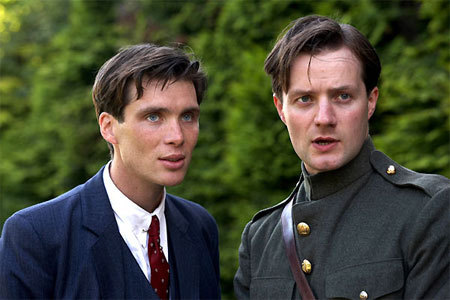
Directed by Ken Loach and written by Paul Laverty, The Wind That Shakes the Barley tells the story of two brothers fighting in the Irish War of Independence against the British and later, the Irish Civil War. A film that reveals in the Irish conflict against the British as well as its own conflict within the country, the film also upholds Loach's social idealism as well in this haunting yet realistic tale of conflict. Starring Cillian Murphy, Padraic Delaney, Liam Cunningham, Orla Fitzgerald, and Roger Allam. The Wind That Shakes the Barley is a haunting yet mesmerizing masterpiece from Ken Loach.

It's 1920 Ireland as a group of men playing hurling come home only to be visited by angry members of the British Army known as Blacks & Tans. A young man named Micheal O'Suillebhean (Laurence Barry) is tortured and killed for not saying his name. For a young man named Damian O'Donovan (Cillian Murphy), who was about to leave to become a doctor in London. This incident along with another incident involving a railway guard and a train driver (Liam Cunningham) being beaten has forced Damien to join the Irish Republic Army. Leading the local column of the army is Damien's brother Teddy (Padraic Delaney) as they all prepare to fight a war with the British. After some small victories in attack barracks for supplies and killing four officers at a pub, the little victories seem to go well. Unfortunately, a young named Chris Reilly (John Crean) was forced by a landowner in Sir John Hamilton (Roger Allam) to give out information.

The O'Donovan brothers plus several members of the IRA including the train driver named Dan were captured. Teddy was tortured for information which he refused to give while Damien befriends Dan as they share socialist views. After trying to play mental games with an officer, Damien is beaten as a young soldier named Johnny Gogan (William Ruane) was unable to kill Damien. Later on, Johnny helps free several members as three were forced to be left behind. After capturing Sir Hamilton and Chris Reilly, the news about the three left behind forced Damien to make decisions under the orders of the IRA. Months later with the British having trouble defeating the Irish, an Irish government was made but problems still happened over how to get funding for guns and such with Dan stating claims about what to do.

The battle rages on despite some losses and attacks at the home of Damien's girlfriend Sinead (Orla Fitzgerald) in which she was tortured. The Irish won the war as for a while, it seemed like absolute victory but it didn't grant complete independence from the British. Teddy is convinced that the treaty will avoid further wars against the British but Damien disagrees as he and Dan demand total independence from Britain. Thus starting the Irish Civil War with Teddy on the Free State side and Damien, Dan, and several of the old gang at the Anti-Treaty side. What would happen would tear apart a family as well as Ireland itself for many years.

The film is about conflict that relates to Ireland's struggle for independence that would later lead to civil war until 1949 when it broke completely from England. While screenwriter Paul Laverty creates a film that is part history-lesson but also part drama, it does reveal the Irish struggle against the British and why the treaty divided Ireland. Particularly with its views on socialism that was prominent for those who were against the treaty. While Laverty shows into why those who went for the treaty just so they could avoid war with Britain. Still, it's more of a socialist film with a socialist point of view spurned by its director Ken Loach. It doesn't mean he is trying to force his ideals to the audience but does make his point about what the Irish had to go through.

The screenplay is well structured with the first act about the Irish conflict with the British and Damien's decision to join the IRA and what he had to do. The second act being about the victory against the British and the hopes for an independent Ireland. The third act is about the Irish Civil War and the conflict between the brothers Damien and Teddy. All of that is well-told from the eye-wielding, engaging direction of Ken Loach. Loach's direction is filled with great long shots of the Irish countryside that has a wide depth of field. He also goes for close-ups to be part of the battle scenes while done with great style and almost documentary-like. Though there's no shaky hand-held work as it's mostly shot on steadicams and some still, tripod shots. Loach's direction is indeed phenomenal in playing up to the drama as well as being true to the history of Ireland as he creates a film that is engaging and powerful.

Cinematographer Barry Ackroyd does fantastic work with the film's greenish, colorful look of Ireland with its rough yet haunting shots of the film's exteriors on the countryside. While there's not a lot of bright colors in the film, the dark colors of both exterior and interior settings to play up to the grim tone of the film. Editor Jonathan Morris does some excellent work with the editing in the use of smooth transitions, rhythmic jump-cuts, and fade outs to help structure the story as well as it give it a leisurely pace for its 127-minute running time where it isn't too slow but not too fast either.

Production designer Fergus Clegg along with art directors Michael Higgins and Mark Lowry do spectacular look with the look of 1920s Ireland from the pubs, homes, and places that are filled with dark colors and old cars that is shown throughout the film. Costume designer Eimer Ni Mhaoldomhnaigh does stellar work with the costume that plays up to the 1920s look in terms of dresses, hats, suits, and such along with its dirty look of the IRA militia group. The sound work by Ray Beckett and Kevin Brazier do great work in the location sound work that is captured from the battle scenes to the raucous fight and pub scenes that goes on. The music of George Fenton is wonderfully plaintive with broad arrangements and melodies relating to Irish folk music along with the use of traditional ballads in Gaelic and English to play up to the film's historical tone.

The casting by Oonagh Kearney is phenomenal with some notable small roles from Diarmuid Ni Mheachair as a sick boy Damien treats, Nora Lynch as the sick boy's mother, Fiona Lawton as an Irish government official, Mary Murphy as Sinead's sister Bernadette, Mary O'Riordan as Sinead's grandmother Peggy, Damien Kearney as IRA member Finbar, Martin Lucey as IRA official Congo, and Myles Horgan as the crazed IRA soldier Rory. Other memorable small roles from Aiden O'Hare as IRA soldier Steady Boy, Laurence Barry as Micheal O'Suillebhean, John Crean as Chris Reilly, and William Ruane as British soldier turned IRA soldier Johnny Gogan. Noted character actor Roger Allam has a very memorable role as Sir John Hamilton, a British official who captures members of the IRA only to be captured later on.

Orla Fitzgerald is excellent as Sinead, a fellow Irish messenger to the IRA who is also Damien's longtime love as she helps fight the British and side with Damien over the treaty. Liam Cunningham is superb as Dan, a Socialist who fights for the IRA in his hopes for a free Ireland as he reveals why there should be a free Ireland. Cunningham's performance is truly the film's best supporting performance as he delivers such passion and angst into his role. Padraic Delaney is great as Teddy O'Donovan, the older brother who runs a local section of the IRA in his hopes for Irish independence from the British. Yet, when he becomes part of the pro-treaty side, he is conflicted though his intentions are to hope for a peaceful Ireland unaware of his brother's passion for a free Ireland.

Finally, there's Cillian Murphy in what is truly a tour-de-force performance as Damien O'Donovan. Murphy's performance is filled with lots of development as he starts out as an innocent man with dreams to be a doctor. Then after facing the harsh realities of what is going on to his people, he becomes a passionate, angry young man. Murphy's energetic, passionate, and broad performance as it's really the best film role of his career. Even as he goes into fights while leading the IRA during the Civil War as he stands by in his views in his belief for what is right for his country.

The film premiered at the 2006 Cannes Film Festival where it played in competition and became the surprise hit of the festival. The acclaim and surprising reaction helped the film win the Palme D'or beating several contenders vying for the prize. A month later, the film was released in Britain and Ireland to some controversy but did gain rave reviews through a year later when it came out in the U.S. For Ken Loach, the film raised his profile as he began to make more films frequently once again.

The Wind That Shakes the Barley is a harrowing yet powerful film from Ken Loach helmed by Cillian Murphy's superb performances. Fans of Ken Loach films will definitely enjoy the engaging approach and devotion to history over the Irish conflict with British and the Irish Civil War. It's a film that is both a great historical drama while also being a wonderful history lesson about Ireland. While some might not agree with Loach's Socialist views, the film does reveal the issues raised from the Irish over their conflict with Britain. In the end, it's a superbly crafted and mesmerizing film from Ken Loach.

Ken Loach Films:  (Cathy Come Home) - (Poor Cow) - Kes - (The Save the Children Fund Film) - (Family Life) - (The Price of Coal) - (Black Jack) - (The Gamekeeper) - (Looks and Smiles) - (Which Side Are You On?) - (Fatherland) - (Hidden Agenda) - (Riff-Raff) - (Raining Stones) - (Ladybird Ladybird) - (Land and Freedom) - (A Contemporary Case of Common Ownership) - (Carla’s Song) - (The Flickering Flame) - (McLibel (1)) - (My Name is Joe) - (Bread & Roses) - (The Navigator) - Sweet Sixteen - (Ae Fond Kiss…) - (Tickets) - (McLibel (2)) - It’s a Free World... - Looking for Eric - (Route Irish) - (The Angel's Snare) - (The Spirit of '45) - Jimmy's Hall - I, Daniel Blake

© thevoid99 2011