Set in a fictional European country where a couple is vacationing at an island resort isolated from a poor country, the film follows this couple who meets a woman who takes them to a world outside of the resort where things aren’t idyllic with the husband succumbing to vices and such beyond his control including actions where he is forced to watch a double be created for his execution. It is a film that explores this writer who is trying to create a second book until he meets this woman and her husband as they take part in decadence until an incident leaves the writer guilt-ridden until he learns about something that doesn’t allow him to be punished but it comes with a price. Brandon Cronenberg’s screenplay does have a straightforward narrative as it plays into a vacation that novelist James Foster (Alexander Skarsgard) and his wife Emily (Cleopatra Coleman) as they’re in this idyllic island but are unaware of what is outside of their resort until they meet actress Gabi Bauer (Mia Goth) and her architect husband Alban (Jalil Lespert) where they rent a car outside of the resort for a picnic where things get weird and later dark where James gets in trouble with everyone witnessing what happened.
What follows is an arrest for James over what happened as its police chief in Detective Thresh (Thomas Krestchmann) reveals that the penalty is death yet James is given an offer to have a double fill in for him with a hefty fee that would also allow him and Emily to watch the execution. What happens is a key moment in the film where James realizes what he can get away with his actions as he also learned that Gabi and Alban have also done the same thing with other rich tourists. Notably as they use their wealth to do things and create doubles to watch them be executed for their crimes as James would enjoy it at first but Emily is disgusted as she would leave the resort leaving James to be with the Bauers and their friends in acts of decadence that eventually would take a toll on him. Notably as guilt starts to emerge with the Bauers and their friends playing awful pranks that would become more gruesome.
Cronenberg’s direction definitely bears a lot of style in not just his approach to suspense, horror, and drama but also in dark humor in some places as well as bringing in elements of surrealism. Shot largely on location at the Amadria Park resort in Sibenik, Croatia with additional locations shot outside of Budapest, Hungary and bits in Toronto. Cronenberg creates something that does feel idyllic in this resort where there beaches are gorgeous and there’s plentiful of food while the tourists are largely protected except for a key moment when a citizen rides a vehicle on the beach is when James and Emily meet Gabi who claims to be a fan of James’ only novel. Cronenberg would employ some unique extreme close-ups that does play into James’ attraction towards Gabi including a scene at a beachside picnic outside of the resort where James is urinating offsite until Gabi comes behind him and does something to increase their attraction. There are also some unique wide and medium shots that Cronenberg creates that includes the very first meeting James have with the Bauers’ friends as their faces aren’t shown except for James and Gabi.
The direction also has Cronenberg play into these elements of violence and surrealism with the latter playing into these hallucinogenic moments where Gabi introduces James to a hallucinogen that would bring in strange visions and take part in orgies as he becomes attracted towards Gabi. Yet, the parties eventually become chaotic where the people James surrounds himself with are people of power who come to the island every year to commit horrible crimes and get away with it as this sense of immorality starts to come ahead. Notably in its third act where the violence is intense as it relates to James’ own revelations in not just his guilt but also the fact that he is part of a small circle that comes from money except that he is married to money. All of which makes him an easy target for Gabi and her friends to be part of a toxic world that allows themselves to get away with anything including death for a brief moment in time. Overall, Cronenberg crafts a harrowing yet intoxicating film about a novelist’s vacation into Hell filled with ideas of cheating death and getting away with all sorts of things due to his privilege.
Cinematographer Karim Hussein does incredible work with the film’s cinematography with its stylish usage of lights for some of the interior scenes at night including some of the hallucinogenic scenes while emphasizing on some natural lighting for some of the daytime exterior scenes. Editor James Vandewater does excellent work with the editing as it is stylized with some unique jump-cuts to play into some of the film’s surreal moments as well as its suspense along with straight cuts to help long shots linger for a few minutes. Production designer Zosia Mackenzie, with set decorator Rita Hetenyi plus art directors Clara Farkas and John O’Regan, does amazing work with the look of the home that the Bauers live in as well as the interiors in the resorts as well as the rooms where the doubles are made. Costume designer Maria Fater does fantastic work with the clothes that the characters wearing including some of the stylish clothes that Gabi wears that often shows her cleavage.
Hair designers Anna Cichon and Daniel Losco, along with makeup designers Rita Balla and Svetlana Gutic, do brilliant work with the look of the characters including some of the masks they would wear as well as some of the surreal moments in the film where makeup is prevalent. Special effects supervisor Paul Stephenson and visual effects supervisor Andy Robinson do terrific work with the visual effects for some of the surreal moments in the film along with some key violent moments in the film. Sound designers Rob Bertola and Alex Bullick, along with sound editor Jill Purdy, do superb work with the sound in creating unique sound textures in some of the surreal moments in the film as well as the sounds from natural locations as it is a highlight of the film.
The film’s music by Tim Hecker is phenomenal for its electronic-based score with elements of ambient textures as well as some brooding synthesizers as it adds to the film’s disturbing tone as it is a major highlight of the film while it also includes a soundtrack featuring music from Sook-Yin Lee & Adam Litovitz, Clinic, Derek & Brendan Fletcher, Timbre Timbre, Jim Williams, and the trio of Anand Chitragupth, Milind Chitragupth, and Sameer Anjaan.
The casting by Mark Bennett and Deirdre Bowen is wonderful as it feature some notable small roles from Kristof Kovacs as a young boy who takes part in the execution, Gergely Troscany as a posh local Gabi and her friends rob, Caroline Boulton as a posh actress in Bex, Jeffrey Ricketts as Bex’s husband Charles, John Ralston as the posh Dr. Bob Modan, Amanda Brugel as Dr. Modan’s wife Jennifer, and Thomas Krestchmann in a superb performance as a police detective in Thresh who allows James the chance to get away from his crimes through a fee as a way to not create any more trouble. Jalil Lespert is excellent as Gabi’s architect husband Alban as a man who likes to take part in debauchery as he also takes part in open relationships with others as he does a lot to enable James’ bad behavior. Cleopatra Coleman is amazing as James’ wife Emily as a woman who is troubled by her husband’s behavior as well as the presence of the Bauers as she doesn’t like what James can get away with due to the laws in this country prompting her to leave.
Alexander Skarsgard is incredible as James Foster as a novelist trying to come up with ideas for another book as he gets involved in a serious event that has him become guilty until he learns about a law that allows a double to fill in for his own execution. Skarsgard brings some humor into the role but also a lot of emotional weight as guilt starts to come in as well as the fact that he becomes a pawn in a world where the rich can get away with anything as long as they have money. Finally, there’s Mia Goth in an outstanding performance as Gabi Bauer as this actress who likes to goad James into doing bad things and get away with it but also seduce him. Goth’s performance is this wild firecracker who doesn’t just exude sex appeal but also charisma that allows herself to be front and center as well as do bad things and enjoy it as it is a career-defining performance for Goth.
Infinity Pool is a spectacular film from Brandon Cronenberg that features great performances from Alexander Skarsgard and Mia Goth. Along with its supporting cast, eerie music score, gorgeous yet hypnotic visuals, and a gripping story of guilt and privilege. It is a film that doesn’t play nice while also doing what it can to showcase what people could do in a foreign land and get away with it all because they have money and status. In the end, Infinity Pool is a tremendous film from Brandon Cronenberg.
Brandon Cronenberg Films: (Antiviral) – (Possessor)
© thevoid99 2023

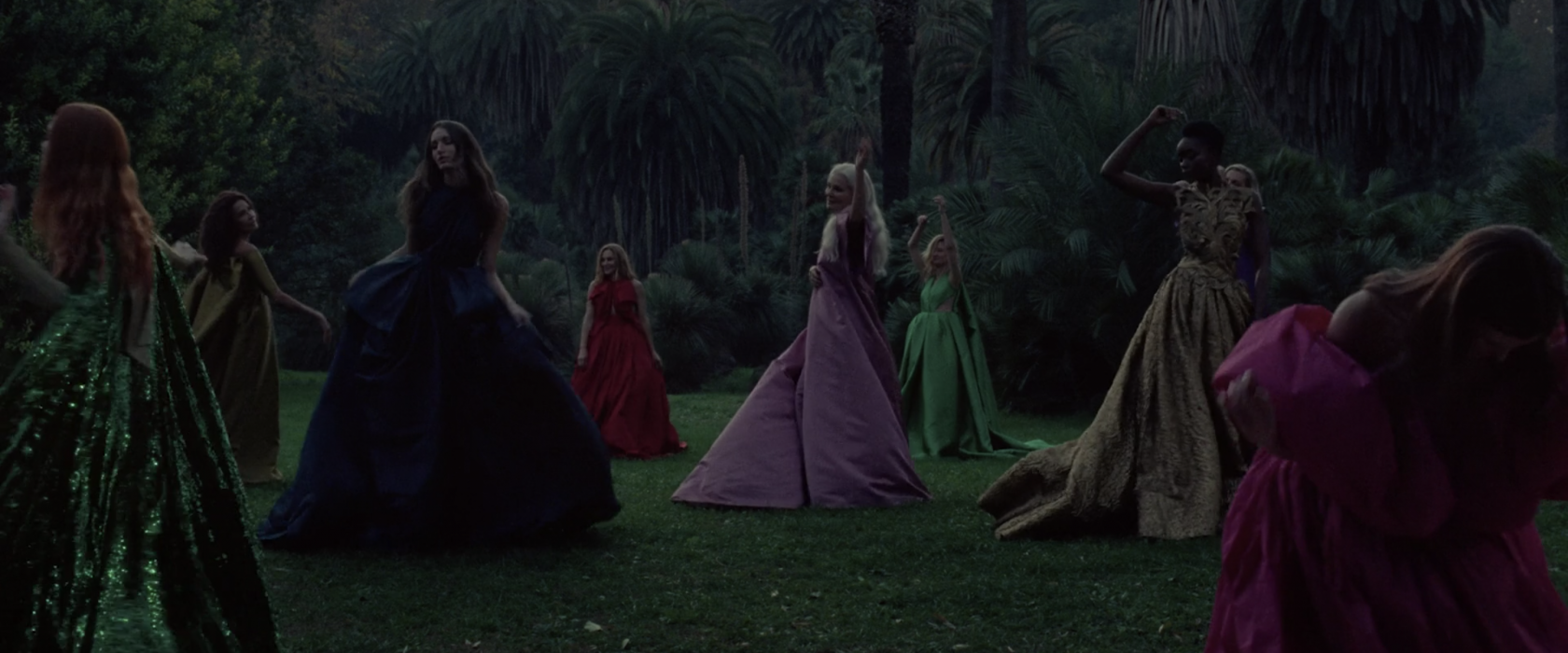
While the film is mainly an advertisement of sorts for Valentino’s haute couture line led by its current leader Pier Paolo Piccioli, the film does feature a narrative about a woman dealing with her ailing mother as she travels to Rome to be with her as they also think about the past. It is a film that doesn’t have much of a plot yet it does play into women thinking about their work but also a woman dealing with blindness as she is convinced her days as an artist is over. Yet, there are all of these mysterious things that occurs in the film along with flashbacks of the young woman with her daughter and other friends while they’re tended to a man throughout the film.
Luca Guadagnino’s direction is stylish as it is shot on locations in New York City and Rome as it play into these two worlds that its main characters live in. While there are some unique wide and medium shots, Guadagnino does play into this air of intrigue but also isolation that looms throughout the film while the flashbacks are lively in the scenes set in Rome. There is a sense of simplicity for the scenes in New York as well as the moments between mother and daughter in the present scenes in Rome while there are moments that are surreal. Notably as there’s a woman walking around in Valentino designer clothing as the clothes do play a key role in the story leading to its climax. Overall, Guadagnino crafts a rapturous and compelling film about a writer and her ailing artist mother thinking about their art and the next stage of their lives.
Cinematographer Sayombhu Mukdeeprom does brilliant work with the film’s cinematography with its emphasis on low-key natural lighting for many of the daytime interior scenes as well as the usage of little lighting for some of the exterior scenes in the evening scenes. Editor Walter Fasano does excellent work with the editing as it is largely straightforward with a few montage cuts in some bits of the film. Production designers Roberta Federico and Olivia Peebles do amazing work with the look of the homes of the woman in New York as well as a place she goes to for a party as well as the home of her mother in Rome. Visual effects supervisor Luca Saviotti does terrific work with some of the film’s minimal visual effects that play into some of the mystical elements of the film. Sound mixer Valentino Gianni does superb work with the sound as it is largely straightforward to play into the way everything sounds in a room. The film’s music by Ryuichi Sakamoto is wonderful for its low-key, piano-based orchestral score that help play into the drama as well as the sense of longing throughout the film while the soundtrack include a couple of pieces by Bruno Lauzi.
The casting by Francine Maisler is marvelous as it feature appearances from Sergio Di Nitto as an old boyfriend from the past, Arianna Pesce and Camilla Martellino in their respective versions as the young and teenage version of the protagonist Francesca, Edoardo Gabbriellini as a party host in Patrizio, Alba Rohrwacher as a friend of Francesca in Vera, and Mia Goth as a younger version of Francesca’s mother Sofia. KiKi Layne is excellent in her small role as a mysterious woman Francesca sees as is she a ghost or her neighbor in New York who is dealing with issues of her own. Kyle MacLachlan is brilliant in a trio of roles as a party guest, an old lover of Sofia, and Sofia’s caretaker where MacLachlan brings a lot of different personalities and sensitivity to those roles. Marthe Keller is amazing as the old Sofia as an artist who is going blind as she deals with aging but also isolation and the past as she looks back with sadness. Finally, there’s Julianne Moore in an incredible performance as Francesca as a writer who deals with her own struggles and loneliness where she goes to Rome to help her mother as well as aspects of her own past.
The Staggering Girl is a remarkable film from Luca Guadagnino. Featuring a great cast, amazing costumes, dazzling visuals, and a somber music score by Ryuichi Sakamoto. The short is a fascinating way in how to sell fashion design as well as tell a story about two women dealing with loneliness and creative drought. In the end, The Staggering Girl is a marvelous film from Luca Guadagnino.
Luca Guadagnino Films: (The Protagonists) - (Tilda Swinton: The Love Factory) - (Mundo civilzado) - (Cuoco contadino) - (Melissa P.) - (The Love Factory No. 3 Pippo Delbono - Bisogna morire) – I Am Love - (Bertolucci on Bertolucci) – A Bigger Splash - Call Me By Your Name - Suspiria (2018 film) - (Fiori, Fiori, Fiori) – (Salvatore: Shoemaker of Dreams) – (We Are Who We Are (2020 TV series)) – Bones & All – Challengers (2024 film) - (Queer) - (After the Hunt)
© thevoid99 2022

Set during the Regency-era of England, the film revolves around the activities of a young woman in the titular character of Emma Woodhouse who likes to be a matchmaker as she also copes with her own desires in life while improving the lives of others. It’s a film with a simple premise yet it explores a young woman who seems to have a lot of influence on those she meets yet often finds herself sparring with her brother-in-law’s brother in George Knightley (Johnny Flynn). The film’s script is told in the span of the year and broken into four seasons beginning with autumn and ending in the summer. It all play into Emma’s own pursuit of control and success in matchmaking as she befriends a student in Harriet Smith (Mia Goth) who lives in an orphanage of sorts as she is awaiting the identity of her father. Emma tries to get Smith to be in a relationship with the young vicar in Mr. Elton (Josh O’Connor) that doesn’t go well while she also tries to be get in a relationship for herself with her former governess’ step-son Frank Churchill (Callum Turner).
The script uses the four season structure to play into Emma’s growth as a person but also in her friendship with Smith and rivalry with Knightley although the latter also cares for Emma’s father (Bill Nighy) who copes with the idea of being alone though Emma plans not to leave him. The script also play into Emma’s relationships with others including Miss Bates (Miranda Hart) whom Emma is fond of as well as her former governess Mrs. Weston (Gemma Whelan) and her husband Mr. Weston (Rupert Graves). Notably as Emma would meet Churchill as she has to deal with the presence of Mrs. Bates’ niece Jane Fairfax (Amber Anderson) as it would create a rivalry of sorts for Churchill’s affections that would serve as a challenge to Emma who is forced to confront her own faults.
Autumn de Wilde’s direction is definitely mesmerizing in her presentation from the meticulous attention to detail in her framing as well as the way she presents this vibrant period of the times in England as it is shot on various locations in Britain with Firle Place in Sussex as the exterior of Emma’s home. The direction has de Wilde maintain this sense of atmosphere in the film as she also maintains a certain look for each season to recreate this idea of what it was like in those times. The usage of wide and medium shots add to the look of the film where de Wilde create these striking compositions that include shots of young girls wearing red robes walking in the background. There are also these shots that do look like they’re recreation of paintings while de Wilde also knows when to use close-ups as whether it’s a close-up of a face or hands as it says a lot in doing so little. It showcases the attention to detail in what de Wilde wants to capture in the way characters behave towards one another while choosing to create scenes that help play into the drama or a comedic moment.
Much of the film’s humor is low-key as de Wilde knows when to create something that is funny but it is done with much subtlety in the way Smith reacts to Mr. Elton’s portrait or the way Emma reacts to a bad situation along with her own feelings towards Mr. Knightley later in the film. The direction has de Wilde also maintain this air of tension that does start to loom in the third act with some revelations about Churchill as well as Emma losing some sense of control as she is forced to deal with her own growing pains. Still, de Wilde does find a way to flesh out the story and characters where it would allow Emma to figure things out but also do something for herself towards the end. Overall, de Wilde crafts an intoxicating and heartfelt film about a young woman who plays matchmaker for those around her while coping with her own faults and feelings about herself and everyone else.
Cinematographer Christopher Blauvelt does brilliant work with the film’s lush and colorful cinematography with its usage of natural lighting for some of the daytime exterior scenes set in sunny days to its usage of low-key lights and filters for a few scenes in the winter along with candle lights for a few nighttime interior scenes. Editor Nick Emerson does excellent work with the editing as it is largely straightforward with some rhythmic cuts to play into some of the dramatic and comedic reaction of characters. Production designer Kave Quinn, with set decorator Stella Fox and supervising art director Andrea Matheson, does amazing work with the interior look of the rooms and places that Emma and other characters go to including some of the shops and the ballroom for the ball scene at Miss Bates’ home. Costume designer Alexandra Byrne does fantastic work with the costumes as it has a lot of life from the simplest of clothing to the lavish dresses the women wear as it is a highlight of the film.
Hair/makeup designers Marese Langan, Laura Allen, and Claudia Stolze do wonderful work with the design of the hairstyles as there’s a lot of attention to detail into the hairstyles that the women have including some of the things that Emma has on her head. Special effects supervisor Neal Champion and visual effects supervisor Dillan Nicholls do terrific work with some of the film’s minimal special effects as it is largely bits of set dressing to help enhance the visuals. Sound editor Glenn Freemantle does superb work with the film’s sound as it adds to the atmosphere of the scene in capturing the natural locations along with some mixing in the way music and sparse sounds are heard in a room. The film’s music by Isobel Waller-Bridge and David Schweitzer is incredible for its mixture of orchestral music and the folk music of the time as it adds to the humor and drama with some lush string arrangements in some parts of the film while music supervisor Becky Bentham help provide the array of folk themes that were available during those times including a few originals that add to the atmosphere of the period.
The casting by Jessica Ronane is marvelous as it feature some notable small roles from Chloe Pirrie as Emma’s sister Isabella, Oliver Chris as George’s brother and Isabella’s husband John, Tanya Reynolds as a young woman in Augusta whom Mr. Elton would be with later in the film, Gemma Whelan as Emma’s former governess in Miss Taylor who becomes Mrs. Weston, Rupert Graves as Mr. Weston who does what he can to help Emma out, Amber Anderson as Miss Bates’ niece Jane Fairfax who becomes a source of competition for Emma although she is really a nice person, and Connor Swindells in a superb performance as Robert Martin as a friend of Mr. Knightley who pursues Harriet as he is someone that doesn’t have much to offer but is still a man of honor. Callum Turner is terrific as Frank Churchill as Mr. Weston’s son from his first marriage who is a charming young man that intrigues Emma though he is also quite cagey in the way he reacts towards Miss Fairfax.
Josh O’Connor is fantastic as Reverend Mr. Elton as a young vicar whom Emma tries to have him be a suitor for Harriet only he’s kind of a dimwit with other interests instead of Harriet as he would also prove to be much colder later in the film. Miranda Hart is excellent as Miss Bates as a woman who had been a lifelong family friend to Emma as she is trying to organize balls and be helpful to Emma and Harriet as it is an understated yet touching performance from Hart. Bill Nighy is brilliant as Mr. Woodhouse as Emma’s father as a man of great importance as well as being wise to the young people while lamenting over the idea of being lonely and ill since he is unable to deal with cold weather as it is a touching performance from Nighy. Johnny Flynn is amazing as Mr. George Knightley as a young man who is close with Emma’s family as he isn’t fond of Emma’s schemes and her behavior yet also is aware of her value as he also is attentive towards Harriet following Mr. Elton’s snub towards her proving he’s a good man that Emma really needs.
Mia Goth is phenomenal as Harriett Smith as a young woman who is awaiting the identity of her father as she lives in a school/orphanage where she becomes Emma’s friend while trying to find herself and her own wants in life as it is this mesmerizing and heartfelt performance from Goth. Finally, there’s Anya Taylor-Joy in a tremendous performance as the titular character as this young woman who likes to be a matchmaker and be in control of everything. Taylor-Joy brings a lot of wit and charisma to her performance but also bring up this air of naïveté as someone who doesn’t know as much as she believes as it is a career-defining performance for Taylor-Joy.
Emma is a sensational film from Autumn de Wilde that features a great leading performance from Anya Taylor-Joy as the titular character. Along with its supporting ensemble cast, ravishing visuals, its theme of love and control, a mesmerizing music score, and gorgeous locations. The film is definitely a compelling and whimsical comedy-drama that plays into the ideas of love and a young woman’s perception of it as it is faithful to the ideas and vision of its creator in Jane Austen. In the end, Emma is a phenomenal film from Autumn de Wilde.
© thevoid99 2021

Based on the 1977 film by Dario Argento that was written by Argento and Daria Nicolodi that partially based on Thomas de Quincey’s essay Suspiria de Profundis (Sighs from the Depths), Suspiria is the story of an American ballet student who travels 1977 West Berlin to enroll at a prestigious dance academy unaware that it’s run by a coven of witches. Directed by Luca Guadagnino and screenplay by David Kajganich, the film is a homage to Argento’s film while exploring the many mysteries a young woman encounters at this dance academy. Starring Dakota Johnson, Chloe Grace Moretz, Mia Goth, Angela Winkler, Ingrid Craven, Sylvie Testud, Fabrizia Sacchi, Malgosia Bela, with special appearances from Jessica Harper, Lutz Ebersdorf, and Tilda Swinton. Suspiria is an enthralling and horrifying film from Luca Guadagnino.
Set in the fall of 1977 in Berlin during one of the city’s most tumultuous events relating to the German Autumn involving the kidnapping and murder of industrialist Hanns Martin Schyleyer as well as the Lufthansa Flight 181 hijacking. The film is about an American ballet student who is accepted at a prestigious dance school unaware that it’s run by a coven of witches as mysterious disappearances and events occur during the school. While the film is similar to its original film by Dario Argento in 1977, it’s told in a different take as it is set during a moment in time where a generation of young Germans cope with the sins of World War II and the guilt they have over the events of the past. Even as this coven believe they have something that can bring them back to prominence following a period of seclusion following World War II.
David Kajganich’s screenplay is told through six acts plus an epilogue as it explore the life of a dance studio in 1977 Berlin where it’s divided by the Berlin Wall as the studio is set in West Berlin just close to the wall. The main protagonist in Susie Bannion (Dakota Johnson) is a newcomer to the studio as she is revealed to come from a Mennonite community in Ohio where she is dealing with the her ailing mother (Malgosia Bela). Bannion’s arrival comes in at the right moment when a dancer in Patricia Hingle (Chloe Grace Moretz) had left the school mysteriously where lead choreographer Madame Blanc (Tilda Swinton) takes great notice of Bannion’s gift as a dancer believing she has something special to offer for a special dance piece she wants to direct. While Bannion would adjust to her new living situation and befriend fellow dancer Sara Simms (Mia Goth), she would notice that something is up as would Simms who becomes concerned with another disappearance of a dancer.
Hingle would play a key element to the plot early in the film as she drops off a diary and notes to psychotherapist Dr. Josef Klemperer (Lutz Ebersdorf) who is dismissive of her claims until he notices that she has disappeared where he believes something isn’t right as he would later turn to Simms for help. During the course of the film, there is a discussion among those who run the school about who should become the coven’s new leader as many prefer the mysterious Mother Markos (Tilda Swinton) instead of Madame Blanc who is concerned with this venture just as many in the coven believe that Bannion is the one to bring the coven back to prominence with Madame Blanc watching closely. Even as the eventual performance would play into everything Madame Blanc has been preparing for, it also has these elements that prove that it’s something much bigger in what is to come for Bannion to discover.
Luca Guadagnino’s direction is definitely riveting in terms of the setting, the time period, and the sense of intrigue that is happening in and out of the dance academy along with bits of scenes at Ohio which Bannion would think about from time to time. Shot on various locations in Varese, Italy and parts of Berlin, the film does play into this moment in time where it is chaotic with protests over what is happening in Germany in relation to the events of the times. Guadagnino’s direction would emphasize on stylistic shots that do bear elements of what Dario Argento did with the original film but it’s more restrained in the compositions with an emphasis on the physicality of the dancing. With the aid of choreographer Damien Jalet, the dancing and ballet has an intensity in the movements where it helps tell the story as well as play into something much bigger relating to the world of the witches as well as the mysteries that is happening inside the dance studio. Guadagnino would use wide and medium shots for some of the dancing to get a scope of the performances as well as some terrifying moments in Bannion’s performance in close-ups that would be inter-cut with something else happening that play into what the coven wants.
Guadagnino would also emphasize on atmosphere since the film is set during the autumn and winter of 1977 where there is a more realistic look rather than the more heightened usage of colors that Argento did in the original. Particularly as it help play into the sense of terror that is coming relating to this ceremony where Bannion is at the center of the ceremony unaware of what her role is. There is not just this idea of surrealism but also horror of the most extreme with revelations about a world that proves to be no different from what is happening in 1977 Germany with the political and social turmoil that is happening. Even as it emphasizes this element of guilt of past actions that a future generation has to cope with as well as the idea of motherhood in what one expects to teach a younger generation right from wrong. Overall, Guadagnino crafts an evocative yet visceral film about a young American woman being accepted at a prestigious dance academy run by a mysterious coven of witches in 1977 Berlin.
Cinematographer Sayombhu Mukdeeprom does brilliant work with the film’s cinematography with its emphasis on low-key colors and lighting that help play into the eerie tone of the film without being overly stylized as well as using light for the interiors as well as the big dance number in the film. Editor Walter Fasano does amazing work with the editing as its usage of rhythmic and jump-cuts help play into the energy of the dance and suspense as well as in some of the film’s dramatic moments. Production designer Inbal Weinberg, with set decorators Christin Busse and Merissa Lombardo plus art directors Merlin Ortner and Monica Sallustio, does excellent work with the look of the dance studio as well as some of the rooms and secret places including the room of mirrors and the homes of Dr. Klemperer in both East and West Berlin. Costume designer Giulia Piersanti does fantastic work with the costumes from the stylish late 1970s dresses the women wore when they go out to the costume they wear for the dance scene.
Prosthetic makeup designer Mark Coulier does incredible work with the makeup for some eerie sequences that include elements of the third act in the unveiling of Mother Markos as well as other things including a horrendous scene early in the film. Special effects supervisor Franco Ragusa and visual effects supervisor Luca Saviotti do superb work with the special effects that include some of the moments of horror as well as bits of set-dressing in some parts of the film. Sound designer Frank Kruse does marvelous work with the sound as it help play into the atmosphere of the locations and dance numbers to showcase how sparse the sound of movements are as it is one of the film’s highlights. The film’s music by Thom Yorke is phenomenal for its mixture of low-key piano-based orchestral music, ambient, and Krautrock-inspired cuts as it help play into the suspense and drama while music supervisor Robin Urdang provides a soundtrack that features bits of classical music pieces and some of the music that was popular in Germany at the time.
The casting by Stella Savino is remarkable as it feature some notable small roles and appearances from Fred Keleman and Mikael Olsson as a couple of police investigators who try to investigate the academy following claims from Dr. Klemperer, Malgosia Bela as Bannion’s ailing mother, Alek Wek as one of the dance teachers in Miss Millius, Vanda Capriolo as a dancer in Alberta who shows Bannion how to jump high for the dance, Sylvie Testud as the big glasses-wearing yet mysterious Miss Griffith who never says anything, Renee Soutendijk as a teacher in Miss Huller, Ingrid Caven as another teacher who kind of runs the place in Miss Vendegast, and Jessica Harper in a brief yet terrific one-scene cameo as Dr. Klemperer’s wife Anke. Elena Fokina is superb as a Soviet dancer in Olga Ivanova who is despondent over Patricia’s disappearance as she suspects the school staff while Angela Winkler is wonderful as Miss Tanner as a teacher who is Madame Blanc’s most trusted confidant as she knows something doesn’t feel right. Chloe Grace Moretz is fantastic as Patricia Hingle as it’s a small yet crucial performance of a dancer who is on the run as she’s made some discoveries about the dance academy.
Mia Goth is excellent as Sara Simms as a dancer who befriends Bannion and becomes her closest confidant while being aware that something isn’t right as it relates to the disappearances where she would help out Dr. Klemperer. Dakota Johnson is brilliant as Susie Bannion as a young American dancer who travels to Berlin from a sheltered environment as she deals with her gifts as a dancer as well as her own sexual awakening through the dance and coping with the mysteries surrounding the academy. Lutz Ebersdorf is amazing as Dr. Josef Klemperer as a psychotherapist still pondering about the whereabouts of his wife as he deals with what Hingle has discovered believing that some form of evil is emerging. Finally, there’s Tilda Swinton in an incredible dual performance as Mother Marko and Madame Blanc as she only appears briefly as the former due to its look while provides a straightforward yet maternal approach in the latter as someone who is trying to run a school and do things for the coven while being aware that something is off just as she is becoming concerned for Bannion’s physical and mental state of mind.
Suspiria is a tremendous film from Luca Guadagnino. Featuring a phenomenal ensemble cast, eerie visuals, Thom Yorke’s intoxicating score, brooding sound design, and a provocative story that touches upon many themes of guilt, identity, and motherhood. It’s a film that is confrontational in its themes but also play into the idea of a world that a young woman is about to venture into that is just as terrifying as the real world that is happening around her. In the end, Suspiria is an outstanding film from Luca Guadagnino.
Related: Suspiria (1977 film) - (Goblin-Suspiria OST) - (Thom Yorke-Suspiria OST)
Luca Guadagnino Films: (The Protagonists) - (Tilda Swinton: The Love Factory) - (Mundo civilzado) - (Cuoco contadino) - (Melissa P.) - (The Love Factory No. 3 Pippo Delbono - Bisogna morire) - I Am Love - (Bertolucci on Bertolucci) – A Bigger Splash - Call Me by Your Name - The Staggering Girl - (Fiori, Fiori, Fiori) – (Salvatore: Shoemaker of Dreams) – (We Are Who We Are (2020 TV series)) – Bones & All – Challengers (2024 film) - (Queer) - (After the Hunt)
© thevoid99 2018