
The film is about a former revolutionary whose teenage daughter is being pursued by a corrupt military official who wants to eliminate her as he sees her as a threat to society as well as to be part of a secret white supremacist society. It is a film that explores a man dealing with not just the past as he was part of a revolutionary group until the arrival of his daughter who would become the target of this military official. Paul Thomas Anderson’s screenplay has a straightforward narrative yet there are elements in the narrative that plays into the chaotic atmosphere of underground revolutionaries. The first act introduces this group known as the French 75 where it is led by Perfidia Beverly Hills (Teyana Taylor) who is a firecracker that always takes charge while her partner “Ghetto” Pat Calhoun (Leonardo DiCaprio) is part of the group along with several others. During an event where they break out detained immigrants from a detention center, Perfidia meets the center’s commander Captain Steven Lockjaw (Sean Penn) whom she seduces as he falls for her to the point that they would have an affair that eventually becomes troubling.
Even as Perfidia gives birth to Charlene where Calhoun chooses fatherhood over revolutionary activities. Perfidia would continue until a botched bank robbery has her captured as she reluctantly makes a deal with Lockjaw where Calhoun, Charlene, and a few others go hiding for 16 years. The film’s second act begins with the 16-year-old Charlene who is under the name Willa Ferguson living with her father who is now Bob Ferguson as he laments over his failure as a revolutionary as he drinks and smokes weed to cope with his failure. When Lockjaw is given a chance to be part of a secret society while being promoted as a colonel in handling immigration. He decides to pursue Charlene/Willa seeing her as a threat while capturing former surviving members of the French 75 where Willa would gain refuge from a former French 75 member in Deandra (Regina Hall) who rescues her at a school dance. Calhoun would learn about Lockjaw pursuing Charlene as he evades capture while also seeking help from Willa’s martial arts instructor Sensei Sergio St. Carlos (Benicio del Toro) who is also a community leader who shelters immigrants in his community. The third act is not just about revelations from Deandra about Perfidia but also Calhoun’s own issues about how he disconnected himself with the French 75 after what happened to Perfidia. Even with Lockjaw becoming a liability himself with the society he wants to be a part of.
Anderson’s direction is stylish in the way he opens the film on a highway in California where a detention center is held as it sets the stage for a whirlwind of genres to emerge within the film. Shot on various locations in California including parts of San Diego and Sacramento and El Paso, Texas, Anderson creates a film that is set in a modern world though it is inspired by events from the 1960s and 1970s in the way the French 75 create their robberies, bomb attacks, and other things all in the idea of revolution. The usage of wide and medium shots do play into the scope of the locations including scenes in the desert for much of the film’s third act that includes this entrancing chase sequence around these hilly desert roads. Anderson’s usage of close-ups add to the drama and suspense in the way characters interact with one another. Even in intense moments where Willa/Charlene finds herself in danger as she deals with her own situation as well as the danger of what her parents did.
Anderson’s direction also play into this sense of reality into the idea of revolution and its fallacies with Calhoun being burned out by his own experiences where he becomes disconnected with everything that is happening as he lives off the grid. Spending his time drinking beer, smoking weed, and watching old films to cope with failure as a person and as a father to Charlene/Willa feeling he has not done enough for her. There are elements of humor that Anderson puts in such as a house of the secret society that Lockjaw wants to be in as it is an odd scene considering how elaborate the whole set up is. The scenes in the second act where Calhoun and Sensei St. Carlos try to help immigrants and others while later going on the road through California while drinking beer shows some of the absurdity of two men who both try to do the right thing yet do some bad things on the road.
Anderson also employ the sense of reality in what Lockjaw is doing as he deals with capturing undocumented immigrants as well as create trouble during protests and riots in escalating things for his forces to deal with rioters in extreme measures. Even as there are scenes where the authorities interrogate people and push them to reveal information with threats as it has this air of realism. The film’s third act relates to Lockjaw capturing Willa/Charlene with Calhoun trying to find them displays the level of what Lockjaw will as he hired a bounty hunter in Avanti (Eric Schweig) who has his own issues in what Lockjaw wants to do with Willa/Charlene. Its ending is a wholesome one as it relates to what people can do in relation to activism but also remind themselves that they can make sure to not repeat the mistakes of the past. Overall, Anderson crafts a riveting and whimsical film about a former revolutionary trying to save his daughter from an evil military officer from the past.
Cinematographer Michael Bauman does brilliant work with the film’s cinematography with its usage of available and lush lighting for some of the daytime exterior scenes set in the morning as well as scenes at night while creating some unique lighting for some nighttime interior scenes including the places that Sensei St. Carlos houses undocumented immigrants. Editor Andy Jurgensen does excellent in utilizing unique transitional dissolves as well as some jump-cuts to play into the suspense and humor as well as allowing shots to linger in some of the long shots. Production designer Florencia Martin, along with set decorator Anthony Carlino and supervising art director Andrew Max Cahn, does amazing work with the look of the home Calhoun and Charlene/Willa live in that feels remote as well as the secret room where the secret society have a secret meeting. Costume designer Colleen Atwood does fantastic work with costumes as it ranges from loose and stylish to play into the style of the revolutionary to a more buttoned-down look that Lockjaw and this secret society wears including polo shirts.
Special makeup effects artists Thomas Floutz and Christopher Allen Nelson do wonderful work for the look of a character late in the film that plays into the chaotic aftermath of everything this character went through. Special effects supervisor Jeremy Hays, along with visual effects supervisors Ed Bruce and Laura J. Hill, do terrific work with the special effects for some scenes involving some of the robberies and attacks as well as bits of set dressing for a few scenes set at night. Sound editor Christopher Scarabosio does superb work with the sound in capturing the atmosphere of the locations as well as how gunfire sounds from afar and up close as well as maintaining that sense of dread into some of the action as it is a highlight of the film.
The film’s music by Jonny Greenwood does incredible work with the film’s music score with its usage of orchestral arrangements and discordant textures that includes drums and percussions from his Smile bandmate Tom Skinner as it is a major highlight of the film. Music supervisor Linda Cohen creates a fun music soundtrack that mixes all kinds of music as it feature contributions from Jon Brion, Steely Dan, the Shirelles, Ramsey Lewis Trio, Sheck Wes, Travis Scott with Kendrick Lamar, Walk the Moon, El Fantasma with Banda Los Populares Del Llano, Survivor, Ella Fitzgerald, the Jackson 5, Los Panchos, Gil Scott-Heron, and Tom Petty & the Heartbreakers.
The casting by Cassandra Kulukundis is marvelous as it feature some notable small roles and appearances from Carlos McFarland, Elisabeth Pease, Colton Gantt, and Autumn Crosswhite as classmates of Willa who get interrogated, Tony Goldwyn, Kevin Tighe, James Downey, and John Hoogenakker as members of the secret society known as the Christmas Adventurers Club, Tisha Sloan as Willa’s teacher that Calhoun meets for a parent-teacher meeting, Starletta DuPois as Perfidia’s mother, Elijah Joseph Sambrano as a skateboarder named Latino Heat who helps Calhoun escape during an immigration raid, April Grace as a nun at a secret convent in Sister Rochelle, and Jena Malone in a voice cameo as the greeting code voice. Other notable small roles as members of the French 75 include Alana Haim as Mae West, Shayna McHayle as Junglepussy, Wood Harris as Laredo, Paul Grimstad as Billy Goat, and Dijon Duenas as Talleyrand. D.W. Moffett is terrific as a Christmas Adventurers Club member in Bill Desmond who is asked to take care of some problems for the society while Eric Schweig is superb as a Native American bounty hunter in Avanti who does some things for Lockjaw while he becomes uneasy about what he has to do with Willa/Charlene.
Teyana Taylor is fantastic as Perfidia Beverly Hills as a revolutionary leader who is full of intensity and charisma while also finding ways to seduce Lockjaw that would eventually get her into trouble. Even as she deals with becoming a mother as she has a hard time letting go of her revolutionary ideals. Regina Hall is excellent as Deandra as a former French 75 member who would save Willa/Charlene from being captured as she is also someone who is resentful towards Willa’s mother over how the French 75 was captured and disbanded. It is a performance that is reserved as a woman who knows the danger of what Willa/Charlene is facing as well as her refusal to compromise.
Benicio del Toro is brilliant as Sensei Sergio St. Carlos as Willa’s martial arts teacher who is also a community leader who helps Calhoun in trying to retrieve Willa through some conventional means. It is a performance where del Toro provides a lot of wit as well as some unique wisdom that would help Calhoun. Sean Penn is amazing as Steven Lockjaw as a corrupt military official with a terrible haircut and odd facial ticks that adds to his eccentric nature as he is also someone that is in love with Perfidia and her ass. Penn brings this element of dark comedy to his performance as someone that is trying to maintain a sense of power as well as his desire to be part of an elite society group.
Chase Infiniti is phenomenal as Charlene Calhoun/Willa Ferguson as a 16-year-old girl who is being pursued by Lockjaw because of who her mother as she deals with her newfound situation as well as revelations about her mother. It is a performance that carries a lot of youthful exuberance as well as someone who is trying to comprehend who her parents are and what she can do with her life while she is still young. Finally, there’s Leonardo DiCaprio in a tremendous performance as “Ghetto” Pat Calhoun/Bob Ferguson as a former revolutionary who has disconnected himself with the underground as he copes through drugs and marijuana over his failures while he is brought back to action when Lockjaw pursues Charlene. It is a performance where DiCaprio brings a lot of humor as well as someone who is just trying to makeup for his own failures as a man and as a father as it is one of DiCaprio’s finest performances of his career.
One Battle After Another is a magnificent film by Paul Thomas Anderson that feature a great leading performance from Leonardo DiCaprio and a breakout performance from Chase Infiniti. Along with its supporting cast, a riveting and somber screenplay, gorgeous visuals, Jonny Greenwood’s hypnotic score, and a killer music soundtrack. It is an unconventional yet rapturous film that bends all kinds of genres to create a story about a father trying to save his daughter from an evil figure from the past as well as deal with his own past as a revolutionary. In the end, One Battle After Another is an outstanding film by Paul Thomas Anderson.
P.T. Anderson Films: Hard Eight/Sydney - Boogie Nights - Magnolia - Punch-Drunk Love - There Will Be Blood - The Master (2012 film) - Inherent Vice - Junun - Phantom Thread - Licorice Pizza
Related: The Shorts & Videos of Paul Thomas Anderson - The Auteurs #15: Paul Thomas Anderson
© thevoid99 2025

Set in the San Fernando Valley in 1973, the film revolves around the relationship of a 15-year old child actor who meets a 25-year old woman at a yearbook photo shoot as they become friends and business partners through many ventures as they also encounter many misadventures and an assortment of characters during their journey. It is a film that is partially based on the real-life story of film producer Gary Goetzman who was a child actor in real life as well as being a young businessman where Paul Thomas Anderson uses Goetzman’s story to not just explore a young man dealing with growing pains and first love but also a young woman trying to find herself. Anderson’s screenplay is largely straightforward as it follows the many misadventures of the 15-year old Gary Valentine (Cooper Hoffman) and the 25-year old Alana Kane (Alana Haim) who meet each other at the former’s high school for a yearbook photoshoot that the latter is working at.
The two take a liking to each other with Kane chaperoning Valentine for a show in New York City as well as assist him on some business ventures he has ideas for as the first one involves selling waterbeds. Yet, Kane being an adult and Valentine being immature causes tension with Valentine takes interest in other girls including Kane while he would take her to acting auditions as she is opening to doing nude scenes which upsets Valentine. The script doesn’t just play into the relationship but also their encounters with famous people and such during that period including an aging film star in Jack Holden (Sean Penn), a crazy filmmaker in Rex Blau (Tom Waits), the film producer Jon Peters (Bradley Cooper), and the politician Joel Wachs (Benny Safdie) as they’re all based on real people with Peters and Wachs actually being real people. These encounters as well as the ambitions they have would also play into their own growing pains with Valentine being really naïve about his views of the world while Kane becomes aware of the gas crisis of that year that would majorly affect Valentine’s waterbed business.
Anderson’s direction is definitely stylish in the way he portrays the San Fernando Valley and its many areas as they are characters in the film yet it is a look at a time when things were simpler but also crazy. Shot on location in Encino, California with locations shot in and around areas in the San Fernando Valley, Anderson definitely uses a lot of wide and medium shots to get a scope of these locations while shooting in either actual locations of some restaurants or in places that were once there but have been recreated to capture that period that is the early 1970s. There is also an intimacy in Anderson’s direction where he does use close-ups whether it is to play into a character’s face or to play into the desire of a character such as a scene where Kane and Valentine are lying on a waterbed where the latter is looking at Kane and is thinking about doing something that she wouldn’t approve of as she is sleeping.
There are also scenes that do play into the culture including meetings with the owner of a Japanese sushi restaurant in Jerry Frick (John Michael Higgins) who would often talk to his wife in a bad Japanese accent to speak English to whomever he was married to at the time as Anderson definitely focuses on that man’s wife to show her discomfort. With co-cinematographer Michael Bauman, Anderson shoots the film on 35mm with camera lenses dating back to the 1970s to create this feel of the 1970s as there are a lot of colors for and grain for much of the scenes set at night outside including moments where there are little lighting in the film. Notably in some of the tracking shots he creates as it play into the atmosphere of some of the places the characters go to. Anderson definitely showcase this air of reality into the gas crisis of 1973 as everyone is affected including someone like Jon Peters who was then the boyfriend of Barbra Streisand as he’s just fucking insane. There are also a lot of these things as it relates to Kane and Valentine’s relationship where it is taboo considering that the latter is a minor yet he’s the one that is pining for the former who is aware that the idea of them having a relationship is wrong yet she also has feelings for him.
The film’s third act definitely play into the flaws of their relationship as it relates to the world of politics which Kane is interested in yet Valentine isn’t in favor of wanting to do something else that involves money. It doesn’t just show the interests of young people but also two people who are forced to face reality about the worlds they’re in as it proves that they need each other. Even as they realize that they’re still young as they live in a world that is ever-changing with adults who don’t have their shit together. Overall, Anderson crafts a majestic yet intoxicating film about two young people trying to find themselves in the San Fernando Valley in 1973.
Editor Andy Jurgensen does excellent work with the editing as it is largely straightforward with a few rhythmic cuts and a few montages that play into memories or ideas the protagonists have. Production designer Florencia Martin, with set decorator Ryan Watson and art director Samantha Englender, does amazing work with the look of some of the restaurants the characters go to as well as a gathering where a bunch of kids try to sell things and other stuff. Costume designer Mark Bridges does brilliant work with the costumes from the casual clothes some of the characters wear including jeans and shirts as well as some of the stylish clothes that both Kane and Valentine wear. Hair designer Lori Guidrox and makeup designer Heba Thorisdottir do fantastic work with the look of the characters including Jon Peters with his stylish hair as it play into his over-the-top persona.
Special effects supervisor Elia P. Popov and visual effects supervisor Laura J. Hill do nice work with some of the visual effects which is largely set dressing for some exterior scenes as well as a major scene involving a motorcycle stunt. Sound editors David Acord and Christopher Scarabosio do superb work with the sound as it play into the atmosphere of the locations as well as the way certain things sound from afar. The film’s music by Jonny Greenwood is incredible for its low-key orchestral based score that is used sparingly that also include covers of a few songs while music supervisor Linda Cohen creates a music soundtrack that features an array of music from the 60s and 70s that include David Bowie, Sonny & Cher, the Doors, Gordon Lightfoot, Todd Rundgren, Nina Simone, Suzi Quatro & Chris Norman, Chuck Berry with the Steve Miller Band, Paul McCartney and Wings, Seals and Croft, Donovan with the Jeff Beck Group, the James Gang, Blood, Sweat, & Tears, Taj Mahal, Mason Williams, the Congregation, Chico Hamilton Quintet with Buddy Collette, and Clarence Carter.
The casting by Cassandra Kulukundis is marvelous as it feature appearances and cameos from John C. Reilly as Fred Gwynne playing Herman Munster at a convention, Ryan Heffington as Peters’ assistant Steve who really works for Barbra Streisand, Emma Dumont as a stewardess named Brenda, Milo Herschlag as Valentine’s younger brother Greg, James Kelley as a fellow child actor in Tim, Tim Conway Jr. as a casting director, Maya Rudolph as the casting director’s assistant Gale, Destry Allyn Spielberg as a Japanese restaurant waitress who had a fling with Valentine, Isabelle Kusman as a young girl named Sue Valentine meets at the opening of his waterbed shop, Iyana Halley as a wig shop clerk, George DiCaprio (Leonardo’s dad) as a wig shop owner who introduces Valentine to the waterbed, Jon Beavers as a creepy guy late in the film, Nate Mann as a political volunteer that Kane befriends, Joseph Cross as Wachs’ dinner guest, Yumi Mizui and Megumi Anjo as Frick’s Japanese wives whom he speaks in a bad Japanese accent towards them, Ray Chase as the KMET radio deejay B. Mitchell Reed, Mary Elizabeth Ellis as Valentine’s mother who manages his career, and Skyler Gisondo as a child actor in Lance whom Alana briefly dates until an awkward dinner with her family.
The performances of Moti Haim, Donna Haim, Este Haim, and Danielle Haim in their respective roles as Kane’s parents and Kane’s older sisters are fun to watch with Moti being the cantankerous father who often spouts profanity. Harriet Sansom Harris is fantastic in her one-scene performance as Valentine’s agent Mary Grady who interviews Alana as a favor for Valentine where she takes a liking to her. John Michael Higgins is terrific as the Mikado Restaurant owner Jerry Frick who does business with Valentine often talks to his Japanese wives in a racist accent that often brings a look of discomfort to whomever he is married to. Christine Ebersole is superb as Lucy Doolittle as a major TV star that is inspired by Lucille Ball who makes an appearance at a show in New York City where she definitely has issues with Valentine who humiliates her on TV as she wanted to kill him. Benny Safdie is excellent as the real-life politician Joel Wachs as a man filled with ideals that appeal to Kane yet is someone that has secrets of his own which were taboo at that time.
Tom Waits is brilliant as Rex Blau as a filmmaker based on Mark Robson who is a friend of Jack Holden as he would help stage a stunt that Holden used to do where Waits brings that sense of charisma and command as a man who knows how to get people’s attention. Bradley Cooper is incredible in an over-the-top yet spot-on performance as the famed film producer Jon Peters who was then Barbra Streisand’s boyfriend/hairdresser as a figure of masculinity who threatens Valentine on the job he is to do while also being a buffoon of sorts who is just trying to be cool. Sean Penn is amazing as Jack Holden as an aging film actor based on William Holden who does an audition with Kane and tries to get her to take part in a stunt that he did in a film with Blau as Penn does bring that sense of old Hollywood that clashes with the New Hollywood that was happening at the time.
Finally, there’s the duo of Alana Haim and Cooper Hoffman in tremendous debut performances in their respective roles of Alana Kane and Gary Valentine. Haim’s performance is full of energy as a young woman that is still trying to find herself where she would aid Valentine in a bunch of things where she is put into humiliating situations while reminds herself that he’s still a kid. Hoffman’s performance also exudes energy as someone who is enthusiastic and has a lot of charm to get what he wants but is still a teenager who is indifferent to the realities of the world of around him as he has trouble coping with that reality whenever he fails. Haim and Hoffman together are a joy to watch in not just the chemistry they have but also in the mixture of humor and drama they bring to their roles and the situations they’re in as they are a major highlight of the film.
Licorice Pizza is a magnificent film from Paul Thomas Anderson that features great leading break-out performances from Alana Haim and Cooper Hoffman. Along with its supporting ensemble cast, exploration of growing pains, dazzling visuals, offbeat humor, and a sumptuous music soundtrack. The film is a fascinating coming-of-age story that play into the relationship of two young people who are both trying to find themselves during a crazy year in the San Fernando Valley while encountering people and worlds that are strange and entrancing. In the end, Licorice Pizza is an outstanding film from Paul Thomas Anderson.
P.T. Anderson Films: Hard Eight/Sydney - Boogie Nights - Magnolia - Punch-Drunk Love - There Will Be Blood - The Master (2012 film) - Inherent Vice - Junun - Phantom Thread - One Battle After Another
Related: The Shorts & Videos of P.T. Anderson - The Auteurs #15: Paul Thomas Anderson
© thevoid99 2022
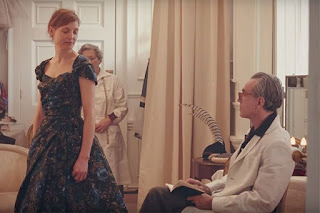
Written, directed, and shot by Paul Thomas Anderson, Phantom Thread is the story of a fashion designer who finds his muse in his need to design clothes for women during period of couture in 1950s London. The film is an exploration into the world of fashion and a man’s desire to create the perfect clothing for women as well as dealing with the women in his life who want what is best for him. Starring Daniel Day-Lewis, Vicky Krieps, and Lesley Manville. Phantom Thread is a ravishing and evocative film from Paul Thomas Anderson.
The film follows a fashion designer who creates clothes for some of richest and most powerful women in London during the 1950s as he finds a muse in a waitress from the British countryside as he has her modeling clothes for her as well as have help create these dresses. Along the way, the character of Reynolds Woodcock (Daniel Day-Lewis) deals with his need to create the perfect dresses with his sister Cyril (Lesley Manville) looking over the business and ensuring everything goes well. Even as they deal with the new presence in their house in Alma (Vicky Krieps) who would work sewing these dresses as well as be a model. Yet, Alma wants to do more not knowing about Woodcock’s routines as it’s something he needs in his time to create. Paul Thomas Anderson’s screenplay doesn’t just explore the obsession and need to create perfection in these dresses but also the need to feel appreciated for his work as he often works for some of the most important women in Europe.
While much of the film’s narrative is told from Alma’s perspective as she tells the story of how she met Woodcock one day when he goes to the country. It also establishes the world that Woodcock lives in as he spends much of his time during breakfast sketching ideas for dresses with Cyril sitting by silently knowing not to make any noise during that time. It’s something Alma would eventually understand as she would also realize she isn’t the first person to become a muse for Woodcock as they come and go. Her simple beauty and naiveté is what would attract Woodcock to her as he takes her to his country home after dinner to have her try on a dress with Cyril making notes of her measurements. She wouldn’t just be a muse/seamstress for Woodcock while working with other seamstresses but also someone who appreciates what he does when a dress he makes for one of his rich clients is treated with disrespect that angers Woodcock.
While much of the film’s narrative is straightforward, it’s Anderson’s study of the characters that are unique where he establishes them as who they are and the role they play into this very demanding world of high fashion. Woodcock is the artist who takes his time trying to create these gorgeous dresses as he would spend days to weeks trying to figure out the right material and measurements. Cyril’s role is in the business as well as making sure everything is in place where her brother isn’t distracted though she has to remind him of the people he’s working for as they pay for the house they live in. Though Cyril is a bit wary of Alma’s presence, she is welcoming to it to ensure that her brother can get ideas but warns Alma of disrupting routines and to not create any kind of chaos that could be surprising. Alma is someone who does follow the beat of her own drum as she wants to be more than just a collaborator to Woodcock. Yet, she would become frustrated as it would occur late in the second act through a simple act as it would play with Woodcock’s own state of mind and later his own emotions that would come to play in the film’s third act.
Anderson’s direction does bear elements of style in terms of the compositions he creates but also display an air of simplicity in the way he presents this very posh world of couture fashion. Shot largely on location in London and various parts of Great Britain along with bits of Switzerland, Anderson would display this world with a meticulous approach to his close-ups in how dresses are sewn as well as the great attention to detail in the measurements as well as the type of fabric that is needed. While there are also some wide shots for some of the film’s locations and a few of the dramatic scenes in the film. Much of Anderson’s direction emphasizes on close-ups and medium shots to play into the interaction with the characters as well as these elements of precise movements of how people come into the Woodcock house. Even as Anderson establishes the importance of Woodcock’s routine from the moment he gets out of bed, the clothes he decides to wear for the day, doing his sketches during breakfast, and working with his seamstresses on the dresses as he treats them quite fairly.
Also serving as the film’s cinematography, Anderson would try to capture every bit of detail into the look of the film including the way dresses are presented under natural lighting as the photography kind of harkens back to the days of Technicolor of the late 1940s/early 1950s. For the scenes in the countryside, it is presented in a much more different light where Anderson goes for something that is more natural as it would emphasize the growing tension between Woodcock and Alma. Notably in the third act where despite their fondness for each other, their differences in age and social backgrounds would come into play such as a New Year’s Eve party sequence is where Alma fits totally right in with Woodcock feeling out of sorts. Anderson’s usage of wide shots and tracking camera shots play into Woodcock’s own confusion that would eventually force him to contend with changing times that would emerge in fashion during the 1950s. Still, Anderson focuses on the relationship between the creator and his muse and the role they play for each other with Alma playing a role that is bigger than she realized. Overall, Anderson crafts an intoxicating and rapturous film about the mind of a fashion designer and the muse who inspires him.
Editor Dylan Tichenor does brilliant work with the editing as it display elements of style in its approach to jump-cuts and dissolves while knowing when not to cut during some of the film’s dramatic moments that includes some tense scenes in the third act. Production designer Mark Tildesley, with set decorator Veronique Melery and supervising art director Denis Schnegg, does amazing work with the look of the Woodcock home in London as well as the house in the country and some of the places he, Alma, and Cyril go to. Costume designer Mark Bridges does incredible work with the costumes from the look of Woodcock’s suits and clothes that he wears to the gorgeous dresses that he creates as it looks and breathes color where they act as characters of their own as it’s a major highlight of the film. Makeup designer Paul Engelen does fantastic work with much of the film’s minimal makeup that play into the style that women wore during the 1950s.
Special effects supervisor Chris Reynolds and visual effects supervisor Marc Massicotte do terrific work with a few of the film’s visual effects as it mainly consists of set-dressing for a few of the film’s locations. Sound designer Christopher Scarabosio and sound editor Matthew Wood do excellent work with the sound from the sparse approach to how objects sound during breakfast which would annoy Woodcock to some of the quieter moments in the film. The film’s music by Jonny Greenwood is phenomenal for its rich orchestral score with elements of lush string and piano pieces in the film that add to the elegance of the times while the music would include some classical pieces as well as some of the pop standards of the time before the arrival of rock n’ roll.
The casting by Cassandra Kulukundis is marvelous as it feature some notable small roles from Camilla Rutherford as Woodcock’s muse early in the film, Lujza Richter as the Belgium royal Princess Mona Braganza, Gina McKee as one of the Woodcock’s rich clients in Countess Henrietta Harding, Silas Carson as a rich man in Rubio Guerrero, Harriet Sansom Harris as a rich woman that is marrying Guerrero only to take poor care of the dress that Woodcock created, Emma Clandon as the picture of Woodcock’s mother, and Brian Gleeson as Dr. Robert Hardy as a young doctor who comes in to look over Woodcock as he befriends Alma. Lesley Manville is remarkable as Cyril as Woodcock’s sister and business manager who runs everything as well as ensuring that her brother’s routine keeps on going while being sympathetic to Alma’s needs in wanting to loosen things in his life.
Vicky Krieps is radiant as Alma as a young waitress who becomes Woodcock’s new muse/collaborator as she helps run bits of the household and does what she needs to be done as it’s a performance that has this mixture of naiveté and curiosity of a simple woman in a world that she’s new to but understands her role but wants to do more. Finally, there’s Daniel Day-Lewis in a tremendous performance as Reynolds Woodcock as this fashion designer that is intent on creating the best dresses for some of the most important women in the world. It’s a performance that has Day-Lewis provide bits of humor into his performance but also this air of obsession to achieve perfection with great care as well as displaying something has him be aloof in small moments. Day-Lewis would display amazing chemistry with Krieps and Manville in the way he deals with them while also showing vulnerability in the scene where Woodcock talks to Alma about his mother and her wedding dress which is something he cares so much about. If this performance is to be the last performance that he ever does. At least he is going on top.
Phantom Thread is a spectacular film from Paul Thomas Anderson that features great performances from Daniel Day-Lewis, Vicky Krieps, and Lesley Manville. Along with its gorgeous visuals, breathtaking costumes, intricate sound design, and Jonny Greenwood’s sumptuous score. It’s a film that explores a world that is unique in its time and a man’s willingness to create something special with the help of a young woman from another world. In the end, Phantom Thread is a magnificent film from Paul Thomas Anderson.
P.T. Anderson Films: Hard Eight/Sydney - Boogie Nights - Magnolia - Punch-Drunk Love - There Will Be Blood - The Master - Inherent Vice - Junun - Licorice Pizza - One Battle After Another
Related: The Short Films & Videos of P.T. Anderson - The Auteurs #15: Paul Thomas Anderson
© thevoid99 2018

Directed by Paul Thomas Anderson, Junun is a documentary film that follows Radiohead guitarist/composer Jonny Greenwood, Radiohead producer Nigel Godrich, Israeli composer Shye Ben Tzur, and the Rajasthan Express making an album at Mehrangarh Fort in Rajasthan, India. It’s a film that follows the creative process into making a record featuring a few outsiders who know little about the traditional music of India. The result is a fascinating and engrossing film from Paul Thomas Anderson.
Shot through digital camcorders and a drone belong to music producer Nigel Godrich in early 2015, the film follows the making of an album produced by Godrich that features Jonny Greenwood and Shye Ben Tzur making an album with the Rajasthan Express at the Mehrangarh Fort in Rajasthan, India. There, filmmaker Paul Thomas Anderson and a small crew would capture the recording process as well as what musicians had to do when there’s no electricity or running water during the process as it’s something Greenwood, Godrich, and Tzur would deal with. Yet, it would only inspire them even more as they become in tune with the local musicians and the location itself.
With Anderson, Godrich, and a few others serving as the camera operators throughout the film, they showcase this unique world where the fort is on top of a mountain. Anderson would use the drone for some unique aerial shots to capture the city of Rajasthan as it has these gorgeous wide shots while he would go for medium shots to capture the performance where he would have a camera in the middle of the circle to capture all of the musicians playing. Some of it would be in long takes while Anderson with the help of editor Andy Jurgensen would create edits that play into the music as well as how they would build a studio in the fort. Sound mixer Christopher Scarabosio would help capture the recording process and how Godrich would mix the music with the vocals recorded at one session and the music for another on a few tracks. The music in the film is a major highlight as its mixture of traditional Indian music with horns and electric guitars from Greenwood and Tzur create something that is just intoxicating and exciting to listen to.
Junun is a marvelous film from Paul Thomas Anderson. It’s an engaging documentary film that captures not just a unique world outside of modern society but also the music and how vibrant it is in an era that expects everyone to keep up with the times. In the end, Junun is a remarkable film from Paul Thomas Anderson.
P.T. Anderson Films: Hard Eight - Boogie Nights - Magnolia - Punch-Drunk Love - There Will Be Blood - The Master - Inherent Vice - Phantom Thread - Licorice Pizza - One Battle After Another
Related: The Shorts & Videos of P.T. Anderson - The Auteurs #15: Paul Thomas Anderson
© thevoid99 2017
Directed by Ron Mann and written by Len Blum, Altman is a documentary that explores the life and career of one of American cinema’s great artists in Robert Altman. Featuring audio interviews with his widow Kathryn Reed Altman, their children, and the people who had worked with him. The film plays into Altman and his peculiar approach to filmmaking and storytelling along with rare footage of behind-the-scenes footage and rare home movies provided by his family. The result is an enchanting and exhilarating portrait of one of American cinema’s great voices.
The term “Altmanesque” is something that best describes the style of the kind of films that Robert Altman makes which are based on real things that are happening with overlapping dialogue while refusing to play by traditional and conventional aesthetics that usually happens in mainstream cinema. For those that had worked with him and those like Paul Thomas Anderson who was inspired by him, it’s a term that means many thing. Especially to a man that didn’t live his life by conventional means as he was someone that liked to have a good time and treat his actors and collaborators as part of his family. It’s a film that isn’t just a tribute to Altman but also to his body of work which were all defined by its refusal to play by the rules whether they were successful or not.
Each chapter opens with a collaborator of Altman such as Lily Tomlin, Lyle Lovett, Sally Kellerman, Elliott Gould, Michael Murphy, Paul Thomas Anderson, Keith Carradine, Robin Williams, and several others to each define the term “Altmanesque” in their own way. These chapters would play into Altman’s early life where he served in the U.S. Air Force in World War II and later found his way into the film industry when he co-wrote the screen story for a film called Bodyguard in 1948 for RKO Pictures. The film would also play into Altman’s time doing industrial films and documentaries during the 1950s, his work on various TV series where he would meet his third wife Kathryn Reed, and his first films as a feature-film director where he would clash with studio heads about how to tell a story.
By the time he broke through with M.A.S.H. in 1970, things would definitely go up as Altman would often have his own family on the set where director Ron Mann would reveal not just a few rare short films but also some rare behind-the-scenes moments and such to show how Altman’s children were part of the set. Notably as his son Stephen would start out as a props man and later be his father’s production designer while Matthew Reed Altman would become a camera operator for much of his father’s films. The success that Altman would have for much of the 1970s where he was able to remain independent while working with studios gave him the chance to create a studio of his own in Lion’s Gate Films (not the US/Canada studio of the same name) that launched the career of Alan Rudolph and several others.
The film would play into Altman’s own innovations as a filmmaker where he would find new ways to record a lot of overlapping dialogue through little microphones on the actors while Altman and a sound mixer would find out which dialogue to use and how to mix it right the way to make it feel natural. While his innovations would be used for a lot of films by other filmmakers including Hollywood, the film also played into Altman’s own exile from Hollywood until 1992’s The Player where he made a big comeback. Some of the scenes that Mann would create would be presented through the work of art directors/animators Matthew Badiali and Craig Small who would create some background images of what Altman might’ve been doing during those times.
With the aid of cinematographer Simon Ennis in shooting some of the testimonies from Altman’s collaborators and Kathryn Reed Altman for its ending along with editor Robert Kennedy to compile footage of Altman’s earlier work and rare home films. Even as the sound work of John Laing would help play into Altman’s innovations in capturing overlapping dialogue while the music of Phil Dwyer and Guido Luciani is playful with its jazz-based score. Music supervisor Mike Rosnick would maintain that sense of playfulness with the music to play into the different periods of time.
Altman is a phenomenal documentary film from Ron Mann. It’s a film that anyone who loves the work of Robert Altman must see this not just for some of the rare home movies and interviews he does but also into a study of his methods. For anyone new to Altman might think of the film as a nice place to start though his own work is the best way to look into the man and his work. In the end, Altman is a remarkable film from Ron Mann.
© thevoid99 2015

Based on the novel by Thomas Pynchon, Inherent Vice is the story of a private investigator who is asked by a former flame to investigate the disappearance of her boyfriend as he goes into a wild and crazy adventure in 1970 Los Angeles. Written for the screen and directed by Paul Thomas Anderson, the film is a mystery-comedy that is set during the Charles Manson trials in a transition period from the 1960s to the 1970s as a man is taking on different cases in a world that is very chaotic. Starring Joaquin Phoenix, Josh Brolin, Reese Witherspoon, Benicio del Toro, Katherine Waterston, Owen Wilson, Jena Malone, Martin Short, Sasha Pieterse, Joanna Newsom, Jeannie Berlin, Maya Rudolph, Serena Scott Thomas, Martin Donovan, Michael K. Williams, and Eric Roberts. Inherent Vice is an off-the-wall yet exhilarating film from Paul Thomas Anderson.
Set in 1970 Los Angeles, the film revolves around a private investigator who takes part in the investigation of a millionaire as it leads to a series of strange cases involving real-estate, drugs, corruption, and all sorts of crazy things as Larry “Doc” Sportello (Joaquin Phoenix) copes with his work. It’s a film that has a lot to follow as Sportello is a known stoner/hippie who works as a private investigator as he is good at what he does despite not getting much respect from the authorities. Yet, his unconventional tactics do provide some results where he’s asked by his former flame Shasta (Katherine Waterson) to find a lover as it reveals to be part of something big as other cases involving another disappearance from a musician named Coy Harlingen (Owen Wilson) starts to come into play.
Paul Thomas Anderson’s screenplay definitely takes in the idea of a private investigator on a case that is set in a world that is very chaotic as Sportello is a person that is often associated with hippies. It’s an association that is dangerous as there’s tension between hippies and the police due to the recent murders by Charles Manson. That association hasn’t made things easy for Sportello as he would often give some information to a LAPD detective in Christian F. “Bigfoot” Bjornsen (Josh Brolin) who isn’t fond of Sportello but knows that Sportello. Bigfoot is among the series of many characters that Sportello would encounter as a lot of them are quite eccentric at times but also play into a world that is very chaotic as it represents a change that is looming in the air. Even as the world of hard drugs start to come into play as it would mark the beginning of the end of the 1960s and its ideals for a much more cynical world that is the 1970s.
Adding to the unique approach of the story is the narration as it’s told from the perspective of a friend of Sportello in Sortielge (Joanna Newsom) who is a small supporting character that definitely knows a lot about Sportello as she would often reveal his own flaws and his connection with Shasta whom he is in love with. It adds to the sense of melancholia in Sportello as he is motivated to find out why Shasta is in trouble as there’s a lot of very stylish dialogue that helps move the story. Especially as it plays to clues that Sportello has to figure out along with details which involves some very heavy revelations about what is happening and the sense of change that is coming. Some of which would prove to be uneasy for Sportello as he knows that he needs help in solving the case and to make things right for a few people.
Anderson’s direction definitely has an offbeat quality to the tone of the film where it has this strange mix of suspense, mystery, and humor as he shoots the film on location in Los Angeles and other nearby locations. Much of it involves these very simplistic yet entrancing compositions in its close-ups, medium shots, and wide shots along with some strange camera angles. There’s also some tracking shots that occur in the film while it’s kept to a minimum as Anderson is going for something that plays into a sense of time that is changing where things don’t make a lot of sense. Since it’s a story where a lot goes on, there are moments where the audience will find themselves lost which is probably what Anderson is intending to do as it plays into this world that Sportello is encountering where the parties become hazier and things are becoming darker. The direction also has these very comical moments that are very strange such as Sportello’s meeting with Harligen’s wife Hope (Jena Malone) where she shows him a baby picture as well as some of Sportello’s encounters with Bigfoot.
There’s also these little quirks that Anderson puts in as it relates to food such as the fact that Bigfoot always eats a chocolate banana while the feast for the hippies is pizza. These moments play into everything Sportello is encountering as it plays into a dangerous world of drugs and drug-trafficking that he doesn’t want to be a part of as there’s all of these things that emerge. Especially as Anderson’s direction has him diverting away from conventional ideas of storytelling where he would go into long and intimate takes to play into the conversations and the mysteries to unfold. The film’s climax plays into what Sportello is trying to discover as it is clear that it plays to a world that is changing as does the rules but he would do something that would show that he can accept these changes but not having to change his own principles. Overall, Anderson creates a very wild and sensational film about a private investigator going into a crazy adventure of intrigue and haze in 1970 Los Angeles.
Cinematographer Robert Elswit does amazing work with the film‘s colorful cinematography from the beauty of the Californian sun and beaches in its daytime exteriors to the use of lights and filters for some scenes set at night to help set a mood into the mysterious world that Sportello would encounter. Editor Leslie Jones does brilliant work with the editing in its approach to dissolves and jump-cuts to play into some of the sense of longing in Sportello as well as some of the film‘s offbeat humor. Production designer David Crank, with set decorator Amy Wells and art director Ruth De Jong, does excellent work with the set pieces from the look of the different houses that Sportello would go to as well as the LAPD building and his quaint home that shows who he is.
Costume designer Mark Bridges does fantastic work with the costumes from the ragged clothes he would wear as well as suits he would wear in disguise as well as the colorful and stylish clothing of the characters he would meet. Hair stylist Patricia DeHaney and makeup artist Susan Stepanian do terrific work with the hairstyles of the characters as well as some of the makeup the women wear plus the dental prosthetics by David Beneke for the teeth that Hope Harlegin has to sport due to her past drug addiction. Visual effects supervisor Paul Graff does nice work with some of the minimal visual effects that involve a few set-dressing scenes as well as some very strange moments where Sportello sees Bigfoot on TV.
Sound designer Christopher Scarabosio does superb work with the sound to capture some of the craziness of the house parties that Sportello would go to as well as the way some of the phone conversations play out. The film’s music by Jonny Greenwood is great as he brings in this mixture of eerie and melancholic orchestral music as well as strange and offbeat electric-folk pieces that includes an unreleased cut by his band Radiohead while music supervisor Linda Cohen brings in a fun soundtrack of music from Can, Neil Young, the Association, Minnie Ripperton, The Marketts, Kyu Sakamoto, Les Baxter, and Chuck Jackson as it plays to the tone of the times and the sense of change that is emerging.
The casting by Cassandra Kulukundis is phenomenal as it is a massive ensemble that features notable small performances from Jillian Bell as a hippie, Erica Sullivan as a doctor in a clinic Sportello visit, Jefferson Mays as the head of that clinic, Timothy Simons and Sam Jaeger as a couple of FBI agents who hover around Sportello’s investigation, Jordan Christian Hearn as Sportello’s assistant Denis, Hong Chau as a masseuse named Jade who helps Sportello out in the investigation, Keith Jardine as a biker with a swastika tattoo on his face, Elaine Tan as Dr. Blatnoyd’s secretary, Shannon Collis as a masseuse that Sportello meets early in the film, and Peter McRobbie as a dealer whom Sportello suspects that Bigfoot knows and doesn’t like. Other memorable small yet fun performances include Michael K. Williams as a Black Panther figure of sorts who tells Sportello about a turf he had lost, Jeannie Berlin as an informer of Sportello who knows about the wealthy Wolfmann family, Martin Donovan as a politician that Sportello previously met who might know something, and Sasha Pieterse as that politician’s daughter who hangs around with Dr. Blatnoyd.
Michelle Sinclair is superb as a sister of a dead suspect that meets with Sportello while Serena Scott Thomas is ravishing as the wife of a rich real estate man who is cheating on him. Maya Rudolph is wonderful as Sportello’s secretary Petunia as she is a pregnant nurse who is definitely smarter than Sportello while knowing he still has feelings for Shasta. Eric Roberts is terrific as the eccentric real estate mogul Mickey Wolfmann who disappears as he is connected to all sorts of things that intrigues Sportello. Martin Short is excellent as Dr. Blatnoyd as this offbeat dentist who has a penchant for cocaine as he is part of something secretive. Joanna Newsom is fantastic as Sortielge as a friend of Sportello who knows him very well as she is also this very intriguing observer. Jena Malone is amazing as Hope Harlingen as a former junkie and wife of Coy who gives Sportello information about her husband and why he might be alive. Owen Wilson is brilliant as Coy Harlingen as this musician who has disappeared as he is revealed to be something more as he is trying to hide from the people connected to these crimes.
Benicio del Toro is great as the attorney Sauncho Smilax Esq. as this oddball attorney who helps Sportello in the investigation while giving him information about some of the ins and outs of what is happening in Los Angeles. Reese Witherspoon is radiant as deputy D.A. Penny Kimball as a lover of sorts of Sportello who knows what is going on as she would help in uncovering parts of the mystery that is surrounding the case. Katherine Waterston is remarkable as Shay Fay Hepworth as a former lover of Sportello who returns in need of help as she has this evocative presence that is fascinating as she proves to be the one person that might understand him.
Josh Brolin is marvelous as Bigfoot as this straight-laced detective who despises hippies as he brings this very odd yet engaging performance as a man that is very intimidating but knows when Sportello is onto something and helps him. Finally, there’s Joaquin Phoenix in a tremendous performance as Larry “Doc” Sportello as this very weird stoner detective who is taking a case for his ex-girlfriend as he goes into a dangerous web of drugs and corruption as it’s a performance that has Phoenix be very funny. Even in scenes where he is treated as a foil while coping with times that are changing around him as it’s really one of Phoenix’s best performances.
Inherent Vice is a rapturous and truly off-the-wall film from Paul Thomas Anderson that features a great leading performance from Joaquin Phoenix. Armed with a brilliant supporting ensemble, a mind-bending premise, themes on a world that is changing, and a killer music soundtrack. It’s a film that refuses to define itself as it’s definitely not for everyone as it has so many twists and turns that will be hard to follow yet plays into a sense of haziness that goes into one man’s investigation to uncover the truth. In the end, Inherent Vice is a spectacularly odd yet dazzling film from Paul Thomas Anderson.
P.T. Anderson Films: Hard Eight/Sydney - Boogie Nights - Magnolia - Punch-Drunk Love - There Will Be Blood - The Master - Junun - Phantom Thread - Licorice Pizza - One Battle After Another
Related: The Shorts & Videos of P.T. Anderson - The Auteurs #15: Paul Thomas Anderson
© thevoid99 2015
Among one of the new American filmmakers to emerge in the mid-1990s, Paul Thomas Anderson brought new ideas to the world of film ranging from ensemble-driven pieces to visually-sprawling epics. In the late 1990s, he was among one of those who showcased a world that was different from the more stylish violence of Quentin Tarantino as he would later re-invent himself with each feature. In 2012, Anderson returns with his sixth feature film entitled The Master that explores the world of religious cults that is inspired by works of L. Ron Hubbard and Scientology.
Born in Los Angeles, California on June 26, 1970, Anderson grew up the son of a voice actor named Ernie Anderson who would encourage his son to venture into the world of film. During those years as a kid where he would make all sorts of films, Anderson would discover the films of filmmakers like Robert Altman, Martin Scorsese, and Stanley Kubrick as they would be influential with his career. In the late 1980s, Anderson made a short that would later become a feature film in the years to come as it was entitled The Dirk Diggler Story about a well-endowed 70s porn star.
During the late 1980s, Anderson worked as a production assistant for all sorts of projects in Los Angeles and New York City where he would eventually meet famed character actor Philip Baker Hall. It was his meeting with Hall where Anderson would create a short that starred Hall as it would later become a feature project. The short called Cigarettes and Coffee revolved around the lives of five people and a twenty dollar bill as it got the attention in short film festivals around the U.S. that led to Anderson being part of the Sundance filmmakers lab. With Michael Caton-Jones serving as his mentor during the lab sessions, Anderson would expand the ideas of his short into a full-length feature film.
Hard Eight
Following his period in making Cigarettes and Coffee and being part of the Sundance filmmakers lab, Anderson would use his limited experience to craft a story about an aging gambler teaching a man how to gamble and survive in the world of Nevada gambling. The project would be called Sydney as Anderson would have Philip Baker Hall play the titular character. During his time in Sundance, Anderson received a deal with Rysher Entertainment to create the film. It was a big moment for someone who hadn’t proven to be a capable filmmaker but Anderson had a lot of support to make the project.
With Hall slated to appear in the film, Anderson would also get a few up-and-comers for the project as it would include John C. Reilly as Sydney’s protégé John, Gwyneth Paltrow as John’s girlfriend Clementine, and Samuel L. Jackson as John’s friend Jimmy. The cast would also include small appearances from actors who would become regulars of Anderson’s future films, along with Hall and Reilly, that includes Philip Seymour Hoffman, Melora Walters, and veteran character actor Robert Ridgely. The actors Anderson worked with would help shape his project into something special as Anderson sought the influence of Robert Altman in how to work with actors.
The project would also include some other individuals who would be part of Anderson’s collaborative team as it includes cinematographer Robert Elswit and music composers Jon Brion and Michael Penn. Elswit would provide the visual style Anderson would want to shoot the nightlife of places like Las Vegas and Reno. Brion and Penn would create a low-key score that was considered unconventional in comparison to a lot of films. Notably as the music is often atmospheric with Brion’s arrangements of bells and vibraphones that is mixed in with the folk-jazz music of Penn.
In wanting to make a film that was different from films about gambling and violence, Anderson relied on a theme that he would explore throughout the entirety of his career. Leading the story is the character Sydney as he’s a man with a dark past as he helps a young man show the way and later become a father figure for this man and his hooker-girlfriend. There, they become this unconventional family as it’s led by this aging man who knows how to take care of these two young people who mean well but are also inept in handling situations. Even as Sydney is carrying a secret that very few knows about as Anderson would use dialogue and action to help tell the story where it would lead to this climatic moment of Sydney reverting back to the darkness he tried to run away from.
Following its completion in early 1996, the film was seen by the executives of Rysher Entertainment who were not happy with the film as they decided to re-cut it without Anderson’s consent. Still carrying a work print version of the film, Anderson submitted his version to the 1996 Cannes Film Festival in its Un Certain Regard section where it got a wonderful reception. Following its success at Cannes, Anderson was able to get his re-worked version of the film, now titled Hard Eight, released in early 1997 despite no promotion from Rysher. The film eventually received critical acclaim as it marked Anderson’s arrival into the world of films.
Boogie Nights
After the release of Hard Eight, Anderson decided to forge ahead with his next project that was based on his late 80s short The Dirk Diggler Story. Wanting to make a much more ambitious, ensemble-driven film, Anderson expanded his short into a story about a dysfunctional group of people who work together to make porno films in the late 1970s. Entitled Boogie Nights, Anderson would get the attention of New Line Cinema studio president Michael De Luca who read Anderson’s script and wanted to have the project in production. With the help of producers Lawrence Gordon and Lloyd Levin on board, the project would definitely be made with Anderson having lots of control.
With collaborators like cinematographer Robert Elswit, music composers Michael Penn and Jon Brion, and editor Dylan Tichenor (who had served as a post-production consultant on Hard Eight) on board. Anderson would also expand his collective of actors that already consisted of people like Philip Baker Hall, John C. Reilly, Melora Walters, Philip Seymour Hoffman, and Robert Ridgely as they each got to play key parts for the film. The expanded ensemble would include Burt Reynolds, Mark Wahlberg, Julianne Moore, Heather Graham, Don Cheadle, Nicole Ari Parker, Ricky Jay, Alfred Molina, William H. Macy, Luis Guzman, and Thomas Jane. The project would also include porno actors from the 1970s as Nina Hartley and Veronica Hart in small roles while Ron Jeremy served as a consultant for the project.
The project would be shot in Anderson’s native Los Angeles around the San Fernando Valley as Anderson would refine some of the visual traits of Hard Eight for something more stylish. Notably in the tracking shots that he would create such as the film’s opening sequence where Anderson wanted to introduce every character in a nightclub that would be important to the story. It would be this long, three-minute tracking shot that would be among the many stylistic touches that Anderson would put as he is interested in the characters that are being introduced as well as the world they live in. While it’s a world that is filled with sex, drugs, and disco music with these people who are quite dysfunctional and don’t have it together. It’s still a world that offers love and a chance for someone like Wahlberg’s Eddie Adams to become a star as he would rename himself Dirk Diggler.
Since the film is a period piece that is set in the late 70s and early 1980s, Anderson wanted to make sure that the film stayed true to those periods while emphasizing about the quality of the porno movies made in the 1970s. Driven by Burt Reynolds’ Jack Horner character, Anderson wanted Horner to be more than just porno filmmaker. He wanted Horner to be a man that strives to put substance into these porn films by incorporating a story and characters for audiences to enjoy. Helping him would be these people who are good people despite their flaws as he acts like a father figure for them while Julianne Moore’s Amber Waves characters becomes a mother for Dirk and the young porn star Rollergirl (played by Heather Graham).
Taking cues from the filmmakers he was influenced by, Anderson knew that the story would have to take a shift of sorts as he created this amazing scene in a New Year’s Eve party that would introduce a few characters like Philip Baker Hall’s Floyd Gondoli and Thomas Jane’s Todd Parker as their presence would set the wave for the changes to come. Anderson’s second half that is set in the 1980s is a much darker section where the family splinters and everyone is facing their own individual issues such as drugs, money, and dealing with prejudice for their association with porno. This would lead to a very climatic moment where Dirk, Todd, and John C. Reilly’s Reed Rothchild would meet up with a crazed drug dealer in Rahad Jackson (Alfred Molina) in one of the most chilling moments of the film.
The film made its premiere at the 1997 Toronto Film Festival where it was a major hit as it was later released to theaters in the U.S. a month later. The film would become Anderson’s breakout feature as it drew rave reviews as well as a being a hit in the box office. The film would also give Burt Reynolds a major comeback as he won a Golden Globe for Best Supporting Actor while receiving an Oscar nomination for the same category. The film would also serve as major breakthroughs for Mark Wahlberg, Julianne Moore, and Heather Graham as they would star in big time productions for the years to come. For Anderson, it would be the major start of a flourishing career.
Magnolia
The success of Boogie Nights allowed Anderson to have the chance to do anything he wants. For his next film, Anderson decided to take his ambitions one step forward into a much richer, more multi-layered project that revolves around a group of people on one particular day in Los Angeles. The project would be entitled Magnolia as Anderson was inspired by magnolia trees as he would aim for something that was grander and filled with multiple themes involving redemption, regret, and loneliness.
Taking place once again in the San Fernando Valley, the project would be driven more by the characters and their actions as the film would also revolve around people seeking some form of love around them. The cast would be bigger than Boogie Nights as many of them returned to appear in this project. Among them are Philip Baker Hall, Philip Seymour Hoffman, William H. Macy, Julianne Moore, Melora Walters, and John C. Reilly in crucial parts of the film while others like Alfred Molina, Ricky Jay, Thomas Jane, and Luis Guzman would take on small appearances. Added to the cast in key parts of the film would be Jeremy Blackman as a young game show contestant, Jason Robards as an ailing old man, and Tom Cruise as a self-help guru.
The film would feature characters who have very little connection with one another as it revolves around many stories. A game show host who learns that he’s dying as he’s trying to reconcile with his estranged, self-destructive daughter. A man who was on that game show is trying to deal with being fired as he deals with loneliness. A boy who is about to be on a game show as he succumbs to pressure on the night of his big moment. A wife of an ailing rich man dealing with the fact that she married him for money as she asks to be taken off the will only to realize where the money will go. An old, dying man who asks his nurse to find his estranged son whom he wants to make amends to. A police officer trying to find a murderer as he later goes on a date. Finally, there’s a self-help guru who is interviewed by a reporter as she tries to break into his persona to find out his past.
The complexity of the screenplay would have Anderson find ways for these characters to interact with one another as everyone seems lost on a day that would test them. Notably in the film’s second act where the emotions start to creep in as everyone starts to face their troubles. Some of which includes scenes where Hall’s Jimmy Gator character is feeling tense about Blackman’s Stanley Spector not answering a question as he wants to go the bathroom. This would get inter-cut with numerous scene such as Cruise’s Frank T.J. Mackey character given hard questions as he sits in silence while Hoffman’s Phil Parma is trying to contact him through Mackey’s group of assistants.
This would lead to a big third act where characters would do things in acts of desperation such as Macy’s Donnie Smith character or Reilly’s Officer Jim Kurring character as he goes on a date with Gator’s daughter Claudia (Melora Walters). Julianne Moore’s Linda trying to kill herself as Frank finally meets his dying father in one of the film’s emotional moments. This would follow by one of the strangest moments in film as it relates to a prologue about coincidences. Even as it features an aftermath that has all of the characters just figuring out what is going on as they would connect with one another.
Adding to film’s emotional punch would be its music as Jon Brion provided a score that was much bigger than his previous work as it would incorporate his own sensibilities with lush yet broad orchestration. Contributing to the music would Aimee Mann as she provided many material that would play to the story as her song Wise Up would be among one of the film’s key moments as characters would sing a line to express the sense of loss they’re dealing with. Mann’s Save Me would be another moment for the film’s soundtrack as it would give Mann an Oscar nomination for Best Song.
The film was released in December of 1999 via limited release despite New Line Cinema’s issues with its length and marketing strategy. The film managed to do well in the box office while it was lauded by a lot of critics who praised Anderson’s ambition. The film got a wider release in January 2000 while a month later at the Berlin Film Festival, the film won the festival’s top prize in the Golden Bear. At the Academy Awards, the film garnered three Oscar nominations that included for Best Original Screenplay as well as a Best Supporting Actor nod for Tom Cruise. The film would elevate Anderson’s stature as one of the best filmmakers working in American cinema.
Punch-Drunk Love
After the success of Magnolia, Anderson took a break from feature filmmaking to work on smaller projects including directing music videos for then-girlfriend Fiona Apple. It was around that time that Anderson wanted to do something different as he wanted to scale back his ideas. While Anderson was an admitted film buff, he was also someone who had taste for mainstream films as he openly admitted to enjoy the films that starred comedy actor Adam Sandler. Anderson wanted to work with Sandler on a project as the two decided to collaborate on what would be Anderson’s fourth film.
While the film would feature appearances from regulars Philip Seymour Hoffman and Luis Guzman in small roles, it would be focused largely on Sandler’s Barry Egan character as Anderson wanted to tell the story of this lonely, troubled man who has anger issues as he falls for a mysterious woman. The film would explore loneliness in a more intimate setting as the film would be a love story but also a character study as it would revolve around this man. A man who feels lost in the world looking to connect and then find himself in trouble where he suddenly finds a reason to fight for the woman he loves.
The film would once again be set in Los Angeles as Anderson decided to aim for a very different look and feel to the film. With regular cinematographer Robert Elswit, the two devised a look where they went for something more grainy in underexposed light in order to create something that was almost dream-like. Notably in many of the film’s interiors and nighttime exteriors as it aimed for something that was a bit low-budget in its look.
Part of the film’s unique visual style would include interludes by artist Jeremy Blake that played to the dreamy aspects of the film. Even in scenes where Barry dwells into something that is dreamlike as he falls for Emily Watson’s Lena Leonard character. One piece of music that is played in a scene where Barry boards a plane to Hawaii is a remix of a Harry Nilsson-penned song He Needs Me sung by Shelley Duvall from the 1980 Robert Altman film Popeye. It’s a moment where Anderson becomes unafraid to create something that is romantic as well as establish something that could progress Barry’s love for Lena.
With Jon Brion providing the score for the film, Brion would also play a key role in contributing an idea to the film as one of the key elements to the film’s plot is a harmonium that Barry would find and care for. Brion would use the harmonium as a key part of his score as it plays to the sense of romance and whimsy that Anderson wanted for the film. Brion would also delve into lush orchestration for Blake’s interludes to add to the film’s romantic tone.
The film made its premiere at the 2002 Cannes Film Festival where it was well-received as Anderson won the festival’s Best Director prize. Despite the critical acclaim it received as well as a Golden Globe nomination for Adam Sandler, the film didn’t do well commercially. Yet, its reputation would grow in the coming years as many filmmakers like Judd Apatow named it as one of his favorite movies. The film would mark the last time Anderson would work with Jon Brion as well as the start of a five-year hiatus.
There Will Be Blood
After the release of Punch-Drunk Love, Anderson took a break from filmmaking as he maintained a private life with his then-girlfriend and future wife in comedy actress Maya Rudolph. In 2005, Anderson was asked by Robert Altman to be a backup director on what would be Altman’s final film in 2006’s A Prairie Home Companion. With Anderson used for insurance reasons, Anderson would help his mentor in creating a rich ensemble film that also starred a pregnant Rudolph as the film would be a critical and modestly-commercial hit for Altman. During Anderson’s hiatus from filmmaking, he had discovered the work of novelist Upton Sinclair as he approached writer Eric Schlosser about an adaptation of Sinclair’s 1927 novel Oil!
After a script about feuding families went nowhere, Anderson turned his attention to Oil! as he wrote a screenplay that would extremely different from the novel as he later titled it There Will Be Blood. The story would revolve around a miner who turns into an oilman as he seeks wealth in the most brutal ways as he contends with a young preacher during the Southern California oil boom of the early 20th Century. The project would be a far more ambitious film than anything Anderson would make as it would revolve on larger themes on family, greed, faith, and morality set in a crucial time during the oil industry.
Realizing that the project would be a major departure from everything he had done prior, Anderson decided to forgo many of his tricks as well as his regular actors for something far more different. While he did retain collaborators like producers JoAnne Sellar and Daniel Lupi, cinematographer Robert Elswit, editor Dylan Tichenor, sound designer Christopher Scarabosio, and casting director Cassandra Kulukundis. Anderson decided to expand his collaborators by gaining the services of famed production designer Jack Fisk. Famous for his work with Terrence Malick and David Lynch, Fisk would help create sets for Anderson to play up the period of the early 20th Century.
For the role of Daniel Plainview, British actor Daniel Day-Lewis was chosen as he would portray a man consumed by greed and the pursuit of power in the oil industry. With Day-Lewis already set for the film where it was shot largely in Marfa, Texas, there were casting issues already made for the of the young preacher Eli Sunday. Actor Paul Dano, who was originally going to play the small role of Eli’s twin brother Paul, was immediately cast to also play Eli based on Day-Lewis’ suggestion. With Ciaran Hinds and Kevin J. O’Connor cast for small parts while young actor Dillon Freasier plays Plainview’s adopted son H.W., the film was underway.
Wanting to stray from his usual visual tricks, Anderson decided to aim for much bigger compositions with wide shots and moments to create something that was powerful. It was to present something that was grand that lived up to the character of Daniel Plainview as he pursues untold riches through oil. Scenes such as the oil well explosion that is later followed by a beautiful yet unsettling scene of fire establishes the kind of greed seen in Plainview. Yet, it plays into Anderson’s themes of men who likes to sell themselves in order to gain something. Another character who is similar to Plainview is Eli Sunday in the way he uses religion as he tries to become a big preacher. The two would have confrontations that is often dominated by Plainview. Notably in the film’s final moments where Plainview would do something to Eli in the same way Eli tried to humiliate Plainview at a church some years earlier. It would be a moment that is unsettling but also show a lot of truths about the corruption of men.
Another new collaborator that would join Anderson’s team is Radiohead guitarist/multi-instrumentalist Jonny Greenwood. Being a fan of Radiohead and Greenwood’s score work for the 2003 documentary Bodysong, Anderson asked Greenwood to create a score for the film. Greenwood took on the project as he would create an orchestral score that was unlike anything as it was filled with percussion breaks and menacing string arrangements. The score would play up to the world of greed as Greenwood unleashed music that lived up to what Anderson wanted.
The film was released during the Christmas holidays in 2007 as it drew outstanding reviews where it landed in many critics’ top ten list as well as winning top prizes from the Los Angeles Critics Association and the National Society of Film Critics. The film would win 8 Oscar nominations where it won two Oscars for Robert Elswit’s cinematography and the Best Actor prize to Daniel Day-Lewis. The film also became a hit in the box office as it would raise Anderson’s stature as one of the great filmmakers working in cinema.
The Master
After another break following the release of There Will Be Blood, Anderson kept a low profile during his sabbatical as he staged a 70-minute play that featured wife Maya Rudolph and comedian Fred Armisen that also included live music by Jon Brion. It was during this time that Anderson was writing his next project as it was inspired by the founding of Scientology and its leader L. Ron Hubbard. News of the project was finally confirmed in late 2009 as Anderson was still writing the script for what would become The Master.
The story would be set in the aftermath of World War II as it followed a sailor by the name of Freddie Quell who finds himself lost in the world as he stumbles around a boat that leaves San Francisco Bay. On that boat is the leader of a newly-founded religion known as the Cause that is led by a man named Lancaster Dodd. Dodd would take Quell as his protégé as he teaches him his unconventional ideas about life and the universe. During the course of this time, both Dodd and Quell would struggle with themselves just as the Cause is starting to catch on during the early 1950s.
The project would once again have Anderson tackle the theme of family and men who sell themselves for a greater cause. Unlike some of the characters that Anderson had explored in the past, the Lancaster Dodd character would be very unique as he is a man that is trying to sell his ideas to the public at large yet comes under a lot of scrutiny when those dare to question him. Then there’s Freddie Quell who is a man that is completely a loose cannon who is obsessed with sex and likes to drink as an act of defiance. For these two men to come together, it would give them a chance to take Dodd’s teachings to new heights while giving Quell a place that he can belong to.
With the exception of regular collaborators in cinematographer Robert Elswit and editor Dylan Tichenor as both men were unable to participate due to other commitments. Anderson was still able to get production designer Jack Fisk, sound designer Christopher Scarabosio, co-sound editor Matthew Wood, costume designer Matthew Bridges, music composer Jonny Greenwood, and casting director Cassandra Kulukundis on board. Leslie Jones, who had edited Punch-Drunk Love came on board to co-edit the film with Peter McNulty while Anderson also hired Romanian cinematographer Mihai Malaimare Jr. to shoot the film.
With Philip Seymour Hoffman reuniting with Anderson to play the role of Lancaster Dodd, there were several casting prospects slated for the film. Jeremy Renner was originally on board to play Freddie Quell while Reese Witherspoon was in the line to play Peggy Dodd. Instead, Joaquin Phoenix nabbed the part of Quell while Amy Adams got the part of Peggy. After difficulty in securing financing for the film with different studio attached to distribute, shooting finally began in the summer of 2011 around parts of California.
In the age where filmmakers were debating about the advantages of shooting on digital instead of film. Anderson decided to shoot the film in 65mm which was audacious for a filmmaker like him. With that announcement, it was clear that Anderson was siding on shooting his movie on film instead of changing with the times to go digital. The idea to shoot on a format as rare as 65mm would give Anderson the chance to widen his canvas even more as he wanted to create a film that was reminiscent of the epics made in the 1960s.
With the film slated for a fall 2012 release, Anderson held surprise screenings in late August on the 70mm format around parts of the country in order to create not just buzz for the film but to give a generation of filmgoers a chance to see a film in a rare format. The film made its world premiere at the Venice Film Festival a month later where it won the Silver Lion for Anderson for Best Director and the Best Actor Volpi Cup to Philip Seymour Hoffman. Yet, the rules of the festival would not allow the film to win the festival’s top prize in the Golden Lion. Still, its special screenings and success at Venice and at the Toronto Film Festival has allowed the film to gain a lot of buzz as it would add to Anderson’s status as one of the world’s best filmmakers working today.
With another project in an adaptation of Thomas Pynchon’s Inherent Vice slated to be his next project, Paul Thomas Anderson has already cultivated enough work to make a darling in the world of American cinema. Whether it’s films about a dysfunctional group of people who become a family, men who feel out of sorts with the world, or those that crave for something bigger only to lose sight of things. Only someone like P.T. Anderson could take on these stories and make it something that is very different from what a lesser filmmaker would do. That is why Paul Thomas Anderson is among the best working today and whatever project he’ll do next, there‘s always going to be a level of excitement as he‘ll create something filmgoers will be amazed by.
The Shorts & Videos of P.T. Anderson
© thevoid99 2012


