Showing posts with label philip baker hall. Show all posts
Wednesday, January 18, 2017
Zabriskie Point
Directed and co-edited by Michelangelo Antonioni and screenplay by Antonioni, Franco Rossetti (as Fred Gardner), Tonino Guerra, Clare Peploe, and Sam Shepard from a story by Antonioni, Zabriskie Point is the story of a college dropout whose presence at a student protest has him go on the run to the Zabriskie Point desert where he meets a young woman on the way. Set against the American counterculture of the 1960s, the film is an exploration of identity and ideals as a young man and woman deal with their surroundings during a tumultuous period toward the end of the 1960s. Starring Mark Frechette, Daria Halprin, and Rod Taylor. Zabriskie Point is a ravishing yet eerie film from Michelangelo Antonioni.
The film is a stylish and poetic telling about two different people who both go on different journeys where they meet on their way to their respective destinations as they visit Zabriskie Point near Death Valley. It’s a film that doesn’t really have much of a plot yet it is more about two people who are part of two different environments as they become overwhelmed by those surroundings. The film’s screenplay is very loose as it play into not just the world of the American counterculture as it becomes more desperate to fight back and go into revolutionary tactics but also the corporate world as it becomes more prominent in its rise while the counterculture is in the decline. The two protagonists in a college dropout named Mark (Mark Frechette) and an anthropology student named Daria (Daria Halprin) are both people part of different kind of scenes but it’s the former that has become dissatisfied.
The opening scene is set in a meeting where Mark realizes all of this talking about what to do has made him bored as he tries to make sense of what is going on. Especially when people he know are going to jail in protests and such while he is aware of what is emerging outside of the counterculture. When he finds himself in part of a scuffle with police as it goes all wrong, he escapes by stealing a small plane and fly around California. The character of Daria is more complex as she’s just a student who works part-time as a secretary for a corporate businessman (Rod Taylor) who is planning to create housing in some remote land in the American Southwest. Daria would drive to Phoenix as she would encounter strange things in her journey until she is met by Mark on his plane as the two would meet as the film then takes a different turn once they venture into the mysterious valley known as Zabriskie Point.
Michelangelo Antonioni’s direction is definitely mesmerizing not just visually but also in the way he aims for something that is unconventional in its American setting. Shot largely on location in Los Angeles and around Carefree, Arizona with scenes shot on location in Zabriskie Point, the film play into not just this sense of chaos that is looming into the counterculture where non-violent protests have given way to violence on both sides. Antonioni’s direction for these meetings and protests are presented in a somewhat documentary-like fashion as it display Mark’s own sense of alienation as he is aware of desperate the counterculture has become but also know what is emerging. Antonioni’s visual approach to display this emergence of capitalism and materialism through ads including a commercial about a real estate venture in the desert is very eerie as it relates to what would happen in American culture. Antonioni would often have ads in the background whereas a character such as Mark would be in the foreground. For Mark, it is overwhelming as his attempt to take part in a protest after being arrested for trying to bail out a friend gets him into trouble where he would steal a plane and fly around the American Southwest. Antonioni’s usage of wide shots allow him to take a great depth of field to showcase the Zabriskie Point valley at its most vast as it is centerpiece of the film’s second half.
Especially as it play into elements of fantasy of what Mark and Daria want in their idea of free love where it’s all about not worrying about the realities of the world. It is a sequence that is quite surreal but also contain some gorgeous imagery where Antonioni’s usage of close-ups, medium shots, and wide shots add so much to something that feels lose and free. Antonioni would include also include moments that are strange as it relates to the reality of America that Daria from her encounter with children at a town to eventually arriving at her destination. The latter which serves as its climax is set in this very quaint and posh environment that is beautiful but it’s also very suffocating. It would lead to an ending that is about that disdain of the growing sense of materialism and capitalism that would dominate the ideas of America. Overall, Antonioni creates an intoxicating yet startling portrait of alienation and the emergence of a more controlled and consumerist society in the waning days of the counterculture.
Cinematographer Alfio Contini does brilliant work with the film‘s very vibrant and colorful cinematography to capture some of the locations in and around Los Angeles to the look of the desert with its naturalistic and beautiful imagery as it is a major highlight of the film. Editors Michelangelo Antonioni and Franco Arcalli do excellent work with the editing with its usage of jump-cuts and some stylish montages for the free-love sequence while aiming for moments that go on for a few minutes without the need to cut immediately. Production designer Dean Tavoularis and set decorator George R. Nelson do amazing work with the look of the posh resort home at the film‘s climax as well as the design of the offices and the diner that Darla goes to.
Costume designer Ray Summers does nice work with the costumes as it mostly casual with bits of stylish clothing that play into the world of the counterculture and Corporate America. Sound recording supervisor Franklin Milton does superb work with the sound as it play into the way the plane sounds in the air as well as the chaos in the protests and in city life to the more quiet world of Zabriskie Point. The film’s music soundtrack is incredible as it feature some original score music from Pink Floyd with its usage of progressive and post-psychedelic rock to the Americana-based rock of the Grateful Dead with a piece by Jerry Garcia. The rest of the soundtrack includes pieces from John Fahey, Kaleidoscope, the Youngbloods, the Rolling Stones, Patti Page, and Roscoe Holcomb that is a mixture of rock and country while the American release version of the film features a song by Roy Orbison that is an odd placement for the film‘s final credits as it was something MGM put in against Antonioni‘s wishes though the song is great but doesn‘t fit in with the context of the film.
The casting by Sally Dennison is fantastic as it features appearances from Harrison Ford as a student in jail, Philip Baker Hall as a deli owner, Bill Hickman as a gun store owner, Bill Garaway as Mark’s friend Morty, Paul Fix as a diner owner, Kathleen Cleaver as a secretary, G.D. Spradlin as an executive, Sam Shepard as one of the people in the free-love sequence, and Rod Taylor as Daria’s boss/possible lover Lee Allen who is trying to put some housing in the desert as he thinks it is the future of American living. Finally, there’s the duo of Daria Halprin and Mark Frechette in their respective roles as Daria and Mark as two individuals lost in their world as both of them are excellent as they’re not given much to do but be natural and react to the chaos their surroundings.
Zabriskie Point is a phenomenal film from Michelangelo Antonioni. Featuring dazzling visuals, a sprawling soundtrack, and eerie themes on alienation and changing times. It’s a film that is definitely confrontational in some respects but also tell a lot of truth about what would emerge in the aftermath of the counterculture and the fallacies of revolutions that was so prevalent in the 1960s. In the end, Zabriskie Point is a tremendous film from Michelangelo Antonioni.
Michelangelo Antonioni Films: (Story of a Love Affair) - (I Vinti) - (The Lady Without Camelias) - Le Amiche - (Il Grido) - L'Avventura - La Notte - L'eclisse - Red Desert - Blow-Up - (Chung Kuo, Cina) - The Passenger - (The Mystery of Oberwald) - Identification of a Woman - (Beyond the Clouds) - Eros: The Dangerous Thread of Things
© thevoid99 2017
Sunday, September 21, 2014
In Good Company
Originally Written and Posted at Epinions.com on 1/14/05 w/ Additional Edits & Revisions.
Written and directed by Paul Weitz, In Good Company is a lighthearted comedy about a 51-year old ads salesman for a top sports magazine who has been demoted after a corporate shakeup and buy when he's forced to work under an inexperienced, 26-year old man. With a new child due, tuition to be paid for his older daughter at NYU, and a second mortgage taken out, the old man is in a tough position in his life while seeing colleagues being fired. Meanwhile, his younger boss is dealing with his own insecurities, failed marriage, and trying to impress his corporate bosses while dating his employee's daughter. A wonderful examination of the corporate world, Weitz delivers a smart and sweet film that works on most levels only to be hit hard with his own ideals. Starring Dennis Quaid, Topher Grace, Scarlett Johansson, Marg Helgenberger, David Paymer, Philip Baker Hall, Clark Gregg, Selma Blair, John Cho, and Malcolm McDowell. In Good Company is an enjoyable yet compelling film from Paul Weitz.
For the 51-year old Dan Foreman (Dennis Quaid), his life seems to be charmed until he hears rumors that his Sports America magazine company might be bought by the conglomerate Globecom owned by billionaire Teddy K. (Malcolm McDowell). After a trip to meet with his client and friend Eugene Kalb (Philip Baker Hall), he goes home to learn that his wife Ann (Marg Helgenberger) is pregnant with a third child. Already having two children with Jana (Zena Grey) and college-bound tennis prodigy Alex (Scarlett Johansson), a third child might seem to calm him. Instead, Sports America is bought with his fellow colleagues including Morty (David Paymer) worrying about being fired. Then Dan learns that he's going to be demoted by a young 26-year old cell phones salesman in Carter Duryea (Topher Grace) who is also working along with Globecom man Steckle (Clark Gregg). Dan learns that his old office will now be Carter after he meets him.
The stress couldn't be worse for Dan when he learns that Alex has been accepted to NYU meaning that he's forced to take out a second mortgage and pay for his daughter's tuition. With Alex now moving to the NYU dorm, Dan's new life under as a wingman for Carter is going to be tough, especially with fellow colleagues being let go, including best friend Morty. Carter's life meanwhile is also falling apart as his wife of seven months Kimberley (Selma Blair) is leaving him forcing Carter to live in an apartment and sometimes at the office. After a last-minute meeting on a Sunday, Carter invites himself to eat at Dan's house where he sees Alex as the two begin a conversation.
With Carter instigating a plan for "synergy" to mix products that have nothing to do with each other like computers in a sports magazine, Dan couldn't help but give in to Carter's energetic attitude. One day, Carter bumps into Alex as the two have another heart-to-heart conversation that suddenly leads to a secretive romance forcing Alex to not talk to her father for a while. Dan becomes suspicious, even when his business life is turned upside down after a concert meeting with one of Carter's colleagues (John Cho) where Dan couldn't do business with another person due to corporate rivalry. With Carter and Alex's romancing blossoming, Dan becomes more suspicious that leads to an emotional confrontation. Even with Dan's life falling apart, Carter is forced to grow up to see what has been going on, even as Teddy K. visits where he is forced to learn about the soulless world of corporate conglomerates.
While In Good Company doesn't have the emotional strength of About a Boy, Paul Weitz deserves credit for going into that deep world of corporations and conglomerates including a heavy scene with Malcolm McDowell that almost suggest something of an evil movement. Weitz's study of the corporate world and morals is very spot-on but his idealism in the third act isn't very realistic since the corporate world isn't very nice at all. The subplots involving the Alex/Carter romance and the situation involving David Paymer's characters are well-written for the script since it gives the movie a new sense of energy and pace to Weitz's direction that is very dead-on in the situations of comedy and drama.
The film is masterfully presented to Weitz's lighthearted approach to the film with a lot of credit to the cinematography of Remi Adefarasin who brings a lovely, colorful look to the film with help from production designer William Arnold and art directors Sue Chan and Fred Kolo for its detailed look of corporate buildings. With Molly Maginnis doing great work on the costume design, notably for Johansson's character, the film looks great without being too superficial. The editing by Myron Kerstein is very well-paced, notably the meeting of Carter and Dan that is almost like a scene from Sergio Leone's The Good, the Bad, & the Ugly. The film's score by Hedwig & the Angry Inch composer Stephen Trask is very lighthearted to the film's tone with music by Peter Gabriel, the Soundtrack of Our Lives, and David Byrne.
The film carries some wonderful performances in smaller roles from Colleen Camp, Zena Grey, John Cho, Selma Blair, and the always-brilliant Malcolm McDowell in his devilish role as Teddy K. Clark Gregg is excellent as the corporate brown-noser Steckle who worships at the altar of Teddy K. Philip Baker Hall is excellent in his brief role along with Marg Helgenberger who provides some of the comedy and dramatic foil for Quaid's home life. The film's real standout in the supporting cast goes to David Paymer in a role many can sympathize with since he’s a guy who is trying to work hard in his business while we feel sorry for him when he's fired, especially in a tough scene that included a post-firing scene with Quaid that balances comedy and drama though it would've been nice to see him more.
Scarlett Johansson delivers a charming, marvelous performance as Alex. Instead of making her into a typical girl who goes after a guy, Johansson brings some depth to her character early on when she seeks love for her scenes with Grace while as she develops, she learns of the sacrifices her father had to make in a very poignant scene. Johansson proves herself again to be a very smart, capable actress who can shine in tricky situations though, in the third act following a scene with Grace was very unnecessary.
Topher Grace is the film's real breakthrough as the caffeine-addicted, energetic Carter Duryea with his ambitious ideas and immature state of mind that caused the failure of his marriage. Grace could've been a real villain but he gives his character sympathy and depth as a young man trying to find himself through romances and business while he has greater scenes with the veteran Quaid. Dennis Quaid delivers another masterful performance as Dan Foreman with his wise insight into the business world and family life as he becomes a fraternal figure for the naive Grace while having some great, tender moments with Helgenberger and Johansson while dealing with the anguish and stress of the new chapter in his life.
***Updated 5/22/05-DVD Tidbits***
The Regional 1 DVD of In Good Company includes the usual Anamorphic 1:85:1 Widescreen format (for those who want to see the film in widescreen) along with Spanish and French subtitles. Also included in its Dolby Digital 5.1 Surround Sound is French and Spanish dubbing. While the DVD features in the film are minimal, it's substantial enough for those who enjoy the film. Included with a filmography section for cast members Dennis Quaid, Scarlett Johansson, Topher Grace, Marg Helgenberger, and David Paymer along with the Weitz brothers and executive producers Rodney Liber and Andrew Miano. Overall, there's only three big features on the DVD.
First is a seven-part, 30 minute documentary segment called Synergy that interviews several cast and crew members where they talk about the film locations, the atmosphere of Corporate America and how young corporate businessmen want the knowledge of older businessmen and the father-son relationships. Director Paul Weitz talks about the editing of the film how originally, it ran nearly three hours as he and editor Myron Kerstein talk about trying to rid of some scenes. In the interviews with the cast, one segment was for Quaid and Helgenberger about life in middle-age life while Grace and Johansson talk about why they did the film where Johansson felt the film had sentimental references to her own relationship with her dad.
The film includes several deleted scenes that were cut out for length reasons as well as emotional reasons from Paul Weitz's commentary. Some scenes involved some funnier moments with Quaid, Paymer, and Kevin Chapman as another colleague who bring some of the humor to Quaid's business lifestyle. Along with scenes of Quaid playing golf and dealing with the corporate merging, he's the real star in the deleted scenes. One includes a confrontation with Grace about Grace's relationship with Johansson and another is when Grace's character forgots about an early meeting. Grace too has his moments in the deleted scenes where one scene is him, feeling sick after firing someone and another when he tries to call Selma Blair. The best deleted scene that I felt shouldn't have been cut is a scene where Quaid tries to dye his hair to look younger and the result is extremely hilarious.
The feature-length commentary from Paul Weitz and Topher Grace is wonderfully entertaining with Weitz explaining why he wanted to do a film about corporate synergy and his own take on the father-son relationship. He also explains his intentions of the film, including the much-aligned third act which he admit, he struggled a bit on how to end it. With Grace helping in the commentary, the two talk about New York and Grace's own feelings about the film since he feels very close to it because his dad is in the same corporate atmosphere as well. Both men also do a lot of praising for some scenes as well as praise for their actors, notably Quaid, Johansson, and Paymer, who Weitz wished wanted more of.
***End of DVD Tidbits***
Despite an unrealistic, uneven third act, In Good Company soars as a very good film with very good morals and insight into Corporate America. Paul Weitz makes a film that is funny and poignant in his messages with great performances from Dennis Quaid, Topher Grace, Scarlett Johansson, Marg Helgenberger, David Paymer, Clark Gregg, and Malcolm McDowell. While the film shows a promise into Weitz's maturity as a writer, it is clear that he's a director and writer with some talent who could make a great comedy. In Good Company is an excellent film from Paul Weitz.
© thevoid99 2014
Monday, November 18, 2013
Argo
Based on the book The Master of Disguise by Tony Mendez and Joshuah Bearman’s article The Great Escape, Argo is the story of a CIA operative who leads a rescue of six American diplomats who are hiding at the home of a Canadian ambassador during the 1979 Iranian Revolution. Directed by Ben Affleck and screenplay by Chris Terrio, the film is about how a CIA operative, a Hollywood makeup artist, and a film producer create a fake movie in order to use it as a disguise to get Americans out of Iran during a tumultuous period. Starring Ben Affleck, Bryan Cranston, Alan Arkin, and John Goodman. Argo is a thrilling yet engaging film from Ben Affleck.
Set during the Iranian Revolution of 1979 where the people of Iran took over the American embassy and held many Americans hostage for 444 days. The film is about six American diplomats who were able to escape during the fall of the embassy where they hid at the home of the Canadian ambassador. It would take the actions of a CIA operative in Tony Mendez (Ben Affleck) who decides to create a fake movie with help of a famed makeup artist John Chambers (John Goodman) and film producer Lester Siegel (Alan Arkin). There, Mendez would create a ruse so that he would get the six Americans out of the country though they’re aware that they’re under surveillance from the Iranian government. It’s a film that plays into this true story that is known as Canadian Caper though there are things that screenwriter Chris Terrio does to play with some of the true events in order to make the story more dramatic.
Despite some of the dramatic liberties that was taken to tell the story, Terrio does manage to make the screenplay not just be some suspense film about getting six Americans out of Iran by having them pretend to be a Canadian film crew. There’s also some humor about how Mendez goes into Hollywood to try and find a story to sell to the Iranian government as if it would be a movie that the country would approve. They would find it in the form of a cheesy sci-fi adventure called Argo where the film’s title would have a certain punch line that is often said “Argo fuck yourself”. It’s among one of the highlights of the film that helps balance a lot of the suspense and intrigue that goes on where the narrative has a straightforward structure where it moves back-and-forth to Mendez’ time in Istanbul and Iran as well as what is happening in Washington D.C.
The script doesn’t just succeed in its narrative and approach to suspense but also in the characters themselves as Tony Mendez is this CIA operative who knows a lot more than some of his superiors about how to get people out as he is also someone with a wife and son whom he doesn’t see often but always talks to. When he presents his ideas to his superiors, they’re skeptical but realize there’s very little options as the people he’s trying to get out of the country are also wary of Mendez’s idea. Even as there’s people in the American embassy trying to find pictures of the missing six through hordes of shredded paper while there’s an Iranian maid named Sahar (Sheila Vand) who is suspicious about them as she works for the Canadian ambassador Ken Taylor (Victor Garber). Still, it all plays to the fact that these Americans have to pretend to be Canadians and play that part before the Iranian government find out about their true identities.
Ben Affleck’s direction is quite straightforward for much of the presentation though he opens the film with a comic-book like presentation about Iran’s troubled history with the U.S. that led to the 1979 Iranian Revolution with a mixture of old news footage and pictures of these times. Notably as he also mixes footage of the embassy takeover on that day with what is happening inside as it becomes chaotic as the film then shifts into Mendez coming into the picture when the CIA is running out of options as Affleck maintains something is quite engaging intense where the camera is constantly moving in its tracking and handheld shots to present the CIA in panic mode as they’re trying to figure things out. Affleck does lighten things up for the scenes in Hollywood where he isn’t afraid to add humor and silliness to the story while he creates a very strange montage where it showcases the uprising in Iran with actors reading the script to the fake sci-fi story.
While much of the film is shot in Los Angeles with portions shot in Washington DC and in Istanbul as some of the locations in Los Angeles and Istanbul play the role of Tehran, Iran. Affleck does create some shot-for-shot recreations of some of the events that took place during the Iranian Revolution of 1979 where some of those images are terrifying. Notably as Affleck maintains an air of chills and claustrophobia to a scene where he and the American diplomats step outside to pretend to be the film crew where they nearly get into trouble. It adds to the suspense as well as the scenes that goes on in the American embassy where there’s other hostages as well as moments such as the failed Operation Eagle Claw mission that would complicate things until Mendez makes the decision that would impact everything. Overall, Affleck creates a very gripping yet powerful film about the Canadian Caper story.
Cinematographer Rodrigo Prieto does amazing work with the film‘s cinematography where it has an air of grain to create something real but also to add some style in some of the locations such as the scenes in Iran to play up that sense of terror. Editor William Goldenberg does brilliant work with the film‘s editing with its use of montages as well as rhythmic cuts to play into the film‘s suspense and terror as well as some of its humorous moments. Production designer Sharon Seymour, with set decorator Jan Pascale and art director Peter Borck, do fantastic work with the set pieces from the look of the embassy and the Canadian ambassador‘s home as well as the look of 1979 Tehran in its air of unrest.
Costume designer Jacqueline West does excellent work with the costumes where it‘s mostly low-key and casual to play up the look of late 1970s while creating some silly costumes for the film‘s sci-fi convention scene. Visual effects supervisors Lubo Hristov and Don Lee do terrific work with some of the visual look in the way Tehran looked from afar as well as some minimal background moments. Sound editors Erik Aadahl and Ethan Van der Ryn do superb work with the sound such as the film‘s embassy riot scene as well as the sense of terror that occurs with its sound of helicopters and angry crowds to play into that air of unrest. The film’s music by Alexandre Desplat is phenomenal for its orchestral-driven score to play into the film‘s suspense and drama while infusing it with some Middle Eastern vocal music and such while the film‘s soundtrack by music supervisor Linda Cohen features a lot of the music of that period from acts like the Rolling Stones, Dire Straits, Van Halen, and Led Zeppelin.
The casting by Lora Kennedy is just great for the cast that is assembled as it features some small appearances from Taylor Schilling as Tony’s wife Christine, Page Leong as Ken Taylor’s wife, Adrienne Barbeau as Siegel’s ex-wife, Chris Messina as the CIA official Malinov, Zeljko Ivanek as one of Mendez’s superiors in Robert Pender, Sheila Vand as the Taylors’ maid Sahar, Richard Kind as a Hollywood producer, Kyle Chandler as White House Chief of Staff Hamilton Jordan, Bob Gunton as Secretary of State Cyrus Vance, and Philip Baker Hall as the CIA head Stansfield Turner. Bryan Cranston is superb as Tony’s main superior Jack O’Donnell who helps ensure the secrecy of the mission as well as be his contact at home. Victor Garber is excellent as Canadian ambassador Ken Taylor who keeps the six Americans at his house while figuring out how to be quietly involved without causing troubles with the Iranians.
In the roles of the six American hostages, there’s Tate Donovan as Robert Anders, Rory Cochrane as Lee Schatz, Scoot McNairy and Kerry Bishe as Joe and Cathy Stafford, and Christopher Denham and Clea DuVall as Mark and Cora Lijek as they all give fantastic performances as six Americans living in terror. Alan Arkin is brilliant as the very engaging producer Lester Siegel who always knows how to talk bullshit to people in order to get what he wants as helps out Mendez. John Goodman is marvelous as the legendary makeup artist John Chambers who helps Mendez get the project started as it’s a performance full of humor and bravado. Finally, there’s Ben Affleck in a remarkable performance as Tony Mendez as a CIA operative who is keen on making sure that he gets the Americans out of Iran while dealing with the chaos in the country as well as the fact that he is also putting his ass on the line as well.
Argo is an incredible film from Ben Affleck about the Canadian Caper rescue. Thanks to a great ensemble cast that includes Bryan Cranston, Alan Arkin, and John Goodman as well a captivating story about what happened. It is a film that is certainly a small piece of American history that is well-told while giving some credit to what the Canadians did despite some skimming over some details in the true accounts of what happened. In the end, Argo is an extraordinary film from Ben Affleck.
Ben Affleck Films: (Gone Baby Gone) - The Town - (Live By Night) - Air (2023 film)
© thevoid99 2013
Saturday, September 08, 2012
Magnolia
Originally Written and Posted at Epinions.com on 10/8/05 w/ Additional Edits & Revisions.
Written and directed by Paul Thomas Anderson, Magnolia is a multi-layered story that chronicles a day in the life of various people in Los Angeles. Among them is a loser salesman, a cop, a gold-digging wife who realizes her love for her husband while his estranged son is a conflicted self-help guru. Other stories include a child in a game show while its host is dealing with personal problems that include his daughter's self-destructive behavior. The film explores the world of coincidences, chance, redemption, and failure that connects these characters in this very fascinating drama. With an all-star cast that includes P.T. Anderson regulars like Julianne Moore, Philip Seymour Hoffman, Ricky Jay, Philip Baker Hall, John C. Reilly, Melora Walters, William H. Macy, Luis Guzman, and Alfred Molina plus Jason Robards, Felicity Huffman, Melinda Dillon, Michael Bowen, April Grace, Michael Murphy, Jeremy Blackman, and Tom Cruise. Magnolia is an ambitious yet engrossing drama from P.T. Anderson.
Jimmy Gator (Philip Baker Hall) is a TV game show host who is about to reach 12,000 hours of broadcasting while his daughter Claudia (Melora Walters) is binging on sex and drugs in another part of Los Angeles. Set to be on Gator's TV show is a kid named Stanley Spector (Jeremy Blackman) who is intent to study while his father Rick (Michael Bowen) is doing auditions. A man named Donnie Smith (William H. Macy) is about to get corrective teeth surgery as he reflects on his time back in 1968 when he won Gator's show back in 1968 at the age of 10. Meanwhile, Earl Partridge (Jason Robards) is dying as he's in the care of nurse named Phil (Philip Seymour Hoffman) while Earl's wife Linda (Julianne Moore) run errands. Jim (John C. Reilly) is a police officer whose day starts off strange due to a disturbance by a woman named Marcie (Cleo King) over a dead body as he later meets a young rapping boy named Dixon (Emmanuel Johnson).
With Earl on his deathbed, he ponders about his life as he asks Phil to find his estranged son Frank (Tom Cruise), who has re-invented himself as seminar guru Frank T.J. Mackey as he's being interviewed by a reporter named Gwenovier (April Grace). Jimmy makes an unexpected visit to Claudia's apartment to reveal some startling news as the meeting doesn't go well as he hoped to be as he later calls his wife Rose (Melinda Dillon) about what happened. Claudia would react badly to the news as she causes a disturbance where she attracts the attention of Jim as the two fall for each other where they later see each other for a date. After visiting a doctor and her lawyer Alan Kligman Esq., Linda would make a confession of her own as she asks to be removed from Earl's will. After being fired by his boss Solomon (Alfred Molina) over lateness and incompetence, Donnie goes to a bar to cope with failure where he reveals some stories of his own as he tries to profess his love to the bartender Brad (Craig Kvinsland) while talking to a man named Thurston Howell (Henry Gibson).
Later that night on Jimmy's show, Stanley shows up to the studio nearly late as he gets ready to play the game. Yet, Jimmy starts to feel sick during the show while Stanley also succumbs to pressure leaving the show in trouble. Frank's meeting with Gwenovier starts off fine until she starts to press questions about his past as he gets a call from his assistant about Phil. Frank reluctantly talks to Phil as he hears the news while Linda comes home to learn that Phil contacted Frank. Just before his date with Claudia, Jim has a run-in with a supposed killer as he loses his gun as it would be a horrible moment for him as he later talks to Claudia about it during their date. After the show, Jimmy makes a confession to rose about a dark family secret while Donnie decides to do something about his job as everyone starts to face their own conscious in one big moment.
While the film and its overlapping storylines might include many influences from Robert Altman, P.T. Anderson definitely goes for that style to bring something that is very ambitious while using that to make a film about one simple theme, love. Some might call this an existential film of sorts or a psychological drama or an epic drama or anything yet it's definitely one of the most original films of the decade. Particularly the way the film carries so many stories without losing track of its theme and major characters. Every character in that film is connected to another, one way or later on.
What makes the film so interesting is its epic-length structure where none of the subplots lose itself or becomes a distraction. Anderson carefully constructs each scene and each act into what the film's theme is about. The first six minutes has an eerie prologue that returns later on in the third act with a narrator (the voice of Ricky Jay) talking about coincidences. Then, eight minutes go by into the first act where Anderson introduces all of the major characters in the film. The first act is really about all of those characters, their troubles, and what kind of people they are. The second act is them exposing themselves, trying to hide from reality or deal with simple problems like Stanley wanting to go to the bathroom or Phil trying to reach Frank. The dialogue throughout the film, though stylized is very real once it comes to an emotional breaking point which leads to the film's third act.
The third act of the film is those characters dealing with confrontation, guilt, failure, and desperation while the emotions and situations become more complex. With the rain being a part of the second act of the film, the rain dies down and we see every character stripped-down to their real selves no matter what the audience thinks of them, it's the payoff that matters in the end. This would lead to one of these moments that can be described as What the fuck? There, the film shifts into something that is really mind boggling and then talking about it afterwards into an understanding, particularly with the film's prologue.
If Anderson's ambitions as a writer reaches new heights, so does his directing as he continues to create long, running steadicam shots that would go on for a few minutes in one take. His presentation is very linear though it shifts back and forth into one story and into another where in the second act, it creates all sorts of tension that definitely sets up a classic moment in terms of its emotions. Even in the some scenes, he creates tense atmosphere for the characters that would lead to them reaching some emotional breaking point. It's some of the finest directing that has been captured onto a film.
Helping Anderson in his vision is longtime cinematographer Robert Elswit. Elswit's cinematography is filled with amazing lighting, notably in the exterior night sequences that is filled with a lot of atmosphere with a bit of grainy yet dreamy imagery that complements Los Angeles in its beauty. In interior scenes, the film is well-lit which helps create the tension of the film. Editor Dylan Tichenor helps create the multiple storyline of Anderson's script, notably the second act where the film is cut very swiftly but is given enough time for each character to tell their story. Production designers William Arnold and Mark Bridges help create atmosphere in the film's look including the bar scene that is filled with an intimacy and tension to the film. Mark Bridges also brings in some great costume, notably the loser clothing for William H. Macy, and the posh clothing of Julianne Moore.
The film's soundtrack even helps to tell the story whether its Emmanuel Johnson rapping or Gabrielle playing in Donnie Smith's car. Even Supertramp appears in a couple of songs in the bar that Donnie goes to. Yet the score is dominated by the score of Jon Brion that brings a lot of atmosphere and tension to the film with additional contributions from P.T. Anderson's then-girlfriend Fiona Apple who adds a lot of piano flourishes to Brion's score. Then there's the music of Aimee Mann who dominates many of the film's music including a cover of Harry Nilsson's One as well as a few cuts including the Oscar-nominated Save Me and the song Wise Up where each major character gets to sing a verse in one of the film's most emotional scene.
Then there's the film's amazingly glorious ensemble cast that includes great small performances from Anderson regulars like Luis Guzman, Alfred Molina, and Ricky Jay who also does a fine job in the narration of the prologue. Also noted for small performances are the kids Emmanuel Johnson, Natalie Marston and Bobby Brewer as Stanley's partners in the game, plus pre-Desperate Housewife maiden Felicity Huffman in a small role as a production assistant, Henry Gibson as a rival for Donnie for the affections of a bartender, Michael Bowen as Stanley's greedy father, and Michael Murphy as Linda's attorney. In smaller but very important roles, April Grace does an excellent job in her performance as Frank Mackey's interviewer who doesn't get herself intimidated by Mackey's presence. Cleo King is also wonderful as Marcie, the woman who is suspected of a murder in the film's first major scene. Melinda Dillon is amazing as Jimmy Gator's wife who has her moment in the scene when Jimmy confesses about his secrets as she brings her best dramatic moment.
Phillip Baker Hall gives a great performance as the dying, regret-filled Jimmy Gator who starts off with an iconic status but his exterior is stripped down as Hall brings a performance that is nothing short of brilliance. Another veteran actor who shines in one of his final performances is Jason Robards as the dying Earl Partridge who is filled with regret and anger in a way that only Robards can do as he gives a performance that goes out in a graceful, masterful way. Melora Walters is also excellent as the troubled, lonely Claudia with her desire to self-destruct and not be with anyone until John C. Reilly comes and gives her a bit of hope as Walters shines in her performance. Reilly is also amazing as the lonely cop Jim who tries to do the right thing but one mental mistake brings him to an emotional breakdown as he leans to Claudia for support. William H. Macy gives another great performance in playing another loser as Macy brings a lot of angst and heartbreak into his performance as a lonely man who is filled with a lot of conflict and his desire to bring love.
Jeremy Blackman gives a riveting performance as Stanley who is smart but once the pressure to continue comes in, all he wants to do is go to the bathroom. Blackman brings a lot of sympathy and angst to his role as a kid whose simple desire is ignored as he realizes that he's become a puppet of sorts with only one man sympathizing with him. Phillip Seymour Hoffman gives a great supporting performance as Phil who nurses Earl and is always at his side. Hoffman has great scenes with Robards as he desperately takes care of him, no matter how bad he is as Hoffman brings a character who doesn't go into a change but it's his heart and role that shows a true example of a true supporting character.
Julianne Moore gives another amazing performance in a P.T. Anderson film as a guilt-ridden woman who is desperately realizing her sins. Moore brings a lot of theatrics to her role as well as a lot of emotions as she plays a character whose actions are unforgivable as she asks to be punished for her sins. It's truly one of her more remarkable performances that leads to a troubling aftermath as Moore's desperation truly gives her character something that she really needed in the film's theme. Tom Cruise gives one of the best performances of his career as Frank T.J. Mackey. Cruise early brings in a lot of intensity with a winning personality and presence with one great line. "Respect the cock and tame the cunt!" Cruise goes for intimidation and fire early on but once his true character is revealed, he brings a lot of restraint to his role until the third act when he gives out some great, fiery emotions in his scene with Jason Robards.
Magnolia is a sprawling yet magnificent film from Paul Thomas Anderson. Armed with an outstanding ensemble cast, great technical work, and a captivating story, the film is definitely unlike anything out there in terms of the themes it presents and what it wanted to say. It's a very smart and ambitious ensemble-driven film with multiple storylines that manages to not lose sight of what it wants to say while giving characters that audiences can be engaged by. In the end, Magnolia is a phenomenal film from Paul Thomas Anderson.
Paul Thomas Anderson Films: Sydney/Hard Eight - Boogie Nights - Punch-Drunk Love - There Will Be Blood - The Master - Inherent Vice - Junun - Phantom Thread - Licorice Pizza - One Battle After Another
The Short Films & Videos of P.T. Anderson - The Auteurs #15: Paul Thomas Anderson
© thevoid99 2012
Tuesday, September 04, 2012
Hard Eight
Originally Written and Posted at Epinions.com on 1/7/09 w/ Additional Edits.
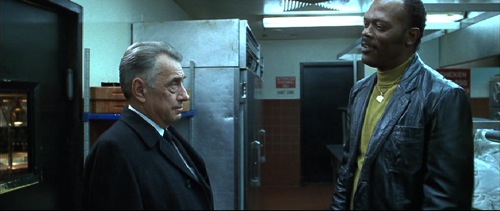
Written & directed by Paul Thomas Anderson, Sydney/Hard Eight tells the story of a gambler named Sydney who takes in a young man to show him how to survive while becoming his protégé. During this journey, the young man falls in love with a waitress/hooker while delving into trouble as he turns to Sydney for help. Playing the role of Sydney is noted character actor Philip Baker Hall in a rare leading role that would be the first of many collaborations he would have with P.T. Anderson. Another actor who would become another of Anderson's key collaborators is John C. Reilly who plays Sydney's protegee John. Also starring Gwyneth Paltrow, Samuel L. Jackson, and other future Anderson regulars Philip Seymour Hoffman, Melora Walters, and Robert Ridgley. Sydney/Hard Eight is a stylish debut film from Paul Thomas Anderson.
A young man named John (John C. Reilly) is sitting outside a diner when a much older man named Sydney walks him and offers John if he would like some coffee and cigarettes. Sydney gets John into a conversation about why John is sitting outside as John reveals he needs some money. Sydney takes John in as they go to Las Vegas where he shows John the skills he needs to be a successful gambler. John becomes impressed in what Sydney teaches him as two years later, he's already his protégé. By this time, Sydney and John are regulars at the Reno where John has made friends with one of the casino's security officers named Jimmy (Samuel L. Jackson). Jimmy remembers Sydney for some bets he made some years back as Sydney also gets the attention of a waitress/hooker named Clementine (Gwyneth Paltrow) whom he likes for her kindness.
Later that night after a few games, Sydney is about to return to his hotel where he also finds Clementine walking outside. Realizing her other profession, Sydney takes her in to the room he and John stays. Sydney's fatherly persona comforts Clementine as later that morning, she and John talked as they decided to hang out together. After a day of gambling along with some heckling from another gambler (Philip Seymour Hoffman), Sydney gets a distressing call from John. Arriving at a motel, Sydney finds John and Clementine dealing with an unconscious man (F. William Parker) as they've taken him hostage over money he owes to Clementine. Sydney refuses to take part of the plan until he handles everything forcing John and Clementine to leave Reno. After taking care of John and Clementine's problems, things get worse when Sydney is confronted by Jimmy who reveals a secret. For Sydney, he makes a move that would change things for the people in his life.
If there was a theme that's recurrent in P.T. Anderson's films, it's about the idea of family. In this film, it's about an old-time gambler who takes in a young man to show him the ropes to be a smart gambler for survival. He also takes in a young hooker/waitress who has no idea what she wants to do with her life as he gives her a bit of a break. It's something Anderson seems to explore on in later films where in Boogie Nights, a young guy is accepted into a family of porn stars and porno filmmakers while Magnolia was about the dysfunctions where both a son and daughter are estranged from their fathers. In Sydney, Anderson tells the story of a man willing to help two inept individuals dealing with their mess while giving them lessons. Yet, it's later revealed that he has a past that he's trying to leave behind.
Anderson creates a lot of stylish dialogue that's rhythmic in its delivery while the character of Sydney plays it cool and to-the-point. The direction of Anderson clearly shows a young filmmaker developing a style. While he creates unique compositions and tracking shots that would define his early work. It's clear that not every shot he creates or movements work entirely. Yet, it's him trying to find a style where he's getting somewhere but just doesn't have it perfectly. Another moment of Anderson's unique direction that is noticeable is him shooting inserts of cigarettes and coffee in reference to the 1993 short he directed. Still, Anderson creates scenes and moments where he can capture the intensity of the drama or a moment of humor. Overall, Anderson creates a film that doesn't get boring nor overwhelmed with its sense of style as he's starting to develop his own filmmaking voice.
Cinematographer Robert Elswit, a man who would become a regular collaborator of Anderson for all of his feature-length films, does excellent work with the film's photography with stylish, low-light looks in many of the film's interior scenes. Notably the casinos and bars where there's colors and an intimate look while the exteriors are mostly grey and a bit colorless as they're often shot in the mornings. While it's doesn't stand up with Elswit's other work with Anderson in later films, it's still worth noting that Elswit does some fine work in the film. Editor Barbara Tulliver does fine work with the film's editing with nice fade-outs for the film's structure, smooth transitional cuts, slow-mo movements, and other editing techniques. Tulliver's work is notable creating the sense of drama and momentum in telling Anderson's story.
Production designer Nancy Deren along with set decorator David A. Koneff and art director Michael Krantz do wonderful work with the look of the Reno/Vegas casinos and bars along with the hotel rooms. The look is intimate yet stylish while the home of Jimmy is very stylish with bad rugs and carpeting. Costume designer Mark Bridges does great work with the straight black suits that Sydney wears while the more stylish suits that Jimmy wears reveals the man's wild personality. The clothes that Clementine wears from the waitress tops to dirty skirts reveal the cheap look that she sports. Sound designer Richard King and editor Jeffrey R. Paine is very good for its location sounds of casinos and the streets of Reno and Vegas along with its raucous atmosphere.
The music of the film is created by two more key collaborators of Anderson in his early films in Michael Penn and Jon Brion. The soundtrack features many of Brion's melodic, atmospheric score pieces led by bells and vibraphones to give it a cheesy yet effective lounge feel to complement the world of casinos. The jazziness in other pieces by Michael Penn is also effective to bring a cool mood while some of the additional contributions including a song from Penn and vocalist Aimee Mann, another key collaborator of Anderson, that is played in the final credits. The film's soundtrack is very good though not up to par with Anderson's other film soundtracks in the films to come.
The casting by Christine Sheaks is brilliant for its assembly of actors, many of whom weren't very known at the time. Along with performances and appearances from F. William Parker as a hostage and Anderson's father Ernie as a man waiting in line. There's early appearances from Anderson regulars like Melora Walters as a girlfriend of Jimmy's, Robert Ridgley as a Keno bar manager, and a scene-stealing performance from Philip Seymour Hoffman as a craps shooter heckling Sydney. Samuel L. Jackson is great as Jimmy, a security manager who likes to be very brazen and cool while sporting some filthy dialogue. Jackson's performance is a bit more laid-back than his Jules character from Pulp Fiction but also quite as menacing when he threatens Sydney where Jackson got to be the badass.
Gwyneth Paltrow is wonderful as Clementine, a young hooker/waitress unsure of what to do with her life while finding some comfort from Sydney whom she likes as a customer at the bar. Paltrow brings a bit of sexiness as well as fragility to her character that truly showed that she was an actress that was definitely on the rise which she has proven since as it's a fine early role for Paltrow. John C. Reilly is really good as John, a down-on-his-luck young guy who becomes Sydney's protégé as Reilly really shines. Reilly, known recently for low-brow comedy roles, shows great depth as a guy who is looking for guidance on life as it's definitely an excellent performance from the actor who would become one of Anderson's regular actors.
Finally, there's Philip Baker Hall in an amazing leading performance as Sydney. Hall, mostly known as a character actor up to that point, delivers with such cool restraint and calm as a wise gambler who knows all the tricks to being a gambler. In his scenes with Reilly and Paltrow, he brings a fatherly presence as someone who can guide them into giving them the right path while cleaning up their messes like any father would. It's a brilliant performance from an actor, who would also become a regular of Anderson, who often gets overlooked and was finally given a big role to work with.
Sydney/Hard Eight is a fascinating, smart, and stylish debut film from Paul Thomas Anderson. Fans of Anderson will no doubt see this film as a great place to where Anderson got to refine his craft as a filmmaker though Boogie Nights is a better introduction. With a great cast led by Philip Baker Hall along with amazing supporting work from John C. Reilly, Gwyneth Paltrow, and Samuel L. Jackson. It's a film that is entertaining, filled with great acting, stylish dialogue, and great scenery. In the end, Sydney/Hard Eight is an excellent, cool debut film from Paul Thomas Anderson.
P.T. Anderson Films: Boogie Nights - Magnolia - Punch-Drunk Love - There Will Be Blood - The Master - Inherent Vice - Junun - Phantom Thread - Licorice Pizza - One Battle After Another
Related: The Short Films & Videos of P.T. Anderson - The Auteurs #15: Paul Thomas Anderson
© thevoid99 2012
Monday, January 16, 2012
Dogville
Originally Written and Posted at Epinions.com on 3/21/04 w/ Additional Edits & Revisions.
Written and directed by Lars von Trier, Dogville is about a young woman named Grace in 1930s Great Depression running away from the mob as she hides in a quiet town in the Rocky Mountains where she befriends a man who helps her. Seeking refuge in the town where the locals give her labor work, things start out fine until it escalates where Grace becomes mistreated by the locals. Playing the role of Grace is Nicole Kidman who leads a rich ensemble cast that includes von Trier veterans Sioban Fallon-Hogan, Stellan Skarsgard, Jean-Marc Barr, Udo Kier, and Zeljko Ivanek, as well as film veterans Phillip Baker Hall, James Caan, Lauren Bacall, and Ben Gazzara plus Paul Bettany, Jeremy Davies, Chloe Sevigny, Patricia Clarkson, Blair Brown, and narration by John Hurt. Dogville is a haunting yet provocative film from Lars von Trier.
In the small mining town of Dogville in the Rocky Mountains, a philosopher named Tom Edison (Paul Bettany) hears a gunshots nearby as a woman named Grace arrives into town seeking refuge. With Grace hiding in the mines, Tom learns that Grace is hiding from a mob led by its leader (James Caan) as they want to know about her whereabouts. While Tom told him that she's not here, he is given a card in case she does arrive as they leave. Tom holds a town meeting with the locals to introduce Grace as she is given a two-week trial run to see if she can fit by doing usual labor work. While she manages to befriend the blind Jack McKay (Ben Gazzara) and help out various locals including the grouchy apple farmer Chuck (Stellan Skarsgard) during the trial-run. Grace is accepted where things seem to go fine as she continued to help out and such.
After a 4th of July picnic when a cop posted posters of Grace being wanted for robbery, things become tense as Grace chooses to work for less wages. Yet, Grace finds herself dealing with all sorts of trouble as she gained the ire of the local women led by Chuck's wife Vera whose young son Jason (Miles Purton) was spanked when he was trying to provoke Grace. After Grace claimed that Chuck had raped her during a visit from the cops, Vera refuses to believe by smashing the little figurines Grace had bought some time ago. Grace decides to leave Dogville with the help of Tom and garage worker Ben (Zeljko Ivanek) that doesn't go well at all when Ben returns to Dogville as Grace had been accused of stealing money from Tom's father (Philip Baker Hall).
Grace is forced into doing slave labor while being a sexual tool for the men in the town as Tom feels that things have gone too far. After some truths were unveiled, Tom decides to call up the mob leader where a bigger shock is revealed about Grace's identity in relation to the mob.
The film presentation of Dogville is clearly one of the most original ideas as the entire movie feels like a play with minimal settings, cars driving in and out of the soundstage while doors are being opened by mimic since there's no doors built, and a fake mountain near the edge of the set. In many respects, Lars von Trier has once again made his mark as a groundbreaking filmmaker by just stripping everything down to the essentials. With help from production designer Peter Grant and set decorator Simone Grau, the film's set plays up to Great Depression-era America as well as the costumes by Manon Rasmussen. The film has this strange look where in the day scenes, there's a white background surrounding and a black for night.
Even when there's weather, leaves, snow, and all sorts of things fall down just to give the film a strange, cinematic feel. Even the film's score from the compositions of Antonio Vivaldi plays up to the innocence of the town as well as its suspense and drama as the film's mood changes. One notable musical piece that is set to the film's disturbing final credits of America in ruins is presented with the musical accompaniment of David Bowie's Young Americans.
With a dizzying, video look from cinematographer Anthony Dod Mantle, the film has this strange, avant-garde tone to the film as von Trier also plays the role of camera operator as the film has not just a hand held feel. Also a TV-like production feels as if a play is being filmed. The real genius of the film is easily von Trier as he brings in a fluent, storytelling direction that is masterful as he doesn't even let the pacing of the film slow things down or make things fast, especially since the film is 3-hours long.
Even the film's screenplay is filled with brilliance as the story and characters starts off innocently and then evolves into something very ugly. Now for those who found the ending to Dancer in the Dark to be quite sadistic will find the ending in Dogville much more disturbing and ugly. At times, the characters can be sympathetic but as the story evolves, it becomes blurry as the actions of the people of Dogville become more sadistic.
What makes Dogville such a compelling film isn’t just how American society is back then but in relation to today's society. What von Trier does is provide all sorts of ambiguities and symbolism, particularly in the little things in the set like the China figurines that Grace cherishes and Ma Ginger's Gooseberry bushes. There's a fine line in the story at what goes on and when it comes to the ending, it comes with this sense of realization at not just what the people in Dogville are but to America as well. In many aspects, von Trier isn't trying to knock down American society but the politically incorrectness and restriction on what this country has become.
If von Trier has had a great cast before in his previous films, he certainly topped them all with everyone in this film. You can never put a better ensemble cast as better as this. While the roles of Cleo King, Harriet Andersson, Shauna Shims, Jean-Marc Barr, and Udo Kier are small, they were all well-performed and fun to watch as Cleo King plays up to the mood of the African-American housemaid while overcoming the stereotype just as the film evolves since she ends up being treated like a equal. The roles of Chuck and Vera's children are well-performed, particularly Miles Purinton as Jason who probably gets his first S&M lesson from Nicole Kidman in one of the film's most hilarious scenes. While Blair Brown and Bill Raymond are well used as the Henson parents as well as Jeremy Davies as the dimwitted Bill is used, Chloe Sevigny stood out the most among the family as she tries to play up as a rival to Kidman's Grace for the affections of Tom Edison.
Siobhan Fallon Hogan and Zeljko Ivanek also does standout performances in their roles as well as the enigmatic Lauren Bacall as the wise Ma Ginger who ends up becoming a real mean lady to Grace. Stellan Skarsgard is excellent as the grouchy Chuck as he plays up in a very vulnerable role in earlier scenes with Grace as he shines in the rape scene where he reveals his huevos grandes. Phillip Baker Hall is also excellent in his role as Tom Sr. while Ben Gazzara is amazing as the blind Jack McKay, who too becomes a dirty old man.
Of the entire supporting cast, no one stood out better than Patricia Clarkson (who replaces the late Breaking the Waves actress Katrin Cartlidge, who the film was dedicated to) as Vera, who starts out very nice but once she gets mean, she is really mean as the current indie queen gives Kidman a lesson in indie meanness. James Caan, of course is brilliant in the film's final act as he meets with great with a surprise revelation as he doesn's come off as the classic mob criminal by just playing the role charismatically and with subtlety that is very surprising from the film legend.
Of the male cast, no one shines more than Paul Bettany. Bettany brings in an anguished, sympathetic performance as Grace's love interest while he comes up with all of these mindless theories. As the film develops, Bettany's Tom Edison might seem to be the most innocent of all characters but as the film ends, he's not what he seems as well. The narration of John Hurt of course is spoken very elegant as if he plays the lost citizen of Dogville as he watches everything through his own words and it's easily one of the best narrations ever heard in cinema. Finally, there's Nicole Kidman in one of her great performances of her career in the role of Grace. Kidman brings a real vulnerability to a woman just wants to do good though there is also something not right about her as the film progresses giving Kidman a bigger edge to her character.
Dogville is a dark yet extraordinary film from Lars von Trier featuring a brilliant performance from Nicole Kidman. The film is one of von Trier's essential projects as well as one of his most daring in terms of presentation and what von Trier had to say about American intolerance. While it's not an easy film to watch due to its theme and a three-hour length. It is still a film that dares to ask big questions while being powerful enough to be provoking. In the end, Dogville is a magnificent film from Lars von Trier.
Lars von Trier Films: The Element of Crime - Epidemic - Medea - Europa - The Kingdom I - Breaking the Waves - The Kingdom II - Dogme #2-Idioterne - Dancer in the Dark - The Five Obstructions - Manderlay - The Boss of It All - Antichrist - Dimension (2010 short) - Melancholia - Nymphomaniac - The House That Jack Built - The Kingdom: Exodus - (Etudes)
Related: The Auteurs #7: Lars von Trier
© thevoid99 2012
Friday, October 28, 2011
All Good Things
Directed by Andrew Jarecki and written by Marcus Hinchey and Marc Smerling, All Good Things is about a young real estate heir who marries a working-class girl as his life spirals out of control due to his mood swings and his wife’s yearning to be independent. When she mysteriously disappears, dark secrets are uncovered as he tries to deal with his own demons. The film is based on the life of Robert Durst, the son of a real estate mogul, as the film explores a man’s troubled life. Starring Ryan Gosling, Kirsten Dunst, Kristen Wiig, Philip Baker Hall, Diane Venora, and Frank Langella. All Good Things is an engrossing although flawed drama from Andrew Jarecki.
It’s the early 1970s as real estate heir David Marks (Ryan Gosling) goes to an apartment to fix the plumbing of a building that is owned by his father Sanford (Frank Langella). There, he meets a young woman named Katie (Kirsten Dunst) as the two go out as she becomes the thing he needed to escape the rich lifestyle that he’s set out for as they live in Vermont. While Sanford doesn’t entirely approve of the relationship, he convinces David to return to New York City believing that Katie will be happy. David reluctantly returns to New York City to work for his father while Katie is hoping to become a medical student as she has trouble dealing with David’s mood. While Katie yearns for a simpler life and wanting a family, David becomes more troubled as he learns that Katie is pregnant.
Yet, Katie’s hopes for a family life is shattered as she spends her time with friend Lauren (Kristen Wiig) as she and David become distant. With David spending more time working and Katie living at the Westchester country home to get herself into medical school. David suddenly becomes more controlling and violent as Katie ponders about what to do as their marriage starts to crumble. When Katie suddenly disappears in 1982, David confronts his father about his mother’s suicide prompting him to disappear. When a district attorney named Janet Rizzo (Diane Venora) wants to re-open the case over Katie’s disappearance in 2000. The Marks family is in trouble as David has disappeared in Galveston as he befriends an elderly man named Malvern (Philip Baker Hall) as David later finds himself in trouble again.
The film is the story of a young man who falls for a girl as she enters into a world of a posh lifestyle though she craves for something much simpler. When he is forced to give in to the world that he’s set for, he starts to unravel by his own past about his mother’s death and his family life as his wife has no idea who he is. Suddenly, she’s gone as questions are asked with no one knows what really happened until a district attorney re-opens the case while the young man has lived in secrecy in Texas trying to disappear. Yet, it’s all told from a man’s perspective as he is on trial for what he might’ve done as he is forced to look back.
While a story like this is likely to have some clichés and there are some which involves what is expected. Yet, the screenwriters are more concerned about what has happened to this young man that had him taking on the life he wanted to run away from and eventually starts to lose it as he becomes more controlling towards his wife. The film starts off as this light-hearted drama and then gets darker as the film progresses into a this restrained yet unsettling thriller where David Marks becomes more disturbed and such though there’s touches of that early in the film. The study of this man and his relationship with his wife and father are interesting though there’s moments where the script tends to fall into clichés at times. Plus, one of the script’s major faults is the time setting where it becomes confusing for the audience to figure out when is this happening.
The direction of Andrew Jarecki is really good for the way he engages the audience into seeing this young man unravel by the pressure he’s going through while trying to be a great husband to his wife. While he couldn’t overcome some of the shortcomings of the script, Jarecki’s does allow the story to build up where it starts off as this study of a troubled man and then becomes this chilling thriller. By the time the third act arrives where Marks is in Texas in a strange disguise, the mood doesn’t change but it is clear that the audience already figures out what happens and it loses some of its suspense. Despite the flaws of the story and Jarecki’s attempt to try and pull away from the clichés. He is still able to make a compelling and harrowing drama about the troubled life of this young man.
Cinematographer Michael Seresin does an excellent job with the film‘s photography that helps sets the mood of the film such as the sunnier countryside scenes with wonderful colors and Super 8 camera footage. Seresin also helps give the film a very dark look with blue and black to emphasize the haunting mood of Marks as the film progresses to a more heightened look towards the end of the film. Editors David Rosenbloom and Shelby Siegel do some good work on the editing where it is pretty straightforward to emphasize the narrative though it rarely jumps back-and-forth to the courtroom scene until late in the film.
Production designer Wynn Thomas, along with set decorator Rich Devine and art director Russell Barnes, does a nice job with the set designs made from the country homes that David and Kate lived in from the 1970s to the early 80s to the more posh home of the Marks family estate and offices. Costume designer Michael Clancy does a fantastic job with the costumes from the stylish dresses the women wear from the 1970s to the more casual, guarded clothing later in the film during the early 80s. Sound designers Karen Vassar and Tim Walston do a fine job with the sound work to play up some of the atmosphere of the locations while mixing Marks’ voice as he recalls some of things that was going on in his life.
The film’s score by Rob Simonsen is stellar for its orchestral-driven score with some low-key yet somber pieces to more dramatic arrangements to emphasize the dark elements of the film. Music supervisor Susan Jacobs creates a soundtrack that is filled with music from the 70s like Steely Dan, Carly Simon, and A Taste of Honey where some of it is anachronistic because some of the music wasn‘t made that year.
The casting by Douglas Aibel is wonderful as it includes some great appearances from Nick Offerman as Kate’s brother Jim, Liz Stauber as Jim’s wife Sharon, Marion McCorry as Kate’s mother, Michael Esper as David’s younger yet more responsible brother Daniel, Trini Alvarado as a neighbor that Kate befriends, David Marguiles as a NYC mayor, and Philip Baker Hall as the elderly neighbor that David befriends in 2000 Texas. Lily Rabe is very good as David’s longtime friend Deborah who tries to help David with his issues while Kristen Wiig is excellent as Kate’s friend Lauren as she has a funny moment during a scene where the two talk to an attorney.
Frank Langella is superb as David’s father Sanford, a man who likes to maintain certain standards while revealing to be very flawed in the way he treats David as he eventually starts to care for Kate. Kirsten Dunst is phenomenal as Kate, David’s wife who starts out as this lively woman only to deal with David’s dark behavior. Dunst’s performance is truly mesmerizing from the way she deals with her own depression as well as her struggle to be independent as it’s really one of her most chilling performances of her career so far. Finally, there’s Ryan Gosling in a spellbinding yet very entrancing performance as David Marks. Gosling’s performance has him starting off as very kind and quiet while it builds to a more brooding yet disturbing performance as a man undone by demons and his yearn for control. Gosling and Dunst have great chemistry while Gosling also has some great scenes with Langella proving that he is one of the best actors working today.
All Good Things is a good though very flawed drama from Andrew Jarecki that features a great cast led by Ryan Gosling, Kirsten Dunst, and Frank Langella. Due to some of the clichés revolving around the film and a few anachronisms that can be distracting. The film is still an intriguing drama about the disappearance of a woman in the hands of her husband and what drove him to possibly kill her. In the end, All Good Things is a solid but messy drama from Andrew Jarecki.
© thevoid99 2011
Monday, October 17, 2011
50/50
Directed by Jonathan Levine and written by Will Reiser, 50/50 is about a young man who learns he has a cancer as he tries to come to terms with it. With a best friend and a young psychiatrist trying to help him, he also tries to deal with various other individuals who are going through other sorts of illnesses. The film is based on Reiser’s own experience with cancer as he also puts a new spin into the cancer drama by injecting humor into the story. Starring Joseph Gordon-Levitt, Seth Rogen, Anna Kendrick, Bryce Dallas Howard, Philip Baker Hall, Matt Frewer, and Anjelica Huston. 50/50 is an extraordinary yet heartfelt film from Jonathan Levine.
After learning he has a rare cancer in his back, Adam (Joseph Gordon-Levitt) realizes that his whole life is about to change as he tells his friend Kyle (Seth Rogen) and his girlfriend Rachel (Bryce Dallas Howard) about it. After telling his mother (Anjelica Huston) about the cancer and what he has to, she is overwhelmed as she is also trying to take care of his father (Serge Houde) who is currently suffering from Alzheimer’s disease. Taking various chemotherapy treatments and meeting fellow cancer patients in Mitch (Matt Frewer) and Alan (Philip Baker Hall), Adam also takes in some therapy sessions with a young therapist named Katherine (Anna Kendrick). With Kyle helping him out by trying to get books and such, Adam notices that Rachel has been distant leading to some troubling issues with the two.
Adam also tries to distance his mother, whom he felt has been dealing with a lot, as he befriends Katherine who is just trying to figure things out though she is new to her job. While Kyle also tries to be involved by getting Adam be social, the two do hang out with Adam’s new cancer friends as they all try to cope with their situations. While Adam realizes that he has a 50/50 chance of surviving the cancer and that it might be more complicated, he tries to cope with everything as he seeks help from the people who are closest to him.
Films that often revolve around cancer often can lead to huge sentimental moments as they delve into the kind of films where the audience is in tears. In this film, there’s bit of that as it’s balanced by humor as a lot of is based on screenwriter Will Reiser’s own experience with cancer. Though Adam is only 27-years old, it is proof that cancer is a mysterious disease where things just happen for some reason. Throughout Adam’s journey, there’s moments where he can be relax and just be cool with it. Then, there’s moments of frustration and anger because he can’t control his own situation.
Reiser’s script works in the way Adam is presented as a human being with flaws as he is just trying to deal with the idea that he might die. The people around him such as his best friend Kyle, his girlfriend Rachel, and his mother are all trying to cope with it in some way. Though the character of Rachel is sort of under-written, Kyle and Adam’s mother do get more to do as the former is just a fun-loving guy that is doing all he can to help out his friend though uses his friend’s cancer to simply get laid. Adam’s mother is a woman that is going through a lot with her husband suffering from Alzheimer and learning that her son has cancer is evident that even though she can extremely worried. It’s only because she really cares for her son. Then there’s Katherine who is an outsider as she’s just a young therapist with not many patients as she is just trying to understand what he’s feeling and what she wants to do without doing it the wrong way.
Reiser’s script works to study the situations while providing humor to Adam’s situation without being very silly. The humor is more light-hearted and driven by dialogue so that Adam can at least have some joy around him in his awful situation. It’s a script that is truly engaging without going into the traps that most films relating to cancer or other disease where it often leads to very sentimental, heavy-handed moments.
Jonathan Levine’s direction is quite straightforward for the way he presents the film. Yet, he does put a bit of a stylistic flair for a few scenes such as Adam getting out of his first chemotherapy session stoned out of his mind. Another key stylistic moment that actually works is the way Adam responds to the news where it’s all in the sound design and camera work to emphasize what he could be reacting as it’s shot from the back of his head. The humor and dramatic elements in Levine’s direction is definitely more restrained but he knows when it is time to pull the heavier moments without going overboard. The overall direction is truly spectacular as Levine creates a film that is very real but also done in a humorous, light-hearted tone.
Cinematographer Terry Stacey does a nice job with the film‘s colorful though somewhat de-saturated look for many of the film‘s daytime scenes while emphasizing a more stylish look for some of the film‘s interior and exterior nighttime scenes. Editor Zene Baker does an excellent job with the film‘s editing as it is quite straightforward while there’s a great stylized scene where Adam walks slowly in a stoned frame of mind.
Production designer Annie Spitz, along with set decorator Shane Vieau and art director Ross Dempster, does a very good job with the set pieces created such as Adam‘s home which is filled with lots of things including Rachel‘s paintings. Costume designer Carla Hetland also does a good job with the costumes as the characters dress very casually while Rachel is more stylish to emphasize her arty world. Sound editor Robert Jackson does a great job with the sound work that includes the scene where Adam hears about his cancer which creates an unsettling mood that seems very real to how one reacts to news like this.
The film’s score by Michael Giacchino is more low-key than his previous scores as it delves into an indie-folk style with a few orchestral flourishes that underplays the drama and humor present in the film. The soundtrack, that is assembled by Jim Black and Gabe Hilfer, is brilliant as it features an array of indie music plus some very memorable contributions from acts like the Bee Gees, Radiohead, and Pearl Jam.
The casting by Sandra-Ken Freeman and Francine Maisler is superb as it features some memorable small appearances from Donna Yamamoto and Andrew Airlie as the doctors who help Adam out along with Serge Houde as Adam’s father who is suffering from Alzheimer. Matt Frewer and Philip Baker Hall are excellent in some funny performances as a couple of cancer patients who each provide some insight to Adam in his situation. Bryce Dallas Howard is pretty decent in an underwritten role as Adam’s girlfriend Rachel as someone who cares about him but is more interested in her world rather than take care of Adam. Anjelica Huston is brilliant as Adam’s mother who is trying to deal with all of the illness around her as she brings a bit of humor to her character as she is someone who means well though can be a bit overwhelming in a funny way.
Anna Kendrick is wonderful as Katherine, Adam’s therapist whose inexperience manages to win Adam over as she also tries to deal with her own issues and trying to be the best shrink she can be. Seth Rogen is excellent as Kyle, Adam’s best friend who tries to help him out while trying to cope with Adam’s illness by having him and Adam go out and party. Finally, there’s Joseph Gordon-Levitt in a fantastic performance as Adam. Gordon-Levitt brings a real sense of humanity to a character that is going through this horrific ordeal while trying to make sense of everything. Gordon-Levitt isn’t afraid to make Adam into someone that is flawed but also engaging in the way he handles things as it’s another outstanding performance from the young actor.
50/50 is a smart yet touching comedy-drama from Jonathan Levine that features a captivating performance from Joseph Gordon-Levitt. With a great supporting cast that includes Seth Rogen, Anna Kendrick, and Anjelica Huston, it’s a film that doesn’t sentimentalize the idea of cancer while bringing some more life and humor into what people go through. It’s also something where the audience can actually be fine with the idea of laughing at these situations while without going into very silly jokes with a lot of comedies. In the end, 50/50 is a marvelous yet winning film from Jonathan Levine.
Jonathan Levine Films: (All the Boys Love Mandy Lane) - (The Wackness) - Warm Bodies - The Night Before (2015 film) - (Snatched) - Long Shot (2019 film)
© thevoid99 2011
Subscribe to:
Posts (Atom)