Showing posts with label richard harris. Show all posts
Sunday, September 11, 2016
Major Dundee
Directed by Sam Peckinpah and screenplay by Peckinpah, Harry Julian Fink, and Oscar Saul from a story by Fink, Major Dundee is the story of a Union cavalry officers who bands together a group of Army regulars, Confederate soldiers, and Indian scouts to destroy the Apache who had been attacking towns in Texas and New Mexico. The film is a western set during the American Civil War where a man has to put aside differences and settle old grudges just so he can do what is right for America against the Apache as Charlton Heston play the titular role of Major Amos Dundee. Also starring Richard Harris, Jim Hutton, Slim Pickens, Ben Johnson, Warren Oates, Senta Berger, and James Coburn. Major Dundee is a thrilling and captivating film from Sam Peckinpah.
Set in late 1864 during the final months of the American Civil War, the film is about a Union cavalry officer who is trying to go after the Apache following an attack on a fort where many of its residents including women and children were killed with some kids taken by the Apache. Realizing he’s outnumbered and needs volunteers, he asks the help of a Confederate captain and other Confederates who are at a fort as prisoners in exchange for their pardons. With a group that includes a few Indian scouts, African-American Union soldiers, and a ragtag group of thieves and cowboys. Major Amos Charles Dundee would go after the Apache through Mexico despite the fact that Mexico is under the control of the French who are American allies. Along the way, the group of men who are very different and with very different loyalties must band together as well as deal with Major Dundee’s thirst for glory.
The film’s screenplay is interesting not just for the development of Major Dundee but also several characters that include Captain Benjamin Tyree (Richard Harris) who was once a friend of Dundee until Tyree was court-martialed following a duel where Dundee was the deciding vote. Tyree reluctantly agrees to help Dundee in taking down the Apache but once they finish the mission, Tyree wants to settle the score with Dundee. Still, Tyree was able to get some of his men and other Confederate soldiers to volunteer in the hopes that they will be pardoned though they still have to follow Dundee’s orders which they reluctantly do as well as share the same rations with African-American soldiers. Much of the film is told through the eyes of a young trooper named Ryan (Michael Anderson Jr.) who is a bugler as he volunteers to join the company where he does a lot of the narrating as he expresses his thoughts and the length of the journey to find the Apache.
Other characters such as the one-armed scout Samuel Potts (James Coburn) and the inexperienced. Lt. Graham (Jim Hutton) are characters who watch everything from afar but also kind of serve as consciences in the film with Potts being someone who is a tracker that knows his role. The script also has this unique structure where much of the first half is set in New Mexico and Texas with the second half set in Mexico where there is a change in the morale of the men but also in the setting. Especially where Dundee and Tyree start to compete for the affections of an Austrian widow living in a small pueblo that had been captured by the French. Upon liberating the pueblo and getting a break from battle, it is clear that Dundee has stirred up more trouble with the French as well as some schism in his company as it is clear that pride and ego sometimes get in the way of what is really important. Especially as Dundee has to realize what he must face and know that he can’t do it all by himself.
Sam Peckinpah’s direction is quite vast as it play into the world that is the West as it’s shot entirely in various locations in Mexico. Peckinpah’s usage of the wide and medium shots play into look of the deserts, mountains, and rivers as while maintaining some intimacy in the way he shoots the characters through close-ups and medium shots. Especially in how he would shoot some of the dramatic moments and tension that looms into the film as Peckinpah adds that air of realism about the group of people Dundee is leading. Peckinpah’s usage of low-angles also play into the way Dundee rules over everyone but also in the fact that Dundee sees himself in such a way that it is somewhat disconnected from reality where he would eventually get grounded.
The 2005 restoration version of the film which runs at a running time of 136 minutes is considered by many Peckinpah historians and purists as an improvement over the 123-minute theatrical cut from its original 1965 release. For years, the theatrical version strayed away from the elements of graphic violence and other things that some believe hindered the film as the restored version would feature these things and more. Especially in how Tyree is introduced and how some of the characters cope with death and some of the decisions that Dundee makes. The battle scenes are quite intense where Peckinpah maintains that air of frenzy in how chaotic the battle is as well as creating that air of camaraderie between Dundee and Tyree who are both at their best when they fight together side-by-side. Overall, Peckinpah creates an exhilarating and intense film about a Union cavalry officer trying to stop the Apache with the aid of a ragtag group of volunteers including members of the Confederate army.
Cinematographer Sam Leavitt does brilliant work with the film‘s cinematography that is filled with gorgeous colors of many of the daytime exteriors including the detail in the look of the flags as well as some unique lighting for scenes set at night. Editors Howard Kunin, William A. Lyon, and Donald W. Starling do excellent work with the editing as it‘s got some style with its rhythmic cuts for the action and suspense as well as some nice transition dissolves. Art director Alfred Ybarra does nice work with the set design from the look of the forts as well as the pueblo that Dundee and his company would liberate.
Costume designer Tom Dawson does terrific work with the costumes from the ragged clothes of some of the volunteers to the stuffy uniform of the French army that Dundee‘s men mock. The sound work of James Z. Flaster and Rafael Ruiz Esparza do superb work with the sound as it play into the atmosphere of the deserts as well as in a party sequence as well in some of the battle scenes. The film’s music by Christopher Caliendo, for its 2005 restoration, is amazing as it has that nice mixture of orchestral bombast with traditional Mexican-based music with the latter to play for much of the film’s second half as the score, that replaces the original 1965 score by Daniel Amfitheatrof, is considered an improvement.
The film’s marvelous cast include some notable small roles from Aurora Clavel as a woman who helps Dundee regain his health, Begona Palacios as a woman Ryan had an affair with at the pueblo, Albert Carrier as a French lancers commander, Jose Carlos Ruiz as an Apache scout Ryan is suspicious about, Karl Swenson as Dundee’s second-in-command at the fort, and Michael Pate as the Apache leader Sierra Charriba who tries to cause trouble against the army. Other noteworthy small roles as members of the company under Dundee include Dub Taylor as the horse thief Priam, John Davis Chandler as a racist Confederate soldier, R.G. Armstrong as the reverend who is the company’s moral guide, L.Q. Jones and Warren Oates as a couple of brothers who are loyal to Tyree, Brock Peters as the African-American soldier Aesop who leads his small band of African-American soldiers that eventually gets the trust of the Confederate volunteers, and Slim Pickens in a fantastic performance as the drunken mule-packer Wiley.
Ben Johnson is terrific as Tyree’s loyal sergeant Chillum who is reluctant to take orders from Dundee yet proves to be very helpful. Mario Adorf is superb as Sgt. Gomez as Dundee’s right-hand man who is able to organize things as well as help Tyree late in the film following some of the chaos in the third act. Senta Berger is wonderful as Teresa Santiago as an Austrian-born widow of a doctor who becomes an object of affection for Dundee as well as Tyree to a lesser extent on the latter as she copes with the chaos of war. Michael Anderson Jr. is excellent as Ryan as a young bugle trooper who gets his first real taste of battle as he recalls a lot of the things he sees in the narration as well as reflecting on his own misjudgment and understanding of things. Jim Hutton is brilliant as Lt. Graham as an inexperienced artilleryman who hasn’t had much time in the battlefield yet would eventually do things to help Dundee and prove his worth in battle.
James Coburn is amazing as the one-armed, half-Indian Samuel Potts as this scout is who is kind of the film’s conscience as he is someone that knows what the Apache would do but also cope with their actions as well as what Dundee tries to do. Richard Harris is phenomenal as Captain Benjamin Tyree as this Confederate soldier that does have a legitimate grudge with Dundee yet is willing to help him destroy the Apache while being someone who is a gentleman and knows what to do in handling things where he still upholds some aspect of honor. Finally, there’s Charlton Heston in an incredible performance as the titular character as this cavalry officer who is hoping to attain some glory following some mistakes he made at Gettysburg while he copes with his duty as Heston isn’t afraid to display flaws into the character where Heston does ham it up a bit but also display a vulnerability and humility as it’s one of Heston’s more overlooked performances.
Major Dundee is a remarkable film from Sam Peckinpah that is highlighted by the top-notch performances of Charlton Heston, Richard Harris, and James Coburn. In its 2005 restoration version, it’s a film that features a great ensemble cast, amazing battle scenes, and compelling themes on duty and honor. It’s a film that isn’t just a western that plays with its convention but also create something that is thrilling. In the end, Major Dundee is a sensational film from Sam Peckinpah.
Sam Peckinpah Films: The Deadly Companions - Ride the High Country - Noon Wine - The Wild Bunch - The Ballad of Cable Hogue - Straw Dogs - Junior Bonner - The Getaway - Pat Garrett and Billy the Kid - Bring Me the Head of Alfredo Garcia - The Killer Elite - Cross of Iron - Convoy - The Osterman Weekend - The Auteurs #62: Sam Peckinpah
© thevoid99 2016
Thursday, August 06, 2015
Red Desert
Directed by Michelangelo Antonioni and written by Antonioni and Tonino Guerra, Il deserto roso (Red Desert) is the story of a woman coping with her existence at an industrial world as she becomes uneasy with the world of modernism. The film is another of Antonioni’s exploration with alienation as it revolves around the world of industrialization and social changes in a world that is very modern. Starring Monica Vitti, Carlo Chionetti, Xenia Valderi, Valerio Bartoleschi, Rita Renoir, and Richard Harris. Il deserto roso is an eerie and mesmerizing film from Michelangelo Antonioni.
Following a car accident that left her mentally ill, the film revolves around a woman who deals with her surroundings and emotional state as well as the industrial landscape that she lives in. It’s a film that explores the modern world and its sense of despair as it reflects on a woman’s state of mind as she feels alone not just by her surroundings but also in her social and family life. Along the way, Giuliana (Monica Vitti) meets a friend of her husband named Corrado (Richard Harris) who is trying to find workers for a project he’s doing in South America. Corrado is attracted to Giuliana as he also understands her feelings of isolation but tells her to accept this new reality she’s in which she’s having a hard time coping with.
The film’s screenplay by Michelangelo Antonioni and Tonino Guerra explores a world where factories, industrial buildings, and shipping docks are what is happening as things such as beautiful beaches and such are pretty much non-existent. For Giuliana, it’s a world she really has no understanding with as she also copes with her emotions as she remains haunted by the accident that nearly killed her but only put her in the hospital for a months as she tells Corrado a story about a girl she knew at the hospital. It’s a story that Giuliana would tell Corrado that would haunt her as her attempts to be part of the party or something social has her feeling lost and lonely. Even as she would encounter things in her own family life that is troubling as she becomes confused over what is happening to her and how can she adapt to an environment that is very cold and desolate.
Antonioni’s direction is definitely entrancing in not just its visuals but also in the locations he sets the film in. Shot largely on location in Ravenna, Italy, the film has this look of a world that feels sort of futuristic but also one that feels very modern but in a discomforting setting. Much of the locations has Antonioni take great stock into not just his approach to framing but also in how the environment matches the sense of turmoil in the mind of Giuliana. It’s a world where there aren’t a lot of colors as Antonioni often gazes into images of dirty puddles, polluted lakes, muddy grounds, and lots of fog as it plays into a world that is just becoming messy and horrifying to be at. Even as there’s a key sequence where Giuliana, Corrado, Giuliana’s husband Ugo (Carlo Chionetti) are partying with some friends in this small shack close to a shipping dock where the few instances of color are later overwhelmed by what is going on outside.
The direction also has Antonioni use close-ups in ways that are just eerie as it plays to the unraveling of Giuliana where she has no clue into what is happening around her. Most notably an incident involving her son Valerio (Valerio Bartoleschi) which only adds to the sense of despair that looms over her. Antonioni’s approach to framing the actors is also very evident in the way it plays to Giuliana’s own sense of detachment from the people around her as the aftermath of the scene at the shack showcases how lost she is. There’s also elements where sound is important as it plays into Giuliana’s own sense of unraveling and how she interacts with her surroundings as there’s another scene with her son where she tells him a story about a world that is much simpler but also has a character who would endure the same confusion that Giuliana would deal with. Overall, Antonioni creates an intoxicating yet unsettling film about a woman coping with loneliness in a very dark and desolate environment.
Cinematographer Carlo Di Palma does brilliant work with the film‘s colorful cinematography with its emphasis on dark and desolate colors for many of the film‘s locations in its industrialized environment to the lush colors in the story that Giuliana tells to her son as well as very few bright moments of color that is overwhelmed by the dreary locations. Editor Eraldo Da Roma does excellent work with the editing as it maintains not just this slow yet methodical pace that Antonioni wanted but also in allowing the scenes to play itself out as it adds to the tumultuous despair in Giuliana‘s emotional state of mind. Art director Piero Poletto and set decorator Sergio Donna do fantastic work with the look of the home Giuliana and Ugo live in that is the epitome of modernism as well as the studio where Giuliana owns but has no idea what to do with it along with the shack where Ugo, Corrado, and Giuliana would have their little party at.
Costume designer Gitt Magrini does terrific work with the costumes from the green coat that Giuliana wears as well as some of the very dark clothes that plays into her sense of isolation that she is going through. The sound work of Claudio Maielli is amazing for how it plays into Giuliana‘s state of mind where there‘s moments where it sounds very real as it showcases the modern world at its most disruptive and disconcerting as it‘s one of the film‘s highlights. The film’s music by Giovanni Fusco is superb for its low-key yet haunting score that is largely filled with sound textures and eerie piano pieces as well as electronic music textures by Vittorio Gelmetti that add to the film’s hypnotic and ominous tone as it’s one of the film’s highlights.
The film’s incredible cast includes some notable small roles from Emanuela Paola Carboni as the girl in the story that Giuliana tells to Valerio, Giuliano Missirini as a radio telephone operator Giuliana chats with, Lili Rheims as the operator’s wife who visits the shack, Valero Bartoleschi as Giuliana and Ugo’s son, Aldo Grotti as a German client named Max, Rita Renoir and Xenia Valderi as a couple of guests at the shack, and Carlo Chionetti as Giuliana’s husband Ugo who is often absent due to work as he tries to cope with his wife and her strange moods. Richard Harris is excellent as Corrado as a friend of Ugo who visits Italy for business reasons as he becomes attracted to Giuliana while sharing his own feelings of alienation with the industrial world though he has managed to cope with it as additional credit should go to Giuseppe Rinaldi for being the actor who dubs Harris’ voice in the film. Finally, there’s Monica Vitti in a remarkable performance as Giuliana as a woman who unravels by her surroundings and the trauma she suffered from an accident that left her emotionally troubled as it’s an eerie yet ravishing performance from Vitti that plays into a woman coping with a very complicated and dreary world.
Il deserto roso is a magnificent film from Michelangelo Antonioni that features a haunting yet enchanting performance from Monica Vitti. The film is an intriguing exploration into the world of isolation and how one reacts to a world that is increasingly modern and complicated that would add to a woman’s own despair with herself. Most notably as it has elements that Antonioni is known for but also has elements that are very accessible as it relates to the idea of alienation and existentialism. In the end, Il deserto roso is a spectacular film from Michelangelo Antonioni.
Michelangelo Antonioni Films: (Story of a Love Affair) - (I Vinti) - (The Lady Without Camelias) - Le Amiche - (Il Grido) - L'Avventura - La Notte - L'Eclisse - Blow-Up - Zabriskie Point - (Chung Kuo, Cina) - The Passenger - (The Mystery of Oberwald) - Identification of a Woman - (Beyond the Clouds) - Eros-The Dangerous Thread of Things
© thevoid99 2015
Monday, March 02, 2015
Unforgiven
Directed and starring Clint Eastwood and written by David Webb Peoples, Unforgiven is the story of a former criminal who decides to return to the world of crime for one last time as he copes with a band of unruly bandits and those who are supposed to be men of the law. The film is an exploration of the dark world of the Western where a man who was known as a cold-blooded killer deals with his demons as well as a world that is changing around him. Also starring Gene Hackman, Morgan Freeman, Frances Fisher, Jaimz Woolvett, Saul Rubinek, and Richard Harris. Unforgiven is an astonishing yet evocative film from Clint Eastwood.
The film revolves around an infamous killer who has given up the life of killing as he tries to start a new life as a farmer as he’s asked by a young man to aid him in killing two men who had assaulted a prostitute in Wyoming. It’s a story that is quite simple as it explores a man who was known for doing some of the most gruesome things in the world such as killing women and children as he is asked to kill one more time in the name of justice. For William Munny (Clint Eastwood), it’s a tempting thing to ask as he does need the $1000 reward so he can do more for his farm as he also has two kids. Once he’s joined by the young man in the Schofield Kid (Jaimz Woolvett) and his old partner Ned Logan (Morgan Freeman), Munny copes with his sins of the past as he realizes he might not have the stomach to do the job. Meanwhile at the town where the prostitutes lived in, its sheriff Little Bill Daggett (Gene Hackman) has taken charge and let the two men go as he decides to do things his way as he serves as a challenge to Munny.
David Webb Peoples’ screenplay definitely explores the idea of sin and redemption as it looms around a man like Munny who was notorious for being a cold-blooded killer. Yet, he is introduced as a man trying to raise his two children and farm while still mourning the death of his wife whom he believes had saved him as he’s sworn off drinking and other vices. Upon being asked by the Schofield Kid to do the job all because a prostitute named Delilah (Anna Levine) had giggled over a man’s small penis which she got beaten and cut up for. Munny’s sole motivation for the job is money as he asks his old friend Ned to aid him where it’s clear how close they are but also in the fact that they’ve both moved on from their past as they are driven by money to do the job. Upon their encounters with one of them, it’s clear that these two former killers not only cope with old age but also the fact that they’re not the same young and ruthless men they were leaving Schofield to do more.
Munny’s story parallels with the one that Little Bill is having as he is a sheriff trying to maintain control but under his own terms as he would humiliate a rival in English Bob (Richard Harris) who would arrive into town, with a writer named W.W. Beauchamp (Saul Rubinek), to do the job and collect the reward. There’s an aspect about Little Bill that is interesting as he is someone that has seen a lot of gunplay that intrigues Beauchamp who is interested in the myth of the West. There’s questions into whether everything that Little Bill might be saying is true as he seems to be very interested in being the subject of a book. Still, he’s a man that is quite full of himself as the way he dealt with Delilah’s assault bears no elements of justice where he lets those two men walk off freely. Even as he asserts his authority in a brutal fashion upon his first encounter with Munny over the fact that Munny is carrying a rifle as he made rules about no firearms in his town. It does lead into a confrontation between the two later on as it relates to what Munny once was but also who Little Bill is as it relates to the idea of mortality.
Clint Eastwood’s direction is truly mesmerizing from the way he opens and closes the film with a sunset of a man in his home near the grave of his wife as it sort of establishes who William Munny is and what he once was. Shot on location in Alberta, Canada, the film does have this feel of what was once the American west in places like Wyoming during the late 19th Century as it’s a time of change as the old rules are no longer welcome. It’s something that Munny has accepted as he focuses on his family and farming though the latter isn’t going so well as he knows he needs money to fix the farm. Eastwood’s direction is quite simple as he doesn’t really go for any stylistic shots but does take great use of the locations as he goes for a lot of wide and medium shots to play into the vastness of the land.
The direction also has some intimate moments as it relates to Munny’s friendship with Ned as well as scenes involving Little Bill talking to Beauchamp in his home which he’s trying to build by himself. Eastwood’s usage of close-ups aren’t very direct though it does play into the weariness that looms over Munny as he is coping with his own sins as he questions about whether he deserves redemption. Even as he would play into the ideas of killing a man as he admits that some of the men he killed didn’t deserve to die as it relates to the task at hand. Still, there is that thirst for justice as it does play into this climatic confrontation between Munny and Little Bill as it doesn’t just play into what is right and wrong but also the idea of who should be the one to burn in hell. Overall, Eastwood creates a very eerie yet exhilarating film about a former killer who copes with his sins as he goes back to his old ways to help his family.
Cinematographer Jack N. Green does amazing work with the film‘s cinematography from the usage of naturalistic lighting schemes for some of the film‘s daytime exterior scenes to more low-key lights and shades for the interior/exterior scenes set at night including the film‘s climatic confrontation. Editor Joel Cox does excellent work with the editing as it‘s very straightforward with the exception of some key dramatic and intense moments where he uses some jump-cuts and other rhythmic cuts to play into its impact. Production designer Henry Bumstead, with set decorator Janice Blackie-Goodine and art directors Adrian Gorton and Rick Roberts, does fantastic work with the set design from the saloons and buildings in the small town that Little Bill runs to the farm that Munny lives in.
The sound work of Les Freholtz, Vern Poore, Dick Alexander, and Rob Young is superb for the atmosphere it creates in the film‘s sound to play into the world of the American West in its small towns as well as the sounds of gunfire and low-key moments for the quieter scenes. The film’s music by Lennie Niehaus is incredible as it’s mixture of low-key orchestral music with plaintive folk guitars play into the sense of melancholia that looms throughout the film as well as the sense of dread that is to emerge.
The casting by Phyllis Huffman is brilliant as it features some notable small roles from Aline Levasseur and Shane Meier as Will’s young children, Rob Campbell and David Mucci as the two men who assaulted and cut Delilah, Tara Frederick as a young prostitute named Little Sue, Josie Smith as Ned’s Native American wife Crow Creek Kate, and Anthony James as the saloon owner Skinny Dubois who would gain ponies as compensation for what happened to the prostitutes. Frances Fisher is wonderful as the head prostitute Strawberry Alice who demands justice for what happened to Delilah while Anna Levine is terrific as Delilah who feels victimized by what happened as she blames herself for what happened. Saul Rubinek is excellent as W.W. Beauchamp as a writer who joins English Bob on a trip as he is fascinated by Little Bill’s views on gunfights and such. Jaimz Woolvet is superb as Schofield Kid as a young gunslinger who is asked to take part in the scheme as he gets Ned and Munny to aid him as he copes with what is expected in tasks like this.
Richard Harris is fantastic as English Bob as an old gunslinger who arrives to town to talk about his exploits and do the mission only to be humiliated and torn to shreds by Little Bill as he plays as a man that is out of step with the times and quite full of himself. Morgan Freeman is amazing as Ned Logan as an old friend of Munny who takes part in the job to get some money as he copes with aging while trying to get Munny back in the game. Gene Hackman is great as Little Bill Daggett as a sheriff who is quite full of himself as he feels like his way is the right way while being very corrupt and brutal in the way he handles the law. Finally, there’s Clint Eastwood in a phenomenal performance as William Munny as a former killer trying to create a new life as he copes with his demons and sins while wondering what his late wife would think as he also realizes the sense of injustice that looms around him.
Unforgiven is a magnificent film from Clint Eastwood that features top-tier performances from Eastwood, Gene Hackman, and Morgan Freeman. Along with sumptuous visuals and an enchanting score, the film isn’t just one of Eastwood’s best works as an actor and director but also one of the most compelling westerns ever made. Especially as it plays into the idea of sin, death, and redemption in the eyes of a man who once a cold-blooded killer. In the end, Unforgiven is an outstanding film from Clint Eastwood.
Clint Eastwood Films: (Play Misty for Me) - High Plains Drifter - (Breezy) - (The Eiger Sanction) - (The Outlaw Josey Wales) - (The Gauntlet) - (Bronco Billy) - (Firefox) - (Honkytonk Man) - Sudden Impact - Pale Rider - (Heartbreak Ridge) - (Bird) - (White Hunter Black Heart) - (The Rookie) - (A Perfect World) - (The Bridges of Madison County) - (Absolute Power) - (Midnight in the Garden of Good and Evil) - (True Crime) - (Space Cowboys) - (Blood Work) - (Mystic River) - Million Dollar Baby - Flags of Our Fathers - Letters from Iwo Jima - Changeling - (Gran Torino) - (Invictus) - (Hereafter) - (J. Edgar) - (Jersey Boys) - American Sniper - (Sully) - (The 15:17 to Paris) - (The Mule)
© thevoid99 2014
Saturday, October 16, 2010
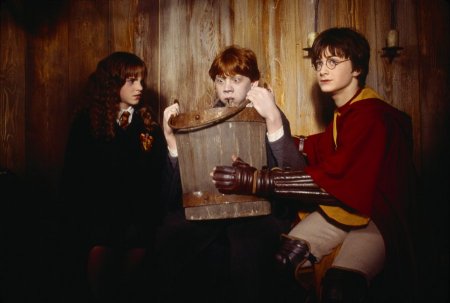
Harry Potter & the Chamber of Secrets (film)
Originally Written and Posted at Epinions.com on 11/29/02 w/ Additional Edits.
When Harry Potter & the Sorcerer's Stone came out in the fall of 2001, the Harry Potter film franchise officially begins with a bang. Excellent reviews and huge box office exceeded expectations. The film also gave attention to its young cast in Daniel Radcliffe, Rupert Grint, and Emma Watson as they all became stars. While Chris Columbus succeeded with the first film, he was already getting ready to start work on the second film of the seven-part film series where Harry explores a dark chamber with a creature that is attack Muggle-born students called Harry Potter & the Chamber of Secrets.
In The Chamber of Secrets, the film picks up where it’s left off as Harry now lives in a room (instead of a closet in the previous film) in the Dursley’s home but Uncle Vernon (Richard Griffiths), Aunt Petunia (Fiona Shaw), and cousin Dudley (Harry Melling) still treat him like an outsider, especially in a deal for Vernon where Harry is forced to be in the room pretending he doesn’t exist. Harry ponders why his friends haven’t send him any letters until he learned that a slave elf (a CGI-creation voiced by Toby Jones) named Dobby who tells Harry not to return to Hogwarts because of some terrible danger behind the school. Harry wants to return to Hogwarts but Dobby gets him in trouble with Dursleys that forced Uncle Vernon to put bars in Harry’s window. Later that night, Harry gets an unexpected visit from a floating car driven none other than his best friend Ron and his brothers Fred & George Weasley (James & Oliver Phelps) where they break the bars of the window as Harry packs his clothes and his pet owl Hedwig as they escape the Dursleys.
Harry arrives at the Weasley home where he meets with elder brother Percy (Chris Rankin), little sister and first-year Hogwarts student Ginny (Bonnie Wright), and the parents, Arthur and Molly Weasley (Mark Williams and Julie Walters). There, Harry and the Weasley clan take another way to Diagon Alley but Harry gets a first sign of trouble as he says the magic words and lands him at the wrong side of the town. After catching up with Weasleys, he meets up with friend Hermione as the gang goes to the bookstore to buy some books. There, they meet a popular and pompous wizard named Gilderoy Lockhart (Kenneth Branagh) who is adored by many female wizards and students, particularly Mrs. Weasley and Hermione but disgusted by all the male students who thinks he’s an egotistical wizard. Lockhart sees Harry and uses him to help boost sales of his recent book by taking a photograph with him. Harry wasn’t very pleased taking a picture with Lockhart and he then runs into his nemesis Draco Malfoy. Accompanying Draco is his father Lucius Malfoy (Jason Issacs) who seems to enjoy belittling Harry as well as the Weasleys since he always considered them a weak clan of wizards particularly Mr. Weasley. Lucius also takes shot at Hermione because her parents are Muggles (non-magic folk) and she isn’t a pureblood wizard like the Weasleys, Potter, or the Malfoys.
After the confrontation with Malfoys, Harry and the Weasleys enter the secret wall through the Hogwarts Express train where Harry’s feeling that something in Hogwarts that didn’t want him came back as he couldn’t get through the secret wall, thus leaving him and Ron to miss the train. Ron and Harry decides to take the Weasleys floating car to catch up with Hogwarts train but they have trouble along when the train is behind them and as they arrive at Hogwarts, they encounter a big tree that damages the Weasleys’ car and Ron’s magic wand. The duo gets an unwelcoming reception from Snape who had a paper of the floating car that was seen by some Muggles and wanted them to be expelled but since they don’t live in the Slytherin house that he runs, he couldn’t do anything since they live in the Gryffindor house run by McGonagall who decides to give the two detention.
School goes underway for the second-year students of Hogwarts as Herbology professor Sprout (Miriam Margoyles) teaches them to pull exotic plants that reveal screaming roots. Harry then meets up with Gryffindorff team captain Oliver Wood (Sean Biggerstaff) for team practice of the next Quidditch game with the rival team Slytherin where they learn that the Slytherin team has a practice spot as well with a new seeker, Draco. Thus begins one of several battles between Potter and Malfoy and believe me; those two don’t like each other. Even when Draco calls Hermione a “mudblood” that leads to Ron to try and curse Draco with a spell that backfired due to his damaged wand. They go to Hagrid for help where he tells them that the Malfoys were always a bad clan because they think they’re better than everyone and don’t like non-, pureblood wizards at Hogwarts. Harry meanwhile, is starting to feel something strange has arose as voices started to talk in his head and he sees a message written in blood about the Chamber of Secrets being opened and Finch’s cat who looked like she’d been hang but was petrified by some evil force.
Harry is suspected of wrongdoing but Hermione and Ron along with some of the professors don’t think so. The Hogwarts staff picks Lockhart for some investigation surrounding the Chamber of Secrets while he becomes the new teacher for the Defense Against the Dark Arts. Lockhart and his ego comes in with a painting of himself painting him as he teaches the students how to stop tiny, little elves but has problems until Hermione stops them with a spell that begins the suspicion for Ron and Harry about Lockhart’s credibility. Harry then goes into a Quidditch match against Slytherin where he goes head-to-head with Draco over the Golden Snitch but he is followed by a ball that seems to go after him. After the match, the ball is trying to kill as Hermione stops it that leads to Lockhart trying to repair Harry’s arm but left again, Lockhart’s credibility comes in question as Harry’s arm isn’t repaired.
More eerie messages and voices come for Harry as he, Ron, and Hermione begin to read about the Chamber of Secrets. The Chamber was created by Slytherin as a way for him to create more spells but was rejected by the other founders of Hogwarts School. The chamber could be open by an heir of Slytherin, which made the trio suspect the Malfoys that could be the heirs. In order to get something from Draco, they decided to make a potion in an abandoned section of the girl’s bathroom haunted by a ghost named Moaning Myrtle (Shirley Henderson). More students hit with the same spell Finch’s cat got were sent to the hospital that were later followed by a trail of small spiders coming out after the students were petrified as Lockhart decided to create a lesson where students can defend themselves with their wands. Helping Lockhart was Snape who again made Harry and Ron question whether Lockhart is really the great wizard he claims to be. There, another battle between Harry and Draco comes in that forced Lockhart to make some spell that turned out to be the wrong one as a snake comes in and scares the students until Harry speaks to the snake in a secret language that made Harry to question if he’s the real heir of Slytherin.
Then the film takes a dark turn as Harry discovers about a story of the Chamber being opened by Tom Riddle (Christian Coulson) that led to the death of a non-pureblood student fifty years ago and learned that all the victims of the spell were non-pureblood that spells trouble for Hermione. Harry and Ron discover more about the Chamber and learn some horrible stories surrounding close colleagues, spiders, and snakes. There, they have to discover what’s behind the Chamber of Secrets or else Hogwarts School will be closed for good as Potter.
The Chamber of Secrets is definitely a much darker and more intense film than the first. With its plot twists and simplistic storytelling, it’s an enjoyable film from start to finish. The action scenes in the movie, particularly the Quidditch match is more fun than ever. The performances from the young actors are more relaxed as each of them get more in touch with their characters while the additions of Margoyles and Branagh are refreshing and add more humor to the film while Jason Issacs does an excellent job as the malicious Lucius Malfoy. The rest of the supporting cast, although their roles were brief, were very excellent including Richard Harris in his final film performance (shortly before the film was completed) that served as an example of his great talent
Steve Kloves' script does dwell into some of the darker territory that would set the course for the film as it takes in what is needed for the story to move forward. Chris Columbus' direction however, isn't as wondrous in comparison to the first film as it's mostly by-the-book in what is expected for a fantasy/adventure film. Even as he approaches some of the darker aspects of the story by just making it adventurous and intense but not exactly getting his hands dirty. Despite that cautious approach, Columbus does succeed in maintaining that world of Harry Potter and presenting the story in a faithful manner.
Overall, Harry Potter & The Chamber of Secrets is an excellent sequel that doesn't exactly surpass its predecessor. Though it's so far, the weakest of the film series, it does contain some memorable performances from its young cast including one-timer Kenneth Branagh and then-series newcomer Jason Issacs. While it's definitely an entertaining film, it's one that doesn't go far into the dark tone that would come yet it is still a worthy film of the series. In the end, Harry Potter & the Chamber of Secrets is a solid film for the franchise.
Harry Potter Reviews: The Films: Harry Potter & the Sorcerer's Stone - Harry Potter & the Prisoner of Azkaban - Harry Potter & the Goblet of Fire - Harry Potter & the Order of the Phoenix - Harry Potter & the Half-Blood Prince - Harry Potter & the Deathly Hallows Pt. 1 - Harry Potter & the Deathly Hallows Pt. 2
The Novel: Harry Potter & the Sorcerer's Stone - Harry Potter & the Chamber of Secrets - Harry Potter & the Prisoner of Azkaban - Harry Potter & the Goblet of Fire - Harry Potter & the Order of the Phoenix - Harry Potter & the Half-Blood Prince - Harry Potter & the Deathly Hallow
Related: Fantastic Beasts and Where to Find Them - Fantastic Beasts: The Crimes of Grindelwald
© thevoid99 2010
Wednesday, October 06, 2010
Harry Potter & the Sorcerer's Stone (Film)
Originally Written and Posted at Epinions.com on 2/3/03 w/ Additional Content
Since the Harry Potter book series by J.K. Rowling arrived in 1997, the story of a young orphaned boy who becomes a wizard became a worldwide phenomenon as books like Harry Potte & the Sorcerer’s Stone, Harry Potter & the Chamber of Secrets, Harry Potter & the Prisoner of Azkaban, and Harry Potter & the Goblet of Fire broke sales records and topped several book lists for endless months as literary critics began to compare Rowling to such greats as Roald Dahl and several other children’s novelists for their freewheeling imagination while at the same time, Rowling attained the respect from several novelists including horror king Stephen King who wrote an exhilarating positive review on The Goblet of Fire for the New York Times. The phenomenon concerning Harry Potter brought the attention of Hollywood producers who easily knew that a successful film franchise could be made around the Harry Potter phenomenon.
While it was a good idea, J.K. Rowling was very cautious about her stories be turned into big, Hollywood blockbusters, especially since the producers wanted top Hollywood film stars and filmmakers to do the film. Fearing that Harry Potter would end up becoming some horrible film that didn’t stay true to the books, Rowling demanded some control for the movies and wanted to find the right people in running the Harry Potter films. She found the right man in American filmmaker Chris Columbus who had previously made such great family films like Mrs. Doubtfire, Home Alone, and Nine Months. Columbus who had a great reputation for working with children actors was the perfect choice for Rowling as he gathered his own team that included screenwriter Steve Kloves to work on the first Harry Potter film Harry Potter & the Sorcerer’s Stone (In the U.K., it’s called Harry Potter & the Philosopher’s Stone). Rowling who knows how powerful and shortsighted the film industry in Hollywood is, also demanded that the casting for Harry Potter should be all-British ensemble so at least the movie could hold a certain prestige that most big-budgeted American films don’t carry. In the end, Rowling won her battle with Hollywood as Columbus began production on Harry Potter & the Sorcerer’s Stone.
Based on the book of the same name, The Sorcerer’s Stone is actually an introduction to the Harry Potter character, a orphaned boy who lives with cruel, abusive relatives named the Dursleys that included a fat, bullish cousin named Dudley who treats Harry like crap until one day, he receives a letter from a school called Hogwarts, a school for young wizards and witches where Harry learns about his parents and finds a world where he is appreciated while finding a mysterious secret about an evil wizard named Voldemort, who killed Harry’s parents when he was a baby and lost his powers when he tried to kill the boy.
While like all movies made from books, The Sorcerer’s Stone does leave off some important details that would be useful in later films but it is still enjoyable since screenwriter Steve Kloves does stay true to the book while director Chris Columbus makes an enjoyable film that is both fun for adults and children. The film features an all-star British cast that many filmmakers would die for that includes Richard Harris, Maggie Smith, Robbie Coltrane, Richard Griffiths, Fiona Shaw, Zoe Wannamaker, Warwick Davis, Julie Walters, John Hurt, Ian Hart, David Bradley, and Alan Rickman! Rounding out the adult cast is the meat of the film, the young actors that provides the accessibility for young moviegoers that are led mainly by Daniel Radcliffe playing the lead role of Harry Potter. Released in late 2001, Harry Potter & the Sorcerer’s Stone is an excellent film that begins one of the most promising franchises in film history.
The film begins eleven years earlier in a quiet English suburb where a powerful headmaster named Albus Dumbledore (Richard Harris) arrives with fellow teacher Professor McGonagall (Maggie Smith) and gamekeeper Rubeus Hagrid (Robbie Coltrane) to drop off an orphaned baby to a home to live with his relatives. The movie fast forwards eleven years later as Harry Potter wakes up in a cupboard where he’s mistreated very often by his Uncle Vernon Dursley (Richard Griffiths), Aunt Petunia (Fiona Shaw), and their fat son Dudley (Richard Melling). One day on a trip to the zoo, Harry finds himself communicating with a snake as he mysteriously makes the snake glass vanish freeing the snake while trapping his cousin inside the snake cage.
After the snake incident, Harry receives a letter from a mysterious school called Hogwarts as the Dursleys take and it not let Harry read but the letters keep showing up in multitudes sent by owls which led Vernon to get his family out of their home and into a small house by the sea where their found by Hagrid who tells Harry about Hogwarts, a school for witches and wizards, and gives him something he never had, a birthday cake. Hagrid also tells Harry about his parents who were wizards and a bit of truth about their death from his Aunt who is his mother’s sister. Hagrid is outraged over what his relatives told Harry about his parent’s death and tells them that he will go to Hogwarts and be taught by Albus Dumbledore which lead Vernon to say one of the stories most famous lines “I WILL NOT LET SOME CRACKPOT OLD FOOL TEACH HIM MAGIC TRICKS” which led Hagrid to give the Dursleys a punishment.
Hagrid accompanies Harry to London where they go to a pub where all the patrons are excited about meeting Harry Potter including a Hogwarts professor named Quirrell (Ian Hart). There, Harry enters a secret wizard street called Diagon Alley where he gets his money (a fortune) from a bank run by goblins (played Warwick Davis and other midgets including Austin Powers' Verne Troyer, who is the only American actor in the film) where they get Harry’s money and a secret package Hagrid must take to Dumbledore. After buying some things for school, Harry goes to a wand shop run by a man name Ollivander (John Hurt) who lets him try some wands including one that has a connection to the man who killed Harry’s parents where Hagrid tells him his name, Voldemort (a name that many wizards don’t want to say) and all the things he’s done including killing Harry’s parents which led Voldemort to try to kill the baby Harry but for some reason, Voldemort lost his powers and Harry survived with a lightning-bolt scar on his head which is the reason Harry is famous in the wizarding world. .
After getting all the supplies including a snowy pet owl named Hedwig, Hagrid leaves him at King’s Cross to go to a mysterious train platform called 9 ¾ where Harry meets up with a wizarding family named the Weasleys led by a mother (Julie Walters) who accompanies her boys Percy (Chris Rankin), twins Fred & George (James & Oliver Phelps), and the youngest boy in the clan Ron (Rupert Grint). Harry makes friends with Ron who is in shock that he’s sitting in the same compartment where they also meet up with an intelligent young girl named Hermione Granger (Emma Watson) who comes from a Muggle-family (Muggle means non-magic folk). When they arrive at Hogwarts, Harry sees Hagrid and enters the Hogwarts castle where he meets a cocky boy named Draco Malfoy (Tom Felton) who is always followed by his cronies Crabbe (Jamie Waylett) and Goyle (Josh Herdman). Harry and the new first-years at Hogwarts enter the great hall where they get sorted into the houses: Gryffindor, Ravenclaw, Hufflepuff, and Slytherin. Hermione and Ron get into Gryffindor while Draco goes into Slytherin. Harry meanwhile gets into a tough position when the Sorting Hat considers putting him in Slytherin but ends up putting him in Gryffindor.
As the first day arrives, Harry and Ron gets into their first classes where McGonnagal teaches the first-years Transfiguration while Harry gets a special loathing from Potions master Professor Snape (Alan Rickman) who doesn’t like the way Harry’s getting attention since he’s already somewhat famous. The first-years also get a chance to learn how to ride brooms taught by Madame Hooch (Zoe Wannamaker) where Harry finds a natural talent in riding one after catching an object thrown by Malfoy where Harry becomes a Seeker for the Gryffindor Quidditch team (Quidditch is a sport played on flying brooms that is like football (soccer for you Americans)) where Harry gets a quick lesson from team captain Oliver Wood (Sean Biggerstaff). While going up back to the Gryffindor common room, Harry, Ron, and Hermione accidentally enter a secret room while trying to get away from caretaker Argus Filch (David Bradley) where they meet up with a three-headed dog named Fluffy who was guarding something. Once the trio finds out what Fluffy might be guarding, they learn that the object could be the Sorcerer’s Stone and they learned that a teacher might be stealing it.
The film does include a lot of CGI images, particularly the Quidditch match that is very intense but it’s mostly a film built on sets and everything. Chris Columbus does an excellent job in turning J.K. Rowling’s vision of Hogwarts to the moviegoers while making the Harry Potter fans wishing there was a school like Hogwarts or go through Platform 9 ¾ in King’s Cross. Then there’s the acting, the younger actors do make the film enjoyable for kids and adults even if it’s a bit off at times since the films feature a lot of first-time actors but the leads played by Radcliffe, Grint, Watson, and Felton do bring out great lines as well as some comical timing to the film. Then there are the adult actors who bring in some of the film’s finer moments while being likeable to the younger audience. Robbie Coltrane who usually plays some big boss or a villain finally plays a loveable role that kids could enjoy while Alan Rickman, known for playing enjoyable villains, brings another masterful performance in a role that is so unlikable yet is mostly appreciated by fans of villains.
While the film include some great CGI, colorful cinematography by John Seales, and a flourishing score by John Williams. The story itself is faithful to the books but nothing quite radical to make some changes for the film. Columbus' direction is fine though not very daring. Even when he's compared to other directors that would follow him. It's mostly a by-the-books approach to directing yet it works because he's aiming for a young audience and readers of the book. Despite a few of its shortcomings, it is a fantastic film from Columbus.
While it’s not as good as the original book, Harry Potter & the Sorcerer’s Stone is still one of the most enjoyable family films in the past few years. With fans currently waiting for the fifth book Harry Potter & the Order of Phoenix on June 21, 2003 and the third film Harry Potter & the Prisoner of Azkaban in the summer of 2004 where the film will add new actors like Gary Oldman, David Thewlis, Pam Ferris, and a replacement for the late Richard Harris for Dumbledore (Currently in the running for that role are Peter O’ Toole and Michael Gambon). While the movie is a worthy introduction to those who want to know about the Harry Potter series, it’s to pick up the books first then see the films later on. Overall, the film for Harry Potter & the Sorcerer’s Stone is an excellent introduction to a promising film franchise.
Harry Potter Reviews: The Novels: Harry Potter & the Sorcerer's Stone - Harry Potter & the Chamber of Secrets - Harry Potter & the Prisoner of Azkaban - Harry Potter & the Goblet of Fire - Harry Potter & the Order of the Phoenix - Harry Potter & the Half-Blood Prince - Harry Potter & the Deathly Hallows
The Films: Harry Potter & the Chamber of Secrets - Harry Potter & the Prisoner of Azkaban - Harry Potter & the Goblet of Fire - Harry Potter & the Order of the Phoenix - Harry Potter & the Half-Blood Prince - Harry Potter & the Deathly Hallows Pt. 1 - Harry Potter & the Deathly Hallows Pt. 2
Related: Fantastic Beasts and Where to Find Them - Fantastic Beasts: The Crimes of Grindelwald
© thevoid99 2010
Subscribe to:
Posts (Atom)