Showing posts with label tributes. Show all posts

Thursday, January 16, 2025

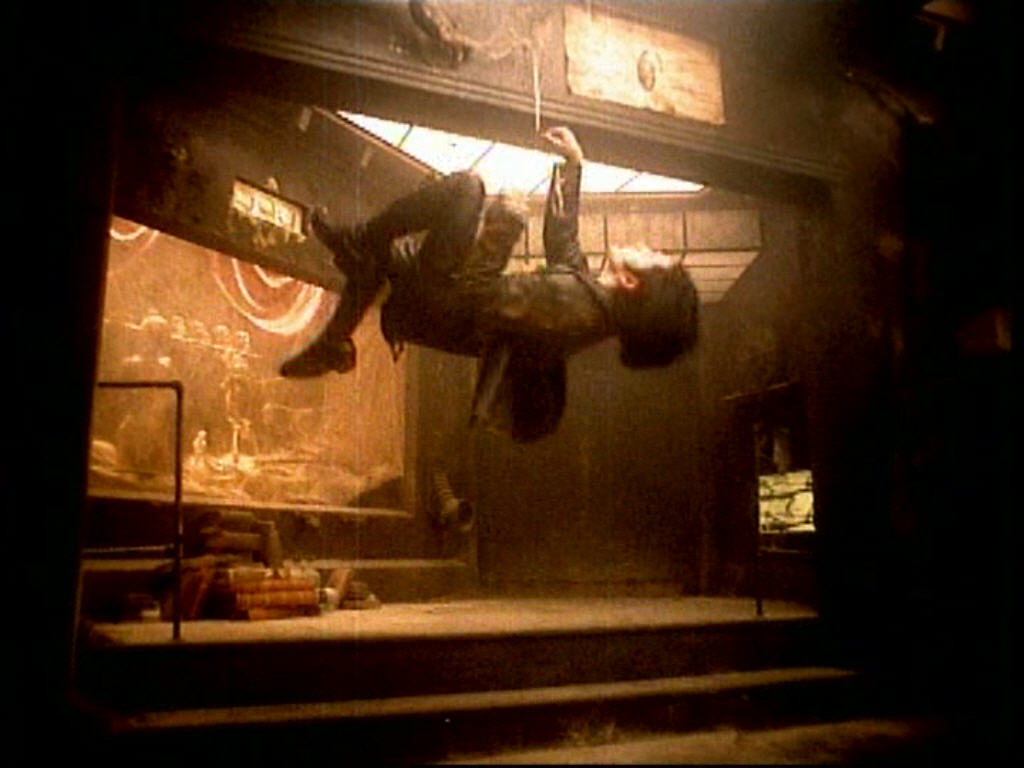
David Lynch (1946-2025)


There are few giants of cinema here today as there are filmmakers that people will name as an influence. John Ford. Stanley Kubrick. Orson Welles. Ingmar Bergman. Agnes Varda. Federico Fellini. Akira Kurosawa. There are certain names that redefine what cinema is as cinephiles would often have collections of these filmmakers because of the kind of films they have made. They were more than just filmmakers. They were artists. David Lynch is one of them as he is the most original American filmmaker cinema has had since the likes of Ford, Kubrick, and Welles. What set him apart was his approach to surrealism and how he views something that can be considered ordinary. Yet, there was nothing ordinary in what David Lynch did as there was an element of darkness and danger about him that entranced audiences whether it was through film or television or even music.

I first heard of David Lynch in the early 1990s though I had no clue who he was as all I have ever heard was, he was this guy who made weird movies. I heard of things like Blue Velvet and Twin Peaks, but this was before I understood what cinema is as I did not know what this guy was about or what his films were about. Then in 1997 as I was starting to get an idea that movies were not these high-budget blockbusters, or these laugh-out comedies. I realized there was so much more through indie films but also late-night softcore porn films, but David Lynch was still this weird anomaly that I was unsure about. At the same time, I was a few years into my obsession for Nine Inch Nails and heard there is a new song from them as it is for a film by David Lynch called Lost Highway. I bought the soundtrack when it came out since it was curated by Trent Reznor and there is this famous Rolling Stone magazine cover featuring both Lynch and Reznor that I never got but it was cool as fuck.
I saw commercials for the film as I wanted to see it, but it wasn’t playing at a movie theater near me as the one place I knew that was playing there was a movie theater between the areas of Buckhead and Buford Highway as my parents didn’t want me to go there. Not surprisingly, the theater is gone as it is an area I rarely go to although I have not been there in a long time. I ended up waiting a year to see Lost Highway when it arrived on HBO as I saw it late one night and thought it was a cool movie even though I had no idea what it was about. Even though I just got the film on Blu-Ray more than a year ago from Criterion, I still do not have an idea of what the whole film was trying to say but that did not matter because it was an awesome film.

I would watch a few more of Lynch’s films around this time such as Blue Velvet, Wild at Heart, Dune, and Twin Peaks: Fire Walk with Me as I did like the first two films, but I didn’t like the other two though Twin Peaks: Fire Walk with Me did grow on me. This was all before Mulholland Dr. came out as I waited a year to see it when it arrived on TV through Starz! That would end up being my all-time favorite film of his as it is one of those films that I fell in love with, and it made me a fan of his work though there was so much of his that I have not seen. By the late 2000s, I had seen all his feature films, but I felt like I had barely scratched the surface knowing that he also made a lot of short films and TV projects with Twin Peaks being the one thing of his that I wanted to see but I heard there wasn’t a proper release of the series on DVD until years later. After leaving Epinions.com in 2010 and going on my own, I would refine myself more as a writer and doing the Auteurs series. The specter of Lynch still loomed as I knew he was a subject I wanted to cover but I waited till I could get access to every short and TV series that was available at the time.

He was the perfect choice to be my 50th subject where I did a lot to cover his body of work up till that point while I was also awaiting for the return of Twin Peaks. I had subscribed to his YouTube channel while I also learned he also acted in Seth McFarlane’s animated spin-off of The Family Guy in the much-more superior The Cleveland Show as Gus the Bartender.


It is one of the things about Lynch that is always surprising as he often does the unexpected and have fun with it. His music is not for everyone, but it is awesome that he can do something for his own enjoyment, and he has an audience to share in that enjoyment. He is also a damn good actor as one of the last things he did recently, that is the coolest cameo ever is him playing John Ford in the ending of Steven Spielberg’s The Fablemans. That is meta in a way where you have a legendary filmmaker playing a highly-revered legendary filmmaker in a film about the early life of a legendary filmmaker who is telling his own story. Lynch as John Ford is perfect casting he is the only person that could do Ford justice.


Given that today is a sad day as we also lost another revered figure in Mr. Baseball himself in Bob Uecker, nothing will loom as large as what David Lynch has done for cinema and television. He made it okay for the weirdos to make art that not everyone will get. He made it okay for those who live in an ordinary world to be weird. He was also someone that did not take himself seriously while also allowing us to be raptured by darkness. There is never going to be another David Lynch as there will be a hole in cinema that will never be filled. Still, he left an incredible legacy that will continuously be unmatched as there is always going to be an audience that will see these tremendous films, shorts, TV projects, and other things that he did that gave them something. To Mr. David Lynch. Thank you for all the things you gave us. We will miss you.

R.I.P. David Keith Lynch (January 20, 1946-January 16, 2025)

© thevoid99 2025

Monday, January 11, 2016

David Bowie (1947-2016)


One of the earliest memories I have is like anyone who was born or grew up during the 80s was watching MTV. Among the early music I probably can remember listening to were the likes of Michael Jackson, Men at Work, Huey Lewis & the News, and Pat Benatar. Then there was this bloke with blond hair singing in a restaurant in Australia that had this song which was different from what was out at the time. It had this funky bass groove but also something was simple, direct, and you can dance to it. I was two years old when Let’s Dance was the big song on the radio and on MTV as I remember my parents owning that cassette as my mother was pregnant at the time carrying my sister who would arrive that September. I think my favorite song at the time was the title track to the album while my mom’s favorite song and still her all-time favorite song is China Girl.


It’s amazing that I could remember that which goes to show why David Bowie means so much to me but also to the entire world. While I probably grew up throughout my childhood and into my teens being surrounded by other things where I probably forgot about Bowie for a while. It wasn’t until the time when bands like Nirvana and Nine Inch Nails were around where they would acknowledge Bowie’s importance to them. Nirvana’s cover of The Man Who Sold the World was the first in a series of events that I feel brought Bowie back to the public eye and make him aware to a new generation of fans. Yet, I think there were many who were listening to grunge and alternative rock that were reluctant to listen to Bowie as they thought of him as that lounge lizard from the 1980s.


That changed when I was on vacation in New York City at the summer of 1995 when I was 14 with my parents and sisters visiting my mom’s favorite cousin where I read the news that my favorite band at the time in NIN were going to go on tour with David Bowie. It struck me as odd knowing that my memory of Bowie was from Let’s Dance but then I heard some of these others songs like Space Oddity, Fame, “Heroes”, and Ziggy Stardust and realize this is the same guy. That made me want to go see Bowie and NIN but other events forced me to miss it. This is why for anyone who is into a band or an artist of a current generation, it gives those the chance to look for something else. It’s among the reasons why I’m grateful for Trent Reznor and NIN for providing gaps between albums which gives me the chance to find other things.


Compilations are a good thing when it comes to certain artists who have a catalog that is quite vast as I bought the Changesbowie compilation when I was in high school. By the time I was a junior/senior in 1998 when two new compilations of Bowie’s work that featured not just his hits from 1969 to 1979 but also rarities and some album cuts. It was also around the time Velvet Goldmine was coming out as I wanted to see that film. A year later, a series of reissues of his albums from 1969 to 1987 came out as I wanted to see where to start thanks in part to the Internet which was new at the time. By the end of the 20th Century, I became a full-on fan of David Bowie as one of my favorite purchases I have is the Bowie at the Beeb three-disc limited edition compilation which featured an abundance of material Bowie did for the BBC from 1968 to 1972 with the third disc as his concert from June of 2000 for the BBC where he played songs from the 80s and beyond.


Through the Internet, I would go into his entire body of work as it became clear that this was a man of great importance. While bands like Radiohead and NIN are among my all-time favorite acts, Bowie is probably right behind those two though maybe he’s better than both of them considering the wealth of music he created. Like NIN and Radiohead, Bowie made music that didn’t play by anyone’s rules nor did they cater to trends with the exception of some of the stuff he did in the 1980s which were, even by his own admission, terrible. At the same time, they were artists that spoke to me in my teens and through my early stages of adulthood. Yet, Bowie was the master as songs like Rock N’ Roll Suicide and Quicksand had lyrics that were very powerful and direct. He spoke about alienation, anxiety, and fear yet made it so relatable that it probably saved my life.


I’m saddened that I never got to see him live but the shows he did present on video/DVDs showcased that everything else everyone did. He did it better and he did it with more heart and more passion no matter how silly it was back then or how strange it was. He was someone that was ahead of his time and laid the ground works for practically everything and everyone. People would probably say the same things about Elvis, the Beatles, the Rolling Stones, Led Zeppelin, or Michael Jackson in how they influenced their life or pop culture in general. For me, it was Bowie. He was someone that constantly reinvented himself and kept people guessing through his music and art. A few years ago, I made a list of his essential work from 1969 to 1980 which I think is his golden period though I would expand it to 1983’s Let’s Dance as that golden period.


If anything, his second self-titled release to Let’s Dance is quintessential Bowie and there is rarely a bad moment in those albums along with the live albums in those times like David Live from 1974 and Stage from 1978 in their respective expanded editions. There’s some gems he did in the 1980s and his work with Tin Machine while I think 90s albums like Black Tie White Noise and Outside are among his most underrated albums of his career. Heathen would be the return of classic-era Bowie with Reality being a fantastic follow-up. Then he disappeared where I was content knowing that even if he didn’t put out new music. He made more than enough to create music that would last for eons and then in 2013, he returned with The Next Day with little warning and it was a fucking classic from start to finish. It was as if he would return to do shows and such but I figured that it would take awhile but alas, that would never happen. Then there’s his final album Blackstar which if anything is a great testament to a great career. It’s a phenomenal record that stands with the rest of his work and a way to go out.


It’s not just through music that Bowie made an impact but also in art and film. As an actor, he had everything many would want while he didn’t go for the starring roles but rather play parts that suited him. Whether it’s Thomas Jerome Newton in The Man Who Fell to Earth, Major Jack Celliers in Merry Christmas, Mr. Lawrence, John Blaylock in The Hunger, Pontius Pilate in The Last Temptation of Christ, bringing Andy Warhol back to life in Basquiat, Nikola Tesla in The Prestige, Vendice Partners in Absolute Beginners, or Jareth the Goblin King in Labyrinth. Bowie always brought something to a film and made it something special that many film buffs will enjoy.


Another thing that I think made Bowie exceptional was his generosity to other talents. While many artists would try to do whatever they can to boost their own egos or whatever, Bowie used his fame to give friends and unknowns their breaks. If it wasn’t for Bowie, I’m sure there are many who wouldn’t have heard of such artists/acts like the Velvet Underground, the Stooges, or T-Rex. They did something for him as an artist and he returned the favor where he gave Lou Reed his biggest hit with Walk on the Wild Side while Iggy Pop would become a major solo star. If it wasn’t for Bowie, I’m sure ambient music wouldn’t become prominent as he definitely raised attention for that genre and one of its creators in Brian Eno. He was also there to help those who were in need like his childhood friend Peter Frampton where he had him play guitar for the Glass Spider tour of 1987 and exposed his work as a guitarist.


I’m sure that if Bowie was never around, Luther Vandross would’ve never gotten a break or something as Bowie saw this young man and had him sing back up on the Young Americans album as well as co-write a song with him and did vocal arrangements. It shows how broad his music was and how important he was to popular culture. For those who probably grew up watching Soul Train in the 1970s were probably taken aback by this skinny British white guy with orange hair on the show until they heard him sing as it was clear that he had soul. He can rock, he can do dance, he can do electronic music, he can be loud, and he can also chill. What more could anyone ask from an artist like that?


Through the people he’s helped out and the people he’s given breaks to, it is clear that Bowie’s influence has created many that would come into his wake. There are covers by many artists who had paid tribute to him. Some in a very direct way like Bauhaus and Nirvana through some weird yet funny tributes by Flight of the Conchords in a song called Bowie’s in Space. One of my favorite tributes came from this guy named Steve Riks who would play many legends as he did one of the most bizarre yet funny tributes to both Bowie and Elvis Presley who were both born on January 8 (which I hope to be the day when I get married if that ever happens).


It goes to show that Bowie has made people smile and bring joy to the world. Even as fans would create some of these bizarre video compilations like Bowie getting annoyed during interviews.


Then there’s Chris Hadfield’s cover of Space Oddity in outer space, that is a cover done with great justice. It’s also quite moving.


For someone who dressed up like an alien, a coked-out European, a clown, and wears women’s clothing. It is clear that he’s managed to do so many things for so many people including children who recently did a little tribute to the man known as Ziggy Stardust, Halloween Jack, the Thin White Duke, Major Tom, and Jareth.


While it is sad that he’s gone now. It is clear that he has meant so much to the world and probably made them feel OK to be weird and challenging. Especially as he also created anthems through his music and art which will endure. Right now, Bowie is probably somewhere in the galaxy reforming the Spiders of Mars with Mick Ronson and Trevor Bolder while waiting for Mick Woodmansey to join them soon as that was his best band. To the collaborators such as Carlos Alomar, Brian Eno, Mick Woodmansey, Tony Visconti, Trent Reznor, Nile Rodgers, Ken Scott, Earl Slick, Mark Plati, Mike Garson, David Sanborn, Edral Kiziclay, Reeves Gabrels, George Murray, Dennis Davis, Robert Fripp, Adrian Belew, Giorgio Moroder, Sterling Campbell, Gail Ann Dorsey, Gerry Leonard, Peter Frampton, and Iggy Pop. Thank you for being part of his musical family along with the men who aren’t with us such as Mick Ronson, Trevor Bolder, Marc Bolan, Luther Vandross, John Lennon, Stevie Ray Vaughn, and Lou Reed for making his music mean something.


To the people who were involved in his career like his first wife Angela and his longtime personal assistant Coco Schwab, thank you for being there for him and giving him the confidence. Finally to Iman, Duncan, Zulekha, and Alexandra, thank you for taking care of David Robert Jones and being the family that loved him. To David, thank you for being there for all of us and we will miss you.

R.I.P. David Bowie (1947-2016)

© thevoid99 2016

Monday, August 11, 2014

Robin Williams: A Tribute


In the world of entertainment, there are those who can move you. There are those that can make you cry. There are those that can make you think and be engaged. There are those that can make you laugh. Robin Williams was one those people who could do all of those things and more. His passing on August 11, 2014 wasn’t just a major shock but one that I’m sure that many just couldn’t believe. I am beyond sad. I’m more than just devastated. Having been through my own battles with depression, it is a disease and never an easy one to conquer as I’m sure it was incredibly hard for Williams to deal with. I don’t want to talk about his death but what he meant to myself and the world.


One of the great things that I think Williams accomplished is that he was able to cross over from generation to generation. In the late 70s, people grew up watching him in Mork & Mindy and Happy Days. In the 80s, it could’ve been Popeye, The World According to Garp, or through his stand-up comedy work. I am one of those people that was raised by Robin Williams through his work in Comic Relief and films like Moscow on the Hudson, The Adventures of Baron Munchausen, Dead Poets Society, Aladdin, Club Paradise, The Best of Times, and Mrs. Doubtfire. My parents were big fans of Robin Williams as they loved his comedic work in films like Good Morning Vietnam. Yet, Moscow on the Hudson is a film that I think is very underrated as my parents constantly talked about since they’re immigrants and know that experience while being to laugh at what Williams was doing. It’s a very special film as I think credit should also go to its co-writer/director Paul Mazursky for making that film as he had just recently passed away.


I think there’s kids that grew up Williams through his voice work in Aladdin which is one of the great voice performances as well as films like Jumanji and Nine Months which were the kind of films that lifted you up on a down day. Yet, the film that I loved to watch that my parents loved to watch and sisters loved to watch was Mrs. Doubtfire. We all saw it in the theaters and we loved it because it was funny and it had a very touching story. My late maternal grandmother loved the film as who couldn’t love that scene where Williams realizes he’s on fire and had to stop it with pot tops? It’s one of those rare movies that manages to cross all age groups and do so much.


Of course for every great performance that Williams has done in films like Good Will Hunting, Awakenings, The Birdcage, Baron Munchausen and Dead Poets Society where he can be funny but also be very dramatic. There are films that weren’t very good like Bicentennial Man, Jack, Old Dogs, Toys, Hook, and of course, Patch Adams. I’m sure there were people who were kids when some of those movies were made thought they were great but are now realize that they weren’t any good. I think part of Williams’ genius was bring the child in him so that kids were able to connect with him.


When I was coming of age and discovering new things, Williams would come back but in a very different way. Death to Smoochy may not everyone’s favorite film but I enjoyed it to death because it was different and Williams was playing a bit of a psychopath who kept saying “I’m Rainbow Fuckin’ Randolph”. That streak would continue with a very devious and creepy role as the antagonist in Insomnia which was very surprising while I think his crowning achievement in that year where he decided to go dark was in One Hour Photo which is definitely one his most overlooked performances. Another performance of his that I thought was overlooked is World’s Greatest Dad which is an extremely underrated film. It has him being a dad to a son who is essentially the biggest douche bag in the world who suddenly died due to auto-asphyxiation. The best scene for me was Williams making his confession and freeing himself from the lies he created as he was surrounded by people who were essentially full of shit.


It’s probably what I think is the last great performance of his career though he has a couple of more movies to come out later this year. Yet, I just want to remember those great movies he made and how much it meant to the world. Though he is now gone, his ability to make the world laugh and cry will never be forgotten. Thank you my Captain.


R.I.P. Robin Williams (1951-2014)

© thevoid99 2014

Saturday, September 21, 2013

10 Reasons Why Lost in Translation is the Best Film Ever...


On August 29, 2003 at the Telluride Film Festival, Sofia Coppola unveiled her second feature-length film about an aging movie star who goes to Tokyo to shoot a whiskey commercial as he meets a married young woman as they both endure loneliness and uncertainty in the city. The film was called Lost in Translation as it would also make its mark some days later at the 60th Venice Film Festival as well as the Toronto Film Festival around that same month. Then on September 12 on that same year, the film began its limited run in the U.S. where nine days later, I saw the film for the very first time at the AMC Phipps Plaza Theatre near Lenox Square at the Buckhead area in Atlanta where I saw the film for the first of three theatrical viewings.

I paid $8 for a 7:05 PM screening not really sure what I was going to expect as my only interest in the film was the fact that it was something different. It was directed by Sofia Coppola whose first film The Virgin Suicides that I liked and it would feature music by Kevin Shields of My Bloody Valentine which I was getting into at the time. I would see the film again at the same theater on October 18 at a 9:45 PM and for the third time at the now defunct Lefont Theatre at Buckhead on Christmas Eve of that year. I don’t know why I decided to see the film three times in the theater as I had never saw a film in the theaters more than once with the exception of Ladybugs back in 1992 (I was 11 years old, what was I thinking? Yet, I still have a soft spot for Rodney Dangerfield).

I would see the film every September 21st as it was that day I saw the film as it was also Bill Murray’s birthday as I made it an annual tradition. For me, it is the best film ever made. Why would I say it’s the best film ever made? Well, I can give 10 reasons why it is my all-time favorite film. Criterion Collection always have 3 reasons into why a certain film belongs in their library. Here are my 10 reasons for why Lost in Translation is the best film ever made:

1. Its Sensitive Portrait of Alienation & Not Knowing


Part of Sofia Coppola’s running theme with pretty much all of her films has been the idea of alienation and identity as she creates characters who are quite disconnected in one way or another. In this film, it’s about people who are definitely lost in their life. For Bill Murray’s Bob Harris, he is at a point where his career is winding down while his marriage is definitely on the rocks as he realizes he forgot his son’s birthday which makes him feel like shit. For Scarlett Johansson’s Charlotte, she’s a young woman who had just graduated from Yale but has no idea what to do next as she has no clue why she’s married. As they’re both in Japan, the sense of alienation becomes very deep for both characters that includes one of Coppola’s most mesmerizing shots of Charlotte sitting next to the window gazing at the city of Tokyo.

2. Its Humorous Take of Cultural Confusing and Mistranslation


The concept of Americans spending some time in Japan definitely brings up a lot of things that might happen. Here is where the film’s title comes into play in not just some of its humorous moments but also in some dramatic elements. The most notable scene is Bob Harris being directed by a Japanese filmmaker for the commercial where the director is talking in Japanese while the translator would only say “turn to camera with more intensity”. It’s a moment that is baffling as it’s clear that Harris is aware he’s been given more instructions than what his translator told him. Another scene that is very funny is when a prostitute is sent as a gift for Harris as she tells him to rip her stocking which he misinterprets as “lip them”. The sense of mistranslation and confusion would play into a very evocative scene of Bill and Charlotte talking in bed where Charlotte asks why do the Japanese switch the “r” and “l”.

3. Redefining the May-December Romance


Most films based on the May-December romance scenario often has an element of creepiness depending on who is cast. This film not only redefined that scenario but add something that would make it unconventional and engaging. Notably as it plays into the lives of two lost souls in an aging actor in his 50s and an uncertain woman in her 20s where they basically just talk and have fun. There’s no sex or anything that is expected in romantic films. Instead, the conversations lean on towards something that is existential as well as personal where both Bob and Charlotte express their frustrations with marriage as the former comes to the realization that it has indeed lost its romance.

4. The Beauty that is Japan


If there’s one character in the film that is just as important as Bob and Charlotte, it’s Japan from the city of Tokyo to the ravishing sequence of Charlotte in Kyoto. Through the naturalistic yet rapturous photography of Lance Acord, the city of Tokyo never looked any better nor as intimidating for the way it plays into Bob and Charlotte’s isolation. The shots set at night including that amazing sequence of Bob and Charlotte coming home from the karaoke onto the Rainbow Bridge at night are among the most exquisite that is later matched by the Kyoto sequence where it aims for naturalistic camera work as opposed to the more post-card look of Hollywood-driven films.

5. Kevin Shields’ Return to the Music World & Its Rapturous Soundtrack


For anyone who had paid attention to the indie music world, there was always the question of who would make the big return to the world of music. My Bloody Valentine’s Kevin Shields would make his return with some new music for the first time in over a decade in contributing three amazing instrumental pieces and the song City Girl which is practically one of the most underrated songs of the 2000s. Yet, the film’s soundtrack is filled with an amazing array of artists as diverse as Phoenix, Happy End, Sebastien Tellier, Squarepusher, Death in Vegas, the Jesus & Mary Chain, Shields’ My Bloody Valentine, and Air. Ranging from indie-pop, noise-pop, Japanese folk, and ambient music. The film’s soundtrack from the supervision of Brian Reitzell just adds to the exotic quality of the film.

6. Bill Murray


Everyone knows Bill Murray as one of the funniest actors ever. Then in 1993, something new was emerging in Murray with Groundhog Day where he displayed some dramatic range that later lead to some great collaborations with Wes Anderson and Jim Jarmusch. In this film, Murray exudes a man who is coming to the end of career where Murray adds this melancholia that is unexpected. He does have moments where’s funny but in the most subtle of ways from the way he engages in conversation with Charlotte to the his reactions of his surroundings. Yet, it is that element of sadness in the character of Bob Harris over the way he deals with a crumbling marriage and the fact that he’s not a good husband or father as it adds a great amount of weight into Murray’s performance.

7. Scarlett Johansson


Playing a 25-year old graduate at the age of 17, Scarlett Johansson’s performance as Charlotte was truly unlike anything. Especially for someone at that age and having been acting for almost a decade at that time. Yet, Johansson just adds this very evocative quality to her performance in the way she can express so much by doing so little in such moments as her visits to Buddhist temples and Kyoto as well as being the comfortable foil for Murray. Johansson also has this melancholia as she plays a woman with no sense of direction as well as someone who is alienated by the world like other Coppola protagonists as the Lisbon sisters in The Virgin Suicides and the titular character in Marie Antoinette. Yet, Johansson added something that was very adult to her character as well as a sense of hope in Coppola’s lost-woman trilogy.

8. Making Karaoke Cool Again


Karaoke for a time stopped being cool because people were either singing very bad songs or were singing very badly as it stopped being fun. Thankfully, it would take Coppola, Murray, Johansson, Brian Reitzell, Roger Joseph Manning Jr., and some Japanese actors to make it cool again. Not only in the song choices ranging from the Sex Pistols, Elvis Costello, the Pretenders, and Roxy Music but also having fun with them. Yet, it’s Murray’s rendition of Roxy Music’s More Than This that really steals the moment as it’s Murray just singing it straight where it is also very moving to display that even karaoke can make someone connect with another person.

9. Sofia Coppola’s Ethereal Direction


Only a filmmaker like Sofia Coppola would create a film that has a lot of visual beauty mixed in with startling images that conveys something real. From the way she presents Tokyo as something that is very foreign to Western audiences to the sense of intimacy that is captured in the Hyatt Hilton Hotel in Tokyo. With its use of hand-held cameras to capture the chaos of the Shibuya cross way as well as the trademark shots of sunlight gazing over nature and cars being shown outside in a close-up. It’s definitely the work of someone who is finally creating her own language as a filmmaker as it would evolve in her subsequent films as it would make her one of the best filmmakers working today.

10. The Mystery Over Its Ending


The film’s ending remains one of the great endings in film but also its most mysterious. Largely as it plays to Bob Harris leaving Tokyo as he sees Charlotte walking into the streets as he goes after her to say one final farewell. It’s a very touching moment that is captured with great simplicity but it’s what Bob whispers to Charlotte that to this day, has many wondering what he told her. What did Bob whisper to Charlotte? The only thing that was heard clearly was the last word in “OK”. They kiss and part as Bob leaves to return to the U.S. while Charlotte takes one last glimpse of him as she walks into the streets of Tokyo as the music of the Jesus & Mary Chain plays through that is followed by a montage of the highways and buildings of Tokyo.

To Bill, Scarlett, Sofia, and all of those who worked on the film and helped it make it one of the best films ever. Domo arigato. Ten years since it came out to the theaters all over the world, it’s still as exotic as ever. Yet, if there’s one way to close this piece on the film. I think it’s best if we let Mr. Bob Harris say these parting words…


Related: Lost in Translation - Lost in Translation OST - Favorite Films #1: Lost in Translation - 10 Things I Want to See in a Criterion UHD 4K Blu-Ray for Lost in Translation

© thevoid99 2013

Friday, April 05, 2013

Roger Ebert: A Tribute


April 4, 2013 is indeed a sad day in the world of cinema as one of its key figures in film criticism was finally laid to rest. Yet, Roger Ebert was more than just some film critic but a man who loved films and was willing to share that with the world. Whether it’s good films or bad films, Ebert was someone that can speak to the film buff as well as the common person. His passing now leaves a void in the world of cinema that will be unfulfilled but what he left behind is a legacy that no one will forget.

In the age of the Internet, there wouldn’t be blogging or modern-day film criticism if it wasn’t for him as we bloggers and film buffs look up to him as an example of what a film critic is and should be where he set standards on what to do and what not to do. He was also someone who can admit that he’s wrong and wasn’t afraid to do that. Through his writings and the now-defunct TV show At the Movies with the late Gene Siskel, he gave film buffs a chance to film criticism at its finest and most direct. There was never a dull moment with him and Siskel on that show whether they praised or film or just simply bashed it.

If it wasn’t for Ebert, some of us might have never heard of Werner Herzog or catch a film like Hoop Dreams. His role into exposing the world to this form of art made our world a little bit better. While there’s times when he was wrong yet he always know how back it up with his wit and passion for films. Yet, there was more to Ebert than his film criticism as his Great Films essays are an example of why he loves films as he has a list of favorites from La Dolce Vita, Aguirre, the Wrath of God, Lost in Translation, This is Spinal Tap, Do the Right Thing, Gates of Heaven, and many others reveal not just into why he thinks they’re great but also what makes them so enduring.

His blog posts from his own website were also fun to read as it revealed a bit of the man himself as he states opinions and things that were beyond the world of film criticism. Some of which revealed his views on religion, life, his own struggles with alcoholism, and his long-standing battle with cancer that eventually took him to the end. At times, they were poignant and cerebral while there were also moments that were very light-hearted and funny such as his love for Steak N’ Shake. For anyone who goes to the drive-thru and see some of his quotes will know that the man loved that place.

It is with a heavy heart that for those of us who love his writing will never get the chance to read something from new him ever again. Even for new filmmakers who are to emerge will never get the chance to have one of their films seen by him. Still, he’s done more than enough to make a great contribution to cinema as well as give us bloggers the chance to say something with the same kind of passion that he is known for.

We will miss you Roger. Hope you and Gene get the chance to talk about films while eating Steak N’ Shake up there in Cinema Heaven.

© thevoid99 2013

Thursday, October 11, 2012

Harris Savides: A Tribute


One of the great cinematographers to emerge in the 1990s, Harris Savides is known for his evocative approach to lighting and photography has died on October 11, 2012. His death marks a huge loss to the art of photography as he is definitely adored by cinephiles and filmmakers alike for his unique work. From his work with filmmakers such as David Fincher and Gus Van Sant and other filmmakers in the art of film and music videos. There is definitely no one like him.


Among his great work in the world of music videos includes videos for such artists such as Madonna, R.E.M., Chris Isaak, Nine Inch Nails, Tom Waits, Michael Jackson, the Rolling Stones, and many others where his unconventional approach to lighting made these videos stand out. Among the filmmakers he worked with in those videos included Mark Romanek and Michel Gondry. The videos he did with Romanek such as Fiona Apple’s Criminal, Madonna’s Rain and Bedtime Story, Nine Inch Nails’ Closer, and Michael and Janet Jackson’s Scream are definitely some of the best videos out there when music videos were really an art form.

For NIN fans, Closer is easily regarded as the best video made by NIN and Romanek in terms of being so off-the-wall, so controversial, and really engrossing. While a lot of the work is made by Romanek, it’s the way the video looks that makes it stand out as it’s very grainy, not a lot of exposed light. The candle lights add to the look that seems very de-saturated and there’s lots of spots in the grainy film. It’s truly the work of a genius.


Fiona Apple’s Criminal is another classic video as it plays to the furor of the teenage Calvin Klein ads of the mid-90s that really got people up in storm. The lighting schemes in that video are incredible because it doesn’t emphasize on being flashy. It’s just direct and to the point where there isn’t a lot of lights around these rooms or Apple as she’s lip-syncing the song. It’s truly an unforgettable video.


Savides’ work in the art of film is where he really shines where he does a lot in the art of cinematography. While he, like fellow cinematographer Wally Pfister, started off in the world of 90s softcore porn films. For anyone who watched those films and enjoyed it will definitely admit that those films did look pretty good. What Savides did in Zalman King’s Lake Consequences might not be highly regarded but that sex scene between Joan Severance and Billy Zane in the golden grass was well-lit and had a sense of atmosphere that makes it more fun to watch.


Of the collaborations he made in film, it’s his work with David Fincher that should be worth noting as it began with 1995’s Se7en where he did the film’s grainy opening credits sequence that is accompanied by a remix of NIN’s Closer. Then there’s 1997’s The Game which is a definitely one of Fincher’s great films in the way San Francisco is shot as well as some of the exteriors. Notably the scene where Michael Douglas’ Nicholas Van Orton enters this strange room where array of colorful lights carry a mood that is unsettling. Savides’ best work with Fincher is Zodiac where it’s a real landmark in the art of digital photography. The sense of undercurrent in those nighttime exterior and interior settings just adds to the suspense including that horrific scene where Ione Skye meets the Zodiac killer and is running in terror about what she might’ve seen. Other moments of Savides’ groundbreaking work is the way the overhead shots of cars following another with these low-key lighting set-ups that adds to the brooding tone of the film.


If there’s one filmmaker who definitely embraced Savides’ work in photography, it’s Gus Van Sant. The six films they did together is definitely among one of the great director-cinematographer collaborations. In lesser-known works like Finding Forrester and their last collaboration in 2010’s Restless, there is a beauty to the way Savides shoot exteriors that could’ve been more polished if done in a conventional manner. Since he and Van Sant favor low coverage, it adds to the beauty of the film. In 2008’s Milk, the array of colors that Van Sant wanted to capture the energy of the 1970s plays to the sense of heightened beauty in those daytime exteriors as well as the scenes inside city hall during the day time.


Their best collaboration and what is easily Savides’ greatest work of his career is in the Death Trilogy of Gerry, Elephant, and Last Days. These three films are essentially pure forms in the art of filmmaking. While Gerry is obviously inspired by the works of Bela Tarr, Van Sant and Savides definitely aimed for something that harkened back to the age of epic cinema. The scene of the two Gerrys walking through the desert slowly is truly one of the most exquisite moments in film from the use of low-lighting schemes and having to shoot while the sun is rising. It is clearly the work of someone who understands lighting without needing to overexpose or in need to polish a scene.


Elephant is much starker in terms of its imagery from the way the grass looks on a rainy day to the sense of dread in the darken hallways. It’s part of the suspense that Van Sant and Savides wanted to carry as it leads to the climatic shooting where doesn’t go for anything that is bright and flashy. Last Days featured a similar scheme except that it’s much more grim in look and tone. Particularly in the locations where Michael Pitt’s Blake treks around the forest near his home where there’s an understated beauty to the look as it surrounds the despair the character is feeling.


Other works that Savides did with filmmakers like Ridley Scott and Jonathan Glazer showcase his unique visual style such as Scott’s 2007 film American Gangster where he captures the environment of the New York City drug culture with an array of low-key colors. In Jonathan Glazer’s 2004 film Birth, Savides maintain that low-key lighting style in some of the film’s interiors such as the bathing scene to play up the mood of loss that occurs. Then there’s the short Savides shot for Wong Kar-Wai in The Hire series called The Follow starring Clive Owen, Mickey Rourke, Forest Whitaker and Adriana Lima which employs a more vibrant style akin to Kar-Wai’s visual style yet Savides manages to create a dream-like feel in those driving scenes including the scenes at night.


Savides’ recent collaboration with Noah Baumbach are definitely highlights as it helped broadened Baumbach’s outlook as a filmmaker. Margot at the Wedding featured a look that played to the grayness of the locations where it emphasized less on color but rather on the film’s dour mood. In Greenberg, the look is far more colorful as it’s set in Los Angeles where it plays to the vibrant world that involve Greta Gerwig’s character as she befriends the melancholic Greenberg (Ben Stiller) as he is definitely lost. The sense of graininess that Savides brings in that low-key visual style is among one of the film’s highlights.


Another collaboration that is recent is the work Savides is doing with Sofia Coppola in her films Somewhere and the upcoming 2013 The Bling Ring where the latter is the last film Savides worked on. Savides’ work on Somewhere is truly a work of art in terms of the tightened look of the hallways at the Chateau Marmont to the dream-like nighttime exteriors of Los Angeles. The look of the daytime Californian locations have this air of beauty but also something that is akin to a visual style reminiscent of European art films as it is definitely gorgeous to look at.


The Top 10 Essential Works of Harris Savides

1. Gerry


2. Zodiac


3. Somewhere


4. Last Days


5. Nine Inch Nails-Closer


6. Elephant


7. Fiona Apple-Criminal


8. Milk


9. Madonna-Bedtime Story


10. The Game


The passing of Harris Savides is a huge loss to the world of cinema and the art of cinematography. Yet, Savides’ work will live on through the film and videos that are made as his work is definitely going to influence countless artists in the years to come. He truly was a visionary in terms of what he wanted to bring in these images. There will never be another like him.

R.I.P. Harris Savides (1957-2012)

© thevoid99 2012