The film revolves around a real estate developer who had lost his wife and daughter following a kidnapping attempt over money as he would go to Florence sixteen years later with his business partner as he meets a young woman who bears the same face as his late wife. It is a film that is about man still reeling from the death of his wife and daughter as he feels guilty over how he fumbled the attempt to save them as the presence of this young woman who looks exactly like his late wife has him obsessed about getting a part of his life that he lost. Paul Schrader’s screenplay is a study of grief as it plays into a man consumed with guilt and loss as the land that was meant to be a thriving plot that would make him rich but instead turned it as a memorial for his wife and daughter that is a replica of the Basilica di San Miniato al Monte in Florence. It is where Michael Courtland (Cliff Robertson) met the woman who would be his wife in Elizabeth (Genevieve Bujold) as he would see a young woman in Sandra (Genevieve Bujold) who looks exactly like Elizabeth as she is restoring a painting in the church.
Courtland’s business partner Robert LaSalle (John Lithgow) also sees the resemblance upon their visit to Florence for business reasons as he returns to New Orleans where Courtland stays in Florence to meet Sandra. Courtland would bring Sandra to his home in New Orleans as those close to Courtland are shocked by how much Sandra looked like Elizabeth as things become more troubling. Schrader’s script does play into Courtland’s own obsession relating to his late wife through Sandra as the ideas of fantasy and reality would blur to the point where even those close to him become concerned. Yet, more revelations would be unveiled in its third act as it plays more into the night Courtland tried to save his wife and daughter along with those who tried to make a play on the kidnappers as it adds to Courtland’s own troubled obsession.
Brian de Palma’s direction is definitely stylish as it does bear some ideas from one of de Palma’s favorite filmmakers in Alfred Hitchcock and his 1958 film Vertigo as both films explore grief and trauma. Shot on location in both New Orleans and Florence along with nearby locations for the former, de Palma does make both cities characters with New Orleans being a vibrant and thriving city where Courtland is about to make his fortune yet wanted to share it with his family as the film opens in 1959 at a party where de Palma maintains an intimacy as well as some dream-like imagery to play into the idyllic world of Courtland at his home with wife and child. It would all crash down the moment Elizabeth and her daughter Amy (Wanda Blackman) get kidnapped as de Palma’s rescue sequence is intense as it’s about what isn’t shown and how Courtland is convinced by the police to try and swindle the kidnappers is where everything went wrong. When the film moves to Florence, the Basilica di San Miniato al Monte is a key location of the film as it is where Courtland met Elizabeth in 1948 and why the memorial for her and Amy is a replica of that church as it is also the moment where Courtland meets Sandra.
The usage of close-ups and medium shots as well as in the latter where de Palma gets so much attention to detail on an object or on a painting, with portraits created by de Palma’s older brother Bart, as it adds to the drama and suspense. Even in the wide shots where de Palma does use the locations including the scenes in Florence as it adds to the sense of intrigue in the film while its third act returns the film to New Orleans where there's some major revelations happening in the film. Notably in a sequence that is somewhat recreated from another scene early in the film yet there is so much that is happening along what had happened before in this recreated sequence as de Palma is all about those small details. Even as it play into Courtland’s obsession as it is clear he never got over the loss of his family and the guilt over his role in their deaths. Yet, the film’s climax isn’t just about revelations but also a study of trauma as well as an ending that is really filled with ambiguity over what Courtland had come to realize and such. Overall, de Palma crafts an intoxicating yet unsettling film about a man who becomes obsessed with a young woman who looks exactly like his late wife.
Cinematographer Vilmos Zsigmond does brilliant work with the film’s luscious cinematography with its usage of low-key and natural lighting for some of the interior/exterior scenes at night as well as dream-like foggy lenses for some shots in the film as it is a highlight of the film. Editor Paul Hirsch does amazing work with the editing with its stylish usage of transitional dissolves, jump-cuts, montages, and slow-motion as its emphasis on style adds to the suspense and drama. Art director Jack Senter and set decorator Jerry Wunderlich do excellent work with some of the interiors at Courtland’s home as well as the places in Florence as well as the design of the memorial for Elizabeth and Amy. Costume designer Frank Balchus does nice work with the stylish suit that LaSalle wears as well as some of the clothing from the 1950s that Elizabeth had and the clothes that Sandra would wear throughout the film
The special effects work of Joe Lombardi is terrific for the minimal special effects as it relates to the chase scene early in the film along with a dream-like sequence in the film’s third act. Sound mixer David M. Ronne does superb work with the sound as it play into the atmosphere of the locations as well as scenes that involve the suspense including some intense moments in the third act. The film’s music by Bernard Herrmann is incredible for its rich and mesmerizing orchestral score as it adds to the atmospheric tone of the film along with themes that play for certain characters and scenes that add to the suspense and drama as it is another major highlight of the film.
The film’s wonderful cast feature some notable small roles and appearances from William Finley as a man at the airport, Regis Cordic as a newscaster, Sylvia Kuumba Williams as Courtland’s maid, J. Patrick McNamara as a kidnapper, Nella Simoncini Barbieri as Sandra’s mother, Loraine Despres as Courtland’s secretary, Stanley J. Reyes as the police inspector Brie who organizes the rescue attempt on Elizabeth and Amy, Wanda Blackman as Courtland’s daughter Amy, and Stocker Fontelieu as Courtland’s psychiatrist Dr. Ellman who is concerned about Courtland’s obsession as he believes that Courtland is acting hastily. John Lithgow is incredible as Courtland’s business partner Robert LaSalle as a man who is full of charm and wear the finest suits as he becomes concerned about Courtland’s obsession towards Sandra and how much she looks like Elizabeth where he also becomes concerned about his business and whatever financial fallout would happen.
Genevieve Bujold is phenomenal in her dual role as Elizabeth Courtland and Sandra where she brings an enchanting presence in the former despite not saying anything while is more livelier in the latter where Bujold plays this woman who helps restore old paintings while learning more about Elizabeth as it is this restrained yet haunting performance from Bujold who copes with a man’s loss but also something bigger. Finally, there’s Cliff Robertson in a marvelous performance as Michael Courtland as a real estate developer who loses his family following a rescue attempt as he becomes obsessed with a young woman who looks like his late wife where Robertson brings an anguish to his role but also someone that is desperate and later jovial until people question about his relationship with Sandra as it is a rollercoaster of a performance from Robertson.
Obsession is a sensational film from Brian de Palma that features great performances from Cliff Robertson, Genevieve Bujold, and John Lithgow. Along with Paul Schrader’s chilling screenplay, dazzling visuals, hypnotic editing, and Bernard Herrmann’s intoxicating score. It’s a suspense-drama that explores trauma and loss as well as a man’s obsession towards a young woman unaware of what is happening around him as reality would force him to think about the moment he lost everything. In the end, Obsession is a phenomenal film from Brian de Palma.
Brian de Palma Films: (Murder a la Mod) – (Greetings) – (The Wedding Party) – (Dionysus in ’69) – (Hi, Mom!) – (Get to Know Your Rabbit) – Sisters (1973 film) - Phantom of the Paradise - Carrie - The Fury - (Home Movies) – Dressed to Kill - Blow Out - Scarface (1983 film) - Body Double – (Wise Guys) – The Untouchables - Casualties of War - The Bonfire of the Vanities - Raising Cain - Carlito's Way - Mission: Impossible - Snake Eyes - Mission to Mars - Femme Fatale - The Black Dahlia - (Redacted) – Passion (2012 film) - (Domino (2019 film))
© thevoid99 2021

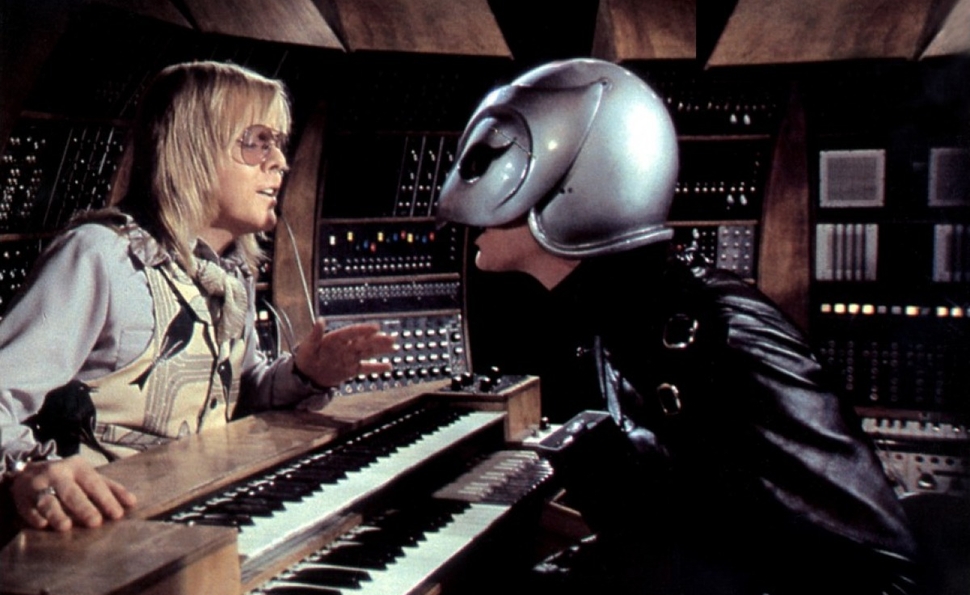
The film revolves around a music composer whose music he wrote was stolen by a producer as an incident left the composer’s face disfigured where he creates a new identity but also makes an uneasy deal with the producer to get his music made while they fight over a woman who wants to become a singing star. It’s a film that is inspired by all sorts material such as Phantom of the Opera, Faust, and The Picture of Dorian Grey but set in a world where a music is eager to latch on to anything and create his rock n’ roll palace where he would get all the talent of the world and make money off of them. The film’s screenplay by Brian de Palma, that features uncredited contributions from Louisa Rose, is largely straightforward as it play into this musician named Winslow Leach (William Finley) who plays at this club during an intermission as he catches the attention of the music producer known as Swan (Paul Williams).
Swan believes that Leach has the right music for his new music palace as he gets his right-hand man Arnold Philbin (George Memmoli) to steal Leach’s music while Leach’s attempts to reach Swan fail as he is sent to prison for a false drug possession charge where Leach breaks out of prison after a rendition of one of his songs being played. During the chase, he becomes disfigured where he adopts a new identity as he’s discovered by Swan who offers him a deal that would become troubling. It all play into these elements of deals with the devil but also the stakes as Leach is someone who just wants to create music but Swan is the one who can bring it to everyone while there is also something mysterious about who Swan is.
The film’s direction by de Palma definitely evokes a lot of style as a lot of it is shot largely on location in New York City while it plays into this world of music and clubs where people go out and see what is considered cool. The film has de Palma create this world that is outlandish as it represents a world of nostalgia, decadence, and wondrous as if it’s a fantasy for anyone that wants to be a star in the world of music. The usage of wide shots add to the scope of this world that Swan has created yet much of de Palma’s compositions emphasizes on close-ups and medium shots as it play into the conversations between Leach and Swan as well as in some of the film’s musical performances. With the help of choreographer Peter Elbling, the performances has this air of camp as it play into Swan’s vision and his take on Leach’s music as it is presented in different styles ranging from 1950s doo-wop rock, 1960s surf music, and the glam rock of the 1970s. It also play into this world that allows Swan to thrive as it adds intrigue into what kind of deal Leach made with him. Even as a young singer named Phoenix (Jessica Harper) comes in as Leach has feelings for her but Swan wants something else for her leading to this lavish climax that relates to ambition and identity. Overall, de Palma crafts a majestic yet chilling film about a songwriter’s uneasy deal with a producer as he would later seek revenge on him.
Cinematographer Larry Pizer does excellent work with its usage of stylish lights for the performances as well as in the usage of low-key lights for some of the exterior/interior scenes at night. Editor Paul Hirsch does brilliant work with the editing as it has some stylish jump-cuts that help play into the humor and musical performances as well as montages that play into Leach and Swan at work. Production designer Jack Fisk does amazing work with the look of the sets including the sets for the stage performances that are lavish and over-the-top as it include some additional set dressing from Fisk’s wife in actress Sissy Spacek. Costume designer Rosanna Norton does fantastic work with the costumes from the look of Leach’s clothes when he becomes the Phantom as well as the lavish clothes of the musical performers including Phoenix and the clothes of Swan.
Makeup designers John Chambers and Thomas R. Burman do terrific work with the look of the disfigured Leach as well as some of the glam makeup for some of the musical performers. The special effects work of Greg Auer is wonderful for a few of the effects that play into some of the musical performances and presentation. The sound work of James M. Tanenbaum is superb for some of the sound effects as well as how instruments sound in a live setting as well as the sounds of crowds. The film’s music by Paul Williams is phenomenal as it is a major highlight of the film for its mixture of piano ballads, stylish rock songs, pop, and all sorts of songs as it help tells the story as Williams also does a lot of Leach’s own singing while music supervisors Michael Arciaga and Jules Chaikin help provide various people to sing those songs that include Raymond Louis Kennedy as the voice for the glam vocalist Beef.
The casting by Sylvia Fay, Geno Havens, and Peggy Taylor is marvelous as it feature some notable small roles from Rod Serling as the film’s unseen narrator in its opening minutes, Janus Blythe as a groupie, the trio of Archie Hahn, Jeffrey Comanor, and Peter Elbling as a trio of vocalists who moonlight as a trio of acts in the 50s nostalgia act the Juicy Fruits, the surf-rock tribute band the Beach Bums, and a modern band in the Undead, Gerrit Graham as the glam-rock singer Beef who is Swan’s original choice until he is confronted by Leach, and George Memmoli as Swan’s right-hand man Arnold Philbin as a handler who looks like a 1950s greaser as he also manages some of Swan’s businesses. Jessica Harper is brilliant as Phoenix as a woman wanting to sing as she meets Leach at an audition as he believes she is the right singer where she would succeed but used as a tool for Swan to get what he wants.
Paul Williams is incredible as Swan as this mysterious producer who wants to create the ultimate music palace while maintaining this ambiguity about his importance as Williams brings this devilish charm to his role that is a joy to watch. Finally, there’s William Finley in an amazing performance as Winslow Leach and the titular character as a singer-songwriter wanting to create music that he believes has something to say only to go through obstacles and later become a disfigured artist who watches from afar as his music is played but also copes with the troubling deal he made with Swan.
Phantom of the Paradise is a spectacular film from Brian de Palma. Featuring a great cast, gorgeous set designs, dazzling visuals, and a rapturous music soundtrack from Paul Williams. The film is an outlandish yet whirlwind genre-bender that doesn’t play by the rules nor hide its influences to create a story set to the world of rock n’ roll. In the end, Phantom of the Paradise is a sensational film from Brian de Palma.
Brian de Palma Films: (Murder a la Mod) – (Greetings) – (The Wedding Party) – (Dionysus in ’69) – (Hi, Mom!) – (Get to Know Your Rabbit) – Sisters (1973 film) - Obsession – Carrie - The Fury - (Home Movies) – Dressed to Kill - Blow Out - Scarface - Body Double – (Wise Guys) – The Untouchables - Casualties of War - The Bonfire of the Vanities - Raising Cain - Carlito's Way - Mission: Impossible - Snake Eys - Mission to Mars - Femme Fatale - The Black Dahlia - (Redacted) – Passion (2012 film) - (Domino (2019 film))
© thevoid99 2020

Directed by Brian De Palma and screenplay by De Palma and Louisa Rose from a story by de Palma, Sisters is the story of a model who learns that her separated Siamese twin had been suspected of murder that was witnessed by a newspaper reporter. The film explores the unique relationship between Siamese twin sisters as they deal with their relationship as well as the interference of another woman who suspects one of them of murder. Starring Margot Kidder, Jennifer Salt, Charles Durning, and William Finley. Sisters is an entrancing yet stylish thriller from Brian De Palma.
The film is about the world of Siamese twins where a model wakes up one morning to learn that the man she just spent the night was murdered while across the building was a journalist who witnessed the murder. The journalist then learns that the woman might have a twin as it’s revealed that she is one of Siamese twins as she hires a private detective to help out where things get more troubling. It’s a film that plays into a classic scenario of the mystery-suspense film to see if what this woman named Grace Collier (Jennifer Salt) saw actually happened where her journalistic instincts have her going very deep into what is going on. Yet, there’s some strange twists and turns that involves this model named Danielle Breton (Margot Kidder) who may or may not have a clue about what is going on other than finding a dead body in her apartment.
The film’s screenplay is unique where the film starts off very low-key and playful where Breton appears on a TV show where she and a contestant in Philip Woode (Lisle Wilson) meet and hit it off where they would spend the night together despite the appearance of Breton’s ex-husband Emil (William Finley). Things seem to go well for much of the first act where there isn’t any suspense with the exception of an argument Philip hears between Danielle and her sister Dominique in French. When he comes back to her apartment with a birthday cake, that’s when the element of suspense occurs where Collier would see Philip’s bloody hand write “help” on the window. Collier would report what she saw to the police who don’t believe her as she hires this very eccentric private detective in Joseph Larch (Charles Durning) who goes into the apartment to uncover secrets while following a moving truck that is carrying a couch.
Much of the film’s second act is about Collier’s search to find out the truth where Larch’s help has her learn about who Danielle Breton is where she turns to the journalist in Arthur McLennen (Barnard Hughes) who had written a piece on these French-Canadian twins who had reportedly gotten a surgery to separate themselves. It would then lead to this third act where Collier follows Danielle and Emil as the sense of mystery and intrigue intensifies. Notably where the script would play into this element of surrealism into the relationship between Danielle and Dominique.
Brian De Palma’s direction is definitely stylish though from the way he opens the film in its opening credits that is filled with these very strange images of Siamese twin fetuses. Then the film plays into this unique scene where Philip is in a gym locker room where Danielle pretends to be a blind woman where it’s all part of a silly game show that showcases De Palma’s willingness to play with genres and structures as much of the first act starts off very calm and lively. Still, De Palma does create images and such to play into these little moments that would trigger the suspense where it finally emerges in this gruesome act of killing that is very stylized in its presentation. One unique aspect of De Palma’s direction that is interesting is the way he uses split-screens to play into the suspense where one shot has Collier talking to the cops and show them what she saw while Emil and Danielle are cleaning up all of the blood in the apartment.
The element of suspense occurs for much of the film’s second half where De Palma keeps much of the suspense low-key to see if Collier would crack the case with the help of Larch. Notably in a scene where Collier enters Breton’s apartment with the detectives where the use of these long tracking shots help play into Breton’s determination to find some clues. By the film’s third act where Collier gets closer to cracking the case, something gets strange where De Palma goes for surrealism in some strange dream sequence where it’s shot in 16mm black-and-white as if it was a documentary. It plays into this world that Collier is entering where it would uncover a lot of the mystery but also reveal how complicated things are for those who are Siamese twins. Overall, De Palma crafts a very exotic yet eerie film about identity and murder.
Cinematographer Gregory Sandor does excellent work with the cinematography from the nighttime look of the locations in New York City and Staten Island to the use of black-and-white 16mm footage to play into the surreal dream sequence in its third act. Editor Paul Hirsch does brilliant work with the film‘s stylized editing with its use of split-screens and rhythmic cuts to play into the film‘s suspense. Production designer Gary Weist does nice work with the look of Danielle‘s stylish apartment as well as some of the places she and the other characters go to. Sound editor John Fox does terrific work with the sound to play into the suspense including the scene where Philip hears Danielle and Dominique arguing in French. The film’s music by Bernard Herrmann is amazing for its mixture of orchestral music and eerie electronic pieces to play into the film’s suspense and terror.
The casting by Sylvia Fay is superb for the ensemble that is created as it features appearances from Olympia Dukakis and Justine Johnston as two bakers Philip meets, Dolph Sweet as Detective Kelly who is unsure about Collier’s claims, Jennifer Salt’s real-life mother Mary Davenport as Collier’s mother, Lisle Wilson as the man that Danielle meets in Philip Woode, and Barnard Hughes as the renowned journalist Arthur McLennen who reveals some things about Danielle and Dominique. William Finley is excellent as the very strange Emil Breton who helps Danielle cover things up while maintaining this weird presence as he knows more about what is going on. Charles Durning is terrific as the eccentric private detective Joseph Larch who uses unconventional methods to find things in his investigation.
Jennifer Salt is brilliant as Grace Collier as a woman determined to find some truth over what she saw as she gets deeper into her discovery while uncovering things that would disturb her. Finally, there’s Margot Kidder in a fantastic performance in the dual roles of Danielle and Dominique where she sports a French-Canadian accent to play into a woman’s innocence as well as her uncertainty of who is who as there’s a complexity to these characters as well as what she is dealing with.
Sisters is a remarkable film from Brian De Palma that features some astounding performances from Margot Kidder and Jennifer Salt. The film is definitely one of De Palma’s great early triumphs as well as very fascinating film on the idea of Siamese twins and identity. Particularly as it also explores many concepts into doubles and such that would be a prominent theme in De Palma’s work. In the end, Sisters is a sensational film from Brian De Palma.
Brian de Palma Films: (Murder a la Mod) - (Greetings) - (The Wedding Party) - (Dionysus in ‘69) - (Hi, Mom!) - (Get to Know Your Rabbit) - Phantom of the Paradise - Obsession - Carrie - The Fury - (Home Movies) - Dressed to Kill - Blow Out - Scarface - Body Double - (Wise Guys) - The Untouchables - Casualties of War - The Bonfire of the Vanities - Raising Cain - Carlito’s Way - Mission: Impossible - Snake Eyes - Mission to Mars - Femme Fatale - The Black Dahlia - (Redacted) - Passion (2012 film) - (Domino (2018 film))
© thevoid99 2013
Originally Written and Posted at Epinions.com on 9/17/06 w/ Additional Edits & Revisions.

Based on James Ellroy's novel that is based on the 1947 murder of Elizabeth Short, The Black Dahlia is the story of two detectives who investigate the murder of an aspiring actress as it would take a mental and emotional toll on the two men as well as their relationship for a young woman as a doppelganger seduces one of them. Directed by Brian de Palma and screenplay by Josh Friedman, the film is an exploration into a mysterious murder that occurred in the late 1940s as two men become lost in the mystery of who kill this woman. Starring Josh Hartnett, Aaron Eckhart, Scarlett Johansson, Mia Kirshner, Mike Starr, Patrick Fischler, John Kavanagh, Jemima Rooper, Fiona Shaw, Rachel Miner, Rose McGowan, and Hilary Swank. The Black Dahlia is a stylish but very underwhelming film from Brian de Palma.
After a charity fight to raise the salary of L.A. policeman, local street cop Bucky Bleichert (Josh Hartnett) and Lee Blanchard (Aaron Eckhart) become opponents for the fight publicized by Ellis Loew (Patrick Fischler) as the two later become partners in the Warrants division as Bleichert also befriends Blanchard's girlfriend Kay Lake (Scarlett Johansson). The two become successful in their work while Bleichart and Lake realize they're attracted to each other but keep their feelings intact out of respect for Blanchard. During a case to catch a child rapist where they encounter a shootout, the two find the body of a dead woman cut in half as she's revealed to be Elizabeth Short (Mia Kirshner). With news of the release of a criminal in Bobby DeWitt (Richard Brake) and the graphic nature of Short's death, Blanchard starts to unravel who wants to go after DeWitt but has to work on the Short case with Bleichert who learns a lot about Short and her aspirations to be an actress.
Bleichert's investigation leads him to clues that includes a journey into the underground lesbian bars where he meets a Short doppelganger in socialist Madeline Linscott (Hilary Swank) who later invites him to to a family dinner. Bleichert and Linscott would have an affair as he later retrieves a stag film that featured short and her friend Lorna Mertz (Jemima Rooper) which makes Blanchard more uneasy as he is later taken out of the case while an earlier case to lead to a falling out between him and Bleichert. Kay later reveals some information about Blanchard's state of mind and why he's become uneasy as things eventually get worse where Bleichert learns a deeper connection between Short and the Linscott family as he gets closer to close the case.
While the film has all of the elements of a stylish, 1940s film-noir and crime stories, it also has the style that Brian de Palma is known for when it comes to suspense considering his often ode to Alfred Hitchcock. Unfortunately, despite all of de Palma's efforts to create a fascinating, intriguing mystery. It loses its sense of direction right into the third act. While screenwriter Josh Friedman does create a faithful adaptation the Ellroy novel. What is lost is many of the psychological and character study aspect of Ellroy. Instead, the script loses some insight into the characters, the murder, and most of all, Bleichert's obsession with Short.
The changes from the book to script are unfortunate since it loses some of its suspense and the style of Ellroy's writing which weaves and entrances its audience. While the first two acts are faithful with some stuff along with major subplots and characters not making it into the film adaptation. The third act is crucial yet misses a lot on the psychological aspect of Ellroy's work where a lot of things is lost and the suspense in the book gets crammed up in too many moments. Notably the confrontation between the Linscott and Bleichert where too much goes on where in the book, Bleichert confronts the Sprague family on a series of suspenseful sequences.
The fault is really to Friedman and de Palma for wrapping things up a bit too fast while having some bizarre sequences, notably the DeWitt confrontation which in the book, is set in Tijuana, Mexico but in the film, it's in Los Angeles where it doesn't entirely work. It ends up overwhelming itself where a lot of the drama and action is forced and de Palma seems to have rushed things a bit too quickly. Still, de Palma does create some fascinating work that is reminiscent to his past films like a boxing fight scene between Bleichert and Blanchard. Some scenes are definitely borrowed from 1940s films with soft lenses on some scenes that adds style to the film. The only real falter in de Palma's directing is the ending. It feels totally false and not true to the character of Bleichert where his character in the end is forced to grow up and confront some inner demons. In the film, it wraps up to quickly with no resolve and comes out very lame. Overall, despite some strong moments in the film, de Palma loses sight of everything by the third and final act.
Cinematographer Vilmos Zsigmond does some wonderful work in the photography whether its some lovely, soft touches in some emotional sequences between Bleichert and Kay to some of the shading of windows that is true to the noir-style. Zsigmond's work also shines in many of the film's exterior's shot in Los Angeles while the interiors are very intimate with some great long shots from de Palma's directing as the veteran cinematographer does some fascinating work. Production designer Dante Ferretti and art directors Pier-Luigi Basile and Christopher Tandon adds a lot of flair and style to their extravagant presentation of 1940s Los Angeles including the worldly Linscott home and the lesbian bar scenes that all of the interiors were shot in Bulgaria. Costume designer Jenny Beaven also does some great work in the 1940s costume work from the suits and Fedoras that the men wear to the black clothing Kirshner and Swank wear along with the more loose, silvery, grey clothes of Johansson.
Editor Bill Pankow does some nice cutting into the film while adding some great, curtain-like cuts that owes to the old, 1940s film editing style that adds flair to the film while doing great work in not cutting on some great long shots de Palma did. Sound designer Paula Fairfield also does some great work in the sound including an earthquake scene that does add atmosphere along with the sounds of gunshots and things that adds an intensity to the film. Score composer Mark Isham plays to the world of 1940s style of jazz while the orchestral score works in conveying the emotions and intensity of the suspense. The soundtrack also includes an old Cole Porter jazz number performed by k.d. lang in a cameo appearance that is fun in one of the film's lesbian bar scenes.
The film's cast is wonderfully assembled that includes some small appearances from Rose McGowan, Kevin Dunn, Richard Brake, Troy Evans, Ian McNiece as the coroner, William Finley as the Linscott patriarch George Tilden, James Otis as Bucky's demented German father, and Scarface actor Pepe Serna in a cameo as Tomas dos Santos. Rachel Miner is good in the role of Martha Linscott but her character is underwritten since the book has more information on her. Miner isn't the only actress to suffer from the underwritten script as Jemima Rooper's Lorna Mertz is also underwritten since her character has more to hide despite a good performance from Rooper. Patrick Fischler is indeed, Ellis Loew as the publicity-driven D.A. who controls the investigation while trying to make a public thing for himself though the book had more of his plans. John Kavanagh is really good as the slimy, charming Emmett Linscott while noted character actor Mike Starr does some great work as the veteran good cop Russ Millard who unfortunately, is underused since Millard is a great character though Starr doe some great work.
In a performance that can be described as over-the-top, British actress Fiona Shaw gives a performance that goes way overboard as Ramona Linscott as she just goes all out to the point that it becomes unintentionally hilarious. Mia Kirshner delivers one of her best performances in the film's title role as she brings an innocence and sadness to Elizabeth Short as well as a troubling sexiness that is entrancing to watch. Hilary Swank continues to play interesting characters as she brings a lot of vamp in her role as the femme fatale Madeline Linscott. While the book portrayed Madeline as a more psychotic, seductive character, Swank does excellent work in playing sexy with a strange, Irish accent and a presence that is troubling. Though the performance is a bit over-the-top, it's nonetheless entertaining despite the fact it's underwritten. While Scarlett Johansson can transform herself into a true, 1940s starlet with her undeniable beauty. Her character however, suffers the most from the script since it's very underwritten in her connection with DeWitt as well as in her relationship with Bucky. Johansson still manages to be very good as the more guarded, traditional woman who loves the company of two men while often smoking a cigarette and being worrisome to everything around her.
Aaron Eckhart is really the film's best performance as the troubled Lee Blanchard. Eckhart has all of the sensitive tough guy qualities that Kay adores while his character ends up being more troubled with great reasons and a darker past beneath it. Eckhart is Lee Blanchard like the book though the script puts him in strange situations that isn't true to the character though Eckhart manages to do some fine work. Josh Hartnett isn't a great actor and never will be but he does manage to do some of his best work as Bucky Bleichert. While his narration and some of his performances, notably his scenes with the main actors are good. It's inconsistent since he often looks a bit wooden and sometimes, a bit smug including a confrontational scene between him and Johansson. It's not his best work, that goes to The Virgin Suicides, but Hartnett ends up being decent though the script fails to make his character into being far more complex and interesting.
While it has some moments that keeps it from being a disaster, The Black Dahlia is an over-stylized yet un-engaging film from Brian de Palma. While it has a good cast, great settings, look, and style, fans of the book will indeed be disappointed in what got cut and its psychological aspects of it. Fans of noir films will probably lean to the more successful and brilliant L.A. Confidential by Curtis Hanson that is also a novel by James Ellroy. In the end, while the film is entertaining and has style but lacks a lot of substance. In the end, The Black Dahlia is a very disappointing film-noir suspense film from Brian de Palma.
Brian de Palma Films: (Murder a la Mod) - (Greetings) - (The Wedding Party) - (Dionysus in ‘69) - (Hi, Mom!) - (Get to Know Your Rabbit) - Sisters - Phantom of the Paradise - Obsession - Carrie - The Fury - (Home Movies) - Dressed to Kill - Blow Out - Scarface (1983 film) - Body Double - (Wise Guys) - The Untouchables - Casualties of War - The Bonfire of the Vanities - Raising Cain - Carlito’s Way - Mission: Impossible - Snake Eyes - Mission to Mars - Femme Fatale - (Redacted) - Passion (2012 film) - (Domino (2018 film))
© thevoid99 2013