Saturday, June 25, 2011

Nobody Knows


Originally Written and Posted at Epinions.com on 5/19/09 w/ Additional Edits.


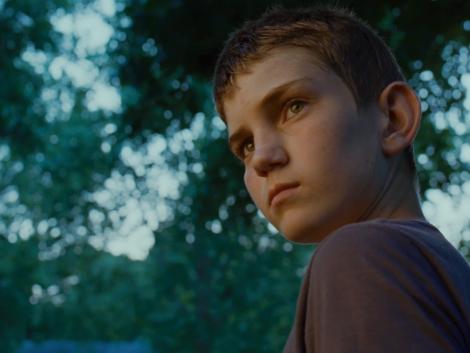
Written, directed, and edited by Hirokazu Koreeda, Dare mo shiranai (Nobody Knows) tells the story of four young children, abandoned by their mother, as they each try to survive on their own. The film is a tale of how children interact in the huge city of Tokyo while trying to survive without their mother as they're each birthed by different fathers. Starring Yuya Yagira, Ayu Kitaura, Hiei Kimura, Momoko Shimizu, Hanae Kan, You, and Kazumi Kushida. Dare mo shiranai is a lively yet harrowing film from Hirokazu Koreeda.

Arriving to Tokyo with lots of baggage and things, a mother named Keiko (You) and her 12-year old son Akira (Yuya Yagira) both arrive into an apartment which they will be living. Inside 3 large luggage carriers are three other children. The eldest daughter Kyoko (Ayu Kitaura), the youngest son Shigeru (Hiei Kimura), and the five-year-old daughter Yuki (Momoko Shimizu). With Akira sent to do all the shopping for groceries and things while Keiko goes to work, the three younger children all have to live in the apartment quietly and without any noise. Kyoko meanwhile, has to do all the laundry in secrecy. Things seem well until Keiko starts to meet a man whom she's infatuated by where she was suddenly gone for a month. Akira now has to take care for his three siblings, all of whom have different fathers, as he and Kyoko cook for the younger kids. Though left with money, Akira knows that getting some cash will be short as he turns to a couple of Keiko's ex-boyfriends, one of whom is Yuki's father, a cab driver (Yuichi Kimura).

Keiko returns to bring presents and such but Akira feels resentment towards Keiko's absence as she reveals she's got a job in Osaka and says she will return for the Christmas holidays. With Christmas coming, the kids are excited but for some reason, Keiko doesn't return as Akira learns that she quit her job. Carefully spending the money they have in a bank account, Akira takes Yuki out of the apartment for her birthday to see the sights of Tokyo. While Akira has aspirations to play baseball, he couldn't help but have the chance to make friends and do the things kids his age and older are doing. One day, he does do those things but Kyoko starts to worry that it might cause some money problem as a gas bill payment is now overdue. Suddenly, the kids Akira thought were his friends abandoned him as money is suddenly becoming smaller and smaller with Keiko not likely to return.

After deciding to end the isolation, all four kids decided to roam through Tokyo and spend the last of their money on things they needed. Yet, it would become a test of survival as they're faced with no power, water, or gas. After befriending a schoolgirl named Saki (Hanae Kan), she visits them frequently as she becomes friends with the four kids but is aware of their situation. After deciding to help Akira with his financial troubles, Saki makes a move where Akira is suddenly isn't so sure about what Saki did. The emotional frustration and despairing heat of the Tokyo summer finally forces upon the harsh realization that Akira and his siblings have to fend for themselves with their mother not likely to return at all.

The film is based on a true story of a 1988 incident in which a woman abandons four children that would lead to tragic outcome. Writer/director Hirokazu Koreeda takes those events but creates something less grim but still dealt with realism. In the film, it's really about how a 12-year old child struggles to help maintain the survival of his young siblings while dealing with the grim realities he has to face. Therefore, his chances to live a part of his childhood becomes harder to do while his siblings have to hide from people at the apartment and their landlord. Of course, this isolation causes problems which eventually led for the character of Akira to give his siblings the freedom they crave against their mother's rules. Without their mother and money, it's up to them to fend for themselves.

While the script is largely improvised, there's a looseness to the storytelling where the kids have a chance to interact and play real characters. It's not just the script, or lack of, that helps the story move quite easily with so little plot. It's Koreeda's direction that really drives the film into a lively narrative that gives the film a lot of movement. Its lack of plot might slow the film down but it doesn't as Koreeda keeps the camera moving for the young actors to move around while only having still shots for the more intimate, dramatic scenes. At the same time, the film showed the kids growing in the span of a year as it was shot chronologically for nearly a year to add a dramatic realism to the film.

While there's humor and drama mixed in throughout the film, its' Koreeda's direction which is obviously influenced by the French New Wave in its loose style and rich, striking compositions that gives the film a mesmerizing feel. Even as he edits the film himself with the use of smooth transitions, fade-outs, and jump-cuts to keep the film moving without slowing it down too much or making it too fast. The result is truly a heartwarming yet harrowing drama from Hirokazu Koreeda.

Cinematographer Yutaka Yamasaki creates beautiful images with his sheer, evocative camera work with the blue-greenish look of Tokyo in the nighttime with some excellent, nighttime interiors for the apartment scenes when there's light and even more darker, low-light shows for the interiors. The exterior daytime shots depending on the weather of the day from the grayish rainy day/winter scenes or the bright, colorful day time scenes. Yamasaki's work is truly exquisite in the film's loose, lively direction. Production designers Toshihiro Isomi and Keiko Mitsumatsu do excellent work with the film's art direction in the look of the apartment where it starts off clean to something that becomes dirty and grungy. The sound work of Yutaka Tsurumaki is well-done in capturing the atmosphere of Tokyo along with the sounds of video games played along with the shoes that Yuki wears.

The music by the guitar duo of Titi Matsumura and Gonzalez Mikami, known as Gontiti, is very plaintive and simplified to the film's lively, innocent tone of the film. Notably since it's just played with just acoustic guitars that proves to be memorable and exhilarating. In the soundtrack, a somber song by Takako Tate is brilliant that plays up to a sad moment in the film that proves to be mesmerizing in its emotions.

The casting by Yoshiko Arae is phenomenal with some memorable roles from Ryo Kase and pop vocalist Takako Tate as mini-market employees and Sei Hara as the mini-market manager. Other notable small roles as Keiko's ex-boyfriends are Yuichi Kimura as a cab driver and Kenichi Endo as a Pachinko Parlor employee along with Kazuyoshi Kushida as the landlord. In the role of Keiko, Japanese pop singer You is very good as the reckless, flaky mother of the children who likes to party more rather than take of her kids. Hanae Kan is great as Saki, the schoolgirl who befriends Akira and his siblings as she is willing to help him. Kan's subtle yet entrancing performance is mesmerizing in what is the film's best supporting role.

Momoko Shimizu is great as Yuki, the youngest daughter at five years old who exudes all of the innocence and free spirit that is played throughout the film while wearing some cute little noisy shoes to go along with it. Hiei Kimura is also great as Shigeru, the hyperactive, noisy kid who is just as lively and exuberant as any 7-year old kid can be. Ayu Kitaura is excellent as Kyoko, the 10-year old girl who is dealing with changes while missing her mother as she needed a strong, female adult presence. Finally, there's Yuya Yagira in a phenomenal performance as Akira, the 12-year old boy who has to be the adult of sorts for his older sibling. Yagira's observant, subtle, and entrancing performance is the heart of the film as he shows great conflict into a character that wants to be a kid but has to be an adult at the same time.

Dare mo shiranai is a mesmerizing, haunting, yet heartwarming film from Hirokazu Koreeda. Thanks in part to a great cast led by its young actors including Yuya Yagira. It's a film filled with lively moments through Koreeda's loose, free-wielding direction and moments that are filled with harsh realities. Yet, it's also accessible and heartwarming in its story of four children coming together to survive after their mother had abandoned them. It's not an easy film to watch but a film that can't be ignored as well as it's one of the most touching films of the decade. In the end, Dare mo shiranai is a harrowing yet touching film from Hirokazu Koreeda that truly shows the enduring spirit of children.

Hirokazu Koreeda Films: (Lessons from a Calf) - (However) - (August Without Him) - Maborosi - (This World) - (Without Memory) - (After Life) - (Distance) - (Hana) - Still Walking - (Air Doll) - (I Wish) - (Like Father, Like Son (2013 film)) - Our Little Sister - After the Storm - (The Third Murder) - (The Shoplifters)

© thevoid99 2011

Friday, June 24, 2011

How to Train Your Dragon


Based on Cressida Cowell’s book, How to Train Your Dragon tells the story of a young Viking teenager who captures a mysterious dragon in hopes to gain acceptance from his father and tribe. Instead, he befriends the dragon whom he starts to care for and help create a prosthetic tail to help him fly. Directed Chris Sanders and Dean DeBlois with an adapted script by Sanders, DeBlois, and Will Davies. The computer-animated film is among one of Dreamworks Animations finest projects to date eschewing their more entertaining stories for something more profound. With a voice cast that includes Jay Baruchel, Gerard Butler, America Ferrera, Jonah Hill, Christopher Mintz-Plasse, Kristen Wiig, T.J. Miller, and Craig Ferguson. How to Train Your Dragon is a thrilling yet heartwarming film from Dreamworks Animation studio.

All Hiccup (Jay Baruchel) ever wanted was to win the approval of his Viking chief father Stoick the Vast (Gerard Butler) yet always end up causing trouble with his strange ideas. While he works as an apprentice for the blacksmith Gobber the Belch (Craig Ferguson), Hiccup wants to prove himself by capturing and kill a dragon as the island he and other Vikings live in are often under attack by dragons. The most dangerous dragon is the Night Fury whose speed and fire power is beyond anything that other dragons could do. Hiccup manages to capture one as he later finds the dragon only to realize that it’s afraid as he lets it go only to realize it lost part of its tail. With Stoick asking Gobber to train Hiccup to attack dragons as he goes on shore leave to find the nest, Hiccup reluctantly takes part in dragon training.

During his time with the Night Fury whom he calls Toothless, Hiccup learns about the dragon where he uses his knowledge to deal with other dragons during his training. Once the trouble-making outcast, Hiccup becomes the top student of dragon training though Astrid (America Ferrera) seems suspicious over Hiccup’s frequent disappearances. With Stoick learning about Hiccup’s progress at dragon training, he seems impressed as he hopes Hiccup will kill his first dragon. When Astrid discovers Hiccup’s secret that included creating a prosthetic tail for Toothless, the two make an even bigger discovery during an impromptu flight to the dragon lair. When Stoick eventually learns what Hiccup had been doing all along and the dragon’s nest, he makes a trip to the lair with a captured Toothless. Realizing that his father is walking towards danger, it’s up to Hiccup, Astrid, their friends, and other dragons to help out.

Since Dreamworks Animations founding in 1998 with its first film Antz, which was a computer-animated film, the studio has been making films that always try to provide a much more family-friendly kind of entertainment towards its audience. Yet, those films have often been peppered with pop culture references to keep younger audiences excited but always tend to lose focus for the story. With this film, directors Chris Sanders and Dean DeBlois along with co-screenwriter Will Davies stray from that kind of humor for something much more profound while retaining some of the humor that has kept Dreamworks Animation successful.

Since the film is about a young Viking teenager trying to win his father’s approval while befriending a dragon. The character of Hiccup is one filled with conflict since he suddenly cares for this dragon that he’s captured and help make it fly again by creating a prosthetic tail. Yet, he also wants to prove to the Vikings that everything they knew about dragons were wrong while wanting his father to accept him. Yet, the character of Stoick isn’t a one-dimensional father that is very ignorant and wanting his son to be like him. He’s also someone who is unsure if he’s raising him right while wanting to protect him from all sorts of danger. The emphasis on character development and creating something more full-fledge allows the story to progress without having to dwell into any tricks. The dragons that Hiccup encounters, notably Toothless, have a personality all to their own which helps Hiccup understand these creatures.

The direction of the film by Sanders and DeBlois is truly spectacular as they go for something that is both rough in its landscapes but also broader in its scope. Taking on a much more textured look for the rocks and caverns plus the islands that Hiccup and Toothless encounter, there is a more life-like feel to the way these landscapes look that is similar to what Pixar studios have done. Still, Sanders and DeBlois do retain a cartoonish look to the characters and the dragons while making them seem a bit real and lively. The overall work in the animation and look to the film is phenomenal as Sanders and DeBlois create a moving yet visually-dazzling film.

Helping the directors to create the lighting and visual beauty of the film is renowned cinematographer Roger Deakins. Known mostly for his work with the Coen Brothers and having contributed his services to Pixar’s 2008 film WALL-E. Deakins work as a visual consultant help give the film a look that is livelier and more realistic that strays away from the cartoonish look of previous films. The overall look and photography that Deakins provides is truly amazing. Editors Maryann Brandon and Darren T. Holmes do some excellent work with the editing by creating some intense, fast-paced cuts for some of the flying scenes and action sequences while maintaining a leisured, straightforward approach for the dramatic moments of the film.

Production designer Kathy Altieri and art director Pierre-Olivier Vincent do a superb job with the look of the island and its homes along with the dome where Hiccup and his friends train in and the secret nest that Toothless takes Hiccup and Astrid to. Sound designer Randy Thom and sound editor Jonathan Null do great work in the sound from the fire-breathing sounds of the dragons to the creaking of ships in the sea for its climatic battle. The film’s score by John Powell is definitely a major highlight of the film as Powell’s score is filled with sweeping orchestral arrangements with bombastic rhythms. Even as he fills the scores with layers of Scottish bagpipes and other woodwinds to add flair and emotion to the musical pieces. Also in the film’s soundtrack is Jonsi’s Sticks & Stones which is a wonderful companion piece that is played during the final credits.

The voice is cast is definitely brilliant as it features small voice roles from Ashley Jensen and David Tennant as a couple of Vikings while Kristen Wiig and T.J. Miller are funny as the battling twins Ruffnot and Tuffnot, respectively. Christopher Mintz-Plasse is very good as the nervous but book-smart Fishlegs while Jonah Hill is excellent as the arrogant but dim Snotlout. America Ferrera is wonderful as Astrid, a tough Viking girl who discovers Hiccup’s secret while learning why the dragons were trying to steal food from the Vikings. Craig Ferguson is great in a very funny role as peg-legged and one-armed Gobber, a blacksmith who tries to help Stoick about Hiccup while teaching the young boy about dragons and such.

Gerard Butler is brilliant as Stoick, a Viking leader who wants to protect Hiccup while trying to make him into a great Viking warrior only to realize how different he is. Finally, there’s Jay Baruchel who is amazing in providing the voice for Hiccup as Baruchel brings a sense of confusing and curiosity to a young boy striving to win his father’s approval. Particularly as he gains understanding about the creatures he’s learned to hunt for only to have a bigger appreciation for them.

How to Train Your Dragon is a marvelous film from Chris Sanders and Dean DeBlois that truly brings not just a wonderful sense of entertainment but with a story that is touching and engaging. With a great visual look and a superb score from John Powell, it is definitely a film that truly can go toe-to-toe with the array of great films that Pixar has made since the mid-1990s. In comparison to the films that Dreamworks Animation has made, this film is undoubtedly their best film so far as How to Train Your Dragon is a stunning achievement for that studio.

© thevoid99 2011

Thursday, June 23, 2011

A Bug's Life


1995’s Toy Story ushered in a new era of cinema with the advent of computer-animated films as that film was the first feature-length computer-animated film ever made. The success of that film helped Pixar Animations studio as they were set to create various new projects that would help build the studio and their relationship with distributor in Walt Disney Studios. For their second feature film, the studios chose to create a film that mixes Aesop’s fable of The Ant and the Grasshopper and Akira Kurosawa’s legendary 1957 film The Seven Samurai into A Bug’s Life.

Directed by John Lasseter, with additional direction by Andrew Stanton, and scripted by Stanton, Donald McEnery, and Bob Shaw that was based on a story by Lasseter, Stanton, and Joe Ranft. A Bug’s Life tells the story of a worker ant who seeks help from other insects to fight off against grasshoppers whom they had been gathering food for. Unaware that the insects he hired are circus insects, he teams up with them to fight off the grasshoppers they had been slaving for. With an all-star voice cast that includes Dave Foley, Julia Louis-Dreyfus, Hayden Panettiere, Kevin Spacey, Denis Leary, David Hyde Pierce, Phyllis Diller, Madeline Kahn, Bonnie Hunt, Brad Garrett, Roddy McDowall, and John Ratzenberger. A Bug’s Life is a fun yet adventurous film John Lasseter and company.

With ants gathering food for grasshoppers before the harvest is to end, Flik (Dave Foley) is an inventive ant who tries to get things better only to cause trouble as his latest invention has him causing an accident. The accident has upset Hopper (Kevin Spacey) who demands that the ants work double-time before he and his group of grasshoppers return for harvest’s end. Wanting to find a way to keep things going and get rid of Flik, Flik suggests getting other insects to help rebel against Hopper and grasshoppers. Princess Atta (Julia Louis-Dreyfus) likes the idea thinking it will get rid of Flik as she lets him go. Upon his journey to the city, Flik encounters a group of fired circus performers he believes are warriors as he asks them for help.

The troupe takes the job thinking it’s a gig as they’re welcomed by the ants led by the queen (Phyllis Diller) as she along with many believe are the warriors that will help them. Yet, the troupe realizes through a celebration of what they’re asked to do as Flik learns that they’re really circus performers. When the queen’s youngest daughter Dot (Hayden Panettiere) is in danger from a bird, the troupe and Flik save her as they decide to stay. Realizing that Hopper is afraid of birds, Flik and the troupe create a bird with a group of ants to stop Hopper and his gang. With the plan working, everything seems to be in place until the arrival of the troupes’ former boss P.T. Flea (John Ratzenberger). With Hopper finally returning and the ants worried, it’s up to Flik and the troupe to remind the ants who are the stronger species.

The film is about an ant who rebels against a group of grasshoppers by hiring a group of circus performers to help him and the ants out. Yet, it’s a plot that is sort of similar to Akira Kurosawa’s 1957 epic The Seven Samurai that is about a group of villagers asking seven samurai warriors to fight against rebels. Still, John Lasseter and his team of writers do create a story where an ant is trying to make up for his mistakes while trying to win over the acceptance of a princess who is groomed to become the next queen.

Then there’s the circus troupe who are a very eccentric, lively bunch. There’s the intellectual stick-bug Slim (David Hyde Pierce), a male-centric ladybug named Francis (Denis Leary), a fat yet hungry caterpillar named Heimlich (Joe Ranft), a black widow named Rosie (Bonnie Hunt), the moth Gypsy (Madeline Khan), Manny the cricket (Jonathan Harris), Dim the beetle (Brad Garrett), and twin ticks who barely speak English (Michael McShane). They’re just a bunch of insects needing a job while using their talents to fight off against Hopper and his gang while being accepted by the ant colony. Yet, they become more than that as the script allows them to develop and forge an alliance with the ants. The grasshoppers may be villains but that’s only because their leader Hopper is a ruthless insect who is aware of how weak his species are and tries to use his wit and power against the ants.

The direction of John Lasseter and Andrew Stanton is definitely very broad as they shoot everything with wide angles to let the audience be enraptured by the locations the characters are at. Since this is the first film from Pixar to use the widescreen format, it allows Lasseter and Stanton to go for bigger compositions and to create more ants to help fill in the frame. The action sequences allows the directors to move the camera move and create some exciting sequences. The overall work is definitely phenomenal as John Lasseter, with additional help from Andrew Stanton, creates a lively yet magical film.

Cinematographer Sharon Calahan does some fantastic work with the lighting for many of the exteriors of the ant hill as well as its surroundings while the inside look is truly gorgeous. Editor Lee Unkrich does a great job with the editing by creating wonderful rhythmic cuts for the film’s action moments along with more relaxed cuts for the dramatic and funny moments. Production designer William Cone, along with art directors Tia W. Kratter and Bob Pauley does a wonderful job with the look of the ant hill and city that Flik goes to along with the interiors of the ant colony itself. Sound designer Gary Rydstrom and sound editor Tim Holland do amazing work with the sound from the grasshoppers breaking through to the circus event where P.T. Flea create a fiery stunt.

The film’s score by Randy Newman is definitely a highlight of the film as its orchestral score is thrilling with loads of pieces to complement the emotions and adventurous moments of the film. Even as it features another Newman original song in The Time Of Your Life to play up the joy and humor of the film.

The voice cast that is assembled by Mary Hidalgo and Ruth Lambert as it features various voices such as Frank Welker as the scary grasshopper Thumper along with the bird plus Edie McClurg as the young ants’ teacher Mrs. Flora and Roddy McDowall as one of the ants’ key top figures in Mr. Soil. Other notable small roles include John Ratzenberger as the greedy P.T. Flea, Jack Angel as a bunch of flies, and Richard Kind as Hopper’s dim-witted brother Molt. For the roles of the circus troupe, there’s standout performances from Michael McShane as the foreign-talking ticks Tuck and Roll, Brad Garrett as the sensitive beetle Dim, Madeline Kahn as the exotic moth Gypsy, and Jonathan Harris as the dramatic Manny.

Joe Ranft is hilarious as the overweight Heimlich who sports a German accent and has an insatiable appetite while Denis Leary is really funny as a tough ladybug who eventually gives in to his feminine side when he spends time with the little ants. David Hyde Pierce is really good as Slim, a stick-bug with a wonderful intellect who wishes he wasn’t just a prop while Phyllis Diller is great as the queen who is trying to maintain her colony’s safety while prepping Atta for her big role. Kevin Spacey is superb as the villainous Hopper who is smarter than a lot of his grasshopper minions while trying to realize that he has to be smart unless the ants realize how powerful they are.

Hayden Panettiere is wonderful as the queen’s youngest daughter Dot who is determined to fly while seeing Flik as a role model as someone who doesn’t quit. Julia Louis-Dreyfus is excellent as Atta, a princess who is trying to become a leader as she learns the importance of trust. Finally, there’s Dave Foley in a brilliant voice performance as the everyman Flik who tries to make a difference while being the one to stand up against Hopper.

A Bug’s Life is an extraordinary film from John Lasseter and Pixar studios proving that they have ambition and do big ideas. While it may not be up there with more revered films like the Toy Story trilogy, or the films that other Pixar directors like Andrew Stanton, Brad Bird, and Pete Docter has done. It is one of the essential films of their large collection of films as it help set the stage for the ambition that the studio would do in later films. In the end, A Bug’s Life is a glorious yet entertaining film from Pixar studios.

Pixar Films: Toy Story - Toy Story 2 - (Monsters, Inc.) - (Finding Nemo) - The Incredibles - Cars - Ratatouille - WALL-E - Up - Toy Story 3 - Cars 2 - Brave - Monsters University - Inside Out - The Good Dinosaur - (Finding Dory) - (Cars 3) - Coco - Incredibles 2 - Toy Story 4 - (Onward) - Soul (2020 film) - (Luca (2021 film)) - Turning Red - (Lightyear) - (Elemental (2023 film)) - Inside Out 2 - (Elio) – (Toy Story 5)

© thevoid99 2011

Wednesday, June 22, 2011

Blog News 6/22/11 & Blogging Around


Well, it's been a few weeks since I last saw The Tree of Life and to be honest. It's definitely one of those films that to this day since I saw that film that continues to baffle me but also wow me in ways that I haven't felt in my years as a film buff, cinephile, whatever. Reviewing the film however, was challenging. Nowadays, it takes me a 4-5 hours to write a review. Yet, I take my time with each review as I also try to simplify the plot and create an analysis about it. Yet, that takes a lot of time and that's the hard part. With my own review of The Tree of Life. I had been preparing for quite some time. The plot summary was easy but when it came to the analysis. That took me more than an entire day's worth to really think about it. I had to cut 10 paragraphs to eight and eventually to something very simple. I had to admit, that was tough. I'm sure other bloggers had a hard time reviewing it as well.

I gave my review a five-star rating for the LAMB score but I'm still not sure if that rating is enough. I don't think it needs a rating and it's a very tough film to really get into. I hope to see it again when it goes wide and maybe create another review as a second take thing.

Other than that, it's been a pretty decent year in films and I've been trying to work on various projects. I'm still on my first act of my script that's been a slow thing to work on. I'm also getting my foot back into writing music reviews again at my other blog The Void-Go-Round where I'm reviewing albums by the Cure from 1979 through 1990 for the time being since that's where their recent reissues have been prominent as of late. My Ghost World 10th anniversary essay is coming around for July while I plan to do my Auteurs profile on Gus Van Sant in August. That's pretty much it for now other than the usual reviews that I'm doing including my 1991-20 project.

In the world of the blogosphere, I'm happy to say that there's been a great slew of reviews coming on The Tree of Life that I think people should be reading. There's more to come as I'm sure it's going to be one of the top films of 2011. Notable reviews that should be read are from James @ Cinema Sights, Castor @ Anamolous Material, Blake @ Bitchin' Film Reviews, The Mad Hatter @ The Dark of the Matinee, Jake @ Not Just Movies, Bonjour Tristesse, and Leysa @ Eternity of Dream.

Another of my favorite 2011 film in Woody Allen's Midnight in Paris also has a slew of great reviews from Marshall @ Marshall and the Movies, Dan @ Dan the Man's Movie Reviews, Alex @ Film Forager, Norma @ The Flick Chick, Jake @ Not Just Movies, & John at John Likes Movies.

Finally, Andy @ Andy Buckle's Film Emporium has been covering the Sydney Film Festival where he's been seeing a lot of films as my favorite review right now is the documentary Senna and Jeff Nichols' upcoming film Take Shelter.

Well, that's all there is to say. A couple of notes I should mention before I close this post. First, I want to thank John Stone for giving me suggestions on my review for The Tree of Life. He's one of the few writers at Epinions.com (though he writes infrequently right now) that is actually worth a damn. He also has a wonderful review on that film so I should thank him.

The other note that is also related to The Tree of Life is a Youtube clip that I think is very interesting. Since it's from a Catholic priest, his interpretation I think is one of the most engrossing. Although I'm not sure I agree about his views on the film, it is a profound piece.


Well, that is all. And remember... take care. Spike your hair. Woo-woo-woo. You know it Bro!


Tuesday, June 21, 2011

My Winnipeg


Written, directed, and narrated by Guy Maddin, My Winnipeg is a surreal portrait of Maddin’s beloved hometown that is part-documentary and part-fictional film. The film serves as a tribute to Maddin’s hometown along with some critique as he expounds on historical facts and legends about the beloved city. Starring Darcy Fehr, Ann Savage, Amy Stewart, Louis Negin, Brendan Cade, and Wes Cade. My Winnipeg is a fascinating yet mesmerizing film from Guy Maddin.

Guy Maddin (Darcy Fehr) is on a train sleeping and dreaming about his beloved Winnipeg as he recalls various memories and historical elements about the city. Maddin recalls memories of his childhood as his decides to re-enact his own memories with his mother (Ann Savage) along with a group of actors to play his siblings. Maddin also goes into details about legends and various stories that play out the city including strange séances and landmarks along with old places that once made Winnipeg joyful. He even dwells on the loss of a famous shopping mall that became a hockey arena while the old one that his father was apart of is now gone. Even as Maddin wonders who will take care of the city when he leaves.

The film is a loose tale of a man recalling his own childhood memories and life in the city that he was born and raised in that he still calls home. Yet with its mixture of memories and events presented through re-enactments and old footage through newsreels and personal home films. Maddin creates something that is truly spellbinding as he talks about the fork in Red River along with the home that he lived in that later is owned by someone else. During the film, he talks about various legends and exaggerations made while presenting Winnipeg itself as a city that remains very mysterious. For the re-enactments, he brought in actors and one of his collaborators in George Toles to write dialogue as a woman plays his mother.

The looseness of the script allows Maddin to create the film as something that is a mixture of fiction that is presented in a stylized tone reminiscent of 1920s/1930s silent films with a verite style for its documentary. While there’s few scenes that are presented in a modern-day fashion for its look of the new hockey arena and the old one that claims to have been born at. Maddin’s direction is truly mystifying in its presentation from the soft lenses he creates for close-ups to various shooting styles such as film-noir for a recreation of a TV show he used to watch. There is also a very personal element as through many of the film’s grainy yet home-movie look, there is something that is truly beautiful in this grainy world while he also has some silhouette cartoons for legends such as the frozen horses on a river. The overall work Maddin presents is truly stunning as he creates a film that is definitely one of a kind.

Cinematographer Jody Shapiro does an amazing job with the film‘s black-and-white photography for a large portion of the film as she brings a mixture of various film stock including Super 8 film to give it a homemade feel to it. Shaprio also allows the film to dwell into various styles of cinema such as German Expressionist and film-noir as the cinematography is truly a highlight of the film. Editor John Gurdebeke does a superb job with the editing to create a film that is very loose and free from its lack of traditional narrative by utilizing dissolves and jump-cuts for its unique presentation.

Production designer Rejean Labrie and art director Katharina Stieffenhofer do a fantastic job with the art direction such as the recreation of the Maddin home in its original building along with the train that the Maddin character rides in with cinematic backdrops outside of the train. Costume designer Meg McMillan does an excellent job with the costumes to recreate a period for some of the exaggerated legend scenes in the film along with the 1950s look of the Maddin family for its re-enactment.

Sound editors Steve Medeiros and Jane Tattersall do a great job with the sound work to capture the world that is Winnipeg in all of its areas and time periods including eerie silence of the dark streets during a snowy day. The animation by Andy Smentanka is wonderful for its silhouette look to re-create scenes such as riots and strange events that became legendary for the city of Winnipeg. The film’s soundtrack features a wide array of music from Sergei Prokofiev, Richard Wagner, Jason Staczek, the Bells, and the Swinging Strings, who perform a song about the city of Winnipeg, as the music plays up to its whimsical world.

The cast is truly another highlight of the film as it features appearances from Louis Nagel as the old mayor, Kate Yacula as a superhero Maddin dreams of, local hockey legends Lou Profeta and Fred Dunsmore as themselves, and Darcy Fehr as Guy Maddin who dreams up these strange memories and images. Other notable roles include Amy Stewart, Brendan Cade, and Wesley Cade as Maddin’s siblings during the 1950s while film legend Ann Savage is great as Maddin’s mother in a truly magnificent performance for the late actress.

My Winnipeg is an outstanding yet imaginative film from Guy Maddin. Audiences wanting to see a strange yet visually-captivating film about a city will no doubt be amazed by it despite its lack of a traditional narrative. Yet, in part of that lack of conventional storytelling, it’s also a film that is truly original as it’s carried wonderfully by Maddin’s narration as this film is among one of his best. In the end, My Winnipeg is a dazzling piece of art from the always whimsical Guy Maddin.

Guy Maddin Films: (Tales of the Gimli Hospital) - (Archangel) - (Careful) - (Twilight of the Ice Nymphs) - (Dracula, Pages from a Virgin’s Diary) - (Cowards Bend the Knee) - The Saddest Music in the World - (Brand Upon the Brain!)

© thevoid99 2011

Monday, June 20, 2011

The Saddest Music in the World


Directed by Guy Maddin and written with George Toles based on a script by Kazuo Ishiguro, The Saddest Music in the World tells the story of a beer magnet who creates a contest to find the saddest music in the world during the Great Depression. A comic musical that is presented in the style of early 20th Century cinema of silent films, it is a film where Maddin brings an old cinematic style back to the 21st Century. Starring Isabella Rossellini, Mark McKinney, David Fox, Ross McMillan, and Maria de Medeiros. The Saddest Music in the World is a cosmic yet enriching film from Guy Maddin.

It’s 1933 during the Great Depression in Winnipeg as a beer baroness named Lady Port-Hunley (Isabella Rossellini) holds a contest to find the saddest music in the world. The prize is $25,000 as she hopes to get people to buy her beer once Prohibition ends as joining the competition is a failed American producer named Chester Kent (Mark McKinney) who hopes to win with help from his amnesiac girlfriend Narcissa (Maria de Medeiros). Also entering the contest is Kent’s father Fydor (David Fox) who plans to represent Canada as he is carrying the guilt over what happened to Port-Hunley’s legs as she was once Chester’s lover. Even as Chester has been seeing Port-Hunley hoping to get back in her good graces by charming her.

Also entering the contest is Chester’s older brother Roderick (Ross McMillan) who is to represent Serbia as he is still in mourning over the loss of his son as well as his wife’s disappearance. Roderick is happy to see his father though neither are very happy to see Chester who often serves as the brunt of their own issues. Chester gloats about the idea of winning as the Kents compete with Chester and Roderick playing different styles of music. Chester with lavish productions and Roderick playing his cello as they teach the finals while Chester buys out the countries he’s beaten. Yet, Roderick is haunted by Narcissa’s presence as she sings on Chester’s performances while Fydor creates glass legs filled with beer for the baroness in hopes for her forgiveness.

Roderick presents the legs to the baroness as she is overjoyed but it only furthers the wedge between the brothers. Even as Roderick hopes to win even more not just for himself but for everything he had lost.

The film is about a contest to find the saddest music in the world prompting three men from the same family to compete for the money. Yet, two of the family members have more honorable reasons to win while the youngest brother is more interested to wipe his debts and win back the baroness for selfish reasons. The film begins with Chester meeting a strange medicine man (Louis Negin) who casts a strange premonition about Chester’s fate. Yet, Chester scoffs this premonition as he continues to be this happy yet arrogant man that wants to win money while juggling two women at the same time.

The screenplay by Guy Maddin and George Toles is truly mystical in its setting while creating lively characters with elements of satires about these contests. Yet, it’s in Maddin’s direction that gives the story something far more imaginative than what the script could suggest. Since Maddin presents the film in a period of 1920s/1930s style of cinema with grainy film stock as if it’s making a film in the 1930s. There is something to the look of it that is truly out of this world as Maddin even creates something that is dream-like to the film with a lot of black-and-white and some color shots. Setting it in his home of Winnipeg adds a more personal feel as the compositions and shots he creates is very engaging. Overall, Maddin creates what is definitely a dazzling film to watch.

Cinematographer Luc Montpellier does a phenomenal job with the film‘s cinematography by taking in different film stocks from Super 8mm, 16mm, and 35mm to create a film that is dream-like. While the majority of the film is shot in black-and-white, some of it is presented in grainy color where some parts of the film is shot like a home movie. Editor David Wharnsby does an incredible job with the editing in creating a stylish approach by using jump-cuts to play up with the music and for some of the dramatic moments of the film.

Production designer Matthew Davies, along with set decorator Stephen Arndt and art director Rejean Labrie, does a spectacular job with the creation of 1930s Winnipeg along with the look of the contest and the beer pool Costume designer Meg McMillan does a fabulous job with the costumes from the black clothes that Roderick wears to the lavish look of the baroness along with her beer-glass legs that is the highlight of the costumes. Sound designer David Rose and sound editor David McCallum do a great job with the sound work to by capturing the energy of the contests along with the sounds that is more in tune with what films sounded like back in that period.

The film’s music by Christopher Dedrick is superb for its melodramatic orchestral music that is mixed in with upbeat pieces that is true to that period of the Depression. The rest of the music soundtrack that supervised by Brenda Blake features show tunes from Jerome Kern and Oscar Hammerstein II to play up the lavishness of Chester’s performances along with a classical piece from Frederic Chopin for Roderick‘s piece.

The casting by John Buchan is brilliant as the film features memorable small roles from Jeff Sutton and Graeme Valentin as the young Chester and Roderick, respectively, along with Claude Dorge and Talia Pura as the broadcasters commenting on the contest. Other notable small roles include Louis Negin as the medicine man and Darcy Fehr as the baroness’ lover Teddy. David Fox is excellent as Fydor Kent, the recovering-alcoholic father haunted by his own actions as he hopes to win the baroness’ forgiveness while helping out Roderick with his own issues. Ross McMillan is superb as Roderick Kent, a musician still dealing with his son’s death as he is haunted by the presence of Narcissa while becoming determined to defeat his arrogant younger brother.

Maria de Medeiros is wonderful as Narcissa, an amnesiac who has a gorgeous voice while wondering about the Kent brothers as she becomes interested in Roderick. Mark McKinney is great as Chester Kent, the arrogant brother with lavish ideas as McKinney brings a winning smile throughout the film as he creates a character that is un-likeable yet very charming. Finally, there’s Isabella Rossellini in a fantastic performance as Lady Port-Hunley, the beer baroness with no legs as she holds a contest while dealing with the Kents. Rossellini’s performance recalls some of bits of her legendary mother Ingrid Bergman in look as there is also a wonderful sense of radiance to her complex yet larger-than-life character.

The Saddest Music in the World is a magnificent film from Guy Maddin that features amazing imagery and ambitious ideas that is topped by a wonderful ensemble led by Isabella Rossellini. Audiences who are new to Maddin will find this film as a wonderful place to start where they even get to see how he takes old 20th Century film style and make it vital again in the 21st Century. In the end, The Saddest Music in the World is a dazzling yet spectacular film from Guy Maddin.

Guy Maddin Films: (Tales of the Gimli Hospital) - (Archangel) - (Careful) - (Twilight of the Ice Nymphs) - (Dracula, Pages from a Virgin’s Diary) - (Cowards Bend the Knee) - (Brand Upon the Brain!) - My Winnipeg

© thevoid99 2011

Sunday, June 19, 2011

The Discreet Charm of the Bourgeoisie


Directed by Luis Bunuel with a script co-written with Jean-Claude Carriere, Le charme discret de la bourgeoisie (The Discreet Charm of the Bourgeoisie) is the story about a group of upper class friends trying to have a dinner as they’re interrupted by surreal events. During these events, personalities begin to unfold during the course of the day. Starring Fernando Rey, Paul Frankeur, Delphine Seyrig, Stephane Audran, Bulle Ogier, Jean-Pierre Cassel, and Michel Piccoli. Le charme discret de la bourgeoisie is a whimsical yet mysterious film from Luis Bunuel.

A dinner party at the home of the Senechals as a foreign ambassador named Rafael Acosta (Fernando Rey) arrives with his friend Francois Thevenot (Paul Frankeur), Thevenot’s wife Simone (Delphine Seyrig), and her sister Florence (Bulle Ogier). Only Alice Senechal (Stephane Audran) is at the house unaware that there’s a party as her husband Henri (Jean-Pierre Cassel) isn’t home. They all decide to go to eat somewhere else unaware that the restaurant is closed only to discover why. Henri later apologizes for his absence as he invites Acosta and Thevenot for lunch only to be interested in having sex with his wife as the guests later leave as they meet Bishop Dufur (Julien Bertheau) who asks to be their gardener.

Attempts to eat and get together become troubling as they deal with interruptions from soldiers, associates, and other things. Even as they encounter men talking about weird dreams or memories and such. Rafael is dealing with political issues including a female terrorist (Maria Gabriella Maione) while Dufur becomes part of the party realizing something weird is happening.

The film is essentially about a group of bourgeoisie friends trying to have dinner together and have fun. Yet, they are continually interrupted by strange events or happenings that is going on around them. Even as the ladies try to have a simple tea party where there’s a lot of things going wrong. At the same time, there’s various people such as a lieutenant and a sergeant both recalling strange dreams or memories. At the same time, realities become blurred as the dinners seem more confusing and abstract. Luis Bunuel and co-screenwriter Jean-Claude Carriere create a story that is a very loose story that relies on not just repetition but also humor.

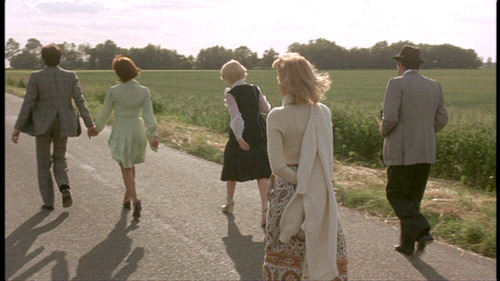
Bunuel’s direction is very entrancing from the repeated images of the people walking on a road in the middle of the French countryside to the intimacy he captures in the dinner scenes. Yet, he also plays up the surrealistic tone of the film by creating scenes where dreams are shot in a world that is artificial with fake backdrops intentionally shown. At the same time, Bunuel allows the camera to be engaging with some close-ups and wide shots to capture the world of the Senechal house as well as the places they go into such as the home of a colonel (Claude Pieplu). In scenes where there’s some expositions about the situations, Bunuel chooses to have strange sounds to cover all of that dialogue as if he doesn’t want to hear what they’re saying. Overall, Bunuel crafts an imaginative yet exhilarating film that is very funny and intriguing in its surrealism.

Cinematographer Edmond Richard does a wonderful job with the film‘s colorful cinematography from the gorgeous, naturalistic look of the daytime exterior scenes to the posh look of the interior scenes at night. Editor Helene Plemiannikov does a great job with the editing in creating a film with a leisured pace and straightforward cuts while playing along with its surrealist tone by utilizing stylistic cuts.

Art director Pierre Guffoy does an amazing job with the art direction from the home of the Senechals to the places they encounter. Notably the surrealistic sets that appears in dreams that play up the film’s idea of reality. Costume designer Jacqueline Guyot does a fantastic job with the closes, notably the dresses for two of the women in the film along with gowns for Simone that was created by Jean Patou. Sound mixer Jacques Carrere does an excellent job with the sound work from the intimacy of the dinner scenes to the chaos for some of the conversation as it blares over the dialogue.

The cast is definitely phenomenal as it features appearances from such Bunuel regulars as Marguerite Muni as a peasant woman and Michel Piccoli as a minister. Other notable small roles include George Douking as a dying gardener, Maria Gabriella Maione as the terrorist, Milena Vukotic as the Senechal’s maid, Claude Peiplu as a colonel, and Francois Maistre as an inspector. Another notable small but brilliant role is Julien Bertheau as a bishop who wants to be a gardener while revealing a story about his parents’ death. Bulle Ogier is excellent as the youthful yet intelligent Florence, the younger sister of Alice Thevenot who often feels like she’s not equal with everyone else because of her youth. Paul Frankeur is really good as Francois Thevenot, a man who is trying to get everyone to have dinners while trying to convince people to go to his place to eat his caviar.

Jean-Pierre Cassel is great as Henri Senechal, a man who also tries to get the dinners going while he is often more interested by having sex with his wife than having a gathering with his friends. Stephane Audran is wonderful as Henri’s wife Alice who often not ready for the party or trying to organize things while she befriends the bishop. Delphine Seyrig is brilliant as Simone Thevenot, Francois’s wife who is often trying to get the ladies to have some their own time together while having flirtatious moments with Rafael. Finally, there’s Fernando Rey in a fantastic performance as the ambassador Rafael Acosta who has a lot in his mind while wanting to have dinner and eat as he often engages in conversations with his friends.

Le charme discret de la bourgeoisie is a superb yet captivating film from Luis Bunuel. Featuring a great ensemble cast led by Fernando Rey and Delphine Seyrig, it is a film that plays with the idea of reality along with Bunuel’s fascination with surrealism. Among the films that Bunuel has done in his long yet glorious career, this film is truly among as one of his best. In the end, Le charme discret de la bourgeoisie is a mesmerizing yet intoxicating film from the late, great Luis Bunuel.

Luis Bunuel Films: Un Chien Andalou - L'Age d'Or - Land Without Bread - (Gran Casino) - (The Great Madcap) - Los Olvidados - (Susana) - (La hija de engano) - (Mexican Bus Ride) - (A Woman Without Love) - (El Bruto) - (El) - (Illusion Travels by Streetcar) - (Wuthering Heights (1954)) - Robinson Crusoe (1954) - (The Criminal Live of Archibaldo de la Cruz) - (El rio y la muerte) - (Cela S'apelle l'Aurore) - (Death in the Garden) - (Nazarin) - (La Fievre a El Pasao) - (The Young One) - Viridiana - The Exterminating Angel - Diary of a Chambermaid - Simon of the Desert - Belle de Jour - (The Milky Way) - Tristana - (The Phantom of Liberty) - (That Obscure Object of Desire)

© thevoid99 2011

Diary of a Chambermaid (1964 film)


Based on Octave Mirbeau’s 1900 novel, Le journal d’une femme de chambre (Diary of a Chambermaid) is the story of a chambermaid who becomes a servant for a family in rural France as she sees things that prompt her to use her sexuality for gain. For the 1964 adaptation directed by Luis Bunuel with an adapted script by Bunuel and his then-new collaborator Jean-Claude Carriere. Bunuel sets the story in 1939 France during a period of political unrest in France. Starring Jeanne Moreau, Georges Geret, Daniel Ivernel, and Michel Piccoli. Le journal d’une femme de chambre is an intriguing yet exhilarating drama from Luis Bunuel.

Celestine (Jeanne Moreau) is a Parisian woman in her 30s arriving in a rural town in France to work as a chambermaid for a rich family headed by the aging Monsieur Rabour (Jean Ozenne). His daughter (Francoise Lugagne) gives Celestine strict orders about what to do as Celestine learns about the family. Monsieur Monteil (Michel Piccoli) has an eye for Celestine as does Rabour who asks her to read to her and wear shoes for his enjoyment. Yet, Celestine still has to deal with Monteil, his wife, Rabour, and the gruff yet political groundskeeper Joseph (Georges Geret). Celestine chooses to continue with her work as she befriends the neighbor in the retired Captain Mauger (Daniel Ivernel) who despises Monteil.

With Celestine getting used to the tense world of the Monteil as she befriends a young girl named Claire (Dominique Sauvage) while having a hard time with Joseph. When she spends time with Rabour, she tries on some shoes for him to his excitement only for a couple of events to end this excitement. A murder has happened as Celestine has suspicions as she uses her sexuality to get a few answers. While she has also decided to stay to help out Monsieur and Madame Monteil, she also gets close with Mauger who gets involved with a lawsuit against Monteil. With Celestine finding out who possibly committed the murder, she finds a way out of being a servant to the rich.

The film is about a maid working for a rich family where things are very tense as she has to deal with a strict madam, a philandering man who likes to hunt, an aging master who has a fetish for women in leather shoes, and a groundskeeper who spouts political rhetoric. Yet, Celestine is a woman who is very beautiful and wears fine clothing as some wonder why a Parisian maid would work for a rich family in rural France? Well, she hopes to find someone who can help her give her a life without having to serve someone or be ridiculed. While she has to contend with Monsieur Monteil and Rabour along with Joseph. She does find some comfort in the elderly but honorable Mauger despite his suggestions to deal with Monteil.

The screenplay that Bunuel and Jean-Claude Carriere create is a wonderful character study that also a bit of sexual play into the film. At the same time, there’s some political elements in both Mauger and Joseph. The latter of which is very anti-Semitic, nationalist, and right-wing man who hates priests but loves religion as he hopes to have a café nearby this ongoing revolution against immigrants. Joseph is also a man who is very violent that makes him a likely suspect over what happened though he is not an easy person to peg since he can read people and often speaks the truth. Bunuel and Carriere play up this game of sexual politics between Celestine and Joseph while giving the idea of the home that Celestine works in as an idea of Fascist that some viewers might not understand.

Bunuel’s direction is truly mesmerizing in its imagery and composition. From the look of the town that he shoots in to the way he captures intimacy in the house that Celestine works in. Bunuel creates something that is very intoxicating along with shots to present something that is sexual but not too graphic. Notably a shot of Celestine showing Rabour a bit of leg in the leather shoes he wanted her to wear. There is also some wonderful shots such as close-ups and dollies that Bunuel brings into understand the behaviors and things that is happening throughout the film. While it has a few flaws, Bunuel does create something that is enriching and chilling in this provocative yet brilliant film.

Cinematographer Roger Fellous doe a wonderful job with the film‘s black-and-white cinematography to create a look that is a mix of the old-school cinema of the early 20th Century along with the more vibrant look of the French New Wave. Fellous also creates some wonderful lighting schemes with shades and nighttime shots to set an eerie mood for these particular scenes. Editor Louisette Hautecoeur does a great job with the editing while creating something that is very straightforward with a bit of style with some jump-cuts and transitional dissolves to keep the story moving.

Production and costume designer Georges Wakhevitch does an excellent job with the look of the film in creating a posh yet early 20th Century look to the home as well as the clothes the people wear. Notably the maid dress and stockings that Celestine wears to woo some of the men in the film. The sound work by Antoine Petitjean is very good for its intimate locations as well as the broad atmosphere of the town Celestine comes across in.

The cast is truly brilliant for the large ensemble that is assembled. Making small yet memorable appearances include co-screenwriter Jean-Claude Carriere as a priest, Claude Jaeger as a judge, Gilberte Geniat as Mauger’s maid, Marguerite Muni as the other maid that Celestine works with, and Dominique Sauvage as the little girl Claire. Francoise Lugagne is excellent as the strict yet icy Madame Monteil who likes to have things in her way while not giving her husband any kind of satisfaction. Jean Ozenne is really good as Rabour, Madame Monteil’s father who likes to keep things to himself while finding pleasure in Celestine wearing leather heels. Michel Piccoli is great as the skirt-chasing Monteil who wants Celestine while trying to deal with his wife and his neighbor.

Daniel Ivernel is brilliant as Captain Mauger, a former army officer who is a man of honor as he treats Celestine with kindness while having his own issues with Monteil whom he really dislikes. Georges Geret is superb as the brutish yet ambitious groundskeeper Joseph who engages into a battle of wit and sexual politics against Celestine while being a very political individual with some strong views. Finally, there’s Jeanne Moreau in a fantastic performance as the film’s protagonist Celestine. Moreau brings a very understated sexuality to her performance while being quite tough and not going overboard when she’s being harassed. It’s definitely one of her finest performances in a glorious career.

Le journal d’une femme de chambre is a phenomenal yet hypnotic film from Luis Bunuel featuring a radiant performance from the legendary Jeanne Moreau. While it is one of Bunuel’s finest films, some viewers might be lost in the satire that Bunuel is trying to say about Fascism while the sexual politics of the film makes it very engaging to watch. In the end, Le journal d’une femme de chambre is a fascinating character study from the revered Luis Bunuel.

Luis Bunuel Films: Un Chien Andalou - L'Age d'Or - Land Without Bread - (Gran Casino) - (The Great Madcap) - Los Olvidados - (Susana) - (La hija de engano) - (Mexican Bus Ride) - (A Woman Without Love) - (El Bruto) - (El) - (Illusion Travels by Streetcar) - (Wuthering Heights (1954)) - Robinson Crusoe (1954) - (The Criminal Live of Archibaldo de la Cruz) - (El rio y la muerte) - (Cela S'apelle l'Aurore) - (Death in the Garden) - (Nazarin) - (La Fievre a El Pasao) - (The Young One) - Viridiana - The Exterminating Angel - Simon of the Desert - (Belle de Jour) - (The Milky Way) - Tristana - The Discreet Charm of the Bourgeoisie - (The Phantom of Liberty) - (That Obscure Object of Desire)

© thevoid99 2011

Saturday, June 18, 2011

Toy Story 2


When Toy Story first came out in the fall of 1995, the film proved to be an event as it was the first computer-animated feature film of its time. The film drew rave reviews and massive box office giving Pixar Studios the power it needed as they returned three years later with their second film A Bug’s Life with Walt Disney Studios as its distributor. While Disney wanted a sequel to Toy Story to be a direct-to-video release, Pixar and the people involved with the film refused as it eventually became a feature-film that finally came out in the fall of 1999.

Directed by John Lasseter, with additional direction by Lee Unkrich and Ash Brannon, and screenplay by Andrew Stanton, Rita Hsaio, Doug Chamberlain, and Chris Webb that was based on a story by Lasseter, Stanton, Brannon, and Pete Docter. Toy Story 2 tells the story of Woody being kidnapped by a toy collector as Buzz Lightyear and other toys go on a rescue mission. During his captivity, Woody discovers that he was an old TV star as he is about to be sold to a Tokyo toy museum with other toys. The second film is a more ambitious film that blends all sorts of genres as it also introduces to new characters for the franchise.

Featuring the voices of previous players like Tom Hanks Tim Allen, Jim Varney, Don Rickles, Wallace Shawn, John Ratzenberger, Annie Potts, John Morris, and R. Lee Emrey plus Joan Cusack, Estelle Harris, Jodi Benson, Wayne Knight, and Kelsey Grammer. Toy Story 2 is an adventurous and heartwarming film from Pixar.

After being accidentally ripped by Andy (John Morris) before going to cowboy camp, Woody (Tom Hanks) gets shelved as he finds the old squeeze penguin toy Wheezy (Joe Ranft). When Andy’s mom (Laurie Metcalf) takes Wheeezy to sell for a garage sale, Woody with help from the dog Buster saves Wheezy only to be found by a toy collector named Al (Wayne Knight). Andy’s mom refuses to sell Woody as Al decides to steal him while Buzz Lightyear (Tim Allen) tries to save him. With a chicken feather and a license plate ID as clues, Buzz finds out who Al is as he organizes a mission to save Woody with help from Mr. Potato Head (Don Rickles), Slinky the Dog (Jim Varney), Rex (Wallace Shawn), and Hamm (John Ratzenberger).

During his captivity, Woody learns he was a popular toy/TV star in the 1950s as he meets Jessie the Yodeling Cowgirl (Joan Cusack), the horse Bulls-Eye, and Stinky Pete the Prospector. Learning that Al wants to sell him and the other toys to Japan to a toy museum, Woody doesn’t want to go only until he gets fixed and learns about Jessie’s story of abandonment. When Buzz and the gang finally reach Al’s toy store and his apartment with another Buzz Lightyear joining them. They learn what Woody wants to do as Buzz reminds Woody about being a toy as they’re stopped by Al prompting Buzz and the gang to go on a more daring adventure to save their friend.

In this sequel to the 1995 landmark film, director John Lasseter and his team create a story that is far more ambitious than its predecessor. Even as it recalls themes of growing up and abandonment which would play out in the third film eleven years later. Yet, the heart of the film is the friendship between Woody and Buzz as it grows much stronger in the second film. When Woody gets kidnapped, Buzz feels that he owes Woody for rescuing him in the previous films as supporting players like Slinky, Rex, Mr. Potato Head, and Hamm join in the rescue. Woody meanwhile, learns about Jessie’s own issues in a wonderful sequence that recalls Jessie’s brief life as a toy to a young girl until she got abandoned and be sent to Goodwill.

Jessie is a new character to the franchise as she is a rare female character that is more active and is willing to go out there and do what’s right. She is definitely an equal to Woody and Buzz while the character of Stinky Pete is also interesting as he is someone who had been inside a box that hopes to be loved and seen. Yet, when he realizes that Woody wants to return home, Pete’s sudden change of character becomes evident since he had never been played. Other antagonists like Al and Zurg aren’t fully-realized antagonists as Al is just a greedy man while Zurg is just a villain that wants to destroy the other Buzz Lightyear.

The direction of John Lasseter, along with help from Lee Unkrich and Ash Brannon, is truly spellbinding from the way he opens the film with a wonderful sequence of Buzz fighting aliens. The look of the film is broader with a wide depth of field as Lasseter allows the frame to show more space and characters in the film. At the same time, he mixes all sorts of genres for the film while bringing in a few film references to give it some humor. From the wide shots and close-ups Lasseter uses to the wild, intense camera movements such as Woody’s first ride with Bulls-Eye is truly amazing to watch. Overall, Lasseter and his team of co-directors and animators create a film that is equal to its predecessor.

Cinematographer Sharon Calahan does some great work with some of the lighting used for the film to bring some mood to the look such as the scene where Woody tries to sneak out at night or the scenes on top of the elevator where Buzz and the gang try to rescue Woody. Editors Lee Unkrich, Edie Bleiman, and David Ian Slater do a fantastic job with the editing such as Jessie’s flashback scenes as well as the amazing rhythm for many of the film’s action sequences. The overall work in the editing is superb as it plays it straight while adding some stylistic flairs for some of the film’s dramatic and funny moments.

Production designers William Cone and Jim Pearson do some wonderful work in the look of Al‘s Toy Barn along with the apartment and the look of Zurg‘s base in the opening sequence. Sound designers Gary Rydstrom and Tom Myers along with sound editor Michael Silvers do a fantastic job with the sound from the opening scene to the scenes in the city as the sound work is masterful.

The music by Randy Newman is a highlight of the film as it plays a wonderful mix of bombastic orchestral pieces along with low-key dramatic and funny moments to country-western music for Woody’s old show. Featuring a jazzy version of You’ve Got a Friend in Me by Robert Goulet and the theme to Woody’s show by Riders in the Sky. The real moment of the film’s soundtrack is the somber song When She Loved Me that is sung by Sarah McLachlan in Jessie’s flashback scene. It is truly the most heart-wrenching song of the soundtrack as McLachlan’s vocal performance truly captures the sense of loss that Jessie endures in that sequence.

The casting by Mary Hidalgo and Ruth Lambert is phenomenal as it features cameo voice appearances from John Lasseter and Lee Unkrich as Rock N’ Sock ‘Em Robots, Andrew Stanton as the Evil Emperor Zurg, Jodi Benson as Barbie dolls, and Dave Foley in a cameo as Flik from A Bug’s Life. Other notable voice appearances include R. Lee Emrey as Sarge, Joe Ranft as Wheezy and from A Bug’s Life Heimlich, Jonathan Harris as Geri the Cleaner, Laurie Metcalf as Andy’s mom, John Morris as Andy, and Jeff Pidgeon as the Squeeze Toy Aliens. Estelle Harris is wonderfully funny as Mrs. Potato Head along with Annie Potts as Bo Peep. Wayne Knight is very funny as over-zealous toy collector Al while Kelsey Grammer is great as the manipulative yet charming Stinky Pete the Prospector.

John Ratzenberger and Don Rickles are amazing as in their respective yet hilarious roles as Hamm and Mr. Potato Head. Wallace Shawn is joyfully superb as the insecure yet video-game obsessed Rex. Jim Varney is excellent as loyal yet sassy Slinky. Joan Cusack is phenomenal as Jessie the Yodeling Cowgirl with her lively vocal performance as well as the sense of anguish she faces about her memories in being a toy as she is the real highlight of the film. Tom Hanks and Tim Allen are spectacular in their respective roles as Woody and Buzz. Hanks brings that every-man quality to Woody along with a sense of fear about not being played with only to remember the value of being a toy. Allen brings a performance that is very engaging as Buzz along with some humor about his own reaction to the Buzz Lightyear toys. Even as he gets to be very silly as the other Buzz.

Toy Story 2 is truly a superb sequel to its 1995 predecessor as John Lasseter and company step up their game in bringing a film that is entertaining and heartwarming. While it’s hard to say which of the three films of the Toy Story trilogy is the best as they each have something different to offer. The second is truly one of the most lively and imaginative thanks to the introduction of new characters like Jessie and Bulls-Eye along with old characters from the previous everyone knows and love. In the end, Toy Story 2 is a joyful film that allows the audience to spend more time with Woody, Buzz, and the rest of the characters of the beloved franchise.

Pixar Films: Toy Story - A Bug’s Life - (Monsters, Inc.) - (Finding Nemo) - The Incredibles - Cars - Ratatouille - WALL-E - Up - Toy Story 3 - Cars 2 - Brave - Monsters University - Inside Out - The Good Dinosaur - (Finding Dory) - (Cars 3) - Coco - Incredibles 2 - Toy Story 4 - (Onward) - Soul (2020 film) - (Luca (2021 film)) - Turning Red - (Lightyear) - (Elemental (2023 film)) - Inside Out 2 - (Elio) – (Toy Story 5)

© thevoid99 2011

Toy Story


Before 1995, animated films was hand-drawn and presented in two-dimension whether as feature films or as shorts. The idea of computer animation was something that had been thought of for years as a computer scientist named Ed Catmull and Alvy Ray Smith founded a company called Pixar as a spin-off for George Lucas’ Lucasfilms computers division. When Lucas’ interest towards the company decreased, Apples Computer co-founder Steve Jobs took interest as they found an animator in John Lasseter to help create computer-animated shorts. For many years, Lasseter and Catmull dreamed up of creating the first-ever feature-length computer-animated film that finally came true in the fall of 1995 called Toy Story.

Toy Story is the story of a pull-string cowboy doll who finds himself competing against a new space ranger toy for the affection of their owner. In turn, the two would go have an adventure as their owner would move to a new town. Directed by John Lasseter with a story written by Lasseter, Pete Docter, Joe Ranft, and Andrew Stanton that was later scribed by Stanton, Joss Whedon, Joel Cohen, and Alec Sokolow. It is a film that transcends the idea of not what an animated film can be but also reach an audience wider than just kids and families. With an all-star voice cast that includes Tom Hanks, Tim Allen, John Ratzenberger, Wallace Shawn, Jim Varney, Don Rickles, Annie Potts, John Morris, and R. Lee Ermey. Toy Story is an exciting and entertaining landmark film John Lasseter and Pixar Studios.

Since kindergarten, Andy’s favorite toy is a pull-string cowboy doll named Woody (Tom Hanks). Andy (John Morris) often has Woody play with other toys like Mr. Potato Head (Don Rickles), Slinky the Dog (Jim Varney), a Tyrannosaurus Rex named Rex (Wallace Shawn), a piggy bank named Hamm (John Ratzenberger), Bo Peep (Annie Potts), the binoculars named Lenny (Joe Ranft) and RC the Car. When Andy’s birthday is moved a week earlier before the big move to a new town, Woody asks the toy soldier Sarge (R. Lee Emrey) to scout for new presents as the new toy Andy gets is a space ranger named Buzz Lightyear (Tim Allen). Woody is at odds with Buzz, who believes he’s a real space ranger, as he becomes Andy’s new favorite.

When Andy’s mom (Laurie Metcalf) wants to take Andy and his baby sister Molly (Hannah Unkrich) to Pizza Planet, Andy wants to take Buzz as Woody makes a plan to get rid of him only to have it go wrong. Buzz decides to exact revenge as the two get lost while they try to return to Andy at Pizza Planet. Instead, they get retrieved by a kid named Sid (Erik von Detten) who loves to destroy toys. With Sid living next door to Andy and Woody trying to redeem himself, Buzz learns some surprising revelations as he and Woody try to find a way to return home.

The film is about a cowboy toy who feels upset over the fact that he’s being replaced by something new and exciting in a space ranger. Because of this sense of jealousy, he decides to have this new toy get lost only for the plan to go horribly wrong where the two embark on an adventure. During this adventure, an unexpected friendship between the two happens where both learn the values of being toys and sharing the love for their owner.

What has kept Pixar vital over the years isn’t the use of the technology they created that has gotten better over the years. It’s always been about the story and how the technology enhances the story as Woody and Buzz are the main characters that start off as rivals only to become the best of friends. The screenplay is a mesh of various genres ranging from the buddy comedies to action-adventure with a dash of family entertainment. This mesh of genres is one of the reasons Pixar has been so successful which always bring in wide variety of viewers with different taste as the script is truly a highlight of the film.

John Lasseter’s direction is truly lively in the way he frames the scenes and gets the action going. Yet, he also allows the presentation of the film to be very simple for some of the dramatic moments of the film. The animation is truly amazing for its three-dimensional look as well as the layers of light and shadows used for some of the scenes in the film. The look of the characters are also shown with a movement that is very loose as the camera is always looking at the action and playing up its intensity. Lasseter’s direction is truly spellbinding in every frame he creates for this film.

Editors Lee Unkrich and Robert Gordon do an incredible job with the film‘s editing in creating a straightforward presentation that has wonderful rhythmic cuts for the film‘s action sequences. Art director Ralph Eggleston does a phenomenal job with the look of Andy‘s room and the objects used including the dark world that is Sid‘s room. Sound designer Gary Rydstrom and sound editor Tim Holland do an amazing job with the sound from the way the soldiers walked to the places that Woody and Buzz encounter throughout the film.

The music by Randy Newman is a real highlight of the film as it features a mixture of piano-based pop music with elements of orchestral scores to play up the intensity of the film in terms of drama or humor. The songs Newman create such as Strange Things to play up the rivalry of Woody and Buzz along with I Will Go Sailing No More as a dramatic piece. Yet, the highlight of the soundtrack is the song You’ve Got a Friend in Me that serves as the theme for entire series about the friendship between Woody, Buzz, and the rest of the toys that includes a duet version with Newman and Lyle Lovett.

The voice cast is absolutely phenomenal as it features some memorable voice appearances from Jack Angel as Shark and Rocky Gibraltar, Jeff Pidgeon as the Squeeze Toy Aliens, Joe Ranft as Lenny the binoculars, Sarah Freeman as Sid’s sister, and R. Lee Emrey as Sarge. Other notable voices include Erik von Detten as the destructive Sid, Laurie Metcalf as Andy’s mom, Hannah Unkrich as Andy’s baby sister Molly, and John Morris as Andy. For the varied roles as the toys, there’s Don Rickles at the funny yet outspoken Mr. Potato Head along with Wallace Shawn as the insecure yet lovable Rex. Annie Potts is excellent as Bo Peep as is John Ratzenberger as the humorous Hamm and Jim Varney as loyal yet witty Slinky .

Finally, there’s Tom Hanks and Tim Allen in superb voice performances as Woody and Buzz Lightyear. Hanks brings a wonderful mix of comedy and drama as a pull-string cowboy doll who adores Andy while also being a bit of a schemer when it comes to Buzz. Hanks’ funnier moments is when he gives Woody a chance to go all out when Buzz refuses to believe that he’s a toy. Allen’s voice work is perfect for the heroic tone as Buzz where there’s a lot of bravado and dead-pan humor to the voice. Hanks and Allen don’t just elevate the film with their voice performances but also provide life to two of the best animated characters on film.

Toy Story is a dazzling yet exhilarating film from John Lasseter and his team at Pixar. Anyone that is interested in the films of Pixar Studios will no doubt see this as a great place to start. Even for anyone interested in animated films should find this as one of its landmark films. Particularly as this was the film that helped launch a slew of computer-animated films for many years to come. In the end, Toy Story is a remarkable feature film from Pixar Studios and John Lasseter.

Pixar Films: A Bug’s Life - Toy Story 2 - (Monsters Inc.) - (Finding Nemo) - The Incredibles - Cars - Ratatouille - WALL-E - Up - Toy Story 3 - Cars 2 - Brave - Monsters University - Inside Out - The Good Dinosaur - (Finding Dory) - (Cars 3) - Coco - Incredibles 2 - Toy Story 4 - (Onward) - Soul (2020 film) - (Luca (2021 film)) - Turning Red - (Lightyear) - (Elemental (2023 film)) - Inside Out 2 - (Elio) – (Toy Story 5)

© thevoid99 2011