Thursday, October 14, 2010

Harry Potter & the Chamber of Secrets (book)


Originally Written and Posted at Epinions.com on 3/26/03 w/ Additional Re-Edits.


Harry Potter & the Chamber of Secrets continues the story of young Harry Potter as he just came off from a fresh first year at Hogwarts School of Wizardry & Witchcraft. After meeting Lord Voldemort, the evil wizard who killed his parents, in the body of a teach who was trying to steal the Sorcerer’s Stone in the previous story, Harry Potter & the Sorcerer’s Stone, Potter defeated Voldemort for the second time as he learned of the secrets behind his parents murder as well as finding friends in fellow young wizards Ron Weasley and Hermione Granger as well as the school’s large gamekeeper Hagrid. In The Chamber of Secrets, Harry returns to Hogwarts where something mysterious is lurking in the school as students get attacked and Harry discovers more things about himself and the secrets of the school as well as a few people.

The Chamber of Secrets in comparison to the previous story, The Sorcerer’s Stone is a much darker, funnier, and more developed story in the series as Harry Potter returns to Hogwarts as he learns more about himself and some secrets about other people. Rowling brings in new subjects to the series including one about prejudice. Now in the Muggle world, there's disputes over skin, religion, and all other such. In the wizarding world, it’s blood that becomes the centerpiece behind some of the prejudices in the wizarding world, particularly one of the stories main villains, Potter’s rival Draco Malfoy who prides himself and his family as being “pure-blood” since his parents come from a long line of witches and wizards that spans generations and his family considers those with Muggle-parentage to be second class.

Rowling again, brings a sense of innocence and intelligence to the series as Harry Potter and his gang grows up a little bit and discover more secrets about the school. The readers also get introduced to new characters in the story that were briefly mentioned in The Sorcerer’s Stone as well as a vain, egotistical wizard named Gilderoy Lockhart who claims to be a great wizard but he isn’t everything as some people see. The Chamber of Secrets is also filled with new creatures and dark overtones that is chilling enough to give kids nightmares but with a sense of hilarity that kids and adults can enjoy. While The Sorcerer’s Stone is an excellent introduction to the phenomenon known as Harry Potter, it’s The Chamber of Secrets that helps makes Harry Potter become the literary icon to children.

The book begins with Harry back at Privet Drive where he's treated much worse by his aunt and uncle, who despise magic.  While being shut into his room, so that his uncle can entertain some guests.  Harry gets a warning from a house-elf named Dobby about something happening at Hogwarts.  After being broken out of Privet Drive by Ron and his twin brothers, Fred and George.  Harry returns to the magical world where he is introduced by Ron's Muggle-loving father Arthur as well as Draco Malfoy's Muggle-hating father Lucius.  When Harry and Ron are blocked to enter platform 9 3/4, they use the Weasleys car to fly to Hogwarts where some mishaps occur.

During Harry's second year where his new Defense Against the Dark Arts teacher is a vain, egotistical novelist named Gilderoy Lockhart.  Harry hears voices inside the school where it is believed that the Chamber of Secrets has been re-opened.  Harry, Ron, and Hermione begin to suspect Draco, due to his anti-Muggle stance as he had called Hermione a "Mudblood".  Harry also suspects that it all have to do with Lord Voldemort, who is currently in hiding following their last confrontation.  Another suspect is Hagrid, the friendly groundskeeper as Harry learned why he was expelled in Hogwarts during his third year.

While the trio are trying to find out who opened the Chamber of Secrets, Harry also learns more about how he is able to hear voices inside the school as he becomes a suspect.  With Dumbledore wanting to know about the Chamber of Secrets, he is suddenly taken out of school by Lucius Malfoy over some incidents that involved Muggle-born students being petrified.  Even Hagrid is taken out of school because he was previously involved when the Chamber of Secrets was last opened 50 years ago when he was caught by a student named Tom Riddle.  During Harry's investigation, he finds the mysterious diary of Tom Riddle that revealed what happened as Harry later learned some truths relating to what he had seen.

Chamber of Secrets would be the first book where not only Harry learned about some of the powers he had over his scar and how he was able to hear voices inside the school.  It's also about how much he was willing to go further to discover the truth.  At one point, he and Ron drink Polyjuice Potion to disguise themselves as Draco's friends Crabbe and Goyle to learn what Draco knew.  Even as they also go further into the Forbidden Forest to find out more about Hagrid's involvement with the Chamber.

While the book also has an additional subplot of Ron's little sister Ginny in her first year at Hogwarts where she tries to get the attention of Harry.  Her subplot would also play a role into the discovery of who opened the Chamber as the diary of Tom Riddle would become a much greater source of importance in the sixth book, Harry Potter & the Half-Blood Prince.  One of the key reasons for Chamber of Secrets' success isn't just the storytelling but also the complexity of its characters.  Harry becomes a more determined character in terms of just wanting to find truth and be into the magical world that he's embraced.  New characters in Dobby, Arthur Weasley, Lucius Malfoy, Gilderoy Lockhart, and the first appearance of Minister of Magic Cornelius Fudge make great impressions.  Notably Lucius Malfoy, who is a school governor that is very rich and powerful as he was also one of Voldemort's former associates.

Gilderoy Lockhart, meanwhile, is a comical character that is more concerned with getting attention, being close to Harry to boost his fame, and boast his so-called heroics, rather than teach kids how to defend themselves.  In one scene where he hosts a dueling club with Professor Snape, it is clear that Lockhart doesn't know anything while Snape would end up providing Harry with a spell that would become his trademark.  When the story develops, it is becomes evident of what Lockhart really is as he wouldn't be seen again until the fifth book.

Harry Potter & the Chamber of Secrets is easily the darkest book in the Harry Potter series and it’s also one of the most brilliant in J.K. Rowling’s classic series. It would later be trumped by it its next book, Harry Potter & the Prisoner of Azkaban but it’s still a masterpiece in its equality.  In the end, Harry Potter & the Chamber of Secrets is a successful sophomore effort from J.K. Rowling.


(C) thevoid99 2010

Friday, October 08, 2010

Harry Potter & the Sorcerer's Stone (Book)


Originally Written and Posted at Epinions.com on 2/18/03 w/ Additional Edits


With the release of the fifth Harry Potter book, Harry Potter & the Order of the Phoenix approaching for June 21, 2003, many fans of the series are now going back to each book for clues or references that might lead to the highly anticipated book. Creator J.K. Rowling has already become a masterful storyteller that has bewitched millions of reader’s that include a horde of young children, adults, and literary critics who are fascinated with each story about a young little English boy who is destined to become a great wizard. With each book in the series that either outdoing the previous book or leaving things open for the next, it leaves many readers hungry for more and more. To begin this series of reviews of each individual Harry Potter book, we begin with the one that started it all, Harry Potter & the Sorcerer’s Stone (in the U.K., it’s called Harry Potter & the Philosopher’s Stone).

Harry Potter & the Sorcerer’s Stone is our introduction to a young orphaned English boy named Harry Potter who has never really known about happiness since he lives with a vindictive family called the Dursleys that included a fat-boy with a tantrum named Dudley. One day, Harry Potter discovers that his late parents were wizards and is sent to the mysterious British school called Hogwarts were Harry finds friends, enemies including the powerful Lord Voldemort, a sport called Quidditch, dragons, and an evil plot to steal the Sorcerer’s Stone which Harry suspects a teacher in the school.

Creator J.K. Rowling leaves twists and carefully crafted subplots where the reader has to read the book repeatedly to find all sorts of clues. Rowling’s new take on a detective story is still refreshing since it’s original release in 1997. Like many children’s stories, there’s a level of innocence in the story but unlike most children’s story, there’s more emotional settings and scary undertones that seems to channel back into more humanistic territories rather than the escapist fantasy world that most children stories take place. Again, this is the genius behind J.K. Rowling in her approach to telling stories and she always have challenged herself with each story in the Harry Potter series, even toying with a certain formula that she has in each Harry Potter book. While The Order of the Phoenix is ready to start a new chapter in the young life of Harry Potter, it is The Sorcerer’s Stone were the world is introduced to the Boy Who Lived.

The story begins in a little town in England where we are introduced to a big, beefy man with a large mustache named Vernon Dursley who had a thin, tall wife, Petunia and a small baby boy named Dudley who often throws tantrums and stuff and to the Dursleys, there was no finer boy anywhere else. The Dursleys also had a secret they wish people would never found that involved Petunia’s sister, a witch who is married to wizard named Potter and had a baby of their own named Harry and to the Dursleys, witchcraft and wizardry was unacceptable in their home. Then one day, Vernon sees strange things around him as people walking in wizarding clothing, owls flying around the building, and a cat reading a map and giving him stern looks. On that faithful night in 4 Privet Drive, Little Whinging, Surrey, as the Dursleys fell asleep, an old wizard by the name of Albus Dumbledore arrives with the cat who turns out to be a witch, Professor McGonagall as Dumbledore tells McGonagall about little Harry Potter, who had just survived a curse that couldn’t be blocked, as they wait for a big man named Hagrid who arrives on a flying motorcycle with the baby Harry as Dumbledore decides that Harry should be living with the Dursleys until he is ready to accept his fate.

Nearly ten years later, Harry Potter has grown into a small, skinny boy who is often ignored and treated horribly while living and sleeping in a closet while his cousin Dudley has grown into a big, fat, spoiled little brat who often throws tantrums for not getting whatever he wants. One day on a trip to the zoo with his relatives and a friend of Dudley’s, something strange happens when Harry starts to talk to a snake and glass that opened had freed the snake while Dudley and his friend get trapped into the snake house. All of a sudden, Vernon and Petunia Dursley’s fear about little Harry Potter increase. Then on another day, a letter arrives from Harry as the Dursley’s fear increase and all of a sudden after a horde of letters sent by owls keep arriving, the Dursleys try and hide away from the people who keep trying to send letters to Harry until one night on a rocky sea shore in England, Hagrid arrives to give Harry something he never had, a birthday cake and the letter he was supposed to receive which was an invitation to join Hogwarts, a mysterious school of wizardry and witchcraft while confronting the Dursleys for not telling Harry about his parents and feels sorry for Harry for living with the worst sort of Muggles (non-magic folk).

Hagrid, a loveable big man, tells Harry the truth about his parents who were wizards and how they got killed by an evil wizard name Lord Voldermort, a name many wizards and witches fear to say, who also tried to kill Harry but got stumped on that night and faded away as the only thing Harry got from Voldemort was a scar on his forehead which is why in the wizarding world, Harry is famous. The Dursleys however, aren’t happy and they make Hagrid angry after Vernon insults the name of Albus Dumbledore with the famous line, “I AM NOT PAYING FOR SOME CRACKPOT OLD FOOL TO TEACH HIM MAGIC TRICKS” where in response, Hagrid gives Dudley a pig’s tale who was eating Harry’s cake.

Hagrid accompanies Harry to get his school things in London where they go to an old pub called the Leaky Cauldron where people see the famous Harry Potter including a twitchy, stuttering young man named Professor Quirrell, who teaches the Defense Against the Dark Arts, as Hagrid leads Harry to a secret wizarding street called Diagon Alley where Harry learns that he inherited a fortune from his parents as he gets all of his school things including a snowy owl he named Hedwig. Then there’s a part where Harry buys his wand and the wand he buys has a similar core to the one Voldemort had as the wandmaker Ollivander tells him.

After getting all of his school things, Harry is dropped off by the Dursleys to King’s Cross where Harry is having trouble finding the secret platform for 9 ¾ until he meets up with a wizarding family all with flaming red hair named the Weasleys. Harry becomes friends with the youngest boy Ron Weasley and his troublemaking twin brothers Fred & George, and their elder, pompous brother Percy. Immediately, Harry and Ron become best friends as they eat all sorts of candies including Chocolate Frogs and Bertie Bott’s Every Flavor Beans that had all sorts of flavor including chocolate, peppermint, liver, spinach, boogers, and ear-wax (I recently tried the ear-wax, disgusting). The boys also meet a clever Muggle-born girl named Hermione Granger who seems to know a lot about Harry more than he knows himself. They also encounter a blond, pale boy named Draco Malfoy, who seems to be better than everyone and always treat someone like Muggles and the Weasleys as second class, while being accompanied by his cronies Crabbe and Goyle.

As they arrive at Hogwarts, Hagrid accompanies all the first-year students on a boat trip around the castle-school where they meet up with Professor McGonnagall who leads them to the Great Hall for a sorting ceremony where they’ll get sorted in the school’s four houses: Gryffindor, Ravenclaw, Hufflepuff, and Slytherin. Malfoy and his cronies get selected into Slytherin, a house that has a reputation for bad wizards and witches, while Ron, and Hermione get into Gryffindor, Harry meanwhile wears the sorting hat and the hat considered him putting in Slytherin but ends up putting him in Gryffindor where he meets up with eats dinner with Hermione, the Weasleys, their friend Lee Jordan, and fellow first-years Seamus Finnigan, Dean Thomas, Pavarti Patil, Lavender Brown, and round-faced forgettable boy named Neville Longbottom. Harry scopes around the teachers including Albus Dumbledore where he sees a pale, black-haired teacher named Snape, who is the head of Slytherin house and teaches Potions, who for some reason has a strange look at Harry.

The new students have their first experience at Hogwarts where Harry and Ron knew immediately not to cross their house-head McGonnagall who is very stern but polite while they meet the house ghost, Nearly-Headless Nick who helps them find their classes while they learn Herbology from Hufflepuff head Professor Sprout, a small midget-like teacher named Flitwick who is the head of Ravenclaw and teaches the students Charms. Harry’s first week goes fine until he comes face-to-face with Snape who seems to have a special loathing against Potter during their first Potions lesson and always favored his own students at his own house rather than anyone else and for Potter, Snape was a teacher you love to hate.

Harry introduces Ron to Hagrid who is the gamekeeper at Hogwarts and share insults about the school’s caretaker Argus Filch while Harry and the rest of the first-years get their first flying lesson with Madam Hooch where Harry steals the show after Malfoy tries to get him trouble after stealing Neville’s Remembrall. Impressed with catching the Remembrall, McGonnagall immediately puts him in the Gryffindor Quidditch team as a seeker where Harry learns about the game of Quidditch (a sport sort of like soccer but played on a broomstick where the seeker has to catch a tiny, golden snitch to score an extra 150 points) from team captain Oliver Wood while Harry himself gets the best broom there is, a Nimbus 2000. While Harry is happy with getting a new broom, he nearly gets in trouble when he, Ron, Hermione, and Neville encounter a three-headed dog and Hermione wasn’t impressed with the way Ron and Harry nearly got them killed.

Hermione starts out as a clever know-it-all, who is trying to be the best student in the world, but after she almost gets pummeled by a troll who is defeated by Ron and Harry who saved her life and she becomes friendly with them. Even as they learn a secret plot where a teacher might be trying to steal a secret possession, which turns out to be the Sorcerer’s Stone. The book by then goes on with intense Quidditch matches, surprising twists, and moralistic compromises about right and wrong as Harry Potter and the gang try to do things right while trying to save the school.

Easily, Harry Potter & the Sorcerer’s Stone is the best introduction to Harry Potter and is one of the best books in the series. Even hardcore fans of the series can go back and find clues including small characters that we don’t know at first but might find out in later series. Full of spellbinding plots, intense adventures, mysterious twists, and strong emotional paces, Harry Potter & the Sorcerer’s Stone is one of the best children stories that even adults can enjoy.


(C) thevoid99 2010

Wednesday, October 06, 2010

Harry Potter & the Sorcerer's Stone (Film)


Originally Written and Posted at Epinions.com on 2/3/03 w/ Additional Content


Since the Harry Potter book series by J.K. Rowling arrived in 1997, the story of a young orphaned boy who becomes a wizard became a worldwide phenomenon as books like Harry Potte & the Sorcerer’s Stone, Harry Potter & the Chamber of Secrets, Harry Potter & the Prisoner of Azkaban, and Harry Potter & the Goblet of Fire broke sales records and topped several book lists for endless months as literary critics began to compare Rowling to such greats as Roald Dahl and several other children’s novelists for their freewheeling imagination while at the same time, Rowling attained the respect from several novelists including horror king Stephen King who wrote an exhilarating positive review on The Goblet of Fire for the New York Times. The phenomenon concerning Harry Potter brought the attention of Hollywood producers who easily knew that a successful film franchise could be made around the Harry Potter phenomenon.

While it was a good idea, J.K. Rowling was very cautious about her stories be turned into big, Hollywood blockbusters, especially since the producers wanted top Hollywood film stars and filmmakers to do the film. Fearing that Harry Potter would end up becoming some horrible film that didn’t stay true to the books, Rowling demanded some control for the movies and wanted to find the right people in running the Harry Potter films. She found the right man in American filmmaker Chris Columbus who had previously made such great family films like Mrs. Doubtfire, Home Alone, and Nine Months. Columbus who had a great reputation for working with children actors was the perfect choice for Rowling as he gathered his own team that included screenwriter Steve Kloves to work on the first Harry Potter film Harry Potter & the Sorcerer’s Stone (In the U.K., it’s called Harry Potter & the Philosopher’s Stone). Rowling who knows how powerful and shortsighted the film industry in Hollywood is, also demanded that the casting for Harry Potter should be all-British ensemble so at least the movie could hold a certain prestige that most big-budgeted American films don’t carry. In the end, Rowling won her battle with Hollywood as Columbus began production on Harry Potter & the Sorcerer’s Stone.

Based on the book of the same name, The Sorcerer’s Stone is actually an introduction to the Harry Potter character, a orphaned boy who lives with cruel, abusive relatives named the Dursleys that included a fat, bullish cousin named Dudley who treats Harry like crap until one day, he receives a letter from a school called Hogwarts, a school for young wizards and witches where Harry learns about his parents and finds a world where he is appreciated while finding a mysterious secret about an evil wizard named Voldemort, who killed Harry’s parents when he was a baby and lost his powers when he tried to kill the boy.

While like all movies made from books, The Sorcerer’s Stone does leave off some important details that would be useful in later films but it is still enjoyable since screenwriter Steve Kloves does stay true to the book while director Chris Columbus makes an enjoyable film that is both fun for adults and children. The film features an all-star British cast that many filmmakers would die for that includes Richard Harris, Maggie Smith, Robbie Coltrane, Richard Griffiths, Fiona Shaw, Zoe Wannamaker, Warwick Davis, Julie Walters, John Hurt, Ian Hart, David Bradley, and Alan Rickman! Rounding out the adult cast is the meat of the film, the young actors that provides the accessibility for young moviegoers that are led mainly by Daniel Radcliffe playing the lead role of Harry Potter. Released in late 2001, Harry Potter & the Sorcerer’s Stone is an excellent film that begins one of the most promising franchises in film history.

The film begins eleven years earlier in a quiet English suburb where a powerful headmaster named Albus Dumbledore (Richard Harris) arrives with fellow teacher Professor McGonagall (Maggie Smith) and gamekeeper Rubeus Hagrid (Robbie Coltrane) to drop off an orphaned baby to a home to live with his relatives. The movie fast forwards eleven years later as Harry Potter wakes up in a cupboard where he’s mistreated very often by his Uncle Vernon Dursley (Richard Griffiths), Aunt Petunia (Fiona Shaw), and their fat son Dudley (Richard Melling). One day on a trip to the zoo, Harry finds himself communicating with a snake as he mysteriously makes the snake glass vanish freeing the snake while trapping his cousin inside the snake cage.

After the snake incident, Harry receives a letter from a mysterious school called Hogwarts as the Dursleys take and it not let Harry read but the letters keep showing up in multitudes sent by owls which led Vernon to get his family out of their home and into a small house by the sea where their found by Hagrid who tells Harry about Hogwarts, a school for witches and wizards, and gives him something he never had, a birthday cake. Hagrid also tells Harry about his parents who were wizards and a bit of truth about their death from his Aunt who is his mother’s sister. Hagrid is outraged over what his relatives told Harry about his parent’s death and tells them that he will go to Hogwarts and be taught by Albus Dumbledore which lead Vernon to say one of the stories most famous lines “I WILL NOT LET SOME CRACKPOT OLD FOOL TEACH HIM MAGIC TRICKS” which led Hagrid to give the Dursleys a punishment.

Hagrid accompanies Harry to London where they go to a pub where all the patrons are excited about meeting Harry Potter including a Hogwarts professor named Quirrell (Ian Hart). There, Harry enters a secret wizard street called Diagon Alley where he gets his money (a fortune) from a bank run by goblins (played Warwick Davis and other midgets including Austin Powers' Verne Troyer, who is the only American actor in the film) where they get Harry’s money and a secret package Hagrid must take to Dumbledore. After buying some things for school, Harry goes to a wand shop run by a man name Ollivander (John Hurt) who lets him try some wands including one that has a connection to the man who killed Harry’s parents where Hagrid tells him his name, Voldemort (a name that many wizards don’t want to say) and all the things he’s done including killing Harry’s parents which led Voldemort to try to kill the baby Harry but for some reason, Voldemort lost his powers and Harry survived with a lightning-bolt scar on his head which is the reason Harry is famous in the wizarding world. .

After getting all the supplies including a snowy pet owl named Hedwig, Hagrid leaves him at King’s Cross to go to a mysterious train platform called 9 ¾ where Harry meets up with a wizarding family named the Weasleys led by a mother (Julie Walters) who accompanies her boys Percy (Chris Rankin), twins Fred & George (James & Oliver Phelps), and the youngest boy in the clan Ron (Rupert Grint). Harry makes friends with Ron who is in shock that he’s sitting in the same compartment where they also meet up with an intelligent young girl named Hermione Granger (Emma Watson) who comes from a Muggle-family (Muggle means non-magic folk). When they arrive at Hogwarts, Harry sees Hagrid and enters the Hogwarts castle where he meets a cocky boy named Draco Malfoy (Tom Felton) who is always followed by his cronies Crabbe (Jamie Waylett) and Goyle (Josh Herdman). Harry and the new first-years at Hogwarts enter the great hall where they get sorted into the houses: Gryffindor, Ravenclaw, Hufflepuff, and Slytherin. Hermione and Ron get into Gryffindor while Draco goes into Slytherin. Harry meanwhile gets into a tough position when the Sorting Hat considers putting him in Slytherin but ends up putting him in Gryffindor.

As the first day arrives, Harry and Ron gets into their first classes where McGonnagal teaches the first-years Transfiguration while Harry gets a special loathing from Potions master Professor Snape (Alan Rickman) who doesn’t like the way Harry’s getting attention since he’s already somewhat famous. The first-years also get a chance to learn how to ride brooms taught by Madame Hooch (Zoe Wannamaker) where Harry finds a natural talent in riding one after catching an object thrown by Malfoy where Harry becomes a Seeker for the Gryffindor Quidditch team (Quidditch is a sport played on flying brooms that is like football (soccer for you Americans)) where Harry gets a quick lesson from team captain Oliver Wood (Sean Biggerstaff). While going up back to the Gryffindor common room, Harry, Ron, and Hermione accidentally enter a secret room while trying to get away from caretaker Argus Filch (David Bradley) where they meet up with a three-headed dog named Fluffy who was guarding something. Once the trio finds out what Fluffy might be guarding, they learn that the object could be the Sorcerer’s Stone and they learned that a teacher might be stealing it.

The film does include a lot of CGI images, particularly the Quidditch match that is very intense but it’s mostly a film built on sets and everything. Chris Columbus does an excellent job in turning J.K. Rowling’s vision of Hogwarts to the moviegoers while making the Harry Potter fans wishing there was a school like Hogwarts or go through Platform 9 ¾ in King’s Cross. Then there’s the acting, the younger actors do make the film enjoyable for kids and adults even if it’s a bit off at times since the films feature a lot of first-time actors but the leads played by Radcliffe, Grint, Watson, and Felton do bring out great lines as well as some comical timing to the film. Then there are the adult actors who bring in some of the film’s finer moments while being likeable to the younger audience. Robbie Coltrane who usually plays some big boss or a villain finally plays a loveable role that kids could enjoy while Alan Rickman, known for playing enjoyable villains, brings another masterful performance in a role that is so unlikable yet is mostly appreciated by fans of villains.

While the film include some great CGI, colorful cinematography by John Seales, and a flourishing score by John Williams.  The story itself is faithful to the books but nothing quite radical to make some changes for the film.  Columbus' direction is fine though not very daring.  Even when he's compared to other directors that would follow him.  It's mostly a by-the-books approach to directing yet it works because he's aiming for a young audience and readers of the book.  Despite a few of its shortcomings, it is a fantastic film from Columbus.

While it’s not as good as the original book, Harry Potter & the Sorcerer’s Stone is still one of the most enjoyable family films in the past few years. With fans currently waiting for the fifth book Harry Potter & the Order of Phoenix on June 21, 2003 and the third film Harry Potter & the Prisoner of Azkaban in the summer of 2004 where the film will add new actors like Gary Oldman, David Thewlis, Pam Ferris, and a replacement for the late Richard Harris for Dumbledore (Currently in the running for that role are Peter O’ Toole and Michael Gambon). While the movie is a worthy introduction to those who want to know about the Harry Potter series, it’s to pick up the books first then see the films later on. Overall, the film for Harry Potter & the Sorcerer’s Stone is an excellent introduction to a promising film franchise. 


© thevoid99 2010

Tuesday, October 05, 2010

Blog News 10/5/10


For those of who that have been reading my blog in recent months.  Thank you very much for the support.  I also want to thank the LAMB blog for adding me to their list, which for you readers can see here.

Now that I'm starting to post a few music reviews.  I will have a review of the soundtrack to The Social Network tomorrow or sometime this week.  For me, anything related to Nine Inch Nails, Trent Reznor, and etc. takes me a while to really divulge into as I need repeated listens.  The soundtrack score that Reznor and Atticus Ross is brilliant and will definitely have a place in the best albums of 2010 (though it's unlikely I'll create a large list due to other things).

In the world of films, I am thinking of attending the Savannah Film Festival on October 30-November 6 where the films that will be playing are Darren Aronofsky's Black Swan, Mike Leigh's Another Year, David Lynch's 1986 classic Blue Velvet with special guest Isabella Rossellini will attend the screening, Danny Boyle's 127 Hours, and John Cameron Mitchell's Rabbit Hole.  I'm still thinking about whether or not to attend but I'll let everyone know what will happen.

The Auteurs project will continue hopefully this month as Todd Haynes will be the next director.  I have access to his earlier work while I have seen the film's he's done since Safe.  Darren Aronofsky will be the third part of the Auteurs series which I hope to come out in December.

As for the remaining films I hope to see for the end of the year, here is what I have slated (not counting the films that are set to play in Savannah):  Somewhere, Harry Potter & the Deathly Hallows Pt. 1, True Grit, and The Fighter

Monday, October 04, 2010

Deerhunter-10/1/10 Atlanta, GA Variety Playhouse


With the release of Halcyon Digest now out to the public this past Tuesday and getting rave reviews. Deerhunter is already becoming one of the hottest acts in the indie music scene. On October 1, 2010, the band returns home to play at the Variety Playhouse in Atlanta. For me, this will be my third time seeing them. The big difference between my previous attendance to their shows were the fact that they were the opening act. Almost four years ago, they were just a quintet opening for the Yeah Yeah Yeahs just before they would emerge with their second album Cryptograms. Less than two years later, they opened for my favorite band in Nine Inch Nails just months before their third album Microcastle was to come out with the companion record Weird Era Cont.

While the first time I saw them, the band had technical problems while they were very loud. The second time, not only did they get proper equipment but also got a better reaction from the audience though it was very modest. Now as a four-piece (due to Colin Mee’s departure in 2007 and briefly replaced by Whitney Petty), the band is already riding a huge buzz despite the fact that the band isn’t getting a lot of press from the more major publications in Atlanta, notably the Atlanta-Journal Constitution that barely mentions the group. Yet, the band will be playing to a faithful audience as they will be joined by three other lesser-known acts from Georgia. From Atlanta are Hollow Sounds and Dust Bunnies and from Athens, Henry Barbe.

At 8:30, Henry Barbe started with a 10-song set. The first two with a harmonium while the remainder was with a 3-string acoustic guitar. The last three songs were with an electric. The reaction was modest though did drag due to Barbe’s simplistic performance as it was a bit boring at times though the reception was decent. The second act at around 9:15 were the duo known as Dust Bunnies, a dreamy, shoe gaze group that played a seven song set. Three of which were covers of songs like Leonard Cohen’s Bird On A Wire, Bobby Darin’s Dream Lover with drum samples of the Jesus & Mary Chains’ Just Like Honey in the background, and to close their set was a cover of the Velvet Underground’s Sunday Morning. Featuring a female violinist and the vocalist playing keyboards and a theremin with psychedelic visuals as their back drop.  They definitely stood out and got a great reaction.

The third act is Hollow Sounds, an experimental/post-punk band featuring former Deerhunter guitarist Colin Mee on vocals/guitars/keyboards. The band played an 8 song set where at times, the rhythm guitarist wasn’t heard for the show (as I was in right front of the stage). They got a very good reception while I screamed just before they played “Are you from Stars Hollow?” as Mee replied “Yeah”.

After their performance with all of the other acts equipment out of the way to make way for Deerhunter. The curtains closed, as myself and others peered through under the curtains, where the band was doing sound check as they were playing some material including the bass line to a couple of Jane’s Addiction songs in Mountain Song and Three Days. Then the nights closed out as Deerhunter came on stage opening with Desire Lines.  While the noise of guitars drowned out a lot of the vocals, notably guitarist Lockett Pundt for the two songs he sings. The band made up for it with swirling lights and lots of enthusiasm during their set. Notably with bassist Josh Fauver moving around a lot along with vocalist/guitarist Bradford Cox.

A lot of the songs played were from Halcyon Digest. Two of which in Helicopter and He Would Have Laughed had Cox played an acoustic guitar with noise pedals for effects. Other songs played were Lake Somerset, Never Stops, and the title track for EP Rainwater Cassette Exchange. After a nine-song set, the band took a break with fans yelling for an encore where they got a surprise. For one night only, Colin Mee returns the band to play the three-song encore. It definitely got crazier and during the last song where everything got way overboard. With Mee playing upside down, Fauver dancing around, drummer Moses Archuleta keeps playing the drums, and Cox and Pundt both making a pose. Something incredible happens that can’t be put into words.


The fans suddenly were on stage (myself included) and man, that trumps all sorts of concert experiences. After all, fans just want to be part of the band so why not join them on stage? Just because a band is on stage doesn’t mean they’re better than you. After all, they’re playing to a group of fans admiring they’re favorite band. There is no barrier between band and fans. Deerhunter proved it that night and fans got something they will never forget.


This show more was more than just a concert but a celebration of Atlanta’s best band finally getting some recognition and coming home to the fans that adored them. And in return, they give them an experience like no other. Karen O was right, going to a Deerhunter is like a religious experience. Seriously, this is the band to go to see and it will definitely unforgettable. After all on October 1, 2010, Deerhunter became kings that night.

Henry Barbe: 3/5
Dust Bunnies: 4/5
Hollow Stars: 4/5
Deerhunter: 5/5

Set List: Desire Lines/Hazel St./Never Stops/Rainwater Cassette Exchange/Don’t Cry/Revival/Nothing Ever Happened/Fountain Stairs/Helicopter/He Would Have Laughed

Encore (w/ Colin Mee): Lake Somerset/Dr. Glass/Strange Things

Deerhunter Reviews: Cryptograms - Fluorescent Grey EP - Microcastle - (Weird Era Cont.) - Rainwater Cassette Exchange EP - Halcyon Digest

Related: (Yeah Yeah Yeahs/Deerhunter/Imaad Wasif-10/14/06 Atlanta, GA Tabernacle) - NIN/Deerhunter-8/13/08 Duluth, GA Gwinnett Arena - (Atlas Sound-Let the Blind Lead Those Who Can See But Cannot Feel) - (Atlas Sound-Logos) - (Lotus Plaza-The Floodlight Collective)

© thevoid99 2010

Sunday, October 03, 2010

The Social Network


In 2004, the world of social networking through the Internet changed with the arrival of founding of Facebook.  A networking site that allows a user to interact with family and friends by posting messages or posting pictures.  By July 2010, it has over 500 million users around the world while courting controversy over privacy issues and such.  Despite the fact that it helped its founders Mark Zuckerberg, Chris Hughes, Dustin Moskovitz, and Eduardo Saverin become billionaires at a very young age.  It also created friction among its creators where in 2009, a book about the founding of Facebook called The Accidental Billionaires by Ben Mezrich arrived to tell the story of the early years of Facebooks’s creation.  The book grabbed the attention of renowned director David Fincher and famed producer/writer Aaron Sorkin for their adaptation called The Social Network.

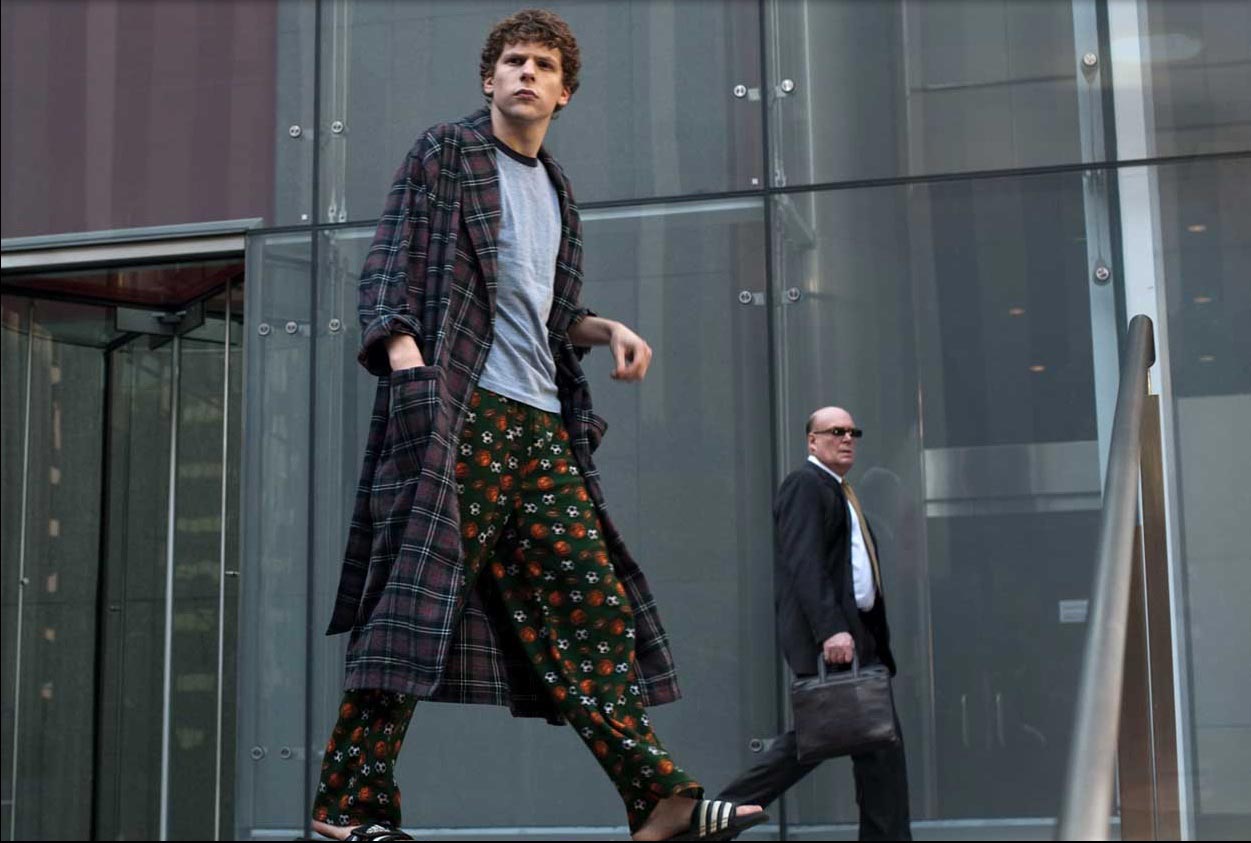
Directed by David Fincher and an adapted screenplay by Aaron Sorkin, The Social Network tells the story about the founding of Facebook in its early years through its creators when they were just students at Harvard.  During the creation of Facebook and its rise, friction among its founders over credit and glory ensue that leads a chilling story of greed and betrayal.  With an all-star cast that includes Jesse Eisenberg, Andrew Garfield, Justin Timberlake, Rooney Mara, Brenda Song, Rashida Jones, Armie Hammer, Joseph Mazzello, Patrick Mapel, and Max Minghella.  The Social Network is an eerie yet exhilarating film from David Fincher.

It’s the fall of 2003 as Mark Zuckerberg (Jesse Eisenberg) is on a date with Erica Albright (Rooney Mara) where things end up badly.  Upset, Zuckerberg blogs about Erica and then has an idea about all the parties that are going on in Harvard.  Zuckerberg, a computer programming student, comes up with an idea called Facemash where he posted polls about which girl was hotter and such and overnight, it becomes big.  With help from friend and roommate Eduardo Saverin (Andrew Garfield) who comes up with an algorithm code, Zuckerberg gets attention for Facebook, good and bad.  Among those interested in Zuckerber’s work as a programmer are twin rowers Tyler and Cameron Winkle Voss (Armie Hammer w/ Josh Pence as the body double) and Divya Narendra (Max Minghella).

After asking Zuckerberg to create a program for their website to connect with Harvard students to another.  Zuckerberg agrees while learning that Saverin has been accepted to a prestigious club.  Zuckerberg, along with programmer Dustin Moskovitz (Joseph Mazzello) and Chris Hughes (Patrick Mapel), decided to create his own site that was called The Facebook with Saverin bringing a thousand dollars to start the site.  While Zuckerberg’s ideas increase, the Winklevoss twins and Narendra are suddenly left in the cold as they kept being rebuffed by Zuckerberg.  Even as they issues a cease-and-desist against Zuckerberg which he refuses to comply to.  With Saverin’s social connections to get more people in the site, they decided to expand to other big college campuses in the Northeast and Stanford in California where they get the attention of Napster co-founder Sean Parker (Justin Timberlake).

With the Facebook growing in numbers through prestigious college campuses and the Winklevoss trying to stop the site by even going to Harvard’s president (Douglas Urbanski).  Nothing is stopped as Saverin’s new girlfriend Christy Lee (Brenda Song) arranges a meeting with Sean Parker to meet with Zuckerberg and Saverin.  Though Saverin was skeptical about Parker, Zuckerberg is charmed as he and Moskovitz move to California to expand Facebook while Saverin stays in New York City to talk to advertisers to help with the financial things for the company.  With Parker’s help in California, Facebook expands all the way to the U.K. as the Winklevoss twins and Narendra decide to sue.  Meanwhile, Saverin finds himself out of picture as he tries to freeze his own money only to come back to sign some documents which would eventually lead to an all-out war against Zuckerberg.

The film is a classic tale of how one rises to the top and become filthy rich and yet, is being faced by the people he had fucked over to rise to the top.  For this film about the creation and founding of Facebook, it is much more complicated considering that Mark Zuckerberg who is a guy that likes to work on his computer a lot.  He is very socially awkward and seems more interested in trying to create a better Facebook with money coming to him all of the time.  Yet, he is also an asshole.  Still, if someone wants to make it in business.  They have act like assholes in order to get their way.  Yet, there’s a price to be paid when that person ends up screwing his friends around out of their share of the pie.

Screenwriter Aaron Sorkin creates a storyline that is similar to Akira Kurosawa’s Rashomon as it’s all told in a couple of depositions where Zuckerberg is facing off against those he screwed over.  While the narrative moves back and forth from the creation of Facebook to the different depositions where Zuckerberg is explaining himself.  Even in his deposition against Eduardo Saverin, he is joined by a lawyer (John Getz) and a paralegal (Rashida Jones).  Even through these depositions, Sorkin gets a chance to have the Winklevoss twins and Narendra tell their side as well as Saverin.

While the Winklevoss twins and Narendra might seem like a trio of rich, preppy assholes who got cheated out of millions of dollars.  Yet, there’s a bit of sympathy for them considering that they tried to restore some of Zuckerberg’s already trouble reputation while making him part of an elite club.  Instead, Zuckerberg screws them though they gave him an idea about Facebook.  Then there’s Eduardo Saverin, the co-founder who brings in the money to create Facebook and then is pushed out of the picture once Sean Parker comes in.  Here’s a guy who is very smart, comes up with an algorithm code, brings in the money, and has all of the social connections to get people to join Facebook.  What happens to him is just as sad as he’s the character that gains the most sympathy.

Sorkin’s portrayal of characters including the brash Sean Parker, are wonderful in their complexity while breaking away from whatever stereotype what audiences might perceive of them.  Even in Mark Zuckerberg who is a very complicated character that doesn’t really know how to interact with people but can create ideas that would make Facebook what it is by 2010.  While some might sympathize with Zuckerberg for just trying to create something that will bring people together.  Others will hate him for how he screwed people over or how he treats them.  Yet, it is Sorkin’s genius to create memorable characters along with fast-paced dialogue and intense, dramatic moments is what makes the story so compelling.

The direction of David Fincher is truly his most accessible and most intriguing work to date.  Fincher creates a drama that is filled with a bit of suspense along with some humor and heavy drama.  Setting the film in Cambridge as Harvard, he goes into the world of Harvard in all of its social circles.  Fincher starts the film off with a bar scene that is long as he goes back and forth into the conversation.  The framing of that scene sets the stage along with the following sequence of following Zuckerberg through Harvard with this tracking shot.  Most of Fincher’s direction of scenes is very intimate inside the dorms while going inside the parties and capturing the intensity of Zuckerberg and his cohorts creating something.

Fincher succeeds in creating dramatic tension with not doing a lot for the deposition scenes.  Even as he focuses the camera on Zuckerberg, who seems very distracted by the things around him including the rain outside.  It’s all because Zuckerberg is trying to think about other things concerning his own site as Fincher’s camera is intent on capturing this young man at his most confrontational.  The overall direction of Fincher is truly mesmerizing and it’s definitely his most solid and entrancing work of his career so far.

Cinematographer Jeff Cronenweth does a phenomenal job in creating a look and tone for the visual aspects of the film.  Cronenweth’s dark, low-lighting look for many of the film’s interior scenes is truly intoxicating in its dark tone.  For some of the daytime, interior scenes, the film is more lively as Cronenweth’s camera is always on the action.  Even as Croenweth’s photography for some of the scenes in California is exquisite as his work overall is great.

Editors Kirk Baxter and Angus Wall do an amazing job with the film‘s editing in creating a rhythmic pace to keep up with the rapid dialogue.  Even as they slow down to create dramatic tension.  Notably for some of the deposition scenes where the editing takes it time for the actors to have their monologues as it’s a great example of what editing should be. 

Production designer Donald Graham Burt, along with set decorator Victor J. Zolfo and art directors Curt Beech and Keith P. Cunningham do fantastic work with the look of the Harvard dorms, the classrooms, and everything else that Harvard looked liked.  Even the designs of the clubs and slick restaurants to play up to Mark Zuckerberg’s rise while the deposition scene with the Winklevoss twins is very classy to represent the old-school world of those twins.  Costume designer Jacqueline West does excellent work with the costumes from the more ragged, casual clothing of Zuckerberg to the more posh, intimidating clothes that the Winklevoss twins wear.  Sound designer Ren Klyce does superb work with the film’s sound mixing and editing to create moods for the scenes involved in the film.  Notably the deposition where at one point, rain is heard to mix with the dialogue and music to play with what Mark is thinking about.  Klyce’s sound work is truly one of the film’s technical highlights in capturing the tense atmosphere that goes on for the film.

The film’s soundtrack features a large array of music ranging from the White Stripes, Roots Manuva, the Cramps, 10cc, the Dead Kennedys, Bob Marley & the Wailers, Cage, Super Furry Animals, and to close the film, the Beatles’ Baby You’re A Rich Man.  The soundtrack definitely plays up to the party atmosphere of the film as it is presented in large contrast to the film’s dark, unsettling score.

The film’s original score is created by Nine Inch Nails mastermind Trent Reznor and longtime cohort Atticus Ross.  Featuring a cover of Edvard Grieg’s In The Hall of the Mountain King, Reznor and Ross’ score is a mixture of dark ambient music filled with soothing piano and swooning synthesizers to play up to some of the melancholia and drama that goes on.  When it gets tense, the score becomes more menacing with fuzzy bass lines, discordant electronics, and driving guitars.  While some of the pieces feature music from the 2008 NIN instrumental album Ghosts I-IV, the music Reznor and Ross creates is perfect to complement the complex mind of Mark Zuckerberg as that score is real highlight of the film.

The casting by Laray Mayfield is excellent for its array of actors to fill in small and big roles.  Among the memorable small roles are Steve Sires as Bill Gates in a seminar scene, screenwriter Aaron Sorkin as an ad executive, Dakota Johnson as a Stanford girl Sean sleeps with, Malese Jow as Christy’s friend, and Patrick Mapel as Facebook co-founder/original spokesperson Chris Hughes. Other notable small but more substantial performances come from Brenda Song as the sexy Christy who becomes Eduardo’s girlfriend, Joseph Mazzello as programmer/Facebook co-founder Dustin Moskovitz, John Getz as Mark’s attorney Sy, Douglas Urbanski as former Harvard president Larry Summers, Dustin Fitzsimmons as a club president, and Rashida Jones as a paralegal who helps Mark with his legal situations while giving him a monologue about what he should do.

Rooney Mara is excellent in a small role as Erica Albright, a composite of a real individual who would become the inspiration for Zuckerberg’s idea to create Facebook. Even as Mara holds her own against Jesse Eisenberg as a girl who felt confronted by a guy she had a hard time relating to.  Max Minghella is very good as Divya Narendra, a rich student who felt screwed by Zuckerberg and wants to get violent on him. Armie Hammer, as the Winklevoss twins, is phenomenal in playing these rich, preppy, popular jocks who get shafted while wanting to try and be respectable in their approach only realizing how much they want to kill Zuckerberg. Justin Timberlake, meanwhile, gives a rousing performance as Sean Parker. The brash co-founder of Napster who is everything Zuckerberg wants to be while charming his way into the world of Facebook as he is cocky and arrogant. It’s a great performance from Timberlake who finally gets a role and performance that truly serves as an acting breakthrough.

Another notable breakthrough is Andrew Garfield as Eduardo Saverin, a co-founder of Facebook who becomes the site’s original investor and business manager. Garfield is excellent as the guy who has all of the social connections but is suddenly thrown out of the loop once Parker comes in as he struggles to get Zuckerberg’s attention. It’s truly a remarkable performance for the young British actor. The film’s real break-out performance is Jesse Eisenberg as Mark Zuckerberg, the CEO and co-founder of Facebook. Known for playing eccentric, comical, and nerdy characters in films like Roger Dodger, The Squid & the Whale, Adventureland, and Zombieland. Eisenberg does an exhilarating job in playing the troubled yet brilliant Zuckerberg in all of his flaws. Eisenberg also makes Zuckerberg into a somewhat sympathetic figure but also one to despise. Eisenberg can talk fast, be quite uncaring, be in his own head, and also very arrogant in scenes where he gets confronted as it’s definitely the best performance of his career.

***Additional DVD Content Posted on 2/9/11***

The 2-disc Region 1 DVD from Sony presents the film in its original 2:40:1 theatrical aspect ratio in anamorphic widescreen.  Featuring 5.1 Dolby Digital sound in English and French plus subtitles in English (for the hearing impaired), French, and Spanish.  The first disc of the DVD is the film itself as the only special features it includes are two audio commentary tracks.

The first commentary track is from director David Fincher.  Fincher talks about a lot of the film’s location settings, technical ideas, and the cast.  Particularly Jesse Eisenberg who he really liked in Noah Baumbach’s The Squid and the Whale and The Education of Charlie Banks.  Even as he reveals what Eisenberg brought to the role of Mark Zuckerberg in which he brings a humanity to a character that is inaccessible at times.  Fincher praises the likes of Andrew Garfield, Rooney Mara, Brenda Strong, Justin Timberlake, Armie Hammer (along with his double Josh Pence), and Max Minghella.

Fincher also talks about the reasons why they weren’t able to shoot at Harvard along with some ideas about the story and Aaron Sorkin’s screenwriting.  He also revealed that he originally wanted Elvis Costello & the Attractions’ Beyond Belief to be the song in the opening credits but everyone else didn’t like it.  Fincher admits that it was an idea as he also talked about the musical contributions of Trent Reznor and Atticus Ross.  Even as he wanted something that was a bit reminiscent of the high school film of the 80s but more modern.  Fincher’s commentary is fun to listen to as it features lots of bleeps because it’s a PG-13 movie.

The second commentary track is from screenwriter Aaron Sorkin and cast members Jesse Eisenberg, Andrew Garfield, Justin Timberlake, Armie Hammer, and Josh Pence.  Sorkin and the actors talk about the production as well as Fincher’s directing style which is notorious for having actors do numerous takes which was something the actors didn’t really seem to mind.  Eisenberg felt it was the right approach so that he and the other actors could get a chance to find their footing during the shoot.  Even in the opening scene with Rooney Mara where and Mara had to find the way to get the rhythm of their conversation just right and make it feel natural.

Andrew Garfield discussed his approach to playing Eduardo Saverin as well as his chemistry with Eisenberg where they had to hang out with each other for a while before working.  Garfield and Eisenberg praised the work of Joseph Mazzello whom Garfield was jealous of as a kid because Mazzello was in Jurassic Park.  Armie Hammer and Josh Pence talk about their roles as the Winklevoss twins as Hammer revealed an encounter with one of the twins that freaked him out.  Justin Timberlake revealed that he had to audition for the part of Sean Parker which he worked hard on and didn’t want to come into the film because of who he is.

Sorkin revealed about his approach to the screenplay of the film while he revealed that the music he originally wanted to use in the credits sequence was Paul Young’s cover of Love for the Common People.  Fincher thought that wouldn’t work as he decided to go with Trent Reznor and Atticus Ross’ music.  Sorkin revealed that the one scene he wished was cut was his cameo as all of the actors disagreed and thought he did pretty good.  The overall commentary is fun as it brings insight to the characters and the story.

The second disc includes loads of special features relating to the film.  Leading the pack of special features is a one-and-a-half hour, four-part making-of documentary entitled How Did They Ever Make a Movie of Facebook?  Directed by David Prior, the documentary features interviews with actors, crew members, producers, screenwriter Aaron Sorkin, and director David Fincher.  Even as it focuses on what was shot in the three central locations for the film plus how did they manage to put Armie Hammer’s face into Josh Pence for several scenes in the film.

For many of the exterior scenes in Harvard, it was all shot in Boston and nearby colleges since there was no permission to shoot at Harvard.  Even as a few interiors were shot in the month of October where the whole principal photography phase was 70 days.  Both Hammer and Pence had to learn how to row though Pence was more experienced since he did row in his school days.  Even as the opening bar scene was rehearsed early in the day with Jesse Eisenberg and Rooney Mara where they finally shot the scene later that night with a bunch of extras.

For a lot of the film’s interior scenes which included the restaurant and club scenes.  All of it was shot in Los Angeles including the house Zuckerberg and his team stayed in during their California trip.  Some exteriors were also shot for the film that was to be set in Harvard while the dorm room scenes and a few interiors were shot in the lot.  Notably the depositions as it was all shot on a built set.  The documentary is an insightful, fun featurette that reveals the making of the film.

Another big featurette is a 4-minute multi-angle breakdown of the Ruby Skye VIP room scene.  Featuring four camera angles and four different audio tracks, it reveals how the club scene was created from its early stages to principal photography.  There are four shots that are going either by themselves individually or all together in a composite form.  The first audio is Jesse Eisenberg and Justin Timberlake rehearsing in another room reading Aaron Sorkin’s dialogue with Sorkin and David Fincher watching in the first angle.  The second audio track is an interview with editors Kirk Baxter and Angus Wall along with sound designer Ren Klyce about how difficult it was to create the club scene for all of the sound work and editing.

The third video and audio is about the location scouting of the club as Fincher and crew discussing how it would be shot and what angles would be used.  The fourth and final video/audio clip is the principal photography where the first assistant director gets extras to come in and dance to the music while making sure they keep dancing when music isn’t played so Timberlake and Eisenberg do their dialogue.  Even as Fincher is watching everything through a monitor as he also directs Eisenberg and Timberlake about what they should do during their conversation.  It’s definitely a wonderful and captivating featurette.

Two other special features involve the film’s technical work.  The first is an eight-minute featurette about the film’s look from David Fincher and cinematographer Jeff Cronenweth.  Fincher and Cronenweth revealed that because of Harvard’s refusal to have the film be shot on location, they had to find locations where they can shoot places that are similar to Harvard.  Even in look where all of it had to be captured to create a similar mood to the way Harvard looked.  Helping capturing some of those images, particularly inside the dorm room were the cameras Fincher and Cronenweth used which was the Red One camera.

Since Fincher had always expressed interest in digital filmmaking and in high-definition, the Red One was the camera that was able to give him the look he needed.  The hard part was trying use lenses to capture broader shots for depth of field.  Notably the overhead shot of the Harvard archway where three cameras were used to capture the entire archway as it had to become one entire frame.

The second is a seventeen-minute, twenty-second featurette on the film’s post-production that features editors Kirk Baxter and Angus Wall and sound designer Ren Klyce.  Baxter and Wall reveal the difficulty of the editing since things were moving so fast that the film was edited during production as filming continued.  Even as they’re aware of Fincher’s notorious for shooting many takes of a scene which was more difficult because of Sorkin’s screenplay.  Even in capturing the right note of the performances which had to be handled through Klyce’s sound editing.

Klyce’s sound editing, mixing, and design work helped to create moods, notably the opening scene of the film.  Even as Klyce had to mix the dialogue of Jesse Eisenberg and Rooney Mara in one mix, the mix of the people in the bar talking, and the music of the White Stripes in the background.  What Klyce had to do was get all of those sounds mixed in together for this opening sequence.  Even when Eisenberg’s character had to work on the computer where Klyce and Fincher took a more realistic approach as opposed to the ways computers sounded in the past.

Three other special features involve the film’s music from composers Trent Reznor and Atticus Ross.  The first is a nineteen-minute featurette on the score with interviews from Reznor, Ross, and David Fincher.  Reznor and Ross revealed their approach to the music where Reznor would do a lot of the performance with Ross providing the arrangements and dissect all of the pieces that was played.  Even as the two try to figure out what rhythm this piece would be used or that piece.  The track Hands Cover Bruise became the main theme that Fincher loved which he felt would become the basis for the score and the emotional accompaniment of Mark Zuckerberg.

The hardest track Reznor and Ross had to do was Edvard Grieg’s In the Hall of the Mountain King because it was requested by Fincher.  Reznor revealed that because Fincher wanted a Wendy Carlos approach of the piece, Reznor took it the wrong way where the first draft was played to a dismal reaction from personnel to Reznor’s dogs.

Also included in that section is a four-and-a-half minute feature on the Swarmatron instrument Reznor and Ross used for the score.  It’s an instrument that features ribbons for Reznor to rub on while using a tuning button to create pitches for the sound.  He said he wanted to use something that was organic and imperfect in the realm of electronic music.  Reznor and Ross revealed what scenes featured the instrument as it contained a swooning if discomforting sound to help set the mood for the scenes.

The third and final music special is a rough draft of Edvard Grieg’s In the Hall of the Mountain King.  Played to the Henley Regatta scene, the featurette features four different audio mixes.  One is a rough version of the first draft of the track in music only which sounded more like Wendy Carlos’ approach to the track with dated 70s-style synthesizers that didn’t feel right.  In the final mix of that first draft with the sound in the film, it still didn’t work because the track’s intensity with the feel of the race just didn’t match.  Even as the text that preceded the scene revealed what it took to get to the final version.  When the final version of the track is presented in a music-only mix and then in the final mix with the film’s sound, it’s an indication of what worked.

Though the only thing the DVD is missing are the trailers for the film.  It is still an amazing DVD that fans of David Fincher must have.  Even as aspiring filmmakers get a chance to understand Fincher’s filmmaking process including how the film was shot and edited.  Fans of NIN will definitely want the DVD for the music features and to see Trent Reznor and Atticus Ross at work on the film’s score.  In the end, it’s a spectacular DVD that supports one of 2010’s great films.

***End of DVD Tidbits***
The Social Network is, without a doubt, one of the year’s best films from David Fincher and screenwriter Aaron Sorkin. Fans of Fincher’s work will no doubt enjoy the film for its visual feel and tone while fans of Sorkin will enjoy his approach to the story. Featuring an amazing cast led by Jesse Eisenberg, Andrew Garfield, and Justin Timberlake plus a hypnotic score by Trent Reznor and Atticus Ross. It’s a film that truly dwells into one of the great social phenomenon of the 21st Century and how its creator became rich. It’s definitely a film that is engaging, entertaining, and also intriguing. In the end, The Social Network is a remarkable yet provocative film from David Fincher.


© thevoid99 2010

Friday, October 01, 2010

The Curious Case of Benjamin Button


Originally Written and Posted at Epinions.com on 12/25/08


The short story of F. Scott Fitzgerald's The Curious Case of Benjamin Button told the story of a man born with a body of an aging elderly. When he grows, his has the mind of whatever age he's in while he starts to look younger. The story is one of the most intriguing tales by Fitzgerald that an adaptation for a film project took years to create with several screenwriters including Charlie Kaufman and directors like Ron Howard and Gary Ross attached to the project. When the project finally found a director that will stick to the project, it seemed that it would finally be made though it would be in the hands of David Fincher. The man behind such provocative films like Se7en, The Game, and Fight Club. Yet, 2007's Zodiac about the Zodiac killings of the late 1960s marked a change of pace for Fincher that him the ideal director for the film version of F. Scott Fitzgerald's short story.

Directed by David Fincher, The Curious Case of Benjamin Button tells the story of a man born as an elderly as he's under the care of people in New Orleans during World War I. Over the years, he ages backwards while falling in love with the woman he met when she was just a child as he lives throughout the world. Screenplay by Eric Roth, who wrote the adapted screenplay for Forrest Gump, the film version is different from F. Scott Fitzgerald's version as the time frame is set from the time of World War I to August 2005 when Hurricane Katrina arrived. With an all-star cast that included longtime Fincher cohorts Brad Pitt and Elias Koteas plus Cate Blanchett, Tilda Swinton, Julia Ormond, Taraji P. Henson, Jared Harris, Mahershalalhashbaz Ali, Phyllis Somerville, Elle Fanning, Madisen Beaty, and Jason Flemyng. The Curious Case of Benjamin Button is a majestic film from David Fincher and company.

It's August 2005 as Hurricane Katrina is approaching New Orleans. An ailing woman named Daisy (Cate Blanchett) is in a hospital bed with her daughter Caroline (Julia Ormond) by her side. Daisy tells Caroline a story about a man named Gateau, a blind clockmaker who created a clock that would run backwards that he unveiled one day to Teddy Roosevelt (Ed Metzger). Daisy asks Caroline to read a diary found in a suitcase which is about a man named Benjamin Button (Brad Pitt). Caroline reads Button's diary as he was born the day World War I ended. Yet, Benjamin's mother (Joeanna Sayler) died due to complications of childbirth as her husband Thomas (Jason Flemyng) listened to her final words. Yet when he sees the baby, he's in shock over the baby's grotesque look only to take it away and leave in to outer staircases of a retirement home run by a woman named Queenie (Taraji P. Henson).

Queenie takes in the baby despite his grotesque nature as she names him Benjamin. With help from her boyfriend and caretaker Tizzy (Mahershalalhashbaz Ali), Benjamin was in the care of various elders where he learned about the world despite looking old. Around the time he was seven, Benjamin finally got to walk with help from a preacher (Lance E. Nichols) while a Creole man named Ngunda Oti (Rampai Mohadi) took him on a tour of New Orleans. Then one day, Benjamin meets a young girl named Daisy (Elle Fanning) whom he befriends as she's visiting her grandmother (Phyllis Somerville). After learning piano lessons from Mrs. Maple (Edith Ivey), he also gets a first-hand lesson about death. When he starts to look and feel younger despite his old appearance, Benjamin notices that Queenie is starting to focus on her own daughter.

At 17, Benjamin meets a tugboat captain named Mike (Jared Harris) who gives him a job as Benjamin becomes entranced by adventure. It would be around the same time Benjamin would meet Thomas Button though Thomas wouldn't reveal his true identity yet. When Daisy (Madisen Beaty) visits again, she is amazed at the world Benjamin is starting to live in while she has dreams of being a ballerina. When Benjamin decides to leave home to work with Mike as a member of a tugboat crew, he writes Daisy many letters until his stop at Russia where he meets the wife of a British diplomat named Elizabeth Abbott (Tilda Swinton). The two first engage in late night conversations that proved to be fulfilling as Abbott once tried to swim across oceans. Yet, their conversations would lead into a secret affair only to end quickly as she leaves Russia.

When World War II begins for the U.S., Mike and his crew decide to serve for the Navy with Benjamin joining along. Returning home to New Orleans once the war ended, Queenie is glad to see him as he continued to work at the retirement home. When Daisy makes a visit, Benjamin is amazed at the new world and career she's in though it overwhelms him. Another encounter with Thomas Button revealed some truths as Benjamin becomes confused only to learn more about Thomas. When Benjamin goes to New York City to surprise Daisy, she is surprised by his visit while Benjamin gets a closer look into her new world including a boyfriend named David (Adrian Armas). For Benjamin, it's too much as he leaves Daisy behind to venture a world of his own. When Daisy gets injured in Paris in an accident, Benjamin visits but Daisy feels ashamed.

After having some time of his own, Daisy re-enters Benjamin's life where the two finally reach the point where they're nearing the same age. Just as life was going blissful for them, Daisy's news that she's pregnant starts to worry Benjamin. After the birth of their child, Benjamin who is aware that he's about to become younger makes a fateful decision that would impact the life of Daisy and their child.

While F. Scott's Fitzgerald's original short story is set in a different time and place. The concept of a man aging backwards does create an idea that is unique. While screenwriter Eric Roth and story adapter Robin Swicord created some major changes that differentiates from the original short story. Their approach does work in setting the story in early 1900s New Orleans to New Orleans 2005 just Hurricane Katrina is set to approach. Yet, not everything works with Eric Roth's screenplay despite its unique structure, character study, and time frame. There's a couple of big flaws in the script though it often depends on what the audience wants. One is that the script is predictable in connecting the dots to what is about to happen and a few surprises that aren't really surprises. Yet, it depends on how the audience can handle that approach to the plot which isn't really Roth's fault or the story. It's just that it creates a lack of suspense or the fact that it isn't surprising.

The other major flaw with the script and story is its relation to Forrest Gump. There's many similarities to the famed novel by Winston Groom and its 1994 film adaptation that was scripted by Eric Roth. Both films have a protagonist embarking on adventures through their own simple, curious commentary. Both are chasing women who live in different worlds while having a maternal figure that can impact their lives. Both characters meet unique characters along the way while living through different eras. Yet unlike Forrest Gump, Benjamin Button isn't a simpleton. Instead, Button is someone who is more aware of the world despite the fact that he's reversely aging. Button is someone trying to live to the fullest where the story is helped by its structure. The first act is about Benjamin as a child, meeting Daisy, and setting on his own adventure. The second act is about his encounter with Elizabeth, the war, and coping with Daisy's new life.

Then there's the third act which begins with Daisy's return and the new life they live in. Once there's a child coming, the audience knows what's coming. Unlike the character of Jenny in Forrest Gump who lived recklessly through certain trends and without any clear goals.
The character of Daisy comes to full effect in the third act in how she's trying to cope with Benjamin becoming younger knowing what would happen. Yet, it's all told with voice-over narration by Benjamin as Daisy's daughter Caroline reads it. While the script had those flaws, Roth's approach in moving the story back and forth from Benjamin's time to the final moments of Daisy's life works in creating a subplot about Daisy's relationship with Caroline. Though audiences do know what's coming where despite its flaws. The script and story definitely is wonderful.

The direction of David Fincher is truly remarkable and majestic. Fincher takes new heights to his direction where he presents the film in various locations, notably New Orleans. When the film progresses, Fincher shows New Orleans in its beauty from the early 20th century to the time just before Hurricane Katrina was about to hit. Every time a certain period is shown, Fincher does it with a majestic style to keep the story moving forward while creating an atmosphere for the period. There's parts of the film where Fincher takes a certain period and adds grainy scratches to the camera work to emphasize the atmosphere of that time. Notably the story about Gateau and his clock which plays a very important part of the film.

Fincher's direction definitely takes him places he hadn't been to like romance and drama while creating a sense of excitement in the film's World War II scene where the tugboat known as Chelsea faces off against a submarine. While Fincher does use CGI-based visual effects for some parts of the film, it's done wisely without looking very fake in its emphasis to create atmosphere for a location or a certain era. In the dramatic approach, there is the idea of sentimentality but it's earned because of what is going to happen. Instead of having to draw out the ending, he creates a slow momentum in having the audience expect the outcome. The overall result of David Fincher's direction is truly spectacular and magical as it's definitely some of his best work as a director.

Cinematographer Claudio Miranda does an amazing job with the film's unique visuals with the sepia-like colors in some of the film's nighttime, interior settings to the period, colorful pallette of the exteriors in Paris, New York, and New Orleans. Miranda's work in the daytime exterior shots of New Orleans without much tints in the colors work in creating a period and atmosphere through Fincher's direction as it's definitely gorgeous in its look. Editors Kirk Baxter and Angus Wall do great work with the editing in the film's Gateau sequence in a scene play in rewind while using swift, smooth cuts on a commentary by Benjamin Button about how fate plays into the world. With its transition cuts, slow-motion cutting, and rewinds. The editing is definitely phenomenal. The visual effects work of Eric Barba and company is great in the creation of a few key moments in the scenes like the stormy sky in a shot at the Gulf beach, a shot of a rocket, a hummingbird, and other visual effects that work very effectively.

Production designer Donald Graham Burt along with set decorator Victor J. Zolfo and a team of art directors do an amazing job in the recreation of the period look of New Orleans through the ages. With its look of the homes that Benjamin visits and lives in to the duplex he and Daisy stays in. The art direction is phenomenal in every location and setting to create an atmosphere to the time. Costume designer Jacqueline West does a brilliant job with the look of the costumes including the ballet leotards and dresses that Cate Blanchett wears to the period clothes that everyone else wears throughout each time. Makeup artists Carla Brenholtz and Stacey Herbert do an amazing job in having the young model actors look like an older version of Brad Pitt while giving Pitt a look of an elderly where one had him look like Marlon Brando. Cate Blanchett's makeup by Elaine L. Offers work to show her aging look in the film's third act is also great in how her character ages while Benjamin looks younger.

Sound editor Ren Klyce does an excellent job in the sound work, notably the battle scene and sea sequences. The sound is also great in its location settings and atmosphere while in the 2005 scene. Carries a sense of foreboding of what is to come. The music of Alexandre Desplat is definitely rich and majestic with somber pieces, flourishing arrangements, and Desplat's tingling melodies. The score is definitely amazing without being heavy handed or playing up to its sentimentality as it's a lovely score. The soundtrack also includes various music pieces of a certain time period including a wonderful use of a live version of the Beatles' Twist And Shout performed on the Ed Sullivan show.

The casting by Laray Mayfield is phenomenal with a lot of small yet memorable characters that have scene-stealing moments like Ted Manson as a man who had been hit by lightning seven times, Paula Gray as an opera singer, Ed Metzger as Teddy Roosevelt, Donna DuPlantier as Gateau's wife, Jacob Tolano as Gateau's son, Joeanna Sayler as Benjamin's mother, Patrick Thomas O'Brien as a doctor, Lance E. Nichols as a preacher, Yasmine Abriel as a prostitute, Rus Blackwell as Daisy's husband in the third act, Adrian Armas as Daisy's boyfriend in the New York City scenes, and Edith Ivey as the woman who teaches Benjamin how to play piano though Benjamin doesn't remember her name. Other small roles from Don Creech, Joshua DesRoches, Christopher Maxwell, Richmond Arquette, Josh Stewart, and Myrton Running Wolf as crew members of the Chelsea tug boat stand out as well as Phyllis Somerville as Daisy's grandmother.

Rampai Mohadi is excellent in a standout role as a Creole man who introduces Benjamin to New Orleans while Mahershalalhashbaz Ali is very good as Tizzy, the caretaker who teaches Benjamin a few useful skills in life. In the role of the young versions of Daisy, Elle Fanning is wonderfully delightful to watch as the seven-year old Daisy while Madisen Beaty is also great as 10-year old Daisy. For the physical roles of Benjamin Button meshed with Brad Pitt's facial makeup and voice, Peter Donald Badalamenti II as the 10-year old Benjamin, Robert Towers as teenage Benjamin, and Tom Everett as the 17-year old Benjamin are excellent in their physicality. Child actors Spencer Daniels and Chandler Canterbury are also good in their respective roles as the 12-year old and 8-year old versions of Benjamin. Jason Flemyng is very good as Benjamin's father Thomas who is curious about the man who is son while dealing with the regrets he had over abandoning him. Elias Koteas is brilliant in his small role as Gateau, the clockmaker who creates a clock that runs backwards.

Julia Ormond is wonderful as Caroline, Daisy's daughter who reads the diary of Benjamin Button as she tries to contend with her mother's past and the things she never knew about. Jared Harris is delightful to watch as Captain Mike, the tattooed tugboat captain who brings adventures to Benjamin as Harris' performance is fun to watch. Tilda Swinton is great in a small yet brilliant supporting role as Elizabeth Abbott, a wife of a British diplomat who shares great conversations with him as she gives Benjamin a taste of real love. Taraji P. Henson is amazing in a real break-out performance as Queenie, Benjamin's adoptive mother who has some funny lines and comments as she brings a real true maternal quality to the role. While it's a character that could've been played as a cliche, Henson's fiery, charismatic performance is full of life and wit as it shows that she's definitely becoming a real actress after such stellar performances in Craig Brewer's Hustle & Flow and Kasi Lemmons' Talk to Me.

Cate Blanchett delivers a graceful yet wondrous performance as Daisy, the woman who becomes Benjamin's dear close friend and lover as she is amazed by his reversed aging while dealing with how out of place he is. Blanchett's beauty and exuberance is wonderful as she develops from a woman with dreams to a woman becoming content except when she has to deal with Benjamin's approach to childhood. It's a great performance from the Australian actress who continues to morph into any type of role without playing the same character twice. Finally, there's Brad Pitt in what has to be one of his best performances to date. Though it doesn't top the subtlety that he displayed in The Assassination of Jesse James by the Coward Robert Ford a year earlier. Pitt sells the curiosity and wonderment of the title character while managing to make himself look young and dreamy while doing it with such maturity and restraint. It's a testament to what Brad Pitt can do as an actor where 10-15 years ago, many claim he couldn't act. The performance Pitt gives in this film proves that he's come along way from being a 90s heartthrob.

While not a perfect film, The Curious Case of Benjamin Button is certainly one of the year's best films from David Fincher. Thanks to Eric Roth's unique screenplay, amazing technical work, and a brilliant cast led by Brad Pitt and Cate Blanchett. It's definitely the right film to see during the holidays in its display of majestic imagery and atmosphere. Along with brilliant supporting work from Taraji P. Henson, Tilda Swinton, Jared Harris, and Julia Ormond, it's a film that is dazzling to watch from start to finish as David Fincher takes a new maturity to his work as a director. In the end, The Curious Case of Benjamin Button is a magical film that is likely to sweep the viewer into a great, majestic journey from David Fincher.


© thevoid99 2010