Based on the novel by Kobo Abe, Tanin no kao (The Face of Another) is the story of an engineer whose face is burnt due to an accident at work as he is given a new face that would become troubling. Directed by Hiroshi Teshigahara and written by Abe, the film is an exploration of identity where a man is given a new face but would deal with what happened to him and the new face he’s given. Starring Tatsuya Nakadai, Machiko Kyo, and Kyoko Kishida. Tanin no kao is a chilling yet rapturous film from Hiroshi Teshigahara.
The film follows a man who is given a new face following an accident that left his face burned at work where he deals with the surgery and the changes his new mask gives him. It’s a film with a simple premise yet it is more about a man dealing with what happened to him and a chance to re-enter society only to feel more of an outcast. Kobo Abe’s screenplay doesn’t have much of a plot as it’s more of a character study on its protagonist Okuyama (Tatsuya Nakadai) who spends much of the first act either at his home with his wife (Machiko Kyo) or talking to Dr. Hira (Mikijiro Hira) who has been experimenting with creating new skin as he believes he could help Okuyama but is concerned about the Okuyama’s state of mind. The film’s second act would be about the mask based on another man’s face that Okuyama would wear but also recollections of a film he saw that is about a scarred girl (Miki Irie) who works with World War II veterans and is concerned about the idea of another war emerging. That subplot would also play into Okuyama’s concerns about his look when he was covered in bandages as he would go into a slow descent of intrigue and deceit into its third act.
Hiroshi Teshigahara’s direction does bear elements of style in its visuals yet much of the compositions that he creates are straightforward. Shot largely in Tokyo, Teshigahara’s direction play into this air of intrigue throughout the drama as it relates to Okuyama’s visits with Dr. Hira as he works in a room that is surreal in its surroundings as if the man himself is offbeat. The scenes in that film are either presented in a wide shot or in a medium shot with some striking compositions to play into Okuyama trying to get himself back in the world. Notably as he would walk around Tokyo in his bandaged state and later wearing the new face that he’s given where much of Teshigahara’s direction is straightforward yet showcases this air of detachment that would occur in Okuyama’s mind. The element of surrealism doesn’t just play into the office and rooms of Dr. Hira but also in the film that Okuyama saw about the scarred girl and her own journey that included her time with her brother (Kakuya Saeki) that would include close-ups of her face.
Teshigahara also maintains a low-key approach to the suspense during its second act as it relates to Okuyama living in an apartment where the superintendent’s daughter (Etsuko Ichihara) believes there is something weird about him. Even as Okuyama starts to go into places in his new mask that he has to wear for 12 hours as he ponders if those who know him recognize him or know anything about him. Its third act would play into Okuyama taking advantage of his new identity but also play into his descent into the air of immorality that would parallel with the journey of the scarred girl feeling lost over her own place in the world. Even as the film would have Teshigahara use surrealism to play into this dark world that Okuyama and Dr. Hira would create as the latter becomes concerned over what he created while the former would relish in his new discovery of immorality. Overall, Teshigahara crafts a haunting yet engrossing film about a man who gets a new face that would later shape his identity and state of mind.
Cinematographer Hiroshi Segawa does brilliant work with the film’s black-and-white photography with its usage of natural lighting for scenes in the day as well as some vibrant and eerie textures in the lighting courtesy of Mitsuo Kume. Editor Yoshi Sughihara does excellent work with the editing as it has some unique rhythmic cuts including a few jump-cuts to play into the drama and surrealist moments of the film. Art directors Masao Yamazaki and Arata Isozaki, with set decorator Kenichiro Yamamoto, do amazing work with the look of the apartments that Okuyama lived in as well as the place that Dr. Hira works at.
Costume designer Tamiko Moriya does terrific work with the costumes as it is largely straightforward with the clothes the characters wear. The makeup work of Tachiro Akiyama does fantastic work with the look of the mask and its design as well as the scar on the girl in the story within the film. The sound work of Junosuke Okuyama is superb for its low-key approach to sound as well as capture sound in its natural settings. The film’s music by Toru Takemitsu is incredible for its mixture of dense and low-sounding percussive textures to play into the mystery and drama along with a more traditional orchestral-based score for the story within the film.
The film’s wonderful cast feature some notable small roles and performances from Eiko Muramatsu as a secretary at the place where Okuyama worked at, Eiji Okada as Okuyama’s boss, Hisashi Igawa as a man with the mole on his face who is paid money to have his face used as the prototype for the mask that Okuyama wears, Kunie Tanaka as a mental hospital patient, Minoru Chiaki as the building superintendent who gives Okuyama an apartment to live in, Etsuko Ichihara as the superintendent’s daughter who likes to play with yo-yos, Kakuya Saeki as the scarred girl’s brother, and Miki Irie in a terrific performance as the scarred girl who deals with her deformity and worries about the world believing that Japan is going to war again. Kyoko Kishida is fantastic as the nurse who aids Dr. Hira in the surgery as she is sort of the film’s conscience as she raises concern about what Dr. Hira is doing as well as being aware that his mysterious wife is watching them.
Machiko Kyo is excellent as Okuyama’s wife who would take care of him for much of the first act as she is concerned with what is happening to him as she doesn’t appear for the second act only to re-emerge later in the third where she would encounter her husband in his new identity. Mikijiro Hira is brilliant as Dr. Hira as a surgeon who performs the surgery as he is also a psychologist as he tries to help Okuyama with his new identity but also deal with his own actions as he becomes conflicted in his accomplishments and the drawbacks it might bring. Finally, there’s Tatsuya Nakadai in a phenomenal performance as Okuyama as an engineer whose face is burned by an accident at his job as he would get a new mask as it’s an eerie performance from Nakadai when he’s covered in bandages while the mask he would put on would add a layer of discomfort into his performance as someone that starts to descend into madness.
Tanin no kao is a spectacular film from Hiroshi Teshigahara that features an incredible leading performance from Tatsuya Nakadai. Along with its ravishing visuals, top-notch ensemble cast, Toru Takemitsu’s intoxicating music score, and study of identity, it’s a film that explore a man trying to get a new face only to lose aspects of himself while delving into surreal moments that play into his descent into madness. In the end, Tanin no kao is a sensational film from Hiroshi Teshigahara.
Hiroshi Teshigahara Films: Pitfall - Woman in the Dunes - (The Man Without a Map) – (Summer Soldiers) – Antonio Gaudi - (Rikyu) – (Princess Goh)
© thevoid99 2019
For the 41st week of 2019 as part of Wandering Through the Shelves' Thursday Movie Picks. We continue the Halloween-based theme by focusing on teen horror films as it’s a popular part of horror as it play into young people getting themselves into some fucked-up shit and either act stupid to get themselves killed or they grow up to handle the situation. Here are my three picks all based on films that came out in the 2010s:
1. The Cabin in the Woods
Drew Goddard’s 2011 horror film is based on a simple premise that’s been done a million times in which five college kids go to a cabin in the middle of the woods and all sorts of shit happen where each one gets killed off. Yet, it’s a film that has an added twist that include the fact that the fate of these kids are controlled by an underground force where two technicians are the ones controlling the fates of these kids and how they’re killed. Yet, it would take a couple of characters to break away from their stereotypes to make a discovery that would amp things up as it is one of the finest horror films of this decade.
2. It Follows
David Robert Mitchell’s 2014 horror film revolves around a young woman who has sex with a guy who gives her a sexually-transmitted disease as she is then stalked around by dead people. It’s a film that plays into the dangers of promiscuous sex where Maika Monroe, in a breakthrough performance, deals with what happens to her as she and her friends try to find a way to hide from the dead and these supernatural beings. It’s a film that is much smarter than it should’ve been while also offering something that is more about characters and consequence than emphasis on cheap scares and gore.
3. Scouts Guide to the Zombie Apocalypse
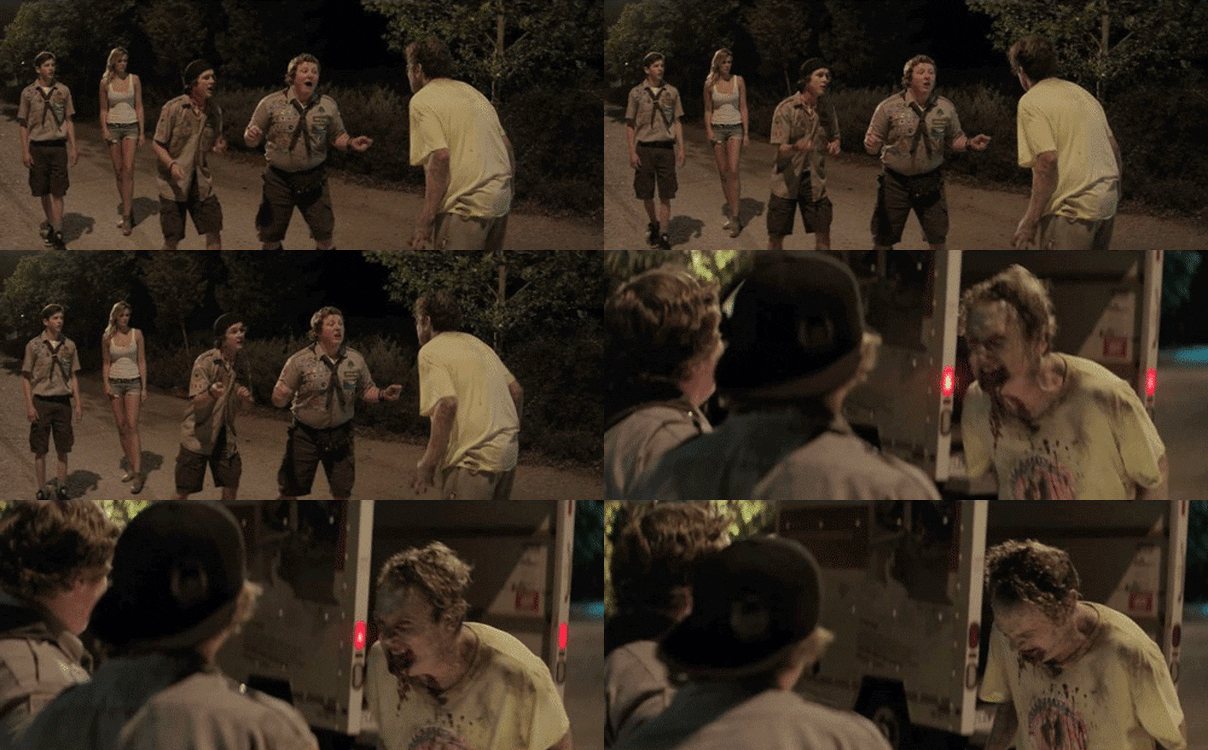
A trio of boy scouts team up with a cocktail waitress from a strip club to kill a bunch of zombies wreaking havoc in a small town. It’s a film that never takes itself seriously as it play into the idea of growing pains and trying to fit in with older high school kids as some of them are total assholes. Even as two of the scouts want to go to the senior high school party but have to deal with the zombies as they’re joined by the other scout who still wants to do boy scouts stuff. It’s a film that often brings in laughs while not afraid to use gore in a comical manner as well as showcase teens for who they are as one of them gets to cop-a-feel a zombie trooper’s bare breasts.
© thevoid99 2019
Directed and co-starring Paul Bartel and written by Bartel and Richard Blackburn, Eating Raoul is the story of a prudish couple whose lifestyle is threatened by swingers living in their apartment building until an accident gives them an idea to get rid of them and realize their dream to open a restaurant. The film is a dark comedy that explore different lifestyles and what a couple would do to maintain their safe and calm lifestyle. Also starring Mary Woronov, Robert Beltran, Susan Saiger, and Buck Henry. Eating Raoul is a witty and whimsical film from Paul Bartel.
The film is the simple story of this couple who are considered snobbish and prudish due to their lack of interest towards sex as they try to raise money to buy a house for a restaurant they want to create yet they are threatened by the antics of swingers who live in their apartment building. It’s a film that sort of makes fun of the world of swinging and some of the silliness of the lifestyle while there’s this couple who are totally square and find themselves with an idea of killing swingers and stealing money to fund their restaurant as it happened by accident. The film’s screenplay by Paul Bartel and Richard Blackburn follows the lives of Paul and Mary Bland (Paul Bartel and Mary Woronov respectively) as the former just got fired from a liquor store for refusing to sell awful cheap wine while the latter is a nurse often sexually harassed by horny patients.
Their problems are worsen by horny swingers in their building as one of them who is a patient of Mary breaks into their apartment and tries to have his way with Mary until Paul hits him with a frying pan and the guy is dead. Upon realizing how much money swingers have, they turn to Doris the Dominatrix (Susan Saiger) who gives them advice on what to do as she isn’t entirely fond of swingers either while the film’s second act begins with the arrival of a locksmith named Raoul (Robert Beltran) who is also a burglar as he gets wind of what the Bland are doing as he helps them in favor of a cut. Yet, their alliance with Raoul would cause trouble where Paul would learn what Raoul does with the bodies but also something much more.
Bartel’s direction does have elements of style in terms of its approach to absurdist humor while much of the compositions he creates are straightforward. Shot on location in Los Angeles, Bartel play into the world of sex shops and the swinging lifestyle in a comical manner while presenting the Blands as a couple who sleep in separate beds yet they do love each other. There are some wide shots in a few scenes yet much of Bartel’s direction involves close-ups and medium shots that include a few long shots to play out the drama and some of the humor. Notably in scenes that play into the Blands trying to kill some swingers with Mary playing some form of fantasy as it is played for laughs with some dark humor. Once Raoul gets involved, the film’s mayhem does increase but it also lead to some chilling and dark moments about what Raoul does with the bodies but also some of the money he makes though it lead to some funny moments of Paul trying to figure out what he’s doing with help from Doris. The humor as well as some of the approach to suspense and comedy play into the third act as it play into Raoul’s activities as well as the Blands taking extra steps to reach their dreams of opening a restaurant. Overall, Bartel crafts a weird yet delightfully fun film about a prudish couple who kill swingers for money to fund their own dreams of a healthy restaurant.
Cinematographer Gary Thieltges does excellent work with the film’s cinematography as it is largely straightforward in terms of its visuals with some low-key yet colorful lighting for some of the swinger parties. Editor Alan Toomayan does nice work with the editing as it is largely straightforward with some rhythmic cuts to play into the humor and suspense. Production designer Robert Schulenberg does fantastic work with the look of the Blands’ apartment with their collectables and rack of fine wine as well as the more outrageous look of the swingers’ party. Sound editors Val Kulowsky and Christopher T. Welch do terrific work with the sound as it is largely straightforward along with the way music is heard on a location or in another room. The film’s music by Arlon Ober is wonderful for its playful and kitsch-like score that feature some humorous moments in the film while its soundtrack features an array of music ranging from easy listening to a Spanish cover of Mitch Ryder & the Detroit Wheels’ Devil with a Blue Dress On by Los Lobos.
The film’s marvelous casting feature some notable small roles from co-writer Richard Blackburn as the real estate agent James, John Paragon as a sex shop owner who gives Paul a hard time, John Shearin as a patient of Mary who would later try to harass her at her home, Edie McClurg as a woman in fur at a swingers party, Richard Paul as the liquor store owner who wants to sell shitty cheap wine, Ed Begley Jr. as a perverse hippie, and Buck Henry in a terrific small role as a horny bank manager in Mr. Leech who wants to have his way with Mary. Susan Saiger is excellent in a dual role as Doris the Dominatrix and as a receptionist nurse at the hospital where she is full of personality as the former who isn’t fond of swingers while helps Paul find out more about Raoul to see what he does while Saiger’s role in the latter as a nurse is more low-key.
Robert Beltran is excellent as Raoul Mendoza as a locksmith who is also a house burglar that helps the Blands make more money while also making some money on the side as he also has a keen interest in Mary for sexual pleasure. Finally, there’s Paul Bartel and Mary Woronov in amazing performances in their respective roles as Paul and Mary Bland as a prudish and snobbish couple with love for wine and nutritious food who are dealing with horny swingers in their apartment building. Bartel displays that curiosity and frustration as a man that just cares about giving people good wine but later is filled with jealousy for Raoul later in the film as he provides a low-key approach to comedy. Woronov provides some charm into her role as well as someone who is curious about sex and pot although she is conflicted as it relates to her encounters with Raoul.
Eating Raoul is a marvelous film from Paul Bartel that features enjoyable performances from Bartel, Mary Woronov, Robert Beltran, and Susan Saiger. Along with its offbeat look at the world of swingers, the film is a strange yet exuberant comedy that isn’t afraid to get dark while also finding a way to keep on bringing in the laughs. In the end, Eating Raoul is a remarkable film from Paul Bartel.
© thevoid99 2019
Based on a novel by Kobo Abe, Otoshiana (Pitfall) is the story of a miner who leaves his employer and treks out with his young son to become a migrant worker where they are followed by a mysterious man in a white suit. Directed by Hiroshi Teshigahara and written by Abe, the film is an experimental feature that explore elements of surrealism and drama as it play into a simple premise that becomes troubling. Starring Hisashi Igawa, Kazuo Miyahara, and Kanichi Omiya. Otoshiana is an evocative yet haunting film from Hiroshi Teshigahara.
The film follows a miner who leaves his job to find a new job as a migrant worker as he brings along his young son where they’re tailed by a mysterious man in a white suit while finding themselves in a desolate small village. It’s a film with a simple premise as it plays more into some of the social politics of post-war Japan as it relates to rural areas where not much progress is happening where a miner is with his young son as they trek through the area to find work as a migrant worker hoping for something better than mining. Kobo Abe’s screenplay does have a traditional structure as much of its premise takes place in the first act where a miner (Hisashi Igawa) has deserted his place in one mine to go to another place to find work yet he is followed by this mysterious man (Kunie Tanaka).
Upon meeting a shopkeeper (Sumie Sasaki), the miner encounters the mysterious man where it would become deadly as it would lead to an unusual second act where the miner becomes a ghost seeing what this town had become and later learn of a political struggle involving two mining factions as one of them looks exactly like the miner. Even as the second act has a reporter (Kei Sato) trying to figure out why the miner was murdered believing it has something to do with this conflict between two union leaders.
Hiroshi Teshigahara’s direction has elements of style in its approach to surrealism but it is also low-key in its simplicity. Shot on location in Kyushu, Teshigahara does use stock footage of mining in Japan as well as this growing political and social struggle that was emerging in the 1960s that is removed from the post-war boom in Japan’s major cities. The usage of stock footage adds to the film’s offbeat tone where it does play like a documentary mixed in with a traditional fictional narrative yet it would come into play during its second act following the miner’s death as he’s trying to understand what happened to him. Teshigahara’s usage of close-ups and medium shots get him to showcase some of the action including the murder as it is witnessed by the shopkeeper and the miner’s son (Kazuo Miyahara) who would remain silent throughout the film not exactly sure what he saw.
Teshigahara’s direction also captures a lot of coverage into the locations with some unique wide shots of the local village that is desolate and what the miner would later see as a ghost when the village was thriving. It would be a sharp contrast to what is happening as it play into this conflict between union leaders with the miner’s double Otsuka running a new mine that is thriving as he is baffled by what happened at the old mine pit as he would figure out what is going on while the opposing union leader Toyama (Sen Yano) would also go to the old mine pit to find out what has been happening. Yet, it all plays into the fates carried out by this mysterious man in white as well as the miner who deals with some of the futilities of death. Overall, Teshigahara crafts a rapturous yet chilling film about a miner’s desire for a better life is stopped by a mysterious figure who plays with the fates of many.
Cinematographer Hiroshi Segawa does brilliant work with the film’s black-and-white cinematography as it play into the desolate landscape of the location with its natural approach to lighting and usage of available light for a few scenes set at night. Editor Fusako Morimichi does excellent work with the editing as it help play into the suspense and drama with some rhythmic cuts while maintaining some long shots and knowing when not to cut. Production designer Kiyoshi Awazu and art director Masao Yamazaki do terrific work with the look of the shopkeeper’s shop in its ruined state as well as the village itself when it was a thriving place at the time. The sound work of Kenji Mori, Junosuke Okuyama, and Toru Takemitsu does superb work with the sound in capture the atmosphere of the locations as well as help play into the usage of sound to play up the drama and suspense. The film’s music by Toshi Ichiyanagi, Yuji Takahashi, and Toru Takemitsu is incredible for its array of music ranging from dissonant string-based pieces, traditional Japanese folk and woodwinds, and low-key orchestral cuts that help play into the drama and suspense.
The film’s wonderful cast feature some notable small roles from Hideo Kazne as a corrupt policeman who uses the shopkeeper for sexual favors and Kazuo Miyahara as the miner’s son who would see what really happened but is unable to understand what is going on as he prefers to get candy from the shopkeeper’s shop. Kei Sato is terrific as the reporter trying to understand what is going on as well as see if there is anything off about the murder while Kunie Tanaka is superb in his mysterious role as the man in the white suit who seems to be a man in control of the fates of everyone. Sen Yano is fantastic as a rival union leader in Toyama who believes something about the miner’s murder isn’t right as he is convinced it’s a conspiracy against him. Sumie Sasaki is excellent as the shopkeeper as a woman who would witness the miner’s murder but would give police officials false reports as it would play into her own morality and fate. Finally, there’s Hisashi Igawa in a brilliant dual performance as the poor miner and the mining leader Otsuka where he displays that air of confusion and frustration in the former while being more reserved and suspicious as the latter as is disturbed that the murder victim looks a lot like himself.
Otoshiana is an incredible film from Hiroshi Teshigahara. Featuring a great cast, gorgeous visuals, an eerie music score, and chilling themes of death and fate amidst a social and political struggle in rural areas of Japan. The film is an exploration of a man trying to find work in an unknown world only to deal with the fact that he has no control of his fates and its aftermath. In the end, Otoshiana is a sensational film from Hiroshi Teshigahara.
Hiroshi Teshigahara Films: Woman in the Dunes - The Face of Another – (The Man Without a Map) – (Summer Soldiers) – Antonio Gaudi - (Rikyu) – (Princess Goh)
© thevoid99 2019
For the 40th week of 2019 as part of Wandering Through the Shelves' Thursday Movie Picks. We begin the annual Halloween edition with period drama horror as horror films sometimes don’t take place in modern times but also in the past. Here are my three picks:
1. Vampyr
Carl Theodor Dreyer’s 1932 film that explores an occult student’s fascination with vampires as he goes to a village where vampire supposedly lurk. It’s a strange silent film of sorts with sound effects from Dreyer who explore this young man’s obsession with the occult and vampires as he falls for a mad doctor’s daughter whose sister is believed to be bitten by a vampire. It’s got some amazing visuals that play into a man thinking about vampires and what it would be like to become a vampire.
2. Kwaidan
Masaki Kobayashi’s horror anthology based on the folk tales of Lafcadio Hearn are set into different periods of Japan through four different stories. It all play into the world of ghosts as it involves a samurai warrior leaving his wife for a governor’s daughter in one story. Other stories include a woodcutter’s apprentice making a deal with a ghost, a blind musician singing songs to ghosts much to the dismay of a monastery, and the fourth and final story is a fragmented one about a writer trying to a write a story about a battle between a samurai and a ghost.
3. Crimson Peak
Guillermo del Toro’s gothic horror drama set in the early 20th Century is probably one of the finest films of the 2010s so far as it revolves around a young writer marrying a mysterious man as he takes her to his home that he’s trying to rebuild with his sister yet the house is haunted with ghosts. It’s really one of the most beautiful-looking horror films that I’ve seen yet it offers so much more in terms of its look but also a story of loss and longing as it features a terrifying and intense performance from Jessica Chastain who I feel gives a career-defining performance in that film.
© thevoid99 2019
Autumn has arrived yet it still feels very warm here in Georgia as lately it takes a while for the cold to really come in. Yet, it’s just typical of what has been happening as it is clear that climate change is part of the reason for why the weather here in the South is out of whack at times. I have been paying attention to what Greta Thunberg had to say and she is spot on as I do worry about the future generation to come and go after people such as myself and others for not doing anything. I would want to do something but it’s the powers that be that are just fucking things up like usual as cunts like Boris Johnson and El Pendejo are just being total dumb-fucks. Yet, they’re being called out on it as the latter is right now in trouble as the impeachment process is starting to happen but slowly. I’m really hoping that it goes through but I’m also worried that things could go wrong.
I’ve been slowly trying to get myself back into writing reviews again though there’s times where I just don’t want to as either I spend time watching my nephew or just watch other things as I’m now getting excited for the arrival of All Elite Wrestling’s new TV program on TNT coming this Wednesday. Yet, all of the projects as it relates to the Auteurs series and a piece on the Marvel Cinematic Universe haven’t gone through as I’ve just been in limbo on the former while I haven’t gotten started on the latter. I’m just at a point of not being sure if I want to do it while other attempts to watch films haven’t gone great as there’s times where I’m just starting to lose interest. There’s been movies on my DVR that I haven’t had the time nor the desire to watch as I just delete them not really caring if I can get another chance to see them as it’s just been tough to just not really wanting to do anything.
I think it is part of the process of grief that I’m still going through as I’m also lamenting the fact that everything else that was part of my dad’s generation in the music that he listened to is likely going away the same way other forms of music from the past have gone away. The passing of Eddie Money and Ric Ocasek of the Cars have been shocking as I’m pondering that rock n’ roll is going away but what is to come? I honestly don’t like a lot of the music that’s out there right now and I don’t like what is called rock music these days. I think it’s just me feeling older but also just knowing that I’m still dealing with the fact that my dad is gone.
In the month of September, I saw a total of 28 films in 11 first-timers and 17 re-watches. An improvement of sorts yet I’ve been taking it easy lately as the highlight of the month has definitely been my Blind Spot choice in To Sleep with Anger. Here are my top 5 films that I saw for September 2019:
1. Ad Astra
2. King of New York
3. Aquaman
4. Mysterious Object at Noon
5. The Lego Movie 2: The Second Part
Monthly Mini-Reviews
R.E.M. by MTV
R.E.M. will always be one of the greatest bands that ever lived as it’s been nearly eight years since they officially called it a day. This 2014 documentary essentially cultivates many of the band’s footage from MTV, VH1, and other programs to tell their story from their early beginnings to the band’s final years that include MTV News reports. It’s a film that fans of the band must see but it is also a unique take on the band’s story as it’s told mainly through archival footage rather than emphasize on new interviews and such as it’s really unnecessary considering that the band is no more as they’re focused on releasing reissues and other projects.
Strange Wilderness
From Happy Madison comes a film that is proof of how low they’re willing to appeal to the lowest common denominator. You would think that a film that features the likes of Steve Zahn, Jonah Hill, Ernest Borgnine, and Kevin Heffernan of Broken Lizard would be funny yet there’s only a laugh or two and that’s it. It’s a film about a guy trying to save his father’s TV program by doing stupid stunts relating to find animals and things as it’s just boring. It’s lazy in its approach to comedy and it never tries to do anything to make me care about the characters. It’s just awful and I’m sure Sony wondered why the hell did they fund this piece of shit?
The Lego Movie 2: The Second Part
The sequel to the 2014 film is definitely a joy to watch in not just in its entertainment value but also in its themes of growing up and identity. Especially as the themes relate to the protagonist Emmett who struggles to adapt to the new situation the other characters are in as he remains upbeat yet when he is trying to save his friends from a mysterious figure. Growing up proves to be much harder than it is as the film definitely manages to be engaging in its themes while it also has some nice musical numbers that include a few songs sung by Tiffany Haddish who proves that she has so much to offer.
Top 10 Re-Watches (that isn’t Lost in Translation):
1. House
2. Big Trouble in Little China
3. Police Story 2
4. Ratatouille
5. Monsoon Wedding
6. Marie Antoinette
7. Me, Myself, & Irene
8. The Kid Stays in the Picture
9. Spielberg
10. Bad Teacher
Well, that is it for September. In October, it’s the annual marathon of sorts of horror, suspense, and films that defy categories as I’ve made a private list of films that I hope to see for the month though it’s likely that it won’t be all of the ones I listed. As for theatrical releases, I’m hoping to see Joker, The Lighthouse, and Jojo Rabbit depending on the time that I have as watching a five-six month old kid is fucking hard work and you’re already tired during the weekends. So until then, this is thevoid99 signing off…
© thevoid99 2019
Directed by James Gray and written by Gray and Ethan Gross, Ad Astra is the story of an astronaut who travels to space to find his long-lost father who is believed to be found but conducting dangerous experiments that would threaten the universe. The film is a space adventure drama that follows a man whose devotion to his work forces him to deal with his father’s absence as he embarks on a journey to find his father and figure what he’s doing. Starring Brad Pitt, Tommy Lee Jones, Ruth Negga, Liv Tyler, and Donald Sutherland. Ad Astra is an astonishing yet riveting film from James Gray.
A series of power surges is threatening the universe as an astronaut is tasked to travel to space all the way to Neptune where the surge is coming from as it is believed that the astronaut’s father is conducting strange experiments on a space station near Neptune. That is the film’s premise as it more plays into this father-son relationship where the son is dealing with trying to live under the shadow of his father’s legacy despite being his own man yet bears some issues as it relates to his father abandoning him and his mother many years ago. The film’s screenplay by James Gray and Ethan Gross is told mainly through astronaut in Major Roy McBride (Brad Pitt) who is a man devoted to his work yet it would cost him his marriage to Eve (Liv Tyler). During a routine repair job at a large space antenna, a power surge emerges and does damage to the antenna with McBride being able to survive as he’s asked by military personnel to go to Neptune where it is believed his father Dr. H. Clifford McBride (Tommy Lee Jones) is alive having been presumed lost during a mission known as the Lima project.
The Lima project that was led by Dr. McBride was meant to see if there’s any form of intelligence life outside of the solar system but something happened and Dr. McBride and his crew hadn’t been heard since until these power surges have emerged prompting Roy to take the mission. Much of the first act involves Roy learning about his father while taking on numerous psychological evaluations to see if he’s capable of carrying on this classified mission where he’s joined by his father’s old friend in Colonel Pruitt (Donald Sutherland) to the moon where they would get a ride to Mars yet they would encounter some trouble involving space pirates with Roy going on the trip via another crew as things become more troubling due to the surge. Arriving on Mars where he meets facility director Helen Lantos (Ruth Negga) who reveals that she met Dr. McBride as a child as her parents were part of his crew and they never returned as well. Yet, Roy becomes more troubled by more psychological evaluations by people on Mars prompting him to sneak on board a rocket to confront his father by himself.
Gray’s direction is definitely ambitious not just in scope and scale but also in its themes of existence and of the universe itself. Set in the near future and shot on location in Santa Clarita, California and on studio soundstages, Gray maintains some intimacy for scenes on Earth that include flashbacks of McBride’s life with Eve but also the disconnect they have as it relates to McBride’s devotion to his work. Through the usage of close-ups and medium shots, Gray does play into the emotional disconnect that McBride carries yet the mission he has to embark on forces him to become emotional where it would take a psychological toll on him eventually once he goes into space. The scenes set in outer space are quite vast with the usage of wide shots that captures the scale of McBride’s journey towards Mars and then Neptune. Notably as the world that Gray creates from the colony on the moon that looks a bit like a mall in its interiors while the underground facility on Mars is far more mysterious including the scene of McBride trying to sneak onto the rocket to Neptune.
Gray’s direction also has this air of mystery during its second act as it relates to the psychological interviews that McBride is doing as well as his attempts to contact his father. It’s a moment in the film that showcases McBride’s own revelations into his mission and what some are not telling him as there are only a few he can really trust. The film’s third act has Gray delve more into elements of surrealism but also isolation into the journey as McBride is forced to deal with himself as the film does bear a lot of visual and thematic elements that relate to other films yet Gray goes for something more emotional. The meeting between McBride and his father is emotional as it does play into their own disconnect with other people but also the fallacies of their own exploration although Dr. McBride does manage to find things that would be important to the universe. In the end, Gray crafts an intoxicating yet haunting film about an astronaut traveling through space to find his long-lost father.
Cinematographer Hoyte van Hoytema does incredible work with the film’s cinematographer as it is a massive highlight of the film with its usage of low-key filters for some of the interiors and colorful lighting including some scenes on Mars and in some of the spaceships as well as emphasizing on a natural look for some of the exteriors and interiors on Earth as the photography also include additional work from Caleb Deschanel. Editors John Axelrad and Lee Haugen do brilliant work with the editing as it help play into some of the dramatic suspense while being straightforward in some parts while creating some stylish montages in scenes that play into the flashbacks and what McBride is dealing with in his journey. Production designer Kevin Thompson, with set decorator Karen O’Hara and supervising art director Christa Munro, does amazing work with the look of some of the spaceship interiors as well as some of the exteriors of the places and facilities on the moon and on Mars. Costume designer Albert Wolsky does terrific work with the costumes from the military uniforms some of the characters wear on Earth to the spacesuits that astronauts wear.
Hair/makeup designer Nana Fischer does nice work with the look of Dr. McBride when he’s unveiled for the film’s climax along with the beard that McBride grows during his journey. Visual effects supervisor Allen Maris does fantastic work with the visual effects as it play into elements of realism but also in the way some of the scenes in space are presented along with some chilling scenes inside a space station involving baboons. Sound designers Douglas Murray and Gary Rydstrom do superb work with the sound as it play into the sounds of spaceships heard from the insides as well as the sounds of rockets and other gadgets including the low-key sound of the power surges. The film’s music by Max Richter is phenomenal for its ambient-based score that has elements of orchestral bombast and serene synthesizers while music supervisors George Drakoulias and Randall Poster provide additional music from Lorne Balfe and Steffen Thum that add to the serene yet mysterious tone of the film.
The casting by Douglas Aibel is wonderful as it feature some notable small roles from Sean Blakemore as McBride’s head escort at the moon, Donnie Kershawarz as a ship leader for McBride’s trip to Mars, Loren Dean as the Mars’ ship second-in-command, Kimberly Elise and Bobby Nish as a couple of astronauts for the Mars ship, LisaGay Hamilton and John Finn as a couple of military officials briefing McBride about the situation, Natasha Lyonne as a customs officer on Mars, and John Ortiz as General Rivas who briefs McBride about his father and the Lima project. Liv Tyler is terrific in her small role as McBride’s ex-wife Eve as someone who feels pushed away from her husband while she would get contact from him about his mission as she deals with his emotional troubles. Donald Sutherland is superb as Colonel Pruitt as an old friend of Dr. McBride who accompanies McBride to the moon as he admits to having issues with his father while wanting to help McBride reach his destination.
Ruth Negga is excellent as Helen Lantos as facility director at a base on Mars who reveals some things to McBride about his father as well as what happened to her parents as she would help McBride to board the ship to Neptune knowing that there are many who are trying to stop him from being involved. Tommy Lee Jones is incredible as Dr. H. Clifford McBride as a revered astronaut who led the Lima project that was meant to be something big only for things to go wrong where Jones brings a mysterious quality to his character as someone who is believed to have gone insane. Finally, there’s Brad Pitt in a sensational performance as Major Roy McBride as an astronaut who is tasked to find his long-lost father as he deals with the severity of the mission as it’s a performance where Pitt is restrained for much of the film as he doesn’t do anything to emote until later on as he plays into the flaws of his character as it is one of Pitt’s finest performances.
Ad Astra is a tremendous film from James Gray that feature great performances from Brad Pitt and Tommy Lee Jones. Along with its ensemble cast, stunning visuals, immense production design, evocative music score, and themes of exploration and isolation. It’s a film that play into a man’s journey to find his long-lost father while coping with his own faults and the sins of his father that he would have to carry. In the end, Ad Astra is a spectacular film from James Gray.
James Gray Films: Little Odessa - The Yards - We Own the Night - Two Lovers - The Immigrant (2013 film) - The Lost City of Z - Armageddon Time - (Paper Tigers) - The Auteurs #67: James Gray
© thevoid99 2019
Written and directed by Charles Burnett, To Sleep with Anger is the story of a Southern gentleman who arrives at the home of an old friend in South Central Los Angeles where his presence would shape the foundation and life of his friend and his family. The film is an exploration of a family whose attempt to retain their ideas amidst a simmer of tension within the family that is heightened more by their visitor. Starring Danny Glover, Paul Butler, Mary Alice, Carl Lumbly, Vonetta McGee, Richard Brooks, and Sheryl Lee Ralph. To Sleep with Anger is a haunting yet intoxicating film from Charles Burnett.
The film revolves around a troubled family who are visited by an old family friend from the South whose presence would only add a lot of turmoil and chaos into their lives as well as bring in a taste of the old South. It’s a film that explores a family whose life that is steeped in values and tradition that is being tested through changing times as the added presence of an old friend only stir a pot that is already boiling. Charles Burnett’s screenplay opens with a look into the life of Gideon (Paul Butler) and Suzie (Mary Alice) as they tend to their home with a garden and chicken coop in the backyard while they watch their youngest grandson in Sunny (DeVaughn Nixon) with the help of their eldest granddaughter Rhonda (Reina King). They have two adult sons in Junior (Carl Lumbly) who is married to Pat (Vonetta McGee) who is expecting another child as they’re Rhonda’s parents while the youngest son known as Babe Brother (Richard Brooks) is Sunny’s father and is married to the real estate agent Linda (Sheryl Lee Ralph). Junior is more responsible while Babe Brother is irresponsible as he barely works and often goes out late at night.
The arrival of Harry (Danny Glover) is a surprise to Gideon and Suzie as he arrives traveling from Detroit to Oakland and decided to stop by to visit them. Yet, his visit would also have him bring in ideas of the old South ranging from corn liquor, blues music, and all sorts of things where he would reminisce with Gideon and give Babe Brother advice on money. Many of Gideon and Suzie’s friends would arrive to see Harry with some feeling uneasy about his presence as Linda who admittedly isn’t entirely fond of Babe Brother’s parents is troubled more by Harry and his influence on Babe Brother. Even in the film’s second half where Harry’s presence is already created this sense of discord and atmosphere that becomes far more unsettling as the story progresses towards its third act with Suzie being aware of the darkness that is lurking in Harry.
Burnett’s direction is definitely mesmerizing in terms of the imagery that he presents where it opens with these abstract images of fire where a bowl of plastic fruit is being burned while a man on a chair is also on fire. Shot on location in Los Angeles and in the South Central area, the film does play into this world that is different from the modern world as much of it is shot in the suburbs with some locations around train station tracks and at a small rocky creek. While there are a few wide shots to establish some of the locations as well as create some recurring images such as a kid throwing pigeons around the neighborhood or another boy trying to play the trumpet correctly. Much of Burnett’s direction is emphasized on close-ups and medium shots as it play into multiple characters in a room or scenes that just involves Harry as he is alone either minding his own business or plotting something big. Still, Burnett showcases this culture of old American Southern culture during a party scene as well as a few moments involving Harry and his friends as it harkens back to a moment in time when it was simple but also dangerous.
That air of danger that looms throughout the film is what makes the drama so intriguing and why Babe Brother is attracted to the wild world that Harry offers. It is a world that is unpredictable but also enticing in the kind of rewards that Harry would get and such but also a taste that is definitely disconnected from the modern world. The atmosphere of the film through Burnett’s direction definitely becomes uneasy as it relates to Gideon being unexpectedly ill while the tension involving Babe Brother and Junior starts to increase with the former already becoming less responsible and more troubled following a walk with Harry through the woods. The film’s third act which involves a rainy night and Babe Brother’s rash decision to join Harry back to the South would be the tipping point yet it would be followed by not just revelations about the family but also a world that Gideon and Suzie are forced to confront that play into some of the darkest aspects of their old life. Overall, Burnett crafts an eerie yet rapturous film about a family’s life be shaken by a mysterious visitor.
Cinematographer Walt Lloyd does excellent work with the film’s cinematography as it is largely straightforward with its emphasis on low-key lighting for some scenes at night including the interior settings while a lot of the daytime scenes are presented in a more natural approach. Editor Nancy Richardson does brilliant work with the editing as it is largely straightforward with some stylish montages to play into the film’s entrancing tone as it relates to the recurring imagery while also help to play up the air of dramatic suspense. Production designer Penny Barrett and art director Troy Myers do fantastic work with the interior of the homes of Gideon and Suzie along with their chicken coop and garden outside of their home as well as the more modernist interiors of the home that Linda and Babe Brother live in.
Costume designer Gaye Shannon-Burnett does nice work with the costumes as it is largely straightforward with Linda wearing more posh-like clothing for her job while Harry often wears a suit and a fedora. The sound work of Patrick M. Griffith is terrific in capturing the atmosphere of some of the locations as well as the sound of the trumpet from the neighborhood boy and the way music is presented on location. The film’s music by Stephen James Taylor is wonderful for its mixture of jazz and blues that play into the dark and simmering tone of the film as well as playing up the dramatic suspense that occurs throughout the film while music supervisor Budd Carr creates a soundtrack that features a mixture of music ranging from blues, gospel, jazz, and R&B from Sister Rosetta Tharpe, Bobby Bland, Little Milton, and Z.Z. Hill.
The casting by Gail Levin and Lauren Lloyd is superb as it feature some notable small roles from Jimmy Witherspoon as a friend of Gideon and Suzie who sings a blues classic, Wonderful Smith as the local preacher, Greta Brown as the neighbor Virginia, Davis Roberts as a friend of Harry in Okra, Julius Harris as an old friend of Harry in Herman, Sy Richardson as Hattie’s husband Marsh who has a grudge towards Harry, DeVaughn Walter Nixon as Babe Brother and Linda’s young son Sunny who often observes everything around him, Reina King as Junior and Pat’s daughter Rhonda, and Ethel Ayler in a terrific performance as family friend Hattie who had a past with Harry as she is extremely uncomfortable with his presence. Vonetta McGee is fantastic as Pat as Junior’s pregnant wife who is wary of Harry while is often the mediator for everyone involved. Carl Lumbly is superb as Junior as Gideon and Suzie’s eldest and more responsible son who is always there to help as he also tries to get his younger brother to help out more and tell him to grow up. Richard Brooks is excellent as Babe Brother whose real name is Samuel as a young man that is unsure about his role as he often goes out where he is seduced by the tumultuous would that Harry has to offer.
Sheryl Lee Ralph is brilliant as Babe Brother’s wife Linda as a real-estate agent who doesn’t feel like she belongs with Babe Brother’s family yet becomes more disturbed by Babe Brother’s time with Harry who makes her uneasy forcing her to get the help from Babe Brother’s family. Paul Butler and Mary Alice are amazing in their respective roles as Gideon and Suzie as a couple who live in South Central trying to live good lives until Harry’s arrival as the former copes with becoming ill while the latter is a more reserved and quiet person who slowly realizes what kind of trouble that Harry brings. Finally, there’s Danny Glover in a tremendous performance as Harry as this charming yet devilish Southern gentleman who arrives unexpectedly as he brings in traditions and old ideas of the South where he adds to an already troubled situation involving Gideon and his family. Glover’s performance has this air of danger whenever he walks into a room as he’s also a superstitious man that holds on to these old ideas as well as carry a knife that just adds to the level of discomfort he brings into a room as it is an iconic performance from Glover.
To Sleep with Anger is a spectacular film from Charles Burnett that features an incredible performance from Danny Glover. Along with its ensemble cast, chilling music score and soundtrack, themes of family dynamics, tradition, and old ideals. It’s a film that explore a family whose visitor arrives as this embodiment of temptation and evil as well as be a man of ambiguity into his intentions. In the end, To Sleep with Anger is a sensational film from Charles Burnett.
Charles Burnett Films: Killer of Sheep - My Brother's Wedding - (The Glass Shield) – (The Annihilation of Fish) – (Namibia: The Struggle for Liberation)
© thevoid99 2019
Directed by Abel Ferrara and written by Nicholas St. John, King of New York is the story of a drug lord who has returned from prison to wipe out all of his competitors and become a modern-day Robin Hood of sorts much to the dismay of his competitors and the NYPD. The film is about a man who saw what his empire has become as he decides to make some changes but also take in some new extremes to get rid of his competitors. Starring Christopher Walken, Laurence Fishburne, David Caruso, Wesley Snipes, Victor Argo, Steve Buscemi, and Giancarlo Esposito. King of New York is an evocative and intense film from Abel Ferrara.
The film revolves around a drug lord who has just been released from prison to find that the drug trade and its culture has gotten ugly forcing him to get rid of other dealers and use the money he makes from selling drugs to help the poor in New York City. It’s a simple scenario that definitely recalls the idea of Robin Hood yet the character of Frank White (Christopher Walken) is not really a Robin Hood character. He kills people and he does what he can to ensure that New York City can prosper and give hope to people in the ghettos and other poor areas so they can live good and decent lives. Nicholas St. John’s screenplay opens with White in his prison cell walking out as he is ready to be released while a couple of dealers are being killed with one of them from White’s henchman Jimmy Jump (Laurence Fishburne) doing the job as he hadn’t seen White in years. Though White doesn’t reveal his intentions as it relates to crime lords and such, he does see what New York City has become and realizes that so much can be done without trying to destroy things and act as a businessman by making money off of drugs to fund things such as children’s hospitals and to help the poor.
By getting rid of his competitors including those who have done more harm than good to those in their home turf, White does believe he is trying to do good though some of his actions through murder and intimidation says otherwise. Most notably the NYPD who still hold a grudge towards White as they see him as a criminal as they try to go after his associates. Yet, it is two of the cops in Dennis Gilley (David Caruso) and Thomas Flanigan (Wesley Snipes) who believe that they should take the law into their own hands much to the dismay of Roy Bishop (Victor Argo) who thinks they’re getting themselves into some serious trouble.
Abel Ferrara’s direction is stylish in some of the compositions he creates yet he also would use New York City and its various locations as characters in the film including the Plaza Hotel where White and his gang would stay. While there are some unique wide and medium shots to get a scope of the locations including some key suspenseful moments late in the film, much of Ferrara’s direction emphasizes more on characters and their settings. Even in the usage of medium shots and close-ups with some shots that involve multiple characters as it play into a world that is unruly and in total despair. Ferrara’s direction for the dramatic moments are simple as it include some long gazing shots of White looking at his city and hoping to make some changes along with a visit to a children’s hospital that is in dire need of repairs where he hopes to help that place and ensure that those kids will be fine. It’s among these small moments in the film that showcase White’s intentions despite his methods where he does kill off some rivals and such in very violent means.
The violence is intense as well as some confrontational scenes where a notable one where a few thugs try to rob White and end up working for him as they would prove their loyalty to him. While what White and his crew do other gang members were violent, it is nothing compared to what Gilley and Flanigan would do to try and stop him as they would prove to be even worse than what White did. Even in the film’s third act where the two cops would show how extreme they can be yet it would come at a great price where Ferrara shows the fallacy of not just White’s intentions but also the police and their inability to see the world and what it was becoming. Even as it play into White seeing that the idea of change is much harder to do when those in power try to be involved and not get any reward. Overall, Ferrara crafts an intoxicating yet intense film about a drug lord who uses his power to try and help the unfortunate in New York City.
Cinematographer Bojan Bazelli does brilliant work with the film’s cinematography with its usage of dreamy and low-key lights for many of the exterior scenes at night as well as a low-key yet sunny look for some of the daytime exterior scenes. Editor Anthony Redman does excellent work with the editing as it has some stylish rhythmic cuts to play into the action and some of the dark humor while much of it is straightforward. Production designer Alex Tavoularis, with set decorator Sonja Roth and art director Stephanie Ziemer, does fantastic work with the look of some of the interiors in the places including a few interiors in some of the places in the city.
Costume designer Carol Ramsey does terrific work with the costumes from the stylish black suit that White wears along with the street clothes that Jump wears. Sound editor Greg Sheldon does superb work with the sound in the way gunfire is presented as well as the sound of a few parties and other places in the city. The film’s music by Joe Delia is wonderful for its somber ambient-based synthesizer score that play into some of the film’s melancholic moments while the music soundtrack mainly features hip-hop tracks featuring cuts from Schooly-D and Party Posse as well as a jazz cut from Freddy Jackson.
The casting by Randy Sabusawa is terrific as it feature some notable small roles from Harold Perrineau as a young thug who robs White only to end up working for him, Frank Gio as the Italian crime boss Arty Clay, Ernest Abuba as a dealer named King Tito, Gerard Murphy as a young cop named Mulligan, Alonna Shaw as Mulligan’s bride, Ariane and Pete Hamill as themselves who are dinner guests at a restaurant where White visits them, Joey Chin as a triad leader in Larry Wong, Carrie Nygren as a lover of White in Melanie, Roger Guenveur Smith as a local politician, Theresa Randle as one of White’s female companions/henchwomen in Raye, Steve Buscemi as a drug tester in Test Tube, Freddy Jackson as himself performing for a benefit dinner, Giancarlo Esposito as a henchman in Lance, Janet Julian as White’s attorney/former lover in Jennifer, and Paul Calderon as a handler of White in Joey Dalesio who serves as a mediator between White and other dealers only to later put White into trouble.
Wesley Snipes and David Caruso are fantastic in their respective roles as the detectives Thomas Flanigan and Dennis Gilley as two young detectives who decide to take the law into their own hands with Flanigan having issues with White’s henchman Jump and Gilley taking the lead believing that White is disrespecting the law. Victor Argo is brilliant as Roy Bishop as a detective who is a more by-the-book figure that wants to bring White down the right way while trying to understand what White is trying to do as he would eventually face him in a way that he feels is ideal to him. Laurence Fishburne is excellent as White’s henchman Jimmy Jump as a man who does a lot of the killing but is also someone who understands what White is trying to do where he also wants to help out other people where Fishburne displays a lot of charm and energy into his performance. Finally, there’s Christopher Walken in a magnificent performance as Frank White as a drug lord who has been released from prison as he sees what his city has become as it’s a performance that has elements of charisma but also in some restraint as he tries to change the city and do good as it’s one of Walken’s great performances.
King of New York is a phenomenal film from Abel Ferrara that features a tremendous performance from Christopher Walken. Along with its ensemble cast, eerie visuals, study of law and order, and an exhilarating music soundtrack. It’s a film that doesn’t play into the many tropes expected in a crime drama as it’s more of a study of a man trying to use his knowledge of the criminal underworld and to create change in the hope that he can help the unfortunate in New York City. In the end, King of New York is a spectacular film from Abel Ferrara.
Abel Ferrara Films: (9 Lives of a Wet Pussy) – (The Driller Killer) – (Ms. 45) – (Fear City) – (The Gladiator (1986 TV film)) – (China Girl) – (The Loner) – (Cat Chaser) – (Bad Lieutenant) – (Body Snatchers (1993 film)) – (Dangerous Game) – (The Addiction (1995 film)) – (The Funeral (1996 film)) – (The Blackout (1997 film)) – (New Rose Hotel) – (‘R Xmas) – (Mary (2005 film)) – (Go Go Tales) – (Chelsea on the Rocks) – (Napoli, Napoli, Napoli) – (4:44 Last Day on Earth) – (Welcome to New York) – (Pasolini) – (Tomasso)
© thevoid99 2019