Written and directed by Edward Yang, Yi Yi: A One and a Two is the story of a year in the life of a middle-class family in Taipei, Taiwan where an engineer copes with a lot of things including the re-emergence of an old flame while his children both deal with growing pains. The film is a tale of a family’s life through three generations where a lot happens in the span of an entire year. Starring Nianzhen Wu, Elaine Jin, Kelly Lee, Jonathan Chang, and Issey Ogata. Yi Yi: A One and a Two is a dazzling and touching film from Edward Yang.
Set in the course of a year in Taipei, the film is about the life of a family where an engineer struggles with his job while dealing with all sorts of things in his family including his comatose mother and a wife who is being treated for depression. At the same time, an old flame returns to his life while his 8-year old son and 13-year old daughter both go into growing pains. It’s a film that goes through a lot where it begins with a wedding and ends with a funeral as it play into the many trials and tribulations of this family led by its patriarch in NJ (Nianzhen Wu). NJ is a man that tries to live honestly as he can not just at home but also at work where he is aware of the financial problems of his company as he wants to do things right.
Edward Yang’s screenplay is multi-layered in not just following NJ’s life but also his teenager daughter Ting-Ting (Kelly Lee) and eight year old son Yang-Yang (Jonathan Chang) who both go into their own adventures. Even NJ’s brother-in-law A-Di (Xisheng Chen) who gets married in the beginning of the film would have an arc as he deals with not just marriage but also an old flame and money troubles. All of which play into this family that isn’t just coping with changes but growing pains where NJ would go through a journey of his own while his wife Min-Min (Elaine Jin) would be away for treatment. Ting-Ting’s journey relates to being a go-between for her friend and her boyfriend where she finds herself falling in love for the latter while Yang-Yang becomes a troublemaker in school where he would discover a love for photography.
Yang’s direction is definitely understated as well as maintaining something that is quite very simple. Shot largely on location in Taipei with some shots set in Tokyo and towns near the city, Yang creates a film that is like a family portrait told in the span of a year. The first sequence is this wedding for A-Di and his bride Xiao Yin (Shushen Xiao) as it is quite lavish and lively where a lot happens during the reception. Even as it would introduce a lot of the characters in the film including NJ’s old girlfriend Sherry (Suyun Ke) who is at the hotel by pure coincidence as they hadn’t seen each other in 30 years. Much of the direction doesn’t include a lot of close-ups but rather a lot of medium and wide shots since there’s a lot of people that NJ and many of the characters would encounter including this Japanese software mogul named Ota (Issey Ogata) that NJ would have a personal connection with.
The direction also has Yang create scenes that parallel the journeys of characters such as NJ in Japan with Sherry where they look at the sites and then be inter-cut with Ting-Ting on a date with Fatty (Yupang Chang). It’s a sequence in the film’s second half that showcases the similarities between father and daughter while there are also moments that display an innocence as it relates to Yang-Yang. Yang would just let things play out naturally where it also showcases a family just trying to adjust as they’re also taking care of NJ’s comatose grandmother. Much of the drama is quite restrained as well as some of its intense moments while Yang would also inject some humor into the film where it all plays into how families deal with one another. Overall, Yang creates an intoxicating yet heartfelt film about the life of a family in the span of a year.
Cinematographers Weihan Yang and Longyu Li do brilliant work with the film‘s cinematography as it has this sense of natural yet evocative look for many of the scenes set in the daytime as well as in some of the interiors while many of the scenes at night have a stylish flair in its look while maintaining something that feels real. Editor Bowen Chen does nice work with the editing as it is mostly straightforward with some stylish cuts such as the sequence that parallel NJ and Ting-Ting‘s own outings as well as a few jump-cuts. Sound designer Duzhi Du does excellent work with the sound to capture the energy of the scenes at the wedding reception along with some of the moments that occur around the city. Production designer/music composer Kaili Peng, with art director Zhengkai Wang, does fantastic work with not just the look of the home of NJ but also the look of the reception and the Japanese restaurant that NJ eats with Ota. Peng’s score is amazing as it’s just mainly a somber piano with elements of blues-based guitars as it says a lot to film’s understated tone.
The film’s incredible cast include some notable small roles from Ruyun Tang as NJ’s comatose mother whom Ting-Ting is fond of, Adrian Lin as Ting-Ting’s friend/neighbor Lili, Michael Tao as NJ’s co-worker/friend Da-Da, Shuyuan Xu as Lili’s mother who would cause some serious trouble for her family, Yupang Chang as Lili’s boyfriend Fatty who would fall for Ting-Ting but also has feelings for Lili, Shushen Xiao as A-Di’s bride Xiao Yan who has a hard time being married to A-Di as well as being pregnant, and Xinyi Zeng as A-Di’s former girlfriend Yun-Yun who would help A-Di deal with some debts despite being treated with disdain by Xiao Yan. Suyun Ke is wonderful as NJ’s former girlfriend Sherry Chang-Breitner as a woman NJ hadn’t seen in three decades where they re-establish a friendship where Ke displays an anguish and heartbreak over the fact that she still loves NJ. Xisheng Chen is superb as NJ’s brother-in-law A-Di as this young man coping with marriage as well as money problems where he is reluctant to turn to his brother-in-law for help.
Issey Ogata is fantastic as the Japanese software mogul Ota as a man who is about principles and doing what is right as he proves to be someone that NJ can work with as well as trust in the very devious world of business. Elaine Jin is excellent as NJ’s wife Min-Min as a doctor who has been taking care of NJ’s comatose mother until she has a nervous breakdown that would put her temporarily out of action for much of the film. Jonathan Cheng is brilliant as Yang-Yang as this 8-year old boy who takes an interest in photography despite being mocked by the school principal as his curiosity and energy makes the character a delight to watch. Kelly Lee is amazing as Ting-Ting as a teenage girl who copes with her grandmother’s illness as she also experiences love for the very first time as it is presented with a natural and understated performance. Finally, there’s Nianzhen Wu in a tremendous performance as NJ as a father who tries to bring the family together while dealing with the chaos of his professional life as well as the appearance of an old flame where he admits to still have feelings for her but also loves his family as it’s a performance that is restrained but also touching.
Yi Yi: A One and a Two is a magnificent film from Edward Yang. Featuring a great cast, gorgeous images, wonderful music, and compelling themes on family and growing up. It’s a film that manages to be more than just a family drama as it offers so much in the way a family’s life is told in the span of one year. In the end, Yi Yi: A One and a Two is an outstanding film from Edward Yang.
Edward Yang Films: (In Our Time-Desires/Expectations) - (That Day, on the Beach) - Taipei Story - (The Terrorizers) - A Brighter Summer Day - (A Confucian Confusion) - (Mahjong)
© thevoid99 2016
Well this was certainly an exciting festival this year as a lot of crazy shit happened. Yet, this is among the reasons why I love Cannes as this year was no exception. Especially as a lot of films came out and stirred up some crazy shit. Personal Shopper, It's Only the End of the World, and The Neon Demon certainly created a lot of trouble with boos and polarizing reactions yet those are the films that are very interesting because of the notoriety. I would like to thank the people at The Film Experience for their coverage as well as the A/V Club, Variety, and Indiewire for their work in capturing a lot of what had happened. I'm disappointed however at the fact that there wasn't any word about Alejandro Jodorowsky's new film Endless Poetry which played at the Director's Fortnight as there haven't been any reviews on the film out.

It is disappointing that some of the films that played in competition like Loving by Jeff Nichols and Maren Ade's Toni Erdmann didn't walk away with any big prizes despite the rave reviews it got while Nicolas Winding Refn's The Neon Demon, Chan-wook Park's The Handmaiden, Pedro Almodovar's Julieta, Paul Verhoeven's Elle, the Dardenne Brothers' The Unknown Girl, and Jim Jarmuch's Paterson (as well as Stooges' documentary Gimme Danger) received some good notices. I was also happy to see that Sean Penn got the ass-kicking of a lifetime for his new film The Last Face not only receiving the festival's worst reviews but also a bad screening as anyone saw the photo calls, the press conferences, and red carpet ceremony for that film know that Penn and one of the film's stars in Charlize Theron are being cold to one another. I guess this is what happens when someone's activist ideals are put into a very bland film and gets bitten in the ass for it. So Sean, go back to Hollywood in your expensive mansion and shut the fuck up. No one wants to hear about your bullshit liberal politics and ideas about what to do while your sitting in that expensive house of yours with whatever lame starlet who is probably grossed out in having sex with your old, wrinkly ass.

Now to those who won as the real surprise was who won the Palme d'Or as Ken Loach is once again in that small list of filmmakers who have won the Palme d'Or twice as his film I, Daniel Blake was the surprise winner as it's once again rumored to be his last film. Despite the lukewarm reviews it had received, Xavier Dolan's It's Only the End of the World did walk away with the Grand Jury Prize as it is a big fuck you to its critics as well as another achievement for the Canadian wunderkind. Andrea Arnold's American Honey wins the Jury Prize while Asghar Farhadi's The Salesman walked away with 2 prizes for its screenplay and Best Actor to Sahab Hosseini making Farhadi a real premier filmmaker. Jaclyn Jose was a surprise winner for Best Actress for her work in Ma Roas while a tie was made for the Best Director Prize to Olivier Assayas for Personal Shopper and Cristian Mungiu for Graduation.
Now that the festival is over until the next year. It is time for the marathon itself as it was quite fun as I saw a lot of great films though the scheduling of it in the course of 11 days was tough as I think I might have to scale down things a bit for next year's marathon. It's only because there's other things in my life that is happening as it's hard to watch 12 films in the span of 11 days. I was going to include one of my Blind Spots for the marathon but I ended up seeing it for the last day of the festival. Now it is time to give out some fictional prizes and rankings:
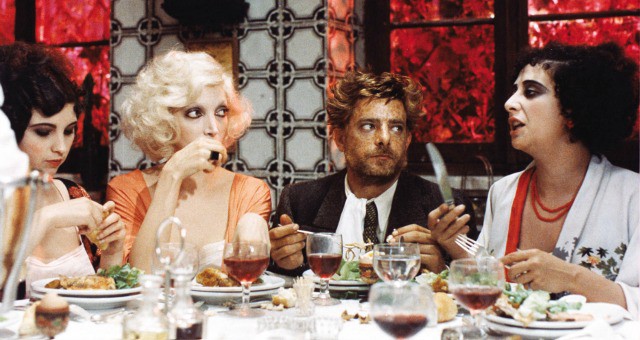
The Palme d'Or goes to.... Love and Anarchy

For years, I have heard of Lina Wertmuller but her films rarely play on TV as this film was made its premiere on TCM back in October as I recorded it and saved it for the marathon. It's a film I had no idea what I was getting myself into but it is really unlike anything I had ever seen. It does bear elements of Federico Fellini in terms of its visuals but it is more grounded and also very violent at times. Yet, it is a film that plays into the idea of a world that is in control by those who want things their way where a farmer tries to take up the cause of a friend only to contend with the idea of love despite his duty for a better future. Giancarlo Giannini's performance is astonishing as he really displays that anguish into a man coping with possible failure but also death as Wertmuller really does a lot to explore many of the political aspects in the film including sexual politics where it's the women that are really in charge in this brothel that Giannini's character stays at. It's a film that many should see in the hopes that will create some renewed interest in the works of Lina Wertmuller.
The 2nd Place Grand Jury Prize goes to... The Dance of Reality
Alejandro Jodorowsky's comeback film is something really special as it is also a real surprise considering Jodorowsky's reputation as this surrealist filmmaker who doesn't play by the rules. Yet, what makes this film exceed so many expectations is that it is very personal as it relates to Jodorowsky's own life as a child in a small Chilean coastal town. With his son Brontis playing his own grandfather, it is a film that has a lot happening but also display that mixture of innocence, surrealism, drama, and humor. Yet, never loses sight of its exploration of the life of a family as it is a film that is very touching but also manages to be something of its own.
The 3rd Place Jury Prize goes to... Salaam Bombay!
Mira Nair is a master filmmaker and her feature-film debut shot on 52 locations and 52 days is really one of a kind. The story of a boy trying to raise money to return home as he struggles to do all sorts of things in the chaotic city of Mumbai. It is a film that is really an experience as it captures a world in India that is really unlike anything. It's not just the look of it but it's also the atmosphere where it even has smell that is indescribable. Nair's approach to cinema verite doesn't just have this sense of realism in the film but it also manages to say a lot in a world that is quite cruel. Still, the film also display a story that has some semblance of hope no matter how hard things are as it is a crowning achievement from Nair.
The Best Director Prize goes to... Andrey Zvyagintsev for Leviathan
Andrey Zvyagintsev's work in Leviathan is nothing short of brilliant in not just creating a modern-day re-telling of the Book of Job. It is also for the fact that it is told in a very accessible way that audiences can relate to while providing some commentary about the current state of the Russian government and its growing corruption that also involves its church. It has these amazing visuals that could be set anywhere in the world but it remains grounded in a country where the everyman who is just trying to do something good gets pushed aside for someone else's bullshit and then have his life unravel in the worst ways. Zvyagintsev's direction is key to the film for not just creating that sense of drama but also in those eerie final moments that play into what was lost and also about Russia as a whole.
The Best Actor Prize goes to.... Mads Mikkelsen for The Hunt
For anyone that has heard of Mads Mikkelsen knows that he can play dark characters but that's just a handful of roles he's played as everyone who had seen other things he's done including his collaboration with Nicolas Winding Refn know the man is more than capable than playing a villain. In this role as a kind kindergarten teacher whose life is ruined by a lie, Mikkelsen doesn't really go for anything that is showy nor powerful in ideas of what other actors would typically do. Instead, it's a performance that is full of sensitivity and care where Mikkelsen provides some sympathy into his role as he tries to let the truth be unveiled. Even as he is eventually pushed to the edge where he does lash out but does it in such a cool way as it showcases why Mikkelsen is one of cinema's great actors.
The Best Actress Prize goes to... Yoon Jeong-hee for Poetry
A performance where someone deals with a disease is often the kind of performances that screams awards-bait unless someone finds a way to stray from that sense of vanity. Yoon Jeong-hee is an example someone not playing for the awards but rather create a performance that is realistic but also enchanting. Especially as she creates a character who is filled with curiosity over the idea of poetry and taking her time to create one as well as deal with implication of a young girl's suicide that her grandson might be involved in. Jeong-hee maintains a restraint but also a liveliness to her role such as the brief moment where she is singing karaoke as it's really a performance many should check out.
Best Screenplay Prize goes to... Paul Laverty for Jimmy's Hall
Paul Laverty has been Ken Loach's best kept secret for 20 years as he would provide Loach with stories that many in film wouldn't tell. In this simple story about Jimmy Gralton's return to Ireland during the Great Depression where he re-opens a community hall as he tries to do things peacefully. The script doesn't just play into a lot of Ireland's troubled past as it relates to British loyalists and landowners but also in how common people try to survive during the Depression as well as foresee what is happening in Europe. It's a film that says a lot to Gralton's attempt to revive the hope of common people that would also led to his deportation from the country he was born in.
Technical Jury Prize goes to... Hiroshi Segawa for Woman in the Dunes
Hiroshi Segawa's black-and-white cinematography is among the many wonders that is shown in Hiroshi Teshigahara's film about a man living in the sand dunes with a woman in a mysterious village. The photography captures every bit of detail in not just the lighting but in the sand. The usage of the close-ups and the imagery that is captured in these dunes are just some of the most beautiful images ever presented on film. Segawa also creates some startling images that adds a lot to the film's eroticism where it isn't about showing nudity but rather the feel of sensuality at its most natural as his work needs to be recognized.
The Special Jury Prize goes to... Wim Wenders and Juliano Ribiero Salgado for The Salt of the Earth
The work that Wim Wenders and Julian Ribiero Salgado did in providing the latter's father in the fame photographer Sebastiao Salgado is amazing. More importantly, it is also capturing the depth of Salgado's photography and the things/people he profiles. It also shows what the world could be again as it relates to the Salgado family farm which had become ravaged by drought and neglect only to be resurrected with trees and forests being rebuild. The work of Wenders and Salgado is incredible for giving an artist his due as well as providing the idea of hope in a complicated and modernist world.
And now the ranking for the 9 remaining films of the marathon:
4. Leviathan
Andrey Zvyagintsev's modern re-telling of the Book of Job is an entrancing study of loss and the ills of humanity in a world that is increasingly corrupt. Featuring a great cast as well as some very insightful commentary on the current state of the Russian government and its affiliation with the church. Even as it is a story where a man is just trying to save his home from being destroyed by its greedy mayor.
5. The Hunt
Thomas Vinterberg's story of a man's life destroyed by a lie is definitely a major return-to-form from one of the founders of the Dogme 95 movement of the late 90s. Featuring a career-defining performance from Mads Mikkelsen, it's a film that explores a small town's hysterical reaction over a man possibly sexually-abusing a young girl when it wasn't really true. Especially when the young girl had no real clue of what she did which only made things more interesting as she is the daughter of Mikkelsen's best friend.
6. The Salt of the Earth
The documentary profile of Sebastiao Salgado helmed by his son Juliano Ribiero and longtime friend Wim Wenders definitely stray from many of the conventions of what a documentary is. It's not just about a man's body of work and the subjects he shoots through his camera. It's also in the fact that he was able to rebuild his family farm for a forest sanctuary that led to the resurrection of an entire forest that was later given to the government as an example of what the world can be again.
7. Woman in the Dunes
Hiroshi Teshigahara's film about a man who is lured into the sand dunes of a mysterious village and to live with a woman in the dunes is one of the strangest yet evocative films of the 1960s. It's a surrealistic film that doesn't have much of a plot as it's more about images and situations. It is a film that is really a landmark in the world of Japanese cinema as it led by its gorgeous visuals and Toru Takemitsu's haunting score.
8. Lost River
Ryan Gosling's debut film is definitely a strange one but it's a film that is just too entrancing to ignore. Set in a fictional small town near Detroit, it is a film that explores a family trying to survive where a mother would work in this macabre club while her teenage son tries to evade the presence of a deranged crime boss. While it's a film that owes a lot to the works of David Lynch, Nicolas Winding Refn, and Terrence Malick, Gosling manages to create something that is his own and showcase someone who does have something to say outside of his work as an actor.
9. Jimmy's Hall
Ken Loach's story of Jimmy Gralton's return to Ireland in 1932 during the Great Depression is a unique study of a place in time where Ireland finds itself in conflict over the ideals of the old world order and the new world order. Featuring a great cast led by Barry Walton as Jimmy Gralton as well as a great script and views about what was happening in the country. The film is a unique study of a man's attempt to find a place for the people despite his Socialist views as well as trying to get those in the world of the Catholic church to face their own crimes where they are unprepared for the emergence of a much darker world that is coming out of the Great Depression.
10. Poetry
Lee Chang-dong's drama about a woman suffering from Alzheimer's and dealing with the chaos of a young girl's suicide is a haunting yet mesmerizing tale that is told with such sensitivity thanks in part to the radiant performance of Yoon Jeong-hee. A film that could've gone into sentimental or melodramatic territory, Chang-dong aims for something that is very simple and filled with natural imagery as well as maintain a tone that is understated making him one of South Korea's premier filmmakers.
11. Young Torless
The debut film from Volker Schlondorff is a unique study about life in an Austrian boarding school during the early 20th Century. In this adaptation of Robert Musil's autobiographical novel, the film is a unique study of conformity as well as abuse and power in the hands of schoolboys where one of them is forced to watch another be punished severely. Even as it indicates into a world that not many can belong to as it sort of serves as a reflection to the way modern society acts towards those who don't fit in with the rest of the world.
12. Friendly Persuasion
While William Wyler's Civil War family drama is a fantastic film that features great performances from Gary Cooper and Dorothy McGuire. The fact that it won the Palme d'Or at the 1957 Cannes Film Festival over more regarded classics like Nights of Cabiria by Federico Fellini, Robert Bresson's A Man Escaped, and The Seventh Seal by Ingmar Bergman is baffling. It's a fine film but it's not the great film some will claim it to be.
Well, that is it for the Cannes marathon. It was a lot of fun as it will happen again next year. Until then, au revoir.
© thevoid99 2016
(Winner of the Vulcan Prize, Ecumenical Jury Prize, & Best Actor Prize to Mads Mikkelsen at the 2012 Cannes Film Festival)
Directed by Thomas Vinterberg and written by Vinterberg and Tobias Lindholm, Jagten (The Hunt) is the story of a kindergarten teacher who is accused of sexually abusing one of his students as his life unravels. The film is a look into a man whose simple act gets him in trouble all because of a misunderstanding as a small town goes into a mass hysteria over something he didn’t do. Starring Mads Mikkelsen, Alexandra Rapaport, Thomas Bo Larsen, and Annika Wedderkopp. Jagten is a mesmerizing and gripping film from Thomas Vinterberg.
Set in a small Danish town just before and around the Christmas holidays, the film revolves around a kindergarten teacher who is accused of sexual abuse after one of his students made a claim unaware of what she’s done. Immediately, the life of Lucas (Mads Mikkelsen) unravels as he was living a good life despite going through a divorce where a simple kiss from a little girl would ruin everything. Especially as the girl is the daughter of his best friend Theo (Thomas Bo Larsen) who isn’t sure what is going on as a series of misunderstanding happens and no one is sure what is true. It’s not just Lucas who becomes ostracized but also his teenage son Marcus (Lasse Fogelstrom) during a visit as he is one of the few who believes his father where he is treated with disdain by people who knew him.
The screenplay by Thomas Vinterberg and Tobias Lindholm is set in the span of two months where the first act is set in November, the second act in December, and the climatic third on Christmas Eve. Yet, Lucas is a man that everyone knows as he is part of a local hunting society and drinks with the guys. He’s also someone that people could trust as Theo’s daughter Klara (Annika Wedderkopp) likes Lucas a lot as she also likes to play with his dog. Her action which was really just innocent would cause a lot of problems because of these misunderstandings. Especially as Klara would eventually tell the truth but Theo’s wife Agnes (Anne Louise Hassing) isn’t sure if Klara really understand the idea of the truth. There aren’t any villains in the film but there are people who do make some very bad decisions in the film’s second half where they would do things that are very evil where Lucas becomes a victim for all of the wrong reasons.
Vinterberg’s direction is very engaging for not just the simplicity that he maintains for much of the direction but also in its moments of restraint. Shot in rural areas in Denmark including some of its forests and mountains, Vinterberg doesn’t use a lot of wide shots in favor of something that is very intimate in its usage of medium shots and close-ups. Notably as Vinterberg keeps things lively in the way Lucas interacts with the children at the kindergarten building where he does play their games but also knows that he is still an adult. During a scene where Klara is questioned by the kindergarten building’s supervisor Grethe (Susse Wold) and a child psychiatrist named Ole (Bjarne Henriksen), Vinterberg maintains that intimacy but also create a tone that is unsettling where it raises a lot of questions abut the girl and what is happening to her. Though Grethe and Ole aren’t trying to create a bad situation, it’s the way they handle things that would be cause for a lot of what is to come. Even as Lucas has no idea what he’s done where Vinterberg would have the camera follow him with some handheld work but in a restrained fashion.
The film’s second half feature moments that are quite intense where it has elements of violence in not just Marcus lashing out his father’s friends but also in how Marcus is being ostracized. Notably in the third act on Christmas Eve as Lucas is all alone and needs to do shopping but how he is treated from locals to even the market’s manager show some of the darkest aspects of humanity. It’s a moment where it shows how far a lie can do things and push a man to extremes where it would be witnessed by some key characters. Even as it is followed by this climatic moment where Lucas unleashes his anger over what has happened where even Theo is forced to question what is really going on as he is one of those who had ostracized Lucas. The film’s ending doesn’t just play into Lucas’ isolation but also in the fact that he will never shake the lie that ruined him. Overall, Vinterberg creates a haunting yet visceral film about an innocent man’s life being destroyed by a lie.
Cinematographer Charlotte Bruus Christensen does excellent work with the film‘s cinematography in the way many of the exteriors look in the day including some scenes set in the autumn and winter along with some interiors where it looks natural with some lights for some of the scenes set at night. Editors Anne Osterud and Janus Billeskov Jansen do brilliant work with the editing as it is largely straightforward with some jump-cuts to play into some of the emotional moments in the film. Production designer Torben Stig Nielsen and set decorator Rasmus Balslev-Olesen do fantastic work with the look of Lucas‘ home as well as the kindergarten place that he works at. Costume designer Manon Rasmussen does nice work with the costumes as it’s mostly casual for the look of the characters in the film.
Hair/makeup designer Bjorg Serup does terrific work with the look of Lucas following a beating he would receive in the third act as it play into all of the trouble he has endured. Sound designer Kristian Eidnes Andersen and co-sound editor Thomas Jaeger do superb work with the sound from the way some of the drunken meetings sound early in the film to the quieter yet tense moments in the film such as Klara‘s interrogation scene. The film’s music by Nikolaj Egelund is wonderful as it is very low-key where it only appears in its ending as it is just this plaintive, folk-based piece while other music is played on location.
The film’s amazing cast features some notable small roles from Bjarne Henrikson as the child psychologist Ole, Anne Louise Hassing as Theo’s wife Agnes, Susse Wold as the kindergarten organizer Grethe, and Lars Ranthe as Lucas’ brother Bruun who is one of the few that believes Lucas as he would also be there for Marcus. Lasse Fogelstrom is superb as Lucas’ son teenage Marcus as this kid who is trying to understand what his dad did as he is one of his father’s few defenders where he tries to fight back at even those he knew as a kid. Annika Wedderkopp is fantastic as Klara as a little girl who has no clue of what she did or why as she displays this air of innocence of a girl that has very little understanding of the world. Alexandra Rapaport is brilliant as Lucas’ Swedish girlfriend Nadja who at first doesn’t believe the accusations towards Lucas only to be more confused once she is forced to deal with other parents a she also works with Lucas at the kindergarten.
Thomas Bo Larsen is excellent as Theo as a longtime friend of Lucas who isn’t sure what is going on as he believes his own daughter while also wanting to hear Lucas only to reluctantly ostracize him. Finally, there’s Mads Mikkelsen in an incredible performance as Lucas. It’s a performance that isn’t just full of restraint but also with a sensitivity as it has him being a guy that people could trust and hang out with only to then be ridiculed and ostracized. Yet, Mikkelsen maintains a calm demeanor for much of the film until the third act where he is pushed as well as feeling a sense of rage that has been building up as it is truly one of his defining performances.
Jagten is a phenomenal film from Thomas Vinterberg that features a tremendous performance from Mads Mikkelsen. Featuring a great supporting cast as well as the idea of how a lie can ruin a man’s life, it’s a film that manages to be a lot of things and more as well as display a sense of innocence in a world that is often very cruel. In the end, Jagten is a sensational film from Thomas Vinterberg.
Thomas Vinterberg Films: (The Biggest Heroes) - Dogme #1-Festen - (It’s All About Love) - (Dear Wendy) - (Submarino) - Far from the Madding Crowd (2015 film) - (The Commune)
© thevoid99 2016
(Best Actor Prize to Giancarlo Giannini at the 1973 Cannes Film Festival)
Written and directed by Lina Wertmuller, Love and Anarchy is the story of an anarchist who stays in a brothel as he attempts to assassinate Benito Mussolini in Fascist-era Italy before World War II. The film is an exploration of Fascist Italy and how a man tries to stop it while he deals with his surroundings where he falls in love with a prostitute at the brothel. Starring Giancarlo Giannini, Mariangela Melato, Eros Pagni, Pina Cei, and Lina Polito. Love and Anarchy is an entrancing yet gripping film from Lina Wertmuller.
Set in 1930s Fascist-Italy under the rule of Benito Mussolini, the film revolves around a farmer who decides to take up the cause of a friend to kill Mussolini as he travels to Rome and meets his contact at a brothel. There, he deals with a world that is very foreign to him as he also finds himself falling for a young prostitute where he copes with what he has to do as he is torn between his duty and love. Lina Wertmuller’s script doesn’t just explore the conflict that Antonio “Tunin” Soffiantini (Giancarlo Giannini) faces but the fact that he is just a simple farmer that has never experienced life in the city as well as having very little clue in what to do in his attempt to kill Mussolini. Even as he would ponder many possibilities into what might happen but also its aftermath as he becomes troubled. In meeting the young prostitute Tripolina (Lina Polito), Tunin wonders if there is a future but he is still courted to carry out his mission by his contact in another prostitute in Salome (Mariangela Melato) who has her own motives in wanting the mission to happen as it relates to a lot that is going on in Italy.
Wertmuller’s direction is very intoxicating for not just the way she presents Italy during that period but also in this growing sense of disconnect and struggle that looms in the country. The film opens and ends with the image of a desolate location in rural Italy where it looks like a land that has been flooded where a man is being chased by the police in this brief but thrilling tracking shot. Wertmuller’s usage of the wide shots for these locations including some ravishing moments in some of the exterior shots in Rome including a few of its landmark play a lot into this strange world Tunin is in as well as some of the people encounter. Most notably a man named Spatoletti (Eros Pagni) who is this brash member of the secret police that Salome knows as Tunin thinks the man is just a fuckin’ asshole. Especially as Spatoletti is a man that is very disconnected from the realities of the world as he has no idea what farmers go through and thinks he lives in a better environment.
Wertmuller would also a maintain an intimacy and energy in the way the brothel is where it is quite lavish and it has something that feels modern during its time period. It is also a place that has this air of escapism against what was happening in Italy where Wertmuller maintains a tone where it’s the women that are in charge and the men are just these eager customers wanting to get laid. Wertmuller’s usage of close-ups and medium shots not only capture that intimacy but also in the way the character gaze into what they’re seeing. Especially Tunin where Wertmuller’s close-ups would capture every bit of detail into his face and the anguish he deals with what he has to do. Especially in the third act where it is about these final moments before the assassination but also what happens on the day of the event as it is emotionally-charged and filled with a lot of these very intense moments. Especially in the aftermath as it says a lot about the rule of the Fascists and how it affected the country that nearly went into ruins following World War II. Overall, Wertmuller creates a haunting yet riveting film about an anarchist’s attempt to kill Benito Mussolini.
Cinematographer Giuseppe Rotunno does incredible work with the film‘s gorgeous cinematography to the way many of the daytime interiors at the brothel look with its approach to low-key lighting and colors along with some of the scenes set at night including a long sequence set in the streets of Rome at night. Editor Franco Fraticelli does nice work with the editing as it is largely straightforward with bits of stylish flair to play into some of the humor and the intensity of the drama including its climax. Art director Gianni Giovagnoni does fantastic work with the look of the brothel and the rooms of its characters as well as the house where the assassination was to take place and the farm that Tunin used to live in.
Costume designer Enrico Job does brilliant work with the costumes as it has this air of style in the way many of the characters looked from the overly-stylized clothes of the prostitutes to the look of the high fashion the people of Rome wear. Sound effects editor/foley artist Italo Cameracanna does terrific work with the sound in the way some of the sound effects are presented as well as some of the raucous moments in the brothel. The film’s music by Nino Rota and Carlo Savina is amazing for its mixture of Rota’s orchestral-based score that play into some of the drama and lively moments of the film to Savina’s more ominous score with its string instruments that says a lot to the dark aspects that were happening in Fascist-era Italy.
The film’s superb cast include some notable small roles from Roberto Herlitzka as the original assassin who is a friend of Tunin, Isa Bellini as a fellow prostitute named Zoraide, Elena Fiore as a brothel organizer in Donna Carmela, and Pina Cei as the brothel mastermind Madame Aida. Eros Pagni is excellent as the very brash Spatoletti as this police official who takes Tunin, Salome, and Tripolina to the country where he mocks the poor as well as display ideas that really upsets Tunin. Lina Polito is fantastic as the young prostitute Tripolina who catches Tunin’s eye as a ball of energy and life as she would also give Tunin an idea of a possible future. Mariangela Melato is amazing as Salome as a prostitute who is Tunin’s contact where she provides some instructions but also motives of her own as it relates to the assassination. Finally, there’s Giancarlo Giannini in a phenomenal performance as Antonio “Tunin” Soffiantini as this simple farmer who decides to finish a job for a friend unaware of what he’s doing and where he is going as it’s a very somber yet riveting performance as a man dealing with his task as well as a lot of conflicts as it is really one Giannini’s quintessential performances.
Love and Anarchy is a tremendous film from Lina Wertmuller that features an incredible performance from Giancarlo Giannini. It’s a film that doesn’t just explore life during Fascist Italy but also the ideas of anarchy and a man’s struggle to do his duty but also dealing with love during a dark period in history. In the end, Love and Anarchy is a spectacular film from Lina Wertmuller.
Lina Wertmuller Films: (The Lizards) - (Let’s Talk About Men) - (Rita the Mosquito) - (Don’t Sting the Mosquito) - (The Belle Starr Story) - The Seduction of Mimi - (All Screwed Up) - Swept Away (1974 film) - Seven Beauties - (A Night Full of Rain) - (Blood Feud) - (A Joke of Destiny) - (Softly, Softly) - (Camorra (A Story of Streets, Women and Crime) - (Summer Night) - (As Long as It’s Love) - (The Tenth One in Hiding) - (Ciao, Professore!) - (The Nymph) - (The Blue Collar Worker and the Hairdresser in a Whirl of Sex and Politics) - (Ferdinando and Carolina) - (Too Much Romance…It’s Time for Stuffed Peppers)
© thevoid99 2016
(Palme d’Or Winner at the 1957 Cannes Film Festival)
Based on the novel by Jessamyn West, Friendly Persuasion is the story of a pacifist who tries to shield his family from the horrors of the American Civil War while dealing with changing times. Directed by William Wyler and screenplay by Michael Wilson, the film is an exploration of a Quaker family in Indiana who cope with the growing changes and conflict in their world as a father deals with the idea of the Civil War being in front of his house. Starring Gary Cooper, Dorothy McGuire, Anthony Perkins, Richard Eyer, Robert Middleton, and Phyllis Love. Friendly Persuasion is a compelling yet heartfelt film from William Wyler.
Set in 1862 Southern Indiana, the film revolves around a Quaker family who deal with growing changes in their environment as well as the idea of the American Civil War coming in front of their home. It plays into this family who live by certain rules as they try to maintain a way of life but are tempted by these changes including the family patriarch but it is the mother that refuses to budge in as she wants to maintain some order. Michael Wilson’s script play into this conflict that a family is dealing with where the patriarch Jess Bridwell (Gary Cooper) and his wife/preacher Eliza (Dorothy McGuire) ponder about their own ideals and the fact that their ideals are now being seen as old-fashioned in the light of war. While the Bridwell family oppose the idea of violence, it is clear that their stance of pacifism is fallible as the sense of danger about the Confederates coming to their home and destroy everything does loom. Even as their eldest son Joshua (Anthony Perkins) gives in to the need to fight as a way to protect his family as Jess understands but Eliza isn’t.
William Wyler’s direction is very straightforward as it plays into a period of time in America where a group of people who have meetings in their own church as church service and do things very differently. Shot on location in a studio and an estate in the San Fernando Valley, the film does play into a look that is sort of a western but it’s really a melodrama set during the American Civil War. Wyler’s approach to wide and medium shots says a lot to the locations as well as the world the Bridwell family would encounter whether it’s their church or a county fair where many including Jess succumb to some for temptation in the film’s first half. Yet, it would be a moment where Eliza realizes that she shouldn’t be constrained by the rules of her faith as it relates to the little things in life as well as can’t ignore that something has to be done. While Jess isn’t willing to go out there and fight either, he also knows something still has to be done as he is reluctant about letting Joshua go out there.
There are moments in Wyler’s direction that are quite lively such as the scene where Jess and Joshua encounter a house full of women during a sale where it is played for laughs. There is also a moment where Jess decides to have a horse race with a friend to see who can get to church as it is quite thrilling but in a light-hearted fashion. By the time the film’s third act emerges where it is about what is coming and the family realizing that the Confederates will arrive. The drama is heightened as there is a sense of what might happen and what might not happen. Yet, the aftermath doesn’t say a lot about some of the fallible aspects of the Christian faith but the realization that pacifism doesn’t work all of the time. Overall, Wyler creates a somber yet touching film about a Quaker family dealing with the American Civil War.
Cinematographer Ellsworth Fredericks does excellent work with the film’s cinematography to capture some of the attention to detail in the colors for the exteriors as well as some of the interiors in how grey and colorless the Quakers church in comparison to the other church nearby which is more lively and colorful. Editors Richard Belcher, Edward A. Biery, and Robert Swink do nice work with the editing as it is largely straightforward with bits of style in the carriage race and a battle scene towards the end. Art director Ted Haworth and set decorator Joseph Kish do nice work with the look of the Birdwell home along with the churches and places they go to.
Costume designer Dorothy Jeakins does terrific work with the costumes as it play into the period clothes where many of the clothes that the Birdwell lack bits of any color with the exception of the dress the daughter Mattie wears at home. Sound editor Del Harris does superb work with the sound as it play into the activities in the farm as well as the chaos that play into the battle and fear that looms in Joshua. The film’s music by Dimitri Tiomkin is wonderful for its serene and playful orchestral score as it filled with a lot of string arrangements to play into its varied tone as well as some songs that are sung by some of characters that is co-written with Paul Francis Webster including a very dull title track sung by Pat Boone.
The film’s fantastic cast include some notable small roles from John Smith as Joshua’s friend Caleb, Walter Catlett as a music instrument salesman that Eliza doesn’t like, Theodore Newton as a Union Army leader Major Harvey who speaks at the Quaker church, and as a trio of sisters whom Joshua meet in Edna Skinner, Majorie Durant, and Frances Farwell. Marjorie Main is wonderful as the very funny Hudsepth as a widow that Jess would meet as he would deal with her unique company as it include her daughters. Peter Mark Richman is terrific as Gard Jordan as a Union officer who is a family friend that has feelings for the Birdwell daughter Mattie. Robert Middleton is superb as Gard’s father Sam as a friend of the family who likes to have carriage races with Jess while being someone who understands the Birdwell’s view but also make him aware of a world that is ever-changing.
Richard Eyer’s performance as the youngest child called Little Jess is just one of those child performances that is just annoying to watch due to the fact that he’s over-acting at times and it doesn’t feel natural at all. Phyllis Love is excellent as Mattie Birdwell as the middle child who is eager to participate in some of the activities as the other young people she knows as she is also in love with Gard. Anthony Perkins is fantastic as Joshua as the eldest child who isn’t sure about wanting to fight as he doesn’t like violence and knows it is wrong to kill but finds himself realizing that something has to be done. Dorothy McGuire is amazing as Eliza Birdwell as a Quaker preacher who is the embodiment of everything the Quaker represents yet she has a sensitivity and grace that is just so radiant to watch as she is one of the film’s major highlights. Finally, there’s Gary Cooper in a remarkable performance as Jess Birdwell as a Quaker farmer who is aware of changing times as he also tries to maintain his values along with the idea of what to do in the face of war knowing that turning the other cheek isn’t a good thing.
Friendly Persuasion is a marvelous film from William Wyler that features great performances from Gary Cooper and Dorothy McGuire. It’s a period melodrama that play into the idea of non-violence and some of its fallacies along with some of the constraints of the Quaker faith despite being a bit heavy-handed and sentimental at times. In the end, Friendly Persuasion is a brilliant film from William Wyler.
William Wyler Films: (Straight Shootin’) - (Anybody Here Seen Kelly?) - (The Shakedown) - (Hell’s Heroes) - (A House Divided (1931 film)) - (Tom Brown of Culver) - (Counsellor at Law) - (Glamour (1934 film)) - (The Good Fairy) - (The Gay Deception) - (These Three) - (Dodsworth) - (Come and Get It) - (Dead End (1937 film)) - (Jezebel) - (Wuthering Heights (1939 film)) - (The Westerner) - (The Letter) - (The Little Foxes) - (Mrs. Miniver) - (Memphis Belle: A Story of Flying Fortress) - The Best Years of Our Lives - (Thunderbolt!) - (The Heiress) - (Detective Story (1951 film)) - (Carrie (1952 film)) - Roman Holiday - (The Desperate Hours) - (The Big Country) - Ben-Hur - (The Children’s Hour) - (The Collector (1965 film)) - (How to Steal a Million) - (Funny Girl) - (The Liberation of L.B. Jones)
© thevoid99 2016
(Winner of the Best Screenplay Prize to Lee Chang-dong at the 2010 Cannes Film Festival)

Written and directed by Lee Chang-dong, Poetry is the story of a sixty-something woman who finds solace in poetry as she deals with her growing Alzheimer’s disease, her grandson, and the suicide of a young girl her grandson might know about. The film is an exploration of a woman dealing with not just losing aspects of herself but also deal with tragedy and horror as she would find an outlet through something as simple as poetry. Starring Yoon Jeong-hee and Lee David. Poetry is a mesmerizing and somber film from Lee Chang-dong.
The film is a simple story of a woman in her mid-60s who decides to take up poetry to fill her time where she deals with her moody grandson as well as his possible involvement in the suicide of a girl he knows in school. Adding to these horrific revelations is learning she has early stages of Alzheimer’s disease where she turns to poetry for solace in the hopes she would create a poem that would express everything she’s feeling. Lee Chang-dong’s screenplay does have a traditional three-act structure as it explores the world that Yang Mi-Ja (Yoon Jeong-hee) who is trying to live a good life where she nurses an elderly man for a friend while trying to make sure her grandson Jong-wook (Lee David) does well despite being lazy and moody. Even as she becomes suspicious of activities he does with his friends where it could relate to the suicide of this girl who was found in a river. For Mi-Ja, the events in her life as well as pressure from the fathers of Joon-wook’s friends who want her to pay 5 million won as compensation for the girl’s family as they will also put up 5 million each.
Chang-dong’s direction is very restrained for the fact that it doesn’t bear any kind of style in favor of something that is very simple and to the point. While it opens with the scene of children playing by the river where they would find the body of this young girl. The scene would set the tone for Mi-Ja’s world to slowly unravel as this quaint and simple life she has would eventually vanish as the film progresses. Chang-dong’s compositions emphasize more on intimacy in its usage of close-ups and medium shots in not just Mi-Ja’s home life but also in the classroom for her poetry lessons and at the home of this elderly man who had suffered a stroke. There are a few wide shots to capture some of the locations as they’re set in rural and small city areas in South Korea where it would play into some of the ideas Mi-Ja would write for her poem as it would serve as the film’s climax.
Especially as it relates to some of the darker aspects in the film while Chang-dong would also create moments that are offbeat as it relates to the elderly man Mi-Ja would nurse. Still, Chang-dong maintains a sense of restraint where it does lead to Mi-Ja not only coming to terms with what she is facing but also the fact that her grandson hasn’t said anything nor is willing though she remains suspicious. There is also the fact that Mi-Ja hasn’t said anything to her daughter who has no idea about not just her son but also what her mother is facing which adds some ambiguity to what Mi-Ja is doing. Yet, her actions play into a woman not just losing herself but also aware that she has no control of her illness but is willing to accept that. The film’s ending is the poem itself but it also has an air of mystique and melancholia as it relates to everything Mi-Ja has been through as well as the loss she finds herself connected to. Overall, Chang-dong crafts an intoxicating and touching film about a woman channeling herself through the art of poetry.
Cinematographer Kim Hyun-seok does excellent work with the film‘s cinematography to capture some of the brightness in some of the colors for many of the daytime exterior scenes in the city along with some more naturalistic look in some of the interiors with some low-key lights for the scenes set at night. Editor Kim Hyeon does terrific work with the editing as it is mostly straightforward with a few jump-cuts for some of the poetry reading at the poetry class that Mi-Ja attends. Production designer Sihm Jeom-hui does nice work with the look of the apartment that Mi-Ja and Jong-wook live in as well as the poetry class and places that she goes to. Costume designer Lee Choong-yeon does wonderful work with the costumes as it is mostly casual with some of the colorful yet plain clothing that Mi-Ja wears. The sound work of Lee Seung-cheol is terrific as it captures much of the natural sound that is on display including some of the wonders that Mi-Ja would take notes on for her poem.
The film’s phenomenal cast include some notable small roles from Park Meyong-sin as the girl’s mother, Min Bok-gi and Ahn Nae-Sang as a couple of father is Jong-wook’s friends, and Kim Hye-jung as the old man that Mi-Ja would nurse. Lee David is excellent as the moody Jong-wook as a kid who is like the typical teenager as he is very secretive about his possible involvement with the death of this young girl. Finally, there’s Yoon Jeong-hee in a sensational performance as Yang Mi-Ja as a simple elderly woman who takes up poetry as she deals with the fact that she is suffering from Alzheimer’s disease as well as the possibility that her grandson might be involved in a girl’s suicide as it’s a performance that is radiant but also very eerie as she just maintains a sense of grace throughout her performance.
Poetry is a remarkable film from Lee Chang-dong that features an incredible performance from Yoon Jeong-hee. Along with some lush visuals and a subtle yet restrained narrative that doesn’t reveal too much while maintaining a sense of grace. It’s a film that is a lot of things but it is told with a sensitivity that explores an old woman coming to terms with loss. In the end, Poetry is a rapturous film from Lee Chang-dong.
Lee Chang-dong Films: (Green Fish) - (Peppermint Candy) - (Oasis (2002 film)) - Secret Sunshine - Burning (2018 film)
© thevoid99 2016
(Jury Prize Winner at the 1964 Cannes Film Festival)
Directed by Hiroshi Teshigahara and written by Kobo Abe that is based on his novel, Woman in the Dunes is the story of an entomologist who finds himself being tricked to live in a village as he shares his home with a woman. The film is a look into a world where people live inside sand dunes where a man tries to escape only to be drawn by the woman he lives with. Starring Eiji Okada and Kyoko Kishida. Woman in the Dunes is a haunting yet intoxicating film from Hiroshi Teshigahara.
The film is a simple story of a man who is sandy beaches to find insects where he misses his bus and is lured by villagers to stay at the home of a woman beneath sand dunes only to realize that he’s trapped. It’s a film where this amateur entomologist finds himself in a situation he can’t get out of as he lives with a woman who has been living underneath these dunes for years. The job is to dig up sand for the villagers where they would receive monthly rations as it’s a job that is hard for this man yet he finds himself attracted to this woman where a lot of things happen. Kobo Abe’s script doesn’t just explore the world that Niki Junpei (Eiji Okada) is living in but also what he has to do to survive as well as the fact that he is also assigned to impregnate this woman (Kyoko Kishida) though their attraction to each other isn’t immediate. The script doesn’t just play into Junpei trying to find ways to escape but also realize that he is at fault for putting himself in this situation all because he became too interested in bugs and missed his bus back to the city.
Adding to the drama is the growing sexual tension between Junpei and this woman as it would come to ahead though Junpei is married but never implies it in the film’s dialogue as he remains ambiguous to the woman though it is revealed very early in the film during a dream he has. While the plot is a simple one, it does have a structure where its first act is about Junpei dealing with his situation while the second act is about forming this relationship with this woman. Yet, Junpei still wants to escape and return to civilization as a key scene in the film’s second half is about the escape but it’s not just the dune that he has to escape. It’s the land itself as it offers a lot into a world that is removed from civilization and some of the harsh aspects of the modern world.
Hiroshi Teshigahara’s direction is ravishing not just for the visuals he creates but also for the fact that it is set on some of the sandy beaches in Japan. Though it is shot on an Academy 1:33:1 aspect ratio, Teshigahara still manages to create these gorgeous wide shots and extreme close-ups to capture every bit of detail that is in these sandy beaches and the dunes as they are characters in the film. Teshigahara’s camera would often show the look of this home that is surrounded by walls of sand as it feels like a world of its own where the camera would go for high and low angles to capture the landscape as well as some medium shots to play into the intimacy of the house. There is also an air of eroticism and sensuality that prevalent in the film as it relates to the sexual tension. Even as the sex scene is quite intense though it doesn’t show very much but still maintains something that is quite erotic. The film’s third act isn’t just about Junpei’s own failure but also the realization of the world he is in as well as the direction becomes more chaotic to display the people in the village. The film does end in an ambiguous note as it relates to Junpei’s decision as well as his own discoveries of what he could do for himself and this woman he lives with. Overall, Teshigahara creates a mesmerizing yet eerie film about a man living in the sand dunes with a woman.
Cinematographer Hiroshi Segawa does incredible work with the film‘s black-and-white photography as it play into vast look of the beach and the attention to detail in the way the sand dunes and some of the bugs are shown as it is a major highlight of the film. Editor Fusako Shuzui does brilliant work with the editing as it is quite stylish in playing with some of the imagery with its usage of wipes, dissolves, and jump-cuts that says a lot to the world that Junpei is in. Art directors Totetsu Hirakawa and Masao Yamazaki do amazing work with the look of the house that is shabby as it‘s partially covered in and around by sand with floor also sandy while the dune that covers it adds a lot to its look.
Sound recorders Ichiro Kato and Shigenosuke Okuyama do excellent work with the sound in capturing the way the heavy wind and beaches sound along with some of the sparse moments inside the home the characters live in. The film’s music by Toru Takemitsu is phenomenal for its usage of eerie strings to play into its sense of horror and drama along with textures in some of the percussive instruments to make things sound chilling along with some intense percussion pieces for one of the film’s darker moments in the third act.
The film’s superb cast features small roles from Hiroko Ito as Junpei’s wife in a very brief flashback as well as performances from Koji Mitsui, Sen Yano, and Ginzo Sekiguchi as villagers who would lure Junpei into the dune and keep him there. The remarkable performances of Eiji Okada and Kyoko Kishida in their respective roles as Niki Junpei and the titular character where they display that sense of sexual tension with Okada as a dominant who is frustrated with his situation and Kishida trying to make things better while showing him what they have to do survive as two together are engaging to watch.
Woman in the Dunes is a sensational film from Hiroshi Teshigahara. Featuring great performances from Eiji Okada and Kyoko Kishida as well as ravishing visuals and a haunting score. The film is an intense study of man and woman living together in a very cruel world that is cut off from reality but also says a lot about the cruelties of the world outside. In the end, Woman in the Dunes is a rapturous film from Hiroshi Teshigahara.
Hiroshi Teshigahara Files: Pitfall - The Face of Another - (The Man Without a Map) - (Summer Soldiers) - Antonio Gaudi - (Rikyu) - (Princess Goh)
© thevoid99 2016