Showing posts with label iggy pop. Show all posts

Tuesday, October 07, 2025

The Dead Don't Die


Written and directed by Jim Jarmusch, The Dead Don’t Die is the story of a zombie invasion at a small American town where its locals deal with the situation through absurdist means. The film is an offbeat zombie-comedy where groups of locals and local law enforcement deal with a mysterious zombie invasion. Starring Bill Murray, Adam Driver, Chloe Sevigny, Tilda Swinton, Selena Gomez, Tom Waits, Steve Buscemi, Danny Glover, Caleb Landry Jones, Austin Butler, Sara Driver, Rosie Perez, RZA, Carol Kane, and Iggy Pop. The Dead Don’t Die is a witty and offbeat film by Jim Jarmusch.

Set in a small rural town called Centerville, the film revolves around a mysterious zombie invasion caused by polar fracking that has altered the rotation of the Earth’s axis. It is a film with a simple premise as it relates to locals and local law enforcement dealing with a zombie invasion with some unique commentary observed by a local recluse in Hermit Bob (Tom Waits) who would narrate as he walks around the woods seeing what is happening. Jim Jarmusch’s script has a unique narrative as it play into multiple characters including locals, the law enforcement, a Scottish undertaker who carries a samurai sword, traveling hipsters, a trio of juvenile delinquents, and a MAGA farmer. Notably in their reaction to the news about the Earth’s axis being off its rotation which explains watches and smartphones not working as well as day and night being off with the dead rising from the grave on the latter. The script also play with the dialogue as well as certain phrases that would become gags.

Jarmusch’s direction is also offbeat as it is set in a small town that is shot on various locations in small towns in upstate New York. While Jarmusch would include wide and medium shots of the locations that include the mountains near these small towns. Much of his direction is intimate in the usage of medium shots and close-ups as it opens with Chief Cliff Robertson (Bill Murray) and Officer Ronnie Peterson (Adam Driver) trying to talk to Hermit Bob over claims that he stole some chickens from the local MAGA farmer Frank Miller (Steve Buscemi). The film then goes into offbeat elements with Chief Robertson and Officer Peterson noticing that it is 8 PM and it is still daylight with their watches and phones not working. Jarmusch’s approach to horror is more comical as the first two zombies who would appear during nighttime with the moon glowing would create havoc all because they want coffee. It would then lead to other mysterious events where Chief Robertson, Officer Peterson, and Officer Mindy Morrison (Chloe Sevigny) try to comprehend what happened with Officer Peterson realizing it is a zombie invasion.

Jarmusch would also create moments that are suspenseful yet also play into humor with characters realizing some of the zombies they killed as well as things with which they could not deal. A trio of juvenile delinquents in Stella (Maya Delmont), Olivia (Taliyah Whitaker), and Geronimo (Jahi Di’Allo Winston) are easily the smartest characters in the film as they figured out how all of this happened while dealing with their adult supervisors treating them like idiots. Jarmusch also play into the idea of consumerism in what these zombies want in the words they say as Jarmusch also puts in some satire as it relates to conspiracy theories and fake news with a news reporter in Posie Juarez (Rosie Perez) providing the news on nearby locations. The sense of surrealism and odd things would occur that includes the presence of the new local undertaker in Zelda Winston (Tilda Swinton) who is an oddball that practices Buddhism, carries a samurai sword, and speaks in a Scottish accent. Even as she participates in a climax that also strays from convention in a film where moments of the fourth wall is broken. Overall, Jarmusch crafts a quirky and humorous film about a group of locals dealing with a zombie invasion.

Cinematographer Frederick Elmes does brilliant work with the film’s cinematography with its emphasis on low-key lighting and shadows for the exterior scenes at night including shots at the cemetery as well as colorful lighting for some of the interior scenes. Editor Affonso Goncalves does excellent work with the editing with a few elements of jump-cuts, slow-motion shots, and other stylish cuts to play into the film’s humor. Production designer Alex DiGerlando, with set decorator Kendall Anderson and art director Julia Heymans, does fantastic work with the look of the diner where some of the characters socialize as well as the police base where some of the action happens. Costume designer Catherine George does nice work with the costumes as they are straightforward, including a few stylish bits in the clothes that the zombies wear.

Special makeup effects designer Michael Marino does amazing work with the look of the zombies as they all have a different look to play into their own wants as it also has elements of quirkiness in how they move. Special effects supervisors Michael Fontaine and Johann Kunz, along with visual effects supervisor Alex Hansson, do terrific work with the visual effects as it relates to the moon as well as scenes involving the zombie and a major moment in the film’s climax. Sound designer Robert Hein does superb work with the sound in how music sounds from a car as well as sound effects that play into the zombie apocalypse. The film’s music by SQURL and Carter Logan is wonderful for its low-key electronic score with contributions by Jim Jarmusch that play into the film’s suspense and humor while the music soundtrack features an original song by Sturgill Simpson that is played throughout the film.

The casting by Ellen Lewis is marvelous as it feature some notable small roles from Sturgill Simpson as a guitar-carrying zombie, Charlotte Kemp Muhl as a fashion zombie, Jodie Markell as a woman on TV talking about her missing cat, Eszter Balint as the diner waitress Fern, Rosal Colon as a janitor working at the diner, RZA as delivery worker who is friends with the gas station/toy shop owner Bobby that has some unique views on the world, Carol Kane as a dead town drunk who comes alive as a zombie who wants chardonnay, and the duo of Iggy Pop and Sara Driver as two zombies that wants coffee. Larry Fessenden is terrific as a motel owner in Danny Perkins who is becoming upset over his cats disappearing while Rosie Perez is superb as the local news reporter Posie Juarez who reports all the mysterious events on the news. The trio of Maya Delmont, Taliyah Whitaker, and Jahi Di’Allo Winston are fantastic in their respective roles as the juvenile delinquents Stella, Olivia, and Geronimo.

The trio of Austin Butler, Lukas Sabbat, and Selena Gomez are excellent in their respective as a trio of hipster travelers in Jack, Zack, and Zoe with Gomez being the standout as a young woman with a love for Sturgill Simpson. Caleb Landry Jones, Danny Glover, and Steve Buscemi are brilliant in their respective roles as town locals in the gas station/toy store owner Bobby, the hardware store owner Hank Thompson, and the MAGA farmer Frank Miller as locals who deal with the zombie invasion with Buscemi being ignorant about what is happening. Tom Waits is amazing as the local recluse Hermit Bob who is the observer in the film as he realizes something is going wrong as he does everything he can to be away from the chaos. Tilda Swinton is incredible as the local undertaker Zelda Winston who is an odd newcomer to the town in what she wears as well as practicing Buddhism and carries a samurai sword as Swinton brings a lot of fun to her character.

Finally, there is the trio of Bill Murray, Adam Driver, and Chloe Sevigny in remarkable performances as the local law enforcement in Chief Cliff Robertson, Officer Ronnie Peterson, and Officer Mindy Morrison. Sevigny provides that sense of fear of a woman who is unprepared for zombies while becomes emotional over the fact that she must kill people she knew. Driver’s performance is low-key in his humor as he is someone who drives a small smart-car while also comments on everything that is happening where he breaks the fourth wall at times. Murray’s performance is subdued as a police chief who is taken aback at what he is facing as he was hoping to retire as he later copes with the severity of the situation he is in.

The Dead Don’t Die is a marvelous film by Jim Jarmusch. Featuring a great ensemble cast, an offbeat and witty take on the zombie movie genre, colorful visuals, and an eerie yet odd music soundtrack. It is a film that plays with the tropes of the zombie film genre while also being subversive in its approach to the genre. In the end, The Dead Don’t Die is a remarkable film by Jim Jarmusch.

Jim Jarmusch Films: Permanent Vacation - Stranger Than Paradise - Down by Law - Mystery Train - Night on Earth - Dead Man - Year of the Horse - Ghost Dog: The Way of the Samurai - Coffee and Cigarettes - Broken Flowers - The Limits of Control - Only Lovers Left Alive - Gimmie Danger - Paterson - (Father Mother Sister Brother) - The Auteurs #27: Jim Jarmusch

© thevoid99 2025

Tuesday, May 16, 2023

2023 Cannes Marathon: Gimme Danger


(Played at the Midnight Screenings Section at the 2016 Cannes Film Festival)
Written and directed by Jim Jarmusch, Gimme Danger is a documentary film about the career of the influential proto-punk band the Stooges whose three albums from 1969 to 1973 were widely considered to be the blueprint for punk rock. The film chronicles the band’s rise and fall and reunion in the early 2000s following the success of vocalist Iggy Pop’s solo career as it explore the many hardships the band endured despite the attention it got in the underground as well as artists such as David Bowie and Lou Reed. The result is an exhilarating and evocative film from Jim Jarmusch.

Coming out of the rock n’ roll music scene in Detroit that would launch such acts as the Amboy Dukes featuring Ted Nugent and the widely influential proto-punk band the MC5 are the Stooges. Consisting of vocalist James Osterberg aka Iggy Pop, guitarist Ron Asheton, drummer Scott Asheton, and bassist Dave Alexander that would later include saxophonist Steve Mackay and guitarist James Williamson. The Stooges from 1969 to 1973 would release three studio albums that many believe helped laid the blueprint and foundation for what would become punk rock in the late 1970s. Like other legendary proto-punk bands such as the MC5 and the Velvet Underground before them as well as the New York Dolls. The Stooges weren’t commercially successful as the group disbanded in 1973 in a haze of drugs and destruction months after the release of their third album Raw Power.

Shot largely in the 2010s before the passing of drummer Scott Asheton in 2014 and saxophonist Steve Mackay in 2015 as they’re both interviewed in the film along with archival interviews from Ron Asheton in the 1980s and 2000s before his own passing in 2009. The film showcases the band’s struggle to get some mainstream success despite being in not just this vibrant music scene in Detroit that wasn’t Motown but also a growing avant-garde music scene in Ann Arbor, Michigan that featured the likes of John Cage. The most prominent talking voice in the film is Iggy Pop as there are scenes with him and Scott Asheton having conversations about their time in the band with Pop and Asheton along with the latter’s younger sister Kathy talking about their early lives. Pop also goes into detail about what makes the Stooges’ music unique where they weren’t just influenced by their environment but also a lot of the underground music that was coming out as well as jazz as the band loved John Coltrane and Miles Davis.

Despite their limitations as musicians, the Stooges were able to come up with ideas that allowed them to grow musically with Pop doing a lot to establish not just what the Ashetons brought to the band but also bassist Dave Alexander who was mastermind for one of the band’s key songs from their 1969 debut album We Will Fall with producer John Cale on viola. Pop also talked about why Alexander was fired from the band in late 1970 as it wasn’t an easy decision with Scott talking about Alexander’s final years that lead to his death in 1975 due to complications relating to alcoholism. Several bass players would come in from 1970 and 1971 with James Williamson joining the group as a second guitarist where a lot of inactivity and being dropped by Elektra Records after two albums lead to a hiatus for the band despite manager Danny Fields’ efforts to help the band find a new label as he is also interviewed in the film. Fields’ loyalty would get Pop to meet David Bowie and his then-manager Tony DeFries where Pop revealed the deal he made with the latter as he described the contract he sign is similar to the one that TLC signed 2 decades later where they have sold 10 million copies of an album and declare bankruptcy.

Though Bowie would use whatever time he had in helping the Stooges in doing additional re-mixing of their 1973 album Raw Power, it wasn’t enough where Pop revealed a lot of sabotaging from DeFries is what stalled the album as well as not having the band do a lot of shows during that time. The film opens with the final months of the Stooges who were playing gigs to an audience that were either hostile or indifferent towards them with Pop, Williamson, and Scott Asheton all reflecting on how these events led to the band’s dissolution. For Jim Jarmusch to open with that story helps set the tone for the chaos on the story of the Stooges as well as little tidbits on Pop’s solo career that was successful which included a rare top 40 hit in the early 90s with Candy featuring Kate Pierson of the B-52s.

It was in the late 1990s when Mike Watt of the Minutemen and fIREHOSE who worked with Ron Asheton in creating music for the 1998 Todd Haynes film Velvet Goldmine for Ewan McGregor’s Curt Wild character is when Ron became interested in playing Stooges music again with J Mascis of Dinosaur Jr. that lead to Scott joining in the project with Mascis and Watt. That eventually led to the Stooges’ reunion in the early 2000s with Watt playing bass for the band where the band played massive festivals including Coachella as it not only gave the band a lot of attention but also money that kept the Asheton brothers from returning to steady jobs while James Williamson was a record producer for a time and eventually an executive for Sony until he returned to the Stooges in 2010 to replace Ron Asheton.

Jarmusch’s direction is largely straightforward as many of the interviews he shot with cinematographer Tom Krueger have Pop, Scott and Kathy Asheton, Steve Mackey, James Williamson, and Danny Fields in unique settings with Pop and Scott having their conversation at Pop’s home. Even as Jarmusch brought in animator James Kerr to create some animated sequences in some of the stories including a phone conversation between Ron Asheton and Moe Howard of the Three Stooges where the latter told him “as long as you don’t fucking call yourself the Three Stooges”. There is also some visual effects work from Chris King that help play into the animation including a scene where Pop is talking and the film gets fuzzy like the old TVs back then. Much of the work that Jarmusch does comes from archival footage thanks in part to the work of editors Affonso Goncalves and Adam Kurnitz who help cultivate as much archival footage from the band in the early 70s as well as rare footage of the Ashetons’ lives following the Stooges’ dissolution including interviews with Ron in the 80s through early 2000s.

Sound designer Robert Hein does superb work in not just capturing many of the audio archives but also some of the interviews and the way the music is presented as much of its music soundtrack features not just music from the Stooges but also other artists including some such as the Sex Pistols, the Damned, the Dictators, Sonic Youth, and David Bowie covering Stooges songs. It shows exactly the vast influence the group had as they were inducted into the Rock N’ Roll Hall of Fame in 2010 though it was a bittersweet moment considering that it happened a year after Ron Asheton’s passing.

Gimme Danger is a tremendous film from Jim Jarmusch. Not only is it a great documentary about one of the most dangerous acts in popular music but also one of the most influential in terms of their raw approach to rock music. Especially for a band that didn’t get their due during their prime but eventually would receive a lot more in the 21st Century while Iggy Pop continues to have an illustrious solo career. In the end, Gimme Danger is a sensational film from Jim Jarmusch.

Jim Jarmusch Films: Permanent Vacation - Stranger Than Paradise - Down by Law - Mystery Train - Night on Earth - Dead Man - Year of the Horse - Ghost Dog: The Way of the Samurai - Coffee and Cigarettes - Broken Flowers - The Limits of Control - Only Lovers Left Alive - Paterson - The Dead Don’t Die - (Father Mother Sister Brother) - The Auteurs #23: Jim Jarmusch

© thevoid99 2023

Sunday, December 06, 2020

Song to Song


Written and directed by Terrence Malick, Song to Song is an experimental love story set in Austin, Texas and its respective music scene that involves two songwriters/musicians, a music mogul, and a waitress as they all take part in a strange love affair. The film is an offbeat love story that doesn’t feature a traditional script as it play into people living at the moment through all sorts of entanglements in their love for each other and for the music. Starring Michael Fassbender, Ryan Gosling, Rooney Mara, Natalie Portman, Val Kilmer, Holly Hunter, Berenice Marlohe, Lykke Li, and Cate Blanchett. Song to Song is a rapturous and evocative film from Terrence Malick.

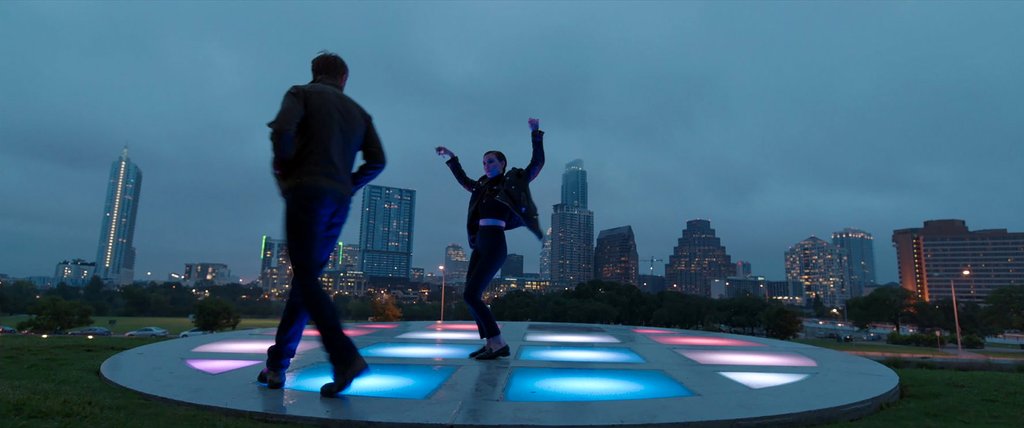
Set mainly in Austin, Texas in its respective music and arts scene, the film revolves around two songwriters/musicians, a music mogul, and a waitress as they all take part in whirlwind of a love affair that would each play into their ambitions and desires. It’s a film that doesn’t have much plot nor does it feature a traditional narrative due to the fact that its writer/director Terrence Malick didn’t write a script and created everything through notes and what he can capture on film. Yet, the film plays more into the themes of these four people who all meet as they fall in love but deal with temptation, doubt, and the search for meaning. Especially as Faye (Rooney Mara) is trying to make it into the music industry as she falls for the slightly-successful BV (Ryan Gosling) as she gets him to meet music mogul/lover Cook (Michael Fassbender). Yet, Faye continues her tumultuous affair with Cook who would marry the waitress Rhonda (Natalie Portman) but things go into strange turns due to Cook wanting to engage more into his decadent lifestyle with Faye and BV both trying to find something.

Malick’s direction definitely plays into the loose nature of the film’s unconventional narrative as it has this sense of freewheeling approach in the way he films everything around him. Shot largely on location near and in Austin, Texas with some shots in Mexico for a scene where BV, Faye, and Cook take a trip to Mexico. The usage of wide and medium shots not only allow Malick to get a look into the surroundings that these characters encounter but also in its connection with the world itself. Even as Malick would have characters also encounter elements of nature as it play into their search for love and identity while also encountering the chaos in the Austin music scene. The camera would often be in the middle of the action whether it’s in a mosh pit or people dancing in a rave. Malick’s close-ups add to the film’s unconventional tone as he always play into these characters and all of the highs and lows they endure as the four principle characters of Faye, BV, Cook, and Rhonda also express their feelings through voice-over narration.

Though the film centers on this music and arts scene in Austin, there are also these spiritual elements in the film though a lot of is subtle as it relates to journeys of these four characters. Notably as Faye is filled with doubt over her relationship with BV who has some issues with Cook over business reasons. Even as she learned that BV has been in a past relationship with Swedish singer Lykke Li and another former flame in Amanda (Cate Blanchett) whom he would briefly reconnect despite the fact that Faye would also continue her tumultuous affair with Cook to the point that he would have her and Rhonda in a brief three-way affair. Cook is this metaphoric figure of temptation and decadence who would often lure Faye into his world to the point that Rhonda feels neglected, lost, and yearning for answers leading her to go to the world of faith. The usage of music plays into this idea of people bringing together yet it is also used for decadence in Cook who continuously tries to find some sort of meaning through drugs and partying.

The film’s third act is about the journeys that these four characters endure where Malick showcases this air of loss through the trappings of temptation and decadence with some trying to find a bigger meaning in their lives with others forced to accept reality as well as cope with some of their poor decisions. Still, there are people who do give them some guidance as a way to cope with loss but also on love as Malick brings that sense of reality and gracefulness to show that as hard as the world can hit someone. It is all about getting hit and taking it to move forward as it play into the story that these four characters endure. While there’s a lot that is happening and can meander at times due to the film’s lack of a conventional narrative, Malick is able to maintain something that is more of a thematic study set against this culture of music and art with the four people at the center of it. Overall, Malick crafts an intoxicating and compelling about four people going through their own desires, doubts, and identity issues in Austin, Texas.

Cinematographer Emmanuel Lubezki does incredible work with the film’s cinematography as its usage of natural lighting, available light, different film stocks, and digital photography adds to the look of the film with its vibrant colors as it is a major highlight of the film. Editors Rehman Nizar Ali, Hank Corwin, and Keith Fraase do amazing work with the editing with its stylish approach to jump-cuts and rhythmic cuts as it play into the film’s dream-like and gliding tone. Production designer Jack Fisk, with set decorator David Hack and art director Ruth De Jong, does brilliant work with the look of the homes of the characters including the hotel that Cook often parties at or the look of the stages at the South by Southwest music festival.

Costume designer Jacqueline West does excellent work with the costumes with its mixture of casual and stylish clothing including some of the designer clothes that some of the richer characters wear as well as the look of the music performers in the film. Sound designers Joel Dougherty and Will Patterson do superb work with the sound as it play into the atmosphere of the locations as well as how music sounds live and on stage as well as the way the voiceover narrations are mixed. Music supervisor Lauren Mikus does fantastic work with the film’s music soundtrack with its mixture of classical, rock, indie, electronic music, and other kinds ranging from classical cuts from Zbigniew Preisner, Gustav Mahler, Camile Saint-Saens, Maurice Ravel, Nicholas Britell, Avro Part, and Claude Debussy along with music from Iggy Pop, Public Image Ltd., the Black Lips, Florence + the Machines, Lykke Li, Patti Smith, the Red Hot Chili Peppers, Bob Dylan, Elmore James, Del Shannon, Neon Indian, and many others.

The casting by Francine Maisler and Lauren Grey is wonderful as it feature cameos from the Red Hot Chili Peppers, John Lydon, Florence Welch, Iggy Pop, Tegan & Sara, Die Antwoord, and the Black Lips as themselves as well as Swedish artist Lykke Li as a fictional version of herself as a former flame of BV and American punk rock legend Patti Smith as a woman who is helping Faye with a lot of advice about art and life. Other notable small roles include Linda Edmond as BV’s mother, Tom Sturridge and Austin Amelio as BV’s younger brothers, Val Kilmer as one of Cook’s clients in a performer named Duane, Dana Falconberry as Faye’s sister, Brady Coleman as Faye’s father, Neely Bingham as BV’s ailing father, and Holly Hunter in a fantastic performance as Rhonda’s mother Miranda who is eager to have a life without trouble but becomes concerned for her daughter’s well-being. Berenice Marlohe is excellent as the French artist Zoey whom Faye meets and has a brief affair with as a woman who would give Faye some attention. Cate Blanchett is brilliant in her small role as Amanda who is a former flame of BV as she rekindles her relationship with him but realizes there’s some cracks in the relationship.

Natalie Portman is incredible as Rhonda as a waitress/former kindergarten teacher who falls for Cook as she is tempted by what he offers but finds herself lost in his decadent lifestyle as she seeks to find something with more meaning. Michael Fassbender is amazing as Cook as a music mogul who is a man that offers a lot and wants to be part of the fun but gets upset whenever he doesn’t get what he wants as he is this charming figure of corruption and temptation. Ryan Gosling is remarkable as BV as a successful musician trying to figure out what to do next as he falls for Faye while dealing with some business and personal issues with Cook as it is a somber performance from Gosling as someone who has seen a lot and is searching for answers. Finally, there's Rooney Mara in a phenomenal performance as Faye as a musician trying to get her break despite her attachment with Cook and her growing feelings for BV as it has this air of radiance and anguish as it is one of Mara’s finest performances to date.

Song to Song is a sensational film from Terrence Malick. Featuring a great ensemble cast, rapturous visuals, a rich music soundtrack, and themes of identity, doubt, and temptation against the backdrop of a vibrant music and arts scene in Austin, Texas. It is a film that explore four people trying to find their way in the world in the music scene as well as endure many ideas despite the film’s unconventional narrative and lack of a strong plot which won’t appeal to a lot of people. In the end, Song to Song is a phenomenal film from Terrence Malick.

Terrence Malick Films: Badlands - Days of Heaven - The Thin Red Line - The New World - The Tree of Life - To the Wonder - Knight of Cups - Voyage of Time: The IMAX Experience - (Voyage of Time: Life's Journey) – A Hidden Life – (The Way of the Wind)

© thevoid99 2020

Monday, July 27, 2015

The Color of Money


Based on the novel by Walter Tevis, The Color of Money is the sequel to another Tevis novel in The Hustler in which “Fast” Eddie Felson has retired from the world of pool-hustling as he catches the eye of a young hustler in whom he wants to support only to be coaxed back into the game. Directed by Martin Scorsese and screenplay by Richard Price, the film plays into a man who tries to disconnect himself from the world that made him famous only to come back after seeing a young man with talent as Paul Newman reprises his role as “Fast” Eddie Felson. Also starring Tom Cruise, Mary Elizabeth Mastrantonio, Helen Shaver, John Turturro, Forest Whitaker, and Bill Cobbs. The Color of Money is a compelling and rapturous film from Martin Scorsese.

Set more than twenty years after “Fast” Eddie Felson had become the greatest pool hustler in the streets, the film revolves around a retired Felson who has now become a successful liquor salesman while making money on other hustlers. Yet, he catches the eye of a young hustler whom he sees as someone with the potential to be great as he takes the young man and his girlfriend on the road to teach him the trade of hustling. Along the way, Felson teaches Vincent Lauria (Tom Cruise) about how to make money and how to lose below his abilities in order to win big. By traveling to famous pool halls around the country before taking part of a big 9-ball tournament in Atlantic City, Felson finds himself getting the urge to return but has to contend with aging as well as the fact that there are those who are younger and know the trade of hustling just as good as he did.

Richard Price’s screenplay explores the world of hustling as Felson is someone who is a master at it but hasn’t played in more than 20 years while his eyesight has sort of deteriorated. Though he tries to live a normal life while watching pool hustling from afar, he finds something in Vincent that makes him want to come back. While Vincent is talented, he is immature as Felson would take him under his wing along with Vincent’s girlfriend Carmen (Mary Elizabeth Mastrantonio) who has managed Vincent’s dealings as she would pay close attention to Felson’s methods. Even as she would help Felson in playing the role of hustler as it would cause some issues with the very immature Vincent who realizes that part of the art of hustling is to act the part of being someone who isn’t good and then hustle that player. Through Vincent, Felson would live through him but would eventually become selfish once Vincent improves as its third act would have both men attend the tournament against each other.

Martin Scorsese’s direction is very stylish not just in his presentation of the world of 9-ball pool and hustling but also in a world where it’s about survival and making money anyway a person can. Shot largely in parts of Chicago as well as bits of Atlantic City, the film plays like a world that is changing where the valor and classiness of the pool halls is now nothing more than an urban decay of sorts. While Scorsese does bring in some stylish usage of close-ups and medium shots along with some simpler moments, it is all about the sense of atmosphere in these pool halls as well as the need to play and hustle someone. Scorsese’s approach to the games are presented with a sense of rhythm as well as a bit of psychology into what will take for that person to win and win big but also how to lose and then make that person feel like shit.

Scorsese would also go into extreme close-ups to showcase a pool ball being hit by a pool cue as well as other elements that definitely play into a sense of style. Notably in his approach to tracking shots where he would go from a medium to wide or vice-versa as it plays into Felson’s love-hate relationship with hustling. There’s also some unique crane shots that Scorsese would use as it would be prominent in the film’s third act in the 9-ball tournament in Atlantic City. Many of the images that Scorsese would create are very unconventional as it strays from what is expected in films like this but it also plays into how intense these games are where it is about strategy and see how one can lose. Overall, Scorsese creates a very engaging and riveting film about a former pool hustler teaching a young hustler the trick of the trade.

Cinematographer Michael Ballhaus does excellent work with the film‘s cinematography from its usage of natural lights for some of the exteriors and daytime interiors to the lighting in some of the pool halls as well as the lightings for the tournament. Editor Thelma Schoonmaker does incredible work with the editing with her stylish approach to montages, jump-cuts, and dissolves to play into the world of pool and hustling. Production designer Boris Leven and set decorator Karen O’Hara do fantastic work with the design of the pool halls from the richness of the one in Atlantic City to the more decayed, street look of the ones Vincent and Felson go to.

Costume designer Richard Bruno does nice work with the costumes to play into the youthful look of Vince as well as the suits that Felson wears to represent his sense of the old school. Sound editor Skip Lievsay does superb work with the sound as it plays into the atmosphere of the bars and pool halls the characters go to as it has a sense of atmosphere that is very street and has its own sense of rules. The film’s music by Robbie Robertson is great as it is largely blues-based music to play into the world of the pool halls while compiling a soundtrack that features music from Phil Collins, Warren Zevon, Robert Palmer, Mark Knopfler, B.B. King, Willie Dixon, Don Henley, and Eric Clapton.

The casting by Gretchen Rennell is brilliant as it features some notable appearances and small roles from punk rock legend Iggy Pop as an opponent Vince hustles on the road, professional pool players Grady Mathews, Steve Mizerak, Keith McCready, and Jimmy Mataya as themselves, and Bill Cobbs as an old friend of Felson who runs a pool hall. John Turturro is terrific as a friend of Felson who gets beaten by Vince as he thinks he can take him. Forest Whitaker as a young hustler Felson faces off with where the result would have serious consequences for Felson. Helen Shaver is wonderful as Felson’s girlfriend Janelle who tries to keep Felson grounded while being aware of his past as a hustler as she wonders if he’ll lose it all over again.

Mary Elizabeth Mastrantonio is amazing as Carmen as Vince’s girlfriend who joins Vince and Felson on the road while learning about Felson’s methods very closely as she realizes there is more than what is going on as she tries to make sure that Vince is well-paid and succeeds. Tom Cruise is excellent as Vincent Lauria as a young pool hustler who is great at pool but lacks the knowledge to make serious money as he copes with his immaturity and what Felson wants from him. Finally, there’s Paul Newman in a remarkable performance as “Fast” Eddie Felson as a former pool hustler who is fascinated by the young Vince as he wants to mentor him only to find himself back in the world that he’s been detached from for so many years as it’s a performance full of energy but also one of humility as Newman brings a lot of gravitas to the role as it’s one of his best performances.

The Color of Money is a phenomenal film from Martin Scorsese that features a great performance from Paul Newman as “Fast” Eddie Nelson. Along with amazing performances from Tom Cruise and Mary Elizabeth Mastrantonio and a killer soundtrack. The film isn’t just one of Scorsese’s most entertaining films but also a key study into the world of hustling and an old veteran trying to teach a young hustler the trades of making big money in a cruel world. In the end, The Color of Money is a sensational film from Martin Scorsese.

Related: The Hustler

Martin Scorsese Films: (Who’s That Knocking on My Door?) - (Street Scenes) - Boxcar Bertha - (Mean Streets) - Italianamerican - Alice Doesn't Live Here Anymore - Taxi Driver - New York, New York - American Boy: A Profile of Steven Prince - (The Last Waltz) - Raging Bull - The King of Comedy - After Hours - The Last Temptation of Christ - New York Stories-Life Lessons - Goodfellas - Cape Fear (1991 film) - The Age of Innocence - (A Personal Journey with Martin Scorsese Through American Movies) - (Casino) - (Kundun) - (My Voyage to Italy) - Bringing Out the Dead - (The Blues-Feel Like Going Home) - Gangs of New York - (The Aviator) - No Direction Home - The Departed - Shine a Light - Shutter Island - (A Letter to Elia) - (Public Speaking) - George Harrison: Living in the Material World - Hugo - The Wolf of Wall Street - (The 50 Year Argument) - Silence (2016 film) - (The Irishman) - Killers of the Flower Moon - (An Afternoon with SCTV)

© thevoid99 2015

Sunday, May 20, 2012

2012 Cannes Marathon: Dead Man


(Played in Competition for the Palme D’or at the 1995 Cannes Film Festival)


Written and directed by Jim Jarmusch, Dead Man is the story of an accountant who travels to the West in 19th Century America as he encounters an Indian who makes claims that the man is a killer. The film is a period western that plays with elements of the genre while adding surreal imagery to the genre. Starring Johnny Depp, Gary Farmer, Gabriel Byrne, Crispin Glover, Iggy Pop, Alfred Molina, Billy Bob Thornton, John Hurt, Michael Wincott, Lance Henriksen, Mili Avital, and in his final film appearance, Robert Mitchum as John Dickinson. Dead Man is an entrancing yet stylish western from Jim Jarmusch.

Arriving to the company town of Machine from Cleveland, an accountant named William Blake (Johnny Depp) arrives to work for man named John Dickinson. Instead, he is rejected by Dickinson and his business manager John Scholfield (John Hurt) forcing Blake to drown his sorrows at a saloon where he meets a young prostitute named Thel Russell (Mili Avital). After a misunderstanding with her lover Charlie (Gabriel Byrne) forces Blake to defend himself as he flees with a pinto as Charlie is revealed to be Dickinson’s son. Wanting revenge, Dickinson hires three notorious killers in Cole Wilson (Lance Henrikson), Conway Twill (Michael Wincott) and Johnny “The Kid” Pickett (Eugene Byrd) to track down Blake while prompting others to find him with a huge reward in hand.

Meanwhile, the wounded Blake meets an American Indian named Nobody (Gary Farmer) who believes that Blake is the famed poet of the same name. Though Blake tries to tell Nobody that it isn’t true, the two go on a journey to a spiritua world as they would encounter a trio of men (Billy Bob Thornton, Iggy Pop, and Jared Harris) and a missionary (Alfred Molina) where Blake eventually embraces this strange role. While he is still in pursuit of those wanting Dickinson’s reward, Blake continues to his strange journey as he and Nobody briefly separates while dealing with other strange forces prompting Blake to have Nobody take him to this strange, mystical land of the spirits.

Jim Jarmusch’s screenplay is filled with a lot of quirks and dark humor such as the back stories for the three men who are hired to hunt Blake as well as Nobody where his story is the most interesting. Here is this man who is a mix of two different tribes who was captured by white men and exploited for entertainment where he gains knowledge and a deep perspective on his disdain for the white man. Throughout the film, people ask Blake if he’s carrying any tobacco as it would lead to a lot of things while the film opens with this amazing train sequence where a boiler man (Crispin Glover) tells Blake that where he’s going is hell. Some of the film’s dialogue that Jarmusch uses has characters like Blake and Nobody often quoting the poetry of William Blake whether it’s to establish the spiritual journey Blake is embarking or to create some kind of humor that is told.

Jarmusch’s direction is truly hypnotic in the way he presents the film as it’s shot on location in parts of Arizona and Oregon. While Jarmusch does stay true to some of the visual ideas of the western with some eerie close-ups on the characters along with intense shoot-outs. A lot of the film definitely harkens more towards a European style of filmmaking with wandering shots of the skies and locations along with more entrancing shots of some of the locations such as a forest of dead trees. The latter of which is a visual tribute to the works of Russian filmmaker Andrei Tarkovsky as there’s other compositions that reeks of Tarkovsky’s visual style. Many of it is to play out Blake’s journey where it intensifies once he starts to embrace this role that he is destined to play. Overall, Jarmusch truly creates a rich yet evocative western that goes for the unconventional rather than play by the genre’s rules.

Cinematographer Robby Muller does an amazing job with the film‘s black-and-white photography from the way the scenes in the train are lit to many of the film‘s exterior settings for day and night where this a great degree of style. Some of it definitely plays to visual look of Andrei Tarkovsky while many of the nighttime exteriors have an array of lighting schemes from the use of campfires and lanterns to add something that is truly ethereal as Muller’s work is truly seductive to watch. Editor Jay Rabinowitz does incredible work with the film’s very stylized editing from using fade-outs to move the film’s transitions in an unconventional manner to playing with dissolves for some of the film’s more surreal moments when Blake starts to have strange visions.

Production designer Bob Ziembicki, along with set decorator Dayna Lee and art director Ted Berner, does brilliant work from the set pieces created from the frontier town of Machine that Blake first comes across to the beauty of the Makah village in the film‘s third act. Costume designer Marit Allen does excellent work with the costumes from the suit that Blake wears along with the rest of the clothing of the west to the Native American wardrobe that is created. Visual effects supervisors Randall Balsmeyer and Jon Farhat do nice work with the film‘s minimal visual effects that includes a shot where Nobody sees a talking skeleton that he believes is Blake. Sound editor Robert Hein does fantastic work with the film’s sound from the calm atmosphere of the forest scenes to the more raucous world of the saloon that Blake attends early in the film.

The film’s music by Neil Young is marvelous for the way it Young creates sparse moods with his guitar from chugging riffs to melodic jangles to help maintain a tense atmosphere for the film. With bits of folk guitars in the mix, Young’s score also knows how to build up suspense in a few chilling scenes as the overall work is among one of the film’s highlights.

The casting by Ellen Lewis and Laura Rosenthal is phenomenal for the ensemble that is created as it includes small but notable appearances from Jimmy Ray Weeks and Mark Bringleson as two marshals, Butthole Surfers vocalist Gibby Haynes as a man at the train, and in the roles of the young Nobody, Thomas Bettles and Daniel Chas Stacy. Other noteworthy small but memorable parts include Mili Avital as a friendly prostitute named Thel, Gabriel Byrne as Thel’s heartbroken former boyfriend Charlie, Crispin Glover as an eccentric boiler man, Alfred Molina as a dishonest missionary salesman, John Hurt as Dickinson’s cruel manager, and Robert Mitchum in a fantastic final performance as the very intimidating John Dickinson.

Billy Bob Thornton, Iggy Pop, and Jared Harris are hilarious as a trio of fur traders who tell strange stories with Pop wearing a dress to add more humor. Eugene Byrd is excellent as the young killer known as “The Kid” while Michael Wincott is terrific as the very talkative killer Conway Twill. Lance Henriksen is superb as the very quiet but far more dangerous killer Cole Wilson who carries a horrifying secret that even spooks the other bounty hunters. Gary Farmer is great as the eccentric Nobody who often quotes William Blake’s poetry while providing some humor to the film as it’s a fun performance. Finally, there’s Johnny Depp in an odd but entrancing performance as William Blake where Depp is quite restrained in his role as a meek accountant turned killer where Depp provides this amazing presence for a man that is pretty quiet in dealing with his situations as it’s definitely one of Depp’s best performances.

Dead Man is an extraordinary yet visually-astonishing western from Jim Jarmusch. Featuring a spectacular ensemble cast led by Johnny Depp, it’s a film that really gives fans of the western genre something that is very different but also something that does capture the spirit of the genre. For those who interested in the works of Jim Jarmusch, this film is definitely one of the best works of his career. In the end, Dead Man is a mesmerizing film from Jim Jarmusch.


© thevoid99 2012

Thursday, July 07, 2011

Coffee and Cigarettes


Written and directed by Jim Jarmusch, Coffee and Cigarettes is a collection of 11 vignettes relating to people having conversations about anything while drinking coffee and smoking cigarettes. The film is a collection of 11 shorts, three of which were made prior in 2003 including the 1993 Somewhere in California segment that won Jarmusch the short film Palme D’or at the 1993 Cannes Film Festival. With an all-start cast that includes Roberto Benigni, Steven Wright, Joie Lee, Cinque Lee, Steve Buscemi, Iggy Pop, Tom Waits, Cate Blanchett, Steve Coogan, Alfred Molina, Issach de Bankole, Jack & Meg White of the White Stripes, RZA & GZA of the Wu-Tang Clan, and Bill Murray. Coffee and Cigarettes is fun collection of shorts and vignettes from Jim Jarmusch.

In Strange to Meet You, Roberto Benigni and Steven Wright meet as Wright is nervous about a dentist appointment during a conversation about their love coffee and cigarettes. Twins is about twins (Joie Lee and Cinque Lee) drinking coffee and smoking cigarettes in Memphis as a waiter (Steve Buscemi) tells them his theories about Elvis Presley and his twin brother Jesse. Somewhere in California has Iggy Pop and Tom Waits have an awkward conversation as Waits claims he’s a doctor while Pop offers him a drummer he has just worked with. Those Things’ll Kill Ya has Joseph Rigano and Vinny Vella talking about their vices as Vinny’s son Vinny Jr. asks for money via sign language in an act of silence.

Renée has Renée French drinking coffee and looking at magazine while a waiter (E.J. Rodriguez) tries to serve her. No Problem is about two friends (Issach de Bankole and Alex Descas) talking as Issach keeps asking Alex questions about some issues. Cousins is about Cate Blanchett meeting her cousin Shelly (Cate Blanchett) at a hotel lounge where they talk about their lives as Shelly reveals she has a new boyfriend. Jack Shows Meg His Tesla Coil has Jack White showing Meg the Tesla Coil he had while talking about the brilliance of Nikola Tesla.

Cousins? has Alfred Molina and Steve Coogan having tea in Los Angeles talking about their career as Molina shows him something claiming he and Coogan are cousins. Delirium is about GZA and RZA talking about alternative medicines and the dangers of caffeine where Bill Murray appears drinking a mug of coffee. Champagne is about two old men (William “Bill” Rice and Taylor Mead) talking about nostalgia as the music of Mahler.

The concept of the film is about two or three people having conversations about practically anything while drinking coffee and smoking cigarettes. Throughout each segment, there is a looseness to the story as many of the conversations are improvised where people talk about many things throughout. Whether its about music, art, coffee, cigarettes, Nikola Tesla, anything, or maybe nothing at all. The idea of drinking coffee and having a smoke is something intriguing to Jim Jarmusch throughout many of these shorts that have been created from 1986 through 2003.

Through each short as they’re all presented in black and white with varying running times, Jarmusch is able to keep the camera still and often shooting the coffee and cigarettes. At the same time, he repeats a few motifs and dialogues to keep the all the shorts connected in one way or another. While a lot of the shorts work and a couple like Renée and Champagne don’t work entirely, Jarmusch does create what is certainly a fascinating film.

Helping Jarmusch with his vision are a team of cinematographers, editors, and production designers that get involved in the film throughout the years. With Frederick Elmes shooting a large portion of the material while Tom Di Cillo does Strange to Meet You, Robby Mueller on Twins, and Ellen Kuras for Renée and No Problem. The cinematography from the early parts have a grainy look while it becomes a bit more refined to complement the atmosphere of each section. Editor Jay Rabinowitz doing a lot of the segments while Jim Jarmusch and Terry Katz did Somewhere in California and Melody London doing Twins and Strange to Meet You. The editing is very tight and rhythmic to capture a lot of the conversations while Renée and Champagne kind of meanders a bit.

Mark Friedberg and Tom Jarmusch do a lot of the production design of the film to help set the mood for each segment that is happening while Dan Bishop does the Twins segment. For the sound work, longtime Jarmusch collaborator Anthony J. Ciccolini III does a lot of the sound work and mixing for all of the segments including the remixing for the older segments. The soundtrack is a mixture of music that is played the background though the film opens and closes with Louie, Louie by Richard Berry opening the film and Iggy Pop’s cover closing the film. The rest of the soundtrack includes pieces by Tom Waits, Jerry Byrd, the Stooges, Tommy James & the Shondells, the Skatalites, Funkadelic, and Gustav Mahler.

The cast is truly phenomenal as there’s a wonderful array of performers many of whom are playing themselves or exaggerations of themselves. Notable standouts include Bill Murray, RZA, and GZA in Delirium, Steve Buscemi in Twins, Steven Wright and Robert Benigni in Strange to Meet You, Steve Coogan and Alfred Molina in Cousins?, Iggy Pop and Tom Waits in Somewhere in California, and the White Stripes in Jack Shows Meg His Tesla Coil that features a cameo from Cinque Lee. The best performance easily goes to Cate Blanchett in the Cousins segment as she plays herself and her cooler cousin with long black hair and stylish clothes as it’s a funny, remarkable performance.

Coffee and Cigarettes is an entertaining yet captivating film from Jim Jarmusch. While it may not reach the heights of great films like Mystery Train and Night on Earth as a whole. Some of the vignettes do stand out as great little mini-masterpieces of Jarmusch as a filmmaker who likes to keep things simple and to the point. It’s a film that fans of his work will enjoy where they to get to revisit the older shorts and see some new ones. In the end, Coffee and Cigarettes is a stylish yet enjoyable film from Jim Jarmusch.


© thevoid99 2011