I never thought I would live in a country where Fascism is in front of my face. It is embarrassing to realize that you are among a small percentage of people who are rational in a world where everyone is starting to act irrationally. It is embarrassing to be an American right now when the whole world knows that we are a country that has lost the plot as our dumbass dictator gets a free plane from Qatar as a bribe right in front of everyone. It is not just him that this country is dealing with but also people of Congress and who are heading the many departments in the cabinet as they are all a bunch of fucking imbeciles. Yes, this is the world we live in now, and I am waiting for when everything falls apart. Fortunately, we do have a new pope in an American in Pope Leo. At first, I was not happy about the idea of an American pope but Pope Leo has managed to piss off the MAGA crowd and those dumb overly-religious folk so there is some hope at least for the time being.
Last month, I mentioned getting tickets to see Nine Inch Nails this coming September but given how things are economically. I will be sitting out this time around mainly because tickets are too expensive and I feel like I would be overspending on not just for one ticket but also for the merchandise, gas, parking, and other things. It is bad that it is going to be at the Gas South Arena in Duluth as I do not like driving to Duluth as I went through that in 2008 as I just do like driving on the highway. Especially on Spaghetti Junction as I get very anxious about driving on one of those tall bridges as well as the awful traffic there. Plus, I get lost easily in getting out of Duluth as that is another reason I will not go. Honestly, it sucks that I will not be going as I was not only hoping to see NIN again but also get some t-shirts and merchandise for myself as well as my niece and nephew to show my love for the band to them. Plus, I wanted to freak people out in their reaction to a six-year-old and a four-year-old wearing NIN t-shirts.
This year’s edition of the Cannes Film Festival I felt was lackluster in comparison to previous editions. The person I blame for this is its head programmer in Thierry Fremeaux as he is a fucking asshole who really loves to kiss Hollywood’s ass. Based on the coverage of the festival thanks in part to Indiewire and the Film Experience, this year’s festival lacked something that I noticed during all the coverage. Then I realized that it was the lack of booing and dramatic reactions to films which made Cannes in the past so fun to read about. This year’s festival had none of that as I read reports over long standing ovations as that felt odd and unnatural. It has me thinking about Wim Wenders’ experience back in the mid-2000s when he premiered one of his films at the festival where he got this long-standing ovation but after a few minutes. He got overwhelmed as he felt it was overkill. Personally, I would have rather gotten booed than get a standing ovation as I want to gain notoriety is more of an accomplishment than being praised.
Still, the festival did get me excited for a lot of the films that played at the festival such as Ari Aster’s Eddington, Spike Lee’s Highest 2 Lowest, Lynne Ramsay’s Die, My Love, and Nouvelle Vague by Richard Linklater. The directorial debuts from Scarlett Johansson, Harris Dickinson, and Kristen Stewart also got good notices as I hope to see them soon, yet it was the films that won the major prizes that has me elated as none of those films are American. This year’s Palme d’Or winner in It Was Just an Accident by Jafar Panahi as Panahi is now the fourth filmmaker to win the Triple Crown of the 3 major European film festivals that includes Berlin and Venice. The Dardenne Brothers continue to be favorites at Cannes with their newest film Young Mothers as it won the Best Screenplay Prize and the Ecumenical Jury Prize while Joachim Trier’s Sentimental Value won the festival’s Grand Jury Prize. Oliver Laxe’s Sirat and Mascha Schilinski’s Sound of Falling shared the festival’s third-place Jury Prize. Nadia Melliti won the Best Actress prize for her performance in Hafsia Herzi’s The Little Sister which also won the festival’s Queer Palm award.
Finally, Kleber Mendonca Filho won the festival’s Best Director Prize for his film The Secret Agent which also won Best Actor for Wagner Moura, the AFCAE Art House Cinema Award, and the festival’s FIPRESCI prize. Another thing that happened at Cannes that has me excited is a sequel to the Dogme 95 movement in Dogme 25 founded by May el-Thouky, Milad Alami, Isabella Eklof, Annika Berg, and Jesper Just with the blessing of Dogme 95 co-founders Lars von Trier and Thomas Vinterberg that include a new set of rules that can be seen here. With the lack of originality in cinema where everyone is making sequels and remakes of old movies. This is what the film movement needs even though it will not last like Dogme 95 did before but at least it is a step in the right direction in making original ideas.
In the month of May 2025, I saw a total of 20 films in 10 first-timers and 20 re-watches with one film directed by a woman as part of the 52 Films by Women pledge. An improvement over the last month although it has not been easy trying to find the time and energy to watch a lot of feature films. One of highlights of the month has been my Blind Spot film in Limite. Here are the top 5 first-timers that I saw for May 2025:
One of two shorts from omnibus films that featured the work of Victor Erice is a three-minute short film starring Ana Torrent from Erice’s first film The Spirit of the Beehive as his segment for the 2012 omnibus film 3.11 Sense of Home in which filmmakers make a 3 minute and 11 second short about the Tohoku earthquake and the tsunami that followed on March 11, 2011. Erice’s short has Torrent talking about humanity as she records her monologue on a laptop as she is about to get ready for a stage performance. It is a simple yet effective short that is about the power of solidarity and the human spirit.
Ten Minutes Older: The Trumpet-Lifeline
From the 2002 anthology film series Ten Minutes Older for The Trumpet section of the two-part film series is a rich 10-minute short film by Erice set during the Spanish Civil War. Shot in a small town, the short follows a family during a quiet day as children play outside while a woman sleeps while her baby is also sleeping until he cries. Originally shot in color, the film would be presented in black-and-white as it plays into the simplicity of a life as well as the things that bring a family together during the darkest of times.
Tram
As part of MUBI’s animation special is a short by Michaela Pavlatova about a trolley conductor who drives many men to their stops as she thinks about their penises. It is an 8-minute animated short that is not for children. Still, it has a lot of imagination as it plays into a woman’s desire and imagination in wanting to get laid.
Aqua
One of four short films by Gints Zilbalodis that I saw on YouTube as this one from 2012 is a 7-minute short that follows a cat boarding a boat during a flood. The short is a test-run for his 2024-award winning film Flow as it carries the same sense of raw computer animation and hand-drawn animation. The short is a showcase of what Zilbalodis can do with the limited resources he has as it is a must-watch for anyone that loves Flow.
The Keys to Freedom
From Wim Wenders is this four-minute and 19-second documentary short film that has Wenders travel to Reims, France at a place that is now a school. Inside the school is a museum where World War II ended in Europe where 2 German officers signed the surrender with 2 keys being the centerpiece of this short. The keys belonged to the mayor of the time as he lent them to the leaders of the Allies at the time and after the treaty was signed. The keys were returned to its mayor. Wenders comments on the symbolism of the keys as it relates to what is happening on the other side of the Atlantic Ocean here hoping that these dark times would end.
Inaudible
The second of four short films by Zilbalodis that I saw on YouTube is about a musician who lost his hearing after being struck by lightning. It is a short told in a non-linear presentation where it plays into a man who is a street cleaner that is unable to hear other locals play music as well as express himself through his trumpet. It is a touching short that shows Zilbalodis who knows what to do to tell a story. Not through dialogue but through music where it plays into this man’s despair as well as his own sense of longing to play.
Rush
The third of four shorts by Zilbalodis is a one-minute and twenty-five second short about a young man trying to cross the street during the Xmas holidays. It plays into the idea of patience and this man’s lack of patience where he nearly gets himself killed. There is an element of humor that Zilbalodis does while he also plays into the idea of why everyone should look at the crosswalk signals.
Followers
The fourth short by Zilbalodis that I saw from his YouTube channel is a 7-minute short about a thief who gets caught as he escapes from prison where he finds a young schoolboy pickpocketing a passenger on a bus. The short plays into the parallel journey these two take part in as they come together to escape from the authorities and those they stole from. It is an incredible short by Zilbalodis who knows about the complexities of human beings and behaviors that includes the difficulty of wanting to do the right thing.
Andor (season 2, episodes 5-12)
What Tony Gilroy and the writers and filmmakers of this series has created is something that I doubt will ever be topped in terms of what Stars Wars could be as it is the best TV program that the franchise has created. Notably in the third block of three episodes in episodes 7 through 9 as it relates to the events at the planet of Ghorman including its massacre and the aftermath in which Mon Montha denounces Emperor Palpatine for what had happened. Genevieve Reilly brings a lot of weight to Montha as a woman stuck between a world of materialism and the political turmoil that would eventually lead to her exile from the Senate and become a leader of the Rebellion. Diego Luna continues to be the drive of the series as the titular character while highlighting what made Andor into the fearsome yet complicated character that audiences would see in Rogue One. Reilly and Luna are not just the standouts in the series that has made the show great with Stellan Skargard’s Luthen, Denise Gough’s Dedra Meero, Faye Marsay’s Vel, Adria Arjona’s Bix, and Kyle Soller’s Syril continuing to deliver great performances.
The show also feature some breakout performances in Elizabeth Dulau as Luthen’s longtime assistant Kleya who is tremendous in the second season with the last 3 block of episodes displaying her willingness to survive as well as be a key player in the Rebellion. Even in making uneasy decisions where the 10th episode learn how she and Luthen met and what she would do for the Rebellion. Another actor who stood out is Anton Lesser as the ISB leader Lio Partagaz as he is a rare villain that does not seek glory or ambition but rather to ensure a job is completed. A man who is rational in an organization filled with irrational people such as Ben Mendelsohn’s Orson Krennic and other figures in the Empire. Lesser’s final scene as Partagaz is one of the best as he plays a man who has a revelation about the Rebellion based on Nemik’s manifesto from the first season where he realizes what is to come. It is a show that has raised the bar of what a TV series could be like as well as in playing a role in one of the most popular film franchises ever.
That is all for May. Next month, I will do a review of The Phoenician Scheme by Wes Anderson with my Auteurs essay on Ryan Coogler coming in June as it is more than half-finished. While I am unsure which film I will make next for my Blind Spot film as well as whatever films I will review as it has not been easy to find the time to watch films. Especially as there are projects that I still want to do including something in July to celebrate my 25th anniversary in writing as I had done a decade ago with a list of my favorite films of the 21st Century so far.
Before I go, I want to express my condolences towards those who passed away this month such as Valerie Mahaffey, Loretta Swit, Ngugi wa Thiong’o, Alan Yentob, Rick Derringer, Ed Gale, Peter Kwong, violinist Simon House, Michael Sumler of Kool & the Gang, Marcel Ophuls, musician Kenny Marco, James Lowe of the Electric Prunes, Michael Roemer, production designer Leslie Dilley, George Wendt, musician Chris Hager, songwriter Roger Nichols, Uruguayan president Jose Mujica, filmmaker Robert Benton, musician Larry Lee, Johnny Rodriguez, Jiri Bartoska, Joe Don Baker, filmmaker James Foley, makeup artist Greg Cannom, Jill Sobule, and the Homicidal, Suicidal, Genocidal Sabu! One of the greatest pro wrestlers that ever lived and is the embodiment of ECW. We will miss you all. This is thevoid99 signing off…
Written, co-edited, and directed by Mario Peixoto, Limite is the story of two women and a man as they are lost at sea as they reflect on their past through flashbacks. The film is an experimental silent-film drama that explores three people on a boat as they think about their past and their uncertainty in their future. Starring Olga Breno, Taciana Rey, and Raul Schnoor. Limite is an entrancing and intoxicating film by Mario Peixoto.
The film is the simple story of two women and a man stranded on a lifeboat in the middle of the sea as they contemplate their present situation as well as their own respective past. It is a film that does not have much of a premise where it plays more into the visuals rather than plot schematics. Mario Peixoto does not bring in a lot of dialogue aside from a conversation between a man on the boat (Raul Schnoor) and another man he meets at a graveyard over a shared lover. The usage of flashbacks allows Peixoto to bring in depth to why these people are on this lifeboat as the first woman (Olga Breno) is a fugitive who is still on the run while the other woman (Taciana Rey) has left her alcoholic husband over their unhappy marriage. The scenes would play into the many emotional turmoil that these characters would endure as they contemplate about their isolation on this boat in the middle of the sea.
Peixoto’s direction is stylish in not just his approach to the compositions he creates but also in the overall presentation where it is shot on location at Mangaratiba which is 50 miles from Rio de Janeiro. Peixoto’s usage of close-ups and medium shots added to the drama where he would also create some camera movements and repeated shots to play into the emotional states of the characters. Even in scenes at the boat where Peixoto uses some unique high and low angles to capture the sense of uncertainty as well as wide shots such as a scene of a woman looking afar at her surroundings on a cliff as the camera would then fly off in a disorienting state. Editing the film with cinematographer Edgar Brasil, Peixoto would infuse some unique stylish cutting that would become a precursor to the jump-cut that include some rhythmic cuts that add to the sense of chaos and turmoil that the characters go through. Brasil’s black-and-white photography would add to the striking visuals of the film as well as bringing a sense of mystique to the surroundings the characters are in.
The direction also has Peixoto use music to help drive the film with help from some original score music by Brutus Pedreira as it plays into the sense of despair that the characters go through. The film’s music soundtrack features pieces by Erik Satie, Claude Debussy, Sergei Prokofiev, Maurice Ravel, Igor Stravinsky, Alexander Borodin, and Cesar Franck add to the visuals where it has this air of poetry into the images that Peixoto creates. The film’s ensemble cast that includes Peixoto as a man that the main male protagonist meets in a graveyard, composer Brutus Pedreira as a lover one of the women, and Edgar Brasil as a man playing piano at a movie theater. Other notable small roles include Carmen Santos as a woman eating fruit that the man meets and Iolanda Bernardes as a woman on a sowing machine. The trio of Olga Breno, Taciana Rey, and Raul Schnoor are incredible in their respective roles as the two women and the man stranded on the boat as they all lament over their situation and their past.
As part of the second volume of Martin Scorsese’s World Cinema Project, the film is presented in a new 2K restoration on a print from the late 1970s in which its restoration was completed in 2010. Released both as a Region 1 DVD and a Region A Blu-Ray shared with Ermek Shinarbaev’s 1989 film Revenge. The Blu-Ray also features two special features with the first being a 2-minute introduction from Martin Scorsese about the film and its restoration with the usage of available footage including a few that have been damaged with one missing scene presented in an intertitle. The 14-minute interview with Brazilian filmmaker Walter Salles as he talks about the film and what inspired Peixoto to make the film based on a photograph by Andre` Kertesz as well as the making of the film. Salles talked about its disappearance as it was a rare film to find until the 1970s as it was rediscovered by Saulo Pereira de Mello as its restoration took a long time despite the damage it endured due to poor storage conditions.
The box set featured a booklet that included an essay about the film entitled Memory in the Present by film scholar Fabio Andrade. Andrade’s essay talks about the film as well as Peixoto who saw this photograph and what inspired him to make the film as he would do it himself since other directors decided not to telling Peixoto to direct it himself. The essay also discusses its initial reception in Brazil where it was not well-received, but it was praised by other filmmakers including Orson Welles during a trip in the 1940s. The film would be lost due to the poor storage conditions in Brazil during the 1950s and 1960s where it would be confiscated by the police during a tumultuous period in Brazil’s political history. It would be Saulo Pereira de Mello who would save the film in the 1970s though its single nitrate print had deteriorated where it took years for the film to be restored in the best condition possible. Thanks to Pereira de Mello’s work, the film would find new life as well as be a major foothold in Brazil’s cinematic history.
Limite is a sensational film by Mario Peixoto. While it is not a conventional film in terms of its lack of plot and a traditional narrative. It is a film that is a ravishing look of three people stranded on a lifeboat as they contemplate the past, their present, and an uncertain future. Even where it plays into ideas that would become key elements that would influence cinema in the years to come. In the end, Limite is a phenomenal film by Mario Peixoto.
Directed by Victor Erice and screenplay by Erice and Michel Gaztambide from a story by Erice, Cerrar los ojos (Close Your Eyes) is the story of an actor who had disappeared on a film set where a TV show revives the case of his disappearance where those close to the man are forced to confront the past and piece together what happened. The film marks a 31-year return to feature-length film for Erice as it explores a man’s disappearance as well as the film that he was working on until he left and never returned. Starring Manolo Solo, Jose Coronado, Ana Torrent, Petra Martinez, Maria Leon, Mario Pardo, Helena Miquel, Antonio Dechent, Jose Maria Pou, Soledad Villamil, and Juan Margallo. Cerrar los ojos is a ravishing and evocative film by Victor Erice.
The film revolves around a novelist who is asked to participate in a TV show about an unresolved case in which an actor disappeared on set more than 20 years ago on a film the novelist was making that was never finished. It is a film about a man who is forced to return to the past about the disappearance of his best friend with many interested to find out what happened to him and why he disappeared. The film’s screenplay by Victor Erice and Michel Gaztambide is straightforward in its narrative though it opens with the actor Julio Arenas (Jose Coronado) acting on a film set, and it would be the last time anyone would see him. More than 20 years later, his best friend in novelist/filmmaker Miguel Garay (Manolo Solo) is asked to appear in a TV show to talk about Arenas’ disappearance as well as the unfinished film entitled The Farewell Gaze that Garay was shooting with Arenas.
The film’s first act is set in Madrid where Garay visits an old friend in editor/archivist Max Rocaq (Mario Prado) as well as talk to Arenas’ daughter Ana (Ana Torrent) and a former lover in Lola (Soledad Villamil). The film’s second act takes place in Asturias where Miguel lives a simpler life as he spends his time fishing, translating novels for publishing houses, and living in a trailer with his dog Kali and Romani neighbors. It displays a man who once had an exhilarating life with Arenas only to stop authoring novels in favor of a short story every now and then while preferring to live in anonymity with a few people. Then he receives news emerged from the people at the show about claims that Arenas is alive as it adds a lot more intrigue. The script does play a lot of references into Erice’s own life and career considering that his second film was only half-finished when it was released only to make a documentary 9 years later about an artist and spent more than 30 years making short films instead of a feature-length film.
Erice’s direction is majestic in not just its simplicity but also in the way he presents layers upon layers of ambiguity into the film. Shot on various locations in Spain including Madrid, Asturias, and the provinces of Granada and Almeria, Erice creates a film that is a somber and meditative film that follows a man coping with the past. The film opens with a scene from the film-within-a-film in The Farewell Gaze where Arenas plays a man asked by this old man (Jose Maria Pou) to find his daughter. It is in this scene where Arenas walks out of the camera frame and never returns to the set making that film unfinished. Much of Erice’s compositions rely on wide and medium shots in not just getting the depth of field into the locations but also to play into the different cultures of Spain whether it is the modernistic tone of Madrid to the more simplistic world of the beach towns. There are close-ups in Erice’s direction, yet it only plays into intimate moments such as scenes in The Farewell Gaze while much of his work has him using medium shots.
Erice also plays into the idea of the past where Garay’s time with Max has them talking about films in the old days and film projectors becoming nearly extinct while a scene at Garay’s home that he shares with his dog and gypsy neighbors has him singing a country/western song in English from a Howard Hawks film. Still, Erice maintains this sense of melancholia as it plays into regret when the film reaches its third act where Garay is given news about a man who might be Arenas. The film then becomes this study of identity where Garay would meet this man but with caution where he does not want to say anything that would be upsetting towards him but also for Garay. Erice also plays into the idea of what could trigger old memories as it relates to a picture this man is carrying as it is from the film that Garay was making. The film’s ending is an ambiguous one as it relates to the past with people who might know this man or had known him for a while witnessing something that is about loss, regret, identity, and the idea of miracles. Overall, Erice crafts a rapturous and enchanting film about a filmmaker trying to cope with the disappearance of his best friend and the past that continues to haunt him.
Cinematographer Valentin Alvarez does incredible work with the film’s cinematography with its low-key approach to lighting up some of the exterior scenes at night along with some sunny and naturalistic look for some scenes at the beachside areas. Editor Ascen Marchena does excellent work with the editing with some transitional fade-outs to help structure the story as well as some rhythmic cuts to play into the drama. Art director Curru Garabal does brilliant work with the look of Garay’s home on the beach with the small trailer that he sleeps in as well as the hotel rooms he would live in with all its space. Costume designer Helena Sanchis does fantastic work with the costumes as it is casual in what many of the characters wear while the costumes in The Farewell Gaze are more refined to play into its look.
Hair/makeup supervisor Beatushka Wojtowicz does amazing work with the look of Garay as both a younger man in the 1990s and the look of this mysterious old man he would later meet. Visual effects supervisor Juliana Lasuncion does nice work with the visual effects as it is set-dressing for some of the film’s locations as well as scenes in The Farewell Gaze. Sound designer Juan Ferro does superb work with the sound in capturing the layers of natural sounds at a location including scenes on the beach or at the estate for the scenes in The Farewell Gaze as it is a highlight of the film. The film’s music by Federico Jusid is wonderful for its understated and somber piano orchestral score that plays into the sense of loss and melancholia that looms throughout the film with a soundtrack that features available music on set whether it is tango-based music or the country/western song that Garay sings from a Howard Hawks film.
The casting by Pablo Ini and Pilar Moya is marvelous as it feature some notable small roles from Venecia Franco as the daughter of the old man in The Farewell Gaze, Jose Maria Pou as that old man in The Farewell Gaze, Juan Margallo as a neurologist Garay meets in the third act about the old man he meets, Helena Miquel as a news journalist in Marta that asked Garay to be on her show, Antonio Dechent as a gossip columnist in Tico Mayoral that Gary dislikes because of his thoughts on Arenas, Maria Granados as a nurse in Belen who works at a retirement home facility who believes that the old man who works there is Arenas, Petra Martinez as one of the heads of the retirement home in Sister Consuelo who is fascinated by the identity of this old man who works at the home, and Soledad Villamil as a former lover of Arenas in Lola who invites Garay for a drink as they talk about the past as well as lamenting over Arenas’ state of mind at that time.
Mario Pardo is excellent as Garay’s friend Max who is a film editor/archivist who kept Garay’s copies of his unfinished film while also providing some witty commentary about Arenas’ disappearance as well as saying a lot of things about cinema including a funny joke about Carl Theoden Dreyer. Ana Torrent is brilliant as Arenas’ daughter Ana as a woman who declines to take part in the TV special about her father as she is unsure about her father’s mental state as she is only seen once in the first and returns in the third act to meet the man who might be her father where she copes with his mental state. Jose Coronado is incredible in the dual role of Julio Arenas and the mysterious man called Gardel where Coronado provides this sense of liveliness as Arenas who would endure a mental breakdown that would lead to his disappearance while his performance as Gardel is restrained as a man who prefers to live in isolation. Finally, there’s Manolo Solo in a phenomenal performance as Miguel Garay as a novelist/filmmaker who was Arenas’ best friend as he laments over his friend’s disappearance and the past while confronts the idea that he is responsible for what might have happened. Even as he deals with the idea that this old man he meets is his long-lost friend where he ponders whether he should try to get this man to remember something or to just let him be as it is a somber and riveting performance from Garay.
Cerrar los ojos is an outstanding film by Victor Erice. Featuring a great cast, gorgeous visuals, and its compelling study of memory, loss, identity, and the idea of the soul. It is a film that explores the idea of who people were and who they are in the present as well as the idea of loss and regret as it relates to the past. If this film is Erice’s final feature-length film, then he goes out with a winner. In the end, Cerrar los ojos is a magnificent film by Victor Erice.
Well, this year has been a total fuck-fest. Let us see, American citizens here in America including children are getting deported to other countries. Spain and Portugal have no power (hope you are OK Ruth). Tariffs brought by the U.S. have gotten out of control. A has-been pop singer, Oprah’s BFF, Jeff Bezo’s dumbass girlfriend, and other women set women empowerment backwards through a stupid stunt where they went to outer space for 11 minutes. Yeah, this is great. U.S.A. Greatest country in the world. Right… Boy are we the most hated group of people out there. We are beefing with the Canadians. We are just at war with everyone, which is proof of why democracy does not work. This is what happens when you allow the common and uncommon imbecile as well as the ignorant the right to vote and now, they are fucked. Let us also not forget those who voted the other way. Well, they too are fucked because they are not rational either. Al Gore was right. Manbearpig does exist and he is sitting at the White House having a dick-measuring contest with his buddy Elon to see how big it is though we all know it is smaller than the Crock’s own dick which is smaller than a pebble.
With spring, I often complain about allergies, but this year really takes the cake in terms of how bad pollen is this year. Last month, I went to my local urgent care for a cold and then weeks earlier. I went again as I was getting pink eyes of the worst kind. My eyes are better, but I caught the cold again this past weekend and my sinus is bad. There has not been enough rain, and it would often come on days when you did not need it. For my mother, the pollen allergies has been bad as she loves to have a clean house outside as there was one rainy day where a tree branch on the other side of our backyard nearly broke our fence. We just got it repaired along with the fence next to the garage. Now we are just dealing with this unexpected cold as my mother is focusing on her citizenship test.
In the month of April, I saw a total of 12 films in six first-timers and six re-watches. Yes, I have been slacking as I had to deal with things at home when I made the decision to postpone my Auteurs piece on David Lean as I have been stuck on it for months as it has not gone where I want to. Instead, I am focusing on Ryan Coogler who will be the next Auteurs piece as I have already gotten started on him. One of the big highlights of the month has been my Blind Spot film in Love Streams. Here is the top 3 films that I saw for April 2025:
Benny Hill is a comedian that I grew up watching as a kid as this documentary from the BBC about the British comedian is about his life and career. The film features interviews from various comedians and a small panel of young people reacting to Hill’s comedy where some things that he did has not dated well Yes, there are moments where Hill played characters in blackface or squinting his eyes to play an Asian though his intentions were not racist as a black British comedian defends Hill while it should be stated that there were not a lot of comedians of black, Asian, or South Asian at that time and they would not have been presented by the BBC at that time. Despite some of the controversies, Hill remains loved by many including African-Americans while accusations that Hill was sexist is also untrue considering that he is the butt of the jokes while he allowed women to direct for him on set whenever he is performing. It is a well-made documentary for anyone that wants to know about the genius Benny Hill.
Locks
Having started my Auteurs piece on Ryan Coogler, there are two of the three shorts that are available online. Unfortunately, one of them in Fig is only available on Kanopy, which I do not have access to because my local library does not use the service. Fortunately, there is another short that is available on YouTube in this six-minute student film short Coogler made when he was in USC about a man contemplating about his identity through his dreadlocks. It is a simple short film that does not have any dialogue but there is a beauty to the way Coogler presents the film as it is shot on location in Oakland as it also features a beautiful music score by one of his future collaborators in Ludwig Goransson. It is a short worth seeking out with Coogler already becoming a made man with the success he is getting from his newest film Sinners.
Andor (season 2, episodes 1-4)
The second season of the Star Wars series is intriguing for not just the setting of events of what is to come but also how the Rebellion is starting on different areas with Cassian Andor still doing things for the Rebellion. Yet not everything is going well with Mon Montha realizing the sacrifices she needs to make with Luthen Rael trying to get information with the Empire focusing on a planet whose resources they need for the construction of the Death Star. There are a lot of things happening so far in the first four episodes as the show is aiming for a slow burn of characters struggling with the roles they play on both sides as well as planting seeds for a deadly conflict.
Well, that is all for April. Next month, I will be attempting to do a marathon of films that played at previous editions of the Cannes Film Festival from the past 15 years to celebrate this year’s edition. Along with theatrical releases such as Thunderbolts* and The Phonecian Scheme and the Blind Spot for next month will be Limite. I will focus much of my time on the Auteurs piece on Ryan Coogler that will be followed by James Gunn in anticipation for the release of Superman. Other than a few personal things including getting tickets to see Nine Inch Nails this coming September. That will be all that I am planning for next month.
Before I bid adieu, I must acknowledge on those that have passed this month such Pope Francis who has been an immensely important figure this century as he brought hope to many including a lapsed-Catholic such as myself. He was a humble and giving man that really did a lot to bring people together no matter what they believed in as there will never be a Pope like him ever again. Other noted figures who passed away this month include Clem Burke of Blondie, Mike Peters of the Alarm, Chicago Bears legend/Four Horseman Steve “Mongo” McMichael, Priscilla Pointer, Pere Ubu vocalist David Thomas, Lar Park Lincoln, game show host Wink Martindale, Sophie Nyweide, Jean Marshall, basketball legend Stan Love, pro wrestlers Hisashi Shinma and Black Terry, novelist Mario Vargas Llosa, music producer Roy Thomas Baker, filmmaker Ted Kotcheff, Nicky Katt, Mel Novak, those who died at the Jet Set nightclub at the Dominican Republic including singer Rubby Perez, Jay North aka Dennis the Menace, and Val Kilmer. You will always be our Huckleberry and wingman Val. We will miss you all. This is thevoid99 signing off…
Based on a play by Ted Allen, Love Streams is the story of two middle-aged siblings who reunite following their own respective relationships with other people falling apart. Directed by John Cassavetes and screenplay by Cassavetes and Allen, the film is an exploration of two adult siblings whose respective family lives have fallen into chaos as they turn to each other for emotional support. Starring John Cassavetes, Gena Rowlands, Seymour Cassel, and Diahnne Abbott. Love Streams is a riveting and heart wrenching film by John Cassavetes.
The film is the story of two adult siblings who have not seen each other in years as both endure turmoil in their individual lives where they reunite to understand what is wrong with them. It is a film that explores two people who both deal with loneliness with one breaking away from her family while her brother is losing himself to a lifestyle that has become fleeting. The film’s screenplay by John Cassavetes and Ted Allen, which is based on the play by the latter, is a study of sibling relationships as well as two people who are in and out of love. Robert Harmon (John Cassavetes) is a novelist who spends his time going to nightclubs as he is doing research for a novel as he spends his time at home with a bevy of women while is pursuing a singer in Susan (Diahnne Abbott). His sister Sarah Lawson (Gena Rowlands) has just divorced her husband Jack (Seymour Cassel) as they are in a custody battle over their teenage daughter Debbie (Risa Martha Blewitt) who is choosing her father instead of Sarah due to Sarah’s own emotional issues.
The first act is about the individual lives of Robert and Sarah where the two become lost in their own lives with the former continuing a troubling lifestyle while he wants to go out with Susan but does not want any emotional attachments. For Sarah, Debbie’s decision to be with her father becomes emotionally and mentally crushing where she would take bad advice from her psychiatrist to distract herself from her issues only to put herself in a worst situation. The second act begins with not just Sarah’s own reunion with Robert but also an unexpected visitor to his 8-year-old son Albie (Jakob Shaw), whose mother is going away for the weekend, forcing Robert to spend a day with him. Despite Robert’s faults as a man who cares more about himself than Albie, he is aware of his faults as he knows he is not the parental figure Albie needs where he would have an unfortunate encounter with Albie’s stepfather. The third act relates to Sarah trying to do something for Robert as he is alone in his house while she is also trying to deal with her own situation where elements of surrealism would occur.
Cassavetes’ direction is stylish for some of the moments that involve surrealism as it plays into Sarah’s own thoughts about her family. Yet, Cassavetes maintains a sense of normalcy in terms of the compositions he creates with much of the film set in Robert’s home which is the home that Cassavetes and Gena Rowlands own in Los Angeles, California. Shot on locations in Southern California including Los Angeles and parts of Las Vegas, Cassavetes creates a film that is lively yet also full of uncertainty in his compositions with the wide and medium shots to get a look into the locations including Robert’s home where the hallways has this sense of claustrophobia to play into Robert’s own isolation. There are also close-ups that play into the loneliness that both Robert and Sarah deal with, as Cassavetes also aims for this sense of drama that does feel theatrical only because it is set at Robert’s house. Cassavetes’ usage of tracking shots is also key as its help play into the movement of one location at the house to another instead of aiming for something loose with hand-held cameras.
Cassavetes’ approach to surrealism plays more into Sarah’s own thoughts as her own family life begins to crumble. Notably a violent scene in the first act when she is in Paris thinking about her husband and daughter as well as a few other moments in the film’s third act. It all plays with Sarah trying to make sense of her faults where she decides to do something for Robert since he no longer has his many girlfriends at the house. What she does is a shock to Robert, but he cares about Sarah that he is willing to go along with it despite his own faults. Even when Sarah goes into a state of delirium as she becomes overwhelmed with her own drama as Robert begins to do anything to get her out of her state. Cassavetes would create a sense of urgency in the drama while also keeping things uncertain as it relates to the fates of both Robert and Sarah as they are both at a crossroad over their own individual lives as they need each other more than ever. Overall, Cassavetes crafts a somber yet rapturous film about two siblings who reunite to deal with their own loneliness.
Cinematographer Al Ruban does brilliant work with the film’s cinematography with the way some of the nighttime interior/exterior scenes are presented along with the sunny look of the daytime exterior scenes. Editor George C. Villasenor does excellent work with the editing with its stylish approach to jump-cuts while knowing when not to cut during some of the long tracking shots. Production designer Phedon Papamichael and art director Maria Caso do amazing work with the look of Robert’s home with its array of picture galleries as well as the hotel room he and his son stayed in Vegas as well as the home of Susan. Costume designers Jennifer Smith-Ashley and Lydia Manderson do fantastic work with the costumes in the posh dresses that Sarah wears to the suits and tuxedos that Robert wear as it plays into their lifestyles.
Makeup artist Michael Stein and hairstylist Deann Power do terrific work with the look of the characters in some of the performance parts such as the nightclub and a weird ballerina performance in the film’s third act. The special effects by John Eggett does nice work with some of the film’s minimal effects that play into a few surreal moments that Sarah dreams about. Sound mixers Bo Harwood, Richard Lightstone, and Mike Denecke do superb work with the sound in capturing everything that is happening on location including music that is played in a room or at a club. The film’s music by Bo Harwood is wonderful for its music score that only appears sparingly in its mixture of jazz and electronic music that plays into the drama and some of the surreal elements while its music soundtracks consists largely of jazz, folk, and cabaret music including the stuff played at the nightclub that Robert goes to.
The film’s marvelous ensemble cast include some notable small roles from Raphael de Niro as Susan’s son, Xan Cassavetes and Dominique Davalos as backup singers for Susan, John Roselius as a man that Sarah meets in a bowling alley, David Rowlands as Sarah’s psychiatrist who gives her bad advice, Robert Fieldsteel as a doctor that appears late in the film, Tom Badal as Jack’s lawyer, Al Ruban as Sarah’s lawyer, Joan Foley as the judge in the custody case, Christopher O’Neill as a drag performer named Phyllis that Robert meets at a nightclub, Julie Allan as Robert’s secretary Charlene, Magaret Abbott as Susan’s mother Margarita whom Robert would party with, Eddy Donno as Albie’s stepfather who hates Robert, Michele Conway as Albie’s mother, and in the role of Robert’s girlfriends at his house include Leslie Hope, Renee Leflore, Joan Dykman, Bronwyn Bober, Victoria Morgan, Barbara Difrenza, and Cindy Davidson.
Jakob Shaw and Risa Martha Blewitt are fantastic in their respective roles as Robert’s son Albie and Sarah’s daughter Debbie as two kids who are in complicated situations with the former trying to get to know his dad is despite Robert’s troubling lifestyle while the latter is someone who feels smothered by her mother and prefers to be with her father. Diahnne Abbott is excellent as the cabaret singer Susan as a woman that Robert pursues as she is hesitant about spending time with him while being aware of his charms and good qualities though she is troubled by his bad qualities. Seymour Cassel is superb as Sarah’s ex-husband Jack Lawson who is weary of his ex-wife’s mood swings and behavior where he is trying to get custody of their daughter even though he admits to knowing much in how to deal with a teenage girl.
Finally, there’s John Cassavetes and Gena Rowlands in tremendous performances in their respective roles as the siblings Robert and Sarah. Cassavetes brings a charm and liveliness to the character of Robert who likes to party and be around women while also works as a writer where he goes to nightclubs to do research as is reluctant to get serious in being in a relationship despite his feelings for Susan. Rowlands is the more dramatic of the two as a woman that is in anguish over her custody battle and often loving too much where she is coping with not just uncertainty in her life but also the fear of being truly alone. Cassavetes and Rowlands together are electrifying to watch as two broken people who are troubled by the past as well as issues in their own life as they play into this sibling dynamic of two people who really need each other.
Love Streams is a spectacular film by John Cassavetes that is highlighted by the performances of himself and wife Gena Rowlands. Along with its supporting cast, colorful visuals, study of loss and loneliness, and a playful yet eerie music soundtrack. The film is an intense dramatic film that is about two siblings who are both falling apart in their own lives as they also try to help each other after a long period of estrangement. In the end, Love Streams is a sensational film by John Cassavetes.
John Cassavetes Films: (Shadows (1959 film)) – (Too Late Blues) – (A Child is Waiting) – (Faces) – Husbands - (Minnie and Moskowitz) – A Woman Under the Influence - (The Killing of a Chinese Bookie) – (Opening Night) – Gloria (1980 film) - (Big Trouble (1986 film))
Written and directed by Ryan Coogler, Sinners is the story of twin brothers living in the American South in the early 1930s as they return home where they deal with an evil force that threatens themselves and their diverse community. The film is a period-horror film set during the Great Depression as twin brothers cope with not just trying to create something new in their hometown but also dealing with mysterious forces that want to destroy them. Starring Michael B. Jordan, Hailee Steinfeld, Miles Caton, Wunmi Mosaku, Jayme Lawson, Omar Miller, Jack O’Connell, Lola Kirke, Li Jun Li, and Delroy Lindo. Sinners is a gripping and haunting film by Ryan Coogler.
Set in the span of 24 hours at Clarksdale, Mississippi in the fall of 1932, the film revolves around twin siblings who bought a mill to create a juke joint for the locals with the help of people they have known for years where the music their young cousin plays unknowingly attracts a group of mysterious individuals who comes to destroy all. It is a film that is not a conventional vampire film but rather an exploration of American folklore and the temptations of humanity through music during a dark period in American history in a world where African-Americans try to create something for themselves. Ryan Coogler’s screenplay has a unique narrative structure where it opens with a young man in Sammie (Miles Caton) arriving to a local church holding a broken guitar neck where his preacher father (Saul Williams) asks what happened. It then shifts to what happened a day earlier where Sammie’s twin cousins in Elijah “Smoke” Moore and Elias “Stack” Moore (Michael B. Jordan) have returned from Chicago with money they stole from gangsters to buy a mill from this racist landowner Hogwood (David Maldonado) who claims that the Ku Klux Klan are dead.
The film’s first act is about Smoke and Stack gathering people in Clarksdale for this juke joint party hoping it would bring money to a community that is largely African-American as well as a Chinese couple in Grace and Bo Chow (Li Jun Li and Yao, respectively) who are shopkeepers in the town. They also bring in local bluesman Delta Slim (Delroy Lindo) while Sammie meets a married woman in Pearline (Jayme Lawson) who would go to the joint. Stack meanwhile, bumps into a former flame in a white woman in Mary (Hailee Steinfeld) who is in town for her mother’s funeral as she harbors resentment for leaving him years ago. Smoke would reunite with his estranged wife Annie (Wunmi Mosaku) who is an occultist as Smoke harbors resentment towards her over the death of their infant child years ago as she would help cook for the joint. The film’s second act is about the party with Mary also attending and getting reacquainted with Stack, yet the party is briefly interrupted by a trio of mysterious visitors led by the Irish immigrant Remmick (Jack O’Connell). Notably as they are drawn by the blues music that Sammie plays as they would play traditional Irish folk music as things go wrong. Notably as it leads to a third act of terror and violence.
Coogler’s direction is entrancing for not just its depiction of the American South during the Jim Crow era and in the final days of Prohibition during the Great Depression. It is also in playing up the many myths and spiritual elements about the American South as it is shot on location in and around New Orleans, Louisiana. Coogler opens the film with images of American folklore as it relates to the American South, Africa, and the Mississippi Choctaw tribe as they are seen briefly as they are in pursuit of something they deem is evil. The film then shows Sammie driving a car as he is covered in blood and holding a broken guitar neck as it would be shown again towards the end as it sort of plays into a reflective narrative. Coogler’s usage of wide and medium shots do allow him to get a lot of depth of field into the locations of the American South with a lot of coverage of cotton fields and ponds that do have this air of richness at a time when there is a lot of disparity and turmoil. A lot of its vast look is because Coogler shoots the film on 65mm IMAX film stock which allows him to get more coverage of the locations and the settings for the overall presentation.
Coogler also uses close-ups and medium shots to play into characters interacting with one another as well as some inventive tracking shots such as a scene of Smoke at a small town to meet the Chows. The direction also has this element of surrealism where Sammie plays a song on the Dobro resonator acoustic guitar that Stack claims is from Charley Patton. It plays into the way music can transcend all sorts of things where it can reach into the past as well as the future. The usage of music whether it is the blues or traditional Irish folk music is a key proponent of the film where Coogler also play into the sense of mysticism and spirituality that the music conjures. With the aid of choreographer Aakomon Jones, Coogler also play in the way music can bring together as it also has this sense of dread and terror that would play into the film’s third act where it does become a pure horror film. It is also where loss comes into play where many of the people who have become vampires are those filled with loss as well as resentment.
The third act is also filled with elements of surrealism as well as revelations about the mill that Smoke and Stack purchased. Notably as it forces people at the joint to fight for their own survival with Sammie at the center due to the music he played as well as being a survivor of what had happened. Coogler uses that film’s opening scene to also be an ending of sorts that would also include a mid-credit scene as it relates to Sammie and everything he endured back in his life. A lot of which plays into the legend of American blues as Clarksdale is a legendary area of where American blues came from dating back to Robert Johnson and the legend that he sold his soul to the devil. Coogler does a lot to play into these myths as it relates to the blues as he creates a film that does act like a blues song. Overall, Coogler crafts an unsettling yet ravishing film about twin brothers trying to create a juke joint in their hometown unaware of the evil forces they are inviting.
Cinematographer Autumn Durald Arkapaw does incredible work with the film’s cinematography where the usage of the 65mm film stock allows the film to have beauty in the nighttime interiors for the scenes at the juke joint with the usage of candles and available light as well as the gorgeous and colorful imagery for some of the daytime exteriors as it is a highlight of the film. Editor Michael P. Shawver does excellent work with the editing with its usage of stylish montages for some early bits in the film as well as some rhythmic cut to play into the suspense and horror. Production designer Hannah Beachler, with set decorator Monique Champagne and supervising art director Jesse Rosenthal, does brilliant work with the set design of the town of Clarksdale with its shops as well as the mill where Smoke and Stack have their juke joint as it is the centerpiece of the film. Costume designer Ruth E. Carter does fantastic work with the costumes in the posh-like dresses that Mary and Pearline wear in the juke joint as well as the expensive suits Smoke and Stack wear as well as the ragged look of some of the characters.
Special effects makeup artists Kelsey Berk, Bailey Domke, Lauren Spencer, and Kevin Wasner, along with hair designer Shunika Terry Jennings, do amazing work with the look of the characters in their vampire state with the colorful eyes as well as the hairstyle that many of the characters had at that time. Special effects supervisor Matt Kutcher and visual effects supervisor Michael Ralla do marvelous work with the visual effects as it play into the surreal elements of the film with the elements of mysticism and for some moments of set-dressing for the exterior scenes. Sound designer Steve Boeddeker does superb work with the sound as the layer of sound of what is heard on location as well as the way the music is presented when it is performed live as there are a lot of things that are presented as it is a highlight of the film.
The film’s music by Ludwig Goransson is phenomenal for its hypnotic and unsettling score that is a mixture of ambient, blues, and folk music. With additional production by Goransson’s wife Serena, the music is this collage of styles that play into elements of traditional music with elements of modern music including metal, hip-hop, and electronic music with contributions from musicians like Brittany Howard of Alabama Shakes, Raphael Saadiq, Lars Ulrich of Metallica, Jerry Cantrell of Alice in Chains, Bobby Rush, and Buddy Guy. The soundtrack also features elements of traditional blues and Irish folk songs along with original songs performed on set from Miles Caton, Jayme Lawson, Delroy Lindo, Jack O’Connell, Lola Kirke, Peter Dreimanis, and other recorded music from Hailee Steinfeld and Rod Wave. The soundtrack and score is a tremendous highlight of the film as it is a major proponent in the film’s story.
The casting by Francine Maisler is great as it feature some notable small roles and appearances from Helena Hu as the Chow’s daughter Lisa, Saul Williams as Sammie’s preacher father Jedidiah, Mark L. Patrick as a Choctaw horseback scout, David Maldonado as a landowner in Hogwood who sells the mill and its property to Smoke and Stack, Lola Kirke and Peter Dreimanis as married KKK members in Joan and Bert who later join Remmick in wreaking havoc, Yao as Grace’s shopkeeper husband Bo Chow, and Omar Benson Miller as a longtime friend of Smoke and Stack in Cornbread who works at the juke joint as a bouncer. Li Jun Li is fantastic as Grace Chow as a Chinese shopkeeper who creates the sign for the juke joint as well as serving alcohol as she also copes with the chaos that is happening later in the film as well as threats towards her daughter. Jayme Lawson is excellent as Pearline as a young married woman Sammie falls for as she would also prove herself to be a solid blues singer while also dealing with the chaos happening later in the film including being hesitant to eat garlic.
Jack O’Connell is brilliant as the Irish immigrant Remmick who arrives mysteriously as is later revealed to be a vampire as he is fascinated by the music that Sammie plays as he would channel his own traditional Irish folk music to seduce those who follow him. Delroy Lindo is incredible as Delta Slim as a blues musician who knows a lot about music as he is also someone who loves to drink where he is elder statesman of sorts who is aware of Sammie’s talents while also delivering some of the funniest lines in the film. Wunmi Mosaku is amazing as Smoke’s estranged wife who also works in the occult as she believes in superstitions and such while harbors resentment towards Smoke who left Clarksdale after the death of their daughter while also being someone who knows about how to deal with vampires. Hailee Steinfeld is phenomenal as Mary as a former flame of Stack who harbors resentment for being left behind where she hopes to rekindle their relationship while also dealing with the evil outside of the juke joint.
Miles Caton is tremendous in his film debut as Smoke and Stack’s cousin Sammie “Preacher Boy” Moore as a preacher’s son who is also a gifted musician that can play the blues in a way that is entrancing. Yet, he is also someone that is unaware of how gifted he is in how it would attract a form of evil that would haunt him where Caton brings a naturalism to a young man that would encounter fear of the worst kind as it is a major discovery in the film. Finally, there’s Michael B. Jordan in a spectacular dual-performance as the twin siblings Elijah “Smoke” Moore and Elias “Stack” Moore. Jordan’s performance as these twins has him bring different subtleties to two different characters with Smoke being the more serious and somber of the twins while Stack is a livelier person than Smoke as there are a lot of nuances that Jordan brings in the two performances. Even as things would intensify where Jordan adds elements of fear and terror in the roles to add up to the suspense and horror as it is a career-defining performance for Jordan.
Sinners is an outstanding film by Ryan Coogler. Featuring great performances from its ensemble cast, a gripping story of loss and fear in the American South, a balance of different genres, intoxicating visuals, an immersive sound design, and a grand yet unsettling music score and soundtrack. This is a film that does not define itself in any genre while also playing into the power of music as it transcends all sorts of things including past, present, and future in all its beauty and ugliness. In the end, Sinners is a magnificent film by Ryan Coogler.
Directed, shot, designed, co-scored, and edited by Gints Zilbalodis and written by Zilbalodis and Matiss Kaza, Straume (Flow) is the story of a cat trying to survive with other animals in a post-apocalyptic world where water levels are rising. The film is a silent animated film made with free and open-source software in Blender where it explores a cat who deals with its surroundings as well as other animals in a world that is filled with the unknown. Straume is a majestic and intoxicating film by Gints Zilbalodis.
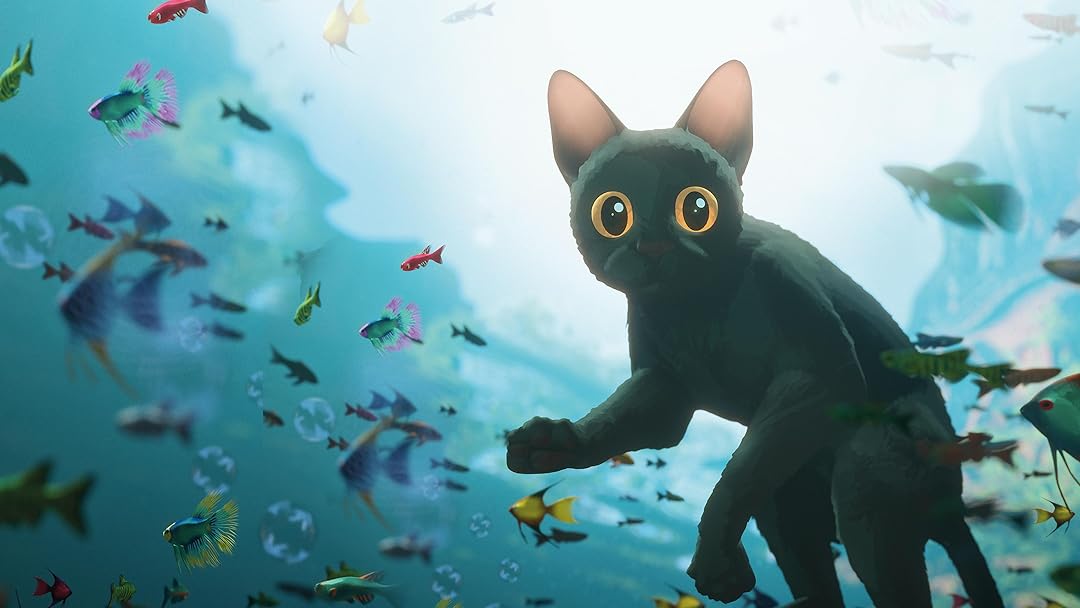
Set in a post-apocalyptic world with rising water levels, the film is the simple story of a cat who struggles to survive the dangerous environment and other animals where it would board a boat shared by a capybara and later joined by a lemur, a dog from a previous encounter, and a secretary bird. It is a film that has a simple premise with no dialogue or narration but rather be told through images, expression, and animals encountering each other and their surroundings. Gints Zilbalodis’ screenplay is minimal in terms of its structure with this black cat being its main protagonist as this cat also deals with a world with water as well as other animals on the land, he is in that include lots of dogs including a white Labrador Retriever who would become one of the passengers on the boat they would board later in the film. During the trip on the boat, the cat would also learn to swim thanks to the capybara as well as gain an ally in a secretary bird who refused to kill him for his flock.
Zilbalodis’ direction is astonishingly ravishing in its imagery as he is aided by animation director Leo Silly Pelissier who is also the film’s co-director. In the usage of the free and open-source Blender software, Zilbalodis also serves as the film’s editor, cinematographer, and art director where he and a team of animators put a lot of effort into creating a world that has an element of realism in the animation. Notably in the way water moves and how a cat would swim underwater to catch fish as there is a lot of diligence in how a school of fish is shown underwater. Zilbalodis’ creation of the animals has an air of crudeness in the animation, yet it has a sense of charm in the way they move and how water is presented on an animal. Zilbalodis also creates some unique compositions as well as a lot of shots that linger on for minutes where the camera would follow a character in one part of the location and to another.
Since this is a film where this is no dialogue spoken, it is in the animals in how they speak where they all communicate with one another even though a dog, a cat, a secretary bird, a capybara, and a lemur all speak differently. With the aid of sound designer Gurwal Coic-Gallas, the sound of the environment in the way water sounds underwater and above water as well as how nature is presented from afar. Zilbalodis’ direction does use a lot of wide and medium shots to get a vast scope of these locations. The mindfulness in the design of the landscape, rock towers, and places where humans used to inhabit as it help play into the intense atmosphere of rain and heavy water currents with close-ups of the cat dealing with that intensity. Adding that sense of intensity is the film’s music by Zilbalodis and Rihards Zalupe that has this bombastic mixture of orchestral elements and ambient-electronic music as it would help play into the drama and suspense. Even to the film’s end where there are moments that are mystical yet also grounded in realism as it relates to everything these animals have been through. Overall, Zilbalodis crafts a ravishing and exhilarating film about a cat surviving a post-apocalyptic flood with a bunch of different animals on a boat.
Straume is a magnificent film by Gints Zilbalodis. Featuring gorgeous animation, a simple yet compelling story of survival and friendship, and a wonderful music score. It is an animated film that proves that even if a story has been told through many versions where it can find new ways as well as knowing how to keep it simple. In the end, Straume is an outstanding film by Gints Zilbalodis.