One of the earliest memories I have is like anyone who was born or grew up during the 80s was watching MTV. Among the early music I probably can remember listening to were the likes of Michael Jackson, Men at Work, Huey Lewis & the News, and Pat Benatar. Then there was this bloke with blond hair singing in a restaurant in Australia that had this song which was different from what was out at the time. It had this funky bass groove but also something was simple, direct, and you can dance to it. I was two years old when Let’s Dance was the big song on the radio and on MTV as I remember my parents owning that cassette as my mother was pregnant at the time carrying my sister who would arrive that September. I think my favorite song at the time was the title track to the album while my mom’s favorite song and still her all-time favorite song is China Girl .
VIDEO It’s amazing that I could remember that which goes to show why David Bowie means so much to me but also to the entire world. While I probably grew up throughout my childhood and into my teens being surrounded by other things where I probably forgot about Bowie for a while. It wasn’t until the time when bands like Nirvana and Nine Inch Nails were around where they would acknowledge Bowie’s importance to them. Nirvana’s cover of The Man Who Sold the World was the first in a series of events that I feel brought Bowie back to the public eye and make him aware to a new generation of fans. Yet, I think there were many who were listening to grunge and alternative rock that were reluctant to listen to Bowie as they thought of him as that lounge lizard from the 1980s.
VIDEO That changed when I was on vacation in New York City at the summer of 1995 when I was 14 with my parents and sisters visiting my mom’s favorite cousin where I read the news that my favorite band at the time in NIN were going to go on tour with David Bowie. It struck me as odd knowing that my memory of Bowie was from Let’s Dance but then I heard some of these others songs like Space Oddity , Fame , “Heroes” , and Ziggy Stardust and realize this is the same guy. That made me want to go see Bowie and NIN but other events forced me to miss it. This is why for anyone who is into a band or an artist of a current generation, it gives those the chance to look for something else. It’s among the reasons why I’m grateful for Trent Reznor and NIN for providing gaps between albums which gives me the chance to find other things.
VIDEO Compilations are a good thing when it comes to certain artists who have a catalog that is quite vast as I bought the Changesbowie compilation when I was in high school. By the time I was a junior/senior in 1998 when two new compilations of Bowie’s work that featured not just his hits from 1969 to 1979 but also rarities and some album cuts. It was also around the time Velvet Goldmine was coming out as I wanted to see that film. A year later, a series of reissues of his albums from 1969 to 1987 came out as I wanted to see where to start thanks in part to the Internet which was new at the time. By the end of the 20th Century, I became a full-on fan of David Bowie as one of my favorite purchases I have is the Bowie at the Beeb three-disc limited edition compilation which featured an abundance of material Bowie did for the BBC from 1968 to 1972 with the third disc as his concert from June of 2000 for the BBC where he played songs from the 80s and beyond.
VIDEO Through the Internet, I would go into his entire body of work as it became clear that this was a man of great importance. While bands like Radiohead and NIN are among my all-time favorite acts, Bowie is probably right behind those two though maybe he’s better than both of them considering the wealth of music he created. Like NIN and Radiohead, Bowie made music that didn’t play by anyone’s rules nor did they cater to trends with the exception of some of the stuff he did in the 1980s which were, even by his own admission, terrible. At the same time, they were artists that spoke to me in my teens and through my early stages of adulthood. Yet, Bowie was the master as songs like Rock N’ Roll Suicide and Quicksand had lyrics that were very powerful and direct. He spoke about alienation, anxiety, and fear yet made it so relatable that it probably saved my life.
VIDEO I’m saddened that I never got to see him live but the shows he did present on video/DVDs showcased that everything else everyone did. He did it better and he did it with more heart and more passion no matter how silly it was back then or how strange it was. He was someone that was ahead of his time and laid the ground works for practically everything and everyone. People would probably say the same things about Elvis, the Beatles, the Rolling Stones, Led Zeppelin, or Michael Jackson in how they influenced their life or pop culture in general. For me, it was Bowie. He was someone that constantly reinvented himself and kept people guessing through his music and art. A few years ago, I made a list of his essential work from 1969 to 1980 which I think is his golden period though I would expand it to 1983’s Let’s Dance as that golden period.
VIDEO If anything, his second self-titled release to Let’s Dance is quintessential Bowie and there is rarely a bad moment in those albums along with the live albums in those times like David Live from 1974 and Stage from 1978 in their respective expanded editions. There’s some gems he did in the 1980s and his work with Tin Machine while I think 90s albums like Black Tie White Noise and Outside are among his most underrated albums of his career. Heathen would be the return of classic-era Bowie with Reality being a fantastic follow-up. Then he disappeared where I was content knowing that even if he didn’t put out new music. He made more than enough to create music that would last for eons and then in 2013, he returned with The Next Day with little warning and it was a fucking classic from start to finish. It was as if he would return to do shows and such but I figured that it would take awhile but alas, that would never happen. Then there’s his final album Blackstar which if anything is a great testament to a great career. It’s a phenomenal record that stands with the rest of his work and a way to go out.
VIDEO It’s not just through music that Bowie made an impact but also in art and film. As an actor, he had everything many would want while he didn’t go for the starring roles but rather play parts that suited him. Whether it’s Thomas Jerome Newton in The Man Who Fell to Earth Merry Christmas, Mr. Lawrence , John Blaylock in The Hunger The Last Temptation of Christ Basquiat The Prestige Absolute Beginners , or Jareth the Goblin King in Labyrinth
VIDEO Another thing that I think made Bowie exceptional was his generosity to other talents. While many artists would try to do whatever they can to boost their own egos or whatever, Bowie used his fame to give friends and unknowns their breaks. If it wasn’t for Bowie, I’m sure there are many who wouldn’t have heard of such artists/acts like the Velvet Underground, the Stooges, or T-Rex. They did something for him as an artist and he returned the favor where he gave Lou Reed his biggest hit with Walk on the Wild Side while Iggy Pop would become a major solo star. If it wasn’t for Bowie, I’m sure ambient music wouldn’t become prominent as he definitely raised attention for that genre and one of its creators in Brian Eno. He was also there to help those who were in need like his childhood friend Peter Frampton where he had him play guitar for the Glass Spider tour of 1987 and exposed his work as a guitarist.
VIDEO I’m sure that if Bowie was never around, Luther Vandross would’ve never gotten a break or something as Bowie saw this young man and had him sing back up on the Young Americans album as well as co-write a song with him and did vocal arrangements. It shows how broad his music was and how important he was to popular culture. For those who probably grew up watching Soul Train in the 1970s were probably taken aback by this skinny British white guy with orange hair on the show until they heard him sing as it was clear that he had soul. He can rock, he can do dance, he can do electronic music, he can be loud, and he can also chill. What more could anyone ask from an artist like that?
VIDEO Through the people he’s helped out and the people he’s given breaks to, it is clear that Bowie’s influence has created many that would come into his wake. There are covers by many artists who had paid tribute to him. Some in a very direct way like Bauhaus and Nirvana through some weird yet funny tributes by Flight of the Conchords in a song called Bowie’s in Space . One of my favorite tributes came from this guy named Steve Riks who would play many legends as he did one of the most bizarre yet funny tributes to both Bowie and Elvis Presley who were both born on January 8 (which I hope to be the day when I get married if that ever happens).
VIDEO It goes to show that Bowie has made people smile and bring joy to the world. Even as fans would create some of these bizarre video compilations like Bowie getting annoyed during interviews.
VIDEO Then there’s Chris Hadfield’s cover of Space Oddity in outer space, that is a cover done with great justice. It’s also quite moving.
VIDEO For someone who dressed up like an alien, a coked-out European, a clown, and wears women’s clothing. It is clear that he’s managed to do so many things for so many people including children who recently did a little tribute to the man known as Ziggy Stardust, Halloween Jack, the Thin White Duke, Major Tom, and Jareth.
VIDEO While it is sad that he’s gone now. It is clear that he has meant so much to the world and probably made them feel OK to be weird and challenging. Especially as he also created anthems through his music and art which will endure. Right now, Bowie is probably somewhere in the galaxy reforming the Spiders of Mars with Mick Ronson and Trevor Bolder while waiting for Mick Woodmansey to join them soon as that was his best band. To the collaborators such as Carlos Alomar, Brian Eno, Mick Woodmansey, Tony Visconti, Trent Reznor, Nile Rodgers, Ken Scott, Earl Slick, Mark Plati, Mike Garson, David Sanborn, Edral Kiziclay, Reeves Gabrels, George Murray, Dennis Davis, Robert Fripp, Adrian Belew, Giorgio Moroder, Sterling Campbell, Gail Ann Dorsey, Gerry Leonard, Peter Frampton, and Iggy Pop. Thank you for being part of his musical family along with the men who aren’t with us such as Mick Ronson, Trevor Bolder, Marc Bolan, Luther Vandross, John Lennon, Stevie Ray Vaughn, and Lou Reed for making his music mean something.
VIDEO To the people who were involved in his career like his first wife Angela and his longtime personal assistant Coco Schwab, thank you for being there for him and giving him the confidence. Finally to Iman, Duncan, Zulekha, and Alexandra, thank you for taking care of David Robert Jones and being the family that loved him. To David, thank you for being there for all of us and we will miss you.
R.I.P. David Bowie (1947-2016)
© thevoid99 2016
Based on an article for The New Yorker about the real-life Hill 192 incident during the Vietnam War by Daniel Lang, Casualties of War is the story of a young soldier in the Vietnam War who finds himself being forced by his platoon sergeant to take part in raping a young Vietnamese woman. Directed by Brian de Palma and screenplay by David Rabe, the film explores some of the dark aspects of war where a young soldier tries to deal with the immoral events that occur in war including by those he is forced to serve for. Starring Michael J. Fox, Sean Penn, Don Patrick Harvey, John C. Reilly, John Leguizamo, Ving Rhames, and Thuy Thu Le. Casualties of War is a gripping and chilling film from Brian de Palma.
Set during the Vietnam War, the film revolves around a real-life incident in which a platoon kidnaps and rapes a young Vietnamese War during a mission where a young private deals with the circumstances of what is happening. It’s a film that plays into this young private first-class named Eriksson (Michael J. Fox) who questions the actions of his superior and his fellow soldiers. Especially as he gets confronted by Sgt. Tony Meserve (Sean Penn) who orders him to do this while claiming that it’s what they need to do to fuck over the Viet Cong. David Rabe’s screenplay does dramatize the events that happened in real life but also display some interesting development into the characters as men who are fighting this war where boredom and fatigue doesn’t just drive them into madness but also in doing things that are considered immoral. Much of the story is told from Eriksson’s perspective as the film begins and ends in 1974 San Francisco where Eriksson is on a train sleeping where he sees this young Vietnamese-American woman which triggers what he remembered as a soldier.
The first act is about Eriksson being this new soldier who has arrived three weeks earlier where he is saved by Sgt. Meserve during a battle as it is the first encounter of the realities of war as well as the bond between soldiers. The second act is about Sgt. Meserve’s mission to inspect a river boat delivery where he decides to go into a village and kidnap this young woman (Thuy Thu Le) with the aid of Corporal Clark (Don Patrick Harvey), PFC Hatcher (John C. Reilly), and the new soldier in the platoon in PFC Diaz (John Leguizamo). While Cpl. Clark is willing to help Sgt. Meserve in kidnapping and raping this young woman with PFC Hatcher reluctant at first. Eriksson is the one who is against this as is PFC Diaz only to join in. The third act is about its aftermath where Eriksson copes with what happened but also learns that some of his superiors are indifferent to what happened which forces him to deal with the moral implications and the troubling aspects of war.
Brian de Palma’s direction is very gripping for the way it plays into the terror and chaos of war as well as some of the immorality that occurs. Shot largely on location in Thailand, the film does play into a world that is dangerous and unpredictable from Eriksson’s first encounter with seeing one of his own being killed unexpectedly which sets the tone for what is to come. The usage of the wide shots definitely has de Palma capture the tense atmosphere of the jungles as well as using some close-ups and medium shots to play into the drama and eerie moments of suspense. Even in some of the intense moments of Sgt. Meserve raping the young woman with the very reluctant Pfc. Diaz being the first to have sex with her after Sgt. Meserve is done. The usage of crane shots for some of the battle scenes as well as some of the suspenseful moments that play into the events that would horrify Eriksson. The third act is where de Palma really gets to shine such as a monologue delivered by Eriksson’s superior Lt. Reilly (Ving Rhames) who reveals about some of the dark aspects of human nature as it would force Eriksson to realize that the realities of the way things are. Even if attempting to do what is right is pushed aside by politics and indifference in order to keep going in the state of war. Overall, de Palma crafts an engaging yet harrowing film about a real-life incident that involved the rape of a young Vietnamese woman.
Cinematographer Stephen H. Burum does brilliant work with the film‘s cinematography from the look of the exteriors of the jungle and bases at night to the lighting inside the tunnels that the Vietcong uses. Editor Bill Pankow does amazing work with the editing in creating some unique jump-cuts and rhythmic cuts to play into the suspense and drama that occurs throughout the film. Production designer Wolf Kroeger, with art director Bernard Hides and set decorators Peter Hancock and Hugh Scaife, does fantastic work with the building of the army bases as well as the underground tunnels and bars outside of the army bases.
Costume designer Richard Bruno does nice work with the costumes from the look of the uniforms as well as the ragged clothes of the Vietnamese villagers. Sound editor Maurice Schell does superb work with the sound from the sparse sounds of the jungles to the loud mixing of sounds of gunfire and helicopters in the air. The film’s music by Ennio Morricone is phenomenal with its usage of Asian flute music and lush string arrangements to play into the drama and suspense as it is definitely one of the film’s highlights along with a soundtrack featuring music of that period in time.
The casting by Lynn Stalmaster is incredible for the ensemble that is created as it features some notable small roles from Darren E. Burrows as a young soldier Eriksson deals with late in the film, Sherman Howard as a military judge, John Marshall Jones as a military police officer, Sam Robards as an army captain/chaplain, Dan Martin as Eriksson’s friend Hawthorne, Dale Dye as the top officer of the platoon in Captain Hill, Erik King as a veteran soldier who would serve as an early mentor for Eriksson, and Ving Rhames in a superb role as Lt. Reilly as a platoon leader who reveals some harsh truth about war and human nature. Thuy Thu Le is excellent as the young woman Oanh who is captured by Sgt. Meserve and his platoon as a sex slave claiming that she is working for the Vietcong as she becomes humiliated and destroyed by their actions. In his film debut, John C. Reilly is fantastic as PFC Hatcher as the comic-relief of sorts who always talking about drinking beer and having fun while dealing with the chaos as well as being reluctant in taking part of the rape.
John Leguizamo is amazing as PFC Diaz who just joined the platoon as he is very reluctant to take part in the rape only to be coerced into it which displays someone trying to fit in with the platoon. Don Patrick Harvey is brilliant as Cpl. Clark as a sadistic man with a knife who has no qualms in raping and killing Vietnamese women as well as do things that are very questionable. Michael J. Fox is remarkable as PFC Eriksson as this young soldier who deals with the moral implications of his platoon sergeant as he struggles to do the right thing as well as try and save this young woman in an act of anti-war sentiment. Finally, there’s Sean Penn in a terrifying performance as Sgt. Meserve as this platoon leader who is a great soldier but also quite sadistic himself as Penn brings a strange complexity to someone who is a totally dick and ruthless in what he does yet is the kind of person any soldier would want to have by their side.
Casualties of War is a marvelous film from Brian de Palma that features tremendous performances from Sean Penn and Michael J. Fox. Along with Ennio Morricone’s fantastic score, early breakthrough performances from John C. Reilly and John Leguizamo, and strong anti-war themes. It’s a film that doesn’t play by the rules of war as it showcases some of the dark aspects of humanity in war. In the end, Casualties of War is a sensational film from Brian de Palma.
Brian De Palma Films: (Murder a la Mod) - (Greetings) - (The Wedding Party) - (Dionysus in ‘69) - (Hi, Mom!) - (Get to Know Your Rabbit) - Sisters - Phantom of the Paradise - Obsession - Carrie - The Fury - (Home Movies) - Dressed to Kill - Blow Out - Scarface - Body Double - (Wise Guys) - The Untouchables - The Bonfire of the Vanities - Raising Cain - Carlito’s Way - Mission: Impossible - Snake Eyes - Mission to Mars - Femme Fatale - The Black Dahlia - (Redacted) - Passion (2012 film) - (Domino (2018 film))
© thevoid99 2016
Written, directed, and co-edited by Jean-Luc Godard, Charlotte et son Jules (Charlotte and Her Boyfriend ) is a thirteen-minute short film about a man who gets a visit from his ex-girlfriend as he deals with her appearance. Largely set inside a Parisian apartment, the film explores the many ups and downs of love as the couple is portrayed by Jean-Paul Belmondo as Jules and Anne Collette as Charlotte. It begins with Charlotte arriving into the apartment as her date (Gerard Blain) waits outside in his car where Jules rants about everything she’s done to him.
With Godard dubbing the voice of Jules (due to budget limitations and Belmondo unavailable for post-production), the film has Godard maintain a sense of intimacy with his usage of close-ups and medium shots in the film’s direction with Jules ranting while Charlotte remains mostly silent as she mocks him in a pantomime style. Shot in black-and-white by cinematographer Michel Latouche with stylish cutting by Godard and Cecile Decugis, the film has a playful feel with some sound work by Jacques Maumont and a whimsical musical score by Pierre Monsigny. The performances of Belmondo and Collette are splendid with Belmondo displaying some humility with Collette being very funny in her near-silent performance.
Charlotte et son Jules is an extraordinary short film from Jean-Luc Godard. Not only does the film contain elements that would become prominent in his work in feature films but it’s also a film that manages to play into the ideas of love in all of its fallacies and joyful moments. In the end, Charlotte et son Jules is a sensational film from Jean-Luc Godard.
Jean-Luc Godard Films: All the Boys Are Called Patrick - Breathless - The Little Soldier - A Woman is a Woman - Vivre Sa Vie - The Carabineers - Contempt - Band of Outsiders - A Married Woman - Alphaville - Pierrot Le Fou - Masculin Feminin - Made in U.S.A. - Two or Three Things I Know About Her - La Chinoise - Weekend - One Plus One (Sympathy for the Devil) - (Joy of Learning) - (British Sounds) - Tout va Bien - (Letter to Jane) - (One A.M.) - (Number Two) - (Here and Elsewhere) - (Every Man for Himself) - (Passion) - (First Name: Carmen) - Hail, Mary - (Soft and Hard) - (Detective) - (King Lear (1987 film)) - (Keep Your Right Up) - (Nouvelle Vague) - (Allemagne 90 neuf zero) - (JLG/JLG - Self-Portrait in December) - For Ever Mozart - (Historie(s) de Cinema) - (In Praise of Love) - (Notre musique) - (Film Socialisme) - (Adieu au Language) - (The Image Book)
© thevoid99 2016
Directed by Julien Temple and screenplay by Terry Johnson from a story by David Bowie, Jazzin’ for Blue Jean is a twenty-minute short film that serves as a promotional video for David Bowie’s single Blue Jean from his much-maligned 1984 album Tonight . The short revolves around a socially-awkward man trying to woo a beautiful young woman by taking her to an exclusive concert as Bowie plays both the socially-awkward man Vic and the singer Screamin’ Lord Byron. Also starring Louise Scott as the young woman. Jazzin’ for Blue Jean is a witty and whimsical short from Julien Temple and David Bowie.
The film is essentially a comedy where this man tries to impress this young woman into taking her to a concert for this pop singer where everything goes wrong. He tries everything from claiming he’s on a list to bad negotiating for tickets where he would eventually meet the singer Screamin’ Lord Byron through an accidental moment in the hopes of winning over this young woman. It’s a short that is very witty which plays into the silliness of 1980s culture from Vic trying to find ways to dress cool only to get advice from his much clean and more fashionable roommate. The script is largely told from Vic’s perspective as someone who is so desperate to be cool but he is such a dork.
Julien Temple’s direction is quite stylish from the usage of crane shots to capture the streets of London as well as how the club looks in a way superstars have to be presented. There are also moments where Temple makes fun of the idea of stardom in the way Screamin’ Lord Byron arrives as if he had partied too much and is quite full of himself. It adds to the ridiculousness of the story where Temple also create some scenes which play into the false worship of pop idols including Bowie himself who music for the film including the song he performs. Temple’s direction also has a unique way some of the comedy is set up as it is done naturally which showcases Bowie’s knack for comedy.
With Louise Scott providing a wonderful performance as the dream girl, it is Bowie’s show as his approach to playing a dork is so fun while his performance as Screamin’ Lord Byron is just as funny for how much of a diva he is. It is Bowie not being afraid to lampoon himself a bit but also make some commentary about 1980s commercialized-pop music which he had been sucked into in the aftermath of the blockbuster success of his 1983 album Let’s Dance .
Jazzin’ for Blue Jean is a fantastic short film from Julien Temple and David Bowie. It’s a short that fans of Bowie will consider as essential despite the fact that it was made in one of his un-creative periods. It’s a film that isn’t just entertaining but also provides as a great tool to promote new music as it’s just Bowie selling himself. In the end, Jazzin’ for Blue Jean is an excellent short film from Julien Temple.
VIDEO © thevoid99 2016
Directed and edited by Alain Resnais and written by Jean Cayrol, Nuit et brouillard (Night and Fog ) is a thirty-one minute documentary short that explores the grounds of Auschwitz where some of the most horrific atrocities in humanity is explored. The film serves as a look into the world of the Holocaust with recollections by prisoners as it is narrated by Michel Bouquet. The result is one of the most chilling and evocative documentaries about the Holocaust.
Shot in the span of an entire just a decade after the end of World War II, the film is a document into the grounds of Auschwitz as it is shown a decade after it was used as it looks like peaceful and calm. Yet, the fact that it is also the place where millions and millions of people were killed by Nazi Germany makes it a ghost town with a sense of unease over what this place was once was. The film is told in this mixture of past and present where Resnais and cinematographers Sacha Vierny and Ghislain Cloquet shoot Auschwitz circa-1955 in color where it looks like an abandoned park or factory with some ruins. At times, the colored photography makes it look sort of peaceful but once the camera gets inside with some unique tracking shots and camera movements. It is clear that is this unsettling ghost town.
When the film is presented in black-and-white, Resnais collects many archival and stock footage from various newsreels and such that documented what happened. What is revealed includes images that will definitely test viewers as much of it isn’t just uncomfortable to watch but it is also very intense due to the aura of death that looms throughout the film. Resnais’ editing doesn’t just capture many of the moments that occur through the images about what happens when a prisoner enters the camp but also what one would endure. Aided by Michel Bouquet’s editing that features text by Jean Cayrol and additional work by Chris Marker, the narration doesn’t just help drive the story but also go into great detail about what these people would endure. Featuring a somber and mesmerizing score by Hanns Eisler, the film has this very harrowing tone that is melancholic but also visceral in how eerie the images are as the music adds to that while having melodic moments that serve as offbeat.
Nuit et brouillard is an outstanding short documentary from Alain Resnais. Not only is it one of the most devastating and powerful documents about the Holocaust but an evocative statement into the atrocities on humanity by those driven by hate. In the end, Nuit et brouillard is a phenomenal film from Alain Resnais.
Alain Resnais Films: Hiroshima Mon Amour - Last Year at Marienbad - (Muriel) - (The War is Over) - (Je T’aime, je t’aime) - (Stavisky) - (Providence) - Mon Oncle d'Amerique - (Life is a Bed of Roses) - (Love Unto Death) - (Melo) - (I Want to Go Home) - (Gershwin) - (Smoking/No Smoking) - (Same Old Song) - (Not on the Lips) - (Private Fears in Public Places) - Wild Grass - (You Haven’t Seen Anything Yet) - (Life of Riley)
© thevoid99 2016
If there’s one filmmaker in the late 20th Century whose name is synonymous with the world of surrealism other than Luis Bunuel, it’s David Lynch. A name that has managed to inspire many as well as polarize critics and audiences into his work. With films ranging from the strange and violent to odd tales of Americana, Lynch has been a filmmaker that has continuously refuse to define himself. Even as he would spawn many who imitate his visual style and ideals but Lynch remains mysterious in everything he does while refusing to explain anything about his work. Whether it’s in film, television, music, art, or literature, Lynch is an artist that always keep people guessing and have fun playing with their expectations.
Born on January 20, 1946 in Missoula, Michigan, David Keith Lynch was the first of three children to Donald and Edwina “Sunny” Lynch. Donald Lynch was a member in the Department of Agriculture which would allow him and the family to travel all around the country as it would have a profound effect on the young Lynch. At a young age, Lynch was a member of the Boy Scouts of America where his increasing interest in the world of art got him lots of attention where he would travel to Austria with friend and future collaborator Jack Fisk to study under the guidance of Oskar Kokoschka which was only brief due to Kokoschka’s absence.
In 1964 at the age of 18, Lynch would briefly attend the School of the Museum of Fine Arts in Boston where his roommate was future J. Geils Band vocalist Peter Wolf. The experience at the school would prompt Lynch to find a more fruitful education at the Philadelphia Academy of Fine Arts where Fisk was attending as he would become a prominent art director and production designer where he would gain fame for his work with Terrence Malick. In Philadelphia, Lynch would find inspiration in his work while his own personal life was in an upswing as he would marry Peggy Reavey in 1967 and gain a daughter in Jennifer a year later.
More can be read in Cinema Axis in four parts through these links in Pt. 1 - Pt. 2 - Pt. 3 - Pt. 4
© thevoid99 2016
Directed by Ry Russo-Young and written by Russo-Young and Lena Dunham, Nobody Walks is the story of a young woman who moves into the guest home of a wealthy family to complete an art project where she unknowingly disrupt their life. The film is an exploration into a family whose quaint and idealistic life is shattered by an innocent outsider who has no clue what she had gotten herself into. Starring Olivia Thirlby, John Krasinski, Rosemarie DeWitt, India Ennenga, Dylan McDermott, and Justin Kirk. Nobody Walks is an intriguing yet mesmerizing film from Ry Russo-Young.
The film revolves around a 23-year old filmmaker who moves into the guest home of another filmmaker who will help her with the project she’s making as she finds herself getting involved in the life of this wealthy family. It’s a film that plays into a woman whose arrival doesn’t just create a bit of chaos in the life of this family but does it so without meaning to as she just needed help with her film. The film’s screenplay doesn’t just play into the ideas of a woman finding herself interfering a bit with the life of a family but also how things just happen amidst this chaos. Yet, the script doesn’t judge Martine (Olivia Thirlby) for her actions as she is just a young woman that needed help but she is also kind of flirtatious as she charms her host Peter (John Krasinski) where the two have a secret affair. Yet, things in Peter’s life become troubling when his therapist-wife Julie is dealing with a patient who reveals to have feelings for her while her daughter Kolt (India Ennenga) is dealing with growing pains and a creeping Italian tutor (Emanuele Secci).
Ry Russo-Young’s direction is very simple as she shoots the film largely on location in the Silver Lake area in Los Angeles. Russo-Young’s approach to hand-held cameras and the usage of close-ups and medium shots help play into the intimacy that looms throughout the film. Much of it is very loose in terms of how the actors are shown in the frame or in a scene such as a dinner sequence where Julie’s ex-husband Leroy (Dylan McDermott) shows up for a visit where it does make things a bit uncomfortable. The direction also feature some low-key humor but it’s mostly dramatic since it plays into this young woman needing help for her experimental film. The film-within-a-film is an experimental feature involving bugs where Martine just needed some sound as it plays like many experimental/art-driven films which play into Martine’s own personality. Even as she is someone that is in need of a home or companionship but manages to make a mess of things as she tries to fix them. Overall, Russo-Young creates an engaging yet low-key film about a young artist whose presence nearly causes trouble for a family.
Cinematographer Christopher Blauvet does brilliant work with the film‘s cinematography in capturing the sunny look of the locations as well as creating some low-key lights for many of the film‘s nighttime interior/exterior scenes as well as Peter‘s sound room. Editor John Walter does nice work with the editing as it is mostly straightforward with some stylish jump-cuts to play into some of the dramatic moments into the film. Production designer Linda Sena and art director Mando Lopez do excellent work with the look of the home that Peter and Julie live in as well as Martine‘s guest home and the design of Julie‘s office.
Costume designer Kim Wilcox does terrific work with the costumes as it is largely casual with the exception of some of the stylish clothes that Martine wears. Sound designer Rich Bologna does fantastic work with the sound to create the many textures and sound effects that Martine needed for her film as well as capture some of the moments in the places the characters go to. The film’s music by Will Bates and the indie band Fall on Your Sword is wonderful for its mixture of dreamy and ambient music that plays into the Californian landscape while music supervisor Tiffany Anders brings in a mixture of folk and electronic music for the film’s party scene.
The casting by Kerry Barden and Paul Schnee is superb as it features some notable small roles from Jane Levy as Kolt’s classmate Caroline, Sam Lerner as another of Kolt’s classmate in Avi, Mason Welch as Peter and Julie’s son Dusty, Emanuele Secci as Kolt’s creepy Italian tutor, Rhys Wakefield as Peter’s assistant David whom Kolt has a crush on despite flirting with Martine, and Dylan McDermott in a terrific role as Julie’s ex-husband/Kolt’s father Leroy who arrives for dinner as he would create some discomfort for Martine and Peter. Justin Kirk is excellent as Julie’s patient Billy who reveals to her that he had dreams of having sex with her where a later encounter at the party makes Julie really uncomfortable. India Ennenga is fantastic as Kolt as Julie’s teenage daughter who deals with growing pains as she has a crush on step dad’s assistant while dealing with the strange teachings of her Italian tutor.
Rosemarie DeWitt is brilliant as Julie as a therapist who deals with Martine’s presence as well as her own issues as it’s a very low-key yet charming performance from DeWitt. John Krasinski is amazing as Peter as a filmmaker and stay-at-home dad who helps Martine do sound work on her film as he would fall for her only to deal with the implications of their tryst. Finally, there’s Olivia Thirlby in a phenomenal performance as Martine as this young artist who is seeking help to finish her experimental film as she is grateful for the help only to be flirtatious at times as it’s a very complex and charismatic performance from Thirlby.
Nobody Walks is a brilliant film from Ry Russo-Young that features incredible performances from Olivia Thirlby, John Krasinski, and Rosemarie DeWitt. With a captivating script and subtle themes on family, trysts, and art, it’s a film that doesn’t try to be or say anything but showcase the idea of needing to help and how someone can unknowingly screw things up. In the end, Nobody Walks is an amazing film from Ry Russo-Young.
© thevoid99 2016
Based on the memoir by Eliot Ness and Oscar Fraley, The Untouchables is the story of a group of police officers and detectives who try to take down Al Capone during the Prohibition era. Directed by Brian de Palma and screenplay by David Mamet, the film is a look into the formation of this group led by Ness as it is set in 1930 Chicago with Kevin Costner playing the role of Ness. Also starring Robert de Niro, Charles Martin Smith, Andy Garcia, Patricia Clarkson, Billy Drago, and Sean Connery. The Untouchables is a thrilling and mesmerizing film from Brian de Palma.
Set in 1930 Chicago during the era of Prohibition where Al Capone (Robert de Niro) ruled the city and created havoc, the film revolves around Eliot Ness and his team of incorruptible men who are willing to take down Capone by any means while bringing him to justice. It’s a film that is a dramatized take on the events where Ness arrives into the city as an outsider for the treasury department as his early attempts to shut down Capone is met with embarrassment. Upon meeting an Irish beat cop in Jimmy Malone (Sean Connery), Ness learns that he can’t trust the police as he teams up with Malone as well as an academy trainee in George Stone (Andy Garcia) and a bureau accountant in Oscar Wallace (Charles Martin Smith) to stop Capone and get evidence over the unpaid taxes that were never recorded.
The film’s screenplay by David Mamet doesn’t just explore the conflict between Capone and the Untouchables but also what is at stake. Notably as one of the early scenes in the film involves a bombing at a neighborhood where a young girl dies which forces Ness to really do something where he later meets that girl’s mother. Being a family man himself, Ness realizes he must do what he can to protect his wife and children from being killed as he is eventually targeted following a series of successful raids. It’s among the elements that Mamet does which gives some gravitas to the story as well as creating characters that are very engaging where Malone is a man that had seen it all and believes that Ness is the man that is willing to bring order back to the world. Stone is an Italian-American who is a great marksman and is street-smart as he is someone that wants to change the perception of what people think of Italians despite the fact that he changed his name.
Wallace is just a simple accountant who is crucial to the team as he would make some discoveries into Capone’s finances as well as see what businesses he is linked to. Then there’s Capone as he is this loose cannon that barks orders as well as be someone that thrives being in power. Through monologues written by Mamet, it adds a sense of iconography into Capone as a man who has this idea that he owns Chicago and believes he will take over the world. It definitely adds a lot into the conflict where Mamet’s script manages to play up this sort of rise-and-fall scenario on Capone in the hands of Ness and the Untouchables but the third act also reveals exactly what happens when Capone gets pushed into the edge and will do anything to keep his empire afloat.
Brian de Palma’s direction is definitely entrancing in terms of not just the visuals he creates but also in the fact that he goes for a lot of style to play up the world of 1930s Chicago as he would shoot the film on location in the city. From the usage of overhead shots to open the film where Capone is getting a shave, a manicure, and a shoe shine to the intricate usage of crane shots and close-ups. The direction of de Palma is always filled with some sense of technical wizardry in how he would put his actors into a frame such as a church conversation where Ness is in the foreground and Malone is in the background in one shot and then cut to a medium shot of the two with the camera in front of them. The sense of intimacy in de Palma’s usage of close-ups and medium shots add to the camaraderie between Ness, Malone, Stone, and Wallace in their pursuit to bring order.
The direction also has some very unique touches that does pay ode to elements of cinema such a key sequence at the Chicago train station which pays homage to the Odessa steps sequence from Battleship Potemkin. It adds to the sense of drama and what is at stake where it is clear that Ness isn’t just trying to do good for Chicago but also to make sure that the little girl who was killed by a bomb would find peace. Even as it leads to Capone being put on trial where there is still an element of suspense in its climax about the idea on if justice will be served or will Capone buy his way out of the jail sentence. It all plays part into the dangerous world that is 1930s Chicago and the era of Prohibition that has caused so much violence all because people wanted to drink alcohol with Ness needing to uphold the law the best way he can to keep people safe. Overall, de Palma crafts a very lavish yet gripping film about a lawman’s war against Al Capone.
Cinematographer Stephen H. Burum does excellent work with the film‘s cinematography from the lavish usage of lights to play up the high-class lifestyle that Capone lives in to the usage of more naturalistic yet low-key lights for the more simple lifestyle of Ness and the Untouchables live in. Editors Gerald B. Greenberg and Bill Pankow do amazing work with the editing with its stylish usage of jump-cuts and slow-motion cuts that play into the drama and action that occurs in the film along with some very offbeat rhythms for the suspenseful moments. Art director William A. Elliot, with set decorators Patrizia von Brandenstein and Hal Gausman, does fantastic work with the set pieces from the look of the Livingston hotel and the suites that Capone lives in to some of the factories where some of the bootlegging occurs. Costume designer Marilyn Vance does brilliant work with the costumes from street clothes and uniforms some of the cops wear as well as the suits that Capone wears which are designed by Giorgio Armani.
Makeup artist Michael Hancock and hair stylist Bette Iverson do nice work with some of the minimal makeup for the look of Al Capone as well as the hairstyle that women sported during those times. Sound editor Dan Sable does superb work with the sound to create some sound effects for some of the darker moments in the film as well as the elements of suspense. The film’s music by Ennio Morricone is incredible for its mixture of bombastic orchestral textures and offbeat themes to play into some of the humor and drama as it is really among one of the finest scores ever while music supervisor Emile Charlap brings in the music of Duke Ellington and other jazz pieces of the times to play into that period.
The casting by Lyn Stalmaster and Mali Finn is remarkable as it features some notable small roles from Clifton James as a district attorney, Richard Bradford as the police chief Mike Dorsett who reluctantly helps Ness early on as he‘s an old friend of Malone, Jack Kehoe as Capone’s bookkeeper Walter Payne, Brad Sullivan as one of Capone’s associates named George who gets captured by the Untouchables and the Mounties in Canada, Billy Drago as Capone’s key cleaner Frank Nitti, and Patricia Clarkson in a small but wonderful performance as Ness’ wife. Charles Martin Smith is excellent as Oscar Wallace as an accountant for the bureau who helps Ness in uncovering many of Capone’s finance as he becomes part of the Untouchables as someone that isn’t afraid to carry a shotgun. Andy Garcia is fantastic as George Stone as an Italian-American who uses a fake name in order to hide his real name out of fear of prejudice yet proves to be a skilled marksman and be loyal to what Ness wants to do.
Robert de Niro is brilliant as Al Capone where de Niro brings a lot of charm and smarminess to the role as well as being very violent and full of bravado as he definitely makes Capone larger than life. Sean Connery is amazing as Jimmy Malone as this Irish beat cop who had seen a lot as he helps Ness in bringing down Capone while realizing many of the bad things that is happening where he goes to some great extremes to get answers as it’s Connery in one of his best roles ever. Finally, there’s Kevin Costner in a marvelous performance as Eliot Ness as a treasury department agent who is tasked to bring Capone down as well as do what he needs to protect his family and make sure that the people of Chicago will feel safe.
The Untouchables is a phenomenal film from Brian de Palma. Featuring a great cast led by Kevin Costner, Sean Connery, and Robert de Niro as well as compelling script by David Mamet, lavish visuals, and Ennio Morricone’s thrilling score. The film isn’t just one of the finest films of the gangster film genre but also a mesmerizing film that plays into the world of law and order vs. crime. In the end, The Untouchables is a sensational film from Brian de Palma.
Brian De Palma Films: (Murder a la Mod) - (Greetings) - (The Wedding Party) - (Dionysus in ‘69) - (Hi, Mom!) - (Get to Know Your Rabbit) - Sisters - Phantom of the Paradise - Obsession - Carrie - The Fury - (Home Movies) - Dressed to Kill - Blow Out - Scarface - Body Double - (Wise Guys) - Casualties of War - The Bonfire of the Vanities - Raising Cain - Carlito’s Way - Mission: Impossible - Snake Eyes - Mission to Mars - Femme Fatale - The Black Dahlia - (Redacted) - Passion (2012 film) - (Domino (2018 film))
© thevoid99 2016
Directed by Jean-Luc Godard and written by Eric Rohmer, Tous les garcons s’appellent Patrick (All the Boys are Called Patrick ) is the story of two roommates who meet a young womanizer who flirts with both of them on separate occasions. It’s a 21-minute short film that plays into the idea of these two young women who meet this young man named Patrick (Jean-Claude Brialy) who is also a pick-up artist. For Charlotte (Anne Collette) and Veronique (Nicole Berger), the two were supposed to meet each other later in the day only for both of them to be wooed by Patrick where things definitely become complicated later that day.
It’s a short film that play into the idea of women being pursued by this young man as well as what it can do to disrupt their friendship. The script by Eric Rohmer doesn’t just play into these two women being wooed by the same guy but also deal with the implications into how it would affect their friendship. Jean-Luc Godard’s direction is definitely stylish in terms of the close-ups and medium shots he creates as well as shoot it on location in Paris. With this approach to cinema verite, Godard adds a realism to the look and feel of the film with the aid of cinematographer Michel Latouche for the film’s black-and-white photography that captures Paris becoming this vibrant hotbed for cinema.
Even as Godard puts in references as it relates to the changes that is emerging while utilizing some stylish jump-cuts with the aid of editor Cecile Decugis. With the sound work of Jacques Maumont to play up the atmosphere of the locations, Godard also uses the music of Ludwig Van Beethoven to play up the looseness of the film. Godard’s approach to the directing the actors is also evident as the performances of Jean-Claude Brialy, Nicole Berger, and Anne Collette are all a joy to watch in terms of not just the naturalistic approach to their performances but also in how real it feels.
Tous les garcons s’appellent Patrick is an excellent short film from Jean-Luc Godard and screenwriter Eric Rohmer. Featuring a great cast and an inventive premise, the short is truly one of the finest examples of what would become the French New Wave in its visual approach and ways to tell stories in a new way. In the end, Tous les garcons s’appellent Patrick is an amazing film by Jean-Luc Godard.
Jean-Luc Godard Films: Charlotte et son Jules - Breathless - The Little Soldier - A Woman is a Woman - My Life to Live - The Carabineers - Contempt - Band of Outsiders - A Married Woman - Alphaville - Pierrot Le Fou - Masculin Feminin - Made in U.S.A. - Two or Three Things I Know About Her - La Chinoise - Weekend - One Plus One (Sympathy for the Devil) - (Joy of Learning) - (British Sounds) - Tout va Bien - (Letter to Jane) - (One A.M.) - (Number Two) - (Here and Elsewhere) - (Every Man for Himself) - (Passion) - (First Name: Carmen) - Hail, Mary - (Soft and Hard) - (Detective) - (King Lear (1987 film)) - (Keep Your Right Up) - (Nouvelle Vague) - (Allemagne 90 neuf zero) - (JLG/JLG - Self-Portrait in December) - For Ever Mozart - (Historie(s) de Cinema) - (In Praise of Love) - (Notre musique) - (Film Socialisme) - (Adieu au Language) - (The Image Book)
© thevoid99 2016
Written and directed by Justin Simien, Dear White People is the story of a group of African-American Ivy League college students who deal with escalating racial tension in their school. The film is a dramatic satire that explores the world of racism from the perspective of African-Americans who deal with stereotypes and what is expected from them as a race. Starring Tyler James Williams, Tessa Thompson, Kyle Gallner, Teyonah Parris, Brandon Bell, Malcolm Barrett, and Dennis Haysbert. Dear White People is a provocative yet witty film from Justin Simien.
Set in the fictional Winchester University, the film revolves the life of students at this Ivy League college where a young woman runs a radio show that criticizes racism and related issues at the school as she gets into some trouble following an election that she won to rule one of its houses. It’s a film that depicts the life of various individuals at this prestigious school led by Sam White (Tessa Thompson) who runs a radio program called Dear White People and has published a book. Others include a former boyfriend in Troy (Brandon Bell) who is the dean’s son as he is given opportunities many could dream but feels conflicted as he wants to write jokes while a young woman named Coco (Teyonah Parris) is using her video blog in the hopes to become a TV star. Another student who gets lost in the shuffle in his attempts to find a role is Lionel Higgins (Tyler James Williams) who is a journalist major that is asked to write a story about the racial tension.
The film’s screenplay does revolve into a party that would set things off yet much of the narrative revolves around these events before this infamous party and the brewing tension that emerges. Notably as writer/director Justin Simien also create some contradictions where Sam is someone that is appalled by some of the actions of white people at the school and their claims that they’re not racist yet she is sleeping with a white TA named Gabe (Justin Dobies). Troy is dating the school president’s daughter who is white as she has a brother named Kurt (Kyle Gallner) who runs a fraternity house and a school paper as he is also racist though he denies it. The first act is about Sam winning the election and the trouble it has where some like Coco and Kurt rebel the ruling with the former having issue with Sam who feels is taking up all of the attention from a TV producer that she is trying to hook up with. The second act plays into the brewing tension as well as Troy’s attempt to be part of Kurt’s club as well as Coco getting Kurt ideas for the annual Halloween party.
The third act doesn’t just play into the party but moments where characters ponder where they’re going as well as question themselves as African-Americans with even Sam questioning herself in her activism. Especially as she confronts the school’s dean (Dennis Haysbert) about this upcoming party that Kurt is holding where it plays into the idea of racism. Yet, there are some personal elements that Sam faces which would only add more questions about herself as well as an encounter between Troy and Lionel at another party where it becomes clear that the two are the same despite their social differences.
Simien’s direction is quite simple in terms of the compositions he creates as well as the setting. Yet, it has an edge to it in terms of how it confronts the idea of racism not just from an African-American perspective but also the perspective of other races. Notably as Simien plays into the stereotypes of what African-Americans like and such which includes a scene where Sam and her friends go to a movie theater asking them what is playing aside from films from Tyler Perry, films that feature blatant African-American stereotypes, and films starring rappers. It also play into what African-Americans don’t want to be but they often fall into certain tropes that is expected of them. Simien’s usage of close-ups and medium shots add to the drama as well as some of the humor. Even in some wide shots which is evident in the third act where Troy learns he has to share a room with Lionel who had been shifted from one home to another.
It adds to these dramatic textures where it breaks down the stereotypes while adding some humor as it relates to a lone Asian who is part of the group of African-American activists. While much of the film is shot on location in Minnesota, Simien does make it feel like it is shot in any kind of school which definitely plays into a world where white culture is dominant. The film’s climatic party is the tipping point of what is happening where it questions not just racism but also why this particular theme for the party. Yet, there are those who don’t see things just as it is but are unaware of the consequences of these events as the final credits reveal some of the dark realities of what goes on in the world of college campuses. Overall, Simien creates a very compelling yet humorous film about life at an Ivy League school from the perspective of African-Americans.
Cinematographer Topher Osborn does excellent work with the film‘s cinematography from the low-key yet dark look of some of the daytime interior/exterior scenes as well as some lighting for scenes at night including the party. Editor Phillip J. Bartel does nice work with the editing as it‘s mostly straightforward with some rhythmic cuts to play into the humor and drama. Production designer Bruton Jones, with set decorator Melissa Pritchett and art director Cheri Anderson, does brilliant work with the set design from the school halls, the fraternity houses, and some of the exterior settings where the students frequent.
Costume designer Toye Adedipe does terrific work with the costumes as it range from casual with most of the students to the more stylish look of Sam. Sound designer Glenn T. Morgan does superb work with the sound to play into the atmosphere of the school halls and dining rooms as well as some of the parties that go on at the campus. The film’s music by Kathryn Bostic is wonderful for its mixture of hip-hop and ambient music to play into the world of college while music supervisor Paul Stewart brings in a mix of hip-hop, electronic music, and some classical music to play into some of the humor and drama that occurs in the film.
The casting by Kim Coleman is fantastic as it features some notable small roles from Brandon Alter as one of the school’s newspaper editors in George, Kate Gaulke as George’s aide Annie, Justin Dobies as Sam’s white lover Gabe, Naomi Ko as the Asian activist Sungmi, Brittany Curran as Troy’s white girlfriend Sofia who is wondering what he’s doing in the bathroom, and Peter Syvertsen as the school president who is also the father of Sofia and Kurt. Marque Richardson is terrific as Sam’s fellow activist friend Reggie who has feelings for Sam and is willing to help her. Malcolm Barrett is excellent as Helmut West as a reality TV producer whom Coco is trying to impress as he ponders about making a TV show about the school. Dennis Haysbert is superb as the dean who is also Troy’s father as he deals with the chaos that is happening in the school as well as trying to get his son on the right path.
Kyle Gallner is brilliant as Kurt as the president’s son who runs a fraternity and a publication as he tries to create the ultimate party while making Troy feel uncomfortable and antagonizing Sam. Brandon Bell is amazing as Troy as the dean’s son who was once a campus leader as he copes with the many expectations around him as well as the conflicts to conform as he hides a secret that could threaten his future. Teyonah Parris is wonderful as Coco as a young woman who dislikes Sam’s activism about what it means to be black as she tries to define herself where she gives Kurt an idea that she would later regret. Tyler James Williams is remarkable as Lionel as a gay journalist student who finds himself out of step with everyone as he’s constantly harassed by Kurt and wondering what he should do as a journalist. Finally, there’s Tessa Thompson in an incredible performance as Sam as this young film student who speaks out against everything around her as she later becomes conflicted when things become personal as it’s a very fiery and riveting performance.
Dear White People is a phenomenal film from Justin Simien. With a great cast and themes that manage to be very provoking as well as raise a lot of questions. It’s a film that is very engaging but also has some humor that isn’t afraid to showcase the world of racism and identity. In the end, Dear White People is a sensational film from Justin Simien.
© thevoid99 2016
Now that 2015 has finally ended. It's time to list the best of the best of that year though is an unofficial list as there's been plenty of films that I didn't see as I didn't get a chance to see them or they haven't been given a wider release at the moment. First, here is the number of films that I didn't see or hope to see from 2015: The Walk , The Revenant , Carol , Anamolisa , Regression , Dheepan , The Assassin , Amy , Son of Saul , Youth , The Lobster , Knight of Cups , Arabian Nights Trilogy, The Big Short, Taxi , 45 Years , and Love and Mercy . Here are the Best Films of 2015, so far:
1. The Hateful Eight
2. Mad Max: Fury Road
3. Inside Out
4. Room
5. Love
6. The Force Awakens
7. Spotlight
8. Steve Jobs
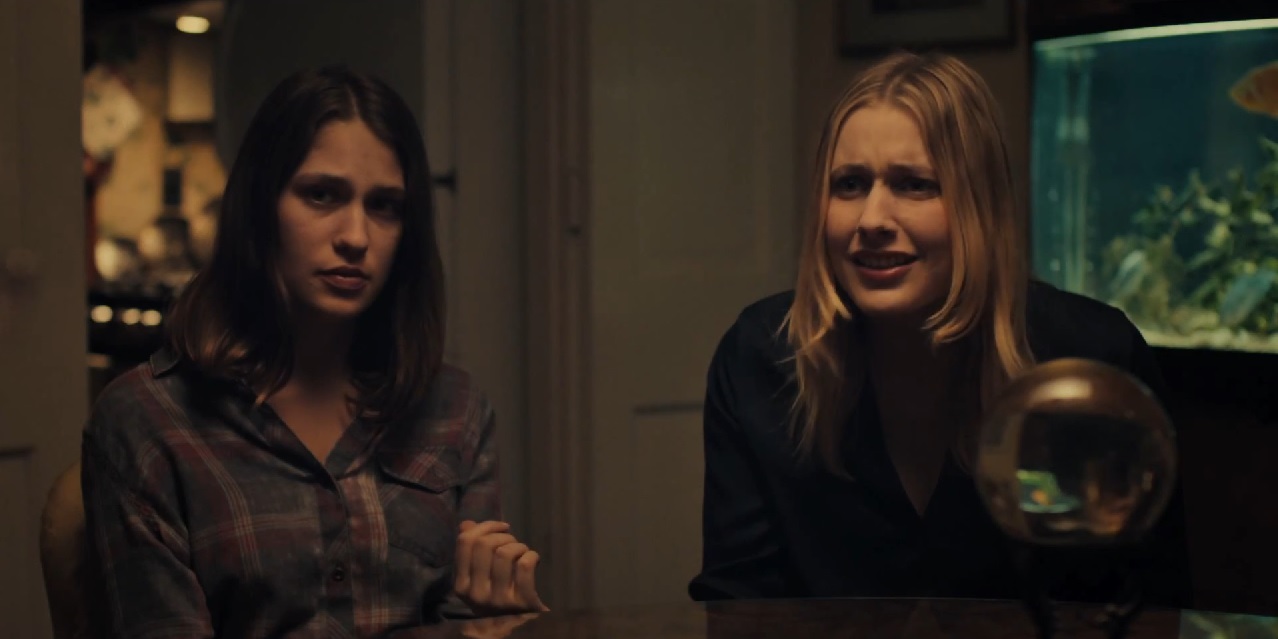
9. Mistress America
10. Crimson Peak
11. Kurt Cobain: Montage of Heck
12. Ex Machina
13. Going Clear: Scientology and the Prison of Belief
14. SPECTRE
15. Spy
16. Kingsman: The Secret Service
17. Sinatra: All or Nothing at All
18. The Death of "Superman Lives": What Happened?
19. Daft Punk: Unchained
Honorable Mentions: A Very Murray Christmas Blackhat 7 Days in Hell Wrestling Isn't Wrestling .
Dishonorable Mention: The Gunman
The Worst of 2015:
1. Aloha
2. Fifty Shades of Grey
3. Insurgent
4. Paul Blart: Mall Cop 2
© thevoid99 2016