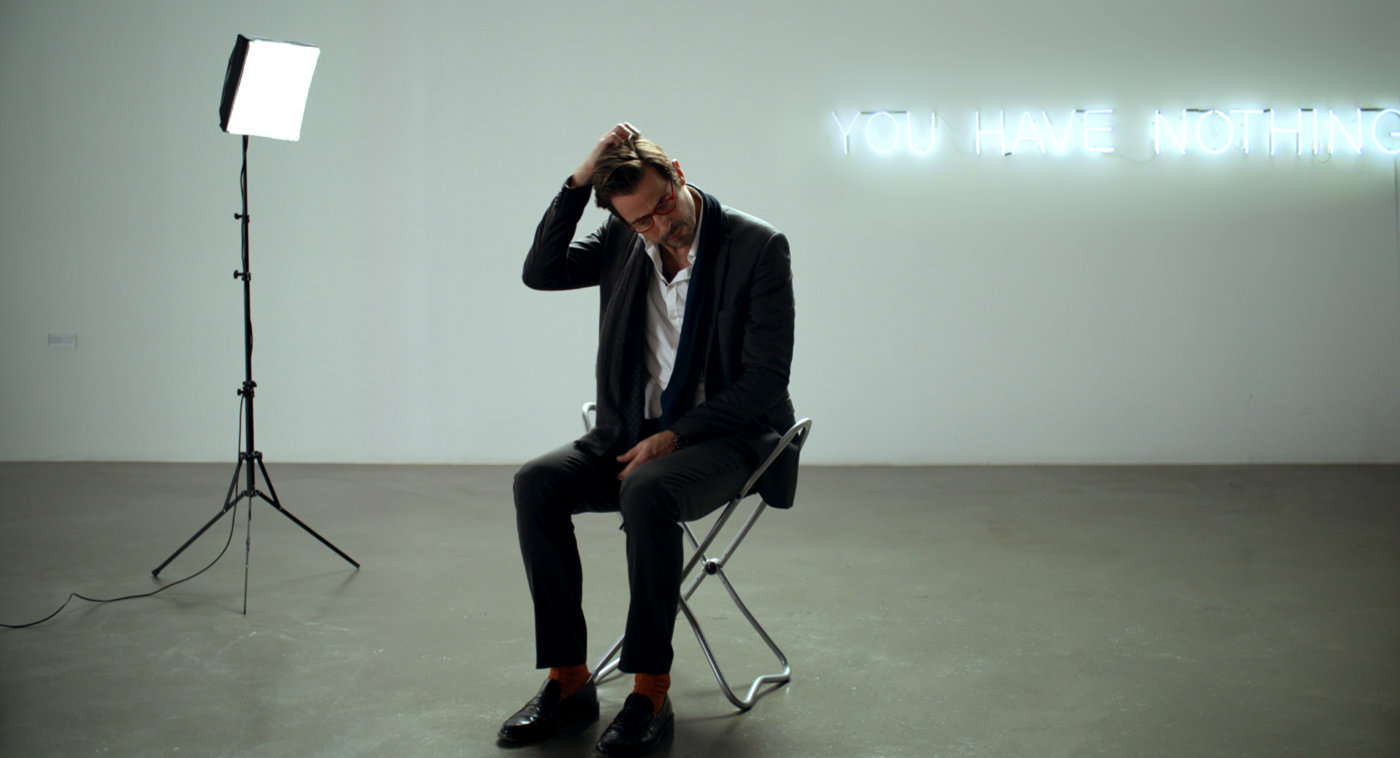
(2017 Winner of the Palme d’Or and the Vulcan Technical Prize to Josefin Asberg)

The film explores a museum curator who is set to stage an upcoming exhibit for an artist that is set to create some controversy while he deals with many aspects of his life that begins when his wallet, phone, and cufflinks were stolen. It is a film that is really a character study of a man that is dealing with a life that is in chaos as he runs an art museum in Stockholm that is about to display this exhibit for an Argentine artist that is to say a lot about humanity. The moment he becomes a victim of theft is where things start to fall apart for him as he would get himself into lots of trouble both professionally and personally. Ruben Ostlund’s screenplay is largely straightforward as it largely follows the life of Christian (Claes Bang) who is trying to stage an exhibition where it all revolves around a square and its meaning with society. Yet, the theft of his phone, wallet, and cufflinks would put Christian into a tailspin just as he is about to present this exhibit. A couple of his assistants would help find his possessions but Christian’s letters in asking for his return would get him into more trouble.
The first act is about Christian trying to hold the exhibit as well as figure out how to present it as well as getting his personal possessions back. The second act is about the return of those possessions but also his tryst with an American journalist in Anne (Elisabeth Moss) as well as the trouble he endures from a young Arab kid (Elijandro Edouard) with a discussion about art from an expert in Julian (Dominic West) being interrupted by a man with Tourette’s. Then a couple of promotional figures come in with an idea to promote the exhibition as what they come up with ends up becoming very controversial with Christian being the target of what was presented. The third act is about the fallout but also Christian dealing with what he did to this young kid as well as a dinner with a performance artist in Oleg (Terry Notary) that went too far.
Ostlund’s direction definitely has a lot of gorgeous imagery and compositions as it is shot on location in and around Stockholm as well as Gothenburg and parts of Berlin with the museum being a major character in the film. Yet, Ostlund makes something definitely play into a crucial period in time for not just Sweden but Europe itself as it relates to the migration crisis of the time as the city is filled with not just a lot of homeless people around Christian’s world but also some of Arab descent. It is Ostlund making a social commentary about the art world and its disconnect with the real world though the exhibit Christian is to present is about this need for equality even though he doesn’t do anything about what is around him though he would buy a sandwich for a woman and later give a homeless person some money. It is Ostlund trying to say something about the world while the scenes set in the museum are presented in some strange form of satire in some of the exhibits shown but also in what Christian is set to present from this unseen Argentine artist.
There are a lot of wide and medium shots that Ostlund create that include some gazing images although there are moments where the film does drag as it has a running time of over two-and-a-half hours. Notably as it wants to be funny at times but also be serious as there is an element of unevenness in what Ostlund wanted to do though the eventual promotional clip for this exhibit is a moment of dark comedy. The film’s third act involves this moment of intense discomfort as it is meant to be a satirical comedy of these parties but also how someone takes it too far. Even as Christian becomes troubled by the fact that he is surrounded in a world that is confusing and detached from reality where he also has to answer for things he did although he is confronted by people who have their own agendas rather than hear the truth. Overall, Ostlund crafts a captivating film about a museum curator dealing with personal and professional challenges just as he’s about to present a controversial art exhibit.
Cinematographer Fredrik Wenzel does brilliant work with the film’s cinematography with its usage of low-key lighting for some of the interior/exterior scenes at night with some vibrant lighting for a major dinner scene as well as some straightforward shots for some of the daytime exterior scenes. Editors Ruben Ostlund and Jacob Secher Schuslinger do excellent work with the editing as they allow shots to linger for a few minutes as well as create a stylish montage for Christian and Anne’s sex scene. Production designer Josefin Asberg does incredible work with not just many of the interiors and exhibits inside the museum but the square outside of the museum along with some of the objects at the homes of a few characters. Costume designer Sofie Krunegard does fantastic work with the costumes as it is largely straightforward with the exception of tuxedos and designer dresses at the dinner in the third act as well as the cheerleading costumes that Christian’s daughters wear.
Makeup designer Erica Spetzig and special effects makeup artist Morten Jacobsen do terrific work with the look of a few characters with Oleg being notable in a few bits. Special effects supervisor Johan Harnesk, plus visual effects supervisors Samir Arabzadeh, Jonah Edstrom, and Tomas Naslund, does nice work with the visual effects as it is largely bits of set dressing as well as the look of a few promotional bits and in some of the art exhibits. Sound editor Andreas Franck does superb work with the sound as it is straightforward but also in how music sounds as well as how sparse elements in a room are presented. Music supervisor Rasmus Thord creates a wonderful music soundtrack that largely consists of acapella pieces from Bobby McFerrin as well as music from Justice, Sultan + Shepard, Holl & Rush, Gasolin, and classical pieces from Johann Sebastian Bach that is performed by Yo-Yo Ma with McFerrin as it play into the film’s offbeat tone.
The casting by Pauline Hansson is remarkable as it feature some notable small roles from Lise Stephenson Engstrom and Lilianne Mardon as two of Christian’s daughters, Daniel Hallberg and Martin Sooder as a couple of advertising agents who would create a controversial YouTube video, Annica Liljeblad as a museum personnel who interviews Julian, Marina Schiptjenko and Nicki Dar as a couple of board members of the museum, Elijandro Edouard as a young Arab kid who gets a letter from Christian accusing him of being a thief, Christopher Laesso as an assistant named Michael who helps Christian find his possessions, and Dominic West as an art expert named Julian who finds himself becoming a target during a dinner at the museum.
Terry Notary is brilliant as the performance artist Oleg who acts like an ape during a dinner as he takes things too far. Elisabeth Moss is amazing as Anne as an American journalist who interviews Christian for a piece only to embark on an affair with him that becomes a bit weird as Moss brings some humor to her performance. Finally, there’s Claes Bang in an incredible performance as Christian as a museum curator who finds himself dealing with professional and personal crises as there is humor in his performance but a lot of it is straightforward as he also displays a sense of arrogance in his character who endures humility as well as the fact that he doesn’t have much control in his life.
The Square is a marvelous film from Ruben Ostlund. Featuring a great cast, amazing set designs, and a witty study of a man’s life in chaos. It is a film that is an engaging satire despite some flaws in its narrative and lack of major action that occur in the film. In the end, The Square is a remarkable film from Ruben Ostlund.
Ruben Ostlund Films: (The Guitar Mongoloid) – (Involuntary) – (Play (2011 film)) – Force Majeure - (Triangle of Sadness)
© thevoid99 2022
Directed by Matthew Warchus and written by Stephen Beresford, Pride is the story about the British miner’s strike of 1984-1985 where miners reluctantly get the support of gay and lesbian activists who would raise money for the miners. The film is a dramatic account on how the gay and lesbian community get involved as well as display the act of solidarity during one of Britain’s most tumultuous periods. Starring Bill Nighy, Imelda Staunton, Paddy Considine, Dominic West, Andrew Scott, George MacKay, Joseph Gilgun, Menna Trussler, and Ben Schnetzer. Pride is a heartfelt and compelling film from Matthew Warchus.
The British miners’ strike of 1984-1985 was an event in Britain that had miners going against the rule of its then-prime minister Margaret Thatcher over pit closures and pay restraints. It was around this time that the National Union of Mineworkers would receive support but from the most unlikely group of people in the gay and lesbian community who saw the same amount of prejudice and abuse they had received from the police as they offered their own support as an act of solidarity. The film is a dramatic account of this event which is considered a watershed moment for the British gay and lesbian movement but also for the miners strike as well where it took a ragtag group of people who go to a small town in Wales to offer their support and raise money for the miners.
Stephen Beresford’s screenplay talks about the formation of the Lesbians and Gays Support the Miners campaign that started in a gay bookshop by a few activists where they just wanted to donate whatever money to help miners who are on strike and can’t pay the bills. While NUM was at first unwilling to take their money, it was through a small faction in this small Welsh mining town that said yes but unaware of who they’re getting money from as the locals are aghast of who is giving them donations. Still, one of the miners’ local organizers in Dai Donovan (Paddy Considine) would invite them as does the leader of the women’s support group in Hefina Headon (Imelda Staunton) where it took a while for the locals to accept them. Even as the LGSM would find ways to raise more money and awareness despite the fact that there is a lot happening in their own community as it relates to the AIDS crisis as one of them is HIV positive yet has found a way to curb his disease.
Matthew Warchus’ direction doesn’t really go for a lot of style except for a few scenes shot entirely on hand-held to give it a cinema verite feel. Yet, it does maintain a simplicity in not just the compositions but also the setting as it is shot not just in parts of London and its nearby suburbs but also in small towns in Wales to make it feel very real. Warchus would also find something ordinary and make it special as the film does have subplots as it relates to not just miners’ wives trying to do what they can for their husband but also find themselves in their own right. The direction also play into the realities of what is going on in Britain with footage of the news as well as what the tabloids were printing as a way to cause problems between the two factions. Even as a miner’s widow would create further problems upsetting her brother-in-law who is one of the organizers in the strike. Though it’s third act does give the film a bit of a different tone as it relates to not a lot of realities in both the mining and gay community. It does serve as some major moments in a few of its characters as well the fact that these two very different communities come together where they were able to make a difference in a way that is bigger than themselves. Overall, Warchus crafts a lively and engaging film about gay and lesbian activists helping striking miners in their time of need during the 1980s British miners’ strike.
Cinematographer Tat Radcliffe does excellent work with the film‘s cinematography from the vibrant look of London in its clubs and the gay bookshop that the LGSM organizers frequent at to the more drenched yet grey-like color of the small town in Wales. Editor Melanie Oliver does fantastic work with the editing as it does play into style with its usage of jump-cuts as well as some montage-based cutting. Production designer Simon Bowles, with set decorator Liz Griffiths and supervising art director Mark Raggett, does amazing work with the look of the bookshop the LGSM organizers meet as well as some of the clubs they go to and the community hall at the small Welsh town where the miners meet to have meetings. Costume designer Charlotte Walter does brilliant work with the costumes from the colorful look of the members of the LGSM to the more grey and casual look of the miners and their wives.
Hair/makeup designer Nadia Stacey does terrific work with the look of the hairstyles and makeup of some of the members of the LGSM as well as create a straight-laced look for the miners and their families. Visual effects supervisor Hugh MacDonald does nice work with some of the film‘s minimal visual effects which is just essentially set dressing to play into what London looked like in the 1980s. Sound designer Blair Jollands does superb work with the sound in the way some of the parties sound as well as the sparse yet eerie tension heard in a key meeting late in the film. The film’s music by Christopher Nightingale is wonderful for its mixture of low-key orchestral music and guitar-based rock music to play into the period of the times while music supervisor Nick Angel creates a fun soundtrack filled with a lot of the music of the times from the Smiths, Shirley & Company, Bronski Beat, Frankie Goes to Hollywood, Culture Club, Dead or Alive, and Pete Shelley as well as some folk-based pieces from Pete Seeger and Billy Bragg.
The casting by Fiona Weir is phenomenal as it include some notable small roles from Matthew Flynn and Monica Dolan as Joe’s parents, Olwen Medi as Gethin’s mother, Kyle Rees and Jack Baggs as a couple of young miners who go to Jonathan in getting dance lessons so they can get girls, Rhodri Meilir as the miner/co-organizer Martin James, Liz White and Nia Gwynne as a couple of miners’ wives, and the trio of Freddie Fox, Chris Overton, and Joshua Hill as members of the LGSM. Other noteworthy small roles include Karina Fernandez and Jessie Cave as two LGSM members who want to form a splinter group known as Lesbians Against Pit Closures while Lisa Palfrey is terrific as the widow Maureen Barry who isn’t keen on having LGSM at the town as she tries to create trouble only to get the ire of her brother-in-law Cliff. Menna Trussler is wonderful as the elderly widow Gwen who would be the first to take LGSM’s donation as well as find common ground with the lesbians. Andrew Scott is fantastic as LGSM co-founder Gethin who also runs the bookshop with his partner Jonathan as he admits to his reluctance in returning to Wales due to his relationship with his mother where he would eventually find the courage to see her again.
Jessica Gunning is excellent as Martin’s wife Sian who would find her voice in the activism as she would also the person to help the LGSM and miner’s union find common ground. Dominic West is brilliant as the HIV-stricken Jonathan who isn’t sure about what his friends are doing as he helps them while showing the young miners how to dance as a way to pick up women. Joe Gilgun is superb as LGSM co-founder Mike Jackson who would introduce the young Joe to activism as well as be the one to create banners for the cause. Faye Marsay is amazing as Stephanie Chambers who is the lone lesbian of the group who has a wild look but finds herself having more common ground with the miners’ wives where she takes a maternal role for Joe. George MacKay is great as Joe as a college student who finds himself taking on the cause to help the miners while trying to hide his sexuality from his parents where he finally makes a big decision as an adult.
Ben Schnetzer is incredible as the late LGSM co-founder Mark Ashton who is the group’s leader that rallies everyone around to the cause as he sees similarities in the struggles the miners are facing along with the gay and lesbian community as it’s just this riveting breakthrough. Paddy Considine is marvelous as local miners’ leader Dai Donovan who would be the first to meet the LGSM as he is taken aback by them at first only to see that they’re just cool people. Imelda Staunton is radiant as Hefina Headon as the head activist for the miners’ wives who is one of the first to welcome in the LGSM as she sees what they’ve done for the cause as well as realize how fun they are. Finally, there’s Bill Nighy in a remarkable performance as Cliff Barry as a miner who had seen a lot as he is one of the few who welcome the LGSM immediately as well as know what is at stake as it relates to the well-being of the miners and their families.
Pride is a sensational film from Matthew Warchus. Featuring a great ensemble cast, awesome music, and a compelling story that is based on the real British miners’ strike of the mid-1980s. It’s a film that doesn’t just explore a moment in time but also a moment where people came together just to help one another no matter what sexual preference they are. In the end, Pride is a phenomenal film from Matthew Warchus.
© thevoid99 2016