Written and directed by Eva Gardos, An American Rhapsody is the story of a Hungarian family who fled the country during the emergence of Communism as they were forced to leave their infant daughter behind as she would eventually return to them only to become a lost teenager who would return to Budapest. Based on Gardos’ own real-life, the film is an exploration into a young girl who is caught between two different worlds and two different families as she tries to come to terms with her own identity. Starring Scarlett Johansson, Nastassja Kinski, Tony Goldwyn, Larisa Oleynik, Mae Whitman, Emmy Rossum, and Agnes Banfalvy. An American Rhapsody is a haunting yet powerful film from Eva Gardos.
Set in 1950s Communist Hungary through the mid-1960s, the film explores this world of a family coming apart through the most troubling circumstances as their eventual reunion would only cause a young girl to feel lost and angry over everything she’s been put through. Since this is a very personal film based on Eva Gardos’ own experiences as a child who was born and raised in Communist Hungary during the 1950s as she would be reunited with her own family years later in the U.S. The film showcases not just a girl who would be caught between the world that she had been raised in unaware of its political turmoil but also a family who were forced to leave her behind as the years to repair the damage of that discord only creates tension between mother and daughter.
The film’s screenplay does have a traditional three-act structure as the first act is about Peter and Margit Sandor (Tony Goldwyn and Nastassja Kinski, respectively) escaping Communist Hungary with their five-year old daughter Maria (Klaudia Szabo) as they would trek through its treacherous borders to find refuge in Vienna. The plan was that their infant daughter Suzanne would join them but Margit’s mother Helen (Agnes Banfalvy) puts a stop to it once she realizes what will happen to Suzanne during this transfer as she asks a family friend to find a home for her granddaughter while she would serve time in prison. Helen’s decision would be the catalyst for everything that goes on as she would see her granddaughter be raised by kind farmers in Jeno (Balazs Galko) and Teri (Zsuzsa Czinkoczi) as she would take Suzanne away from them and back to her family. Unfortunately, the reunion between Suzanne and her parents is filled with a sense of confusion for the young girl as she would grow into this rebellious teenager (Scarlett Johansson) who asks her father to return to Hungary to gain an understanding into everything that has happened to her.
Gardos’ direction is very simple in the way she presents the film as she starts it off with some exposition of Suzanne talking about 1950s Hungary as it was taken over by the Communists and the events that forced her family to leave the film as the first 15-minutes are shot in black-and-white with the rest of the film in color. Gardos uses some hand-held cameras to play into the looseness of America while going for something more low-key and eerie for the scenes set in Hungary as well as some notable locations in Budapest. The use of wide shots and close-ups allow Gardos to play into the drama. Particularly in the second half as the tension between Margit and Suzanne starts to come ahead which would prompt the latter to want to return to Hungary. Though there’s a few things in the film that does get bogged down by exposition over why Margit had decided to leave Hungary. Gardos is able to keep things simple in the way it would play into Suzanne’s development as well as trying to find herself in the two disparate worlds she lived in. Overall, Gardos crafts a very tender and mesmerizing film about a family trying to start over and bring back the young girl they left behind.
Cinematographer Elemer Ragalyi does amazing work with the film‘s very colorful cinematography for many of the scenes set in California while going for a more low-key yet desolate look for the scenes in Budapest which includes some of the black-and-white look for the scenes in Hungary in its first act. Editor Margaret Goodspeed does nice work with the editing as it‘s pretty straightforward while it has some aspect of styles in its dissolves and a few montages including the newsreel sequence about Hungary‘s fall to the Soviet Union. Production designer Alex Tavoularis does excellent work with the set pieces from the design of the barbed wire walls in the Hungarian border as well as the look of 1950s/1960s homes in America.
Costume designers Beatrix Aruna Pasztor and Vanessa Vogel do fantastic work with the costumes from the dresses the women wear including the 60s clothes that Suzanne and her sister Maria would wear in the film‘s second half. Sound editor Jane Tattersall does terrific work with some of the sound from the terror in the barbed wire borders to the sounds in the American locations. The film’s music by Cliff Eidelman is wonderful for its somber orchestral score to play into the drama while it includes some traditional Hungarian music that is assembled by music supervisor Denny Diante who would also include some classical pieces and songs by Elvis Presley and Gerry & the Pacemakers.
The casting by Elizabeth Lang is brilliant as it features some notable small appearances from Colleen Camp and Lisa Jane Persky as American neighbors Margit befriends, Vladimir Mashkov as a Russian immigrant that Peter works with, Timothy Everett Moore as Suzanne’s American boyfriend Paul, Zoltan Seress as a family friend of Peter and Margit who would be the lone connection the family have back in Hungary, and Emmy Rossum as Suzanne’s friend Sheila whom she likes to smoke and drink with. In the roles of Suzanne’s sister Maria, there’s Klaudia Szabo as the five-year old, Mae Whitman as the more Americanized 10-year old version, and Larisa Oleynik as the 18-year old version who deals with Suzanne’s rebellion as well as what their mother wants. In the roles of the young Suzanne, there’s Raffaella Bansagi as the infant Suzanne and Kelly Endresz Banlaki who is terrific as the five/six-year old Suzanne who becomes unhappy in her new American surroundings.
Balazs Galko and Zsuzsa Czinkoczi are excellent in their respective roles as Jeno and Teri as the farming couple who raised Suzanne when she was young as they had a hard time with her departure while revealing to the older Suzanne about what happened to their farm and the dark realities of Communist Hungary. Agnes Banfalvy is superb as Suzanne’s grandmother Helen who would be the one that would cause the family to go through so much drama as she would eventually meet Suzanne years later as she would tell her why she made that drastic decision. Tony Goldwyn is amazing as Peter Sandor as Suzanne’s father who organized the escape as he deals with leaving his daughter behind while being the one who understands his daughter’s own culture shock and homesickness as he would have her return to Hungary.
Nastassja Kinski is wonderful as Suzanne’s mother Margit who tries to connect with Suzanne upon their reunion only to become very protective of her as it leads to mother-daughter tension. Finally, there’s Scarlett Johansson in a remarkable performance as the teenaged Suzanne as this young girl who feels lost as she wants to return to Hungary as she contends with her mother as it’s Johansson displaying a lot of angst and sensitivity to a troubled young girl in one of her quintessential performances.
An American Rhapsody is an excellent film from Eva Gardos that features a fantastic performance from Scarlett Johansson. Along with strong performances from Nastassja Kinski and Tony Goldwyn as well as a look into the world of European immigrants coming to America in unveiling the world they had to leave behind along with the sacrifices they had to make. In the end, An American Rhapsody is a superb film from Eva Gardos.
© thevoid99 2014
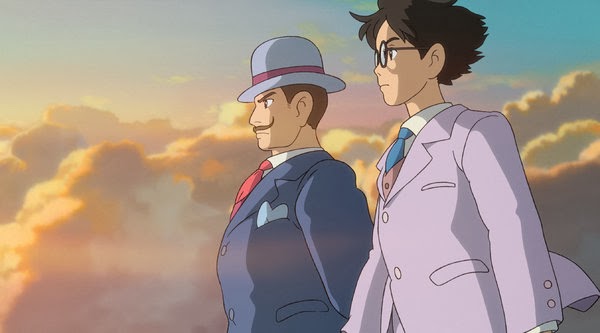
Written and directed by Hayao Miyazaki from his manga, Kaze Tachinu (The Wind Rises) is a fictionalized bio-pic about the life of Jiro Horikoshi as he was the man that designed the Mitsubishi A5M and its successor A6M Zero that played a key part in World War II. The film is a more dream-like portrait about Horikoshi’s life with some dramatic embellishments while not deviating too much from the real-life story. For the American-dubbed version of the film that is supervised by Gary Rydstrom, the voice cast includes Joseph Gordon-Levitt, Emily Blunt, John Krasinski, William H. Macy, Elijah Wood, Stanley Tucci, Mae Whitman, Mandy Patinkin, Jennifer Grey, and Werner Herzog. Kaze Tachinu is a mesmerizing film from Studio Ghibli and Hayao Miyazaki.
The film is fictionalized bio-pic about the life of Jiro Horikoshi that is presented in a dream-like fashion where it goes from Horikoshi as a young boy to becoming the man who would design the Mitsubishi A5M and its successor the A6M Zero that would become the key planes used in World War II. With a mixture of reality and a dream-like world, the film plays into Horikoshi’s desire to create the ultimate airplane that can endure wind resistance and not be intimidated by the advanced technology of other countries. Even as Horikishi (Joseph Gordon-Levitt) seeks the advice of the famed Italian plane designer Giovanni Battista Caproni (Stanley Tucci) in his dreams. Through Hayao Miyazaki’s screenplay, the film does have a conventional narrative in terms of structure that plays to Horikoshi’s life but he infuses with bits of surrealism and dreamy textures to make it much more interesting.
Notably as the film plays into key events that would mark Horikoshi’s development from his encounter at the 1923 Great Kanto Earthquake as well as his trip to Germany to see how the Germans created their airplanes. These moments would drive Horikoshi to see if he can create a war plane for Japan that would define them as they endure the Great Depression and such. While there would be some failures along the way, Hirokoshi would eventually find more inspiration when he re-meets Naoko (Emily Blunt) whom he had met years ago during a train ride with her sister where they encountered the Great Kanto Earthquake of 1923. His relationship with Naoko would prove to be a major catalyst to Horikoshi’s development as a man and as an engineer where he would try to balance both roles and later deal with his what he’s achieved.
Miyazaki’s direction is definitely dazzling in the way he creates Japan in the early half of the 20th Century as it’s a world that is trying to catch up with the modern world. Especially as he infuses bits of surrealism into the dream sequences that Horikoshi would have as it features some vast scenes of planes flying around and all sorts of things. Notably in the designs of the planes and how imaginative they look as it plays to what Horikoshi would want to create. The look of Japan from its different backgrounds of mountains, forests, and cities are presented with such great detail as there’s aspects in the background that are just as mesmerizing to look at. Even in the design of the characters which have all of the quintessential elements that is expected in Miyazaki’s work as an animator.
With the aid of cinematographer Atsushi Okui to help in the lighting where much of the animation is in 2-D hand drawn animated style with some computer-based animation for some of the backgrounds. Miyazaki creates something that is truly rich in scope but also infuse it with such artistry in the way the planes are flown as well as the way nature is presented as if it has the feel of a live-action film. Even in some of the compositions and camera work where it has a sense of action but also some drama and humor that just adds to the beauty of the film. Overall, Miyazki creates a truly evocative and sensational film about a dreamer who would create one of the greatest designs for a plane despite the fact that it’s being used as an instrument of war
Editor Takeshi Seyama does amazing work with the film‘s editing in its approach to rhythm for some of its action scenes as well as the dream sequences as it features lots of jump-cuts and disjointed rhythmic cuts to play into that sense of surrealism. Sound designer Koji Kasamatsu and sound editor Gwendolyn Yates Whittle (for its English version) do fantastic work with the sound in creating some of the sound effects used in the film with Whittle providing some low sound textures for some of the English dialogue as background textures. The film’s music by Joe Hisaishi is brilliant for its mixture of lush orchestral pieces with some playful and offbeat music driven by accordions and string instruments.
For the film’s English-language version, the cast includes some contributions from Elijah Wood as a co-worker of Horikoshi, Jennifer Grey as Mrs. Kurokawa, Darren Criss as another worker in Katayama, Mandy Patinkin as one of Horikoshi’s top bosses, Mae Whitman as Horikoshi’s sister Kayo, Zach Callison as the young Horikoshi, William H. Macy as Naoko’s father, Edie Merman as Horikoshi’s mother, and Werner Herzog in a superb voice performance as a German tourist Horikoshi meets in a retreat in the famed Magic Mountains in Japan. Martin Short is very funny as the comical boss Mr. Kurokawa who provides some humor as well as some guidance for Horikoshi while Stanley Tucci is brilliant as the famed Italian plane designer Giovanni Battista Caproni as Tucci sports an Italian accent as he displays warmth and humor into the role of the man who would guide Horikoshi.
John Krasinski is excellent as the voice of Horikoshi’s close colleague Kiro Honjo who aids Horikoshi in some of the designs as he would create his own planes that would also revolutionize planes in Japan. Emily Blunt is wonderful as Naoko as this woman who Horikoshi would meet early on as a young girl and later as a woman who would provide an inspiration and drive for Horikoshi after some of the failures he had to deal with. Finally, there’s Joseph Gordon-Levitt doing fantastic voice work as Jiro Horikoshi as this young man who dreams of designing an airplane that would define Japan in all of its glory though he is aware of what they’re being used for as he hopes they can provide some meaning into his life.
Kaze Tachinu is a remarkable film from Studio Ghibli and Hayao Miyazaki. It’s a film that is filled with rich images and a captivating story that manages to be wondrous as well as somber for what Jiro Horikoshi wanted to make. While it has some dark elements, it is balanced by the themes of being a dreamer which makes the story far more engaging. If this film is to become Miyazaki’s final contribution to cinema, he at least goes out with a winner. In the end, Kaze Tachinu is a phenomenal film from Hayao Miyazaki and Studio Ghibli.
Hayao Miyazaki Films: (The Castle of Cagliostro) - (Nausicaa of the Valley of the Wind) - (Castle in the Sky) - My Neighbor Totoro - Kiki’s Delivery Service - (Porco Rosso) - Princess Mononoke - Spirited Away - (Howl’s Moving Castle) - (Ponyo) - (The Boy and the Heron)
© thevoid99 2014
Written and directed by Stephen Chbosky that is based on his own novel, The Perks of Being a Wallflower is the story of a troubled high school freshman who befriends two seniors who are outsiders as they help him deal with his growing pains. The film is a coming-of-age film set in high school where a young man tries to deal with death and all sorts of things as he finds new friends in the most unlikely people. Starring Logan Lerman, Emma Watson, Ezra Miller, Mae Whitman, Joan Cusack, Nina Dobrev, Dylan McDermott, Kate Walsh, Melanie Lynskey, and Paul Rudd. The Perks of Being a Wallflower is a majestic yet mesmerizing film from Stephen Chbosky.
The film explores a year in the life of a young high school freshman who arrives as this very introverted and fragile kid still reeling from the suicide of his best friend. Unable to fit in and feeling left out, he finds himself befriending two seniors who don’t play by the rules or fit in with anyone as they take him to be part of their group. Throughout the course of the film, Charlie Kelmeckis (Logan Lerman) writes letters to an imaginary friend about his year as a freshman where he also endures some repressed memories as well as trying to figure out the world of high school as he befriends Sam (Emma Watson) and Patrick (Ezra Miller) who are step-siblings that prefer the beat of their own drum. For Charlie, he finds a place where he can belong and not worry about fitting in though he realizes that Sam and Patrick are just as messed up as he is.
The film’s screenplay by Stephen Chbosky, that features some contributions from a draft written by the late John Hughes, takes it time to explore the year in the life of Charlie Kelmeckis as his first day as a high school freshman is a terrible one. He is treated with indifference by his older sister Candace (Nina Dobrev) at school while the only person who seems to take notice of Charlie in school is his English professor Mr. Anderson (Paul Rudd) who is impressed with Charlie’s knowledge of literature as he gives him copies of classic books for him to read. Upon meeting Sam and Patrick, Charlie realizes that he isn’t alone though there’s still a lot to learn about life as Patrick is gay who is secretly in a relationship with a popular football player named Brad (Johnny Simmons).
Sam meanwhile, is in a relationship with a college student named Craig (Reece Thompson) where Charlie falls for her though he finds himself in a relationship with her friend Mary Elizabeth (Mae Whitman). When things become complicated in its second half where Charlie finds himself not happy in his relationship with Mary Elizabeth. He also starts to deal with some memories about his late aunt Helen (Melanie Lynskey) whom he adored as he also has blackouts where he wouldn’t remember what he did. Even as he would do something that would bring all of his friends back together despite the fact that he’s a freshman and they’re seniors that are about to leave for college. That sense of reality does come ahead in the third act for Charlie but also something more that plays into his role as a young man coming of age as he tries to comprehend his role in the world and what has been troubling him all these years.
Chbosky’s direction is quite simple in its framing and such as he sets the film in early 1990s Pittsburgh where Sam and Patrick listen to college rock and retro music including the Smiths that Charlie loves. Pittsburgh is a character in the film where it plays to that sense of adventure where it’s a city that is very exciting but it’s also near places in the suburbs where it was OK for kids to come home and feel safe. Chbosky’s direction also creates a sense of realism of the way high school was like in the early 1990s where there are a group of cliques from the jocks, the popular kids, and such that all sit in their own table and all play into their ideas of cool with the exception of Sam, Patrick, and their small group of friends. Especially as Chbosky also plays that sense of awkwardness in Charlie as he is mocked by a classmate for having a Trapper Keeper while always looking uncool though Mr. Anderson thinks there’s more to Charlie.
The direction also has Chbosky showcase what these outsiders would do where Charlie does get his first experience with the use of drugs though it is played for laughs. Yet, it also helps move the story forward in the way Chbosky would set up these dramatic moments where Charlie has no idea what he’s doing where he would reveal things that Sam nor Patrick needed to know which plays into the repressed memories he’s having. All of which play into a dramatic third act that reveals not just the source of repression but also into why he had been so introverted early in the film and why it’s start to come back to him. The overall result is Chbosky creating a truly engaging and tender coming-of-age film about a young teenager’s first year as a high school freshman where he finds friendship in other outsiders.
Cinematographer Andrew Dunn does excellent work with the film‘s cinematography where it is mostly straightforward in its daytime interior and exterior scenes while using some lights for the scenes at night including some shots at the Fort Pitt Tunnel which is a crucial moment in the film. Editor Mary Jo Markey does terrific work with the editing as it‘s mostly straightforward while it does delve into some style for the flashbacks as well as the scenes of Charlie blacking out. Production designer Inbal Weinberg, with set decorator Merissa Lombardo and art director Gregory A. Weimerskirch, does amazing work with the set pieces from the look of Charlie‘s home as well as the home of the other characters as well as the hangouts as it maintains that sense of early 90s look.
Costume designer David C. Robinson does wonderful work with the costumes where some of it stylish to play into the personalities of Sam and Patrick as well as the costumes they wear for the Rocky Horror Picture Show screenings. Visual effects supervisors Christian Cardona and Rocco Passionino do nice work with some of the film‘s minimal visual effects such as Charlie‘s first marijuana-induced haze as well as a chilling scene in the film‘s third act. Sound editors Perry Robertson and Scott Sanders do superb work with the sound such as the school dances and the atmosphere at the school halls. The film’s music by Michael Brook is fantastic as it features some low-key guitar-based music to play into Charlie‘s emotions while music supervisor Alexandra Patsavas creates a fun soundtrack that features music like Dexy’s Midnight Runners, Cocteau Twins, Galaxie 500, the Smiths, New Order, Cracker, and other 80s/90s alternative rock as well as David Bowie’s Heroes which is a prominent piece of the film’s soundtrack.
The casting by Mary Vernieu and Venus Kanani is brilliant for the ensemble that is created as it features some notable small roles from Nicholas Braun as Candace’s boyfriend Ponytail Derek, Zane Holtz as Charlie and Candace’s older brother Chris, Tom Savini as the shop class teacher Mr. Callahan, Dylan McDermott and Kate Walsh as Charlie’s parents, and Joan Cusack in a small yet terrific performance as a doctor who tries to find the source of Charlie’s blackouts. Adam Hagenbuch and Erin Wilhelmi are excellent in their respective roles as the stoner Bob and the Goth girl Alice who are part of the small group of friends Sam and Patrick hang out with. Reece Thompson is pretty good in a small role as Sam’s college boyfriend Craig while Jonny Simmons is superb as the popular jock Brad who is secretly Patrick’s lover.
Mae Whitman is fantastic as the very outspoken Buddhist Mary Elizabeth who falls for Charlie as she overwhelms him with everything. Paul Rudd is amazing as Mr. Anderson as the one teacher Charlie likes as he realizes Charlie’s passion for books as he encourages him to become a writer. Melanie Lynskey is wonderful as Charlie’s late aunt Helen as this very troubled woman who only appears in flashbacks as she is someone that Charlie adored. Nina Dobrev is amazing as Charlie’s older sister Candace who ignores him at school while dealing with her own issues that includes something where she tries to make Charlie keep something secretive.
The film’s best performances are the trio of Ezra Miller, Emma Watson, and Logan Lerman as they give astounding performances in their roles. As the very flamboyant Patrick, Miller brings a lot of enthusiasm to his character as well as lot of charm that plays into the fact that he’s also a bit of a mess when he has trouble dealing with reality. In the role of Sam, Watson has this energy to her role as she has this alluring presence that makes her very interesting as well as someone who is also quite fragile. Lerman is phenomenal as Charlie as this troubled, introverted young boy just trying to figure himself out where Lerman brings a lot of weight to the role in not just his physicality and reactions but also in the way he conveys a boy growing up as it’s definitely a real breakthrough for the young actor.
The Perks of Being a Wallflower is an extraordinarily rich film from Stephen Chbosky that features remarkable performances from Logan Lerman, Emma Watson, and Ezra Miller. The film isn’t just a touching yet poignant coming-of-age tale that is engaging but also showcasing a world where there is a place for those that feel like they don’t belong anywhere. In the end, The Perks of Being a Wallflower is a sensational film from Stephen Chbosky.
© thevoid99 2013