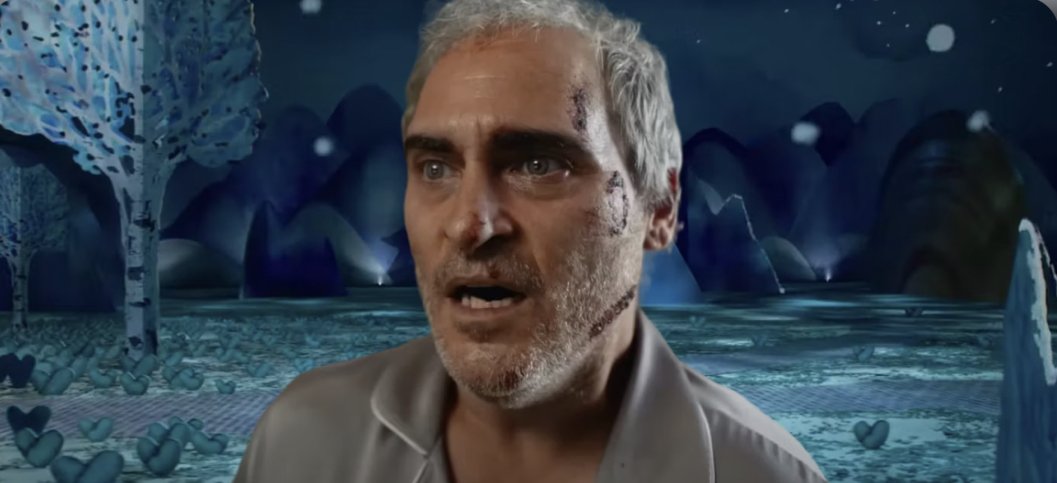
The film follows a man who is set to meet his mother as he constantly encounters all sorts of chaos where he is often afraid as his journey to return home to his mother becomes this journey filled with lots of misunderstandings and other strange incidents that has him running away. It is mainly a character study of this man who lives in an apartment where a lot of shit happens as he often attends therapy sessions as he is reluctant to visit his mother Mona (Patti LuPone & Zoe Lister-Jones as both the present and younger versions, respectively) whom he’s had a chaotic relationship with. Especially as they plan to meet on the anniversary of his father’s death as he had never known his father since he died before he was even born which makes the journey more difficult while a series of circumstances would delay his departure as he is hit by a truck where he is taken to a house by this couple who are nursing him despite the protests of their teenage daughter.
Ari Aster’s screenplay is sprawling in terms of the journey that Beau Wassermann takes as it also has some flashbacks relating to his life with mother including a moment as a teenager (Armen Nahapetian) when they’re vacationing on a cruise where meets a young girl named Elaine (Julia Antonelli) where they make a vow to lose their virginity to one another as he wouldn’t see her for years as he later learns that she works for her mother as an adult (Parker Posey). Throughout the course of the film, Aster’s script has Beau going through these encounters with people and other things as he is trying to go home as it relates to a Jewish custom but also is forced to confront things in his life had been braver. Yet, Beau is often someone who had a choice to take action or to make a decision but often never stands up for himself which often puts him into danger and all sorts of trouble. Especially in his relationship with his mother where he always does whatever she tells him to do and allows people to step over him.
Aster’s direction is definitely grand in terms of its overall presentation as it is shot largely on location in Montreal as New York City with areas in and around the city in its forests and suburbs as the places that Beau would go to. Yet, it opens with a childbirth scene shot from the perspective of the baby coming out of its mother’s womb as it sets the tone for the chaos that Beau would endure as an adult. Aster would create some unique compositions that play into Beau’s own sense of paranoia and fear such as a man hiding on the ceiling in his bathroom while Beau is in the tub as the close-up of Beau’s face and the man’s face is a key moment. Even as it would be this moment leading to the second act where Beau would be hit by a car while being stabbed by a crazed naked man as it is one of several moments of surrealism that is present throughout the film. The scenes at the home of this couple in Grace and Roger (Amy Ryan and Nathan Lane, respectively) does seem like this sense of normalcy until their daughter Toni (Kylie Rogers) comes in as it adds to this sense is discord where something is going to happen to Beau either through his own decisions or his refusal to take action.
The wide and medium shots don’t just add to the visual look of the film including a scene where Beau is in the forest where he meets an acting troupe putting on a play. It is a scene near its third act where Beau sees himself as this character in a play as it is this surreal moment that play into the kind of future Beau would’ve had if he had been braver. It should’ve been this moment of serious development but given the fact that he is someone that carries a lot of guilt where Aster constantly has Beau in situations where there are moments that go on for too long in a film with an almost three-hour running time. The film’s third act and climax that relates to a supposed flashback or traumatic event has him just take not just the abuse from people who blame him for something he didn’t do but also keeps apologizing as if he was the one that has done something. Its ending is also strange as it plays into a man that doesn’t just have serious parental issues but is also someone without a spine who rarely has a moment of anger as he is driven by fear of not just being unloved but also being someone who never had anyone to tell him to stand up for himself. Overall, Aster crafts a wondrous yet bloated film about a man who is afraid of everything and everyone as he tries to get home to his mother.
Cinematographer Pawel Pogorzelski does brilliant work with the film’s cinematography as it has these amazing visuals for many of the daytime exterior scenes with its natural lighting along with some unique lighting for some of the scenes at night including scenes in the forest and at Mona’s home. Editor Lucian Johnston does nice work with the editing in allowing shots to linger a bit along with rhythmic cuts to play into the action and some of the film’s dark humor though it has moments where it lags due to its bloated presentation. Production designer Fiona Crombie, with key set decorator Paul Hotte and supervising art director David Gaucher, does amazing work with the look of the small apartment that Beau lives in to the home of Roger and Grace as well as the home where Mona lives along with the look of the stage play that Beau watches. Costume designer Alice Babidge does excellent work with the costumes in the different array of clothes including some pajamas that Beau wears along with the costumes that the acting troupe wears.
Hair designer Felix Lariviere and prosthetics makeup effects designer Steve Newburn do incredible work with not just the look of Beau with his bruises and such but also in the play scene where he dreams of being the main character in the play with all of its prosthetics as well as a key scene late in the film as it play into some revelations about himself. Special effects supervisor Louis Craig, along with visual effects supervisors Yuval Levy and Louis Morin, does fantastic work with the look of the play fantasy scene with some of its animation as well as some effects for a key scene late in the film. Sound editor Paul Hsu does superb work with the sound as it play into the atmosphere of the locations as well as how music is presented next to Beau’s apartment as well as other things that are played on location. The film’s music by Bobby Krlic is phenomenal for its haunting mixture of woodwinds, percussions, and string instruments to add to the suspense and offbeat humor of the film while music supervisor Jemma Burns creates a soundtrack that is filled with an array of music from various genres ranging from pop and electronic music including songs from Bread and Mariah Carey.
The casting by Julie Breton and Jim Carnahan is wonderful as it feature some notable small roles from Richard Kind as Mona’s attorney Dr. Cohen, Julian Richings as a strange man Beau meets at the play who claims to know Beau’s father, the trio of Michael Gandolfini, Theodore Pellerin, and Mike Taylor as Beau’s sons in the fantasy play sequence, Alicia Rosario as Toni’s friend Liz, Bradley Fisher as a naked man stabbing people, James Cvetkovski as Beau as a young boy, Hayley Squires as a pregnant woman named Penelope who takes Beau to the forest where she’s part of an acting troupe, Julia Antonelli as a teenager Elaine whom the young Beau would fall for, and Armen Nahapetian as the teenager Beau who would fall for the young Elaine as he deals with his father’s absence and other issues relating to his mother. Stephen McKinley Henderson is superb as Beau’s therapist who observes and takes notes over Beau’s anxieties while also recommending him to take some serious prescriptions with water.
Denis Menochet is terrific as a PTSD soldier named Jeeves who is unstable comrade of Grace and Roger’s son whom they let stay at a trailer at their home as he would be this insane figure that would scare Beau. Kylie Rogers is good as Grace and Roger’s daughter Toni as this troubled and antagonistic teenager who hates Beau as she gets him to do things as a way to humiliate him as well as do whatever she can to get him in trouble. Amy Ryan and Nathan Lane are excellent in their respective roles as Grace and Roger as a couple who hit Beau with their car as they take him in to heal as they are this weird couple who offer to help him yet are offbeat though they come off as cartoonish at times. Parker Posey is brilliant in her small role as the adult Elaine as Beau’s soulmate whom he hadn’t seen in years as she reveals to work for his mother in her business while her reunion with Beau is a joyful moment leading to something hilarious in their meeting.
The duo of Patti LuPone and Zoe Lister-Jones are great in their respective roles as the older and younger version of Beau’s mother Mona Wassermann with LuPone as this domineering woman who has become tired of her son’s anxiety issues though it is clear that she is a toxic woman with little care about his issues. Lister-Jones’ performance is more subdued as she isn’t this sweeter version of Mona but also reveals to be someone who is also toxic. Finally, there’s Joaquin Phoenix in an incredible performance as the titular character as this man who is constantly afraid of everything as he’s filled with a lot of anxieties and fears where he often apologizes for everything. It is a performance that has Phoenix do a lot of physicality as well as display emotions though he is hampered by the script as well as the fact that this character he’s playing doesn’t grow a spine and never stands up for himself as it has these moments of greatness but it is also frustrating at times.
Beau is Afraid is a stellar yet highly-flawed film from Ari Aster despite an incredible leading performance from Joaquin Phoenix. While it is a film that does feature a great ensemble cast, dazzling visuals, and a killer music score by Bobby Krlic, it is a film that is ambitious in its approach to surrealism but falls flat due to a protagonist that rarely takes action for himself as he continuously gets stepped on over and over again. In the end, Beau is Afraid is a good but bloated film from Ari Aster.
Ari Aster Films: Hereditary - Midsommar
© thevoid99 2023
Based on the 1978 film La Cage aux Folles by Edouard Molinaro that was based on the play by Jean Poiret and Francis Verber, The Birdcage is the story of a gay nightclub owner and his partner who both pretend to be straight in meeting the family of their son’s fiancee whose father is an ultra-conservative Senator caught up in a scandal that he’s not involved in. Directed by Mike Nichols and screenplay by Elaine May, the film marks a twenty-five year reunion between Nichols and May who were a famous comedy duo in the late 50s as they explore two gay men struggling with meeting a man who might not approve of their lifestyle. Starring Robin Williams, Gene Hackman, Nathan Lane, Dianne Wiest, Dan Futterman, Calista Flockhart, Hank Azaria, Tom McGowan, Grant Heslov, and Christine Baranski. The Birdcage is a dazzling and witty film from Mike Nichols.
The film revolves around an openly gay couple in a nightclub owner and his partner who is the star of the show where they learn that their son is going to marry the daughter of a powerful, ultra-conservative senator who is embroiled in a scandal that involved the death of a colleague. When the son learns that his fiancee’s family wants to meet them, trouble brews forcing Armand Goldman (Robin Williams) to pretend to be straight as well as trying to get his partner in the effeminate Albert (Nathan Lane) to act straight so that they would make a good impression for Senator Kevin Keeley (Gene Hackman). Along the way, hilarity ensues which leads to a crazy night of confusion, chaos, and amazement while Keeley is trying to shield himself from the press.
Elaine May’s screenplay isn’t just filled with some funny dialogue and situations that add so much to the chaotic tone of the story. It’s also in the fact that Armand and Albert are portrayed as a loving couple that has been through ups-and-downs where Armand is a man that organize things as well as be the one to direct Albert for a performance. Albert is the maternal figure who deeply cares for Armand’s son Val (Dan Futterman) though Val’s real mother in Katherine Archer (Christine Baranski) had never seen her son until she is later asked by Armand to aid them in dealing with the Keeleys. Though Senator Keeley and his wife Louise (Dianne Wiest) aren’t bad people as the latter is the more sensible of the two, the senator is overwhelmed by the fact that one of his colleagues who had helped found this moral coalition was found dead with an underage, African-American prostitute.
When it is time for the two families to meet that would include Val’s fiancee Barbara (Calista Flockhart), it is one of the most tense moments in the film as it relates to what role Albert would play despite the many attempts to include him or to have him act straight. It plays into the fact that he is sort of a liability as Val doesn’t want to see him get chewed on for who he is but it also showcases that he really does underestimate exactly what kind of man Albert is. Especially where he pulls a surprising stunt that makes Armand and Val extremely nervous while displaying some revelations of his own in how views things into the world that would even amaze someone as conservative as Senator Keeley. All of which showcases that despite these lifestyle differences that both gays and straights can share similar views. Then there’s the subplot as it relates to Keeley being hounded by a tabloid reporter Harry Radman (Tom McGowan) who is eager to make Keeley’s life a living hell though Keeley isn’t doing anything wrong or scandalous but it does play into the viciousness of the American press who are more interested in headlines rather than the truth.
Mike Nichols’ direction is definitely exquisite for not just capturing that sense of intimacy and realness to the life of a gay couple but also in finding the humor of the situations Albert and Armand have to go through. Shot largely on location in Miami, notably the South Beach section of the city and some shots in California as part of the American Northeast, the film does have this sense of vibrancy that play into who Armand and Albert are as well as a world that is very in tune with the times as it is something that Senator Keeley would have a hard time understanding. While Nichols would create some unique compositions including medium shots and close-ups to play up the intimacy and interaction between multiple characters to showcase some similarities on the concept of family values. He also uses some wide shots to play into the world of South Beach but also in a key scene where Armand and Albert are on a bench together which then cuts to a medium shot as it play more into the idea of why they’re meant for each other.
Nichols’ approach to humor is definitely lively in the way it just camps up the element of gay stereotypes as well as make fun of tabloid media in how ruthless they are in getting the story. There are also these moments that are just naturally funny in a scene where Armand is directing a performance that Albert is planning to do along with the scene where Albert tries to walk straight. By the time the film reaches its third act where the Goldmans meet the Keeleys, there is that sense of tension and uncertainty that looms until Albert makes an appearance in only a way that he can make an appearance. It is as if Nichols decides to cut that unease and let things become funny and natural all over again though there is still that sense of danger of how it could go wrong as well as what is happening outside of the home that would lead to one of the most hilarious payoffs in film. Overall, Nichols creates a dazzling, touching, and extremely funny film about a gay couple pretending to be straight for an ultra-conservative Senator.
Cinematographer Emmanuel Lubezki does incredible work with the film‘s very lush and colorful cinematography with the vibrant look of Miami and South Beach in its exteriors to the usage of low-key lighting schemes for some of its interiors in the day as well as some stylish lighting for the scenes inside the club. Editor Arthur Schmidt does excellent work with the editing as it is largely straightforward to play into some of the humor as well as the film‘s climax with the families meeting each other. Production designer Bo Welch, with set decorator Cheryl Carasik and art director Tom Duffield, does amazing work with the look of the nightclub that Armand runs as well as the home that is next to the club that is quite stylish while the look of it when it is being changed is quite rich in its humor. Costume designer Ann Roth does fantastic work with the costumes from the stylish costumes that Albert wears in his performances to the colorful clothes of Armand and Albert to the more conservative clothes of the Keeleys.
Hair/makeup designers J. Roy Helland and Peter Owen do nice work with the wigs that Albert would wear as well as some of the makeup he sports for his performances onstage. Sound editor Ron Bachar does superb work with the sound to play into the atmosphere in the clubs as well as a few moments in the background during the tense meeting between the Goldmans and the Keeleys. The film’s music by Stephen Sondheim is brilliant for its mixture of show tunes, Latin-based music, and a few orchestral pieces to play into the different tones and landscape of the locations while music supervisor Steve Goldstein would maintain that mixture of styles of music featuring not just show tunes but also contemporary music from Sister Sledge and Gloria Estefan and the Miami Sound Machine.
The casting by Ellen Lewis and Juliet Taylor are phenomenal as it features some notable appearances from Kirby Mitchell as the Keeleys’ chauffer who will reveal anything to the press for money, Grant Heslov as a photographer for the National Enquirer, and Tom McGowan in a terrific role as the opportunistic tabloid journalist Harry Radman. Christine Baranski is wonderful as Val’s biological mother Katherine who was a former lover of Armand as she agrees to help them while admitting she still has some feelings for Armand. Hank Azaria is hilarious as Armand and Albert’s housekeeper Agador Spartacus who always wear very little clothing while his attempts to act like a straight butler are just a riot. Calista Flockhart is fantastic as Barbara Keeley as Val’s fiancee who is trying to protect Val and his family by lying to her parents in who they are where she realized that she and Val just only caused more trouble. Dan Futterman is excellent as Val as 20-year old man who is in love and wants to marry Barbara but becomes worried about what Barbara’s father would think of the two men who raised him as he copes with the chaos of what his father is trying to do to help.
Dianne Wiest is amazing as Barbara’s mother Louise as the most sensible one in the family who believes that Barbara’s wedding to Val would help her husband while being unaware of the truth of who Val’s family are. Gene Hackman is incredible as Senator Kevin Keeley as an ultraconservative political leader overwhelmed by scandal as he ponders what good will come of this union between Barbara and Val where Hackman would have some funny moments later in the film. Nathan Lane is brilliant as Albert Goldman as an effeminate performer who is really Val’s mother as he copes with what is going on while trying to act straight and such only to come with a plan of his own that is just hilarious. Finally, there’s Robin Williams in a remarkable performance as Armand Goldman as a club owner/performance director who does whatever he can to help his son as well as his partner Albert as Williams largely plays it straight while displaying some great comedic timing in a scene where he is directing Albert as well as some moments in the way he reacts to Albert’s stunt at the dinner meeting with the Keeleys.
The Birdcage is a magnificent film from Mike Nichols that features great performances from Robin Williams, Nathan Lane, Gene Hackman, and Dianne Wiest. It’s a film that isn’t just one of the funniest and most engaging stories about gay-and-lesbian relationships but also displaying how to different views can meet and find some common ground. Especially as it is told with such wit by screenwriter Elaine May and presented with such beauty by cinematographer Emmanuel Lubezki. In the end, The Birdcage is a spectacular film from Mike Nichols.
Related: La Cage aux Folles
Mike Nichols Films: Who’s Afraid of Virginia Woolf? - (The Graduate) - (Catch-22) - Carnal Knowledge - (The Day of the Dolphin) - (The Fortune) - (Gilda Live) - (Silkwood) - (Heartburn) - (Biloxi Blues) - Working Girl - Postcards from the Edge - (Regarding Henry) - (Wolf (1994 film)) - (Primary Colors) - (What Planet Are You From?) - (Wit) - (Angels in America) - Closer - (Charlie Wilson’s War)
© thevoid99 2016