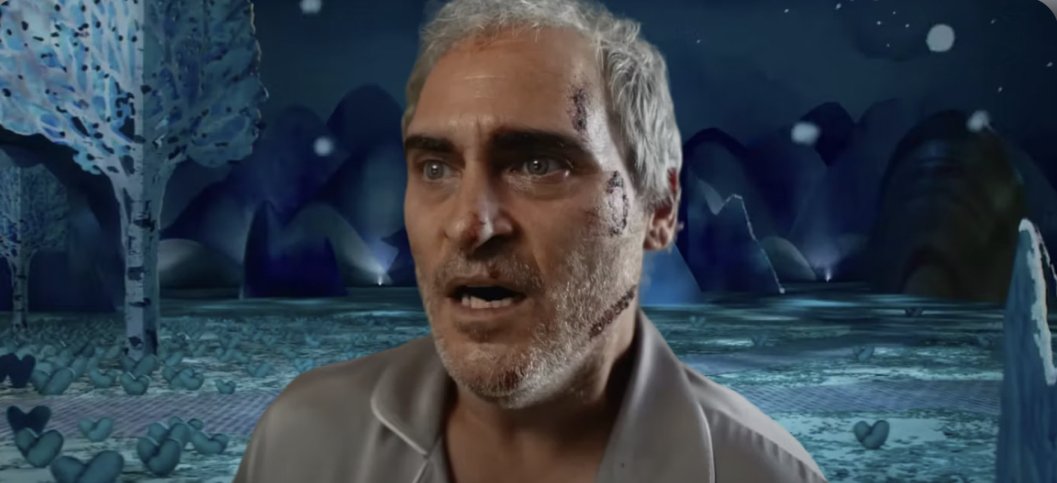
The film follows a man who is set to meet his mother as he constantly encounters all sorts of chaos where he is often afraid as his journey to return home to his mother becomes this journey filled with lots of misunderstandings and other strange incidents that has him running away. It is mainly a character study of this man who lives in an apartment where a lot of shit happens as he often attends therapy sessions as he is reluctant to visit his mother Mona (Patti LuPone & Zoe Lister-Jones as both the present and younger versions, respectively) whom he’s had a chaotic relationship with. Especially as they plan to meet on the anniversary of his father’s death as he had never known his father since he died before he was even born which makes the journey more difficult while a series of circumstances would delay his departure as he is hit by a truck where he is taken to a house by this couple who are nursing him despite the protests of their teenage daughter.
Ari Aster’s screenplay is sprawling in terms of the journey that Beau Wassermann takes as it also has some flashbacks relating to his life with mother including a moment as a teenager (Armen Nahapetian) when they’re vacationing on a cruise where meets a young girl named Elaine (Julia Antonelli) where they make a vow to lose their virginity to one another as he wouldn’t see her for years as he later learns that she works for her mother as an adult (Parker Posey). Throughout the course of the film, Aster’s script has Beau going through these encounters with people and other things as he is trying to go home as it relates to a Jewish custom but also is forced to confront things in his life had been braver. Yet, Beau is often someone who had a choice to take action or to make a decision but often never stands up for himself which often puts him into danger and all sorts of trouble. Especially in his relationship with his mother where he always does whatever she tells him to do and allows people to step over him.
Aster’s direction is definitely grand in terms of its overall presentation as it is shot largely on location in Montreal as New York City with areas in and around the city in its forests and suburbs as the places that Beau would go to. Yet, it opens with a childbirth scene shot from the perspective of the baby coming out of its mother’s womb as it sets the tone for the chaos that Beau would endure as an adult. Aster would create some unique compositions that play into Beau’s own sense of paranoia and fear such as a man hiding on the ceiling in his bathroom while Beau is in the tub as the close-up of Beau’s face and the man’s face is a key moment. Even as it would be this moment leading to the second act where Beau would be hit by a car while being stabbed by a crazed naked man as it is one of several moments of surrealism that is present throughout the film. The scenes at the home of this couple in Grace and Roger (Amy Ryan and Nathan Lane, respectively) does seem like this sense of normalcy until their daughter Toni (Kylie Rogers) comes in as it adds to this sense is discord where something is going to happen to Beau either through his own decisions or his refusal to take action.
The wide and medium shots don’t just add to the visual look of the film including a scene where Beau is in the forest where he meets an acting troupe putting on a play. It is a scene near its third act where Beau sees himself as this character in a play as it is this surreal moment that play into the kind of future Beau would’ve had if he had been braver. It should’ve been this moment of serious development but given the fact that he is someone that carries a lot of guilt where Aster constantly has Beau in situations where there are moments that go on for too long in a film with an almost three-hour running time. The film’s third act and climax that relates to a supposed flashback or traumatic event has him just take not just the abuse from people who blame him for something he didn’t do but also keeps apologizing as if he was the one that has done something. Its ending is also strange as it plays into a man that doesn’t just have serious parental issues but is also someone without a spine who rarely has a moment of anger as he is driven by fear of not just being unloved but also being someone who never had anyone to tell him to stand up for himself. Overall, Aster crafts a wondrous yet bloated film about a man who is afraid of everything and everyone as he tries to get home to his mother.
Cinematographer Pawel Pogorzelski does brilliant work with the film’s cinematography as it has these amazing visuals for many of the daytime exterior scenes with its natural lighting along with some unique lighting for some of the scenes at night including scenes in the forest and at Mona’s home. Editor Lucian Johnston does nice work with the editing in allowing shots to linger a bit along with rhythmic cuts to play into the action and some of the film’s dark humor though it has moments where it lags due to its bloated presentation. Production designer Fiona Crombie, with key set decorator Paul Hotte and supervising art director David Gaucher, does amazing work with the look of the small apartment that Beau lives in to the home of Roger and Grace as well as the home where Mona lives along with the look of the stage play that Beau watches. Costume designer Alice Babidge does excellent work with the costumes in the different array of clothes including some pajamas that Beau wears along with the costumes that the acting troupe wears.
Hair designer Felix Lariviere and prosthetics makeup effects designer Steve Newburn do incredible work with not just the look of Beau with his bruises and such but also in the play scene where he dreams of being the main character in the play with all of its prosthetics as well as a key scene late in the film as it play into some revelations about himself. Special effects supervisor Louis Craig, along with visual effects supervisors Yuval Levy and Louis Morin, does fantastic work with the look of the play fantasy scene with some of its animation as well as some effects for a key scene late in the film. Sound editor Paul Hsu does superb work with the sound as it play into the atmosphere of the locations as well as how music is presented next to Beau’s apartment as well as other things that are played on location. The film’s music by Bobby Krlic is phenomenal for its haunting mixture of woodwinds, percussions, and string instruments to add to the suspense and offbeat humor of the film while music supervisor Jemma Burns creates a soundtrack that is filled with an array of music from various genres ranging from pop and electronic music including songs from Bread and Mariah Carey.
The casting by Julie Breton and Jim Carnahan is wonderful as it feature some notable small roles from Richard Kind as Mona’s attorney Dr. Cohen, Julian Richings as a strange man Beau meets at the play who claims to know Beau’s father, the trio of Michael Gandolfini, Theodore Pellerin, and Mike Taylor as Beau’s sons in the fantasy play sequence, Alicia Rosario as Toni’s friend Liz, Bradley Fisher as a naked man stabbing people, James Cvetkovski as Beau as a young boy, Hayley Squires as a pregnant woman named Penelope who takes Beau to the forest where she’s part of an acting troupe, Julia Antonelli as a teenager Elaine whom the young Beau would fall for, and Armen Nahapetian as the teenager Beau who would fall for the young Elaine as he deals with his father’s absence and other issues relating to his mother. Stephen McKinley Henderson is superb as Beau’s therapist who observes and takes notes over Beau’s anxieties while also recommending him to take some serious prescriptions with water.
Denis Menochet is terrific as a PTSD soldier named Jeeves who is unstable comrade of Grace and Roger’s son whom they let stay at a trailer at their home as he would be this insane figure that would scare Beau. Kylie Rogers is good as Grace and Roger’s daughter Toni as this troubled and antagonistic teenager who hates Beau as she gets him to do things as a way to humiliate him as well as do whatever she can to get him in trouble. Amy Ryan and Nathan Lane are excellent in their respective roles as Grace and Roger as a couple who hit Beau with their car as they take him in to heal as they are this weird couple who offer to help him yet are offbeat though they come off as cartoonish at times. Parker Posey is brilliant in her small role as the adult Elaine as Beau’s soulmate whom he hadn’t seen in years as she reveals to work for his mother in her business while her reunion with Beau is a joyful moment leading to something hilarious in their meeting.
The duo of Patti LuPone and Zoe Lister-Jones are great in their respective roles as the older and younger version of Beau’s mother Mona Wassermann with LuPone as this domineering woman who has become tired of her son’s anxiety issues though it is clear that she is a toxic woman with little care about his issues. Lister-Jones’ performance is more subdued as she isn’t this sweeter version of Mona but also reveals to be someone who is also toxic. Finally, there’s Joaquin Phoenix in an incredible performance as the titular character as this man who is constantly afraid of everything as he’s filled with a lot of anxieties and fears where he often apologizes for everything. It is a performance that has Phoenix do a lot of physicality as well as display emotions though he is hampered by the script as well as the fact that this character he’s playing doesn’t grow a spine and never stands up for himself as it has these moments of greatness but it is also frustrating at times.
Beau is Afraid is a stellar yet highly-flawed film from Ari Aster despite an incredible leading performance from Joaquin Phoenix. While it is a film that does feature a great ensemble cast, dazzling visuals, and a killer music score by Bobby Krlic, it is a film that is ambitious in its approach to surrealism but falls flat due to a protagonist that rarely takes action for himself as he continuously gets stepped on over and over again. In the end, Beau is Afraid is a good but bloated film from Ari Aster.
Ari Aster Films: Hereditary - Midsommar
© thevoid99 2023

The film is about a group of people who travel to Sweden for an event that happens every 90 years in which is part of a midsummer festival where a couple hope to repair their relationship following a young woman’s family tragedy. It is a film that explore these people who are attending an once-in-a-lifetime event that is filled with all sorts of intrigue as one of them is from that world as he invites his friends to this ceremony unaware of its intentions. Ari Aster’s screenplay is largely straightforward in its narrative and structure yet he also brings in a lot of complexities not just into these ceremonies at this event in the middle of Sweden but also the people attending this event as well as the inhabitants in the small and tranquil community that is cut off from the modern world. Even as they hold certain rituals that are dark and violent that is shocking to its outsiders who would all unknowingly play a role into this big midsummer event. The film opens in the U.S. during the winter where its protagonist Dani Ardor (Florence Pugh) is trying to reach her mentally-ill sister while calling her parents only to learn that her sister had killed them and herself in a murder-suicide event that left Dani traumatized.
Her boyfriend Christian Hughes (Jack Reynor) is spending time with her despite the fact that he’s thinking about breaking up with her as he is hoping to go to Sweden for this event for his anthropology studies where he would join fellow students Mark (Will Poulter) and Josh (William Jackson Harper) for the trip as they’re invited by their friend in the Swedish student Pelle (Vilhelm Blomgren) who is from this remote community. Dani joins in much to the reluctance of everyone except Pelle who wants to help her with her grief as they arrive at the rural area of Halsingland in this ceremony known as Harga as they meet a British couple in Simon and Connie (Archie Madekwe and Ellora Torchia, respectively) who are the few outsiders attending this event. Yet, things do become weird that involve certain psychedelics and such while Dani, Christian, and their friends witness these events that are considered shocking and violent as it leads to all sorts of trouble. Some would want to leave only to disappear mysteriously while revelations would occur during the event with Dani dealing with her relationship with Christian.
Aster’s direction is definitely mesmerizing in terms of not just his meticulous approach to framing and compositions but also the atmosphere he presents. With the scenes in the U.S. shot on location in Utah and Brooklyn, New York, much of the film is shot on location in Hungary with some of it shot on location in Sweden to play into the Scandinavian landscape as well as the fact that there’s barely any nighttime in this world that these characters are in. The first 20 minutes is set in the U.S. where Aster creates these tight compositions that do play into Dani’s own drama as well as a scene where her family are killed by her own sister along with this unique tracking shot of Dani walking into the bathroom of her own apartment and then being in a bathroom inside an airplane where she is having an emotional episode. When the film arrives in Sweden at this tranquil and open-spaced community, Aster’s direction definitely gets broader as it is shot largely during the day.
The usage of wide and medium shots add to the scope of the commune as it include houses and such where people live but also landscapes and such for certain ceremonies. Even in how Aster would create these careful framing and compositions such as a scene where Josh is trying to get a closer look into a book that relates to the ritual as he is shown in a close-up in one room and then it cuts to the same close-up but in another room. It is among these moments that play into Aster’s style but there are also these surreal moments such as a scene late in the second act where Dani takes part of a contest that would be crucial to the film’s third act. Even as it lead to revelations about her own tragedy as well as her own relationship with Christian who would go into his own personal journey that has him playing a key role in the third act. Notably as it play into this final ceremony as there is so much at stake with everyone playing a role with Dani being the most crucial as it follows her own journey from tragedy and heartache. Overall, Aster crafts an evocative yet eerie film about a group of college students including a young couple attending an once-in-a-lifetime event that is filled with dark rituals.
Cinematographer Pawel Pogorzelski does incredible work with the film’s cinematography with its emphasis on low-key lights for the scenes in the U.S. in its interior settings including at the house in Sweden while a lot of the exterior lighting in Sweden that is filled with vibrant colors that are heightened with some natural lighting in some scenes. Editor Lucian Johnston does excellent work with the editing as it has some stylish moments but also some straight cuts that help play into the suspense and drama. Production designer Henrik Svensson, with set decorators Klara Alfredson Jofs Svensson and Zsuzsanna Svertecki plus art directors Csaba Lodi, Richard T. Olson, Nille Svensson, and Eszter Takacs, does amazing work with the look of the houses at the commune as well as a few places and such that serve as a sense of importance to the commune. Costume designer Andrea Flesch does fantastic work with the costumes such as the white clothing for all of the people at the commune including the casual look from its visitors.
Hair supervisor Monika Toth and makeup supervisor Katalin Jakots, with prosthetics makeup designer Ivan Poharnok, does brilliant work with the look of a key character in the film as well as the design of some of the gory elements in the film. Special effects supervisor Gabor Kiszelly and visual effects supervisor Gergely Takacs do terrific work with the visual effects as it play into some of the psychedelics the visitors take as it adds a surreal element to the film. Sound designer Ruy Garcia and sound editor Gene Park do superb work with the sound as it help play into some of the natural elements of the location as well as other sounds that help add to the sense of horror in the film. The film’s music by Bobby Krlic is phenomenal for its haunting and eerie music score that relies largely on vocals and folk instrument that play into the sense of tradition in this ritual that these characters deal with while music supervisor Joe Rudge compiles a couple of songs such as a piece of music by Freez at a restaurant early in the film and Frankie Valli and the Four Seasons’ The Sun Ain’t Gonna Shine (Anymore) for the film’s final credits.
The casting by Jessica Kelly and Jeanette Klintberg is wonderful as it feature some notable small roles from Klaudia Csanyi as Dani’s troubled sister Terri, Zsolt Bojari and Gabriella Fon as Dani’s parents, Liv Mjones as a commune resident in Ulla, Hampus Hallberg as a young man in Ingemar who invited Simon and Connie, Mats Blomgren as an elder in Odd, Isabelle Grill as a red-headed young woman in Maja who takes a liking towards Christian, and Bjorn Andersen as an old man who plays a key role in one of the first rituals at the event. Archie Madekwe and Ellora Torchia are superb in their respective roles as the young British couple Simon and Connie as two people who are invited by Ingemar to this event unaware of what is going on as they would later disappear. Will Poulter is fantastic as Mark as a college student who is more interested in getting stoned and getting laid where he ends up rubbing some of the residents at the commune the wrong way.
William Jackson Harper is excellent as Josh as an African-American anthropology student who is hoping to learn more for his thesis only to be at odds with Christian over who should write the thesis as he is hoping to get all of this information into the outside world. Vilhelm Blomgren is brilliant as Pelle as a Swedish student who invites everyone to Sweden for this big event without stating their intentions while is also hoping to help Dani as he too endured his own family tragedy. Jack Reynor is amazing as Christian Hughes as Dani’s boyfriend and an anthropology student who is eager to go to Sweden for his studies but is also secretly hoping to break-up with Dani where he finds himself as an object of affection for a young woman at the commune unaware of the role he’s playing. Finally, there’s Florence Pugh in a phenomenal performance as Dani Ardor as an American psychology student troubled by family tragedy as she is unaware of Christian’s intentions where she travels to Sweden as a way to escape from her issues only to deal with a lot. It is a performance that showcases Pugh at her most vulnerable as well as someone that is trying to find some form of solace and a sense of belonging as it is a career-defining performance from Pugh.
Midsommar is a spectacular film from Ari Aster that features a great leading performance from Florence Pugh. Along with its supporting cast, gorgeous locations, ravishing visuals, themes of loss and trauma, and its eerie yet evocative music score. The film is truly an intoxicating yet haunting film that explore people attending this once-in-a-lifetime event that is filled with dark rituals and violence that play into a world that is disconnected with the modern world. In the end, Midsommar is a magnificent film from Ari Aster.
Ari Aster Films: Hereditary - Beau is Afraid
© thevoid99 2022

The film revolves around a family who deal with the death of their secretive and reclusive grandmother as they later cope with mysterious things around them that would be followed by tragedy and other strange events. It is a film that explore a family trying to deal with not just loss but also strange things such as the behavior of a few as well as some things relating to their grandmother. Ari Aster’s screenplay is more of a study of this family with its matriarch in the miniatures artist Annie Graham (Toni Collette) coping with the death of her mother as she is trying to understand about her mother while there’s some things that are happening as it relates to her children in the 16-year old Peter (Alex Wolff) and her 13-year old daughter Charlie (Milly Shapiro). Even as the latter exhibits odd behavior and is always drawn to different things forcing Annie to have Peter take her to party full of kids his age where he spends a lot of time just flirting with a classmate and smoke weed where things go wrong. Even as it would add tension into Annie and Peter’s relationship with Annie’s husband/Peter and Charlie’s father Steve (Gabriel Byrne) trying to mediate.
The script doesn’t just play into grief and family dysfunction but also this air of mystery as it play into Annie’s search for answers where she meets a grief support group member in Joan (Ann Dowd) who helps her in trying to get some answers. Yet, problems would emerge with Peter becoming withdrawn and having nightmares that include a dream relating to Annie’s own issues with sleepwalking that includes an incident where she, Peter, and Charlie were covered in paint thinner from head-to-toe as she tried to light a match. It play into Annie’s own journey relating to her mother as well as things in her mother’s life that are shocking and probably is being passed on to her and her children.
Aster’s direction is definitely stylish in terms of his compositions and the way he captures a family coming apart by their grandmother’s secret past. Shot on locations in areas at Summit County, Utah as well as the town of Sandy, Utah. Aster play into not just these locations as it is something different that stray from convention but also play into some of the things that would happen such as a scene of Peter driving at night on a dirt road. Aster’s wide and medium shots have all of these striking compositions that are mesmerizing in the way the camera is positioned as well as how they would move in some tracking shots. The film’s opening shot is an example of the shot as it is shot inside a room and it then focuses on a house in the room as it zooms into the room and then Steve walks in to wake up Peter. It is among these unique compositions including matching compositions of the house shown in the day and then a cut into night and vice versa. There are some close-ups as it play into not just the horror but also the drama and suspense including scenes where Peter deals with trauma but also this growing fear into what his mother has discovered.
The film does also feature things relating to nightmares and other mysterious things relating to ghosts and cult rituals that do come into play as well as this need to connect with the dead. Notably in a scene where Joan asks Annie to do a séance where the latter is skeptical until something happens as she decides to have one at her house with her family but it only leads to complication and questions. Even in the third act where Steve, who is the most skeptical, makes some discoveries of his own where he realizes something isn’t right but he’s also wondering if Annie has gone crazy. Yet, it is Peter who would try and discover what is happening as well as why his sister had been acting odd as it relates to their grandmother. Overall, Aster crafts a riveting yet intensely-frightening film about a woman trying to uncover her own mother’s dark secrets and its effect on her family.
Cinematographer Pawel Pogorzelski does brilliant work with the film’s cinematography with its usage of natural lighting for some of the daytime interior/exterior scenes as well as the usage of candles for the séance sequences and other stylish lighting for scenes set at night. Editors Jennifer Lame and Lucian Johnston do amazing work with the editing with its usage of jump-cuts, match-cuts, and other stylish cutting to play into the drama and suspense as well as knowing when to not cut for shots to linger for more than 30 seconds. Production designer Grace Yun, with set decorator Brian Lives and art director Richard T. Olson, does excellent work with the look of the Graham family house from the look of the rooms as well as the interiors of Joan’s apartment and Charlie’s treehouse outside of the main Graham family home. Costume designer Olga Mill does nice work with the costumes as it is largely straightforward with the exception of the funeral clothes the family wears early in the film as well as some hippie-like clothing that Joan wears.
The makeup work of Chris Hanson and Abigail Steele is terrific for the look of a few characters as it relates to some of the horror they deal with. Visual effects supervisors Eran Dinur, Chris Haney, and Lucien Harriot does fantastic work with the visual effects as it relates to some of the ghostly elements in the film along with some effects that help play into the horror. Sound editor Lewis Goldstein does superb work with the sound as it help maintain a mood in how it play into the suspense and horror as well as some of the sparse sounds that include the tongue clicks that Charlie makes. The film’s music by Colin Stetson is incredible for its ambient-based score that features elements of orchestral, dark ambient, and classical touches that play into some of the drama and suspense as it is a major highlight of the film while music supervisor Joe Rudge cultivates a soundtrack that features not just a classical piece by Georg Philipp Teleman but also music from Cam Smith featuring Thrillah, B.o.b., Modeselektor, Flatbush Zombies, K Theory, and Judy Collins covering Joni Mitchell’s Both Sides Now.
The casting by Jessica Kelly is wonderful as it features some notable small roles from Ari Aster as Annie’s agent, Mallory Bechtel as a classmate of Peter in Bridget whom he’s fallen for, and Kathleen Chalfant in an un-credited appearance as Annie’s mother Ellen Taper Leigh who is seen mainly in pictures as a mysterious woman with a dark secret. Ann Dowd is fantastic as Joan as a woman that Annie meets in a grief support group who is also dealing with loss while making a discovery that would help Annie in dealing with grief though her motives are suspicious. Milly Shapiro is excellent as Charlie as a 13-year old tomboy who is exhibiting odd behavior following her grandmother’s death as she brings a lot of concern to her parents and her older brother Peter as it relates to how close she was to her grandmother.
Gabriel Byrne is brilliant as Annie’s husband/Peter and Charlie’s father Steve Graham as a psychologist who is trying to calm things down while is baffled by what Annie is doing as well as dealing with a mystery relating to his mother-in-law’s grave. Alex Wolff is amazing as Peter as Annie and Steve’s 16-year old son who doesn’t just deal with the strange things around him but also his own brush with tragedy as he later becomes troubled by things around him that relates to some of the mysterious events around as it also include some amazing physical work that he does. Finally, there’s Toni Collette in an outstanding performance as Annie Graham as a miniatures artist who is trying to understand the loss of her mother as well as other things where Collette doesn’t just bring some moments of calm into her performance but also this manic sense of dread and fear that seeps into her character as it is truly a career-defining performance for Collette.
Hereditary is a tremendous film from Ari Aster that features a phenomenal leading performance from Toni Collette. Along with its ensemble cast, ravishing visuals, an eerie music soundtrack, and its study of family secrets and dark secrets inherited by the previous generation. It is a film that isn’t just this intense horror film but also the study of a family coming apart by generational secrets and what they might’ve inherited. In the end, Hereditary is a magnificent film from Ari Aster.
Ari Aster Films: Midsommar – Beau is Afraid
© thevoid99 2022