With many revered names in the world of female directors like Agnes Varda, Lina Wertmueller, Gillian Armstrong, Jane Campion, and more recently, Kathryn Bigelow who became the first woman to win the Oscar for Best Director. The women director is now becoming more prominent in the film industry with names like Catherine Hardwicke, Nora Ephron, and Nancy Meyers creating commercially-successful films. While Sofia Coppola is another name in the list of top female directors, Coppola doesn’t belong with the commercial-driven names like Hardwicke, Ephron, and Meyers nor is part of the more art-house names like Varda, Wertmueller, and Campion. Coppola does however have a name that is quite prestigious with an audience often anticipating her next project.
With Coppola set to return in 2010 with her fourth feature-length film Somewhere, she’s already made three feature films, a short, and a small number of videos/ads. Despite that short list of work, she’s already adored by critics and with filmgoers looking for something unique. While Coppola also has her detractors who find her films to be shallow, not overly-serious, pretentious, lacking depth, or dull. She is one of the most interesting filmmakers of the last 15 years. Yet, her career began much longer before she became an acclaimed auteur as she was born to a family that has a very prestigious name.
The Coppola family name begins with Carmine Coppola, a music composer who worked with Arturo Toscanini with the NBC Symphony Orchestra in the 1940s. Carmine was married to a woman named Italia as they became the parents of three kids. The eldest named August with Francis in the middle, and the youngest named Talia. While Carmine maintained a viable career in composing while eldest son August became a novelist and academic. It was Francis Ford Coppola who would help pave the way for the second generation of Coppolas to emerge into the world of films.
Despite having a difficult start in the world of films, he teamed with a young filmmaker named George Lucas to form American Zoetrope in 1969 that would be an independent studio for new filmmakers. In 1972, Francis Ford Coppola garnered amazing success with The Godfather that put his name on the map. The film starred Marlon Brando, Al Pacino, James Caan, Diane Keaton, John Cazale, Robert Duvall, and Francis’ sister Talia. The success of that film would spawn a very successful sequel in The Godfather Pt, II two years later while earlier that same year, Coppola won the Palme D’or at the Cannes Film Festival with The Conversation.
With Francis Ford Coppola already a successful writer, director, and producer in the 1970s while his wife Eleanor was a documentary filmmaker. They would help spawn another generation of Coppolas with Francis’ siblings as well. August would be the father of eccentric but award-winning actor Nicolas Cage while Talia Shire in her marriage to Jack Schwartzman would be the mother of actor/musicians Jason and Robert Schwartzman. Francis and Eleanor would have three children. Their eldest in Gian-Carlo in 1963 with Roman to follow in 1965. In 1971, Francis and Eleanor would welcome a third child in a girl named Sofia as she would appear in The Godfather during the famous Baptism scene.
During Francis’ demanding career, the director often maintained to have his family around him. Even when they were there to see him nearly break down during the making of his 1979 Vietnam War film Apocalypse Now where Eleanor shot behind the scenes footage that would become the basis of the 1992 documentary Hearts of Darkness: A Filmmaker’s Apocalypse. Though it was a successful film, it would be the beginning of the end for Coppola’s dream to have an independent-based studio.
While the 80s proved to be a very tough decade for Francis Ford Coppola with a series of big-profile failures like One from the Heart and The Cotton Club along with the tragic death of Gian-Carlo in 1986 of a boating accident. It was a decade where Francis’ children were starting to get into their feet into the world of films. Roman would serve as a second unit director for other filmmakers including his father as he later become a very successful and acclaimed music video director. Sofia meanwhile, would appear in her father’s films during that decade in small roles such as The Outsiders, Rumble Fish, and Peggy Sue Got Married.
Then in 1989, Sofia took a hand in screenwriting when she collaborated with her father for a short segment in the anthology film New York Stories that also featured shorts by Martin Scorsese and Woody Allen. Francis’ short entitled Life Without Zoe was the tale of a little rich girl who was dealing with the absence of her parents while living in a hotel under the guardianship of a butler. The film does recall themes of loneliness in relation to a protagonist meeting a new foreign exchange student. Yet, the film is presented as a light-hearted comedy for kids. While it had a look that is quite extravagant and stylish due to Vittorio Storaro’s cinematography and Sofia doing the costume design. It was a short that is described as style over substance with a story that was very weak.
Life Without Zoe was panned by critics as the weakest segment of New York Stories. Yet, it would Francis Ford Coppola’s next project that would put Sofia more in the limelight but for all of the wrong reasons. The Godfather, Pt. III was widely anticipated by audiences as many hoped to hear more stories about the Corleone family one last time. With Winona Ryder set to play Mary Corleone, the daughter of Michael, it looked like that Francis was going to have another hit. Instead, Ryder backed out due to illness and left the film and Francis was unable to find a replacement until deciding to let Sofia play Mary at the last minute.
Upon its late 1990 release, The Godfather Pt. III got some good reviews but was considered a major disappointment in comparison to its predecessors. Yet, the film’s biggest criticism was towards Sofia and her performance as Mary Corleone. Though Sofia would later appear in a few films as an actress including a cameo in her brother Roman’s 2001 film CQ. Sofia never took on a major film role again as she stated later in her career that she had no interest in being an actress.
In the early 1990s, Sofia Coppola took on various projects with friend Zoe Cassavettes, the daughter of the late John Cassavetes, while was dating acclaimed video director Spike Jonze at the time. Coppola also took part in appearing in various music videos for acts like Sonic Youth, the Black Crowes, and Madonna. It was also around the same time that Sofia was getting into fashion where she made friends with Sonic Youth bassist Kim Gordon.
Then in 1993, Sofia took her first directorial job directing a music video for the alternative rock band Walt Mink for the song Shine that was shot by Spike Jonze. Coppola would hone her directing skills again for the Flaming Lips’ This Here Giraffe while also co-directing a short film with Ione Skye and Andrew Fleming called Bed, Bath, and Beyond in 1996. While Sofia would eventually direct a few more videos including the White Stripes’ I Just Don’t Want To Do With Myself in 2003 and appear in Spike Jonze’s video for the Chemical Brothers’ Elektrobank. The stigma over her performance in The Godfather, Pt. III still loomed as she decided to finally make her first feature as a director that begins with her first sole short.

Sofia Coppola’s 1998 short film about a 7th grade queen who decides to poison some boys inspired by Flowers in the Attic. While one of her friends gets in trouble and two others not wanting to go along with the plan, she becomes an outcast over a conversation that got misinterpreted. The short was co-written with Stephanie Hayman, a longtime friend whose sister Leslie appeared in the Flaming Lips video and later in the role of the eldest Lisbon girl Therese in The Virgin Suicides.
Shot in black-and-white by Lance Acord, who would be one of Sofia’s regular collaborators. The film featured cameos from Coppola’s friend Zoe Cassavetes and renowned film director Peter Bogdanovich as a principal. Also in the film was Sofia’s cousin Robert Schwartzman, who would also play a role in Sofia’s upcoming film The Virgin Suicides. The short would recall Sofia’s themes of alienation and girlhood while it would be accompanied by a soundtrack of girl-driven indie rock from artists like Kim Deal’s the Amps and Kim Gordon’s Free Kitten. The sense of style in the sequence of a girl’s arrival in slow-motion and jump-cuts with the Amps playing in the background revealed that this wasn’t going to be a typical short film. The result was a fascinating debut that would set the stage of what would come.

In 1993, Jeffrey Eugenides released The Virgin Suicides which was the story about the suicides of five teenage girls who come from a strict, Catholic family as it’s told from the perspective of a neighborhood boy. Coppola loved the book so much that she wanted to get the rights so she can adapted it on her own. With help from her father Francis who would serve as an executive producer. Coppola got the rights to turn the book into a film with Eugenides involved in the production.
Inspired by her own childhood growing up in the 70s along with the look of that era, Coppola created a dream-like world that painted 1970s Michigan into something that was beautiful. Yet, underneath the beauty was a sense of melancholia that would haunt the film throughout along with the four neighborhood boys who are transfixed by the Lisbon girls. With Giovanni Ribisi serving as a narrator in the perspective of one of the teenage boys recalling what had happened. The film takes the audience into this tragic world about five teenage girls feeling disconnected from the world that’s around them.
With a cast that included the likes of James Woods and Kathleen Turner as the Libson parents along with cameos by Danny DeVito and Scott Glenn. The film was mostly driven by its young cast that included Robert Schwartzman, Jonathan Tucker, Hayden Christensen, and Josh Hartnett as the role of Trip Fontaine with Michael Pare as the older Trip. For the roles of the girls, Coppola chose her friend Leslie Hayman as the eldest Therese along with A.J. Cook and Chelse Swain in the respective roles of Mary and Bonnie plus Hanna R. Hall as the youngest in Cecilia. For the role of the second youngest in Lux, Kirsten Dunst got the part as her role would mark a huge transition for the young actress from child actress to pre-adult film roles.
The film starts off with the suicide attempt of Cecilia as the boys recall many things that led to that attempt and then the suicide that followed during a party with the girls. After that, the girls try to go back to normalcy as Lux falls for the school’s heartthrob Trip Fontaine as its told by the older Trip who was still transfixed by Lux. Even as the other boys are amazed by the beauty of these girls while understanding their disconnected state of mind through the strictness of their parents.
Coppola’s direction is very striking in its presentation from the way the camera lets the audience into the world of the girls. Even in a remarkable sequence where the boys used records to communicate with the girls. The film plays as both a fantasy but grounded through the harsh reality that the girls couldn’t deal with. Coppola’s use of shooting through trees, capturing shots when people are on vehicles, and soft close-ups would become trademarks of her style. With the help of Edward Lachman as cinematographer, Coppola succeeded in taking a dream-like feel for her debut film.
Another noted factor into the film was the music. While it was a mix of 1970s music from acts like Styx, Heart, Todd Rundgren, 10cc, and other acts along with 70s-style power-pop from the 90s band Sloan. The music was mostly dominated by the eerie, ambient-like score of Air. Air’s score channeled through the dark overtones that surrounded the film as it plays to the melancholia of the girls as well as the tragedy that would come. It would also show that Coppola’s approach to music was very different in the way that Hollywood would often present music through films.
The film premiered at the 1999 Cannes Film Festival for the Director’s Forthnight while it got even bigger attention months later at the Toronto Film Festival. The film finally got a theatrical release in 2000 to rave reviews and moderate box office as it marked the arrival of a new director. Coppola achieved a lot of acclaim as the stigma over her performance in The Godfather Pt. III was now becoming a thing of the past. The film would be considered to be a remarkable debut for a new director. Yet, Sofia would have an even bigger surprise for her next feature film.

If Lick the Star and The Virgin Suicides recalled the difficulty of being a teenage girl, Lost in Translation would be the film that would recall the uncertainty of adulthood. The story of a fading movie actor going to Tokyo to endorse a whiskey where he would meet a lonely college graduate is by far Coppola’s most personal to date. Inspired by her travels to Tokyo during her days of promoting her Milk Fed clothing line with friend Stephanie Hayman. The film was also a reflection of the turmoil that was surrounding Coppola’s marriage with Spike Jonze.
Unlike the broader Virgin Suicides, Lost in Translation is more intimate as it follows two people lost in Tokyo where they’re both staying at the Hyatt Hilton. The film introduces Bob Harris, played by Bill Murray, as an actor whose life is unraveling. His marriage isn’t going anywhere while he arrives learning from a fax that he forgot his son’s birthday. Even as he has to deal with his fading career along with a group of Japanese assistants wanting him to do a commercial for whiskey. One notable scene is the film where Harris is being directed by a Japanese commercial director in Japan where Harris has no idea what he is saying while the translator is saying “with more intensity”. Harris replies, “Is that all he says? It seems like he’s saying more than that”.
While Bob is dealing with jet lag, culture-shock, and the problems at home, he finds someone to talk to in a young, 25-year old philosophy graduate named Charlotte, played by Scarlett Johansson. Charlotte is also dealing with her own drama from her husband away at work as a photographer (Giovanni Ribisi) along with culture shock and a visiting movie starlet, played by Anna Faris. Bob and Charlotte plot a move to try and leave Tokyo while they have their own fun visiting the city and talk about their own problems. While Charlotte would get an idea of where to go, despite her crumbling marriage, Bob’s own confessions about marriage would lead him to unravel. One of the film’s memorable moments is the ending where Bob whispers something to Charlotte’s ear. Since the release of the film, no one knows exactly what Bob said to Charlotte.
Coppola’s entrancing direction that is complemented by Lance Acord’s cinematography. While the film was sort of reminiscent of the sheen, colorful look of Wong Kar Wai’s films. Its perspective came from those who had never been to Japan where the feeling of culture-shock is quite prevalent. The film also revealed Japanese in all sorts of personalities from the fun-going Charlie, who Charlotte knows, to the more crazy-going TV talk-show host in which Bob attends as a guest.
Among the highlights that includes the subtle performances of Bill Murray and Scarlett Johansson is the music. The soundtrack featured some new material from My Bloody Valentine’s Kevin Shields who hadn’t released any new original material since 1991. A mixture of shoegaze, dream-pop, and electronic music with dabbles of Japanese folk-pop. The soundtrack dwelled on the sense of alienation that surrounds its characters as well as the romanticism between Bob and Charlotte though it’s mostly platonic.
The film premiered at the 2003 Venice Film Festival to massive acclaim as it also became a hit with audiences and critics all over the world. The film would give Bill Murray several acting honors including an Academy Award nomination while Scarlett Johansson received a British Academy Award for Best Actress. Yet, it was Sofia Coppola that became the big winner as she won an Oscar for Best Original Screenplay while being nominated for Best Director as the first American woman to achieve that. While Lost in Translation has lost a bit of its acclaim over the years as some claim to be boring and pretentious. It is still considered one of the best films of the 2000s to many critics and film buffs.

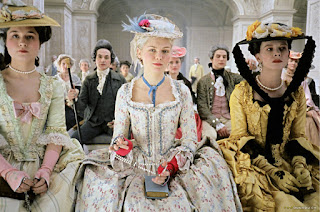
If Lost in Translation was Coppola’s most successful work, then Marie Antoinette is her most divisive film. Based on Antonia Fraser’s biography on the infamous Queen of France just before the French Revolution. Coppola created a film that was more of an anti bio-pic while focusing on the person herself. With Kirsten Dunst playing the title role, the film was quite radical for what was expected in an 18th Century costume-drama period piece. It wasn’t a Merchant-Ivory period film as Coppola chose her ideas in a post-modern fashion. Even as she was given access to shoot the film on location in the palace of Versailles with help from historical advisors.
While the award-winning costumes of Milena Canonero were true to the period, it also had a New Romantics feel. The New Romantics movement of the late 1970s/early 1980s was an anti-punk period in the U.K. that was more about fashion and having a good time. The music of Adam Ant and Bow Wow Wow were part of that scene as Coppola chose to include music from that period along with post-punk acts like Gang of Four, Siouxsie & the Banshees, New Order, and the Cure. At the same time, Coppola’s approach to casting the film was also quite shocking to what was expected in the period film.
The eccentric ensemble not only included legendary 60s pop singer Marianne Faithfull as Queen Maria Teresa but also Rip Torn as King Louis XV. Along with the likes of Steve Coogan as Count Mercy, Rose Byrne as the Duchess of Polignac, Asia Argento as Madame du Barry, and Jason Schwartzman as King Louis XVI. It was an ensemble that was against the ideas of who could play these real individuals. Even more subversive was that most of the actors chose to play their parts quite straightforward and without accents. Coppola’s decision to do that was so she could have a young audience relate to these characters talk the same way people are talking in the 21st Century.
In focusing on just Marie Antoinette and some of the people around her, Coppola created a character study of sorts about this young girl who is basically used to unite two countries through marriage to a young man in a similar situation. Expected to create heirs, both Marie and Louis XVI were unable to produce heirs until years later as they were very young with Louis being a shy, awkward 15-16 year old kid with an interest in locks. For Marie, she surrounds herself with other young women who were more interested in being youthful. By the time King Louis XV dies, this great sense of responsibility starts to overwhelm them as Louis XVI does step up but is surrounded by men with greater interests.
The film doesn’t try to be historically accurate as it bases on legends and other stories like Marie Antoinette’s much-rumored affair with Count Fersen (Jamie Dornan). By the time the story goes into Marie’s fall from grace, Coppola chose to end the film in an abrupt way of sorts by having Marie, Louis, and their children leave Versailles one last time and then a shot of her bedroom destroyed.
When the film finally made its premiere at the 2006 Cannes Film Festival with lots of anticipation. The result was mixed. While some praised the film for its radical take as well as its extravagant feel to the period film. Others were upset over its lack of serious historical context while some wanted a scene of Marie Antoinette being be-headed. Some criticized the film for being superficial, overly-stylized, and its use of music that also included Aphex Twin, Air, the Strokes, and other modern acts.
Though it would recoup its $40 million budget through worldwide box office grosses of over $60 million. It was considered a failure through the U.S. box office while reviews were also mixed during its release. While Coppola had no regrets making the film the way she did. She did however, took a hiatus following its U.S. release to become a mother to her just newborn daughter Romy. Since its release, the film has gained some fans who loved it for its highly-stylized interpretation as well as its study of alienation in the eyes of a young girl who would become the Queen of France. The film also marked the end of an unofficial trilogy for Coppola that focused on young alienated women in the transition of their lives.

***Additional Content Written from 6/20/13-6/25/13***
After a break between films that included the birth of her first daughter Romy, Sofia Coppola decided to go back to more simpler territory with her fourth feature film. This time around, Coppola decided to explore the world of celebrity culture and its drawbacks in a film that reveled into that world of decadence and ennui. It was a world that Coppola knows very well as she decided to infuse that knowledge of the world with the new experience of being a parent as she decided to call the film Somewhere.
The film would once again explore Coppola’s fascination with alienation as it would revolve around a movie star whose life of decadence has left him lost as he finds himself taking care of his 11 year-old daughter as her mother has checked herself into a hospital. In the course of the film, the man re-thinks about his life as he also deals with his role as a parent to a girl who is growing up as he is aware of how much he doesn’t know her. The film would have Coppola take a very in-depth look into the world of celebrity where a film star can feel lost in his fame as his life of parties and meaningless sex starts to become boring.
Since Coppola chose to direct the film mostly in Hollywood, it would be set mostly at the infamous Chateau Marmont hotel where many celebrities had stayed. Coppola was able to gain access to the hotel as she also wrote a script that was filled with less dialogue in order to create something that was more akin to silent films. At the same time with a budget of $7 million, Coppola also decided to strip things down a bit to find something that was more improvisational and real while maintaining a sense of beauty.
While Coppola was able to retain collaborators in editor Sarah Flack, music supervisor Brian Reitzell, sound designer Richard Beggs, and production designer Anne Ross. There were also some changes as Coppola gained Stacey Battat as her costume designer while regular cinematographer Lance Acord was unable to take part in the project. Coppola instead got the renowned cinematographer Harris Savides to helm the film as he and Coppola aimed to have a very striking visual look that felt real and dream-like as it would recall some of the works of Chantal Akerman.
For the lead role of Johnny Marco, Stephen Dorff was cast while Elle Fanning was cast to play Marco’s daughter Cleo. Coppola wanted the two to spend time together to get the sense of them being father and daughter as Dorff also stayed at the Chateau Marmont for the duration of the production. Coppola would also employ various people to show up like Benicio del Toro, model Erin Wasson, and the band Rooney that featured her cousin Robert Schwartzman in cameo appearances. The production largely took place in the summer of 2009 in Los Angeles and Milan, Italy where Coppola chose to lampoon the world of Italian award shows in the scenes set in Italy.
Another major change in Coppola’s approach to the film was the music as a lot of it was played on location rather than adding it on post-production to sort of go against the idea of scoring films. While she asked her partner Thomas Mars and his band Phoenix to create music for the film, the band contributed their song Love Is Like a Sunset for the opening and closing moments of the film as score pieces while Coppola also used a demo of the Strokes’ I’ll Try Anything Once as the only other piece of music that plays to a key moment of the film as it was added in post-production. It was Coppola returning to not just the world of minimalism but also creating a film that didn’t rely on conventions in order to stand out against some of the ideas that was happening in mainstream American cinema.
The film premiered at the 2010 Venice Film Festival where it was well received and surprised audiences and critics when it won the Golden Lion as it was awarded by filmmaker Quentin Tarantino as he and his jury voted unanimously for the film. The film was later given a limited theatrical release in December of that year in Britain and in the U.S. where it received excellent reviews and did modestly well in the box office. Yet, it also received criticism as some felt that Coppola was repeating herself while adding elements that were very pretentious. Still, the film was a success for Coppola as she took another break as she gave birth to her second daughter Cosima in May of 2010.
The Bling Ring

After a break following the release of Somewhere as she had been approached to direct the fourth book of the Twilight film franchise. Coppola decided to return to the exploration of teenagers with her fifth and most recent film to date as it centers around the real-life Bling Ring robberies of 2008 and 2009. Basing the film from Nancy Jo Sales’ Vanity Fair article The Suspects Wore Louboutins, Coppola decided that the film wouldn’t just be a continuing fascination with the world of celebrity culture and Hollywood. It would also be a film that played into the sense of disconnection between kids and the real world as they become entranced by a culture that thrives on decadence.
Retaining many of the collaborators that had worked with her on Somewhere including cinematographer Harris Savides, the film would be very different from her previous film in terms of scene presentation and themes that Coppola wanted to explore. Yet, Coppola would also have access to shoot the film in the suburbs of Los Angeles and Hollywood as well as finding ways to recreate these real-life moments without doing to much to dramatize the situations. While Coppola had admittedly been oblivious to the incidents and the world of celebrity culture, she was still intrigued by it to see what these kids were doing.
With longtime Coppola collaborator Kirsten Dunst making a cameo as herself, Coppola chose to work with mostly unknowns for the film as she discovered Katie Chang and Israel Broussard who would play the ringleaders of the Bling Ring group. Also cast were Taissa Farmiga, Claire Julien, and Emma Watson to fill out the roles of the group with Leslie Mann playing Watson’s mother. With other small roles given to British rock singer Gavin Rossdale and Stacy Edwards, Coppola shot the film in March of 2012 with an $8 million budget as it would be Coppola’s first film shot in digital but also be shot in 35mm film.
While the film would be a blend of crime drama with some comedy and suspense, Coppola wanted to maintain some air of realism into the production as she was able to get access to the home of notorious socialite Paris Hilton who would also make a cameo for the film. There, Coppola wanted to see what the kids would do if they had broke into Hilton’s mansion and see her rooms and such where it had a sense of fantasy for these kids as if they could be part of that culture. Coppola would also get the chance to create moments of the thefts to see how far these kids will go as well as some of craziness that occurs in the homes of these people to see that they were dumb enough to leave their keys under the floor mat. One notable moment of the film that showcases Coppola’s brilliance as a filmmaker is a master wide shot of two of the kids stealing from the home of Audrina Partridge in one entire take as it’s shot from afar and then moves closer very slowly.
While Coppola had been known for bringing music that more suited to her tastes, she and longtime collaborator Brian Reitzell decided to do something different by bringing the kind of music that these kids would listen to. A lot of it would feature the contemporary rap and hip-hop music of the times as it had a sense of energy and vibrancy that Coppola wanted. While Coppola would include music of her own liking like Can, Klaus Schulze, and Phoenix, she also was able to get a then-unreleased song by R&B singer Frank Ocean into the soundtrack thanks to the help of rapper Kanye West.
During post-production in the fall of 2012 along with some re-shoots, tragedy struck the production when cinematographer Harris Savides died of brain cancer in October of 2012. Coppola would dedicate the film to him as she got Christopher Blauvelt to shoot remaining material for the film. The film made its premiere at the 2013 Cannes Film Festival opening the Un Certain Regard section in May of that year. While it was well-received at the festival as it came out to American theaters a month later. The film would get a mixed reception from American critics where some praised Coppola’s look into the lives of these kids while some blasted the film for being very shallow and repetitive. Yet, the film would still prove to a hit with audiences maintaining Coppola’s role as one of the cinema’s gifted filmmakers.
***Additional Content Written from 11/5/23 to 11/26/23 with a New Conclusion***
A Very Murray Christmas Due to her friendship with Bill Murray dating back to Lost in Translation, Coppola and Murray decided to collaborate on a small TV project that would be based on Christmas variety shows. Collaborating with Mitch Glazer who had also served as an associate producer on Lost in Translation due to his long-standing friendship with Murray, Coppola decides to create a Christmas special set in the Carlyle Hotel in New York City as it is considered one of the finest hotels in New York City. The project would revolve around Murray trying to host a Christmas special at the Carlyle for a TV program on Christmas Eve as a snowstorm derails everything as he spends much of his time at the Carlyle entertaining himself, hotel guests, and the staff. Coppola would bring in several of her collaborators in film editor Sarah Flack, production designer Anne Ross, and costume designer Stacey Battat into the fold while Murray brings in longtime friend musician/actor Paul Shaffer as himself as well as the show’s musical director.
John Tanzer would serve as the show’s cinematographer as it would be shot largely on location at the Carlyle as it would also feature appearances from Murray’s old co-star from Scrooged in New York Dolls vocalist David Johansen, Jason Schwartzman, and the band Phoenix. The ensemble would also include Rashida Jones, George Clooney, Miley Cyrus, Maya Rudolph, Michael Cera, Dmitri Dmitrov, Amy Poehler, Jenny Lewis, Julie White, and Chris Rock as they would play guests with Clooney, Cyrus, and Rock as themselves. Coppola would aim for Christmas specials from the past including ones inspired from 1970s variety TV presentations as Christmas specials back then were prevalent through some good events such as Bing Crosby’s shows or the bad such as the notorious Star Wars Holiday Special with the latter having a cult interest among fans of the franchise
The production was announced in October of 2014 after plans for an adaptation of The Little Mermaid for Universal Studios fell apart as the production commenced in the spring of 2015 as the project was picked by Netflix, which was becoming one of many new subscription streaming services emerging, for its December 2015 premiere on the service. Clooney and Cyrus’ appearance came after plans to get rapper Rick Ross fell apart for the special’s fantasy sequence as much of the action took place at the hotel’s Bemelmans Bar. Notably as it features a lot of music with some of it played on location as it adds to Coppola’s fascination with celebrity as well as this desire of people wanting to connect with one another that is prevalent with all of Coppola’s films. The TV special premiered at Netflix on December 4, 2015 as it received favorable reviews for its humor and overall presentation. While it wasn’t lauded in comparison to Coppola’s films, the TV special still managed to do well while also receiving two Primetime Emmy nominations for Outstanding Television Film and Outstanding Music Direction for Paul Shaffer.
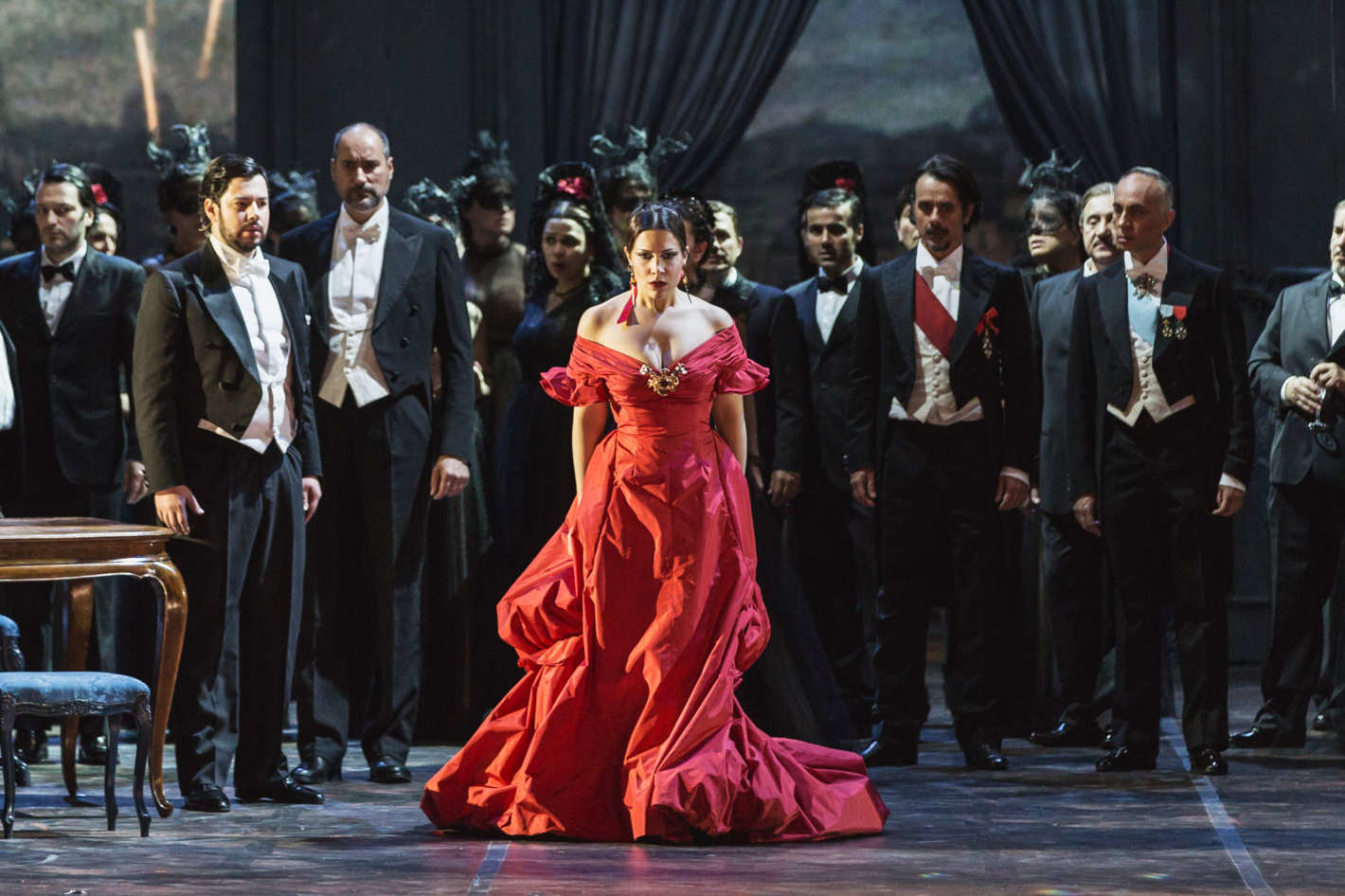
La Traviata In 2016, Coppola was asked by the Italian state broadcaster Rai Com in filming a stage production of Giuseppe Verda’s opera La Traviata with Francesca Nesler being involved as a co-director. The project was also a collaboration with Valentino Garavani who was designing the costumes for the opera. The project would also mark Coppola’s first collaboration with French cinematographer Philippe Le Sourd who had been nominated for an Oscar for his work in Wong Kar-Wai’s 2013 film The Grandmaster. Christopher Nolan’s production designer Nathan Crowley would take part in designing the sets as it would be this elaborate project that served as a stop-gap of sorts for Coppola as it would make its premiere in early 2017 in Italy and for European television as well as a limited theatrical release all over the world with the exception of the U.S.
The Beguiled When plans for an adaptation of The Little Mermaid for Universal Studios fell apart though it lead to a hilarious parody trailer from Funny or Die starring Annasophia Robb and Evan Peters. Coppola shifted gears to do something absolutely different away from the world of celebrity culture as she read Thomas P. Cullinan’s 1966 novel about a wounded Union soldier who is taken into an all-girl’s school in the American South during the Civil War where his presence would cause sexual tension and terror. The book had been previously adapted into a film in 1971 by Don Siegel starring Clint Eastwood, Geraldine Page, Elizabeth Hartman, and Jo Ann Harris as Coppola resisted doing a remake of the film yet was prompted by her longtime production designer Anne Ross into doing something completely different. Notably as Coppola chose to focus more on the women and girls at the school while also playing into the tension from this wounded Union soldier.
For the script, Coppola chose to strip away much of the Southern Gothic elements along with African-American characters as Coppola wasn’t comfortable with writing about slaves during the American Civil War as she chose to have the slaves fleeing the school during the war. Instead, Coppola maintained an intimacy into the script as it would have eight central characters in the Union soldier Corporal John McBurney, the headmistress Miss Farnsworth, the teacher Edwina Morrow, and the five remaining students at the school. With longtime Coppola collaborators Kirsten Dunst playing Morrow and Elle Fanning as one of the students in Alicia who would try to woo McBurney. The ensemble would include Nicole Kidman as Miss Farnsworth and Colin Farrell as Cpl. McBurney while the four young students were assembled by Coppola’s longtime casting directors in Courtney Bright and Nicole Daniels in the emerging Australian actress Angourie Rice plus Oona Laurence, Addison Riecke, and Emma Howard.
Production began in the fall of 2016 with many of its exteriors shot on location at the Madewood Plantation House near Napoleonville, Louisiana while the interiors at the school where many of the characters inhabit are shot at the home of actress Jennifer Coolidge who allowed Coppola all-access to the home with cinematographer Philippe Le Sourd and production designer Anne Ross creating an atmosphere into its interiors with the usage of candle lights and available lighting for scenes at night. Coppola wanted to play into this sense of alienation that these women are dealing with inside this school with Morrow’s character falling for Cpl. McBurney as it also play into whether Miss Farnsworth is desiring him as well. Coppola retained a few elements from the Siegel film but wanted to maintain this sense of disconnect as there are a few male characters in Confederate soldiers/officers who would inspect but also play into a world where the women are sheltered as they bring in this man who would only create chaos into their world.
The film made its premiere at the 2017 Cannes Film Festival that May where it played in competition for the Palme d’Or as the film was given a much better reception than the one Coppola had previously more than a decade ago with Marie Antoinette. Coppola would win the festival’s Best Director prize making her the second woman to win the prize as it had been previously won by Yulia Solntseva for her 1961 film Chronicle of Flaming Years. The film would be given a limited release in the U.S. through Focus Features in late June of 2017 followed by a wider release as the film made more than $24 million against its $10 million budget. The film would be praised by critics though some claimed Coppola had done some whitewashing on the source material though Coppola defended her choices to not have African-American characters in not wanting to depict them as slaves during that time.
On the Rocks Having dealt with criticism over the fact that a lot of her films featured largely a white cast, Coppola decided to change gears for her next project as it would be her second collaboration with A24 who had entered into a deal with Apple to make movies for their burgeoning streaming service in Apple TV+. Inspired by a story her friend told her about her own husband traveling with a female co-worker, Coppola decided to make a film in which a woman suspects her husband is having an affair with her co-worker as she turns to her womanizing father to help confirm the truth. The film would be Coppola’s first original script since Somewhere as it played into not just a woman’s relationship with her father but also someone trying to juggle both a family life and a professional life on her own.
In wanting to make something that didn’t play to a predominantly white and privileged culture, Coppola casted Rashida Jones in the lead role of Laura Keane despite the fact that Jones is biracial whose father is famed music producer Quincy Jones and her mother is actress Peggy Lipton. Bill Murray would reunite with Coppola to play Keane’s father Felix as the ensemble would also include Marlon Wayans as Keane’s husband Dean as well as Jessica Henwick as Dean’s co-worker Fiona whom Laura suspects is his mistress. The cast would also include Murray’s longtime friend Kelly Lynch as well as Jenny Slate and Barbara Bain in small roles. Retaining many of her collaborators for the film, it would be shot in largely in New York City and parts of Mexico as production began in the middle of 2019. Coppola also wanted to play into the struggles of motherhood as it relates to Laura being a full-time mother to two kids while her husband is often away at work.
Coppola also wanted to play into her own relationships with her own father as it was something she and Jones bonded on as they’re both from famous families with very-famous fathers. The film also had Coppola go for a different approach to her music soundtrack despite having Phoenix provide its score as she also turned to Murray’s longtime friend Paul Shaffer in producing songs that Murray’s character would sing as it would also include a jazz-based soundtrack. When post-production began in 2020 where Coppola worked with longtime collaborators in editor Sarah Flack and sound designer Richard Beggs. The COVID-19 pandemic happened forcing everyone to stay home as Coppola would work with her post-production team at home as plans for the film’s theatrical release was suddenly shut down though it would make its premiere at the New York Film Festival that September but in a different presentation.
Its premiere on September 22, 2020 at the New York Film Festival was an unusual one as it had be shown remotely as it would followed by a very limited theatrical release in early October through A24 only to be shown exclusively on Apple TV+ later that month. Though it would only gross $1 million in the very limited theatrical release despite the fact that many film theaters had closed due to the pandemic. The film did garner rave reviews with critics with a lot of positive notices to both Murray and Jones in their performance. Despite the fact that the film came out during one of the worst times in the world where everyone had to stay home, the film would help Apple TV+ become a key player in the world of streaming as it would also confirm Coppola’s status as a premier filmmaker.
New York City Ballet
When the COVID-19 pandemic was coming to an end, Coppola was asked by Chanel to create a short film for the re-opening of the New York City Ballet which had been shut down due to the pandemic. Teaming with her frequent collaborator in cinematographer Philippe Le Sourd as well as the ballet’s choreographer Justin Peck, Coppola would create five segments in the 26-and-a-half minute short with four of them shot in black-and-white and its finale in color. Coppola wanted to capture the sense of artistry and movement of the dancers in the company as they have been unable to perform for more than a year because of this worldwide event. The short made its premiere in 2021 as it helped the company get some much-needed attention as the short was well-received for bringing light into the world of ballet without the demands of charity.
Priscilla Through her deal with Apple, Coppola had hoped to do an adaptation of Edith Wharton’s The Custom of the Country as a limited TV series but the project fell apart as executives for Apple were uninterested forcing Coppola to do something else as she still had a relationship with A24 for another film. It was reading Priscilla Presley’s memoir where Coppola had an idea for another film although a film about Elvis Presley by Baz Luhrmann was in production as Coppola wanted to do something completely different from what Luhrmann is doing. While there was an adaptation of Priscilla’s novel made in 1988 as a two-part TV movie starring Susan Walters as Priscilla and Dale Midkiff as Elvis. Coppola chose to create something that was similar to her own work as it relates to Priscilla’s own life as well as the shadow she lived in being married to a musical and cultural icon. Coppola approached Priscilla Presley about doing her own adaptation as Presley agreed while being an executive producer for the film though Elvis and Priscilla’s daughter Lisa Marie had issues with Coppola’s script over the way her father is portrayed.
For the role of Elvis, Australian actor Jacob Elordi of the controversial HBO series Euphoria was cast while the role for Priscilla was given to Cailee Spaeny through the suggestion of Kirsten Dunst whom Spaeny worked with in Alex Garland’s 2024 film Civil War. Shooting began in the fall of 2022 in Toronto with some exteriors in Memphis even though Coppola wasn’t able to get access to Graceland nor the songs that Elvis Presley sang due to the $20 million budget that she was given as opposed to $85 million budget that Baz Luhrmann had for his film on Elvis which was released in the summer of 2022. Coppola chose to focus largely on Priscilla’s life from the day she met Elvis while he was stationed in West Germany serving the Army to the early 1970s when she chose to leave him.
With many of her collaborators in tow that include cinematographer Phillippe Le Sourd, costume designer Stacey Battat, editor Sarah Flack, and the band Phoenix supervising the music soundtrack that would be unconventional as it would include music by Dan Deacon, Spectrum, Tommy James and the Shondells, Alice Coltrane, and the Ramones along with original score music by Sons of Raphael. Coppola got the services of Tamara Deverell who had recently got nominated for an Oscar for her production design work on Guillermo del Toro’s remake of Nightmare Alley as she would help create many of the interiors for Graceland with a lot of attention to detail as this place that is idyllic but also suffocating at times. Even as Coppola wanted to showcase Elvis as a flawed individual as it was a source of contention between Coppola and Lisa Marie though Coppola wanted to be fair to him as it relates to telling Priscilla’s story. Even as Coppola wanted to play into Priscilla’s perspective as well as show happy times between she and Elvis but also the things that led to their dissolution.
Production finished in December of 2022 though tragedy emerged a month later when Lisa Marie Presley died of a heart attack on January 12, 2023 at the age of 54 leading some a personal battle over control of the estate between Priscilla and her grandchildren including actress Riley Keough. Coppola chose to stay away from the drama as the film made its premiere at the Venice Film Festival on September 4, 2023 despite an ongoing strike from both the Writer’s Guild of America and the Screen Actors Guild that wouldn’t allow Spaeny and Elordi to promote the film though the two were given a waiver to appear at the festival. The film would be well-received with Spaeny winning the festival’s Volpi Cup for Best Actress as the film would make festival appearances throughout the fall following its U.S. theatrical release in late October through A24 to rave reviews with its box office currently at $18 million so far as of November 2023 with MUBI slated to release the film internationally later in the year.
25 years since the release of her first short film followed by eight feature films, a TV special, another short film, and a filmed opera along with commercials and music videos. Sofia Coppola has already created a legacy that not many second generation filmmakers would crave for as well as being a major influence to other filmmakers with some preferring her over her father. Through the story she’s telling about many trying to connect or feel disconnected with the world they live in whether it’s about teenage girls, young thieves, a movie star in an existential crisis, a fading film actor, the wife of the King of Rock n’ Roll, the Queen of France, a schoolmistress and other young women, and a woman reconnecting with her father to deal with her marriage. Sofia Coppola is an artist who makes film about people who feel alone but shows the world that those who feel lonely are not alone.
A Very Murray Christmas

John Tanzer would serve as the show’s cinematographer as it would be shot largely on location at the Carlyle as it would also feature appearances from Murray’s old co-star from Scrooged in New York Dolls vocalist David Johansen, Jason Schwartzman, and the band Phoenix. The ensemble would also include Rashida Jones, George Clooney, Miley Cyrus, Maya Rudolph, Michael Cera, Dmitri Dmitrov, Amy Poehler, Jenny Lewis, Julie White, and Chris Rock as they would play guests with Clooney, Cyrus, and Rock as themselves. Coppola would aim for Christmas specials from the past including ones inspired from 1970s variety TV presentations as Christmas specials back then were prevalent through some good events such as Bing Crosby’s shows or the bad such as the notorious Star Wars Holiday Special with the latter having a cult interest among fans of the franchise
The production was announced in October of 2014 after plans for an adaptation of The Little Mermaid for Universal Studios fell apart as the production commenced in the spring of 2015 as the project was picked by Netflix, which was becoming one of many new subscription streaming services emerging, for its December 2015 premiere on the service. Clooney and Cyrus’ appearance came after plans to get rapper Rick Ross fell apart for the special’s fantasy sequence as much of the action took place at the hotel’s Bemelmans Bar. Notably as it features a lot of music with some of it played on location as it adds to Coppola’s fascination with celebrity as well as this desire of people wanting to connect with one another that is prevalent with all of Coppola’s films. The TV special premiered at Netflix on December 4, 2015 as it received favorable reviews for its humor and overall presentation. While it wasn’t lauded in comparison to Coppola’s films, the TV special still managed to do well while also receiving two Primetime Emmy nominations for Outstanding Television Film and Outstanding Music Direction for Paul Shaffer.
La Traviata
The Beguiled

For the script, Coppola chose to strip away much of the Southern Gothic elements along with African-American characters as Coppola wasn’t comfortable with writing about slaves during the American Civil War as she chose to have the slaves fleeing the school during the war. Instead, Coppola maintained an intimacy into the script as it would have eight central characters in the Union soldier Corporal John McBurney, the headmistress Miss Farnsworth, the teacher Edwina Morrow, and the five remaining students at the school. With longtime Coppola collaborators Kirsten Dunst playing Morrow and Elle Fanning as one of the students in Alicia who would try to woo McBurney. The ensemble would include Nicole Kidman as Miss Farnsworth and Colin Farrell as Cpl. McBurney while the four young students were assembled by Coppola’s longtime casting directors in Courtney Bright and Nicole Daniels in the emerging Australian actress Angourie Rice plus Oona Laurence, Addison Riecke, and Emma Howard.
Production began in the fall of 2016 with many of its exteriors shot on location at the Madewood Plantation House near Napoleonville, Louisiana while the interiors at the school where many of the characters inhabit are shot at the home of actress Jennifer Coolidge who allowed Coppola all-access to the home with cinematographer Philippe Le Sourd and production designer Anne Ross creating an atmosphere into its interiors with the usage of candle lights and available lighting for scenes at night. Coppola wanted to play into this sense of alienation that these women are dealing with inside this school with Morrow’s character falling for Cpl. McBurney as it also play into whether Miss Farnsworth is desiring him as well. Coppola retained a few elements from the Siegel film but wanted to maintain this sense of disconnect as there are a few male characters in Confederate soldiers/officers who would inspect but also play into a world where the women are sheltered as they bring in this man who would only create chaos into their world.
The film made its premiere at the 2017 Cannes Film Festival that May where it played in competition for the Palme d’Or as the film was given a much better reception than the one Coppola had previously more than a decade ago with Marie Antoinette. Coppola would win the festival’s Best Director prize making her the second woman to win the prize as it had been previously won by Yulia Solntseva for her 1961 film Chronicle of Flaming Years. The film would be given a limited release in the U.S. through Focus Features in late June of 2017 followed by a wider release as the film made more than $24 million against its $10 million budget. The film would be praised by critics though some claimed Coppola had done some whitewashing on the source material though Coppola defended her choices to not have African-American characters in not wanting to depict them as slaves during that time.
On the Rocks

In wanting to make something that didn’t play to a predominantly white and privileged culture, Coppola casted Rashida Jones in the lead role of Laura Keane despite the fact that Jones is biracial whose father is famed music producer Quincy Jones and her mother is actress Peggy Lipton. Bill Murray would reunite with Coppola to play Keane’s father Felix as the ensemble would also include Marlon Wayans as Keane’s husband Dean as well as Jessica Henwick as Dean’s co-worker Fiona whom Laura suspects is his mistress. The cast would also include Murray’s longtime friend Kelly Lynch as well as Jenny Slate and Barbara Bain in small roles. Retaining many of her collaborators for the film, it would be shot in largely in New York City and parts of Mexico as production began in the middle of 2019. Coppola also wanted to play into the struggles of motherhood as it relates to Laura being a full-time mother to two kids while her husband is often away at work.
Coppola also wanted to play into her own relationships with her own father as it was something she and Jones bonded on as they’re both from famous families with very-famous fathers. The film also had Coppola go for a different approach to her music soundtrack despite having Phoenix provide its score as she also turned to Murray’s longtime friend Paul Shaffer in producing songs that Murray’s character would sing as it would also include a jazz-based soundtrack. When post-production began in 2020 where Coppola worked with longtime collaborators in editor Sarah Flack and sound designer Richard Beggs. The COVID-19 pandemic happened forcing everyone to stay home as Coppola would work with her post-production team at home as plans for the film’s theatrical release was suddenly shut down though it would make its premiere at the New York Film Festival that September but in a different presentation.
Its premiere on September 22, 2020 at the New York Film Festival was an unusual one as it had be shown remotely as it would followed by a very limited theatrical release in early October through A24 only to be shown exclusively on Apple TV+ later that month. Though it would only gross $1 million in the very limited theatrical release despite the fact that many film theaters had closed due to the pandemic. The film did garner rave reviews with critics with a lot of positive notices to both Murray and Jones in their performance. Despite the fact that the film came out during one of the worst times in the world where everyone had to stay home, the film would help Apple TV+ become a key player in the world of streaming as it would also confirm Coppola’s status as a premier filmmaker.
New York City Ballet
New York City Ballet 2021 Spring Gala from Ivan s3m on Vimeo.
When the COVID-19 pandemic was coming to an end, Coppola was asked by Chanel to create a short film for the re-opening of the New York City Ballet which had been shut down due to the pandemic. Teaming with her frequent collaborator in cinematographer Philippe Le Sourd as well as the ballet’s choreographer Justin Peck, Coppola would create five segments in the 26-and-a-half minute short with four of them shot in black-and-white and its finale in color. Coppola wanted to capture the sense of artistry and movement of the dancers in the company as they have been unable to perform for more than a year because of this worldwide event. The short made its premiere in 2021 as it helped the company get some much-needed attention as the short was well-received for bringing light into the world of ballet without the demands of charity.
Priscilla

For the role of Elvis, Australian actor Jacob Elordi of the controversial HBO series Euphoria was cast while the role for Priscilla was given to Cailee Spaeny through the suggestion of Kirsten Dunst whom Spaeny worked with in Alex Garland’s 2024 film Civil War. Shooting began in the fall of 2022 in Toronto with some exteriors in Memphis even though Coppola wasn’t able to get access to Graceland nor the songs that Elvis Presley sang due to the $20 million budget that she was given as opposed to $85 million budget that Baz Luhrmann had for his film on Elvis which was released in the summer of 2022. Coppola chose to focus largely on Priscilla’s life from the day she met Elvis while he was stationed in West Germany serving the Army to the early 1970s when she chose to leave him.
With many of her collaborators in tow that include cinematographer Phillippe Le Sourd, costume designer Stacey Battat, editor Sarah Flack, and the band Phoenix supervising the music soundtrack that would be unconventional as it would include music by Dan Deacon, Spectrum, Tommy James and the Shondells, Alice Coltrane, and the Ramones along with original score music by Sons of Raphael. Coppola got the services of Tamara Deverell who had recently got nominated for an Oscar for her production design work on Guillermo del Toro’s remake of Nightmare Alley as she would help create many of the interiors for Graceland with a lot of attention to detail as this place that is idyllic but also suffocating at times. Even as Coppola wanted to showcase Elvis as a flawed individual as it was a source of contention between Coppola and Lisa Marie though Coppola wanted to be fair to him as it relates to telling Priscilla’s story. Even as Coppola wanted to play into Priscilla’s perspective as well as show happy times between she and Elvis but also the things that led to their dissolution.
Production finished in December of 2022 though tragedy emerged a month later when Lisa Marie Presley died of a heart attack on January 12, 2023 at the age of 54 leading some a personal battle over control of the estate between Priscilla and her grandchildren including actress Riley Keough. Coppola chose to stay away from the drama as the film made its premiere at the Venice Film Festival on September 4, 2023 despite an ongoing strike from both the Writer’s Guild of America and the Screen Actors Guild that wouldn’t allow Spaeny and Elordi to promote the film though the two were given a waiver to appear at the festival. The film would be well-received with Spaeny winning the festival’s Volpi Cup for Best Actress as the film would make festival appearances throughout the fall following its U.S. theatrical release in late October through A24 to rave reviews with its box office currently at $18 million so far as of November 2023 with MUBI slated to release the film internationally later in the year.
25 years since the release of her first short film followed by eight feature films, a TV special, another short film, and a filmed opera along with commercials and music videos. Sofia Coppola has already created a legacy that not many second generation filmmakers would crave for as well as being a major influence to other filmmakers with some preferring her over her father. Through the story she’s telling about many trying to connect or feel disconnected with the world they live in whether it’s about teenage girls, young thieves, a movie star in an existential crisis, a fading film actor, the wife of the King of Rock n’ Roll, the Queen of France, a schoolmistress and other young women, and a woman reconnecting with her father to deal with her marriage. Sofia Coppola is an artist who makes film about people who feel alone but shows the world that those who feel lonely are not alone.
Sofia Coppola Soundtracks: Air-The Virgin Suicides - The Virgin Suicides OST - Lost in Translation OST - Marie Antoinette OST - (The Bling Ring OST)
Sofia Coppola Essays: Sofia Coppola: The Videos and Ads 1993-2008 - LIT 5th Anniversary Essay
© thevoid99 2010