Sunday, September 19, 2010

Deerhunter-Fluorescent Grey EP


Originally Written and Posted at Epinions.com on 5/8/08


Following the release of 2007's Cryptograms, Deerhunter were on the verge of critical success as the indie, Internet site Pitchfork named them one of the best new bands of 2007. Their status was furthered even more when the band released a four-track EP entitled Fluorescent Grey. The sixteen-minute EP consisting of four tracks produced by Chris Bishop that enhances the band's unique, shoegaze sound along with their abrasive take on noise-rock and ambient music. With songs written by the band along with lyrics by Bradford Cox. The four-track EP is a wonderful accompaniment to the band's brilliant sophomore album.

The opening title track opens with a piano melody and thumping rhythm from Moses Archuleta's drums as Cox sings the song with his dark, descriptive lyrics. With jangly guitar plucks from Colin Mee and Lucky Pundt and a bouncy bass line from Josh Fauver, the track serves as a smooth yet rhythmic track until waves of noisy guitars emerge to create a chaotic sound with Cox's dreamy vocal leading the way. Dr. Glass is a more rhythmic song with thumping bass drums by Cox and percussions by Archuleta as a soothing keyboard track is playing as an accompaniment. With jangly guitars playing behind in the background, Cox sings as he channels his soothing vocal style through his eerie lyrics while the washy rhythm guitars continue to accompany the sound.

Like New is a dreamy track filled with waves of distorted, washy guitar tracks and melodic plucks as a smooth yet mid-tempo track is heard along with thumping bass lines as Cox sings in his cool, haunting vocal style. The song is truly a shoegaze song with a hypnotic style led by Cox's vocals as the guitars continue to create ethereal soundscapes that is truly powerful. The record closer Wash Off opens with a distorted jam that later becomes into a full-fledge song with a thumping back beat from Archuleta's drums and Fauver's pounding bass lines. With its jangly plucks on the guitar, Cox starts to sing as the song gets more intense as Cox becomes more menacing in his vocals. With Mee and Pundt's guitars becoming more intense and the drums get more confrontational, the song becomes a full-on rocker with spurts of distortion and Cox's vocals as he keeps singing "I was 16" throughout the song as it softens and then goes into full-on chaos.

While the EP is just over 16 minutes and with only four songs, the whole record itself is perfect since it plays up to the unique sound of Deerhunter. Yet, playing as an accompaniment to the album Cryptograms. The two records together as a whole makes for one unique listening experience that proves that they're one of the best new bands to come out of Atlanta and in the American indie music scene. The Fluorescent Grey EP also confirms that they're also worth the critical hype that they've been receiving as fans await for their new record coming in 2008.

Deerhunter Reviews: Cryptograms - Microcastle - (Weird Era Cont.) - Rainwater Cassette Exchange EP - Halcyon Digest

Related Reviews: (Yeah Yeah Yeahs/Deerhunter/Imaad Wasif-Atlanta, GA Tabernacle 10/14/06) - NIN/Deerhunter, Duluth, GA Gwinnett Arena 8/13/08 - (Atlas Sound-Let the Blind Lead Those Can See But Cannot Feel) - (Atlas Sound-Logos) - (Lotus Plaza-The Floodlight Collective) - Deerhunter-Atlanta, GA Variety Playhouse 10/1/10

(C) thevoid99 2010

Saturday, September 18, 2010

George Washington


Originally Written and Posted at Epinions.com on 1/14/06 w/ Additional Edits, New Content and New Conclusion.


When people think of the American South, they will either think of Gone with the Wind or Deliverance depending on one's taste. Yet the South is filled with images that are either romantic or very desolate in whatever area it is. Still, it's part of what makes America interesting. While areas like New Orleans, Atlanta, and parts of Florida bring out interesting locations, the South has places where stories our told. In more recent years, those places do bring out more interesting stories whether its Patty Jenkins' serial-killer tale Monster or Shainee Gabel's dreamy haze of A Love Song for Bobby Long. Then, there is one director from the South who is not only considered to be one of the most gifted of his generation but has put his own, unique spin on the American South in an Arkansas-born, North Carolina native named David Gordon Green.

Born in 1975, David Gordon Green lived in the South all of his life while being aware that Hollywood wasn't making stories about the South in its realistic way. For the young filmmaker, he cites several influences into his work that included the Southern films of the 70s, Robert Altman, and the stripped-down, Dogme 95 style of Harmony Korine. Another director Green was inspired by was the brilliant, reclusive Terrence Malick for his unconventional style of narrative and visual storytelling for films like Days of Heaven and Badlands. In 2000, after a couple of short films, Green released his debut feature. A coming-of-age tale about young, rural, and mostly black children in the South dealing with death and the moral aftermath entitled George Washington.

Written & directed by David Gordon Green, George Washington is tale of a young boy who vies to become someone important through the perspective of a young girl he befriends. Taking the same elliptical approach of Malick, Green brings a realistic yet dreamy feel of the American South from its impoverished areas to the beauty that surrounds it. With an ensemble cast that is filled with unknowns like Candace Evanofski, Donald Holden, Rachel Handy, Damien Jewan Lee, Curtis Cotton III along with future Green regulars Paul Schneider and Eddie Rouse. George Washington is a brilliant, poetic masterpiece from one of American cinema's most promising director.

It's a hot moment in the summer as a 13-year old girl named Nasia (Candace Evanofski) is breaking up with her boyfriend Buddy (Curtis Cotton III) because he's immature. She turns to Buddy's friend George Richardson (Donald Holden) for companionship despite the fact that he's odd due to the fact that his skull is sensitive to water and he has to wear a helmet at all times. Often hanging out with their friends including the big, tough Vernon (Damien Jewan Lee) and the only white kid in the group, a girl named Sonya (Rachel Handy) who has an affinity for theft. At the railroad station where George's uncle Damascus (Eddie Rouse) just got fired from, they meet a bunch of adults they know including the boss' son Rico (Paul Schneider).

One day when Nasia is hanging out with family including cousin Denise (Ebony Jones) when Vernon asks her why she broke up with Buddy. She gives him her answer while Buddy meets George one day in church as they chose to remain cool about the whole thing. During a trip to the local swimming pool, George meets a young white boy named Tyler (Christian Gustoitis) who is sporting a neck brace. George also found a ratty dog in the street that had no owner as he chose to keep it but hide from his uncle who hates animals. With his father (Alan Thompson) in jail, George lives with his Aunt Ruth (Janet Taylor) and his sister Whitney (Derricka Rolle) in a home that is often broken down while Damascus makes his living chopping wood. Then one day when George hangs out with Vernon, Buddy, and Sonya in abandoned, park where they stop in a wet bathroom. The gang simply starts playing when Buddy accidentally pushes George into a wall which hit his helmet. George continues the pushing game when things go terribly wrong.

George, Vernon, and Sonya watch in dismay knowing what had happened as they know if their family knew, they would be in trouble. George felt the guiltiest while Vernon understood that it was an accident. George in the next days would ponder his life including his own aspirations to become someone important where he would talk to Nasia about those ambitions and their surroundings. Then one day, George finds Tyler drowning in the pool and at the risk of his own health, he saves the boy by diving into the pool. While his head did swell, George managed to be OK as he finds himself thinking of the idea that he could be a superhero. While Rico and his buddies Augie (Scott Clackum) and Euless (Jonathan Davidson) find George's ambitions to be silly, they cheer him on as Rico helps him with conducting traffic. Vernon meanwhile, is anguished with guilt and sadness as Sonya is now his only friend though she admits, she has hard time trying to feel.

With Vernon and Sonya being questioned by authorities, they turn to crime while Nasia wonders why George hasn't talked to anyone. George begins to take his idea of being a hero seriously until he has to confront with reality while remaining hopeful for himself and his friends.

The idea of a coming-of-age film is about the transition from childhood to adulthood and in Green's approach, he picks a moment in time when that transition comes. While the film has no real plot, it's not about plot but more about how young children are changed by a single incident in their life. Taking a narrative approach that is similar to the works of Terrence Malick, notably 1978's Days of Heaven, the film is told from the perspective of a young girl who recalls the things she sees and hears. The story is really about children growing up and becoming aware of adulthood while looking at their own surroundings while one of them becomes more drawn to his aspirations into becoming a superhero.

Green's writing is filled with the narrative voice-over that Malick is known for but he takes it from Nasia's approach where she sees things from her breakup with Buddy to the oddball world of George. While the film moves slowly, it's only to build a momentum of what is to come in this incident that changes the film's tone. It doesn't exactly start off innocently since Green introduces the audience to the rural world they live in and the people they're surrounded by. Especially the young men who work at the railroad station who sees the kids as equals since they all live in this downtrodden, shabby area that they live in. This provides not just the authenticity in the world they live in but the way they speak since it's very rural to the point where they're either talking about real things or just rambling.

In the directing, Green goes for a variety of style ranging from Malick's wandering, epic scale to the shaky, intimacy of Harmony Korine. There's moments where the film does resemble a bit of Malick's 1998 film The Thin Red Line in the way the characters walk from a landscape to the railroad station. Green goes for a full-on observant while letting the actors basically act natural where everything feels real, especially in the locations they're in. It's a true Southern film from the broken down corner stand that is next to old stores to the shabby, unpainted houses of the neighborhoods. Using the camera to create a dreamy yet authentic look of the South is purely one of the most beautiful films seen while Green's intentions as a storyteller is to just go for it in what is happening.

Helping Green in capturing his vision is longtime cinematographer Tim Orr whose lush coloring brings a true look to a hot summer in the South. Using the yellow-sun as a light to convey the hot summer of North Carolina, the film does have that similar, poetic quality of Malick's film but in a more rural, intimate setting. Orr's camera work brings out the desolate yet enchanting world of the American South that mixes its starkness and beauty. Helping Orr in the visual department is longtime Green collaborator, production designer Richard Wright along with art director Mike Chapman in choosing the locations and housing for the film where they create everything from the dirty corners filled with garbage to the broken homes that the kids live in where everything isn't clean. Even the clothing from costume designer Michael Tully also work in bringing the authenticity the look of the film.

Longtime editors Zene Baker and Steve Gonzales do great work in bringing out the elliptical approach of the film where though it seems slow in its 89-minute running time, it gives the film a nice momentum. Their use of dissolves, fade-out, and jump cuts brings style to the film as it help Green convey his unconventional style of directing. Finally, there's the music that features a quirky yet haunting score by the Dynamite Brothers team of Michael Linnen and David Wingo which features a lot of music of the South that isn't hip-hop but more acoustic, country-inspired drench atmosphere along with elements of ambient and melodic rock music. The score of the Dynamite Brothers brings out that true feel of the South that is a great alternative to that world of Crunk.

Finally, there's the film's superb ensemble cast that includes some fine, small performances from Janet Taylor, Jonathan Davidson, Alan Thompson, Scott Clackum, Beau Nix as Rico's father, Joyce Mahaffey as Tyler's mom, Derricka Rolle, Ebony Jones, and Christian Gustoitis. Longtime Green collaborator Paul Schneider does wonderful work as Rico, one of the few adult friends the kids have who they can talk to while bringing some encouragement to George. Eddie Rouse is also great as George's irksome uncle who might seem crazy and strict at first only to reveal why he's bothered by animals.

Now we come to the richer ensemble of the young children in the film. Rachel Handy is excellent as the lone white girl who has a fondness for theft while having troubles in dealing with the fact that she is somewhat emotionless. It's a fine performance for a young girl who is filled with confusion. Damien Jewan Lee is excellent as the tough-minded Vernon who is willing to do anything to protect his friends but once he is forced to deal with an incident, a sensitivity is shown as Lee possesses all of those complicated emotions into growing up. Curtis Cotton III is excellent as Buddy, a kid who strives to be cool and have all the things a kid could want while dealing with the heartbreak of his relationship with Nasia. Candace Evanofski is great as the mature and innocent Nasia who also brings a worldly view of things, especially in her rich narration that encompasses a young girl who sees things with an indifference while realizing that she's growing up. Finally, there's Donald Holden who is great as the awkward, strange George who isn't sure about anything only to realize what he wants to do while being a dreamer. It's great work from all of those kids who aren't professional actors as they all bring a natural, realistic quality into their performances.

When the film was released through several film festival circuits in 2000 including Atlanta and Toronto, the film was filled with a lot of buzz from those festivals. In Atlanta, the film won the top prize while critics were widely praising the film for its unique take on the South. One of those critics who would later champion the young David Gordon Green is famed Chicago Sun-Times critic Roger Ebert who praised the director for his vision. The film even caught the attention of the legendary but reclusive filmmaker Terrence Malick who would later take Green as his protegee. While the film also garnered a limited release in theaters, it helped create buzz for David Gordon Green as the film received nominations for the Independent Spirit Awards for its young ensemble cast and first-film nods for Green.

***Additional DVD Content & Conclusion Written on 9/18/10***

The 2002 Criterion Collection DVD presents the film with new digital transfer supervised by David Gordon Green that is enhanced for 16x9 televisions under the 2:35:1 aspect ratio for widescreen.  The transfer is truly gorgeous as it complements the dreamy cinematography of Tim Orr.  Included in the DVD is a full-length commentary track by Green, Orr, and actor Paul Schneider.  The commentary track has the men discuss some of the film’s technical aspects, the performances, and inspiration behind the film.  The most notable inspiration for the film is definitely the work of Terrence Malick.  Green admits to using the character of Nasia in the similar vein of the Linda Manz character in Days of Heaven.  Green also talks about The Thin Red Line where he and Orr sneaked to the premiere to see the film.  Green talks about Malick’s editing style which also served as an inspiration.

Green also talked about using non-actors instead of professional in order to get a natural feel.  While a lot of the performances were rehearsed and scripted, Green did allow actors to improvise naturally for a realistic feel.  Even as Schneider talks about the improvisation for a scene where he was looking for chili dogs in his pant suits which wasn’t scripted.  Orr mostly talks about the technical aspects of the photography and how he and Green wanted the film to look like something where it didn’t come from a certain period in film.  Even with the use of music.  The commentary overall is mostly loose with the Green, Orr, and Schneider talking to each other with Schneider providing some of the funnier moments as it is definitely a fun, insightful commentary to listen to.

An eight-minute deleted scene is presented with commentary by Green, Orr, and Schneider is about a town meeting discussing issues in the community that is led by Rico Rice with George at the meeting.  The commentary reveals that the scene was meant to increase George’s desire to be more heroic.  Yet, one of the reasons Green cut the scene due to some topical issues discussed in the scene.  Schneider talked about the fact that Donald Holden didn’t want to wear the wrestling uniform during the scene because his relatives were in that scene.  Schneider convinced him and they just did it before Schneider had to go back to his other job, where he worked.

The second big special feature is a 2001 video interview with the young cast in the film.  The 13-minute feature with the cast as all the actors talk about the film, working with David Gordon Green, and how they were different from their characters.  It’s an enjoyable piece where the actors seem relaxed in the interviews while reflecting on how great the film is and how it sort of changed them.  Even as it ends with Curtis Cotton III saying he’s better than Denzel Washington.  Along with the film’s theatrical trailer comes a big interview piece with David Gordon Green from the Charlie Rose show.

The 14-and-a-half minute interview has Green discussing about his background, the film, and his desire to make films.  Green talks about that he was the kid who was more into art films like Nicolas Roeg’s Walkabout rather than Star Wars.  A lot of the conversation features Green talking about his cast, the film, and future plans which included a romantic film, that would eventually become his second film All the Real Girls.  Also included in the DVD are two early short films Green made during his tenure at the North Carolina School of the Arts.  The first of which is Pleasant Grove.  The 15-minute short is really a precursor of sorts to George Washington in relation to the story about George and his dog.  The short features Paul Schneider and Eddie Rouse along with a commentary track by David Gordon Green, cinematographer Tim Orr, and actor Paul Schneider.

Green discusses about the short and how it would be the inspiration for George Washington while Tim talks about his own background despite the fact that he didn‘t shoot Pleasant Grove.  Even though the short is shot on video, it is a wonderful short that does set the stage for George Washington.  The second short Physical Pinball, that stars Eddie Rouse and Candace Evanofski, is about a father realizing that his tomboy daughter is becoming a girl.  Featuring cameos from Paul Schneider and Green cohort Ben Best.  It’s a wonderful coming-of-age short where a man tries to deal with his daughter becoming a girl.  Even in the awkwardness of buying tampons for her as there’s a sweetness to it along with a beautiful feel to the film’s grainy look.

The third and final short that appears in the DVD is a 1969 short called A Day with the Boys by Clu Gulager that features cinematography by Laszlo Kovacs.  The short tells the story about a group of boys playing throughout the day while they later invite a middle-aged man into playing with them where everything seems fine until something bad happens.  It’s a wonderful short featuring Kovacs’ lush cinematography as the short is said to be an inspiration to George Washington.  Green’s comments on the short has him saying it was the direction, compositions, and uses of freeze-frame editing that drew him and cinematographer Tim Orr to use these similar compositions for their film.

Also in the DVD is a booklet that features a statement by David Gordon Green about the film and its intentions.  Also in the booklet is an essay from the controversial film critic Armond White that explores a lot of the film’s themes, images, and beauty.  The Criterion DVD is truly one of the finest in its collection in displaying a formidable talent in David Gordon Green early in his career.

George Washington is a majestic film filled with wondrous images and profound themes on death and innocence.  Helmed by David Gordon Green’s superb vision along with an amazing ensemble cast.  It’s a film that truly recalls the beauty of the decaying South as well as the soul within a child.  Fans of Green work will no doubt cite this as is finest film to date as it would permeate to his other films in the years to come.  Yet, George Washington is truly one of the best debut films ever made from the always intriguing David Gordon Green.

David Gordon Green Films: All the Real Girls - Undertow - Snow Angels - Pineapple Express - (Your Highness) - (The Sitter) - (Prince Avalanche) - Joe (2013 film) - (Manglehorn) - (Our Brand is Crisis) - (Stronger (2017 film)) - Halloween (2018 film) - (Halloween Kills) - (Halloween Ends)

© thevoid99 2010

Friday, September 17, 2010

Blog News 9/17/10

If anyone has noticed.  I've deleted a lot of blog post from the past few years in order to make room for new reviews as well as old ones that I wrote for Epinions.com.  I haven't been writing lately due to other things at the moment.  I'm still working on a DVD review of David Gordon Green's George Washington which will come in a few days.  I also hope to have reviews of films by Todd Haynes and Stop-Loss that was delayed due to various reasons.  I hope to have some music reviews in the coming days for new releases by Deerhunter (along with old reviews) and the upcoming soundtrack for The Social Network by Trent Reznor and Atticus Ross in anticipation for David Fincher's film.

Thursday, September 16, 2010

Deerhunter-Cryptograms


Originally Written & Posted at Epinions.com on 5/6/08


Atlanta's Deerhunter is one of the new bands emerging from the indie music scene thanks to critical buzz, word-of-mouth, and support from other bands. The band led by its singer and main songwriter Bradford Cox is known for their noisy live show and Cox's abrasive stage presence. Also featuring drummer Moses Archuleta, guitarist Locket Pundt, bassist Josh Fauver (who had replaced original bassist Justin Bosworth who died from skateboarding injuries in 2004), and guitarist Colin Mee (who left in early 2008 and recently replaced by Whitney Petty). After 2004's self-titled debut that's also called Turn It Up Faggot, the band went on the road where in 2005, they recorded their second album that would give them the critical breakthrough. After a tour with the Yeah Yeah Yeahs in late 2006, the album entitled Cryptograms was released in January 2007.

Produced by Chris Bishop with the songs written by the band with lyrics by Bradford Cox. Cryptograms is a unique album that mixes shoegaze, ambient, and no wave with Bradford Cox's unique lyrics ranging from dream-like experiences, mental illness, and other strange subjects from the unique singer/multi-instrumentalist. With five instrumental tracks and loads of strange songs, it's an album that is truly confrontational yet hypnotic. The result is one of the most fascinating releases of 2007 that is truly worth the critical buzz.

A near three-minute instrumental intro with layers of trickling water, croaks, and other noises that is followed by a warbling bass line and guitar feedback that starts to emerge as sounds of guitar and keyboard sirens start to arrive. The title track then appears to be accompanied with the same warbling bass line from the previous track with Moses Archuleta's sputtering drums that is followed by melodic guitar riffs from Locket Pundt and Josh Fauver's bass lines. With Bradford Cox singing through a distorted yet haunting vocal style, he sings very descriptive lyrics as the song starts to go into full, noise-rock mode with Pundt and Colin Mee's guitars. The song intensifies as Cox's vocals gets more intense as does the song. White Ink is a five-minute instrumental track appear after the water trickles start to fade with enchanting, shoegaze-inspired guitars emerging as it plays hypnotically with melodic plucks in the background.

Lake Somerset arrives with pounding bass lines by Fauver and distorted vocals by Cox for this bouncy, throbbing track with rhythmic drum tracks and jangly plucks from Pundt and Mee's guitars. Cox sings through his distorted vocals as Fauver's bass line throbs to the song's crashing, mid-tempo intensity as noisy guitars arrive with Cox still singing through undescribable lyrics as the song continues to intensify. Providence is another shoegaze-inspired instrumental with swooning guitars and washes that creates a moody, ambient tone that is hauntingly melodic and soothing as an acoustic instrument played by Cox is accompanying the main instrumentation as more trickles of water appear in the coda. Octet is an eight-minute track that opens with a hypnotic yet dreamy sound of keyboards, water, and guitar flourishes that is later followed by soft, pounding bass lines as it creates a bouncy rhythm that is accompanied by Archuleta's hi-hat taps. With wailing vocals in the background, the track begins to intensify as Cox starts to sing through his growling distortion of vocals as everything starts to come together with wavy guitars by Pundt and Mee.

Red Ink is another dream-inspired instrumental with xylophone chimes and bells by Cox that is accompanied by soothing, shoegaze-driven guitars as it creates a hypnotic tone with wavy guitars and keyboards to lead the entire track as it starts to create a fuzz-like sound. Spring Hall Convert is a haunting song led by melodic guitar plucks and Cox's soothing vocals that feature troubling, yet descriptive lyrics that is accompanied by its soft, yet pounding rhythm through the drums and bass. The song is probably the album's big standout as Cox's vocals reach into a soothing yet haunting quality along with its melodic guitar track as the rhythm guitar intensifies slowly to maintain its haunting rhythm. Strange Lights arrives with a fast washy guitar track and a bouncy rhythm led by a pounding bass line and mid-tempo drums as Cox sings with a clear yet double-tracked vocals through Chris Bishop's crisp production. Cox's descriptive vocals is filled with dreamy imagery as his vocals are purely hypnotic as it plays true to the song's shoegaze-inspired style.

Hazel St. opens with a melodic bass line by Josh Fauver as it creates a smooth yet momentum-building track for a bouncy rhythm with upbeat drums and melodic guitar riffs through plucking chimes and waves of noise. Cox's eerie vocals shine in the song as he sings descriptive yet haunting lyrics as the song maintains an ethereal yet hypnotic tone that is truly dream-like. Tape Hiss Orchid is a near, two-minute instrumental of guitar textures and soothing waves that is truly inspired by the shoegaze genre of the late 80s and early 90s. The album's closer is the haunting song Heatherwood that opens with a reverb guitar melody that plays out through the unique drum beat that is followed by shaking percussions. Cox sings with his dreamy vocals and haunting lyrics as he leads the way along with a bouncy bass line and melodic guitar plucks as Cox continues to sing as he sings the words, "Was not seen again" as those words close out the album.

With Chris Bishop's crisp yet layered production the album is truly one that has the band creating a unique sound that isn't overly pretentious, doesn't stray into bloated, art-rock pretenses. Instead, it's an album that is truly haunting and adds a tone that is soothing yet dream-like. The result is truly solid as Cryptograms along with Fluorescent Grey EP is a record that is just amazing to hear in an age where most bands just try to create the most endearing, polished piece of music to be played on radio. What Deerhunter does is take the sound of British shoegaze and add a bit of noise and atmosphere that's more in touch with American indie rock for something is extremely unique. In the end, Cryptograms is an album that must be heard and Deerhunter proves that they got a bright future ahead of them.


Related Reviews: (Yeah Yeah Yeahs/Deerhunter/Imaad Wasif-Atlanta, GA Tabernacle 10/14/06) - NIN/Deerhunter-Duluth, GA Gwinnett Arena 8/13/08 - (Atlas Sound-Let the Blind Lead Those Who Can See But Cannot Feel) - (Atlas Sound-Logos) - (Lotus Plaza--The Floodlight Collective) - Deerhunter-Atlanta, GA Variety Playhouse 10/1/10

(C) thevoid99 2010

Thursday, September 09, 2010

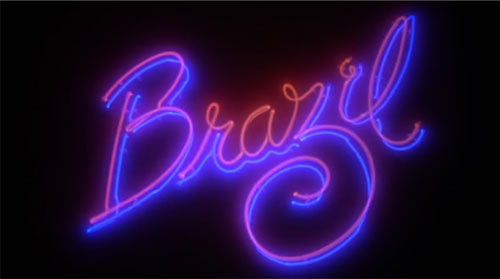
Brazil (Criterion DVD Box Set)


Originally Written and Posted at Epinions.com on 4/13/05 with Additional Content and a New Conclusion.


The only American in the British comedy troupe Monty Python, Terry Gilliam stood out for his quirky and abstract animation sequences that came between some of the comedy sketches in their Monty Python's Flying Circus shows. Gilliam would often appear in the sketches sometimes as a small part where in the 70s when Monty Python branched out into films, Gilliam would co-direct the films like Monty Python & the Holy Grail and 1983's Monty Python & the Meaning of Life. When Monty Python disbanded shortly after the Meaning of Life, Gilliam went on his own to direct his own films after doing two solo features for 1977's Jabberwocky based on Lewis Carroll's story and Time Bandits in 1981 that included Python-mates Michael Palin and John Cleese (who wrote the film with Gilliam and Python's Eric Idle) along with Sean Connery. With the year 1984 looming and its relevance to the bleak, totalitarian novel of George Orwell, Gilliam decided to make his own version of 1984 with a bit of the over-the-top, surreal style of Federico Fellini that would become his masterpiece, 1985's Brazil.

Set in the 20th Century in a different world, Brazil is a grand, otherworldly film that combined Orwell's bleak, Metropolis-like vision of 1984 with many of Gilliam's Python's hijinks in tow. It's part sci-fi, part-comedy, part-drama, part-fantasy, and part-action all rolled into one. Though the film is called Brazil, it doesn't set itself in the country of Brazil or has anything to do with Brazil except for its song that is played throughout the film. What the film is about is an oppressed, meek man named Sam Lowry who often dreams into another world whenever he's feeling oppressed by his bleak world around him. After a mistake that has an innocent man killed, Lowry investigates to correct an error where he bumps into the girl of his dreams, a terrorist, and all sorts of people including those he works for at the Ministry of Information. Playing Lowry is Jonathan Pryce who makes a cowardly, meek man into an unlikely hero. With a cast that includes Gilliam's Python-mate Michael Palin along with Jim Broadbent, Katherine Helmond, Bob Hoskins, Kim Griest, Ian Holm, Ian Richardson, Peter Vaughn, Charles McKeown, and Robert de Niro. Brazil is a flat-out masterpiece that proves that there's no escape to imagination.

It's a typical day in the Ministry of Information when a technician (Ray Cooper) kills a fly in the ceiling, only to have that dead fly drop into a mechanized typewriter where an error occurs. The error forces a group of police-like guards to take a man named Mr. Buttle (Brian Miller) to have him be executed by the Information Retrieval group. Witnessing the capture is a woman named Jill Layton (Kim Griest) who notices that it's an error. The next day, a nervous office manager named Kurtzmann (Ian Holm) keeps peeping through his employees as he notices glitches in his computers where workers would watch movies. He calls for one of his loyal employees in Sam Lowry, only that he has overslept in his dream where he's a superhero, flying to find his dream girl. He wakes up to learn that he's overslept and the electricity in his apartment isn't working. He arrives where he bumps into his friend Jack Lint (Michael Palin) who works at the Information Retrieval office.

Lowry fixes Kurtzmann's computer problems as he heard that Lowry is up for a promotion at the Retrieval group but Lowry has turned it down because he enjoys his anonymity. He learns that his promotion has been pressured by his own mother Ida (Katherine Helmond), who knows the boss Eugene Helpmann (Peter Vaughn). Ida, who is currently getting a plastic surgery procedure to look young by Dr. Jaffe (Jim Broadbent) takes Sam to have dinner with friend Mrs. Terrain (Barbara Hicks) and her braces-wearing daughter Shirley (Kathryn Pogson). Ida and Mrs. Terrain hopes to have the two to get together but neither have any interest in another where Sam often feels pressured by his mother to not work for Information Retrieval. The problems with his mother, only makes Sam escape into his own dream world where he suddenly wakes up to learn that his air conditioning has broken down.

He calls Central Services to have his air conditioning fixed, only to learn that it will take them days to arrive. Then, a few minutes later, a man named Harry Tuttle (Robert de Niro) has arrived to fix the air conditioning since he intercepted Sam's call. Tuttle, who used to work for Central Services, fixes Sam's air conditioner without dealing with papers and claims, it's all for the work and to help someone. During the fixing, Central Services suddenly arrives with its fix-it guys Spoor (Bob Hoskins) and Dowser (Derrick O'Connor) to check up but because they didn’t have the forms to fix things, they’re forced to come back. Tuttle thanks Sam as he escapes through gliding down a wire as Sam learns he’s a terrorist because he fixes things without papers or money.

When Sam goes to work with Kurtzmann, Kurtzmann learns that an error did occur with Buttle when really, it was supposed to be Tuttle that should've been executed. Kurtzmann wants to deliver a check to Mrs. Buttle (Sheila Reid) but nerves have driven Kurtzmann to the edge. Sam will deliver the check personally as his fellow workers are secretly watching Casablanca. When Sam goes to deliver the check, Mrs. Buttle wants to know what has happened to her husband as he is attacked by her children as he witnesses Jill, wondering who she is since she resembles the girl in his dreams. He saw her earlier as she is now being suspected for being in cahoots with the terrorist group. Sam wants to know who she is but because he can't get information from his office, he has a reason now to take the promotion at Information Retrieval.

Upon returning home to his apartment, he learns that Spoor and Dowser has made things worse, especially when they learned that Tuttle was here. They have the paperwork where everything is screwed up. Sam goes to sleep to dream more where he battles a samurai warrior (Winston Dennis) to save his dream girl. Sam is waken up when a singing telegram girl (Diana Martin) arrives to tell him that his mother has invited him to a party. Sam doesn't want to go at first until he learns that Helpmann will be there. Sam arrives where he sees his mother, looking younger than ever while Mrs. Terrain looks worse thanks to an acid-like experimental procedure made by Dr. Chapman (Jack Purvis). Sam finally sees the wheelchair-bound Helpmann as he helps go into the bathroom and Helpmann decides to return a favor for Sam’s father by giving Sam the job which Sam accepts.

Sam takes his first day at Information Retrieval where he works with a talkative boss named Warrenn (Ian Richardson) and borrowing the computer of his neighbor Lime (Charles McKeown) where he finds more information on Jill, who is suspected for all sorts of crime and is a fugitive. He goes to Jack for guidance as he learns that Jack's job is to torture people as Jack suggest to change into a better suit with his daughter Holly (Holly Gilliam) watching. Sam, in a new suit, goes to find Jill where he sees her at the reception board where he goes after her and tries to tell her about Mr. Buttle. Jill doesn't trust Sam at first, only to give in when he doesn't give up, especially since he loves her. She takes him to a plant where she’s carrying a delivery but after an explosion, she is suspected for the bombing as she and Sam are captured. Sam, is returned to his office where Warrenn forces him to work overtime.

Sam comes home to find his apartment a complete mess that he cannot control as Spoor leaves him out. Then, Tuttle arrives to help Sam where after Tuttle's escape, Jill arrives as Sam decides to sneak into Helpmann’s secret elevator to delete Jill's files as the two fall in love, only to be captured by the Ministry. There, Sam wonders what is going on, where is Jill, and what is going to happen to him.

With an original screenplay written by Gilliam, Charles McKeown, and Tom Stoppard, Brazil has many elements that aren't just cerebral but also filled with satirical humor. The credit really goes to Gilliam for his extraordinary vision by bringing Orwell's bleak, totalitarian vision of bureaucracy that is almost inescapable and find humor in it. Imagine living in a world where like in Brazil where you're living in poverty, all the machines don’t work well, and forced to live in this state. It's a bleak film but one that has humor and spectacular visions. Gilliam and his fellow writers really create a fantastic story in which, our protagonist is someone an audience can connect with. Lowry is a dreamer, who doesn't want to be noticed and wants to live in his dream without facing any kind of realities or responsibility. It's a fantastic screenplay that deserved its recognition by the Oscars even though they were just nominated.

If the script of Brazil is intelligently witty, Gilliam as a director pulls all the stops into his vision. Here, he perfectly captures a totalitarian bleakness that is very otherworldly and now, it makes sense with our own American idealism where the American dream is over and we're forced to live in a country run by idiots. Gilliam is really a storyteller like Fellini that uses extravagance to advance a story that blurs the line of reality and fantasy. It's top-notch directing at its best and as for the film's ending. I won't reveal it but it is a happy ending when you think about but it makes you really think and it's one that Gilliam fought over for when he made Brazil and it’s true to his vision.

If Gilliam's directing is in its imaginative form, complementing that vision is cinematographer Roger Pratt who brings in a diverse approach to the film's vision, with little color in many of the film's bleakest scenes and productions while bringing a lot of colorful lighting in Lowry’s dream sequences, including the samurai battle scene with its mix of gray and color. Helping out in the visual department is production designer Norman Garwood along with art directors Keith Pain and John Beard for capturing the bleak, utopian nightmare of the Metropolis-like city with its poverty-stricken city and its upper class styles that really shows the contrast of the rich and poor, even in the building where Sam and Jack Lint works at.

For the film's retro-30s look, costume designer James Acheson brings in a costume style of 1930s-like suits for the males except for Robert de Niro's Tuttle character while most of the women wear these wonderful clothing with boot-like hats along with Gilliam's wife Maggie Weston for creating strange makeup and hair for Katherine Helmond's character. With a wonderfully diverse score from the late Michael Kamen, the orchestral arrangements that are filled with rich strings play up to the film's suspense and dreamy tone along with dreamy layers for the song of "Brazil".

Credit for capturing the behavior of the bureaucracy of Brazil is its cast that includes several fine small performances from Brian Miller, Ray Cooper, Barbara Hicks, Shirley Pogson, Jack Purvis, Diana Martin, Derrick O’Connor, Holly Gilliam, Charles McKeown, and Sheila Reid. While Bob Hoskins and future-Oscar winner Jim Broadbent had small roles, both actors delivers some hilarious standout moments in their respective roles as repairman and surgeon in their own unique way. Playing against type in a role that now stands as ironic is Robert de Niro as Harry Tuttle, who only appears in a few scenes but he is extremely funny whenever he's on board.

Ian Richardson and Peter Vaughn are great in their roles as the superiors of the building that Sam Lowry works for while Ian Holm really stands out with his neurotic performance as Kurtzmann. Katherine Helmond gives a funny, aloof performance as Sam Lowry's mother while Kim Griest is excellent in her role as Jill Layton with her tough-as-nails attitude and beauty. Of the supporting cast, the real standout is Michael Palin for his eccentric, strange performance as Jack Lint, with his nice guy, ignorant role as a man who doesn’t think torture is a bad thing.

In terms of performance from the whole cast, no one stands out better as Jonathan Pryce as the protagonist Sam Lowry. Pryce brings a complex and human performance as a man that couldn't stand the oppression he's living in and all the gadgets he has to be surrounded with. Pryce brings sympathy to Lowry in scenes involving his mother and her friends. Lowry is the guy we know and when he's in the dream sequence, Pryce is larger than life. He brings both comedy and drama into a great performance as this will be the role he will be remembered for as he continues to do great films like most recently, Pirates of the Caribbean.

***The Following Content is Additional Material Relating to the Criterion DVD Box Set Written on 9/9/10***

The 1999 3-disc Criterion DVD set is one of greatest releases from the Criterion Collection. The film is presented in its original 1:85:1 aspect ratio for widescreen while the film is assembled from both the American and European theatrical releases for the ultimate cut of the film at 142-minutes. Featuring a new remastered Dolby stereo surround soundtrack, the remastered film (which was remastered again in 2006 for a single-disc release) is all supervised by Terry Gilliam.

The only special feature in the first disc of the DVD aside from English subtitles for the hearing impaired is a full-length audio commentary track by Terry Gilliam. Gilliam talks about the making of film while reflecting on everything that is happening as he’s watching what he says is the fifth and final cut of the film. The only scenes that don’t appear in the final version that was assembled from the American and European theatrical releases are the clouds at closing credits and an extended scene at the end that appears in the shortened, studio-cut version of the film.

Gilliam praises the work of Jonathan Pryce and co-screenwriter Tom Stoppard throughout. Pryce for his physical comedy and expressions during scenes while Gilliam praises Stoppard for some of the dialogue and ideas he had. The name “Brazil” came from the idea of shooting the opening sequence in Brazil at the rain forest where it was later revised for the scene where a man kills a fly and the mess up of Tuttle/Buttle occurs. Gilliam also talks about Robert de Niro who was very nervous about doing the film though it was a small role. Yet, de Niro was very relaxed during the making of the film as Gilliam has fond memories.

Terry also talked about the casting of Jill where he wanted an unknown. While it’s been known that Gilliam had issues with Kim Griest, Gilliam underplays those issues as he liked her performance and felt she was right along despite the people who auditioned for the film. Among them were Ellen Barkin, Rosanna Arquette, Kathleen Turner, Jamie Lee Curtis, Rebecca de Mornay, and Madonna. Gilliam also talked about the scene with his daughter Holly and Michael Palin which she hated to do. She only had two days of work and in the second day, she didn’t want to say her lines. So in order to film her, Terry recalled having to operate the camera while his wife Maggie held the boom mic so she can do her famous line to Jonathan Pryce.

Gilliam also talks about his struggle with the studios as he reveals his hatred for Hollywood and the studio system. Even as he feels that filmmaking is a collaborative effort where it’s not just the director but the actors and crew members that are all trying to tell a story. The commentary also includes some technical details and other things Gilliam tries to recall as it’s definitely one of the most enjoyable commentaries for a film.

The second disc is a production notebook of everything that went on with the making of the film as well as the battle to release it. Featuring numerous special features, the second disc includes rare documentaries and interviews with those involved in the film. The first is a 56-minute documentary called The Battle of Brazil: A Video History by journalist Jack Mathews. The documentary chronicles the funding for the film and the battle to release it. Featuring interviews with Terry Gilliam, producer Arnon Milchan, studio executives Frank Price, Bob Rehme, and Marvin Antonowsky, L.A. film critic Kenneth Turan, and a 1985 audio interview with former Universal studios chief Sidney Sheinberg. The film goes into detail over the battle of the film.

It begins in the early 80s where Terry Gilliam met Arnon Milchan about a project he wanted to do called this project called Brazil. Milchan liked the idea but had a hard time selling studios about the project. At the 1983 Cannes Film Festival where Gilliam was promoting Monty Python’s The Meaning of Life and Milchan working to get buyers for Once Upon a Time in America. The two met Bob Rehme of Universal where he said yes to the project though Gilliam got an earlier offer from 20th Century Fox to do Brazil if he would direct the film Enemy Mines.

Things were going great until Rehme was out of the job as other people from Universal became concerned. When Gilliam submitted his first cut of 142-minutes, executives got worried and wanted him to cut the film. Though that cut was released in Europe by 20th Century Fox to critical acclaim, the executives at Universal were still unsure following a poor test screening in the U.S. Universal head Sidney Sheinberg decided to get involved and cut the film into 94-minutes taking out a lot of the fantasy sequences and focused on the love story. Gilliam got upset while he was still trying to cut a shorter version of 130-minutes for U.S. audiences as a battle ensued.

Gilliam made the battle public as he even got Robert de Niro to do a rare interview on national TV with Gilliam to support the film. Gilliam’s guerilla tactics worked as Jack Mathews was reporting all that was happening capturing both sides. Gilliam held secret screenings and then one for the L.A. Film Critics Association where the film won Best Picture, Best Director, and Best Screenplay. While Gilliam won the battle to release Brazil in the U.S. in New York City and Los Angeles in December of 1985. The film wasn’t a major commercial success though its reputation has grown since. Gilliam was happy that he at least, allowed directors to fight for their vision more.

The second documentary is a 30-minute documentary called What is Brazil? by Rob Hedden. A behind-the-scenes documentary with cast and crew interviews during the production as they ask what is Brazil? Gilliam talks about his collaboration with Tom Stoppard, who admittedly reveals not liking collaborations very much while is unsure what script Gilliam is shooting. The doc also has Michael Palin talking on the phone during the interview while pretending to be other characters. One of the highlights of the documentary is the lost eyeball sequence that was supposed to be part of the dream sequence but got cut out due to length.

The next series of special features is the Production Notebook that reveals everything about the film and its look. Among them is numerous texts and notes relating to the many drafts of the screenplay for Brazil. Featuring pictures and draft notes from Charles Alverson, who helped write in the numerous drafts of the script. The numerous texts and development for Brazil in script is truly mesmerizing with characters such as “the Oppressor” who was eventually cut out since there was no room for a true, main antagonist due to the involvement of Charles McKeown and Tom Stoppard in numerous drafts.

Also included in the script development section is a nine-minute video featuring Gilliam, McKeown, and Stoppard talking about the writing process. Whereas Stoppard was brought in for three drafts as he brought ideas that changed things. Gilliam brought McKeown to put some ideas back from previous drafts and keep the stuff that Stoppard wrote that Gilliam felt worked. The three men reveal how difficult it was to find a balance for the script where all three would be satisfied for what would be shot.

The storyboard material presented in the DVD reveal lots of text about the detail of what Gilliam wanted along with drawings that he made for the fantasy sequences in all nine of the dreams presented and where they were originally supposed to be in the film in its various drafts. The second dream sequence included the cut eyeball scene where Sam in his dream tries to save Jill. Others are variations while the final involved Helpmann as Father Christmas.

The production design section reveals in-depth detail in the work Gilliam and production designer Norman Garwood. A lot is revealed into re-creating a city that is in ruins with storyboards and stills into how looked early on to what it would look like in the film. Even in the creation of props and slogans that was needed to create this world as Garwood goes into detail of what Gilliam wanted. The costume design section features audio commentary costume designer James Acheson about the costumes in a five-minute segment. Acheson through pictures and still goes into detail of what inspired the costumes while talking about how easy it was to work with Robert de Niro and Katherine Helmond about their costumes. Yet, he says the least favorite costume he made was the samurai. The segment also featured a rare video clip of a stuntman working on the Icarus suit that Sam wears in his dream to show he would fly.

The next section is the special effects where it features audio commentary from Richard Conway discussing some of the raw footage unveiled during the making of the film. Among them is the flying sequence which features a mechanic dummy flapping his wings and going up in the air while Conway revealed how difficult it was. Even where Jonathan Pryce tried to do it with a harness that only lasted 10 seconds. For the deleted eyeball sequences, stills, storyboards, Conway’s commentary, and pictures of the eyeballs are revealed which were a nightmare to make as it got cut because not everything worked. Other effect details revealed are the miniatures used for second-unit shots relating to cars, sets that were built, and the famous brick hands that capture Sam in the dream sequence on the ground. Conway also admits that making the Samurai costume and the visual effects for that character was a nightmare while he and James Acheson felt even more sorry for Winston Dennis to play that character. Other raw footage revealed is the forces of darkness dragging Jill’s cage in a rare, raw shot while a scene with Mrs. Terrain’s remains was another awful experience due to the smell.

The last major special feature is a nine-minute interview with late composer Michael Kamen about the film’s score. Kamen talks about creating a score around the song Brazil, a song he didn’t like very much, while talking about variations he made including a few score pieces that didn’t make it to the film revealed through raw footage. Even the first dream sequence played to a musical piece by Strauss. One of the hardest parts about the score was getting permission from the song’s publisher so that Kamen could get credit for the arrangements. With the help of Ray Cooper, Kamen was about to work around the song and create suites which he was proud of doing.

Two other features included in the second disc is the film’s theatrical trailer and a photo gallery of production and publicity stills relating to the film which includes rare posters and such.

The third and final disc of the DVD set is the 94-minute Love Conquers All version of Brazil presented in rough form and in full screen. The film itself in this shortened version is in fact an abomination. Many of the film’s fantasy sequences are cut. There’s a lot of continuity errors. No motivations or proper introduction of characters. A lot of the satirical and political elements of the film is cut out. A lot of subplots relating to Buttle/Tuttle confusion and Sam’s mother is cut out with characters not being fully realized. The pacing in several scenes are off and musical cues are misused.

Included in the third disc is a full-length commentary track by Gilliam expert David Morgan. Morgan’s commentary reveals what is cut and what is added to the Love Conquers All version. Morgan reveals that this version of the film really confuses the audience of what they’re seeing. Notably with the bad edits and cut material along with the humor being poorly-timed. It’s a must-see just to see how bad a studio can mess up a film for their own intent.

Also included in the entire set is a booklet featuring an essay by Jack Mathews. Mathews’ essay summarizes its history, the battle, and its impact while presenting what is Gilliam’s final cut of the film. The Criterion DVD box set for Brazil is definitely a must-have for fans of the film. Even as it reveals loads of details into the production of the film, the battle to release it, and everything else. It’s definitely Gilliam’s masterpiece as fans get to see the film in its most completed form.

Brazil is truly one of the greatest films ever made from the wondrous mind of Terry Gilliam. Featuring a towering leading performance from Jonathan Pryce plus an amazing supporting cast that includes Robert de Niro, Michael Palin, Kim Griest, Katherine Helmond, Bob Hoskins, Jim Broadbent, Ian Holm, and Peter Vaughn. It’s a film that is truly ambitious while not being overly pretentious nor with an overblown message. While audiences might be befuddled by its plot description, they won’t be once they see the film which displays a smart sense of humor. In the end, Brazil is a mesmerizing, witty, and dazzling film from Terry Gilliam that gives voice to the oppressed dreamers.


© thevoid99 2010

Rush: Beyond the Lighted Stage


Whenever people jot down the greatest bands of all-time.  Whether it’s the Beatles, the Rolling Stones, the Who, Led Zeppelin, the Clash, Pink Floyd, Nirvana, or anything else.  There’s always an argument into why these bands are great.  Then there’s Rush.  The Canadian power-trio formed in 1968 by Alex Lifeson and Geddy Lee, with the addition of Neil Peart in 1974, were a band that not many people understood.  Despite selling more than 40 millions and having more gold and platinum albums next to the Beatles and the Rolling Stones.  They were not a band that were big enough for the mainstream or the darling of critics.  By 2010, the band’s popularity is still thriving than ever as the year also the band’s story be told through a documentary called Rush:  Beyond the Lighted Stage.

Directed by Sam Dunn and Scot McFayden of Metal:  A Headbanger’s Journey and Iron Maiden:  Flight 666.  Rush:  Beyond the Lighted Stage chronicles the band’s early years to 2009 as the band is currently riding a wave of pop culture.  From the early hard rocking years through the late 70s/early 80s period of popularity and onto the synthesizer period of the 1980s.  Dunn and McFayden interview the band along with associates and fans of the group including musicians like Gene Simmons of Kiss, Vinnie Paul of Pantera, Tool’s Danny Carey, Mike Portnoy of Dream Theater, Billy Corgan and Jimmy Chamberlain of Smashing Pumpkins, Trent Reznor of Nine Inch Nails, and Sebastian Bach along with actor/musician Jack Black and South Park co-creator Matt Stone.  The result is a fascinating, entertaining, and thrilling documentary one of the greatest rock band of all-time.

The documentary is broken into several chapters of Rush’s history from the band’s early beginnings to their most recent tour promoting the 2007 album Snakes & Arrows.  Particularly into the backgrounds of Alex Lifeson and Geddy Lee in their suburban backgrounds and how they met in junior high.  Even as there’s brief profiling on original John Rutsey, who is heard through an audio interview in the early 70s, as he is mentioned and why he was out of the band due to health issues.  The meeting of Neil Peart in 1974 after the release of the first album led to some funny stories about the band opening for Kiss.

Stories about the band’s rise following the release of 2112 and why they wore the kimonos in an age where jeans and t-shirt weren’t cool which the band wanted to wear.  Even as they talk about the critical lashing they received over the years and how their fans dismissed it despite a critical re-evaluation in some circles in recent years.  With the release of 1981’s Moving Pictures, the band became popular as they moved into the age of synthesizers known as the Synthesizer Period of the 1980s that divides fans to this day.  Even as it would eventually get the band back into hard rock territory while Neil Peart studied drum techniques with Freddie Gruber.  The story of Neil Peart’s family tragedy is touched upon on how it shut the band down with Lifeson and Lee worried about Peart’s state as he went on a cross-country trip through North America where he finally returned in 2001 to record Vapor Trails.

The documentary is considered to be a Holy Grail to Rush fans as archive footage of the band’s early years, rare interviews, and such is finally presented in this 107-minute tale that chronicles the band and all of their albums.  Even as some are profiled briefly while it allows fans, famous and non-famous, a chance to talk about those periods and how much Rush means to them.

The band themselves come off as just real guys who are relaxed, funny, and intelligent.  While Lee and Lifeson are more accessible, even as they give autograph to fans.  Peart, is presented as someone who is very private though he does reveal a lot in the interviews he’s given despite the fact that he’s very shy and not wanting to get a lot of accolades.  Band personnel like manager Ray Danniels also fill in to the band’s history along with Peart’s parents and the mothers of Lee and Lifeson.

Some of the film’s entertaining moments come from the famous fans in the film like Jack Black and Sebastian Bach, who each give more light-hearted, comical interviews.  Notably Bach who explains that 2112 led him to read Ayn Rand’s The Fountainhead at such a young age.  Musicians like Mike Portnoy, Vinnie Paul, Danny Carey, Metallica’s Kirk Hammett, and Ozzy Osbourne/Black Label Society guitarist Zack Wylde delve into the complexity of the band’s music.  Even to some of the criticism towards the synthesizer period where Trent Reznor is revealed to be a fan of that period while Billy Corgan contends that “middle of the road Rush” is still someone’s left field.

The archive footage shown, including a scene of a young Alex Lifeson arguing with his parents about his future is really a treasure for fans.  Even as the fans themselves get to be revealed in talking about their love for the band in an almost-geek like fashion.  Rush’s devotion to its fans is shown as it is clear that their fan base is one of the strongest.  Even as it’s clear that no matter how much the mainstream ignores them or how much flack they get from the critics.  Rush has always endured through many trends with a strong loyalty of fans proven by album sales and sellout concert tours.

Rush:  Beyond the Lighted Stage
is a remarkable documentary from Sam Dunn and Scot McFayden.  Fans of Rush will no doubt be happy to see the band’s history told in such a respectful way while giving them archival footage that they will enjoy.  Those new to the band with a keen interest will no doubt be amazed by the band’s history and the testimony from fans and musicians into why they’re one of the best.  Even as Matt Stone that the band deserves to have their props, otherwise you’d be a dickhead.  This is definitely one of the finest music documentaries ever made without any of the sentimental Behind the Music trite or skimming over things like most programs about individuals.  Dunn and McFayden get it right with Rush:  Beyond the Lighted Stage.

© thevoid99 2010

Monday, September 06, 2010

The Imaginarium of Dr. Parnassus


Originally Written and Posted at Epinions.com on 1/17/10.


One of the most beloved but controversial directors in cinema, Terry Gilliam is a director who is known for a broad vision that doesn't fit in with what Hollywood wants. Despite acclaimed features like Time Bandits, Brazil, The Fisher King, and 12 Monkeys that were moderate commercial hits. Gilliam would often have budget troubles which had been notorious for his 1988 flop The Adventures of Baron Munchausen. Though his films would often have a devoted following of fans since his days working as a member of Monty Python, funds for his projects were not easy for him to get.

The 2000s however, would be a very rough decade for Gilliam. Production for his ambitious yet radical re-telling of Miguel de Cervantes' Man of La Mancha entitled The Man Who Killed Don Quixote. The project that starred Johnny Depp and Jean Rochefort as Don Quixote was filled with lots of trouble as the $32.1 million film was officially scrapped in November 2000 as it was documented for the 2002 documentary Lost in La Mancha. 2003 was also a tough year for Gilliam as he worked on his next project The Brothers Grimm where he and Tony Grisoni couldn't get proper credit for their script re-write while Gilliam battled it out with Bob and Harvey Weinstein over who should shoot the film and final cut privileges.

The film was eventually released in the fall of 2005 after several delays to some mixed reviews and decent box offices. Gilliam also released another film that same year to film festivals with Tideland, a surreal adaptation of Mitch Cullin's novel that was widely panned by critics in its fall 2006 release. Yet, the film's DVD release wasn't well-received by Gilliam as his troubles to keep getting funding for projects were troubled. In late 2007, a new project by Gilliam was finally in the works which was considered another ambitious project about Gilliam's themes of imagination. Starring in the film was Heath Ledger who had previously worked with Gilliam in The Brothers Grimm. Things seem to go well until January 22, 2008 when the young actor died of an apparent overdose of prescription pills.

Ledger's death seemed to mark the end of another Gilliam project but the director didn't give up as he decided to keep the footage that he shot with Ledger. At the same time, the parts that Ledger didn't film would be filled by other actors. The project was finally finished in 2009 despite a lot of trouble as Gilliam dedicated the film to Ledger along with producer William Vince entitled The Imaginarium of Dr. Parnassus.

Directed by Terry Gilliam with a script he co-wrote with collaborator Charles McKeown, The Imaginarium of Dr. Parnassus tells the story of a traveling circus troupe leader who makes a deal with the Devil to live a thousand years. When the Devil comes to collect the deal by taking the doctor's daughter, the doctor makes a deal to save her by trying to obtain five souls with help from a mysterious outsider as they travel to different worlds inside the doctor's imagination machine. Playing the title character is Christopher Plummer while the outsider named Tony is played by Heath Ledger in his final performance as the film revels in Gilliam's themes of man versus reality. Also starring Lily Cole, Tom Waits, Verne Troyer, Andrew Garfield, Peter Stormare, and in the other roles of Tony, Johnny Depp, Jude Law, and Colin Farrell. The Imaginarium of Dr. Parnassus is a whimsical, entertaining, and spellbinding film from Terry Gilliam and company.

Dr. Parnassus (Christopher Plummer) is in modern-day London with a traveling circus troupe trying to entertain people throughout the city. Yet, with help from his daughter Valentina, a young performer named Anton (Andrew Garfield), and a dwarf named Percy (Verne Troyer). The troupe tries to entertain people but would often be dismissed or heckled by people who seem uninterested. For the 1000-year old doctor, it's a struggle as the Devil (Tom Waits) is lurking around to collect on a deal that the doctor made many years back. The deal was that for any child the doctor has at the age of 16, the Devil must collect while the doctor would be granted immortality as he met the devil many years ago when the doctor was just a monk.

Then on one night while traveling through London, a shadow of a man being hanged under the bridge as he was saved. Waking up, the man whose name is Tony (Heath Ledger) has no idea who he is as the doctor reluctantly takes him in while Valentina falls for him much to Anton's dismay. Attempts to stage the show, while getting people inside the imaginarium mirror where people would go into the mind of Dr. Parnassus where their own imagination would enamor them, has unfortunately been troubled as the Devil makes a deal with the doctor to have five souls to believe in the imaginarium where if Dr. Parnassus succeeds, he could keep his daughter.

Anton hears what is going on as he tries to take a woman into the imaginarium but only to cause trouble. Tony has a new idea to revamp the entire stage on the day of Valentina's sixteenth birthday. There, Tony woos his way to get women inside where he would sport different faces inside as everything seems to go well until a group of Russian men would chase Tony inside the imaginarium. The Devil ends up collecting their souls while Anton would make a discover of Tony's true identity. With less than hours away before the Devil can collect his prize, Valentina learns what was all of this about with Tony deciding to make a desperate move to save her as the Devil is ready to make more trouble.

The film recalls a lot of Gilliam's themes of man vs. reality where the character of Dr. Parnassus is a man who likes to tell stories in order to entertain people. For the Devil, Dr. Parnassus' ability to get people's attention was something that he was intrigued by as he gave the doctor immortality to keep telling stories and entertain. Yet, immortality comes with a price where Parnassus wanted to experience things that humans want and often joining the doctor in this long journey is Percy, who is the film's conscience of sorts. Yet, the experience to love would only come at a price for the doctor as the film does become a battle between the desire of one's soul with the help of a few characters.

Terry Gilliam and co-writer Charles McKeown create a film that is about a man dealing with the harsh realities to entertain people and his own immortality where he faces changing times and the Devil lurking around to collect on a deal. Inside the imaginarium where the doctor hopes to get people inside where they can live a certain fantasy. The doctor's job is to make it happen though the Devil would appear to tempt people and collect their soul. The script is well-structured though at times, the story lags a bit in its pacing as Gilliam and McKeown does bring a lot of depth, humor, and drama to the story and the characters in the story. Notably Tony who carries a dark secret about who he is since he can't remember where inside the imaginarium. He takes on a different face and personality which would reveal the kind of person that he really is while the Tony in the real world has no clue and tries to hide it from himself. The script is overall fantastic in what Gilliam and McKeown created in terms of what its idea of imagination.

The direction of Gilliam is definitely superb as it revels in a grim world of reality with wondrous fantasy. Shot mostly in London with sets and visual effects pieces in Vancouver, Gilliam does create a film that sort of lives up to his grand, ambitious ideas where things are huge and everything seems unreal. The scenes where the Devil first meets Dr. Parnassus at a monk place is truly fascinating along with scenes in the desert and such. In London, there's a look that is very gritty where Gilliam doesn't go for a wide depth of field. It's mostly close-ups and location shots of where the characters are while inside the carriage where the imaginarium is stored, it's more intimate and at times, claustrophobic. The scenes inside the imaginarium are truly whimsical and fantastic as it plays up to Gilliam's strange mind and visual swirls that are reminiscent of his work with Monty Python. From the way Gilliam composes several effects shot to its comical tone, it is definitely a Gilliam film all the way as it is his most rewarding work since Fear & Loathing in Las Vegas.

Gilliam's longtime cinematographer Nicola Pecorini does fantastic work with the film's stark, gritty visuals for the nighttime scenes in London along with the dazzling look of the imaginarium stage when it's revamp and inside a mall. The look for the scenes inside the imaginarium are colorful with bright lights and colors as Perconi's work is superb. Editor Mick Audsley does some very good work with the editing to maintain a certain rhythm and style along with smooth transitions for some of the film's dramatic and comical scenes. For the more intense, adventure-like sequences, the film is cut with a fast-paced rhythm as the editing is well-crafted.

Production Anastasia Masaro with set decorators Caroline Smith and Shane Vieau along with a couple of art directors plus Gilliam do a spectacular job with the film's set designs. From the carriage that carries the imaginarium stage to the stage itself where at first, it was a ragged stage that wasn't well put together until it was revamped into something classier. The look of the film in its set designs is phenomenal like a lot of the set works in Gilliam's films. Costume designer Monique Prudhomme is excellent for the ragged clothing that everyone wears when they're not performing to the more dazzle look that everyone else wears where at one point, Verne Troyer has to look like an African child for Tony's revamp of the imaginarium stage that can be seen as offensive but there's a humor to it that even the character knows that it's wrong.

The visual effects are truly amazing in its whimsical look from the candy world that Anton stumbles to the more romantic yet troubled look that Tony and Valentina venture through. Led by its team supervised by Richard Bain and John Paul Docherty, the look of the imaginarium along with the design of the monk structure that Dr. Parnassus was a part of, it's truly dazzling. The sound design of Andre Jacquemin is excellent for many of the film's adventure sequences along with the sound of the carriage and locations. The music score of Mychel and Jeff Danna is wonderful for its circus like tone with playful musical pieces along with lush orchestral pieces for the film's dramatic and adventure sequences with big, heavy arrangements on some of its darker elements. One of the most comical elements of the music involves a group of policemen wearing lingerie stockings and high heels as they sing a song that is truly silly but fun.

The casting by Irene Lamb and Maureen Webb is excellent with some notable appearances from Peter Stormare as a politician in a fantasy sequence plus Maggie Steed as a woman with a lot of Louis Viutton objects who goes inside the imaginarium, Paloma Faith as a woman who is wooed by Tony into the imaginarium but doesn't get there, and Richard Riddel as a drunk who heckles the troupe early in the film. Verne Troyer gives what is probably his best performance of his career as Percy, Dr. Parnassus' longtime traveling companion who is really the straight man of the film while making sure Dr. Parnassus isn't doing anything wrong as he is also the film's conscience of sorts. Tom Waits is great as the Devil but is known as Mr. Nick who is a charmer and a man that is willing to tempt Parnassus into playing games as Waits is just fun to watch throughout the film.

Andrew Garfield is really good as Anton, a performer who likes to do magic tricks and wow the crowd while struggling to maintain his feelings for Valentina until Tony comes in and intervenes. Lily Cole is also good as Valentina, Dr. Parnassus' daughter who yearns for a better life while trying to take care of her father as she also deals everything else around her including Tony. Christopher Plummer is great as the film's title character, a man tormented by his own immortality while struggling to keep things going while dealing with the devil as it is definitely a mesmerizing performance from the veteran actor.

Finally, there's Heath Ledger in his final performance as Tony and as far as final performances go. This is certainly a fitting bow though it doesn't top the brilliance of his penultimate role as the Joker in The Dark Knight. Ledger's performance is full of charm, wit, and humor as it clearly shows an actor who was seemingly having a good time and it's a shame that audiences will never get to see the likes of him ever again as it definitely a fantastic performance from the late, great actor. Helping Ledger in filling the role of Tony through imaginarium are Johnny Depp, Jude Law, and Colin Farrell as they all do a fantastic job. Depp with his light-comic performance with a sense of wit. Law with his playful yet smarmy tone and Farrell with a greasy yet charming performance as they all embody part of Ledger's persona as the three actors do great work while it is great to note that they gave their earnings to Ledger's daughter Mathilda.

The Imaginarium of Dr. Parnassus is a remarkable yet enjoyable film from Terry Gilliam and company featuring a fantastic final performance from Heath Ledger. Along with top-notch performances from Christopher Plummer, Tom Waits, and Verne Troyer plus Johnny Depp, Jude Law, and Colin Farrell filling in for Ledger. It's a film that shows that Terry Gilliam still has it when it comes to whimsical and ambitious ideas. While it may not rank with a lot of his great films like Brazil, The Fisher King, 12 Monkeys, and a couple of other films. It is certainly a film that is definitely his best in quite a long time after a decade of trouble. While mainstream audiences might enjoy the film for its entertaining factor and whimsical humor along with some star power. The film is a bit eccentric in some places but it's what happen when they see a Terry Gilliam film. In the end, The Imaginarium of Dr. Parnassus is an excellent film from Terry Gilliam along with a fond farewell from Heath Ledger.


© thevoid99 2010

Saturday, September 04, 2010

Blog News 9/4/10

For those of you that have been following this blog.  Thank you for reading.

Coming this month and the months to follow will be more Criterion DVD reviews for Brazil, Solaris, Che, George Washington, The Leopard, and My Own Private Idaho.  I would also hope for a review of the upcoming Criterion DVD to The Thin Red Line as well.  New film reviews are definitely coming but it depends on the film.  Even as it might relate to whatever projects from LAMB.  Reviews for new theatrical releases however, might not be coming until October.

Plans for any music reviews is currently on hold as it's not likely I will delve into any 2010 album releases until very late in the year though I do plan on attending the upcoming Deerhunter concert this coming Oct.

Then there's the Auteurs profile series.  The first one for Sofia Coppola has been a success as I plan to do more.  For the second one.  I'm leaning towards Todd Haynes as I hope to review Superstar:  The Karen Carpenter Story, Poison, and Dottie Get Spanked while posting my other reviews that I wrote on his films.  Originally, I had Terrence Malick as my premier profile in the Auteurs series but that will be delayed once there's news about the release for his upcoming film The Tree of Life.  

After Todd Haynes, the next director to be profiled will be Darren Aronofsky to celebrate the upcoming release for his new film Black Swan.  I will post extended DVD reviews of Pi, Requiem for a Dream, and The Wrestler (once I obtain the DVD for that) along with a review of The Fountain (which currently does not have a proper DVD release).  After that, I hope to do David Fincher next though I will have a review of The Social Network coming next month.