The film is about a deliveryman from a rural small town in South Korea where he reconnects with a childhood neighbor as she asks him to watch a cat where she takes a trip to Africa where she meets a rich young man who raises some suspicion into his secret activities. It is a film with a unique premise as it is more about a man who lives at rural area with a farm that is nearly neglected while he works delivering things where he meets a young woman who used to be his neighbor as they rekindle their friendship. The film’s screenplay by Lee Chang-dong and Oh Jung-mi has its main protagonist in Lee Jong-su (Yoo Ah-In) who lives in a rural farmland area near Paju near the North-South Korean border where he meets Shin Hae-mi (Jeon Jong-seo) who is working as a dancer for a raffle where Jong-su wins a watch that is for girls. The two reacquaint themselves with Hae-mi set to go on a trip to Africa as Jong-su falls for her where he takes care of her cat even though he never sees the cat.
When Jong-su picks up Hae-mi from the airport, she is joined by a man named Ben (Steven Yeun) who is rich and later takes them to clubs, posh restaurants, and such where Jong-su is confused by Ben and his friendly demeanor. Even as it does play into this social difference as Jong-su living near a farm and Hae-mi living in a tiny apartment while Ben lives in a posh apartment. There is also a subplot in which Jong-su is dealing with the fact that his father (Choi Seung-ho) is in trial over an assault case as Jong-su is going through money problems with a failing farm as it is a big difference to the fact that Ben has it all yet confesses to Jong-su that he burns greenhouses in rural areas that only raises more suspicion for Jong-su who would notice something isn’t right as it relates to Ben.
Chang-dong’s direction is definitely mesmerizing in terms of its approach to long shots as well as its emphasis on simplicity. Shot largely on location in areas in Paju near the border between North and South Korea as the city is based on the latter. The film does play into this world where there is this social disparity of sorts in where both Jong-su and Hae-mi live in as the first shot of the film is a near two-minute tracking shot of Jong-su carrying some things for a store as he walks into the store but the camera only stops at the entrance to introduce Hae-mi who is dancing to some music with another girl holding a microphone. It’s among some of the intricate shooting that Chang-dong would create as he also uses some unique wide and medium shots of the city but also the rural farm area that Jong-su lives in that features loudspeaker audio from afar from North Korea spouting propaganda. Chang-dong does play into this reality that Hae-mi and Jong-su are definitely a part of as they struggle to make money with the latter also dealing with his father going to jail as he tries to get others in his community to sign a petition in the hope he gets a lighter sentence.
Chang-dong does use some close-ups for a few intimate moments including a sex scene in the first act between Hae-mi and Jong-su while the conversation at Jong-su’s home with him and Ben is a key moment that leads to the film’s second act as it also include a flashback of a young Jong-su watching a greenhouse burst into flames. The film then shifts in tone but in a slow manner as it play into Jong-su trying to figure out who Ben is but also about a greenhouse nearby that was supposedly burned. Chang-dong’s direction also feature these intricate scenes of Jong-su following Ben’s car as it also play into this sharp social contrast where Ben’s car is something a rich person would buy while Jong-su is driving a white truck that has been through a lot of years. Its third act isn’t just about Ben’s own lifestyle and how he’s able to have this charmed life but also this social disparity that allows him to do whatever he wants with Jong-su being used. Overall, Chang-dong crafts a provocative and rapturous film about a deliveryman and a young woman who befriend a charming rich man unaware of his dark secrets.
Cinematographer Hong Kyung-po does brilliant work with the film’s cinematography with its naturalistic approach to some of the exterior scenes set in the morning and evening as well as an interior scene at Hae-mi’s apartment where the sunlight is a key factor. Editors Kim Hyeon and Kim Da-won do excellent work with the editing as it does have bits of style in some of the transitional fade-outs as well as some rhythmic cuts that help play into the suspense. Production designer Shin Jum-hee does amazing work with the look of Hae-mi’s apartment as well as the look of Ben’s posh apartment and the farm where Jong-su lives in. Costume designer Lee Choong-yeon does fantastic work with the costumes from the more casual look of both Jong-su and Hae-mi to the more posh-like clothes that Ben wears.
Special effects supervisor Ryoo Young-il and visual effects supervisor Suk Joong Kim do terrific work with some of the film’s visual effects that mainly play into a few scenes involving fire. Sound designer Lee Seung-cheol does superb work with the sound in the way music is presented at a speaker or at a club as well as the sound of the loudspeaker heard from the North Korean border. The film’s music by Lee Sung-hyun aka Mowg is incredible for its brooding music score that features elements of eerie percussions, warbling bass, and other intriguing instrumentation that help play into the suspense and drama while its soundtrack feature some K-pop music from Sistar, Nana D., and Krein as well as a piece of music for a major moment from Miles Davis.
The film’s wonderful ensemble cast feature some notable small roles from Lee Bong-ryun as Hae-mi’s sister whom Jong-su meets late in the film, Ban Hye-ra as Jong-su’s estranged mother whom he sees late in the film about his father, Min Boi-gi as a judge at Jong-su’s father case, Moon Sung-keun as the lawyer representing Jong-su’s father, Choi Seung-ho as Jong-su’s father, and Kim Soo-Kyung as a young woman who is with Ben in the film’s third act. Jeon Jong-seo is incredible as Shin Hae-mi as a young woman who works as a dancer for a department store who is an old neighbor of Jong-su as she is hoping to live a fruitful life despite her lack of direction as she is also someone that likes to dance.
Steven Yeun is phenomenal as Ben as this young rich man who has it all but also has a hobby that involves burning abandoned greenhouses as he is a man of charm but also someone that carries a lot of intrigue in his home and how he uses his wealth. Finally, Yoo Ah-in in a sensational performance as Lee Jong-su as this deliveryman who lives in a dilapidated farm with a young calf who reacquaints himself with a neighbor he hadn’t seen since childhood as he falls for her and then becomes suspicious of her new friend while dealing with things around him that only raises his concerns for Hae-mi.
Beoning is an outstanding film from Lee Chang-dong that features a trio of great performances from Yoo Ah-in, Steven Yeun, and Jeon Jong-seo. Along with its gorgeous visuals, commentary on social disparity and influence, entrancing sound work, and a haunting music score by Mowg. The film is definitely a suspense-drama that doesn’t play by the rules while also providing some unique commentary on how people can use people with someone being aware that they’re being used. In the end, Beoning is a magnificent film from Lee Chang-dong.
Lee Chang-dong Films: (Green Fish) – (Peppermint Candy) – (Oasis (2002 film)) – Secret Sunshine - Poetry (2010 film)
© thevoid99 2022

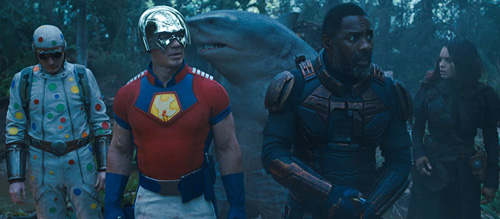
The film revolves around a small South American island who had been taken over during a coup where American intelligence officer Amanda Waller sends two groups of anti-heroes to infiltrate the island to destroy a lab known as the Jotunheim and all of its secrets unaware of what it’s hiding. It is a film that explore these band of misfits, criminals, and anti-heroes who are given a chance to reduce whatever prison sentences they have by helping the government destroy this lab created during World War II by the Nazis. Yet, complications arise where one team lead by Colonel Rick Flag (Joel Kinnaman) with his old teammate Harley Quinn (Margot Robbie) are ambushed with Flag and Quinn both captured forcing the other team lead by the former mercenary Robert DuBois/Bloodsport (Idris Elba) to finish the mission with his own band of misfits that includes the jingoist killer Christopher Smith/Peacemaker (John Cena), a man-eating shark-human hybrid known as Nanaue/King Shark (Steve Agee/voice of Sylvester Stallone), an eccentric man in Abner Krill/Polka Dot Man (David Dastmalchian) who uses polka dots as weapons, and a thief who can summon rats in Cleo Cazo/Ratcatcher 2 (Daniela Melchior) like her father before her.
James Gunn’s screenplay doesn’t go into anything that had happened in the previous film as it is more about what is happening at the moment with DuBois being reluctant to take part of this government-led task force run by Waller because he admits to not being a good person. Yet, when he learns that his estranged 16-year old daughter Tyla (Storm Reid) might be going to prison because of stealing a TV watch. DuBois accepts the tasks unaware that his old friend Colonel Flag is leading the first task force that got ambushed because one of its soldiers sold them out to the army of Corto Maltese with only Colonel Flag and Quinn surviving. Still, the group that DuBois is leading are an odd bunch as he also has a phobia for rats which makes him uncomfortable in his interactions with Cazo even though she is a kind-hearted person who likes to sleep a lot. The military dictatorship of Corto Maltese are hoping to be taken seriously with this mysterious weapon that is overseen by a scientist Gaius Grieves/the Thinker (Peter Capaldi) who is the man that Waller wants DuBois and others to take and bring them into the Jotunheim to destroy whatever Grieves is working on leading to many revelations for those working for Waller.
Gunn’s direction is definitely stylish as it doesn’t just play into some of the cartoonish elements when it comes to some of the film’s graphic violence but also in the fact that it is an anti-superhero film grounded by compelling characters who are all just a bunch of misfits. Shot largely on location at the Pinewood Atlanta Studios in Duluth, Georgia with flashback shots of Cazo as a child with her father (Taika Waititi) in Portugal and some of the streets of Corto Maltese shot on location in Colon, Panama. Gunn does play into the stakes with the first shot revolving around a criminal in Brian Durlin/Savant (Michael Rooker) playing handball with accurate bounces where he is called upon to take part in a group that is led by Colonel Flag with Quinn, Digger Harkness/Boomerang (Jai Courtney), and other anti-heroes such as an idiotic mercenary in Richard “Dick” Hertz/Blackguard (Pete Davidson), Cory Pitzner/T.D.K. (Nathan Fillion), Gunter Braun/Javelin (Flula Borg), the alien mass-murderer Mongol (Mayling Ng), and a weasel named Weasel (Sean Gunn). The usage of wide and medium shots has Gunn playing to the scope of the group shots as well as the island that is Corto Maltese as it has a grimy look that is colorful but also in decay.
Gunn also play into this air of dysfunction within the group as well as what goes on in Waller’s main base with her own team of people who are troubled by some of her decisions but also how she runs things. Even in Gunn’s usage of the close-ups as it play into the way characters interact with one another such as Cazo telling her story to DuBois while asking him about his phobia for rats. The film does have a structure but also some non-linear narratives in the script that includes the film’s third act where it does play into revelations into what is inside the Jotunheim. It adds not just a conflict about what this band of misfits is fighting against but also question on who they’re forced to work for. Even when the weapon that is unveiled proved to be bigger than anything or anyone has expected. Overall, Gunn crafts an outrageous yet insane film about a bunch of antiheroes who go to a small South American island to kill some people and destroy some old fortress as well as what is inside.
Cinematographer Henry Braham does brilliant work with the film’s cinematography as it has elements of style with its usage of vibrant colors, heightened lighting for some of the daytime exteriors, and some unique lighting for some of the interior scenes at night. Editors Fred Raskin and Christian Wagner do excellent work with the editing as it does have some style in some slow-motion work for a fight scene involving Quinn and some soldiers in a hallway as well as jump-cuts and other stylish cuts to play into the story. Production designer Beth Mickle, with set decorator Lisa K. Sessions and supervising art director Alan Hook, does amazing work with the look of the buildings of the island as well as the prison where many of the people of the Suicide Squad live in as well as the club that Grieves visits. Costume designer Judianna Makovsky does fantastic work with the costumes as it has different looks for many of the different members of the Suicide Squad including Krill’s polka dot costume, the helmets that DuBois and Smith’s helmets, and the red dress that Quinn would wear upon her dinner with one of the dictators.
The special makeup effects work of Greg Funk, Shane Mahan, Brian Sipe, and Matt Sprunger do incredible work with the look of some of the characters with Krill and the polka dot rashes he has on his face as well as Quinn’s own look. Special effects designers Ethan Carney, Peter Carney, and Bailey Eller, along with visual effects supervisor Kelvin McIlwain, do phenomenal work with the visual effects in the design of Nanaue as well as a big thing that would occur in the film’s climax. Sound designer David Acord does superb work with the sound in some of the sound effects created in some of the weapons the characters create as well as some of the places they go to. The film’s music by John Murphy does wonderful work with the music as it has elements of orchestral bombast to play into the action and suspense along with somber pieces that include a theme for Cazo’s story while the music soundtrack features an array of pieces from Johnny Cash, Pixies, the Decemberists, Kansas, the Fratellis, Ceu, K.Flay, Grandson with Jessie Reyez, Louis Prima, Culture Abuse, and the trio of Drik Barbosa, Gloria Groove, and Karol Conka.
The casting by Yiniva Cardenas and John Papsidera is marvelous as it feature notable small roles and appearances from Lloyd Kaufman as a man at the club, Pom Klementieff in an un-credited performance as a lead dancer in the nightclub, Natalia Safran as the villainous inmate Kaleidoscope, John Leland Gore as the incarcerated villain Double Down, Lynne Ashe as Krill’s mother whom he sees whenever he gets really angry, Sean Gunn in a dual role as the strange animal creature known as Weasel and a convicted villain in Calendar Man, Mikaela Hoover as General Suarez’s secretary Camila, Julio Ruiz as a contact for the Suicide Squad in Milton, Maya Le Clark as the young Cazo, Storm Reid as DuBois’ teenage daughter Tyla who hates her father yet is facing a possible prison sentence, and Taika Waititi as Cazo’s father who is the original Ratcatcher who taught his daughters about the worth of rats. In the roles of Amanda Waller’s team who survey over the whereabouts of the Suicide Squad, the performances of Jennifer Holland as Emilia Harcourt, Tinashe Kajese as Flo Crawley, and Steve Agee as John Economos are terrific as the trio who question Waller’s intentions and methods as well as discovering what the Suicide Squad had discovered.
Juan Diego Botto and Joaquin Cosio are superb in their respective roles as the villainous dictators Silvio Luna and General Mateo Suarez as two men who want to prove that their island is nothing to laugh at with the former being a romantic that is in love with Harley Quinn while the latter is just a man of power. In the roles of members of the first Suicide Squad group shown early in the film, Mayling Ng as the alien murderess Mongal, Flula Borg as the athletic Gunter Braun/Javelin who uses a javelin as a weapon that Quinn would later use, and Nathan Fillion as Corey Pitzner/T.D.K. who can detach his arms as weapons are fun to watch in what they can do despite being betrayed with Pete Davidson in a fine small role as the idiotic mercenary Dick Hertz/Blackguard while Michael Rooker’s performance as Brian Durlin/Savant and Jai Courtney’s performance as Digger Harkness/Captain Boomerang are a joy to watch with Rooker being the most deadly despite the ambush he had to encounter. Alice Braga is fantastic in her small role as a Corto Maltese rebel leader in Sol Soria who helps out DuBois and his team in overthrowing Luna and General Suarez while also being aware that something worse is happening.
Peter Capaldi is excellent as Gaius Grieves/the Thinker as a scientist who has been experimenting with a mysterious being inside this old Nazi lab/fortress where he is also this man that isn’t afraid to talk shit as he brings a lot of humor to his performance. Viola Davis is brilliant as Amanda Waller as an intelligence officer who organizes the missions and watches over the Suicide Squad as well as playing to their fate in concealing her own intentions for the government. Joel Kinnaman is amazing as Colonel Rick Flag as a military leader who lead one task force of the group until an ambush ruined everything where he is later saved in his capture where he reunites with his old friend DuBois where they both make a discovery into what is inside the lab that questions Flag’s own role for the government. David Dastmalchian is hilarious as Abner Krill/Polka Dot Man as an experiment gone wrong who gets polka dot rashes and uses polka dots as weapons where Dastmalchian has a sensitivity to the way he portrays the character but is also someone with an offbeat sense of humor.
Daniela Melchior is incredible as Cleo Cazo/Ratcatcher 2 as a thief who can summon rats like her father before her as she is also someone who is kind to everyone while also being accompanied by her pet rat named Sebastian who takes a liking towards DuBois. Sylvester Stallone is a fucking hoot in his voice performance as Nanaue/King Shark with Steve Agee doing the motion-capture work as this human-shark hybrid who doesn’t say a lot of words yet eats a lot of people while also learning the value of friendship. John Cena is phenomenal as Christopher Smith/Peacemaker as this douchebag version of Captain America with a jingoist attitude who says a lot of funny and profane shit while also being someone who feels like something has to be done in which he causes a lot of conflict with those he’s with including DuBois and Colonel Flag.
Idris Elba is sensational as Robert DuBois/Bloodsport as a mercenary with unique nanotech that allows him to create weapons as he’s a great marksman but also someone who is reluctant to lead since he doesn’t consider himself a man with redeeming qualities where Elba brings a lot of nuances to the character. Finally, there’s Margot Robbie in a tremendous performance as the famed criminal Harley Quinn who helps out Colonel Flag only to be captured where she deals with surviving an ambush and being a crush for one of the dictators where Robbie brings a lot of energy and wit to the character who is crazy but also someone who cares about her friends and the world in general.
The Suicide Squad is a spectacular film from James Gunn. Featuring a great ensemble cast, dazzling visuals, its exploration on a gang of misfits trying to save the world, a fun music soundtrack, and its refusal to take itself seriously. It is a film that isn’t afraid to be profane nor is it willing to play nice in favor of just being a violent film with lots of cartoonish elements that allows itself to be ridiculous and fun. In the end, The Suicide Squad is a tremendous film from James Gunn.
James Gunn Films: (Slither) – (Super (2010 film)) – Guardians of the Galaxy - Guardians of the Galaxy Vol. 2 - The Guardians of the Galaxy Holiday Special - Guardians of the Galaxy Vol. 3 - Superman (2025 film) - (The Auteurs #76: James Gunn)
DC Extended Universe: Man of Steel - Batman v Superman: Dawn of Justice - Suicide Squad - Wonder Woman - Justice League - Aquaman - Shazam! - Birds of Prey (and the Fantabulous Emancipation of One Harley Quinn) - Wonder Woman 1984 - Zack Snyder's Justice League - (Black Adam) – (Shazam! Fury of the Gods) – (The Flash) - (Blue Beetle) - (Aquaman and the Lost Kingdom)
© thevoid99 2022

Set in 1884 Shanghai, the film revolves around the life of four courtesans working and living at a brothel as they deal with regular clients and a decadent lifestyle as they’re all eager to leave this brothel. It is a film that doesn’t have much of a structure as it mainly focuses on the many things that goes on at a brothel from dinners with a lot of drinks, food, and smoking opium with a courtesan. Yet, Chu Tien Wen’s screenplay is loose as it plays more into the individual lives of these courtesans and some of the rich clients they’re with as there’s no sexual activity shown but rather conversations with these women wanting to leave this whole business and start a new life outside of the brothel. The first act essentially serves as an introduction to four of these women who all work in different enclaves such as Crimson (Michiko Hada), Jasmin (Vicky Wei), Emerald (Michelle Reis), and Pearl (Carina Lau) who all endure their own drama with Crimson and Jasmin being rivals for the affections of Master Wang (Tony Leung Chiu-Wai) who leaves the older Crimson in favor of the younger Jasmin who works at a different enclave as do Emerald and Pearl who deal with other men and such.
Hou Hsiao-Hsien’s direction is definitely stylish in terms of his approach to telling the story as it is set entirely inside a room whether it’s in a dining room or a room for one of the courtesans as it is shot entirely in studio soundstages. Hsiao-Hsien’s direction also play into a period of time where the dialect of Shanghainese is prominent while there are also a role of gender politics that play throughout. Hsiao-Hsien’s approach to compositions is straightforward yet he never uses any close-ups nor does he zoom in or out to get something. Instead, Hsiao-Hsien places the camera into a medium-wide shot to get coverage of the room where he maintains an intimacy but would pan at times on whoever is talking. This approach would allow Hsiao-Hsien to have the camera gaze around with a lot of long shots that occur throughout as it play into the drama. There are a few moments where a character would look at an object of something as there’s only 38 shots in a film with a 113-minute running time. It is an approach that is hypnotic though it is a flawed style as it does make the film’s pacing a bit sluggish though it works due to the setting and how it play into the drama. Overall, Hsiao-Hsien crafts a rapturous yet somber film about the lives of courtesans at a late 19th century brothel in Shanghai.
Cinematographer Mark Lee Ping-Bing does phenomenal work with the film’s cinematography with its usage of available and low-key lighting to help play into the dream-like look of the rooms as it is a highlight of the film. Editor Liao Ching-Sung does nice work with the editing as it is largely fade-to-black cuts that help play into the somewhat episodic-tone of the film. Production designer Hwarng Wern-Ying and co-art director Tsao Chih-Wei do brilliant work with the look of the rooms as well as the dining hall to play into its intimacy as well as allowing its courtesans to showcase their personalities in the room. The sound work of Tu Duu-Chih is excellent for its natural approach to the sound as it is largely straightforward to capture the conversations as well as music that is played on location. The film’s music by Yoshihiro Hanno is amazing for its usage of traditional Chinese instrumentation in the string arrangements as well as some somber orchestral pieces that play into the drama as it is a highlight of the film.
The film’s superb ensemble cast feature some notable small roles and appearances from Hsu Ming as Master Tao, Annie Shizuka Inoh as a young courtesan in Golden Flower, Luo Tsai-Erh as an elder client in Master Hong who helps Pearl in some business dealings involving another courtesan and a young master, Hsuan Fang as a young courtesan in Jade who is in love with a young client, Simon Chang as a young master in Zhu Shuren who is in love with Jade, Jack Kao as Master Luo who helps Emerald in gaining her freedom, and Rebecca Pan in a fantastic performance as Auntie Huang as a brothel madam who runs the enclave that Jade and Pearl work at. Vicky Wei is excellent as Jasmin as a young courtesan from the East Hexing enclave who has become popular as she’s also wooed Master Wang in the hopes that he becomes her husband after his falling out with Crimson.
Michelle Reis is brilliant as Emerald as the courtesan from Shangren enclave who was brought in as a child where she yearns to be free as she finds a man who isn’t just willing to help her be free but also give her something more. Carina Lau is amazing as the courtesan Pearl who works at the Gongyang enclave with Jade and Auntie Huang as someone who acts more like a businesswoman than a typical courtesan while she would also play a key role in dealing with young courtesans. Michiko Hada is incredible as Crimson from the Huifang enclave as a courtesan who once the lover of Master Wang yet is dealing with competition from Jasmin as well as dwindling business where she would spend time doing other things that would eventually upset Master Wang. Finally, there’s Tony Leung Chiu-Wai in a phenomenal performance as Master Wang as a quiet man of wealth who has ended his affair with Crimson in favor of the younger and more popular Jasmin where he deals with what he wants but also feeling like he owes Crimson something as a way to clear her debt where he finds himself confused and angry over not just Crimson’s other activities but also revelations about Jasmin herself.
Hai Shang Hua is a sensational film from Hou Hsiao-Hsien. Featuring a great ensemble cast, intoxicating visuals, a loose yet simple premise, and a hypnotic music score. The film is definitely an unconventional yet engaging look into the life of courtesans in late 19th Century Shanghai as they deal with having to please wealthy men and yearning to be free from their decadent world. In the end, Hai Shang Hua is a phenomenal film from Hou Hsiao-Hsien.
Hou Hsiao-Hsien Films: (Cute Girls) – (Cheerful Wind) – (The Green, Green Grass of Home) – (The Sandwich Man) – (The Boys of Fengkuei) – (A Summer at Grandpa’s) – (The Time to Live and the Time to Die) – (Dust in the Wind) – (Daughter of the Nile) – (A City of Sadness) – (The Puppetmaster) – (Good Men, Good Women) – (Goodbye South, Goodbye) – (Millennium Mambo) – (Café Lumiere) – (Three Times) – Flight of the Red Balloon - To Each His Own Cinema-The Electric Princess Picture House - (The Assassin (2015 film))
© thevoid99 2022
For the 32nd week of 2022 as part of Wandering Through the Shelves' Thursday Movie Picks. We go into the subject of dark academia as school is known as a place to learn yet there are also a lot of things where it can go wrong and lead into dark paths. Here are my three picks:
1. Picnic at Hanging Rock
Peter Weir’s adaptation of the Joan Lindsay novel about a story of schoolgirls and teachers who go on a picnic at the formation known as Hanging Rock and the effects it has on a few of those students and others. Three of those students and a teacher would disappear while another student has an encounter as she goes into a state of shock. It is a film that has a lot of ambiguities and intrigue but also a look at the decline of values and etiquette that was part of the 19th Century that is on its way out with many of its characters being confronted by an ever-changing world.
2. Maurice

3. Suspiria

© thevoid99 2022

Set in early 2016 just months after the shocking accidental death of Cave’s 15-year old son Arthur who fell off a cliff at the Ovingdean Gap near Brighton, England. The film chronicles the making of Nick Cave and the Bad Seeds’ 16th studio album during the course of 10 days as they’re finishing up the album with testimonies from Cave and his wife/artist Susie Bick discussing grief. The film focuses mainly on not just Cave and the band that consists of multi-instrumentalist Warren Ellis, drummer Thomas Wydler, bassist Martyn P. Casey, keyboardist/percussionist Jim Sclavunos, and guitarist George Vjestica making new songs and adding new things to recorded songs for their new album that is written largely by Cave and Ellis who have worked together as a duo for film scores since 2005 that includes Andrew Dominik’s 2006 film The Assassination of Jesse James by the Coward Robert Ford.
Shot in black-and-white largely by Alwin H. Kucher at AIR Studios in London in the course of 10 days, the performances that feature large 3D cameras that would move around the studio for some of these long tracking crane shots that goes into the studio and the mix boards where there is a lot that Andrew Dominik is capturing along with traditional film cameras. With the exception of one performance in Distant Sky that is shot in color by Benoit Debie that include some unique visual effects shots from visual effects artist Sam Brady. Much of Dominik’s direction is straightforward as it feature some striking compositions in the performances that include some dolly-tracking shots around the band along with some shots where Cave and Bick talk about their own grief. The film also goes into deep into the creative process in how Cave and Ellis create songs as well as why Ellis has been this great collaborator to Cave ever since he joined the Bad Seeds in 1994.
With the aid of film editor Shane Reid, Dominik makes sure that a lot of the performances are presented with enough coverage on those who are playing as well as ensuring that there’s cuts that add to the drama including scenes of Cave talking about his songwriting in a cab. Sound designer Joakim Sundstrom helps cultivate some of the film’s voiceover narrations that come largely from Dominik, Cave, Bick, and Ellis as it play into the idea of making art gut also ideas on life with Dominik also providing some humorous commentary about his gripes over this 3D camera he’s using. Then there’s the music as a lot of it from Nick Cave and the Bad Seeds is somber yet gripping as the final song performed in the final credits by Cave and his sons Arthur and Earl with lyrics by Marianne Faithfull.
One More Time with Feeling is a phenomenal film from Andrew Dominik. It is a documentary film that doesn’t just explore a man trying to create and finish a record amidst tragedy but also cope with this intense tragedy. Even as he surrounds himself with his collaborators and family to help finish this record with these incredible songs while also talking about the many contradictions of life and art. In the end, One More Time with Feeling is a sensational film from Andrew Dominik.
Related: (20,000 Days on Earth)
Andrew Dominik Films: Chopper - The Assassination of Jesse James by the Coward Robert Ford - Killing Them Softly - This Much I Know to Be True – Blonde (2022 film)
© thevoid99 2022

Set in the small town of Ferrera, Italy from 1938 to 1943, the film is an exploration of the life of an upper-class Jewish family who live nearby the home of a richer Jewish family known as the Finzi-Continis whose lavish garden is an idyllic landscape that becomes an escape during the growth of Fascism in Italy. The film is an exploration of the lives of these two upper-class Jewish families as one of them is in love with the daughter of the richer family ever since they were children as they deal with the growing world around them with this lavish garden being a place of wonder. The film’s screenplay by Vittorio Bonicelli and Ugo Pirro does feature bits of flashback as it relates to its two young leads in Giorgio (Lino Capolicchio) and Micol Finzi-Contini (Dominique Sanda) who knew each other as kids with the latter’s family home being this haven where they can play tennis and have fun at this lavish garden that includes Micol’s younger brother Alberto (Helmut Berger) and their friend Giampiero Malnate (Fabio Testi).
The first act is about the life of the Finzi-Continis and the garden that is their escape with the second act being about Giorgio’s pursuit of Micol as she rejects him believing he’s not good enough for her. Even as the second act also play into this chaos with Italy becoming a more Fascist state with Giorgio’s father Beniamino (Romolo Valli) trying to keep the family together as he sends his younger son Ernesto (Raffaele Curri) to France to study. It also play into the world that is crumbling where Giorgio had already been expelled from the tennis club and later a library where he is unable to study because he is Jewish while interracial marriages are also banned. The film explore Giorgio’s own encounter with the real world while Micol has isolated herself in the family home not wanting to deal with the real world with Alberto becoming ill. The third act does play into Italy entering World War II as life for Jews become more difficult with Giorgio pleading with Micol to be with him while also coming to terms that life will never be the same as the garden itself is a shell of its former self.
Vittorio De Sica’s direction is definitely full of gorgeous imagery and a sense of realism as it is shot largely on location in Ferrera with some of it in Venice with the garden shot at the park of Villa Ada near Rome. De Sica’s usage of the wide and medium shots do help play into the many locations in the film but also the world that is the garden at the Finzi-Contini estate where many of the young people play tennis and involve themselves with many activities as a way to escape from this growing threat of war that is to come. Even as De Sica would maintain this air of intimacy in the direction with the medium shots and close-ups inside the homes of Giorgio’s family and the Finzi-Continis where it showed a world where Giorgio’s family do perform certain Jewish traditions while the latter maintain this presentation of being posh and not overtly Jewish to raise concerns with the authorities.
De Sica also play into this sense of beauty that is the Finzi-Contini estate from the road way outside their home where Giorgio would ride his bike on as well as where he would park his bike and climb over its wall. The garden is the centerpiece of this estate filled with trees including a few palm trees and other things as it is a place where everyone can escape from the real world yet as the film progresses. The garden becomes less idyllic despite the beauty it presents itself but without many people there. It doesn’t feel the same as the third act has an air of coldness that looms along with a sense of danger in the fact that anyone who is Jewish, communist, or not wanting to be a part of this world of Fascist Italy is fucked. De Sica’s ending is ambiguous as it relates to the fate of characters but it also presents a world that is lost and could never return with those also filled with regret of the future they could’ve had. Overall, De Sica crafts an intoxicating yet harrowing film about two upper-class Jewish families dealing with the growing changes in Fascist Italy.
Cinematographer Ennio Guarnieri does amazing work with the film’s cinematography with its usage of soft lighting for a few interior scenes along with some natural and lush lighting for the scenes at the garden during the spring and summer as well as low-key lighting for the scenes at night and in the winter time. Editor Adriana Novelli does excellent work with the editing with some stylish jump-cuts for some of the bike ride scenes through the forest as well as a few montages including some of the flashbacks as it play into Giorgio and Micol’s time as teenagers. Production/costume designer Giancarlo Bartolini Salimbeni and set decorator Franco D’Andria does brilliant work with the look of the homes of Giorgio’s family with its modest furniture that is a sharp contrast to the more spacious interiors at the Finzi-Contini estate with its large library where Giorgio is allowed to study while the costumes are also exquisite in the posh dresses that Micol wears that is another sharp contrast to the modest suits that Giorgio wears.
Hair stylist Anna Cristofani and makeup artist Giulio Natalucci do fantastic work with the different hairstyles that Micol would wear throughout the film as it went from stylish to eventually becoming less so as the film progresses. The special effects work of Ettore Catalucci is terrific for some of the minimal shots that play into Alberto’s own sickly state as well as imagery to help make the film feel dreamlike. The sound work of Max Galinsky and Massimo Loffredi, with additional work for its restoration by Stefano Di Fiore, is superb for the sound as it help play into the atmosphere of the locations including the town with the speech over the declaration of war from Italy being a key moment. The film’s music by Manuel De Sica, with additional contributions by Bill Conti, is incredible for its lush and somber orchestral-piano score that play into the drama and romantic tension that looms throughout the film as well as themes that are upbeat that play into happier moments as it is a highlight of the film.
The film’s wonderful ensemble cast feature some notable small roles from Giampaolo Duregon as a friend of the Finzi-Contis in Bruno, Marcella Gentile as Giorgio’s young sister Fanny, Raffaele Curi as Giorgio’s younger brother Ernesto who goes to France to study, Barbara Pilavin as Giorgio’s mother, Ettore Gere as the majordomo Perotti, Inna Alexeievna as Alberto and Micol’s grandmother, Katina Morisani as Alberto and Mico’s mother, Cinzia Bruno as the young Micol, Alessandro D’Alatri as the young Giorgio, and Camillo Cesarei as Ermanno Finzi-Conti as the patriarch of the Finzi-Contini who allowed Giorgio to study in his library as he always liked Giorgio feeling he is a good match for Micol and a good friend to Alberto.
Romolo Valli is excellent as Giorgio’s father as a businessman who is proud of his Jewish heritage but would hide during the growth of Fascism as he is concerned for Giorgio as it relates to Micol as well as what will happen to the family knowing something is going wrong. Fabio Testi is brilliant as Giampiero Malnate as a family friend of the Finzi-Contis who is also a communist that isn’t fond of Fascism while he would later lament over the state of the Finzi-Conti with being isolated as he would be called up to military service as he and Giorgio also deal the world around them. Helmut Berger is amazing as Micol’s younger brother Alberto as a young man who idolized Malnate and love Giorgio as a friend as he also deals with illness while becoming aware of some of the drama involving Micol and Giorgio.
Lino Capolicchio is incredible as Giorgio as a young man from an upper-class Jewish family who is in love with Micol and wants to spend the rest of his life with her as he also deals with the changes around him as he’s kicked out of clubs and university because he’s Jewish as he also laments over everything as well as this paradise that is the Finzi-Conti garden that becomes less idyllic. Finally, there’s Dominique Sanda in a phenomenal performance as Micol Finzi-Conti as a young woman who is a childhood friend of Giorgio as someone who is trying to distance herself from the real world while isolating herself as a way to shield from that reality including Giorgio feeling that he’s not good enough for her. Even as she deals with the reality that she and her family eventually have to face as well as what she could’ve had.
Il giardino dei Finzi Contini is a magnificent film from Vittorio De Sica. Featuring a great ensemble cast, ravishing visuals, its themes of isolation and longing during a tumultuous time in Italy’s history, and a rich music score by Manuel De Sica. It is a film that explore life in Fascist Italy just before and during World War II as well as its effects on two upper-class Jewish families where one deal with what is happening while another is trying to not see the truth. In the end, Il giardino dei Finzi Contini is an outstanding film from Vittorio De Sica.
Vittorio De Sica Films: (Rose scarlatte) - (Maddalena, zero in condotta) - (Teresa Venerdi) - (Un garibaldino al convento) - (The Children Are Watching Us) - (La porta del cielo) - (Shoeshine) - (Heart and Soul (1948 film)) - Bicycle Thieves - Miracle in Milan – Umberto D. - (It Happened in the Park) - (Terminal Station) - (The Gold of Naples) - (The Roof) - (Anna of Brooklyn) - Two Women (1960 film) - (The Last Judgment) - (Boccaccio ‘70) - (The Condemned of Altona) - (Il Boom) - Yesterday, Today, and Tomorrow - Marriage Italian Style - (Un monde nouveau) - (After the Fox) - (Woman Times Seven) - The Witches (1967 film)- An Evening Like the Others - (A Place for Lovers) - (Sunflowers (1970 film)) - (Lo chiameremo Andrea) - (A Brief Vacation) - (The Voyage)
© thevoid99 2022

Throughout his life away from the world of theatre, art, and film, one of the passions of Alejandro Jodorowsky is through psychomagic as it is a form of therapy that allows those who have been traumatized by an event or something that’s been passed down from generations to act through the unconscious and allow themselves to confront it by any means necessary. Its methods are unconventional as Jodorowsky has been doing a lot of these practices since the 1990s and so on while also doing free lectures from time to time as he uses it to help people. In this documentary, Jodorowsky showcases the usage of psychomagic through a series of different people seeking help as well as how elements of trauma and healing are shown throughout many of his own films. Among those he profiles include a man still reeling from the abuse of his late father, a woman feeling unloved and fear of becoming a mother, a couple going through trauma, a man with a stuttering problem dating back to childhood, an 88-year old woman suffering from severe depression, and others dealing with many traumas and struggles.
With the aid of his wife/cinematographer Pascale Montandon-Jodorowsky, Jodorowsky keeps a lot of the imagery straightforward while also not allowing himself to be involved in a lot of these testimonials. Instead, he is overseeing the therapeutic process that occurs where the first story has the man dealing with his father’s abuse be buried underground except for his head where he is covered by a plastic bowl with holes so he can breathe. A woman had to strip down as if she’s in another woman’s womb as a way to become a baby and yet feel loved where she would become pregnant months later with an air of excitement and optimism. A woman who had left Mexico 8 years after the suicide of her fiancée on the day they were supposed to be wed makes a return to the country and to the building where he killed himself as she would wear a wedding dress to a church and then go sky-diving.
These methods aren’t just cathartic in the way people deal with trauma as Jodorowsky isn’t trying to knock down the ideas of psychotherapy as he does see its benefits in helping people. His approach is more physical but also from within as it’s more about the heart and human emotions rather than something cerebral where he uses clips of many of his own films as examples. Even as an Australian man living in Paris who is estranged from his parents and siblings is given a chance to express his anger by smashing pumpkins with a sledgehammer with hearts inside them as he would mail them into a box and send it to his family. These are unconventional ideas where the film also feature some footage from other events such as two twin brothers just acting out their sadness as it was filmed in the 1990s while one story about a woman dealing with thyroid cancer goes to a lecture by Jodorowsky where he and the people in attendance help her through a form of a mantra. It’s not about curing someone but rather find ways to get that person to allow themselves to open up and confront these traumas and then be able to live their life the next day.
Editors Amanda Fawn Holmes, Giuseppe Lupoi, and Maryline Monthieux do excellent work in not just using footage from Jodorowsky’s own films but also his own lectures and specials relating to psychomagic as it is largely straightforward while sound editor Quentin Romanet captures many of the conversations as well as audio excerpts from Jodorowsky’s lectures. The film’s music by Adan Jodorowsky is amazing for its somber orchestral score that help play into the drama while also utilizing classical music and music pieces that he created from a few of his father’s films into the soundtrack.
Psychomagic: a Healing Art is a phenomenal film from Alejandro Jodorowsky. While many of the therapeutic methods in the film might not be for everyone, it is a film that does explore the work that Jodorowsky puts in towards this strange art of healing as well as how it is able to help people. Even as they have to confront their own traumas and struggles head on while getting the chance to live another day. In the end, Psychomagic: a Healing Art is a sensational film from Alejandro Jodorowsky.
Alejandro Jodorowsky Films: La Cravate - Teatro sin fin - Fando y Lis - El Topo - The Holy Mountain - Tusk (1980 film) - Santa Sangre - The Rainbow Thief - The Dance of Reality - Endless Poetry
Related: Jodorowsky's Dune - The Auteurs #59: Alejandro Jodorowsky
© thevoid99 2022

The film revolves around the mysterious death of a ranch owner after a nickel fell down onto his eye as his two adult children deal with not just what happened but also a mysterious object in the sky that is wreaking havoc on their small town near Los Angeles. It is a film that play into these two siblings who deal with what happened to their father but also disappearances around them including a few of their horses. Jordan Peele’s screenplay is largely straightforward though it opens with a quote from the Bible in Nahum 3:6 as it relates to exploitation as the first scene shown revolves around a monkey named Gordy (Terry Notary) who wreaked havoc on a soundstage during a TV show taping as it then cuts to the present where Otis Haywood Sr. (Keith David) is tending to his horse ranch as it is one of the few black-owned ranches that works with Hollywood as Haywood trains horses alongside his son Otis Jr. aka OJ (Daniel Kaluuya).
After Otis Sr.’s death, OJ is struggling to keep the family business afloat with his sister Emerald “Em” Haywood (Keke Palmer) who is more interested in selling it altogether as she is more of a free-spirit while OJ is more serious. Even as he had sold horses to a former child star/western theme-park owner Ricky “Jupe” Park (Steven Yeun) to keep his ranch afloat where the behavior of a few of their horses and their eventual disappearance prompt the siblings to buy some security tech as they get help from a tech store employee in Angel Torres (Brandon Perea) who would discover some things that both OJ and Em are suspecting. Even when Jupe would have an encounter during one of his shows that became the catalyst for OJ, Em, and Angel to take action as they sought the help of the renowned yet eccentric cinematographer Antlers Holst (Michael Wincott) who is resistant at first until he heard about an incident as he wants to capture footage of this mysterious alien object that is causing a lot of trouble.
Peele’s direction is definitely vast in terms of not just its imagery and usage of 65mm film stock for IMAX but also in creating a world that is this strange mix of the western, horror, and suspense with bits of humor. Shot on location in Agua Dulce near Los Angeles, the film does play into this air of intrigue as it has chapter breaks named after some of the horses that the Haywoods own as well as the monkey Gordy and the eventual name they give to this mysterious alien spaceship. The usage of wide and medium shots do play into the setting of the location as well as in some unique tracking shots that Peele create to help play into the sense of wonderment and horror. Notably as Peele doesn’t show the object in full at first but rather through wide shots for brief seconds as it’s more about what is happening on the ground where he would use close-ups to get a reaction from OJ and Em at different points in the film. The scenes that relate to the young Jupe and his encounter with this chimpanzee named Gordy for a TV show alludes to the film’s opening text and what happened during a film shoot where one of Haywood’s horses got agitated all because of a sound.
Even during the second act where Jupe is holding a show yet also has an exhibit about the incident which he pays tourists a lot of money to see this exhibit. His show is a key moment as it play into exactly what this UFO really is as it is far more sinister in the way it treats everyone with OJ, Em, and Angel also getting a closer look at this mysterious thing as it would arrive to drain out whatever electrical power it encounters. Its third act that involves Holst do play into the idea of how to trap this monster as it doesn’t just play into using technology and horses as bait but also to figure out what is it they’re dealing with. Its climax is grand and intense in terms of the stakes but also what a few characters would do to get a shot of this mysterious creature with the resources they have. Overall, Peele crafts an exhilarating and mesmerizing film about two ranch-owning siblings trying to uncover a mysterious creature not of planet Earth.
Cinematographer Hoyte van Hoytema does phenomenal work with the film’s cinematography with its emphasis on some low-key natural lighting for some of the exterior scenes at night as well as its naturalistic look for the daytime scenes while using some lights for some of the interior scenes. Editor Nicholas Monsour does excellent work with the editing as it does have some style in a few montages and some jump-cuts to play into the suspense and horror while also being straightforward to play into the reaction as well as in the long shots. Production designer Ruth de Jong, with set decorator Gene Serdena and art director Samantha Englender, does amazing work with the look of the home and ranch that the Haywoods own as well as Jupe’s own western theme park with all of its attractions. Costume designer Alex Bovaird does fantastic work with the costumes as it is largely straightforward with the exception of the cowboy costumes that Jupe and his wife wears for their show.
Makeup designer Shutchai Tym Buacharern and prosthetics designer Vincent Van Dyke do terrific work with the look of a character that is a guest of Jupe at his show who would also witness this strange phenomenon. Visual effects supervisor Guillaume Rocheron does brilliant work with some of the visual effects such as the motion-capture work of the chimpanzee Gordy as well as the look of the alien creature that is designed by John O. Dabiri as it has this unique look as well as what it looked like from the inside. Sound designer Johnnie Burn does superb work with the sound as he creates unique sound effects and some of the way music sounds and how it would slow down whenever the power goes down as it is a highlight of the film. The film’s music by Michael Abels is incredible for its rich orchestral score that has elements of bombast but also themes that play up to the suspense and horror while music supervisor Krishna Bissessar creates a soundtrack that largely feature music that is played on location including some hip-hop, pop, and R&B that include pieces from Corey Hart, Dionne Warwick, the Lost Generation, and a strange acapella rendition of The Purple People Eater by Michael Wincott.
The casting by Carmen Cuba is wonderful as it feature some notable small roles and appearances from Oz Perkins as a commercial director, Eddie Jemison as an assistant director, Jacob Kim as a young Jupe, Andrew Patrick Ralston and Jennifer Lafleur as a couple of young Jupe’s costars, Sophia Coto as the young Jupe’s teenage costar, Devon Graye as a TMZ reporter wearing a weird helmet who appears late in the film, Donna Mills as an actress for the commercial, the trio of Lincoln Lambert, Pierce Kang, and Roman Gross as Jupe and Amber’s kids, Barbie Ferriera as Angel’s co-worker, and Terry Notary in a terrific performance via motion-capture as the chimpanzee Gordy who goes nuts during a taping of his show. Wrenn Schmidt is fantastic as Jupe’s wife Amber who works with him for his shows as well as knowing that he’s doing what he can to make money out of his own trauma. Keith David is excellent as Otis Haywood Sr. as the father of OJ and Em who runs a horse ranch that trains horses for movies and TV shows as he is seen prominently in flashbacks as he is also the catalyst for what OJ and Em have to deal with after his sudden death.
Michael Wincott is brilliant as the renowned cinematographer Antlers Horst as an eccentric filmmaker who is reluctant to help OJ, Em, and Angel out following a commercial shoot that OJ and Em was involved in but joins in after an incident involving the alien creature where he is aware of what is at stake but also wants to capture something that no other filmmaker has done. Brandon Perea is amazing as Angel Torres as a tech worker for Fry’s Electronics who helps install cameras at the Haywood home where he makes a discovery into what has been captured as he also helps out OJ and Em in their exploits while is also a resourceful individual. Steven Yeun is incredible as Ricky “Jupe” Park as a former child star who owns and runs a western theme park, with an exhibit devoted to his trauma, as he is trying to help the Haywoods financially while he would create a show as it relates to this alien phenomenon unaware of what it wants.
Finally, there’s the duo of Daniel Kaluuya and Keke Palmer in phenomenal performances in their respective roles as the siblings OJ and Em Haywood. Palmer’s performance is the more exuberant of the two as a woman who harbors some resentment towards her late father for not allowing her to train her own horse as a kid where she would go into the world of hustling and such to get by while coming up with unconventional ideas to trap the alien. Kaluuya’s performance is more reserved as this man who loves tending to the family ranch while was the one who had to drive his father to the hospital during his final moments as he deals with grief but also wanting to avenge his father. Kaluuya and Palmer have unique chemistry in the way they act out as siblings as they have opposite personalities yet are strong when they work together and get shit done as it relates to this being that is not of planet Earth.
Nope is a tremendous film from Jordan Peele that features great leading performances from Daniel Kaluuya and Keke Palmer. Along with its supporting cast, ravishing visuals, eerie sound work, a haunting music score, and its themes of exploitation. The film is definitely an unconventional yet riveting horror-suspense film that isn’t afraid to take on something big while also grounding it with a story of two siblings dealing with loss and wanting to avenge their father. In the end, Nope is a spectacular film from Jordan Peele.
Jordan Peele Films: Get Out - Us (2019 film)
© thevoid99 2022

The film explores a young woman who wants to become a filmmaker as she meets a strange man with an exuberant personality as they make internet videos on YouTube where they gain fame although his views on social media and such has also made him a controversial figure. The film is a satire of sorts on the world of social media and influencers in how they use social media where this young woman is hoping to make it as a filmmaker and get some attention as she meets this man who is full of energy and ideas even though he lives off the grid and doesn’t care for social media. The film’s screenplay by Gia Coppola and Tom Stuart has a simple structure in how Frankie Cabot (Maya Hawke) meets this mysterious man in Link (Andrew Garfield) who was wearing a rat costume for his job as she spends her nights working at a nightclub with her friend Jake (Nat Wolff) who is an aspiring musician. Upon getting to know Link and hear his story, Frankie asks Jake to help her come up with ideas for Link as they get the attention to talent agent Mark Schwartz (Jason Schwartzman) who helps Link become a major internet sensation.
Yet, the script also play into Link’s persona and the kind of message he wants to send as the show he, Frankie, and Jake created is a game show where they test a viewer’s desire as will that person sacrifice their phone or their dignity. Going under the stage name No One Special, Link would use the show to play into the many wrongs of social media despite the many contradictions he is bringing with Jake starting to feel neglected in the creative process as he would make some discoveries about Link on his own. Then there’s Frankie who is excited by all of the attention and success but starts to question the moral implications following an episode where a young woman named Isabelle (Alexa Demie) is humiliated by Link during a taping of the episode as it would later have serious consequences. Even as Link becomes more chaotic and confrontational following a livestream hosted by Ted Wick (Johnny Knoxville) with other internet celebrities that only add to Link’s disdain towards internet culture and influencers.
Coppola’s direction is definitely stylish as it is shot on various locations in Los Angeles, California that is the epicenter of celebrity and celebrity culture. Coppola’s direction features a lot of wide and medium shots to play into these locations that include a party at a graveyard along with some intimate moments at the nightclub where Frankie and Jake worked at. There are also some close-ups that Coppola uses as it play into the intimate moments between Frankie and Link as they do get romantically involved much to the chagrin of Jake who has feelings for the former. Coppola does play into the world of internet culture as this form of satire in the way Link presents himself as it starts off with him being a goofball and just making fun of the idea of celebrity culture as it plays into the first act with the second act is about him, Frankie, and Jake finally getting a set to create their show.
Coppola also play into how intense things can become when Link decides to do something in an attempt to boost the show’s viewership following a small decline as it relates to Isabelle as it was a stunt that made Jake really uncomfortable. The film’s third act begins with Link being part of this panel that feature some real-life internet celebrities such as Jake Paul, Charles Melton, Desmond Napoles, Rola, and Patrick Starr as they discuss what Link did as it ends up being a farce as it play into the lack of accountability in these celebrities and their disconnection with the real world but also Link’s own contradictions. Even as it climaxes for this big livestream event that Frankie is to take part in but she begins to question her role as well as her own moral conundrum as she realizes that Jake’s suspicions on Link are founded but also wonder who Link really is. Overall, Coppola crafts a compelling and witty film about an aspiring filmmaker’s meeting with a mysterious man and his views on the world of social media.
Cinematographer Autumn Cheyenne Durald does brilliant work with the film’s cinematography with its colorful usage of lights for many of the interiors including some of the studio sets for Link’s show as well as some natural lighting for many of the film’s exterior scenes. Editor Glen Scantlebury does excellent work with the editing as it is stylish for some of the montage sequences as well as some straight cuts to play into the humor and drama. Production designer Nathan Parker, with set decorator Taylor Jean and art director Mars Feehery, does amazing work with the set design from the look of the sets for Link’s shows including its finale as well as the nightclub where Frankie and Jake worked at. Costume designer Jacqui Getty does fantastic work with the costumes as it has some style in the clothes that Frankie wears as well as some of the outlandish clothes that Link would wear throughout the film.
Hair/makeup designers Ange Bebbington and Gina Monaci do terrific work with some of the makeup including the hairstyle of Link as he would become more glamorous as the film progresses. The visual effects work of Alastar Arnold, with animation work by Justin Hantz, is superb for some of the film’s minimal effects including some of the animation that is often used for phone apps. Sound editor Peter Horner and sound designer Dennis Leonard do incredible work with the sound as it play into the atmosphere of the locations as well as some sound effects that play into the zaniness of Link’s show. The film’s music by Devonte Hynes is wonderful for its mixture of throbbing and soothing electronic music with bits of R&B and hip-hop elements that play into the world of Los Angeles while music supervisor Rob Lowry creates a soundtrack that mixes an array of music that features pieces from Earl Sweatshop, Kirin J. Callinan, Lansing-Dreiden, Nat Wolff, Kiki Gyan, Grimes, King Princess, and the duo Fiora Cutler and Eldad Guetta.
The casting by Chelsea Ellis Bloch and Marisol Roncali do marvelous work with the film’s ensemble cast as it feature appearances from real-life internet celebrities such as Jake Paul, Juanpa Zurita, Rola, Desmond Napoles, Patrick Starr, and Charles Melton as themselves plus costume designer Jacqui Getty as Frankie and Jake’s boss, Pascale Coppola as a young girl Link watches early in the film, Colleen Camp and Marshall Bell as a couple of performers at the nightclub, Casey Frey as a contestant at Link’s show, and Nathalie Love as a Christian influencer whom Link argues with over her work. Johnny Knoxville is superb as an internet celebrity who hosts a roundtable who was once an idol of Link until Link becomes confrontational. Alexa Demie is fantastic as Isabelle as a young woman who is a guest at Link’s show where she becomes a victim of his bullying in showing her real face. Jason Schwartzman is excellent as Mark Schwartz as a talent agent who helps Link, Frankie, and Jake with their project as he is also eager to make lots of money no matter how controversial Link is.
Nat Wolff is brilliant as Jake as an aspiring musician who has feelings for Frankie as he helps her and Link out in creating their ideas while he also feels like there’s some things need to be said as he gets pushed out by Link that only adds Jake’s suspicions on who Link really is. Maya Hawke is amazing as Frankie Cabot as a young filmmaker that is just trying to find herself as she discovers Link in the hope they can create something cool where Hawke has this exuberance but also someone who has morals as she ponders what she had helped create. Finally, there’s Andrew Garfield in a phenomenal performance as Link as this man living off the grid with a sense of disdain for social media as he becomes this eccentric yet vibrant figure that challenges people while isn’t afraid to be grotesque nor confrontational. It is a performance where Garfield does a lot of outrageous things yet seems to have fun playing a character that ends up being an absolutely disgusting person who doesn’t give a fuck what anyone thinks of him as it is a quintessential performance from Garfield.
Mainstream is a remarkable film from Gia Coppola that features a tremendous leading performance from Andrew Garfield. Along with top-notch performances from Maya Hawke and Nat Wolff, its commentary of social media and internet culture, colorful visuals, and a hypnotic music soundtrack. The film is a witty yet intense take on the world of internet celebrity culture and how someone is willing to confront that world and take it too far with a young woman realizing the trouble she has created. In the end, Mainstream is a marvelous film from Gia Coppola.
Palo Alto
© thevoid99 2022
For the 29th week of 2022 as part of Wandering Through the Shelves' Thursday Movie Picks. We go into the subject of math in movies as math is a subject that allows people to figure out things as well as solutions to a problem. Math is something that the world that is helpful and allows people to find things and also allow people to realize their potential. Here are my three picks as they’re all based on real people who found creative ways with math:
1. Stand & Deliver

2. A Brief History of Time

3. Hidden Figures

© thevoid99 2022

Set from the late 1940s and early 1950s in Santiago in the then-working class neighborhood of Matucana, the film is about Alejandro Jodorowsky’s time as a young teenager trying to find himself where he eventually becomes part of the bohemian culture where he finds his love for poetry and art while dealing with growing pains as a young man. It is a film that explore this man’s search for himself after having to leave his childhood home and live in this town where so much is happening after the events of World War II. Jodorowsky’s screenplay is loosely structured in the way it play into his own development from his time as a young teenager who feels stifled by the pressures of his family and eventually discovering a new home in the first act with the second act being about his first love and also finding friendship with another poet to the third act being about Jodorowsky gaining some success but political and social changes would emerge that would force him to flee Chile. It is a story in which Jodorowsky himself would appear as he reflects on these events but also in reconciling with the past including his relationship with his parents.
Jodorowsky’s direction is definitely stylish in not just its overall presentation that is shot on location at the Matucana neighborhood but also infusing it with actual locations and artificial sets. Notably as Jodorowsky opens the film in that neighborhood as it is in the mid-2010s and then transforms it through a mixture of backgrounds and such to show the neighborhood as it was in the late 1940s in his father’s shop where the teenage Alejandro works at where he reluctantly beats up a thief who was trying to steal clothes at his father’s shop. There is a lot of style that Jodorowsky would put into his direction as there would be actors covered in black clothing from head to toe who would serve as props to get a small object for a performer or scenes that play into this strange world that the young Jodorowsky would go into such as a bar that is filled with artists that often serves as a place of those who come to die as it is a place where Jodorowsky and his friends would frequent.
Serving as the film’s production designer with additional help from art directors Patricio Aguilar and Denise Lira-Ratinoff, Jodorowsky does create a world that is unique that play into the young Jodorowsky’s journey in the way the homes of the bohemian community including a few friends of Jodorowsky such as the poet Enrique Lihn (Leandro Taub) and his first lover in another poet in Stella Diaz Larin (Pamela Flores) although they’re portrayed in a fictional version. Jodorowsky’s usage of the wide and medium shots play into the world that his younger self would go into as well as some usage in the latter to play into some of the intimate moments. Jodorowsky also play into his own recollection about his time as a young adult where for all of its eccentricities and artistic rebellion. There was always a part of him that felt unfulfilled as the film’s ending does mirror the ending of its predecessor yet it also has Jodorowsky appear to express some regret over the things he never go to say or do. Overall, Jodorowsky crafts a rapturous yet whimsical film about his life as he comes of age into a young man who is trying to find himself.
Cinematographer Christopher Doyle does incredible work with the film’s vibrant and colorful cinematography as its usage of lighting to play up the colors in the daytime along with some unique lighting for some of the interiors at night as well as some of the exterior scenes as it is a highlight of the film. Editor Maryline Monthieux does excellent work with the editing as it has elements of style in the jump-cuts yet much of it is straightforward to play into the humor and drama. Costume designer Pascale Montandon-Jodorowsky does fantastic work with the look of the clothes in the many costumes the young Jodorowsky and his friends wear as well as the look of Stella Diaz Larin.
Visual effects supervisor Felipe Astorga does nice work with the visual effects that is largely bits of set dressing that help play into the look of the city of what it looked like in the late 1940s/early 1950s. Sound editor Sandy Notarianni does superb work with the sound as it is largely straightforward as well as it play into the atmosphere of the locations as well as the way live music is presented in carnivals and such. The film’s music by Adan Jodorowsky does amazing work with the film’s score that is a mixture of circus-based music as well as some somber orchestral pieces to play into the sense of drama and reflection while the music soundtrack feature an array of standards and folk music of those times.
The casting by Roberto Matus A. and Roberto Matus is wonderful as it feature some notable small roles and appearances from Kaori Ito as the Japanese dancer Cana, Felipe Pena as the composer Gustavo Becerra-Schmidt, Bastian Bodenhofer as the famed Chilean leader Carlos Ibanez del Campo whose return to the country would force the young Jodorowsky to leave Chile, Montserrat Lopez and Patricia Pardo as two sisters who own a house for all of the starving artists to live in that includes the young Alejandro, Carolyn Carlson as an American tarot reader in Maria LeFevre, Julia Avendano as a dwarf-like woman in Pequenita who would become a lover for both Lihn and the young Jodorowsky, and Felipe Rios as the famed poet/physicist Nicanor Parra who was an idol for the young Jodorowsky as he would appear late in the film for some advice that the young Jodorowsky wouldn’t take. Leandro Taub is fantastic as the poet who would become a friend and collaborator of the young Jodorowsky as they would embark on things that would give them artistic inspiration.
Pamela Flores is excellent in a dual role as Alejandro’s mother Sara who often operatically sings her dialogue as she laments over her son while the other role is a fictionalized version of the poet Stella Diaz Larin who would become the young Jodorowsky’s muse and his first love as she gives him ideas for his poems. Jeremias Herskovits is superb in his small role as the teenage Jodorowsky as a young man just trying to figure himself out as he would eventually let out his anger during a visit to his relatives. Brontis Jodorowsky is brilliant as Jodorowsky’s father Jaime as a communist salesman who is trying to get his son to not endure failure as he disapproves his son becoming a poet while he has this great moment in the film’s final moments that play into a sense of regret and acceptance. Finally, there’s Adan Jodorowsky in an incredible performance as a young version of his father as he brings in a lot of innocence, energy, and charisma to play into a man trying to find himself but also lamenting over what to do next despite the gift that he has.
Poesia sin fin is a tremendous film from Alejandro Jodorowsky. Featuring a great ensemble cast, incredible visuals, amazing art direction, a compelling coming-of-age story, and a mesmerizing music score. The film is definitely an engaging and exhilarating film from Jodorowsky that is also one of his most accessible for a filmmaker that is known for making weird cult films. In the end, Poesia sin fin is a spectacular film from Alejandro Jodorowsky.
Alejandro Jodorowsky Films: La Cravate - Teatro sin fin - Fando y Lis - El Topo - The Holy Mountain - Tusk (1980 film) - Santa Sangre - The Rainbow Thief - The Dance of Reality - Psychomagic: A Healing Art
Related: Jodorowsky's Dune - The Auteurs #59: Alejandro Jodorowsky
© thevoid99 2022