Monday, April 25, 2011

The Piano Teacher


Originally Written and Posted at Epinions.com on 8/6/04 w/ Additional Edits.


One of France’s most gifted and premier actresses, Isabelle Huppert is an actress whose versatility and fearlessness has won her awards and acclaim from peers worldwide. Since her breakthrough in the 1977 film La Dentelliere (The Lacemaker) where a year later, she won her first Best Actress prize at the Cannes Film Festival for Violette Noziere, Huppert has been an actress that has played many type of film roles with great directors that included Jean-Luc Godard and notably, Claude Charbol whose been her frequent collaborator. Despite being a known figure in Europe and the world, Huppert struggled with gaining fame in the U.S. where she appeared in the notorious 1980 film Heaven’s Gate. Though she would do two more American films including Hal Hartley’s Amateur in 1994, Huppert remained in France. In 2001, Huppert would prove herself once again in playing a troubled piano teacher in Michael Haneke’s La Pianiste (The Piano Teacher).

Directed by Michael Haneke that he wrote based on the novel by Elfriede Jelinek, La Pianiste is a harrowing, intense sexual drama about a gifted piano teacher in Vienna, whose combative relationship with her mother takes a toll on her as she lashes out on her students. Then a young, brash student comes to her who is intrigued by her cold demeanor only to learn about her broken view on love. Playing the title role of Erika Kohut is Huppert in a role that isn’t just demanding but also an eerie, frustrating view on character study. Also starring Benoit Magimel and Annie Girardot, La Pianiste is an ominous, scary film of sadomasochism and dominance through the mind of a woman on the verge of collapse.

For the 40-something Erika Kohut, her devotion to teach students in a Vienna music conservatory about the joy of music has been a frustrating one. Her devotion to the likes of Franz Schubert and the way she plays his music shows her brilliance, even when she wants her students to feel the coldness and pain of what he’s playing, even the same way towards Beethoven. In the daytime, she works to guide her students into playing right but as a harsh taskmaster who uses words in a restrained way to torture them, notably her most demanding student Anna Schober (Anna Sigalevitch). Whenever she comes home, Erika is forced to endure the criticism and cruelty of her mother (Annie Girardot). Especially one night when Erika returns three hours late where the two fight and Erika is forced to tears after her mother tells her about the hole in her head. At night, Erika is forced to sleep in the same bed with her mother who often asks about her day.

Then one night during a dinner party, Erika meets a young engineering student named Walter Klemmer (Benoit Magimel) who plays Schubert for her. Erika is somewhat intrigued though she’s put off by Walter’s cocky attitude. Then during a class with Anna, Walter comes who wants to join her class. Erika isn’t keen on it since she doesn’t want to be upstaged or seduced by Walter while she’s tending more time to her other students. One day after criticizing another who she saw earlier at a magazine store when he was looking at porno, she becomes more and more sinister towards Anna whose mother (Susanne Lothar) is frustrated at her lack of confidence. Then when Walter does an audition for the music conservatory, he impresses most of the teachers but to Erika’s reluctance, she officially puts him in her class.

Then one night, Erika decides to go to a porno shop where she watches a film and goes through odd moments and then on another night at a drive-in, she watches a couple having sex where her repressed sexual feelings come to place. Unfortunately, her mother doesn’t enjoy the fact that Erika comes home late where one night, she tells Erika that her father, who has been in an asylum for most of her life, has died leaving her more and more desperate. Then one day during a rehearsal with Anna and a baritone singer (Thomas Weinhappel) for an upcoming recital, she finds Anna in a nervous state and her criticism isn’t even helping. Coming to Anna’s aid was Walter that leaves Erika furious where she responds to her cruelness and later, locks herself in a bathroom where Walter finds her and begins to kiss her. She is put off only then to have her sexual feelings to come out more when she asks that he expose himself.

Eventually, the two would have a strange, sadomasochistic relationship where the role of submissive and masochist becomes confusing with Walter’s cocky charm and Erika’s cold, disciplined tone. Then one night when Walter follows her home, he wants to talk to her but Erika isn’t sure, especially in front of her mother where the two would lock themselves in Erika’s room. Erika demands for Walter to read her letter and as he read it, he is repulsed by what she wants from him in their relationship. Erika then becomes more and more desperate as she tries to engage him sexually only to feel sick and the mind games she plays on him finally takes his toll where he would engage her to his own sick ways. The result would force Erika to see the damage she has suffered from herself and from her own mother along with an exploration of her own madness.

The film’s restrained, melancholic tone led by Michael Haneke’s mesmerizing direction gives the film a dramatic tone where the intensity and climax of the film is only used from an emotional standpoint and not in the way it would be approached in American films. The film’s European sense shows how stilted the film’s tone is where there’s no real sense of action, only words. This approach would create a slow pace for the film but its deliberate to examine Erika's behavior. In its screenplay, Haneke really examines the mind of a broken woman who is likely to fall apart as we see her really searching for the one thing she really needed. The film is a very intense drama but without any kind of over-the-top theatrics or any heightened emotions.

Complementing Haneke’s stilted; ominous direction is cinematographer Christian Berger whose evocative look of Vienna in its day, exterior scenes are captured beautifully while in night scenes, interior and exterior, there’s a darkness to it. With Christian Kanter’s wonderful production design detailing a wonderful look to the apartments of Vienna and the conservatory, the film has a wonderful look. Another wonderful element of the film is the music with most of the compositions comes from Franz Schubert with all the piano performances coming from its actors as the music plays to give the idea of what Erika Kohut is thinking. It’s one of the best pieces of music used.

While the film has a nice, small supporting cast with wonderful performances from Udo Samel as Dr. Blonskji, who annoys Erika’s mother with his collection of instruments while Anna Sigalevitch and Susanne Lothar are brilliant in their small roles. Annie Girardot gives a chilling performance as Erika’s mother with her mean, domineering tone as she abuses her daughter mentally and emotionally. Girardot also does well in being a manipulative woman who is trying to make her daughter break down, notably in that first scene, as she wants her to be better than everyone. Benoit Magimel brings an amazing performance as the brash, charming Walter with his vibrant energy that would later develop into something much darker. Magimel, who would win the Best Actor prize at the 2001 Cannes Film Festival for his performance, brings a complex role of a man who gets into more than he’s bargained for as he tries to see into his own dark side through this broken woman who he felt manipulated by.

The film’s most intriguing performance goes to Isabelle Huppert who brings out her best performance to date. With a restrained, cold presentation, Huppert brings a complex performance as a woman who is mean by day but at night, she is desperate. In her scenes with Girardot, we see Huppert trying to stand up to herself only to be defeated mentally by her mother and being controlled in every way. With Magimel, we see Huppert trying to explore herself sexually while acting in some ways like a child. In that role, Erika Kohut is a woman barely growing out of her childhood who is only damaged more where in the film’s ending, we’re left wondering what just happened and where will she go. Particularly in her sexual exploration where she doesn’t seem to fit in, including to onlookers at the porno shop scene and her behavior towards Walter and mother on a sexual matter is very strange yet there’s sadness to it.

In the 2002 DVD release, Huppert gives an interview where she explains Erika’s behavior and the film itself where she sees that Erika is a woman who just wants to be loved, pure and simple. From watching it, we can see what she wants but then, there comes that sadomasochistic side of her that is impossible for her to love her. Huppert brings in a performance that is powerful and at the 2001 Cannes Film Festival, she would win her second Best Actress prize along with several awards internationally.

La Pianiste is a wonderful yet daring film from Michael Haneke with a tour-de-force performance from Isabelle Huppert. While it’s not exactly an S&M film, especially in comparison to the more playful 2002 film Secretary, it’s a film that really looks at sadomasochism in a very dark way. La Pianiste isn’t a film for everyone, especially those unfamiliar with the way Europeans approach drama since the film’s pacing will annoy some along with its questionable ending. Still, it’s a wonderfully harrowing film that relies on character study and emotionally intense melancholia. In the end, La Pianiste succeeds through Haneke’s subtle direction and Huppert’s engaging performance.

Michael Haneke Films:  (The Seventh Continent) - (Benny's Video) - (71 Fragments of a Chronology of Chance) - Funny Games (1997) - Code Unknown - (Time of the Wolf) - Cache` - Funny Games (2007 film) - The White Ribbon - Amour - Happy End

© thevoid99 2011

Sunday, April 24, 2011

The Piano


Originally Written and Posted at Epinions.com on 8/14/05 w/ Additional Edits.


One of the most acclaimed and influential female directors in international cinema, Jane Campion has brought a new style to cinema that explores the behaviors and roles of women. After doing several short films in the 1980s that won her acclaim, including a short called Peel that won her the Palme D'or in the short film competition. After a TV feature for Two Friends for Australian television, the New Zealand born director gained her breakthrough in 1989 with a dysfunctional family film called Sweetie that won Campion some international acclaim for Best Foreign Film in the Independent Spirit Awards and the New Generation Award from the L.A. Film Critics Association. In 1990, Campion did another Australian TV-miniseries on the life of author Janet Frame called An Angel at My Table that got a theatrical release where Campion received a Special Jury Prize at the Venice Film Festival and another Best Foreign Film prize at the Independent Spirit Awards.

Then in 1993, Campion returned with what many considered to be her greatest work to date as well as a landmark for female directors in an elegant, harrowing drama entitled The Piano. Written and directed by Campion, the film is about a 19th-century mute who is sent to colonial New Zealand to be married to a land owner with her illegitimate daughter in tow. Bringing her piano to an island where the owner lives, the owner wouldn't let her bring it and instead, gave it to a gruff, settler/Maori translator. The woman is angry though she and the settler find an attraction to each other that is beyond anything. Starring Holly Hunter, Sam Neill, Harvey Keitel, Anna Paquin, Kerry Walker, George Boyle, and Genevieve Lemon. The Piano is a rich, emotionally powerful drama that strikes with each note like the film's title itself.

Having not spoken since age 6, Ada McGrath (Holly Hunter) learns that her father (George Boyle) is sending her to be wed to a land owner in colonial New Zealand. Though Ada communicates through sign language, she doesn't consider herself silent since she her true form of communication and joy is through playing her precious piano. With her daughter Flora (Anna Paquin), who she had from an illegitimate relationship, going to New Zealand with her from their home in Scotland as her spokesperson. They take everything including the piano. They wait in the beach of New Zealand where they meet Stewart (Sam Neill) who is accompanied by a group of Maori tribesmen and an English settler turned half-Maori named George Baines (Harvey Keitel).

Stewart takes everything but the piano to his home through the muddy, swamp-like land as immediately, Ada is upset since he wouldn't bring the piano though he claims he's coming back for it later on. Meeting Stewart's relatives Aunt Morag (Kerry Walker) and Nessie (Genevieve Lemon), Ada and Stewart have a rainy wedding ceremony and picture though Flora is upset that she’s not in it while insisting she won't call Stewart her father. Flora tells a story to Aunt Morag claiming that Ada was once an opera singer and her father died from a lightning strike. Desperate to be with her piano, Ada and Flora ask Baines to take them to beach to be with the piano as Ada plays the piano with Flora dancing on the beach. Baines realizes what meaning the piano has to Ada as he makes a deal with Stewart.

Baines takes the piano in his home while Stewart has an increase in land which only upsets Ada as Stewart is desperately trying to win her love. Baines asks only for piano lessons as Ada makes a bargain to play a few keys for each visit and Baines would give her back the piano. Ada would often visit while Flora plays outside with Baines’ dog as Baines just listens as he understands the attachment that Ada has for her piano. The visits continues as Baines finds an emotional and sexual comfort in her playing as she resists his primal attitude. When a play for the Maori tribe and its chief plus locals is happening, Ada uses Stewart to make Baines jealous. The next visit reveals Baines’ sensitivity where the two begin to engage each other, sexually as Flora watches.

After tattling to Stewart, Baines makes a deal to give Ada back her piano as Stewart realizes the power that the piano has on her. Ada is upset at Baines where the two realize their attraction as does Stewart. Stewart attempts to reach out to Ada in the same level but her piano playing becomes only half-hearted. Stewart's relationship with Maori tribe falters as he learned that Baines is leaving for good. Ada tries to imagine herself with him using Stewart as her suitor but he begins to realize what it’s all about as his frustrations lead to emotional and mental aggravation for himself.

Straying away from traditional romantic concepts, Campion goes for a more Gothic, emotional tone for her story by using a tough-as-nails mute as her heroine. While the story has elements of psychological, there's a lot of emotional elements in terms of the development of its central characters. Using the colonial, muddy New Zealand as her backdrop, the tone of the film is very earthy and Gothic in ways that some critics of the film defined the story and its directing as poetic. There's a subtlety and melancholia that revolves around the love story of Baines and Ada that is filled with tension but there's a feeling into why they love each other and how Stewart is forced to come to terms with it. Another character that is very important to the film is the piano itself since it represents the lost voice of Ada in a metaphorical way. It's her voice and her heart that she rarely lets people aside from her daughter share with. It's only Baines who takes his time to understand what it means to her and when the piano is in possession, he takes care of it with such sensitivity.

Campion's work as a writer is wonderfully filled with emotional moments and some of the most intense and diabolical moments of the film. Campion as a director captures some of the greatest pieces of scenery that is not expected in a dark, romantic film. The way she moves the camera and how it will come in the perspective of a character or third person is mesmerizing. There's moments that Campion even has an epic scope of some scenes that the audience is aware that they're in a different world and different time. Campion succeeds in giving the audience to feel that they're actually there while watching a tragedy ready to unfold in the third act. Another thing that Campion succeeds in the directing field is her elegant approach towards sex where its done in a subtle and emotional way instead of doing it for sexual stimulation though sex in the film is portrayed realistically and emotionally.

Capturing the dark, Gothic tone of the film in its look is cinematographer Stuart Dryburgh who uses very little lighting to capture the authenticity in many of the films interior scenes at night and whatever elements of light in the day scenes. For exterior scenes, Dryburgh captures the muddy, blue-green look of the film without using any kind of artificial light when the scenes require to be rainy in its look while capturing the epic scope of the film's beaches and hills. Capturing the authenticity and period tone of that film are production designer Andrew McAlpine and costume designer Janet Patterson. Editor Veronika Jenet helps give the film a leisurely but not too-slow pacing style that would've made other period films seem slower while sound designer Lee Smith captures the film's sound of winds and waves to capture the natural tone of the film. Then there's the film's eerie, melancholic piano score by Michael Nyman helps bring the Gothic mood of the film along with some great, expressive piano playing.

Finally, there's the film's enriching cast that includes some wonderful supporting performances from George Boyle, the actors who play the Maori tribesmen, and Campion regulars Genevieve Lemon and Kerry Walker as Stewart's relatives who look at the troubling relationship of Stewart and Ada. In her feature film debut, Anna Paquin gives a remarkable performance as the innocent, resentful Flora who serves as her mother's mouth piece but when Ada leans closer towards Baines. Paquin channels all of her anger and frustration since she's also in a way, her mother's conscience in a performance that is powerful. Sam Neill is also brilliant in his role as Stewart as a man who is so desperate to be loved, he actually gives him a bit of sympathy. Neill's portrayal is definitely masterful in the way he makes Stewart not an unlikeable character but a man who just doesn't understand things while dealing with the fact that he's doing the best he can to win Ada's love.

Harvey Keitel is wonderfully amazing in his role as the complex George Baines who brings a primal presence as a man whose intentions might seem horrible but Keitel brings a tenderness and understanding to the role. While Keitel isn’t afraid to show himself naked (much to the dismay of some viewers), Keitel bares more than his body in the way he displays care and sensitivity to Ada and her piano. The film’s greatest performance is Holly Hunter who throughout the film rarely speaks (only in the opening narration where she uses a Scottish accent).

Hunter stands her ground against her male counterparts while bringing a grace and selfishness to her character since she carries about her precious piano. Hunter brings a lively performance with the piano as she and Keitel have a wonderful sense of chemistry and tension while also having great scenes with Neill and Paquin. Hunter is really the film's heart and soul in this rich, minimalist, and harrowing performance where the Conyers, Georgia native shows her range as an actress.

When the film premiered at the 1993 Cannes Film Festival, it was a surprise hit as the film won a Best Actress prize for Hunter and sharing the coveted Palme D'or prize with Farewell My Concubine by director Chen Kaige. The film premiered internationally later on as it won rave reviews along with some box office success as Jane Campion was becoming the premier female director of her time as she was the second woman to garner a Best Director nomination in the Oscars. The film eventually won several awards including three Oscars for Best Original Screenplay for Campion, a Best Supporting Actress prize for Anna Paquin, and a Best Actress prize for Hunter (who was also nominated for Best Supporting Actress for her role in The Firm).

The Piano is an enriching and melancholic film from Jane Campion thanks to the enriching performances of Holly Hunter, Harvey Keitel, Sam Neill, and Anna Paquin. While the film has managed to hold up as one of the seminal features by a female director, it's not easy since the performances and Gothic narrative does demand patience. Still, with repeated viewing, the movie does become easier to understand. Anyone interested in the works of Jane Campion will find a perfect introduction with The Piano. 


© thevoid99 2011

Saturday, April 23, 2011

Hanna


While 2005’s adaptation of Pride & Prejudice and 2007’s Atonement made Joe Wright one of the hottest rising British directors. He went to America in 2008 to helm The Soloist with Robert Downey Jr. and Jamie Foxx. The film was delayed and pushed to an early 2009 release. Disappointing box office and lukewarm reviews hurt the film as it was also Wright’s most expensive at $60 million only drawing half of its budget through its worldwide box office gross. After some time off, Wright returns to Europe as he also decides to take on a different genre for a cat-and-mouse revenge thriller simply called Hanna.

Directed by Joe Wright with a story by Seth Lochhead and screenplay by Lochhead and David Farr. Hanna tells the story of a young girl who lives alone in the forest with her father as he trains her to be an assassin. When he takes a leave to Berlin, she is finally captured by the CIA where a corrupt agent goes after her following an escape. A change of pace from Wright’s previous period-drama films, Wright reunites with his Atonement co-star Saoirse Ronan who plays the title character as they go for a different kind of action film. Also starring Eric Bana, Cate Blanchett, Olivia Williams, Jason Flemyng, Jessica Barden, and Wright regular Tom Hollander. Hanna is a thrilling yet exciting action-suspense film from Joe Wright and company.

Living alone in a forest, Hanna has been taught by her father Erik Heller (Eric Bana) to kill and fight for her own survival. Erik also teaches his 16-year old daughter different languages though she is still curious about who she is and the world outside as she has no idea about what music is and such rather in their definitions. On a particular day, Erik brings a transmitter as it would reveal their location to the woman who killed Hanna’s mother (Vicky Krieps) named Marissa Wiegler (Cate Blanchett). Hanna turns on the transmitter while Erik leaves to go to Berlin as he hopes to meet her later.

Hanna is eventually captured by Wiegler’s associates as she is interrogated by a decoy (Michelle Dockery). Instead, Hanna deposes the decoy and other soldiers as she escapes the high-tech prison as she learns she is in Morocco after being found by a young girl named Sophie (Jessica Barden) who is traveling with her family. Hanna eventually catches up with Sophie and her family as she hides in their van as she finds herself introduced to a world that is very different from what she knows. Marissa meanwhile, goes on the hunt for Erik Heller as she also hires a mercenary named Issacs (Tom Hollander) to find Hanna.

With Hanna traveling with Sophie, her little brother Miles (Aldo Maland), and their parents (Jason Flemyng and Olivia Williams). Hanna finds herself drawn to them as she finds her first real friend in Sophie but wondering about the mysterious presence of Issacs. With Hanna wanting to go to Berlin as Sophie’s parents help her, Hanna sees Issacs as she tries to get them away from Sophie and her family. After evading Issacs, she travels to Berlin to find her father as the address that Erik has given her leads her to a home owned by a man named Mr. Grimm. While Hanna wonders about her own identity based on a DNA sheet that she took from the prison, she learns who she is as she confronts her father and eventually, Marissa.

The film is about this young girl who for all of her life has been trained to be an assassin of sorts while living with her father somewhere in the middle of a forest. She’s trained to become a super-soldier while every word she’s taught is only by its actual definition. The only idea of love that she has is in a picture of her mother and a book of fairy tales by the Grimm Brothers. Upon her capture and escape, Hanna is introduced to the real world where it’s different from everything she’s known. When she meets Sophie and her family, she gets a look of what family life is along with what music is and what it’s like to kiss someone.

There is something very innocent in a girl like Hanna who is just curious about this new world she’s in and when she’s confronted by people who want to get rid of her. She finds a reason to protect this new family she finds herself being accustomed to and learns to care for them. Even as she tries to find something about herself while wondering why this woman named Marissa is going after her and her father.

Eventually, there is a reason why Marissa is going after Hanna and Erik as she is a woman that is a corrupt CIA agent has a very sick demeanor. From the way she brushes her teeth to the shoes she wants to wear as she is kind of a traditional fairy tale villain. Then there’s Erik Heller who is a guy that is just wanting to protect Hanna from Marissa and her henchmen. Yet, he is also someone carrying a secret about Hanna and who she is.

Screenwriters David Farr and Seth Lochhead do a great job with character study on Hanna and Erik though the character of Marissa isn’t as developed. Yet, there isn’t a need since she is a slimy villain. Even as they use flashback for what Marissa did the night Hanna’s mother died. The screenplay definitely does an excellent job in mixing character study, action, drama, and also comedy. Even as it features moments that is very natural with the humor being strange but natural to who Hanna is.

Joe Wright’s direction is definitely marvelous as he definitely goes for a stylistic approach to the action where he does go into convention but also play along with it. Notably a great tracking shot that follows Erik from a bus to a subway where he’s followed and surrounded by men into a fight scene that is all in one take. Even as he has the action play to rhythms and such while creating great compositions to the confrontation scenes and action sequences. For the rest of the film including for the dramatic scenes in Morocco and Spain, it’s straightforward but also engaging since it’s shown from Hanna’s perspective.

Even as she is hiding in the van where she watches Sophie and her family singing David Bowie’s Kooks from Hunky Dory. There’s also some great humor to the film as includes a scene where Hanna and Sophie are hanging around with boys as a boy is trying to get closer to Hanna hoping to kiss her. It’s a very simple, comedic approach that recalls the era of silent films it plays off natural to the awkwardness of it. While all of the action stuff that happens mixed in with the more character-driven study does make the film a bit uneven. Still, Joe Wright does step up his game in terms of presentation and composition as he creates what is definitely a fun action-thriller.

Cinematographer Alwin H. Kuchler does a superb job with the film‘s photography from the snowy scenes in Finland to the varied locations in Morocco, Spain, and Berlin. Kuchler’s photography definitely captures a vibrancy to each location along with interiors including a scene of Hanna in her hotel room to dark lights of the Spanish docking bay where she’s being chased by Issacs and his men. Kuchler’s work is definitely the film’s big technical highlight.

Editor Paul Tothill does an excellent job with the film’s editing from the kinetic rhythm of the action scenes while maintaining a leisured pace for the more dramatic moments. Tothill’s cutting is straightforward while doesn’t lag in its pacing while continuing to keep up with the suspenseful tone of the film.

Production designer Sarah Greenwood, along with set decorator Katie Spencer and art director Niall Moroney, does a wonderful job with the set designs that includes the cabin home that Erik and Hanna lives to the slick world that Marissa lives in. Even as the real highlight of the art direction is Mr. Grimm’s home that is filled with lights and such as it’s definitely plays up to Hanna’s childlike fascination. Costume designer Lucie Bates does a very good job with the costumes from the rugged clothes that Erik and Hanna wear early to the slick, business-like suits that Marissa wears. Even to the bohemian-like clothes that Sophie’s parents wear as the costumes play up to Hanna’s growing curiosity with the world.

Sound designers Craig Berkey and Christopher Scarabosio do a phenomenal job with the sound work from the sparse world of the cold forest to the chaos in the cities and places that Hanna encounters. Particularly with the technology that Marissa surrounds herself with to communicate with other officials along with the intimacy in her world which is very cold.

The film’s score by the Chemical Brothers is a hypnotic yet frenetic score with its array of electronic textures and intense beats. Featuring some great themes that plays up to Hanna’s innocence as well as Marissa’s demeanor, the Chemical Brothers’ score is definitely a real highlight of the film. Even as the soundtrack includes pieces of flamenco, Eastern music, and pop music including David Bowie’s Kooks.

The casting by Jina Jay is amazing for its array of memorable appearances from actors (whose names can’t be found) for roles such as Hanna’s grandmother and the whimsical Mr. Grimm. Other notable small roles include John MacMillan as Marissa’s colleague Lewis, Michelle Dockery as the fake Marissa, Mohamed Majd as a hotel owner in Morocco, and Vicky Krieps in flashback scenes as Hanna’s mother. Aldo Maland is very good as Sophie’s little brother Miles while Jason Flemyng is also good as Sophie’s dad. Olivia Williams is excellent as Sophie’s mother who helps Hanna while being a bit of the lost maternal figure that Hanna never had.

Jessica Barden is superb as Sophie, a teenage girl who befriends Hanna as she helps introduce to a new world while being a bit snotty towards her parents over their bohemian lifestyle. Tom Hollander is great as Issacs, a slimy mercenary who can be a badass but also play it cool from the clothes he wears to his slick blond hair. Eric Bana is brilliant as Erik Heller, Hanna’s father who tries to prepare for a world where she’s chased as he is also a man that can kick ass but also has a warm side to him. While it’s a mostly serious role from Bana, he also allows him to be funny through subtle moments as it’s a fantastic role for the actor.

Cate Blanchett is phenomenal as Marissa Wiegler, a devilish CIA official hell-bent on capturing Erik and Hanna while doing anything she can to get the job done. With Blanchett sporting a Southern accent of sorts, it’s a very stylish yet fun role that Blanchett plays as she also makes her character cool and also, kind of likeable despite how bad she is. Finally, there’s Saoirse Ronan in a magnificent performance in her role as the titular character. Ronan truly sells the idea that a little 16-year old can be a supreme badass from the stunts she does along with her combat skills. Yet, Ronan manages to balance that dangerous side with someone who has a childlike fascination with things that are new to her while showing some subtle humor to how she does things. It’s a very remarkable performance for the young actress who is definitely becoming an actress to watch out for in the years to come.

Hanna is a fun, smart, and hypnotic action-thriller from Joe Wright that features a great cast led by Saoirse Ronan along with some amazing technical work and a brilliant score by the Chemical Brothers. Audiences wanting a different kind of action film that has some conventional ideas but something more will definitely want to see this. Fans of Joe Wright will be relieved to see the young British director refining his tricks while taking on something different as he broadens his range as a storyteller. In the end, Hanna is an excellent yet entertaining film from Joe Wright.


© thevoid99 2011

Friday, April 22, 2011

The Beginner's Guide to Terrence Malick


With the much-anticipated film The Tree of Life finally set to premiere at the 2011 Cannes Film Festival this coming May with a U.S. release coming later that month. It is definitely a big cinematic event not just for fans of Terrence Malick but also for film buffs all over the world. From 1973 to 2005, Malick had released four films yet all four of those films are regarded as some of the finest films ever made. With a new film finally set to come out while another one is in post-production where it will take a few years for it to come out. It’s something that fans of cinema will definitely be anxious to see. Yet, what about the people who have never seen a Terrence Malick film nor aren’t familiar with him at all?

Well, those are tough questions to answers since his films are definitely the antithesis of the mainstreams audiences are used to seeing nowadays. All four of his films that he’s released along with the upcoming The Tree of Life are essentially the same films but with different stories. Malick, like any other director or auteur, pretty much has a style that is definitely his own. Show a fan of a frame of his films, even it’s just a simple second unit shot of a tree or some form of landscape. They will tell that person that’s Malick.

What to Expect in a Terrence Malick Film?


The elements of what makes a Malick film a Malick film are trademarks that he’s refined throughout the years. Shots of nature or birds flying around. A shot where the camera is looking above either someone or something. Scenes where there’s no dialogue as it’s just about the location and its surroundings. Scenes where characters have a sense of conflict whether its moral, class, or cultural conflict. That’s just the small ideas of what is key to a film by Malick.

The big element of Malick’s films are voiceover narrations. Often told from the perspective of one character of multiple characters, it’s told in a rhythmic, poetic style. They’re not commenting on what’s going but reflect in passing about the events they’ve encountered or a desire they have. It’s a formula that many have tried to imitate but never could duplicate. Even as voiceover narrations, in terms of conventional cinema, are often distracting in filling in ideas that no one wants to know about or have some form of cliché that is used very repetitively.

If Malick’s films are known for its trademarks in terms of what he does for storytelling. The technical aspects of his film are also crucial to his approach to the way he crafts his films. Cinematography, editing, sound, music, and art direction are important what Malick looks for in a film. From the people he works that includes such regular collaborators like production designer Jack Fisk and editor Billy Weber to a revolving door of people that would help his vision.

Among those people are the cinematographer Malick has worked with over the years. Tak Fujimoto, Nestor Almendros, Haskell Wexler, John Toll, and his newest regular collaborator in Emmanuel Lubezki are among the people who help bring a naturalist yet dream-like look to the way the film is shot. Even as a lot of the camera work, whether it’s a second unit work or from a main film crew, is presented without a lot equipment to make it look and feel as real as to someone is there at the film. There is so much to be said about the cinematography in any of Malick’s films but it’s all about the presentation and framing of those shots.


Editing is another crucial element to his film. While his longtime collaborator Billy Weber was part of the editing process in the first three films while serving as an associate producer for The New World. Weber has stated that when it comes to editing everyone else’s films, Malick’s to cut is a million times harder. Largely because Malick shoots more than a million feet of film while he’s trying to find the story in the editing room. Shaping the film from its assembled version to its final cut takes a long time ranging from several months to years. When the final version is shown, the editing plays not just in terms of a stylistic approach to cutting. The pacing of the films are also noticeable. While some find his films to be very slow, it’s always because Malick wants the audience to soak up the images and be engaged by the story.

Jack Fisk’s art direction and set design is important for its design of from different time periods. Fisk’s work is always noticeable in Malick’s films whether it’s a small set piece or something big. Even as costumes play up to the period as it’s a small part of the technical idea of the film. The sound work is another important element to his films as it’s always about capturing the element of the location or enhancing it to give it a broader feel.

Malick, like Stanley Kubrick, is a fan of classical music as it’s often the dominant part of his soundtrack. Whether it’s using pieces by Richard Wagner, Camille Saint-Saen, Bedrich Smetana, Avro Part, and Johann Sebastian Bach. Malick’s use of classical music is often to set a mood or to dramatize an event that is happening. When it comes to original music from the composers he works with like George Tipton, Ennio Morricone, Hans Zimmer, James Horner, and for the upcoming The Tree of Life, Alexandre Desplat. It’s always to play around the music he’s aiming whether it’s something sweeping in its arrangements or something plaintive. Composers often have a difficult time wondering what Malick wants such as the case with Horner whose score was largely unused for The New World. Some like Morricone and Zimmer were able to work closely as both received Oscar nominations for their work.

It’s difficult to understand what Malick wants in a film as he’s notoriously known for having a hard time making decisions which is why his film take so long to finish. Yet, the final result of those films are definitely like no other. Watching a Malick film whether it’s in a movie theater or with a large, high-definition television is really like no other film. Malick shoots with a big canvas as it’s all about what is going on in its surroundings or something simple from a character’s perspective. While his films, at first, are not easy to digest. They do get better with repeated viewing although it should be noted that it’s not for everyone.

The Films


With any filmmaker, there is a library of films that is hard to figure out which one to start with. There are masterpieces, some good films, some OK ones, and some awful ones. With Malick having only released four feature films so far and a short film called Lanton Mills that is only available for American Film Institute students and researchers. These four films that Malick has created are often considered to be masterpieces among critics and film buffs. The big question in is that with these four films. Which one to start with?


If there’s one Malick film that anyone should start with. The best suggestion is Days of Heaven. The film is about a tragic love triangle set in the early 1900s at the Texas Panhandle between a Chicago manual laborer, his girlfriend, and a dying farmer from the perspective of the laborer’s younger sister. The title alludes to the brief moments of happiness in the four characters while the reality is that the woman Abby (Brooke Adams) marries the farmer (Sam Shepard) for his money so she, her boyfriend Bill (Richard Gere), and his sister Linda (Linda Manz) would inherit the money.

What happens as the story progresses changes everything as the farmer’s health doesn’t change with Bill’s plans for the farmer’s death changes everything. Since it’s mostly shot in a large wheat field with a lovely house in the middle of this wonderful landscape. It’s almost a very heavenly film where by the third act, it becomes very Biblical once the locusts and fire around the wheat field emerge. Those events in the third act would represent not just that loss of heaven the four characters would feel but also the lies that surrounded it when the intentions weren’t really bad.

What also makes the film such a jaw-dropping event is the rich cinematography by Nestor Almendros and Haskell Wexler. Notably with the shots outside on the wheat field that is mostly presented in sunset period which is known as “magic hour”. While Almendros did a lot of those scenes including the famous locusts and fire scenes that helped make the film a gorgeous feat. Wexler’s work for many of the film’s early scenes, ending, and interiors should also be noted which complements Almendros’ style. It’s a film that is truly gorgeous to look at only to be balanced by its haunting yet mesmerizing story. A lot of which doesn’t have a lot of dialogue as it’s carried mostly through Linda Manz’s evocative narration.


The only adaptation that Malick has done so far, Malick’s 1998 epic anti-war adaptation of James Jones’ The Thin Red Line is truly a one of a kind film. A near-three hour film and Malick’s first film following a legendary 20-year absence from filmmaking. Malick’s adaptation of Jones’ novel is truly a war film that is breathtakingly beautiful while going inside the complicated soul of soldiers fighting in World War II at Guadalcanal. It’s a multi-layered film told from varied perspective of soldiers as they contemplate their own thoughts of war as well as a sense of longing for peace and love.

So far, it’s Malick’s least-accessible film to date because it’s told through various perspective as Malick follows a group of young soldiers, a cynical sergeant, and a vain lieutenant colonel looking to get a promotion. It’s hard to follow at first due to the varied voice-over narrations as characters revel into their own ideas of war and what they’re fighting against. Even as one character named Train (voiced by Billy Bob Thornton) revels on the idea of man versus nature.

With photography by John Toll and a towering score by Hans Zimmer, it is a war film that plays against convention as it meshes the beauty of the Pacific mixed in with the terror of war. It’s not a very romantic idea of war nor is there a patriotic element to the film. It is a pure anti-war film as it includes a scene where Jim Caviezel’s Private Witt character is surrounded by Japanese soldiers where one of the soldiers doesn’t want to kill him. Other scenes include Ben Chaplin’s Private Bell longing for his wife who is waiting for him back home. It’s a very complex yet haunting film that offers no easy answers about war and casualties. It has some gruesome scenes that very violent or at times, very heart wrenching. It’s really one of the best anti-war films ever made.


Malick’s debut film, which is inspired by the Starkweather-Fugate killings in 1958, is also his most accessible film. Largely because it’s the one that is closest to a conventional script from Malick as it’s a film about a teenage girl who meets a young greaser as they fall in love and go on a killing spree. Yet, it’s not a very violent film that would inspire an array of violent films featuring lovers that would come much later on. Instead, it’s a film that portrays these two individuals as human beings living in their own fantasy world.

Martin Sheen’s character Kit is a guy who wants to be James Dean with an appetite for killing though he’s not really a bad guy. Just a misguided, misunderstood individual who later wants to give Sissy Spacek’s Holly a great life. Holly is a dreamer who likes to read magazines and live a life out of her boring neighborhood. Malick creates lively characters in these two individuals who like to play around and dance to music that is around them. Yet, their actions would eventually get them in trouble with authorities as it is clear that the fantasy world they’re living in has to end.

The film would feature many of the cinematic ideas Malick would be known for later in his film such as vast canvas for a lot of the film’s exterior scenes complemented by gorgeous cinematography. One notable piece of the film that has made it so memorable is the use of Carl Orff’s Gaussenhauser from the piece Schulwerk. Orff’s piece plays throughout the film to give it an innocent, dreamy feel as it’s also a very playful piece. It’s an entertaining film that not only allows the audience to be engaged by the image, story, and characters but also dwell into the idea of humanity at its most complicated.


Malick’s fourth film about the Jamestown colony of 1606 and the legendary relationship between John Smith and Pocahontas is definitely a historical drama that defies convention. Part-historical film and a part-romance, it’s a film that allows Malick to play with history but also provide insight into the perspectives about the colony. Yet, it’s a film that largely revolves around Pocahontas, played by Q’orianka Kilcher, as she sees the world she lives in be changed by the arrival of English settlers as she and John Smith, played by Colin Farrell, tried to create a peace that doesn’t go well.

While Malick doesn’t really say that the English’s approach to impose their world and ideals into the Jamestown colony really destroyed the peaceful the Native Americans lived in. Even as the character of Captain Newport, played by Christopher Plummer, suggests that the colonials should try and not make trouble with the natives. Yet, Malick also suggests that natives’ resistance to share the land as he does reveal the troubled sense of humanity in many characters. All of this is told through three different perspectives though it’s mostly told through Pocahontas view. The views of John Smith and later on the film, Pocahontas’ future husband John Rolfe, played by Christian Bale, reflect on the world and Pocahontas.

Many of the film’s highlights are largely due to the vast canvas that Malick has shot on location in Jamestown that is complemented by the gorgeous photography of Emmanuel Lubezki. The naturalistic quality of the film along with the recreation of the Jamestown colony with actual props recreated. Malick’s desire to revive an old native language added to the film’s authenticity while the music is mostly dominated by Richard Wagner’s Vorspiel from Das Rheingold that opens and closes the film. Particularly with the ending which is definitely some of the best filmmaking ever presented. It’s not an easy film to watch, like all of Malick’s films, but it gets better and more entrancing with each viewing.

The DVDs


When it comes to watching Malick at home, it’s best to have a big high-definition widescreen TV. It’s where the viewer can really grasp on the visuals that Malick is portraying as his films are a lot bigger than the stories suggest. Fortunately for all audiences living in the Region 1 area of the U.S. and Canada, all of his films are available on DVD though only three of those films are available on Blu-Ray.

The only film that isn’t available Blu-Ray as of April 2011 is Badlands. The DVD for Badlands was released in 1999 by Warner Brothers as a dual-disc presentation for full-screen and widescreen. It’s a decent DVD to have but it was released at the time when DVDs were new and it’s the one film that really needs to be re-mastered and restored for a Blu-Ray release along with a proper DVD release to include various extras.

Another of Malick’s films that could have a DVD/Blu-Ray release with a multitude of extras is The New World. While there are three different versions of the film that were shown all over the world and two of those versions were released in the U.S. theatrically. The two versions that are presented on Region 1 DVDs are the 135-minute theatrical cut and the 178-minute extended cut. The 150-minute Oscar cut is only available in Europe. On Blu-Ray, the extended cut of the film is the only version presented for Blu-Ray while it does contain the 50-minute making-of documentary about the film that is also a special feature in the 135-minute version for its DVD.

With Badlands needing a new DVD/Blu-Ray release and The New World already having a decent DVD/Blu-Ray release. There’s two other films of Malick’s that has already gotten the proper DVD/Blu-Ray releases it deserves thanks in part to the Criterion Collection company. Both Days of Heaven and The Thin Red Line were given transfers and restoration that the films needed as they were both supervised by Malick and the collaborators he worked with on those films. Both DVDs feature booklets that contain essays and various text along with commentary tracks from the people who worked on the film.


The only major differences between the Criterion DVD releases for Days of Heaven and The Thin Red Line are the wealth of extras it contains. Days of Heaven features interviews with cinematographer Haskell Wexler, camera operator John Bailey, and actors Richard Gere (via audio) and Sam Shepard. The audio commentary for that DVD includes art director Jack Fisk, editor Billy Weber, costume designer Patricia Norris, and casting director Dianne Crittenden. While it may not seem like much but the wealth of information the cast and crew give out in the interviews and commentary provide more than enough that is needed to be told about Days of Heaven.

For The Thin Red Line Criterion DVD, the extras are numerous as it features interviews with actors, collaborators, and James Jones’ daughter Kaylie along with 14-minutes of outtakes and newsreels about World War II. The audio commentary from Jack Fisk, cinematographer John Toll, and producer Grant Hill also provide the wealth information about the production. The interviews and content of the DVD really goes into the detail about the making of the film along with material that was cut from the film that includes a deleted scene featuring Mickey Rourke, who was among one of several actors cut from the final film. It’s also a DVD release that also kills the legend about the widely-rumored six-hour cut of the film that is finally shot down by the editors of the film.

The Criterion DVDs/Blu-Rays for Days of Heaven and The Thin Red Line along with the DVD/Blu-Ray for The New World are must-haves for what Malick fans needed. Particularly for those with a big TV with surround sound as it is the closest thing to watching a Malick film in the big screen. While Badlands is the only film that is in need of a proper DVD/Blu-Ray release. It’s something that fans of Malick will hope won’t take very long.

Other Films to Check Out by Other Filmmakers


With The Tree of Life already set to come out for the summer, it’s also recommended to see the films of other directors that are directly influenced by Terrence Malick. There’s a lot of directors in recent years who have cited Malick has an influence whether its in the approach to storytelling or in a visual medium. Quentin Tarantino, an avid film buff, has cited Malick as influence as he wrote two scripts that were inspired by Badlands. The first is Tony Scott’s True Romance that features not just a voice-over narration but also a score similar to Carl Orff’s Gaussenhauser. Another script that Tarantino write that was inspired by Badlands that he later disowned is Oliver Stone’s Natural Born Killers.  The film had a story about lovers on the run killing people but Stone added a sensational, satirical approach that Tarantino didn’t like.

Another director that is primarily influenced by Malick is David Gordon Green. Though Green in recent years has been making comedies, his early work definitely has Malick’s influence in terms of visuals and in narrative. Notably his 2000 debut film George Washington which had a similar narrative and character perspective similar to Days of Heaven. His follow-ups for All the Real Girls and Undertow also featured lush images that is Malick is known for while the latter had Malick serve as an executive producer.

Others influenced by Malick include Sofia Coppola, Wong Kar-Wai, Guillermo del Toro, and Gus Van Sant among many others who cite Malick as an influence. Then there’s directors who either came before or around the same time Malick emerged into filmmaking. There’s the renowned German director Werner Herzog who, like Malick, has a fascination with nature but has a much more darker view than Malick. Another is Spanish director Victor Erice whose 1973 debut film The Spirit of the Beehive has a similar visual palette like Malick as well as not making films very often.


Terrence Malick remains a mystery to anyone who hasn’t seen his films. Even to his fans who see his films are still bewildered by his themes and the stories he tells. Yet, that what keeps people interested in seeing his films over and over again. Even as his fans will always await for what he does next because there’s a lasting quality to his film which can’t really be explained other than that they’re just worth seeing again. They’re not for everyone but that’s OK. He’s a filmmaker that doesn’t play by the rules except for his own. The wait for a new film is at times, frustrating but the end result are always worth it. For the beginners, all they need to do is relax and let the image overwhelm them while they better make sure they watch in a big TV. After all, Terrence Malick films are meant for the big screen.

© thevoid99 2011

Thursday, April 21, 2011

The Wind That Shakes the Barley


Originally Written and Posted at Epinions.com on 5/22/09.


One of Britain's most revered and controversial directors. Ken Loach has made films often dealing with social struggles and political issues. Loach's affiliation with socialist idealism has often put him at odds with people in the film industry despite being a prominent figure in the late 60s and 1970s through TV and film. By the 1980s, he became independent as his films were no longer commercially viable though a revival came in the 1990s. Even as he was considered to be influential by many directors including Steven Soderbergh who put footage of Loach's first film Poor Cow in his 1999 film The Limey. Then in 2006, Loach was in the spotlight again for his most profiled film yet about the Irish conflict with the British with the film The Wind That Shakes the Barley.

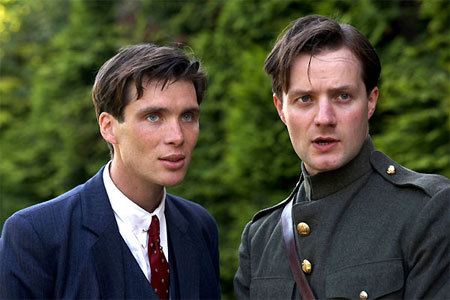
Directed by Ken Loach and written by Paul Laverty, The Wind That Shakes the Barley tells the story of two brothers fighting in the Irish War of Independence against the British and later, the Irish Civil War. A film that reveals in the Irish conflict against the British as well as its own conflict within the country, the film also upholds Loach's social idealism as well in this haunting yet realistic tale of conflict. Starring Cillian Murphy, Padraic Delaney, Liam Cunningham, Orla Fitzgerald, and Roger Allam. The Wind That Shakes the Barley is a haunting yet mesmerizing masterpiece from Ken Loach.

It's 1920 Ireland as a group of men playing hurling come home only to be visited by angry members of the British Army known as Blacks & Tans. A young man named Micheal O'Suillebhean (Laurence Barry) is tortured and killed for not saying his name. For a young man named Damian O'Donovan (Cillian Murphy), who was about to leave to become a doctor in London. This incident along with another incident involving a railway guard and a train driver (Liam Cunningham) being beaten has forced Damien to join the Irish Republic Army. Leading the local column of the army is Damien's brother Teddy (Padraic Delaney) as they all prepare to fight a war with the British. After some small victories in attack barracks for supplies and killing four officers at a pub, the little victories seem to go well. Unfortunately, a young named Chris Reilly (John Crean) was forced by a landowner in Sir John Hamilton (Roger Allam) to give out information.

The O'Donovan brothers plus several members of the IRA including the train driver named Dan were captured. Teddy was tortured for information which he refused to give while Damien befriends Dan as they share socialist views. After trying to play mental games with an officer, Damien is beaten as a young soldier named Johnny Gogan (William Ruane) was unable to kill Damien. Later on, Johnny helps free several members as three were forced to be left behind. After capturing Sir Hamilton and Chris Reilly, the news about the three left behind forced Damien to make decisions under the orders of the IRA. Months later with the British having trouble defeating the Irish, an Irish government was made but problems still happened over how to get funding for guns and such with Dan stating claims about what to do.

The battle rages on despite some losses and attacks at the home of Damien's girlfriend Sinead (Orla Fitzgerald) in which she was tortured. The Irish won the war as for a while, it seemed like absolute victory but it didn't grant complete independence from the British. Teddy is convinced that the treaty will avoid further wars against the British but Damien disagrees as he and Dan demand total independence from Britain. Thus starting the Irish Civil War with Teddy on the Free State side and Damien, Dan, and several of the old gang at the Anti-Treaty side. What would happen would tear apart a family as well as Ireland itself for many years.

The film is about conflict that relates to Ireland's struggle for independence that would later lead to civil war until 1949 when it broke completely from England. While screenwriter Paul Laverty creates a film that is part history-lesson but also part drama, it does reveal the Irish struggle against the British and why the treaty divided Ireland. Particularly with its views on socialism that was prominent for those who were against the treaty. While Laverty shows into why those who went for the treaty just so they could avoid war with Britain. Still, it's more of a socialist film with a socialist point of view spurned by its director Ken Loach. It doesn't mean he is trying to force his ideals to the audience but does make his point about what the Irish had to go through.

The screenplay is well structured with the first act about the Irish conflict with the British and Damien's decision to join the IRA and what he had to do. The second act being about the victory against the British and the hopes for an independent Ireland. The third act is about the Irish Civil War and the conflict between the brothers Damien and Teddy. All of that is well-told from the eye-wielding, engaging direction of Ken Loach. Loach's direction is filled with great long shots of the Irish countryside that has a wide depth of field. He also goes for close-ups to be part of the battle scenes while done with great style and almost documentary-like. Though there's no shaky hand-held work as it's mostly shot on steadicams and some still, tripod shots. Loach's direction is indeed phenomenal in playing up to the drama as well as being true to the history of Ireland as he creates a film that is engaging and powerful.

Cinematographer Barry Ackroyd does fantastic work with the film's greenish, colorful look of Ireland with its rough yet haunting shots of the film's exteriors on the countryside. While there's not a lot of bright colors in the film, the dark colors of both exterior and interior settings to play up to the grim tone of the film. Editor Jonathan Morris does some excellent work with the editing in the use of smooth transitions, rhythmic jump-cuts, and fade outs to help structure the story as well as it give it a leisurely pace for its 127-minute running time where it isn't too slow but not too fast either.

Production designer Fergus Clegg along with art directors Michael Higgins and Mark Lowry do spectacular look with the look of 1920s Ireland from the pubs, homes, and places that are filled with dark colors and old cars that is shown throughout the film. Costume designer Eimer Ni Mhaoldomhnaigh does stellar work with the costume that plays up to the 1920s look in terms of dresses, hats, suits, and such along with its dirty look of the IRA militia group. The sound work by Ray Beckett and Kevin Brazier do great work in the location sound work that is captured from the battle scenes to the raucous fight and pub scenes that goes on. The music of George Fenton is wonderfully plaintive with broad arrangements and melodies relating to Irish folk music along with the use of traditional ballads in Gaelic and English to play up to the film's historical tone.

The casting by Oonagh Kearney is phenomenal with some notable small roles from Diarmuid Ni Mheachair as a sick boy Damien treats, Nora Lynch as the sick boy's mother, Fiona Lawton as an Irish government official, Mary Murphy as Sinead's sister Bernadette, Mary O'Riordan as Sinead's grandmother Peggy, Damien Kearney as IRA member Finbar, Martin Lucey as IRA official Congo, and Myles Horgan as the crazed IRA soldier Rory. Other memorable small roles from Aiden O'Hare as IRA soldier Steady Boy, Laurence Barry as Micheal O'Suillebhean, John Crean as Chris Reilly, and William Ruane as British soldier turned IRA soldier Johnny Gogan. Noted character actor Roger Allam has a very memorable role as Sir John Hamilton, a British official who captures members of the IRA only to be captured later on.

Orla Fitzgerald is excellent as Sinead, a fellow Irish messenger to the IRA who is also Damien's longtime love as she helps fight the British and side with Damien over the treaty. Liam Cunningham is superb as Dan, a Socialist who fights for the IRA in his hopes for a free Ireland as he reveals why there should be a free Ireland. Cunningham's performance is truly the film's best supporting performance as he delivers such passion and angst into his role. Padraic Delaney is great as Teddy O'Donovan, the older brother who runs a local section of the IRA in his hopes for Irish independence from the British. Yet, when he becomes part of the pro-treaty side, he is conflicted though his intentions are to hope for a peaceful Ireland unaware of his brother's passion for a free Ireland.

Finally, there's Cillian Murphy in what is truly a tour-de-force performance as Damien O'Donovan. Murphy's performance is filled with lots of development as he starts out as an innocent man with dreams to be a doctor. Then after facing the harsh realities of what is going on to his people, he becomes a passionate, angry young man. Murphy's energetic, passionate, and broad performance as it's really the best film role of his career. Even as he goes into fights while leading the IRA during the Civil War as he stands by in his views in his belief for what is right for his country.

The film premiered at the 2006 Cannes Film Festival where it played in competition and became the surprise hit of the festival. The acclaim and surprising reaction helped the film win the Palme D'or beating several contenders vying for the prize. A month later, the film was released in Britain and Ireland to some controversy but did gain rave reviews through a year later when it came out in the U.S. For Ken Loach, the film raised his profile as he began to make more films frequently once again.

The Wind That Shakes the Barley is a harrowing yet powerful film from Ken Loach helmed by Cillian Murphy's superb performances. Fans of Ken Loach films will definitely enjoy the engaging approach and devotion to history over the Irish conflict with British and the Irish Civil War. It's a film that is both a great historical drama while also being a wonderful history lesson about Ireland. While some might not agree with Loach's Socialist views, the film does reveal the issues raised from the Irish over their conflict with Britain. In the end, it's a superbly crafted and mesmerizing film from Ken Loach.

Ken Loach Films:  (Cathy Come Home) - (Poor Cow) - Kes - (The Save the Children Fund Film) - (Family Life) - (The Price of Coal) - (Black Jack) - (The Gamekeeper) - (Looks and Smiles) - (Which Side Are You On?) - (Fatherland) - (Hidden Agenda) - (Riff-Raff) - (Raining Stones) - (Ladybird Ladybird) - (Land and Freedom) - (A Contemporary Case of Common Ownership) - (Carla’s Song) - (The Flickering Flame) - (McLibel (1)) - (My Name is Joe) - (Bread & Roses) - (The Navigator) - Sweet Sixteen - (Ae Fond Kiss…) - (Tickets) - (McLibel (2)) - It’s a Free World... - Looking for Eric - (Route Irish) - (The Angel's Snare) - (The Spirit of '45) - Jimmy's Hall - I, Daniel Blake

© thevoid99 2011

Wednesday, April 20, 2011

The Ballad of Lucy Whipple (TV film)


Based on Karen Cushman’s novel, The Ballad of Lucy Whipple tells the story of a widowed mother and her three move to California from New England in the 1850s during the Gold Rush. The eldest daughter herself as Lucy as she tries to adapt to her new surroundings while dealing with her mother. Directed by Jeremy Kagan with a teleplay by Christopher Lofton, the TV movie is a coming of age tale as well as a period piece set at a time when California was a new world for Americans. Starring Glenn Close, Jena Malone, Chloe Webb, Robert Pastorelli, Bruce McGill, Meat Loaf Aday, and Wilford Brimley. The Ballad of Lucy Whipple is a good, heartwarming period drama from Jeremy Kagan.

After the death of her husband, Arvella Whipple (Glenn Close) goes on a journey from Massachusetts to California during the Gold Rush. Taking her three kids including her eldest daughter California (Jena Malone), son Butte (Michael Welch), and Prairie (Celeste Leary) to a small town that is run by Jonas Scatter (Bruce McGill). For Arvella, she hopes it’s a chance to start over though California has already begun to dislike the town, which is still in development. Meeting various eccentrics including a miner named Amos Frogge (Meat Loaf Aday) and a part-time prostitute named Sophie (Chloe Webb). The only person California befriends is a lawyer named Carrots (Dennis Christopher) who lends her his books.

With Arvella and her kids helping out in the town’s development, California renames herself Lucy as she meets a young girl named Annie (Olivia Burnette) who lives in the forest as she teaches her to read. A new town arrival in a preacher named Clyde Claymore (Robert Pastorelli) arrives to spread the gospel though Arvella isn’t keen on his ideals. Even as Lucy’s dislike for the town suddenly progresses into her liking the place more and more as she gets to know various locals including an androgynous cowboy named Buck (Judy Gold) and a Negro who she renamed Bernard (Neblis Francois). Though the tension between Arvella and Lucy is still evident over the decision to move.

Following a tragic event that shook up the entire Whipple family, Lucy uncovers more secrets about the town including Annie’s family where she meets Annie’s father (Dalin Christensen) as she learns why Annie lives in the woods. When he’s later found dead by the river and Annie’s mother (Elaine Kagan) is accused as she’s judged by the town’s deputy sheriff (Wilford Brimley). Lucy defends her as Arvella realizes what value Lucy has with her book reading. When Clyde makes a decision for his future with Arvella, another conflict with Lucy and Arvella emerges with the two unsure what to do next.

The TV film is essentially a mother’s plan to start over in a small Californian town in the 1850s while her eldest daughter isn’t happy about the decision. What happens is that it becomes a world where California becomes Lucy and finds herself being a part of this new world she’s living in despite some troubles and tribulations she would deal with. While her mother is a headstrong woman desperate for a new life and Lucy is a dreamer who wants to help teach people to read or use her knowledge for good. There is tension between the two women despite their similarities but their relationship is the heart of the film.

Director Jeremy Kagan does create a faithful period piece with some wonderful camera angles and wide shots of the landscape which is really shot in Utah. Since the script is a coming-of-age tale with elements of melodrama that is the norm of most TV movies. Kagan does play by the rules of what is expected though at times, it gets a little dramatic while there’s a scene where there’s a cheesy special effect happening that doesn’t really work. Despite the flaws the TV film has for its dramatic elements and conventional storytelling, it is still a solid TV film from Jeremy Kagan.

Cinematographer Neil Roach does an excellent job with the photography from the sunny, green look of the Utah landscapes as California to the dark nighttime scenes for many of the exteriors. The interiors also have a great look for the daytime scenes while it’s more intimate and sparse for the nighttime sequences in the tent. Editor Michael Economou does a very good job with the editing that is mostly straightforward in its approach to cutting though at times, the pacing lags a bit in a few spots.

Production designer Stephen Altman and set decorators John Bucklin and Anthony Maccario do a phenomenal job with the set designs from the period boarding houses that are created along with the tents. Altman’s work is truly amazing to watch in the design of those houses along with the objects created for the TV film. Costume designer Van Broughton Ramsey does a superb job with the costumes . From the cowboy clothes and pants that the men wear to the dresses the women including the yellowish dress that Lucy wears at times as the costumes help bring authenticity to the TV film.

Sound editor Joseph Melody does a nice job with the sound work from capturing the atmosphere of the town to the little noises such as gunshots, horse neighs, and other objects. Music composer Bruce Broughton does a good with the music playing to the old time folk music of the times though there’s moments when the score tends to overwhelm the drama in some scenes.

The casting by Jeff Johnson and Mary Jo Slater do a wonderful job with the casting with its large ensemble. Notable small performances include Elaine Kagan as Annie’s mother, Dalin Christensen as Annie’s abusive father, Charles Gruber as Arvella’s late husband (via photo), Celeste Leary as Lucy’s youngest sister Prairie, Dennis Christopher as a lawyer Lucy befriends early in TV film, and Judy Gold as the androgynous Buck. Other memorable small roles include Neblis Francois as the black man Lucy befriends name Bernard, Michael Welch as Lucy’s younger brother Butte, and in a cameo of sorts, Wilford Brimley as the town’s deputy sheriff.

Olivia Burnette is very good as the gritty though uneducated Annie who befriends Annie as she helps her get food while learning how to read in return. Legendary rock singer Meat Loaf (under the Meat Loaf Aday name) is excellent in a comical role of sorts as a man looking for gold while having a great scene where he tells a legendary story. Chloe Webb is really good as Sophie, a woman who is a part-time hooker but with a heart of gold as she helps out Arvella and Sophie in their duties. Bruce McGill is also good in a fine role as a town mayor who makes sure what is happening with the town and such. The late Robert Pastorelli is wonderful in his role as the preacher Clyde who helps to sooth the soul of the town while befriending Lucy and Arvella.

Glenn Close is superb as Arvella Whipple, Lucy’s mother who is a headstrong woman wanting to start over and create something for herself and her children. Close plays the character straight while being a bit comical at times as she truly revels in playing a free-spirited yet adventurous woman who loves her children including Lucy despite their differences. Finally, there’s Jena Malone in one of her finest performances as the title character of California “Lucy” Whipple. Malone exudes all of the character’s troubles to adjust not just to her new surroundings but also having to find ways to use her knowledge and love for books for something. Even as she is often in conflict with various people including Close as the two have great chemistry in the characters they play. It’s a truly outstanding performance from the young actress that would play to her evolution as one of cinema’s great young actresses.

The Ballad of Lucy Whipple is stellar yet touching period drama from Jeremy Kagan featuring top-notch performances from Jena Malone and Glenn Close. While it’s a formulaic TV movie that does have strengths in its story along with a wonderful cast. It’s also a coming-of-age film that plays true to the way mothers and daughters interact along with their differences. Fans of Jena Malone will no doubt see this film as one of her essential performances while fans of Glenn Close get a chance to see the famed actress in another memorable performance. In the end, The Ballad of Lucy Whipple is a very good TV film from Jeremy Kagan and company.

© thevoid99 2011