Thursday, May 14, 2020
Thursday Movie Picks: Girls' Trip
In the 20th week of 2020 for Wandering Through the Shelves' Thursday Movie Picks. We go into the subject of girls’ trip. Movies where it’s about the ladies having a good time and going on a trip as it’s been a popular subject with films in the last decade. Here are my three picks:
1. Romy and Michelle’s High School Reunion
One of the finest comedies of the 1990s as it revolves around two life-long friends who are trying to start a clothing business as their 10-year high school reunion is about to happen. Driving from Los Angeles to Arizona for this reunion, the two friends deal with themselves and what they hope to get out of this reunion in the hopes that everyone who saw them as losers in high school either accept who they are or can simply go fuck themselves. The duo Mira Sorvino and Lisa Kudrow is what makes the film a joy to watch.
2. Spring Breakers
From Harmony Korine comes one of the great films of the 2010s as it revolves around four young girls going to the South of Florida to enjoy spring break and get themselves involve in some crazy shit. Along the way, they meet a drug dealer as a few of them take part in his crazy lifestyle while also getting wild and rowdy. It is a visually-entrancing film with some intense imagery of debauchery while it showcases Korine’s maturity as a filmmaker as he explore young people wanting to have fun and maybe get carried away a bit as it does prove to be a major breakthrough for one of cinema’s enfant terrible.
3. Rough Night
A bachelorette party that goes wrong where four college friends reunite with a new friend in tow to celebrate the upcoming nuptials of one of their own as they travel to Miami and do some crazy shit. An accident involving a male stripper, trying to hide the body, and all sorts of things lead to a film that is quite funny. Notably as Jillian Bell, Ilana Glazer, and Kate McKinnon are the ones providing a lot of the funny stuff while Scarlett Johansson and Zoe Kravitz wisely play it straight and do a few funny bits of their own. It’s an entertaining film that doesn’t take itself seriously and just let itself be insane as it wants to be.
© thevoid99 2020
Saturday, May 09, 2020
The Rider (2017 film)
Written and directed by Chloe Zhao, The Rider is the story of a young horse trainer/rodeo rider who suffers a big head injury when his horse falls on his head as he contemplates what to do next. The film is the story of a young man who was once a rising star in the rodeo circuit as he deals with uncertainty as well as his identity as a man in the American heartland. Starring Brady Jandreau, Lilly Jandreau, Tim Jandreau, Lane Scott, and Cat Clifford. The Rider is an entrancing and evocative film from Chloe Zhao.
The film follows a young rodeo cowboy/horse trainer who is recovering from a serious head injury when his horse fell on his head as he tries to recover hoping to ride again despite warnings from doctors that he shouldn’t ride every again. It’s a film with a simple premise as it play into this young man struggling with this injury that has given him seizures and other illnesses yet is unable to let go what he loves which is riding rodeo horses. Chloe Zhao’s screenplay doesn’t emphasize much on structure as it play into the struggle that Brady Blackburn (Brady Jandreau) is going through as he lives in a trailer home with his autistic teenage sister Lilly (Lilly Jandreau) and their father Tim (Tim Jandreau) while often making visits to his friend Lane (Lane Scott) who has also been in a riding accident that’s left him brain-damaged. While Brady tries to get back in the game, he also deals with the financial struggles that his family endures as he takes a job at a market after his father sold his horse. Even as he would get money to buy another horse but also endures the symptoms of his injuries as he questions about what to do.
Zhao’s direction is largely straightforward with its visuals as it does emphasize more on long and gazing takes as well as intimate and simple compositions. Shot on location in the badlands area of South Dakota, the film does play into this world that is largely dominated by rodeos, horses, and cowboys as it is this old idea of masculinity but a world that is distant from modernity which suits Brady fine. Yet, the idea of him not being able to ride a horse or be in a horse rodeo becomes foreign to him as it’s a world that he only knows. Zhao’s usage of close-ups and extreme close-ups add to the anguish that Brady endures throughout the course of the film while would shoot him in medium shots whenever he’s working in a market as he silently does his job. Zhao would use wide shots to get a look and scope of the location that Brady, his friends, and family are in as well as this unique world that is the rodeo and horse-riding.
Zhao’s direction also play into Brady’s determination into getting back in the rodeo circuit as he would often try and get Lane to get his old self for a bit including a scene of Lane acting like he was in a rodeo. The direction also play into Brady’s love for horses including one he would gain named Apollo who is like Brady in their stubbornness. It would give him the chance to maybe ride again but seizures and hindering motor functions in his right hand start to emerge. Zhao would often feature stylish montages of the rodeo as it’s a recurring image of Brady’s desire but the risks are intense as Brady’s father is concerned and wants him to not return. It plays into the dramatic tension that Zhao would use in Brady as he likens himself to horses when they are of no use as it play into the emotional, mental, and physical struggles he endure as well as this uncertainty of not ever riding again. Overall, Zhao crafts a rapturous and haunting film about a horse trainer/rodeo rider coping with the idea of not riding a horse ever again.
Cinematographer Joshua James Richards does incredible work with the film’s cinematography as its low-key yet naturalistic photography add to the film’s visual beauty while emphasizing on available light for some of the scenes set at night. Editor Alex O’Flinn does brilliant work with the editing as it is largely straightforward with some stylish approach to slow-motion for some of the montages and a few jump-cuts to play into the emotional turmoil that Brady endures. Special makeup effects by Ryan Flint is excellent as it play into the look of the tattoos Brady and some of his friends have as well as the scars from injuries he’s acquired.
Sound editor Paul B. Knox do amazing work with the sound in capturing the atmosphere of the locations as well as how music sounds on location and the layer of sounds in the rodeo events and horse auctions. The film’s music by Nathan Halpern is wonderful for its low-key folk and ambient score that doesn’t appear often in the film as it play into the some of the melancholia and uncertainty that Brady endures while music supervisor Ben Sokoler cultivates a soundtrack that largely consists of country music that is performed on location in a jukebox or on a radio as it feature pieces from Lucian Blaque, Jonathan Terrell, Charlie and the Regrets, Cat Clifford, the Quaker City Night Hawks, Brian Whelan, Roosevelt Road, Luke Kaufman, Derrick Procell, James and the Wild Spirit, and Lloyd Conger.
The film’s superb cast features an array of non-actors and amateurs that include James Calhoon as a family friend, Cat Clifford as one of Brady’s friends, Terri Dawn Pourier as a young woman Brady smokes with, Tanner Langdeau as a man who sells a horse to Brady, and Lane Smith as Brady’s friend Lane who suffered brain damage due to a similar accident that Brady has faced with. Lilly Jandreau is fantastic as Brady’s autistic teenage sister Lilly as someone who is eccentric and awkward but often says things that do make a lot of sense. Tim Jandreau is excellent as Brady’s father Tim as a man who is just trying to make ends meet while dealing with his son’s desire to return to riding. Finally, there’s Brady Jandreau in a sensational performance as Brady Blackburn as a young horse trainer/rodeo rider who copes with his injuries and future as it is a low-key yet mesmerizing performance that is restrained but also intense at times as Jandreau is a major highlight of the film.
The Rider is a phenomenal film from Chloe Zhao. Featuring a great cast, gorgeous visuals, and compelling character study of a young man struggling with uncertainty and the possibility of death. It’s a film that doesn’t play by conventions as it focuses on a young man dealing with the ideas of masculinity and his own identity but also the dangers of those ideals as he’s forced to deal with the realities of his own injuries. In the end, The Rider is a tremendous film from Chloe Zhao.
Chloe Zhao Films: Songs My Brothers Taught Me – (Nomadland) - Eternals (2021 film)
© thevoid99 2020
Thursday, May 07, 2020
Thursday Movie Picks (Seven Deadly Sins Editions): Envy
In the 19th week of 2020 for Wandering Through the Shelves' Thursday Movie Picks. We return to the Seven Deadly Sins with the theme of envy. Defined as pain at the sight of another’s fortunes, it’s a popular subject that play with what people have and what people don’t have but want. Here are my three picks:
1. Toy Story
The film that changed animation forever as it is a simple story that explores the concept of envy. The cowboy Woody finds himself having to deal with a new toy his owner Andy got in a spaceman toy named Buzz Lightyear. Andy spends more time playing with Buzz while Andy’s other’s toys are in awe of Buzz, who is unaware of being a toy, while Woody feels he’s being neglected and such. It would eventually lead between an adventure and a growing friendship between these two different toys and a film franchise that would Pixar become monstrous.
2. MegaMind
From Dreamworks Animation is the story of the titular supervillain who never wins against a superhero as he craves for the adulation that the superhero Metro Man has. When MegaMind finally defeats Metro Man, it shocks everyone including MegaMind but he feels unfulfilled as he tries to create a new hero only for the hero Titan to become a villain. It plays into the concept quite complex in not just the fact that MegaMind just wanted to be respected and appreciated but also has all of the things good people has mainly for his intelligence and inventiveness. The film also feature a twist as it relates to Metro Man and his own encounter with envy.
3. Wreck-It Ralph
From Disney Animation is a film about a video game villain that decides to not become a villain. Notably as he is in a game where wrecks a building and it’s up to Fix-It Felix to fix everything and the titular character is then thrown on top of a building. As the game’s 30th anniversary is about to happen, all Ralph wanted was to be appreciated, eat pies, and get a medal. So he decides to go to another game to win a medal only for things to go wrong and Felix to try and save him but Ralph would help a young girl win a racing game despite the fact that she’s considered a glitch. It’s one of the best animated films of the 2010s as well as showcasing the concept of envy through innocent eyes.
© thevoid99 2020
Wednesday, May 06, 2020
Lone Wolf and Cub: Baby Cart in Peril
Based on the manga series by Kazuo Koike and Goseki Kojima, Lone Wolf and Cub: Baby Cart in Peril is the fourth film of the six-part film series that follows the father-son duo as they continue their journey through Japan on their way to Hell as the former is hired to kill a tattooed female assassin while they’re in pursuit by a clan lord and his son. Directed by Buichi Saito and screenplay by Kazuo Koike, the film explores the father-son duo as they continue on their path towards Hell as the chance for vengeance would emerge as the titular characters of Ogami Itto and Daigoro are reprised by Tomisaburo Wakayama and Akihiro Tomikawa. Also starring Yoichi Hayashi, Michi Azuma, Asao Koike, Hiroshi Tanaka, and Tatsuo Endo. Lone Wolf and Cub: Baby Cart in Peril is a ravishing yet intensely gritty film from Buichi Saito.
The film revolves around the father-and-son duo who are hired by widows of samurai warriors to kill a tattooed female assassin as while they would encounter a clan lord’s son as they would all be involved in a game of political manipulation. It’s a film that explores the father/son duo who trek through Japan as they would briefly diverge due to the son’s interest towards a group of circus performers as it lead to strange journeys for the both as they would encounter mysterious foes including Yagyu Gunbei (Yoichi Hayashi) who is the son of Ogami’s nemesis Retsudo (Tatsuo Endo) as it relates to an incident that left Gunbei disgraced and banished as well as Retsudo making plans to destroy Ogami’s life. Kazuo Koike’s script does emphasize a lot on flashbacks and narration as it play into Ogami’s journey with his son Daigoro as the assassin they target in Oyuki (Michi Azuma) who has been killing men as well as shocking them with her tattoo of a child grasping of her left breast. Ogami would learn more about who Oyuki is as it all play into not just what happened to her but also a world of corruption within the world of politics.
Buichi Saito’s direction is stylish in not just the presentation and its approach to over-the-top violence and emphasis on drama. Shot on various locations in Japan, Saito’s direction does emphasize on a lot of the visual tropes that was prevalent in the previous films while adding some unique visuals of his own that include some of the flashback sequences. Notably in the showdown between Ogami and Gunbei where a taboo act by the latter would cause trouble where Saito’s camera definitely showcases a clear and direct shot of what Gunbei’s sword did as it was accidental. Saito’s compositions in the wide and medium shots don’t just play into the locations but also in some of the moments that occur such as Gunbei’s conversation with his father as it features this wide shot to show how far Gunbei has descended in his father’s eyes. Saito also include elements of surrealism as it play into Oyuki and her own journey as it relates to her own descent and the path that she’s taken.
With the aid of fight choreographer Eiichi Kusumoto, Saito’s approach to the action is more grounded with some aerial fighting during a scene where ninjas in disguise try to attack Ogami only to fail. Saito also play into moments that are simple with its usage of close-ups and medium shots such as the scene of Ogami meeting a clan leader in Jindayu Gomune (So Yamamura) who is from a lowly clan of outsider as he would reveal some information about Oyuki as well as what Ogami is tasked with. The film’s climax relates to not just this showdown between him and Retsudo but also an army as a long-standing conflict and a chance for vengeance would emerge. The images of decapitated body parts and blood-sprays help add to the climax as well as the journey that Ogami and Daigoro has to go through in their quest for justice. Overall, Saito crafts a visceral yet exhilarating film about a father-son assassin duo who are tasked to kill a tattooed female assassin only to realize it is all part of a large political scheme.
Cinematographer Kazuo Miyagawa does brilliant work with the film’s cinematography with its usage of natural and lush colors as well as some low-key lighting by Genken Nakaoka for a few scenes in the interior scenes that include the meeting between Retsudo and Gunbei. Editor Toshio Taniguchi does excellent work with the editing with its stylish usage of montage cutting, rhythmic cuts, and dissolves that help play into the film’s energetic tone as well as in some of the film’s suspenseful and dramatic moments. Production designer Shigenori Shimoishizaka does amazing work with the look of the homes of some of the clan leaders as well as a temple where a group of ninjas try to attack Ogami. The makeup work of Hideo Yamuto and Toshio Tanakais fantastic for the look of some of the characters including the circus performers that Daigoro is fascinated by while Seiji Mori’s tattoo design is a major highlight of the film as it help play into the terror that Oyuki brings with her tattoos.
The special stunt effects by Daizen Shishido is terrific for the some of the flights of the ninjas and surreal elements that occur in some of the fight scenes. The sound work of Tsuchitaro Hayashi, with sound effects by Toru Kurashima, is superb for the atmosphere that is created as well as in the sound effects that help play into the suspense, action, and surrealistic moments of the film. The film’s music by Hideaki Sakurai is incredible for its mixture of jazz, funk, and traditional Japanese string/percussion music as it help play into the action as well some of the film’s drama and suspenseful moments.
The film’s wonderful cast feature some notable small roles from Hiroshi Tanaka as Oyuki’s old instructor Juzaemon Kashiwagi who uses powers to hypnotize her, Asao Koike as a powerful chamberlain in Tokugawa Yoshinao whom Retsudo is doing political schemes with, So Yamamura as the clan leader Gomune Jindaiyu who runs a clan of outcasts, and Tatsuo Endo as Yagyu Retsudo as a devious clan leader who disgraced Ogami as he is eager to rise up the ranks while eventually having a showdown with Ogami in the film’s climax. Yoichi Hayashi is excellent as Retsudo’s son Gunbei as a disgraced warrior whose accidental action cost him everything as he would later encounter Ogami in an attempt for redemption as well as a chance to come to terms with what happened to him.
Michi Azuma is brilliant as Oyuki as the tattooed assassin who kills those in her path as well as enemies as she becomes a target for Ogami as she copes with the path she’s chosen as well as hope for redemption. Finally, there’s the duo of Akihiro Tomikawa and Tomisaburo Wakayama in phenomenal performances in their respective roles as Daigoro and Ogami Itto as they both provide that air of restraint in their terror as the former remains low-key while being observant of what is going while the latter remains this chilling presence as someone who can kill with great skill while remains haunted by what he lost as is intent on this path he and his son are going into.
Lone Wolf and Cub: Baby Cart in Peril is a sensational film from Buichi Saito that features great performances from Tomisaburo Wakayama and Akihiro Tomikawa. Along with its ensemble cast, dazzling visuals, a ripping music soundtrack, and a chilling story of revenge and loss. The film is definitely an evocative samurai film that plays into a man being tasked to kill someone only to realize the scope of corruption that is emerging around him. In the end, Lone Wolf and Cub: Baby Cart in Peril is a spectacular film from Buichi Saito.
Lone Wolf and Cub: Sword of Vengeance - Baby Cart at the River Styx - Baby Cart to Hades - Baby Cart in the Land of Demons – White Heaven in Hell
© thevoid99 2020
Thursday, April 30, 2020
Films That I Saw: April 2020
It’s almost the end of the month and since February, things have gotten scary and now that there’s more than a million of cases here in the U.S. which is a third of the cases around the world and over 60,000 deaths in the U.S. out of 217,000 around the world. For a country that’s supposed to have the best of everything and to have all of things needed like this, there is really only question I have to ask those at the White House. Better yet, I’ll let William Hurt ask the question:
This country is supposed to be at top of everything despite its flaws. George W. Bush read a book about the 1918 Spanish flu and had thoughts about creating a pandemic task force despite the people he had around him. Say what you want about Bush as a president and he was a terrible president but he at least would’ve taken some action and do something about this. Barack Obama would’ve handled this immediately. Now, we have a human septic tank as our dictator who suggests “hey, eat a Tide pod, swallow disinfectants, go have a tan outside, and you’ll feel better.” Of course, he claims he was being sarcastic but he also says this and claims that he’s smarter than all of us. My one-year old nephew is learning to walk and he knows how to bend down on his knees and does it with much patient and he’s a hell of a lot smarter than this shit sandwich.
It’s not just the White House where things are just awful but also here in Georgia as our shit-for-brains governor recently decided for business, restaurants, bowling alleys, and gyms to be re-opened. It makes living here in Smyrna less safe now as my mother and I recently went to the supermarket a couple of days ago and it was a very depressing feeling there. Everyone looked down and almost zombie-like as if this pandemic had really sucked the life out of everyone. It wasn’t fun. Having to stay home and be safe does get to you as the only time me and my mom went out is either for groceries or take out. The only exception was going to my sister’s house for my nephew’s first birthday as it’s going to take more than a pandemic to stop me from celebrating Mateo’s first birthday with his family.
I can understand having cabin fever and the need to go out even though my mother, myself, my sister, her husband, and their son haven’t been sick. We still have to stay home and be safe. Unfortunately, not everyone gets the program as there’s protests in various states and such about re-opening the country and all of that bullshit. Well, if they get sick and die. That’s their fucking fault. Bitch all you want, you want to live? Stay the fuck home! With some states wanting re-open including another dumb-fuck state that is Florida with its dumb-fuck governor who considers WWE “essential” all because Meekmahan and his cunt-wife paid $18.5 million to PAC and got the OK from their governor while laying off a bunch of people in WWE including longtime referee Mike Chioda and some of my favorites like Zack Ryder, Rusev, and fuckin’ Kurt Angle.
At least there’s some places in the U.S. that are trying to do something and people such as Dr. Anthony Fauci who is trying to help us anyway he can. He’s a good dude and deserves to be listened more. I also want to give praise to New York’s governor Andrew Cuomo and California’s governor Gavin Newsom for at least having the balls to try and do something while taking some responsibility for whatever faults they have in testing and such. That is what leaders are made of. The ones who have the balls and fortitude to take action and responsibility. Not human septic-tanks who blame others for his own fuck-ups.
In the month of April 2020, I saw a total of 42 films 20 first-timers and 22 re-watches with 13 of these first-timers being directed or co-directed by women as part of the 52 Films by Women pledge. The highlight of the month was definitely my Blind Spot Series assignment in One Sings, the Other Doesn't. Here are my top 10 first-timers of April 2020:
1. Lone Wolf and Cub: Baby Cart at the River Styx
2. Lone Wolf and Cub: Baby Cart to Hades
3. Lone Wolf and Cub: Sword of Vengeance
4. The Miseducation of Cameron Post
5. Molly's Game
6. The Birth, the Life, and Death of Christ
7. Zombieland 2: Double Tap
8. Matrimony's Speed Limit
9. Shadowed
10. The Ocean Waif
Monthly Mini-Reviews
Hit It Hard
From 30 to 30 is a documentary about the rollercoaster journey of John Daly who emerged in the early 1990s as an unknown who managed to steal the show at a PGA tournament and became a favorite among the people. The film features an interview with Daly as he wasn’t some rich kid that played the game as he was from a poor background that played golf as a caddie and just managed to get good at the game. Yet, success definitely had its downside for Daly who struggled with it until he got sober and other issues sorted out as he remains a favorite as it is a fun episode of the series.
Shadowed/Good Enough: Making Shadowed
From David F. Sandberg and his wife Lotta Losten comes a three-minute horror short film the two made while under quarantine as it is about a woman whose house loses power due to a storm and she is being haunted by a shadow as she wondered what is going on. Given the circumstances that is made for this short, it is an inventive and chilling horror short that proves that limitations can inspire people to make something great in a matter of a few minutes. The film was accompanied by a making-of documentary about how he and Losten made this short in their home and with the equipment they had as Sandberg shot and edited the film himself as it’s a must for anyone who is interested in the art of filmmaking. Especially as it proves that even though Sandberg has made some big feature films including Shazam! It doesn’t mean that he still has a lot to offer while also finding ways to be creative in these trying times.
Zombieland 2: Double Tap
This made it to Starz recently as I began to watch sporadically for the month as it’s a fun sequel as it has the four main characters on the previous film returning after a decade as they remain a somewhat dysfunctional family who kill zombies. Yet, it is about these four people killing zombies as one of them in Little Rock breaks away from the pack as she stills feel that she is being treated like a child by Tallahassee leading to the gang to find and this place called Babylon where they run into Zoey Deutch who steals the show as the dumb blonde Madison. It’s got lots of violence but it’s also funny as it’s just a fun film to watch.
Top 10 Re-Watches:
1. Captain America: The Winter Soldier
2. Yellow Submarine
3. The Ten Commandments
4. David Bowie: The Last Five Years
5. Captain America: The First Avenger
6. Spider-Man 2
7. Ant-Man and the Wasp
8. The Girl with the Dragon Tattoo
9. Searching for Bobby Fischer
10. The Wedding Singer
Well, that is it for April. Other than finishing the Lone Wolf and Cub film series and films on my never-ending DVR list. I am not sure what I’m going to do as I’ve already decided that I’m not going to do the Cannes marathon this year as I will hopefully do it next year if things get to normal. I did stop work on my MCU is Cinema series as I hope get back on writing the fifth part as I often just spend my time playing computer games, do puzzles, watch the HBO documentary series on the Atlanta Child Murders, and listen to a few new records by NIN, Fiona Apple, Pearl Jam, and the Strokes as I recommend those records. I just hope everyone stays home and stay safe as we need to be safe and not worry about going back to the movie theaters until there’s a vaccine. Until then, this is thevoid99 signing off…
© thevoid99 2020
Thursday Movie Picks (TV Edition): Game Shows
In the 18th week of 2020 for Wandering Through the Shelves' Thursday Movie Picks. We go into the world of television in game shows. Shows where people try to win money and prizes but also endure all sorts of humiliating moments. Here are my three picks as they’re game shows from the 1980s/1990s that appeared on Nickelodeon or as today’s kids call it, Nick:
1. Double Dare
For anyone that grew up during the 80s and 90s would remember this show as it consisted of two teams as one would feature two kids each or a family and in one case, a celebrity teaming up with a kid. They would answer trivia questions for points and endure some messy physical challenges. The winning team would make it to the obstacle course to find a red flag through a barrage of messy food and all sorts of stuff. When all red flags are captured, the team wins a butt-load of prizes.
2. Nick Arcade
A show that lasted for two seasons yet it was ahead of its time in relating to the world of video game culture as it was a simple game of two team of two kids answering video game related trivia and then play a game to reach a certain high score for points. The winning team would then take part in a virtual game with all sorts of physicality as if they’re in a game and if they get a number of objects or fix something. They win a bunch of prizes.
3. Legends of the Hidden Temple
Another short-lived game show from the 1990s is definitely one of the most interesting game shows of its time where six teams of two people compete in various physical and mental challenges that involve trivia, water sports, and all sorts of things. There’s four stages in the game as the first game involves the moat, the remaining four teams take part in the second stage as it involves trivia, two teams remain for the third round in a trilogy of physical challenges to get pendants they need for the fourth and final round which the winning team has to compete in. It is often interesting to see who wins and do they win in the final challenge as it’s a game show that is set to return for Quibi but for adults.
© thevoid99 2020
Wednesday, April 29, 2020
2020 Blind Spot Series: One Sings, the Other Doesn't
Written and directed by Agnes Varda, L’une chante, l’autre pas (One Sings, the Other Doesn’t) is the story of two women in the early 1960s who help each other as one aspires to be a singer while the other is a pregnant country girl as they would reunite a decade later during a demonstration as it relates to the women’s liberation movement. The film is a genre-bender that mixes elements of the musical with political drama as it explore the lives of two women who both experience a lot while maintaining their friendship. Starring Valerie Mairesse, Therese Liotard, Ali Raffi, Robert Dadies, and Jean-Pierre Pellegrin. L’une chante, l’autre pas is a rapturous and captivating film from Agnes Varda.
Told in the span of nearly 14 years, the film revolves around the friendship between two different women as they embark on different paths as well as endure different trials and tribulations into finding themselves as one of them becomes a singer while the other is a country girl with two kids who later runs a family planning clinic in Hyeres. It’s a film that play into the world of feminism as well as two women who bond through their different encounters of turmoil as well as trying to be themselves as well as wonder if they can be attached to a man in their lives. Agnes Varda’s screenplay is uniquely structured in the way it tells the friendship between these two different women who first meet in 1962 and then meet again a decade later as they would correspond each other through postcards and letters to maintain their friendship.
The first act is set in 1962 where Pauline (Valerie Mairesse) is a 17-year old student who sings at a choir as she goes into a photo shop where she sees a picture of a young woman she knows in Suzanne (Therese Liotard) who has two children and a third on the way as they’re all from an affair with the photo shop owner Jerome (Robert Dadies) where Suzanne wants an abortion. Tragedy occurs forcing Pauline and Suzanne to abruptly part ways until a decade later in the film’s second act where Pauline has called herself Pomme (apple in French) as she’s part of a feminist folk group and in a relationship with an Iranian named Darius (Ali Raffi) while Suzanne lives in Hyeres with her two children as she runs a family planning clinic. It is in the second act where the two meet again as they would correspond through letters as they’re both fascinated by their different lives with Pomme often traveling and going to Iran where she marries Darius and have a child yet things become troubling while Suzanne ponders her own desires to be with a man. It all play into Varda’s study of identity as a woman as well as what these women want as Varda also serves as the film’s narrator.
Varda’s direction is largely straightforward in terms of the compositions she creates yet there are elements of the film that do play into some semblance of style. Shot on various locations in France including parts of Paris and Hyeres as well as additional locations in Amsterdam and Iran. Varda creates a film that does rely on melodrama as it relates to the plight of women in their role in society starting in the 1960s as Pauline sings for a school choir while is hoping to make it in the world of music. Much of the first act that is shot in Paris play into Pauline and Suzanne trying to find themselves as Varda maintains an intimacy as well as show the different backgrounds of the two women with the latter from a middle-class environment and the latter from the poor country as she is treated with disdain by her parents upon her return to the country. Varda would open up the scope of the film more in its second act with some wide shots but also in its usage of music. Though it’s largely pre-recorded, there is a liveliness to the musical performances as well as the staging that includes a silent theatrical performance of women’s role in society.
With Pomme accompanied by the real feminist-folk band Orchidee as well as Francois Wertheimer playing a traveling hippie-musician with a son, much of the music is straightforward with a few theatrical elements courtesy of Varda’s contributions as a lyricist while Wertheimer would also create a somber string orchestral score for some of the dramatic moments in the film. The scenes in Amsterdam and Iran play into the sense of wonderment for Pomme as she is constantly traveling often telling Suzanne about her adventures as it does play into a woman who is from a conventional background wanting an unconventional life. That is balanced by Suzanne whose life is unconventional despite being a single mother of two kids wanting a somewhat conventional life despite her resistance of being in a relationship again. Varda’s usage of the wide shots do play into the wondrous world of Iran and Hyeres as it display Pomme’s growing disconnect in the former and Suzanne’s growing comfort in the latter. Still, Varda does find a way for these two friends to maintain their identity as women but also as people with goals in their lives and love for each other. Overall, Varda crafts a mesmerizing and touching film about the friendship of two women trying to find themselves in the span of 14 years.
Cinematographer Charlie Van Damme does brilliant work with the film’s cinematography as it is showcases not just unique color moods into the some of the locations but also in tone as much of the first act showcase dark and grayish colors while the scenes in Iran, Amsterdam, and Hyeres are far more colorful with its natural approach to lighting as it’s a highlight of the film. Editor Joele Van Effenterre does excellent work with the editing as it is largely straightforward with a few rhythmic cuts to play into drama including some montages that play into the corresponding letters. Art director/costume designer Frankie Diago does amazing work with the look of some of the stage sets and clothes for some of Pomme’s performances as well as the look of the places she and Suzanne go to with the more casual look of Suzanne that is in contrast to Pomme’s more hippie-like look. The sound work of Henri Morelle is fantastic for its natural approach to sound in the way music is presented live as well as the atmosphere in some of the film’s different locations.
The film’s wonderful ensemble cast feature some notable small roles from Mona Mairesse and Francis Lemaire as Pauline’s parents, the trio of Isabelle Eduards, Dominique Ducros, and Rosalie Varda in their respective roles as the 3-year old, 13-year old, and teenage version of Suzanne’s daughter Marie, Francois Courbin, Frederic Boyot, and Laurent Plagne in their respective roles as the baby, adolescent, and teenage version of Suzanne’s son Mathieu, Francois Werthemier as a traveling hippie musician that Pomme and her band meets, Mathieu Demy as the traveling hippie’s son Zorro, the trio of Joelle Papineau, Micou Papineau, and Doudou Greffier as the band Orchidee who are part of Pomme’s group, and Jean-Pierre Pellegrin in a terrific performance as Dr. Pierre Aubanel whom Suzanne meets in the film’s third act as someone she isn’t sure about being in a relationship with since he is married.
Robert Dadies and Ali Raffi are superb in their respective roles as Jerome and Darius with the former being Suzanne’s married photographer/lover who is desperate to sell his photos while the latter is Pomme’s future Iranian husband whom she meets in Amsterdam as they fall in love and have a child only for him to be more traditionalist in Iran. Finally, there’s the duo of Valerie Mairesse and Therese Liotard in phenomenal performances in their respective roles as Pauline/Pomme and Suzanne. Mairesse brings a liveliness as Pomme whenever she’s performing her music or acting in a play though she’s more timid early in the film as Pauline while displaying some restraint in her scenes set in Iran. Liotard is the more reserved of the two as she displays that air of grace and humility in a woman who struggled so much as she tries to make something of herself where she does find happiness. Mairesse and Liotard together have a radiance to their scenes together as they often bring the best in each other as they’re a major highlight of the film.
The 2019 Region 1/Region DVD/Blu-Ray release from the Criterion Collection presents in the film in a new 2K digital restoration supervised by Agnes Varda and cinematographer Charlie Van Damme from its 2015 restored edition in its 1:66:1 aspect ratio and mono French soundtrack (uncompressed in its Blu-Ray release) with new English subtitle translation. Among the special features in the DVD/Blu-Ray set include the film’s theatrical trailer, a making-of documentary, and two shorts films by Varda.
The making-of documentary entitled Women are Naturally Creative: Agnes Varda by Katja Raganelli is a 47-minute film that explores Varda during the production of L’une chante, l’autre pas on its final day of shooting with interviews with its lead actresses and Varda herself. Raganelli would talk with Varda about her views on filmmaking and what does she do but also her views on feminism and the film she makes. She admits that not all women likes her films as she’s fine with that while a lot of what she does play into the roles of women as well as breaking down stereotypes. The film also showcases a brief glimpse into her life outside of the world of film as she is a mother and wife to another filmmaker in Jacques Demy though the two never collaborate on their respective films since they both have different ideas of the films they want to make though both of them are supportive of one another. It’s a fascinating documentary that explores Varda’s approach to filmmaking as well as the kind of films she wants to make.
The 9-minute short Reponse de femmes is a film where Varda asks this question. What is a woman? The 1975 short film commissioned by the French TV channel Antenne 2 asked seven women filmmakers this question as Varda’s short have women answer the question in different ways. Some show themselves naked and pregnant, others just remain clothed, and they all bring different ideas. Some want to be mothers and some don’t. It’s a short that really offers so many ideas while there is also a shot of a group of men sitting and standing in disapproval to this growing feminist movement that was happening in the 1970s yet Varda makes it about the women as they prove that they don’t need a man.
The six-and-a-half minute short Plasir d’amour en Iran starring Valerie Mairesse and Ali Raffi that was made in 1976 and shot on location in Isfahan, Iran. Narrated by Therese Liotard, the film features an Iranian man and a French woman as they’re at a Persian palace and ancient drawings relating to love. It’s a simple yet ravishing short film that showcases two people falling in love and expressing their love through poetry in an exotic land.
The DVD/Blu-Ray set also feature two booklets as one booklet features excerpts from the film’s original press book that featured tidbits about the actors, Varda, the film, notes on the film with comments from the actors and Varda along with sheet music to some of the original songs created for the film. The booklet for the film features an essay by Varda written in 2016 for a screening of the film at that year’s Cannes Film Festival in its 2015 restoration as she discuss the film and what it aimed to do in the times as well as what hasn’t changed since its release back in 1977. The booklet also features an essay from film critic/historian Amy Taubin entitled Bodies and Selves. Taubin’s essay touches upon Varda’s contribution to the French New Wave and her continued independence in doing things her own way and how the feminist movement of the 1970s inspired her to make this film. Even as the scene set in an abortion trial where Pomme and Suzanne reunite is based on a real-life event while Taubin talks about the film and what the characters go through as well as Varda’s approach to the story as it mixes elements of reality with this fictional narrative as it’s a wonderful essay by Taubin.
L’une chante, l’autre pas is a tremendous film by Agnes Varda that features sensational leading performances from Valerie Mairesse and Therese Liotard. Along with its gorgeous visuals, themes of gender identity, and a whimsical music soundtrack. The film is definitely one of Varda’s finest films as well as a compelling and thoughtful study of womanhood and their rights to be something more. In the end, L’une chante, l’autre pas is a spectacular film from Agnes Varda.
Agnes Varda Films: Diary of a Pregnant Woman - Du cote de la cote - La Pointe Courte - Cleo from 5 to 7 - Le Bonheur - (Les Creatures) – (Far from Vietnam) – (Lions Love) – (Daguerreotypes) – (Murals Murals) – (Documenteur) - Vagabond - (Jane B. by Agnes V.) – ((Le Petit Amour) – (Jacquot de Nantes) – (The Young Girls Turn 25) – (One Hundred and One Nights) – The World of Jacques Demy - The Gleaners & I - (The Gleaners & I: Two Years Later) – (Cinevardaphoto) – (Some Windows of Noirmoutier) - (The Beaches of Agnes) – (Faces Places) – (Varda by Agnes)
© thevoid99 2020
Saturday, April 25, 2020
Lone Wolf and Cub: Baby Cart to Hades
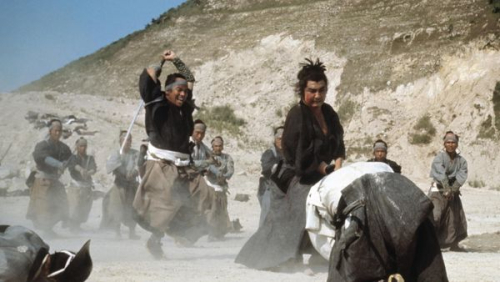
Based on the manga series by Kazuo Koike and Goseki Kojima, Lone Wolf and Cub: Baby Cart to Hades is the third film of the series in which the father/son duo who continue their journey through Japan as the former saves a prostitute from humiliation after killing her client as he would do a job for the yakuza to kill a governor. Directed by Kenji Misumi and screenplay by Kazuo Koike, the film explore the father/son duo as they deal with an unruly world as well as a growing sense of corruption that would involve the Yakuza and other factions as Itto Ogami/Lone Wolf and Daigoro/Cub are reprised respectively by Tomisaburo Wakayama and Akihiro Tomikawa. Also starring Go Kato, Yuko Hama, Isao Yamagata, and Michitaro Mizushima. Lone Wolf and Cub: Baby Cart to Hades is a ravishing and evocative film from Kenji Misumi.
The film follows a father-son duo as they continue their journey through Edo-era Japan as they remain in pursuit of the clan who had disgraced him as he would encounter a lowly group of samurai warriors and later a yakuza who was about to punish a prostitute for killing a client as he is later asked by the yakuza leader to kill a power-hungry governor. It’s a film that play into Itto Ogami and his son Daigoro as they encounter a sense of unruliness around them as the lowly group of samurai warriors would rape a couple of women only to be taken care of by their leader Kanbei (Go Kato) who is revealed to be a man with a sense of honor. This idea of code and honor would continue after Ogami chooses to protect a prostitute he and Daigoro met on a boat early in the film as the yakuza leader in Torizo (Yuko Hama) is amazed by taking all sorts of physical and mental torture for this prostitute as she learns about his true identity. Kazuo Koike’s script is largely straightforward while it does feature some flashbacks as it relates to the governor Sawatari Genba (Isao Yamagata) who is eager to win the favor of Ogami’s enemies.
Kenji Misumi’s direction does maintain a sense of style from its previous films while he also restrains some of the violence though images of dismembered body parts, blood sprays, and such still are shown in the film. Yet, Misumi does showcase this air of chaos and discontent in the way a young woman and her mother are raped by a gang of lowly samurai warriors or how the prostitute is mistreated by her client. Shot in various rural locations in Japan, Misumi does use the locations as characters in the film from the bamboo forest early in the film where Ogami disposes a trio of ninjas while the scene in the desert hill serves as the climax between Ogami and the governor’s army. The usage of the wide shots don’t just play into the scope of the locations but also in how Daigoro would place himself on a spot to get someone’s attention or just to get a view of what he’s seeing whenever his father is about to attack.
With the aid of fight choreographer Eiichi Kusumoto, Misumi’s approach to the fighting is more restrained as it’s more about who makes the first move as well as a sense of respect during duels as it’s something both Torizo and Kanbei have believing there’s still some semblance of honor despite the former’s lack of belief towards codes with her yakuza. Misumi’s close-ups and medium shots help play into the drama and air of suspense as well as these stylish flashbacks as it relates to the governor that Ogami is hired to kill. Its climax doesn’t just play into this growing disconnect over thirst of power and honor but also the idea of what a samurai really is as it’s something both Ogami and Kanbei are asking. Overall, Misumi crafts a rapturous yet chilling film about a father-son duo who trek through Japan as they encounter unruliness in their path.
Cinematographer Chikashi Makiura does incredible work with the film’s cinematography with its gorgeous usage of natural lights for many of the daytime exteriors while the nighttime scenes feature lighting by Hiroshi Mima who help provide a low-key look to the film along with the flashbacks which were shot in black-and-white. Editor Toshio Taniguchi does excellent work with the editing as its emphasis on style in the jump-cuts, dissolves, and other stylish cuts help play into the action as well as the suspense and drama where things do slow down to play more into emotional reactions than action. Production designer Yoshinobu Nishioka does amazing work with the look of the yakuza’s main base including an inn that they run as well as the lavish home of the governor. The makeup work of Hideo Yumoto and Toshio Tanaka do terrific work with the look of a few characters from the one-armed man hiding in Torizo’s closet to the ragged look of Kanbei’s gang.
The special stunt effects by Daizen Shishido is amazing for some of the action that occurs including scenes that involve aerial attacks from ninjas and samurais as it help play into the action. The sound work of Tsuchitaro Hayashi, with sound effects by Toru Kurashima, is superb for the atmosphere of the locations as well as sounds of gunfire, swords, and arrows that occur during battle. The film’s music by Hideaki Sakurai is phenomenal for its array of themes from a Western-like theme for the main characters with its guitars and strings as well as percussive-based music for its suspense and sounds of strings and warbling synthesizers for the film’s climatic battle.
The film’s wonderful ensemble cast feature some notable small roles from Jun Hamamura as the one-armed retainer that Torizo had been hiding that Ogami knew, Sayoko Kato as the prostitute that Ogami and Daigoro protects, Michitaro Mizushima as a former aide of Governor Genba from the film’s flashbacks, and Isao Yamagata as the power-hungry Sawatari Genba who is hoping to gain the favor of the shogunate and his clan upon learning about Ogami whom he realizes is a threat. Yuko Hamada is excellent as the yakuza leader Torizo as a woman who learns about Ogami’s true identity as she sees someone that she respects as well as asking for help as it relates to the governor whom she despises. Go Kato is amazing as Kanbei as a leader of a ragged group of lowly samurai warriors who encounters Ogami early in the film as he is aware of who he is as they would later meet where Kanbei is a man of respect and honor as he is trying to answer the question of identity and being a true samurai.
Finally, there’s the duo of Akihiro Tomikawa and Tomisaburo Wakayama in their respective roles as Diagoro and Ogami Itto with the former as the young boy who observes everything around him while often luring warriors into traps as well as be the one to bring kindness to the prostitute. The latter showcases more restraint as a man still haunted by loss yet is still keen on his path towards Hell where he deals with a sense of unruliness around him while surprised to find that there are those who do have some kind of honor as it is a rapturous performance from Wakayama.
Lone Wolf and Cub: Baby Cart to Hades is a sensational film from Kenji Misumi. Featuring a great ensemble cast, dazzling visuals, stylish action sequences, and a chilling music score, the film is definitely an exhilarating samurai-adventure film that isn’t just filled with lots of action but also drama and suspense. In the end, Lone Wolf and Cub: Baby Cart to Hades is a phenomenal film from Kenji Misumi.
Lone Wolf and Cub: Sword of Vengeance - Baby Cart at the River Styx - Baby Cart in Peril – Baby Cart in the Land of Demons – White Heaven in Hell
© thevoid99 2020
Subscribe to:
Posts (Atom)