Showing posts with label barbara steele. Show all posts

Friday, May 13, 2016

2016 Cannes Marathon: Lost River


(Played at the Un Certain Regarde Section at 2014 Cannes Film Festival)
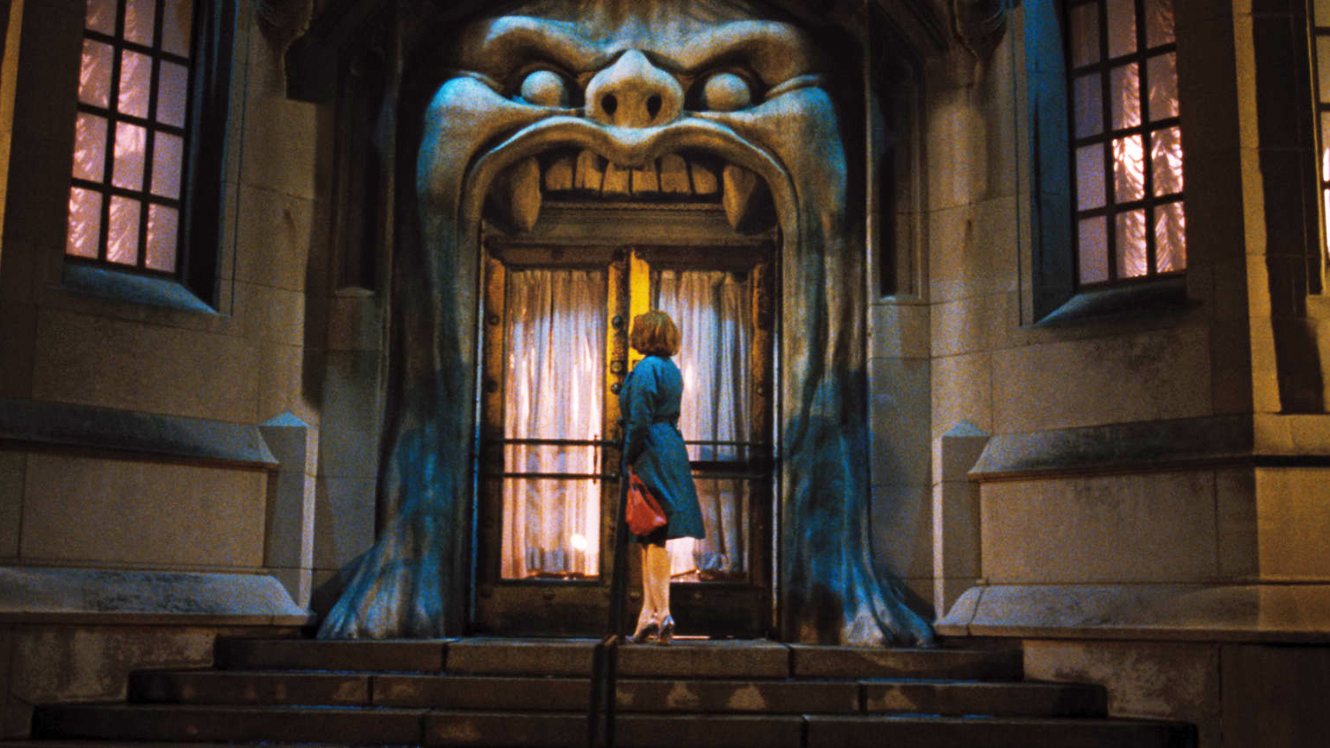


Written and directed by Ryan Gosling, Lost River is the story of a single mother who tries to save her home by taking a mysterious job while her son would try to help where he learns about a mysterious underwater city. The film is a mixture of fantasy with elements of film noir that plays into a world that doesn’t make sense as many characters deal with this strange world they’re in. Starring Christina Hendricks, Saoirse Ronan, Ben Mendelsohn, Iain De Caestecker, Matt Smith, Barbara Steele, and Eva Mendes. Lost River is an evocative yet rapturous film from Ryan Gosling.

Set in Detroit, the film revolves around a single mother trying to raise her two sons as one of them is a teenager and the other is an infant where she takes a mysterious job to save her home while the teenage son deals with a local gangster as he tries to find ways to help his mother. It’s a film that does have a simple story but it also has these elements of surrealism as well as the idea of innocence lost. Even as this small town Billy (Christina Hendricks) is living with her sons Bones (Iain De Caestecker) and the infant Franky (Landyn Stewart) is a place that is just in ruins while it’s nearby this reservoir that is covering a city that used to be there. Ryan Gosling’s script doesn’t just play into this idea of survival but what Billy and Bones have to do as the former has to work for a bank manager who also moonlights as the manager of a strange vaudeville club that emphasizes a lot on macabre imagery.

In the latter, he befriends his neighbor Rat (Saoirse Ronan) who tells him about this mysterious underwater city that used to be there as she believes that this little town could be saved if someone retrieve a piece of the city underwater. Though Bones doesn’t believe that, he still has to deal with the fact that his encounter with the local gangster Bully (Matt Smith) has him become a target where he has to hide as what he does to his enemies are quite gruesome. Even as Rat becomes targeted where Bones realizes what he has to do as does Billy who realizes where the real money is made at this club she is working for. All of which play into a world that has become corrupt and repressive where a mother and son are forced to take action.

Gosling’s direction is definitely very stylized in not just its imagery but also in mood where it a film that feels very dream-like yet rooted in reality. Shot on location in Detroit and areas nearby, the film has this strange mixture of the harsh realities of urban life with its empty and ruined houses that is joined with a world that is very surreal as it relates to the reservoir that Bones encounters and the club that Billy would work at. Gosling’s approach to compositions in his usage of wide and medium shots not only capture a world that is very unique but also one that has a sense of beauty despite its sense of decay. The way he would film certain images or create scenes that play into that mix of ugliness and beauty showcase Gosling’s gift to find that delicate balance as it relates to some scenes between Bones and Rat. The elements of surrealism that is in this club where women pretend to be killed for everyone’s pleasure is quite offbeat in its humor yet it also has something that is dream-like.

Even with Gosling’s approach to close-ups as well as these scenes that are quite strange and comical as it adds to a world that doesn’t make sense for its lead characters. The element of dream-like images mixed in with these strange and harsh surroundings would add to the film’s climax which is quite emotional where both Billy and Bones would make a decision as it relates to the reality they live in. A reality that both know they have to face where it’s no longer about a house they’re trying to save but really themselves and Franky. Overall, Gosling creates a ravishing yet eerie film about a mother and son trying to survive in a decaying environment filled with strange secrets.

Cinematographer Benoit Debie does phenomenal work with the film‘s cinematography with its usage of naturalistic and dream-like images for scenes set in the day along with some of the interiors with its stylish usage of neon lights including some of the scenes set at the club where Billy would work at. Editors Nico Leunen and Valdis Oskarsdottir do excellent work with the editing as they use some stylish jump-cuts to play into some of the drama and action along with some of the offbeat moments in the film where much of the editing is stylized yet adds a lot to what is shown. Production designer Beth Mickle, with set decorator Lisa K. Sessions and art director Erick Donaldson, does amazing work with the look of the club that Billy would work including the secret room as well as the room and home where Rat lives in.

Costume designer Erin Benach does fantastic work with the costumes from the lavish clothes of the women at the club to the look of Bully. Special makeup effects artist Michael Fontaine and prosthetics designer Michael Marino do brilliant work with the look of the macabre, gory makeup Billy and several other women would sport into their stage performances at the club as well as the look of Bully‘s henchman. Visual effects supervisor Janelle Croshaw does nice work with some of the minimal visual effects in the macabre performances at the club as well as a few set-dressing scenes such as the old pathway to an old town that is now underwater.

Sound designer Lon Bender does a superb job with the sound to play into the world of the clubs and some of the locations as well as some of the eerie moments at the home base of Bully. The film’s music by Johnny Jewel is great as it is this mixture of electronic music and ambient to play into some of the drama and surreal moments in the film while music supervisor Richard Walters provides a soundtrack that features some of Jewel’s original music from his Italians Do It Better label from acts like the Chromatics, Desire, Symmetry, Glass Candy, and other songs sung by Saoirse Ronan and Ben Mendelsohn as well as a standard called Deep Purple.

The casting by Kathy Mooney and Jennifer Venditti is wonderful as it features some notable small roles from Torrey Wigfield as Bully’s henchman Face, Rob Zabrecky as the club’s MC, Landyn Stewart as Billy’s infant son Franky, Reda Kateb as a kind cab driver who would drive Billy to the club, and Eva Mendes in a superb performance as the club performer Cat who would show Billy the ropes to performing and working at the club including the room where the real money is made. Barbara Steele is terrific in a largely silent role as Rat’s catatonic grandmother who watches old movies based on happier days. Matt Smith is fantastic as the local gangster Bully as a man who instills fear in everyone while being horrific in the way he handles people as it’s a role full of charm and energy. Ben Mendelsohn is excellent as Dave as a bank manager who also moonlights as a club owner where he offers Billy a chance to keep her house but also do things that are very intense.

Saoirse Ronan is brilliant as Rat as this young girl who is a neighbor of Bones as she befriends him while telling him the legend about this underwater city as it’s a performance full of restraint but also charm. Iain De Caestecker is amazing as Bones as a teenager who spends his time stripping down houses where his encounter with Bully nearly gets him in trouble until he encounters what could be the lost city as he realizes it might be the key to get him out of this small town. Finally, there’s Christina Hendricks in a remarkable performance as Billy as this single mother that is trying to save her home from debt where she goes into a world that is very strange only to realize that she is entering a world that is just very dark and complicated.

Lost River is a phenomenal film from Ryan Gosling. Featuring a great cast, gorgeous visuals, and an intoxicating soundtrack. It’s a film that doesn’t play by the rules while not being afraid to be weird as well as delve into elements of surrealism and fantasy. In the end, Lost River is a spectacular film from Ryan Gosling.

© thevoid99 2016

Wednesday, May 11, 2016

2016 Cannes Marathon: Young Torless


(Winner of the FIPRESCI Prize at the 1966 Cannes Film Festival)


Based on the autobiographical novel by Robert Musil, Der junge Torless (Young Torless) is the story of a young boy who attends a boarding school in Austria as he copes with the violence as he sees a classmate beaten by other students. Written for the screen and directed by Volker Schlondorff and screen story by Herbert Asmodi, the film is about a young boy dealing with his new surroundings in early 20th Century Austria as he sees a world that is violent and troubling. Starring Mathieu Carriere, Marian Seidowsky, Bernd Tischer, Fred Dietz, and Barbara Steele. Der junge Torless is a haunting yet provocative film from Volker Schlondorff.

The film revolves around a young student attending a boarding school in a small Austrian town where he sees a classmate being punished severely by other students over a theft. Rather than reporting or do something, he reluctantly joins in as a way to fit in where he eventually becomes consumed with guilt and later filled with shame for taking in the role of punishing this kid all because of a simple theft of money from another classmate. Volker Schlondorff’s script doesn’t just study what the film’s titular character (Mathieu Carriere) goes through in his attempts to fit in but also realize that his classmate Basini (Marian Seidowsky) did something wrong as Torless wonders if he should’ve reported him first. It adds a lot into Torless’ development where he is someone that is very intelligent but lacks the social skills to fit in as he tries to be tough towards Basini only to realize that the punishment is way too harsh.

Schlondorff’s direction is very engaging for the way it captures life at this boarding school in a small Austrian town in the early 20th Century. While many of the compositions and the way Schlondorff presents life in a classroom or in a dorm where many of the students sleep. The environment of the school is quite entrancing for not just how students have to interact and be with teachers but also in some of the secret aspects where Basini would be punished for his actions as it would eventually delve into something far crueler. The direction uses a lot of close-ups and medium shots to play into the intimacy of the classrooms but also in the moments outside of the school where Torless would meet a prostitute named Bozena (Barbara Steele) who would try to seduce him but Torless reacts very shyly. The moments where Basini is punished are quite gruesome as it’s not just this sense of physical torture but also mental as Torless’ classmates do cruel things as it culminates to the point where Torless making a decision of his own no matter what the consequences are. Overall, Schlondorff create a chilling yet mesmerizing film about a young boy’s time in a horrific boarding school.

Cinematographer Franz Rath does brilliant work with the black-and-white photography to capture much of the beautiful look of the rooms and exterior settings at night with its usage of lights to create a mood along with some eerie scenes set in the daytime. Editor Claus von Boro does excellent work with the editing with its usage of jump-cuts and other stylish cuts to play into the drama as well as the intense moments of torment that Torless is forced to watch. Art director Maleen Pacha does fantastic work with the look of the school including its classrooms and gymnasium as well as the look of the coffee bar and Bozena‘s home. The sound work of Klaus Eckelt is terrific for the atmosphere of the classrooms including some of its raucous moments as well as the eerie and more quieter moments during Basini‘s torture scenes. The film’s music by Hans Werner Henze is wonderful for its orchestral-based score that is more in the tradition of pre-World War II music to create suites that set the dramatic tone for the film.

The film’s superb cast include some notable small roles from co-writer Herbert Asmodi and Hanna Axmann-Rezzori as Torless’ parents, Fritz Gehlen as the school’s headmaster, Jean Luanay as the school’s math teacher whom Torless converses with, and Lotte Ledl as the innkeeper who serves the students coffee and such outside of the school. Barbara Steele is fantastic as the local prostitute Bozena who would charm Torless though she understands his shyness while she later meets him late in the film where she is aware of what he is going through. Bernd Tischer and Fred Dietz are excellent in their respective roles as Beineberg and Reiting as the two elder students who would torment Basini with the former being the mastermind as it was his money that Basini stole.

Marian Seidowsky is brilliant as Basini as young student who stole money to cover some debts as he finds himself being punished severely by other students where he nearly succumbs to madness. Finally, there’s Mathieu Carriere as Thomas Torless as this young student who copes with taking part in the punishments where he enjoys it at first only to cope with the severity as well as his own issues in fitting in and making sense of all that is happening.

Der junge Torless is a phenomenal film from Volker Schlondorff. Featuring a great cast and compelling themes of conformity, guilt, and power, it’s a film that explores the world of an Austrian boarding school told from the perspective of a young boy who sees a world that is very dark. In the end, Der junge Torless is a sensational film from Volker Schlondorff.

The Tin Drum

© thevoid99 2016

Tuesday, June 23, 2015

Pretty Baby (1978 film)


Directed by Louis Malle and screenplay by Polly Platt from a story by Malle and Platt, Pretty Baby is the story of a 12-year old girl who works in New Orleans’ Red Light District in the early 20th Century as a prostitute. The film is an exploration into a young woman coming to terms with her sexuality as she watches her mother work as a prostitute where she is forced to be part of a world she is not ready for. Starring Brooke Shields, Susan Sarandon, and Keith Carradine. Pretty Baby is a compelling yet provocative film from Louis Malle.

Set in the Storyville area of New Orleans in 1917, the film revolves the young life of a 12-year old girl whose mother is a prostitute as she catches the eye of a photographer as she would become his muse and lover. It’s a film that plays into this young girl who comes of age during this time where she only knows the life of being in a whorehouse and tending to things at the place. Even as she would eventually become a prostitute herself where the result would have her grow up too fast. It’s a film that is set into a period in time where morals tend to fall by the wayside as it is about money and being fulfilled sexually while the women who prostitute themselves are using their sexuality to get what they want and hopefully have a better future.

Polly Platt’s screenplay uses this setting as a backdrop for this young girl coming of age where she wouldn’t just live with prostitutes, bartenders, cooks, musicians, and a brothel madam but also children who live and work in the house. It’s a world that is something where it has its own rules yet everyone helps each other out. For the character Violet (Brooke Shields), she is part of that world as she would help take care of the younger children, including her newborn baby brother Will, and give the brothel madam Nell (Frances Fay) what she needs if it’s cocaine or opium. It’s a world that gives Violet a sense of fulfillment but her mother Hattie (Susan Sarandon) is tired of the life as she is quite immature at times as well as selfish. When the photographer E.J. Bellocq (Keith Carradine) comes in to do photographs, he is intrigued by Violet as he sees her as a young girl becoming a woman while being conflicted of being there for her and give her the life that she needs.

The script also has a very offbeat structure where much of the film is set in this brothel with very little places outside of it as it plays to the world that Violet lives in and how comfortable she is in this world of booze and sex. Even if she is too young for it as its second act has her lose her virginity to a man she doesn’t know and deal with her mother’s desire to leave the brothel. The third act would have Violet leave the brothel to stay at Bellocq’s where it’s a very different world with rules as well as Bellocq’s devotion to his work as a photographer. It’s also a moment where Violet not only faces the real world but also a world that is starting to change once World War I is ending.

Louis Malle’s direction is very exotic for the way he presents 1917 New Orleans by shooting on location in the city with its old buildings along with a few shots in Mississippi. Much of the compositions do play into some of the photos that the real E.J. Bellocq did during that time in the way Malle would place the characters into a frame or how he would set up a shot. A lot of it features some intricate medium shots for some of these scenes including the photos that Bellocq would create. There is a beauty to the brothel that Violet lives in as it’s very lively and has this air of sophistication mixed in with a bit of decadence. Yet, there’s an air of innocence that Malle captures in the film as he sees Violet have the energy of a child but also a woman who is quite mature but also immature.

Then there’s the sexuality of the film where there are scenes of Violet being nude as it is discomforting to watch. Especially since she is a 12-year old girl as it definitely borders the line of what is obscene yet it does play into not just Bellocq’s obsession towards her but also Violet’s own awareness of her sexuality. Even as there’s a shot of Violet lying on a couch for a photograph totally nude, with the exception of her genitalia, as it is very provocative in how it can bring a sense of discomfort but there’s a beauty to it. Even as Malle is aware of what he needed to say visually as it plays into Violet’s encounter with the real world where it is about order and morality just as the home she had known for all of her life becomes the target of everything that is wrong. Overall, Malle creates a very fascinating yet unsettling film about a young girl coming of age in early 20th Century New Orleans.

Cinematographer Sven Nykvist does incredible work with the film‘s cinematography as it is a major highlight of the film in terms of the attention to detail in its photography for many of its interior scenes and usage of naturalistic and artificial light along with . Editor Suzanne Fenn does excellent work with the editing as it is very straightforward as well as using rhythmic cuts to capture Violet‘s own sense of energy. Production designer Trevor Williams and set decorator James L. Berkey do amazing work with the look of the brothel in its state of glamour as well as how small the kitchen is along with the studio that Bellocq works at.

Sound mixer Donald F. Johnson does nice work with the sound to play into the atmosphere of the locations as well the mixture of live music and natural sounds in the mix. The film’s music by Ferdinand Morton is superb for its New Orleans jazz-based score while the rest of the soundtrack features the music of those times.

The casting by Gary Chason and Juliet Taylor is fantastic as it features some notable small performances from Matthew Anton as a young boy named Red Top, Barbara Steele as the prostitute Josephine, Mae Mercer as the cook Mama Mosebery, and Diana Scarwid as the European prostitute Frieda. Antonio Fargas is terrific as the piano player Professor who is a friend of the prostitutes while being the one to keep an eye on her at times. Frances Faye is excellent as the brothel madam Nell as a woman who runs the operation and make sure things go well while doing drugs to cope with her aging. Susan Sarandon is brilliant as Violet’s mother Hattie as a prostitute who has the beauty and body of a successful prostitute but becomes tired of the life as she is eager to want something new despite her selfishness.

Keith Carradine is amazing as E.J. Bellocq as the famed photographer who is entranced by Violet’s personality and beauty as he falls for her while wanting to be her protector. Finally, there’s Brooke Shields in a phenomenal performance as Violet as this 12-year old girl who is enamored by her environment while having a troubled relationship with her mother as she would fall with this photography as it’s a very exciting yet dangerous performance from Shields who was only 12 when she did the film and expose herself in that way.

Pretty Baby is a remarkable film from Louis Malle that features a breakthrough performance from Brooke Shields. While it is definitely not a film for everyone as it does border the line between what is obscene. It is still a captivating film that plays into the world of a young girl coming of age in early 20th Century New Orleans in one of its seediest moments in history. In the end, Pretty Baby is a enchanting film from Louis Malle.

Louis Malle Films: (The Silent World) - Elevator to the Gallows - The Lovers (1958 film - Zazie Dans Le Metro - (A Very Private Affair) - (Vive Le Tour) - The Fire Within - (Bons baisers de Bangkok) - (Viva Maria!) - (The Thief of Paris) - Spirits of the Dead-William Wilson - (Phantom India) - (Calcutta) - Murmur of the Heart - (Humain, Trop Humain) - Place de la Republique - Lacombe, Lucien - Black Moon - (Close Up (1976 short) - (Dominique Sanda ou Le reve eveille) - Atlantic City (1980 film) - (My Dinner with Andre) - Crackers - God’s Country (1985 film) - (Alamo Bay) - (And the Pursuit of Happiness) - Au Revoir Les Enfants - (May Fools) - (Damage (1992 film)) - (Vanya on 42nd Street)

© thevoid99 2015

Sunday, October 07, 2012

Shivers


Written and directed by David Cronenberg, Shivers is the story of a doctor discovering about strange experiments involving flesh and parasites that turn people into sexually-crazed zombies. There, he tries to save those who aren’t harmed as the epidemic starts to rise at a medical clinic in an island near Montreal. Starring Paul Hampton, Barbara Steele, Lynn Lowry, Joe Silver, Ronald Mlodzik, and Fred Doederlein. Shivers is disgusting, repulsive, and sick film from David Cronenberg that is truly a whole lot of fun to watch.

The film is essentially the story about this doctor named Roger St. Luc (Paul Hampton) who works at a medical clinic with Nurse Forsythe (Lynn Lowry) as he gets a call about the murder-suicide of a colleague Dr. Hobbes (Fred Doederlein) and a young woman. When he asks his friend Rollo Linsky (Joe Silver) to examine Hobbes’ report, a discovery is made about Hobbes’ desire to inject parasites in the human body as a way to reconnect humanity with flesh. Unfortunately, it would cause problems as people infected by the parasite would have an uncontrollable sexual drive that would make them into horny zombies. When St. Luc finds out what is going on as he sees people in his building become horny zombies as he has try to save those who aren’t infected as it would lead to all sorts of trouble.

David Cronenberg’s screenplay doesn’t have a traditional structure though it does involve a lot of stories with characters who would interact with each other in this apartment. The film’s first half does feature a few storylines that includes a couple with marital problems where the husband deals with parasites in his body as his wife is unaware as she’s hanging out with a friend. This would get inter-cut with smaller storylines as characters would get picked off one-by-one in the schematics of traditional horror. The film’s second half focuses on St. Luc and Forsythe trying to help people who could be infected only for them to be overwhelmed as they try to survive the onslaught of zombies that are coming after them.

Cronenberg’s direction is definitely stylish in terms of creating an element of suspense and horror while infusing it with lots of dark humor and other crazy moments. Since the film is shot on location in a residential building, there is something that feels offbeat as everyone seems normal until all of the blood and gore involving strange creatures start to come in. The film does become a full on thriller where Cronenberg uses lots of hand-held cameras for scenes where characters run in the building or strange shots where he creates an element of suspense. It’s as if Cronenberg is willing to see how far he can go as there’s a lot of sex in display where he does establish shots where it does play into transformations and other chilling moments. Overall, Cronenberg crafts a very smart and captivating horror film that isn’t afraid to be repulsive while taking risks by tackling all sorts of taboos that will make anyone uncomfortable.

Cinematographer Robert Saad does excellent work with the film‘s photography from the brooding look of the parking lot scenes to the more brighter look of many of the film‘s interior hallway scenes. Editor Patrick Dodd does terrific work with the editing to create suspenseful cuts including some stylish slow-motion cuts to help maintain that air of suspense. Art director Erla Gliserman does nice work with the set pieces from the look of the clinic to the home apartment of the couple and the wife‘s friend.

Special effects makeup and creature effects work by Joe Blasco does incredible work with the design of the creatures as well as the special effects for parasites to come out of people‘s mouths. Sound recorder Michael Higgs does wonderful work with the sound to help create an atmosphere for the film‘s chilling moments. Compiling the film’s music is its producer Ivan Reitman as he creates a soundtrack filled with eerie music cuts to play up the sense of chills and terror that unfolds throughout the film.

The film’s brilliant ensemble cast includes some notable performances from Ronald Mlodzik as the residence manager Merrick, Allan Kolman as the troubled Nicholas Tudor, Susan Petrie as his concerned wife Janine, Fred Doederlein as the troubled doctor Emile Hobbes, and Barbara Steele as Janine’s very sexy friend Betts. Joe Silver is terrific as St. Luc’s friend Rollo Linsky who tries to uncover Hobbes’ work as he makes a terrifying discovery. Lynn Lowry is wonderful as Nurse Forsythe who tries to woo St. Luc as she later helps him try to evade the zombies. Finally, there’s Paul Hampton in an excellent performance as Dr. Roger St. Luc as he tries to discover what is going on in the building he works at as he tries to stop the epidemic of zombies from happening.

Shivers is a fantastic and entertaining horror film from David Cronenberg. Thanks to a superb cast and gnarly special effects, it’s a film that definitely bears all of the hallmarks that makes horror fun to watch and more. For fans of Cronenberg, the film definitely marks as an early triumph for the filmmaking that would set the stage for some of the weird things he would do in future films. In the end, Shivers is an awesomely fucked-up film from David Cronenberg.

David Cronenberg Films: Stereo - Crimes of the Future - Rabid - Fast Company - The Brood - Scanners - Videodrome - The Dead Zone - The Fly (1986 film) - Dead Ringers - Naked Lunch - M. Butterfly - Crash - eXistenZ - Spider - A History of Violence - Eastern Promises - A Dangerous Method - Cosmopolis - Maps to the Stars - Crimes of the Future (2022 film)

The Auteurs #26: David Cronenberg Pt. 1 - Pt. 2


© thevoid99 2012

Wednesday, February 08, 2012

8 1/2


Originally Written and Posted at Epinions.com on 1/2/06 w/ Additional Edits & Revisions.


Directed by Federico Fellini and written by Fellini Ennio Flaiano, Tullio Pinelli, and Brunello Rondi, 8 1/2 is the story about a director who is trying to find meaning in his life as he prepares to create a sci-fi film. Surrounded by friends, mistresses, and his frustrated wife, the director finds his own life becoming part of surreal episodes that blurs the world between fantasy and reality. Playing the director Guido Anselmi is Marcello Mastroianni, who also played lead in Fellini's previous feature film La Dolce Vita. Also starring Anouk Aimee, Claudia Cardinale, Barbara Steele, Rosella Falk, Sandra Milo, Madeleine Le Beau, Mario Pisu, Guido Alberti, and Eddra Gale. 8 1/2 is a brilliant, surreal masterpiece from the always ambitious Federico Fellini.

After a strange dream involving traffic jams and floated like a kite, the life of Guido Anselmi is a mess due to pressures of creating a new project as he joins film critic Carini Daumier (Jean Rougeul) for a day in the park. There, he is transfixed by the appearance of a young actress named Claudia (Claudia Cardinale) though Carini doesn't see her. Unsure if what he saw is true, Carini wants to know about Guido's next project as Guido admits he has no idea what it's about as he's dealing with writer's block as he sees his friend Mario Mezzabotta (Mario Pisu) and his new girlfriend Gloria Morin (Barbara Steele). Leaving at a train station, Guido awaits the arrival of his immature mistress Carla (Sandra Milo) who is asking for an available part for her friend. Guido dreams about his parents (Giuditta Rissone and Annibale Ninchi) where his producer Pace (Guido Alberti) and Guido's wife Luisa (Anouk Aimee) appear in the dream.

Arriving to his hotel as he is dealing with Pace, more journalists and a French actress named Madeleine (Madeleine Le Beau) he's hired for the film. Guido is overwhelmed as a party with journalists, a mind reader (Ian Dallas), Pace and his girlfriend (Annie Gorassini) gets crazier where mind reader reveals a message in Guido's head. Guido has a flashback of his childhood with the mysterious message as he is dealing with more insanity while receiving a call from Luisa who is coming with her friend Rosella (Rosella Falk). Another strange meeting with his embittered production assistant (Mario Conocchia) involve Guido having another fantasy with Claudia whom he believes is his ideal lead. More surreal events would involve a meeting with the Cardinal (Tito Massini) over religious themes of the film leading to Guido recalling his life as a kid (Marco Gemini) during an encounter with a strange prostitute named Saraghina (Eddra Gale).

Luisa arrives with Rosella and Luisa's sister (Elisabetta Catalano) at a car show with their friend Enrico (Mark Herron) as Guido takes them to the spaceship he's building for his film. Still, Guido admits his doubts to Rosella about his failures as an artist and as a husband to Luisa. During a lunch with Luisa and Rosella, Carla appears much to Guido's horror as he has a dream involving all of the women in his life which starts out fun and later devolves into a messy haze. Back in the real world, Guido is dealing with screen tests for parts as Luisa gives him some horrifying news. Devastated by the news, Guido is sparked by Claudia's arrival as he reveals his fantasies that as he faces more harsh truths leading up to a press conference to announce what he is going to do about his new film project.

While Federico Fellini has known to use extravagance to enhance his story, in this film he uses the extravagance for a battle between reality and fantasy. While the story and feel of the film is different than his previous feature La Dolce Vita, this and 8 1/2 do share the similarities in the internal conflicts both played by Marcello Mastroianni. In La Dolce Vita, the character of Marcello is trapped in his own world of decadence only coming to the conclusion that there could be hope. In 8 1/2, there is a similar ending where Guido is trapped in his own world as a filmmaker where he is forced to his own compromises leaving him doubtful. The escape that Guido has is in his flashbacks and fantasy yet once they collide with reality, it becomes more troubling to him. Then there's the film's ending where his co-writer tells him something that he has to think about where Guido is forced to accept things and ends things only in a way that Fellini can make endings.

The film's script is brilliant in not just the struggles of dealing with making of a picture but the collision of fantasy and reality. Fellini's direction plays to the film's struggle in his extravagant presentation from the opening scene of Guido hanging in the air like a kite to the circus-like ending. Fortunately, the extravagance doesn't distract what Fellini aimed for since many of the fantasy sequences only come out in the simplest presentation where the only thing Fellini needed was a large location and lots of people. The screenplay does a great job in moving back and forth into fiction and reality while mixing the two in a few sequences. It's really in one way, a film about escapism through a man desperate to find answers in his own reality.

Helping Fellini in his visual presentation is Gianni Di Venanzo whose black-and-white photography and lighting schemes are wonderful to convey Fellini's harsh reality of the film world and the sunlight exteriors that shows Italy at its most beautiful. Art director Piero Gherardi does an amazing job in the lavish production of the exterior scene with the rocket while capturing the realness of the Italian, upper-class lifestyle. Gherardi also does work on the film's wonderful costumes with Leonor Fini whether it's the rich clothes of Carla, the black artiness of Gloria, the most sophisticated look of Luisa, or the innocent white of Claudia. Editor Leo Cattozzo does a wonderful job in tightening the film while helping it move easily in its back-and-forth world of fiction and reality. Longtime composer Nino Rota does a great job in the film's score that is filled with exuberant, circus-like arrangements and comedic textures while the rest of classical pieces from the likes of Richard Wagner, Gioacchino Rossini, Leo Ferre, and Pyotr Ilyich Tchaikovsky.

Finally, there's the film huge cast that is filled with an array of characters. Filled with such small performances from the likes of Olimpia Cavalli, Maria Antonietta Beluzzi, Hazel Rogers, Edy Vessel, Nadine Sanders, Elisabetta Catalano, Giuditta Rissone, Annibale Ninchi, Annie Gorassini, Mark Herron, Mario Conocchia, Tito Massini, and Marco Gemini as the young Guido. Another minor actress who gives a memorable performance as the Saraghina is Eddra Gale whose presence is amazing while Ian Dallas is also wonderful as the mind reader. Yvonne Casadei is also memorable for the role as one of Marcello's mistresses in a strange, fantasy sequence. Madeline Le Beau is also good as the French actress who feels like she's untalented while Guido Alberti is great as Guido's producer.

Mario Pisu is great as Guido's old friend Mezzabotta who seeks a new life with a new girlfriend while Barbara Steele is also great as Mezzabotta's girlfriend Gloria who brings an exciting presence. Jean Rougeul gives an excellent performance as Guido's co-writer who tries to figure him out while helping deal with his own doubts. Rosella Falk is excellent as Rosella who seems to be the only female aside from Claudia who can understand Guido's anxieties as she treats him like a sibling. Anouk Aimee is great as the intelligent but frustrated Luisa who loves Guido but is frustrated in his inability to be around her. Sandra Milo is amazing as Guido's sweet but selfish Carla who is engrossed in her own lifestyle and how she often frustrates Marcello with her own lifestyle. Claudia Cardinale is lovely as Claudia with her enchanting presence and eye-wielding innocence as she represents an angel of sorts for Guido only to realize that he disappoints her.

Finally, there's Marcello Mastroianni in another iconic performance as Guido. Bringing the same coolness and anguish that he did as Marcello in La Dolce Vita, Mastroianni goes more into that anguish to bring a character that artists can relate to. While the character is flawed, Mastroianni makes sure that Guido isn't too sympathetic since he does do selfish things around him like adultery while as an artist, he is somewhat irresponsible. It's a masterful performance from the late Mastroianni who brings a bit of humor and a lot of drama while making his character entirely memorable and likeable in the end.

While not as extravagant as La Dolce Vita, 8 1/2 is a wonderfully surreal and amazing film from Federico Fellini led by another iconic performance from Marcello Mastroianni. Of the films Fellini has made in his career, this film isn't just essential but a must-see for anyone interested in Fellini. Whether you're into the decadent La Dolce Vita or the extravagance of his later films, 8 1/2 is a film that everyone must see for anyone having trouble dealing with reality and fantasy.

Federico Fellini Films: (Variety Lights) - The White Sheik - I, Vitelloni - (L'amore in Citta-unagenzia matrimoniale) - La Strada - Il bidone - Nights of Cabiria - La Dolce Vita - (Boccaccio '70-Le tentazoni del Dottor Antonio) - Juliet of the Spirits - Histoires extraordinaires-Toby Dammit - (Fellini: A Director's Notebook) - Fellini Satyricon - (I Clowns) - Roma - Amarcord - Casanova - Orchestra Rehearsal - City of Women - And the Ship Sails On - Ginger and Fred - (Intervista) - (The Voice of the Moon)

© thevoid99 2012