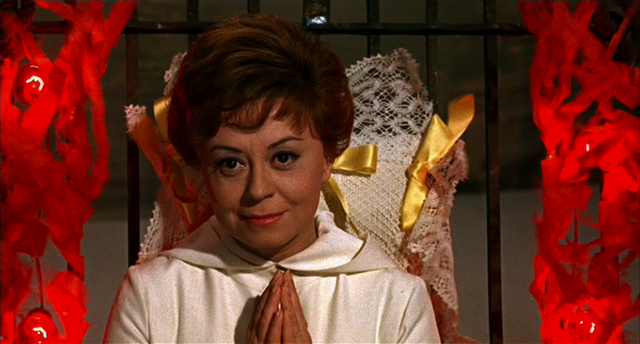
Showing posts with label giuletta masina. Show all posts

Monday, September 10, 2018

Ginger and Fred


Directed by Federico Fellini and screenplay by Fellini, Tonino Guerra, and Tullio Pinelli from a story by Fellini and Guerra, Ginger and Fred is the story of a dancing couple who impersonate the works of Fred Astaire and Ginger Rogers who reunite after thirty years of retirement for a TV show while contending with all sorts of issues. The film is a look of a couple who try to bring back their sense of joy as the couple is played by Marcello Mastroianni and Giulietta Masina. Also starring Franco Fabrizi, Augusto Poderosi, and Toto Mignone. Ginger and Fred is a delightful and heartfelt film from Federico Fellini.

Set during the Christmas season in Rome, the film follows a dancing tribute act who reunite more than thirty years since their split to appear on a variety TV show as they deal with what they’re about to do as well as the fact that they hadn’t seen each other since the split. It’s a film with a simple premise as it largely takes place in the span of 24 hours where this couple arrive separately unaware that the TV show they’ve been asked to reunite and perform is this odd variety show which would include all sorts of performers and oddballs to appear. The film’s screenplay from Federico Fellini, Tonino Guerra, and Tullio Pinelli is straightforward in terms of its narrative as it play into this strange environment of performers that include a transvestite (Augusto Poderosi), a celebrated admiral (Friedrich von Ledebur), a monk (Jacques Henri Lartigue) who claims he can fly, and all sorts of performers and impersonators.

For Amelia Bonetti (Giulietta Masina) and Pippo Botticella (Marcello Mastroianni) who both respectively play their parts as impersonators of Ginger Rogers and Fred Astaire. Their reunion is a joyous one while both of them would have different lives and different reasons for appearing on the show as Amelia is hoping to be on TV for her grandchildren to see her while Pippo claims to show up for money yet he has a bigger reason to be on the show. During their reunion, old issues would return but also a fondness for one another as they also deal with the chaos that is happening for the preparation of their TV appearance.

Fellini’s direction is definitely stylish which is expected from the filmmaker who isn’t afraid to make fun of Italian television in its most lavish as well as the way variety shows and ads for products are presented. Shot largely on location in Rome with much of the sets created at Cinecitta Studios in Rome, Fellini would use wide shots to capture the scope of the TV studio in its interiors as well as its large exterior shots to showcase how big the building is in its grand architecture. Yet, much of Fellini’s direction emphasizes on close-ups and medium shots as it relates to the characters as many of them live in a hotel near the city and then be transported by bus to the studio on that day. Fellini’s direction also play into the fact that the story is set during the Christmas holidays as Fellini avoids many famous landmarks of Rome to show a city that has changed into something that is messier and troubling due to the fact that there’s these ads where nude women are the ones selling products for meat or pasta.

Fellini’s approach to the scenes of the variety show is about excess and this idea of entertainment in which a show brings in an array of personalities and performers where it is more about exploitation and to be used for laughs rather than give them a chance to be appreciated for their talents. It’s something that Pippo is aware of despite the fact that he would run into an old friend in Toto (Toto Mignone) who would help Pippo and Amelia in remembering a few steps and such. There is also this idea of chaos that Fellini would create backstage which would overwhelm Amelia who wonders if she’s made the right decision as the film’s climax is the two dancing like Ginger and Fred. It’s a moment that would play into this idea of not just nostalgia but also bringing in this idea of class and elegance back into a world that lost all of that in favor of low-class entertainment. Overall, Fellini creates a majestic and exhilarating film about a dance tribute couple who reunite for a strange TV show.

Cinematographers Tonino Delli Colli and Ennio Guarnieri do brilliant work with the film’s colorful cinematography with the usage of lights for many of the interior scenes at the studio and backstage area as well as the usage of vibrant lighting for the daytime exteriors as well as a few scenes set at night. Editors Nino Baragli, Ugo de Rossi, and Ruggero Mastroianni do excellent work with the editing as it is largely straightforward with some rhythmic cuts to play into some of the film’s humor and the climatic dance scene. Production designer Dante Ferretti, with art director Nazzareno Piana plus set decorators Franco Fumagalli and Angelo Santucci, does amazing work with the set design from the way the hotel rooms and lobbies look like in the interiors as well as the studio set and the grand look of the studio exterior in how grand it is as it’s a highlight of the film. Costume designer Danilo Donati does fantastic work with the costumes as it play into the extravagance of the performers and personalities that are to appear on the show as well as the clothes that Amelia and Pippo wear offstage that are more casual.

Chief makeup artist Rino Carboni does terrific work with the makeup for the way some of the characters look to play into those they impersonate. The special effects of Adriano Pischiutta is nice for the way some of the TV commercials look when they appear on the TV to play into that sense of artificiality and silliness of what they’re selling. The sound work of Fabio Ancillai and Tomasso Quattarini is superb for the way a studio sounds from the inside as well as some of the sparse moments such as Amelia hearing a man snore in the next room. The film’s music by Nicola Piovani is incredible for its playful and filled with these amazing woodwind arrangements and strings to play into liveliness of the film while the music that Amelia and Pippo dance to are the material that Fred Astaire and Ginger Rogers would dance to as it is largely music from Irving Berlin, Jerome Kern, and Lorenz Hart.

The film’s marvelous ensemble cast include some notable small roles and appearances from Salvatore Billa as a Clark Gable impersonator, Antoine Saint-John as a bandaged man about unveil his new look, Friedrich von Thun as a kidnapped tycoon, Ezio Marano as an intellectual selling books who converses with Pippo, Jacques Henri Lartigue as a monk claiming he can fly, Augusto Poderosi as a kind transvestite Amelia befriends, Toto Mignone as an old friend of Amelia and Pippo who works for the show as he helps them rehearse their performance, and Franco Fabrizi as the host of the variety show.

Finally, there’s the duo of Giulietta Masina and Marcello Mastroianni in phenomenal performances in their respective roles as Amelia Bonetti/Ginger and Pippo Botticella/Fred. Masina provides a charm and elegance to her role as a woman that is eager to dance while dealing with everything that is happening backstage as it would overwhelm her. Mastroianni also provides charm but with a haggard look of a man who hasn’t done much while being frustrated with the ways of the world. Masina and Mastroianni together are just a joy to watch in the way they argue as well as reminisce about other things as they are a major highlight of the film.

Ginger and Fred is a sensational film from Federico Fellini that features incredible performances from Giulietta Masina and Marcello Mastroianni. Along with its ensemble cast, grand art direction, colorful visuals, bawdy humor, and a sumptuous music score. The film is definitely entertaining as well as provide an idea of what entertainment could be without the need to be overly silly or exploitive. In the end, Ginger and Fred is a spectacular film from Federico Fellini.

Federico Fellini Films: (Variety Lights) – The White Sheik - (L’amore in Citta-Un’agenzia martimoniale) – I, Vitelloni - La Strada - Il bidoneNights of Cabiria - La Dolce Vita - (Boccaccio ’70-Le tentazoni del Dottor Antonio) – 8 1/2 - Juliet of the Spirits - Spirits of the Dead-Toby Dammit - (Fellini: A Director’s Notebook) – Fellini Satyricon - (I Clowns) – Roma - Amarcord - Casanova (1976 film) - Orchestra RehearsalCity of WomenAnd the Ship Sails On - (Intervista) – (The Voice of the Moon)

© thevoid99 2018

Thursday, April 14, 2016

The White Sheik


Directed by Federico Fellini and screenplay by Fellini, Tullio Pinelli, and Ennio Flaiano from a story by Fellini, Pinelli, and Michelangelo Antonioni, Lo sceicco bianco (The White Sheik) is the story of a man who takes his new bride to Rome to introduce him to her family where things go wrong when she goes missing in her own search for a magazine idol. The film is a comedic story of a man who is eager for his family to meet his new bride where things suddenly go wrong as the family also wants to meet the Pope. Starring Alberto Sordi, Leopoldo Trieste, Brunella Bovo, and Giuletta Masina. Lo sceicco bianco is a delightful and witty film from Federico Fellini.

The film is a simple story of a newlywed couple who arrive in Rome to meet the groom’s relatives who are eager to see his new bride when she suddenly disappears when she learn that her soap opera magazine idol is nearby as she wants to meet him. Along the way, a lot of craziness ensues as the bride finds herself on a photo shoot and all sorts of craziness while the groom tries to hide the truth from his relatives as they’re all supposed to meet the Pope. It’s a film that plays into not just a concept of fantasy vs. reality but also a film that plays into two people who are quite different but also cope with what happens when they’re both away from each other. The film’s script does have a back-and-forth narrative as it relates to the adventures of Wanda (Brunella Bovo) and Ivan (Leopoldo Trieste) where the two deal with their own craziness. The former is a young woman that has never been to Rome as she lives through these soap opera magazines while the latter is very conventional with a bourgeoisie family who have connections to the Vatican.

Federico Fellini’s direction is quite lively for the way he captures life in the city of Rome from the perspective of newlyweds who had never been to the city. Shot largely on location in Rome with additional shooting in Vatican City and rural places such as Fregrene and Spoleto. The film plays into a look of Rome from an outsiders point-of-view but also with a sense of excitement as it relates to Wanda’s adventure when she learns that her favorite photo star in this titular character (Alberto Sordi) is in Rome at this studio getting ready for a photo shoot at the beach. Fellini’s direction is quite simple with its usage of wide and medium shots while he doesn’t use a lot of close-ups in favor of capturing a lot of coverage involving the group of people Wanda and Ivan are with.

Especially as it relates to Wanda as the people she’s with are these lively and fun characters who wear costumes and such for this photo shoot as opposed to Ivan’s straight-laced relatives. Yet, both characters would find faults in themselves as their respective journeys would also make them realize what is really important. Overall, Fellini creates a lively yet compelling film about the day in the life of a newlywed couple in Rome.

Cinematographer Arturo Gallea does excellent work with the film‘s black-and-white photography to play into the vibrant look of Rome in its exteriors with some unique lighting for many of the scenes set at night including the ones in the streets of Rome. Editor Ronaldo Benedetti does nice work with the editing as it has bits of style in a few transition wipes and a jump-cut as well as some exhilarating montage moments in the photo shoot sequence. Art director Raffaello Tolfo does terrific work with the look of the photo shoot set and the studio that Wanda goes to where she meets the magazine‘s author. The sound work of Armando Grilli and Walfrido Traversari do superb work with the sound as it plays into the atmosphere of some of the city locations as well as the moments where Wanda rides on a boat with the sheik. The film’s music by Nino Rota is amazing for its playful orchestral score that adds a lot of liveliness to Wanda‘s encounter with the Sheik and his entourage as well as the misadventures of Ivan.

The film’s brilliant cast include some notable small roles from Lilia Landi as a model for the soap opera photo shoot, Ugo Attanasio as Ivan’s uncle who works for the Vatican, Ernesto Almirante as the photo shoot’s director, and Fanny Marchio as the woman who writes the stories for these soap opera magazines. Giuletta Masina is great in her brief yet vivacious performance as the prostitute Cabiria who would meet Ivan in the film’s third act as she muses about his situation as it is an early version of the character she would play in another film of Fellini’s. Alberto Sordi is fantastic as the film’s titular character as a soap opera idol who is this Rudolph Valentino-type of man as he is merely Wanda’s idea of a fantasy but someone who is very flawed.

Brunella Bovo is excellent as Wanda as this young newlywed who arrives to Rome in hoping to meet the White Sheik by presenting a drawing she made as she then becomes confused and guilty over sneaking around to leave her husband with his relatives. Finally, there’s Leopoldo Trieste in an amazing performance as Ivan as this man who goes to Rome to introduce Wanda to his family only to deal with Wanda’s sudden disappearance and a sense of shame he might endure for himself and his family.

Lo sceicco bianco is a marvelous film from Federico Fellini. Thanks in part to its cast, Nino Rota’s winning score, and a premise that is witty and engaging. The film is filled with a lot of humor but also some heart as it relates to newlyweds who cope with expectations and desires. In the end, Lo sceicco bianco is a remarkable film from Federico Fellini.

Federico Fellini Films: (Variety Lights) - (L’amore in Citta-Un’agenzia matrimoniale) - I, Vitelloni - La Strada - Il bidone - Nights of Cabiria - La Dolce Vita - (Boccaccio ‘70-Le tentazoni del Dottor Antonio) - 8 1/2 - Juliet of the Spirits - Spirits of the Dead-Toby Dammit! - (Fellini: A Director’s Notebook) - Fellini Satyricon - (I Clowns) - Roma - Amarcord - Casanova - Orchestra Rehearsal - City of Women - And the Ship Sails On - Ginger and Fred - (Intervista) - (The Voice of the Moon)

© thevoid99 2016

Saturday, September 26, 2015

Europe '51


Directed by Roberto Rossellini and screenplay by Sandro de Feo, Mario Pannunzio, Ivo Perilli, and Brunello Rondi from a story by Rossellini, Europe ‘51 is the story of a wealthy woman who is certified insane after the death of young son as she tries to find redemption. The film is an exploration into grief as well as a woman coming to terms with her loss and the need to help others. Starring Ingrid Bergman, Alexander Knox, Sandro Franchina, Ettore Giannini, and Giulietta Masina. Europe ‘51 is an extraordinary and touching film from Roberto Rossellini.

The film is an exploration of a wealthy woman whose life crashes following the suicide attempt of her young son who would unfortunately die from that attempt as her grief forces her to try and help those who are suffering. It’s a story that plays into a woman who sees the world in a different light as she becomes concerned with those who are ill and those that need help as her husband is convinced that she’s having an affair or is becoming insane. The film’s script does play into a traditional structure in which the first act is about Irene (Ingrid Bergman) coping with her son’s suicide attempt and the reality about her sense of neglect towards him. The second act is about her encounter with the poor with the aid of her socialist cousin Andre (Ettore Giannini) as she would also meet a poor mother of six in Passerotto (Giulietta Masina). It then leads to this third act of not just self-realization but also about the world that Irene was once a part of.

Roberto Rossellini’s direction is quite mesmerizing in the way he captures a woman’s plight over her son’s death and the grief that would drive her to do something. Much of the film’s first act has this sense of artificiality and comfort in the atmosphere it’s in as it is shot in these more posh areas of room as the compositions has an air of style. Even in scenes such as Irene finding about her son’s fall from the stairs and the close-ups that Rossellini puts to play into the drama. By the film’s second and third act, the air of realism becomes prominent where Rossellini would shoot in these urban areas of Rome where he uses a lot of wide and medium shots to capture the look of the locations as well as Irene’s own broadening view of things.

Though her actions would cause confusion among a group of people including her husband George (Alexander Knox), it does play into Irene’s own sense of growth and her chance to find redemption no matter how much she hates herself for her son’s death. Yet, the people she does touch including a family whose son turns to crime or a prostitute shunned by many as it shows what she tries to do to help them. Overall, Rossellini creates an evocative and harrowing film about a woman who tries to help others in the wake of her grief.

Cinematographer Aldo Tonti does excellent work with the film‘s black-and-white photography from some of the exteriors of the urban locations in Rome to some of the more artificial look in some of the interiors in Irene‘s posh apartment home. Editor Iolanda Benvenuti does brilliant work with the editing as much of it is straightforward in terms of the drama while there‘s a notable sequence where Irene goes to a factory as it‘s usage of rhythms help play to her reaction. Production designer Virgilio Marchi and set decorator Ferdinando Ruffo do nice work with the look of the posh apartment that Irene and George live in to the riverside shack that Passerotto lives in. Sound recorder Piero Cavazzuti does terrific work with the sound to capture some of the things that goes on in the urban areas of Rome including the factory. The film’s music by Renzo Rossellini is fantastic for its mixture of somber orchestral music with lush strings to more bombastic arrangements to play into some of the film’s melodrama.

The film’s superb cast include some notable small roles from Sandro Franchina as George and Irene’s son Michel, Tina Perna as the maid Cesira, Teresa Pellati as the prostitute Ines, Alfred Browne as a priest, and Antonio Pietrangeli as a hospital psychiatrist. Alexander Knox is excellent as Irene’s husband George who ponders his wife’s frequent absences at home as he wonders if she has gone crazy. Ettore Giannini is fantastic as Irene’s cousin Andre whose socialist views would introduce her to the world of the poor and disenfranchised.

Giuletta Masina is amazing as Passerotto as this single mother of six children whom Irene befriends as Masina’s performance is full of charm despite the fact that she and many of the actors’ voices are dubbed in American English for the international version of the film. Finally, there’s Ingrid Bergman in a remarkable performance as Irene as this woman whose grief forces her to see things in a different light as she tries to make a difference to help those of need as it’s a performance full of humility and power from Bergman.

Europe ‘51 is a phenomenal film from Roberto Rossellini that features an incredible performance from Ingrid Bergman. The film isn’t just one of Rossellini’s more compelling dramas but also a unique study of faith and generosity amidst the world of death. Especially in the way post-war Italy still tried to ignore common people at a time when they were in need as a woman with that power tried to do something. In the end, Europe ‘51 is a sensational film from Roberto Rossellini.

Roberto Rossellini Films: (La Vispa Teresa) - (Desiderio) - (Paisan) - (L’Amore-Il Miracolo) - Rome, Open City - (Germany Year Zero) - Stromboli - The Flowers of St. Francis - (Medico Condotto) - (The Seven Deadly Sins-Envie, L’Envy) - (Machine to Kill Bad People) - (We, the Women-Ingrid Bergman) - Journey to Italy - Fear (1954 film) - (Giovanna d’Arco al rogo) - (General della Rovere) - (Escape by Night) - (Viva l’Italia!) - (Vanina Vanini) - (Benito Mussolini) - (Ro.Go.Pa.G.-Illbatezza) - (The Carabineers) - (Rice University) - (Anno uno)

© thevoid99 2015

Friday, January 27, 2012

Nights of Cabiria


Originally Written and Posted at Epinions.com on 6/12/09 w/ Additional Edits.


Directed by Federico Fellini with a script by Fellini, Tullio Pinelli, Ennio Flaiano, and Pier Paolo Pasolini based on an original story by Maria Molinari. Le notti di Cabiria (Nights of Cabiria) tells the story of a prostitute working at the seedy Ostia section of Rome who searches for love but fails as she is taken advantage and such. When she meets and fall for a man of respectability, things seem to be promising until she becomes humiliated in a series of events. Starring Fellini's wife Giulietta Masina, Francois Perier, Franca Marzi, Dorian Gray, Aldo Silvani, and Ennio Girolami. Le notti di Cabiria is a whimsical, charming, and heartbreaking masterpiece from Federico Fellini.

After being pushed into a river and having her pursed stolen where she nearly drowned, Cabiria (Giuletta Masina) is upset that her lover Giorgio (Franco Fabrizi) has left with her purse leaving her with nothing. After being saved from drowning by boys and fellow locals, she is still angry that another man has taken advantage of her where a fellow prostitute name Wanda (Franca Marzi) warns her not to get too attached. After burning Giorgio's things, Cabiria goes to work as a prostitute where along with Wanda and a friend and their pimp Amleto (Ennio Girolami). She gets into a fight with a rival while going into the city with a couple of friends to go into the rivaling section that included richer, better-looking prostitutes. Walking outside of a posh apartment, she sees a famous actor named Alberto Lazzari (Amedeo Nazarri) who was having an argument with his girlfriend Jessie (Dorian Gray). Upset and wanting to go out, he takes Cabiria to a club and later, to his home where she gets an autograph and almost ate dinner with him until Jessie returns where Cabiria was sneaked to sleep in his bathroom.

The next night, Cabiria goes on assignment again where waiting at the corner with Wanda, Amleto, and Amleto's crippled uncle (Mario Passante). They encounter a group of churchgoers walking barefoot as Cabiria is picked up by a truck driver. Lost in a cavern area, she meets a generous man giving food and things away to homeless people where she starts to question her own life. After attending a church service with friends as they are among a group of desperate people wanting a miracle from the Madonna. For Cabiria, it becomes a frustrating experience feeling nothing has changed where she finds herself at a vaudeville stage where a magician (Aldo Silvani) performs some tricks. After hypnotizing her for a trick where it is believed she will meet a man named Oscar, she finds herself confused.

After the performance, she bumps into an accountant named D'Onofrio (Francois Perier) who is charmed by what she saw. Revealing his first name to be Oscar, Cabiria isn't sure if he can be trustful but after a few dates. He seems to be the man for her where she suddenly finds herself engaged. With the prospect of a bright future, Cabiria seems to get her miracle until old feelings of being hurt again are unveiled.

The film is essentially the story of a naive yet feisty woman seeking a change for her life following a series of humiliating moments. Really, it's a character-driven film that allows the character of Cabiria to go into a series of adventures and mis-adventures that would allow her to want to make some changes. What Fellini and his co-writers create is a film that is a bit of an adventure but of a human kind. The character of Cabiria is truly complex since on the outside, she's a woman who is brash, arrogant, and willing to be playful. Yet, she is also vulnerable, not willing to listen to reason, and somewhat of a dreamer.

The development of character and the structure of the story clearly sets up scenarios for Cabiria. The first act follows Cabiria from the opening scene where she's pushed to a river where she nearly drowned to her meeting with a famous film actor. The second act is about the moment she meets a mysterious man giving away food and things to her own spiritual crisis following a Catholic ceremony that leaves her disillusioned. The third act is about Cabiria's encounter with a magician and her meeting with Oscar D'Onofrio. Despite all of these traumas, all of the humiliation, and all of the struggles she faces. She picks herself up and keeps on walking. All of these events and encounters would help shape the development of Cabiria that is filled with stylish, playful dialogue from co-writer Pier Paolo Pasolini.

Fellini's direction is truly mesmerizing from its striking compositions of scenes in and out of Rome to the emotional shots he creates for some of the film's dramatic moments. Fellini's camera is truly engaging in the exterior, ruined locations of the poor sections of Rome to the richer, chaotic, crowded world of downtown Rome as it shows a contrast of the different worlds that Cabiria lives in. Yet, there's something lavish and stylized in the scenes Fellini creates as he invites the audience into some parties or some kind of event that is truly powerful. Even the church service scene that has a group of people desperate for the power of Madonna hoping for some kind of miracle. The camera is amongst the crowd while the hypnotizing scene where Cabiria dances and such on a hypnotic state has something beautiful. The zoom shots and close-ups are done with such subtle emotion, even the final shot of the film as it's clear that Fellini is becoming more engaging in his direction and capturing the soul of its characters. The result is a film that shows Fellini starting to find his style as a director.

Cinematographer Aldo Tonti does some spectacular work with the film's black-and-white shots to complement the contrasting worlds that Cabiria ventures. From the bright, wide shots of the place and area that Cabiria lives to the crowded look of Rome. The exterior daytime photography is very bright and colorful while a lot of the nighttime exteriors is very beautiful with some great shading and compositions that are truly rich. The interior shots of the club and house that Cabiria goes to with the actor is also enchanting in its bright look and gorgeous shading for the nighttime scene in the actor's bathroom. Editor Leo Cattozzo does some fantastic work with the film's straightforward edits with wonderful transition cuts with the use of dissolves and fade-outs to help structure the story in its scene and acts.

Production/costume designer Piero Gherardi does great work in the look of the home of the actor, Cabiria's house, and most of all. The church filled with lots of Catholic images including a statue of the Madonna. Gherardi's work in the costume is wonderful with the clothes and look for Cabiria along with the stylized look for her friends including more posh looks from the actor, his girlfriend, and Oscar. The sound work of Oscar Di Santo and Roy Mangano is excellent for capturing the chaotic atmosphere of Rome, the hollow sounds of the corner Cabiria works at, and the raucous world of the church. One of the film's great technical achievements is its whimsical, playful score by Nino Rota, a key collaborator of Fellini's. Rota's score is filled with arrangements that play with various emotions whether it's a rumba sound or upbeat for Cabiria's mood or something sad with more melancholic pieces led by the piano and strings. Rota's score is truly mesmerizing with pieces that are memorable.

The cast is phenomenal with some memorable small roles from Maria Luisa Rolando and Loretta Capitoli as a couple of prostitutes while Franco Fabrizi is good as the man who pushed Cabiria into a river. Other small roles with appearances from Dorian Gray as the moody girlfriend of actor Alberto Lazzari, Amedeo Nazarri as the charming but bored Alberto Lazzari, Ennio Girolami as Cabiria's pimp Amleto, Mario Passante as Amleto's crippled uncle, and as the magician, Aldo Silvani. In the role of Cabiria's fellow prostitute and friend Wanda, Franca Marzi is great as the big yet realistic woman who helps Cabiria in every thing that happens while being the supportive friend. In the role of Oscar, Francois Perier is excellent as the charming man who offers kindness while being the guy who seems likes the perfect man and such.

Finally, there's Giuletta Masina in what is truly one of cinema's most dazzling performances as Cabiria. Masina's performance is full of such complex emotions as when she's up, she is a person full of life. Can do things very spontaneously while in dances, she moves to the beat of her own drum. When she's down, she's dramatic and angry where she'll get into fights or be extremely emotional. It's a tour-de-force performance from the wife of Federico Fellini who is clearly the heart and soul of the film as her performance is truly one of a kind.

Le notti di Cabiria is a whimsical yet character-driven film from Federico Fellini thanks in parts to the wonderful, engaging performance of Giuletta Masina. Audiences new to Fellini will see this as a nice place to start while it is considered essential in both Fellini's great film library as well as one of the most beloved films of European cinema. With a great film score by Nino Rota and wonderful images, it's a film that is truly entertaining while featuring a protagonist who has a spirit that is truly mesmerizing. In the end, Le notti di Cabiria is a brilliant yet heart-wrenching film from Federico Fellini.

Federico Fellini Films: (Variety Lights) - The White Sheik - (L'amore in Citta-Un'agenzia matrimoniale) - I, Vitelloni - La Strada - Il bidone - La Dolce Vita - (Boccaccio '70-Le tentazioni del Dottor Antonio) - 8 1/2 - Juliet of the Spirits - Histoires extraordinaires-Toby Dammmit - (Fellini: A Director's Notebook) - Fellini Satyricon - (I Clowns) - Roma - Amarcord - Casanova - Orchestra Rehearsal - City of Women - And the Ship Sails On - Ginger and Fred - (Intervista) - (The Voice of the Moon)

© thevoid99 2012

Saturday, January 21, 2012

La Strada


Originally Written and Posted at Epinions.com on 8/4/07 w/ Additional Edits.


Directed by Federico Fellini with a script he co-wrote with Ennio Flaiano and Tullio Pinelli, La Strada (The Road) centers around a marriage that isn't going well while the wife falls for a clown who reveals there's more to life. Exploring the dynamics of marriage and heartbreak, the film shows Fellini’s sense of realism while exploring the behaviors of its protagonists. Starring Anthony Quinn, Guiletta Masina, Richard Basehart, Aldo Silvani, Marcella Rovere, and Livia Venturini. La Strada is a heartbreaking, charming, delightful film from Fellini.

After the death of her daughter Rosa, a poor widow (Marcella Rovere) decides to sell her clownish, shy adult daughter Gelsomina (Guiletta Masina) to a brutish circus performer named Zampano (Anthony Quinn). The new couple go on a road trip in a wagon pulled by Zampano's motorcycle where he’s a performer who wears a steel chain on his chest where the trick was to break it with his strength. Gelsomina reluctantly becomes his assistant while performing clown tricks for him. Though she likes the job, she feels unappreciated by Zampano who often abuses her physically and emotionally. After a performance, Zampano runs off with a red-headed woman leaving Gelsomina behind to wait as she later finds him passed out.

Walking out to a town where she encounters a Catholic ceremony, she catches the eye of a high-wire performer who is also a clown of sorts known as The Fool (Richard Basehart). After the performance and everything, she is left alone in the town until being caught by Zampano. The trip continues where they finally meet a circus organizer named Mr. Giraffe (Aldo Silvani) who takes them on. Unfortunately, the Fool is part of the circus family who constantly teases and humiliates Zampano. After a scuffle that led to Zampano's arrest and the expulsion of him and the Fool. Gelsomina isn't sure where to go and what to do where the Fool tells her his perspective on life on what she should do.

Waiting for Zampano to return, they continue on their road trip where they pick up a nun (Livia Venturini) to stay a convent. Gelsomina's talents are praised by the nun but Zampano doesn't feel impress nor excited. The abuse continues as Gelsomina is again, offered to leave Zampano by the nuns. On the road again, they have an encounter that would turn tragic as the fragile relationship between Zampano and Gelsomina reaches a breaking point.

The film is about character and how they grow through this experience in a road trip. While the film echoes some of the neorealism films in post-WWII Italy, Fellini brings a more comical touch to his work. Even through his knowledge of the world of circus performers. Through the various locations in Italy, the film does act like a road movie but it's more than that. It's really about a woman who is succumb to act like a servant only to find a new role in the life of this brutish, abusive man who doesn't know much about love or compassion. The character of Zampano is seen as this abusive, macho, unintelligent man. Yet, he's someone who has to break chains for a living while never given a life to think about things or other people. When he and Gelsomina encounter tragedy, a change of his character occurs yet he doesn't know how to deal with this.

Gelsomina is another character who goes through her own development as this shy, clownish woman who is trying to find her own usefulness. Yet, despite the abuse she endures and the time she walks out, she has this strange loyalty to Zampano. Even as people tell her to leave, she doesn’t because she hopes to find something good beneath his macho exterior. Yet, when she like Zampano encounters tragedy. She's unsure how to cope with everything and how to react to what Zampano is feeling. It is a film about character development. Even through Fellini's surreal, circus-like direction, it has images and compositions that remain unforgettable right to the final frame. Fellini can capture a moment of humor and extravagance while also showing heartbreak through the close-ups and zoom lenses through his camera. Overall, it's one of his best films and some of his finest set-ups in his direction.

Cinematographers Otello Martelli and Carlo Carlini bring a wonderfully, fascinating look in their black-and-white photography. The rich locations captured through the camera is just filled with beauty while some of the night exterior scenes are wonderfully lit to convey the emotions and moments of the main characters. Editor Leo Cattozzo brings a stylistic yet elliptical approach to the film's pacing to convey the movement and feel of the road while using fade-outs and dissolve to shift scenes of where the characters are. Production designer Mario Ravasco and art directors Enrico Cervelli and Brunello Rondi create a wonderful look to the film's circus settings as well as the motorcycle-wagon that Zampano rides on. Costume designer Margherita Marinari does wonder with the costumes from the poor, drab look that Zampano has including the costumes that are poor to a suit he wears that almost makes him look like a movie star. Sound recordist R. Boggio and sound mixer Aldo Capini create a wonderful atmosphere to capture the location and scenes the characters are in.

Then there's the amazing, lyrical score of the late Nino Rota. The score is melancholic and dreamy while a trumpet that Gelsomina plays is wonderfully memorable with its melody and performance. Rota, who is one of Fellini's key collaborators, is a wonder in this film as the music that often ranges from circus-like comedy to elegant tragedy that plays to the film’s emotions. It's one of the film's great highlights.

While the film has a small cast, it's filled with some memorable performances such as Aldo Silvani and Livia Venturini as two people who reach out to Gelsomina in the abuse she's suffering. Marcella Rovere is also good as Gelsomina's widowed mother who is begging Zampano to take Gelsomina as his new bride. Richard Basehart gives a charming yet comical performance as the Fool, a sympathetic figure who tries to help out Gelsomina.

The film’s best performance is easily Guiletta Masina, the real-life wife of Fellini, who brings a very touching yet intoxicating performance as an abused woman. Masina's physical performance is just as impressive with the faces she makes that is sad yet clownish while bringing a lot of spirit to the film. Anthony Quinn is also great as the brutish, abusive Zampano with his physical presence and the restraint he gives in letting out his emotions. When his character faces tragedy, Quinn shows the complexity of Zampano in how he's trying to react to things where Quinn proves that he’s more than just a character actor. Someone who is trying to feel remorse and what happens in the end is just Quinn at his finest.

While the film doesn't have some of the ambitions of works like La Dolce Vita or 8 1/2, La Strada is still a heartbreaking yet charming film by Federico Fellini. Fans will no doubt consider this one of his essential films while newcomers will use this as a nice place to start. In the end, La Strada is a must-see film from the late, great Federico Fellini.

Federico Fellini Films: (Variety Lights) - The White Sheik - I, Vitelloni - (L'amore in Citta-Un'agenzia martimoniale) - Il bidone - Nights of Cabiria - La Dolce Vita - (Boccaccio '70-Le tentazioni del Dottor Antonio) - 8 1/2 - Juliet of the Spirits - Histoires Extraordinaire-Toby Dammit - (Fellini: A Director's Notebook) - Fellini Satyricon - (I Clowns) - Roma - Amarcord - Casanova - Orchestra Rehearsal - City of Women - And the Ship Sails On - Ginger and Fred - (Intervista) - (The Vocie of the Moon)

© thevoid99 2012

Saturday, October 29, 2011

Juliet of the Spirits


Originally Written and Posted at Epinions.com on 7/12/09 w/ Additional Edits.


After two back-to-back feature films that were considered landmark films for cinema, Federico Fellini was clearly the top director of Italian cinema. While Fellini was known for his unique ambitions, his art films were clearly not for everyone as some Italian filmgoers were finding themselves being drawn to the rising world of Spaghetti Westerns led by Sergio Leone and Sergio Corbucci. Yet, Fellini decided to press on with his ambitions in a film that relates to his view of surrealism entitled Giulietta degli Spiriti (Juliet of the Spirits).

Directed by Fedrico Fellini which he co-wrote with collaborators Ennio Flaiano and Tullio Pinelli along with Brunello Rondi. Giulietta degli Spiriti tells the story of a woman who explores her subconscious as she delves into the world of her sexy neighbor. Oppressed by her mundane life and her cheating husband, the woman goes into a surreal world where she faces many dreams and nightmares. A film that revels into Fellini's fascination with surrealism, it's also the first feature-length film he made in color as it would be considered as one of his finest films of his career. Starring Fellini regulars Giulietta Masina and Sandra Milo plus Mario Pisu, Valentina Cortese, Valeska Gert, Jose Luis de Villalonga, and Caterina Boratto. Giulietta degli Spiriti is an eerie yet spellbinding film from Federico Fellini.

It's an anniversary party for Giulietta Boldrini (Giulietta Masina) and her husband Giorgio (Mario Pisu). Attending the party is Giulietta's friend Valentina (Valentina Cortese), Dolores (Silvana Jachino), and a clairvoyant named Genius (Genius). The clairvoyant decided to contact spirits for the party with several people while Giorgio and his friend are outside. During the party, Giulietta faints though she quickly recovers. The next day during the beach with her friends and sisters Adele (Luisa Della Noce) and Sylva (Sylva Koscina), surreal images start to appear that features an old man while her neighbor Suzy (Sandra Milo) makes an appearance at the beach. Later that day, Giulietta and her sisters meet their mother (Caterina Boratto) who wonders why Giulietta always put on an understated appearance.

When Giorgio returns home from work, they watch a TV program where later that night, he utters the name Gabriella in his sleep. Giulietta later asks him as he claims he has no idea what he said as Val visits to invite her to a seance with their friend Elena (Elena Fondra). During that seance, Giulietta talks to a spiritual guru (Valeska Gert) who speaks of Giulietta's problems with her marriage and what she should do. Giulietta becomes troubled by the images where she suddenly recalls a fascinating memory involving her grandfather (Lou Gilbert) and a circus ingenue (Sandra Milo). Returning home, she is encountered by a friend of Giorgio named Jose (Jose Luis de Villalonga) who makes sangria for her as he reveals about his world of bullfighting. Giulietta finds herself amazed by Jose though her suspicions of Giorgio's philandering is raised. Turning to Adele for help, they go to a private detective and a psychiatrist for help in order to confirm Giulietta's suspicions.

When a cat appears in Giulietta's backyard, she realizes it belongs to her neighbor Suzy as she goes to Suzy's lavish home filled with a variety of people as they quickly befriend one another. Even as Suzy tries to get Giulietta to open up sexually while taking her to her secret tree house. After getting a call from the private investigator to reveal what is going on with Giorgio, Giulietta suddenly faces the dark truth as her world crumbles. After a party held by Suzy where she encounters strange people and a beautiful young man, Giulietta suddenly has horrifying images that recalls images of the time she was to be martyred for a school play that her late friend Laura was involved in. The images start to be around her where at a party that involves a psycho-dramatist (Anne Francine) finds Giulietta desperate to rid of these images while forced to confront her troubled marriage. After going to the home of Giorgio's mistress in hopes to confront her, she returns home as she is haunted by her troubled marriage and demons surrounding her.

The film is about a woman's life that begins to unravel after an encounter with spirits where she begins to discover her troubled marriage as well as her free-spirited neighbor. Really, it's a film about demons and a woman's inability to find a life outside of her troubled marriage. With her sisters and friends telling her that she should leave Giorgio, the big question is what's next for Giulietta? Making things worse are memories and surreal images that begin to haunt her. Including the ghost of her departed friend Laura, who died at age 15 of drowning, and her eccentric grandfather who refused to have her take part in a ceremony that had him expelled from a prestigious school.

While the script is mostly a character study of a woman's troubled state of mind along with her troubled marriage due to her husband's philandering. The film recalls a lot of Fellini's own personal life which involves his real-life marriage to the film's star Giulietta Masina. A marriage that featured rumors that Fellini himself, had been having affairs with other women at the time he was becoming this internationally-renowned director a few years back. A lot of the film's spiritual, ghostly storylines revel in Fellini's fascination with surrealism as well as his early experiments with the drug known as LSD. With his collaborators like screenwriters Tullio Pinelli and Ennio Flaiano along with Brunello Rondi working on this story. The result is truly a film that delves into the world of death, spirituality, and marriage all surrounding a woman's state of mind.

Fellini's direction, being that it is his first film in color, reveal a new maturity in the director. Though the film at times lags in certain spots, it does show that Fellini is still as engaging in his camera work and presentation. With lavish scenes involving the circus and parties that are colorful yet surreal. It has images and scenes that are truly striking while his camera has great compositions on how he shoots the characters. There's times that the faces are darkened only to be shown fully for dramatic effect. At the same time, the camera rarely has a close-up on Sandra Milo throughout the entire film. Still, the images Fellini creates through some amazing visual effects to the lavish art direction shows that he can still create unforgettable images that dazzles the mind of the audience.

Cinematographer Gianni Di Venanzo does some fabulous with the film's rich, colorful cinematography from the exquisite, sunny exteriors on the daytime scenes, notably the look of the scenes in the woods to the dream-like nighttime exteriors of the house that Giulietta and Giorgio live in. The interior scenes, notably the home of Suzy and the scenes with the circus all awash with bright colors to give it a lavish look. Di Venanzo's work that includes some great zoom shots are entrancing to watch in every scene and image shown on the film. Editor Ruggero Mastroianni does some excellent work with the film's transitional cuts, dissolves, and other quick fade-to-black styles. While the editing is mostly conventional yet stylized, it has moments where it lags in the pacing though does work in its dramatic effect in several scenes.

Production designers Giantito Burchiellaro, Luciano Ricceri, and E. Benazzi Taglietti along with set decorator Vito Anzalone, and art director/costume designer Piero Gherardi is marvelous in the look of the home of Giulietta with its trees and gardens along with the look of Suzy's home. The production design on the circus scenes are extravagant yet wonderful in the presentation as it's one of the film's technical highlights. Gherardi's costume design lives up to the film's lavish production with hats, dresses, and costumes that really plays up to the posh lifestyle of its characters. With its large hats, colorful dresses, and the clothes that Sandra Milo wears, it's another of the film's highlights in its technical work.

The sound work of Mario Faraoni and Mario Morigi is excellent in creating moments of suspense as well as bringing a ghostly sound to the film's dramatic scenes. The film's best technical highlight is the vibrant, flourishing score of Nino Rota. Rota's pieces from 1930s-1940s style jazz, electric organ-style pieces that plays to the film's dreamy, comical tone. The arrangements and melodic-driven score that Rota creates is overall fascinating and powerful. It is truly one of the most majestic and memorable film scores in the history of film.

The cast is truly amazing with memorable appearances from Alba Cancellieri as the young Giulietta, Sujata Rubener as the assistant of the spiritual guru, Elisabetta Gray & Milena Vukotic as Giuletta's maids, Alessandra Mannoukine as Suzy's mother, and Mario Connocchia as Giulietta's old headmaster. Other notable small roles like Elena Fondra as Elena, the famed clairvoyant Genius as himself, Anne Francine as the psycho-dramatist, Sylva Koscina as Giulietta's TV star sister Sylva, Silvana Jachino as Dolores, Lou Gilbert as Giulietta's grandfather, Luisa Della Noce as Adele, and as the grotesque, strange spiritual guru, Valeska Gert. Caterina Boratto is excellent as Giulietta's rich, snobbish mother while Jose Luis de Villalonga is very good as Giorgio's friend Jose.

Valentina Cortese is wonderful as Giulietta's best friend Valentina who introduces Giulietta to the world of the spirits as she becomes more intrigued by what it has done for Giulietta while being concerned for her well-being. Mario Pisu is good as Giorgio, the philandering husband who constantly lies while being unaware that his wife knows exactly what she knows he's doing. Sandra Milo is great in the role of three women where she plays the circus ingenue known as Fanny as well as a spirit named Iris. Yet, it's the role of Suzy that Milo really gets to be loose and free while providing some great scenes with Giulietta Masina as it's definitely an excellent supporting performance from the sexy yet vivacious Milo.

Finally, there's Giulietta Masina in an amazing performance as the title character of Giulietta. While it may not have the comical approach and liveliness of her famed, previous performances in La Strada and Nights of Cabiria, it's definitely of Masina's best roles. Especially for how understated she is in her reactions to situations. There's something angelic in her facial expressions that plays well to her quiet, restrained role. Even as she doesn't do a lot of over-the-top performance as she is Masina is really the heart of the film.

Released in the fall of 1965, the film drew rave reviews with critics marking another achievement for Federico Fellini. Despite winning a Golden Globe and several critics awards, the film marked the last time Fellini worked with longtime screenwriter Ennio Flaiano who had a falling out with the director of creative credits. The film also marked a new phase for Fellini as he became more interested in surreal imagery due to the work of Carl Jung that would have a huge impact on his next film, Fellini Satyricon.

While it may not reach the brilliance of films like La Strada, Nights of Cabiria, or his two previous films, Giulietta degli Spiriti is still a brilliant, colorful, and haunting film from Federico Fellini. Thanks in part to the radiant performance of Giulietta Masina, it's a film that is definitely quintessential Fellini in all of its extravagance, humor, and look. Along with a great score by Nino Rota, it's a film that revels in the world of spirits and into a woman's state of mind as she deals with her troubled marriage. Despite a few flaws, Giulietta degli Spiriti is a mesmerizing, enchanting film from Federico Fellini.

Federico Fellini Films: (Variety Lights) - The White Shiek - I, Vitelloni - (L'amore in Citta-Un'agenzia matrimoniale) - La Strada - Il bidone - Nights of Cabiria - La Dolce Vita - (Boccaccio '70-Le tentazioni del Dottor Antonio) - 8 1/2 - Histoires extraordinaires-Toby Dammit - (Fellini: A Director's Notebook) - Fellini Satyricon - (I Clowns) - Roma - Amarcord - Casanova - Orchestra Rehearsal - City of Women - And the Ship Sails On - Ginger and Fred - (Intervista) - (The Voice of the Moon)

© thevoid99 2011