Showing posts with label jonathan pryce. Show all posts
Saturday, August 02, 2014
The Adventures of Baron Munchausen
Directed by Terry Gilliam and written by Gilliam and Charles McKeown, The Adventures of Baron Munchausen is the story of a 18th Century German nobleman and his many adventures as it is told in a whimsical fashion where many wonder if they’re true. The third part of a trilogy based on the ideas of imagination, the film is a sprawling tale where a man tries to fight against forces while coming to terms with his own drawbacks as a hero as he is played by John Neville. Also starring Eric Idle, Sarah Polley, Uma Thurman, Oliver Reed, and Jonathan Pryce. The Adventures of Baron Munchausen is a spectacular and absolutely adventurous film from Terry Gilliam.
The film explores the world of a famous German nobleman during the Ottoman Wars of the late 18th Century where he is a man known for his great adventures where he returns to save a town ravaged by war as he felt responsible for being the one that caused all of it. With the help of a young girl named Sally (Sarah Polley), Baron Munchausen would travel through different worlds to retrieve the men who had helped him in his many adventures yet is battling age and the new realities of his quest as it plays into the idea of fantasy vs. reality. Especially as Munchausen is trying to tell this story of his adventures while a young girl wants to know if anything he is saying is true. All of which plays into a man wanting to die as he deals with a world that is becoming more complicated as there are forces who have other ideas about conflict and such.
The film’s screenplay by Terry Gilliam and Charles McKeown definitely play into this idea of a man wanting to live a life that no longer exist as the men who had been with him in his adventures now live very different lives without the powers they once had. The film begins with theater actors led by Sally’s father (Bill Paterson) who tell Munchausen’s story until the real Munchausen appears to reveal that the reason this small town is at war is all because of a wager that Munchausen won which upset the Turkish sultan Mahmud I (Peter Jeffrey) who wanted to cut Munchausen’s head off. Once Sally realizes that the man who claims to be Munchausen is real, she would stowaway in his hot-air balloon to help him retrieve his old friends for the film’s second act.
Yet, the fast-running Berthold (Eric Idle), the strongman Albrecht (Winston Dennis), the midget with strong ears and wind-power in Gustavus (Jack Purvis), and the sharpshooter Adolphus (Charles McKeown) aren’t the same as they share a sense of resentment towards Munchausen as they reluctantly join him. Throughout the course of the film, Munchausen would face many challenges that plays into mythical figures of the universe such as a delusional moon-king (Robin Williams), Vulcan (Oliver Reed), and all other things that would tempt Munchausen into believing he’s young and still part of the world until he would anger the wrong people and put himself and Sally into situations that would test their will. Especially as it comes to the climatic confrontation with the Turkish army where Munchausen is still caught up in his idea of defeating the Turkish in such a way that it almost seems unreal and more of a fantasy.
Gilliam’s direction is quite lavish in the way he tells the story as it opens up with scenes of an 18th Century town being destroyed where people are watching a performance of Munchausen’s story in this theater that is on the verge of collapse. It is part of this world that Gilliam sets up where he definitely infuses a lot of dark humor into the film where it’s very offbeat as well as fanatical considering how troubled Munchausen is as he wishes for death due to his old age. Adding to that feeling of death is the presence of the Angel of Death who would appear to reveal that it’s Munchausen’s time to go only to be evaded by many circumstances. Much of Gilliam’s compositions include a lot of wide shots and medium shots plus some stylish usage of some crane shots and visual effects that play into this world that is extremely off-the-wall in terms of what the universe is like.
Gilliam’s approach to set pieces definitely showcase that sense of a world that is quite strange where he plays with the idea of mythological figures like Vulcan and Venus (Uma Thurman) as Munchausen would charm the latter much to the dismay of the former. There is a sense of a world where it does have this idea of nostalgia and fantasy that Munchausen seems to try and hold on to where he becomes oblivious to what is happening in the real world thinking it will be okay for a while. The film’s third act would definitely play into that idea of reality vs. fantasy as it is this constant struggle that Munchausen would face as he would deal with the realities of war and death in a manner that only Munchausen would do no matter how fanatical he can be. Overall, Gilliam crafts a very sensational and whimsical film about a heroic man dealing with aging and living up to the idea of fantasy.
Cinematographer Giuseppe Rotunno does brilliant work with the film‘s very colorful cinematography with its usage of lights for some of the war sequences set at night as well as some of the interior settings and a chilling scene inside the body of a sea monster. Editor Peter Hollywood does excellent work with the editing with its usage of jump-cuts and other rhythmic cuts to play into the film‘s humor and action sequences. Production designer Dante Feretti, with set decorator Francesca Lo Schiavo and supervising art director Massimo Razzi, does phenomenal work with the set designs from the lavish staging of the moon city as well as the European town that Munchausen needs to protect as well as the stage play and other sets as it‘s one of the film‘s major highlights.
Costume designer Gabriella Pescucci does fantastic work with the film‘s lavish costumes from the ragged period clothing of the people of the town as well as the costumes made for the stage shows as well as Munchausen‘s uniform. Hair/makeup designer Maggie Weston does superb work with the different aging makeup that Munchausen would endure in his journey as well as the look of the younger versions of his gang. Special effects supervisor Richard Conway does terrific work with some of the film‘s visual effects with the movement of the moon-king‘s floating head as well as some of the shots set in outer space. Sound editor Peter Pennell does superb work with the sound effects as well as the layering of sounds in the battle scenes and other lavish sequences. The film’s music by Michael Kamen is amazing for its bombastic score that is quite triumphant at times in its orchestral setting as well as comical to play into the film’s humor.
The casting by Francesco Cinieri, Irene Lamb, and Margery Simkin is just incredible as the film features some cameo appearances from Sting as a soldier, Terry Gilliam as an irritating singer, Ray Cooper as a functionary for the city official, Alison Steadman as an actress with a baby, and Robin Williams in an un-credited appearance as the delusional yet funny the King of the Moon. Bill Paterson is terrific as the theater company leader who is also Sarah’s father as he struggles to get his play on Munchausen going. Charles McKeown, Jack Purvis, and Winston Dennis are excellent in their respective roles as Adolphus, Gustavus, and Albrecht as well the actors who would play these characters to add to that sense of fantasy vs. reality. Valentina Cortese is wonderful in a dual role as Queen Ariadne who is a former lover of Munchausen as well as a stage actress that is in love with Munchausen. Peter Jeffrey is superb as the Sultan Mahmud I who starts a war only because of a wager he lost to Munchausen.
Uma Thurman is amazing in a dual role as the young actress Violet who is trying get some attention as well as the role of Venus whose beauty is indescribable as she is charmed by Munchausen. Oliver Reed is fantastic as the eccentric yet hot-tempered fire god Vulcan who welcomes Munchausen only to be upset when Munchausen gets to dance with Venus. Jonathan Pryce is great as the very smarmy city official the Right Ordinary Horatio Jackson who wants to maintain order in the city as he is also someone that represents the dark realities of the world. Eric Idle is brilliant in a dual role as Berthold and the actor who played him as a man who can run with great speed as he loses him memory for a short time only to feel resentful towards Munchausen for abandoning him.
Sarah Polley is phenomenal as Sally as this young girl who would join Munchausen in his adventure as she would be this person who would try to ground him into reality and also make him not give up. Finally, there’s John Neville in a remarkable performance as the titular character as an aging hero who is caught up in living in a world that no longer exists while wishing for death due to the harsh realities that he’s dealing with as it is a truly astonishing performance from Neville.
The Adventures of Baron Munchausen is a tremendously extravagant and incredible film from Terry Gilliam. Armed with a great ensemble cast as well as amazing technical work from its crew, the film is truly a visual feast filled with dazzling set pieces and images. Especially as it’s backed by this compelling story revolving around the ideas of reality vs. fantasy as a man deals with age and death. In the end, The Adventures of Baron Munchausen is a dazzling and exhilarating film from Terry Gilliam.
Terry Gilliam Films: Jabberwocky - Time Bandits - Brazil - The Fisher King - 12 Monkeys - Fear & Loathing in Las Vegas - The Brothers Grimm - Tideland - The Imaginarium of Dr. Parnassus - The Zero Theorem - The Auteurs #38: Terry Gilliam
© thevoid99 2014
Wednesday, February 19, 2014
The Brothers Grimm
Directed by Terry Gilliam and written by Ehren Kruger with rewrites by Gilliam and Tony Grisoni, The Brothers Grimm is the story of how the two men who would create fairy tales when their work as con-artists have them encountering with a real-life fairy tale curse. The film is a fictional portrait of Wilhelm and Jakob Grimm with some exaggerations as they’re played respectively by Matt Damon and Heath Ledger. Also starring Lena Headey, Jonathan Pryce, Peter Stormare, and Monica Bellucci. The Brothers Grimm is an enjoyable yet messy film from Terry Gilliam.
Set in the early 19th Century in French-occupied Germany, the film is about the Brothers Grimm who are tasked to take on an ancient curse that has captured young girls in a small German town despite the fact that they’re really con-artists doing tricks for money. It’s a film that is largely fictional and exaggerated in how Wilhem and Jakob Grimm came up with the many stories that would be told for ages. Especially as it showcases these two different personalities with Wilhem being the more selfish and realistic of the brothers and Jakob as the more imaginative and helpful. Due to their antics, they reluctantly team up with the Italian torturer Mercurio Cavaldi (Peter Stormare) to deal with this curse as they also get help from the huntress Angelika (Lena Headey) whose sisters had also disappeared. Yet, what they deal with is something much more troubling as it relates to an ancient story about a queen (Monica Bellucci) whose beauty was ravaged by the plague as she seeks the blood of 12 girls to reclaim her beauty.
The film’s screenplay does have an interesting concept, along with references to the stories of the Brothers Grimm, but it’s often bogged down by lots of exposition about the ancient curse and all sorts of things that makes the story very messy. Especially in tone where it wants to be a fantasy film with humor and action but never finds a way to really mesh itself. Though it’s clear that Terry Gilliam and Tony Grisoni try to improve Ehren Kruger’s script by meshing these genres. The emphasis on exposition is a major flaw in the script though the characterization of the Brothers Grimm, Angelika, and Cavaldi do manage to make things work. Even as Cavaldi is an antagonist working for the French yet becomes fully aware that the forces that he, the Brothers Grimm, and Angelika are facing is much more troubling.
Gilliam’s direction is definitely lavish in terms of the set pieces that he creates as well as the sense of style in the compositions he creates. Notably as he manages to create some unique shots to play into the world of the Brothers Grimm as much of the production is set in the Czech Republic as 19th Century Germany. Many of the scenes that Gilliam creates is definitely playful and offbeat such as the torture room and castle that Cavaldi’s superior in General Vavarin Delatombe (Jonathan Pryce) lives in to the tower where the aging queen lives. Gilliam does infuse a lot of humor into the action along with some sequences that require some visual effects to play into that world of fantasy though not every moment with visual effects work. Still, there’s a messiness that occurs in the film as it plays to its climax where the Brothers Grimm face off against the queen which has some good moments but also some not-so-good moments. Overall, Gilliam creates a pretty enjoyable film despite some of the issues with its script and its emphasis on exposition.
Cinematographer Newton Thomas Sigel, with additional work from Nicola Percorini, does excellent work with the film‘s cinematography with its use of yellowish lighting for some of the film‘s exteriors with some blue for some scenes at night while putting on some displays of lighting for many of the film‘s interior scenes. Editor Lesley Walker does nice work with the editing where it does emphasize a lot on style with some rhythmic cutting for the film‘s action and humor as well as in its suspenseful moments. Production designer Guy Hendrix Dyas, with set decorator Judy Farr and supervising art director Keith Pain, does fantastic work with the set pieces from the look of the tower and castles as well as the village the Brothers Grimm go to. Costume designers Gabriella Pescucci and Carlo Poggioli do brilliant work with the costumes from the uniforms that Cavaldi and General Delatombe wears to the lavish dress the queen wears.
Makeup designer Christine Beveridge and hair designer Vera Mitchell do superb work with the makeup and hair design in the look of the queen as an aging crone to what she would look like in her prime. Visual effects supervisor Kent Houston does some good work with the visual effects from the look of the moving trees and other strange creatures though some of it is a bit wobbly at times. Sound editor Ian Wilson does terrific work with the sound to create some sound effects and such to play into the world of fantasy the characters encounter. The film’s music by Dario Marianelli is wonderful as it is largely orchestral in its playful arrangements with some moments of suspense as well as being more brass-based to play into the period of the times.
The casting by Irene Lamb is amazing as it features some notable small performances from Roger Ashton-Griffiths as a town mayor duped by the brothers, Mackenzie Crook and Richard Ridings as sidekicks of the brothers who aid them in their schemes, Tomas Hanak as Angelika’s father who told her the story about the queen, and Monica Bellucci in a terrific performance as the mysterious mirror queen. Jonathan Pryce is excellent as the very cruel General Delatombe who forces the Brothers Grimm to deal with the incident over disappearing girls or else he will have them executed. Peter Stormare is superb as Mercurio Cavaldi as a torturer who watches over the Brothers Grimm in their activities while realizing that something isn’t right as he also deals with General Delatombe’s cruelty towards him.
Lena Headey is brilliant as Angelika as a huntress who is considered a pariah in her village as she reluctantly helps out the Brothers Grimm as she wants to find her sisters who had disappeared while realizing that the story her father told is actually real. Finally, there’s Matt Damon and Heath Ledger in delightful performances in their respective roles as Wilhelm and Jakob Grimm where the two bring a lot of energy and determination to their role. Damon is the funnier of the two as he’s always got some funny things to say while being very bossy while Ledger is more reserved while yearning for some moment of fantasy as he’s constantly writing ideas that would become basis for the stories he and his brother would create. Damon and Ledger have great rapport together which does liven things up in the film as they’re major highlights of the film.
While it is a flawed film, The Brothers Grimm is still a pretty good film from Terry Gilliam. Thanks to its cast led by Matt Damon, the late Heath Ledger, Lena Headey, and Peter Stormare as well as wonderful references to the stories of the Brothers Grimm. It’s a film that is entertaining though very messy considering what Terry Gilliam had to deal with due to the constant interference from the Weinstein brothers. In the end, The Brothers Grimm is a terrific film from Terry Gilliam.
Terry Gilliam Films: Jabberwocky - Time Bandits - Brazil - The Adventures of Baron Munchausen - The Fisher King - 12 Monkeys - Fear & Loathing in Las Vegas - Tideland - The Imaginarium of Dr. Parnassus - The Zero Theorem - The Auteurs #38: Terry Gilliam
© thevoid99 2014
Wednesday, September 12, 2012
007 James Bond Marathon: Tomorrow Never Dies
Based on the stories by Ian Fleming, Tomorrow Never Dies is the story of James Bond facing off against a media mogul who is intent on destroying the world and profiting from it with his false news. Directed by Roger Spottiswoode and screenplay by Bruce Feirstein, the film is another adventure in which Bond tries to save the world as he gets help from a Chinese spy who is proven to be an equal to Bond. With Pierce Brosnan playing Agent 007 for the second of his four outings. The film also stars Jonathan Pryce, Michelle Yeoh, Teri Hatcher, Ricky Jay, Gotz Otto, Joe Don Baker, Vincent Schiavelli, Samantha Bond, Desmond Llewelyn, and Judi Dench as M. Tomorrow Never Dies is a fun and captivating film from Roger Spottiswoode.
After a British frigate was sent off course where it nearly went into Chinese waters, the frigate was mysteriously sank by a drill while a Chinese fighter jet was shot down. The incident makes the news as M asks James Bond to investigate the matter before the British Navy sends its ships to China to recover and maybe retaliate for what happened. Bond goes to Hamburg to attend an event at the news headquarters of media mogul Elliot Carver (Jonathan Pryce) whose wife Paris (Teri Hatcher) is a former flame of Bond’s. Also attending is a Chinese spy named Wai Lin (Michelle Yeoh) who masquerades as a reporter to get into the event as Bond chats with Paris who later reveals to Bond about what her husband is doing.
Bond goes into Carver’s secret base to retrieve a secret GPS encoder that he saw at a previous mission that was in the possession of a techno-terrorist named Henry Gupta (Ricky Jay). Bond gets the encoder but encounters trouble as he also sees Lin at the building trying to investigate as well. Bond makes his escape only to be confronted by a professional assassin in Dr. Kaufman (Vincent Schiavelli) who is trying to kill Bond so that Carver can make a headline to reveal that Bond is dead. Instead, Bond fights his way out as he travels to the East Vietnam Seas to meet with Jack Wade (Joe Don Baker) to reveal the GPS encoder as they learn about how the British frigate went off course. Bond goes to the wreck where he also sees Wai Lin where they make a discovery until they’re captured by Carver’s henchman Stamper (Gotz Otto).
The film is another story of James Bond trying to stop World War III from happening. However, in this post-Cold War world, the opponents are different as the situations to create World War III is much more complicated as it’s driven by this psychotic media mogul who wants to profit from World War III and become the top man of the media. For Bond, it’s a mission that has him trying to save the world once again as he would team up with a Chinese spy who is more of an equal to him as she is able to get things done and get out of tense situations.
Bruce Feirstein’s screenplay does have a lot of the attributes and plot schematics that is expected in a Bond film. Yet, it does manage to create something new in the way Bond has to deal with this new world order that wants to take control of the world events and prosper from it. Elliot Carver is an interesting villain as he’s just this man that is intent on wanting to get huge ratings and control the media for the sake of power as he is willing to do anything to achieve that. This would allow Bond to do something as he teams up with a Chinese agent in Wai Lin who is aware that Carver wants to have China be part of a war that they all know could be catastrophic. Lin is a unique character as she is someone who has her own tricks to get out of a situation as she and Bond become a team that can really do a lot of damage for Carver.
Roger Spottiswoode’s direction is definitely big in terms of its ambition and the action sequences that is created. Yet, he takes the time to let the mystery unfold as it is about Bond trying to see what Carver is up to before the Royal Navy can retaliate against the Chinese. With lots of amazing shots set in Hamburg, London, and Bangkok, it’s definitely a film that bears a lot of the hallmarks of the Bond films while Spottiswoode does create interesting shots to play out its suspense and drama. Notably the moments between Bond and Carver where the camera angles to establish these two men trying to outsmart one another and figure out how to outwit them. Overall, Spottiswoode crafts a very solid and engaging film that has all the hallmarks of a Bond film while making sure that it’s also exciting.
Cinematographer Robert Elswit does excellent work with the photography for many of the film‘s exteriors including Carver‘s event and the lights inside his secret stealth ship. Editors Michel Arcand and Dominique Fortin do nice work with the editing by creating fast yet steady cuts for the film‘s action scenes while slowing things down for its suspenseful moments. Production designer Allan Cameron and set decorator Peter Young do fantastic work with the set pieces such as the MI6 video room, the look of the stealth ship, and Carver’s home base. Costume designer Lindy Hemming does very good work with the costumes from the clothes the men wear to the glamorous dresses that Paris Carver and Wai Lin wear at Carver‘s presentation event.
Special effects supervisor Chris Corbould does terrific work with the special effects for many of the film‘s action scenes including the sinking of the British frigate. Sound editor Martin Evans does superb work with the sound to capture the chaos of the action scenes as well as the layers of sound in the Carver‘s presentation event. The film’s music by David Arnold is brilliant for its mix of lush orchestration and low-key electronic music arrangements to create a modern soundtrack that captures the spirit of the Bond music of the past. The soundtrack features the power-ballad title track sung by Sheryl Crow as well as the closing ballad Surrender by k.d. lang as well as sped-up, electronic take on the James Bond theme by Moby.
The casting by Debbie McWilliams is wonderful for the ensemble that is created as it features appearances from Julian Fellowes as the defense minister, Geoffrey Palmer as Admiral Roebuck, Vincent Schiavelli as Carver’s assassin Dr. Kaufman, and Joe Don Baker as Bond’s CIA friend Jack Wade. Bond regulars in Samantha Bond as the always witty Miss Moneypenny while Desmond Llewelyn is superb as the inventive Q who has a great moment with Bond in presenting a new car. Ricky Jay is terrific as the brainy cyber-terrorist Henry Gupta while Gotz Otto is very good as the very intimidating henchman Stamper. Teri Hatcher is stellar in a small role as Carver’s wife Paris who has a past with Bond as she would give Bond crucial information that would help drive the plot forward.
Jonathan Pryce is brilliant as the very ambitious Elliot Carver as Pryce gets a chance to be very calm and cool while also very dark in the way he wants to control the media. Michelle Yeoh is great as Chinese agent Wai Lin as she is someone who is very smart and charming but also manages to be a total badass in the way she deals with her foes as she proves to be a formidable equal for Bond. Finally, there’s Pierce Brosnan as James Bond where Brosnan maintains a mix of low-key wit and charm with a sense of grit as he makes Bond more relaxed but also captivating in the way he goes on about with his mission while being someone who does have rules. It’s Brosnan giving a very fine performance that allows Bond to be the professional but also display a bit of humanity in the way he deals with loss.
Tomorrow Never Dies is an excellent film from Roger Spottiswoode that features a superb performance from Pierce Brosnan as James Bond. Along with top-notch supporting work from Michelle Yeoh and Jonathan Pryce, it’s a film that has a lot of the elements of a James Bond film that audiences can enjoy while bringing something different to keep it fresh. In the end, Tomorrow Never Dies is a remarkable film from Roger Spottiswoode.
James Bond Files: The EON Films: Dr. No - From Russia with Love - Goldfinger - Thunderball - You Only Live Twice - On Her Majesty's Secret Service - Diamonds are Forever - Live and Let Die - The Man with the Golden Gun - The Spy Who Loved Me - Moonraker - For Your Eyes Only - Octopussy - A View to a Kill - The Living Daylights - Licence to Kill - GoldenEye - The World is Not Enough - Die Another Day - Casino Royale (2006 film) - Quantum of Solace - Skyfall - SPECTRE - No Time to Die
Non-EON Films: Casino Royale (Climax! TV Episode) - Casino Royale (1967 film) - Never Say Never Again
Bond Documentaries: Bond Girls Are Forever - True Bond - Everything or Nothing: The Untold Story of 007
© thevoid99 2012
Thursday, September 09, 2010
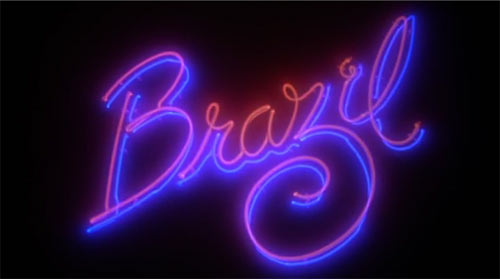
Brazil (Criterion DVD Box Set)
Originally Written and Posted at Epinions.com on 4/13/05 with Additional Content and a New Conclusion.
The only American in the British comedy troupe Monty Python, Terry Gilliam stood out for his quirky and abstract animation sequences that came between some of the comedy sketches in their Monty Python's Flying Circus shows. Gilliam would often appear in the sketches sometimes as a small part where in the 70s when Monty Python branched out into films, Gilliam would co-direct the films like Monty Python & the Holy Grail and 1983's Monty Python & the Meaning of Life. When Monty Python disbanded shortly after the Meaning of Life, Gilliam went on his own to direct his own films after doing two solo features for 1977's Jabberwocky based on Lewis Carroll's story and Time Bandits in 1981 that included Python-mates Michael Palin and John Cleese (who wrote the film with Gilliam and Python's Eric Idle) along with Sean Connery. With the year 1984 looming and its relevance to the bleak, totalitarian novel of George Orwell, Gilliam decided to make his own version of 1984 with a bit of the over-the-top, surreal style of Federico Fellini that would become his masterpiece, 1985's Brazil.
Set in the 20th Century in a different world, Brazil is a grand, otherworldly film that combined Orwell's bleak, Metropolis-like vision of 1984 with many of Gilliam's Python's hijinks in tow. It's part sci-fi, part-comedy, part-drama, part-fantasy, and part-action all rolled into one. Though the film is called Brazil, it doesn't set itself in the country of Brazil or has anything to do with Brazil except for its song that is played throughout the film. What the film is about is an oppressed, meek man named Sam Lowry who often dreams into another world whenever he's feeling oppressed by his bleak world around him. After a mistake that has an innocent man killed, Lowry investigates to correct an error where he bumps into the girl of his dreams, a terrorist, and all sorts of people including those he works for at the Ministry of Information. Playing Lowry is Jonathan Pryce who makes a cowardly, meek man into an unlikely hero. With a cast that includes Gilliam's Python-mate Michael Palin along with Jim Broadbent, Katherine Helmond, Bob Hoskins, Kim Griest, Ian Holm, Ian Richardson, Peter Vaughn, Charles McKeown, and Robert de Niro. Brazil is a flat-out masterpiece that proves that there's no escape to imagination.
It's a typical day in the Ministry of Information when a technician (Ray Cooper) kills a fly in the ceiling, only to have that dead fly drop into a mechanized typewriter where an error occurs. The error forces a group of police-like guards to take a man named Mr. Buttle (Brian Miller) to have him be executed by the Information Retrieval group. Witnessing the capture is a woman named Jill Layton (Kim Griest) who notices that it's an error. The next day, a nervous office manager named Kurtzmann (Ian Holm) keeps peeping through his employees as he notices glitches in his computers where workers would watch movies. He calls for one of his loyal employees in Sam Lowry, only that he has overslept in his dream where he's a superhero, flying to find his dream girl. He wakes up to learn that he's overslept and the electricity in his apartment isn't working. He arrives where he bumps into his friend Jack Lint (Michael Palin) who works at the Information Retrieval office.
Lowry fixes Kurtzmann's computer problems as he heard that Lowry is up for a promotion at the Retrieval group but Lowry has turned it down because he enjoys his anonymity. He learns that his promotion has been pressured by his own mother Ida (Katherine Helmond), who knows the boss Eugene Helpmann (Peter Vaughn). Ida, who is currently getting a plastic surgery procedure to look young by Dr. Jaffe (Jim Broadbent) takes Sam to have dinner with friend Mrs. Terrain (Barbara Hicks) and her braces-wearing daughter Shirley (Kathryn Pogson). Ida and Mrs. Terrain hopes to have the two to get together but neither have any interest in another where Sam often feels pressured by his mother to not work for Information Retrieval. The problems with his mother, only makes Sam escape into his own dream world where he suddenly wakes up to learn that his air conditioning has broken down.
He calls Central Services to have his air conditioning fixed, only to learn that it will take them days to arrive. Then, a few minutes later, a man named Harry Tuttle (Robert de Niro) has arrived to fix the air conditioning since he intercepted Sam's call. Tuttle, who used to work for Central Services, fixes Sam's air conditioner without dealing with papers and claims, it's all for the work and to help someone. During the fixing, Central Services suddenly arrives with its fix-it guys Spoor (Bob Hoskins) and Dowser (Derrick O'Connor) to check up but because they didn’t have the forms to fix things, they’re forced to come back. Tuttle thanks Sam as he escapes through gliding down a wire as Sam learns he’s a terrorist because he fixes things without papers or money.
When Sam goes to work with Kurtzmann, Kurtzmann learns that an error did occur with Buttle when really, it was supposed to be Tuttle that should've been executed. Kurtzmann wants to deliver a check to Mrs. Buttle (Sheila Reid) but nerves have driven Kurtzmann to the edge. Sam will deliver the check personally as his fellow workers are secretly watching Casablanca. When Sam goes to deliver the check, Mrs. Buttle wants to know what has happened to her husband as he is attacked by her children as he witnesses Jill, wondering who she is since she resembles the girl in his dreams. He saw her earlier as she is now being suspected for being in cahoots with the terrorist group. Sam wants to know who she is but because he can't get information from his office, he has a reason now to take the promotion at Information Retrieval.
Upon returning home to his apartment, he learns that Spoor and Dowser has made things worse, especially when they learned that Tuttle was here. They have the paperwork where everything is screwed up. Sam goes to sleep to dream more where he battles a samurai warrior (Winston Dennis) to save his dream girl. Sam is waken up when a singing telegram girl (Diana Martin) arrives to tell him that his mother has invited him to a party. Sam doesn't want to go at first until he learns that Helpmann will be there. Sam arrives where he sees his mother, looking younger than ever while Mrs. Terrain looks worse thanks to an acid-like experimental procedure made by Dr. Chapman (Jack Purvis). Sam finally sees the wheelchair-bound Helpmann as he helps go into the bathroom and Helpmann decides to return a favor for Sam’s father by giving Sam the job which Sam accepts.
Sam takes his first day at Information Retrieval where he works with a talkative boss named Warrenn (Ian Richardson) and borrowing the computer of his neighbor Lime (Charles McKeown) where he finds more information on Jill, who is suspected for all sorts of crime and is a fugitive. He goes to Jack for guidance as he learns that Jack's job is to torture people as Jack suggest to change into a better suit with his daughter Holly (Holly Gilliam) watching. Sam, in a new suit, goes to find Jill where he sees her at the reception board where he goes after her and tries to tell her about Mr. Buttle. Jill doesn't trust Sam at first, only to give in when he doesn't give up, especially since he loves her. She takes him to a plant where she’s carrying a delivery but after an explosion, she is suspected for the bombing as she and Sam are captured. Sam, is returned to his office where Warrenn forces him to work overtime.
Sam comes home to find his apartment a complete mess that he cannot control as Spoor leaves him out. Then, Tuttle arrives to help Sam where after Tuttle's escape, Jill arrives as Sam decides to sneak into Helpmann’s secret elevator to delete Jill's files as the two fall in love, only to be captured by the Ministry. There, Sam wonders what is going on, where is Jill, and what is going to happen to him.
With an original screenplay written by Gilliam, Charles McKeown, and Tom Stoppard, Brazil has many elements that aren't just cerebral but also filled with satirical humor. The credit really goes to Gilliam for his extraordinary vision by bringing Orwell's bleak, totalitarian vision of bureaucracy that is almost inescapable and find humor in it. Imagine living in a world where like in Brazil where you're living in poverty, all the machines don’t work well, and forced to live in this state. It's a bleak film but one that has humor and spectacular visions. Gilliam and his fellow writers really create a fantastic story in which, our protagonist is someone an audience can connect with. Lowry is a dreamer, who doesn't want to be noticed and wants to live in his dream without facing any kind of realities or responsibility. It's a fantastic screenplay that deserved its recognition by the Oscars even though they were just nominated.
If the script of Brazil is intelligently witty, Gilliam as a director pulls all the stops into his vision. Here, he perfectly captures a totalitarian bleakness that is very otherworldly and now, it makes sense with our own American idealism where the American dream is over and we're forced to live in a country run by idiots. Gilliam is really a storyteller like Fellini that uses extravagance to advance a story that blurs the line of reality and fantasy. It's top-notch directing at its best and as for the film's ending. I won't reveal it but it is a happy ending when you think about but it makes you really think and it's one that Gilliam fought over for when he made Brazil and it’s true to his vision.
If Gilliam's directing is in its imaginative form, complementing that vision is cinematographer Roger Pratt who brings in a diverse approach to the film's vision, with little color in many of the film's bleakest scenes and productions while bringing a lot of colorful lighting in Lowry’s dream sequences, including the samurai battle scene with its mix of gray and color. Helping out in the visual department is production designer Norman Garwood along with art directors Keith Pain and John Beard for capturing the bleak, utopian nightmare of the Metropolis-like city with its poverty-stricken city and its upper class styles that really shows the contrast of the rich and poor, even in the building where Sam and Jack Lint works at.
For the film's retro-30s look, costume designer James Acheson brings in a costume style of 1930s-like suits for the males except for Robert de Niro's Tuttle character while most of the women wear these wonderful clothing with boot-like hats along with Gilliam's wife Maggie Weston for creating strange makeup and hair for Katherine Helmond's character. With a wonderfully diverse score from the late Michael Kamen, the orchestral arrangements that are filled with rich strings play up to the film's suspense and dreamy tone along with dreamy layers for the song of "Brazil".
Credit for capturing the behavior of the bureaucracy of Brazil is its cast that includes several fine small performances from Brian Miller, Ray Cooper, Barbara Hicks, Shirley Pogson, Jack Purvis, Diana Martin, Derrick O’Connor, Holly Gilliam, Charles McKeown, and Sheila Reid. While Bob Hoskins and future-Oscar winner Jim Broadbent had small roles, both actors delivers some hilarious standout moments in their respective roles as repairman and surgeon in their own unique way. Playing against type in a role that now stands as ironic is Robert de Niro as Harry Tuttle, who only appears in a few scenes but he is extremely funny whenever he's on board.
Ian Richardson and Peter Vaughn are great in their roles as the superiors of the building that Sam Lowry works for while Ian Holm really stands out with his neurotic performance as Kurtzmann. Katherine Helmond gives a funny, aloof performance as Sam Lowry's mother while Kim Griest is excellent in her role as Jill Layton with her tough-as-nails attitude and beauty. Of the supporting cast, the real standout is Michael Palin for his eccentric, strange performance as Jack Lint, with his nice guy, ignorant role as a man who doesn’t think torture is a bad thing.
In terms of performance from the whole cast, no one stands out better as Jonathan Pryce as the protagonist Sam Lowry. Pryce brings a complex and human performance as a man that couldn't stand the oppression he's living in and all the gadgets he has to be surrounded with. Pryce brings sympathy to Lowry in scenes involving his mother and her friends. Lowry is the guy we know and when he's in the dream sequence, Pryce is larger than life. He brings both comedy and drama into a great performance as this will be the role he will be remembered for as he continues to do great films like most recently, Pirates of the Caribbean.
***The Following Content is Additional Material Relating to the Criterion DVD Box Set Written on 9/9/10***
The 1999 3-disc Criterion DVD set is one of greatest releases from the Criterion Collection. The film is presented in its original 1:85:1 aspect ratio for widescreen while the film is assembled from both the American and European theatrical releases for the ultimate cut of the film at 142-minutes. Featuring a new remastered Dolby stereo surround soundtrack, the remastered film (which was remastered again in 2006 for a single-disc release) is all supervised by Terry Gilliam.
The only special feature in the first disc of the DVD aside from English subtitles for the hearing impaired is a full-length audio commentary track by Terry Gilliam. Gilliam talks about the making of film while reflecting on everything that is happening as he’s watching what he says is the fifth and final cut of the film. The only scenes that don’t appear in the final version that was assembled from the American and European theatrical releases are the clouds at closing credits and an extended scene at the end that appears in the shortened, studio-cut version of the film.
Gilliam praises the work of Jonathan Pryce and co-screenwriter Tom Stoppard throughout. Pryce for his physical comedy and expressions during scenes while Gilliam praises Stoppard for some of the dialogue and ideas he had. The name “Brazil” came from the idea of shooting the opening sequence in Brazil at the rain forest where it was later revised for the scene where a man kills a fly and the mess up of Tuttle/Buttle occurs. Gilliam also talks about Robert de Niro who was very nervous about doing the film though it was a small role. Yet, de Niro was very relaxed during the making of the film as Gilliam has fond memories.
Terry also talked about the casting of Jill where he wanted an unknown. While it’s been known that Gilliam had issues with Kim Griest, Gilliam underplays those issues as he liked her performance and felt she was right along despite the people who auditioned for the film. Among them were Ellen Barkin, Rosanna Arquette, Kathleen Turner, Jamie Lee Curtis, Rebecca de Mornay, and Madonna. Gilliam also talked about the scene with his daughter Holly and Michael Palin which she hated to do. She only had two days of work and in the second day, she didn’t want to say her lines. So in order to film her, Terry recalled having to operate the camera while his wife Maggie held the boom mic so she can do her famous line to Jonathan Pryce.
Gilliam also talks about his struggle with the studios as he reveals his hatred for Hollywood and the studio system. Even as he feels that filmmaking is a collaborative effort where it’s not just the director but the actors and crew members that are all trying to tell a story. The commentary also includes some technical details and other things Gilliam tries to recall as it’s definitely one of the most enjoyable commentaries for a film.
The second disc is a production notebook of everything that went on with the making of the film as well as the battle to release it. Featuring numerous special features, the second disc includes rare documentaries and interviews with those involved in the film. The first is a 56-minute documentary called The Battle of Brazil: A Video History by journalist Jack Mathews. The documentary chronicles the funding for the film and the battle to release it. Featuring interviews with Terry Gilliam, producer Arnon Milchan, studio executives Frank Price, Bob Rehme, and Marvin Antonowsky, L.A. film critic Kenneth Turan, and a 1985 audio interview with former Universal studios chief Sidney Sheinberg. The film goes into detail over the battle of the film.
It begins in the early 80s where Terry Gilliam met Arnon Milchan about a project he wanted to do called this project called Brazil. Milchan liked the idea but had a hard time selling studios about the project. At the 1983 Cannes Film Festival where Gilliam was promoting Monty Python’s The Meaning of Life and Milchan working to get buyers for Once Upon a Time in America. The two met Bob Rehme of Universal where he said yes to the project though Gilliam got an earlier offer from 20th Century Fox to do Brazil if he would direct the film Enemy Mines.
Things were going great until Rehme was out of the job as other people from Universal became concerned. When Gilliam submitted his first cut of 142-minutes, executives got worried and wanted him to cut the film. Though that cut was released in Europe by 20th Century Fox to critical acclaim, the executives at Universal were still unsure following a poor test screening in the U.S. Universal head Sidney Sheinberg decided to get involved and cut the film into 94-minutes taking out a lot of the fantasy sequences and focused on the love story. Gilliam got upset while he was still trying to cut a shorter version of 130-minutes for U.S. audiences as a battle ensued.
Gilliam made the battle public as he even got Robert de Niro to do a rare interview on national TV with Gilliam to support the film. Gilliam’s guerilla tactics worked as Jack Mathews was reporting all that was happening capturing both sides. Gilliam held secret screenings and then one for the L.A. Film Critics Association where the film won Best Picture, Best Director, and Best Screenplay. While Gilliam won the battle to release Brazil in the U.S. in New York City and Los Angeles in December of 1985. The film wasn’t a major commercial success though its reputation has grown since. Gilliam was happy that he at least, allowed directors to fight for their vision more.
The second documentary is a 30-minute documentary called What is Brazil? by Rob Hedden. A behind-the-scenes documentary with cast and crew interviews during the production as they ask what is Brazil? Gilliam talks about his collaboration with Tom Stoppard, who admittedly reveals not liking collaborations very much while is unsure what script Gilliam is shooting. The doc also has Michael Palin talking on the phone during the interview while pretending to be other characters. One of the highlights of the documentary is the lost eyeball sequence that was supposed to be part of the dream sequence but got cut out due to length.
The next series of special features is the Production Notebook that reveals everything about the film and its look. Among them is numerous texts and notes relating to the many drafts of the screenplay for Brazil. Featuring pictures and draft notes from Charles Alverson, who helped write in the numerous drafts of the script. The numerous texts and development for Brazil in script is truly mesmerizing with characters such as “the Oppressor” who was eventually cut out since there was no room for a true, main antagonist due to the involvement of Charles McKeown and Tom Stoppard in numerous drafts.
Also included in the script development section is a nine-minute video featuring Gilliam, McKeown, and Stoppard talking about the writing process. Whereas Stoppard was brought in for three drafts as he brought ideas that changed things. Gilliam brought McKeown to put some ideas back from previous drafts and keep the stuff that Stoppard wrote that Gilliam felt worked. The three men reveal how difficult it was to find a balance for the script where all three would be satisfied for what would be shot.
The storyboard material presented in the DVD reveal lots of text about the detail of what Gilliam wanted along with drawings that he made for the fantasy sequences in all nine of the dreams presented and where they were originally supposed to be in the film in its various drafts. The second dream sequence included the cut eyeball scene where Sam in his dream tries to save Jill. Others are variations while the final involved Helpmann as Father Christmas.
The production design section reveals in-depth detail in the work Gilliam and production designer Norman Garwood. A lot is revealed into re-creating a city that is in ruins with storyboards and stills into how looked early on to what it would look like in the film. Even in the creation of props and slogans that was needed to create this world as Garwood goes into detail of what Gilliam wanted. The costume design section features audio commentary costume designer James Acheson about the costumes in a five-minute segment. Acheson through pictures and still goes into detail of what inspired the costumes while talking about how easy it was to work with Robert de Niro and Katherine Helmond about their costumes. Yet, he says the least favorite costume he made was the samurai. The segment also featured a rare video clip of a stuntman working on the Icarus suit that Sam wears in his dream to show he would fly.
The next section is the special effects where it features audio commentary from Richard Conway discussing some of the raw footage unveiled during the making of the film. Among them is the flying sequence which features a mechanic dummy flapping his wings and going up in the air while Conway revealed how difficult it was. Even where Jonathan Pryce tried to do it with a harness that only lasted 10 seconds. For the deleted eyeball sequences, stills, storyboards, Conway’s commentary, and pictures of the eyeballs are revealed which were a nightmare to make as it got cut because not everything worked. Other effect details revealed are the miniatures used for second-unit shots relating to cars, sets that were built, and the famous brick hands that capture Sam in the dream sequence on the ground. Conway also admits that making the Samurai costume and the visual effects for that character was a nightmare while he and James Acheson felt even more sorry for Winston Dennis to play that character. Other raw footage revealed is the forces of darkness dragging Jill’s cage in a rare, raw shot while a scene with Mrs. Terrain’s remains was another awful experience due to the smell.
The last major special feature is a nine-minute interview with late composer Michael Kamen about the film’s score. Kamen talks about creating a score around the song Brazil, a song he didn’t like very much, while talking about variations he made including a few score pieces that didn’t make it to the film revealed through raw footage. Even the first dream sequence played to a musical piece by Strauss. One of the hardest parts about the score was getting permission from the song’s publisher so that Kamen could get credit for the arrangements. With the help of Ray Cooper, Kamen was about to work around the song and create suites which he was proud of doing.
Two other features included in the second disc is the film’s theatrical trailer and a photo gallery of production and publicity stills relating to the film which includes rare posters and such.
The third and final disc of the DVD set is the 94-minute Love Conquers All version of Brazil presented in rough form and in full screen. The film itself in this shortened version is in fact an abomination. Many of the film’s fantasy sequences are cut. There’s a lot of continuity errors. No motivations or proper introduction of characters. A lot of the satirical and political elements of the film is cut out. A lot of subplots relating to Buttle/Tuttle confusion and Sam’s mother is cut out with characters not being fully realized. The pacing in several scenes are off and musical cues are misused.
Included in the third disc is a full-length commentary track by Gilliam expert David Morgan. Morgan’s commentary reveals what is cut and what is added to the Love Conquers All version. Morgan reveals that this version of the film really confuses the audience of what they’re seeing. Notably with the bad edits and cut material along with the humor being poorly-timed. It’s a must-see just to see how bad a studio can mess up a film for their own intent.
Also included in the entire set is a booklet featuring an essay by Jack Mathews. Mathews’ essay summarizes its history, the battle, and its impact while presenting what is Gilliam’s final cut of the film. The Criterion DVD box set for Brazil is definitely a must-have for fans of the film. Even as it reveals loads of details into the production of the film, the battle to release it, and everything else. It’s definitely Gilliam’s masterpiece as fans get to see the film in its most completed form.
Brazil is truly one of the greatest films ever made from the wondrous mind of Terry Gilliam. Featuring a towering leading performance from Jonathan Pryce plus an amazing supporting cast that includes Robert de Niro, Michael Palin, Kim Griest, Katherine Helmond, Bob Hoskins, Jim Broadbent, Ian Holm, and Peter Vaughn. It’s a film that is truly ambitious while not being overly pretentious nor with an overblown message. While audiences might be befuddled by its plot description, they won’t be once they see the film which displays a smart sense of humor. In the end, Brazil is a mesmerizing, witty, and dazzling film from Terry Gilliam that gives voice to the oppressed dreamers.
Terry Gilliam Films: Jabberwocky - Time Bandits - The Adventures of Baron Munchausen - The Fisher King - 12 Monkeys - Fear & Loathing in Las Vegas - The Brothers Grimm - Tideland - The Imaginarium of Dr. Parnassus - The Zero Theorem - The Auteurs #38: Terry Gilliam
© thevoid99 2010
Thursday, August 19, 2010
The New World
Originally Written & Posted at Epinions.com on 1/21/06 of the 135-minute cut with some minor edits.
The story of Pocahontas has been told in many forms including a Disney animated version in 1995 about the young Indian heroine who befriended colonists in 1608 in Virginia including John Smith whose life she saved. The story is often told in a simple way and would often ignore Pocahontas' life after saving and befriending Smith as she later married aristocrat John Rolfe in 1614 as she settles into a simpler life while bringing peace between Indians and the English. Now, there's a new story that is much broader and more observant about the life of Pocahontas but it's more about the arrival of English colonists arriving to the area of Jamestown, Virginia and the aftermath. This time however, this story of Pocahontas is from the viewpoint from one of American cinema's most poetic and enigmatic visionaries in Terrence Malick for The New World.
Written and directed by Terrence Malick with a script he wrote in the mid-70s, The New World is a story about John Smith and English settlers arriving into Jamestown where Smith meets Pocahontas as the two explore each others culture that would lead to tension as Pocahontas would later meet John Rolfe. Shot on location in Jamestown, Malick goes for the same, poetic narrative approach to his earlier films for an observant and more enchanting tale of how the world changed through the eyes of a young girl. Starring Colin Farrell, Christian Bale, Christopher Plummer, Wes Studi, August Schellenberg, Irene Bedard, Raoul Trujillo, Jesse Borrego, Jonathan Pryce, David Thewlis, Noah Taylor, Ben Chaplin, John Savage, Brian F. O'Byrne, and introducing Q'Orianka Kilcher as Pocahontas. The New World is a haunting yet lush film from Terrence Malick and company.
It's 1608 Virginia as three ships arrive onto the unknown land led by Captain Newport (Christopher Plummer) where joining him is another captain, Wingfield (David Thewlis). Imprisoned inside the ship for mutinous remarks is John Smith (Colin Farrell) as Newport sets him free so he can join the exhibition of the land. During their reconnaissance, Newport and his crew meet up with a group of natives led by Tomococo (Raoul Trujillo) as their first meetings is slow. Then when Newport leaves for England, Wingfield takes over while Smith becomes second-in-command to take on the exhibition. Immediately, mis-communication and misunderstandings lead to trouble as Smith along with two captured natives and crew members including Jehu Robinson (Ben Chaplin) are to explore the regions and rivers of Virginia to find the tribe's chief. After a native escapes, Smith takes on his exploration where he is captured by a band of natives led by Opechancanough (Wes Studi).
Opechancanough takes Smith to his tribe where he awaits answers from his brother and tribe chief Powhatan (August Schellenberg) as the punishment is death. Just as Smith is about to die, Powhatan's daughter Pocahontas steps him and asks her father to spare his life. Smith becomes a prisoner but immediately during his period of captivity, he becomes enamored and absorbed with the culture of the natives. He also begins to befriend the worldly spirit of Pocahontas as the two learn about each others' languages while having this relationship that transcends all barriers. This period of captivity made Smith aware of the peace they live in as Powhatan decides that he should return home. Smith is taken back to the settlement his colleagues had been building where they've been struck by poverty. With Smith chosen to take over, it doesn't become easy as he is often in conflict with Argall (Yorick van Wageningen) while dealing with the starvation of other men including crazed men like Savage (John Savage), Murray (Eddie Marsan), Lewes (Brian F. O'Byrne) Thomas Emery (Jamie Harris), and Selway (Noah Taylor).
After a horrifying winter, Pocahontas comes to help the troubled settlers to give them food but Smith knows that her generosity might spell trouble. Despite their love for each other, Smith tries to give the natives things in return but more misunderstandings including the settlers refusing to leave their land lead to a horrific conflict in battle. Pocahontas is immediately banished by her father for her involvement with the settlers while Smith is also punished for his refusal to trade with another tribe for Pocahontas. Pocahontas is sent to the village that was becoming Jamestown as she becomes accepted immediately thanks to her generosity as she no longer is called Pocahontas and adopts new ideas from a woman named Mary (Janine Duvitski). Pocahontas finally sees Smith as he blames himself for her banishment and feels that if they get together, it only spells trouble. Newport returns where he wants Smith to take part on an exhibition around North America. Smith takes the job as he tells someone to tell Pocahontas that he died two months after his expedition.
Smith's departure breaks Pocahontas as she becomes an alien of sorts to the town until she captures the gaze of a widowed aristocrat named John Rolfe (Christian Bale). Rolfe begins a relationship with Pocahontas as he teaches her about the English culture while he like Smith, is enamored with her spirit. During their time, they marry and have a son while she adopts the name Rebecca. The marriage is seen as a treaty between natives and settlers after a period of conflict as Rebecca learns that Smith is still alive. Rolfe is aware of her feelings for Smith as the two go to England where she becomes an honored guest in front of King James I (Jonathan Pryce) and Queen Anne (Alexandra Malick). Rebecca along with Opechancanough and a few natives are taken to England as they are amazed at the world they're in now. With Rolfe aware of Rebecca's feelings for Smith, he arranges a final meeting between the two in his posh home as Smith is forced to deal with his own troubles and feelings for his lost love.
Now most historical moments that features a romantic subplot in films like Heaven's Gate, Titanic, or Pearl Harbor can either work or becomes a distraction. What none of those films have is the genius, narrative approach that Terrence Malick does with a romantic subplot. Since he's basing some of these ideas from fact and legend, the love story of Pocahontas and John Smith doesn't feel contrived at all and it's the heart of the story since it's about these two different cultures coming together and trying to understand one another. While the romance does lead to trouble of what was to come in terms of the tension between the settlers and natives, it helps conveys the story and what Malick is trying to say in his revisionist approach to history. Another thing that Malick does that works in this film that didn't work with other films about moments of American history is that he gets right to the point about these events and what had happened without over-dramatizing things that happened.
Plus, Malick's writing on characters reveals not just the arrogant ignorance that the English came on feeling that they own this land. Malick also reveals the natives’ reluctance into giving land to settlers since it disrupts the peace they had been living in. Malick doesn't take shots on the English because of their feelings, he knows why they try to find a new world since their land is filled with problems yet they take those problems into the new world. While the story moves slow for Malick's message to come across, the momentum he builds up does pay off emotionally and spiritually right to the end. Then there is Malick's unique narrative style that is a trademark of all of his films. The voice-over narration Malick does goes from different perspectives, mostly the perspective of John Smith and Pocahontas as they search for their own ideas on themselves and the lands. Also given some narration is John Rolfe in the film's second half in his description of Pocahontas and how he tries to help lift her spirits.
It's not just Malick's unique script that brings light to his interpretation of what happened in those times but its his direction that really is amazing. Particularly on how he slowly builds up the momentum of the story and observe the behaviors and nature of what is going on around Jamestown. Then when the film reaches its final moments in England, the feeling and mood change but not the spirit since Pocahontas and her natives are seeing the world of their neighbors and how it differs. Whereas the world that the natives live is wide open with this scenery of rivers, trees, plants, fields, and amazing sunlight. The world of England is a bit more claustrophobic upon their arrival since its more crowded and more divine in its religious imagery and richness. While Rolfe's English home does have the space that Pocahontas seem to love, it doesn't have the same worldliness that her home had.
Known for his visual poetry, Malick does something that not many filmmakers would do in capturing an epic, visual scope. Whereas most films would use 35mm for a full-film print in terms of widescreen presentation, Malick goes for 65mm where that print of film is often used for visual effects. In this film, the first since Kenneth Branagh's 1996 adaptation of Hamlet, Malick uses the 65mm for a visual scale that is undeniably powerful in each of its absorbing image. From shots underwater to the ariel shots of the world where Malick would spin around to observe every moment and every piece of grass and mud. From the steadicam, dolly shots of more dramatic sequences to the shaky, handheld camera work of the more intense scenes. More importantly, to convey the sense of realism and poetry that he wants in his vision, no artificial or light equipment was used. All the light from the sun, fires, and moons were the source. The overall result is Malick creating a film that is entrancing in its imagery while recreating an old story that is still compelling after all of these years.
Helping Malick in his visual scope is renowned Mexican cinematographer Emmanuel Lubezki. Known for his pallette visual style of greenish colors, Lubezki takes that color to even greater use as for anyone who have seen his work including the films of Alfonso Cuaron will know that he shot this. Lubezki's lush coloring and camera work with the use of sunlight and fire brings not just the realism Malick wanted but an exquisite visual scale that is unparalleled with many of today's period films. In many of the exterior Jamestown scenes, Lubezki uses whatever source of light he can find and brings a true vision of what it could've looked like. Even in interior settings, Lubezki uses the light for shadows and to convey the emotions of the characters. Since he used no filters or special equipment, Lubezki's work in this film is truly not just some of the best cinematography of the year but its by far his most absorbing piece of camera work to date.
Longtime Malick collaborator Jack Fisk does wonderful detail in the production design of capturing the look and features that goes on into the homes of the natives and settlers. Since the Jamestown scenes are shot right in Jamestown itself, the location is truly inspiring for Fisk, along with set decorator David Erickson and art director David Crank, to convey the true atmosphere of the differing worlds of the natives and settlers. Whereas the natives' world is more grounded and natural as opposed to the poverty-stricken of the settlers' home early on and later to the more bleaker world of England and its claustrophobic setting. Along with the costume design of Jacqueline West and the make-up work of Chris Varosky, the film truly captures an authenticity and spirituality to the clothing and makeup of the natives as it brings an atmosphere that is just amazing. Even the clothing that Pocahontas wears in her meeting with King James I is exactly true to the pictures that are shown in various history books.
Whether in its 150-minute long, NYC/LA theatrical version or the 135-minute wide-release version, the editing style of Saar Klein, Hank Corwin, Richard Chew, and Mark Yoshikawa is wonderful with its use of jump-cuts, black fades, and straight cuts shows the film in its unique form in its perspective to perspective. Even as they move the film quite seamlessly from sequence to sequence without disrupting its elliptical flow. Even the sound work of sound editor Skip Livesay and sound designer Craig Berkey rings true to the way sound works in those times where everything from the hitting of clubs, cannons, and animal calls are so true where even to the point that it can make the audience jump at the mix of all these different sounds. It's truly some of the best sound work done in a film.
Then we come to the music that features elements of Richard Wagner's Das Rheingold where it's used to convey a sweeping, operatic feel to help build the momentum of the film. Also included is Mozart's Piano Concerto No. 23 for more subtle, tender scenes involving John Smith and Pocahontas. Composer James Horner does bring in a bit of bombast to his score but goes for more sweeping and subtle pieces to convey the drama and romance of each scene as he creates probably his best score work to date.
Then, we have the film's superlative, enormous cast filled with great actors from the Native American community to an array of English actors. Playing small yet memorable roles as the natives are Jesse Borrego, Alex Rice, Michael Greyeyes, Kalani Queypo, Rulan Tangen, Myrton Running Wolf, and Irene Bedard as Pocahontas' mother who brings a great presence to her worldly spirit. In small roles as the settlers, Ben Chaplin, Brian F. O'Byrne, Noah Taylor, John Savage, Jamie Harris, and Eddie Marsan are excellent while Jonathan Pryce makes a wonderful cameo as King James I with Alexandra Malick as Queen Anne.
Raoul Trujillo is excellent as the natives' interpreter Tomococo while Wes Studi is brilliant as the war-like chief Opechancanough. August Schellenberg does great supporting work as the calm, observant Chief Powhatan who knows that intruders coming to his land will bring trouble as Schellenberg does great work. David Thewlis is excellent as the ignorant, wary Wingfield while Yorick van Wageningen is wonderful as the violent but disciplined Argall. Janine Duvitski is also wonderful in a small, supporting role as Pocahontas' maternal mentor. Of the supporting cast, none is as great as the brilliant Christopher Plummer as Captain Newport whose intelligence and willing to do good in making peace with the natives bring depth to a historical character. Plummer's wariness and wisdom brings light to the man's flaw as he feels that his arrival is an importance for his own country while he doesn't want to bring trouble. It's a great performance from the veteran actor.
Christian Bale, fresh off from his role as Batman, is wonderful in his role as John Rolfe. While not much is known about the aristocrat, Bale brings a wonderful emotion to a man who is willing to form a relationship with Pocahontas as he is seduced by her spirit. Bale brings a lot of humor and heart to his role while having great chemistry with Kilcher as his character reveals that he is aware that his love is in love with someone else. Bale does great work in playing a second fiddle for a woman whose spirit only brings him a lot of warmth. Colin Farrell delivers his best performance to date as the troubled, anguished John Smith who gains a peace of mind when he meets Pocahontas while being a man who is trying to find his place in the world. While Farrell had nearly embarrassed himself as Alexander the Great in Oliver Stone's awful 2004 film Alexander, Farrell more than improves as the rugged, adventurous Smith by playing a man who is confused while finding a sense of happiness. Where in Alexander, Farrell had to be more dramatic but in this film, Farrell displayed a rare sensitivity and warmth to his character as Farrell has proven to be a really, fine actor.
The film's breakthrough and most spiritual performance easily goes to Q'Orianka Kilcher as Pocahontas. While her previous work was a choir extra in Ron Howard's film version of How the Grinch Stole Christmas, this is truly one of the best debut performances ever captured on film. Every moment in the film, Kilcher creates a vibrancy and spirit that is indescribable. In her dramatic moments, Kilcher sells the heartbreak of her character while her scenes with Farrell, including their final meeting is filled with real chemistry that is true to their legend. There is never a dull moment from Kilcher and she is truly a young actress that should be watched.
***The Following is Additional Content Relating to the 135-minute DVD & 172-minute Extended Edition of the Film Written on 8/19/10 along with a new conclusion***
When The New World was slated for a late 2005 release. The film eventually came out in two different running times due to Terrence Malick’s notoriety for editing his films right up to the last minute. In New York City and Los Angeles in late 2005, Malick released a 150-minute cut of the film for Oscar consideration where it received a nomination for Emmanuel Lubezki’s cinematography. Malick would end up trimming 15 minutes of the first cut of the film for a 135-minute theatrical cut that was officially released in January of 2006. When news arose that Malick was in preparation of a much longer cut of the film, it only added to excitement among Malick’s devoted fans.
Yet, fans would end up having to wait for that extended cut of the film with a running time of 172-minutes that was eventually released on DVD in October of 2008. The New World is released in two different running time for its DVD released back in 2006 and later 2008 for North American region. The 2006 Region 1 DVD presents the film in a widescreen format of 2:35:1 aspect ratio with 5.1 English Surround and Stereo Surround Sound. Along with Spanish subtitles and closed captioning for the hearing impaired. The DVD includes only one special feature in the form of a 50-minute making-of featurette.
The making-of featurette explores the long process of making the film when production began in July 2004 and ended in November of 2004. It starts with Malick’s longtime production designer Jack Fisk recreating the entire Jamestown colony with a crew on a location nearby where the actual colony was. Taking the same amount of time the original settlers used to build the colony but with modern equipment, it was an attempt to recreate something close to what it was at the time. Even as an archeology professor gets a chance to look at the set to see how close it is as he is amazed by its look and authenticity.
The making of is set into ten parts where the second has Raoul Trujillo, who plays a Native American, also serves as a choreographer for the people cast as the Algonquian tribe. Scholars were brought in to see a language be revived as Trujillo and the rest of the Native American actors were brought into create their own personas for the film. Once Q’Orianka Kilcher was finally cast a month into pre-production, she came in to the rehearsals as everyone agreed she is Pocahontas. With the third part about the casting of Kilcher as Pocahontas, the fourth is about the recreation of the tribe with actors putting on makeup and such.
Part five is the use of the ships that was used as they’re all filmed on the rivers where the ships did arrive back in 1607. Even as cast and crew members talk where everyone is taking instructions from Malick via cell phone. Notably the film’s cinematographer Emmanuel Lubezki. Colin Farrell is shown the swords he will use for his battle scenes and his arrival into the Algonquian village set. Christian Bale for the eighth part along with actors and crew talk about Malick’s directing style. August Schellenberg discusses Malick’s approach which is to shoot at the moment with no rehearsals and no planning as if he’s doing a documentary. Even as there’s no cables or lighting projects as Lubezki and other camera operators have to use natural, available light. Yet, throughout the fifty-minute, 10-part documentary, Malick is not seen as it is an overall, fascinating piece on the making of the film.
The 2008 extended edition of the film is presented in the same theatrical aspect ration as in the 135-minute cut along with the same sound formats. Yet, the 172-minute version is not very different from the other versions. It’s mostly an extension of the film with subtle additions and such. The film begins with a quote from John Smith about Virginia prior to the opening credits. The film also has an extended scene of Pocahontas and fellow natives swimming underwater along with a scene of Wingfield pleading to Captain Newport about not sending John Smith to confer with the natives.
A lot of the film features not just extended scenes of Smith with the natives, going upriver with other settlers, and struggling to build the Jamestown colony. There’s other scenes where there’s more emphasis on the Smith/Pocahontas relationship including a scene that follows just after Smith makes a trade with another tribe. In the theatrical version, it’s inter-cut with him playing around with Pocahontas with audiences believing it could be a flashback. In the extended version, it has Smith returning from the trade where he meets and spends some time with her. When he returns to the ship, it’s clear he’s been gone for a few days.
The extended cut also makes note of Pocahontas’ own internal conflict on her love for Smith as well as her devotion to her tribe. Particularly a small scene with her uncle Opechancanough at the Rolfe estate in England where she reveals her guilt while he offers her a brief sense of wisdom about the many worlds around her. It’s not just added scenes that includes a small scene with Roger Rees as a governor discussing John Rolfe’s decision to marry Pocahontas. There’s a bit more of Newport in those scenes as well as one scene in England at the Rolfe estate. There’s a lot of material that is small scenes including one of Lewes meeting Pocahontas when getting some fish where he would tell Argall about a trade.
It’s not just what Malick adds to the film in terms of scenery, it’s also in the voice-over dialogue from Pocahontas, John Smith, and John Rolfe. Malick adds more voice over work from Pocahontas and Smith in terms of their own feelings about the environment and the conflicts they’re dealing with. For Rolfe, there isn’t much added though one piece of dialogue about his dead wife and child is cut as it’s later revealed through a dialogue between him and Pocahontas. Another addition to the film in its extended version is more of James Horner’s score pieces as it’s only used to underplay certain sequences.
To compare the 135-minute theatrical cut and the 172-minute extended cut seems hard to grasp on. Even as they’re both the same story but with small differences. It’s not easy to say which version is better but Malick is a director that has absolute control of what he can do. He prefers to let his audience figure out which is better. Then again, there is probably no version that is better other than the fact that The New World is truly one of most mesmerizing films of the past decade.
While it may not be as good as films like Days of Heaven or The Thin Red Line, The New World is truly an astounding and intoxicating masterpiece from Terrence Malick. No matter what cut of the film is presented, it is a film that truly enraptures an old world that is resurrected into the legendary story of John Smith and Pocahontas. With a superb cast that includes Colin Farrell, Christian Bale, Christopher Plummer, and Q’orianka Kilcher, it’s a film that recalls the beauty of the 17th Century as well as the discovery of something new. In the end, The New World is one of the most compelling films ever made and from one of the greatest directors out there in Terrence Malick.
Terrence Malick Reviews: Badlands - Days of Heaven - The Thin Red Line - The Tree of Life - To the Wonder - Knight of Cups - Voyage of Time: The IMAX Experience - (Voyage of Time: Life's Journey) - Song to Song - A Hidden Life - (The Way of the Wind)
© thevoid99 2010
Subscribe to:
Posts (Atom)