
Directed by Craig Gillespie and written by Steven Rogers, I, Tonya is the story of the figure skater Tonya Harding and the notoriety she gained when she had supposedly planned the attack on rival skater Nancy Kerrigan in 1994 before its Winter Olympics. The film is an unconventional bio-pic of sorts that explores Harding’s troubled life as well as her tumultuous relationship with her mother and husband as Margot Robbie plays Harding. Also starring Sebastian Stan, Julianne Nicholson, Caitlin Carver, Bobby Cannavale, and Allison Janney. I, Tonya is a witty and entertaining film from Craig Gillespie.
In 1994, the world of figure skating went upside down when figure skater Nancy Kerrigan had been attacked just a month before the Winter Olympics at Lillehammer, Norway was to happen. News then emerged that a rival skater in Tonya Harding was involved in the attack because of her ex-husband who conspired with a friend to hire two men to put a hit on her yet Harding would deny her involvement that unfortunately lead to the end of her figure skating career. The film is about Harding as it’s told in a documentary-style of sorts set nearly 20 years after the incident where Harding, her ex-husband Jeff Gillooly (Sebastian Stan), former coach Diane Rawlinson (Julianne Nicholson) and her mother LaVona Golden (Allison Janney) give their take on what happened and about Harding from her desire to be a figure skating champion to later becoming a woman of great notoriety.
Steven Rogers’ screenplay takes a back-and-forth narrative of various characters reflecting on the events in Harding’s life including Harding herself as well as moments that played into the many different versions of the truth. Notably in a moment where Harding and Gillooly have their marital problems where Harding tries to shoot Gillooly with a shotgun but Harding said “that didn’t happen” to the camera yet Gillooly disputes that. Yet, the story is all about Tonya as she was someone who had to endure the physical and verbal abuse of her mother as a child and later as a teen and an adult while having to create her costumes herself with the little money she makes as an adult. For all of her skills and being the first American skater to complete the triple axel that would give her a victory at Nationals in 1991. Many in the world of figure skating feel that she doesn’t have the look nor the typical background that she needs to be the poster girl for figure skating which is something she would battle during the course of the film. Even as she would have to endure the scrutiny she would receive in her supposed involvement over the Kerrigan attack.
Craig Gillespie’s direction does bear elements of style yet much of the compositions are straightforward in its mixture of documentary and dramatic recreation. Shot on various locations in and around Atlanta, GA as well as parts of Macon, GA as Portland and bits of Detroit, Gillespie captures a period in time before the era of 24-hours news and rampant media coverage that was to become prevalent during the 1990s. While there are some wide shots of the location including some of the skating scenes that are shown to get a scope of how big figure skating was in the early 1990s. Much of Gillespie’s direction rely on close-ups and medium shots to play into the dramatic events in Harding’s life with elements of dark humor as it relate to these moments where the fourth wall is broken. While much of the film is shot in a 2:39:1 aspect ratio, the documentary interviews are shot in the 1:33:1 full-frame aspect ratio as it play into the characters that include a TV producer in Martin Maddox (Bobby Cannavale) talking about the Kerrigan attack.
It all play into the events and versions of what had happened with Harding knowing that her story and her denials over what happened won’t be heard by anyone. There is some truth to what she would say as it adds to the notoriety that she’s unfortunately gained as it relates to what the public wants and what figure skating wants. At the end of the day, all Harding wanted to do was skate as there is an element of heartbreak as it relates to Harding’s fate but there is that comfort to the fact that amidst all of the abuse from her mother and her ex-husband and all of the bullshit that she had to endured. All she wanted was to be loved as there was that brief moment where America did love her. Overall, Gillespie creates a compelling yet exhilarating film about a figure skater and the notoriety she gained over the assault of rival competitor.
Cinematographer Nicolas Karakatsanis does excellent work with the film’s cinematography from the usage of low-key lighting for some of the scenes at night including the fantasy of Harding killing Kerrigan as well the usage of grainy film stock and video for some of the documentary footage. Editor Tatiana S. Riegel does brilliant work with the editing as it play into some of the film’s humor with its rhythmic cuts as well as some montage-style editing for some of the training sequences. Production designer Jade Healy, with set decorator Adam Willis and art director Andi Crumbley, does fantastic work with the look of the interiors of the homes Harding had lived in as well as the look of the skating rink where Harding learned her craft. Costume designer Jennifer Johnson does nice work with the costumes as it play into the period of the late 80s/early 90s as well as the dresses that figure skaters had to wear for competition.
Hair designer Adruitha Lee and prosthetic designer Vincent Van Dyke do terrific work with the look of the characters from the hairstyles Harding had as a teenager and as an adult as well as the look of LaVona. Special effects supervisors John S. Baker and Jeffrey D. Woodrel, with visual effects supervisor Jean-Marc Demmer, do amazing work with some of the visual effects in not just elements of set-dressing but also in the skating scenes for some of the big jumps that Harding makes. Sound editor Dave Paterson does superb work with the sound as it play into the atmosphere of the skating performances as well as some of the domestic chaos that Harding endures. The film’s music by Peter Nashel is wonderful for orchestral bombast as well as some somber pieces to play into the drama while music supervisors Susan Jacobs and Jen Moss create a killer soundtrack that features a lot of the music from the 70s, 80s, and 90s from acts/artists like Fleetwood Mac, ZZ Top, Supertramp, En Vogue, Heart, Siouxsie & the Banshees, Dire Straits, Cliff Richard, Christopher Stills, Violent Femmes, Chicago, Bad Company, Laura Branigan, Mark Batson, and Doris Day with the Paul Weston Orchestra.
The casting by Lindsay Graham and Mary Vernieu is great as it feature some notable small roles from Dan Triandiflou as Diane’s lawyer husband Bob Rawlinson, Bojana Novakovic as one of Harding’s coaches during her early 90s time, Ricky Russert as the dim-witted hitman Shane Stant who would hit Kerrigan, Anthony Reynolds as the driver for Stant in Derrick Smith, Caitlin Carver as Nancy Kerrigan, and McKenna Grace as the young Tonya who loves to skate but still deals with the abuse of her mother. Paul Walter Hauser is superb as Gillooly’s idiot friend Shawn Eckhardt who does speak in interviews dated in the late 90s as someone who claims to do all of this shit involving espionage and such yet is a total moron as he thinks he does all of these things but ends up making things much worse.
Julianne Nicholson is fantastic as Diane Rawlinson as Harding’s coach from childhood till the late 80s early in her professional career who is aware of Harding’s gift and passion for skating as she would return for the 1994 Olympics to make sure things go right for her. Bobby Cannavale is excellent as Martin Maddox as former TV producer for the 90s tabloid show Hard Copy who talks about the whole Kerrigan incident as well as display that sleaziness that was emerging in the media that he admits to being a part of. Sebastian Stan is brilliant as Jeff Gillooly as Harding’s husband whom she falls for while in her teens as someone that is fascinated by Harding but is also frustrated by her leading to him beating her up at times where Stan brings a complexity to someone who is a screw-up but also a well-meaning person who loves Tonya but also despises her.
Allison Janney is phenomenal as Tonya’s mother LaVona as a woman that is also quite complex despite the fact that she’s a very awful person and a terrible mother. Yet, Janney’s performance is filled with a lot of dark humor as she is seen in interviews wearing an IV while smoking a cigarette, drinking alcohol, and having a parrot on her shoulder as there’s something about her that is just filled with cynicism as a way to drive her daughter to greatness but it comes with a fault as it’s really Janney in one of her best roles to date. Finally, there’s Margot Robbie in a spectacular performance as Tonya Harding in the way she brings in this sense of childlike desire to be loved but also someone with a real chip on her shoulder. Robbie has this sense of energy in the way she deals with her life but also a humility into someone that knows she doesn’t have much to offer as her only real escape from reality is on the skating rink. With the help of choreographer Sarah Kawahara and skating doubles Heidi Munger and Anna Malkova for the wide shots in the skating scenes. Robbie would showcase that energy and determination of a woman just wanting to be the best only to be blindsided by what her husband did as there is a sadness that Robbie displays as someone who just wanted to skate but also this sense of contentment into a woman that at least knew she was the best for a while as it is a crowning achievement for Robbie.
I, Tonya is a sensational film from Craig Gillespie that features top-notch performances from Margot Robbie and Allison Janney. It’s a film that doesn’t play by the rules of the ideas of the bio-pic while displaying some ideas of what could be true and what could be false in this story that was part of something strange and surreal during that period of sensationalized media of the 1990s. It’s also a film that explores the life of a young woman who was part of that culture for all of the wrong reasons as it’s that part of notoriety that will be around her for all of her life. In the end, I, Tonya is a phenomenal film from Craig Gillespie.
Craig Gillespie Films: (Mr. Woodcock) – Lars and the Real Girl - (Fright Night (2011 film)) – (Million Dollar Arm) – (The Finest Hours) - I, Tonya
© thevoid99 2018
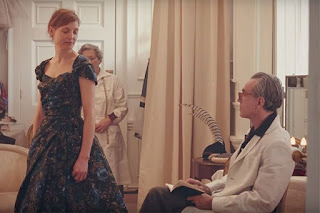
Written, directed, and shot by Paul Thomas Anderson, Phantom Thread is the story of a fashion designer who finds his muse in his need to design clothes for women during period of couture in 1950s London. The film is an exploration into the world of fashion and a man’s desire to create the perfect clothing for women as well as dealing with the women in his life who want what is best for him. Starring Daniel Day-Lewis, Vicky Krieps, and Lesley Manville. Phantom Thread is a ravishing and evocative film from Paul Thomas Anderson.
The film follows a fashion designer who creates clothes for some of richest and most powerful women in London during the 1950s as he finds a muse in a waitress from the British countryside as he has her modeling clothes for her as well as have help create these dresses. Along the way, the character of Reynolds Woodcock (Daniel Day-Lewis) deals with his need to create the perfect dresses with his sister Cyril (Lesley Manville) looking over the business and ensuring everything goes well. Even as they deal with the new presence in their house in Alma (Vicky Krieps) who would work sewing these dresses as well as be a model. Yet, Alma wants to do more not knowing about Woodcock’s routines as it’s something he needs in his time to create. Paul Thomas Anderson’s screenplay doesn’t just explore the obsession and need to create perfection in these dresses but also the need to feel appreciated for his work as he often works for some of the most important women in Europe.
While much of the film’s narrative is told from Alma’s perspective as she tells the story of how she met Woodcock one day when he goes to the country. It also establishes the world that Woodcock lives in as he spends much of his time during breakfast sketching ideas for dresses with Cyril sitting by silently knowing not to make any noise during that time. It’s something Alma would eventually understand as she would also realize she isn’t the first person to become a muse for Woodcock as they come and go. Her simple beauty and naiveté is what would attract Woodcock to her as he takes her to his country home after dinner to have her try on a dress with Cyril making notes of her measurements. She wouldn’t just be a muse/seamstress for Woodcock while working with other seamstresses but also someone who appreciates what he does when a dress he makes for one of his rich clients is treated with disrespect that angers Woodcock.
While much of the film’s narrative is straightforward, it’s Anderson’s study of the characters that are unique where he establishes them as who they are and the role they play into this very demanding world of high fashion. Woodcock is the artist who takes his time trying to create these gorgeous dresses as he would spend days to weeks trying to figure out the right material and measurements. Cyril’s role is in the business as well as making sure everything is in place where her brother isn’t distracted though she has to remind him of the people he’s working for as they pay for the house they live in. Though Cyril is a bit wary of Alma’s presence, she is welcoming to it to ensure that her brother can get ideas but warns Alma of disrupting routines and to not create any kind of chaos that could be surprising. Alma is someone who does follow the beat of her own drum as she wants to be more than just a collaborator to Woodcock. Yet, she would become frustrated as it would occur late in the second act through a simple act as it would play with Woodcock’s own state of mind and later his own emotions that would come to play in the film’s third act.
Anderson’s direction does bear elements of style in terms of the compositions he creates but also display an air of simplicity in the way he presents this very posh world of couture fashion. Shot largely on location in London and various parts of Great Britain along with bits of Switzerland, Anderson would display this world with a meticulous approach to his close-ups in how dresses are sewn as well as the great attention to detail in the measurements as well as the type of fabric that is needed. While there are also some wide shots for some of the film’s locations and a few of the dramatic scenes in the film. Much of Anderson’s direction emphasizes on close-ups and medium shots to play into the interaction with the characters as well as these elements of precise movements of how people come into the Woodcock house. Even as Anderson establishes the importance of Woodcock’s routine from the moment he gets out of bed, the clothes he decides to wear for the day, doing his sketches during breakfast, and working with his seamstresses on the dresses as he treats them quite fairly.
Also serving as the film’s cinematography, Anderson would try to capture every bit of detail into the look of the film including the way dresses are presented under natural lighting as the photography kind of harkens back to the days of Technicolor of the late 1940s/early 1950s. For the scenes in the countryside, it is presented in a much more different light where Anderson goes for something that is more natural as it would emphasize the growing tension between Woodcock and Alma. Notably in the third act where despite their fondness for each other, their differences in age and social backgrounds would come into play such as a New Year’s Eve party sequence is where Alma fits totally right in with Woodcock feeling out of sorts. Anderson’s usage of wide shots and tracking camera shots play into Woodcock’s own confusion that would eventually force him to contend with changing times that would emerge in fashion during the 1950s. Still, Anderson focuses on the relationship between the creator and his muse and the role they play for each other with Alma playing a role that is bigger than she realized. Overall, Anderson crafts an intoxicating and rapturous film about the mind of a fashion designer and the muse who inspires him.
Editor Dylan Tichenor does brilliant work with the editing as it display elements of style in its approach to jump-cuts and dissolves while knowing when not to cut during some of the film’s dramatic moments that includes some tense scenes in the third act. Production designer Mark Tildesley, with set decorator Veronique Melery and supervising art director Denis Schnegg, does amazing work with the look of the Woodcock home in London as well as the house in the country and some of the places he, Alma, and Cyril go to. Costume designer Mark Bridges does incredible work with the costumes from the look of Woodcock’s suits and clothes that he wears to the gorgeous dresses that he creates as it looks and breathes color where they act as characters of their own as it’s a major highlight of the film. Makeup designer Paul Engelen does fantastic work with much of the film’s minimal makeup that play into the style that women wore during the 1950s.
Special effects supervisor Chris Reynolds and visual effects supervisor Marc Massicotte do terrific work with a few of the film’s visual effects as it mainly consists of set-dressing for a few of the film’s locations. Sound designer Christopher Scarabosio and sound editor Matthew Wood do excellent work with the sound from the sparse approach to how objects sound during breakfast which would annoy Woodcock to some of the quieter moments in the film. The film’s music by Jonny Greenwood is phenomenal for its rich orchestral score with elements of lush string and piano pieces in the film that add to the elegance of the times while the music would include some classical pieces as well as some of the pop standards of the time before the arrival of rock n’ roll.
The casting by Cassandra Kulukundis is marvelous as it feature some notable small roles from Camilla Rutherford as Woodcock’s muse early in the film, Lujza Richter as the Belgium royal Princess Mona Braganza, Gina McKee as one of the Woodcock’s rich clients in Countess Henrietta Harding, Silas Carson as a rich man in Rubio Guerrero, Harriet Sansom Harris as a rich woman that is marrying Guerrero only to take poor care of the dress that Woodcock created, Emma Clandon as the picture of Woodcock’s mother, and Brian Gleeson as Dr. Robert Hardy as a young doctor who comes in to look over Woodcock as he befriends Alma. Lesley Manville is remarkable as Cyril as Woodcock’s sister and business manager who runs everything as well as ensuring that her brother’s routine keeps on going while being sympathetic to Alma’s needs in wanting to loosen things in his life.
Vicky Krieps is radiant as Alma as a young waitress who becomes Woodcock’s new muse/collaborator as she helps run bits of the household and does what she needs to be done as it’s a performance that has this mixture of naiveté and curiosity of a simple woman in a world that she’s new to but understands her role but wants to do more. Finally, there’s Daniel Day-Lewis in a tremendous performance as Reynolds Woodcock as this fashion designer that is intent on creating the best dresses for some of the most important women in the world. It’s a performance that has Day-Lewis provide bits of humor into his performance but also this air of obsession to achieve perfection with great care as well as displaying something has him be aloof in small moments. Day-Lewis would display amazing chemistry with Krieps and Manville in the way he deals with them while also showing vulnerability in the scene where Woodcock talks to Alma about his mother and her wedding dress which is something he cares so much about. If this performance is to be the last performance that he ever does. At least he is going on top.
Phantom Thread is a spectacular film from Paul Thomas Anderson that features great performances from Daniel Day-Lewis, Vicky Krieps, and Lesley Manville. Along with its gorgeous visuals, breathtaking costumes, intricate sound design, and Jonny Greenwood’s sumptuous score. It’s a film that explores a world that is unique in its time and a man’s willingness to create something special with the help of a young woman from another world. In the end, Phantom Thread is a magnificent film from Paul Thomas Anderson.
P.T. Anderson Films: Hard Eight/Sydney - Boogie Nights - Magnolia - Punch-Drunk Love - There Will Be Blood - The Master - Inherent Vice - Junun - Licorice Pizza - One Battle After Another
Related: The Short Films & Videos of P.T. Anderson - The Auteurs #15: Paul Thomas Anderson
© thevoid99 2018
Directed by Barbet Schroeder and screenplay by Schroeder and Paul Gegauff from a story by Schroeder, More is the story of a German boy and American girl who meet in Paris as they go on a trip to Ibiza to explore the world of the drug culture of the 1960s. The film is a look into youth culture of the late 1960s at a time where drugs and the idea of free love where the rage with two people caught up in this world. Starring Mimsy Farmer and Klaus Grunberg. More is a mesmerizing though flawed film from Barbet Schroeder.
The film follows a German student who hitchhikes to Paris where he meets an American girl and falls for her where he later follows her to the Spanish island of Ibiza where they engage in sex and drugs. That is pretty much the premise of the film provided by Barbet Schroeder and Paul Gegauff with dialogue co-written by Mimsy Farmer, Eugene Archer, and Paul Gardner as it doesn’t really do much to flesh out the premise even more. Especially as it explore the highs and lows of the 1960s counterculture with much of the latter is prevalent for the film’s second half. The character of Stefan (Klaus Grunberg) is a student that is interested in adventure and smoking dope but not wanting to do hard drugs. When he meets Estelle (Mimsy Farmer) as she is a woman that is the party as she goes to Ibiza to live in a villa with Stefan though she is connected to a former Nazi named Dr. Wolf (Heinz Engelmann) whom she has a relationship with.
Schroeder’s direction is definitely stylish as it is shot on location in Paris and Ibiza as owes a lot to many of the visual aesthetics of the French New Wave with its usage of hand-held cameras. The usage of close-ups and medium shots would play into the interaction of the characters while there are also some wide shots to showcase the scope of the locations including many of the rocky beaches of Ibiza. Notably as those scenes on the beaches showcase Stefan and Estelle engage in nude sunbathing near their villa where they spend time having sex, cooking, or doing drugs as it would later devolve into hard drugs such as heroin. The third act is where things become grimy with Stefan getting a taste of the drug as he becomes addicted where the film definitely changes it tone into something darker as it relates to what was happening in the 1960s. Much of the film is told from Stefan’s perspective until the third act as it is told from the perspective of his friend Charlie (Michel Chanderli) who warned Stefan about Estelle and her dependency on drugs. Overall, Schroeder crafts a visually-entrancing but underwhelming film about two lovers embarking on the many ideas of the late 1960s.
Cinematographer Nestor Almendros does brilliant work with the film’s cinematography from the usage of natural lighting for many of the film’s daytime exterior scenes in Ibiza as well as its more low-key look for the scenes in Paris as well as the usage of available and natural lighting for some of the scenes at night. Editors Denise de Casabianca and Rita Roland do nice work with the editing as it has elements of jump-cuts to play into some of the drug trips as well as some of the livelier moments in the film. Art directors Nestor Almendros and Fran Lewis do fantastic work with the look of the villa as well as a bar that Stefan works at including some of the places he goes to in Paris. The sound work of Jack Jullian and Robert Pouret is terrific for its natural approach to the sound in the way the cafes and some of the bars that the characters go to including how music sounds at a party. The film’s music by Pink Floyd as it is one of the film’s highlights for its mixture of psychedelic rock, space-rock, blues, tribal music, and other kinds of experimental music as it include a few instrumentals in the mix as it is one of the band’s more overlooked recordings during their early years in the late 1960s.
The film’s superb cast include some notable small roles from Georges Montant as a drug dealer, Louise Wink as a friend of Estelle in Cathy, famed photography Henry Wolf as himself in a cameo in Paris, Michel Chanderli as Stefan’s Parisian friend Charlie who is a thief as he knows Estelle and isn’t fond of her, and Heinz Engelmann as Dr. Ernesto Wolf as a former Nazi living in Ibiza who has a relationship with Estelle as he is also a part-time dealer. Finally, there’s the duo of Mimsy Farmer and Klaus Grunberg in stellar performances in their respective roles as Estelle and Stefan with Farmer being this vivacious woman who is also very destructive in her drug use while Grunberg is more restrained as he becomes concerned only to be consumed by the world of drugs.
More is a solid though flawed film from Barbet Schroeder. Despite its gorgeous visuals by Nestor Almendros, a riveting soundtrack by Pink Floyd, and some whimsical moments in the film. It’s a film that lacks a strong story to really support its visuals and ideas while it often acts as a product of its time. In the end, More is a terrific film from Barbet Schroeder.
Barbet Schroeder Films: (La Vallee) – (General Idi Amin Dada: A Self Portrait) – (Maitresse) – (Koko: A Talking Gorilla) – (Tricheurs) – (The Charles Bukowski Tapes) – (Barfly) – (Reversal of Fortune) – (Single White Female) – (Kiss of Death) – (Before and After) – (Desperate Measures) – (Our Lady of the Assassins) – (Murder by Numbers) – (Terror’s Advocate) – (Inju: The Beast in the Shadow) – (Amnesia)
© thevoid99 2018
Written and directed by Leonard Kastle, The Honeymoon Killers is the story of a lonely and overweight woman who meets and falls for a man who could be a serial killer. The film is based on the real-life stories of Ray Fernandez and Martha Beck as they’re played respectively by Tony Lo Bianco and Shirley Stoler in a film that mixes drama with elements of the documentary. Also starring Marilyn Chris and Doris Roberts. The Honeymoon Killers is a riveting yet unsettling film from Leonard Kastle.
The film follows a lonely nurse whose friend submits her to a lonely hearts club where she meets a man who is revealed to be a con-artist as the two on a scheme to steal money from other lonely women. It’s a film that play into two people who take part in something where they go on a trip around America in conning women all over the country into taking their life savings and more. Leonard Kastle’s screenplay follow the life that Martha Beck was having before she met Ray Fernandez as she was a lonely nursing administrator that was no-nonsense until she gets a response from Fernandez through corresponding letters. Yet, she would deal with what Fernandez does following a time where he doesn’t respond to her letters as she is intrigued by what she does. Especially when she decides to put her mother in a nursing home and send money to her every month while she goes on the road.
Kastle’s direction is definitely engaging for the fact that it’s shot in a somewhat documentary style with its hand-held cameras and lots of close-ups. While the film does feature some work from Martin Scorsese and Donald Volkman during the early stages of the production, it is Kastle who would infuse something that does feel real even though the story is set in the late 1960s rather than the 1940s where the real-life story actually took place. Notably in the way he captures the relationship between Beck and Fernandez as well as using many of the film’s low-budget aesthetics in some of the crude lighting and grainy film stock. Still, Kastle uses these limitations to his advantage as it would play into elements of black humor with the close-ups and medium shots he conveys into the drama. The film’s third act is intense due to the violence where it’s more about the act and presentation rather its emphasis on focusing on the gory details. It all play into the descent of their romance with Beck becoming clingy towards Fernandez as it lead to them taking out their frustrations on those they’re targeting. Overall, Kastle crafts a gripping and ominous film about a couple who go on the road to scheme lonely women out of their money.
Cinematographer Oliver Wood does excellent work with the film’s black-and-white cinematography with its low-grade film stock and crude lighting to play into the grittiness of the film as it has this somewhat-documentary look for the scenes in the day and at night. Editors Stan Warnow and Richard Brophy do terrific work with the editing in creating some straightforward cuts to play into the drama and some of the suspense. The sound work of Fred Kamiel is superb for its naturalistic approach to the sound as it play into some of the dark and violent moments in the film’s third act. The film’s music consists of pieces by Gustav Mahler as it help add to the drama as well as some of the film’s most terrifying moments.
The film’s incredible cast feature some notable small roles from Dortha Duckworth as Martha’s mother, Mary Jane Higby as one of the victims of Beck/Fernandez’s scheme in Janet Fay, Marilyn Chris as one of the first victims of the scheme in Myrtle Young, Kip McArdle as the single mother Deliphine Price Downing, Mary Breen as Downing’s daughter Rachel, and Doris Roberts in a wonderful performance as Martha’s friend Bunny who would sign her up to the Lonely Hearts club. Finally, there’s the duo of Shirley Stoler and Tony Lo Bianco in phenomenal performances in their respective roles as Martha Beck and Ray Fernandez. Stoler provides that sense of loneliness and pent-up anger that emerges as a woman that needed companionship as well as feeling threatened by other women taking Ray from her. Lo Bianco’s performance is more low-key while displaying this air of charm but also frustration when he doesn’t get what he wants while he and Stoler have this chemistry that is just electrifying to watch.
The Honeymoon Killers is a sensational film from Leonard Kastle that features great performances from Shirley Stoler and Tony Lo Bianco. It’s a film that captures a real-life event of killings told in a gritty and grimy style that doesn’t play nice while displaying acts of violence that is about its impact rather than its look. In the end, The Honeymoon Killers is an incredible film from Leonard Kastle.
© thevoid99 2018
For the third week of 2018 as part of Wandering Through the Shelves' Thursday Movie Picks series hosted by Wanderer. We venture into the Sundance Film Festival as it’s the festival that begins the New Year in showing new films often from filmmakers that are ready to break-out or from veterans wanting to show something new. Here are my three picks:
1. Hoop Dreams
Winner of the 1994 Audience Award Prize for Documentary is definitely a film where if one person wants to ask anyone what is a documentary film. It’s this one as it covers five years in the life of two different boys from the inner cities in Chicago as they hope to make it through their skills in basketball to give their family better lives. It also play into the different paths these two boys would take to go into college in the hopes they would become professional as it’s a film that everyone whether they’re sports fans or not need to see.
2. DiG!
Winner of the 2004 Grand Jury Prize for Documentary is a film about two different bands who share a common interest to succeed and create music that is unique yet their paths to become successful would also lead to these two bands becoming rivals. Ondi Timoner’s documentary about the Dandy Warhols and the Brian Jonestown Massacre showcases the many fortunes and misfortunes two bands would endure with the former becoming very successful around the world while maintaining their own independence from the industry. The latter for all of their brilliance and talent would struggle due to egos, drugs, and all sorts of shit as they do whatever they can to get their music heard.
3. Searching for Sugar Man
Winner of the 2012 World Cinema Audience Award for Documentary is a film that is about an American musician who never was big in his home country but somehow found an audience in South Africa. It follows two fans who wondered if the musician in Sixto Rodriguez is alive and well as his music is discussed as well as what it meant to South Africans and it turned out that he is where his career is unexpected revive in a country that is often seen from the outside of the Western World. It’s a film that showcases what the documentary can do and how it can get people’s attention to discover something they never heard of and embrace it.
© thevoid99 2018
Based on the play by William Shakespeare, Much Ado About Nothing is the story of a two people who tricked themselves into thinking they’re in love with each other while trying to get two other people to fall in love with each other. Written for the screen, scored, co-edited, and directed by Joss Whedon, the film is set in a modern-day setting at Whedon’s home in Santa Monica with some changes to the text to play into the basic elements of Shakespeare’s story. Starring Amy Acker, Alexis Denisof, Reed Diamond, Nathan Fillion, Clark Gregg, Fran Kranz, Sean Maher, and Jillian Morgese. Much Ado About Nothing is a whimsical and intoxicating film from Joss Whedon.
Set during a wedding ceremony that is to commence, the film revolves around two people who despise each other as they try to help two people get married as they also cope with their feelings for each other. During the course of the film, there’s a guest who wants to create ruin for the proceedings with a couple of his co-conspirators as it would later become chaotic. Joss Whedon’s screenplay definitely keeps a lot of the dialogue that William Shakespeare had written as well as the setting in the fictional town of Messina. Yet, Whedon would make some changes to the story as it is set in a modern world while expanding a few minor characters who play crucial roles to the story. There are also elements in the film that are comical as it relates to the character of Dogberry (Nathan Fillion) and his attempts to find the truth as he has to deal with the associates of the Don John (Sean Maher). Still, much of Whedon’s approach to the material remains faithful as well as infusing modern-day humor to play into the romance and comedy.
Whedon’s direction is definitely stylish not just for its black-and-white cinematography but also for its intimate setting as it is shot on location at the home of Whedon and his wife/producer Kai Cole as the house was built by the latter. While there are some wide shots of a few bits of the locations including the area around Whedon’s home, much of Whedon’s compositions are shot in and out of the house including the backyard with its swimming pool, garden court, and a view of the landscape around the house. Notably in the way Whedon would use the space to play into the way characters interact whether it’s in a close-up or in a medium shot that include scenes where Benedick (Alexis Denisof) and Beatrice (Amy Acker) both would listen to other characters talk about the other person to play into this sense of attraction. The response from both Benedick and Beatrice is filled with a sense of slapstick comedy in the way they would try and hear what their friends are saying.
With Whedon also serving as a co-editor with Daniel Kaminsky and composing the music score as it’s a mixture of jazz, folk, and low-key orchestral music to play into the comedy. Much of the editing is straightforward with some jump-cuts and fade-to-white transitions to play into the humor and some of the drama. Even during the film’s second act as it relates to the wedding proceeding as it play into the love-hate relationship between Benedick and Beatrice where they become aware of what is happening. The comedy still looms as it relates to Dogberry and the way he’s been treated by the people he arrested. Whedon would also maintain that sense of imagery into the events of the third act as it relates to deceit and power control with Benedick and Beatrice trying to set things right. Overall, Whedon creates a lively and witty film about two people whose disdain towards one another leads to them falling in love and in helping a young couple get married.
Cinematographer Jay Hunter does brilliant work with the film’s black-and-white cinematography as it has this natural yet gorgeous look to the film for its scenes in the day and night including scenes in the latter that includes a dinner party. Production designers Cindy Chao and Michele Yu do fantastic work with the look of some of the exteriors for the wedding as well as a few set decoration for the police base and some of the rooms at the house. Costume designer Shawna Trpcic does excellent work with the costumes from the casual look of the characters to some of the costumes and masks worn at the dinner party. Sound editor Victor Ray Ennis does superb work with the sound as it play into the atmosphere of the locations as well as music is presented in the film. Music supervisor Clint Bennett provides a wonderful soundtrack that feature a couple of songs written by William Shakespeare that are performed by Jed Whedon and Maurissa Tancharoen.
The film’s incredible cast feature appearances from Nick Kocher and Brian McElhaney as watchmen, Romy Rosemont as the sexton who watches over Dogberry’s interrogation of Don John’s attendants, Paul M. Meston as Friar Francis, Tom Lenk as Dogberry’s partner Verges, Emma Bates as a maid/attendant to Hero, and Ashley Johnson as another young maid/attendant to Hero in Margaret who unknowingly becomes a victim of Don John’s scheme. Spencer Treat Clark and Riki Lindhome are superb in their respective roles as Don John’s attendants in Borachio and Conrade as two people who help Don John in his scheme with the latter being Don John’s lover. Nathan Fillion is fantastic as Dogberry as a police investigator who is watching over the proceedings as he is trying to figure out what is happening when the wedding plans is being ruined as it’s Fillion being very funny and offbeat. Reed Diamond is excellent as Don Pedro as the Prince of Aragon who is the best man that is trying to deal with the chaos of the wedding while not knowing who is creating all of this trouble.
Jillian Morgese and Fran Kranz are brilliant in their respective roles as Hero and Claudio as two young lovers who are about to be married only to be unaware of the forces that is trying to break them up. Sean Maher is amazing as Don John as the bastard prince brother of Don Pedro who despises the young lovers as he wants to ruin them in his own pursuit of power. Clark Gregg is marvelous as Hero’s father Leonato who is Messina’s governor that is dealing with the chaos of what happens as he wants justice for the people that ruined his daughter’s wedding. Finally, there’s the duo of Alexis Denisof and Amy Acker in phenomenal performances in their respective roles as Benedick and Beatrice with the former being a charmer that isn’t willing to be with Beatrice yet as feelings for him while the latter is an energetic figure who despises Benedick but is protective of her cousin Hero where she turns to Benedick for help in setting things right.
Much Ado About Nothing is a sensational film from Joss Whedon. Featuring a great ensemble cast, dazzling visuals, a simple yet effective setting, and some witty interpretation of William Shakespeare’s words. The film is definitely a lively and inspired take on Shakespeare’s comedy as well as setting it in a modern world that proves that Shakespeare can fit in towards any environment. In the end, Much Ado About Nothing is a spectacular film from Joss Whedon.
Joss Whedon Films: Serenity - The Avengers (2012 film) - The Avengers: Age of Ultron - Justice League
© thevoid99 2018
Written and directed by Sarah Polley, Stories We Tell is a film about Polley’s family and the revelations about her life as it’s told in a documentary style with some dramatic recreations. The film is a look into Polley in her own life as she talks to her own siblings about their parents as well as things in their life with Rebecca Jenkins playing Polley’s mother in dramatic recreated scenes. The result is an astonishing and evocative film from Sarah Polley.
In 2007, Sarah Polley learned a major revelation about her life as well as about her late mother who died when Polley was only 11. The news of this shocking news about who she is forces her to piece things not just about her whole family life that included four half-siblings but also people who knew her mother. During the course of the film, Polley would learn about her mother’s life that included two marriages with her second and final marriage to David Polley who would narrate the film as he’s seen in a recording booth with Sarah watching in a different room in seeing her father read bits of his memoir. Even as she would film her father, her siblings, and others in the filming as she knew she had to create some idea of what her mother’s life was like since she only had pictures and recollections from others about that time in her life before she was even born.
With the aid of cinematographer Iris Ng, production designer Lea Carlson, set decorator David Gruer, costume designer Sarah Armstrong, and casting directors John Buchan and Jason Knight, Polley would use Super 8 camera footage to create these fictionalized home movies with actors such as Rebecca Jenkins playing her mother while other actors such as Peter Evans playing David Polley and Alex Hatz playing the role of Harry Gulkin who is crucial to the story as he is also interviewed as it relates to the big reveal. Much of the Super 8 footage is presented as a silent film of sorts to capture an idea of what life was like with Diane Polley who had been through a lot including a terrible first marriage as her divorce was considered scandalous for a time in Canada.
Even as she lost custody of her two kids in John and Susy though meeting David Polley proved to be fulfilling as she would get Mark and Joanna before this bump in 1978 when she and David hit a rough patch. When Diane took an acting gig for a theater show in Montreal is where things start to occur though she eventually stayed with David till her death in 1990 on the week of Sarah’s eleventh birthday. The stories about Diane’s time in Montreal would raise a lot of questions as it relates to Harry Gulkin as well as another man she met during that time though she still loved David. These revelations weren’t just devastating to Sarah but also her siblings who had a sense that something was going on yet Sarah was more concerned about her father and what he would think. Even when news was to emerge as Sarah had to beg on the phone during the production of Mr. Nobody to not have this story go public.
Editor Mike Munn would collect some of the photos and footage that Sarah would recreate to play into the story as some of it include elements of montages and such. Sound editor David Rose would capture a lot of the audio to help play into the dramatization and the narration of David Polley. The film’s music by Jonathan Goldsmith is largely low-key in its plaintive and somber piano-based score as it play into the drama while much of the music is a mixture of folk, classical, and traditional music with a cut by Bon Iver that play into drama and sense of loss.
Stories We Tell is a tremendous film from Sarah Polley. It’s a film that explores the idea of family and identity as well as the many versions of the truth about someone that is no longer around. Even as it forces people to see that there’s still so much to tell while learning more about themselves and the people around them. In the end, Stories We Tell is a magnificent film from Sarah Polley.
Sarah Polley Films: Away from Her - Take This Waltz - Women Talking
© thevoid99 2018
Written and directed by Anna Boden and Ryan Fleck, Sugar is the story of a young pitcher from the Dominican Republic who dreams of making it to the big leagues where he deals with the reality of chasing that dream when he arrives to America in the minor leagues. The film is an exploration of a young man who wants to give himself and his family a chance at a better life away from poverty while coping with the gift he has when he has to endure culture shock and the demands of the game. Starring Algenis Perez Soto, Andrew Holland, Rayniel Rufino, and Michael Gaston. Sugar is a rapturous and intoxicating film from Anna Boden and Ryan Fleck.
The film is a simple story of a young baseball pitcher who is given the chance to travel to America to play in the minor leagues as he hopes that he can make it and give his mother and siblings a good life back at the Dominican Republic. What happens instead is that he would face challenges upon arriving into a new environment where there’s so much to be expected not just from himself but also others who would come and go. The film’s screenplay by Anna Boden and Ryan Fleck is largely a study of ambition and its fallacies as well as what it takes to make in the majors despite the fact the protagonist in Miguel “Sugar” Santos (Algenis Perez Soto) doesn’t speak much English and doesn’t know very much about American culture. The first act partially takes place in the Dominican Republic where Sugar is like every other player dreaming of making it to the Major Leagues like many before him where he is at an academy to learn about the game while learning to speak English. Upon learning that he and another player are going to Arizona for spring training with a minor-league rookie team, Sugar is excited as he hopes to do good things for his family.
Though he experiences culture shock and confusion during his time in Arizona, he was able to bond with players from the Dominican Republic along with players from other Spanish-speaking countries. When Sugar is sent to the A level in Iowa, the culture shock becomes greater where he would live with an old couple in the Higgins as he has trouble adjusting to his new environment while the only person he could really talk to is a Dominican player in Jorge (Rayniel Rufino) who has been in the minors for years as he helps Sugar out. While Sugar takes a liking towards the old couple’s granddaughter Anne (Ellary Porterfield), he does cope with some of the prejudice of being an outsider as it leads to this air of isolation that is prominent for much of the second and third act. Even as Sugar would endure an injury that would sideline him as he’s unable to get back on track prompting him to question a lot of things around him including himself.
The film’s direction of Boden and Fleck is definitely evocative in the way it captures not just this air of realism about the struggle in trying to make it to the major leagues but also in the study of isolation and culture shock. Shot largely in Iowa with additional locations shot in New York City, the state of Arizona, and the Dominican Republic, the film does play into idea of a man caught between two different worlds where one is a place that he’s familiar with as it’s his home and the other is just completely different. Boden and Fleck’s usage of the wide shots would capture the many cultural and social differences that Sugar would encounter as it adds to the sense of culture shock upon arriving somewhere like Iowa with its farmland, cornfields, and areas that doesn’t have much to offer like the small town he was in Arizona nor in the Dominican Republic. Yet, much of their direction involve intimate shots such as close-ups and medium shots to play into Sugar’s struggle with being on the pitcher’s mound and outside of the baseball field.
With Boden also serving as editor, she and Fleck would maintain something straightforward in the editing with a few jump-cuts such as a scene of Sugar meeting his many relatives wishing him luck that just adds to the pressure he’s in to succeed. Still, it just adds to this sense of isolation such as this amazing tracking shot sequence of Sugar walking out of his hotel room and into the bar, the arcade, and later the bowling alley as it shows him really lost he’s in. The third act is about this sense of continuation and awareness that Sugar has to endure when another player from the Dominican Republic emerges as someone who has the same gift that Sugar had. It’s a reality that is quite common where Boden and Fleck don’t sugarcoat it yet it would have an aftermath about what happen to those who don’t make it but still have a love for the game. Overall, Boden and Fleck craft a riveting and sobering film about a young man chasing his dream to become a major league baseball player only to deal with the realities and expectations of that dream.
Cinematographer Andrij Parekh does brilliant work with the film’s cinematography from the usage of natural lights for many of the daytime scenes as well as some lighting for some of the scenes at night including many of its interiors. Production designer Beth Mickle, with set decorator Richard Bailey and art director Michael Ahern, does fantastic work with the look of the baseball camps and places that Sugar goes to including the home of the Higgins family and the locker room for the team he plays for. Costume designer Erin Benach does nice work with the costumes as it is largely straightforward including the uniforms that Sugar wears during his time playing.
Sound editor Tom Efinger and sound designer Abigail Savage do excellent work with the sound in capturing the atmosphere of the baseball games as well as some of the places that Sugar and the people he’s with go to. The film’s music by Michael Brook is wonderful as it’s mainly low-key in its folk-based score while music supervisor Lynn Fainchtein creates a soundtrack that mixes all sorts of music from merengue, bachata, salsa, hip-hop, rock, and indie music from acts like Aventura, TV on the Radio, Cassie Ventura, Celia Cruz, Moby, Leonard Cohen, and Juan Luis Guerra with Ruben Blades and Robi Rosa.
The casting by Cindy Tolan is superb as it feature some notable small roles from Jose Rijo as a player named Alvarez, Kelvin Leonardo Garcia as the young pitcher Salvador who becomes a threat to Sugar’s spot in the third act, Alina Vargas as Sugar’s girlfriend in the Dominican Republic, Ann Whitney and Richard Bull as the old couple in the Higgins who would take Sugar in during his time in Iowa to make sure he does well, Ellary Porterfield as the Higgins’ granddaughter Anne whom Sugar takes a liking to, and Jaime Tirelli as a man named Osvaldo that Sugar meets late in the film. Michael Gaston is terrific as Sugar’s Iowa coach Stu Sutton who sees talent and potential in Sugar while is trying to understand where his control is once his performance suffers.
Andre Holland is fantastic as Brad Johnson as a player that Sugar befriends as he tries to help him with his performance and understand American culture. Rayniel Rufino is excellent as Jorge as a player from the Dominican Republic in Iowa who is the closest friend that Sugar has where he is someone that has seen a lot as he knows what will happen to him but would accept his fate. Finally, there’s Algenis Perez Soto in an incredible performance as the titular character as a young pitcher who has a gift for his pitching while hoping to succeed so he can get his family out of poverty but the demands of the game, the culture shock, and isolation would get to him as it’s an understated and mesmerizing performance from Soto.
Sugar is a phenomenal film from Anna Boden and Ryan Fleck. Featuring a great cast, gorgeous images, an intoxicating soundtrack, and themes of isolation and culture shock, the film is a unique study of ambition and its fallacies as it relates to the idea of the American Dream. In the end, Sugar is a sensational film from Anna Boden and Ryan Fleck.
Anna Boden and Ryan Fleck Films: Half Nelson - It’s Kind of a Funny Story – Mississippi Grind – Captain Marvel - The Auteurs #71: Anna Boden and Ryan Fleck
© thevoid99 2018
Directed by Roger Penny and Charlie Thomas, XTC: This is Pop is a documentary film about one of the great British bands to come out of late 70s new wave boom who went from this oddball post-punk group to becoming one of the darlings of the British music scene despite their limited commercial success. The film follows the band from their early years to the period in the mid-80s where they became a studio-only band until the early 2000s when they disbanded as vocalist/guitarist Andy Partridge, bassist/vocalist Colin Moulding, guitarist Dave Gregory, and drummer Terry Chambers tell their story as well as comments from several admirers including Stewart Copeland of the Police, Clem Burke of Blondie, Harry Shearer, music producers John Leckie and Hugh Paghdam, and Steven Wilson. The result is a whimsical and offbeat film from Roger Penny and Charlie Thompson.
From the late 1970s to the early 2000s, XTC was a band that were signed during the wave of punk where anyone that was punk or new wave were in as they had some songs that were unique and eventually became more sophisticated and elaborately arranged into pop songs that were inventive and catchy. Though they didn’t have a lot of commercial success in their time, many felt that XTC were very influential for a lot of bands including the Britpop music scene of the 1990s. The film isn’t just a straightforward documentary about the band but also a spoof of sorts of rock-based documentaries where band leader Andy Partridge takes shot at many of these conventions in his interviews as well as talking about many of the clichés that would include a hilarious cameo from the legendary progressive rock keyboardist Rick Wakeman making a snide comment toward the band.
Though the documentary doesn’t make much mention of their hiatus for much of the 1990s due to a legal dispute with their record label nor the mention of the band’s eventual break-up in 2006. The film does follow their evolution dating back to the early 70s in a line-up that included Partridge, Moulding, Chambers, and keyboardist Barry Andrews who would be part of the band until 1979 due to tension between him and Partridge where the latter thought the former’s songs weren’t any good. Dave Gregory would join the band shortly after Andrews’ departure as he was an old friend of Partridge where the band evolved from these complex and abstract post-punk songs into something more pop-based through the songs written by Partridge or others by Moulding who would be a revered songwriter in his own right.
Things changed in 1982 during a tour with the Police where Partridge had a breakdown that lead to the band no longer becoming a touring act which was something Chambers couldn’t accept as he later admitted that he could’ve been more sympathetic towards Partridge’s health issues as it related to a valium addiction that he had when he was a teenager due to his own relationship with his mentally-ill mother. Following Chambers’ departure and legal issues relating to lost finances, the band would continue as a trio as a studio band that some felt hurt their commercial fortunes despite their early success in the late 70s/early 80s. It was during those studio years in the mid-80s the band formed a side project with Gregory’s brother Ian called the Dukes of Stratospher as a psychedelic pop band that released two albums in 1985 and 1987 to great acclaim and some success. In 1986, the band made what some consider to be their best album in Skylarking with producer Todd Rundgren that featured the controversial song Dear God.
Much of the film’s direction is straightforward as Roger Penny and Charlie Thomas would film with the interviews with cinematographer Den Pollitt with editor Roger Penny would use footage from music videos and rare footages to tell the story. The sound work of Rhys Adams, Matt Clark, Michael O’Donoghue, and Oliver Rotchell would play into the different mixes of the music to help tell the story yet what makes Penny and Thomas’ direction unique is the usage of model trains and its surroundings modeled after the band’s home town of Swindon which is a typical British suburban town that is still enchanting while it also include miniature models of the band designed by Ian Kay and Paul Marshall-Porter. The film also include some animation and drawings by Partridge as it played into his own whimsical personality.
XTC: This is Pop is an incredible film from Roger Penny and Charlie Thomas about one of Britain’s greatest pop bands. It’s a film that doesn’t just show why they’re one of the most beloved groups in the world of pop music but also a band that doesn’t get enough accolades for their contributions though there’s fans that want them to remain a cult band of sorts. In the end, XTC: This is Pop is a remarkable film from Roger Penny and Charlie Thomas.
© thevoid99 2018
Based on the book A Long Way Home by Saroo Brierley and Larry Buttrose, Lion is the true story of a man who was separated by his family as a young boy where he was adopted by an Australian couple as he would later go on a search to find his original family. Directed by Garth Davis and screenplay by Luke Davies, the film follows the path of a man who trying to find his family with the help of those who cared about him including his adoptive family. Starring Dev Patel, Sunny Pawar, David Wenham, Rooney Mara, Divian Ladwa, and Nicole Kidman. Lion is a rich and evocative film from Garth Davis.
Told largely in the span of more than 25 years, the film follows a young boy who is separated from his older brother where he accidentally boards a train and is suddenly lost where he’s later adopted by an Australian couple who would raise him. It’s a film that follows the journey of a boy searching for his family only to restart the search many years later as a man where he begins to raise questions about himself and what happened to his mother, his older brother, and younger sister. Luke Davies’ script doesn’t waste time early in the film where the young Saroo (Sunny Pawar) follows his older brother Guddu (Abhishek Bharate) who is trying to find work while Saroo naps at a bench on a train where he accidentally enters a train that leaves where he arrives in Calcutta several days later. Much of the first act has Saroo lost in Calcutta trying to find his way back home but has no idea where he’s at nor does he speak Bengali since he speaks a more rural Hindu-based language.
He would encounter people that might seem good but he immediately realizes that it’s not what it seems until he’s taken into an orphanage where he is later aided by a woman in the orphanage in finding his family but has gotten no response. Yet, she would tell him that an Australian couple in John Brierley (David Wenham) and his wife Sue (Nicole Kidman) are interested in adopting him. The second act largely takes place in Tasmania, Australia where Saroo finds a home and a family that loves him where they adopt another Indian child in Mantosh (Keshav Jadhav) who has a hard time adjusting to his new surroundings. 20 years later as the older Saroo (Dev Patel) is training to manage hotels while he dates an American student in Lucy (Rooney Mara), Saroo gets a reminder of his old home forcing him to go into a search to find his family through the usage of Google Earth. Though he is reluctant to tell his adopted parents on what he’s doing, it would become an obsession that nearly drives him apart from those who care about him.
Garth Davis’ direction is definitely mesmerizing for not just the way he captures a man caught between two different worlds but wanting to hold on to them as well as make peace with the world he was lost in when he was a child. Shot on various locations in India such as Kolkata and Melbourne, Australia along with Tasmania, the film does play into this journey that a boy would take as he would travel from Khandwa to Calcutta as Davis would use a lot of wide shots to establish the locations as well as the sense of wonderment that the young Saroo would endure. Much of Davis’ direction is intimate with its usage of hand-held cameras for the close-ups as well as the medium shots to capture Saroo’s family life with John and Sue. Though a lot of Davis’ compositions are straightforward, there are elements of style late in the second act where the older Saroo would see his older brother at a certain location as well as paralleling images to play into a location in Australia and matched with India. The usage of Google Earth is crucial to the story as it play into Saroo’s search and what he can remember about certain locations which leads to the film’s climax where he returns home to see if his family is still there. Overall, Davis crafts a riveting and touching film about a man’s journey to find his family with the support from the people who raised and cared for him.
Cinematographer Greig Fraser does brilliant work with the film’s cinematography with its usage of natural lights for many of the exterior scenes with some low-key lights for some of the interior/exterior scenes at night. Editors Alexandre de Franceschi does excellent work with the editing with its usage of jump-cuts, stylish match cuts, and other rhythmic cuts to play into the drama. Production designer Chris Kennedy, with set decorators Nicki Gardner and Seema Kashyap plus art directors Janie Parker and Ravi Srivastava, does fantastic work with the look of the home that John and Sue live in as well as Saroo’s home in Melbourne plus some of the places in India. Costume designer Cappi Ireland does nice work with the costumes from the ragged clothes of the young Saroo walking around in India to the more casual look of the older Saroo and the people in his life.
Visual effects supervisors Julian Dimsey and Sid Jayakar do terrific work with some of the film’s minimal visual effects that relate to Google Earth and a few moments of set dressing. Sound designer Robert Mackenzie does superb work with the sound as it play into the many locations as well as the array of sounds that Saroo remembers from his time as a child. The film’s music by Hauschka and Dustin O’Halloran is wonderful for its mixture of Indian string music with some ambient textures to play into the sense of wonderment that Saroo endures while music supervisor Jemma Burns provide a mixture of music ranging from Indian-pop to electronic music and pop from acts like Hercules and Love Affair, Sia, Enigma, and Mondo Rock.
The casting by Kirsty McGregor is marvelous as it feature some notable small roles from Riddi Sehn as a man in a café who would find the young Saroo and take him to the authorities in the hope his family would find him, Tannishtha Chatterjee as a young woman in Calcutta who finds Saroo and gives him shelter for a while, Nawazuddin Siddiqui as a friend of that woman who has ideas for Saroo that makes the boy uncomfortable, Keshev Jadhav as the young Mantosh, Abhishek Bharate as Saroo’s older brother Guddu, Divian Ladwa as the older Mantosh who remains a troubled soul, Priyanka Bose as Saroo’s biological mother, and Deepti Naval as Saroj Sood who is an outsider of the Indian orphanage system as she would be the one to make sure Saroo finds a good home and would get him adopted by the Brierleys. David Wenham is superb as Saroo’s adoptive father John Brierley as a kind man that is very patient with Saroo and Mantosh as he is also someone that is becoming concerned with the former’s growing distance from everyone. Rooney Mara is fantastic as Lucy as an American student who becomes Saroo’s girlfriend as she is concerned about his distance as she wants to help him find his family.
Sunny Pawar is excellent as the young Saroo as this young boy who is trying to find his way back home as he endures poverty, different language and cultural barriers while eventually finding a home and a family that loves him. Dev Patel is brilliant as the older Saroo as a man who finds himself dealing with his identity as well as the need to find his family where his obsession nearly drives him away from those who care about him. Finally, there’s Nicole Kidman in a truly radiant and intoxicating supporting performance as Saroo’s adoptive mother Sue as she provides this air of warmth and gracefulness from the first scene she’s in as a woman that is full of love where it’s Kidman at her most restrained as well as one of her finest performances.
Lion is an incredible film from Garth Davis that features great performances from Sunny Pawar, Dev Patel, and Nicole Kidman. Along with its supporting cast, gorgeous locations, and a touching story of loss and the need to return home. It’s a film that captures the journey of a boy who becomes a man in his need to find his original family as well as bring together those who raised and cared for him. In the end, Lion is a sensational film from Garth Davis.
© thevoid99 2018
Directed by Lauren Greenfield, The Queen of Versailles is a film about a rich family whose attempt to build a big estate gets into trouble due to the 2008 financial crisis. The film is a look into the life of David and Jackie Siegel who are the owners of the Westgate Resorts timeshare company in Florida as they struggle with a reality that they couldn’t foresee. The result is a fascinating and engaging film about the life of a rich couple and their family whose super-posh lifestyle goes up in flames.
Filmed in the span of three years from 2008-2011, the film follows the life of David A. Siegel and his wife Jackie as the former is the head of a timeshare company known as Westgate Resorts as it just had a huge skyscraper open in Las Vegas in the PH Towers. Then the 2008 financial crisis emerged as all of Siegel’s plans for the tower as well as construction a $100 million home in Orlando called Versailles starts to unravel leaving Siegel and his family that include seven children plus Jackie’s niece and a personal staff of people in danger. The film showcases this family that was once one of the richest that lived in a house filled with lots of people and a staff of 19 that suddenly dwindled to four including two nannies and a maid while they have to go places like Wal-Mart to shop for certain things.
During the course of the film, David, Jackie, David’s eldest son from his first marriage Richard, a few of David and Jackie’s children, the two nannies, a maid, and a driver are among those interviewed during the course of three years. Not only do they cope with the changes in their lives with the dwindling staff having to do more with Jackie helping out as she struggles to maintain a lifestyle that is becoming harder to afford. Especially as she has seven kids with the oldest at twelve while her niece is two years older than her as she had been adopted by her aunt and uncle since her father has no interest in taking care of her. For a family that is rich and wanting to make this house modeled after the Palace of Versailles in France, they would seem like the family that would flaunt their riches but they don’t really act rich.
Among some of the things that are shown that make the family be more like regular people is when David and Jackie attend a little league game one of their sons is playing at while Jackie takes the children to her home town in upstate New York where she reconnects with an old friend and tries to help her in saving her home. At the same time, the family don’t dress like rich people as they eat at McDonald’s and do all sorts of things even though David is around much of the time as the film goes on due to his attempts to try to save his business and the home that he’s trying to build. Even as he is forced to lay off employees which he hates doing where Jackie would meet one of her husband’s former employees at one of the buildings for the business as she wants to help him. Even Jackie’s chauffer would reveal the struggle that he would go to as he gets laid off and tries to do other things as he would be invited to one of their Christmas parties as he knows how much they mean to him and vice versa.
Much of Lauren Greenfield’s direction is straightforward as she would get to know them and try to show them in a light that makes them sympathetic despite the fact that they’re part of a small percentage of people that live an incredibly rich life. With the help of cinematographer Tom Hurwitz, Greenfield would capture a typical home life before the financial crisis which was crazy but lively to life after the crisis where it was more chaotic but everyone is trying to remain upbeat despite the fact that there’s a lot of uncertainty into what will happen. With editor Victor Livingston compiling three years of footage in capturing the rise and fall of this family who weren’t even rich to begin with.
Sound designer Peter Albrechtsen would capture the sounds that occur in the different hotels and places involving the Siegel family and their businesses that include a sequence of employees selling timeshares to regular people in the chance that a common person can live a life of luxury for a few days and not worry about anything. The film’s music by Jeff Beal is wonderful for its low-key setting with its elements of orchestral bombast to play into the lavish lifestyle the family is known for while it also show moments that are somber where Jackie is willing to stand by her husband richer or poorer.
The Queen of Versailles is a marvelous film from Lauren Greenfield. It’s a film that explores the fall of a rich family destroyed by the misfortunes of the 2008 financial crisis and how they try to save what they have as well as maintain a sense of morale for the family despite some tragic postscripts that would occur years after the film’s release. In the end, The Queen of Versailles is a remarkable film from Lauren Greenfield.
© thevoid99 2018
For the second week of 2018 as part of Wandering Through the Shelves' Thursday Movie Picks series hosted by Wanderer. The subject is on movies that have been seen once and never want to be seen again. Whether it’s something horrible or something too intense that one doesn’t want to experience it ever again. Here are my three picks:
1. Audition
From Takashi Miike comes a horror film that I hope to never see again because it scared the fuck out of me. The film is about a man who tries to find a new wife following the death of his wife as the woman he picks turns out to be a complete psychopath who had killed previous suitors. Yet, it’s the ending that is just absolutely fucked up as I still get chills whenever I hear it.
2. Irreversible
Gaspar Noe is a filmmaker that anyone either loves or hates depending on one’s taste as his second full-length feature film is a mind-numbing experience that is a true one-timer. It’s about a couple who goes out with a friend on a night on the town that eventually turns tragic as it’s mainly told in reverse. Notably as it includes a long-standing, nearly-one take rape sequence in which Monica Bellucci is raped by a sadistic man that is just too brutal to watch as it had an extremely notorious reaction in its premiere at the 2002 Cannes Film Festival that involved walk-outs, fainting, screams, and all sorts of shit.
3. Aloha
Unlike the previous picks on this list as they were polarizing films that are extremely controversial made men who are artists in their own right. This is a film made by someone who not only plays it too safe in his comfort zone but also made a film that is really one of the worst films ever made. It’s about a man working for a military contractor who goes to Hawaii where he meets an old flame while falling for an air force pilot as it’s got no real characters, contrite storylines, Bill Murray phoning it in, and some very racist elements in which native Hawaiians live in trailer parkers while everyone else live in comfortable homes or hotel rooms. Oh, there is also the fact that almost the entire film is accompanied by music to the point that Alec Baldwin asks the DJ to play Tears for Fears. That’s how bad it is. Fuck you Cameron Crowe.
© thevoid99 2018


